

Choosing nail art for fall gets frustrating when every pretty detail seems to ask for a different shape, finish, and level of upkeep. The better question is simpler: what should the eye understand first? A clean edge, a concentrated accent, or a change in surface can carry the mood when the surrounding decisions stay disciplined, and that is what keeps a manicure expressive instead of visually noisy.
Before committing, decide whether you want the design to be read from across the room or discovered up close. Give that priority enough space, then reduce anything that competes with it; a smaller accent often feels more intentional than a complete hand covered in equal detail. The site’s fall nail inspiration can help with proportion, but the final test is whether the choice still feels clear when your hands are moving.
Soft Lilac Cream for a Quiet Starting Point
Short rounded-square nails are painted a smooth light lilac or lavender tone, with a clean single-color surface and no visible motif. The compact shape keeps the pastel color neat and lets the soft hue provide the mood without added detail, which makes the manicure a useful baseline for comparing more saturated choices later.
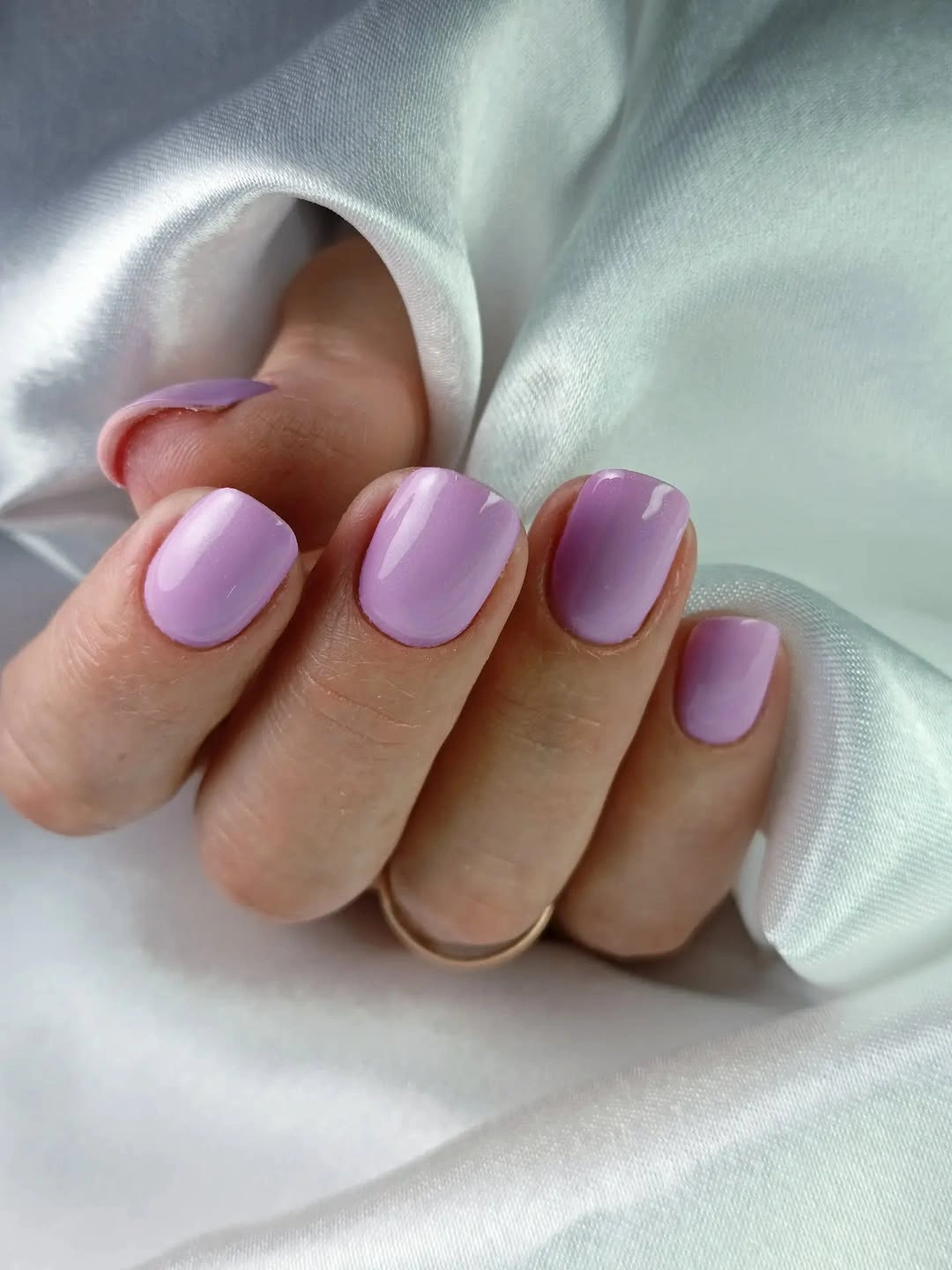
Use the same lilac on short oval nails if square corners feel too crisp. Keeping the finish plain preserves the gentle value of the color, while a slightly deeper lavender would raise saturation without changing the shape or adding another focal decision. The lower value also leaves room for accessories, so the manicure can support rather than compete with the rest of the styling.
A pale solid color can reveal uneven edges and small chips quickly because there is no artwork to break the outline. The tradeoff is useful clarity: if the color works on its own, it can sit beside jewelry or patterned clothing without needing to compete for attention. Its simplicity means the outline has to remain clean, but that same clarity makes small repairs easier to judge.
Milky White Squares With a Soft Edge
Medium square nails use a creamy white finish with a smooth, even surface and a slightly softened corner rather than a sharp point. The clean shape acts like a blank frame, making the manicure feel finished without relying on a motif or strong contrast, and the low saturation creates a different kind of calm from the lilac opener.
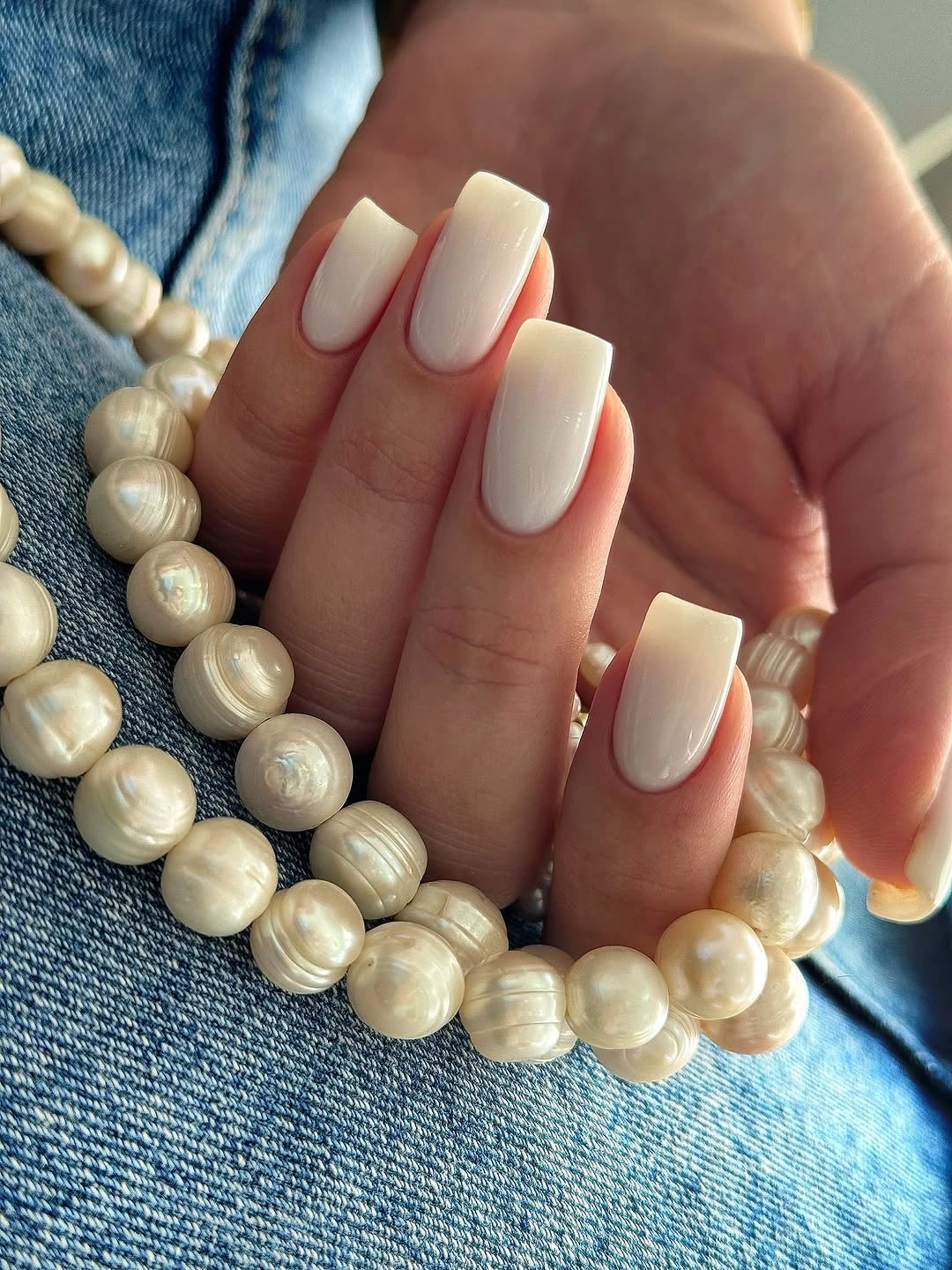
Shorten the length and keep the milky tone if you want a low-detail manicure with a clear outline. It can also become the base for one later accent, but leaving the entire set white emphasizes how much visual weight comes from the silhouette instead of the color. The pale field keeps the white from feeling stark and gives the shape a softer seasonal direction without adding artwork.
White surfaces make staining, edge wear, and uneven coverage easier to notice. That limitation is honest but manageable: a softer square reduces exposed corners, and the simple surface means a small correction does not require rebuilding a complicated design. Because the surface is quiet, the difference between a rounded corner and a sharper square remains easy to see.
Bright Red Squares With a Straight Color Block
Medium-long square nails are coated in a vivid red shade with high shine and no visible pattern across the hand. The straight edge gives the saturated color a stable frame, so the manicure reads confident without extra decoration; the important contrast is between high saturation and a quiet surface.
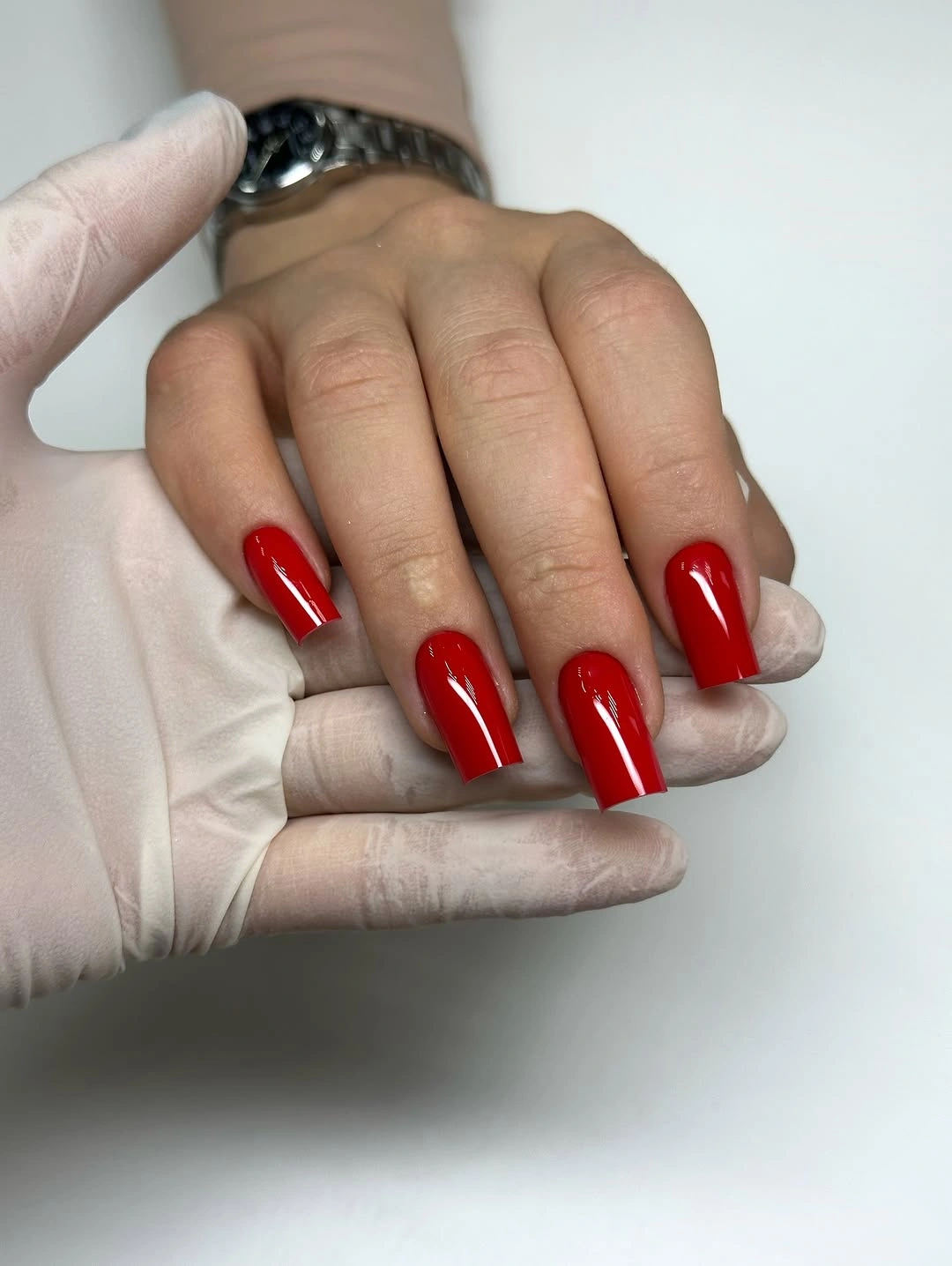
Use a shorter soft-square shape to keep the red statement while reducing the length commitment. The same color can feel more compact on an oval outline, but changing the shape also changes the amount of visual force, so it is worth deciding whether the red or the square edge matters more. The red stays strongest when the surface is uninterrupted, which makes this a useful option for a single-color wardrobe palette.
A bright solid color makes chips at the corners immediately visible. If the color is the priority, keep the shape simple and repair the tips quickly; adding random decoration to hide wear would only make the strong value and saturation relationship harder to read. A small shift toward a softer edge can lower the visual pressure while leaving the high-saturation color fully intact.
Glossy Red Nails With an Even Salon Shape
The hand shows medium square red nails with a smooth glossy finish and even color from cuticle to tip, while the surrounding gloves stay visually secondary. The uniform shape lets the saturated red do the work and creates a clean reference point for later art-heavy looks, especially because no second hue interrupts the surface.
Keep the red on short square nails and use one thin contrasting line only if a solid set feels too plain. A small line changes the focal point without changing the dominant color, but the line should support the red rather than compete with the square edge. The even application matters here because there is no accent finger to distract from a slightly uneven red surface.
The simple surface gives very little camouflage for tip wear or uneven corner shaping. That makes this a useful choice when you want to judge the clarity of the manicure honestly; every decision remains visible, from the depth of the red to the consistency of the outline. If the line is added, keeping it narrow and placed once will protect the clear hierarchy between the red and the shape.
Short Red Squares With More Everyday Proportion
Short-to-medium square nails repeat a bright red glossy color across the hand, with rounded corners and no dominant accent nail visible. The shorter length makes the strong color more wearable while the repeated shine keeps the set visually connected, showing how proportion can soften a high-saturation choice without changing its identity.
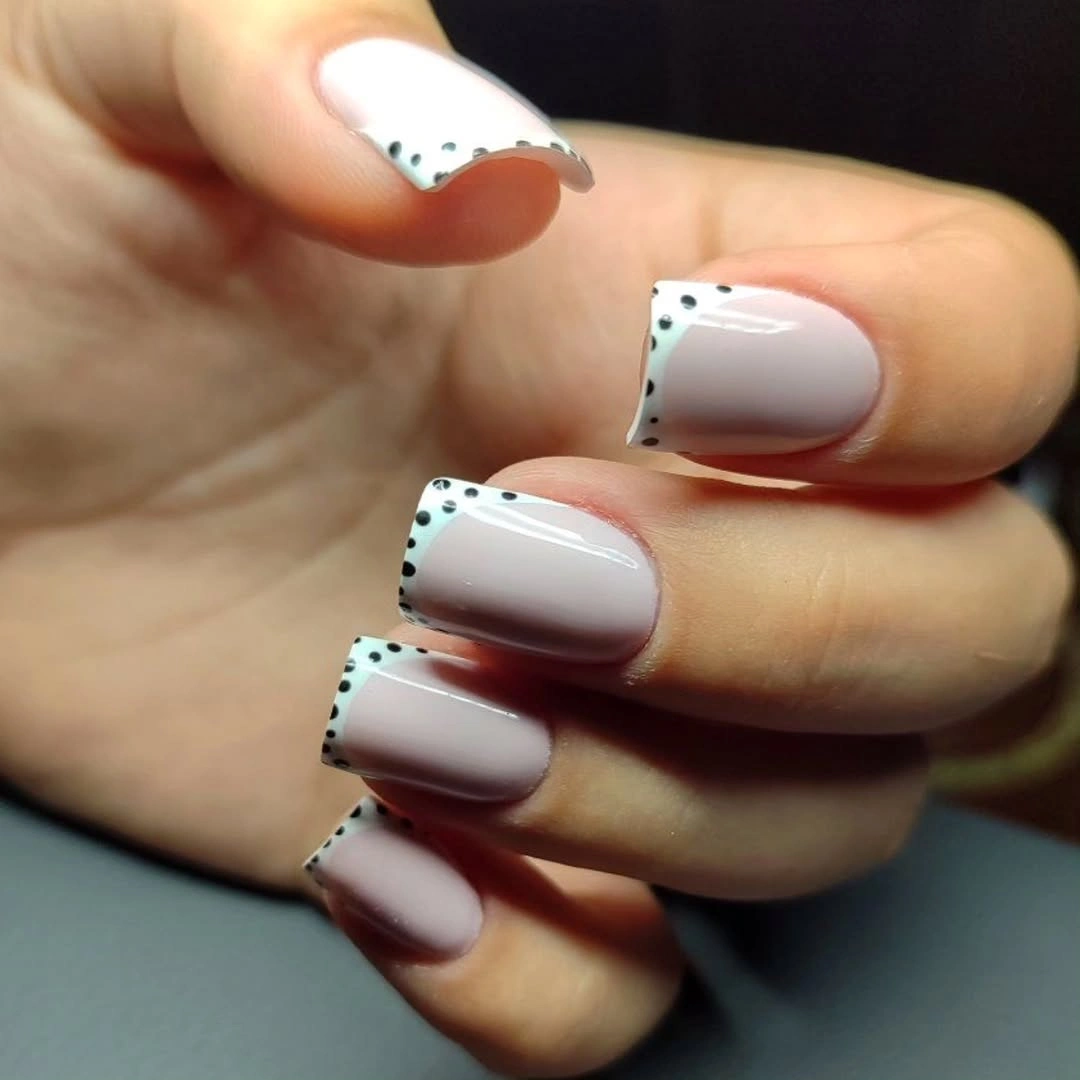
Try the same red on a short oval shape when you want the color without a boxier outline. The oval will reduce the visual stop at the tip, while the square keeps more graphic structure; both are valid if the goal is to let the saturated color stay central. The shorter proportion also makes the color easier to repeat regularly because it does not rely on a long edge for impact.
Short square corners can show small chips quickly, especially when the color is this saturated. A slightly rounded edge buys practical room, but the manicure still benefits from prompt touch-ups because the solid red leaves no pattern to soften a damaged tip. A rounded corner can therefore change the feel without forcing a new color or an additional design element.
Pale Green Shimmer on a Compact Square
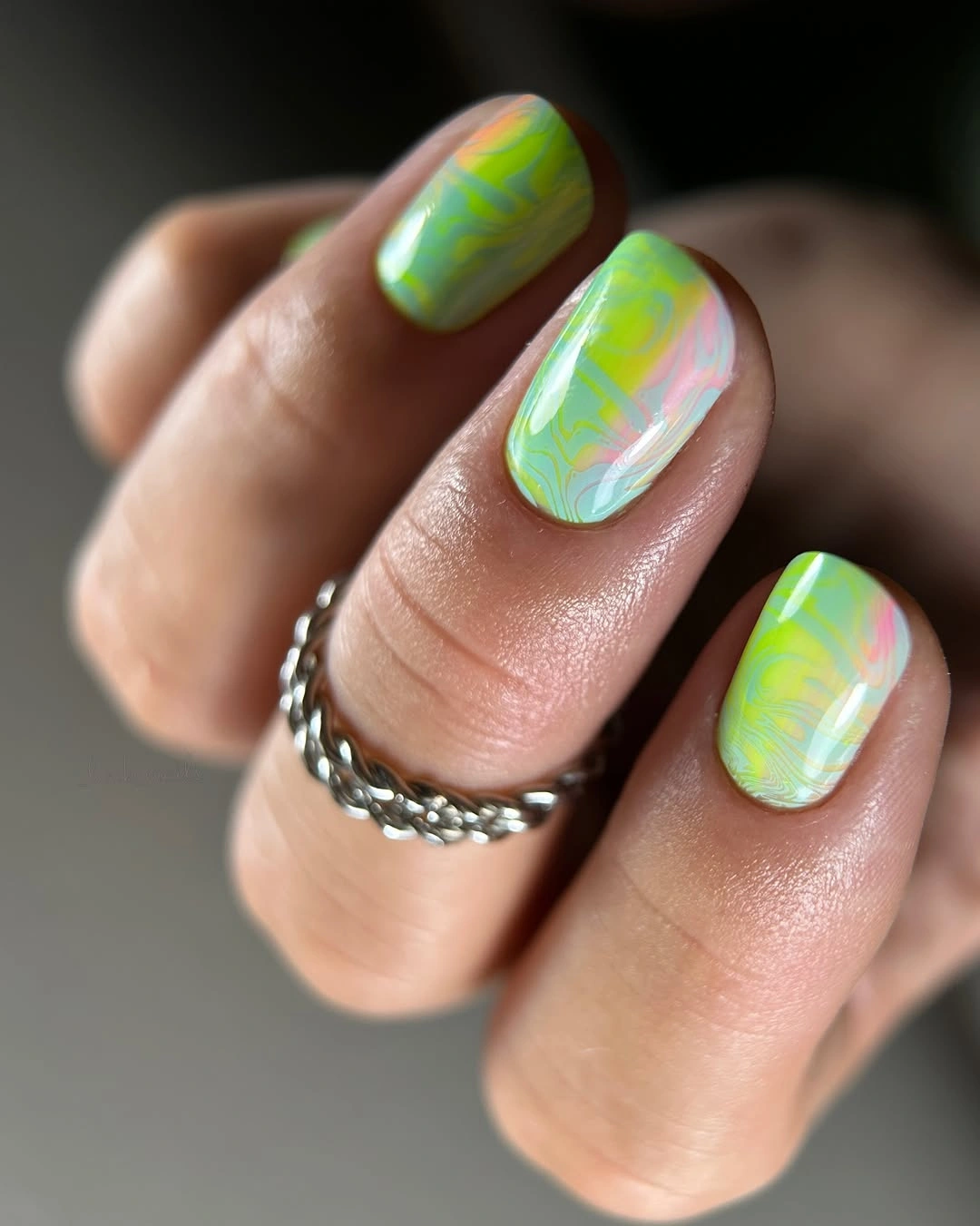
Short square nails carry a light green or ivory base with fine shimmer that catches the light as a soft pearl-like veil. The subtle sparkle adds depth without introducing a motif, and the compact shape prevents the pale finish from feeling too delicate; the key change from the red looks is lower saturation with more surface movement.
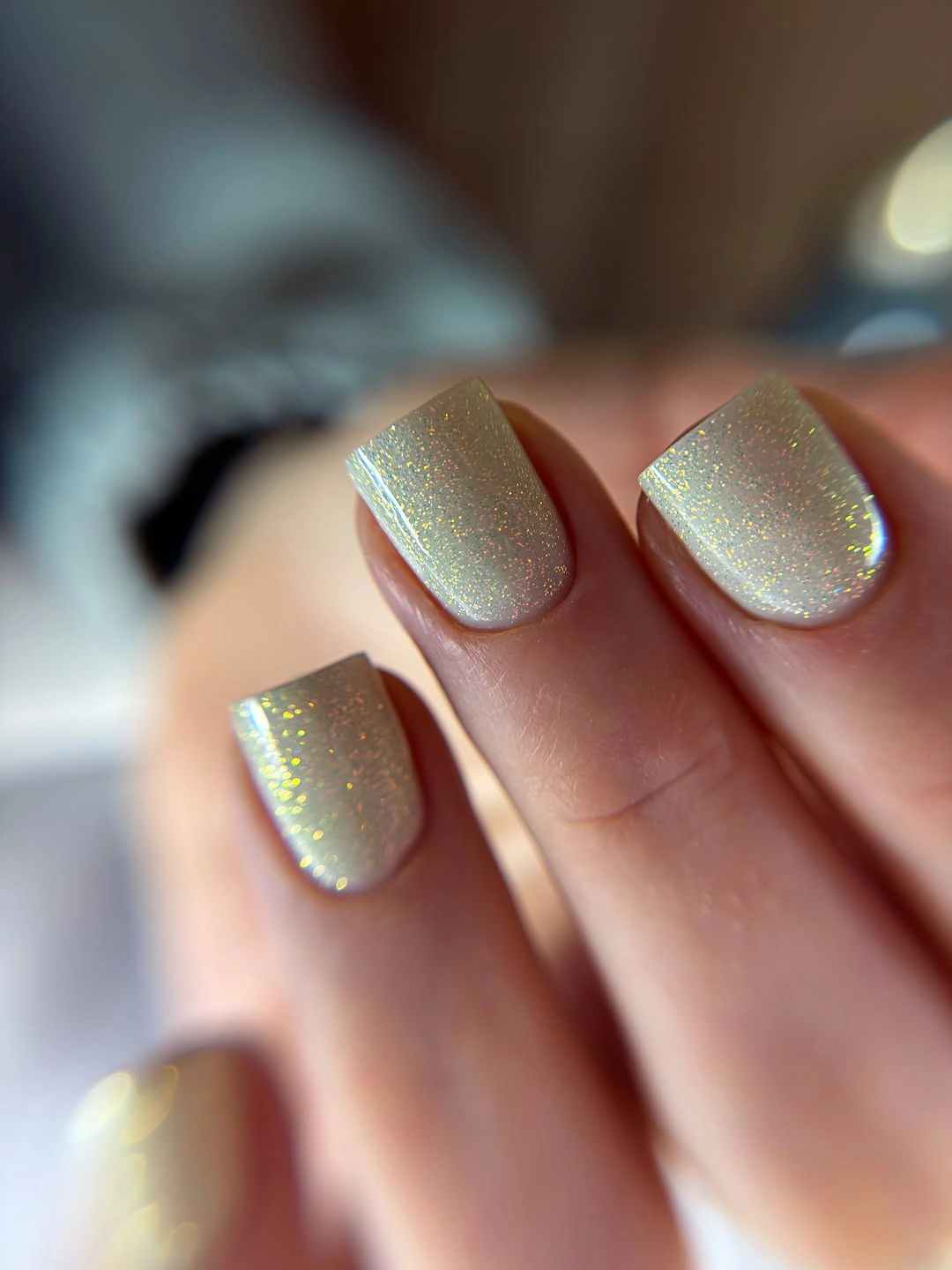
Use a single shimmer accent beside plain cream nails for a lower-glitter version. This keeps the value relationship between pale base and reflective finish while giving the eye a quieter field, which can be helpful when other accessories already add shine. The glitter remains secondary to the pink, which keeps the result softer than a dense metallic or multicolor finish.
Fine shimmer can emphasize surface texture or uneven application when viewed close up. It is more forgiving than a full graphic print in one sense, but the light catches every ridge, so a smooth shape matters as much as the color choice. That is why the compact shape matters: it prevents the reflective surface from taking over the whole hand.
Nude Squares With Crisp Red French Tips
Medium square nails use a pale nude or pink base with vivid red tips that follow the straight edge, creating a clear two-tone contrast. The French placement leaves the center of each nail quiet while the red edge gives the shape a graphic outline, so the design works through location as much as through hue.
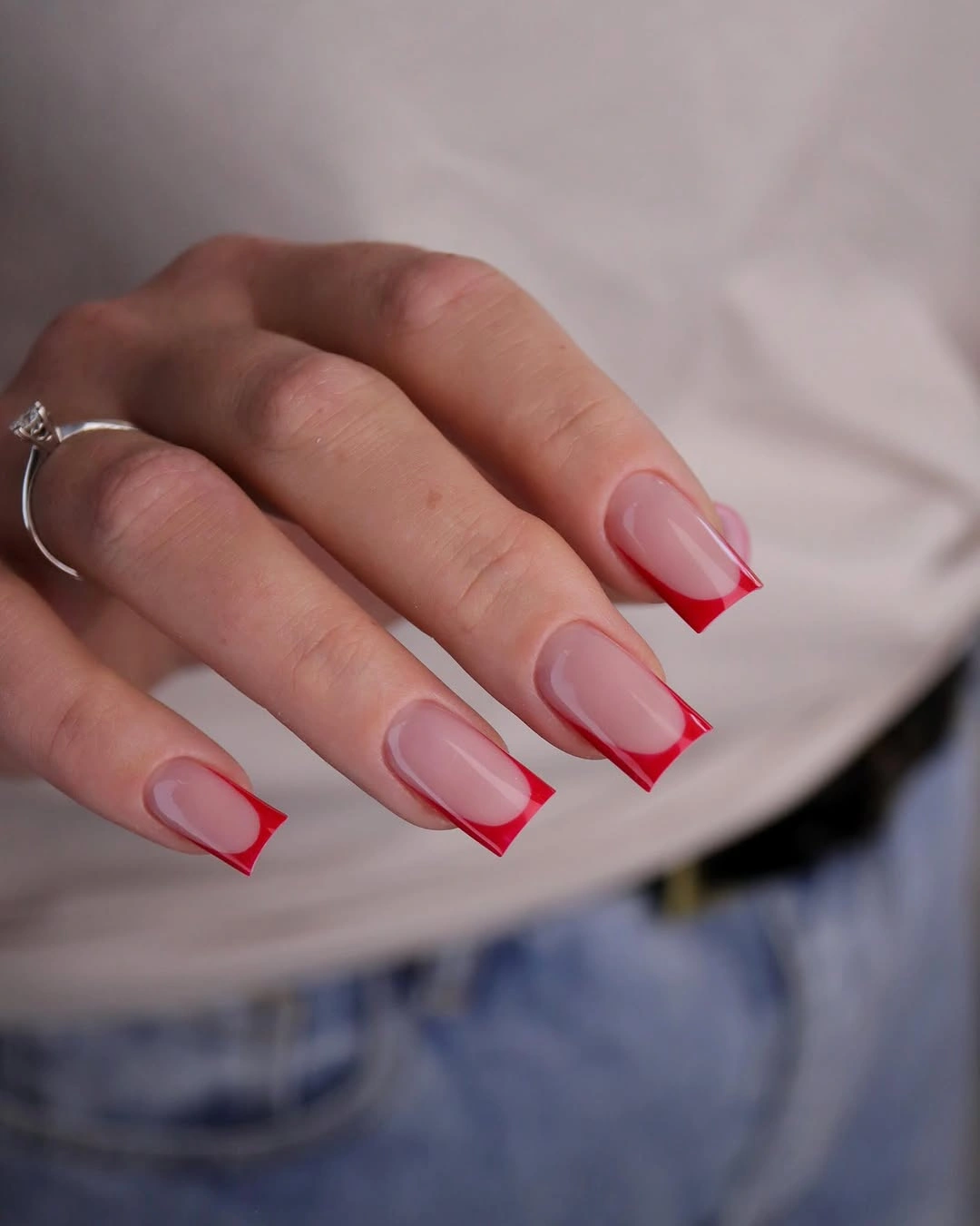
Use a thinner red tip on short square nails if the full-width edge feels too bold. The reduced saturation area allows the nude base to carry more of the visual field, while the red still marks the tip and keeps the manicure connected to the earlier solid color. The red edge therefore functions like a frame, not just a stripe, and the nude center keeps the frame from feeling heavy.
The tip line must stay even across the hand, and growth will change the balance between base and color. If you enjoy the structure of fall French nails, choose a line width that still looks intentional after a little regrowth instead of making the original edge impossibly thin. A clear boundary between base and tip also makes the design easier to evaluate before adding any extra detail.
Sheer Pink Squares With Curved Red Edges
Medium square nails have a sheer pink base and red tips that curve slightly around the corners, leaving more natural-looking space in the center. The transparent-looking field softens the saturated edge, while the straight shape keeps the design recognizable from a distance; it is a lighter value relationship than a full red nail.
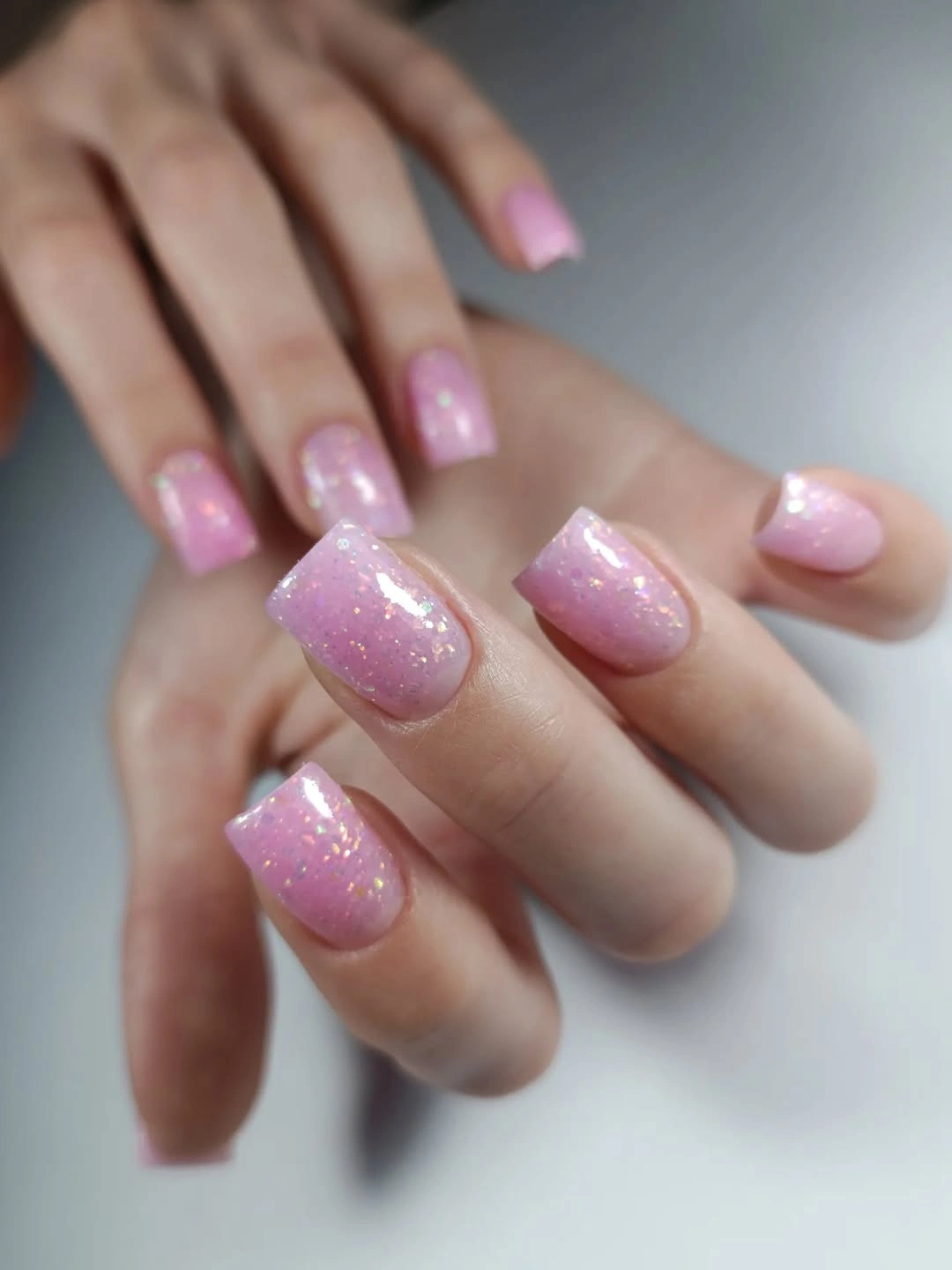
Keep the red only on two accent nails and use a pale pink finish on the rest for a gentler version. That change lowers repetition but preserves the contrast between a quiet center and a warm edge, making the idea easier to adapt when the nails are shorter. The sheer center keeps the value light, while the curved red edge adds enough saturation to make the outline memorable.
Thin tip work can look uneven as the nail grows, especially around rounded corners. A slightly wider line may be more forgiving than a fragile stripe, and a clean base will make the change look deliberate rather than like a correction made after the fact. A little open space around the curve helps the base remain visible and prevents the tip from reading as a full red block.
Short Pink Glitter With a Rounded Square Shape
Short square nails use a pink base filled with fine reflective particles, giving the set a soft glittery surface without separate artwork. The compact shape keeps the sparkle controlled and makes the color feel playful rather than oversized, while the shimmer adds a new finish variable without changing the low-to-medium saturation of the pink.
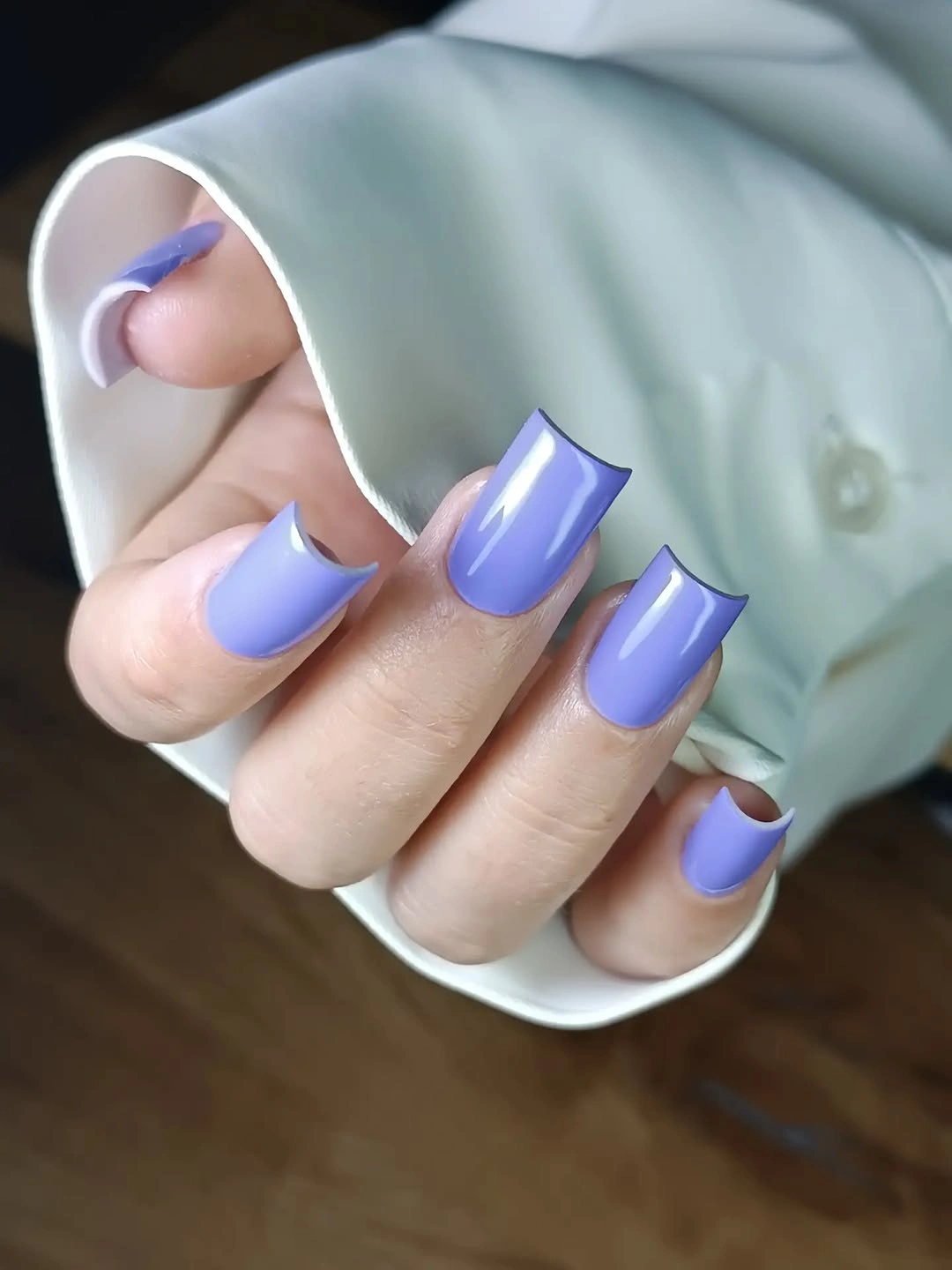
Use the glitter on one or two nails and keep the rest sheer pink for more visual breathing room. That arrangement creates a value shift within one color family, so the manicure feels designed even though the artwork remains minimal. The sparkle is most useful when it changes the surface without changing the quiet scale of the short square shape.
Dense sparkle can make chips less obvious but may also highlight uneven texture or removal lines. If the surface starts looking rough, reducing the amount of glitter is a more coherent repair than adding another finish on top of it. Leaving some nails less reflective also protects the pink from becoming a single bright field with no visual rest.
Pale Pink Squares With a Brighter Glitter Overlay
Medium square nails are pale pink with a more visible glitter or reflective overlay, creating a brighter surface than the shorter set before it. The square edge gives the shimmer a clean boundary, and the repeated finish keeps the hand cohesive even without motif work; the main change is intensity, not a new color.
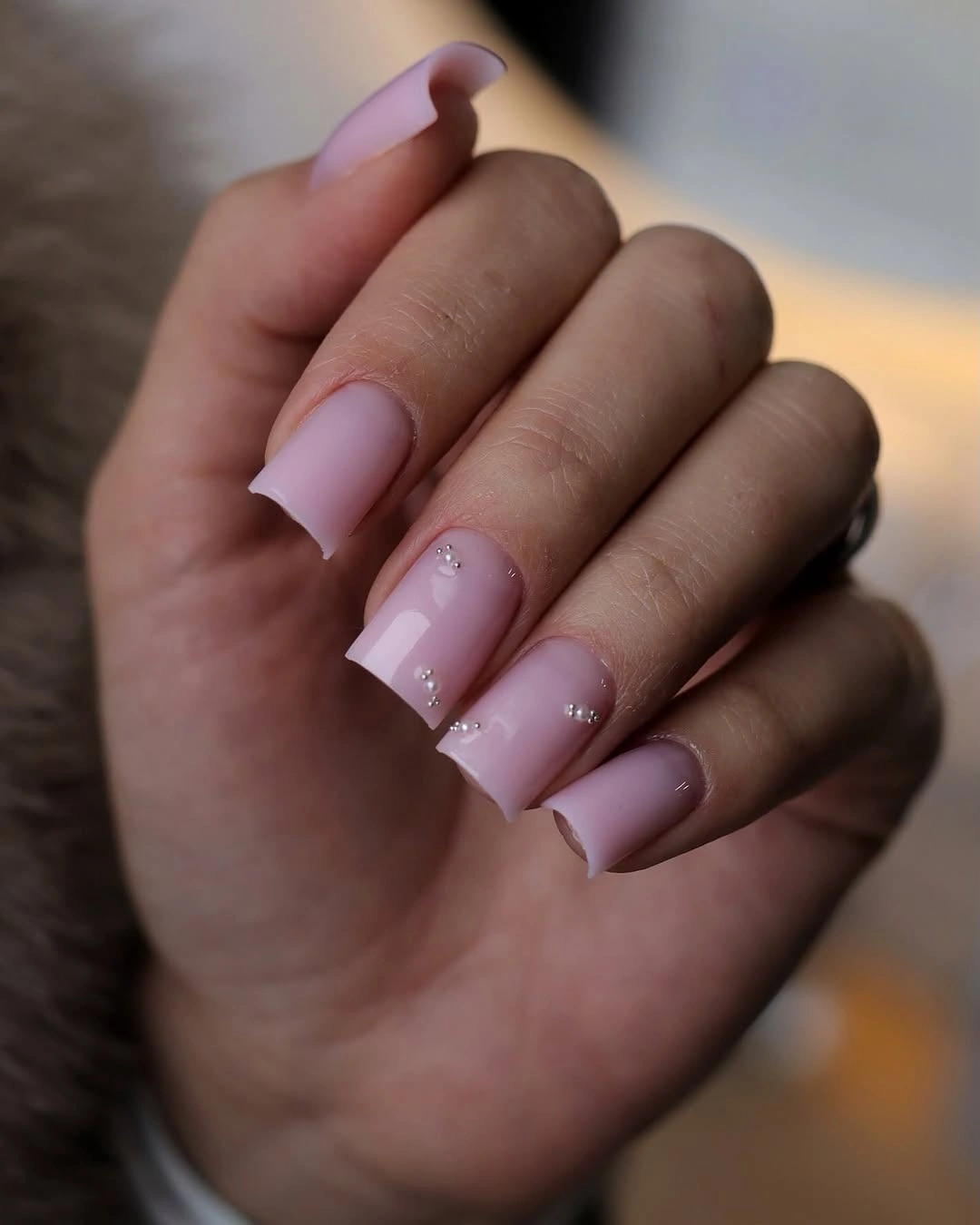
Choose a fine shimmer instead of dense glitter on short nails when you want the same glow with less visual weight. A softer particle size keeps the pink readable and lets the outline remain part of the manicure rather than disappearing under reflection. The white corners give the design a second geometric anchor, so the curves feel placed rather than loose.
Reflective particles catch attention at the tips where surface wear and uneven edges appear first. The design is easiest to maintain when the glitter stays consistent from nail to nail; a single heavily textured finger can pull the balance away from the rest of the hand. The pale value needs that breathing room because a dark line can dominate quickly when the nail surface is small.
Pearly Pink Squares With White Corners and Dark Curves
Medium square nails have a pearly pink base, white geometric tip blocks, and thin dark curved lines that trace part of the nail surface. The pale base provides space for the graphic lines, while the white corners echo the square shape instead of fighting it, so the look depends on proportion and line placement rather than many colors.
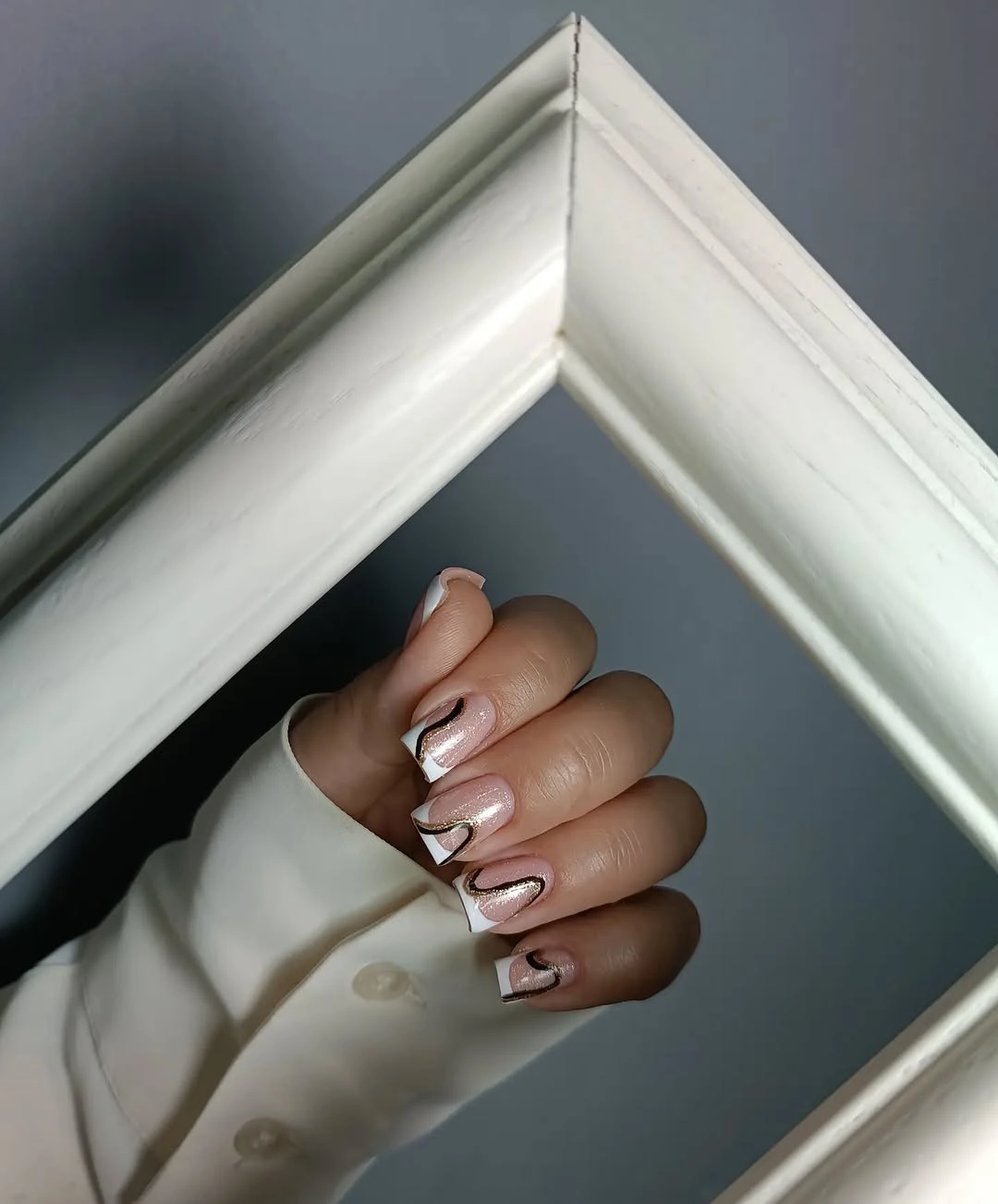
Use one curved line and a small white corner on two nails for a simpler version. Reducing repetition keeps the pale base visible and allows the dark accent to work as a guide for the eye instead of becoming a dense border around every tip. The long edge makes the color feel more assertive, even though the design itself contains no extra motif or finish.
Fine curves and light surfaces require careful spacing and can look crowded as the nail grows out. A slightly thicker line may stay legible longer, while keeping the center of the nail open will protect the airy value relationship that makes the design work. A shorter square keeps the red legible while allowing the wearer to decide how much silhouette is comfortable.
Long Red Squares With Reflective Breaks
Long square nails are a saturated glossy red, shown in a working hand pose that emphasizes the straight edge and even color across the visible fingers. The uniform surface makes the shape itself the styling decision and keeps the intense color unmistakable; here, length amplifies saturation instead of introducing another motif.
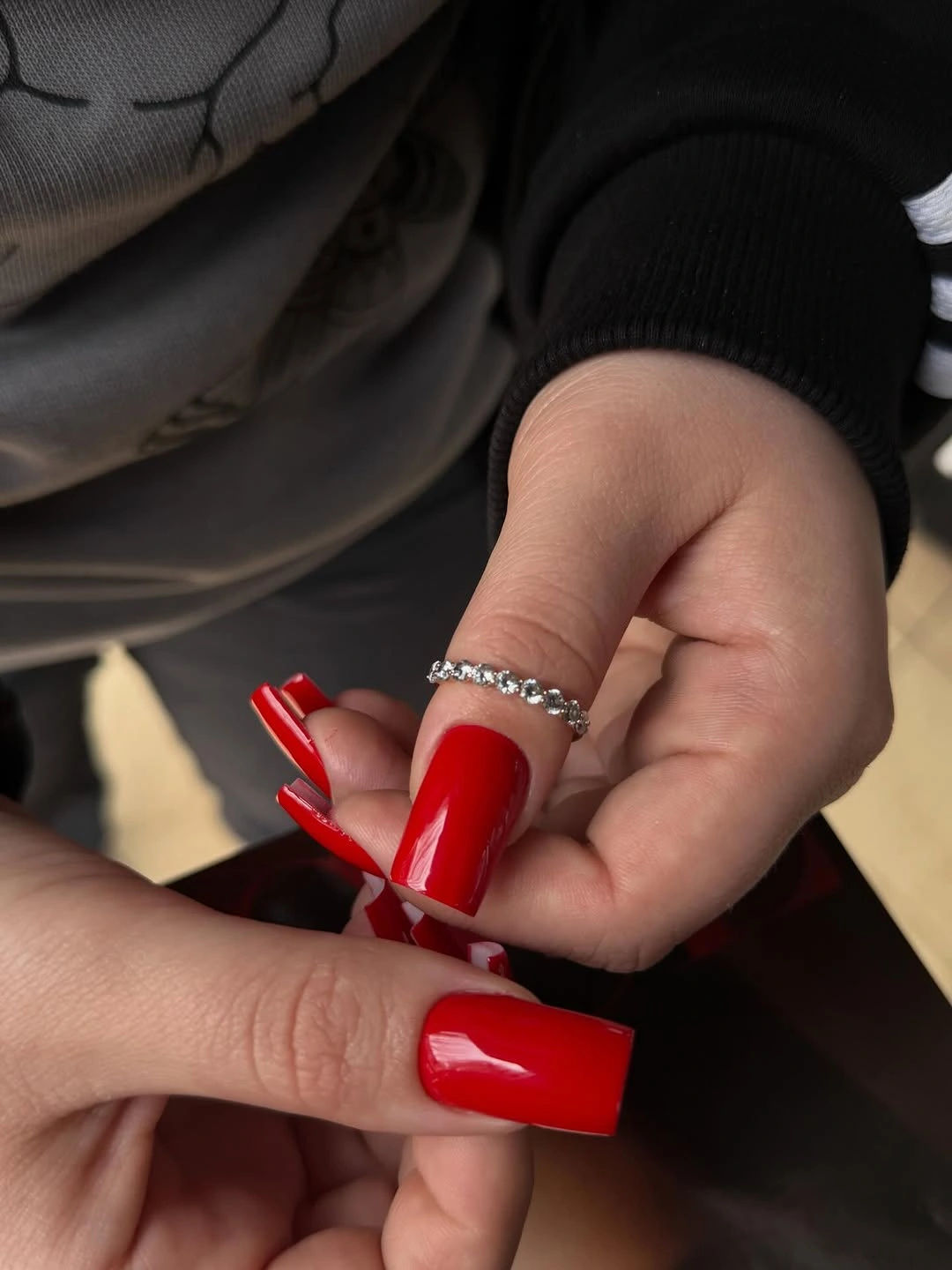
Use a medium soft-square length for the same red impact with a little less practical commitment. The shorter proportion will reduce the visual weight, but the color will still read strongly, especially if the shine remains consistent across the hand. The black and white relationship is easy to read because the pattern does not have to fight another bright color.
Long square corners and a bright solid surface make edge wear especially visible. This is a choice for readers who enjoy maintaining the outline; if that is not the priority, a shorter version is a genuine adaptation rather than a lesser copy. One accent also makes the pattern more adaptable to a smaller nail, where too many narrow waves would lose their spacing.
Black Squares Paired With Monochrome Zebra Accents
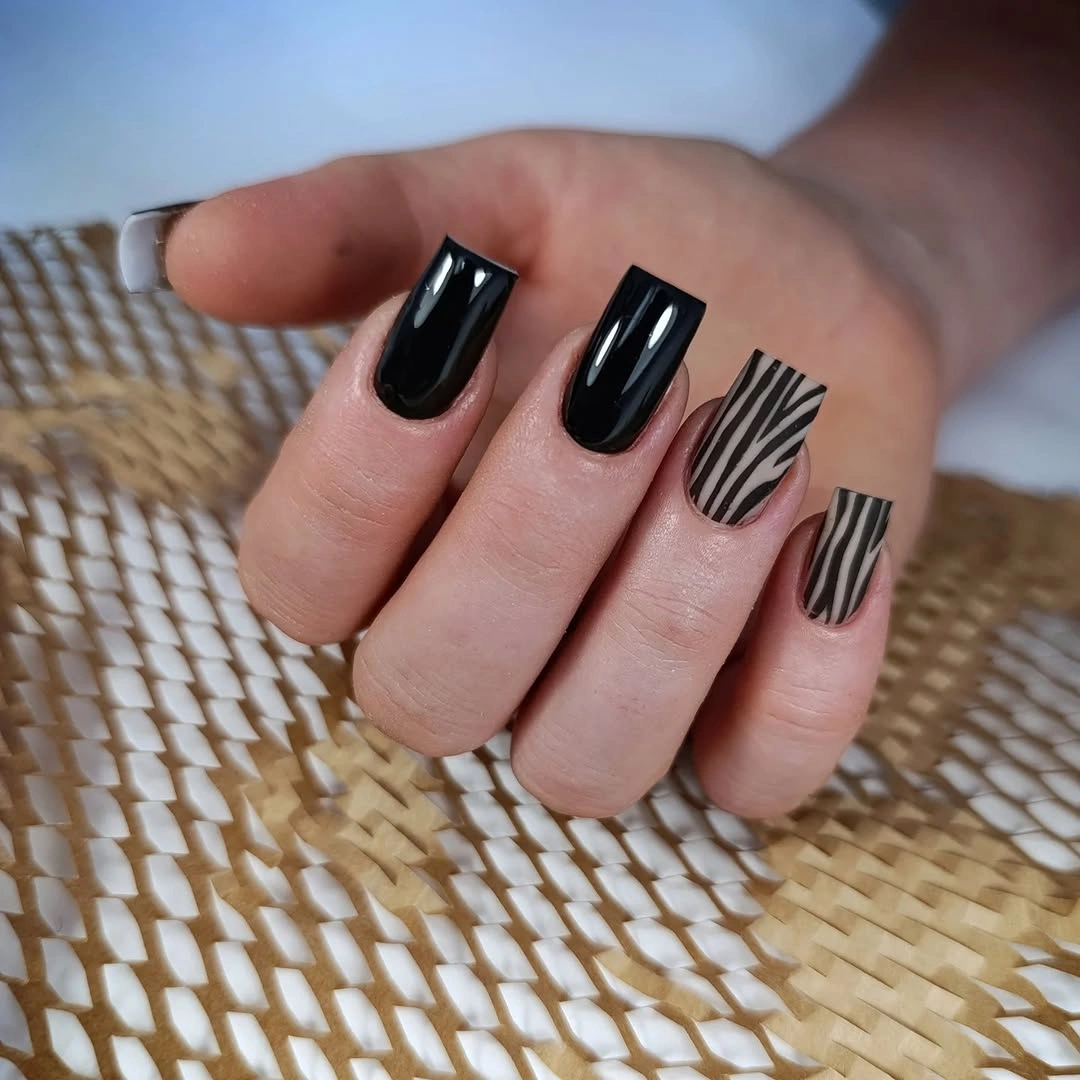
Medium square nails alternate glossy black solids with pale panels covered in narrow black-and-white wavy stripes that resemble a zebra-inspired pattern. The solid black fingers give the striped accents room, while the shared square shape keeps the contrast graphic and intentional; repetition comes from the outline, not from identical color on every nail.
Use one striped accent on short black square nails instead of repeating the pattern on two fingers. That shift keeps the monochrome relationship clear and makes the striped panel feel like a deliberate focal point rather than a second full set competing with the black base. The reflective breaks work best as interruptions in the red, not as a competing layer that changes the entire manicure.
Fine stripes need consistent spacing and can look crowded if the nail is shortened too far. Wider waves will remain easier to read, and the plain black nails provide a practical place for the eye to rest when the accent begins to grow out. The main color remains dominant, so the design can be softened by changing only the number of reflective fingers.
Red Squares With a Reflective Panel Detail
Medium square nails are glossy red, with lighter reflective sections or thin pale accents that break up the solid color on selected fingers. The bright base remains dominant while the reflective breaks add movement along the straight nail edges, giving the eye a controlled change in value without leaving the red family.
Keep the reflective accent on one nail per hand and leave the other nails red. That arrangement makes the light section easier to read and keeps the overall saturation high, while a shorter square shape will reduce the visual pressure at the tip. The pale tips make the red more readable and keep the long shape from looking like one uninterrupted block of color.
High-contrast accents reveal uneven placement and can make corner wear more noticeable. The design benefits from restraint because the red already carries plenty of intensity; a second decorative layer would not solve the practical issue and could make the panel look crowded. Keeping the square edge visible also makes the length feel intentional instead of simply extended.
Long Red Squares as a Full Saturation Statement
Long square nails are coated in a vivid red color with a smooth high-shine surface and no competing motif visible. The long straight silhouette gives the saturated color a strong editorial presence and makes the manicure readable from a distance, showing how shape can amplify one color without requiring a pattern.
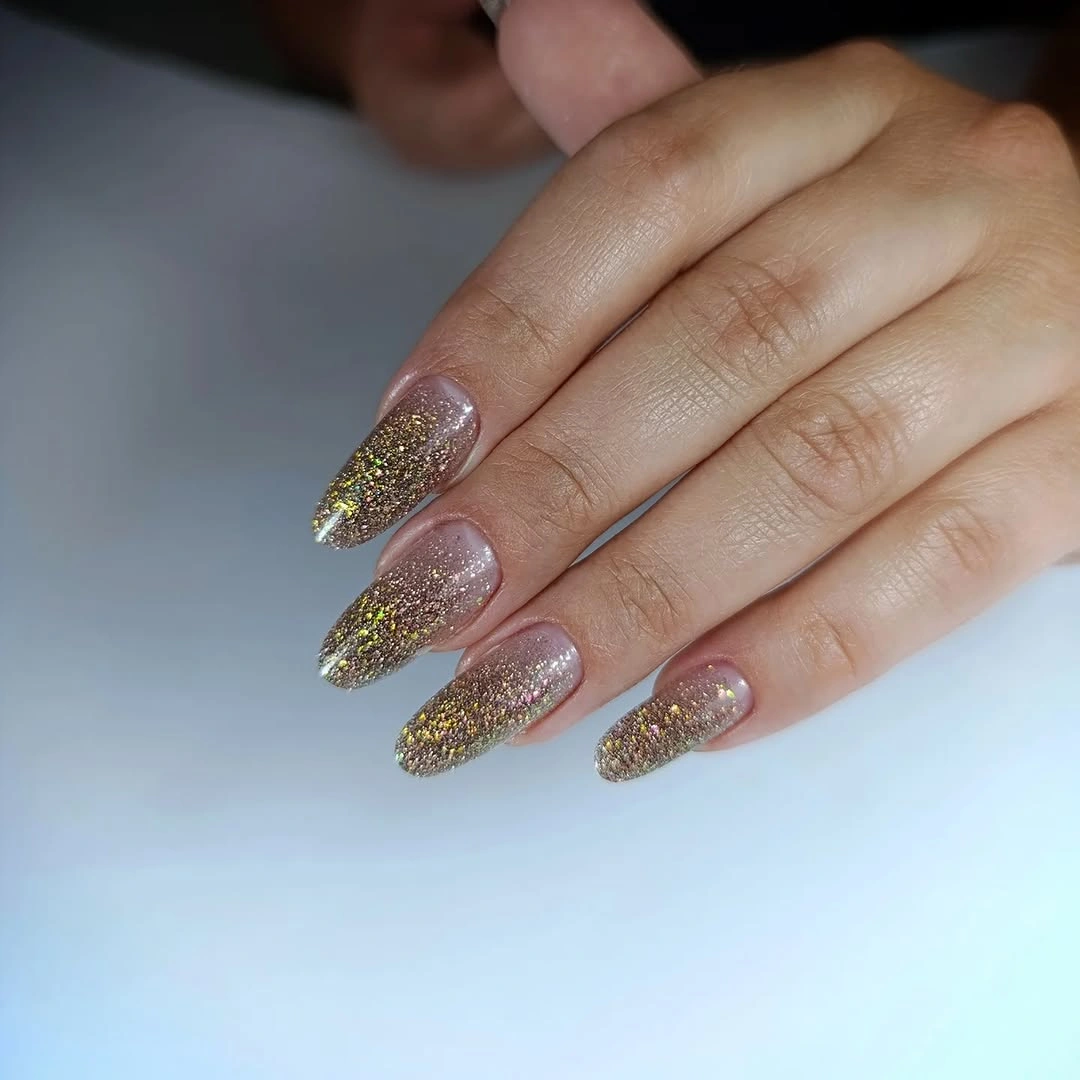
File the same red into a medium soft square if you want the statement shade with less length. The color will remain the main event, but the shorter edge will bring the hand closer to the practical proportion shown in the compact options earlier in the row. The fine particles create motion inside a deep color, while the short shape keeps that motion close to the hand. That proportion is also useful to compare with short fall nails when the color matters more than the silhouette.
Long square corners carry more practical exposure, and a solid red surface shows every chip. If you choose this version, treat the length as part of the design rather than an afterthought; removing a little length can preserve the mood while making maintenance more realistic. A simpler two-accent arrangement can preserve the jewel-like shift without making every finger equally bright.
Deep Blue Purple Glitter on Short Squares
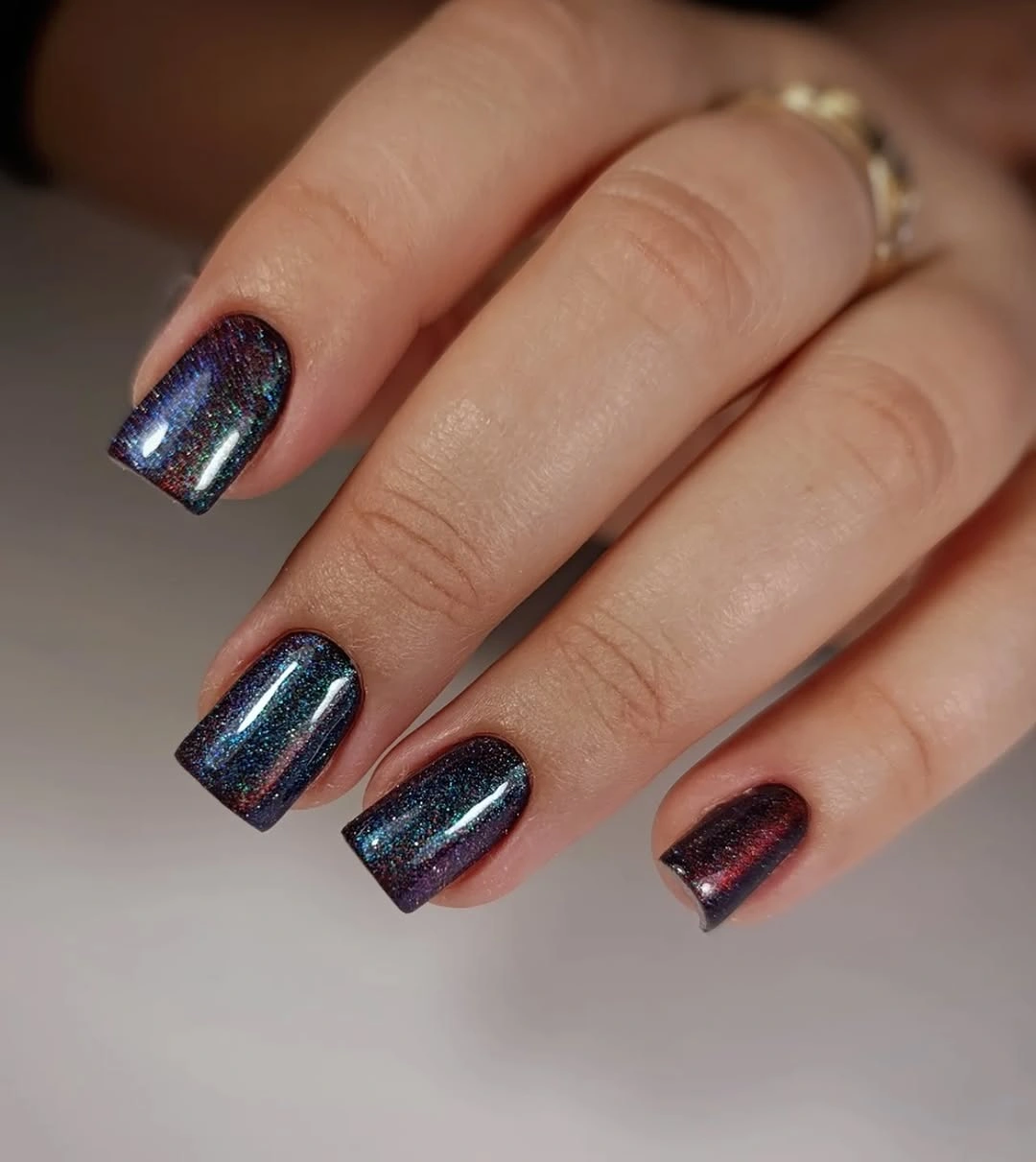
Short square nails use a dark blue-purple base filled with fine reflective shimmer, giving the surface a jewel-like shift under the light. The compact shape keeps the dense color wearable, while the glitter prevents the deep tone from looking flat; the relationship is low value with high surface movement.
Use a dark navy shimmer on two accent nails and leave the rest plain blue for a calmer set. This keeps the same color family while creating a clearer hierarchy, and it allows the reflective nails to work as accents rather than making every surface compete equally. The repeated surface gives the eye a predictable path, which is why the blue does not need an illustrated accent to feel complete. The shorter proportion follows the practical balance found in medium fall nail ideas without giving up the deep sparkle.
The finish can reveal scratches and uneven top texture, especially near the square edge. A shorter, softly rounded corner will reduce that exposure, and choosing a slightly finer shimmer can make the design less demanding without removing the depth that makes the color interesting. A small reduction in length will change the proportion, but it will not remove the relationship between saturated color and fine reflection.
Medium Blue Squares With Dense Fine Shimmer
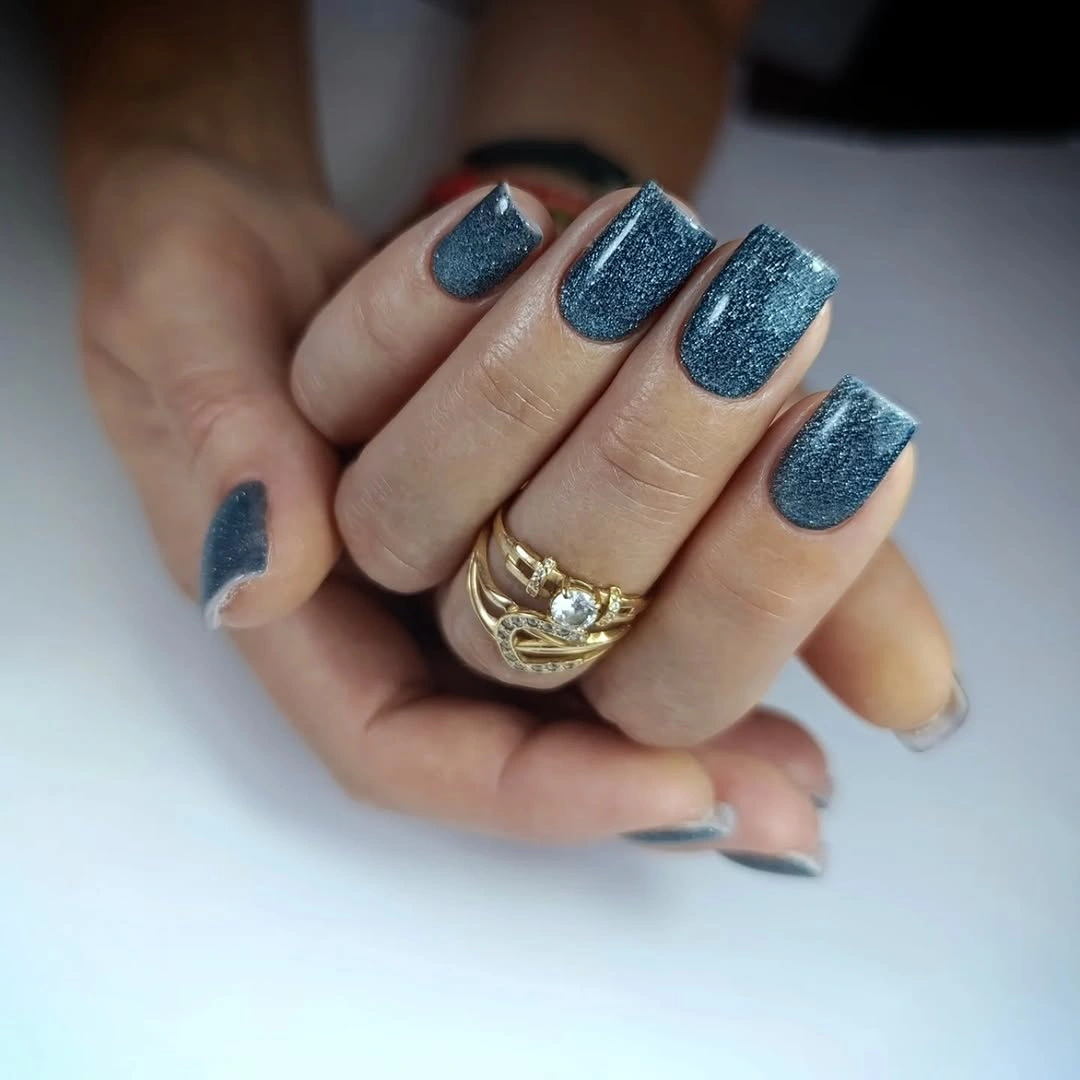
Medium square nails repeat a saturated blue surface with small reflective particles and a smooth rounded corner, creating a vivid but uniform set. The repeated color and finish create strong rhythm, so no additional motif is needed to make the manicure feel complete; value stays deep while saturation and reflection provide the activity.
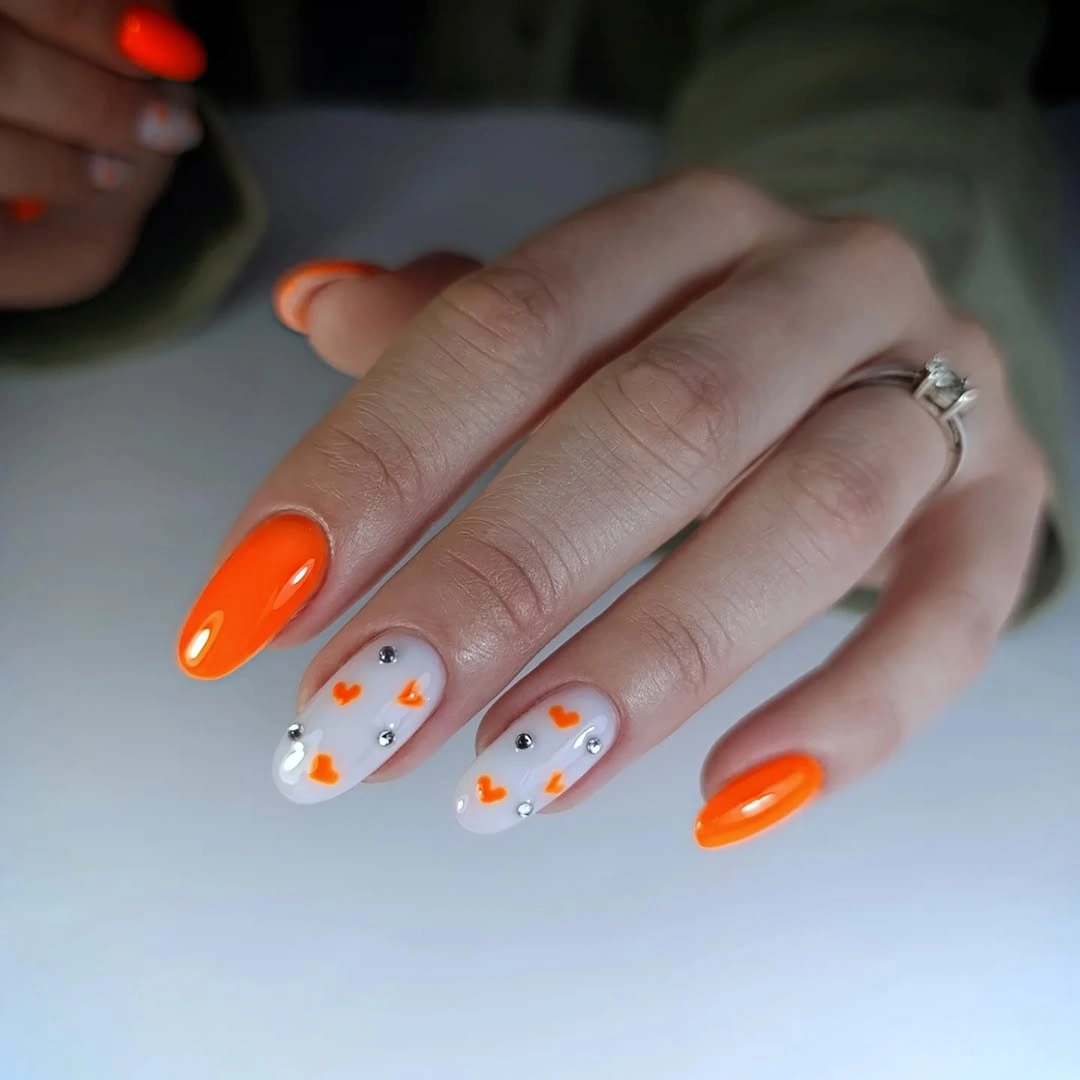
Shorten the square shape and keep the blue shimmer if you want a practical single-color statement. The shorter edge will let the saturated color feel more compact, while the fine sparkle keeps the surface from becoming visually plain. The dots are small enough to feel playful rather than decorative for its own sake, and the orange repeats them across the hand.
Dense shimmer makes surface imperfections visible under direct light and can emphasize corner wear. It is worth choosing a consistent particle level across all fingers because one noticeably rough or overly reflective nail can interrupt the otherwise stable rhythm. The white areas are important because they keep the orange details from merging into one dense warm patch.
White Ovals With Tiny Orange Dots and Tips
Medium oval nails alternate white surfaces with orange tips and tiny orange or red dots, while a few nails carry a stronger orange accent. The small marks repeat the bright color across the hand and keep the white base from feeling empty; the design works through controlled repetition rather than a large central motif.
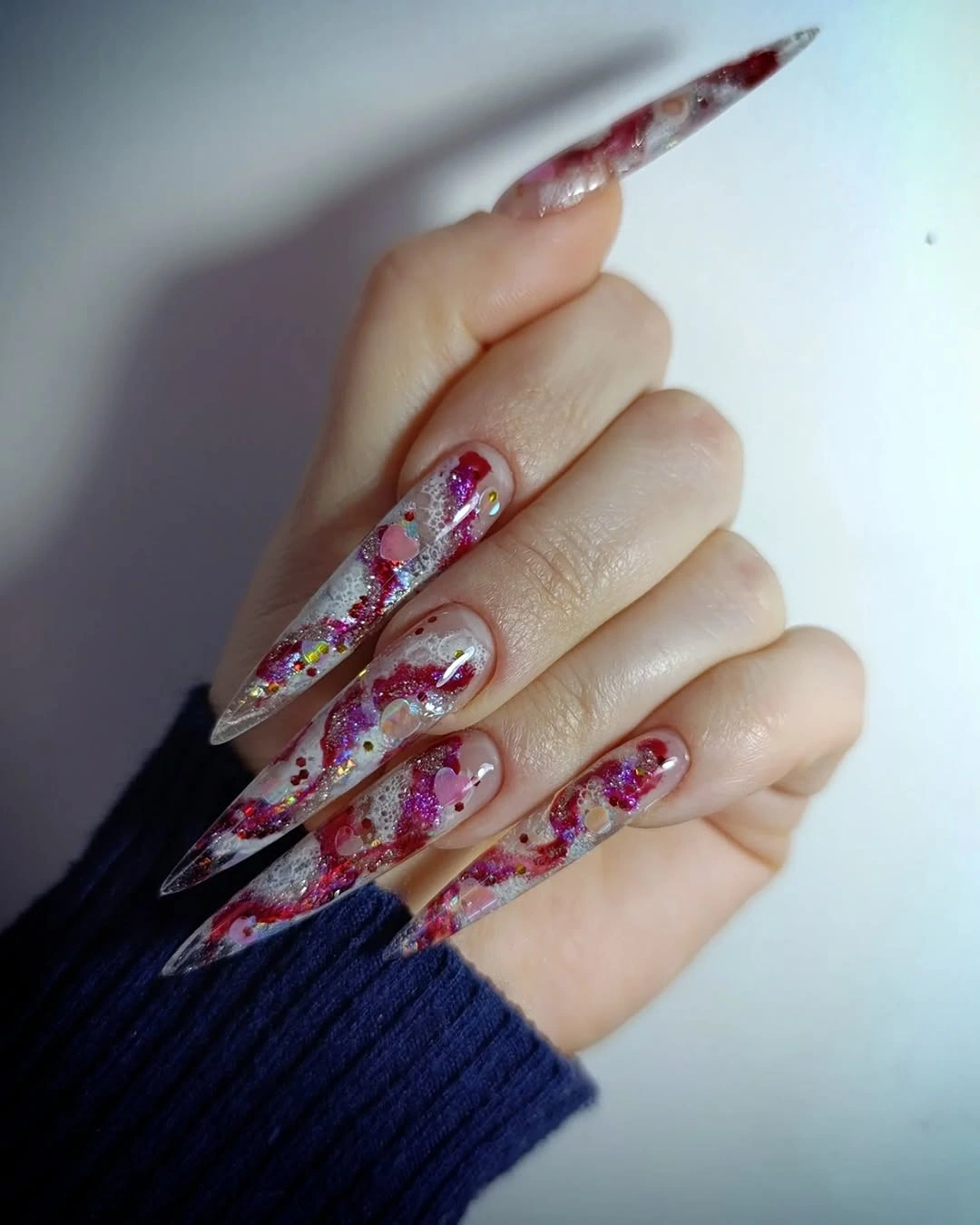
Put the dots on two accent nails and use a single orange tip on the rest for a cleaner translation. That reduces the number of visual events while preserving the contrast between pale field and bright detail, and the oval outline keeps the result softer than a square French edge. The pale base keeps the warm accents legible and makes the edge treatment easier to compare with a plain almond shape.
Tiny dots can lose their shape if they sit too close to the tip or as the nail grows out. Leave a little breathing room around each mark, and choose a simple orange edge when the hand needs to look polished from a distance rather than inspected up close. The shorter version is still seasonal because the orange remains at the boundary where the eye naturally looks first.
Long Almonds With Orange Tips and Mini Motifs
Long almond nails use a pale white base with bright orange tips, small orange marks, and a few tiny decorative details across selected nails. The elongated shape gives the scattered details room while the orange tips anchor the composition at the edge, allowing several small decisions to stay legible without filling the entire surface.
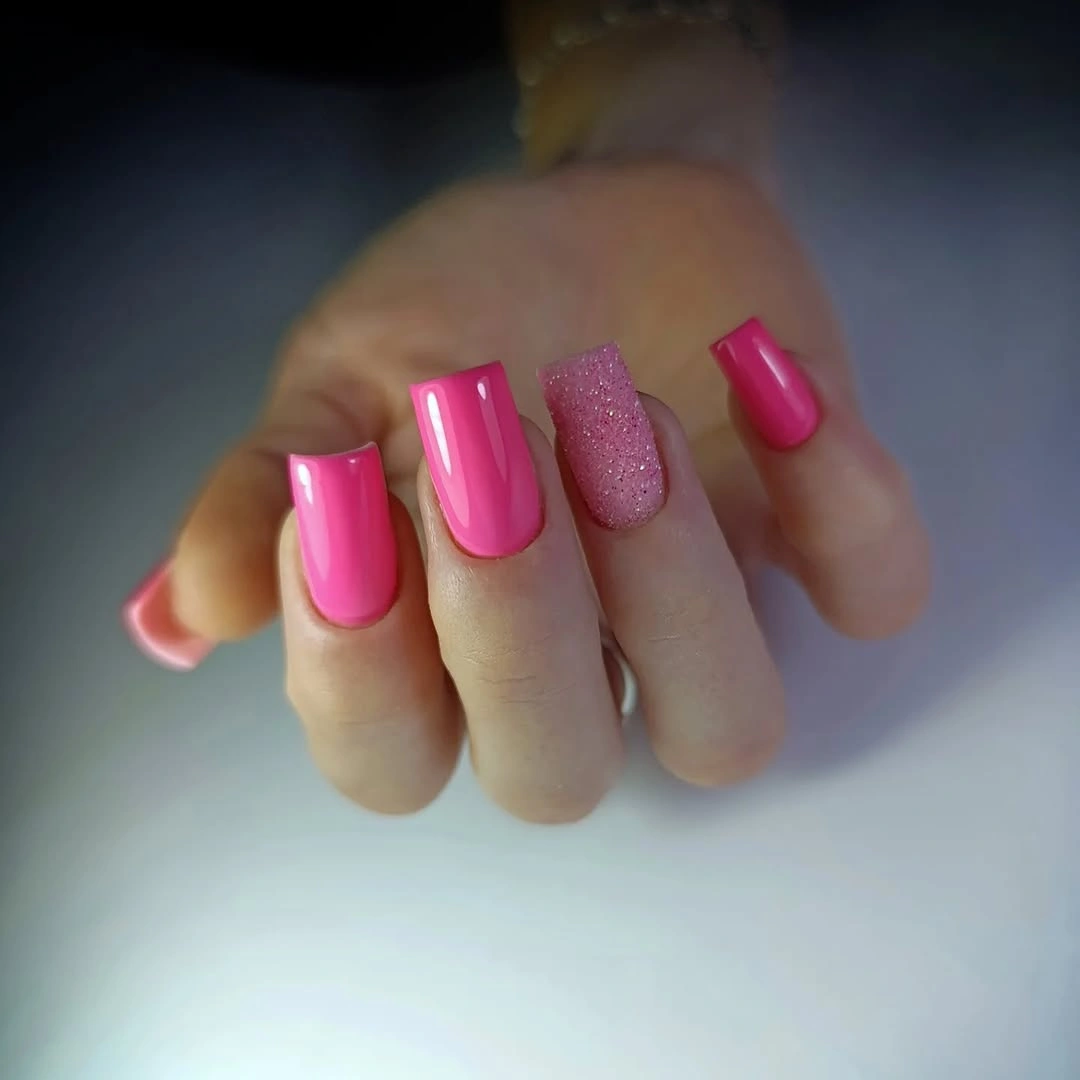
Keep the orange tip and one small dot on medium almond nails for a less dense version. The shorter shape will reduce the amount of visible decoration, but the pale base and warm edge will still create the same value contrast and seasonal energy. The layered surface has its own texture and contrast, so reducing the number of decorated nails improves clarity immediately.
Long pointed edges and small motifs increase the upkeep and snag tradeoff. If you keep the length, limit the number of extra marks; if you want an everyday manicure, move the focus to the orange tip and let the shape do less work. The pale base gives the bright details somewhere to land, which is why the long shape does not need full coverage.
Pink Red and Silver Embellished Stiletto Length
Very long pointed nails contain translucent-looking panels with pink and red glitter, silver pieces, and small heart-like or geometric accents. The extreme point provides enough surface for the layered decoration to register as a deliberate collage rather than random sparkle, but the design asks the viewer to accept length before any color detail can settle.
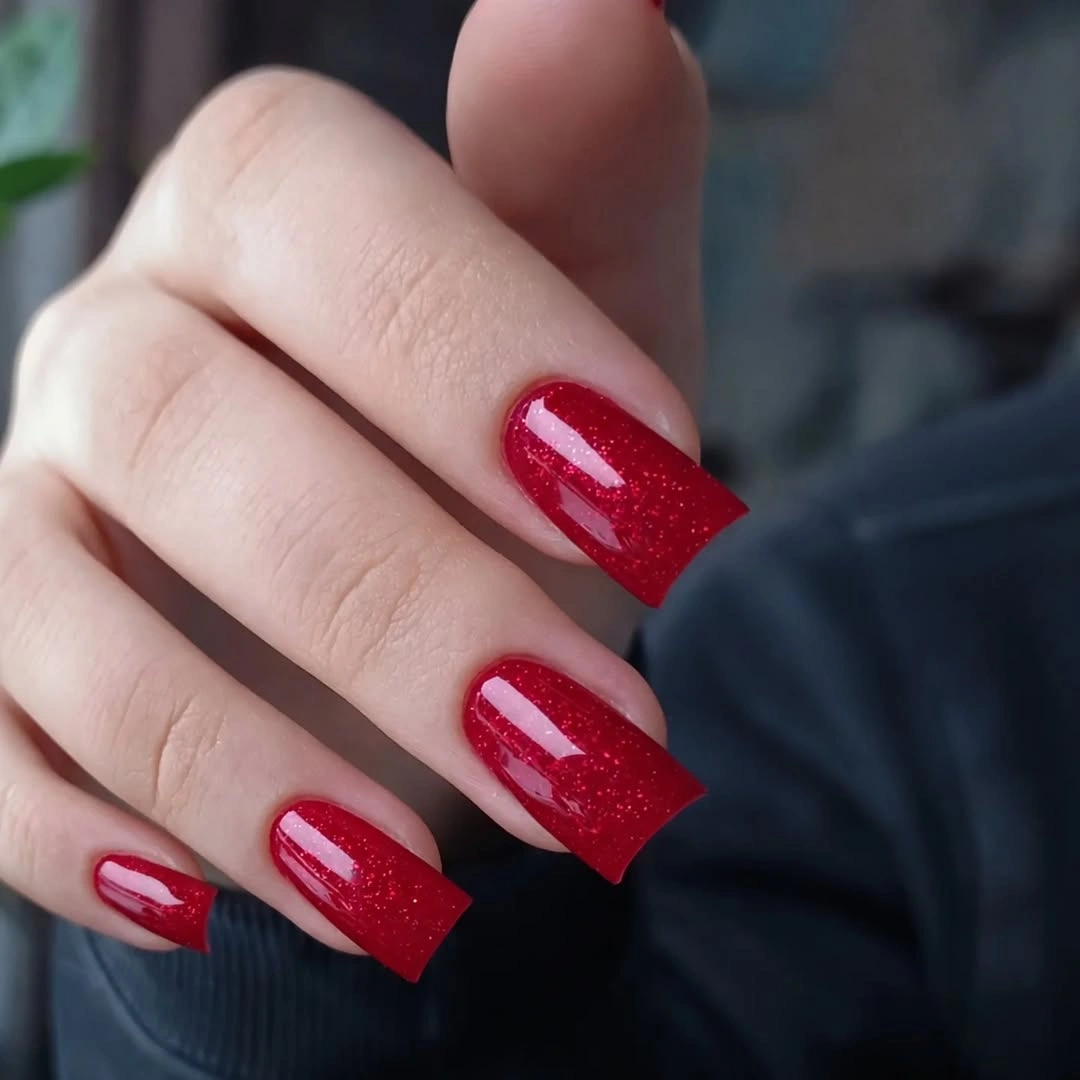
Keep one translucent accent nail with pink and silver pieces and use plain blush nails elsewhere. That preserves the layered color relationship while reducing the number of high-saturation and reflective surfaces, making the result easier to adapt to a medium almond. The red remains the main value and saturation decision, while the reflective pieces supply only a secondary change in light.
The length, pointed tips, and dense decoration create the highest practical and maintenance tradeoff in this row. This is a statement proportion, not a neutral base for everyday tasks; lowering either the length or the amount of embellishment will improve wearability more than changing one shade. That compromise keeps the statement readable from farther away and prevents the embellishment from becoming the entire message.
White Bases With Compact Red French Corners
Short square nails use a white or milky base with red tips that wrap the corners, creating a crisp high-contrast edge on a compact shape. The white center keeps the red readable while the small length makes the graphic tip easier to wear, proving that a clear edge can carry more personality than a full-color surface.
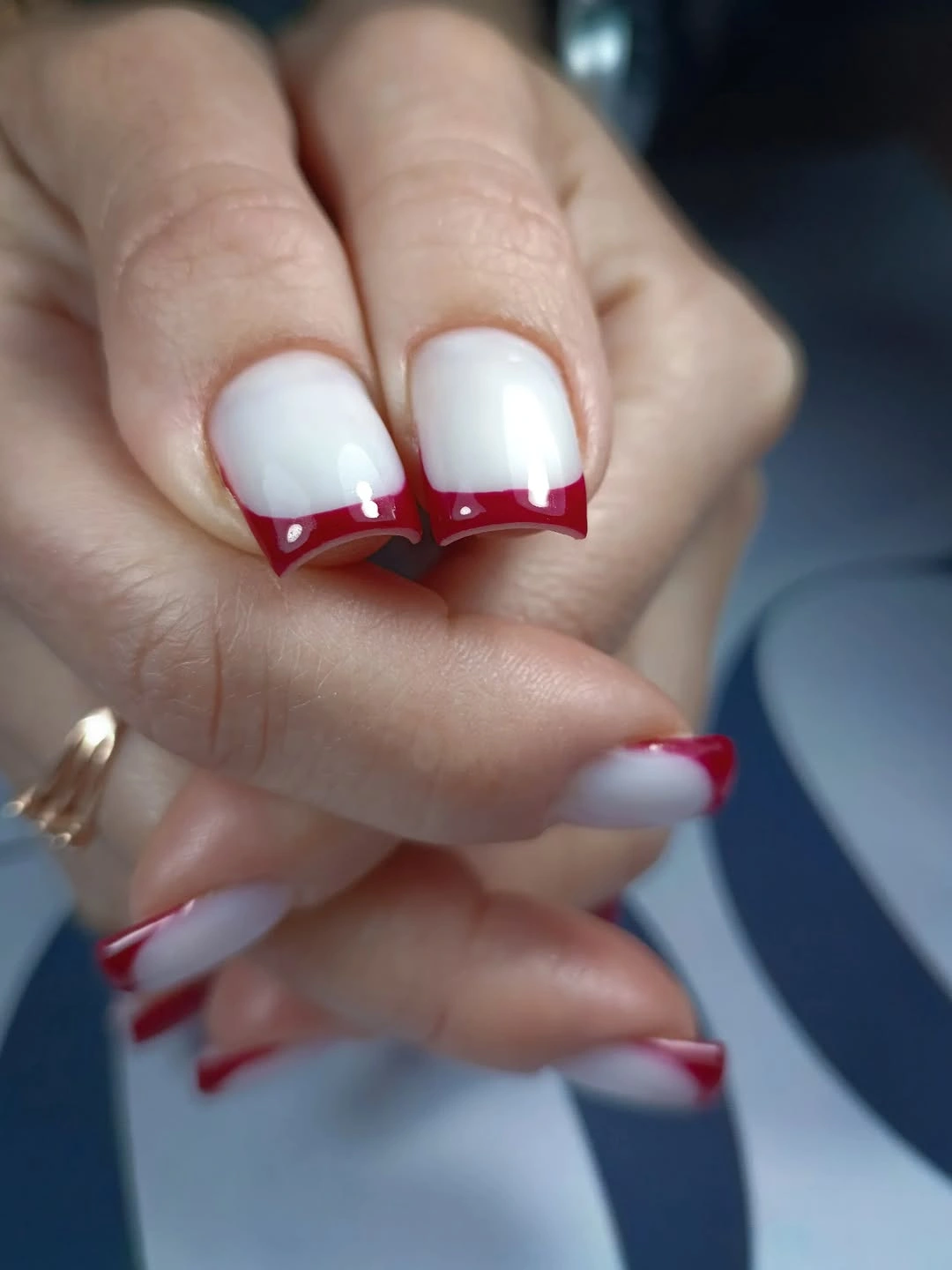
Use a thinner red corner line on short nails if the full tip feels too strong. The reduced mark leaves more white visible and makes the design easier to align, while the red still supplies the saturated accent that gives the manicure its focus. The red corners also make the white base feel more graphic, giving a small manicure a stronger shape without extra length.
The corner accents need even spacing and can show wear quickly because the red sits directly at the edge. A slightly rounded square will soften that boundary, and the clean base makes this a useful reference when comparing more involved square nail designs. The compact boundary is part of the appeal, since a clean tip can make a simple design look more intentional than a crowded one.
Warm Brown Almonds With a Tiny Bow Accent
Medium almond nails are glossy warm brown, with one pale yellow-beige accent carrying a small dark bow-like graphic and a few nails kept plain. The single light accent interrupts the deep brown rhythm and gives the tiny graphic a clear stage; a small change in value does more here than a large collection of motifs.
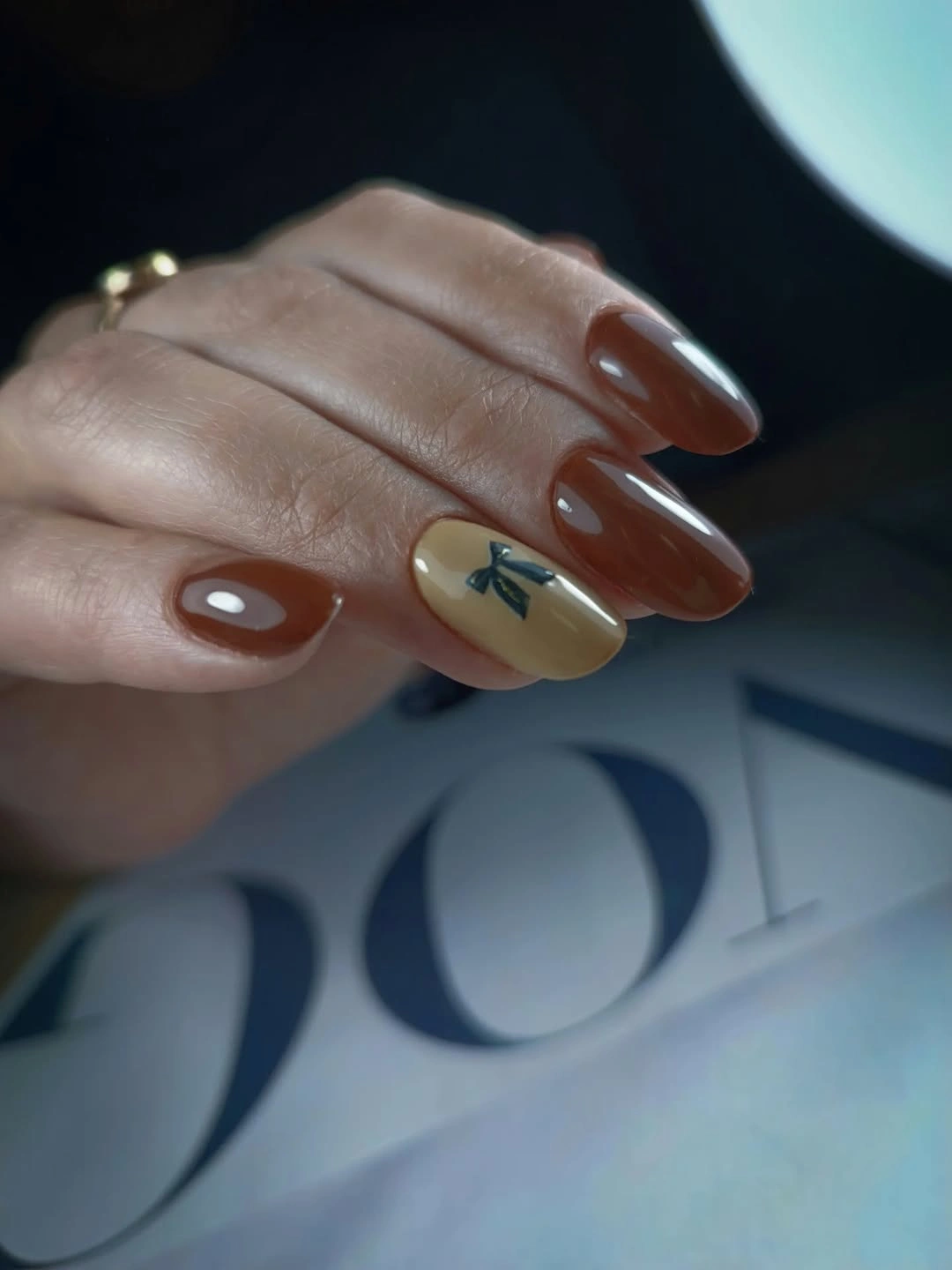
Keep the pale accent on one nail and replace the bow with a simple dot or line if you want less detail. The brown remains the dominant saturation, while the lighter nail creates enough contrast to make the manicure feel considered without turning it into a full illustrated set. The pale accent changes the value across the hand, while the warm brown keeps the overall saturation grounded and wearable.
Small line art can blur on a shorter nail and the glossy brown will show chips clearly. If you want a simpler autumn choice, the same color relationship can work with a plain pale accent, a soft shape, and no attempt to reproduce every tiny mark. Replacing the bow with a simple mark leaves enough contrast for the accent to register without demanding close inspection.
Cobalt Blue Squares With Dense Sparkle
Medium square nails are vivid cobalt blue with fine shimmer across the surface, while pearl-like jewelry near the hand adds context but not manicure evidence. The saturated blue and square silhouette provide enough contrast on their own, so the finish stays simple and legible rather than relying on a separate pattern.
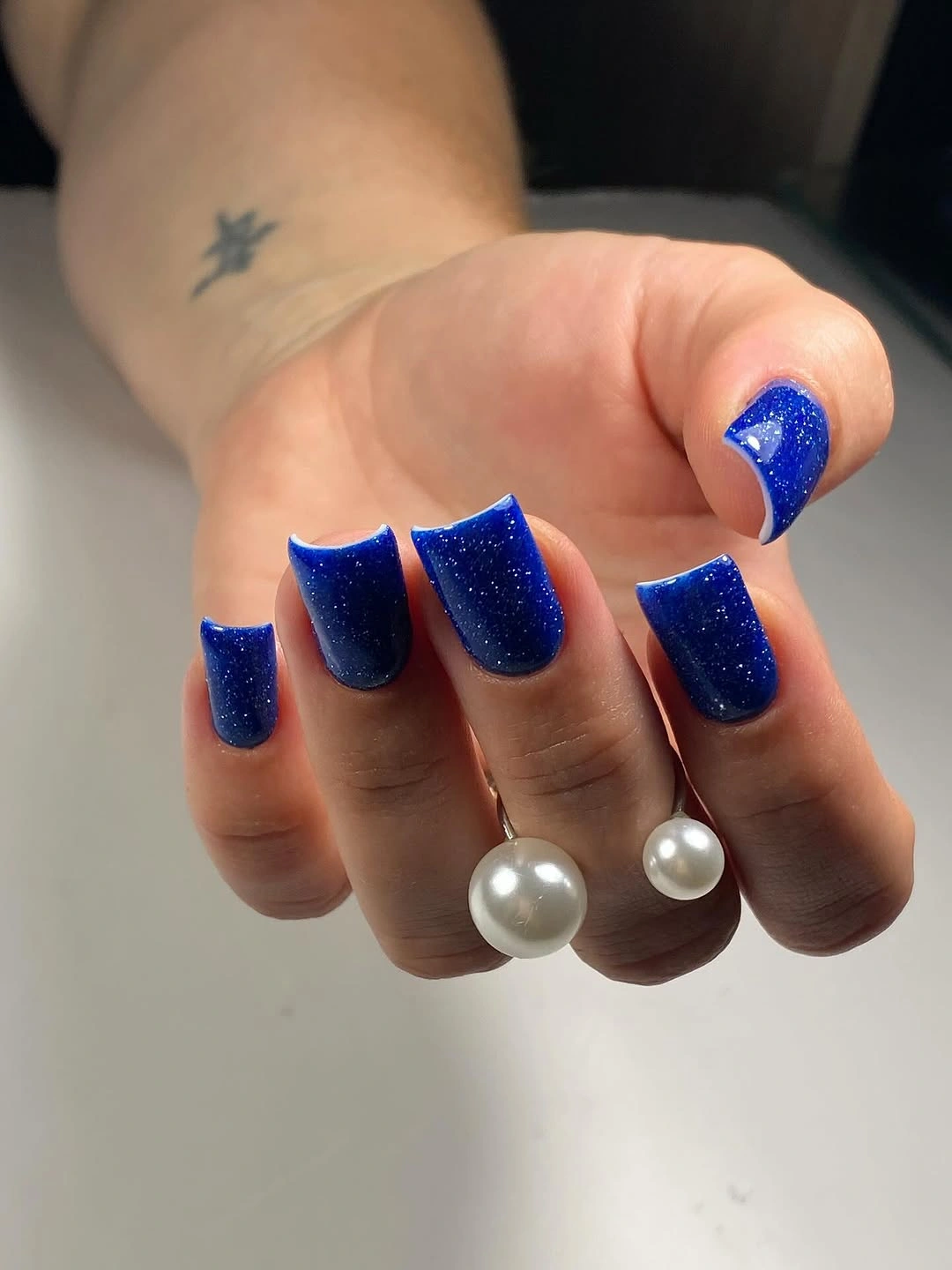
Use a shorter square shape and keep the cobalt shimmer plain for an easy statement manicure. A deeper navy would lower the saturation while preserving the reflective surface, whereas a pale accent would create a much stronger value shift and should be used only if the blue still remains dominant. The blue remains vivid because the shimmer is fine enough to support the color instead of obscuring its clean square outline.
The strong blue finish shows scratches and uneven edges under bright light, especially at the corners. The color rewards a clean outline and a consistent shine, so a small reduction in length may improve the result more than adding another decorative detail. A consistent shine across the fingers will keep the saturated blue looking deliberate even when the manicure is otherwise very simple.