
Autumn rarely arrives as one exact color. It shows up in the first pale morning light, the navy of an earlier evening, the warm flash of a leaf, and the soft green that refuses to disappear. Nails can hold that range without becoming literal: a single shade may be enough, while a curved line or a small botanical detail can shift the mood.
The most appealing seasonal manicures usually leave a little air around their idea. A pale base lets a dark mark breathe, a strong tip becomes clearer when the rest stays quiet, and a mixed hand looks intentional when one color returns to hold it together. That is the kind of detail I look for when deciding whether a color feels autumnal in practice rather than only in a trend list.
Soft Butter Yellow on Medium Square Nails
Medium square nails open the collection in a soft butter yellow with an even glossy surface and no visible motif. The compact outline keeps the pale color from feeling too delicate, while the single shade makes undertone and shine the complete design decision. It is a clear pastel beginning that does not need extra decoration to look intentional.
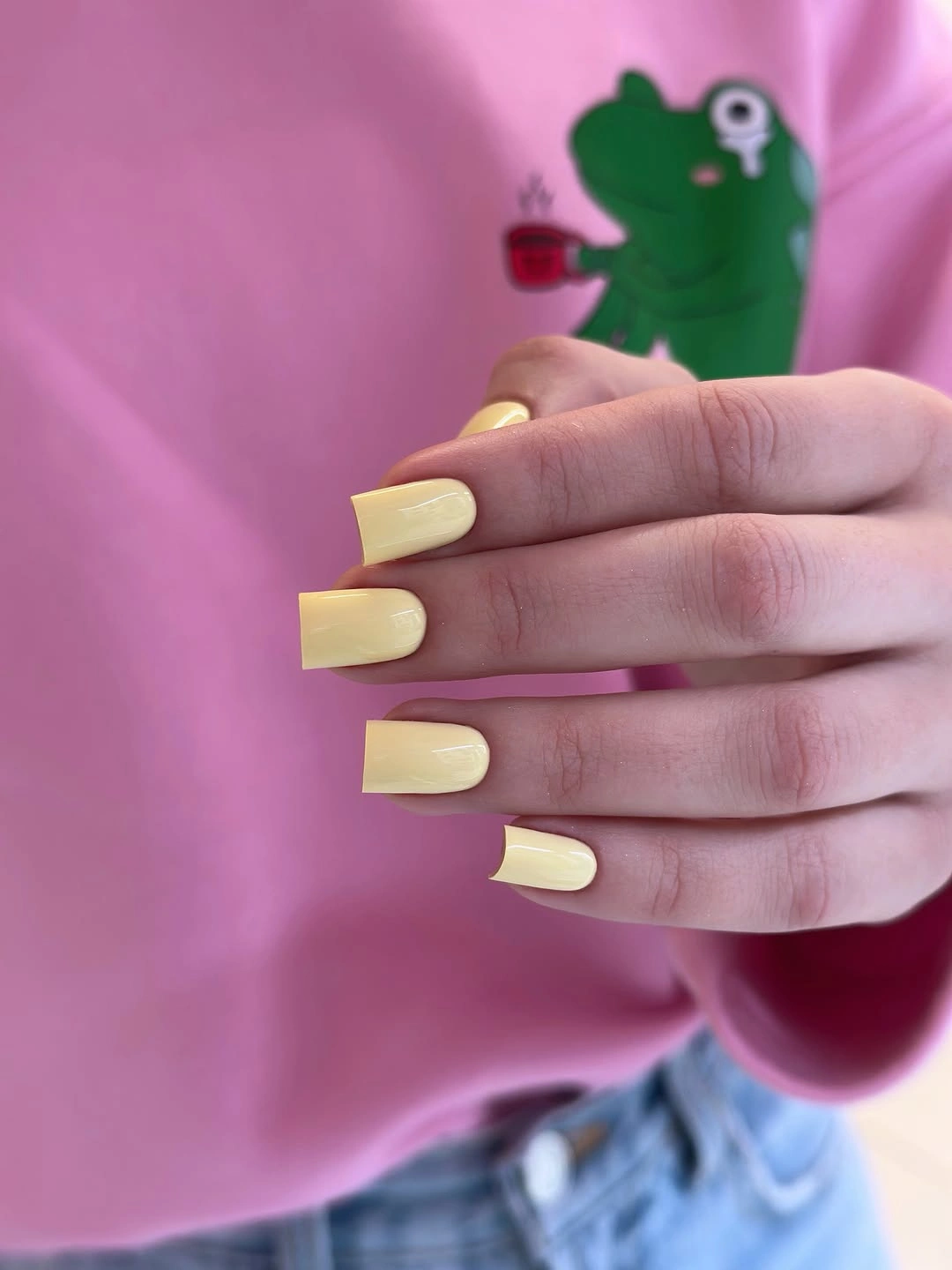
Keep the square corners neat and let the color remain uninterrupted if you want a low-detail seasonal option. The look depends on a calm surface, so adding several accents would change the balance rather than improve it. A creamier yellow can make the palette softer, while a deeper ochre can move it toward a more traditional fall value without changing the simple structure.
Compared with the graphic ideas later in the article, this manicure is easy to read and easy to pair with different colors. The pale solid may show uneven edges or chips sooner than a patterned surface, which is the honest maintenance tradeoff. Choose it when autumn means a light shift in color rather than a detailed theme across every nail.
Glossy Powder Blue Square Nails
Medium square nails use a saturated powder-blue shade with a glossy finish, and the cool background reinforces the clean color story without adding visible nail art. The shape gives the pale blue a firm outline, so the manicure feels crisp instead of washed out. It is a cool seasonal option that changes the mood through hue rather than decoration.
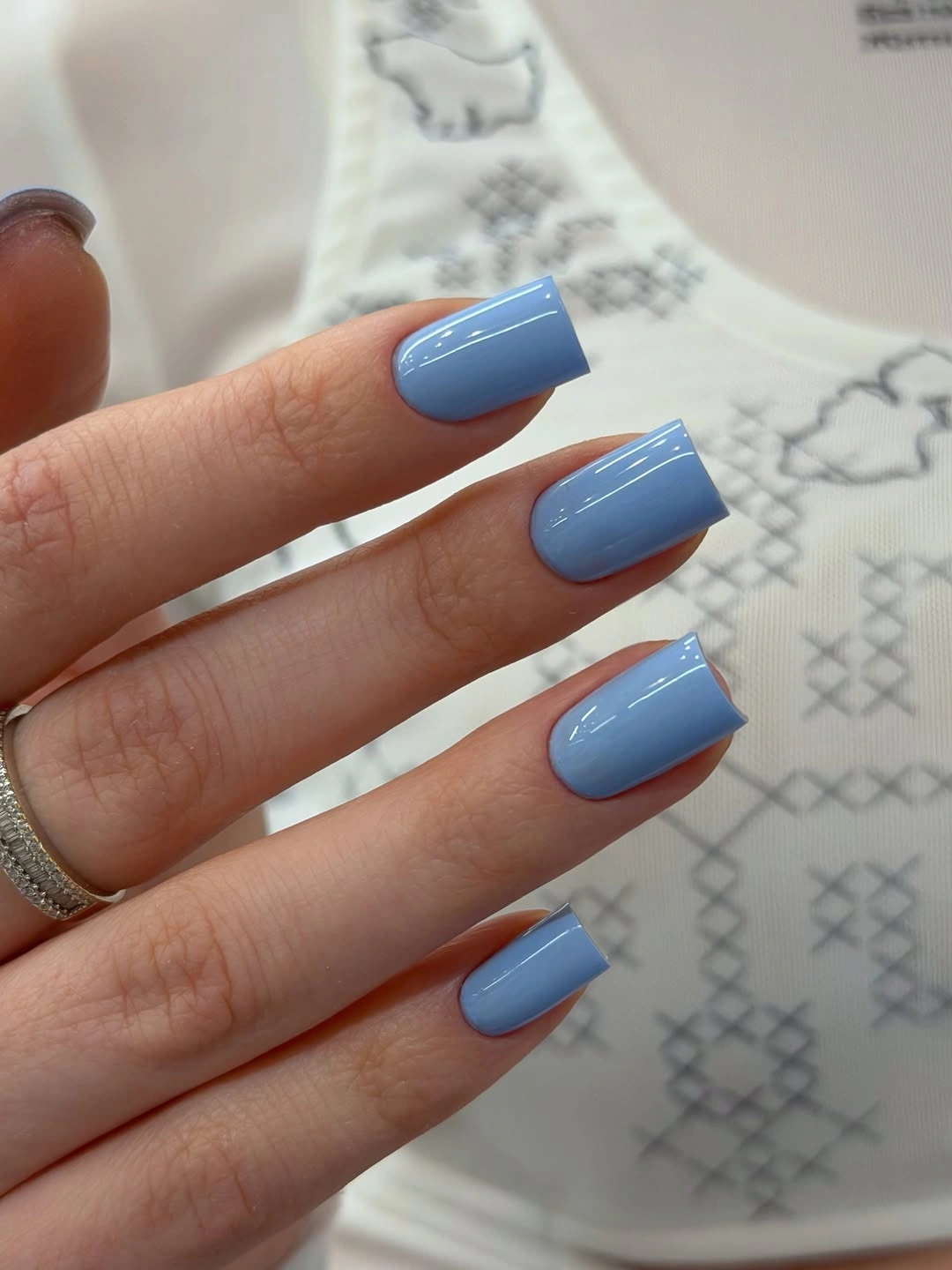
Keep the blue surface smooth and let the shade stay unbroken if you want the same direct effect. Extra art would make this a different idea, while a slightly deeper blue can increase contrast without disturbing the solid-color logic. The medium square shape is doing enough structural work on its own, so the edge should remain the clearest line.
This look mirrors the yellow opener in construction but not in temperature, which makes the pair useful for comparing how color changes the same shape. It is more graphic because the blue reads with stronger contrast, yet it remains approachable and easy to understand. Pick it when a cool pastel feels more natural than a warm autumn neutral.
Milky Pearl Pink on Almond Nails
Medium almond nails carry a translucent milky pink or pearl-gray sheen with rounded highlights and no strong motif. The almond outline softens the cool reflective surface, while the light-catching finish gives the quiet color enough dimension to avoid looking flat. This is a manicure built from surface and silhouette rather than line work.
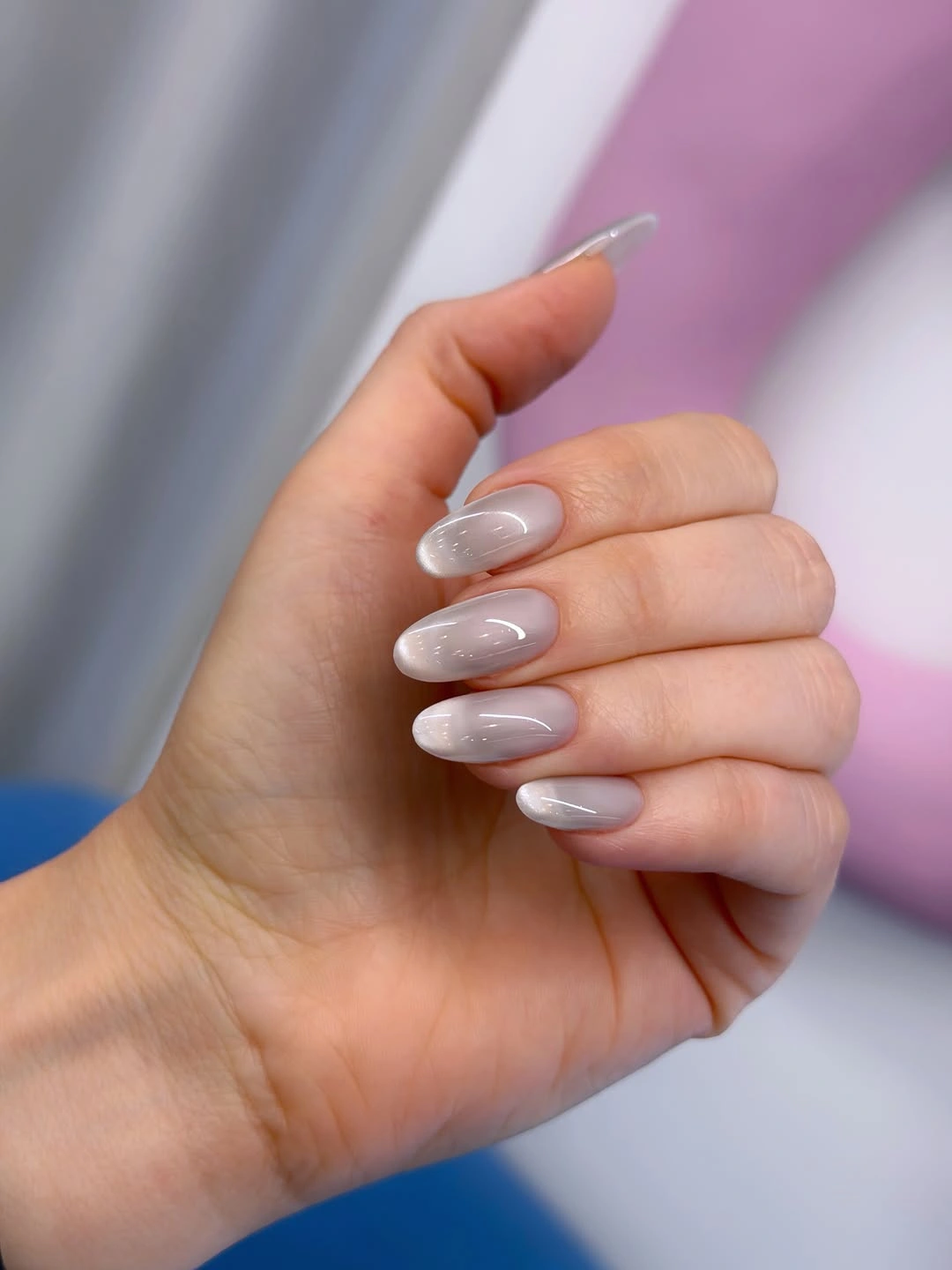
Use a sheer pearl layer across the full nail and keep the shape moderate if you want the same calm balance on shorter fingers. A warmer blush can preserve the softness, while a cooler gray-pink will make the reflection feel more silvery. Avoid adding heavy art because the open surface is what lets the finish read as luminous rather than crowded.
The result is more reflective than the yellow and blue solids but still restrained enough for a simple outfit or a detailed accessory. Its limitation is familiar with pale finishes: uneven edges and chips can interrupt the clean glow quickly. Choose it when a small change in undertone and light is enough to make a seasonal manicure feel considered.
Soft White Nails with One Quiet Accent
Medium nails appear pale white or neutral with a small light-catching accent on one or two fingers, while the rest of the set remains mostly solid. The nearly blank surface makes the detail feel intentional because there is so much space around it. This design uses restraint as its main visual feature rather than repeating a motif across every nail.
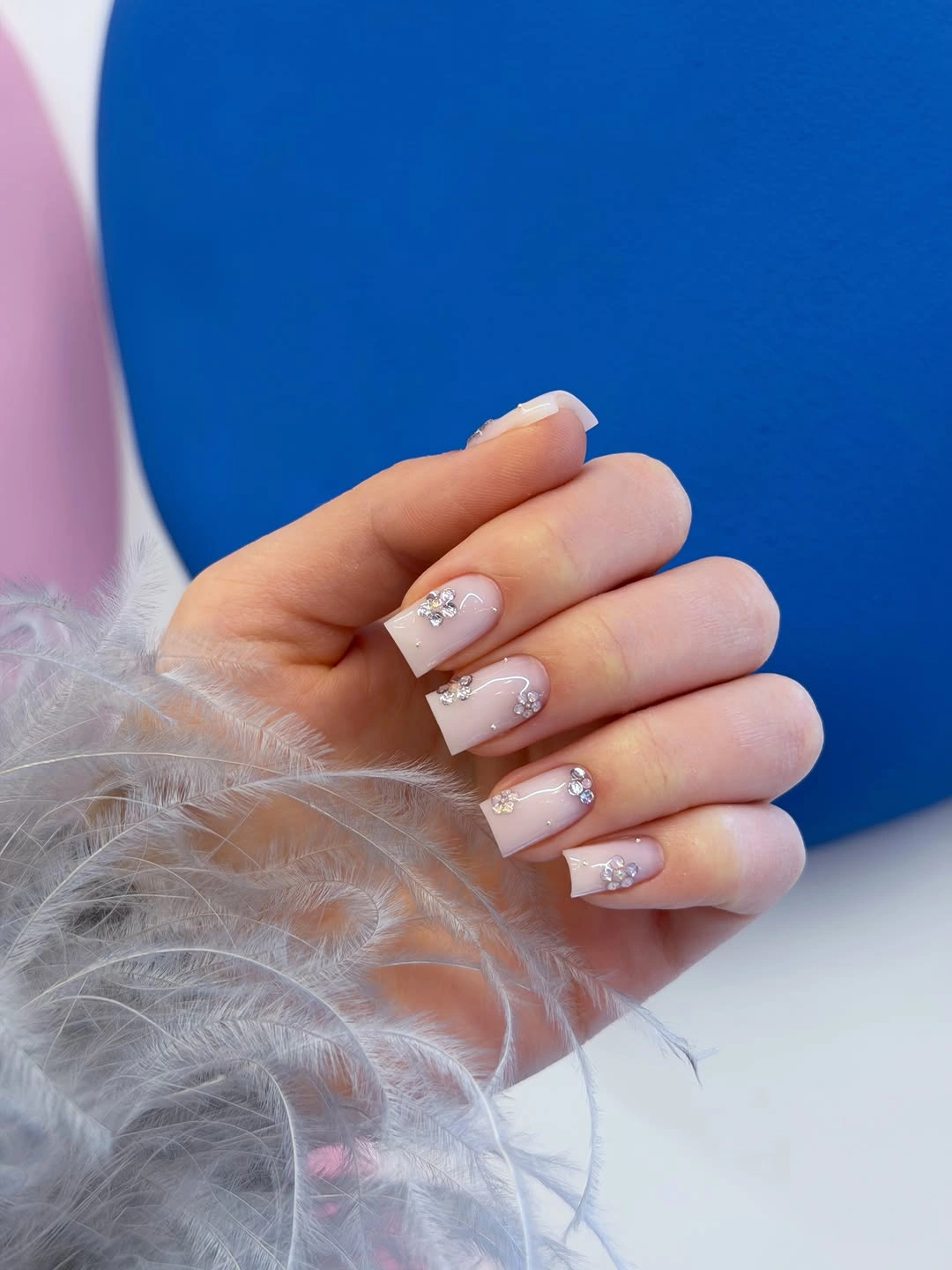
Keep the accent close to the base or side and leave the other nails clean when adapting the idea. More decoration would remove the quiet contrast that gives the tiny mark its purpose, and a short rounded shape can make the balance even easier to maintain. If a white base feels stark, shift toward cream while keeping the accent pale and limited.
Compared with full art, this manicure is easier to wear across occasions and can support stronger clothing or jewelry without competing. The tradeoff is that a pale solid leaves nowhere for uneven borders to hide, so the simple surface needs attention. Choose it when you want one small point of light rather than a full collection of motifs.
Deep Navy Reflective Almond Nails
Long almond nails are painted a deep navy blue with a reflective, almost metallic sheen that catches along the curved surfaces. The dark value gives the elongated shape weight, while the light play prevents the color from looking flat or overly heavy. It is the first look in the set where depth comes from a dark tone and a moving finish together.
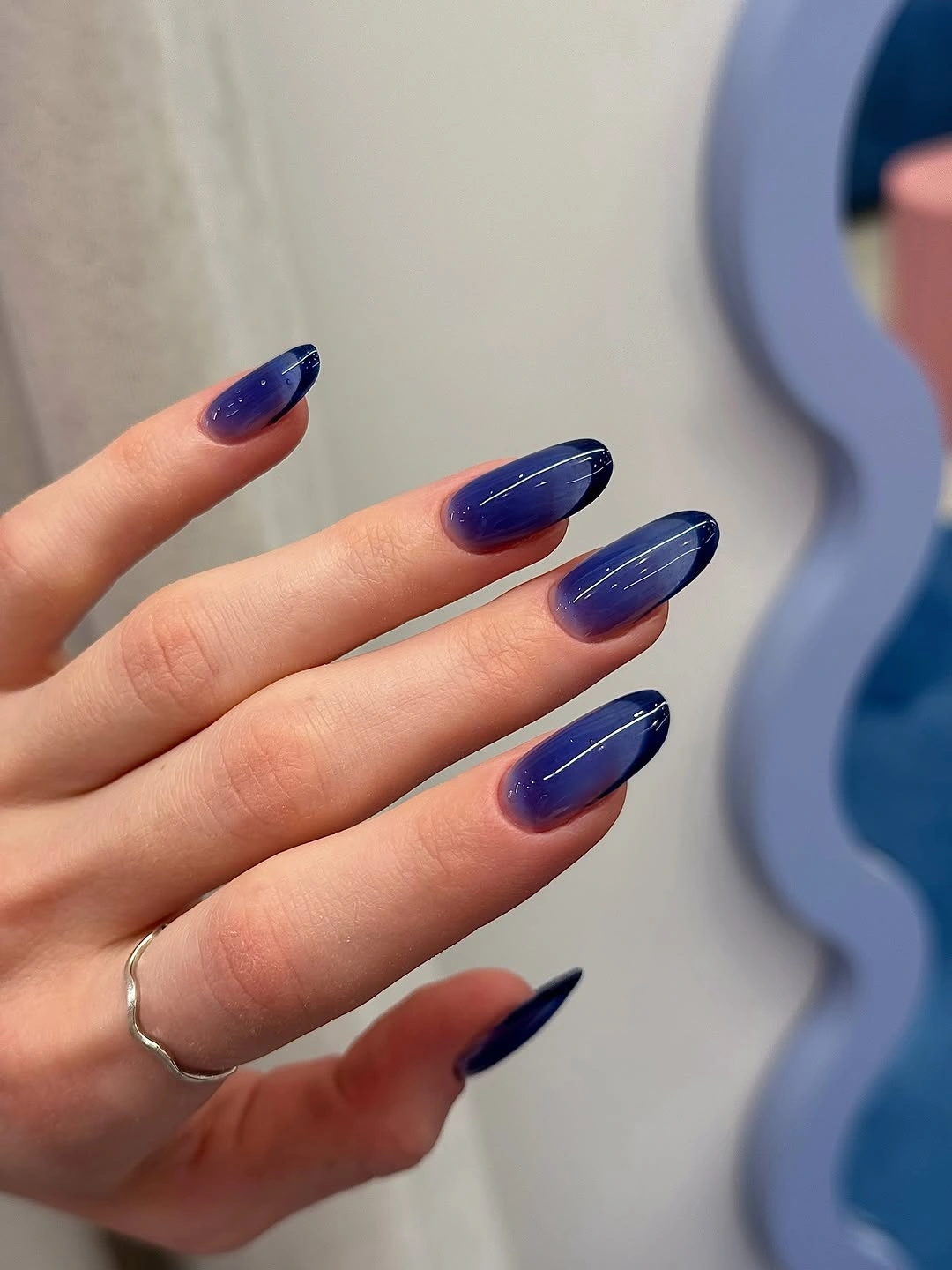
Keep the navy on the full nail and let the almond point remain visible so the shape stays part of the composition. A matte finish would change the light relationship that defines this manicure, while a shorter oval can make the same dark color feel less pointed and more contained. No additional motif is needed because the reflection already supplies variation.
This has more evening presence than the pastel solids and a stronger seasonal depth without resorting to brown or burgundy. The long pointed edge is the practical commitment, not the color itself, so choose a shorter shape if you want the navy to feel easier to live with. It works when a single dark shade should still have movement.
Glossy Black Short Nails with a Tiny Accent
Short square nails are coated in glossy black, with a tiny pale or glittering accent visible on one finger. The compact shape keeps the dark color from becoming overly severe, and the small interruption gives the solid surface a measured break without turning it into full nail art. Against the light curtain, the shine and outline remain easy to read.
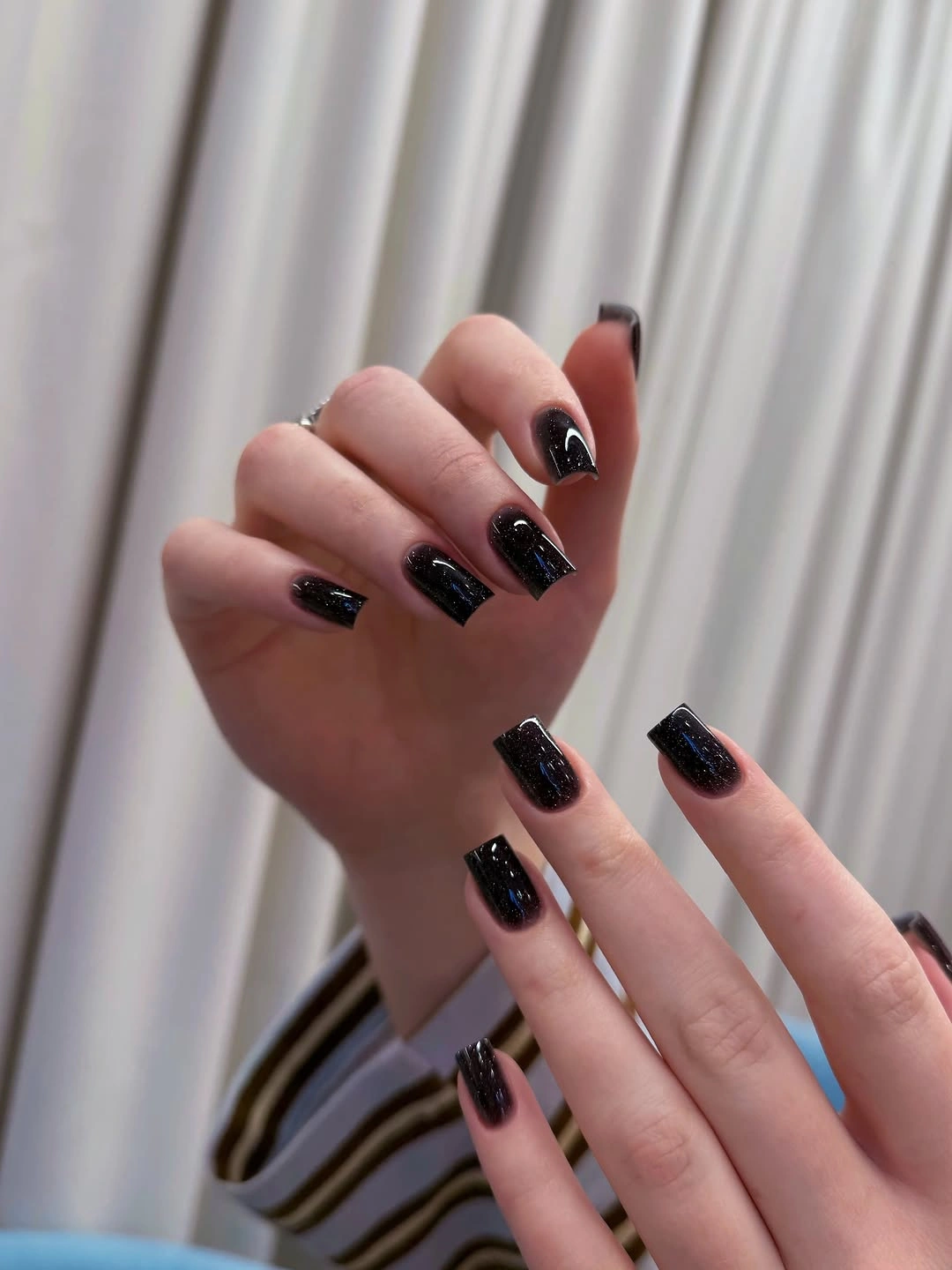
Use black across the full hand and place a single micro-accent if you want to repeat the idea. The short length is already giving the dark shade a practical frame, so additional designs could make the set feel unnecessarily busy. A deep charcoal can soften the contrast while preserving the same glossy, low-detail direction.
This is more graphic than the pale colors but less maintenance-heavy than the extra-long patterned styles. Gloss can reveal surface marks quickly, yet the short edge is easier to manage than a long point or square corner. Choose it when autumn color means a dark neutral with one controlled interruption rather than a detailed composition.
Black Nails with Blue and Orange Flame Lines
Long pointed nails use a black base with sweeping blue, orange, yellow, and pink flame-like lines that follow the length. The dark ground separates the bright curves, while their repeated direction gives a complex palette an energetic rhythm. The design is graphic because the lines move with the point instead of sitting as isolated dots or blocks.
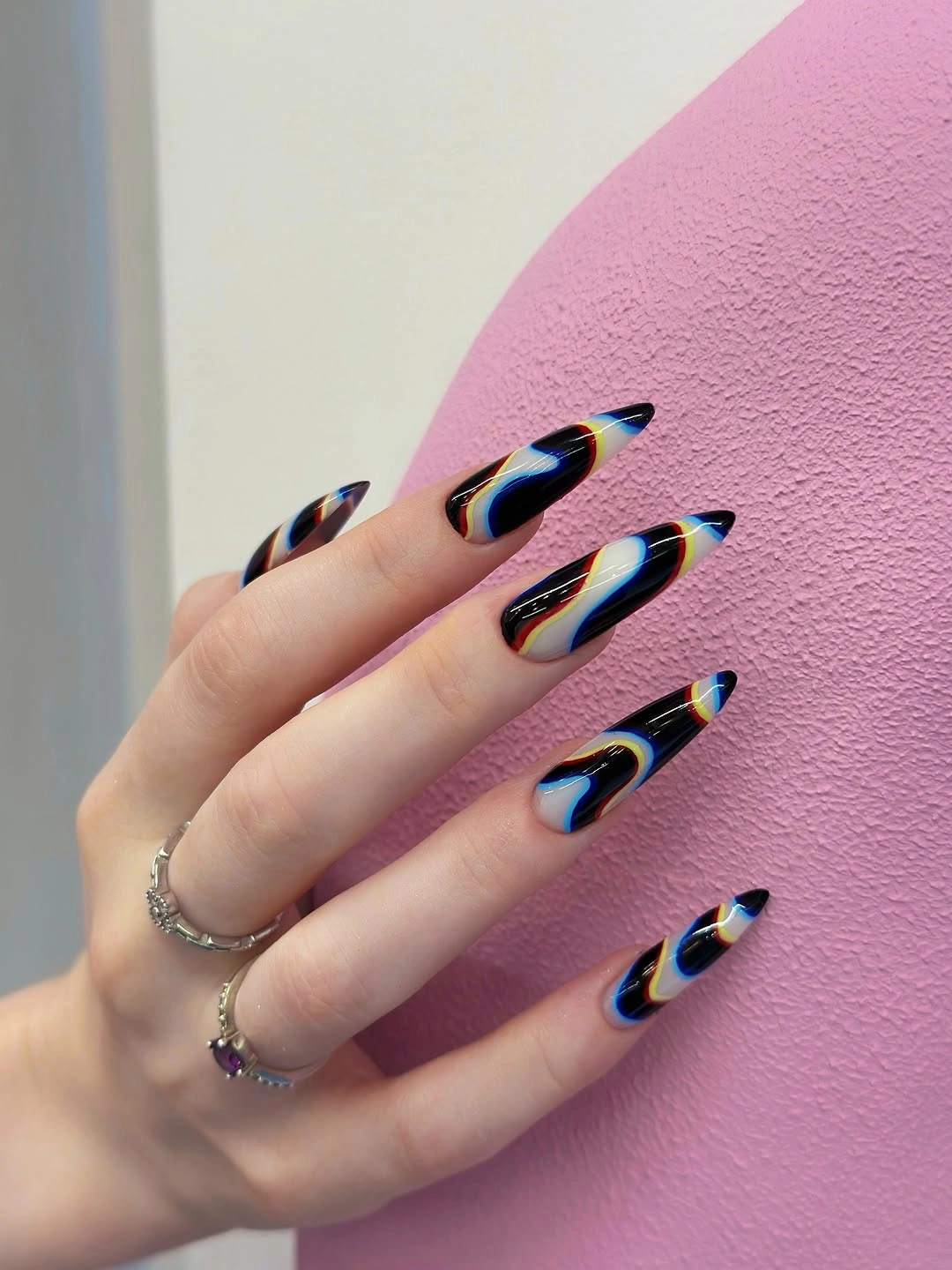
Keep the black base and choose two line colors for a shorter version so the curves remain open and readable. The bright strokes need spacing, and shrinking too many colors onto a smaller surface would turn the movement into visual noise. A tapered almond can retain the upward direction while making the silhouette less sharp than a stiletto.
This is much louder than the solid black manicure and starts the article’s motif-led section with a clear shift in scale. Its reward is movement and contrast; its tradeoff is that long points and thin lines both need attention as the manicure grows. Choose it when the color should feel active and directional rather than soft or neutral.
Pink Nails with Metallic Square Tips
Long tapered square nails have a pale pink base with transparent-looking sections and silver or metallic geometric tips. The cool edge acts like a frame for the soft base, giving each nail a crisp endpoint without covering the entire surface. The design feels architectural because the shape and tip are both cleanly organized.
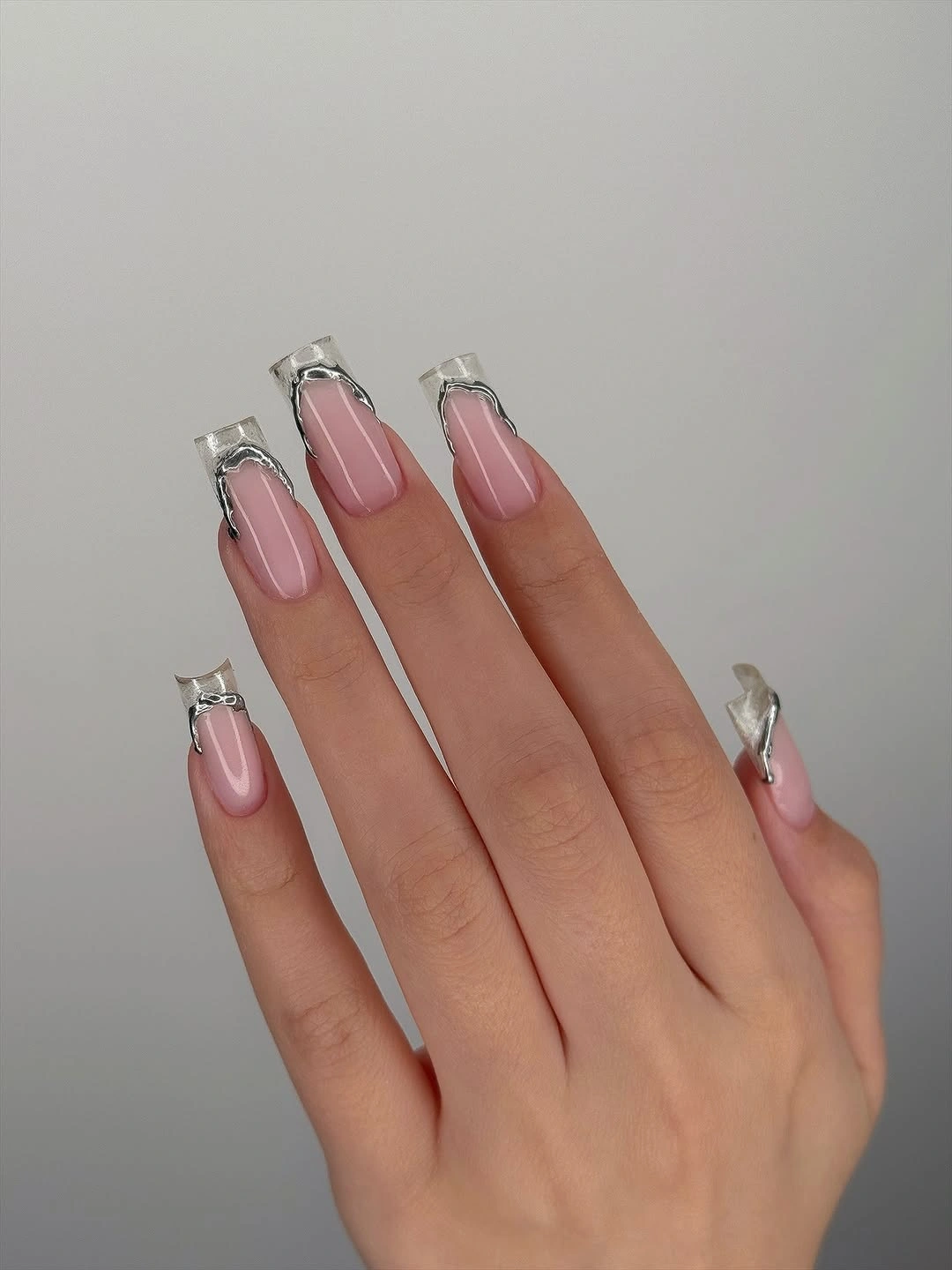
Keep the metallic area concentrated at the tip and shorten the square edge only slightly if you want to preserve the geometry. A solid silver block would change the balance, so leave some pale base visible between the color and the edge. If you prefer a warmer autumn direction, a muted champagne accent can replace the cooler metallic appearance without changing the construction.
Compared with flame art, this manicure feels quieter and more structured, using edge placement instead of flowing lines to create contrast. The long corners and reflective details still need care, especially where the tip begins to grow out. It suits someone who wants a decorative finish with a clear border and plenty of open surface.
Plum French Edges with Fine Contrast Lines
Medium almond nails use a deep plum color at the French-like edge, with pink or red lines and small curved accents on selected fingers. The darker tip defines the almond silhouette, while the lighter contrast keeps the set from becoming a single heavy band. The manicure sits between a solid dark color and a fully illustrated design.
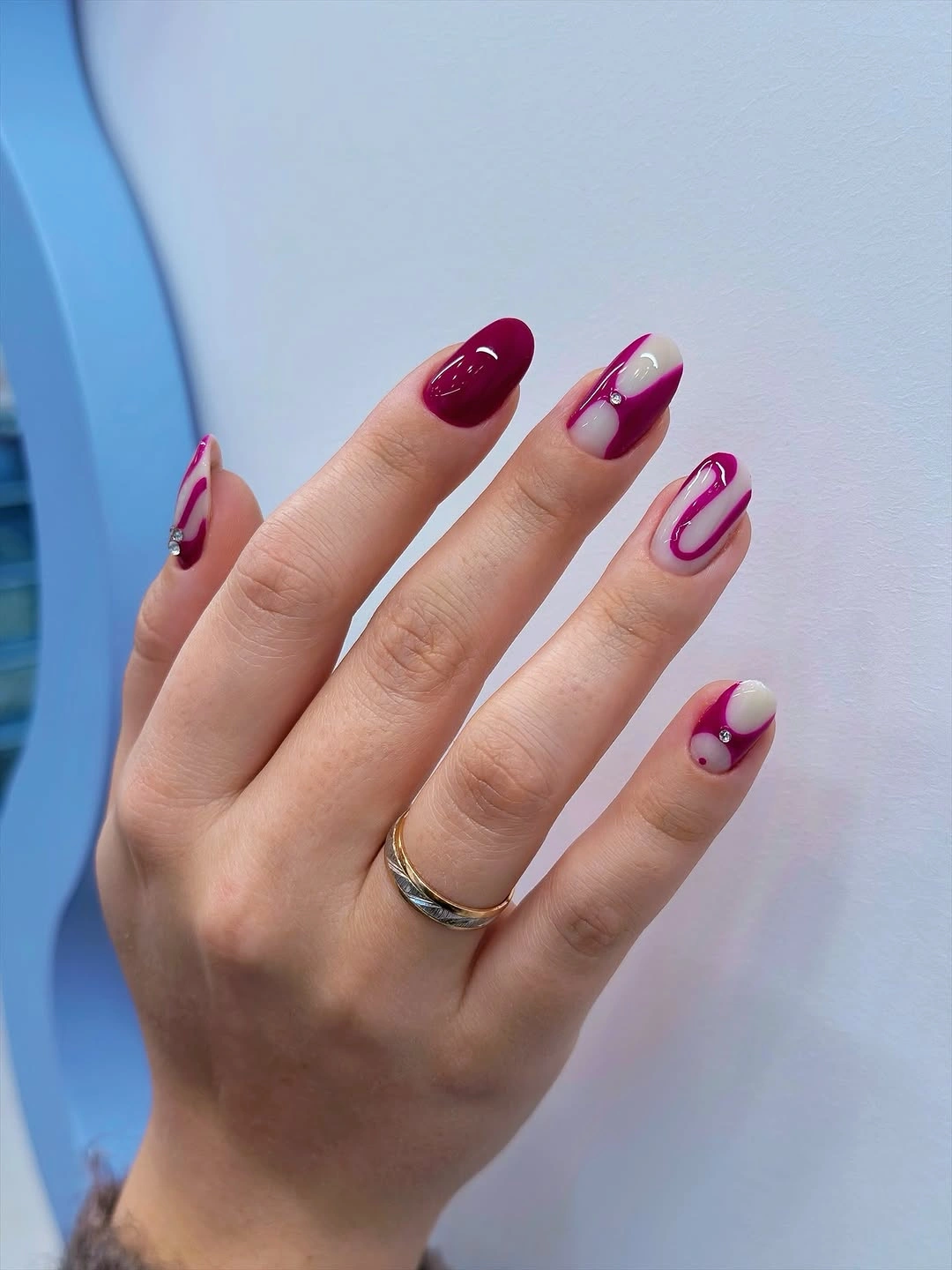
Use the plum only at the tips and simplify the extra curves when adapting the idea to a shorter shape. The repeated edge placement is what keeps the hand cohesive, so the contrast can stay clear even if the smallest accents disappear. A muted berry can replace the plum when you want a softer value while preserving the same border logic.
This is less dramatic than the navy full color and less busy than flame lines, making it a useful middle ground for an autumn palette. The practical checkpoint is the tip band: uneven growth or borders will change the silhouette first. Choose it when you want a darker seasonal hue with enough open base to keep the manicure light.
Red Square Nails with Playful Graphic Marks
Long square nails alternate deep red, white, and pale pink with small graphic marks, stars, and checkered-looking details across the fingers. The limited red-and-white palette keeps the motifs connected, while the variation from nail to nail creates a festive rhythm instead of one repeated block. The square outline gives the illustrations a stable frame.
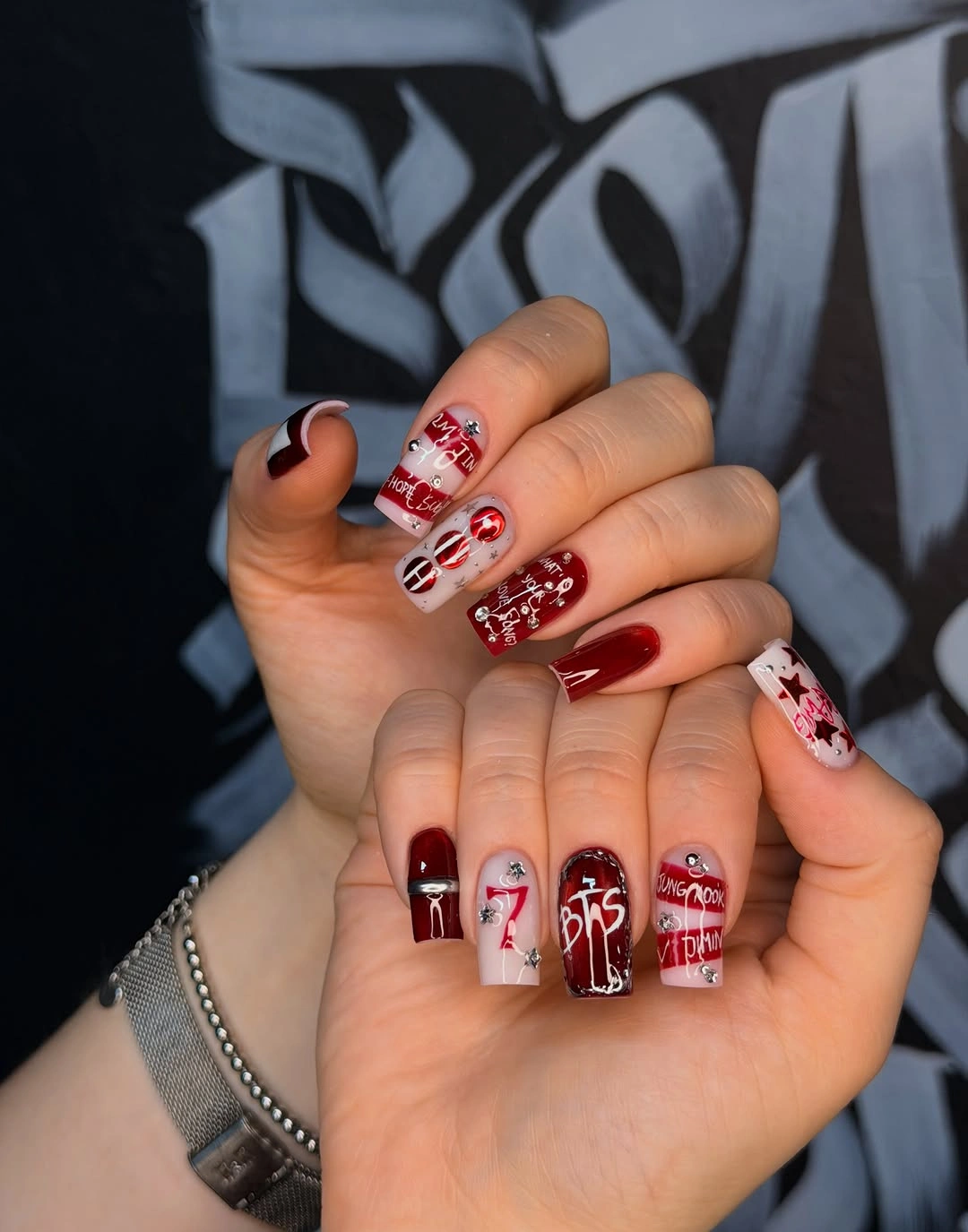
Choose one graphic language, such as stars or checks, for a shorter adaptation and leave two nails mostly solid to preserve breathing room. Small marks need enough spacing to remain separate, while the red base can carry the seasonal mood without additional symbols on every finger. If the contrast feels too sharp, use a warm cream in place of white.
This is more illustrative than the plum French set, but it remains more controlled than the maximal charms that follow. The tradeoff is detail upkeep: small motifs and even spacing can change quickly as the edge grows. Pick it when a red manicure should tell a graphic story, not simply present one saturated color.
Maximal Multicolor Stiletto Nails with Charms
Very long pointed nails mix bright pink, orange, blue, purple, and white with large raised-looking flowers, beads, and glittery accents. The manicure is intentionally crowded, but the repeated long point gives the colors a common direction and keeps the hand from reading as unrelated swatches. Scale and dimension are the defining choices here, not a restrained palette.
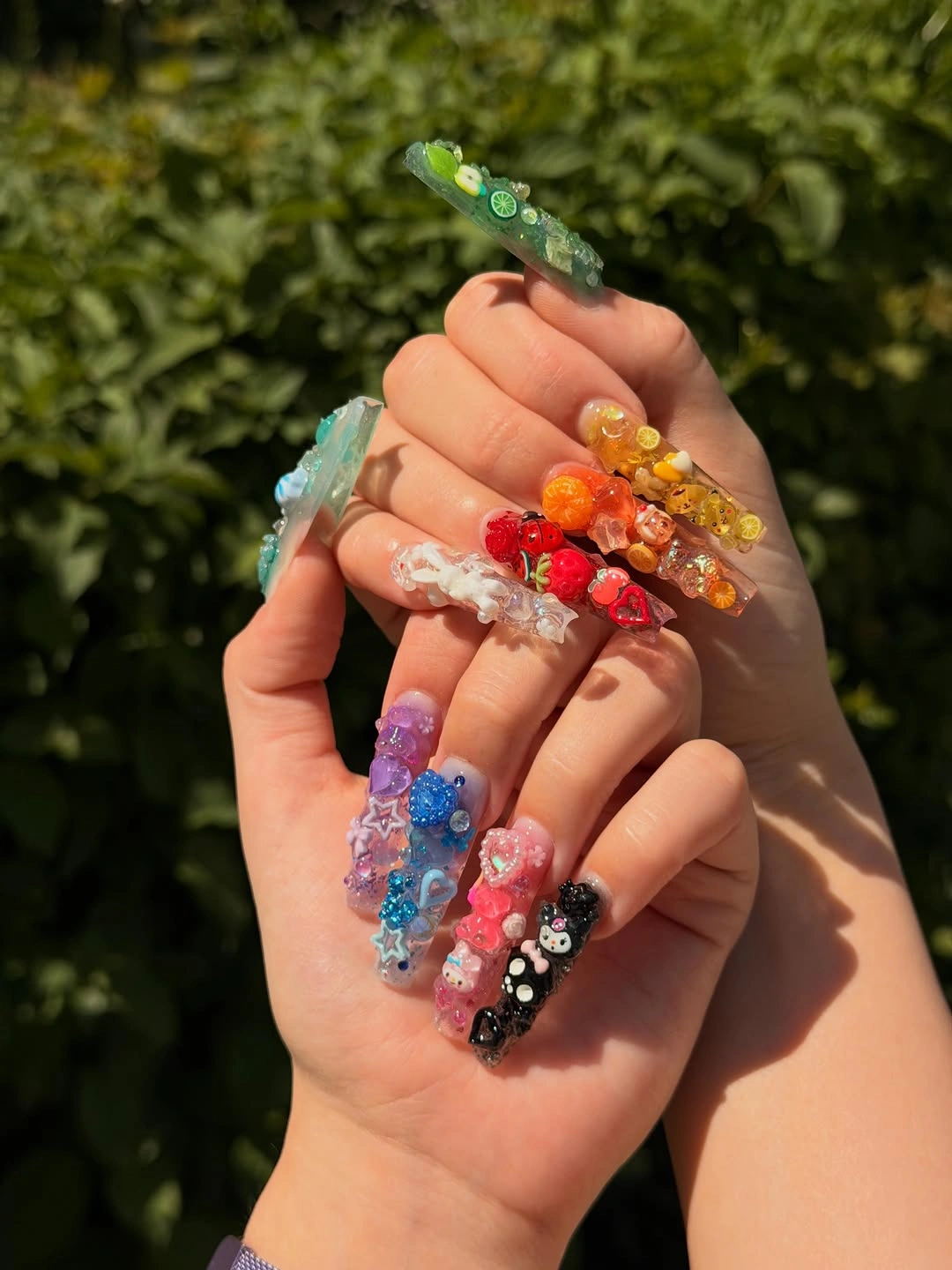
For a shorter version, keep one bright base color and one flower on a single accent nail, then let the remaining fingers stay simple. The original density depends on length and on the small spaces between the decorative elements, so adding every charm to a shorter shape would reduce clarity. A two-color palette can retain the same expressive energy without copying the full mix.
This is the collection’s most maximal moment so far, offering drama rather than easy maintenance or neutral pairing. Long points change ordinary hand movements, and raised-looking details may be the first parts to look uneven as they shift. Choose it when the manicure is meant to be an event-level focal point and practical subtlety is not the priority.
Orange Red Floral Graphics on Stiletto Tips
Long stiletto nails use a pale nude base with orange, red, and white floral or flame-like graphics, plus small metallic-looking details on selected tips. The warm palette repeats across the hand, while the nude field gives each pointed design room to stand apart instead of merging into one orange block. The shape supplies drama, but the open base controls the intensity.
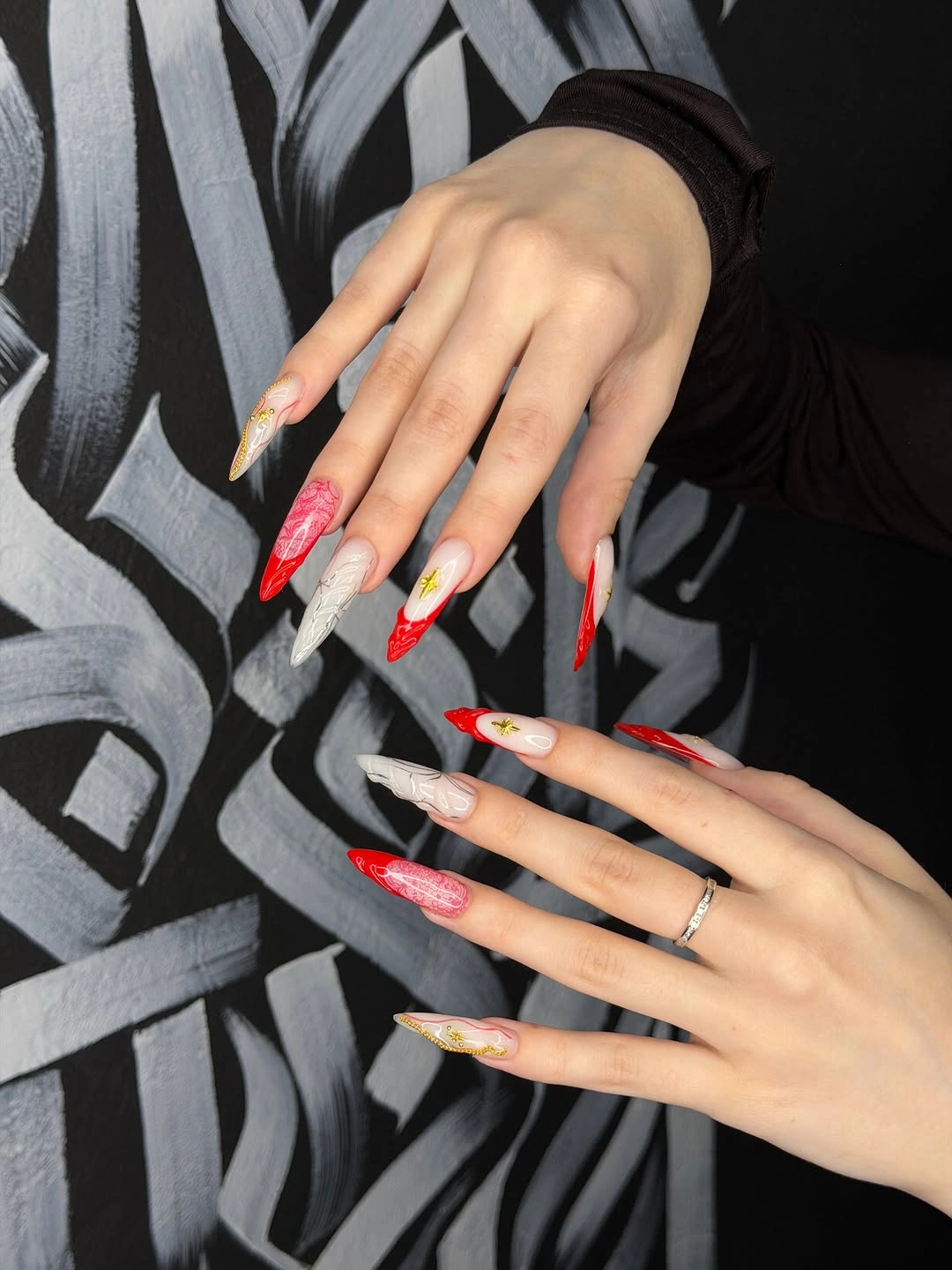
Keep the warm colors and move the largest accent to one nail when adapting the design to a shorter length. A medium almond can still show the orange-to-white contrast if the graphic stays near the tip and the nude space remains generous. Avoid adding unrelated colors; the narrow palette is what lets the separate marks read as one story.
This is more focused than the multicolor charms because the palette is controlled, yet the sharp silhouette still limits everyday practicality. The fine graphics also need careful placement to keep the tips from looking crowded. Choose it when you want a warm statement with negative space rather than a full field of orange.
Pink Almonds with Delicate Floral and Silver Details
Long almond nails combine a blush-pink base, small pale floral clusters, and metallic or rhinestone-like details placed near selected tips and side areas. The soft base allows the flowers to read as a delicate layer rather than a full-coverage pattern, and the almond shape keeps the hand visually elongated. The design is ornamented, but its scale stays comparatively fine.
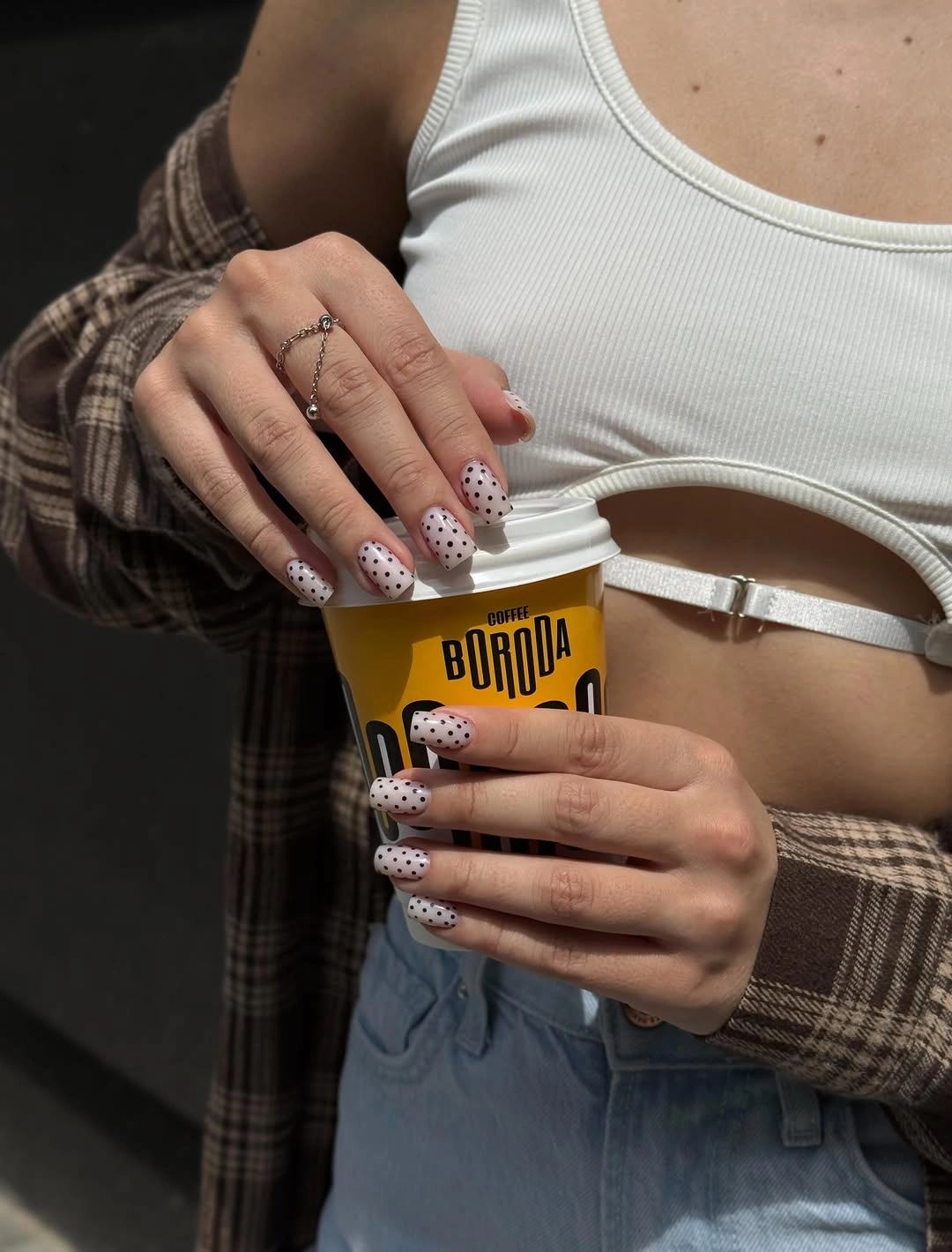
Use one floral cluster per hand and leave the other nails mostly pink if you want the same direction on a shorter shape. Small reflective details need room to remain distinct, so concentrating them is more effective than spreading them thinly across every finger. A warmer blush or muted peach can preserve the softness while shifting the palette closer to autumn orange.
Compared with the orange-red stiletto set, this manicure is gentler and less directional, but the fine accents can be the first parts to look uneven as they grow out. It fits an occasion where the nail should carry a quiet decorative note rather than dominate the entire hand. The coherent choice is to let the pink field stay visible around the flowers.
Clean Milky White Almond Nails
Medium almond nails are painted a smooth milky white with little or no visible decoration, framed by pale clothing and a simple background. The rounded silhouette keeps the white from becoming stark, and the uninterrupted surface makes both shape and finish easy to evaluate. This is a calm pause after the ornate floral and graphic sets.
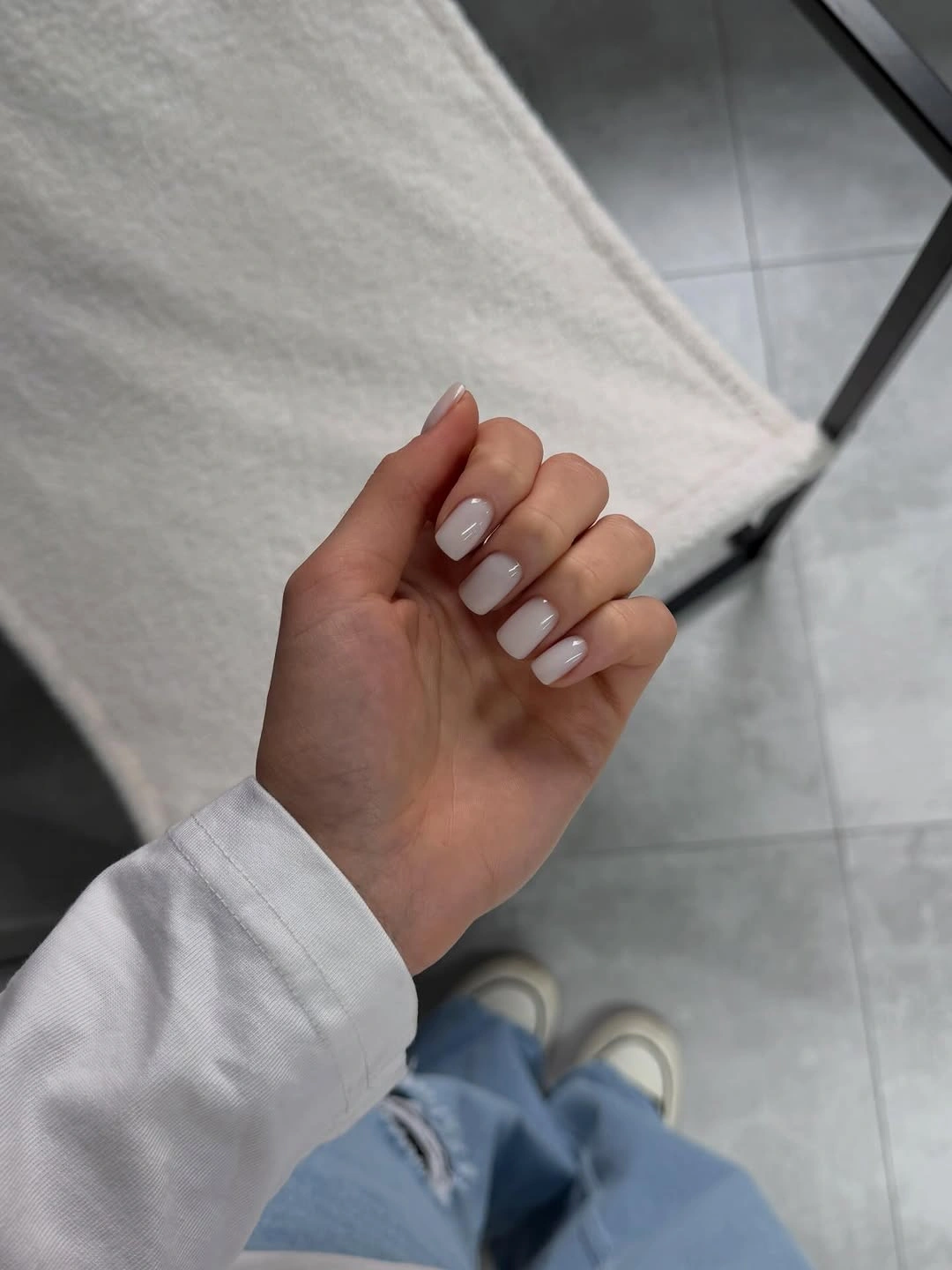
Choose a creamy white rather than an optic white if you want the result to feel softer, and keep the edge even because the color leaves nowhere for flaws to hide. The design does not need an accent nail, but a single translucent detail can be added without changing the clean base. A shorter rounded shape would make the same color even more practical while keeping its quiet clarity.
The all-white manicure resets the palette through surface instead of through a new motif. It is easier to pair than the multicolor designs, though pale color shows chips and uneven borders quickly and can look less forgiving during grow-out. Wear it when a simple shape and an uninterrupted finish say enough.
White Squares with Black and Gold Line Work
Medium square nails use a white base with black curved marks and small gold details on selected fingers. The white surface acts as negative space, so the dark lines and warm metallic points feel intentional rather than crowded. The design has a clear graphic identity while keeping most of the nail light and open.
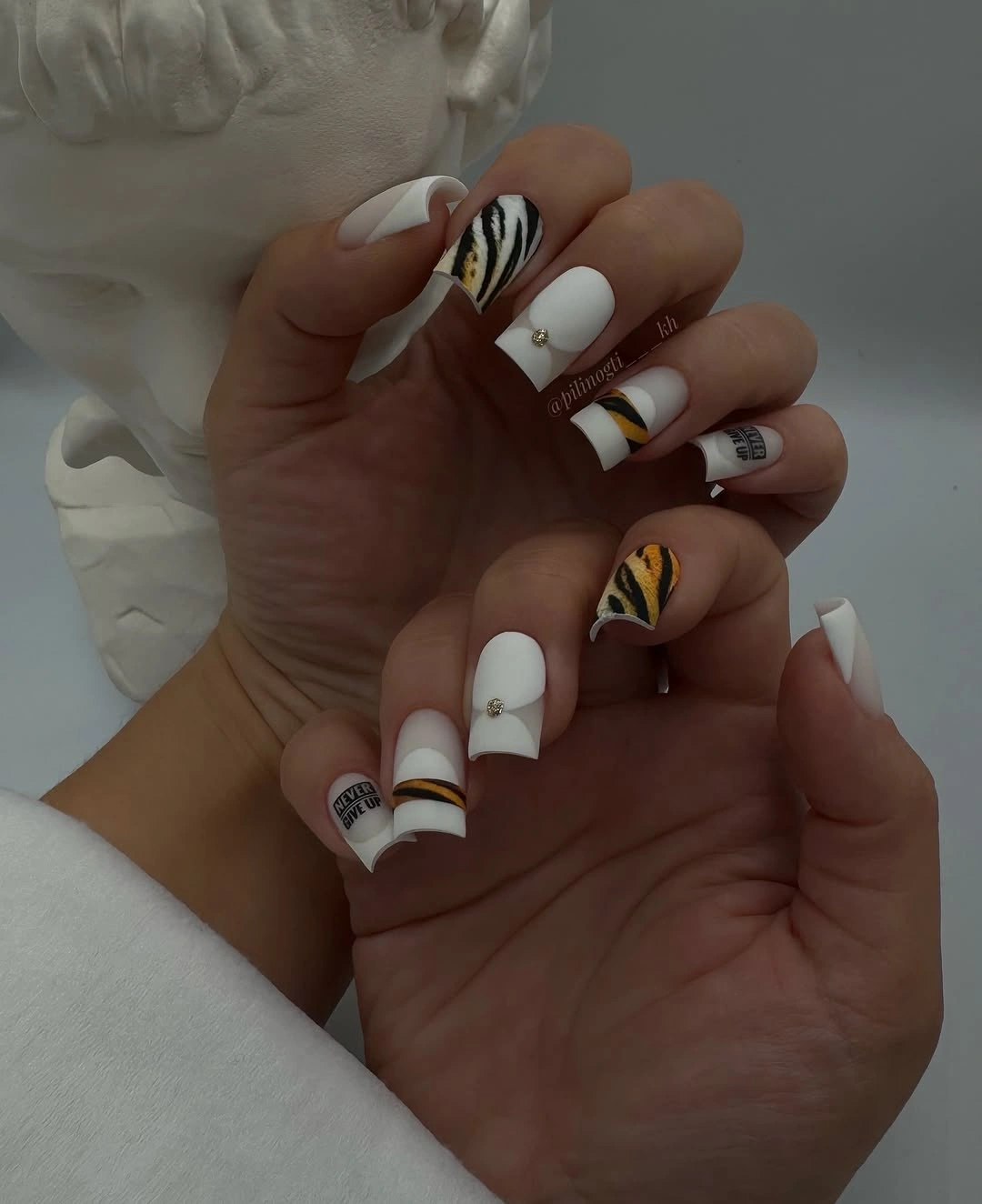
Keep the black marks thin and the gold limited to one or two accents so the white field remains the main visual area. On a shorter nail, one curved line can do more than several small marks because the spacing will stay legible. A cream base would soften the contrast, while a brighter white would make the black drawing more graphic.
This is more designed than the all-white almond set but much quieter than the long charms and red illustrations. The tradeoff is precision in the line work, not excessive length, so it can suit someone who wants pattern without a pointed silhouette. The balance holds when black and gold remain accents inside a mostly white composition.
Pink Rounded Nails with Neon Yellow Tips
Short-to-medium rounded nails carry a glossy pink base with neon yellow tips and occasional tiny green accents. The yellow creates a clear warm contrast against the softer pink, while the repeated edge keeps the color from spreading across the whole hand. The rounded shape makes the vivid border feel playful rather than severe.
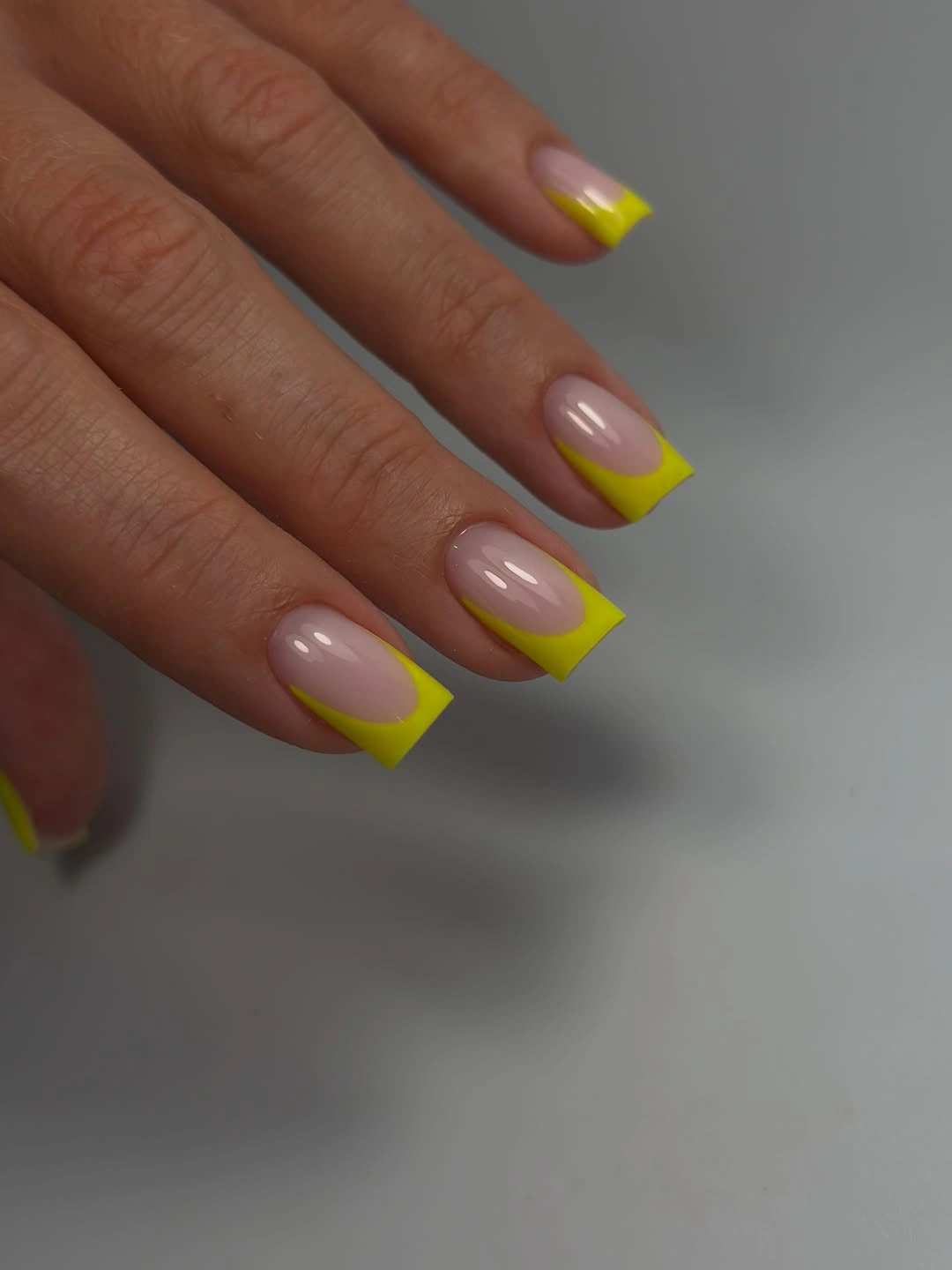
Keep the tip band narrow and use the green only as a small note when adapting the idea. A shorter shape benefits from the simple repeated edge, and the manicure will stay readable as long as the yellow does not climb too far toward the base. If the neon is too bright, a muted marigold can preserve the autumn relationship while lowering the saturation.
This is more lively than the white-and-gold lines and easier to scale down than long dimensional art. The vivid border will reveal growth quickly, which is the main practical limitation, but the rest of the surface remains easy to refresh. Choose it when you want autumn color to feel cheerful and concentrated at the edge.
Milky Blue Long Nails with Geometric Accents
Long square or tapered nails use a milky pale blue base with clear or white geometric areas and small reflective accents on selected fingers. The cool base keeps the long silhouette light, while the sparse structural details add dimension without covering every nail. The design feels architectural because the accents follow the shape instead of fighting it.
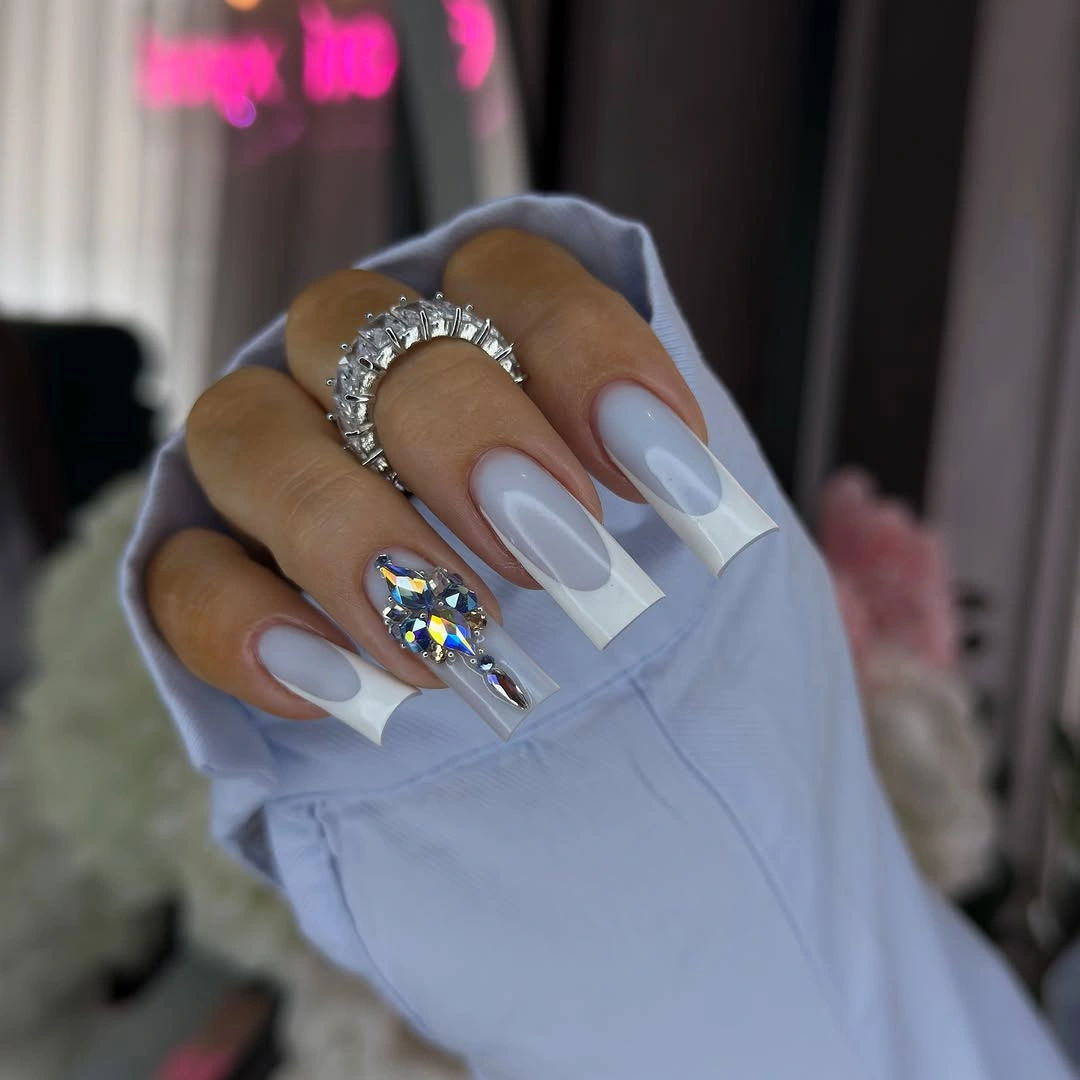
Keep two nails mostly solid pale blue and move the reflective detail to one accent when shortening the design. The color should remain the largest area, with the geometry acting as a precise interruption rather than a second full pattern. If the long edge feels impractical, a medium square can preserve the cool palette and the open spacing with less length commitment.
It is more construction-led than the yellow French tips and more restrained than the maximal charms, so it adds complexity without becoming crowded. The practical tradeoff is still visible in the long edge, especially when small reflective details sit close to the tip. Choose it when a pale color should feel designed through proportion and line.
Icy Blue Glossy Square Nails
Medium square nails are painted a pale icy blue with a glossy, mostly solid finish, and the soft blue garment in the background echoes the color without hiding the manicure. The square edge gives the light shade a firmer outline, while the absence of art lets the surface remain the focus. This is a quiet cool-color pause before the darker botanical details.
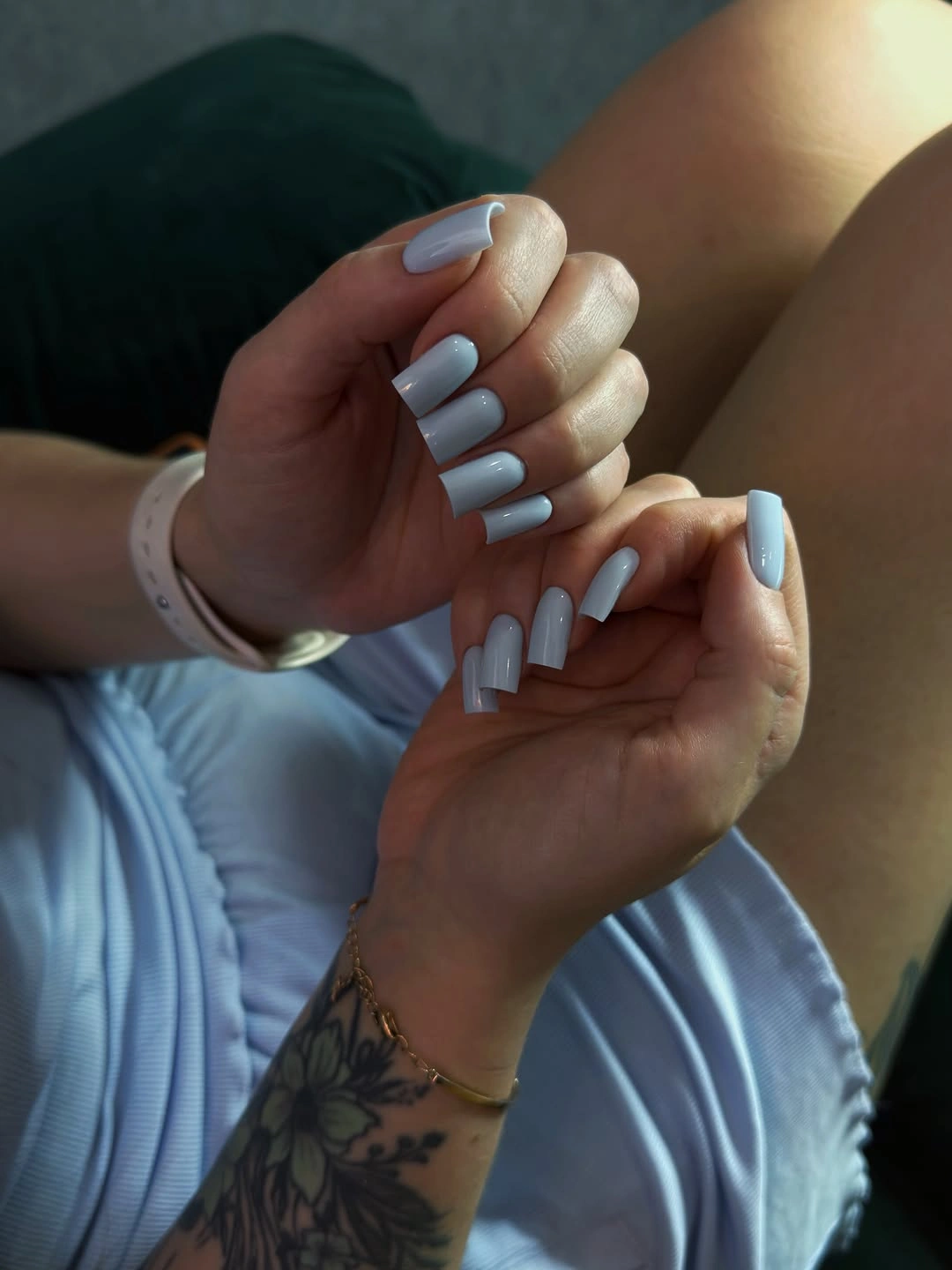
Keep the blue solid and choose a slightly deeper version if you need more contrast against your usual wardrobe. Additional motifs would turn the design into a different direction, while the medium square shape already supplies enough structure. The key adaptation is to keep the finish smooth and the color evenly distributed from base to edge.
Compared with the geometric look before it, this manicure is simpler and easier to read at a glance. It is less decorative, but that can make it more useful for everyday wear when you want a seasonal color without a long list of details. The soft blue leads the mood, and the square outline keeps it from becoming visually vague.
Neutral Nails with Dense Black Botanical Lines
Long tapered nails use a pale neutral base with dense black leaf-like line work across the tips and upper surface. The open base keeps the drawing readable, while the repeated botanical shapes give an asymmetrical hand a shared rhythm. Dark lines provide the autumn depth here, but the neutral field stops them from feeling visually heavy.
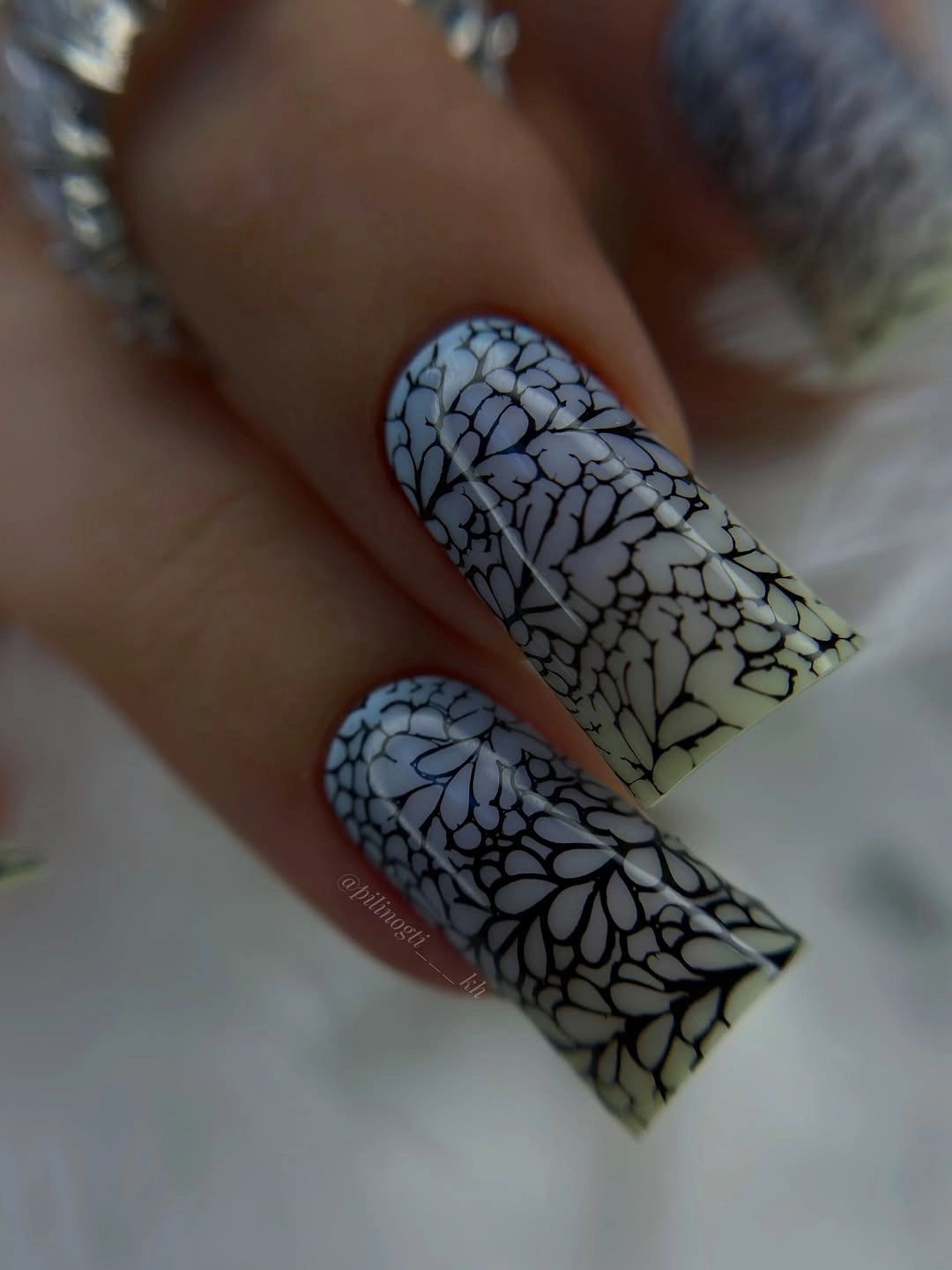
Keep the line work concentrated near the tip and shorten the nail slightly if needed so the contrast between open base and dense drawing remains clear. The pattern does not need to cover every millimeter; leaving a clean area near the base helps the leaf shapes read as intentional. A warm cream can replace the pale neutral if you want a softer background without losing the black structure.
This is more detailed than the solid blue but calmer than the multicolor charms, which makes it a useful dark-neutral direction. Fine lines need upkeep if they begin to blur, and the long edge still changes the practical feel of the manicure. Choose it when you want botanical interest expressed through contrast and repetition rather than color variety.
Glossy Pink Almonds with Soft Marble Swirls
Medium almond nails use a glossy pink base with soft lighter and darker swirls, creating a marbled surface against green leaves. The curved color movement follows the almond shape and adds depth without introducing a separate motif, so the manicure feels fluid rather than illustrated. Each nail can vary slightly while the pink family keeps the hand connected.
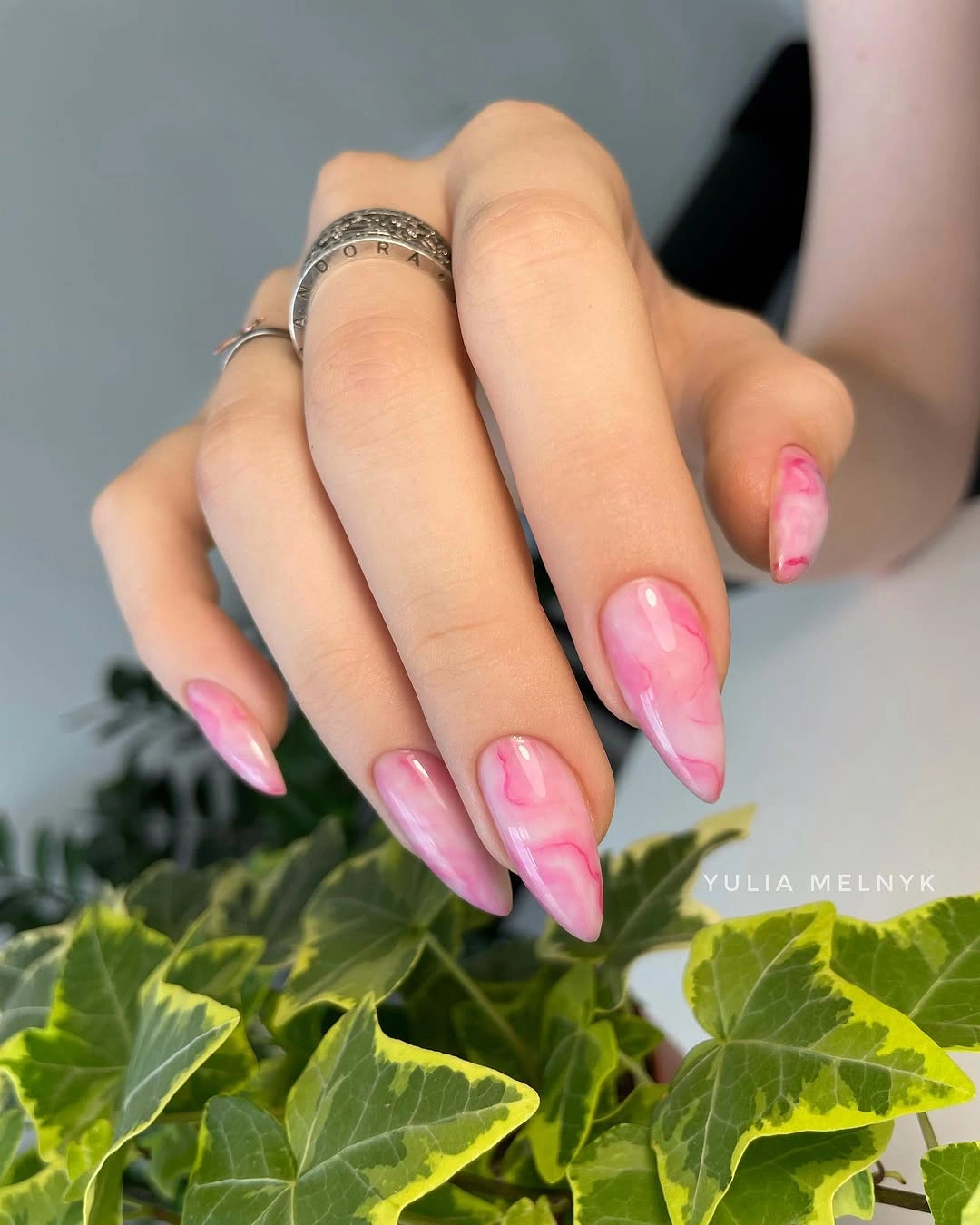
Keep the swirls broad and use two close pink tones if you want a shorter version that stays readable. Tiny veins or too many color changes would make the surface noisy, while a soft lighter sweep can give the same marbled impression with less contrast. A muted mauve or warm rose can shift the palette toward autumn without changing the movement.
Compared with the black botanical lines, this design is softer and less graphic, relying on color flow instead of drawn leaves. The variation between nails is part of its character, but that also means the set may feel less uniform than a solid shade. Choose it when you want a curved, delicate surface that sits between plain pink and detailed art.
Orange and Black Nails with Harvest Accents
Short-to-medium nails mix glossy orange, deep brown or black, and pale neutral bases, with tiny seasonal line details on one or two fingers. The warm orange supplies the immediate fall cue, while the darker accent and open neutral nail keep the hand from becoming one block of color. The manicure feels seasonal through concentration rather than through a large illustrated scene.
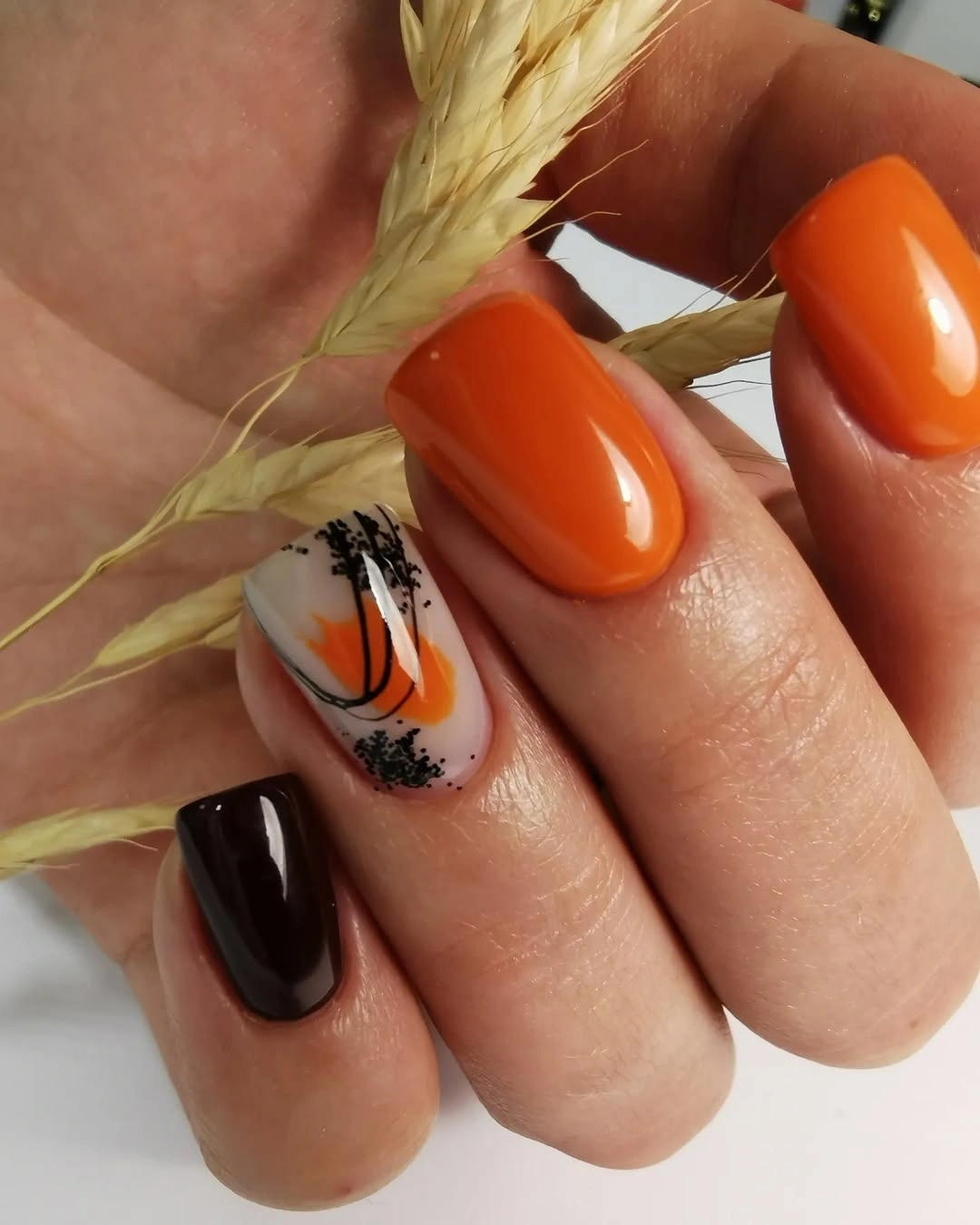
Keep orange on the main fingers and use one small graphic mark if you want a more wearable adaptation. The tiny detail is optional; the orange, dark accent, and neutral space already form the palette, so adding more symbols may reduce the clean contrast. A burnt orange can soften the saturation while preserving the same warm relationship.
This is more grounded and direct than the pink marble look, but quieter than the botanical green ending. It works for someone who wants a fall signal that is easy to understand and does not rely on long nails. The practical advantage is the compact shape, while the limitation is that a small line detail still needs enough space to remain intentional.
Forest Green and Cream Leaf Accents
Medium almond nails alternate deep forest green, creamy white, and pale neutral with small leaf-like green and gold details on selected fingers. The dark green provides weight, the cream opens the palette, and the leaf marks connect the colors without requiring a full pattern on every nail. The repeated botanical link makes the mixed set feel composed rather than random.
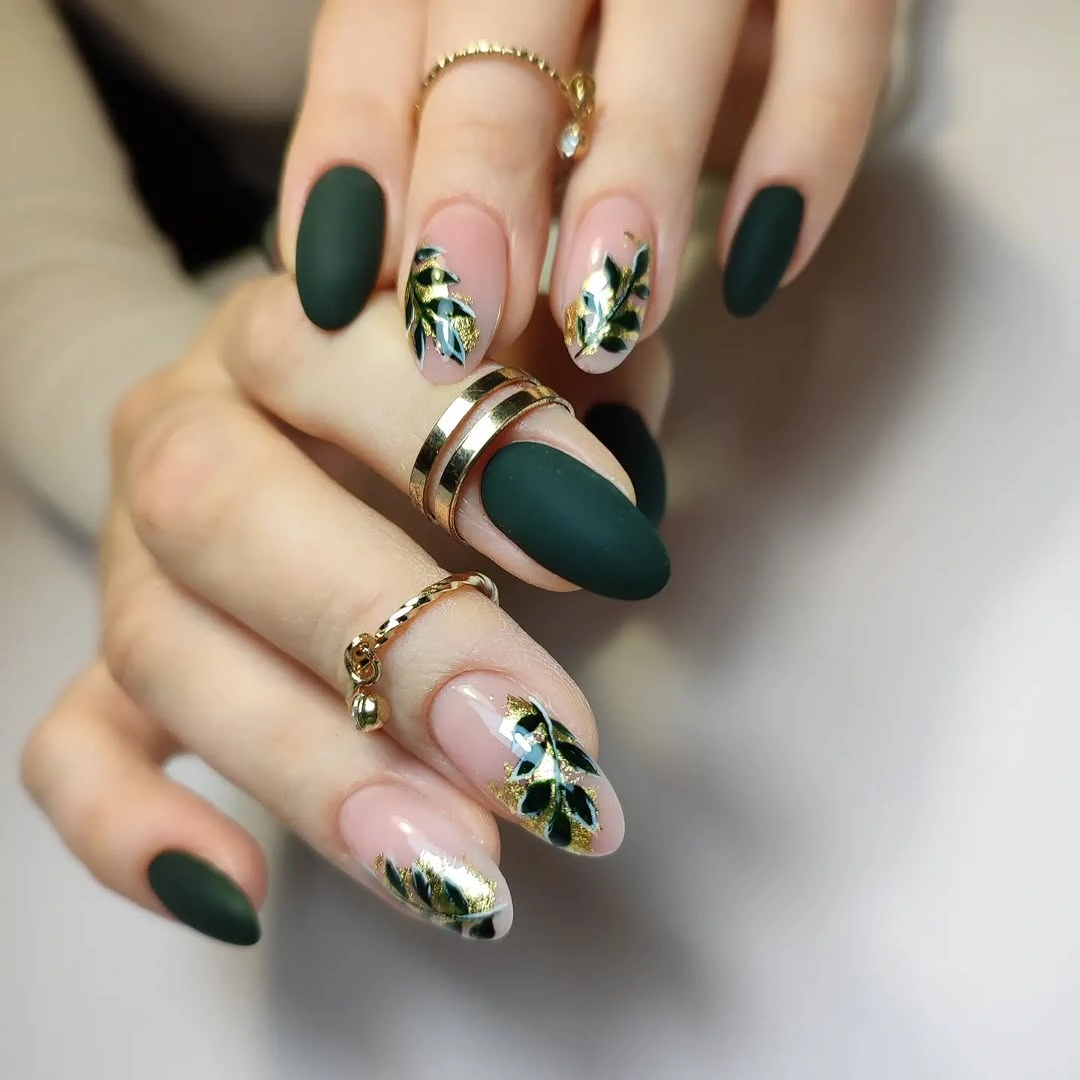
Use green on two or three nails and keep the leaf detail on one accent when adapting the design. The cream nails can stay mostly clear of decoration, which gives the darker shade a place to lead and keeps the hand from becoming too dense. If gold feels too bright, a warm beige detail can preserve the botanical relationship with less sparkle.
This palette feels richer and more deliberate than the orange-and-black accents, but the contrasting light nails make edge wear easy to spot. The medium almond shape keeps the forest green from becoming too blocky, while the small leaves supply just enough ornament. Choose it when autumn color should feel botanical, grounded, and gently layered.
Mixed Green and White Nails with Gold Detail
Medium rounded nails combine forest green, white, translucent neutral, and small gold or jewel-like decorations, with different colors appearing on neighboring fingers. The palette is balanced by repeating the green and white rather than forcing one dominant shade, and one decorated nail becomes a focal point inside the mix. The rounded outline keeps the final composition softer than the long pointed designs earlier.
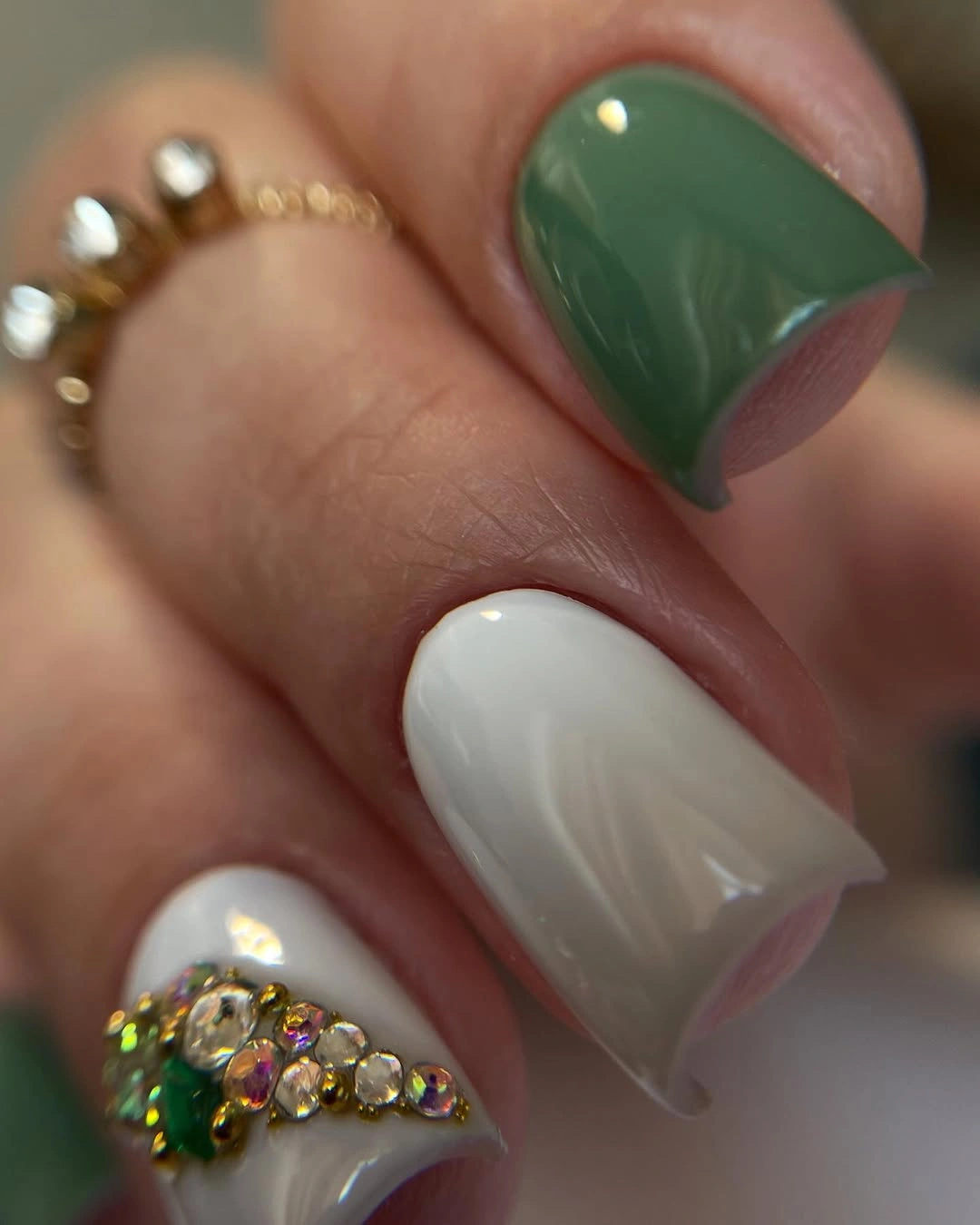
Keep the green-and-white relationship and move the jeweled detail to one nail when simplifying the set. That preserves the contrast while reducing the amount of small decoration that can shift or catch during daily wear. A pale beige can replace the translucent neutral if you want a warmer base, but leave enough light space around the green so the hand does not feel crowded.
This ending is more decorated than a single-color finish but calmer than the maximal stiletto looks, leaving the article on a grounded green note. The mixed palette works because the colors repeat and the focal detail is limited, not because every nail follows the same pattern. Choose it when the autumn story should close with controlled botanical contrast and a quiet visual consequence.