
How do you make a seasonal color shift feel fresh without making it feel disconnected from your own sense of identity? Winter hair color for Black women can be approached as a study in visual balance, where a familiar palette changes character through shifts in tone, saturation, and placement, creating more depth, sharper contrast, or a quieter overall mood without relying on reinvention for its own sake.
A useful editorial way to judge color is to separate its visible components instead of treating the final effect as one label. Look at undertone, depth, saturation, contrast, and placement individually, then notice how those elements interact across the whole look; even closely related colors can read more dimensional, subdued, vivid, graphic, or restrained depending on how those variables are arranged.
Vivid Orange-Copper Across Dense Long Curls
The color reads as a vivid orange-copper from the crown through the long visible lengths, with little interruption from obviously darker or lighter sections. Its saturation is the first thing that registers, but the center part keeps that intensity organized into two broad sides rather than one undifferentiated mass. Against the dense curl pattern, the shade stays bright and unmistakably warm without needing a second color to create interest.
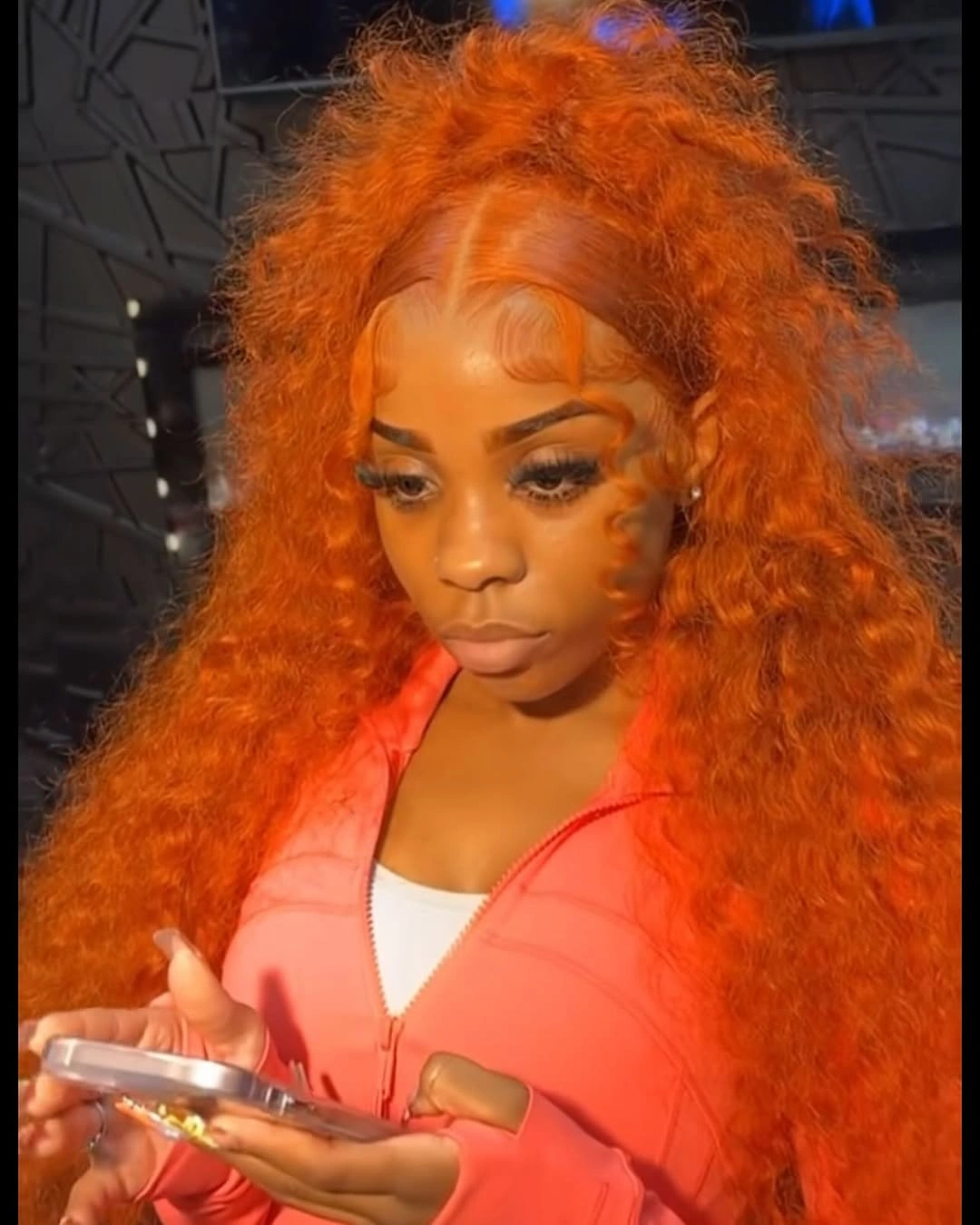
Photo via Instagram
Each small curl and crimped-looking bend catches light at a slightly different angle, so the orange-copper breaks into fine flashes and deeper pockets across the surface. Those shifts can resemble tiny tonal changes from a distance, yet the visible hair still reads as one strongly saturated color family. The distinction is useful: much of the dimension comes from the changing direction of the curled surface rather than from clearly separated highlight strands.
This is a high-saturation color statement, but high saturation is not the same thing as complicated color placement. The dense bends do much of the visual work, turning a continuous orange-copper field into a lively pattern of brightness and shadow.
Near-Black Shine on a Rounded Shoulder-Length Shape
Here the palette contracts to near-black with a deep brown-black cast, and the color looks notably even across the shoulder-skimming shape. The strong side-swept front section creates one large smooth plane over the forehead and temple, while the rest of the hair follows the same dark value toward the jaw and shoulders. Instead of relying on visible contrasting streaks, the look is defined by depth, polish, and a restrained tonal range.
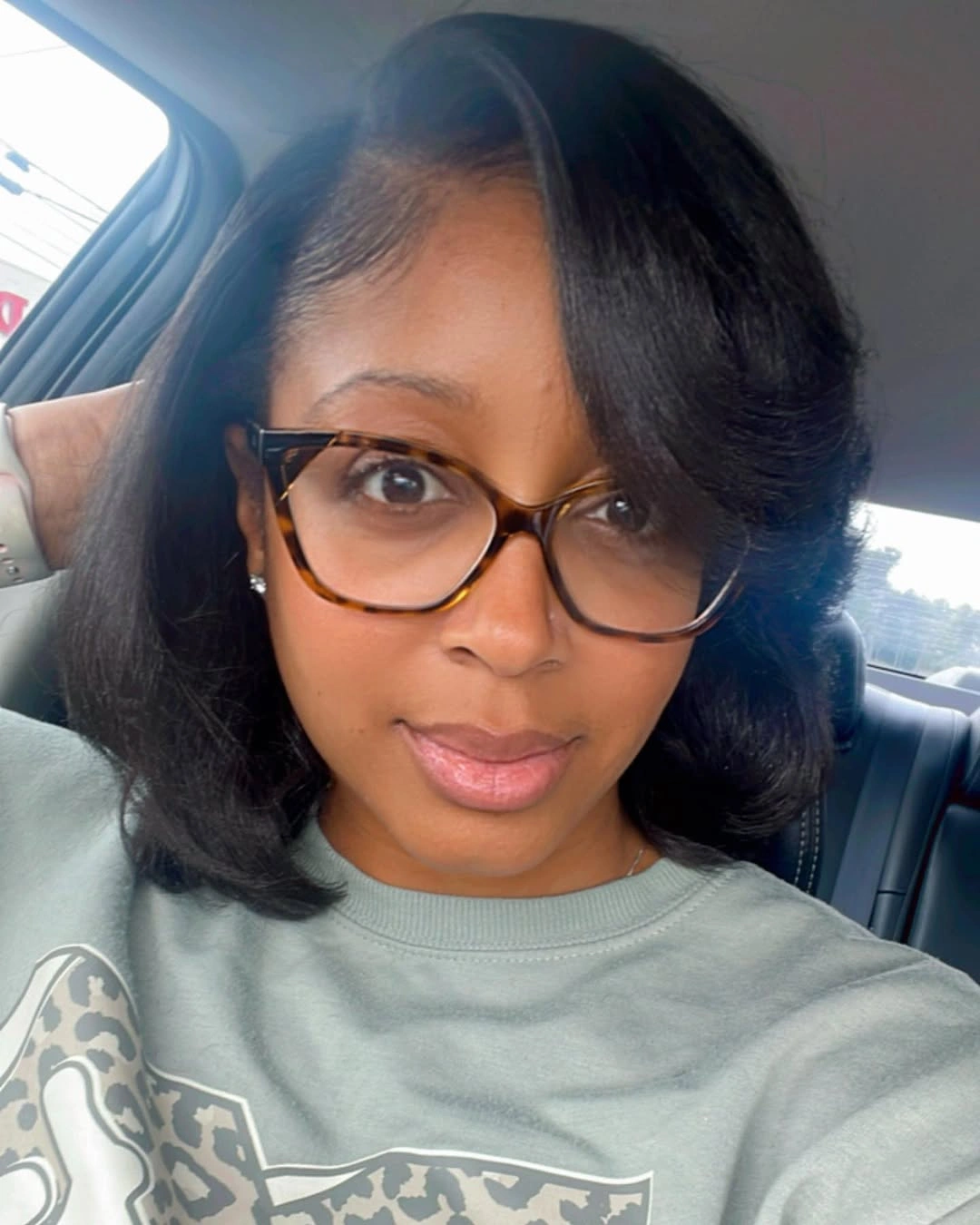
Photo via Instagram
Broad areas of reflected light travel across the smooth surface, especially through the side sweep and the rounded sections near the ends. Because the lower lengths curve inward, those reflections bend with the silhouette rather than appearing as narrow vertical lines. The result is a compact dark shape with visible shine and contour, but there is no need to turn that shine into an invented lighter color or highlight pattern.
Near-black can carry plenty of visual structure when the surface is this smooth and the perimeter curves inward. What changes from area to area is mainly the reflection and direction of the hair, not an obvious shift into separate shades.
Smooth Orange-Red Lengths Create a Continuous Color Field
The long straight lengths read as a vivid orange-red, noticeably redder than the more copper-heavy orange direction seen earlier. A center part divides the color cleanly, while the smooth fall on both sides makes the shade look broad and continuous from the top through the lower lengths. Because the surface is comparatively straight, the eye reads large uninterrupted areas of color before it notices smaller changes in light.
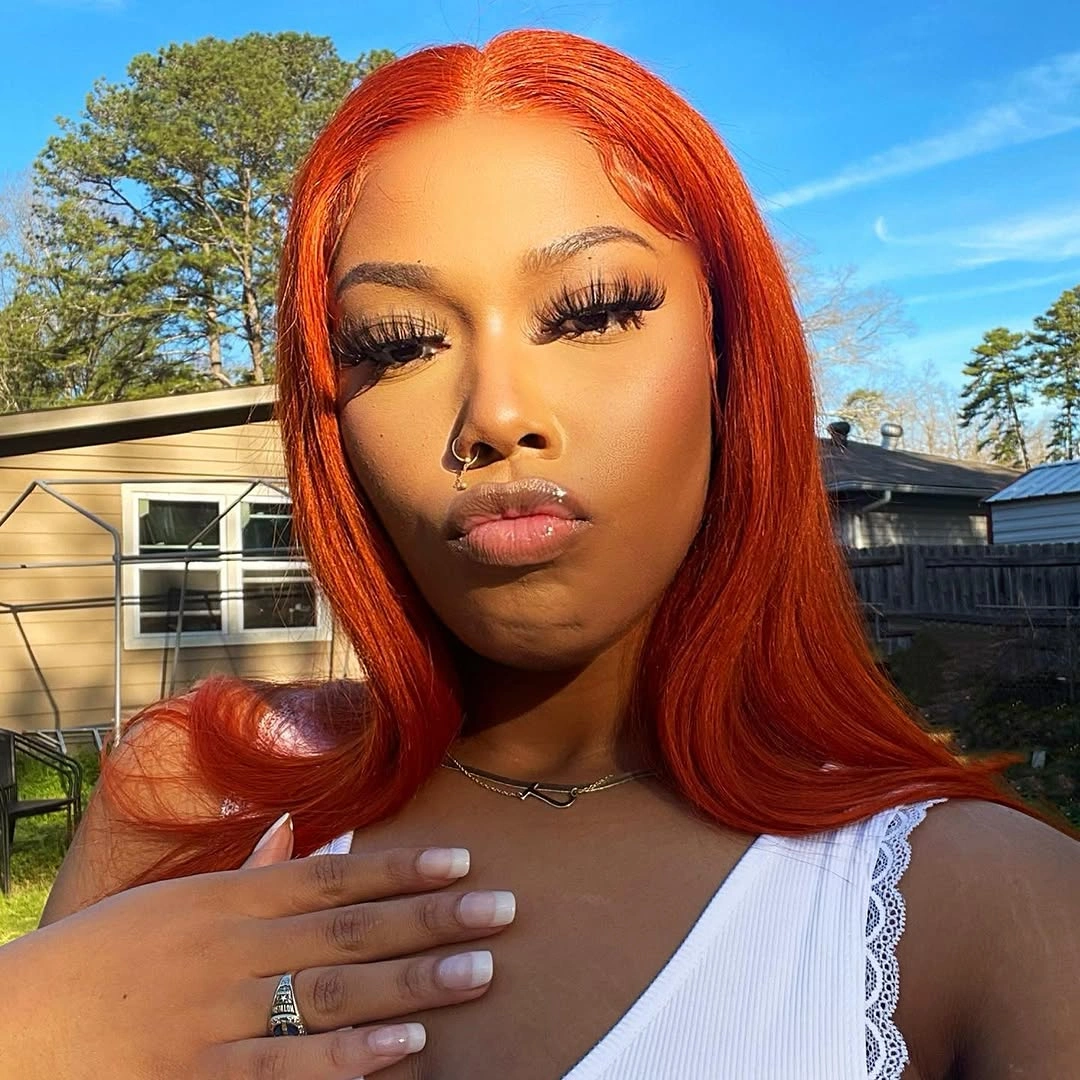
Photo via Instagram
The ends bend gently outward and around the shoulders, giving the lower silhouette a soft curve without disrupting the overall straight impression. That modest change in direction creates a little extra shine at the perimeter, but the main color story remains a single warm orange-red field rather than a collection of separate ribbons. The smoothness makes saturation easy to compare because fewer small bends fragment the visible hue.
This warmer red direction shows how surface shape can change the way a vivid shade presents itself even when the color stays visually consistent. Here the straight lengths emphasize breadth and continuity, while the curved ends add just enough movement to keep the lower edge from feeling rigid.
Deep Burgundy Gains Dimension Through Large Curled Ends
The shade shifts into deep burgundy or wine-red, with a darker red-purple character that sits well apart from the brighter orange-based colors. Across the side-parted crown, the color appears smooth, rich, and comparatively low in brightness, so the upper section reads as a deep continuous plane. The long lengths preserve that wine-toned depth while the larger curls near the bottom introduce more visible changes in reflection.
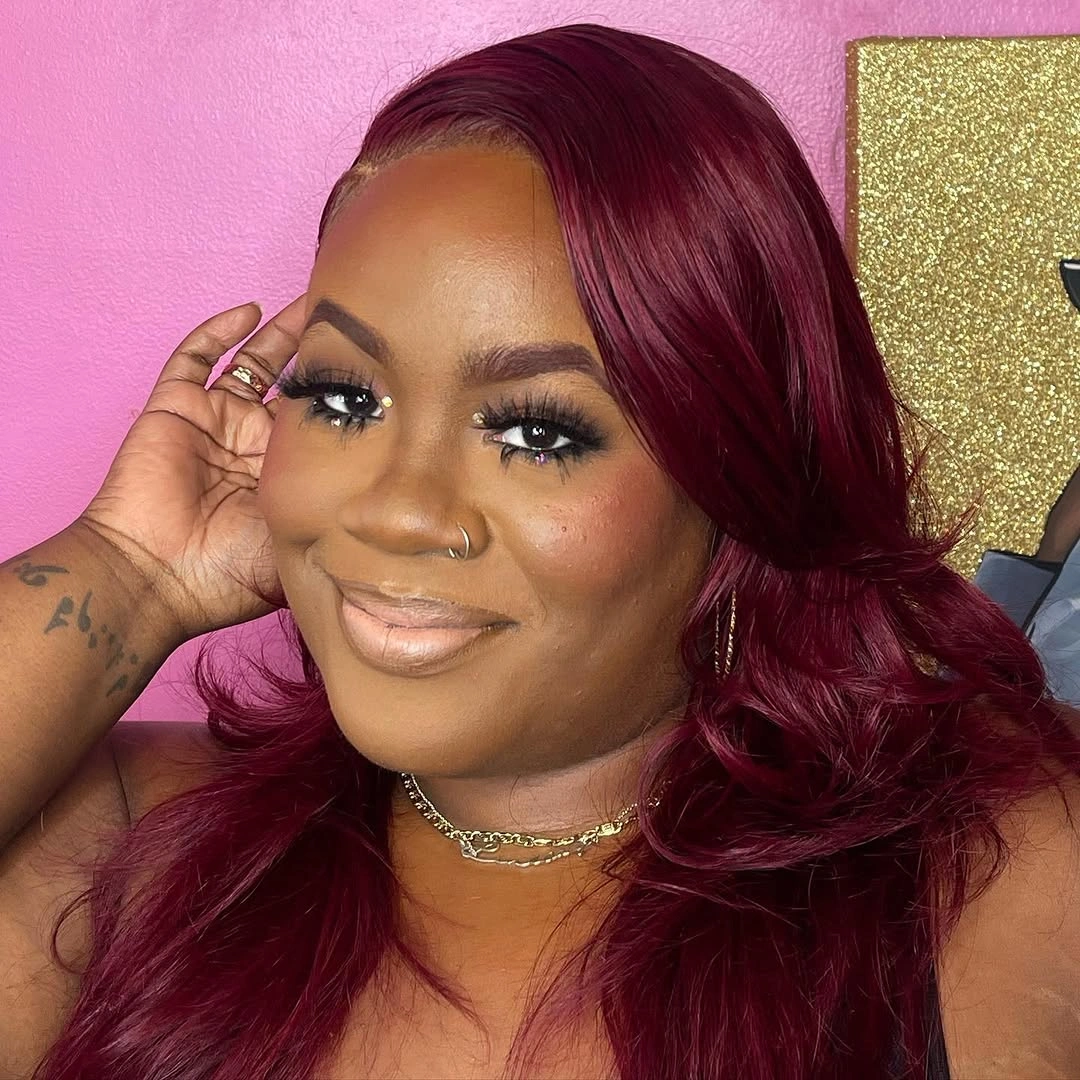
Photo via Instagram
The transition from the sleek upper surface into broad lower curls changes how the same burgundy catches light. Near the crown, shine spreads across wider sections; farther down, each curve creates a separate glossy band followed by a darker pocket, giving the lower half a more segmented appearance. That dimension comes from the shape and sheen that are visible, without requiring a claim about hidden highlights or a particular coloring process.
Burgundy brings a cooler, deeper red relationship into the palette because the visible emphasis leans toward wine and red-purple rather than orange. The large curls then amplify that depth by alternating glossy arcs with richer shadowed sections through the ends.
Glossy Black Looks Dimensional Across Defined Waves
The hair reads as saturated inky black from the center part through the long visible lengths, with no clear contrasting color placement breaking the dark field. Its strong gloss keeps the shade from appearing visually flat: repeated curved sections catch bright reflections while the deeper areas between them stay close to black. The color itself remains remarkably consistent even as the surface creates a wide range of light and shadow.
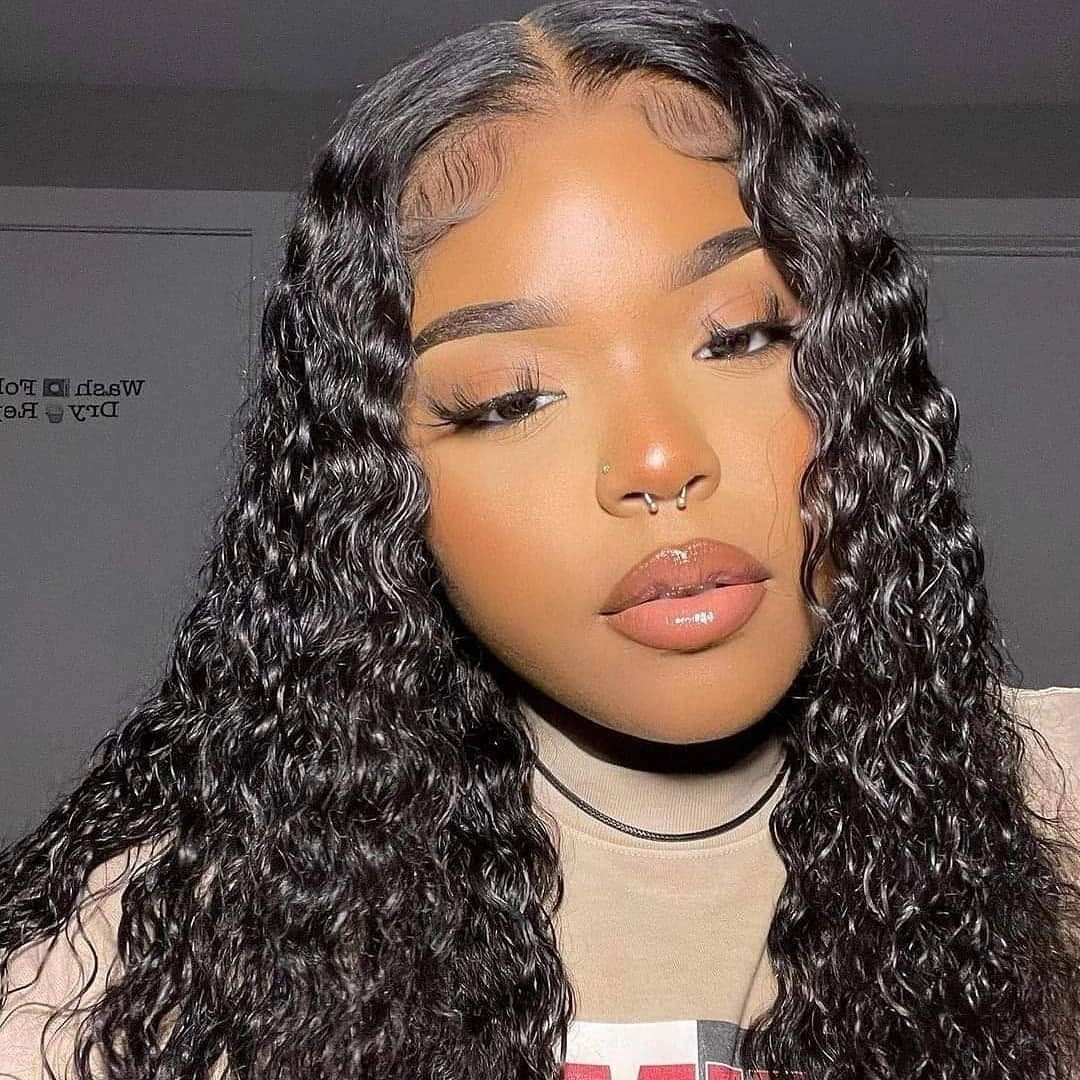
Photo via Instagram
Defined waves and curls form a close sequence of ridges, and the brightest reflections sit directly along those bends rather than as independent pale strands. The finish appears wet-looking because of that concentrated shine and separation, but the visual evidence does not establish that the hair is actually wet or reveal what created the finish. Reading the reflection separately from the shade keeps the black color description precise.
Monochrome black works here as an active color choice rather than a neutral pause between brighter shades. Its impact comes from the combination of deep saturation and sharply defined reflective curves, which gives one dark hue a complex surface without visible multicolor placement.
Deep Black Across Braids, Curls, and Bun
Deep black to black-brown runs through the entire visible style without obvious lighter streaks interrupting the palette. The color appears across long springy curls, narrow braided rows near the front-center crown, and a compact high bun, so one dark range is carried through several very different shapes. Loose spiral tendrils around the face add another curved form while staying within the same visually consistent depth.
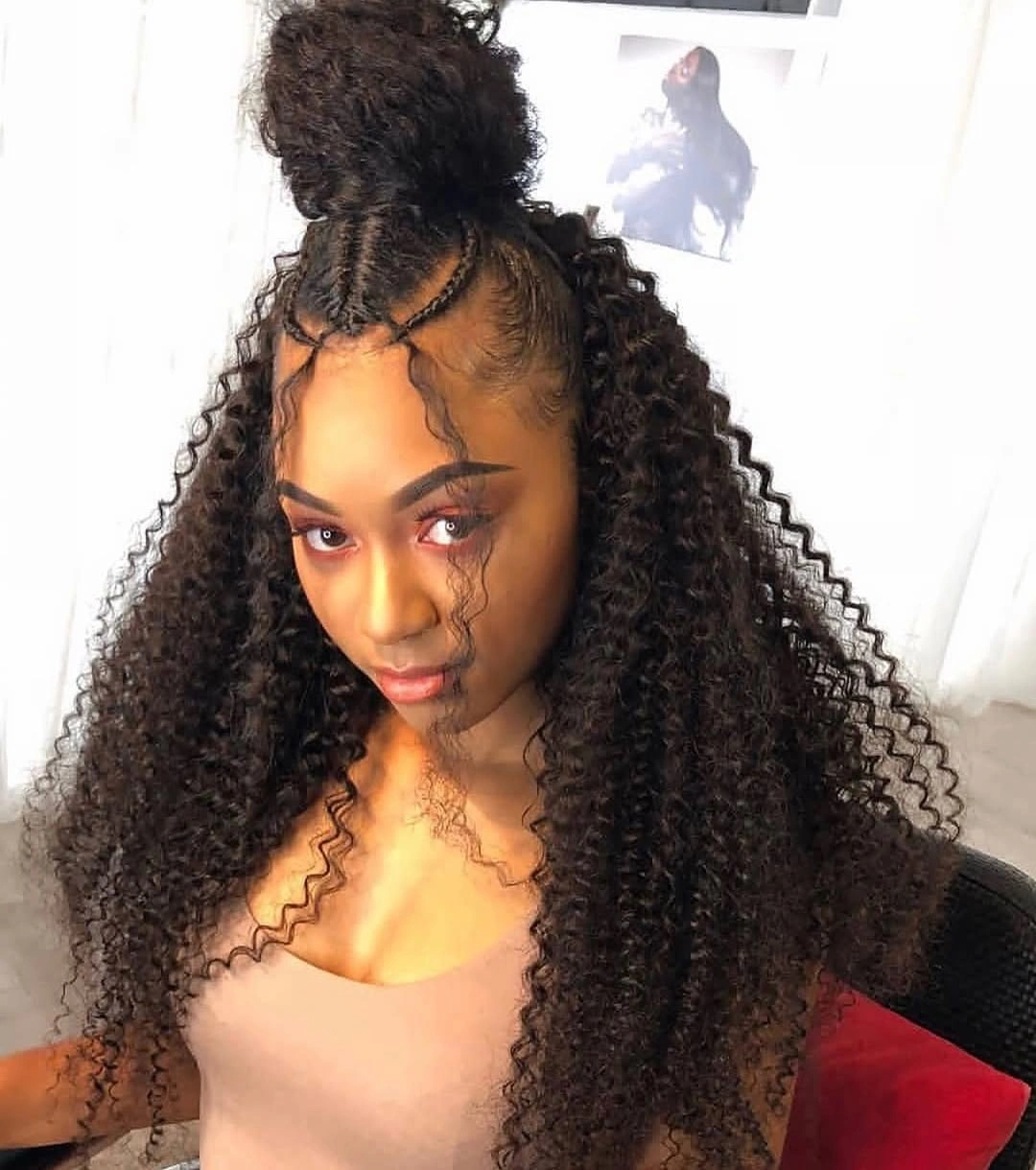
Photo via Instagram
The braided rows make the dark color read in tight, orderly lines, while the gathered bun compresses it into a dense rounded area at the top. Below that, the loose curls open the same shade into a much wider field where individual bends catch small points of light, and the finer tendrils isolate those reflections even further. The contrast here comes primarily from structure and scale rather than from separate color placement.
One dark shade can look markedly different when it moves from narrow braids to a compact gathered shape and then into freely hanging spirals. The changing geometry supplies the visual separation, so there is no reason to invent lighter panels where none are clearly visible.
Near-Black Length Creates One Long Vertical Line
Near-black color falls in a remarkably continuous line from the clean center part through very long, predominantly straight lengths. There are few visible interruptions in tone, and the narrow silhouette allows the dark shade itself to reinforce the impression of length well below the chest. Rather than spreading outward through curls or gathered volume, the color stays concentrated in two long vertical sections on either side.
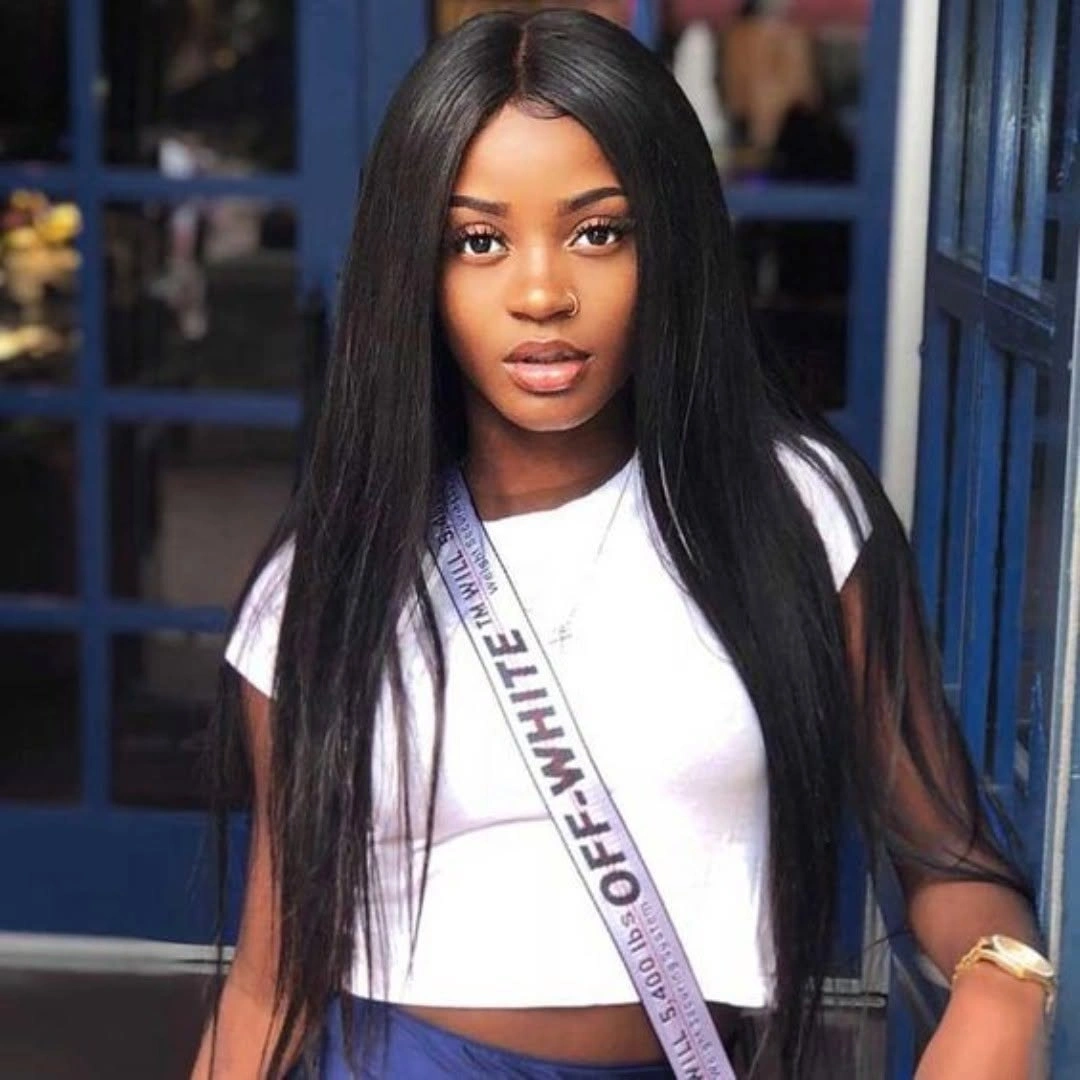
Photo via Instagram
The comparatively straight surface gives reflected light room to travel in broad, subtle bands instead of breaking into the many small flashes created by tight bends. Because the parting is centered and the lengths fall almost parallel, the eye follows the dark field downward with very little visual detour. That makes continuity, more than curl definition or contrasting placement, the defining color relationship in this look.
The practical visual effect of this near-black palette is a strong sense of uninterrupted length and direction. Its distinction comes from how little the silhouette widens as it descends, which separates it from dark styles built around rounded volume or numerous reflective curves.
Deep Brown-Black Waves Build Soft Reflective Depth
The long hair reads as near-black to very deep brown-black, with a softer brownish sheen appearing across some of the curved surfaces. Lighting can contribute to that warmer impression, so the safest description stays within a deep black-brown range rather than treating the visible sheen as proof of a separate brown color. An offset part and fuller volume toward one side give this dark palette a less rigid, more sweeping outline.
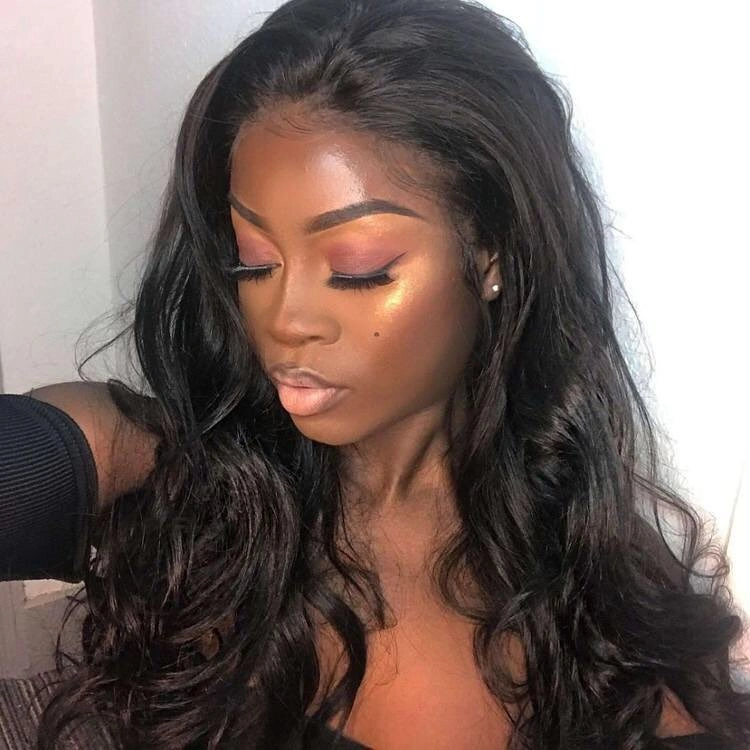
Photo via Instagram
Broad loose waves create large S-shaped curves, and each curve carries a wider band of reflection than the sharper, closely spaced ridges seen in more defined curls. Those reflective areas make the dark lengths appear softly dimensional while the underlying color remains visually cohesive from the upper sections through the ends. No distinct highlight ribbons are needed to explain the lighter-looking arcs because they follow the shape of the waves themselves.
This version of dark depth sits between two more extreme surface effects: it is neither a narrow straight plane nor a field of tightly repeated glossy ridges. The broad waves give near-black or deep brown-black color a slower, softer rhythm, with dimension appearing in wide curves rather than fine streaks.
Black Curls Expand Into a Wide Rounded Silhouette
Deep black curls spread outward from a center part into a broad, rounded silhouette that reaches roughly from shoulder to chest level. The color remains dark across both sides, so the strongest visual change comes from the amount of width created by the dense curl pattern rather than from contrasting shade placement. A centered division keeps that volume balanced while allowing the black mass to expand substantially away from the face.
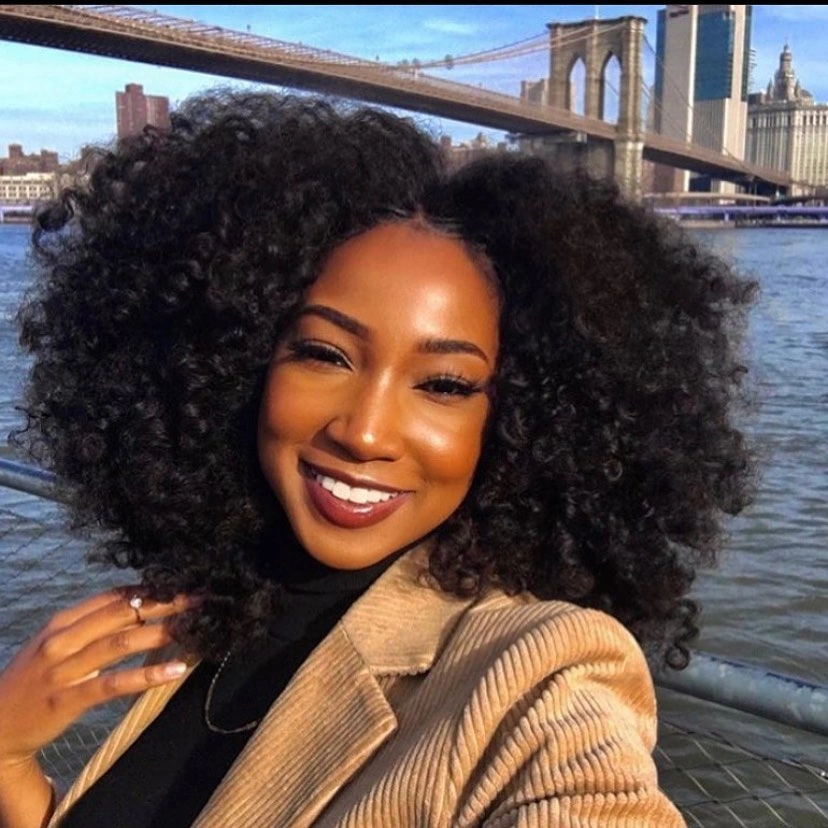
Photo via Instagram
Numerous small bends catch light across the surface, distributing tiny brighter points through both sides of the rounded shape. Because those reflections are scattered rather than arranged in long continuous bands, the black color looks lively across a large horizontal area without losing its overall monochrome reading. The relationship between centered parting and equalized side volume makes width the main structural consequence of the dark palette here.
Black does not need lighter ribbons to remain visually detailed when the silhouette contains this many individual curves. The dense scatter of reflections gives the rounded shape surface definition while preserving a strong, unified dark color impression.
Deep Black Emphasizes Height in a Sculpted Updo
Deep black, densely coiled-looking hair is arranged into a sculpted high updo with compact sides and a substantially taller upper shape. The color appears almost uniform, which makes the outline unusually easy to read: the darker side areas stay close to the head while the rounded upper section rises prominently above them. Here the dark palette describes contour and height rather than long hanging length or broad lateral volume.
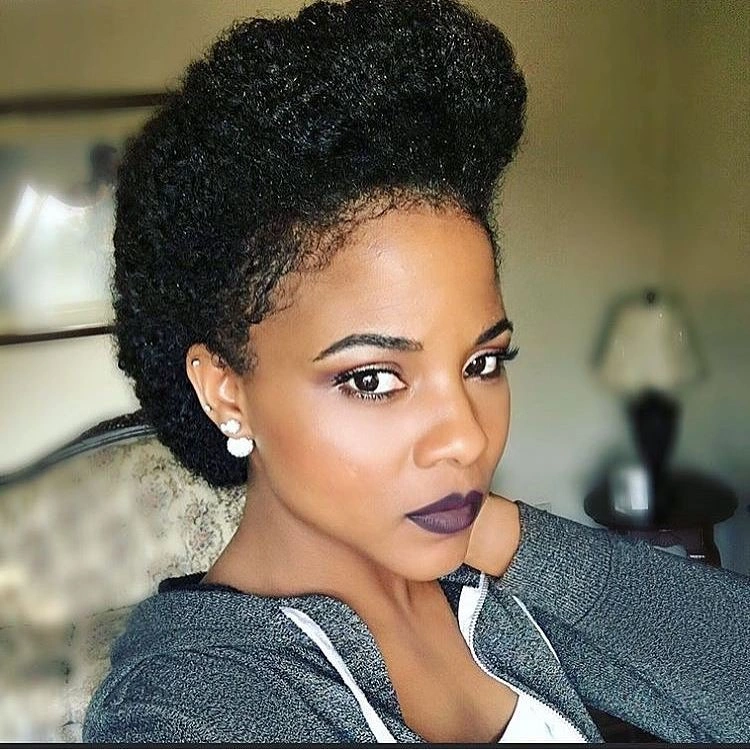
Photo via Instagram
The lifted upper shape contains a dense surface of small visible curves, so light catches unevenly across its rounded contour without forming obvious contrasting color panels. Lower and side sections remain comparatively compact, making the subtle reflective differences at the top more noticeable simply because that area projects farther outward. The eye therefore reads dimension through changes in surface direction and silhouette, not through evidence of multiple shades.
This is a different use of monochrome depth from dark hair that gains impact through length, loose waves, or horizontal fullness. Keeping the color visually consistent allows the tall sculpted outline itself to become the main source of contrast between compact and elevated areas.
Side-Swept Black Ringlets Concentrate Volume Off Center
Deep black carries through the shoulder-length ringlets with little visible interruption from lighter color, but the silhouette does not distribute that darkness evenly around the face. A pronounced side sweep pushes more of the curled mass across the forehead and toward one side, concentrating both color and volume there. The result is a compact rounded shape whose asymmetry matters as much as the monochrome shade itself.
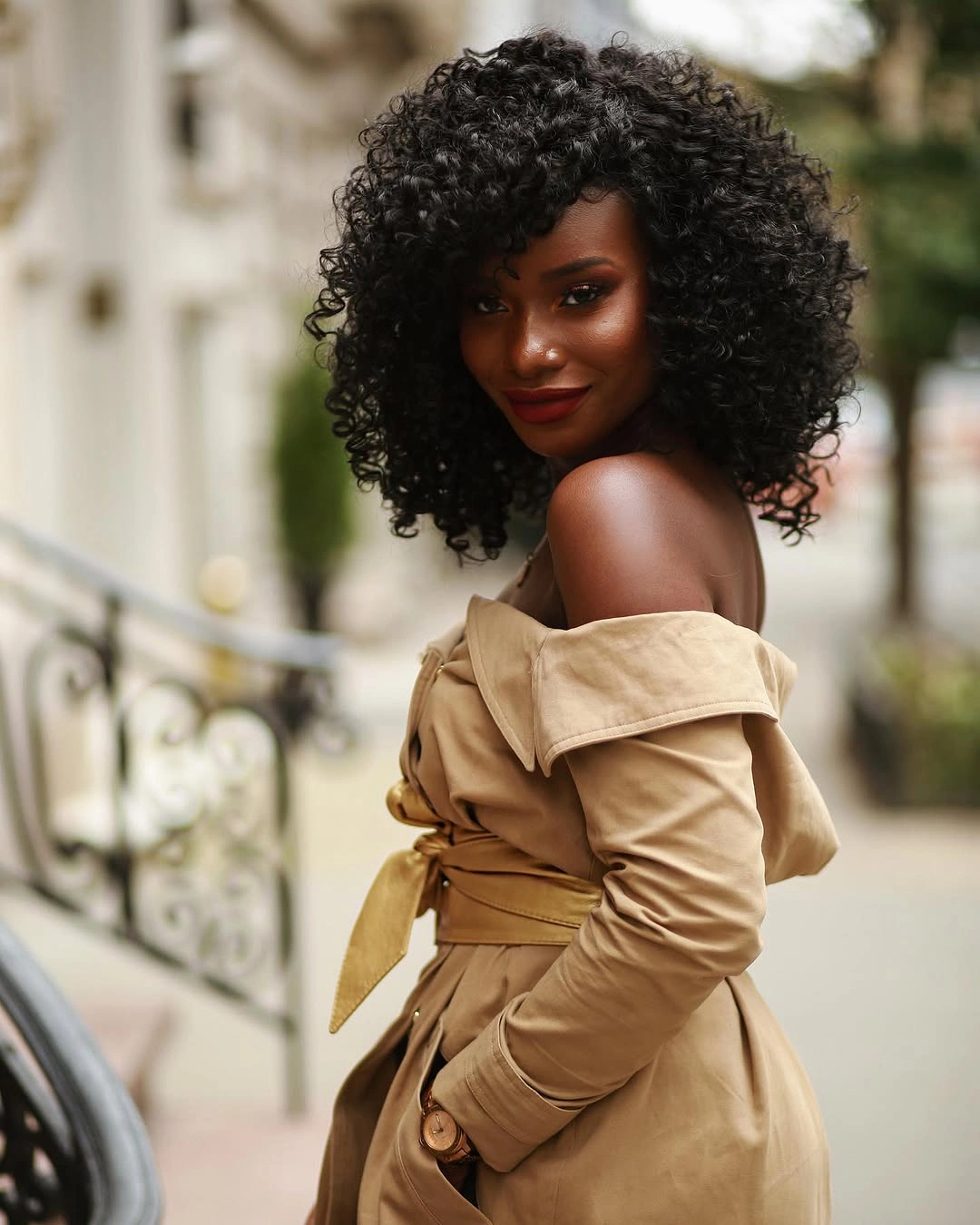
Photo via Instagram
Defined ringlets repeatedly divide the black surface into small curves, yet their side-directed arrangement keeps one portion of the silhouette visually denser than the other. Bright reflections appear on individual loops while deeper pockets collect between them, creating detail without forming separate color zones. Compared with a centered curl shape, this distribution makes the same dark palette feel more directional because the eye follows the heavier sweep first.
The useful distinction here is between uneven volume and uneven color. One side appears darker and fuller largely because more black curls occupy that area, not because the hair clearly changes shade from one side to the other.
Pale Creamy Blonde Brightens a Very Short Crop
Pale creamy blonde covers almost the entire visible hair area, creating a dramatic rise in brightness after the deeper black and brown-black shades surrounding it in the collection. The hair is cut very short at the sides, while tiny curls remain visible across the top, so the light color sits on a compact shape rather than extending through long lengths. Indoor light may affect the exact undertone, making pale creamy blonde more precise than a narrower salon shade name.
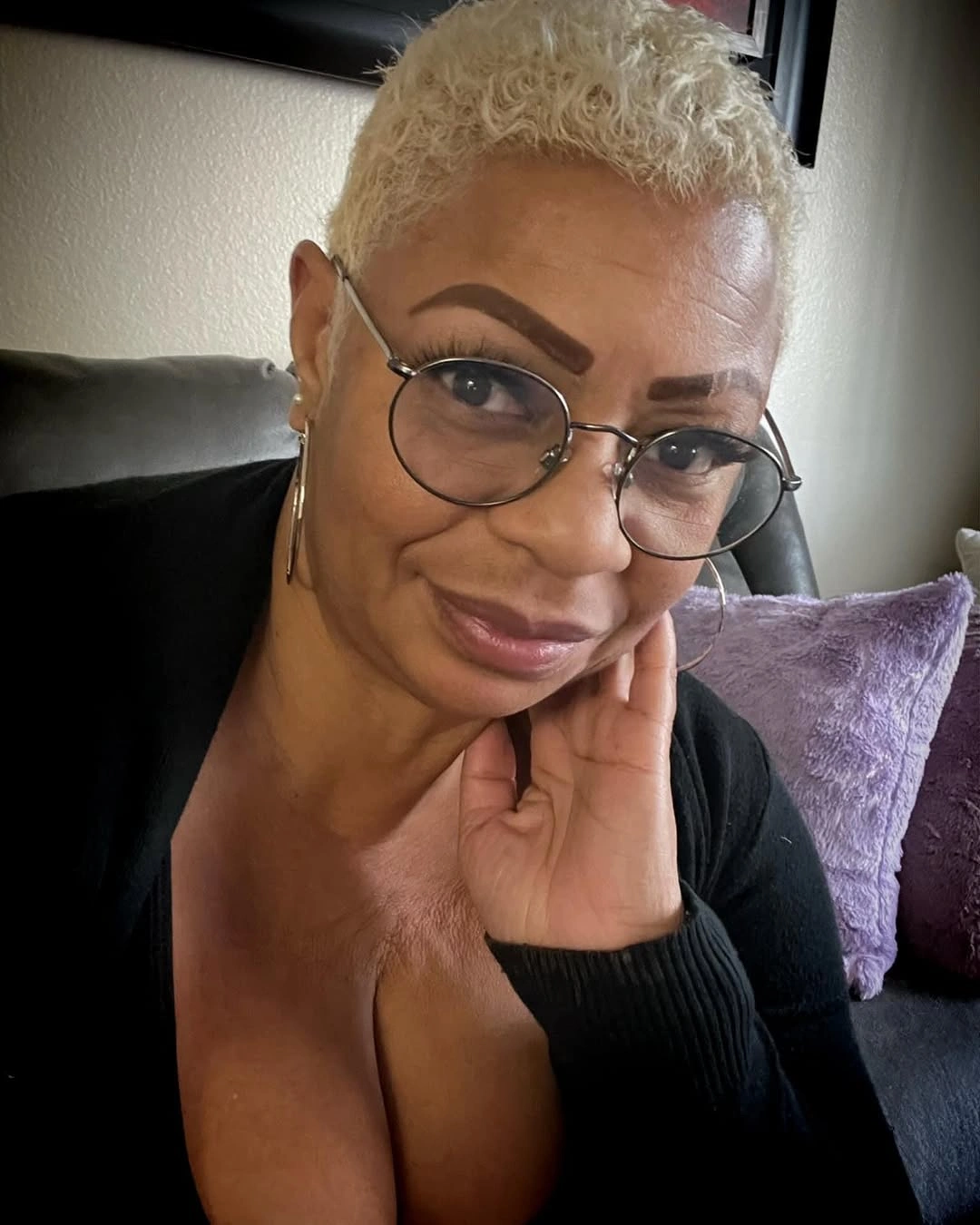
Photo via Instagram
Because the crop is so short, the blonde reads as a concentrated all-over field with very little distance for the shade to change before reaching the perimeter. Small curves across the top catch light in fine increments, while the closely cut sides create a flatter, quieter area of the same pale range. That combination lets brightness, rather than contrasting placement or long reflective bands, become the strongest visible color characteristic.
Among blonde winter hair color ideas for Black women, this example is useful for its clear relationship between a very light shade and a compact silhouette. Its impact comes from visible tonal brightness and short scale, without requiring assumptions about suitability, upkeep, or how the color was created.
Deep Brown-Black Curls Meet a Pink Crown Accent
The actual hair reads as deep brown-black, with long curls gathered away from the face and continuing through a full rear section. That dark color remains consistent across the visible lengths, while the pulled-back arrangement exposes more of the hairline and makes the crown especially easy to read. The important color distinction begins by keeping those dark curls separate from the vivid pink element placed across the top.
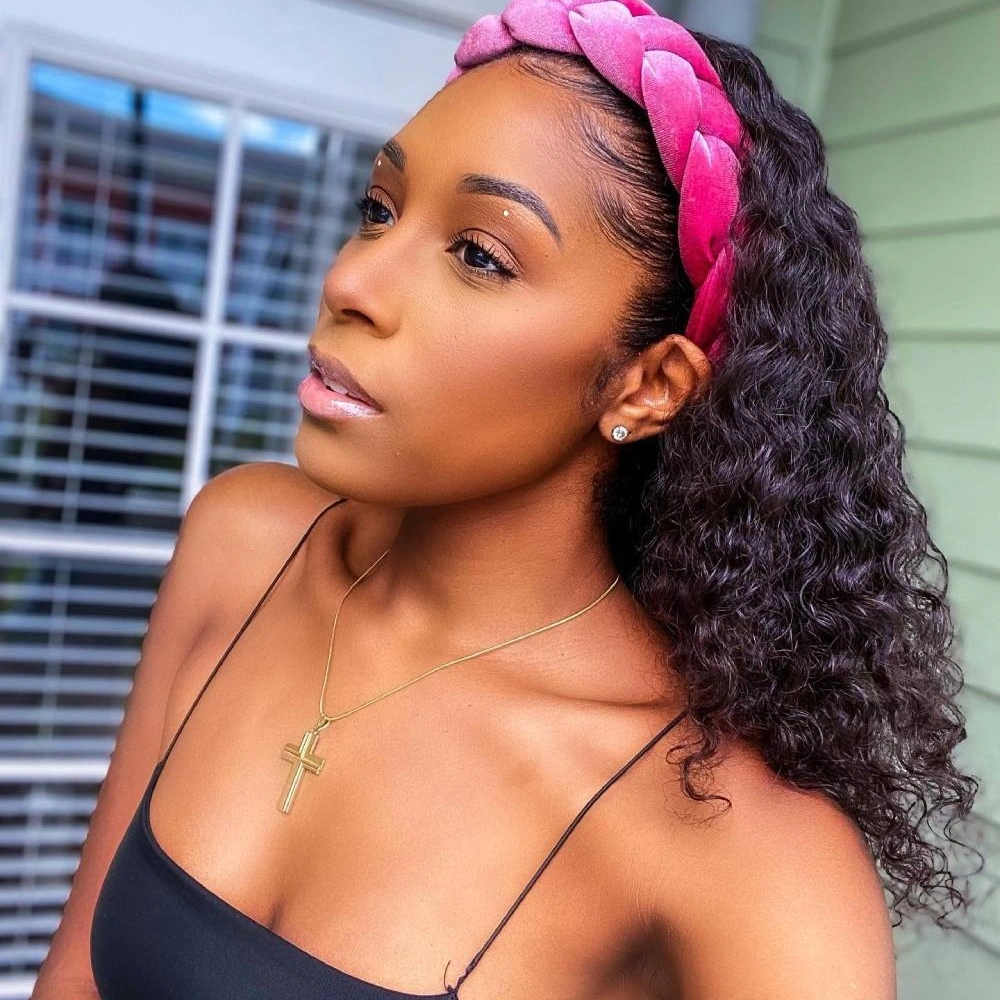
Photo via Instagram
A bright pink braided headband-like accessory crosses the crown, creating a sharp color contrast against the deep brown-black hair without changing the shade of the curls themselves. Because the accessory sits where the dark hair is drawn back, its color becomes unusually prominent despite occupying far less area than the hair. The result shows how an external accent can reshape the overall palette simply through placement and contrast.
The pink should not be treated as evidence of colored braids or pink hair placement because the visible element reads as a headband-like accessory. Keeping that distinction clear preserves the real hair-color story: long deep brown-black curls framed by a separate bright crown accent.
Sleek Near-Black Defines Fringe and Shoulder-Level Edges
Saturated near-black covers the sleek straight shape from the crown through the shoulder-skimming ends, giving the cut a particularly clear outer edge. A full fringe stretches across the forehead in finer separated pieces, while the longer side sections create darker vertical blocks around the face. With almost no obvious contrasting strands, the uniform depth makes the difference between fringe, side lengths, and lower perimeter unusually legible.
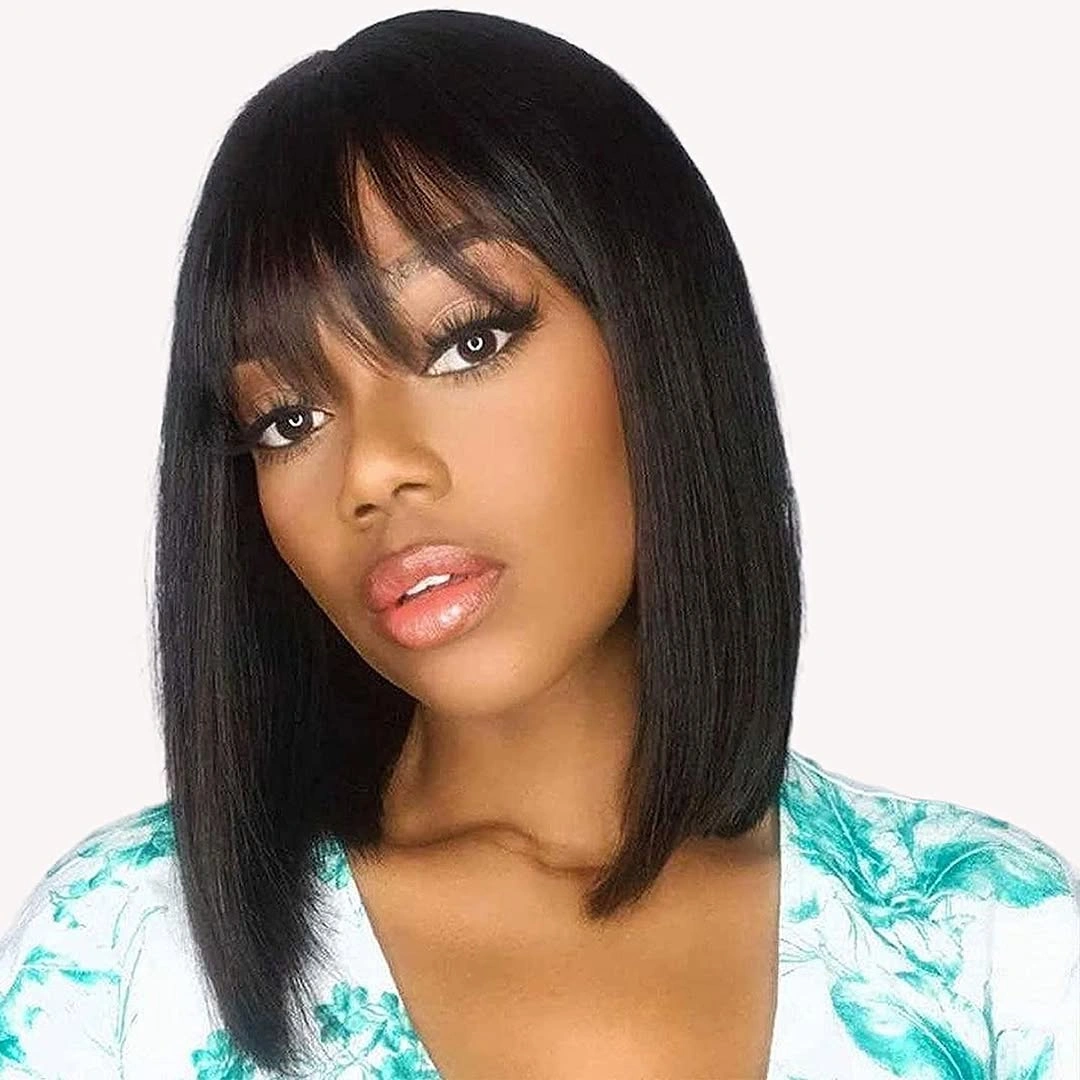
Photo via Instagram
Broad sheen across the smooth surface gives the black subtle variation without breaking it into a highlighted pattern, and the compact length keeps those reflective areas close to the face and shoulders. One side falls slightly lower in view, but the pose may contribute to that difference, so it is safer to describe the visible outline rather than claim an intentionally asymmetric cut. The strongest relationship is between dark saturation and sharply readable edges.
Here, near-black works less as a way to emphasize extreme length and more as a graphic frame for fringe and perimeter. Smoothness turns reflected light into broad soft bands, while the dark base keeps the shoulder-level outline visually crisp.
Cool-Looking Brown-Black Softens a Smooth Straight Shape
The straight medium-to-long hair reads as deep brown-black rather than the more saturated inky black seen in several earlier dark looks. Across the upper lengths, a cooler gray-brown sheen softens the overall depth, although indoor lighting may contribute to that cast and does not prove a specific ash-toned color. A near-center part and smooth fall behind the shoulders keep the shade broad, quiet, and visually continuous.
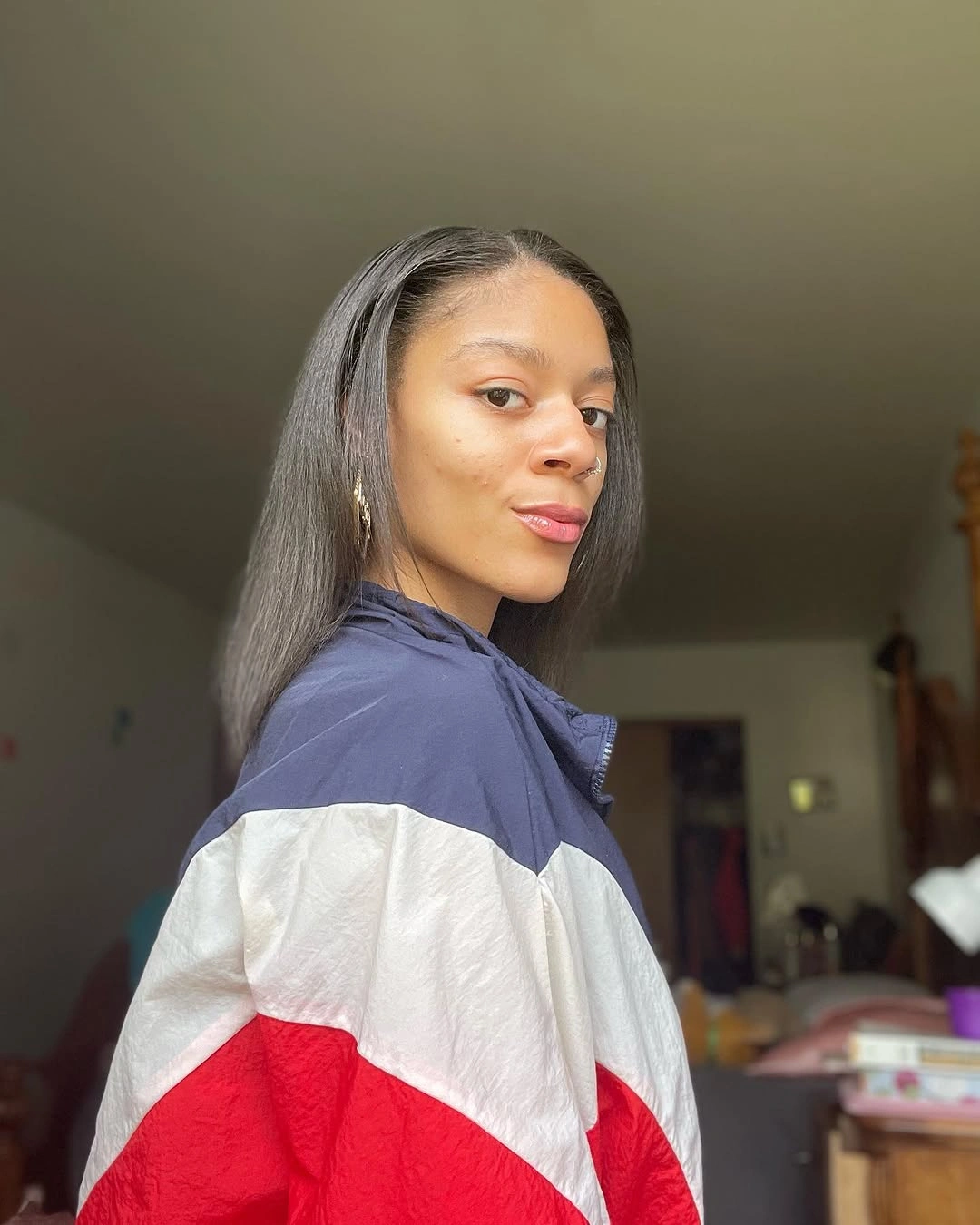
Photo via Instagram
Reflected light spreads gently across the straight surface instead of forming the hard glossy arcs associated with deeply curved strands, so the tonal difference stays restrained. The upper sections show the clearest cool-looking brown-black impression, while the lower visible lengths remain dark enough to preserve a cohesive color field. This creates dimension through modest shifts in value rather than obvious ribbons, panels, or a second strongly contrasting shade.
The unexpected strength of this color is its position between obvious brown and saturated jet black. Its softer depth gives the smooth shape a muted tonal range, while cautious wording leaves room for the visible lighting conditions rather than turning a gray-brown reflection into an unsupported coloring claim.
Tiny Reflections Animate Compact Black Ringlets
Black remains the dominant visible shade across the shoulder-length curls, giving the compact silhouette a consistent dark foundation from the parted crown to the outer edges. The mass stays relatively close to the head and shoulders rather than stretching far downward, so the eye has a smaller area in which to register changes in light. Within that contained shape, individual ringlets become the main carriers of visual detail.
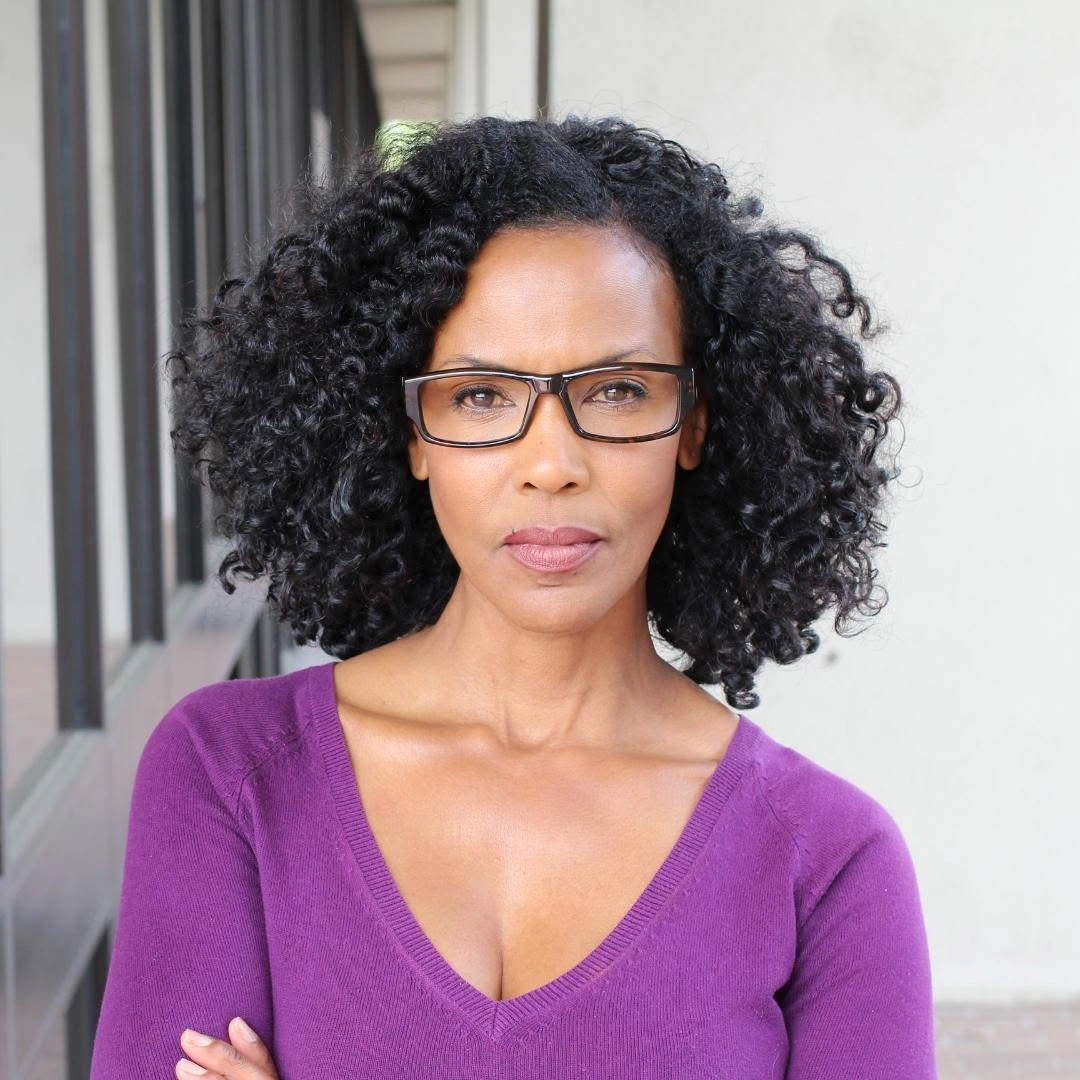
Photo via Instagram
Numerous small curls create pinpoint reflections along their curved edges, scattering brightness through the black without producing broad pale bands. The side part shifts the distribution of those ringlets slightly, so one side presents a denser sequence of tiny highlights while the other opens the shape around the face. The effect depends on curl scale: many short curves divide reflected light into much smaller units than a straight or broadly waved surface would.
This compact scale gives black a finely speckled sense of dimension while the actual color remains visually unified. The brightness belongs to isolated points along the ringlets, not to clearly lighter strands or separate color zones.
Very Long Black Waves Repeat Broad Bands of Shine
Saturated glossy black extends through exceptionally long hair, beginning at a center part and continuing well beyond the chest in large loose waves and curls. Two small clips are visible near the upper front, but they occupy little visual space compared with the uninterrupted expanse of dark hair. The remarkable length gives the color room to repeat the same deep value through a much taller silhouette than the shorter black styles.
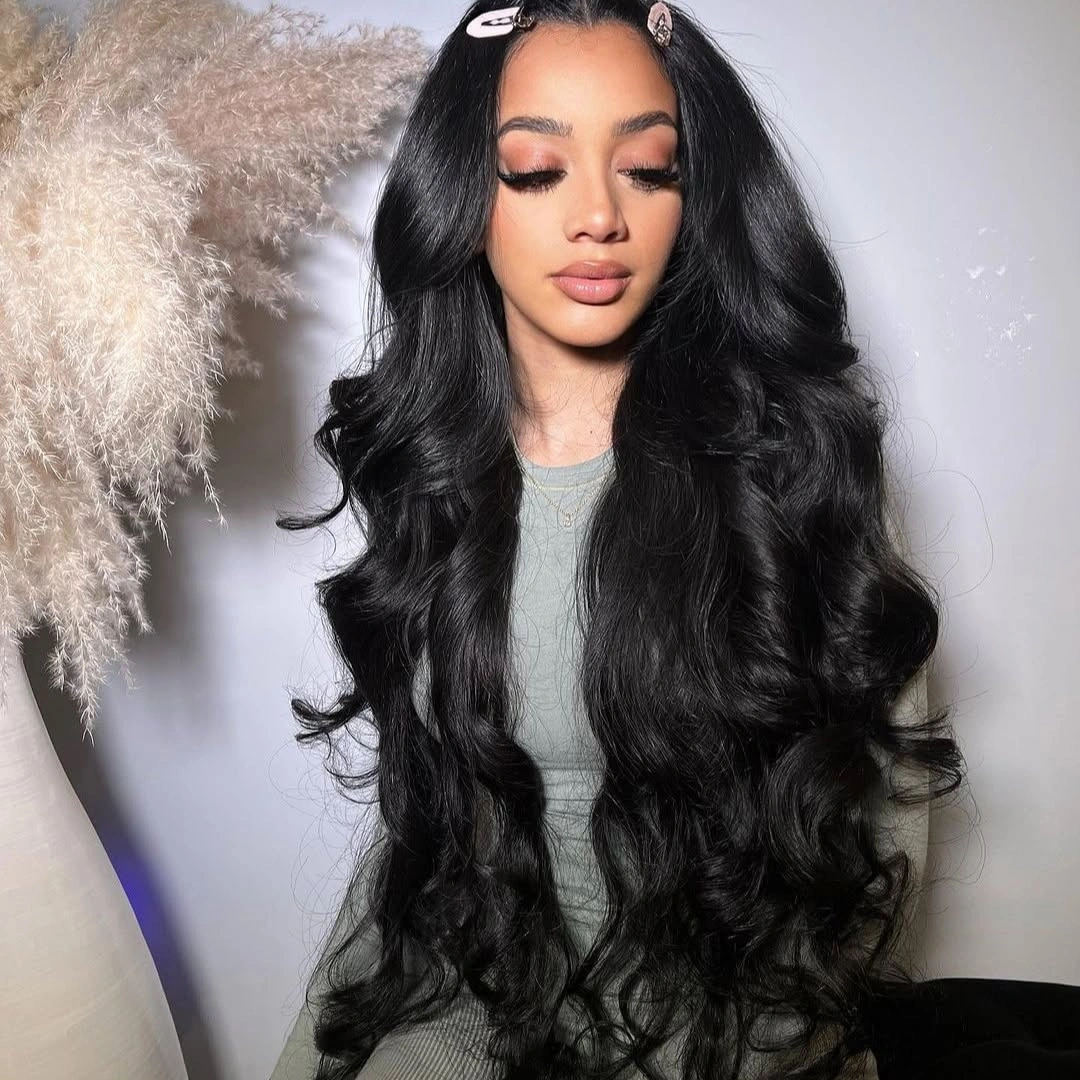
Photo via Instagram
Large bends create alternating bands of strong reflection and deep shadow that recur again and again down the lengths. Instead of breaking the surface into tiny flashes, each loose wave carries a comparatively broad area of shine, followed by a darker curve before the next bright section appears. Because that sequence continues over such a long distance, the black develops a steady visual cadence rather than reading as one flat vertical block.
Length changes the scale at which glossy black can repeat its light-dark rhythm. Here the interest comes from broad, recurring wave bands extending down the silhouette, not from a softer brown cast or a perfectly straight uninterrupted fall.
Jet-Black Color Links Sleek Lengths and High Curves
Glossy jet-black connects several contrasting shapes within one hairstyle: long sleek lengths, two large high buns or looped sections, a deep side sweep across the forehead, and isolated curled tendrils. The lower hair falls comparatively straight before turning outward slightly near the ends, while the upper shapes concentrate the same dark shade into compact rounded forms. No lighter color is needed to separate these elements because their contours already differ strongly.
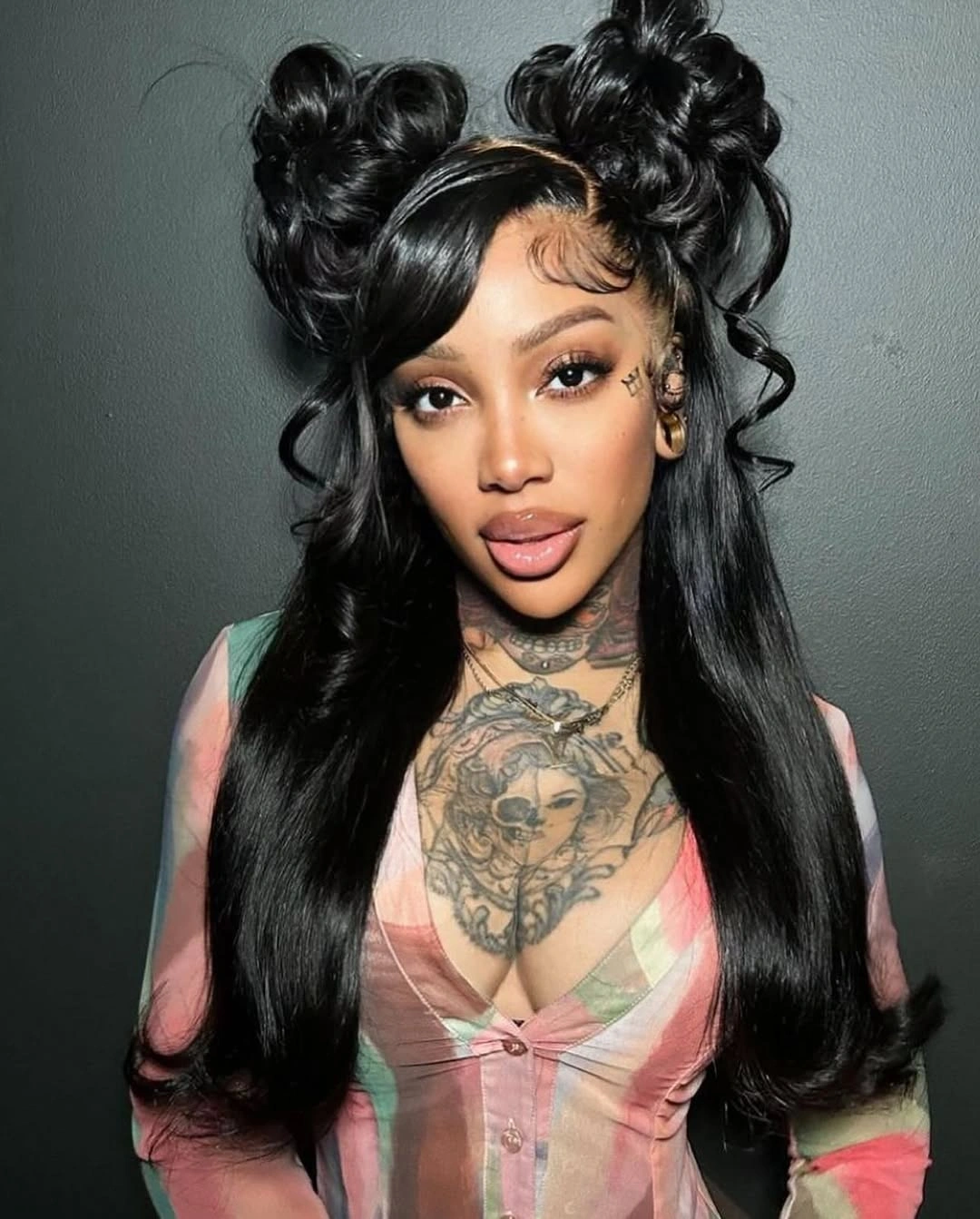
Photo via Instagram
Light behaves differently across each part of that jet-black field. The long smooth sections carry wider continuous reflections, the high rounded shapes gather shine along their curves, and the loose spirals create narrow moving highlights as they twist away from the larger masses. The side-swept front section adds another sleek plane, making the contrast between straight, rounded, and spiral surfaces especially easy to see within a single dark palette.
The useful color reading is unity without visual sameness. Jet-black ties every section together, while the changing surface direction determines whether the shade appears sleek, concentrated, or finely articulated by a curl.
Long Black Braids Turn Repetition Into Color Rhythm
Very long individual braids carry a largely uniform black color down the back, creating a dense field of repeated narrow lines rather than a loose or blended surface. The crown makes the construction especially visible, with defined scalp parting separating the braids before they settle into closely spaced vertical lengths. As the braids continue downward, their repeated scale lets the monochrome shade feel structured without any obvious contrasting color added.
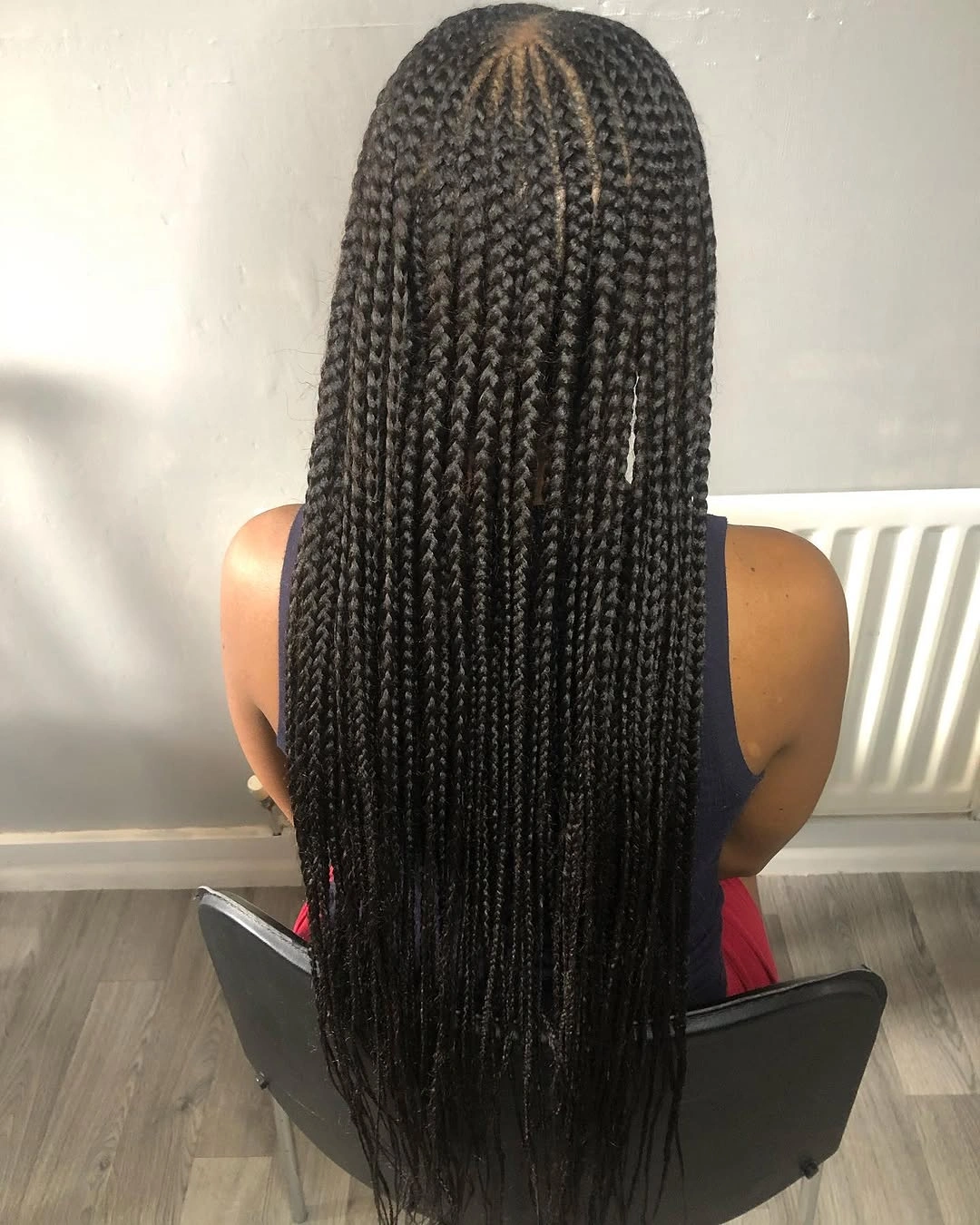
Photo via Instagram
Each braid presents its own small ridge for reflected light, so brightness appears as fine intermittent marks inside the much larger black mass. The visible crown parting interrupts that dark field in a geometric way, while the long parallel lengths below replace broader shine bands with a tightly repeated linear pattern. For winter hair color ideas for Black women with braids, this shows how structure alone can give one dark shade considerable visual rhythm.
These are clearly individual braids, not locs, and that distinction matters because the repeated braided pattern is central to how the color is perceived. The black stays consistent while parting geometry and braid ridges create the variation the eye follows.
Dark Roots Shift Into Saturated Teal-Green Lengths
A deep black to charcoal upper zone anchors the crown and root area, while saturated teal-green becomes increasingly dominant through the midlengths and shoulder-level ends. This is a genuine visible change in hue rather than a dark shade merely looking lighter where it catches illumination. The contrast is strongest where the cool teal meets the darker upper hair, giving the compact bob or lob a clearly divided color relationship.
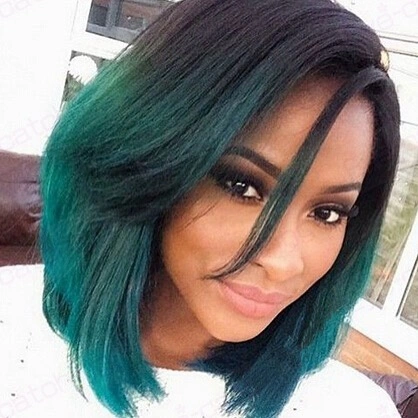
Photo via Instagram
The side-swept front section carries the same dark-to-teal relationship forward, so the color transition remains visible around the face as well as through the broader lower shape. Teal-green occupies enough of the midlengths and ends to become a major part of the silhouette rather than a small isolated accent, while the dark crown keeps the upper portion visually grounded. The shoulder-length perimeter also concentrates the vivid lower color into a relatively compact area.
Unlike dimension created by curls, shine, or changing surface direction, the contrast here comes from two visibly different color regions: a dark upper zone transitioning into teal-green midlengths and ends. That direct hue change gives the shorter shape its distinctive color architecture without requiring a name for the process that produced it.