

Red hair with highlights is the color equivalent of adding a second layer of interest: the base gives you depth, the lighter pieces catch the light and stop the whole thing from reading as a flat block of pigment. The trend right now leans toward lived-in color, so the grow-out line is less of a crisis and more of a feature.
This collection of 30 Trendy Red Hair with Highlights ideas covers the spectrum, from a quiet auburn with a few copper strands to a vivid base with bright streaks that demand attention. Whether your hair is fine and needs the illusion of volume, or thick and can handle a high-contrast highlight pattern, there is a version here that works.
Rich Red Base with Blonde Highlights
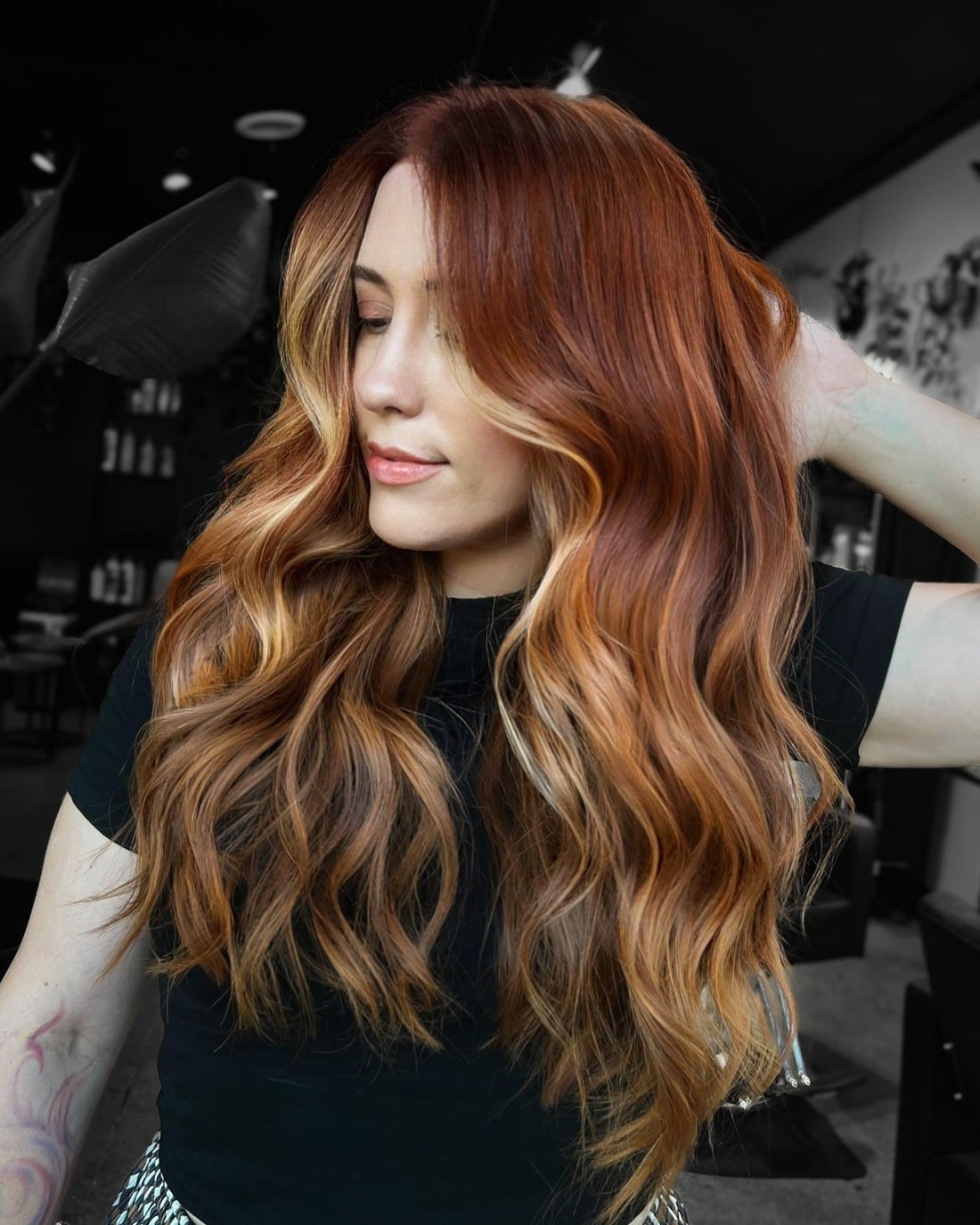
This is a medium-length, layered cut where the blonde highlights create a deliberate contrast. Thick, wavy hair starting at mid-back gives the contrast room to breathe, and a middle part keeps the distribution even. Ask your colorist for: medium length layered cut with rich red and blonde highlights. Dry texture spray pulls the waves apart so each highlight shows up. The tone runs warm, so expect a toning appointment every 8-10 weeks to keep the blonde bright rather than brassy.
Deep Red with Subtle Copper Highlights
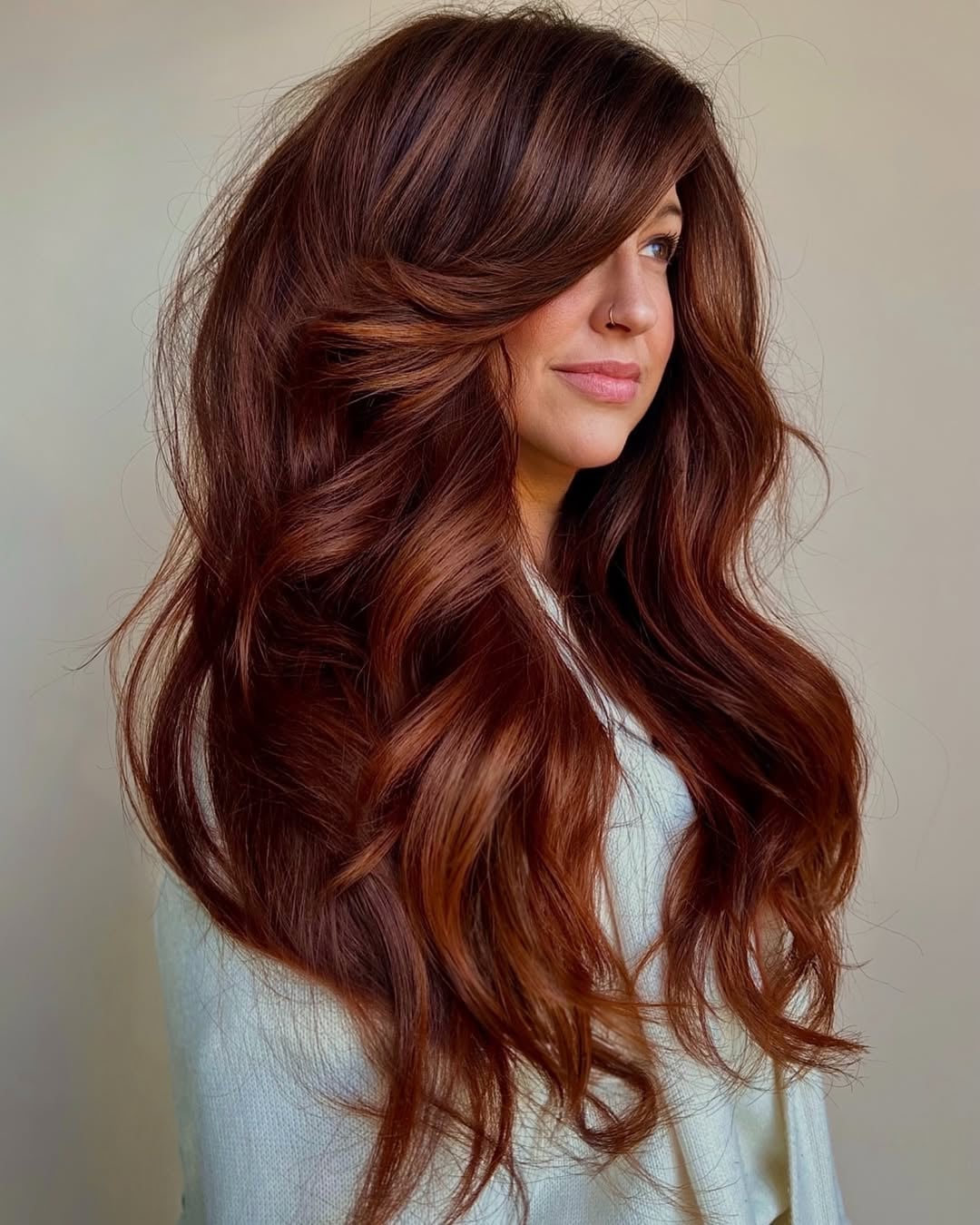
Here the deep red base does the heavy lifting and the copper highlights just add a little flicker of light. The trick is keeping them subtle, not chunky, so the dimension reads as natural depth. Face-framing bangs and a side part soften the overall shape, especially on square or round faces. Ask your colorist for: long deep red with subtle copper highlights, face-framing bangs. A gloss serum on damp hair before blow-drying locks in that glossy finish. Trim the bangs every 4-6 weeks and book a gloss refresh every 6-8 weeks to keep the shine going.
Medium Red Base with Lighter Red Highlights
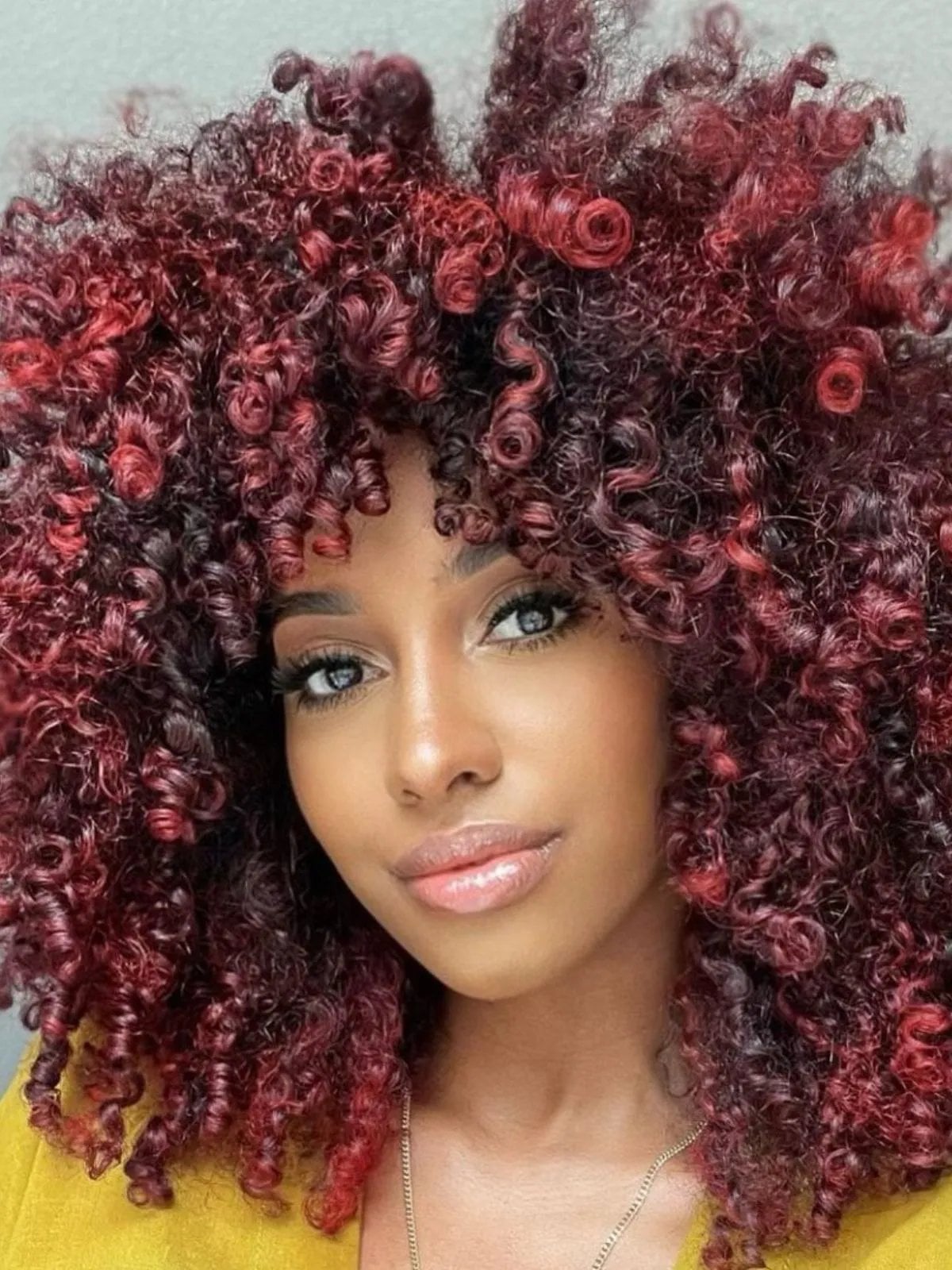
Unlike a balayage that fades from dark to light, this keeps the base uniform and uses lighter red highlights for subtle dimension. The result reads as a solid color with hidden depth rather than a obvious highlight job. Thick, straight hair at mid-back length shows the tone most evenly, and a middle part works well for oval and long face shapes. Ask your colorist for: mid-back straight hair, medium red base with lighter red highlights. A flat iron with heat protectant keeps the gloss intact. It’s a one-session color, not a multi-process commitment.
Vibrant Burnt Orange Solid Shade
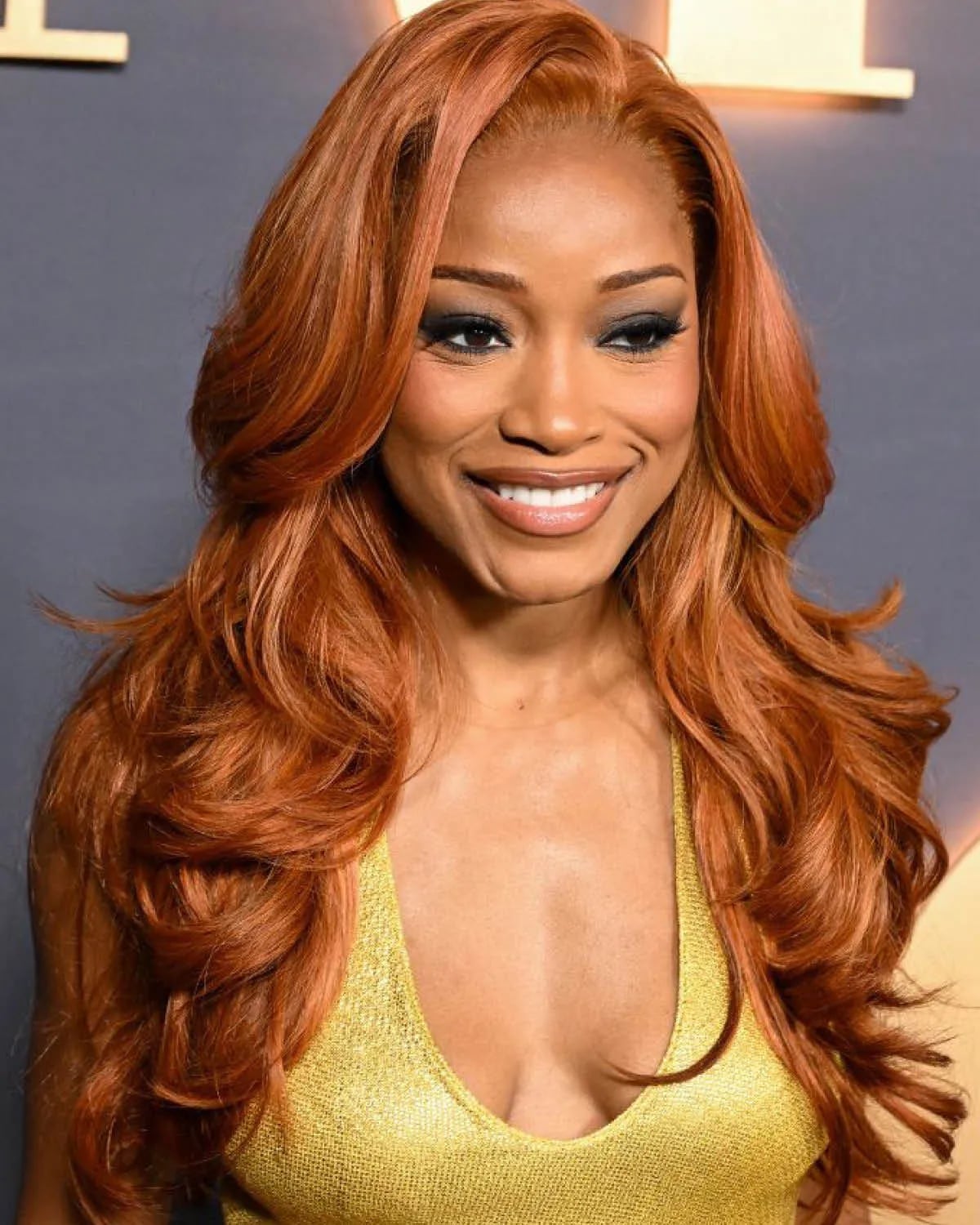
This is a solid shade, no highlights, no lowlights, just one very committed color. The vibrant burnt orange sits thick and uniform, with loose waves adding movement. Thick, wavy hair at mid-back length carries the intensity well. Ask your colorist for: mid-back length vibrant burnt orange, loose waves. The honest drawback is that solid shades show every bit of root growth and fade faster than layered color, so plan on a root touch-up every 4-5 weeks and a color-depositing conditioner to keep the orange from turning brassy.
Auburn Red with Blonde Face-Framing Highlights
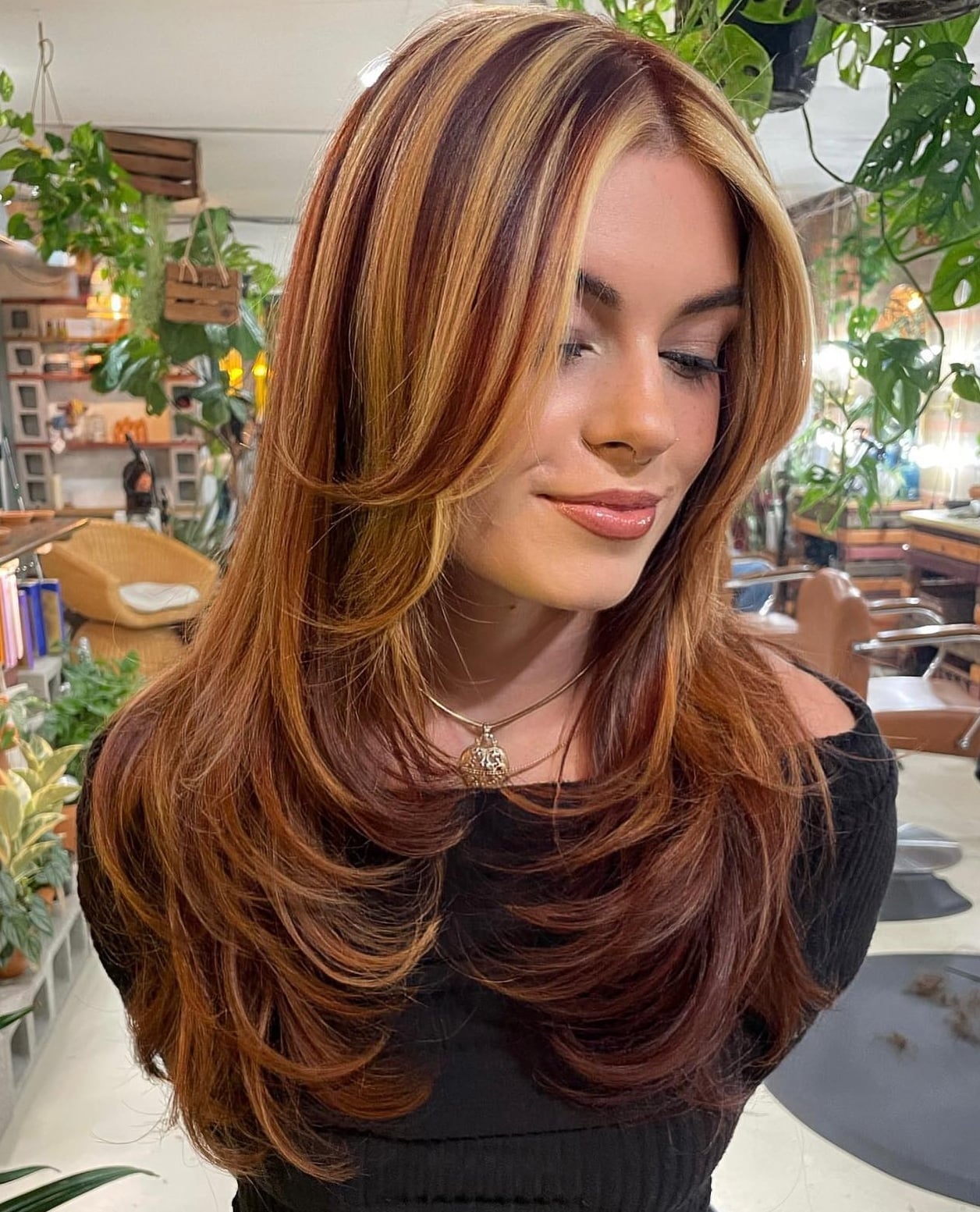
Wondering how to get those bright pieces around your face without going full blonde? The answer is face-framing highlights placed from the temples down, layered over an auburn red base. Curtain bangs and long layers keep the look soft and wearable for work or everyday. Ask your colorist for: long layered hair, auburn red with blonde face-framing highlights, curtain bangs. A round brush during blow-drying smooths the layers and tucks the bangs back just enough. It works well for fall and winter, when auburn tones feel especially right.
Copper Red Lob with Blonde Highlights
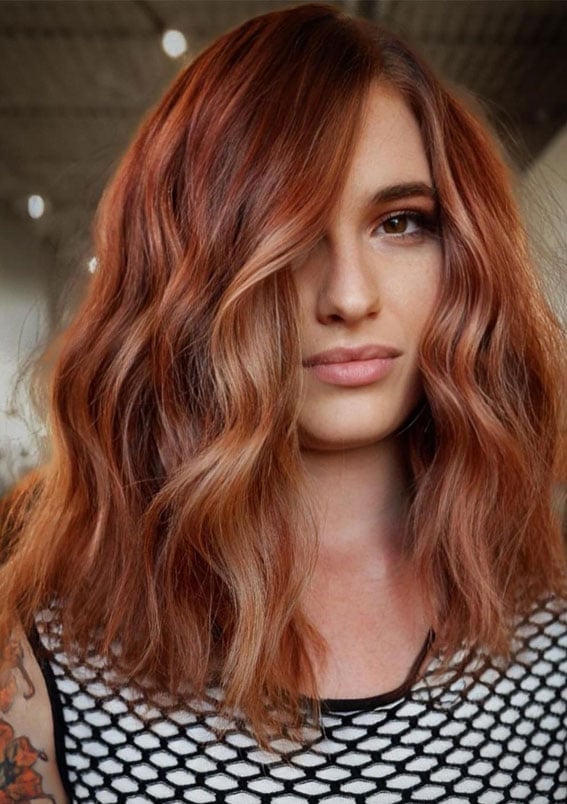
A collarbone lob with curtain bangs and a warm copper red base gets its dimension from lighter blonde highlights woven through. Ask your colorist for: collarbone lob, copper red with blonde highlights, curtain bangs. The wavy blowout with a side parting shows off the contrast, and those face-framing layers keep the shape from feeling boxy. Medium-density wavy hair carries this best. Scrunch with sea salt spray to encourage the waves; a trim every six to eight weeks keeps the blunt ends sharp.
Red Hair with Highlights
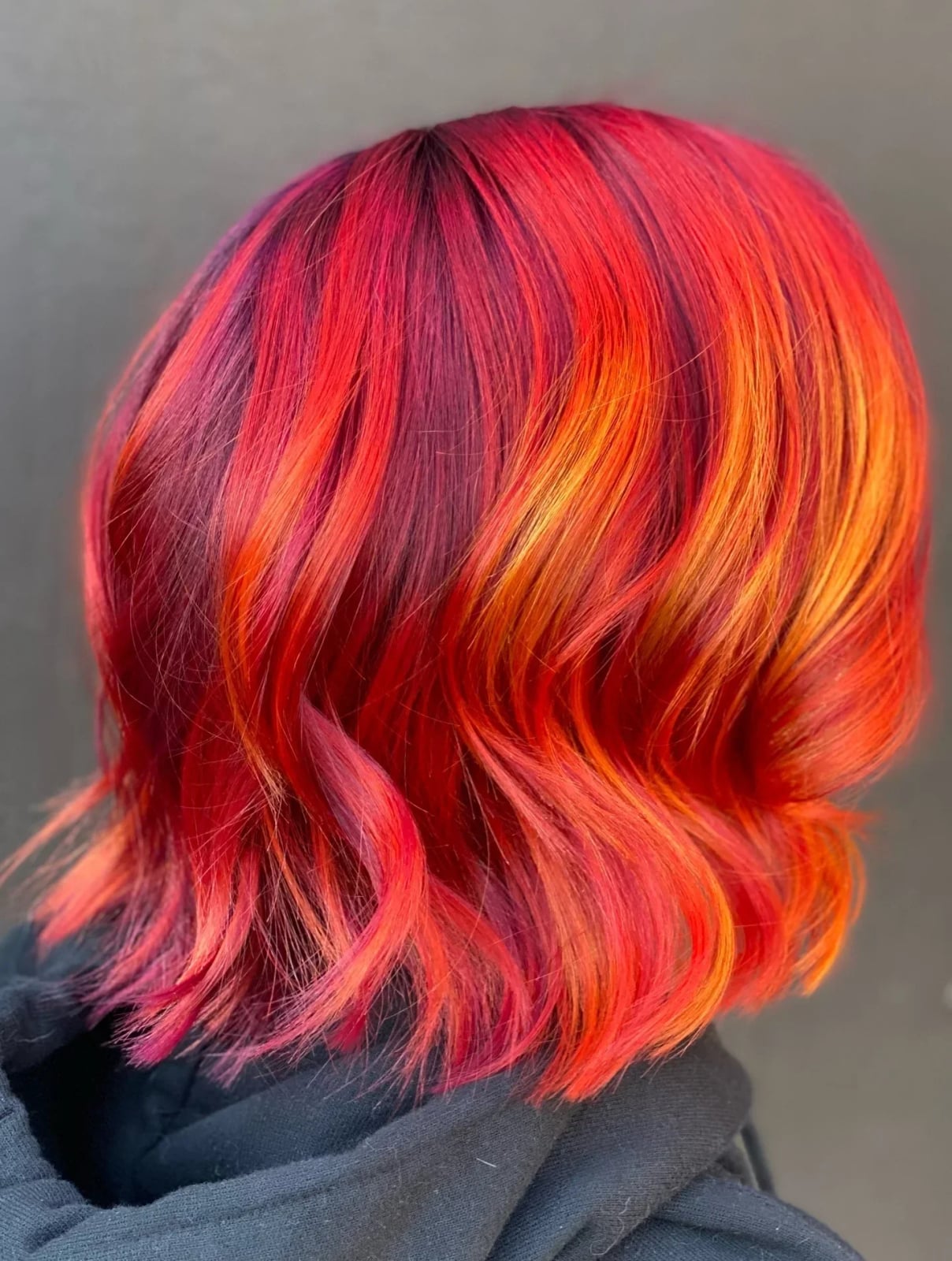
The mistake people make with red hair and highlights is assuming a single salon session does it. A vibrant red base with orange and magenta highlights requires multiple tones and precise placement, which is why DIY almost always lands muddy. This chin-length bob with no bangs and a side part works because the stylist controlled the contrast between the warm and cool red shades. Ask your colorist for: vibrant red with orange and magenta highlights. A salon-leaning process like this means two to three hours in the chair, but the result is a multi-toned finish that stays clean rather than fading into a single flat orange.
Deep Red Base with Subtle Lighter Red Highlights
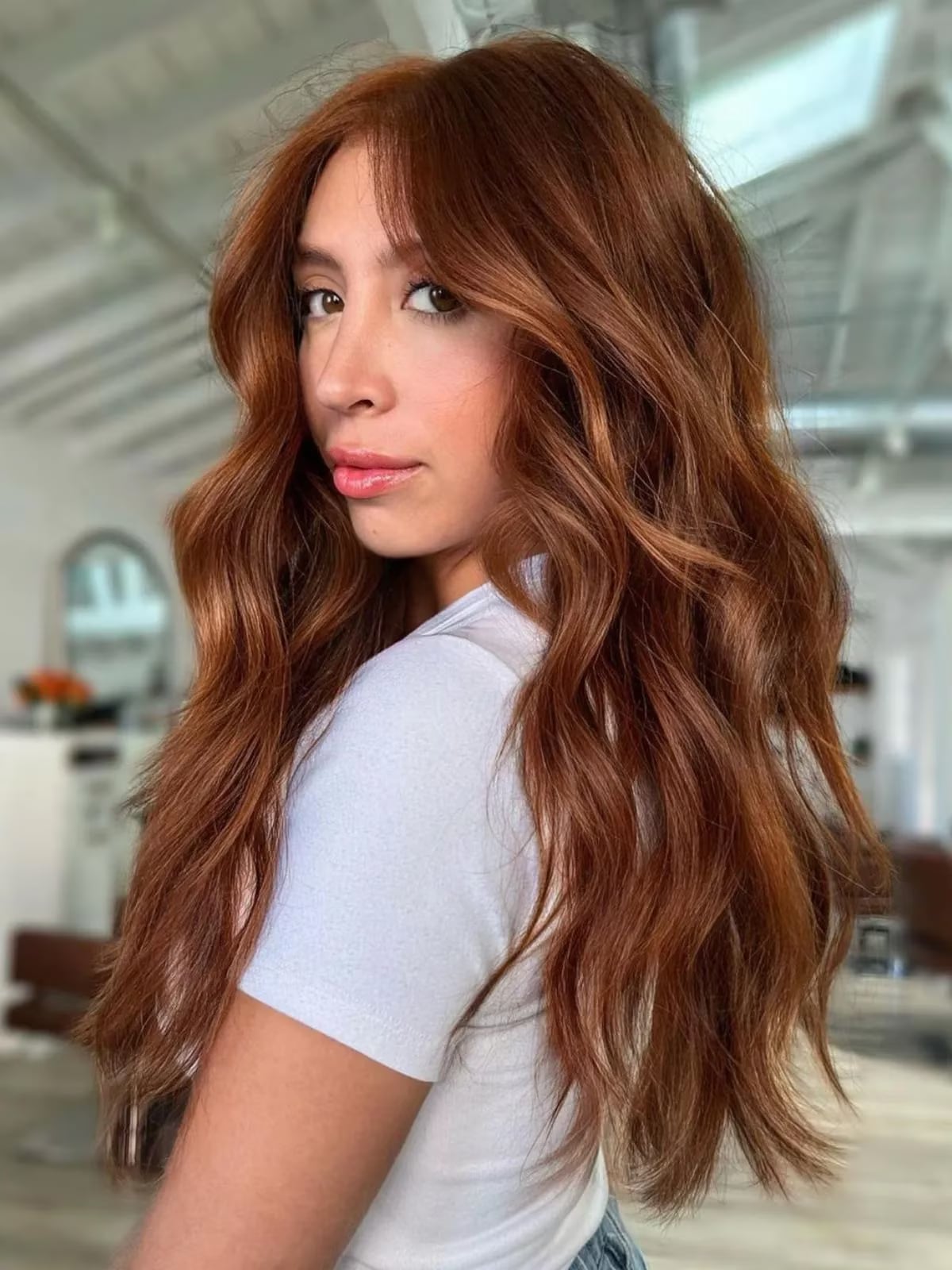
A deep red base with subtle lighter red highlights adds dimension without announcing itself. The mid-back length, thick wavy texture and middle parting let the color shift in the light rather than compete with heavy layers. This one suits those with naturally wavy hair who want a monochromatic feel that is not flat. Ask your colorist for: mid-back length deep red with subtle lighter red highlights. A refresh every six to eight weeks keeps the undertone rich and prevents the lighter pieces from turning brassy against the deep base.
Red Base with Prominent Blonde Highlights
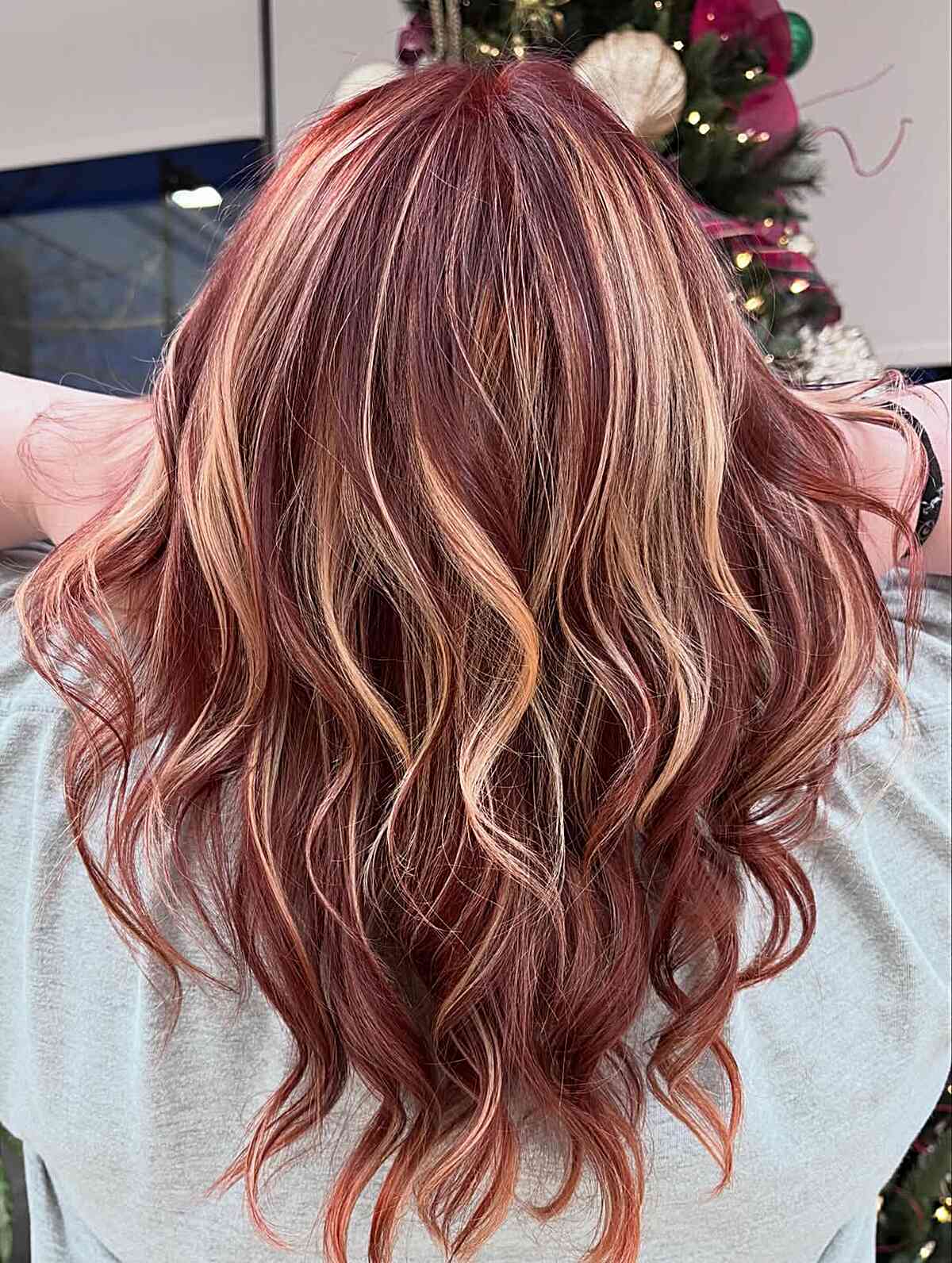
A deep red base with prominent blonde highlights is the high-contrast alternative to a blended look. Where subtle highlights blend into the base, these sit on top, creating clear separation. The mid-back length, thick wavy texture and middle parting give the blonde pieces room to stand out individually. This works for anyone who prefers a graphic color statement over a soft fade. Ask your colorist for: mid-back length red with prominent blonde highlights. The blonde sections need a toning appointment every four to six weeks to stay cool.
Collarbone Length Red with Blonde Highlights
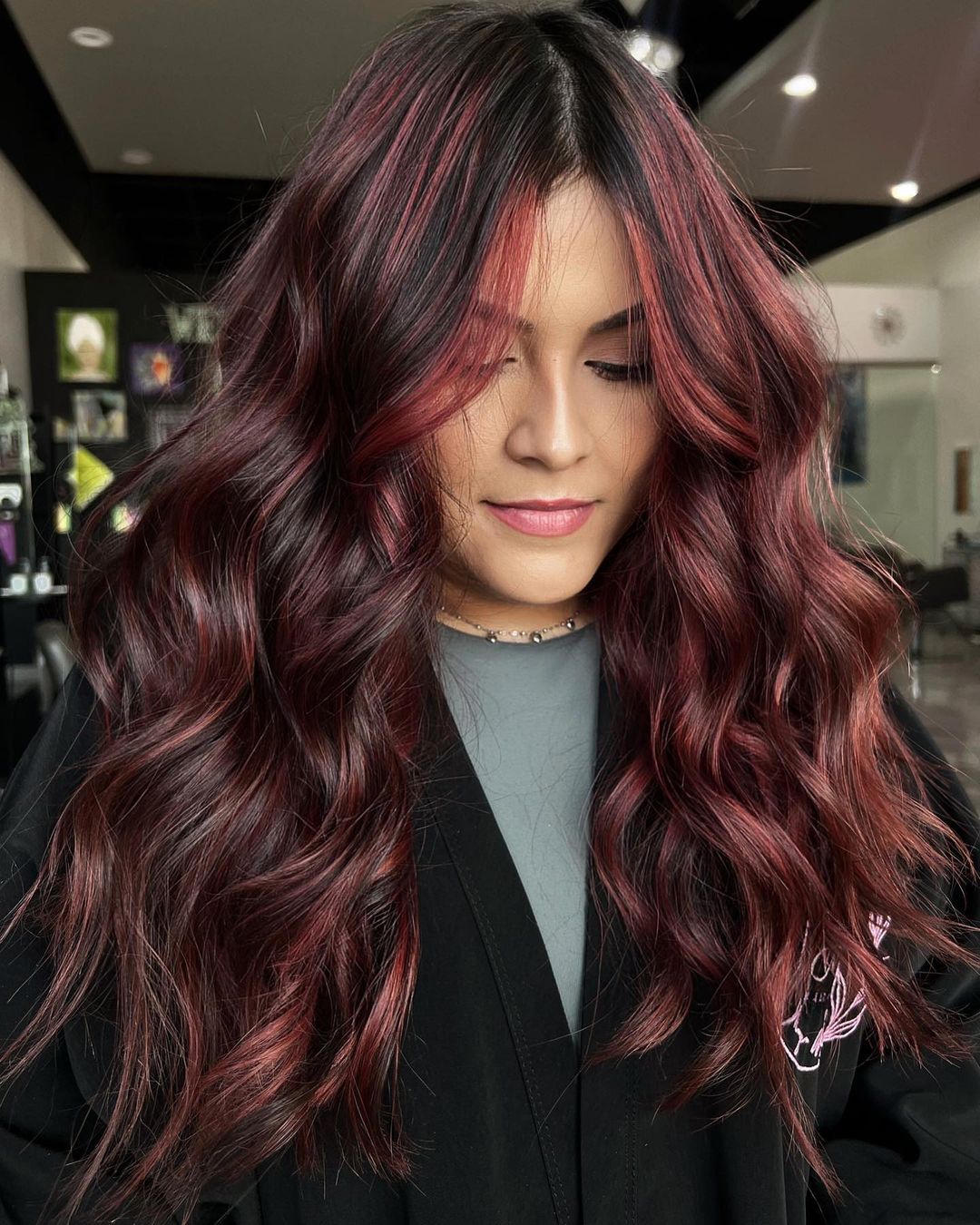
Collarbone-length hair with face-framing layers and curtain bangs uses strategically placed blonde highlights to draw attention forward. The red base grounds the color while the lighter pieces hit around the cheekbones and jaw. A wavy blowout with a middle parting keeps the shape soft rather than blunt. Ask your colorist for: collarbone length red with blonde highlights, face-framing layers, curtain bangs. To style, rough-dry with a round brush at the roots for lift, then wrap sections around a one-inch barrel for consistent waves. A trim every six to eight weeks keeps the layers from growing past the collarbone and losing their shape.
Shoulder Length Deep Red with Lighter Red Highlights
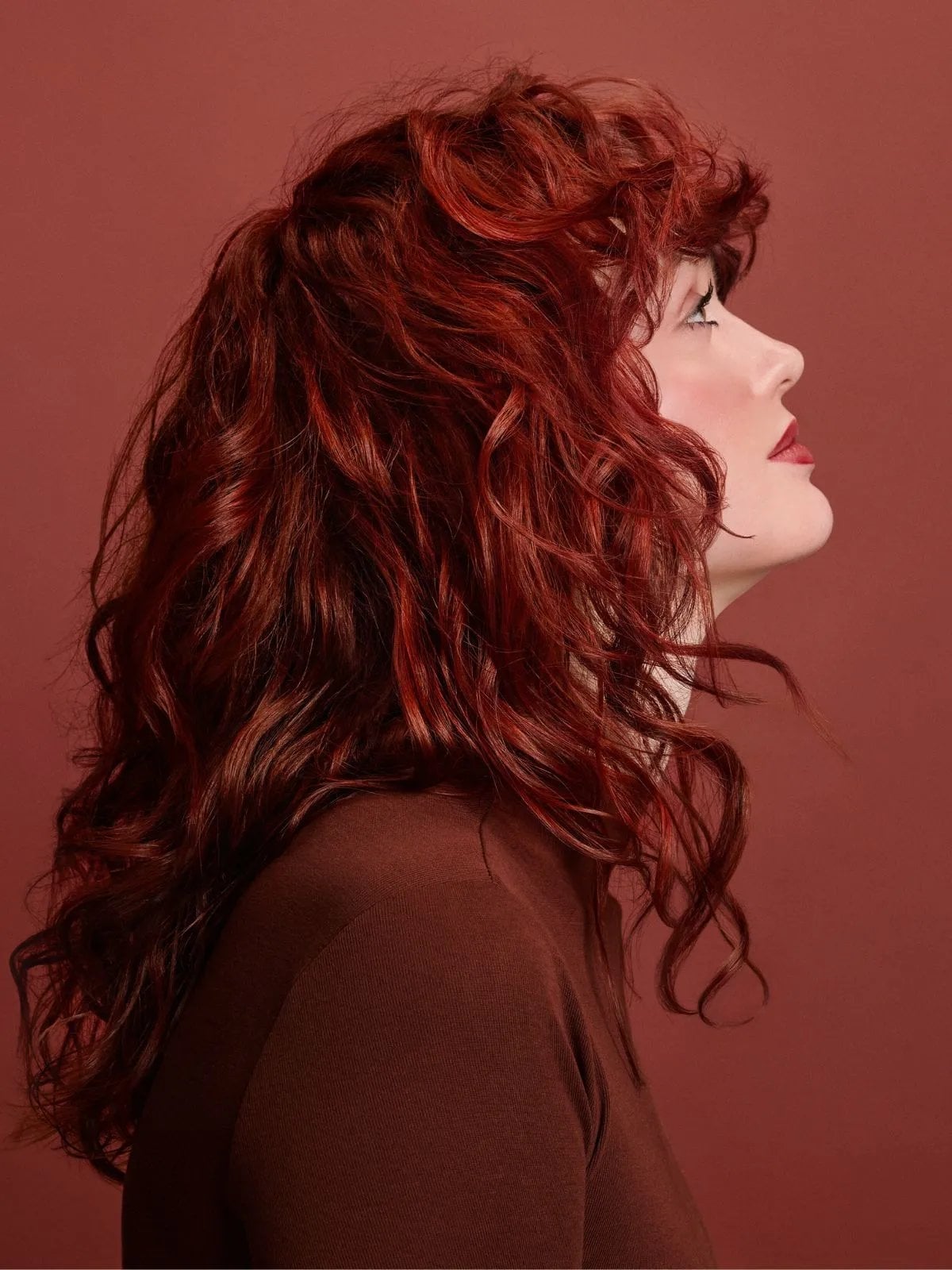
That deep red base with subtle lighter red highlights is a clever way to get dimension without leaving your color family. The side-parting loose curls let the lighter pieces catch light at different angles, so the whole thing reads as richer rather than flashy. It suits thick, wavy hair at shoulder length, and the side part works well for most face shapes.
Ask your colorist for: shoulder-length deep red with subtle lighter red highlights, loose curls. A curl-defining cream keeps the pattern from frizzing out by midday. Plan on a color refresh every six to eight weeks, because red tones fade faster than you expect on thick hair.
Warm Copper Red with Blonde Highlights
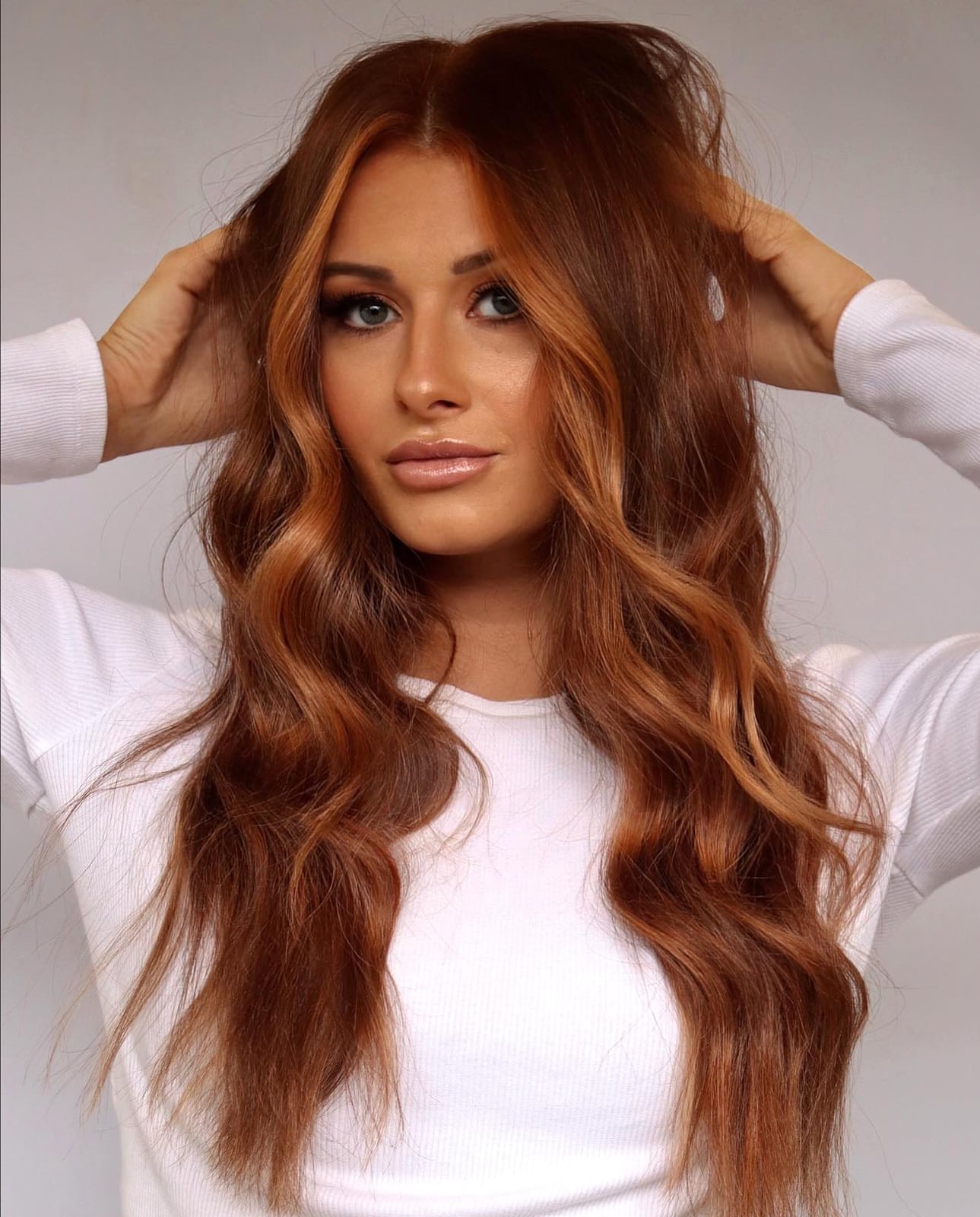
A warm copper red avoids brassiness when paired with subtle lighter blonde highlights, not yellow ones. The mid-back length is styled in soft waves with a glossy finish, and the middle parting lets the highlights sit evenly on both sides. Thick, wavy hair can handle the lift without going straw-like. Ask your colorist for: mid-back length warm copper red with blonde highlights, soft waves. A smoothing serum is all you need for shine, no heavy products required.
Copper Red Bob with Natural Blonde Highlights

The mistake people make with a copper red bob and blonde highlights is letting the highlights go too thick, which turns the whole thing stripey. Keep them fine and woven through, as seen here on this collarbone-length bob with a wavy blowout and middle parting. The natural-looking blonde pieces should be a few shades lighter than the copper base, not a full jump to platinum. Ask your colorist for: collarbone bob, copper red with natural blonde highlights. This is strictly a salon job, trying to DIY fine highlights on a bob usually ends in regret.
Dark Brown with Copper and Auburn Highlights
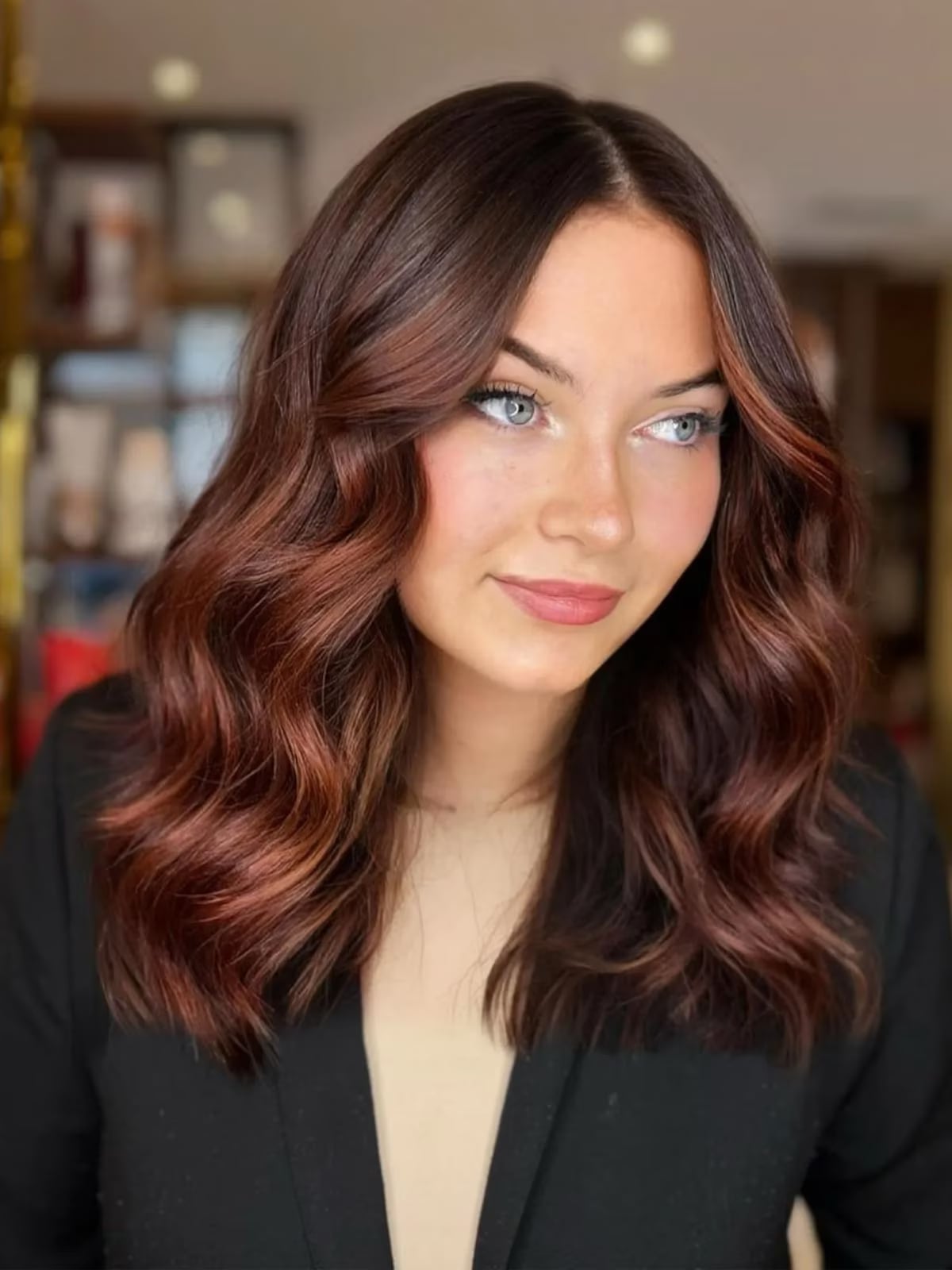
A dark brown base with copper and auburn highlights is a smart way to add warmth without going full red. The collarbone-length layers and soft waves let the subtle copper and auburn pieces peek through without overwhelming the base. This works especially well for fine to medium density hair, because the highlights create the illusion of more volume without needing heavy layering. Ask your colorist for: collarbone-length layered hair, dark brown with copper and auburn highlights. The soft waves are the whole point here.
Shoulder Length Auburn Red with Blonde Highlights
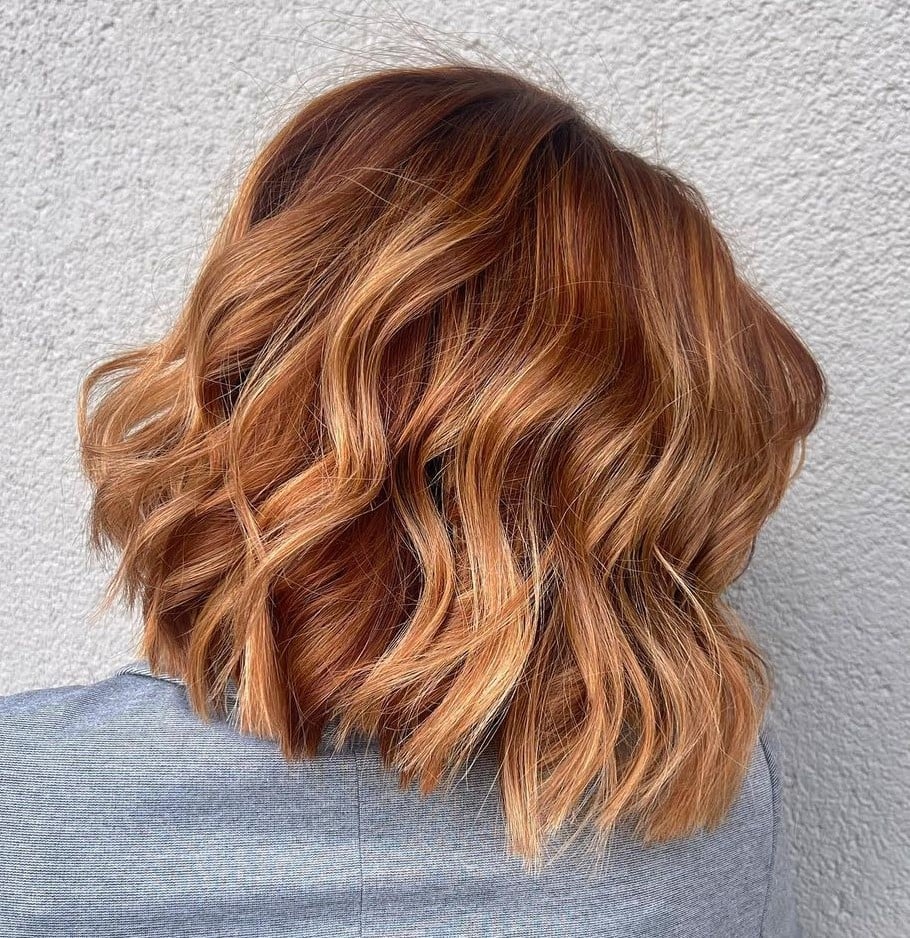
A solid auburn red is lovely, but the blonde highlights here give it movement that a single shade can’t match. Seen from the back, the shoulder-length layers create dimension in sections, so the hair looks dimensional and not flat. This suits medium density, wavy hair that can hold the wave pattern without falling straight by noon. Ask your colorist for: shoulder-length layered hair, auburn red with blonde highlights. A texturizing spray keeps the waves from looking too polished. You want the casual, lived-in feel.
Dark Red with Copper and Blonde Highlights
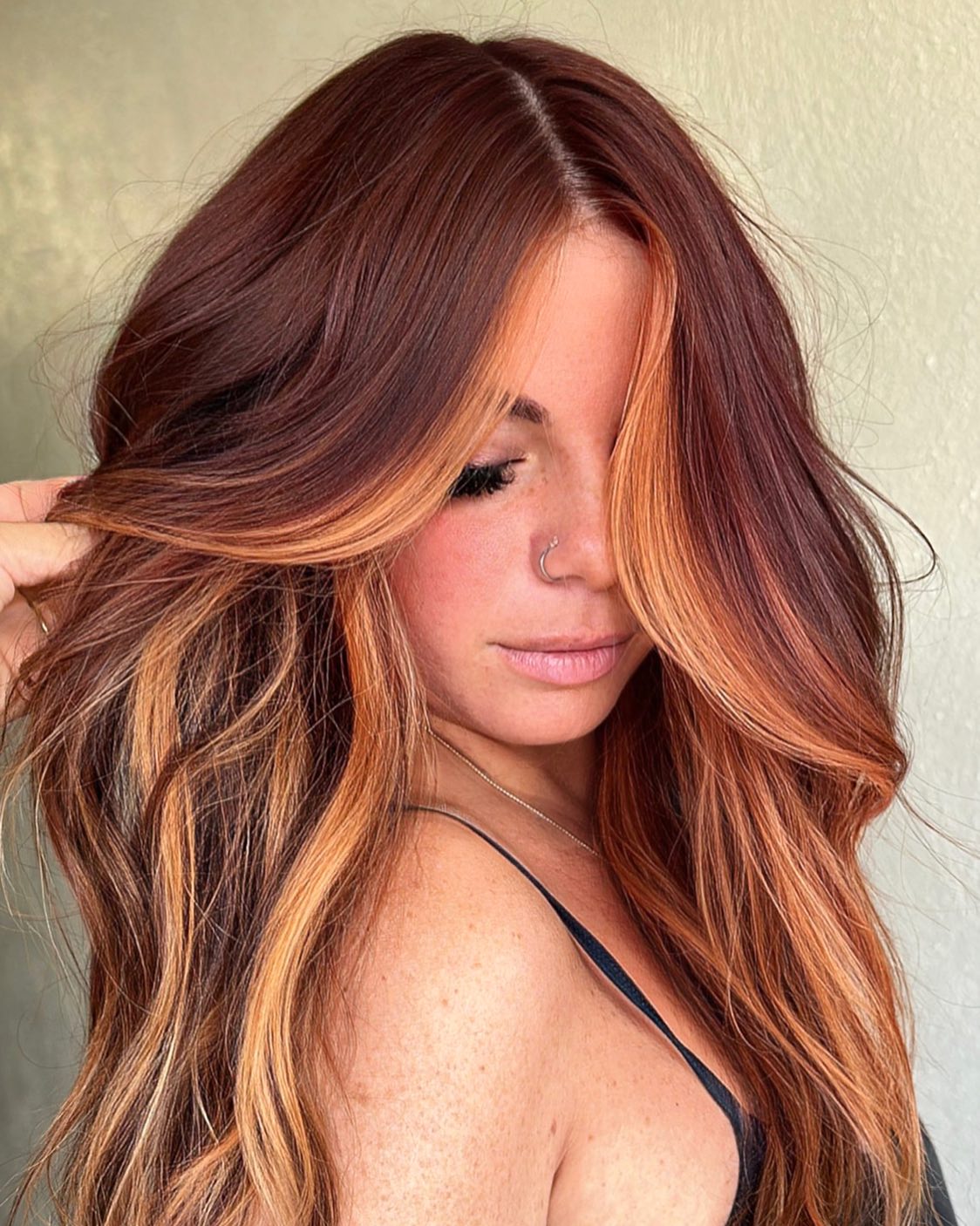
The trick is in the placement: copper highlights are woven through the mid-lengths while blonde pieces frame the face, creating depth without competing. A middle parting lets the curtain bangs fall naturally into the lighter strands, so the contrast looks deliberate. Thick, wavy texture at mid-back length gives the colors room to catch light from different angles.
Ask your colorist for: mid-back length dark red with copper and blonde highlights, curtain bangs. A heat protectant before blow-drying keeps the gloss intact, and those bangs need a trim every four to six weeks to stay exactly where they should.
Auburn Red with Copper Highlights and Full Bangs
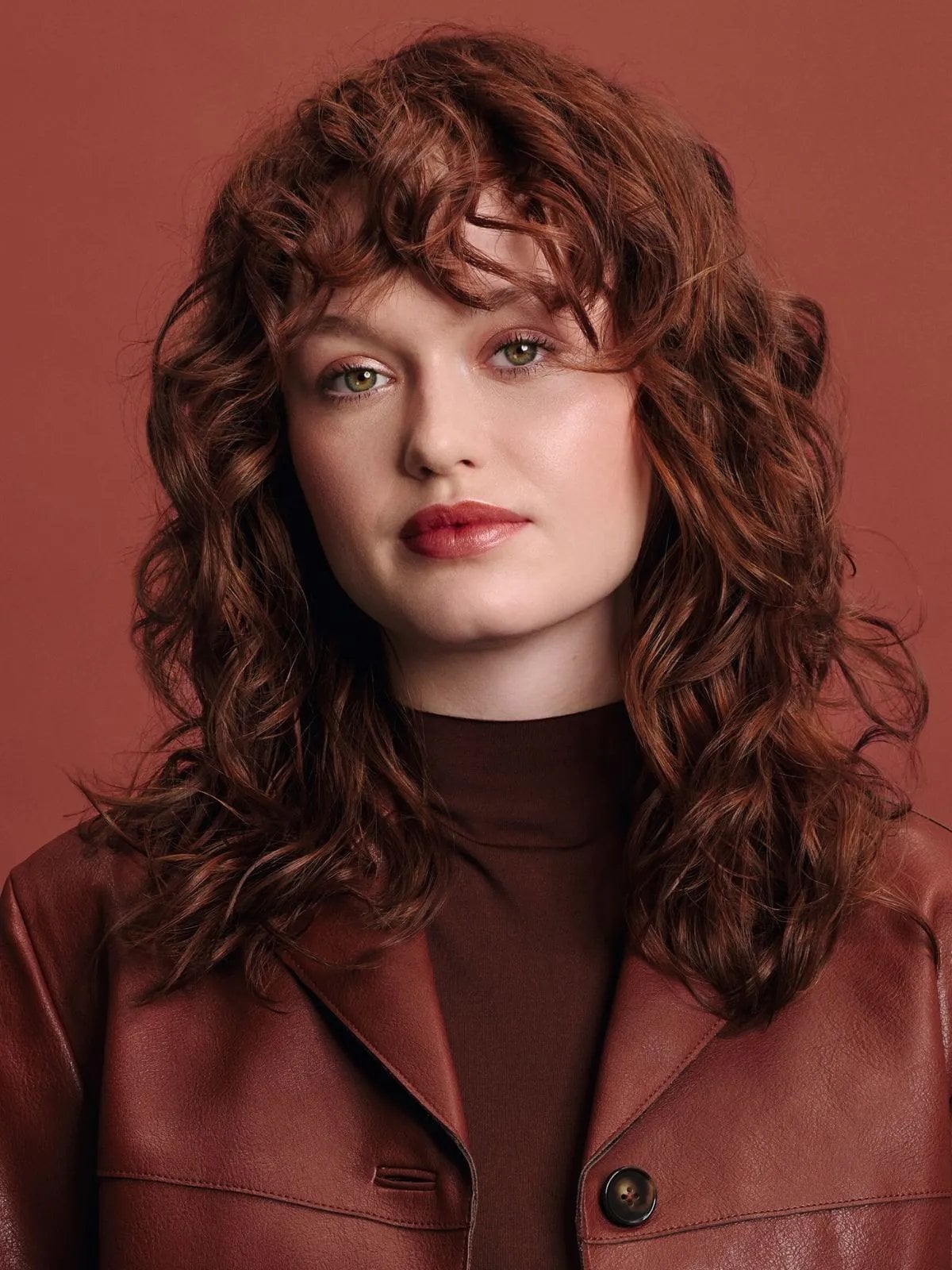
A voluminous blowout on collarbone-length wavy hair does not happen by accident. The full bangs need a round brush and a minute of directed heat each morning, and the auburn red base with lighter copper highlights shows best when the roots have a little lift. Thick texture holds the shape, but the blow-dry is non-negotiable if you want that bounce. Ask your colorist for: collarbone length auburn red with copper highlights, full bangs, voluminous blowout. Plan a bang trim every four to six weeks.
Deep Dark Red with Lighter Red Highlights
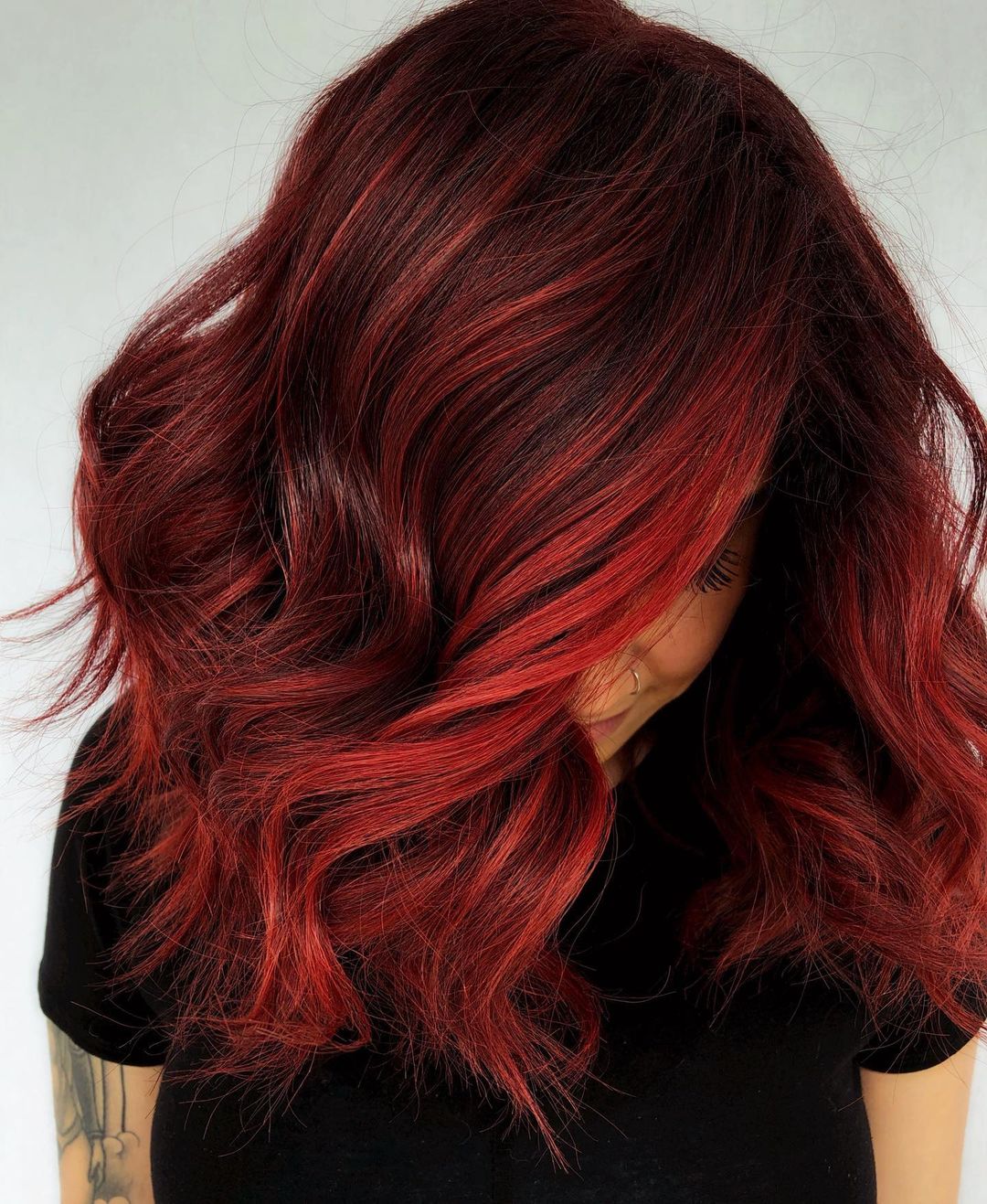
Wondering how to get that dimension without going full rainbow? Ask for a deep dark red base with lighter red highlights woven through the mid-lengths, finished with loose waves for movement. The side view here shows how the subtle lighter pieces keep the color from reading as flat, even on thick, wavy mid-back length hair. The glossy finish comes from a shine serum, not from over-conditioning. Ask your colorist for: mid-back length deep dark red with lighter red highlights, loose waves. Most face shapes work with this one, since the layers do the softening.
Dark Red with Bright Red Streaks
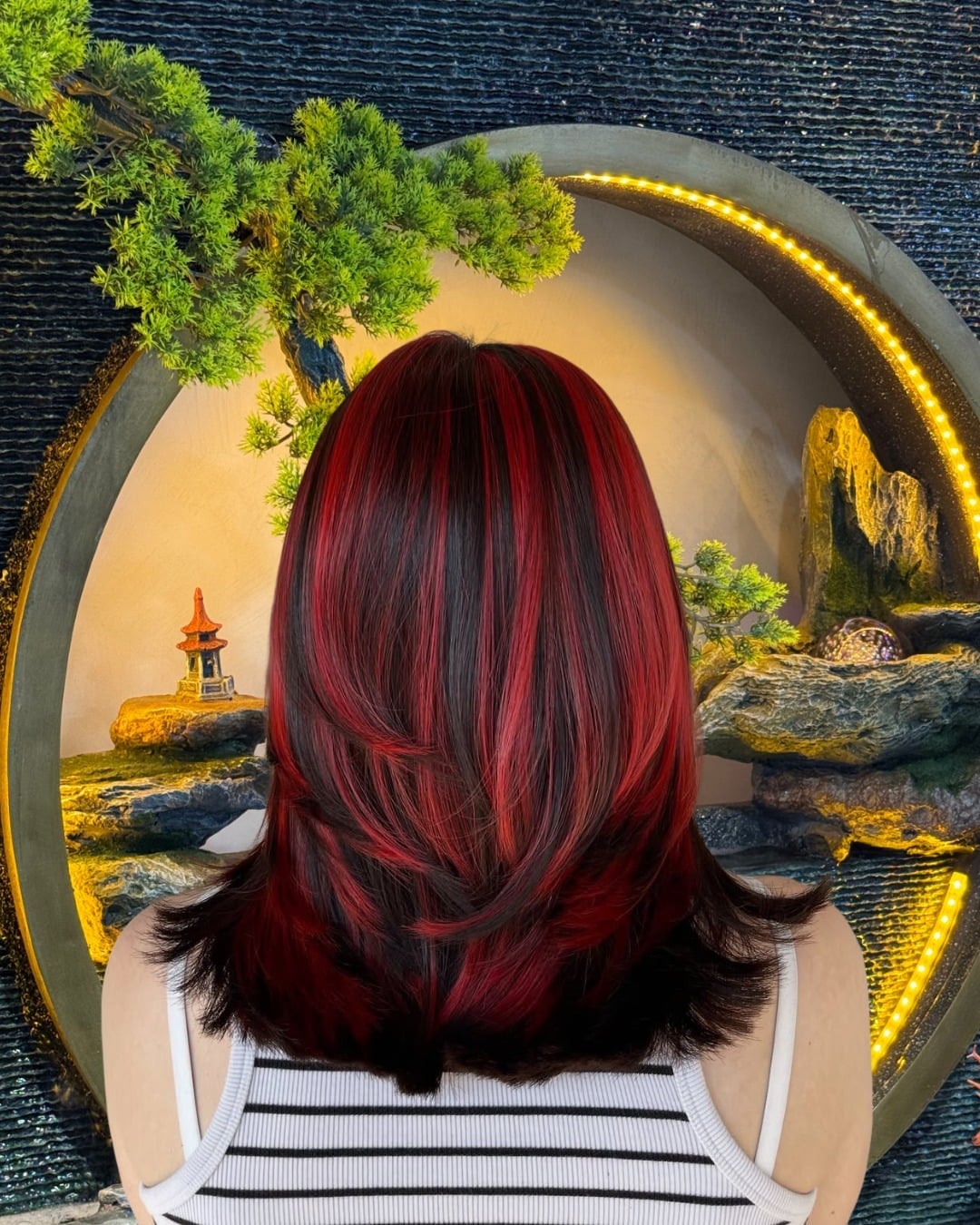
The common mistake is asking for streaks and getting chunks that look glued on. The fix: request distinct sections of bright red on a dark red base, applied in a pattern that follows the layers. On collarbone length straight, thick hair with a smooth blowout, the contrast looks graphic and planned. This is a salon only color: the bright red needs a pre-lightener, and the placement matters too much for a box. Ask your colorist for: collarbone length layered hair, dark red with bright red streaks. The bright sections fade faster, so expect a refresh every eight to ten weeks.
Red Base with Copper Highlights
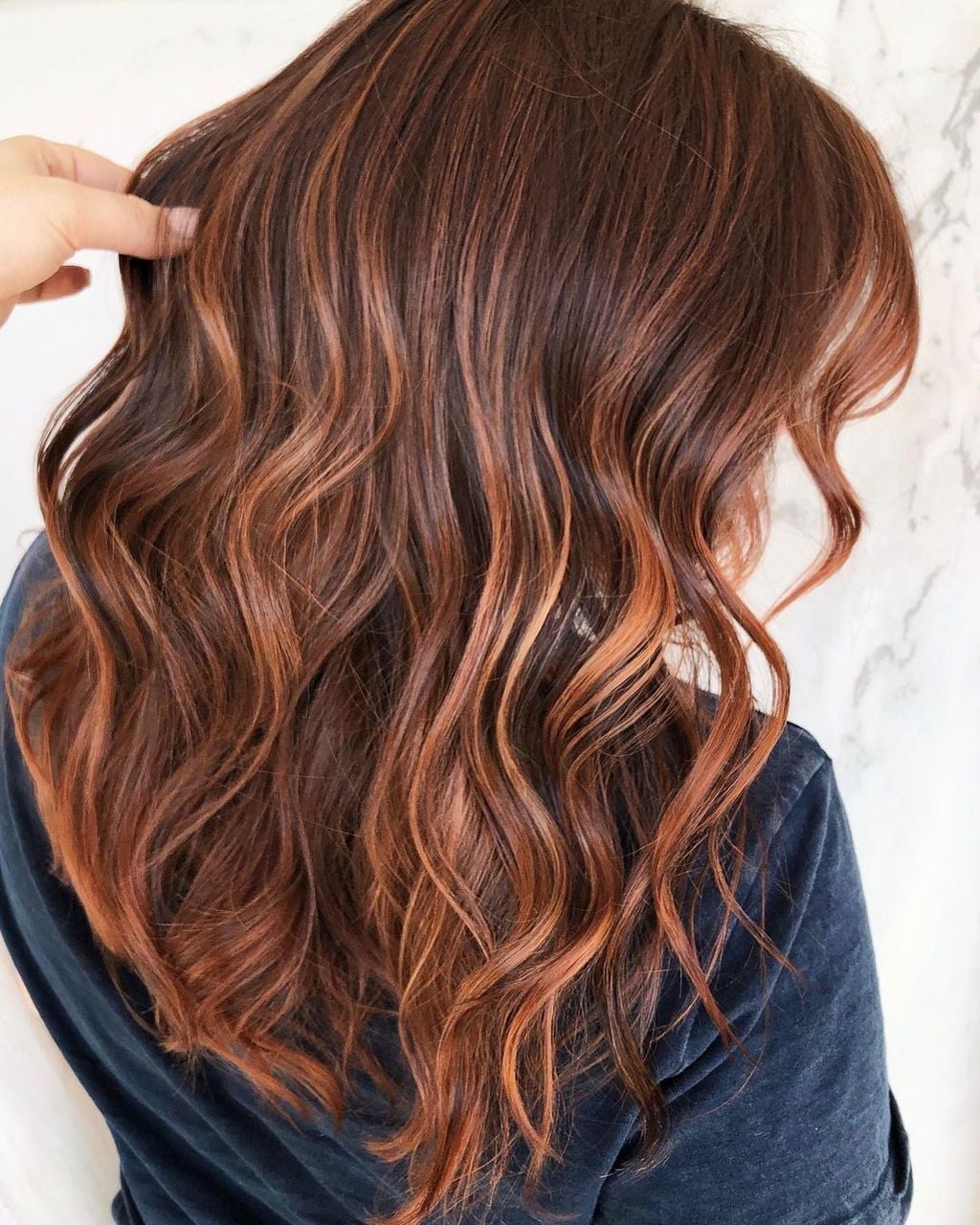
Copper highlights on a rich red base work best on thick, wavy hair that can carry the warmth without looking brassy. At mid-back length with loose flowing waves, the copper catches light along the wave crests while the red stays grounded underneath. The two tones move together without stacking. Ask your colorist for: mid-back length red with copper highlights, loose waves. A texturizing spray on damp hair before air-drying enhances the wave pattern without heat.
Vivid Red Base with Bright Red Highlights
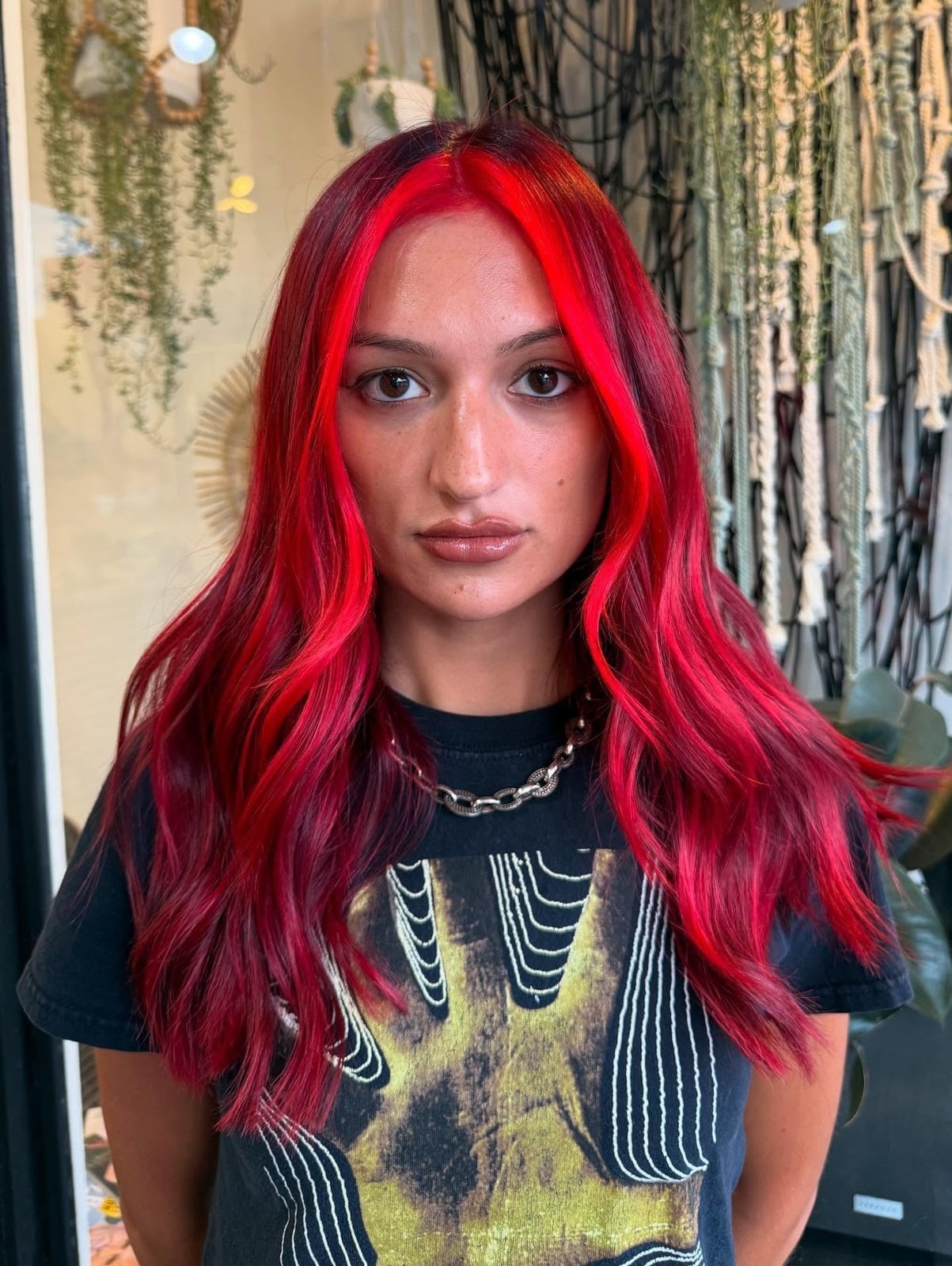
Vivid red gets talked about like it is one thing, but there is a real difference between a solid red and a red-on-red highlight situation. This one uses a vivid red base and layers in bright red highlights, so the color has depth instead of sitting flat. Mid-back length, thick, wavy hair with face-framing pieces makes the contrast easy to see. Ask your colorist for: vivid red base with bright red highlights, loose waves. The bright pieces catch light differently than the base. A color-depositing mask every few washes keeps both tones from drifting apart. Trim every six to eight weeks.
Posh Dark Red Hair Colors
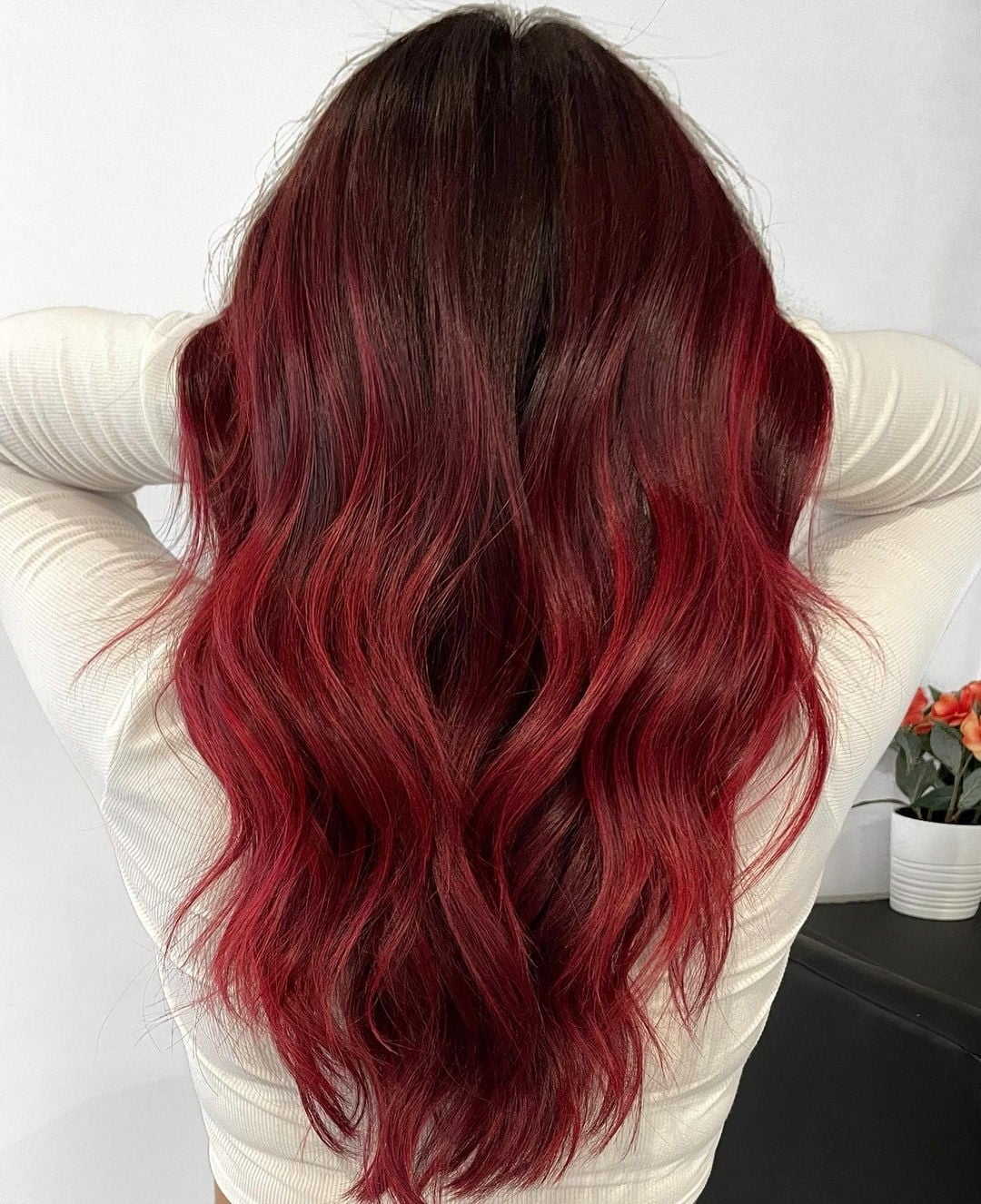
Dark red can look flat without variation, so this design works a bright red balayage through a deep dark red base. The balayage is painted freehand, starting lower down so the roots stay dark and the lighter pieces land mostly on the ends. Mid-back length, thick, wavy hair with a slicked-back parting and a wavy blowout keeps the focus on the color placement.
Ask your colorist for: dark red base with bright red balayage, wavy blowout. The color placement is precise enough that it needs a salon visit. A toning appointment every six to eight weeks keeps the bright red from pulling orange against the dark base.
Layered Shag with Red Streaks
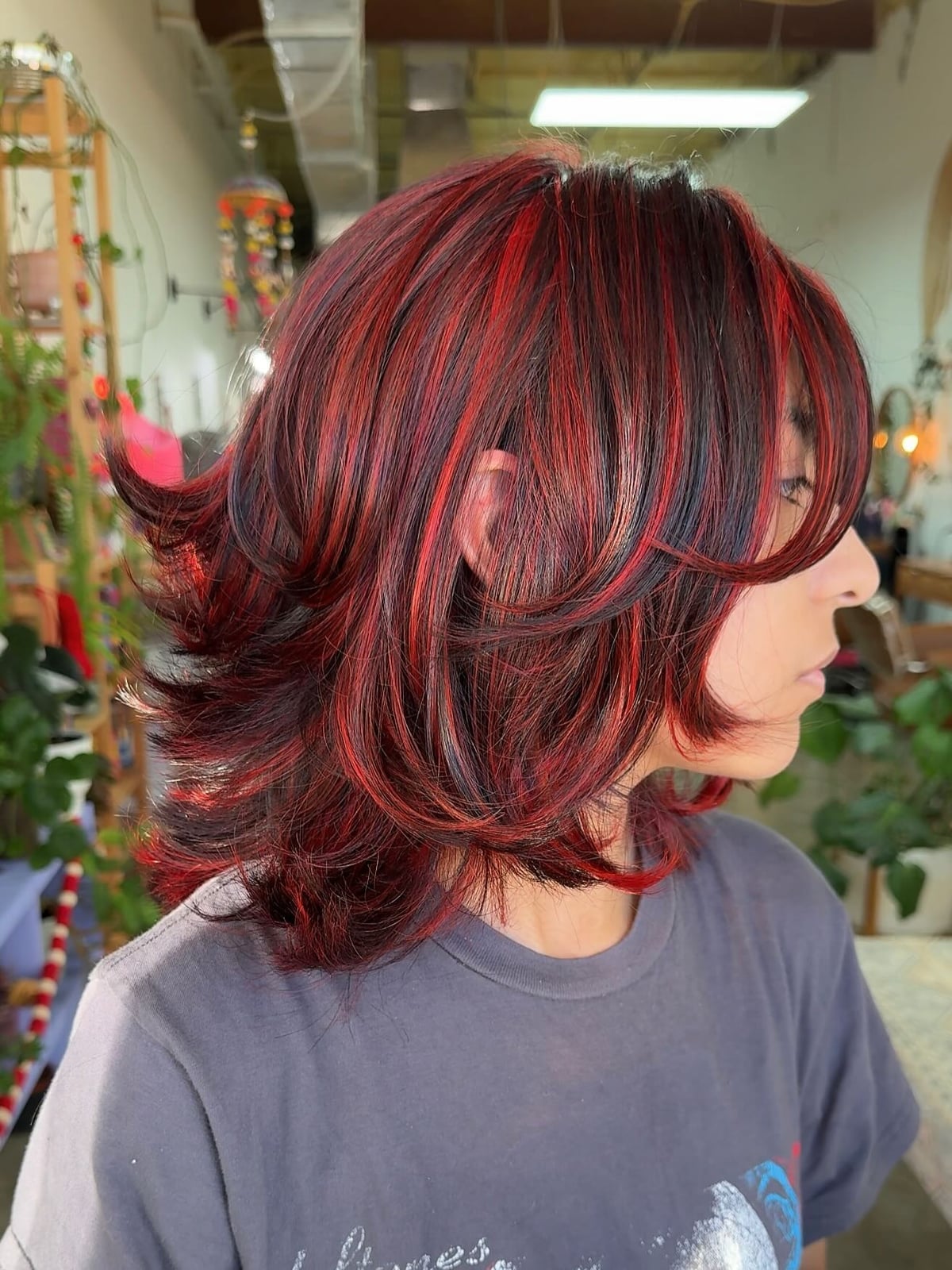
The shag is a cut that relies on texture, so the streaks here serve double duty. A dark red base with vibrant, lighter red streaks woven through the face-framing layers and down the lengths. Shoulder length, thick, wavy hair with a middle parting. Ask your colorist for: shoulder length shag, dark red with vibrant red streaks. A texturizing spray on damp hair, then air-dry or scrunch with your hands. The shag’s layers need a trim every six to eight weeks to keep the shape from collapsing into a blunt blob.
Rich Red with Lighter Auburn Highlights
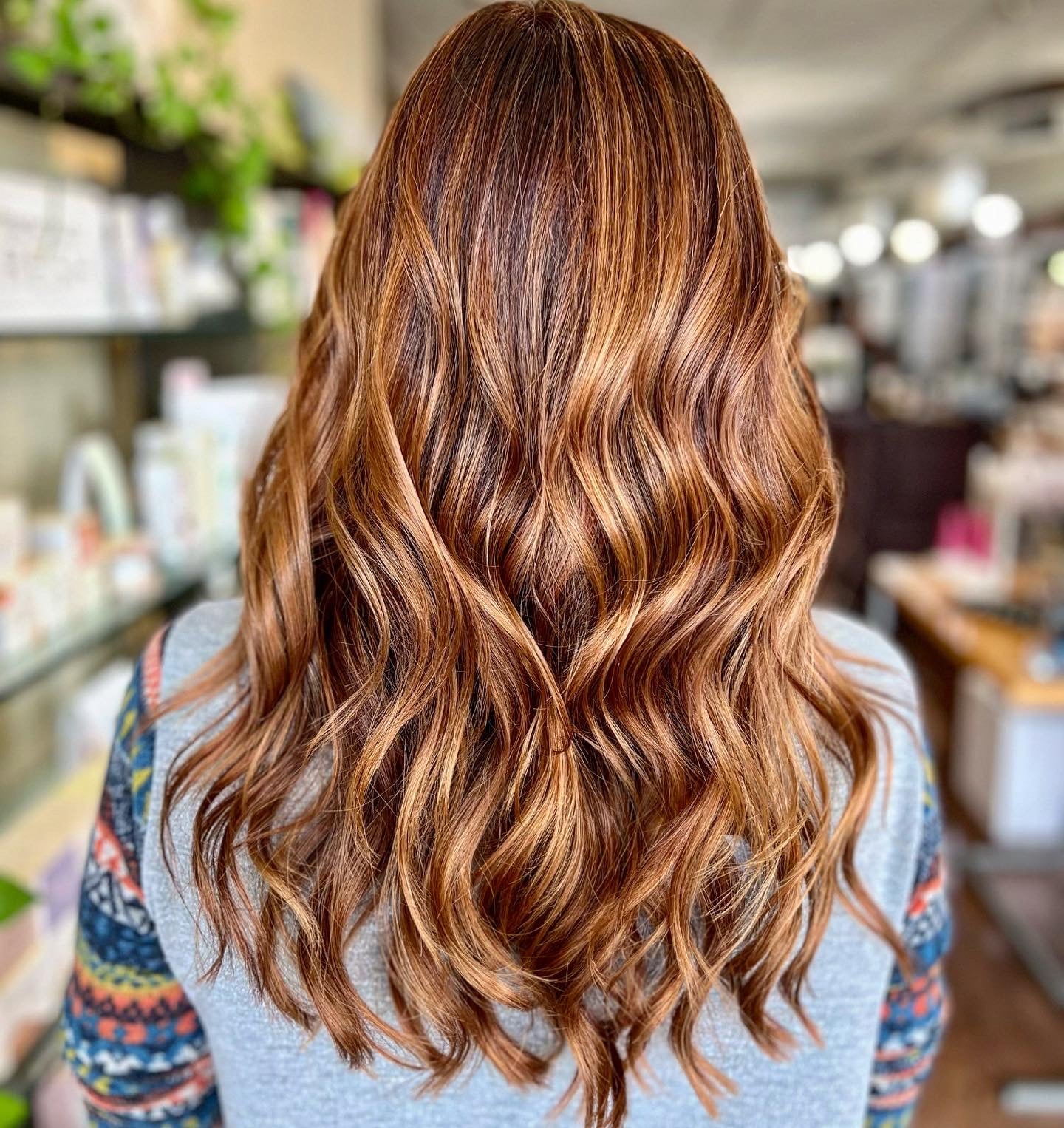
How do you get dimension without it looking like you tried too hard? A rich red base with lighter auburn highlights, placed mostly around the face and through the mid-lengths. Mid-back length, thick, wavy hair with a side parting and loose waves. Ask your colorist for: mid-back length rich red base with lighter auburn highlights, loose waves. The auburn pieces sit close enough to the base shade that the transition is soft, not stripey. A leave-in conditioner on damp hair, then air-dry or diffuse. Refresh the highlights every eight to ten weeks so the warmer tones stay visible against the deeper red.
Warm Auburn with Golden Blonde Highlights
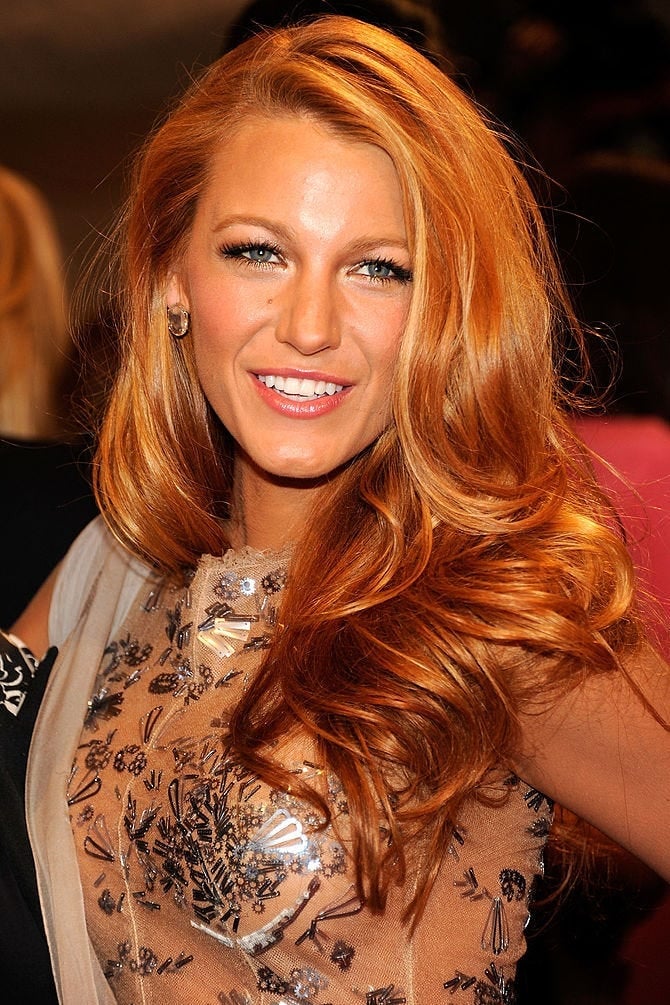
The mistake people make with a warm auburn and golden blonde combination is assuming you can do it at home with a box dye. You cannot. The auburn base needs to be rich enough that the golden blonde reads as a highlight and not as a mistake. Collarbone length, layered, thick, wavy hair with a side parting and a glossy wavy blowout. Ask your colorist for: collarbone length layers, warm auburn base with golden blonde highlights. This is a salon job: the blonde pieces need to be woven in, not painted on in chunks. A shine spray on dry hair helps the glossy finish last between washes.
Dark Red with Copper Highlights
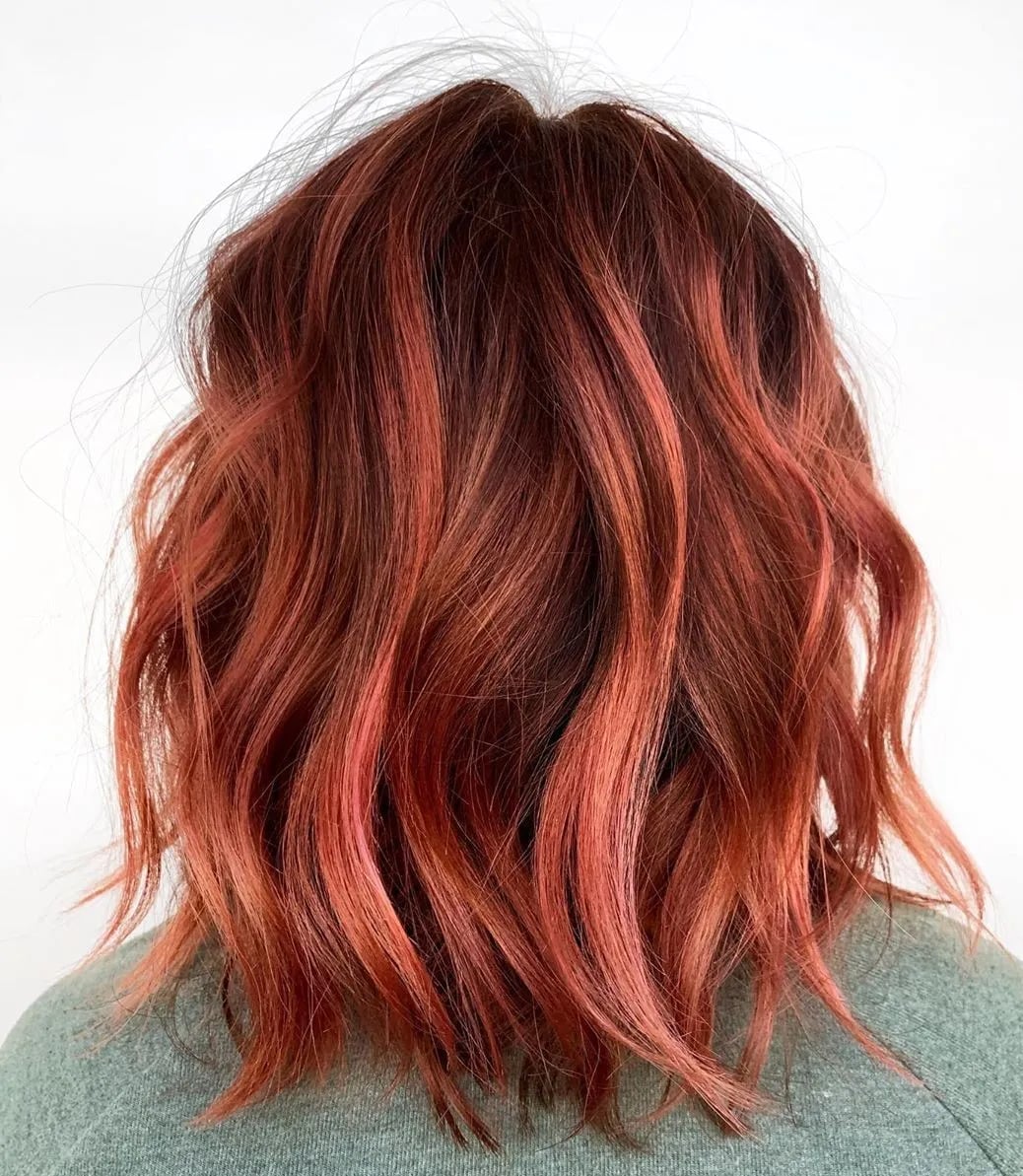
The trick with fine, wavy hair is making highlights look like depth instead of just a few lighter strands. A dark red base with copper highlights woven through subtle layers does exactly that: the copper adds brightness without weighing the hair down. Collarbone-length fine, wavy textures let the contrast show clearly without getting lost. Ask your colorist for: collarbone length dark red with copper highlights, loose waves. A volumizing mousse at the roots keeps the shape from falling flat by midday.
Vivid Red Base with Bright Red Highlights, Mid-Back
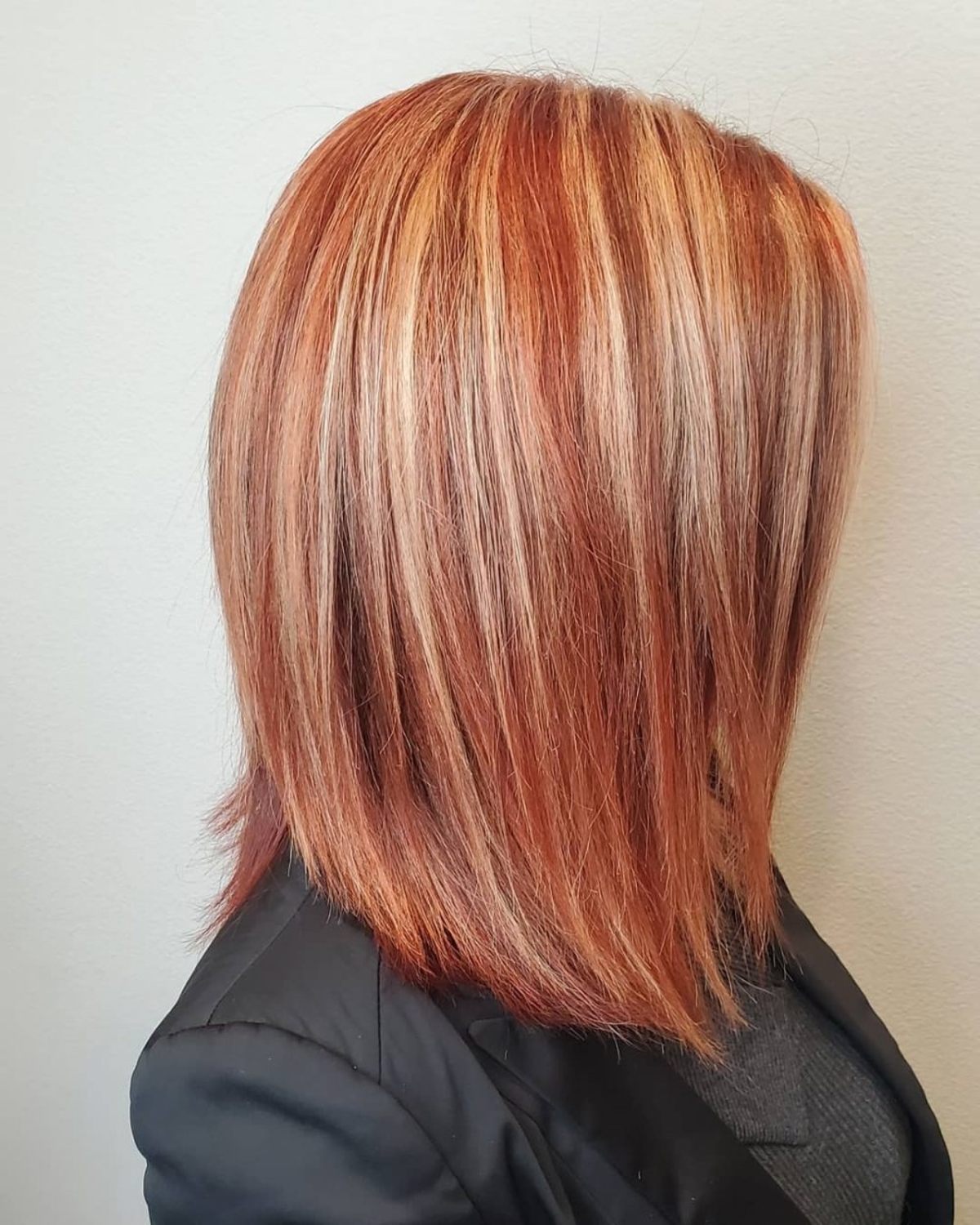
If a soft auburn feels too polite, this is the alternative. A vivid red base punched up with bright red highlights lands squarely in statement territory: the kind of color that announces itself before the person walks in. It works best on thick, wavy mid-back lengths where the density can carry that much pigment without looking heavy. Ask your colorist for: mid-back length vivid red with bright red highlights, loose waves. The face-framing pieces keep the intensity from feeling overwhelming around the hairline.
Copper Red Base with Lighter Red Highlights
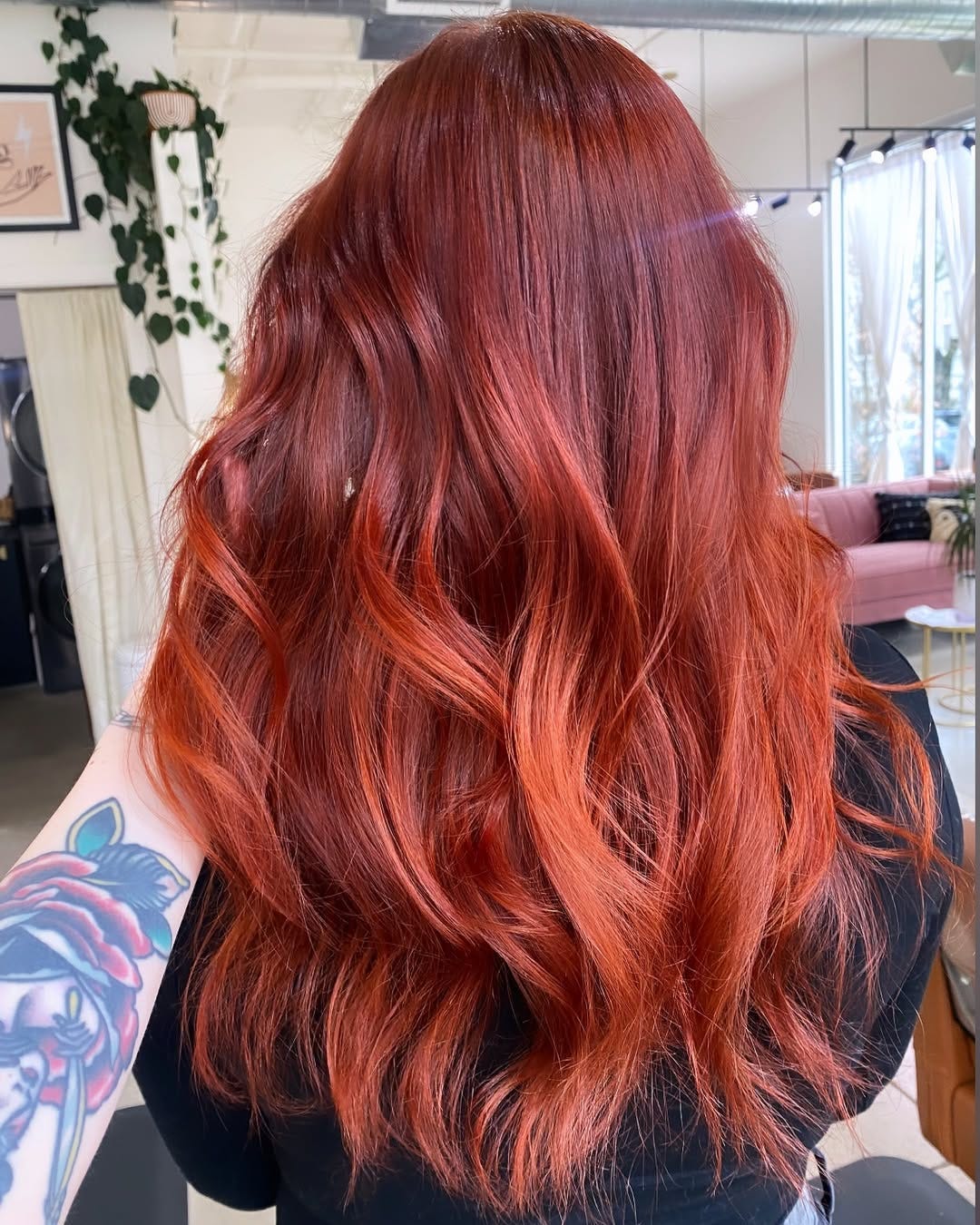
Building dimension on a copper red base means working within the same tonal family rather than jumping to a contrasting shade. Lighter red highlights are painted onto the ends of thick, wavy hair, so the color shifts slightly as the waves turn. This creates a monochrome effect that still has movement. Ask your colorist for: mid-back length copper red with lighter red highlights, loose waves. The back view shows how the saturation stays consistent while the lighter strands break up the solid color.
Dark Red Base with Vibrant Red Highlights
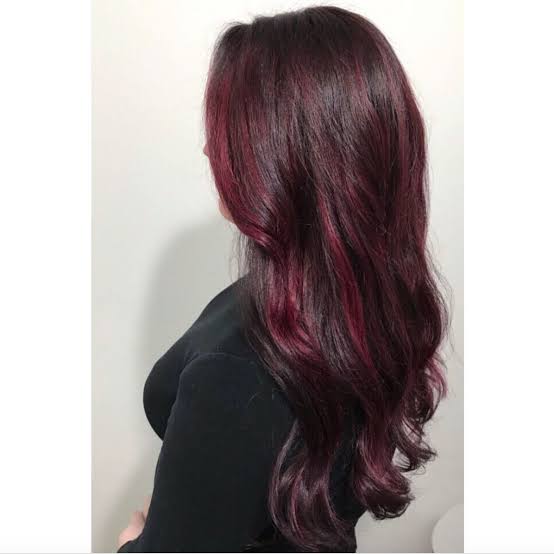
A dark red base with vibrant red highlights is a low-commitment way to test brighter tones. The dark base anchors the color, so the lighter pieces read as intentional rather than grown-out. On thick, wavy mid-back hair styled in a smooth blowout, the highlights sit mostly on the surface layers and stay visible even when the hair is down. Ask your colorist for: mid-back length dark red with vibrant red highlights, blowout. Expect to refresh the highlights every eight to ten weeks, since the contrast between dark and bright fades faster than a single tone would.
Vibrant Copper Red with Lighter Copper Highlights
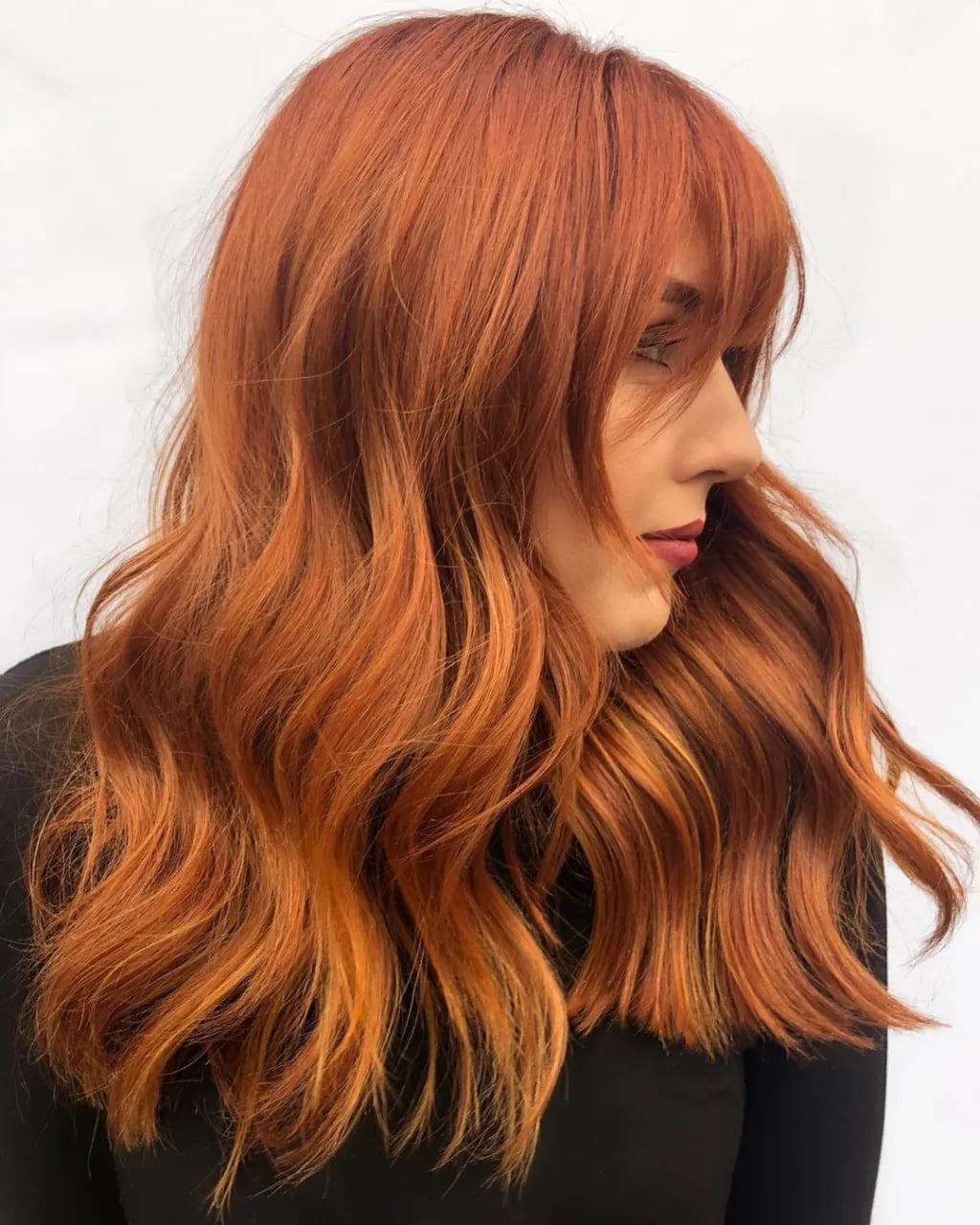
How do you ask for a copper that looks deliberate? Start with the tone: vibrant copper red with lighter copper highlights. The base is warm and saturated, while the highlights lift the color around the face without creating a separate blonde section. Wispy bangs soften the overall effect. Ask your colorist for: shoulder length vibrant copper red with lighter copper highlights, wispy bangs. A color-depositing shampoo used once a week keeps the copper from pulling orange as it fades.
Final Thoughts
For a subtle effect, stick with highlights one or two shades lighter than your base red. For a bolder look, go for a contrasting blonde or copper tone. The right highlight placement adds dimension without making the color feel busy.
- Use sulfate-free shampoos and conditioners made for red tones.
- Tone every six to eight weeks to keep highlights from turning brassy.
- Apply a heat protectant before styling to preserve color.
- Trim every eight to ten weeks to keep the shape and highlight placement fresh.
Red hair with highlights offers endless vibrant possibilities.
