
A hairstyle choice can be judged without leaning on labels or promises. Placement decides where attention settles, control changes how clean or relaxed the surface feels, movement affects how the outline opens, and proportion determines whether the overall shape reads balanced or directional. Finish then becomes the final filter, because shine, softness, separation, or smoothness can change the same basic shape.
The most useful way to think about trendy hairstyles for women over 30 is to compare how each choice behaves, not how it is named. A strong option should make sense through its anchor point, its amount of control, the way movement travels, and the relationship between the top, sides, and ends. That kind of reading keeps the decision practical without turning it into a claim about age, face shape, or status.
Long Golden Waves With Dark Crown Contrast
The hair is worn loose from the front, with a darker crown that shifts into golden blonde through the longer visible lengths. A near-center part divides the top softly, while the ends curl into broad bends below the shoulders. The main evidence is length, color contrast, and lower movement rather than a fully readable haircut line.
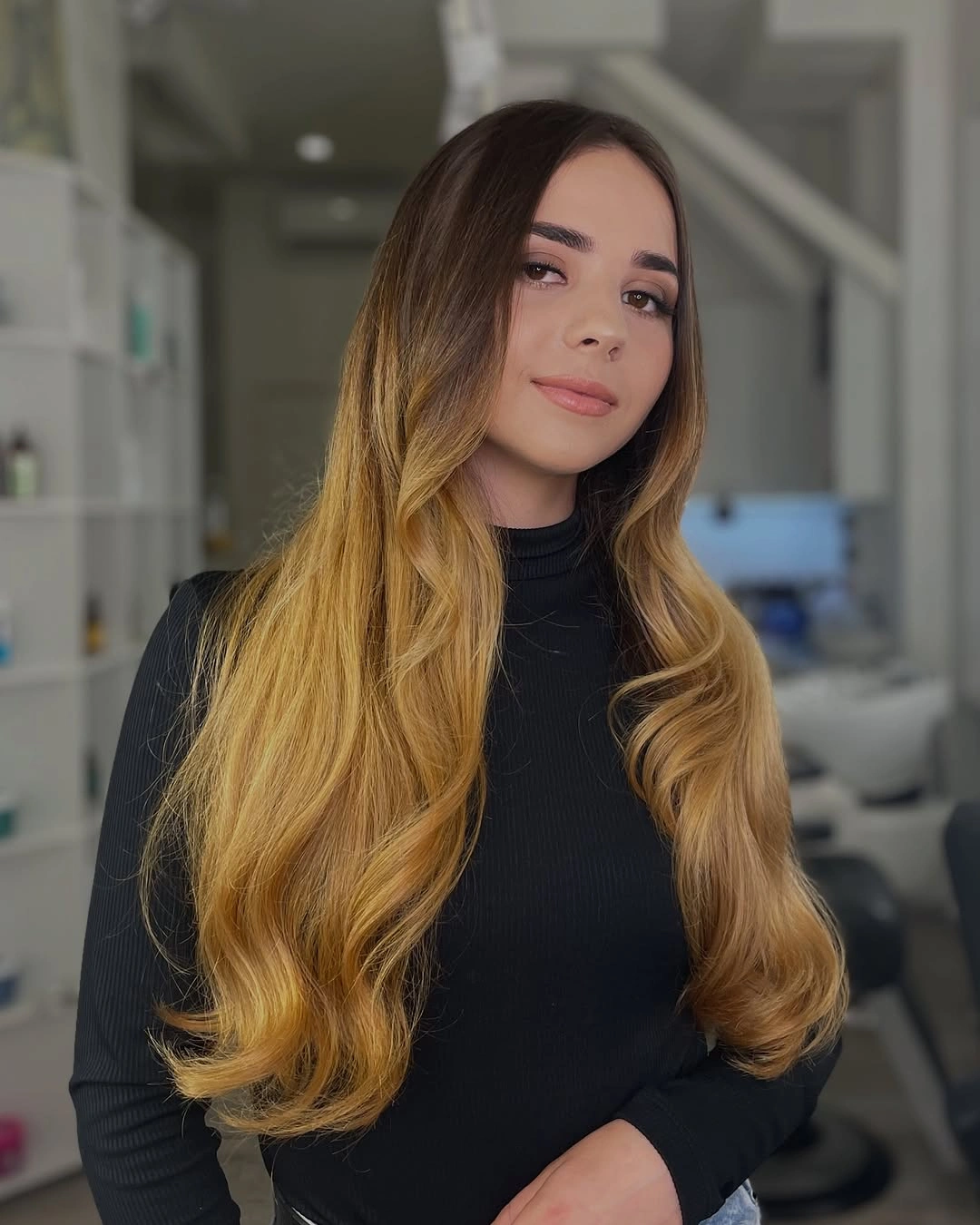
Photo via Instagram
The solution here is to separate the choices instead of reading the whole style as one idea. The darker upper section keeps the crown visually calmer, while the lighter curled ends carry more brightness and motion. The front pieces fall close to the face, but the exact layer structure remains unclear because the styled waves control the outline.
Use this section as a loose long-hair reference. Compare crown contrast, front fall, and curled end placement before making any claim about the cut.
Low Blonde Ponytail With Wavy Length
The blonde hair is gathered low at the nape, with the crown smoothed close to the head before the ponytail begins. The tie point is compact, and the tail drops into soft wavy bends that give the lower section most of its movement. The haircut is hidden by the gathered styling, so the visible evidence comes from placement, surface, and wave shape.
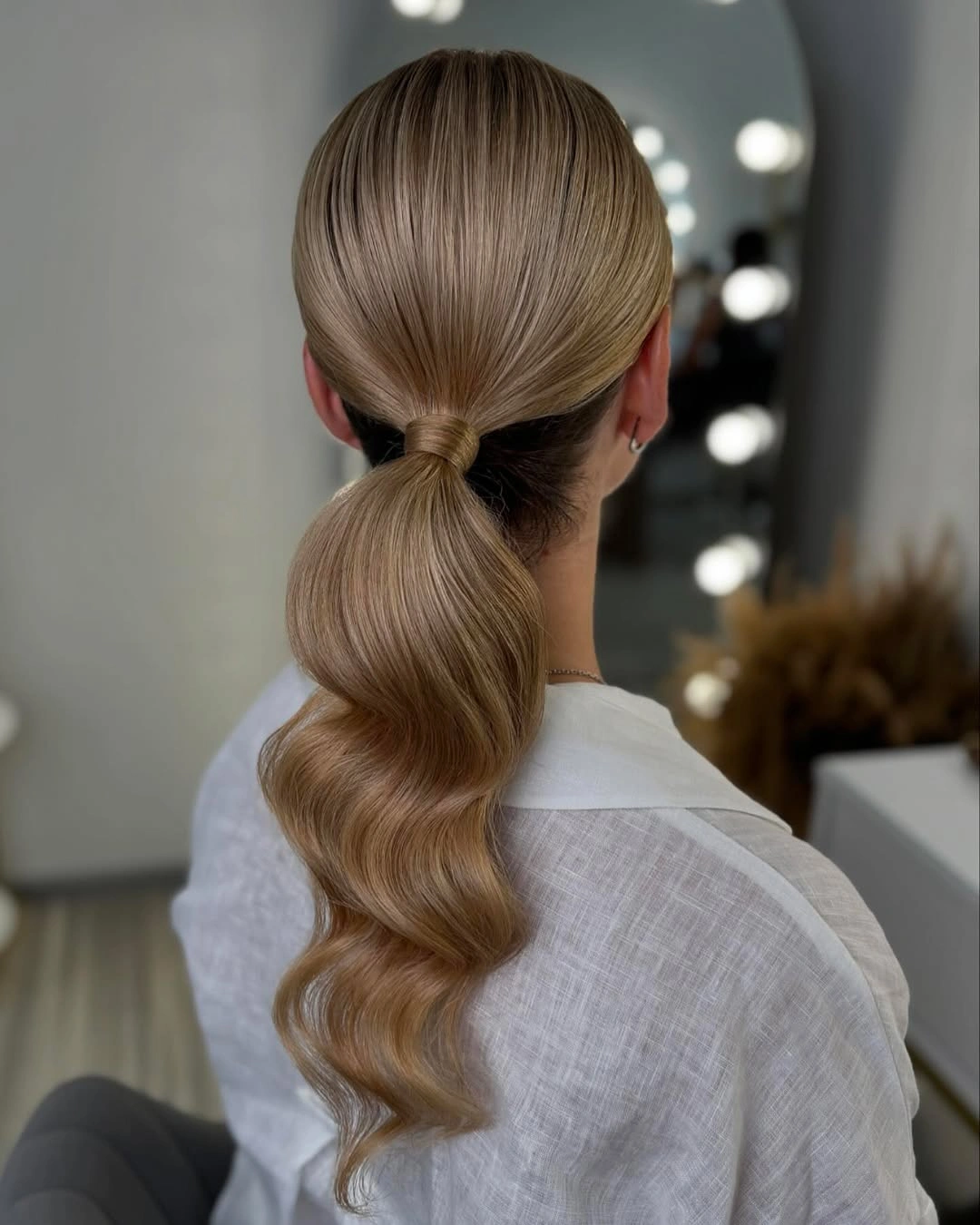
Photo via Instagram
This hairstyle solves the choice between loose length and controlled structure by keeping the upper head neat while allowing the tail to move. The smooth crown creates a quiet starting point, and the wavy ponytail adds softness below the anchor. Nothing in the view confirms the cut underneath, so the safest comparison is sleek top versus moving tail.
Judge this by where the ponytail sits and how the waves fall below it. The practical takeaway is that a low gathered shape can organize length without showing the actual haircut.
Glossy Brunette Bun With Wrapped Nape Detail
The brunette hair is gathered into a low bun viewed from behind, with a glossy surface leading down toward the nape. A wrapped section curves around the bun, giving the rounded shape a clear edge and center. The haircut is not visible because the length is folded into the updo, so the evidence is shine, wrap direction, and compact placement.
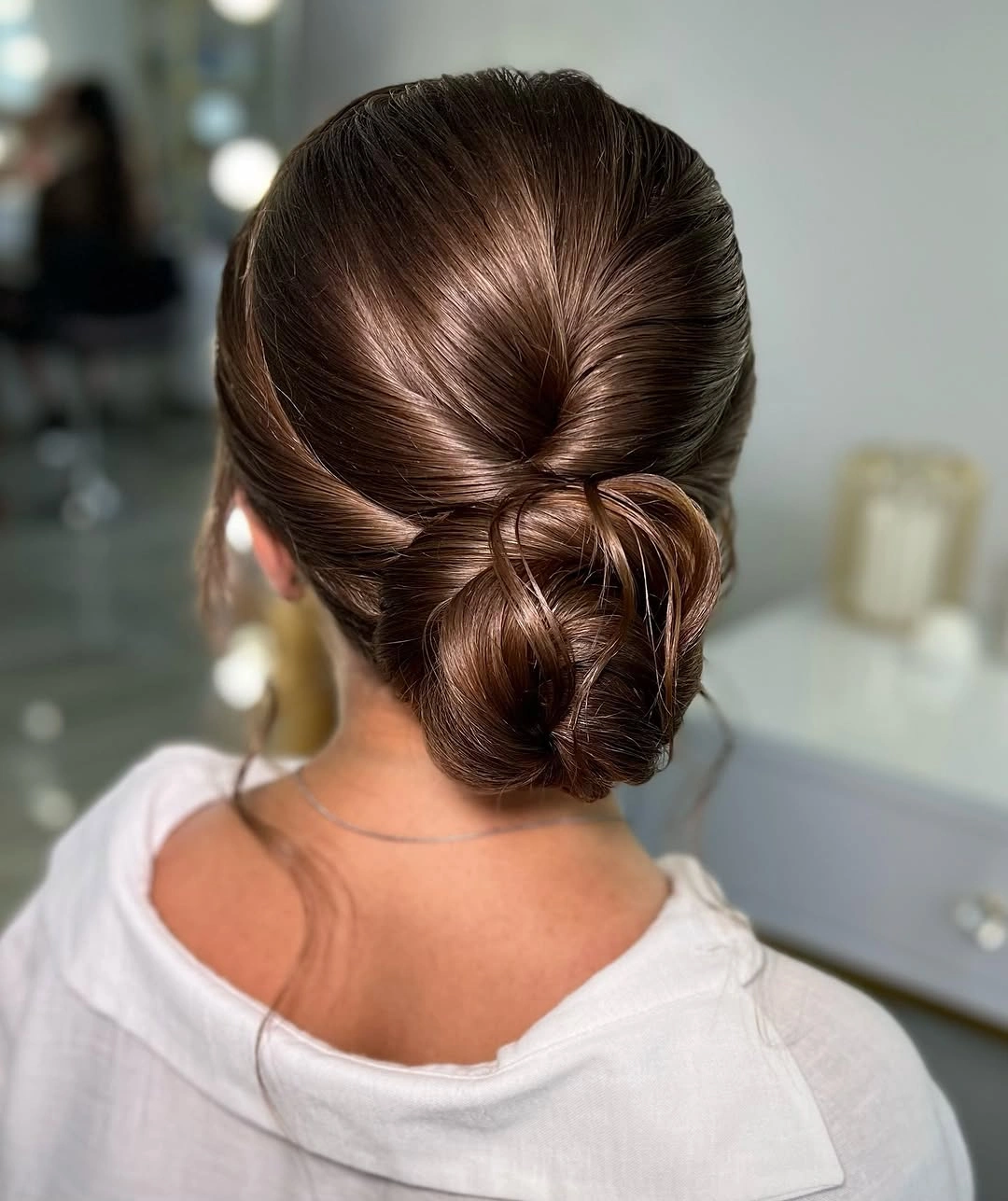
Photo via Instagram
The useful comparison is between a simple low knot and a bun with visible wrapping. Here, the smooth crown directs the eye downward, while the wrapped nape detail gives the gathered shape more structure. A few softer pieces near the neckline keep the outline from reading as completely rigid, but the overall silhouette stays controlled.
Read this as an updo built around polish and a low focal point. The takeaway is to compare surface, wrap detail, and bun compactness rather than hidden length.
Wrapped Blonde Ponytail With Flowing Waves
The blonde hair is shown from the back, gathered low and finished with a wrapped base that covers the tie area. The crown is smooth, while the ponytail widens into long flowing waves below the nape. The haircut is hidden by the ponytail, so the visible shape depends on the clean anchor and the soft movement through the tail.
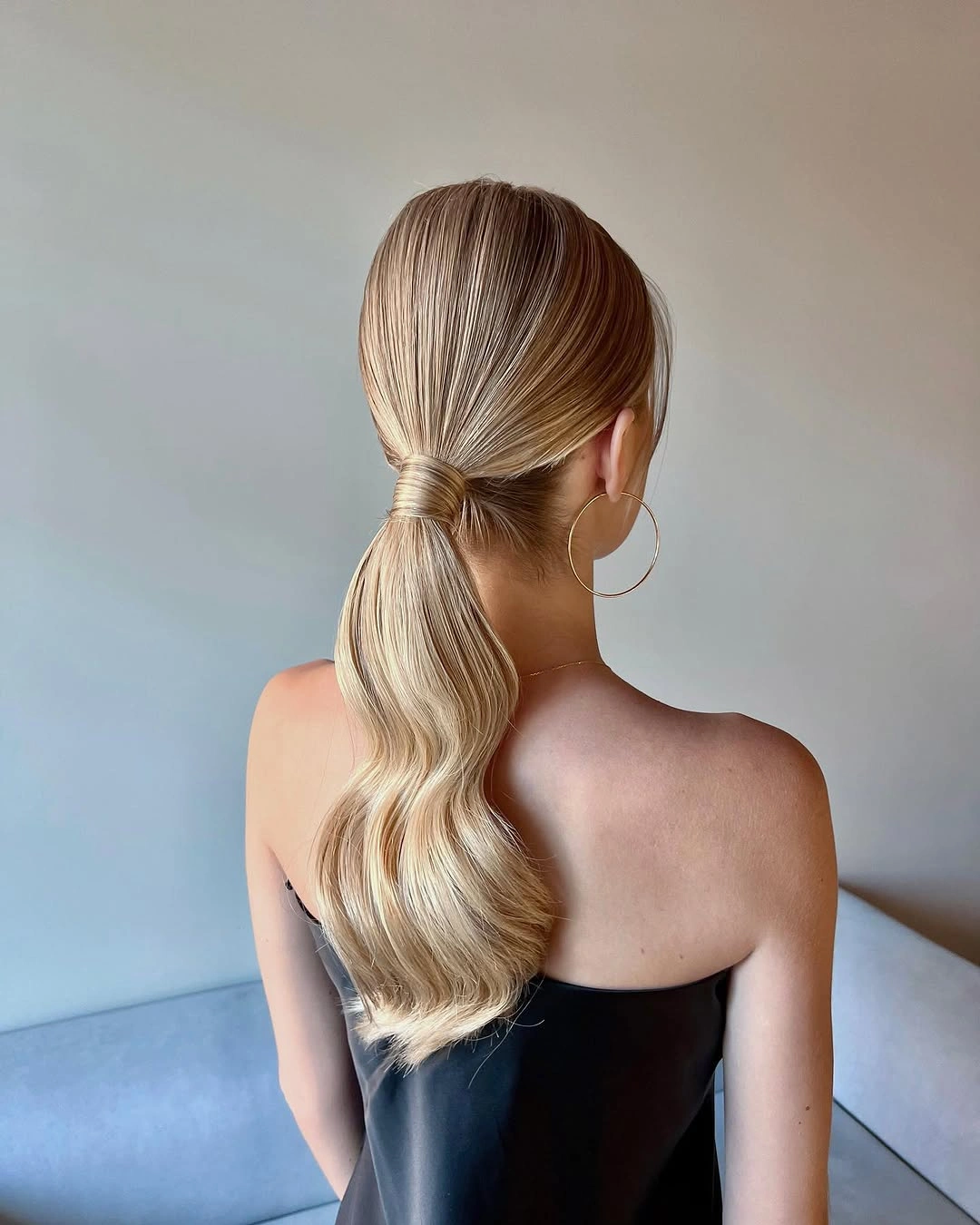
Photo via Instagram
This look answers the same gathered-versus-loose problem in a different way from a plain low ponytail. The wrapped base makes the transition from head to length feel more deliberate, while the waves create a fuller lower outline. Because the top is controlled and the lower section is open, the eye moves from narrow structure to softer width.
Compare the wrap first, then the wave pattern. The grounded lesson is that the base of a ponytail can change how polished the entire length appears.
Medium Brunette Waves With Side-Swept Front
The medium brunette hair is worn loose from the front, with a deep side sweep directing the upper section across the forehead area. The lower lengths curve around the shoulders in fuller waves, creating movement on both sides of the face. The exact cut is not fully readable, but the visible styling shows medium length, side direction, and curled lower shape.
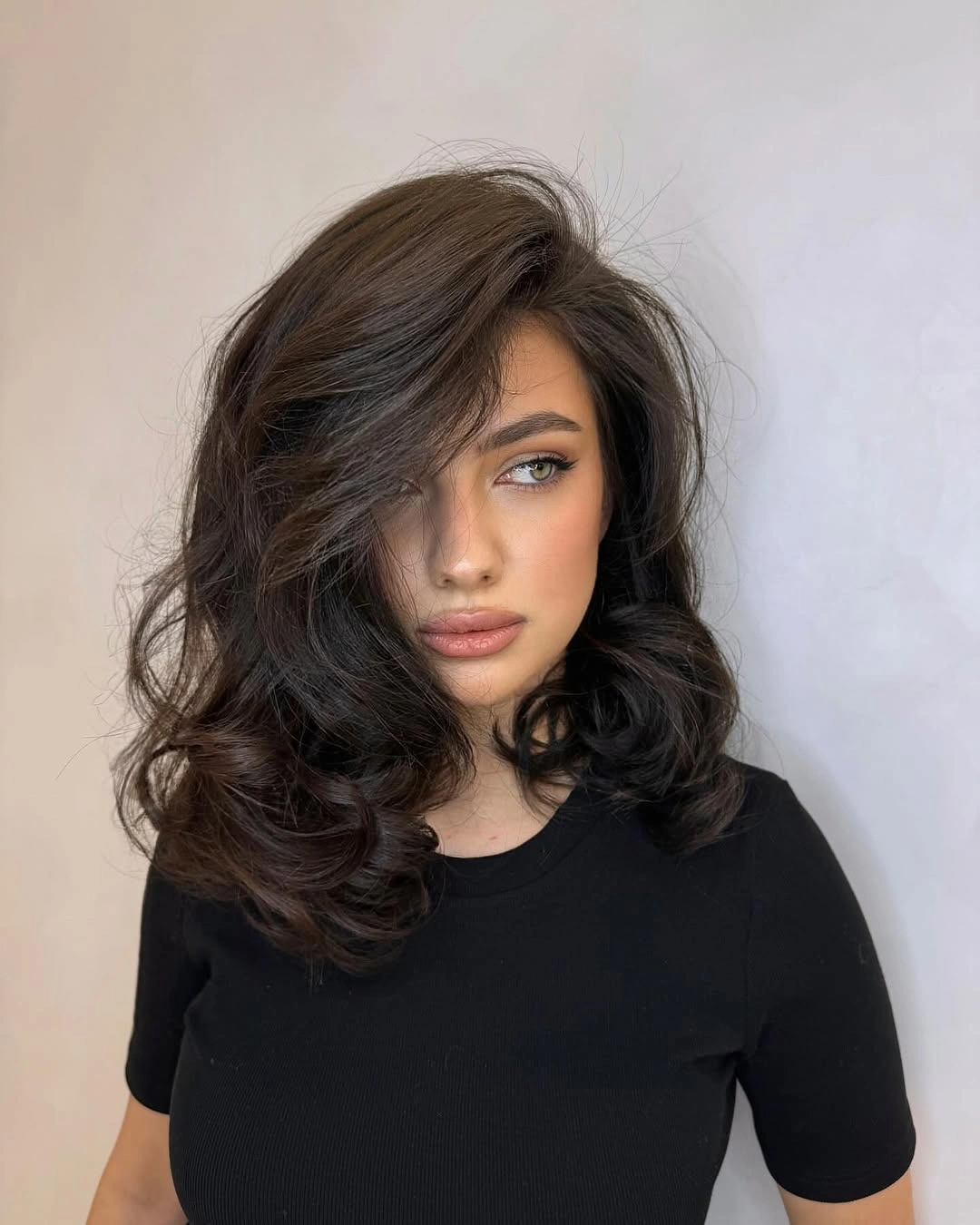
Photo via Instagram
This section solves a different comparison problem: the shape is not only about where the ends land, but where the front begins to move. The side sweep gives the hairstyle a diagonal pull before the lower waves widen around the shoulders. Because one side carries more visual weight, the style reads as directional rather than evenly balanced.
Focus on the front sweep before judging the lower curls. The useful takeaway is that medium loose hair can change strongly through part direction and shoulder-level movement.
Blonde Tucked Updo With Loose Front Piece
The blonde hairstyle is viewed from the side and back, where the hair forms a folded shape that sits upward from the nape. The back surface looks smooth and tucked inward, while a single lighter front piece drops beside the face. The neckline stays clean, and the visible outline is controlled by the updo rather than by an exposed haircut.
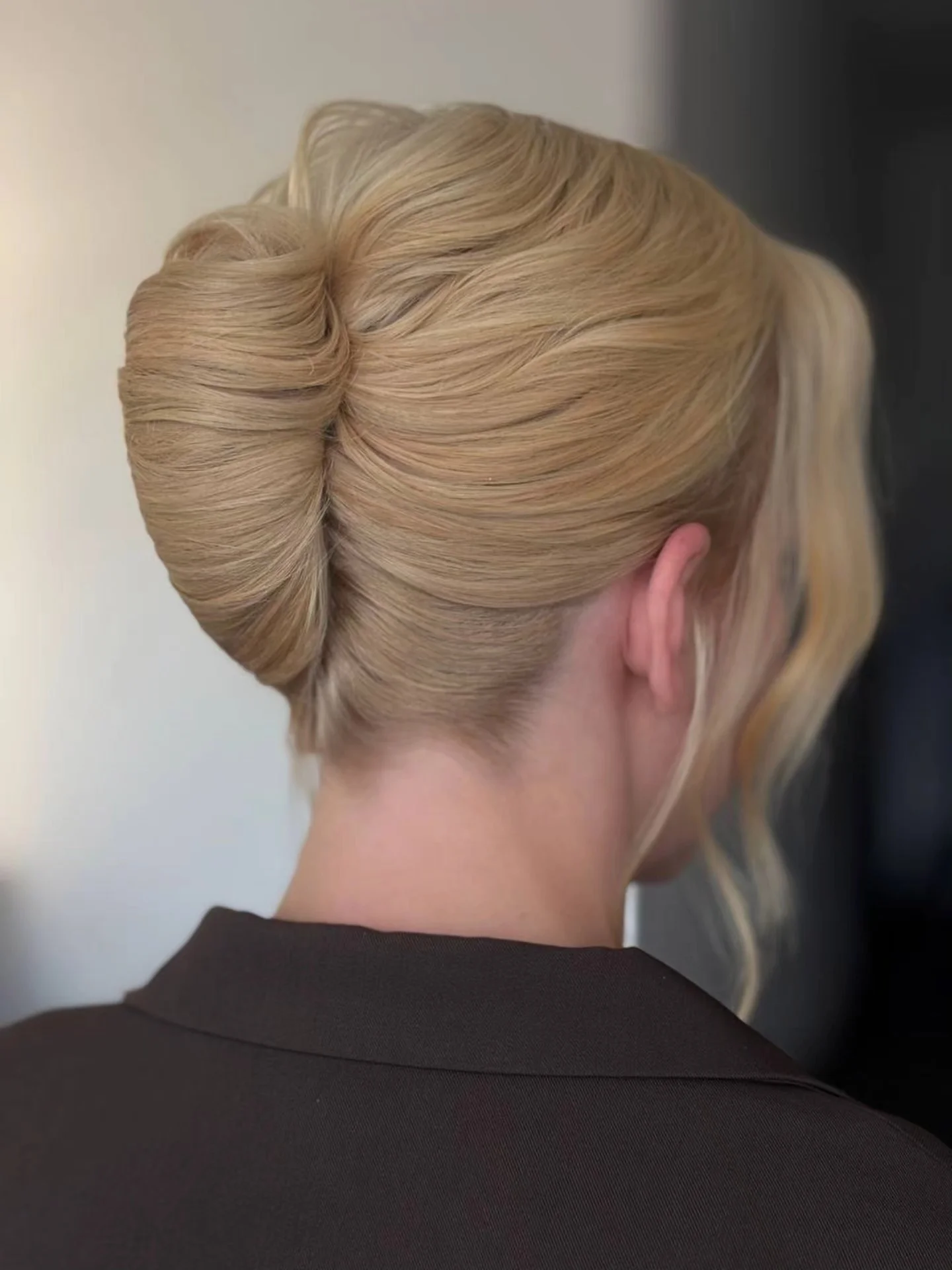
Photo via Instagram
The main visual relationship is between the rounded fold at the back and the loosened front strand. That small face-side piece softens the strictness of the tucked shape, while the compact nape keeps the silhouette close instead of loose or flowing. Because the ends are hidden inside the style, the cut itself remains unclear.
Compare this by height, tuck direction, and the one loose front piece. The useful takeaway is that an updo can create shape even when the haircut is not visible.
Braided Low Bun With Loose Face Pieces
The brunette style is shown from the side and back, with a braid-like detail traveling across the upper section before the hair gathers into a rounded low bun. Loose pieces fall near the face and neckline, and lighter front strands stand out against the darker gathered shape. The haircut is hidden because the styling folds the length into the bun.
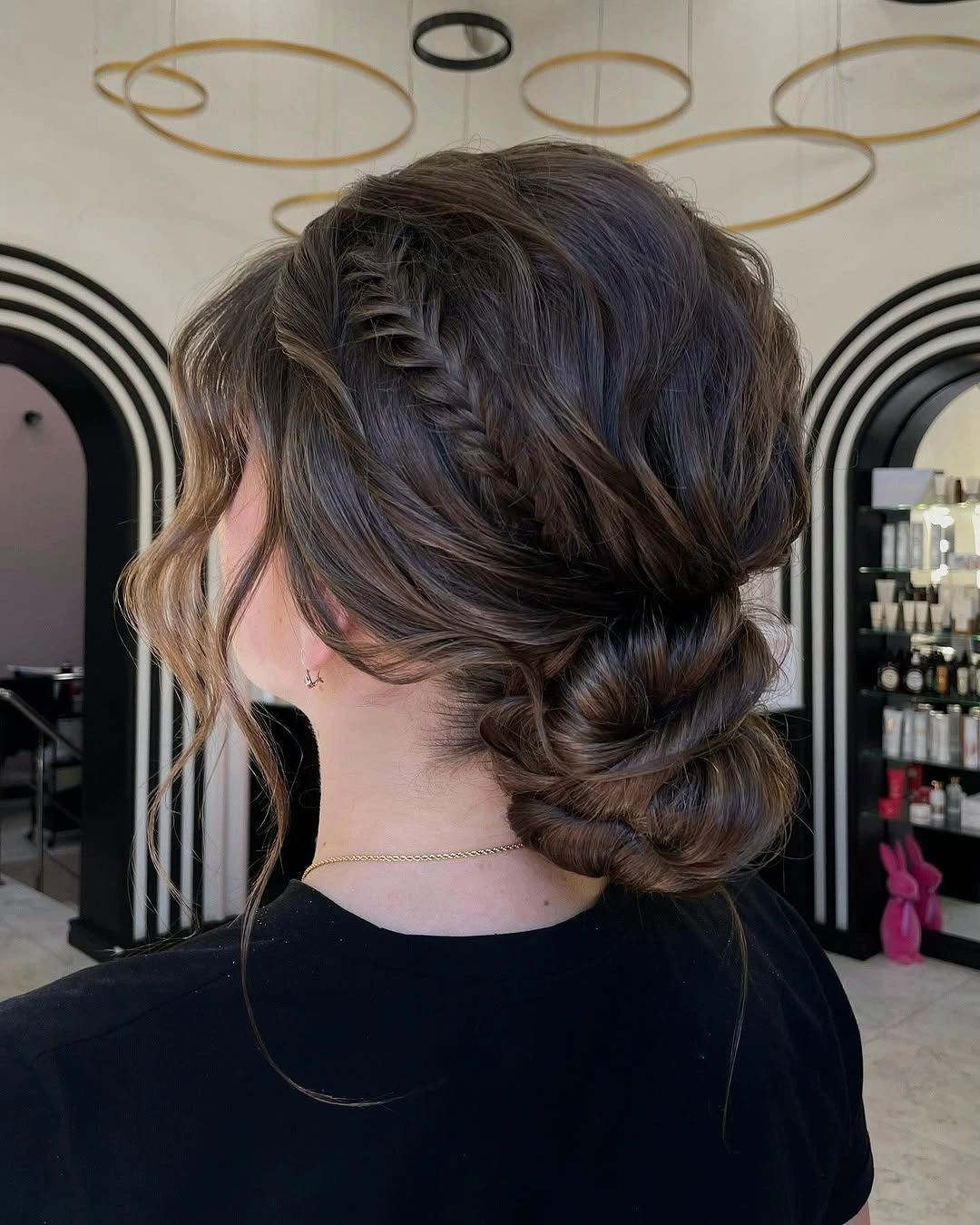
Photo via Instagram
This look has more texture and direction than a smooth low bun because the braid-like section guides the eye before the nape shape takes over. The loose tendrils keep the edge from reading as fully polished, while the rounded bun gives the style a clear anchor. The strongest contrast is structured detail above and soft movement around the sides.
Read this as a gathered hairstyle built from direction and softness. The practical comparison is braid placement, loose framing, and how full the low bun appears.
Long Braids With Crisp Parallel Parting
The dark braided hairstyle is viewed from the side and back, with repeated narrow braids following clean part lines across the scalp. The rows move back in a visible pattern, then the braid lengths hang down below the shoulder area. Since the hair is fully arranged into braids, the underlying haircut cannot be seen.
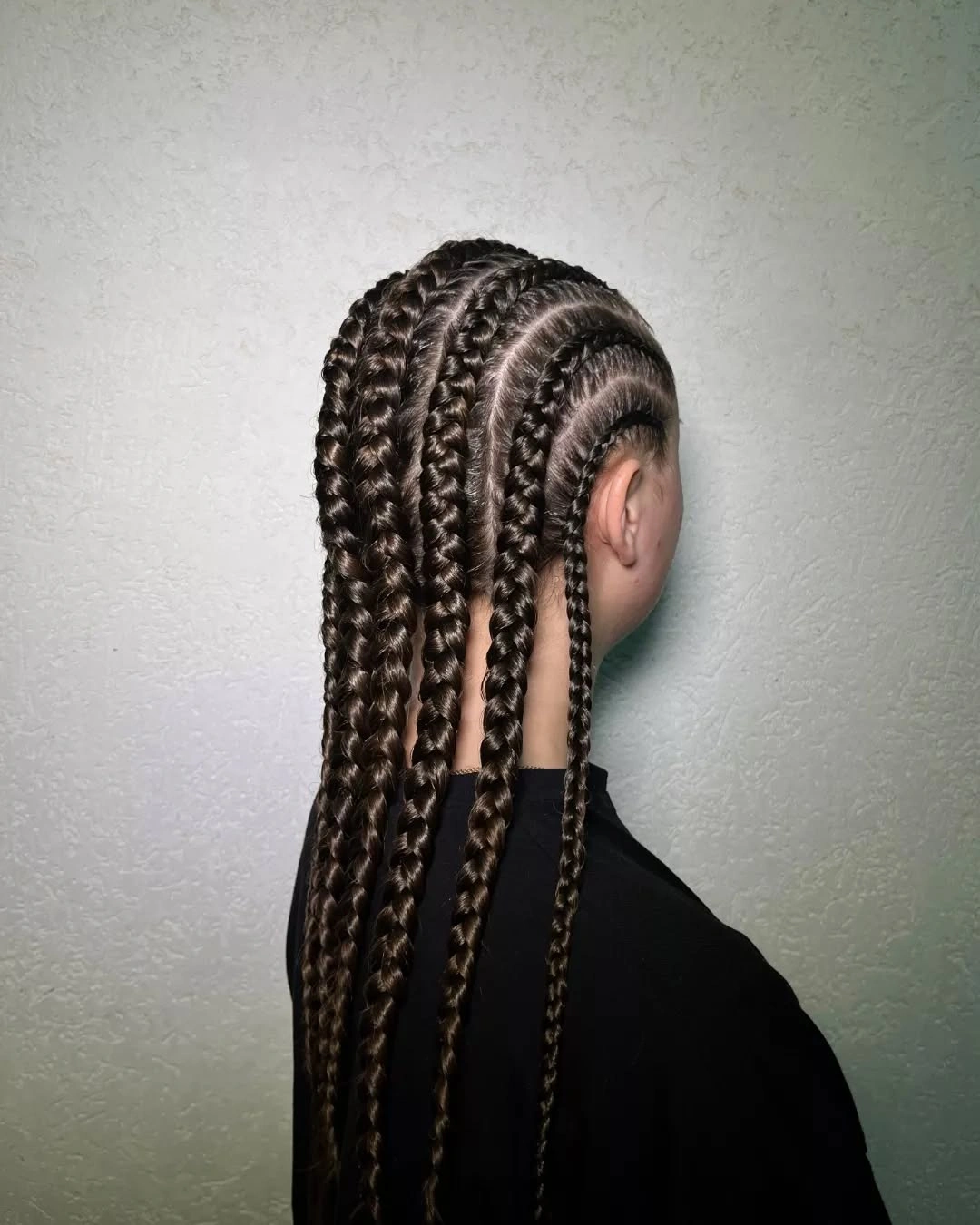
Photo via Instagram
The visual interest comes from geometry rather than loose movement or curl. Each part line creates a clear rhythm, and the hanging lengths add vertical weight after the scalp pattern has already set the direction. This makes the hairstyle read as organized and graphic, with the braid spacing doing most of the visual work.
Compare this through parting, row direction, and hanging length. The grounded takeaway is to judge the braid pattern first, not an unseen cut.
Sleek Low Bun With Dark Wrapped Finish
The dark hairstyle is seen from the back, with a smooth surface running down into a low bun at the nape. The upper hair lies close to the head, and the wrapped bun forms a compact horizontal shape. The visible finish is glossy and controlled, while the haircut is completely hidden inside the gathered style.
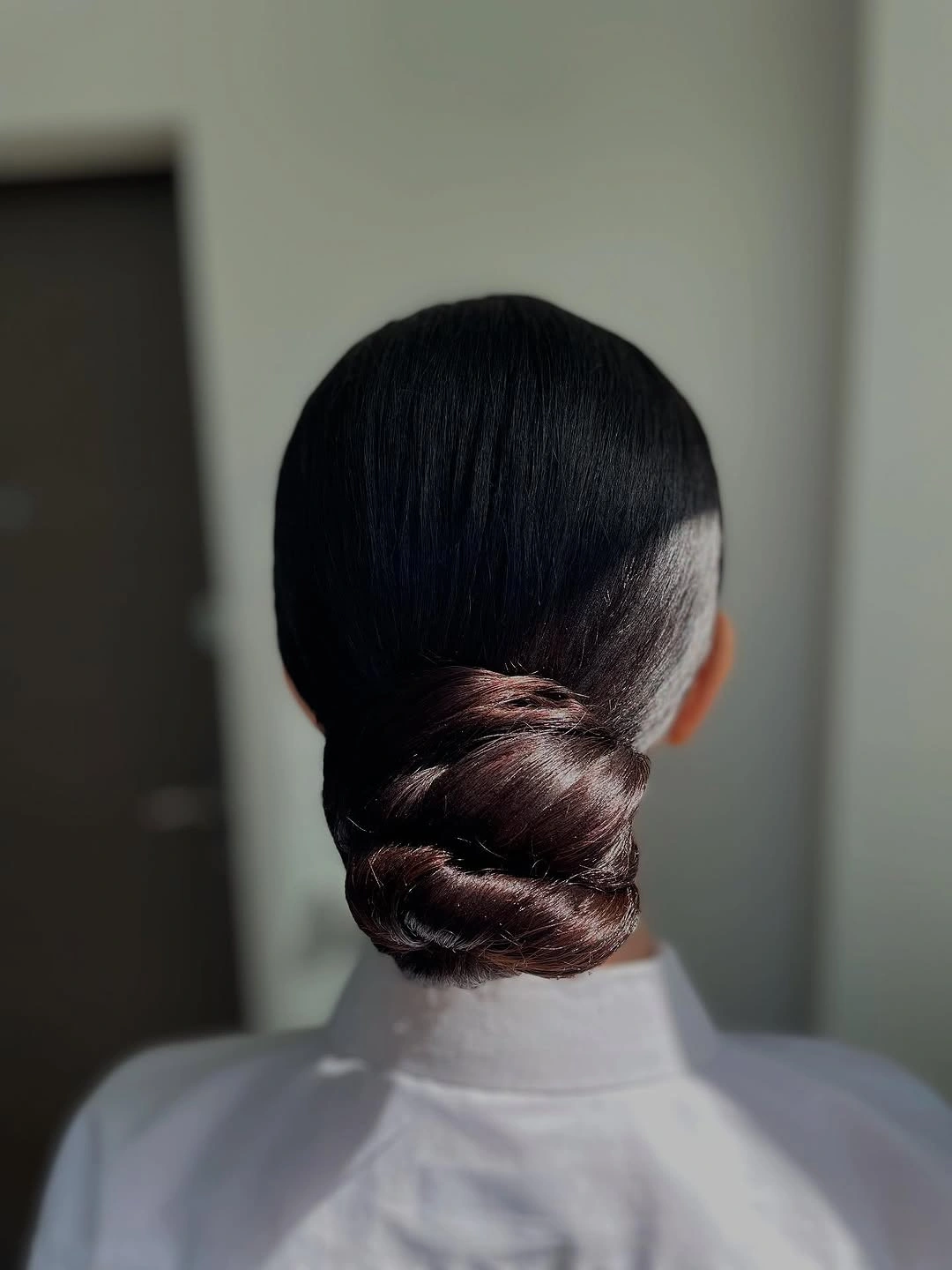
Photo via Instagram
Compared with softer or looser low buns, this version depends on restraint. There are no prominent loose face pieces in view, so the eye stays on the clean surface and the wrapped base. The narrow crown and compact bun work together to create a minimal silhouette, rather than a style built around volume or separated curls.
Use this as a reference for sleek gathered shape. The key choices are smooth surface, low placement, and a tight wrapped finish.
Side-Swept Brunette Waves With Polished Length
The long brunette hairstyle is shown from the front, with the upper section directed to one side and glossy waves falling through the lengths. The side sweep creates movement across the forehead area, while the lower hair forms broad bends around the shoulders. The exact haircut is only partly readable because the styled waves control the visible shape.
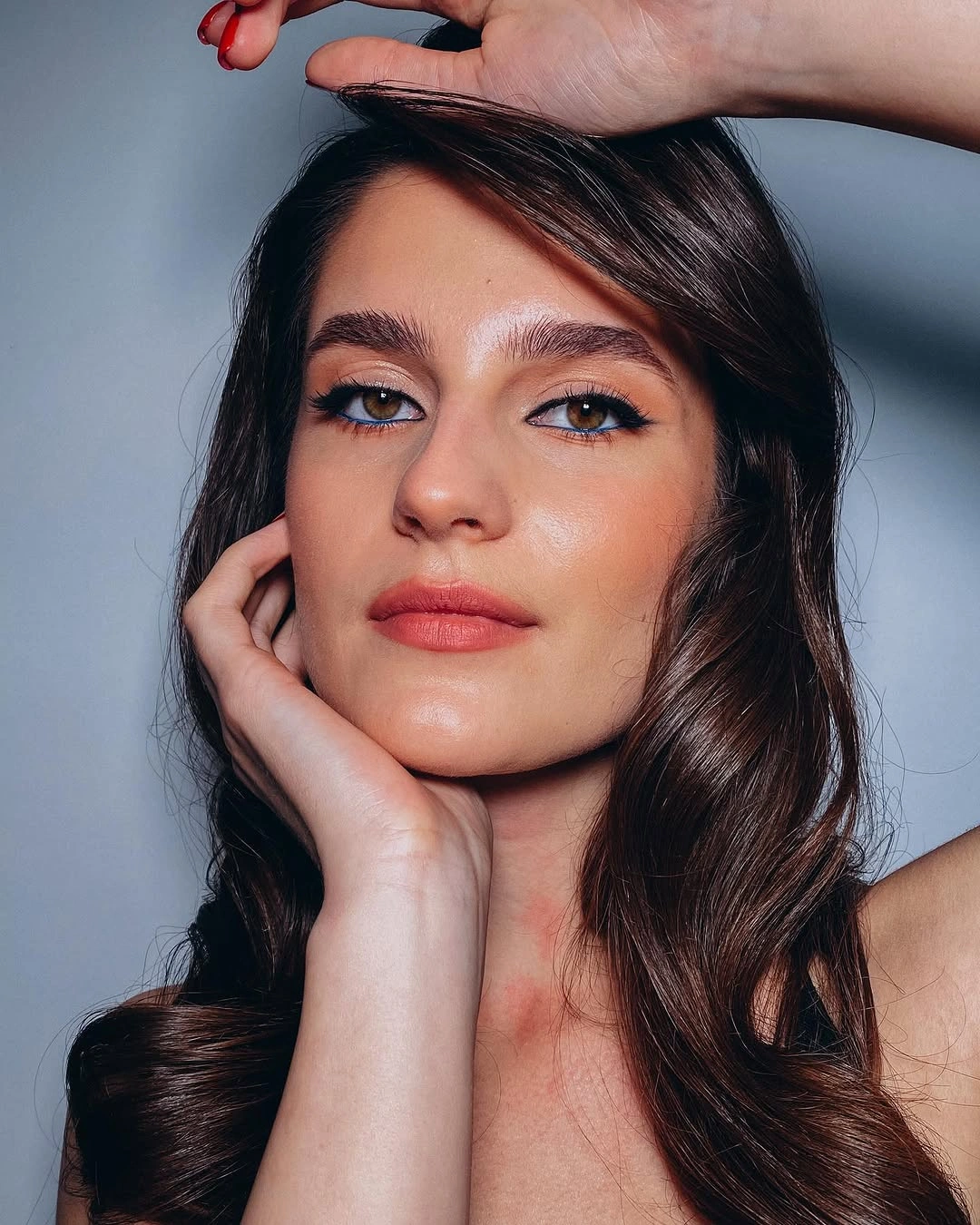
Photo via Instagram
This loose style differs from a centered long wave because the parting direction changes where the eye starts. The front sweep gives the look a diagonal pull before the curled lengths create a softer vertical fall. For hairstyles for long hair women over 30, this is a useful visual example of how part direction can shift the whole balance of long hair.
Compare the side sweep before studying the waves. The practical takeaway is that long loose hair can feel more directional when the front section leads the silhouette.
Low Bun With Pearl-Like Accent Clip
The brunette hair is gathered into a low bun viewed from the back and side, with a smooth crown feeding into the rounded shape. A pearl-like decorative accent sits just above the bun and becomes the brightest focal point in the style. One loose side strand remains visible near the face, while the haircut itself is hidden inside the updo.
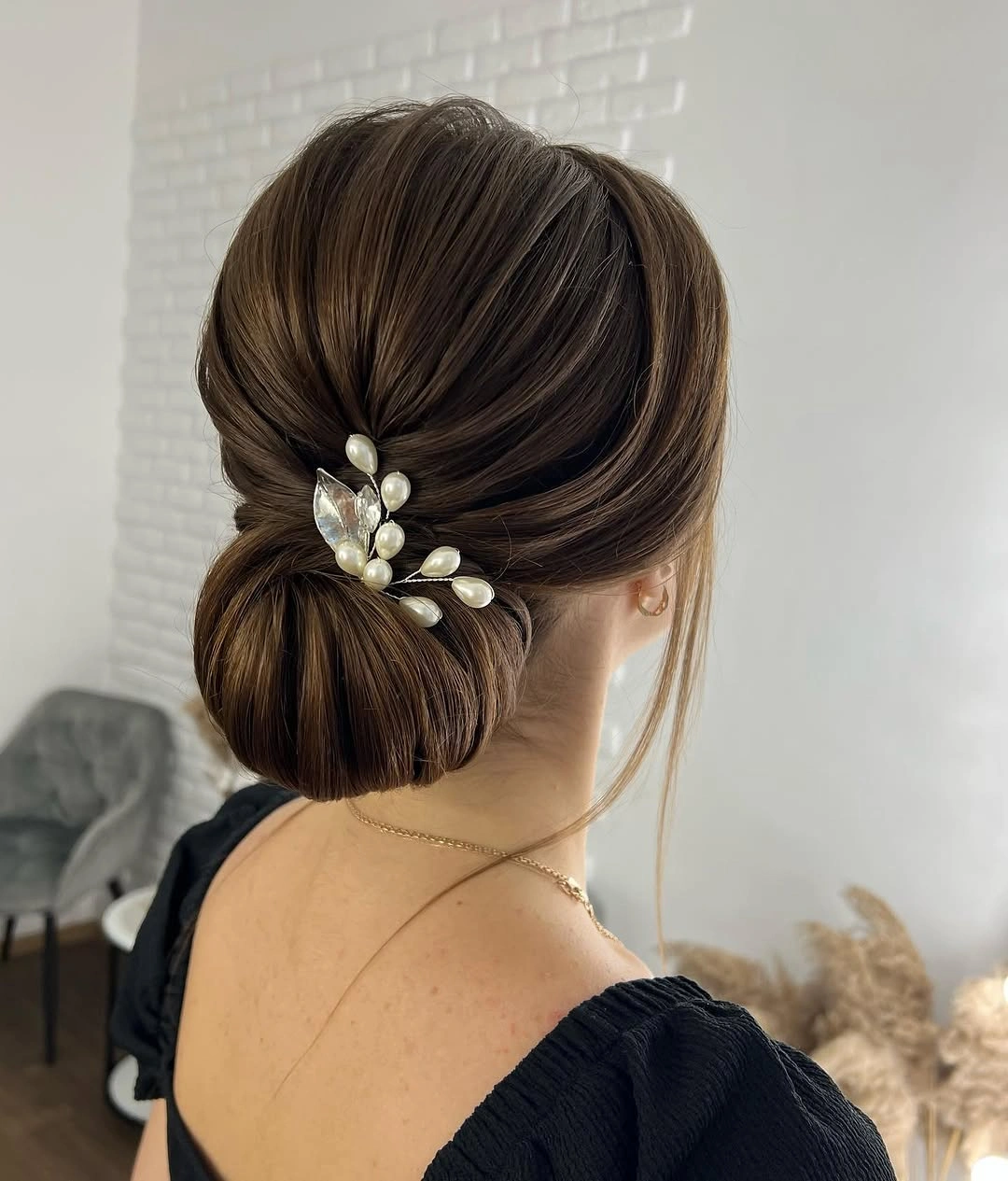
Photo via Instagram
The accessory changes how the gathered shape is read because the eye lands above the bun before following the curve down to the nape. Without the pale accent, the style would rely mostly on surface polish and low placement, but the added detail gives the back view a clearer center. The loose side piece also keeps the outline from looking completely sealed.
Use this as a reminder to compare accessories by placement, not only by size. The visible choices are smooth crown, low bun, pearl-like detail, and one softened edge.
Long Half-Up Waves With Crown Detail
The light-brown hairstyle is shown from the back, with long waves left loose below a half-up section. A braid-like or twisted detail crosses the crown area, holding the upper hair back while the lower lengths fall in soft curved bends. The haircut is partly obscured because the gathered top and waves control much of the visible structure.
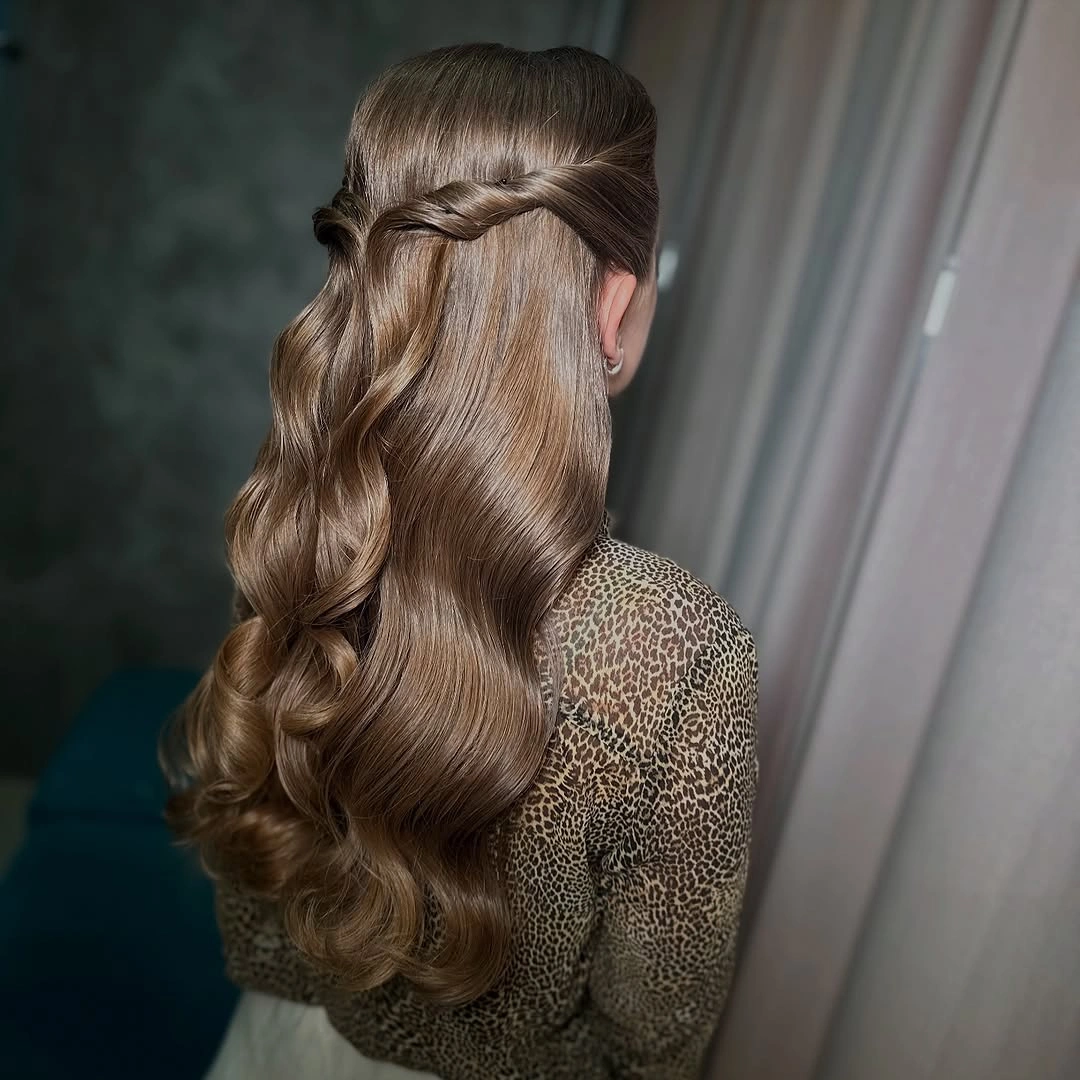
Photo via Instagram
This style balances two different shapes: the upper section is directed and contained, while the lower hair stays open and flowing. The crown detail gives the back view a clear starting point before the eye moves down into the longer waves. For hairstyles for long hair women over 30, the supported visual idea is not a promise about suitability, but a way to compare loose length with partial structure.
Judge the half-up anchor before judging the waves. The practical takeaway is that open length can still feel organized when the crown has a visible direction.
Arched Side Braids With Long Length
The dark braided hairstyle is viewed from the side, where arched scalp rows curve back from the hairline into long hanging braids. The parting is clean and repeated, making the pattern easy to read across the side of the head. A small ring detail is visible near the side, while the underlying haircut is not visible beneath the braid structure.
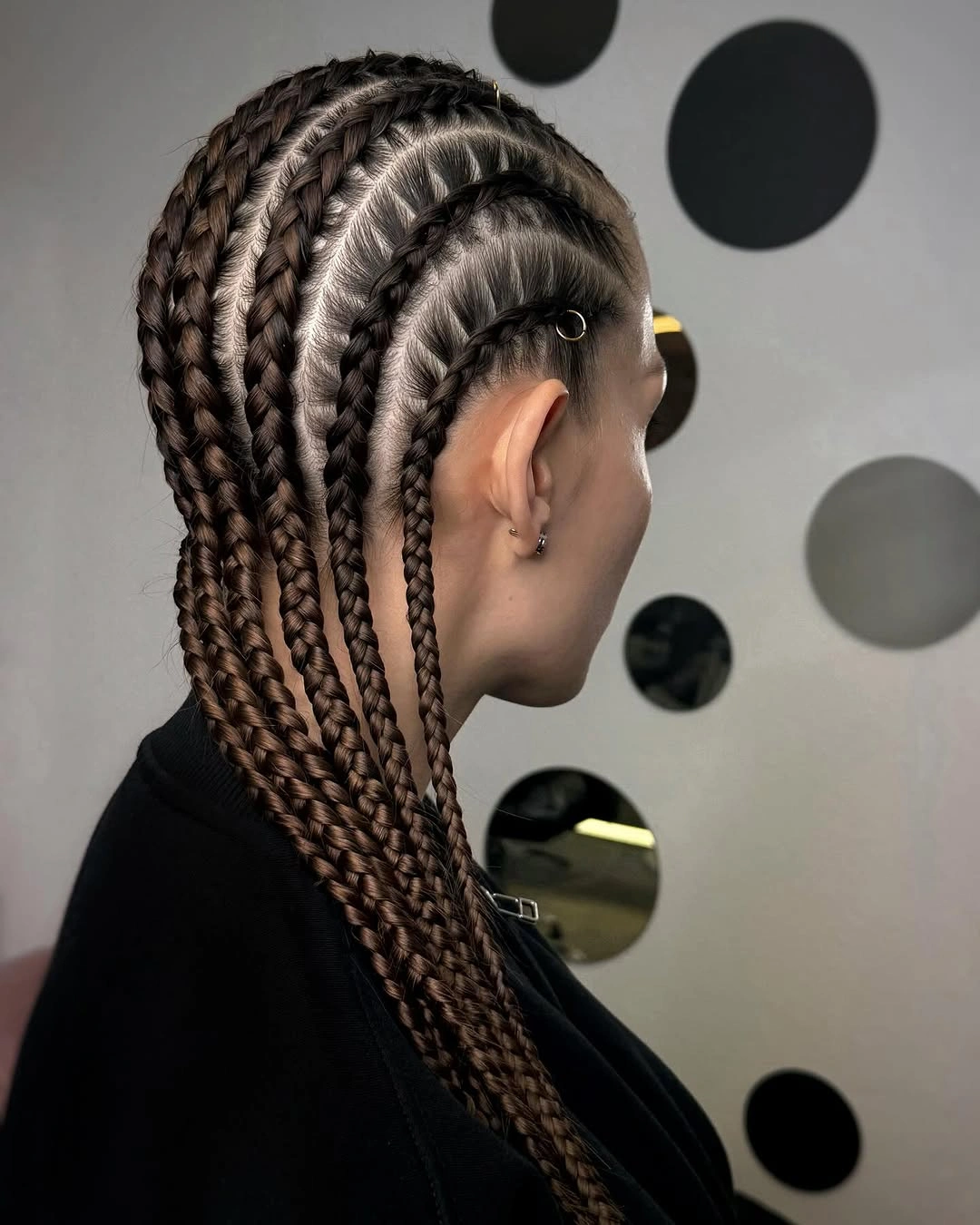
Photo via Instagram
Compared with straighter parallel braid rows, this version has more curved movement at the scalp before the lengths drop vertically. The arched sections create a graphic profile, and the long braids add weight below that patterned upper area. The visible hairstyle is therefore defined by parting geometry, braid direction, and length, not by an exposed cut.
Read this through the curve of the rows first. The grounded takeaway is to separate braid pattern, side profile, and hanging length before making any claim about shape underneath.
Warm Highlighted Low Bun With Swept Sections
The warm brunette updo is seen from above and behind, with copper and golden sections swept toward a rounded low knot. The hair moves in visible curves across the crown and sides before gathering at the nape. Because the ends are pinned into the bun, the haircut is hidden and the visible story comes from color direction and placement.
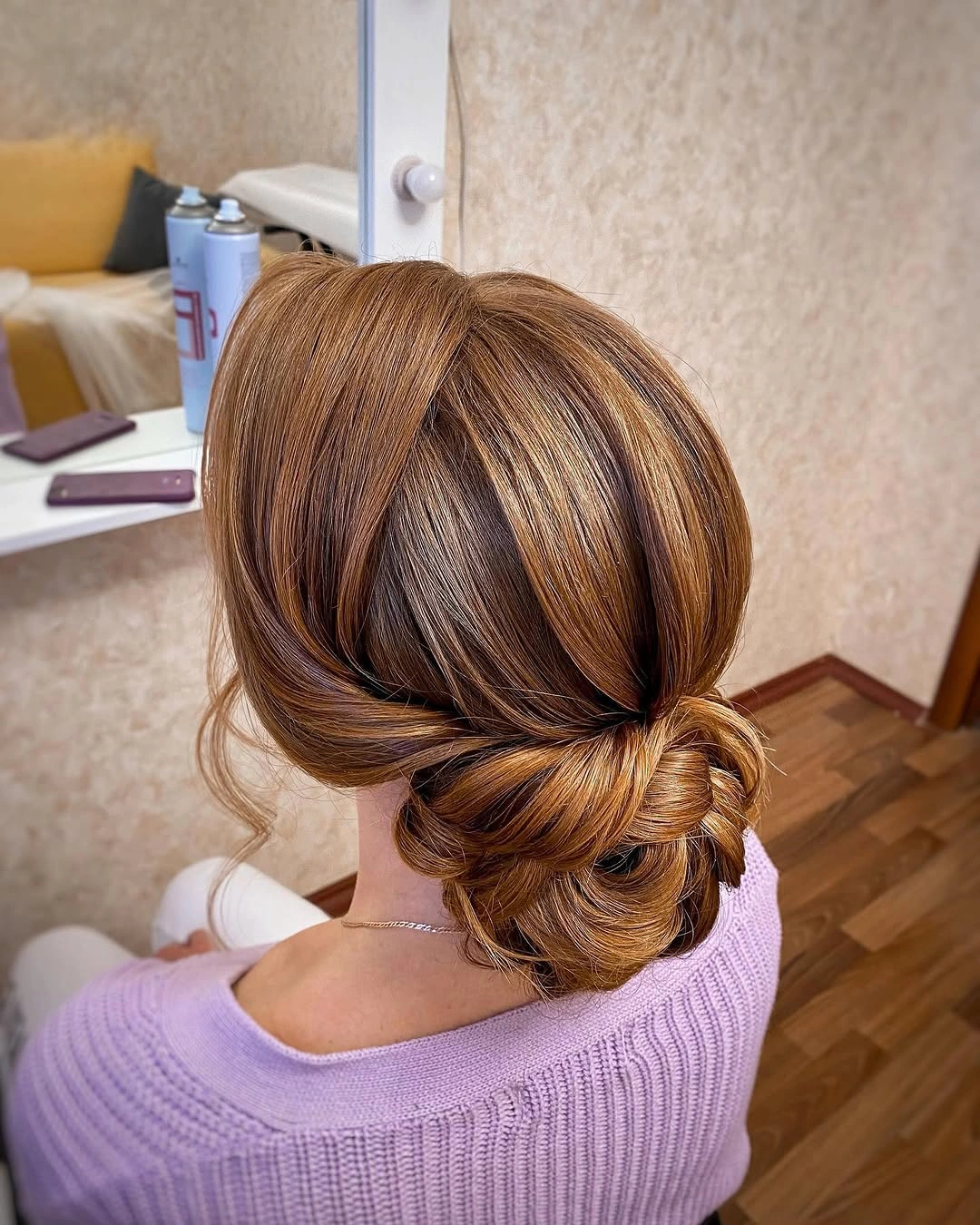
Photo via Instagram
The warmer highlighted pieces make the path of the updo easier to follow because they trace the sweep into the knot. Instead of reading as one solid dark shape, the bun has curved sections that show how the hair is directed. This gives the low placement more movement without needing loose waves or an exposed length line.
Compare this by color placement and sweep direction. The practical value is in seeing how warm contrast can define a gathered shape.
Long Brunette Waves With Glossy Back Finish
The long brunette hair is shown from the back, falling well past the shoulders with broad, even bends through the lower lengths. The surface appears glossy, and the wave pattern repeats across the width of the hair before curving into the ends. The bottom edge looks softly rounded from this view, but the exact perimeter and layering should stay qualified.
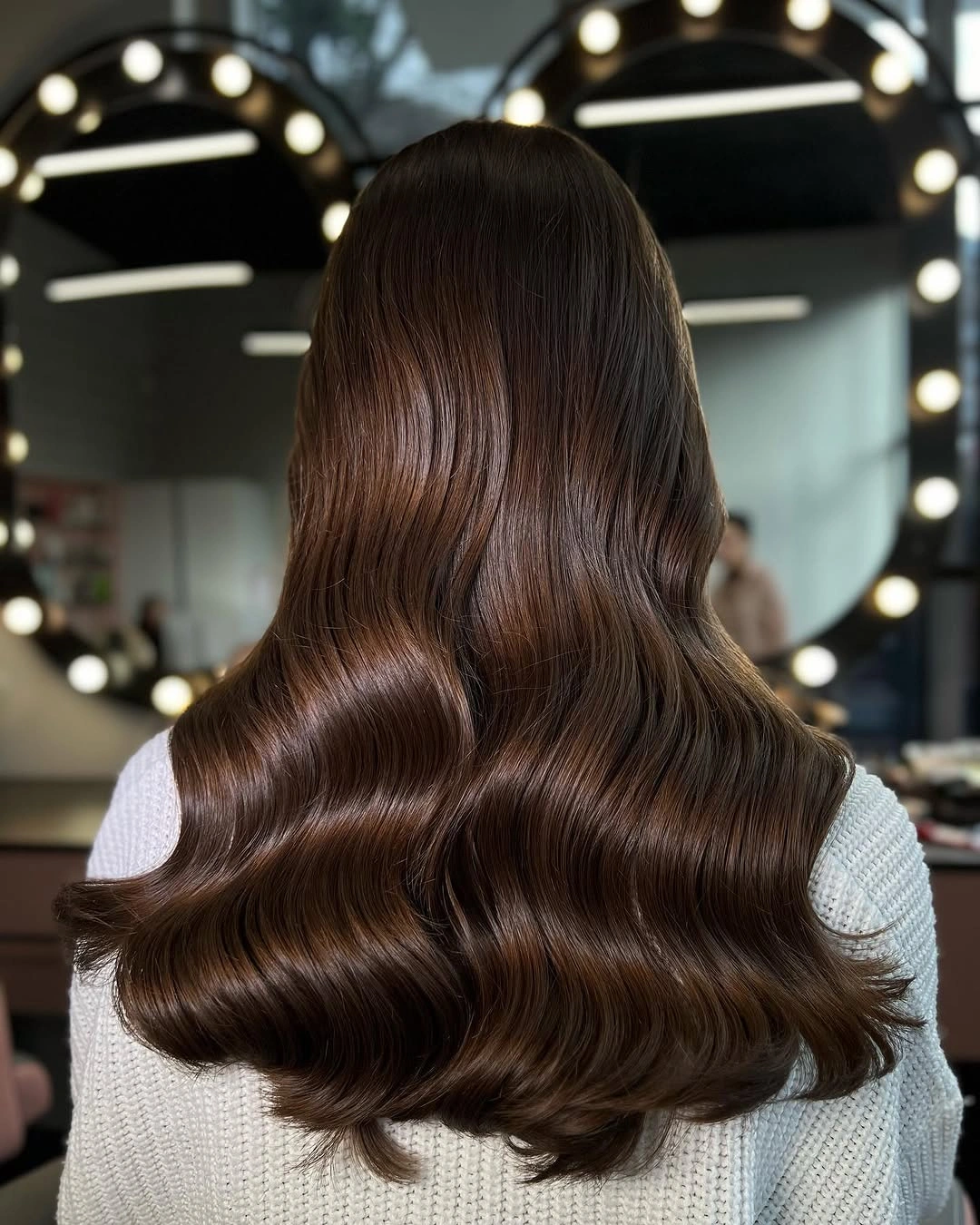
Photo via Instagram
This is a loose style where the back view matters more than front framing or part direction. The waves create horizontal movement across the length, while the darker shine makes each bend stand out against the next. For long hair, the strongest comparison point is how the wave spacing and lower fullness shape the outline without hiding the length.
Use this as a clear back-view reference for loose waves. The visible decisions are shine, bend size, lower edge softness, and uninterrupted length.
Low Curled Ponytail With Sleek Side Part
The brunette hair is shown from the side, with the top smoothed back into a low ponytail placed behind the neck. A loose front tendril falls near the face, while the ponytail expands into broad curls that sit below the tie point. The haircut is hidden because the length is gathered and shaped into the ponytail.
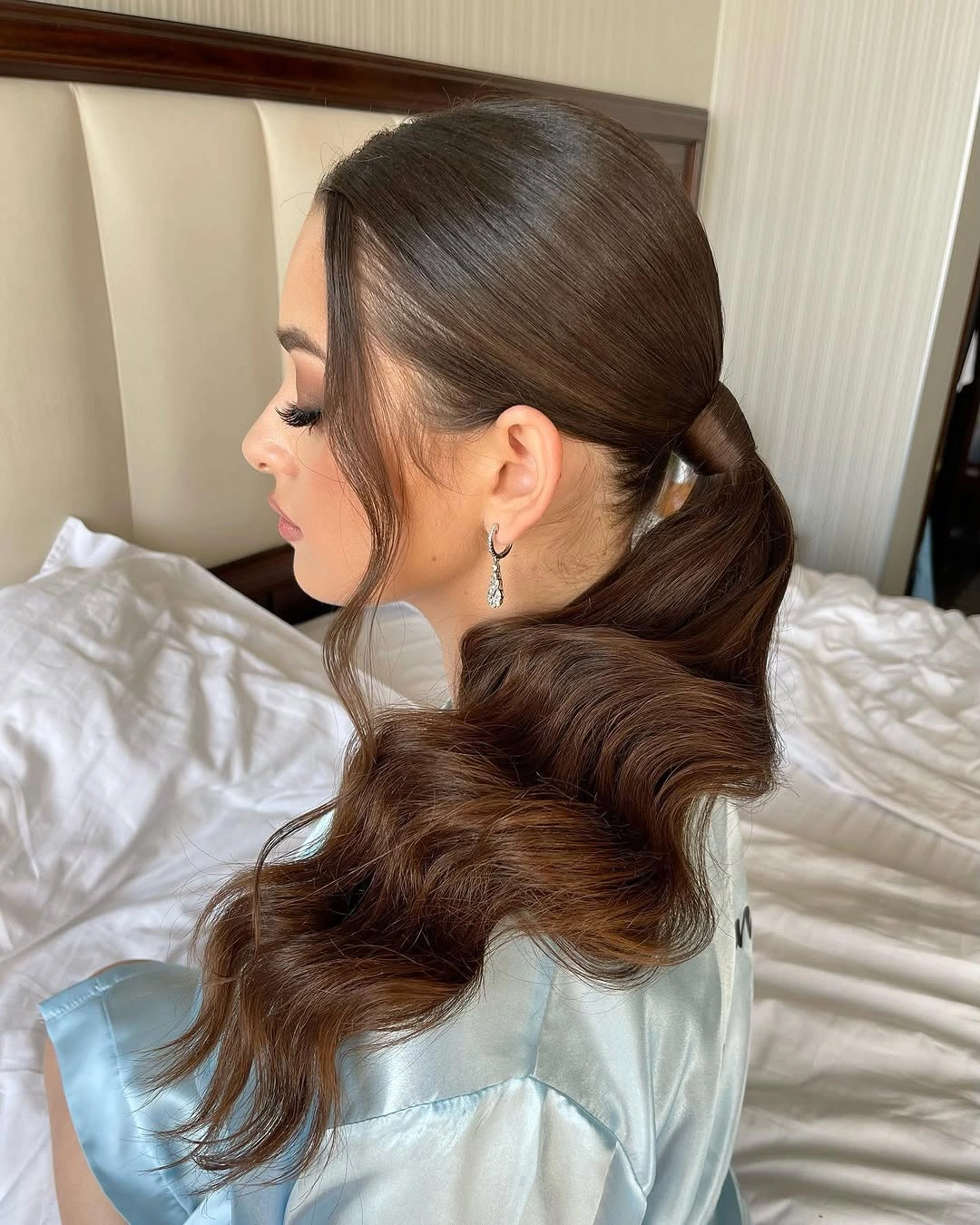
Photo via Instagram
The strongest relationship is between the controlled upper section and the larger curled tail. The sleek side area keeps the head shape quiet, so the lower curls become the part with the most movement and width. That single loose tendril changes the outline slightly, giving the front edge a softer break from the smooth surface.
Compare this by tie placement, front looseness, and curl size. The grounded takeaway is that a low ponytail can look very different depending on where the volume begins.
Pearl-Banded Blonde Ponytail With Soft Waves
The blonde hair is viewed from the back, with the crown smoothed into a low ponytail secured by a pearl-like band. Below the band, the ponytail falls in soft waves that widen gently through the length. The haircut is not visible here because the gathered shape and accessory define the hairstyle more than any exposed cut line.
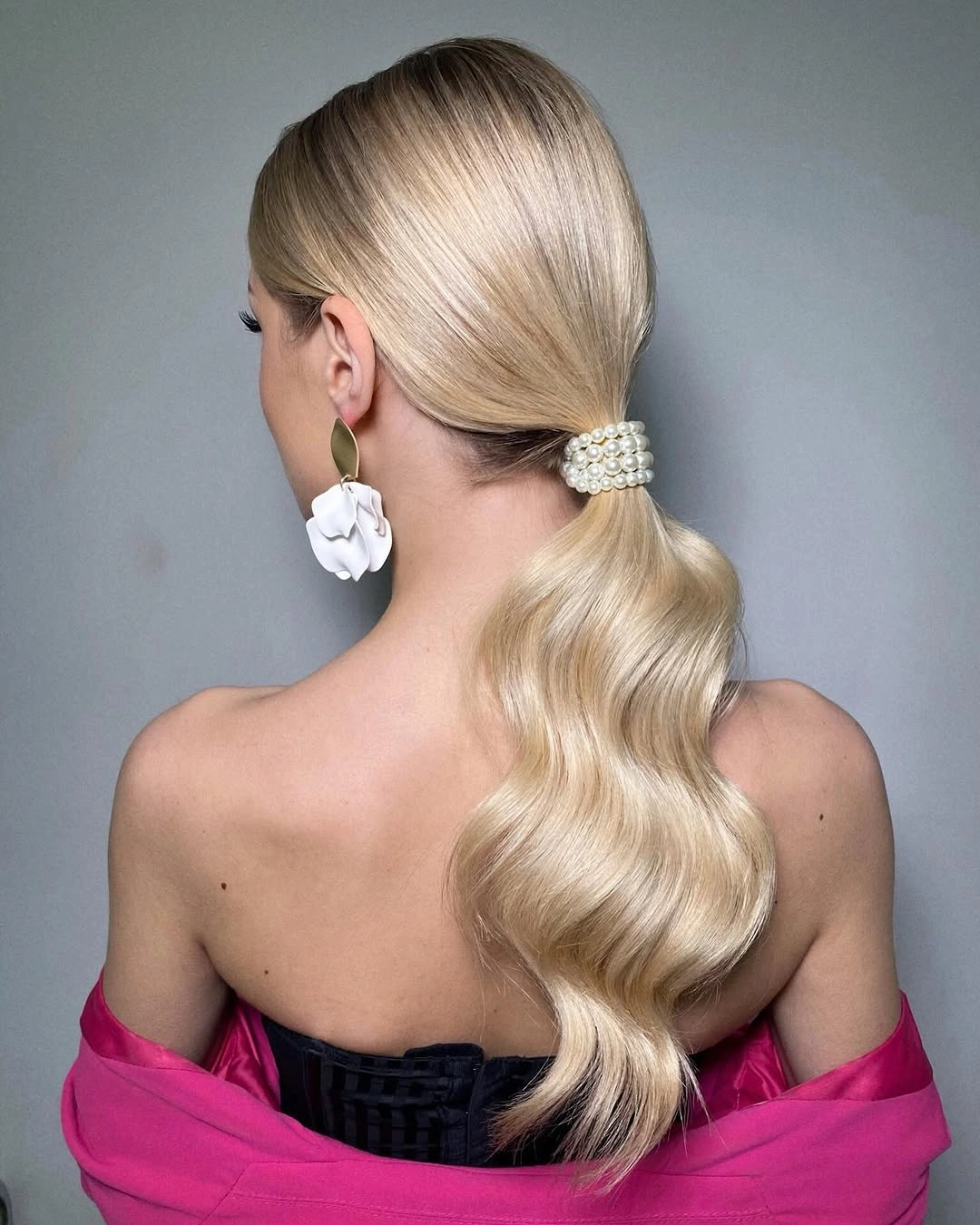
Photo via Instagram
The accessory creates a clear visual stop between the smooth crown and the moving tail. Its pale, rounded surface stands out against the blonde hair, so the eye pauses at the nape before following the waves downward. Compared with a plain wrapped base, this version makes the tie point a decorative center rather than a hidden support.
Focus first on the band, then on the wave fall. The practical takeaway is to judge how an accessory changes the balance between crown, anchor, and length.
Dark Low Updo With Crystal Pin Accents
The dark hair is gathered into a low updo viewed from the back, with a lifted crown and a rounded shape near the nape. Several loose tendrils fall around the side and neck area, and small crystal-like pins catch light within the gathered section. The haircut is hidden because the ends are tucked into the updo.
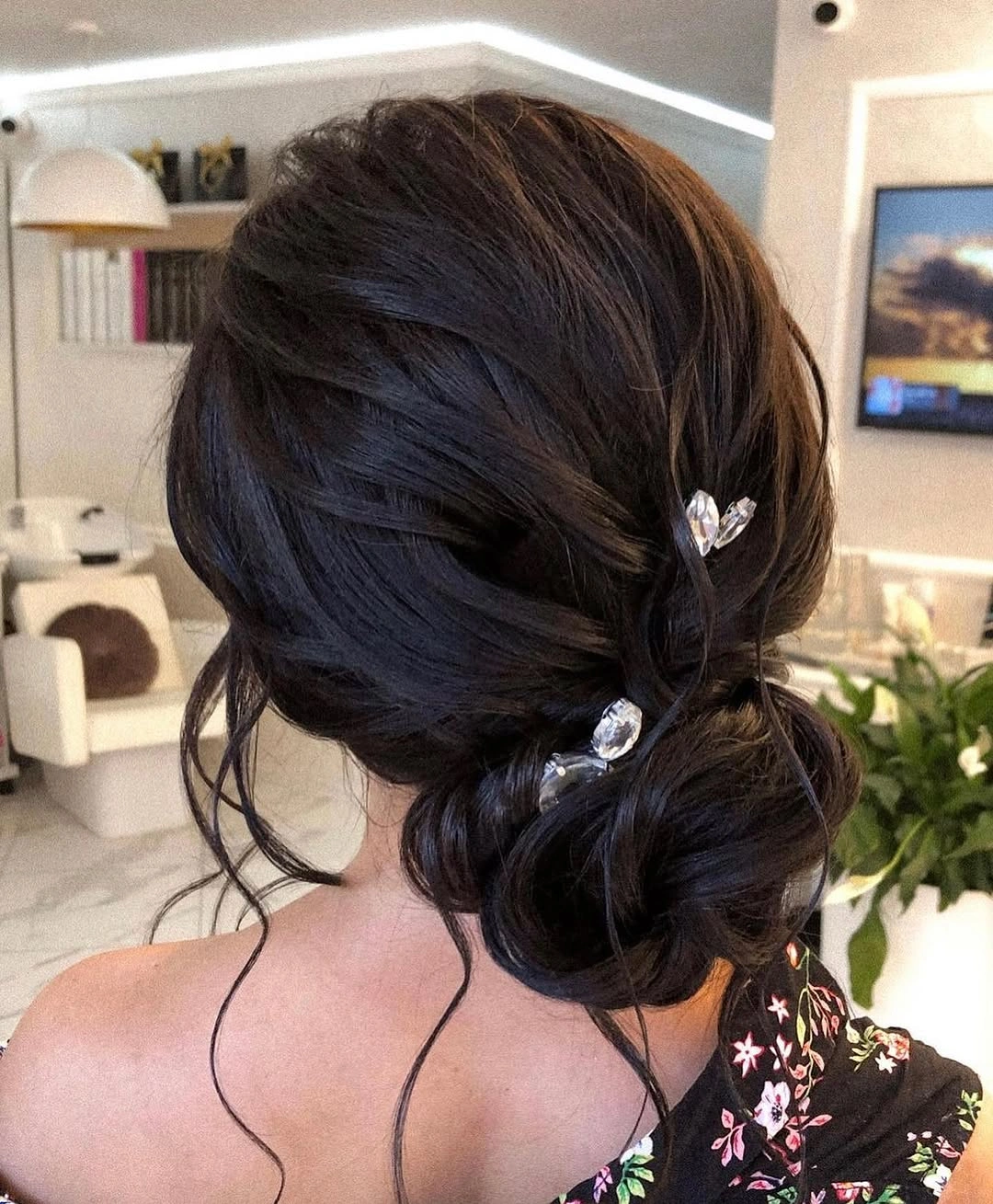
Photo via Instagram
This hairstyle reads less compact than a sleek bun because the loose pieces interrupt the outer line. The lifted crown gives the upper back of the head more height, while the reflective pins add small points of brightness inside the dark gathered shape. The contrast is not about length, but about contained volume versus released strands.
Use this to compare lift, looseness, and accessory placement. The visible value is in how the pins and tendrils break up the darker updo shape.
Half-Up Long Waves With Gathered Crown
The long dark hair is shown from the back, with the upper section pulled into a small gathered ponytail at the crown area. The rest of the length stays loose below, falling down the back in soft waves. The haircut is partly hidden by the half-up shape, though the overall length and lower movement remain clearly visible.
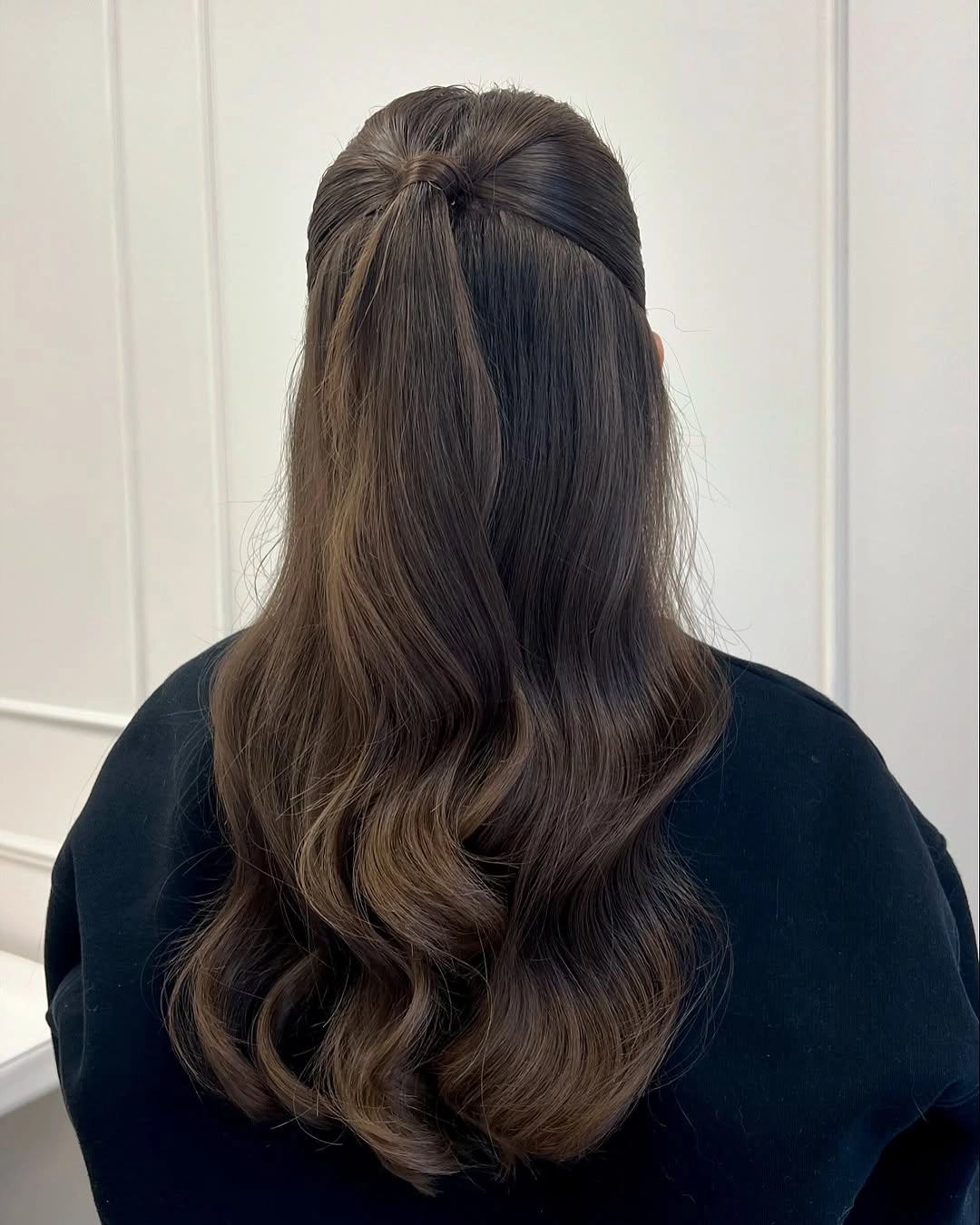
Photo via Instagram
This style sits between a fully loose look and a complete ponytail because only the upper hair is controlled. The gathered crown gives the back view a starting point, while the loose lower section keeps the silhouette long and open. The waves add movement without changing the simple division between anchored top and flowing bottom.
Compare this by how much hair is pulled back versus left down. The useful takeaway is that partial gathering can organize long hair without covering all of its length.
Warm Curled Updo With Loose Spiral Pieces
The warm brown hairstyle is seen from the side, with the hair gathered upward into a curled updo that sits above the nape. Coppery highlighted sections are visible through the pinned shape, and loose spiral tendrils fall near the face and neck. The haircut is hidden because the visible form comes from the updo and separated curls.
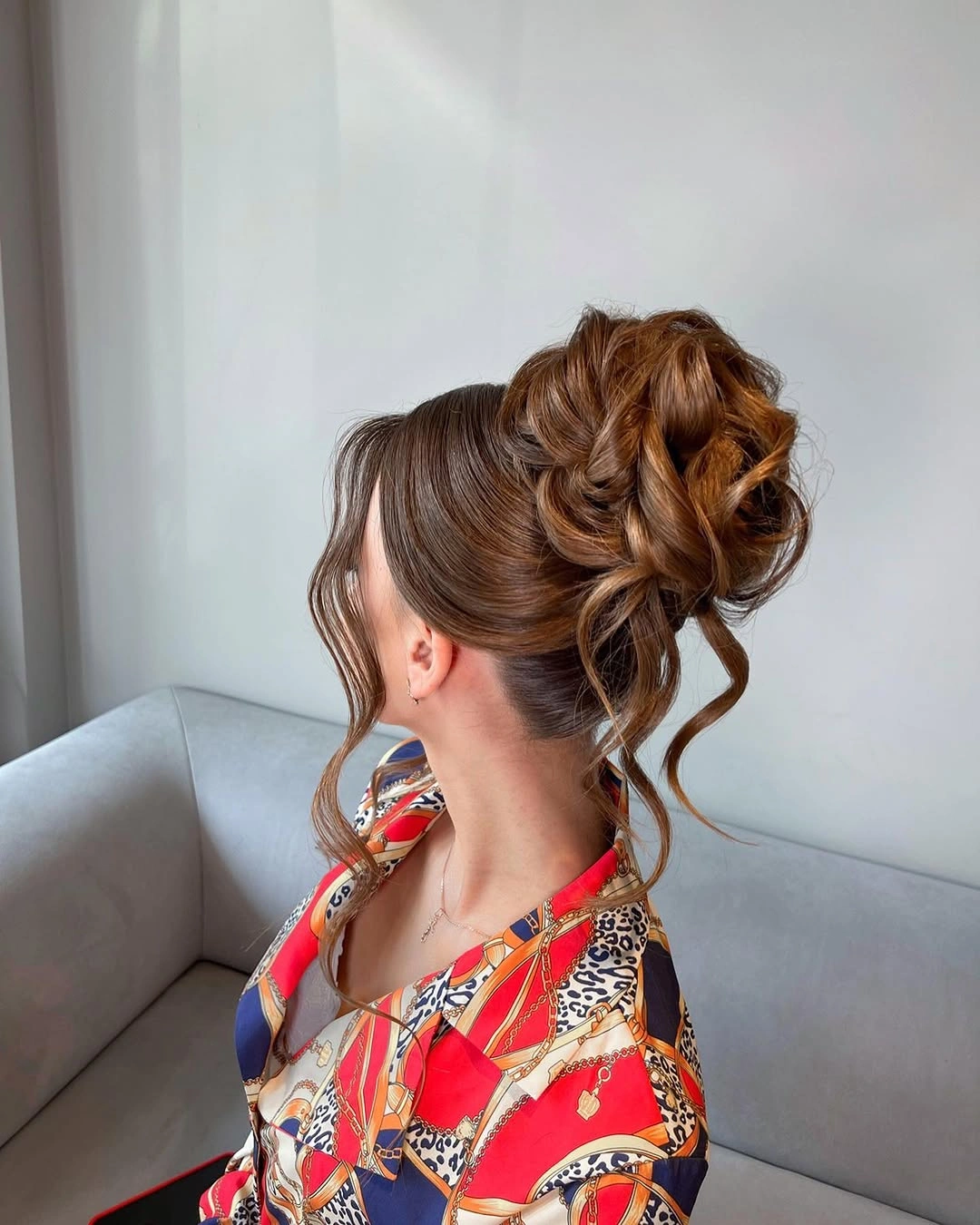
Photo via Instagram
The movement here is more lifted than in the lower buns, since the gathered shape rises away from the neckline before the tendrils drop back down. The highlighted strands make the curls easier to trace, especially where the warmer pieces curve through the darker brown base. Instead of one smooth surface, the style is built from visible bends, openings, and falling pieces.
Let the final comparison rest on lift, curl separation, and loose edges. The grounded takeaway is to notice where the updo rises and where the spiral pieces bring the eye back down.