

You can change the impression of a haircut without giving up the length or sense of identity you already value. A more current feeling often comes from adjusting how structure and movement interact, allowing familiar proportions to read with greater intention rather than forcing a complete transformation. In that sense, trendy haircuts 2027 work best as an editorial lens for considering evolving visual balance, not as a prediction of what will become universally popular.
A useful way to judge a haircut is to notice where its shape begins, how the perimeter shifts as the hair moves, and how face-framing elements are distributed through the overall form. The finish matters just as much because smoother, looser, sharper, or more expanded styling can change the silhouette without changing the underlying cut. These relationships offer a clearer measure of visual direction than assumptions about face shape, suitability, popularity, or any one styling routine.
A Compact Bob With Soft Front Movement
This short brunette bob keeps its visible perimeter close to the jaw, so the outline reads compact without becoming rigid. The part sits near the center with a slight offset, and the sides follow the head closely before loosening into small bends near the ends. Because the shape is not heavily stacked or sharply graduated in view, the bob’s character comes from subtle directional changes rather than an exaggerated build of volume.
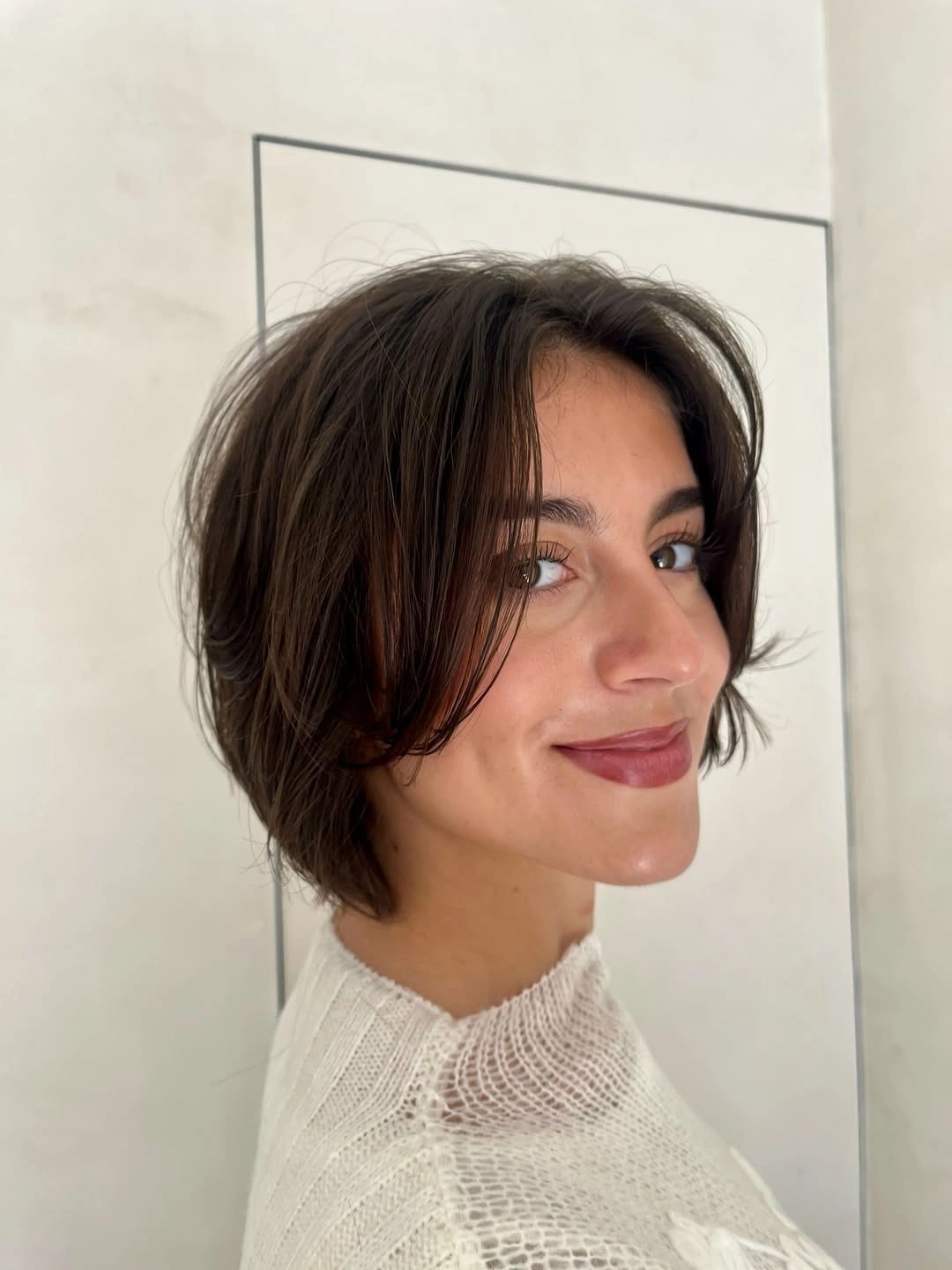
Photo via Instagram
The most distinctive shift happens at the front, where longer pieces separate from the main perimeter and curve beside the cheeks. Those sections interrupt what could otherwise read as one solid jaw-length line, creating narrow openings that let the face remain visually distinct from the darker hair. It is a useful example of how trendy short haircuts can feel mobile even when the overall length stays compact and controlled.
Most of the surface looks straight, but the ends do not all point in one direction: some turn gently inward while others kick slightly outward. Subtle warm-brown variation within the deeper brunette base catches those bends, so the movement is visible without depending on a dramatic color contrast.
Curtain Fringe Shapes Long Brunette Layers
Here, the long length stays unmistakable even though the framing begins much higher. A centered part opens into curtain-like fringe that sweeps across the upper face, then widens into longer pieces around the cheeks and jaw before merging with the main body. That short-to-long progression gives the front a clear internal architecture instead of leaving the entire silhouette at one uninterrupted length.
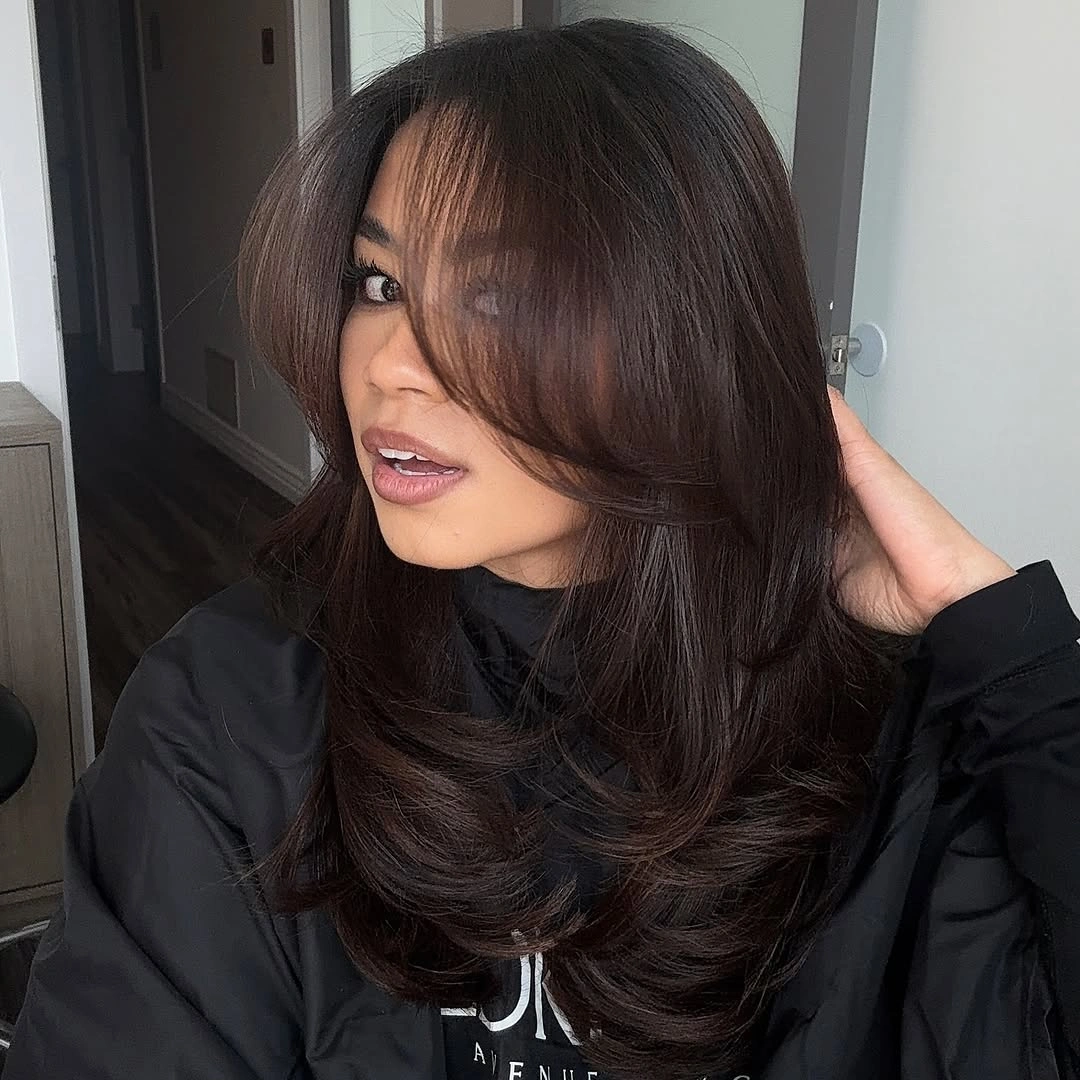
Photo via Instagram
Below the face, the layering continues through the chest-length body in broad, rounded sections rather than thin, scattered ends. Several tiers curve away from one another, making the lower half look fuller while preserving the long perimeter beneath them. For anyone comparing trendy haircuts for long hair, the important detail is not length alone but how many visible stopping points appear between fringe and ends.
The deep brunette color keeps those overlapping curves connected as one continuous silhouette, even where individual layers separate. Light catches the rounded ends enough to reveal each arc, while the dark overall tone prevents the haircut from looking visually fragmented.
Feathered Blonde Layers Build A Fuller Silhouette
This long blonde shape pushes the face framing higher and makes each tier more pronounced. The center part opens into long curtain fringe, with shorter sections sweeping away from the face before successive layers step downward past the jaw and shoulders. The result is a distinctly butterfly-like silhouette, but the visible evidence supports describing the shape rather than claiming a specific cutting technique.
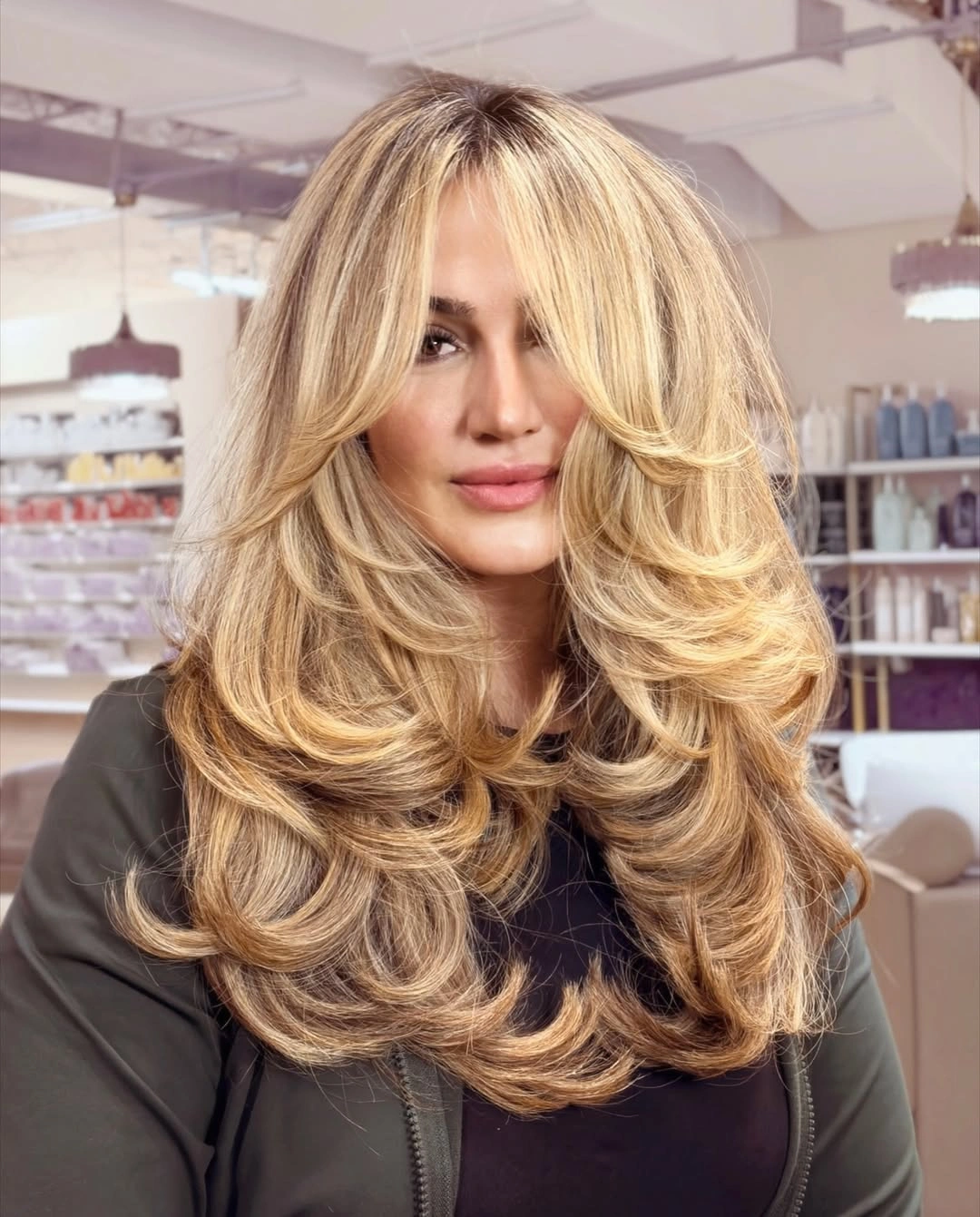
Photo via Instagram
The strongest feature is the repeated feathered arc running through almost the entire length. Instead of one or two softly bent layers, multiple sections curve outward and then back toward the body, producing a sequence of large rounded edges from the face to the lower perimeter. That repetition gives the long cut its expansive shape and separates it clearly from a smoother, less densely layered finish.
A slightly deeper root area against the brighter blonde lengths makes the layer boundaries easier to read, especially around the crown and upper face framing. The lighter ends emphasize each curved edge, so the haircut’s high-to-low progression stays visible even where several feathered sections overlap.
A Side Part Changes This Rounded Bob
This warm-brunette bob also sits near the jaw, but its side part changes the way the short silhouette is distributed. More hair sweeps across the top toward one side, creating rounded fullness before the line turns under near the ends. The visible shape therefore feels directional from the start, with one side carrying more of the front movement instead of dividing evenly around a central part.
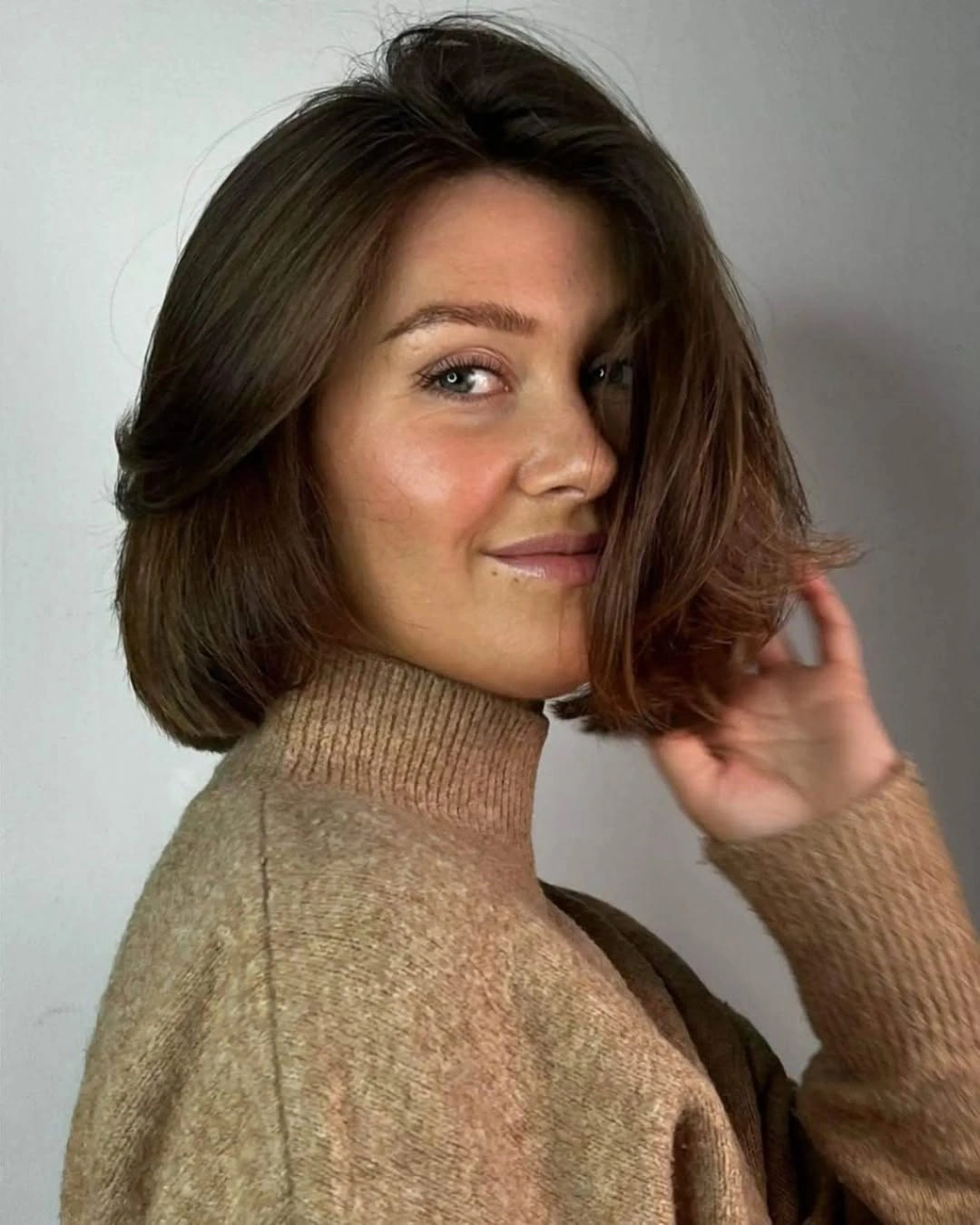
Photo via Instagram
The longer front sweep beside the cheek is the key contrast within the otherwise compact bob. On the opposite side, more of the face and ear area remains exposed, so the two sides do not mirror each other even though the lower perimeter stays cohesive. That asymmetry gives this short haircut a different visual rhythm from a centered bob without requiring a dramatically different overall length.
Its smooth surface keeps the rounded outline easy to follow from the fuller side section into the bent-under ends. Warm brunette tones add soft dimension inside that single shape, but the strongest impression still comes from the side part and curved perimeter rather than from color contrast.
Long Dark Layers Keep Their Length
The first impression here is length: the near-black hair extends well past the shoulders, and the outer line remains dominant even with visible layering. A centered opening at the front divides the dark surface, while the main lengths fall in long, relatively smooth sections before bending more noticeably toward the lower half. The cut changes structure without sacrificing the elongated vertical line.
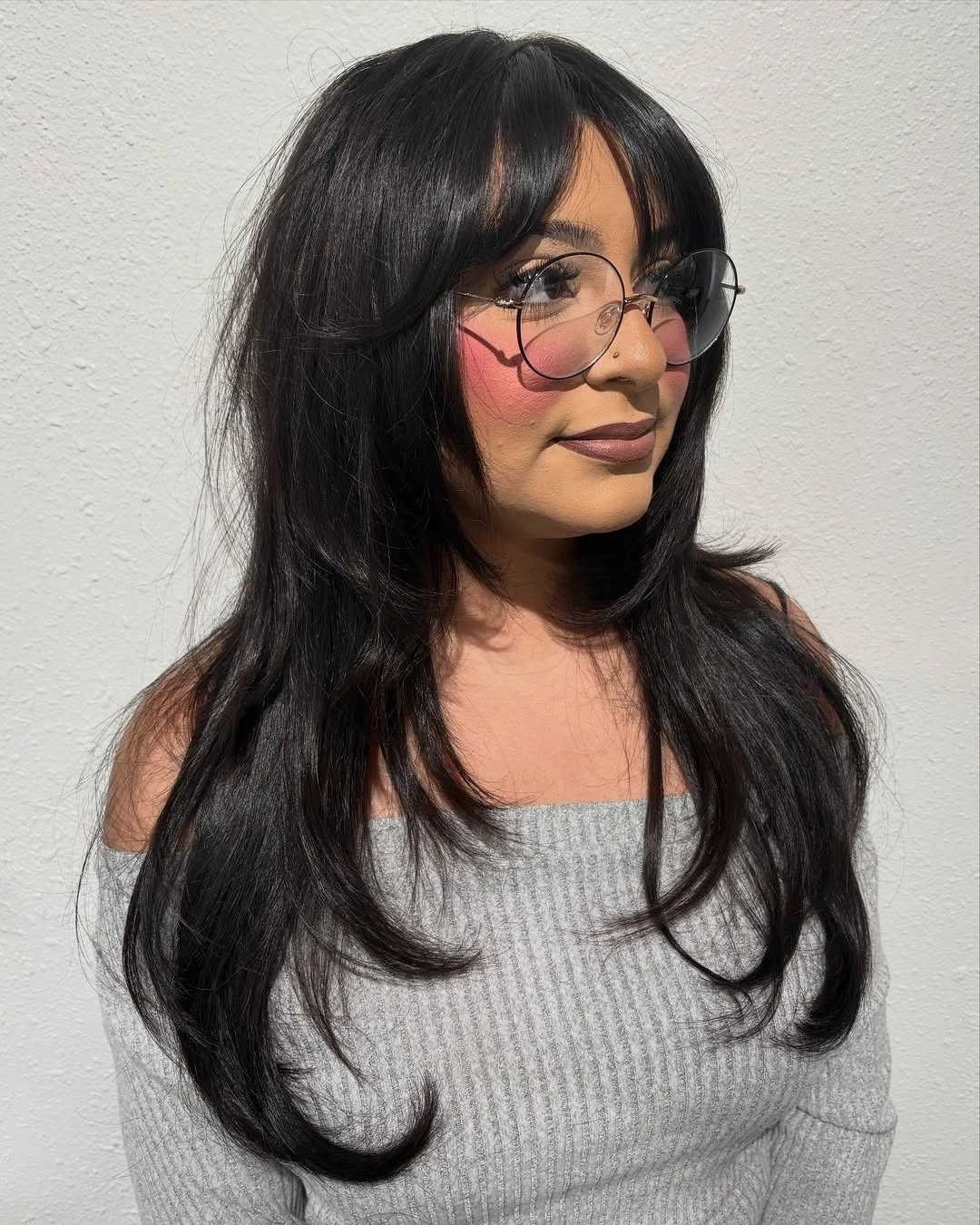
Photo via Instagram
Shorter front pieces separate around the face and begin a gradual transition into the longer body, but they do not read as a short, blunt fringe. Their curved shape creates a soft opening through the dark hair, then the framing stretches downward until it meets longer layers around the chest. This makes long hair with bangs feel more integrated, with the front structure acting as the first tier rather than a separate block.
Because the color is so deep and continuous, the outline of each bend matters more than strong tonal separation. The lower layers curl outward in broad, visible arcs, giving the ends a shaped finish while the upper lengths stay comparatively smooth and uninterrupted.
Wispy Fringe Breaks Up A Medium Shape
The eye goes first to the fringe, because it stretches softly across the brow and keeps the front from opening into a clearly exposed part. From there, the haircut falls into a medium length with visible layers beside the cheeks, along the jaw, and through the neck-to-shoulder area. Instead of forming one smooth curtain, those pieces land at different points, so the shape reads as deliberately broken up rather than evenly rounded.

Photo via Instagram
That uneven spacing is what makes this cut feel different from the smoother silhouettes earlier in the collection. Some sections flick outward, some sit flatter, and others drop into looser bends, which gives the perimeter a lightly scattered finish instead of a firm line. For readers comparing trendy haircuts for medium hair, this is a useful example of a shoulder-grazing shape that gets its character from interrupted layering and fringe coverage rather than from a single clean outline.
The loose waves amplify the irregular ends because each bend pushes a different layer forward or away from the neck. Rather than reading curly, the texture stays soft and slightly tousled, which helps the layered structure look intentionally piecey and open.
A Wavy Bob Seen From Behind
Seen from the back, this short bob makes its perimeter the main subject. The length sits between the nape and jaw range, with a compact rounded shape that hugs the head before loosening into bends near the lower edge. Because the view removes the face and front framing from the equation, the haircut has to communicate through outline alone, and that makes the soft rear curve especially easy to read.
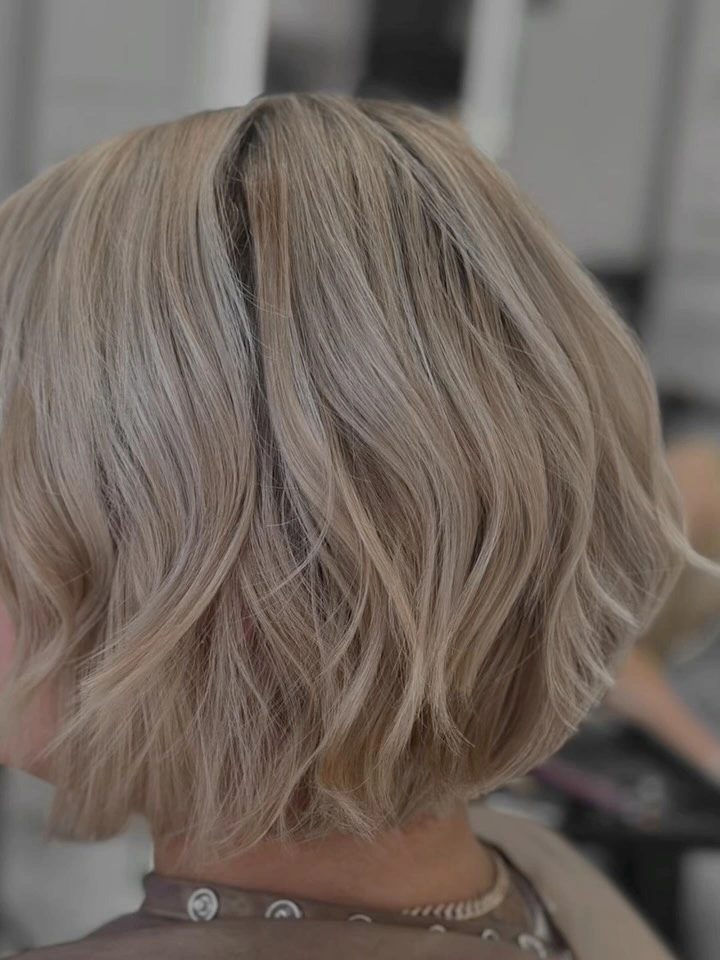
Photo via Instagram
The lower line is not rigidly blunt, which is why the bob feels gentle rather than severe. Loose waves interrupt the perimeter in several places, causing some sections to tuck inward while others push outward, and those shifts keep the back from turning into a single helmet-like curve. The result is a short silhouette with movement distributed through the edge itself, not added as a separate top layer or dramatic crown build.
Pale ash-beige blonde dimension helps distinguish one bent section from the next, especially where the waves overlap near the ends. That tonal variation does not change the basic form, but it makes the bob’s soft, piecey finish easier to follow across the full back view.
Sweeping Volume Over A Tapered Nape
In profile, this very short haircut is built around contrast between an extended upper section and a tightly shortened back. The crown and top sweep forward and sideways in one rounded mass, covering much of the forehead and creating fullness above the cheek and temple area. Under that fuller top, the ear stays exposed and the nape narrows quickly, so the whole silhouette becomes top-heavy in a deliberate, sculpted way.
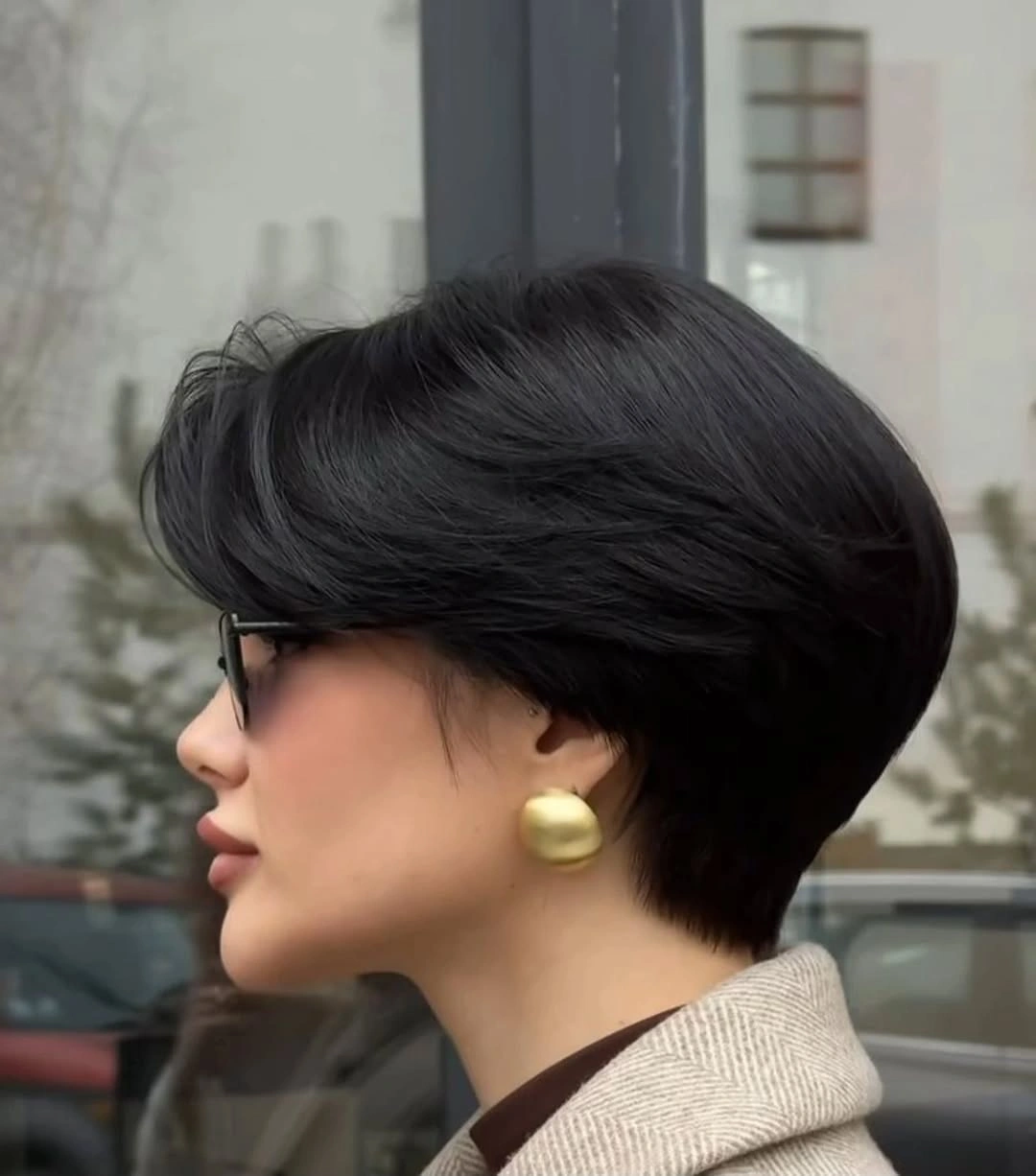
Photo via Instagram
That proportion changes what the cut can do visually, because most of the movement is concentrated in one long front-to-side sweep rather than spread across the perimeter. The front reads fluid and directional, while the nape stays close and controlled, which sharpens the distinction between visible volume and visible taper. Among trendy haircuts short, it stands out less for texture variety than for how clearly it stages longer and shorter zones inside one compact profile.
The uninterrupted black color keeps attention on contour, not on internal layer contrast. Since there is little tonal separation to map the structure, the rounded crown, exposed ear, and closely cut nape do the work of defining the haircut.
Restrained Length With Minimal Layer Interruption
This cut takes the opposite route from the heavily layered examples by preserving a long, nearly uninterrupted vertical line. The part appears centered or close to it, and the upper lengths fall smoothly with very little visible disruption through the crown or sides. Most of the motion is delayed until the lower portion, where the ends begin to soften and curve instead of dropping in a completely straight sheet.
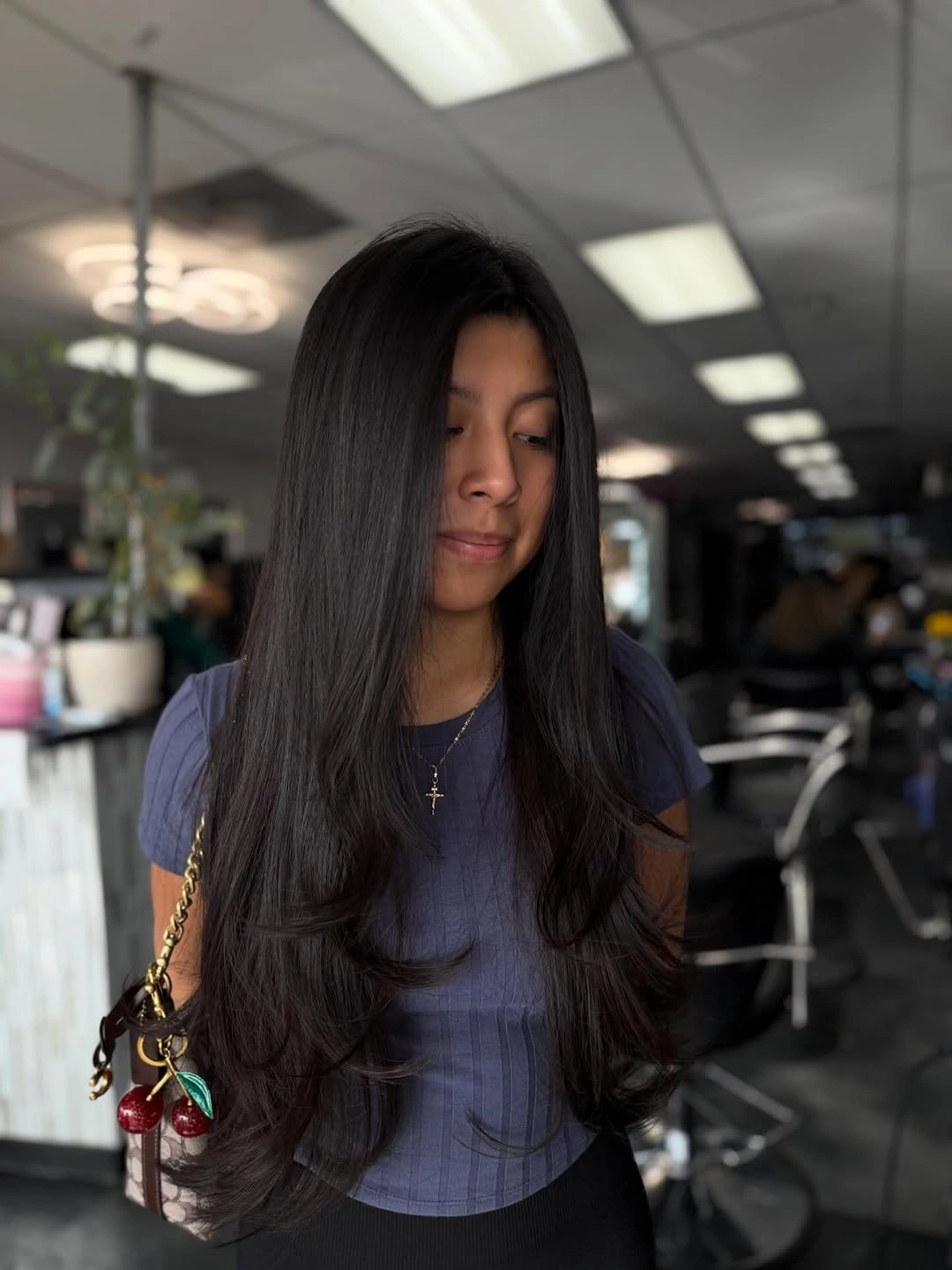
Photo via Instagram
The framing is present, but it stays quiet. Longer front sections sit beside the face and blend downward into the rest of the hair without forming a fringe or a pronounced tiered structure, so the haircut keeps its calm outline even at close view. If someone is comparing long hair straight options within trendy haircuts for long hair, this is the restrained version – a cut that relies on length, clean fall, and a softened base more than on obvious shape breaks.
The contrast between the straight upper body and the gentler lower edge is what gives the haircut definition. Because the bends are concentrated near the ends, the silhouette stays sleek for most of its length and only opens up at the perimeter.
Cascading Layers Clarify The Back View
This rear view makes layer hierarchy the real subject by showing how the hair descends in visible stages. Shorter rounded sections sit through the middle, then give way to increasingly longer layers beneath them, so the eye can follow a clear progression from upper back to lower perimeter. Unlike a front-facing view that emphasizes fringe or cheek framing, this angle turns the back structure into the most readable feature of the cut.
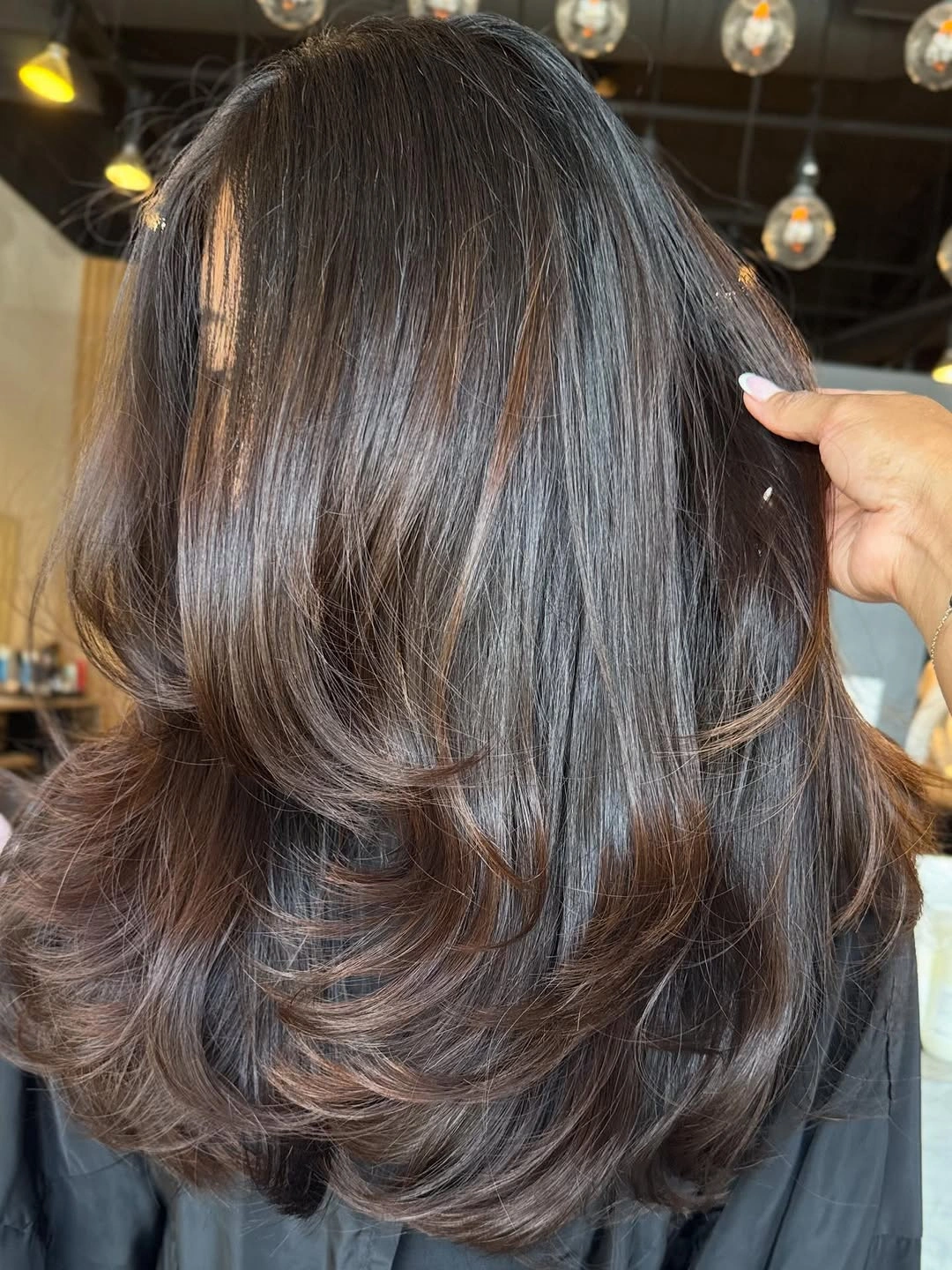
Photo via Instagram
The ends help keep those tiers separate because they curve and feather outward instead of falling in one flat block. Each layer seems to finish on its own rounded line, and that repetition creates depth even though the overall color remains dark and cohesive. It is a strong example of trendy haircuts for long hair where the main interest comes from how the back is built, not from dramatic front pieces or a visibly short top section.
Subtle warm-brown dimension within the deeper brunette base adds just enough separation to show where one curved section overlaps another. The coloring effect stays secondary, though, because the haircut’s real clarity comes from the stacked sequence of lengths and the way the rounded ends prevent them from visually collapsing together.
Lower Layers Carry The Brunette Movement
This long brunette cut keeps the upper half deliberately quiet. From the side and three-quarter view, the hair falls smoothly from the top with a long front section sweeping beside the face rather than breaking into short fringe. That restraint matters because the first obvious layer changes arrive much lower, allowing the chest-length silhouette to stay elongated before the ends begin to separate.
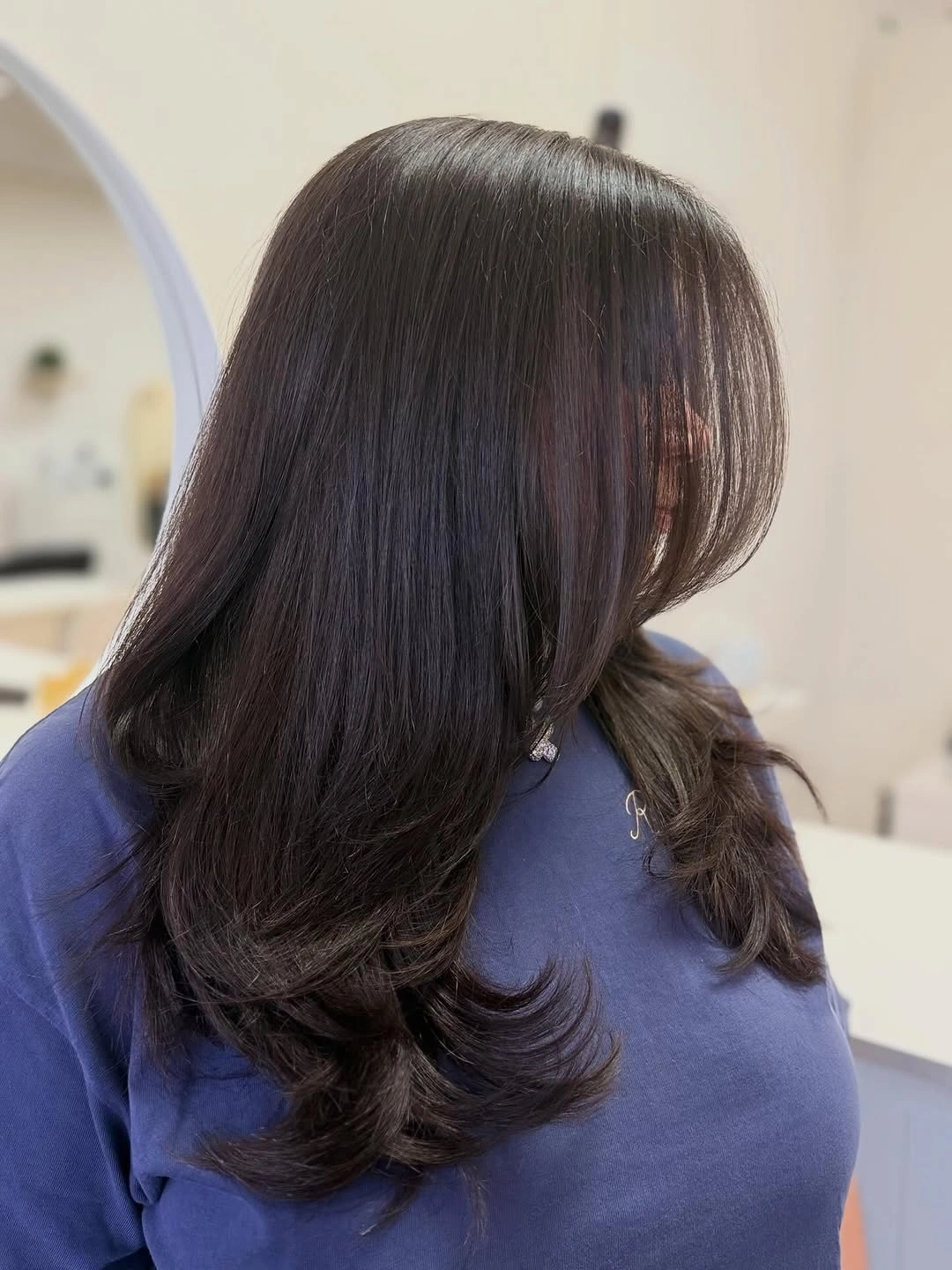
Photo via Instagram
Around the lower third, the haircut becomes much more articulated. Several tiers finish in distinct C-shaped bends, with one curved section sitting above another instead of blending into a single rolled-under edge. I would read that lower concentration of movement as the defining choice here: the cut saves its strongest shape for the ends, where the layered perimeter becomes easy to trace.
The shift from a smooth dark surface to separated lower curves gives the haircut its visual tension. Because the brunette tone stays cohesive from top to bottom, the eye notices the change in direction and layer depth before it notices any strong color contrast.
Straight Length Makes Subtle Shaping Matter
A clear center part gives this long dark-brown cut an unusually steady sense of symmetry. The hair drops in a sleek, mostly straight line on both sides, and there are few obvious interruptions through the upper and middle lengths. That continuity makes the perimeter feel intentional rather than unfinished, with the overall shape relying on clean fall and proportion instead of highly visible tiers.
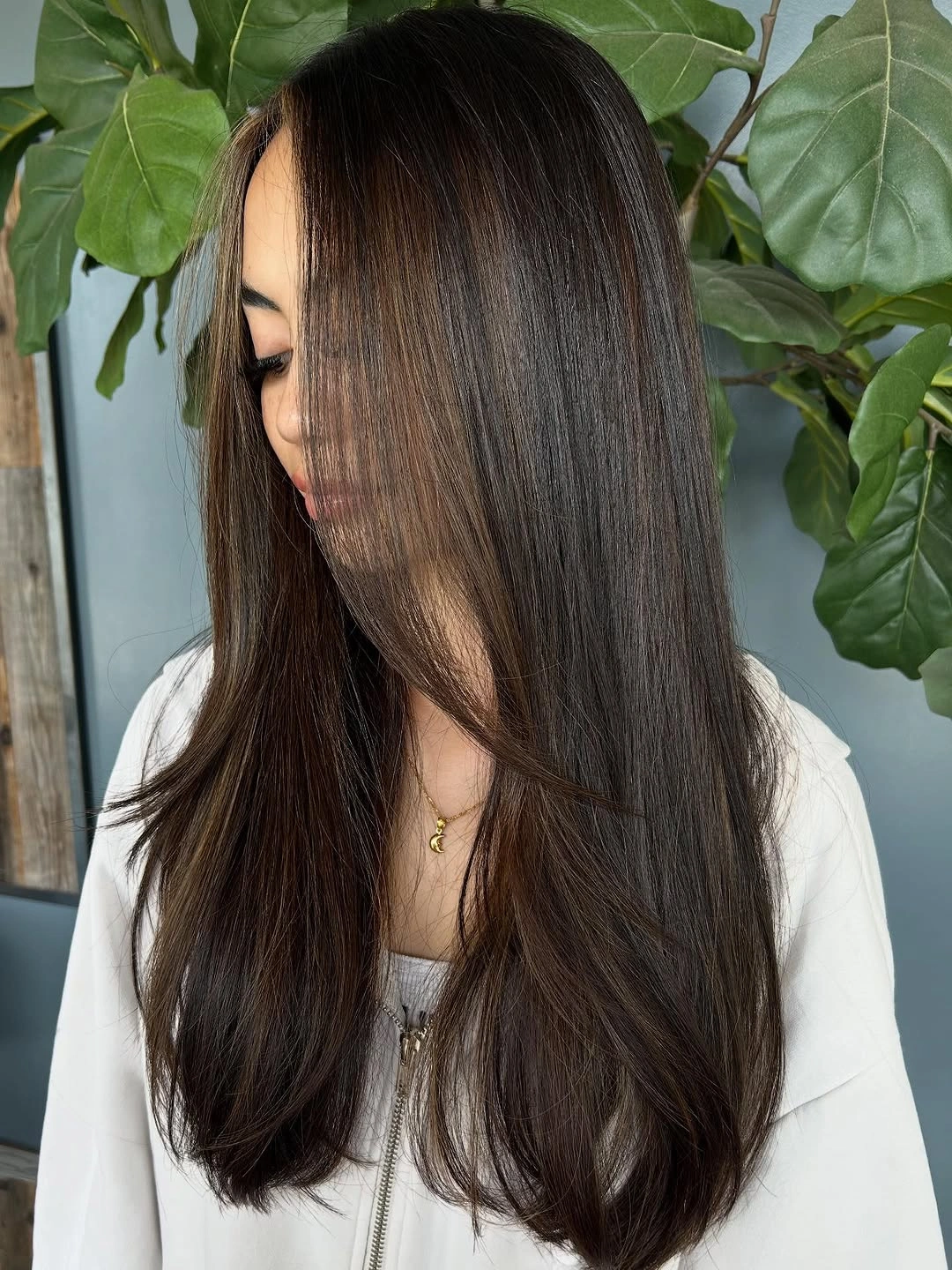
Photo via Instagram
The front is not completely one-length, but the framing stays restrained. Longer pieces near the face taper gradually into the main body, while the lower ends show only a slight softening rather than pronounced flips or feathered arcs. For anyone drawn to long straight hair, the useful distinction is how little structure is needed to keep the silhouette from reading as a flat, uniform sheet.
Its quietness is the point: small changes in taper and end direction become noticeable precisely because the rest of the cut remains so continuous. Beside more feathered long shapes, this one reads less as a display of layers and more as a study in controlled length.
Crown Volume Narrows Into A Piecey Nape
From the back, this short dark crop is shaped by what happens above the nape. The crown carries rounded lift and visible layering, creating a compact dome-like outline before the sides begin to narrow. Because the front and fringe are not visible from this angle, the rear architecture deserves to stand on its own rather than being completed with assumptions about how the haircut looks from the face.
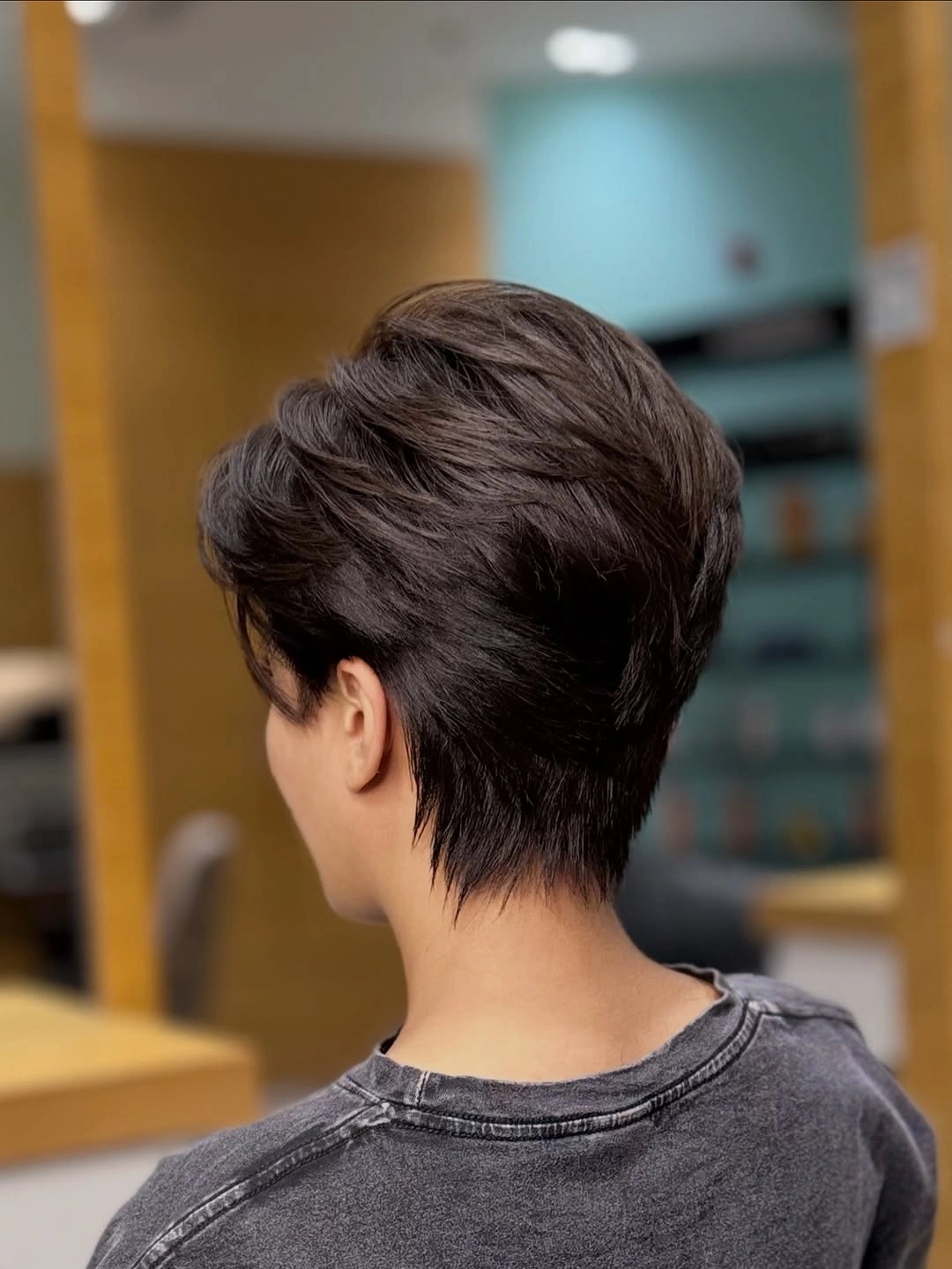
Photo via Instagram
The silhouette tightens steadily as it approaches the neck. Shorter sections at the sides feed into a tapered nape where the ends look more piecey and separated, so the lower edge feels lighter than the fuller crown above it. Among trendy short haircuts, that crown-to-nape compression is the useful relationship to notice: fullness is concentrated high, then deliberately reduced toward the base.
This back view reveals a different kind of short-hair structure than a profile dominated by a sweeping front section. Here, the readable information is the transition from rounded crown volume to a narrow, textured nape, and there is no need to invent a front part or fringe to make the shape complete.
Copper Length Meets A Directional Front Sweep
The length is generous, but the front does not simply fall straight from a near-center part. A long section sweeps diagonally across part of the forehead and eye area, giving the copper-auburn silhouette a directional opening before the rest of the hair drops well past the shoulders. That front movement creates a useful tension with the otherwise smooth, extended perimeter.
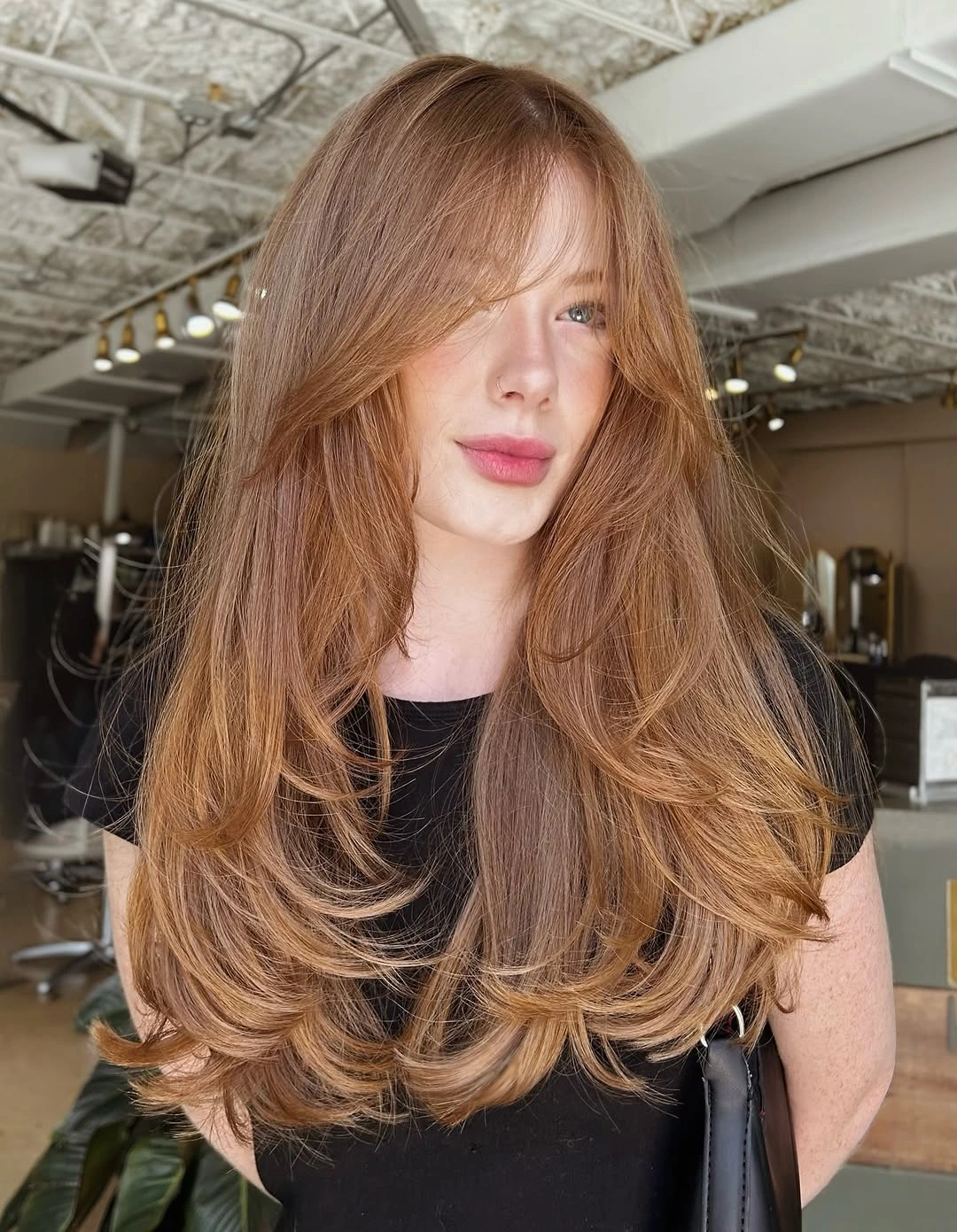
Photo via Instagram
Face-framing pieces begin around the cheek and continue toward the chin before feeding into longer layers below. Farther down, the ends widen into large curved sections, so the haircut moves from a relatively restrained upper body to broader feathered shapes near the bottom. For readers comparing trendy haircuts for long hair, this is the kind of layering that keeps substantial length visible while still giving the front and lower edge separate jobs.
The warm copper and auburn variation makes those overlapping contours easier to distinguish, especially where one curved end crosses another. Color is not the subject of the cut, but the tonal shifts help reveal the difference between the directional front sweep, the smoother middle lengths, and the broader lower curves.
Airy Blonde Layers Leave Space Between Ends
This long ash-beige blonde cut opens at the center, then quickly breaks into shorter face-framing sections on both sides. The curtain-like front pieces sit around the cheek area before longer layers step through the jaw and down toward the chest, creating a clear short-to-long progression. The silhouette is butterfly-like in its high layering, though the visible shape matters more than attaching a fixed salon label to it.
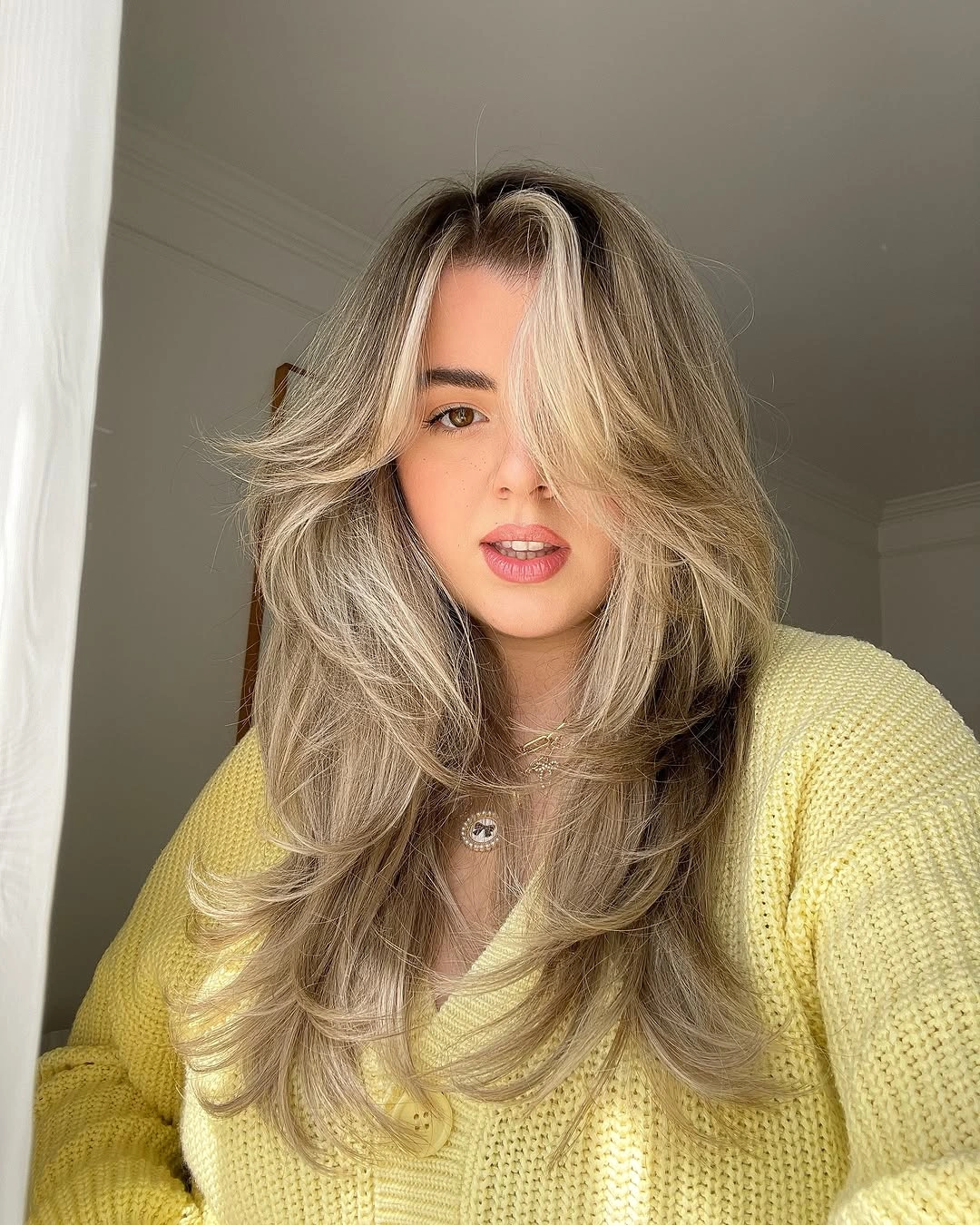
Photo via Instagram
What makes this version distinctive is the space between the layers. The ends do not all curve in the same polished direction; some flare outward, others drop more softly, and the separated pieces leave small gaps that make the outline feel airy rather than densely stacked. Long hair with bangs can take on this looser character when the fringe and framing remain connected to an irregular sequence of longer bends.
A deeper root area against the paler blonde lengths adds depth exactly where several short and medium layers overlap. That tonal relationship helps the eye separate the face frame from the longer body, while the less-uniform bends keep the high-layered shape from reading as one continuous feathered arc.
Long Waves Preserve A Continuous Silhouette
The centered part sets up a long, nearly continuous brunette outline, with the front sections dropping beside the face instead of breaking into short bangs. Length remains the dominant impression from the top through the lower body, and there are few abrupt layer stops to interrupt that vertical sweep. If you prefer a long cut that reads fluid before it reads layered, this shape makes that preference visible without reducing the sense of overall length.
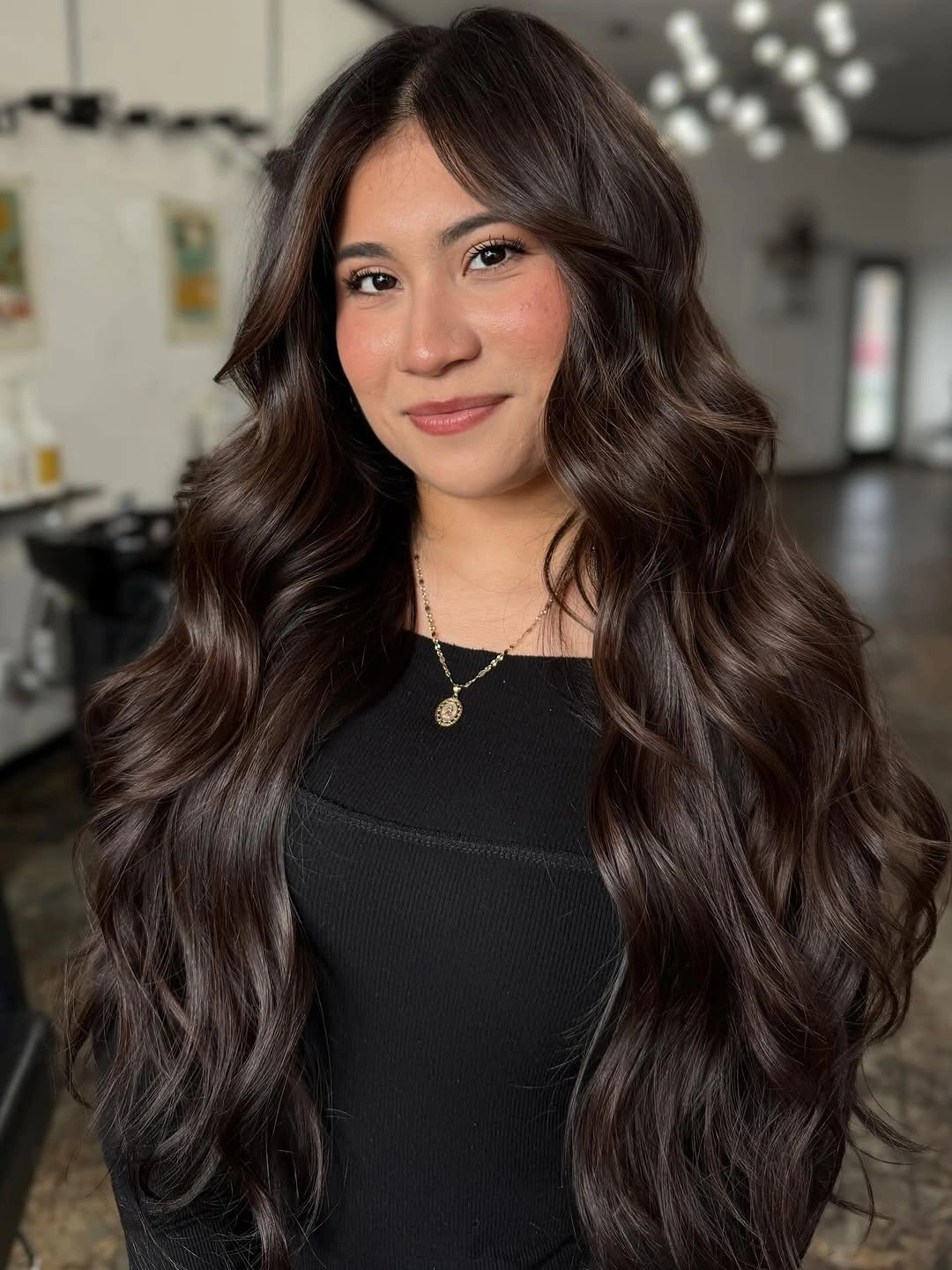
Photo via Instagram
The movement becomes clearer from about the mid-lengths downward, where broad waves repeat through the hair in a steady rhythm. Those bends widen and narrow the silhouette gradually rather than sending individual sections sharply outward, so the lower half looks mobile without turning feathered or piecey. The practical visual consequence is continuity: the waves create shape, yet the eye can still follow one long perimeter instead of hopping from tier to tier.
Minimal obvious layer breaks keep this deep-brunette silhouette calmer than a cut built around widely separated feathered ends. The appeal is in the repeated wave pattern carrying the length as one connected form, with curvature supplying movement where strong tier separation does not.
Medium Layers Compress The Face-Framing Shape
A centered part opens into curtain-style front sections that curve away from the face, but the overall cut stops around the upper chest rather than extending into very long territory. That shorter total span compresses the distance between the front framing, shoulder-level layers, and lower perimeter. The result is a medium-to-medium-long shape where each change in length becomes easy to notice because the tiers have less vertical space in which to disperse.
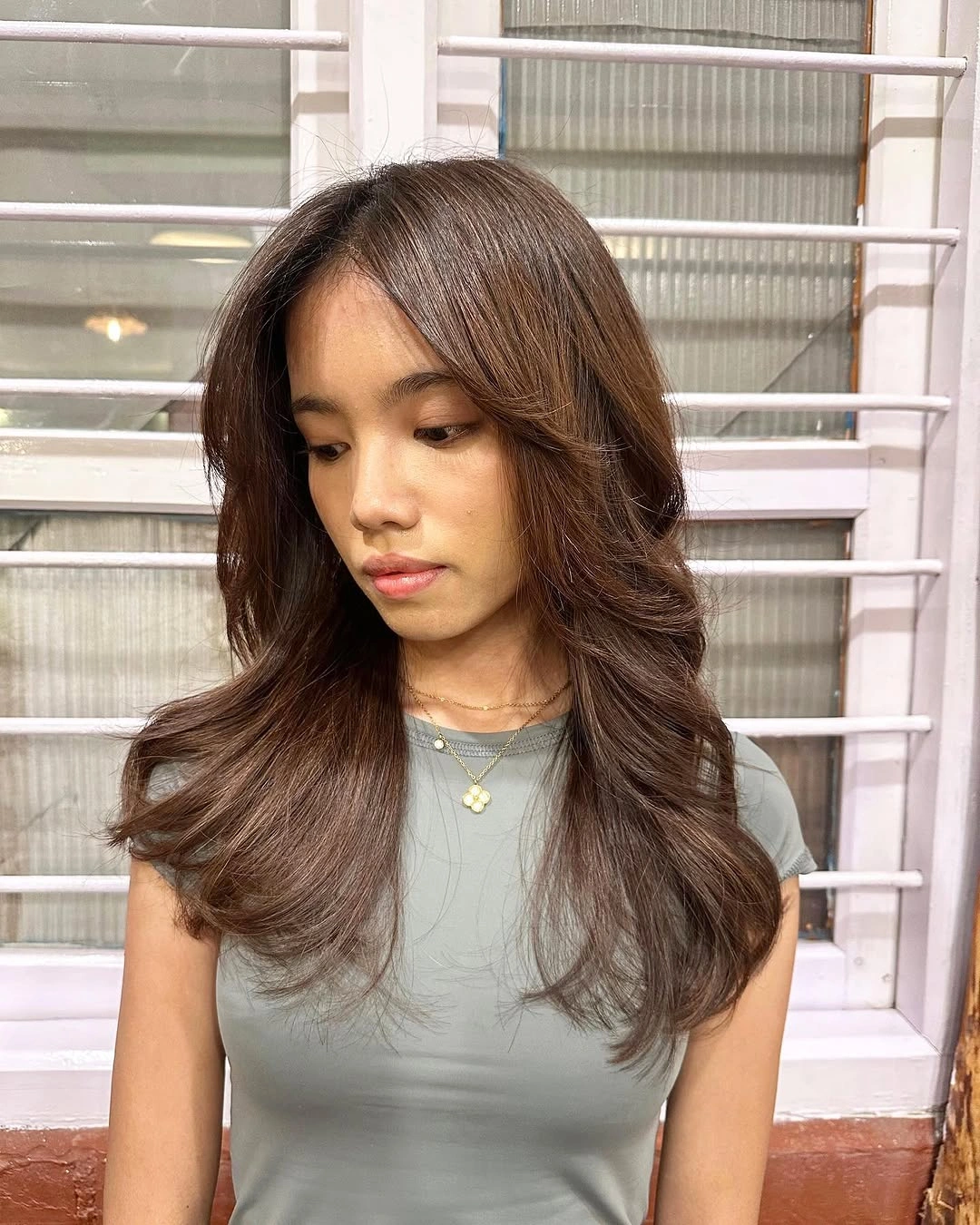
Photo via Instagram
Outward bends repeat at several levels: first around the face, then near the shoulders, and again through the lower ends. Instead of creating one sweeping feathered mass, those turns make the layer sequence readable in compact steps, with each section briefly widening the silhouette before the next begins. For readers comparing trendy haircuts for medium hair, this shows how curtain bangs and framing can feel substantial even without an extra-long perimeter.
The butterfly-like impression comes from that short-to-long progression, not from a label that needs to be treated as a confirmed technique. Medium length makes the geometry feel more concentrated, which may appeal if you want the face frame and outward tiers to register immediately rather than unfold across a much longer cut.
Feathered Ends Push Long Layers Outward
This long brunette cut uses a broad front sweep as the entry point into a much wider layered outline. The part looks softly centered to slightly offset, and shorter sections near the face bend away before longer pieces continue through the chest-length body. What stands out is not just the number of layers but their direction: the visible ends repeatedly travel outward, giving the silhouette more lateral spread as the length descends.
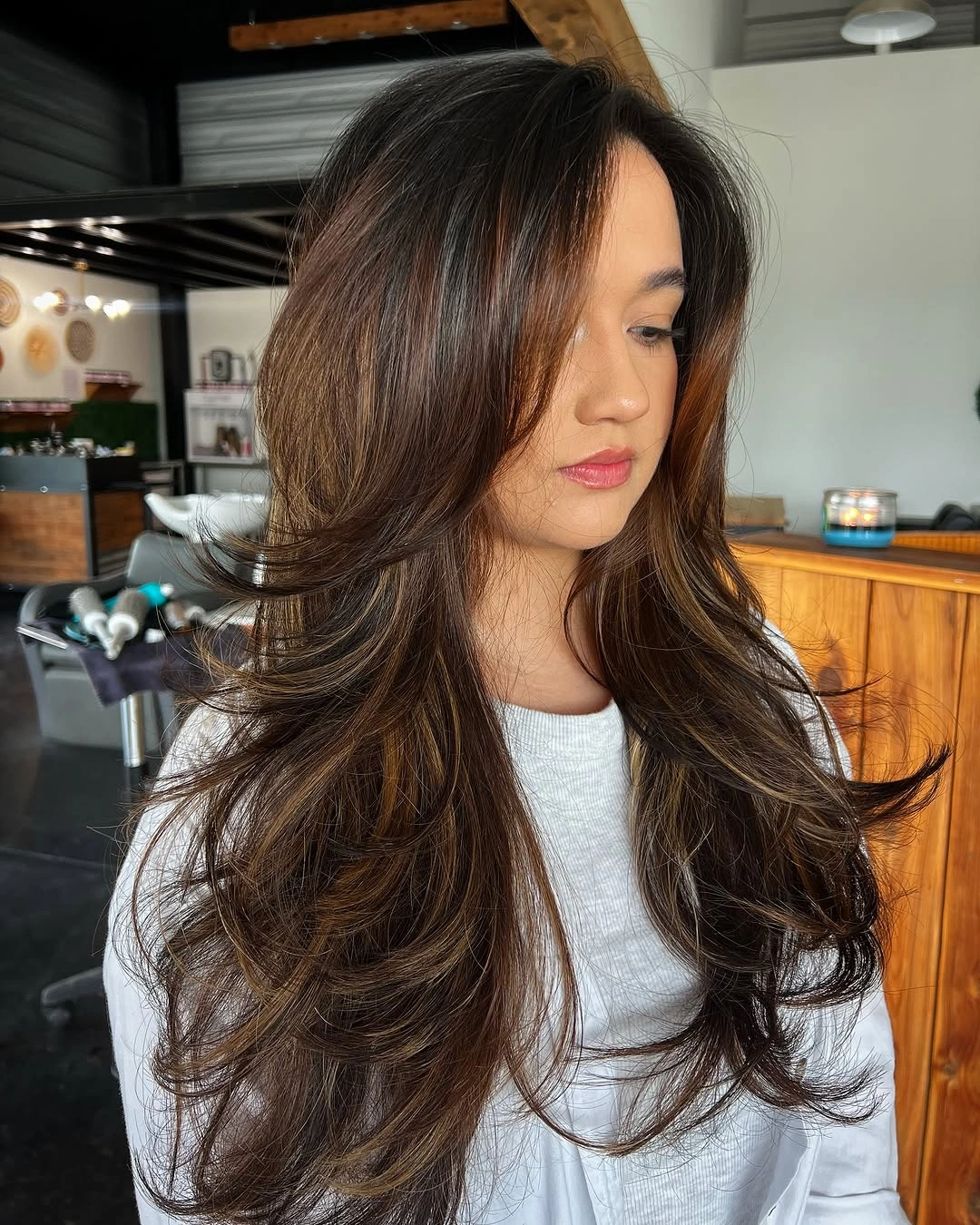
Photo via Instagram
Through the middle and lower sections, larger arcs fan away from the body and overlap one another, so the perimeter feels expansive rather than column-like. The feathered bends are especially pronounced at the ends, where separate sections finish at different widths and directions instead of settling into one rounded base. Among trendy haircuts for long hair, this is the more expressive option when the visible goal is to make layer edges contribute as much to the outline as the preserved length does.
That outward spread separates it from a long shape organized mainly by continuous waves, where movement stays connected along one flowing line. Here, each feathered end claims its own space, so the haircut reads through widening contours and visible separation rather than through uninterrupted wave rhythm.
Gentle Bends Soften A Medium-Long Cut
This medium-long blonde shape sits below the shoulders with an off-center part and a relatively simple outer line. The front sections are long enough to sweep beside the face rather than forming short fringe, and they blend gradually into the rest of the length. Its character comes from moderation: the haircut is visibly shaped, but neither the framing nor the lower perimeter is broken into strongly separated tiers.

Photo via Instagram
Loose, low-amplitude bends keep the lengths from reading pin-straight while preserving a calm, elongated outline. The front pieces curve gently and the ends turn softly instead of flaring far outward, so movement feels distributed rather than concentrated at one dramatic layer level. For someone considering trendy haircuts for medium hair, this offers a quieter possibility where subtle direction changes do more of the visual work than stacked or highly feathered sections.
Darker and lighter blonde areas make the bends easier to distinguish as they pass through the shoulder-length body, but the cut remains the main story. The softer tonal transitions reinforce the restrained outline, allowing long framing and gentle curvature to register without making the silhouette look heavily segmented.
Piecey Waves Break The Short Bob Perimeter
From behind, this short blonde bob finishes around the nape-to-collar area with a bottom edge that refuses to settle into one smooth curve. Individual sections bend in slightly different directions, and several ends project beyond their neighbors, giving the perimeter a broken, piecey-looking finish. The back still reads clearly as a compact bob, but its outline is defined by small interruptions rather than by a uniformly rounded shell.
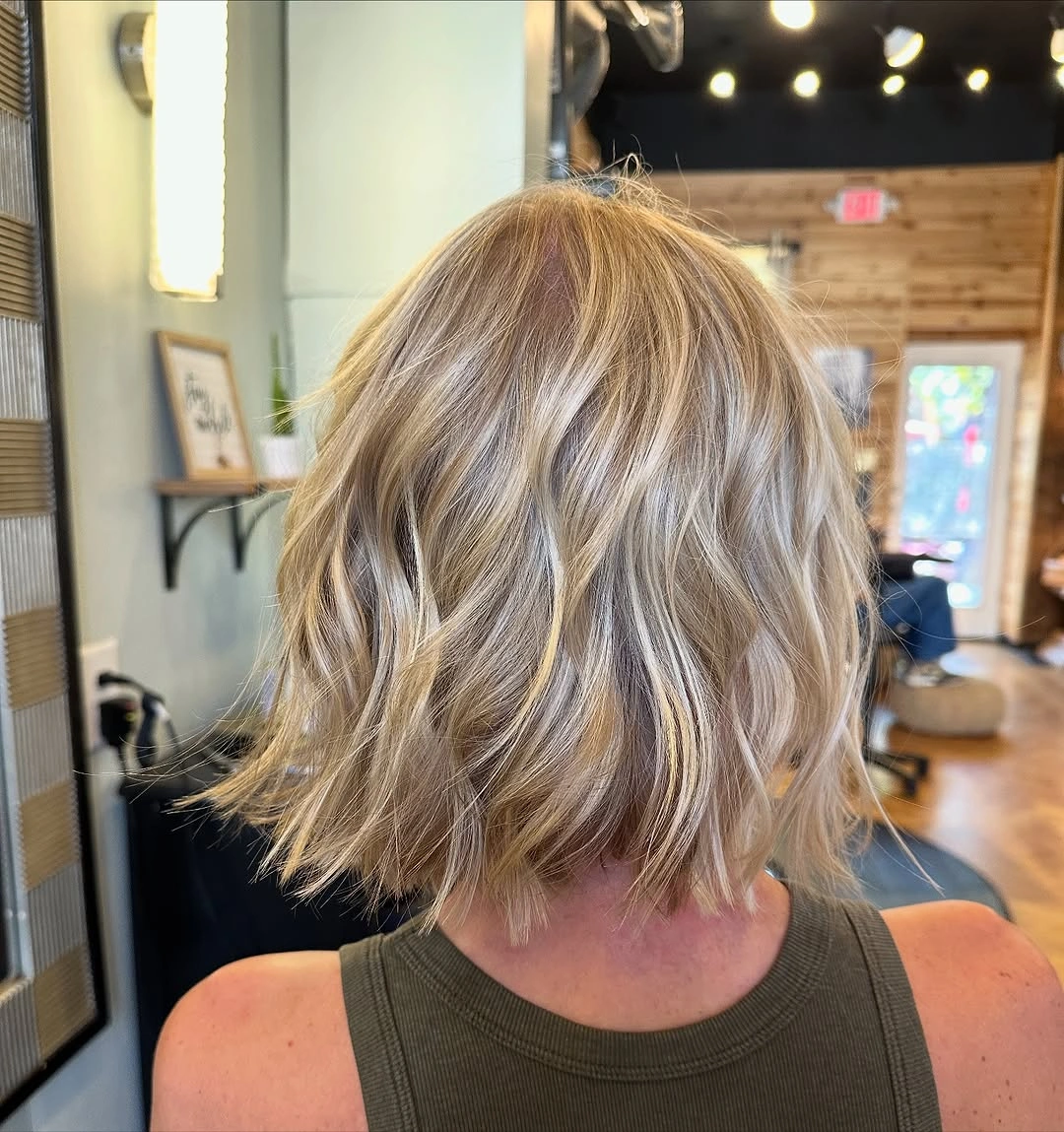
Photo via Instagram
The loose waves are important because they change the edge itself, not merely the surface above it. Some sections bend outward, others fall more vertically, and the uneven spacing leaves visible notches and shifts along the lower line. That makes this a useful short-hair direction for someone drawn to a less geometric finish: the bob keeps a recognizable compact length while allowing each wave to alter the silhouette independently.
Brighter and deeper blonde strands help separate those irregular bends, especially where neighboring pieces overlap near the nape. Compared with a softly rounded back, this perimeter reads more fragmented and spontaneous, ending the haircut on visible texture rather than on one continuous curved edge.