

A haircut often changes through five structural choices before any label matters: line, proportion, perimeter, direction, and finish. When comparing trendy haircuts for women over 50, those choices give the reader a calmer way to judge shape without relying on broad names or assumptions. A clean edge, a shifted weight point, or a softer surface can change the impression even when the category sounds familiar.
The most useful comparison starts with how the outline is organized, then moves to where movement begins, where it stops, and how polished or separated the surface appears. This approach keeps the focus on readable design rather than promises about lifestyle, age, or ease. It also gives better language for personal preference, because proportion and direction can be discussed without turning every haircut into a fixed rule.
Shoulder-Skimming Curls With Rounded Volume
From the back, the brown curls gather around the shoulder line, with warmer lighter pieces visible inside the rounded mass. The exact cut is partly hidden because the curls overlap and obscure a clean perimeter at the ends. What can be read with confidence is a medium length impression, a soft lower edge, and curl placement that adds width around the sides.
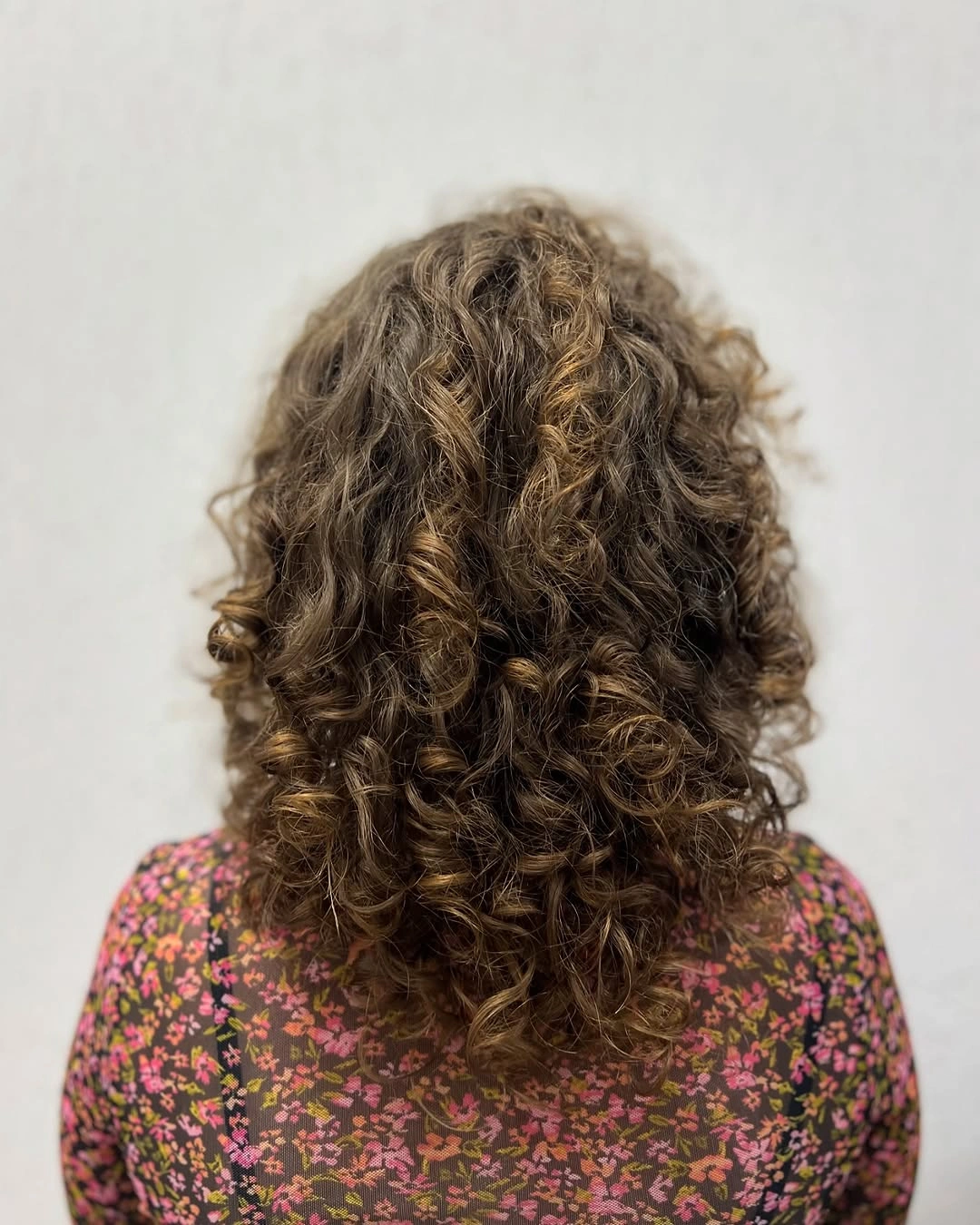
Photo via Instagram
The shape works through rounded volume rather than a sharp outline, so the eye follows curl groupings instead of a single bottom line. Several pieces drop lower through the center, while the sides hold more fullness and keep the silhouette balanced from left to right. That makes the haircut impression feel shoulder-skimming, even though the true edge is softened by the curls.
The practical takeaway is to judge the curl boundary before naming the cut. Here, the rounded mass and shoulder-level fall matter more than a strict perimeter.
Smooth Shoulder Lob With Turned Ends
From the back, the smooth brown hair sits around shoulder length, with lighter surface pieces visible across the upper and side sections. The lower ends curve outward, giving the cut a turned finish instead of a tucked one. It reads as a layered-looking lob or medium cut, but the image does not confirm the exact structure underneath the surface.
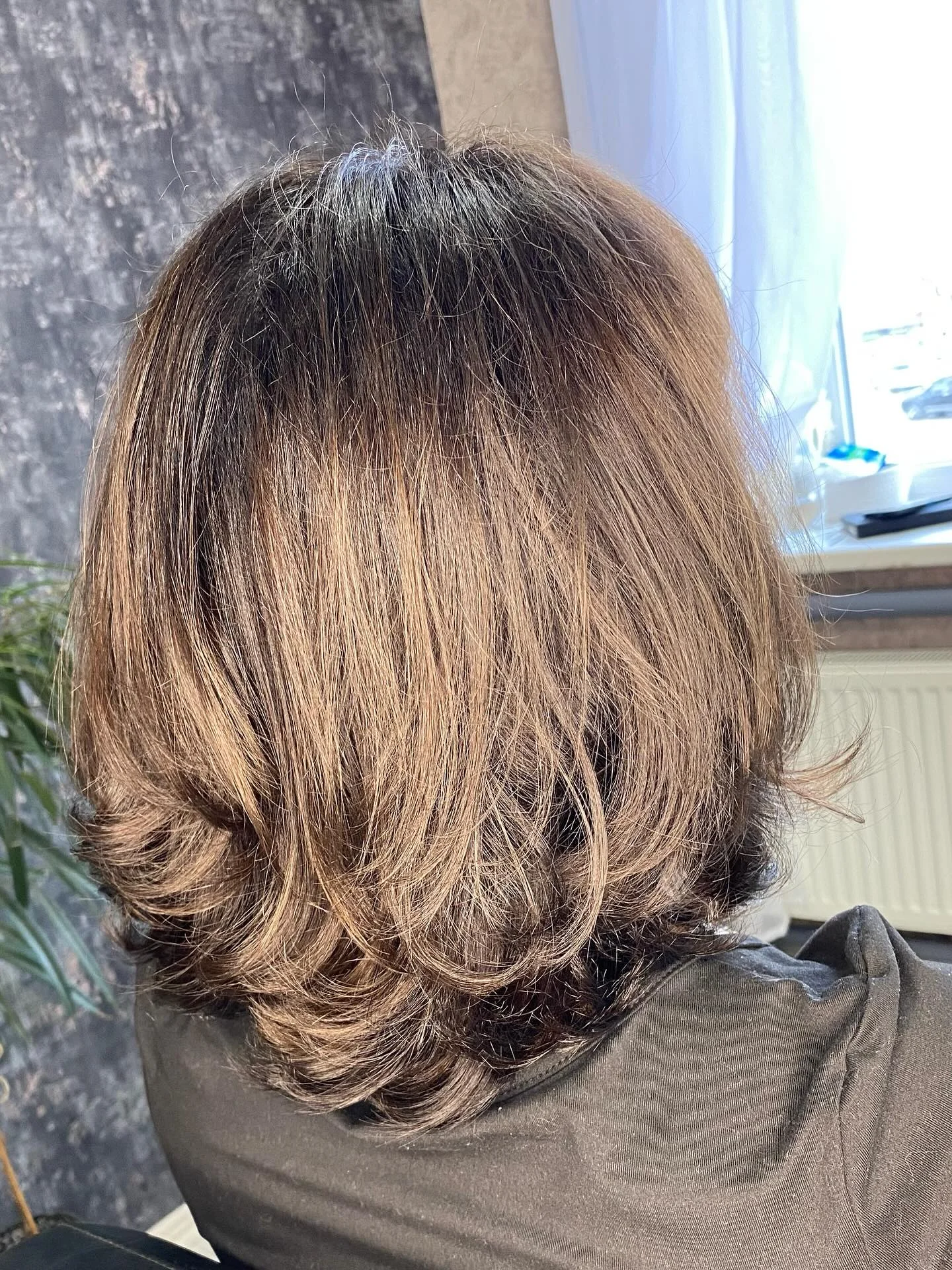
Photo via Instagram
The clearest contrast is between the controlled crown and the more active bottom edge. Through the middle, the hair falls in a smooth sheet, then the last section lifts away from the neck and changes the direction of the silhouette. That small outward curve gives the shape movement without making the overall length look loose or undefined.
The useful takeaway is to watch how the ends behave against the shoulder line. A smooth cut can look more directional when the lower edge turns outward.
Long Blonde Curls With Vertical Movement
From the back, the light-blonde curls fall well below the shoulders, with loose spiral texture separating into longer vertical pieces. The haircut itself is partly hidden because the curls overlap and blur the lower edge. What is visible is long length, airy spacing, and a soft outline that moves downward more than outward.
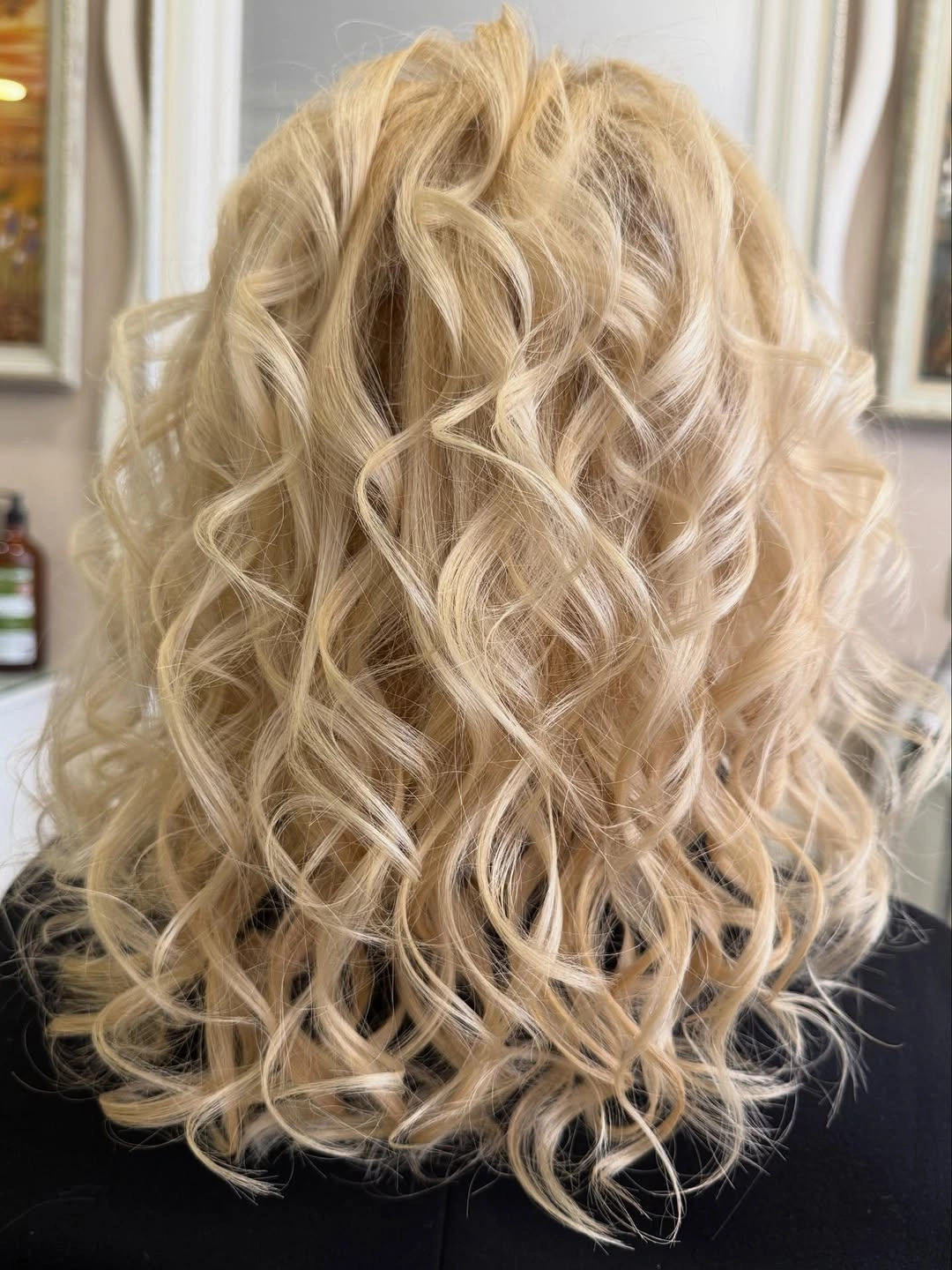
Photo via Instagram
This shape contrasts with shorter rounded bobs because the eye travels through the length before reaching the ends. The curls are not packed into one compact mass, and the gaps between them make the silhouette feel lighter through the lower half. Since the perimeter is softened by the spiral bends, the section should focus on movement and scale rather than a fixed cut name.
The practical takeaway is to separate long length from exact haircut certainty. In this view, the strongest evidence is vertical curl movement below the shoulders.
Burgundy Rounded Bob With Clean Nape
From the back, the burgundy bob forms a glossy rounded shape that finishes near the nape. The ends curve under in a clean line, making the perimeter easier to read than in the curled sections. Pageboy-inspired can work as a cautious visual reference, but the evidence most clearly supports a short rounded bob with a controlled lower curve.
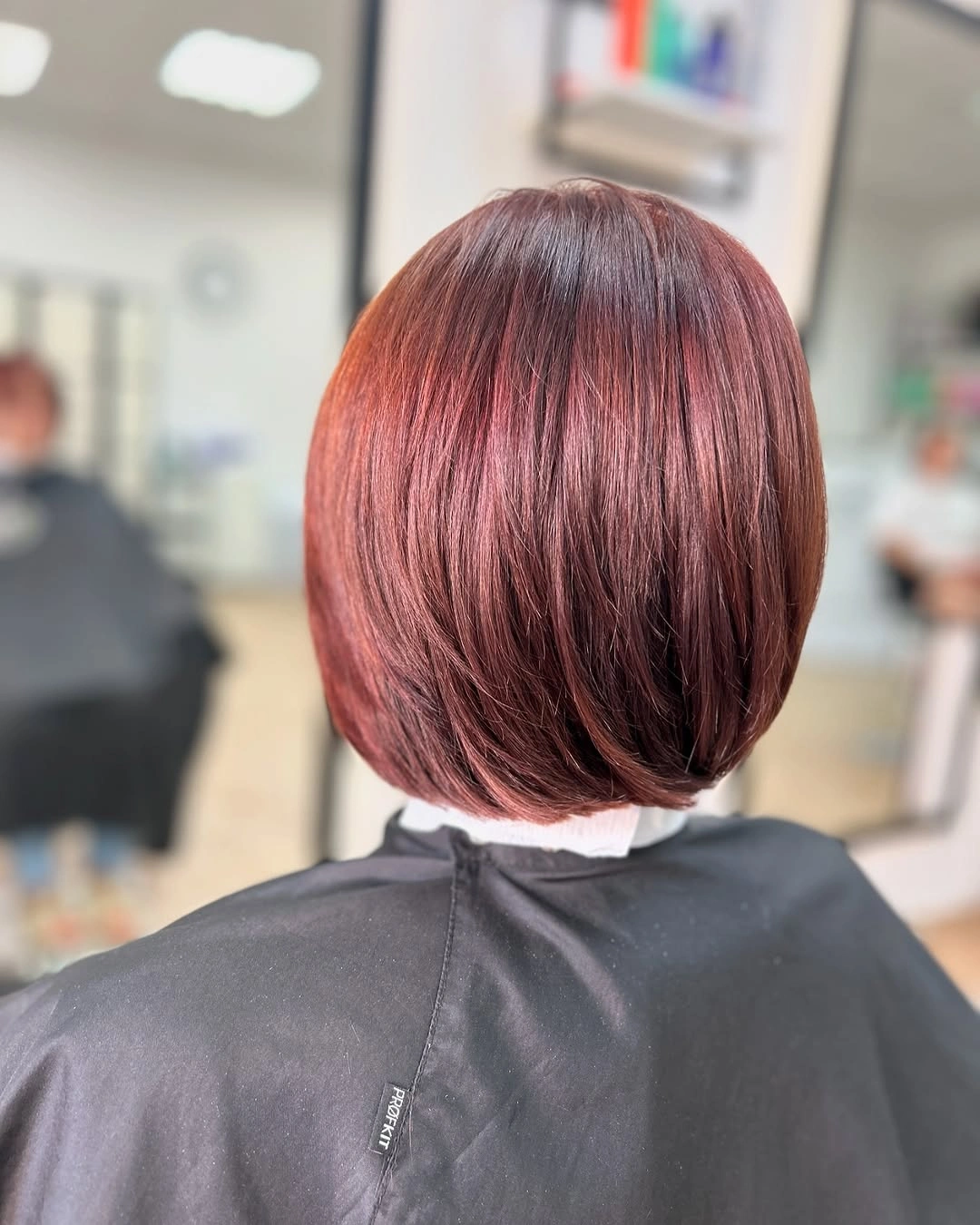
Photo via Instagram
The main relationship is surface against outline: the smooth finish makes the rounded back look continuous, while the tucked ends define the bottom boundary. The shape does not rely on visible front pieces or bangs from this angle. Instead, the nape-length curve carries the haircut impression and keeps the silhouette compact.
The useful takeaway is to look for the curve that closes the shape. Here, the clean nape line gives the bob its strongest visual structure.
Highlighted Short Bob With Tucked Ends
From the back, the highlighted short bob has a rounded body, tucked ends, and a soft pageboy-like perimeter. Lighter pieces move through the surface, but the exact cutting technique and density cannot be verified from this view. The visible evidence is a compact length, a controlled lower edge, and a curved shape that sits close to the neck.
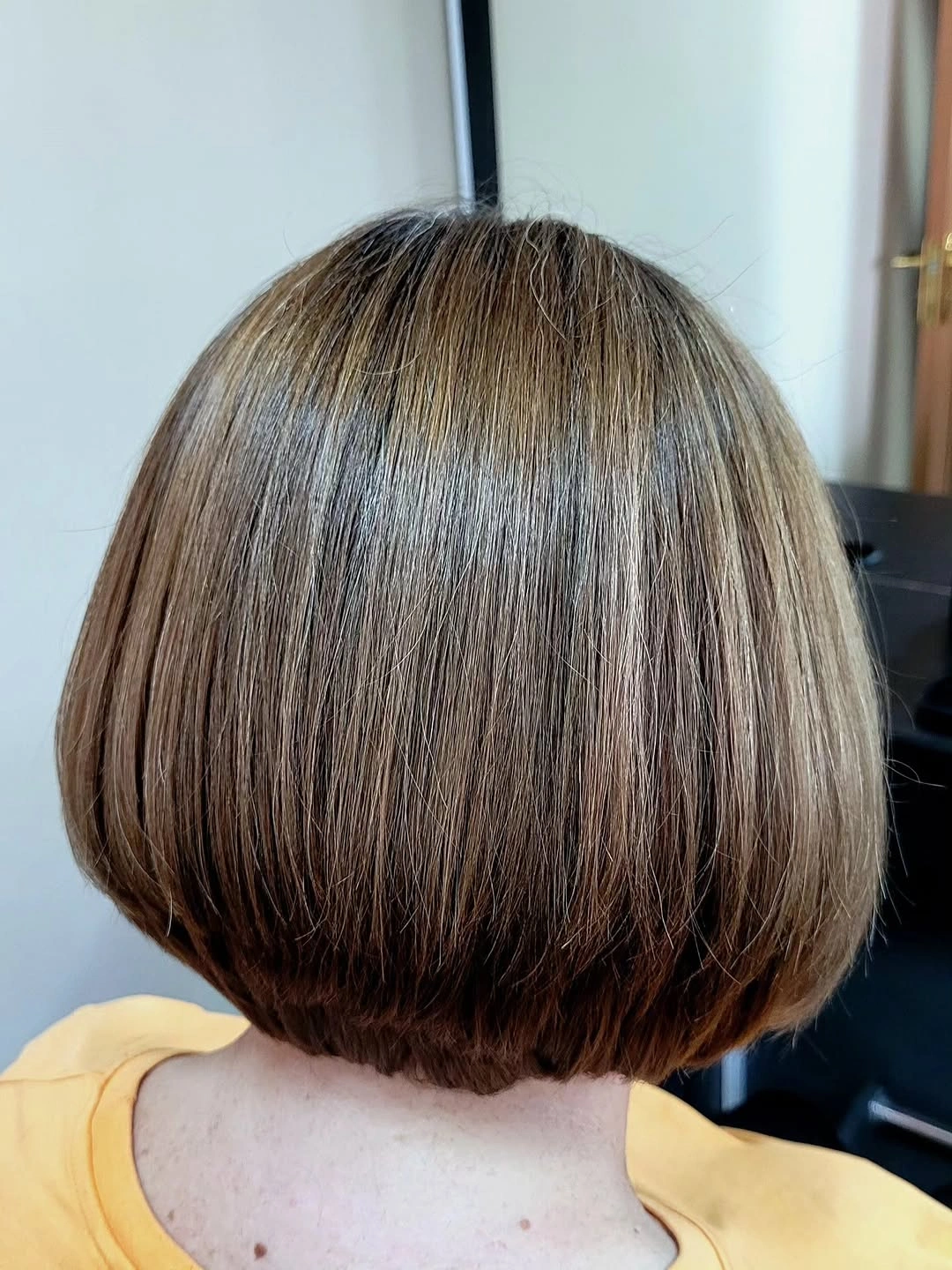
Photo via Instagram
The strongest contrast is between the neat blunt-looking edge and the softness of the rounded volume above it. The perimeter looks deliberate, yet the highlighted surface keeps the back from reading as one flat block. This gives the haircut impression a cleaner finish than loose curls, while still keeping a cushioned shape through the middle.
The practical takeaway is to compare edge and body together. A short rounded bob can look precise at the bottom while staying visibly soft through the back.
Side-Parted Short Waves With Curled Ends
From the front, the blonde short bob sits near the neck, with a side part sending more visual weight across one side. The ends curl upward and inward around the lower edge, so the shape does not read as a simple even block. The cut appears compact, but the waves make the outline feel lifted and slightly asymmetrical.

Photo via Instagram
The strongest relationship is between direction and length: one side sweeps away from the part, while the curled ends mark the lower boundary near the neck. Because the back is not visible, the nape shape should stay unconfirmed, yet the front view still shows how much movement can fit into a short outline. The result is less about blunt perimeter and more about curved placement.
The useful takeaway is to read the side part and end direction together. A short shape can look active when the lower curve and upper sweep point in different ways.
Straight Shoulder Cut With Flipped Ends
From the back, the light-blonde hair falls to around shoulder length in a straight, smooth sheet with a simple lower line. The ends turn outward slightly, especially near the sides, which keeps the perimeter from looking completely blunt. The visible evidence supports a medium or shoulder-length cut with a clean finish, not a complicated named shape.
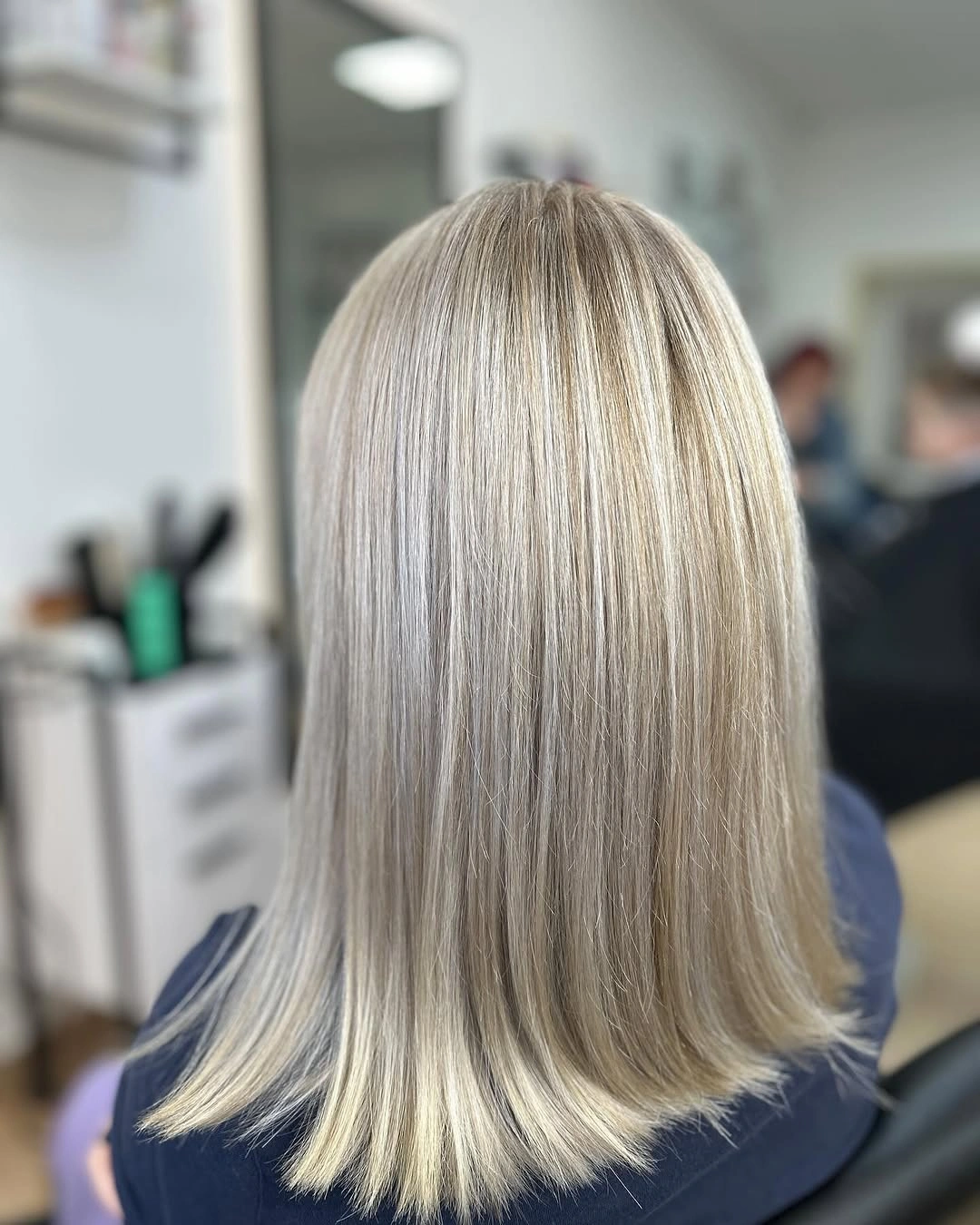
Photo via Instagram
This section should work as a calm contrast after the curl and wave examples, because the main impression comes from surface and line. The hair hangs almost vertically through the middle, then lifts just at the bottom edge where the ends flip away from the back. That small change gives the cut a readable direction while keeping the overall silhouette narrow.
The practical takeaway is to notice how little movement is needed to alter a straight cut. A slight flip can soften a shoulder line without hiding the length.
Rounded Blonde Pixie With Tapered Nape
From the back, the pale-blonde pixie has a rounded crown that narrows into a close, tapered nape. The rear silhouette is compact and clearly short, with the widest visual weight sitting above the occipital area rather than at the neckline. A hand is visible near one side, so the side shape should not be overread beyond the rounded outline that can be seen.
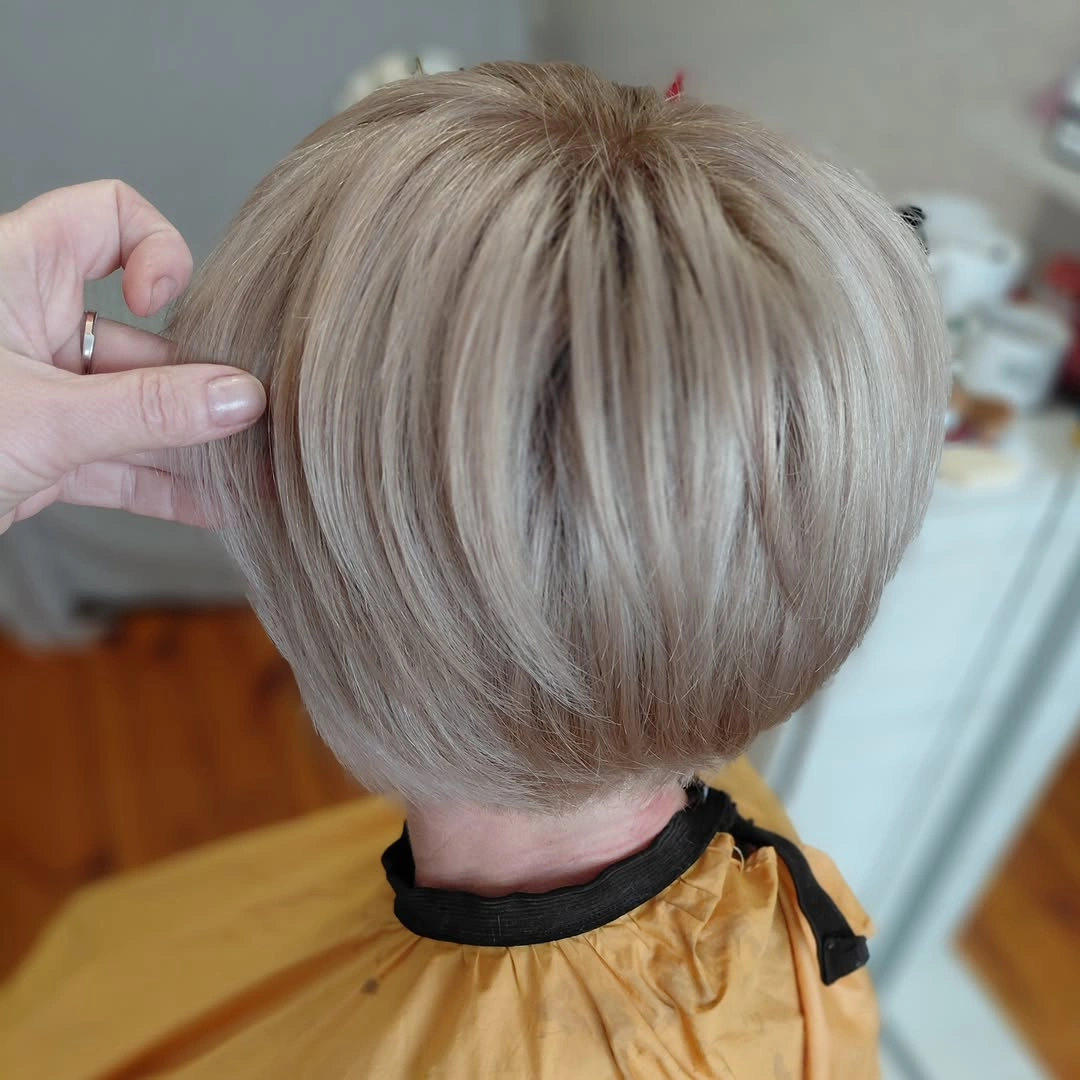
Photo via Instagram
The important contrast is between the soft dome through the crown and the cleaner narrowing at the bottom. That crown-to-nape relationship makes the haircut impression feel structured without relying on a long perimeter or face-framing front. It also separates this short shape from the rounded bobs, because the back tapers upward instead of tucking under at one lower edge.
The useful takeaway is to compare where short volume starts and where it stops. On this pixie, the crown carries the shape while the nape keeps it compact.
Smooth Taupe Bob With Rounded Ends
From the back, the taupe-beige bob forms a smooth curtain that curves under at the lower edge. The perimeter sits in a controlled rounded line, with very little visible separation through the ends. Exact layering is not clear from this angle, so the most reliable reading is a sleek bob with a soft tuck and an even, polished surface.
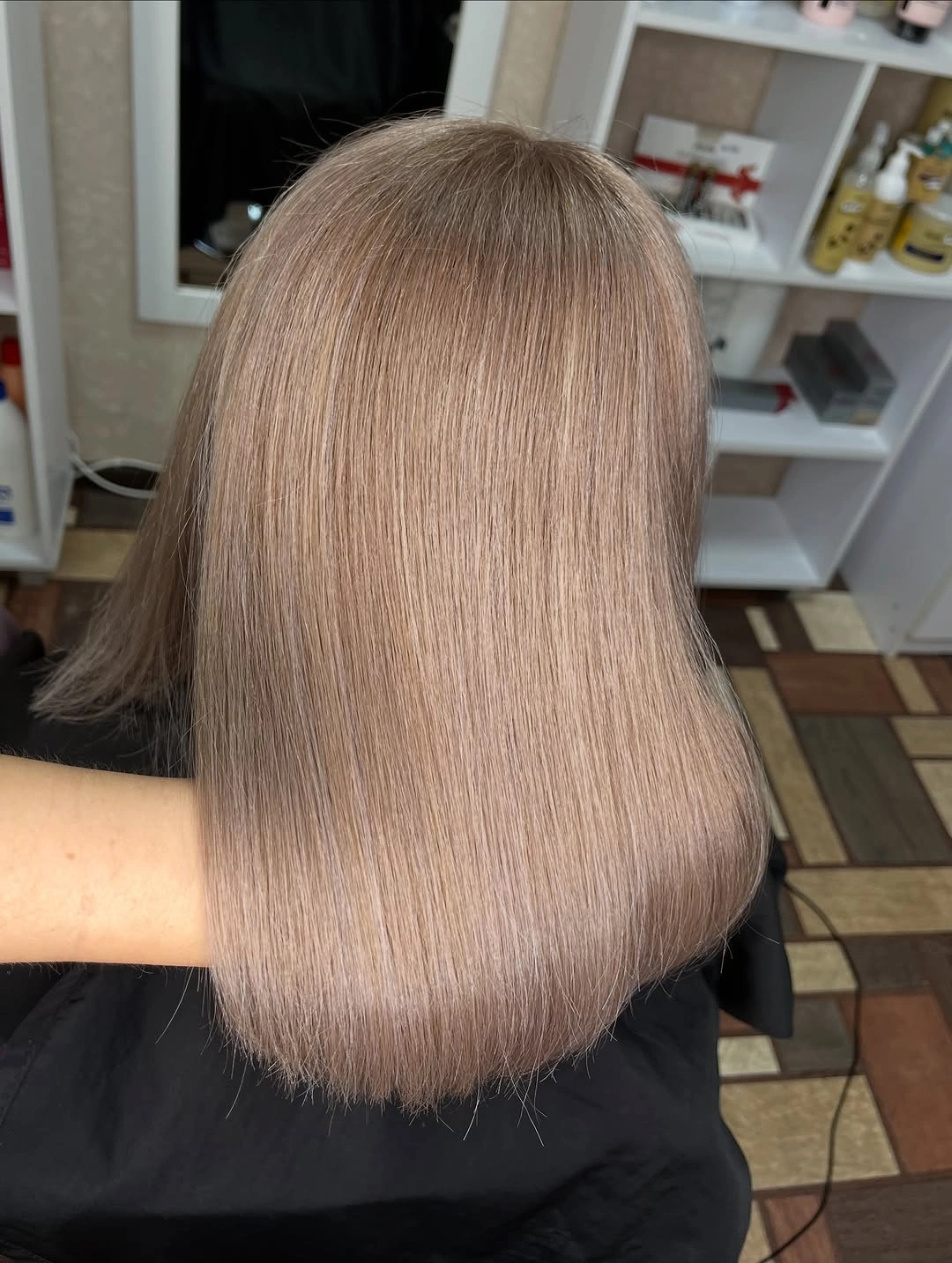
Photo via Instagram
The visual interest is quiet rather than dramatic, built from the way the color and shape make the bottom line easy to follow. Unlike the flipped shoulder cut, this bob turns inward and keeps the outline close to the neck. That inward curve gives the haircut impression a contained finish, even though the front and side details remain mostly unseen.
The takeaway is to judge this bob by its controlled bottom edge. A smooth surface can make a simple rounded perimeter feel very defined.
Long Auburn Waves With Soft Shape
From the back, the auburn-brown hair falls well below the shoulders, with loose waves creating fuller movement through the lower half. The exact cut is partly hidden because the bends overlap and soften the edge. What can be seen clearly is long length, warm color variation, and a shape that expands gently instead of ending in a hard line.
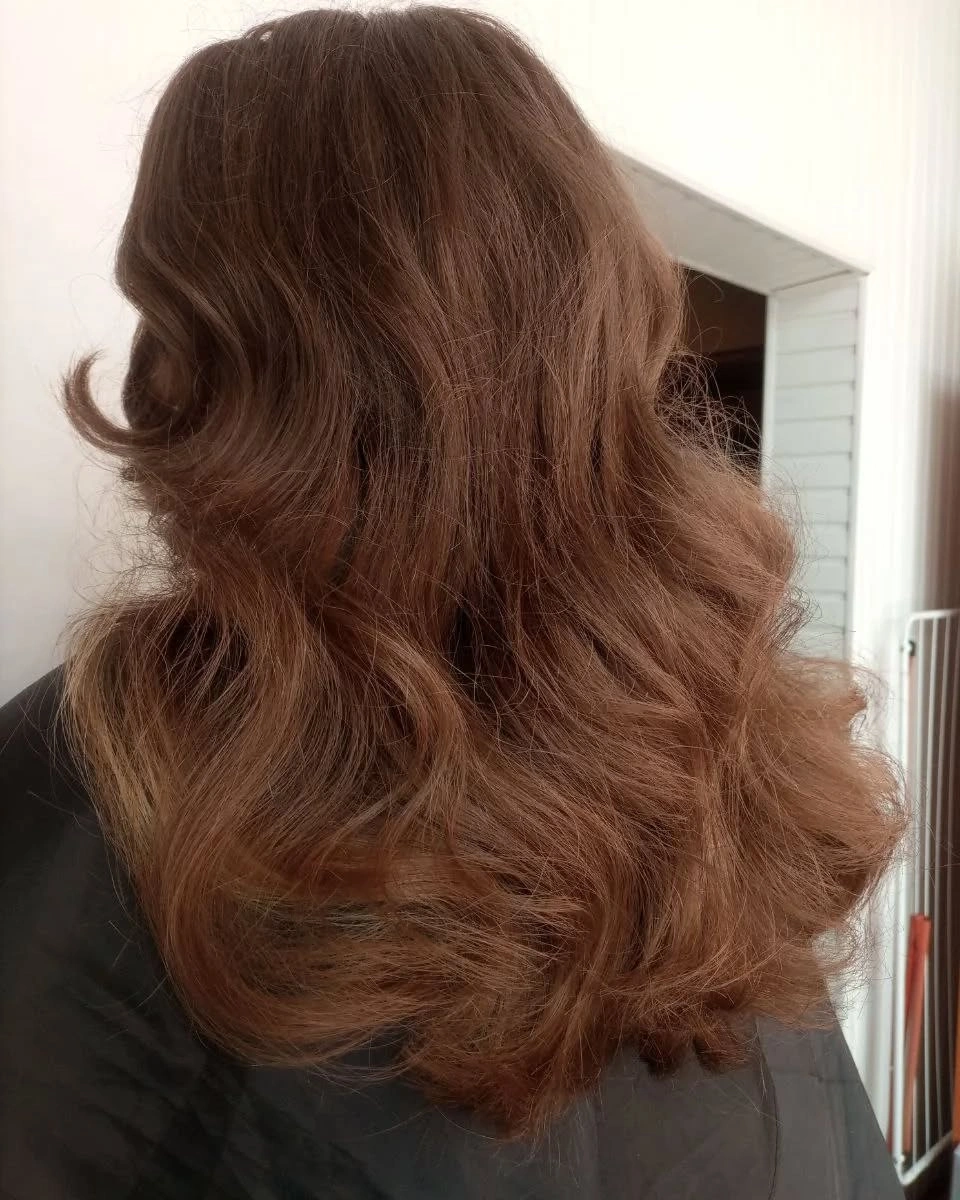
Photo via Instagram
This look gives the set an important long-hair contrast against the compact bobs and the pale pixie. The upper section stays closer to the head, while the lower waves open outward and make the ends appear broader and softer. That relationship shifts attention away from a precise perimeter and toward flow, bend, and the weight of the length.
The practical takeaway is to avoid forcing a sharp cut name when waves obscure the edge. Here, the visible story is long movement and a soft lower outline.
Honey Blonde Short Cut With Side Fringe
From the side, the honey-blonde short cut shows a rounded upper shape, a neat nape, and fringe that falls forward across the forehead area. The length stays close to the head and neck rather than dropping into a bob line. Because the back and full front are not both visible, the safest description is a short crop or pixie-bob impression, not a fixed cut name.

Photo via Instagram
The profile view makes the balance easy to read: the fringe creates forward direction, while the back stays compact and softly curved. The lower edge does not form a heavy block, so the shape feels lighter than a tucked-under bob. This contrast between a small nape and a visible side fringe gives the cut its main structure from the angle shown.
The practical takeaway is to read the fringe as part of the outline, not as a separate detail. Here, the side view works because the front movement and close nape answer each other.
Angled Blonde Bob With Longer Front Pieces
From the side, the blonde bob clearly moves from a shorter rounded back toward longer front pieces. The nape sits higher and closer, while the side length drops forward with a slanted line. Some pieces look softly layered, but the image supports only a layered-looking surface, not a confirmed cutting technique.
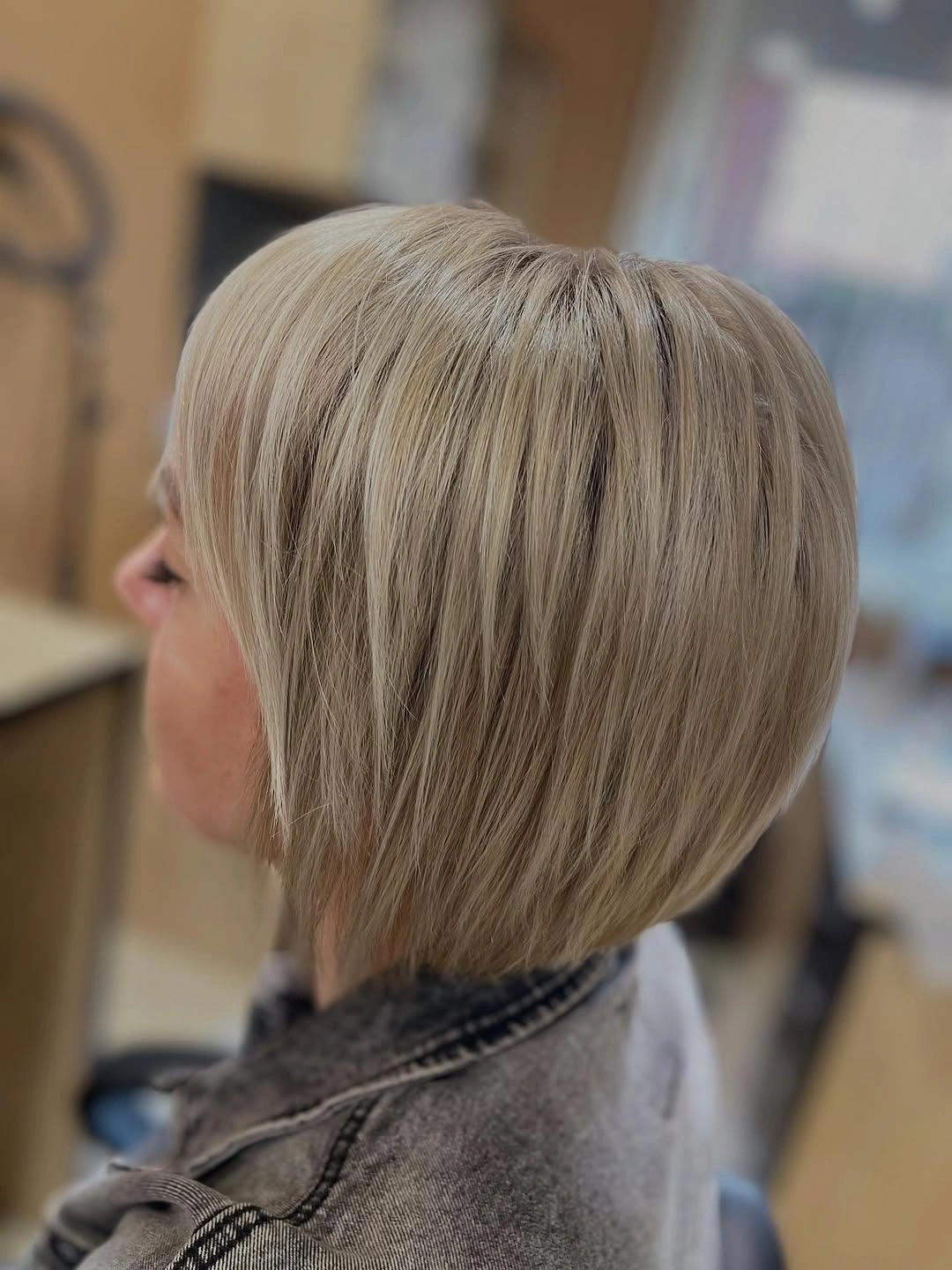
Photo via Instagram
The most important relationship is the nape-to-front angle, because it gives the bob visible direction instead of a simple even perimeter. The back keeps the shape compact, while the front edge appears to extend and frame the profile area. That forward movement separates it from the rounder bobs that rely mainly on a tucked lower curve.
The useful takeaway is to follow the side line from back to front. A bob can look sharper or softer depending on how visibly the front length pulls away from the nape.
Feathered Blonde Bob With Forward Movement
From the angled view, the light-blonde bob sits around short-to-medium length, with lower ends that look feathered and slightly separated. The front line is partly hidden, so the exact perimeter cannot be fully confirmed. What is visible is a soft surface, forward movement near the side, and an edge that looks lighter than a clean blunt bob.
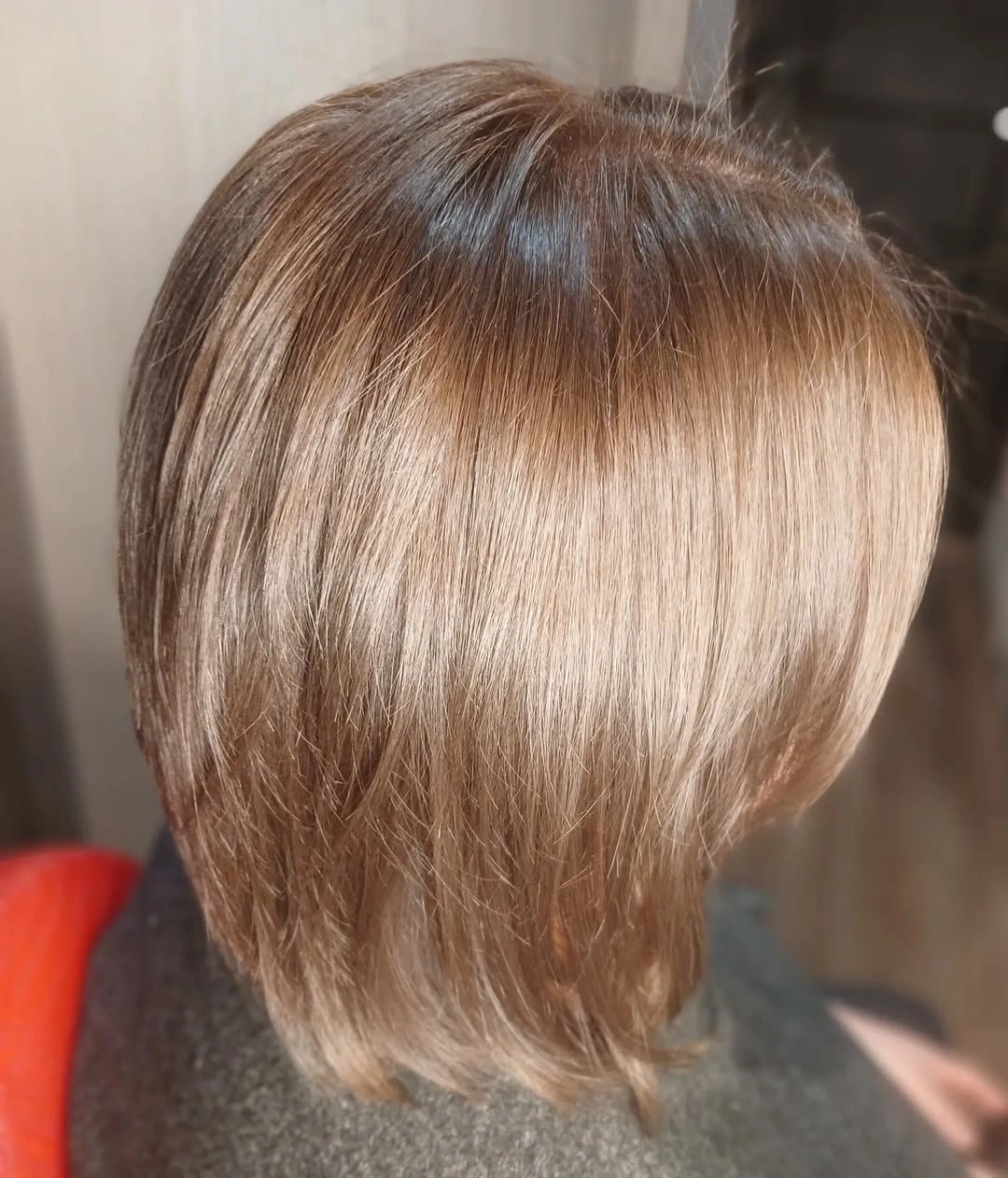
Photo via Instagram
This shape differs from the smoother rounded bobs because the lower section breaks into finer pieces instead of forming one continuous curve. The side appears to move forward, while the back keeps enough roundness to hold the haircut together. That combination makes the outline feel active without needing a dramatic length change.
The practical takeaway is to notice how edge texture changes the reading of a bob. Softer, feathered-looking ends can make a compact shape feel less solid and more directional.
Long Straight Cut With Curved Side Pieces
From the back, the light-brown hair falls long and straight, with a simple lower line that sits below the shoulders. The surface looks smooth through the center, and the sides show subtle curved pieces near the outer edges. Any face-framing shape is only partly visible, so the strongest evidence is length, straight fall, and a controlled bottom line.
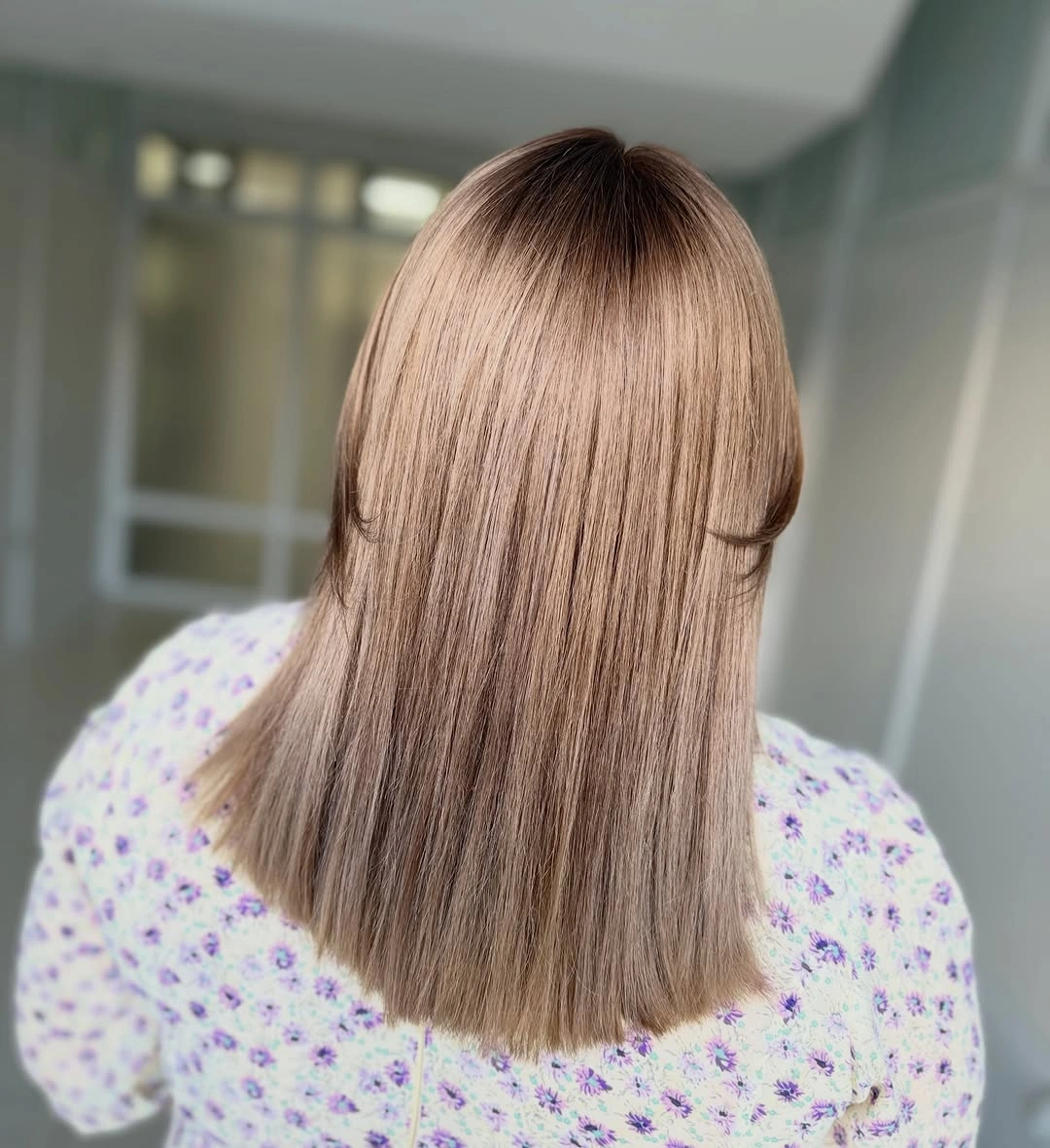
Photo via Instagram
The visual contrast here is restraint: there is far less bend than in the curled and wavy sections, so the eye follows the vertical drop of the hair. The curved side pieces add a small directional detail without interrupting the long straight shape. This makes the haircut impression cleaner and quieter than the shorter angled bobs.
The useful takeaway is to judge long hair by line as well as length. A simple straight fall can still have visible structure when the sides curve gently.
Copper Short Cut With Rounded Back
From the side-back angle, the copper short cut shows a rounded back, a close tapered nape, and piecey movement across the surface. The silhouette is compact, with most of the visible volume sitting above the neckline. It clearly reads as short and layered-looking, but the image does not confirm a specific salon method.
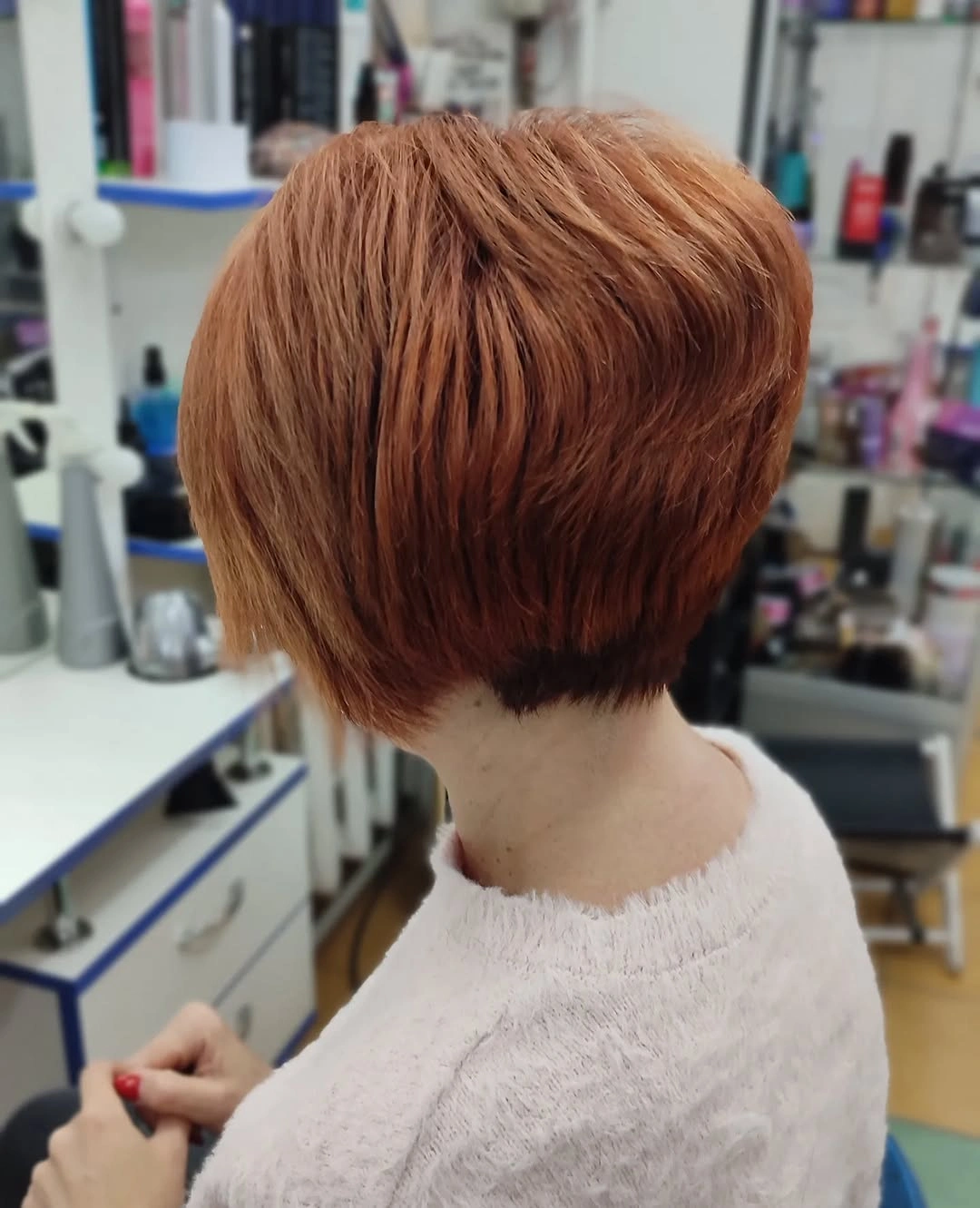
Photo via Instagram
The main relationship is lift against closeness: the back expands outward through the middle, then narrows quickly at the nape. The piecey surface sends the eye in several directions, which keeps the cut from looking like a single smooth cap. That directional texture gives the short shape movement while the neckline keeps the outline controlled.
The practical takeaway is to compare volume placement with the nape line. In this cut, the rounded back creates presence, while the close bottom keeps the silhouette compact.
Pinned Wavy Updo With Soft Front Pieces
In the side view, the blonde hair is gathered into a pinned wavy shape, with soft front pieces left loose near the face and a clip visible at the side. The haircut itself is mostly hidden, so this section should not treat the updo as a cut. What can be judged is the visible distribution of volume, the curved front softness, and the way the gathered hair rises away from the neck.
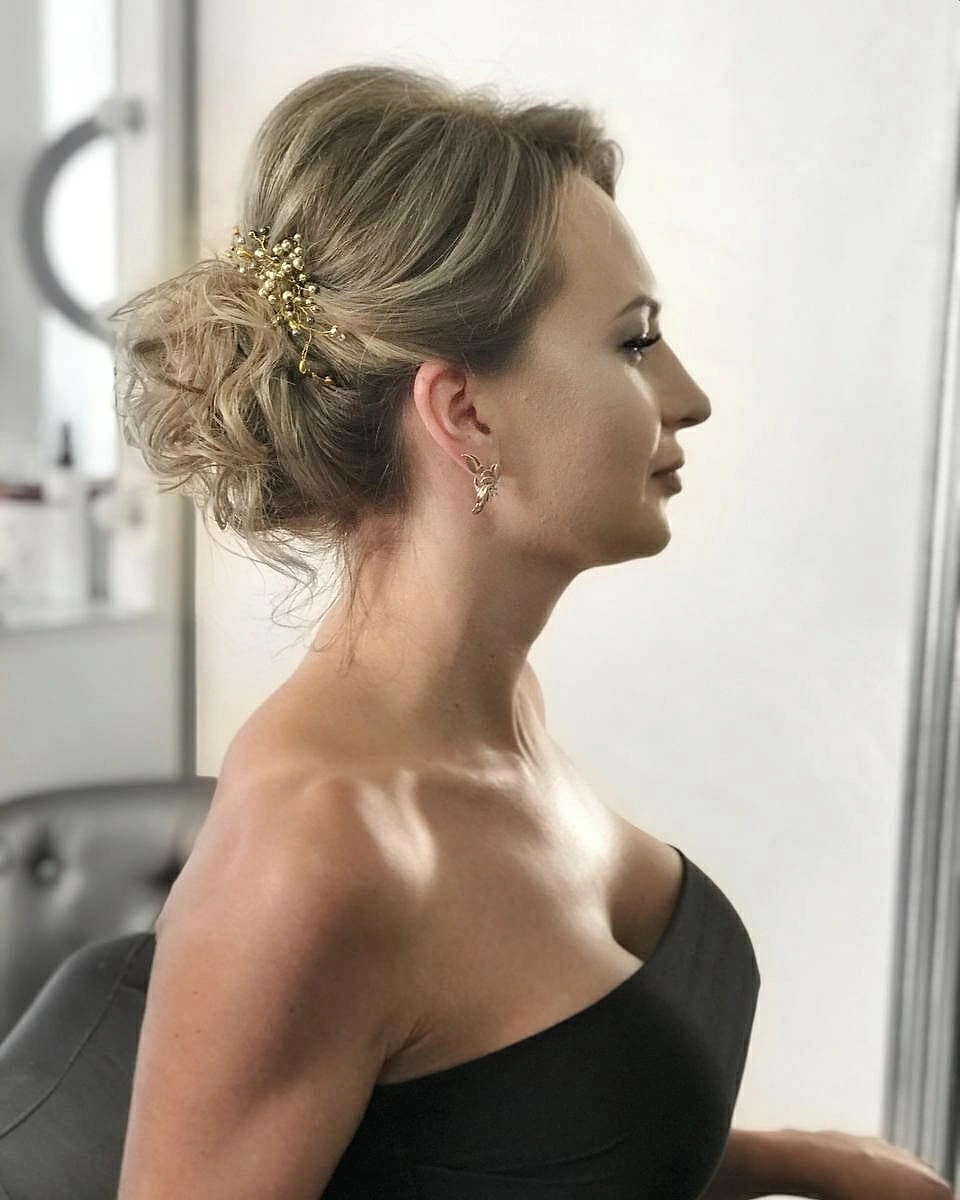
Photo via Instagram
The main contrast is between the lifted back shape and the finer pieces near the front. The gathered portion creates height and compactness, while the loose strands soften the edge around the face without revealing a clear perimeter. This makes the section useful for discussing styling shape only, especially where length is suggested but not fully measurable.
The practical takeaway is to separate hairstyle evidence from haircut evidence. Here, the visible value is gathered volume, front softness, and the clip placement.
Black Bob With Long Side Bangs
From the front, the black bob sits close around the jaw and neck, with long side bangs sweeping across one side of the face. The surface appears smooth, and the lower length looks compact rather than shoulder-skimming. Because the back is not visible, the safest reading stays with the front outline, the side-swept fringe, and the close neckline.

Photo via Instagram
The strongest visual relationship is between the dark, controlled mass of the bob and the diagonal movement of the bangs. The fringe interrupts the rounded shape by pulling attention across the forehead area, while the lower edge keeps the haircut impression short. That balance makes the front view feel graphic without needing to guess how the nape is shaped.
The useful takeaway is to read bangs as direction, not decoration alone. A compact bob changes noticeably when the longest front piece moves across the face.
Shoulder-Length Waves With Twisted Detail
From the back, the highlighted hair falls around shoulder length, with loose waves spread through the lower section and a small twisted or pinned detail near the crown. The cut appears medium length, but the gathered upper section hides part of the structure. The most reliable evidence is the wavy fall, the highlighted surface, and the way the crown detail changes the outline.
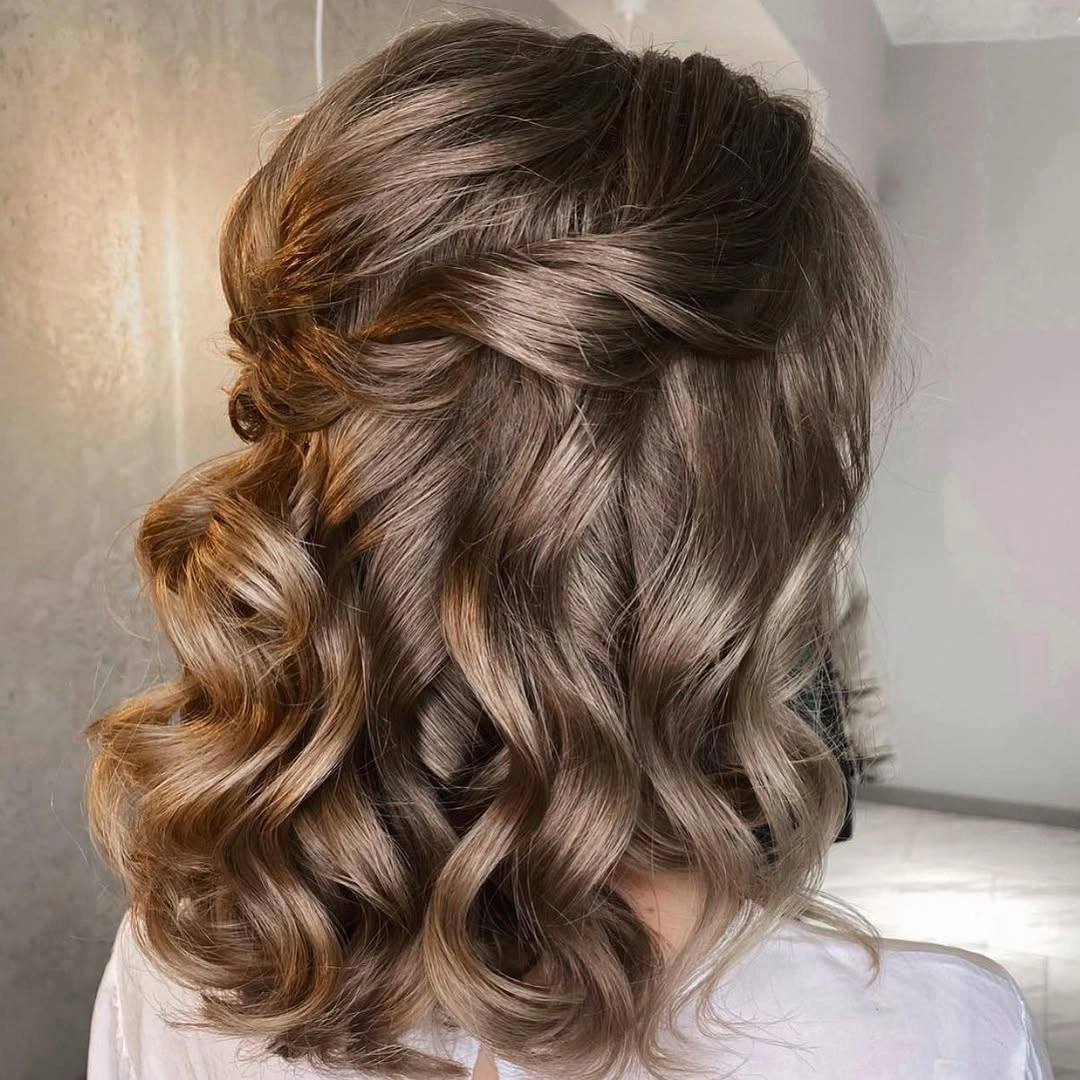
Photo via Instagram
The waves give the lower half a soft, broken edge instead of a straight perimeter, while the upper twist draws attention upward. This creates two visible zones: controlled gathering near the crown and looser movement through the ends. The haircut cannot be named with certainty, but the styling shape shows how medium length can look more dimensional from the back.
The practical takeaway is to compare the crown detail with the lower waves. The gathered top changes the reading of the length without proving a specific cut.
Side-Swept Curls With Medium-Long Length
From the front, the brown curls are swept strongly to one side, with visible length falling near or past the shoulder. The haircut is not fully readable because the curl placement and side direction cover much of the perimeter. What can be described with confidence is the asymmetrical sweep, the open neckline on one side, and the medium-to-long effect.
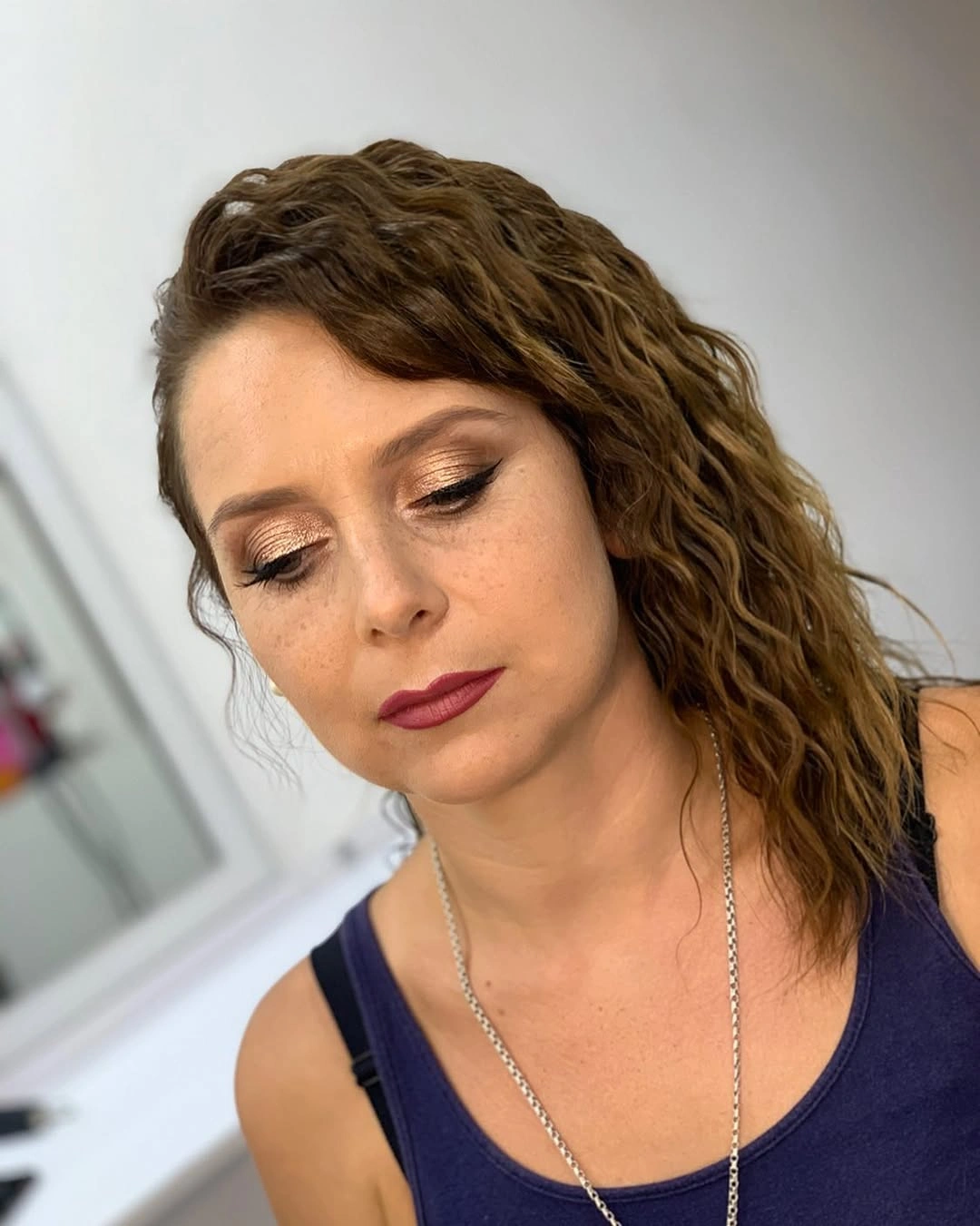
Photo via Instagram
The shape works through imbalance in a controlled way: one side carries more curl volume, while the other side appears more open. That side sweep makes the length feel directional rather than evenly distributed across both shoulders. Since the ends are partly hidden inside the curls, the section should focus on balance, curve, and visible placement instead of a fixed haircut label.
The useful takeaway is to follow where the curl mass sits. In this view, direction matters more than a precise perimeter or named cut.
Silver Pixie With Long Sweeping Bangs
From the top-front view, the short silver pixie shows long sweeping bangs crossing the forehead area and layered-looking texture through the crown. The shape is clearly compact, but the side and nape are partly hidden by the angle. The safest reading is a cropped cut with a strong fringe direction and a light, separated surface on top.
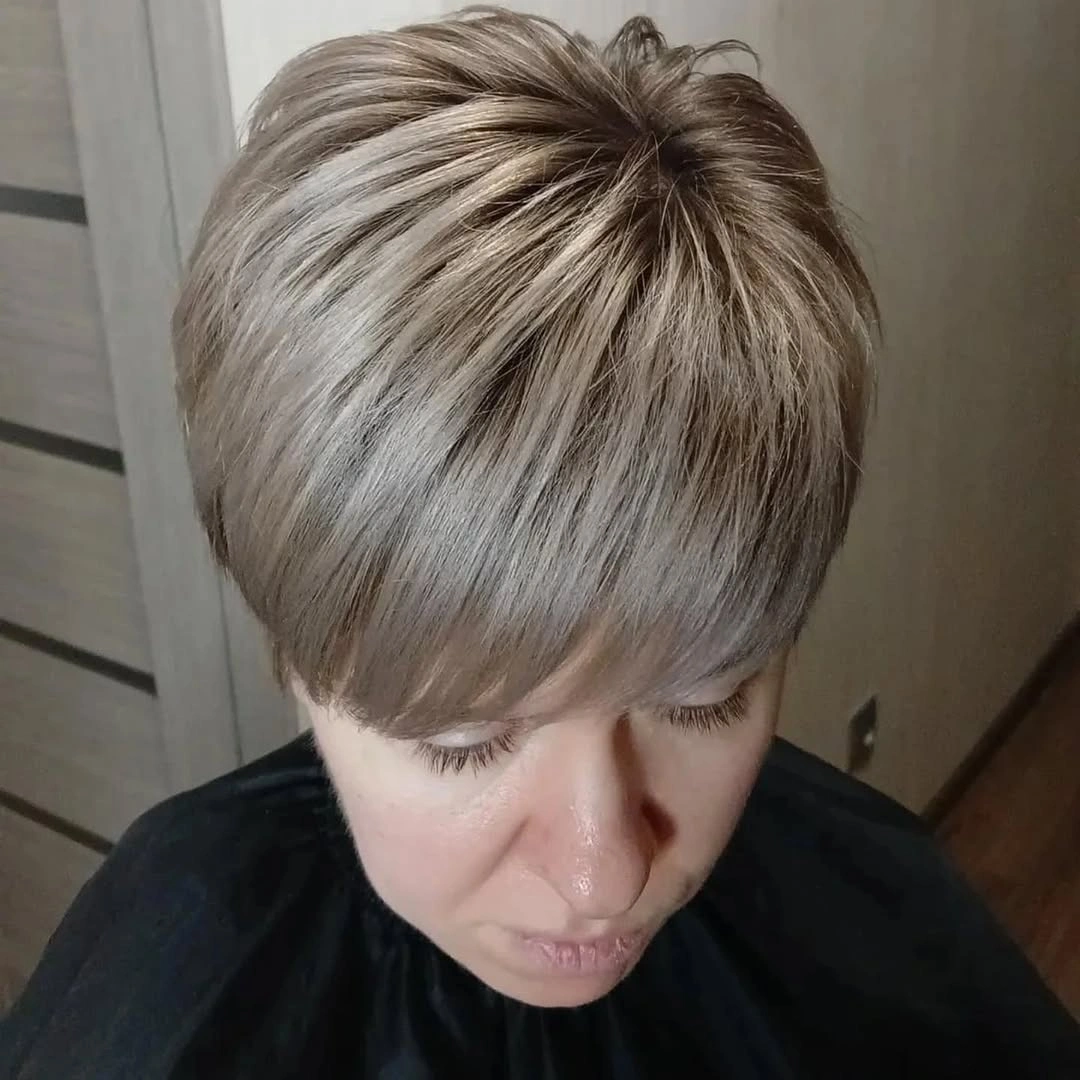
Photo via Instagram
The visual force comes from scale: a small haircut shape paired with a longer bang that cuts across it. The silver color makes the crown texture and curved fringe line easier to see, while the close length keeps the outline graphic. Compared with the longer waves and rounded bobs, this final shape depends on precision, direction, and contrast within very little length.
The final takeaway is to judge a pixie by the movement inside the short space. Here, the compact silver shape closes on a precise, light, graphic silhouette.