

Curly hair has moved past the era of being tamed into submission. The shift is toward cuts and color that work with your natural texture, not against it, with soft face-framing layers and lived-in tones taking center stage.
This collection of 31 Trendy Curly Hair Hairstyles covers the full spectrum, from air-dried pixies to polished blowouts and everything in between. Whether your struggle is fine curl that loses shape by midday or a heavy fringe that refuses to sit, you will find a practical option here that matches your density, length, and upkeep preference.
Voluminous Long Shag With Curtain Bangs
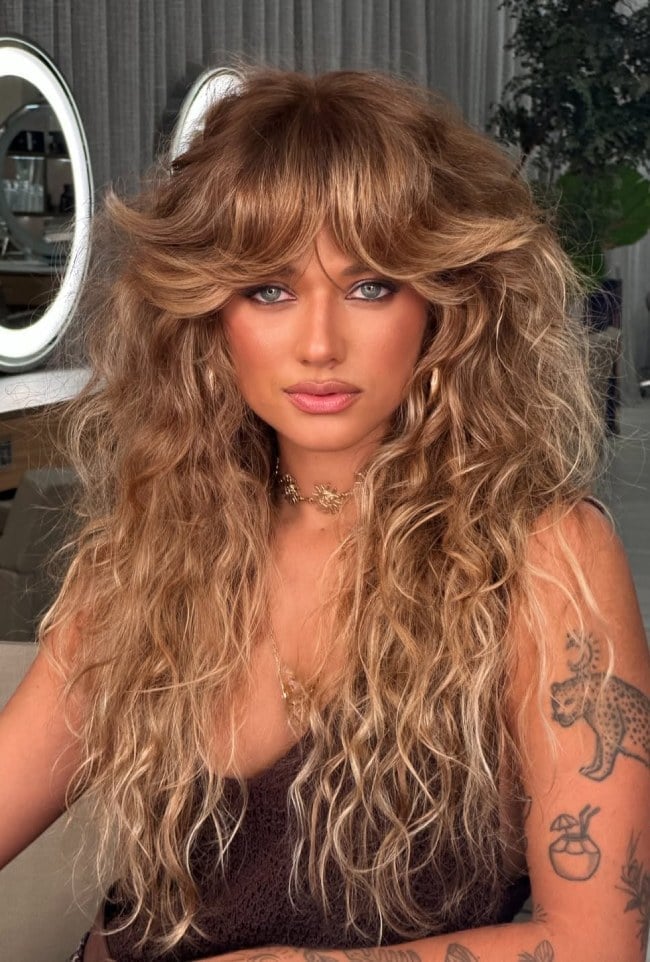
A long shag with curtain bangs has plenty of layers, but the overall shape stays soft rather than jagged. The blonde base with brown lowlights creates a lived-in effect that stops the cut from looking too deliberate. This style works best on thick, wavy hair that starts at shoulder length or longer. The curtain bangs soften a round or square face without shortening the silhouette. Ask your stylist for a long shag haircut with voluminous curtain bangs. Blow-dry the fringe away from your face with a round brush, then add a light texturizing spray to the waves. The layers provide the hold from the cut itself, not product.
This look requires a salon visit to get right, but once the shape is there, a touch-up every eight weeks keeps the layers from growing out. The blowout gives it polish; the lowlights add depth so it does not read as one flat shade. It is not a set-it-and-forget-it cut, but the styling time stays under fifteen minutes once you know the blow-dry pattern.
Mid-Back Layered Curls With Honey Highlights
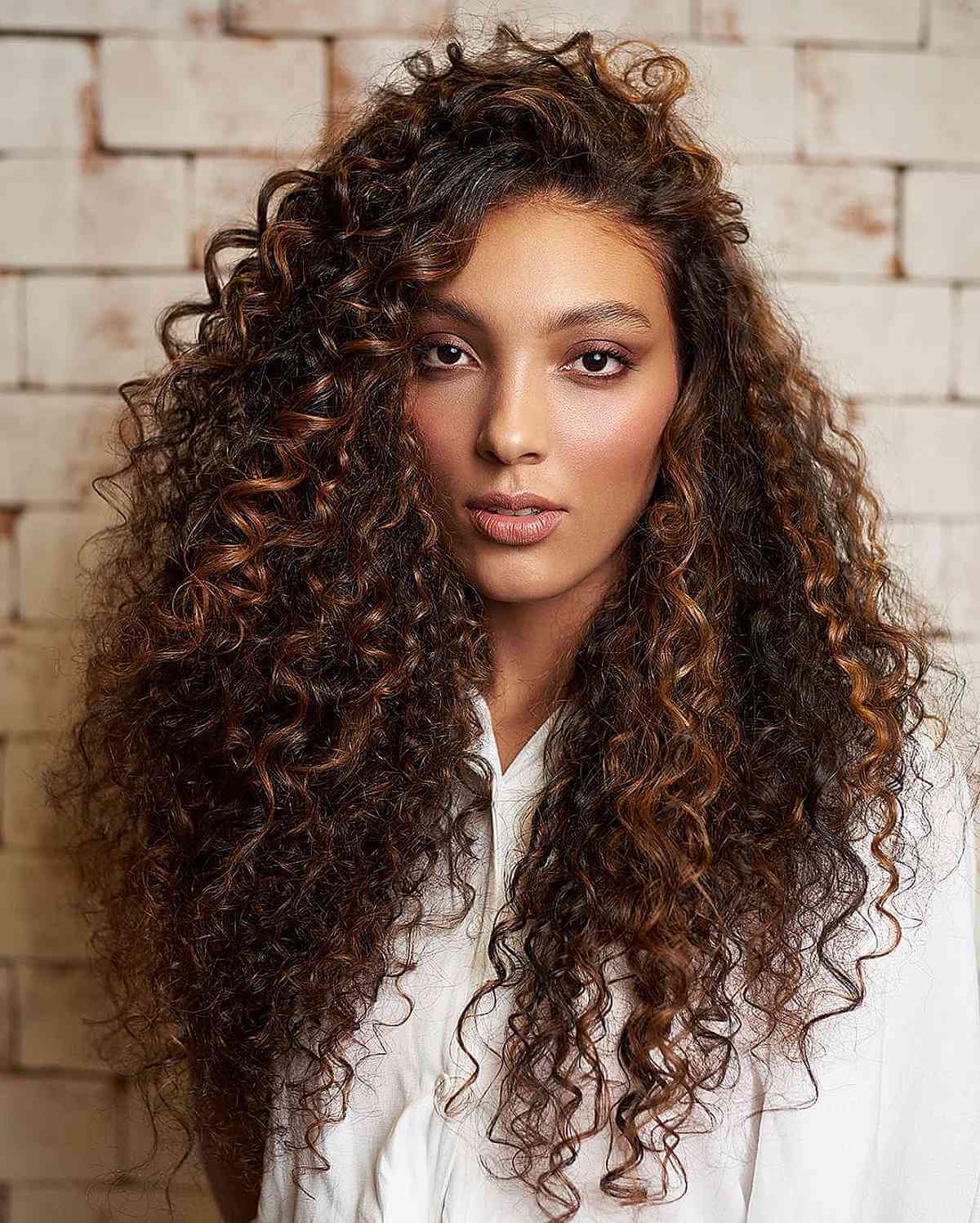
Honey and caramel highlights on a dark brown base create a sun-kissed effect that shifts in different light. The layers run through the mid-back length, cutting weight from thick curls so they move rather than sit in a solid block. Ask your colorist for mid-back length layers with honey and caramel highlights. The tone placement matters: lighter pieces near the face and crown keep the color from looking uniform. Apply a curl cream to wet hair and allow it to air dry for defined, glossy curls. The hold comes from the cream and the natural curl pattern, not heat styling.
A toning appointment every ten to twelve weeks stops the highlights from turning brassy. The cut itself needs a trim every eight weeks to keep the layers from losing their shape. This is a salon color, not something to attempt at home. The blending between the three tones is the whole point.
Short Dark Brown Curly Bob
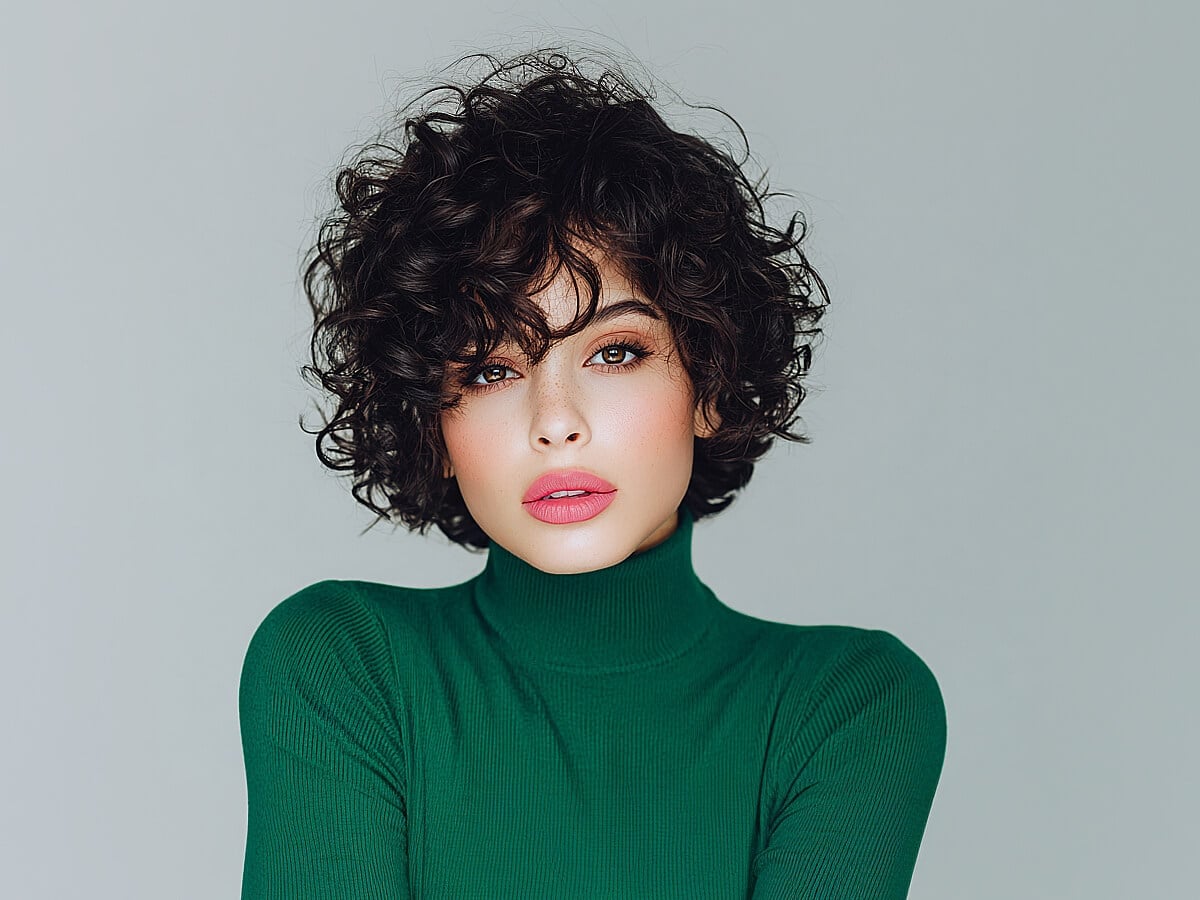
A short curly bob sits between a pixie and a lob, but it does not try to be either. The ear-length cut keeps dense curls compact and easy to manage. Ask your stylist for a short, ear-length curly bob, no bangs. Air dry with a curl-enhancing mousse for definition, no heat required. Dark brown curls at this length can look heavier than they are, so a trim every six weeks keeps the bob shape clean. This is a DIY-friendly length, but the curl pattern needs regular shaping to avoid a helmet-like silhouette.
Shoulder Length Curly Cut With Curtain Bangs
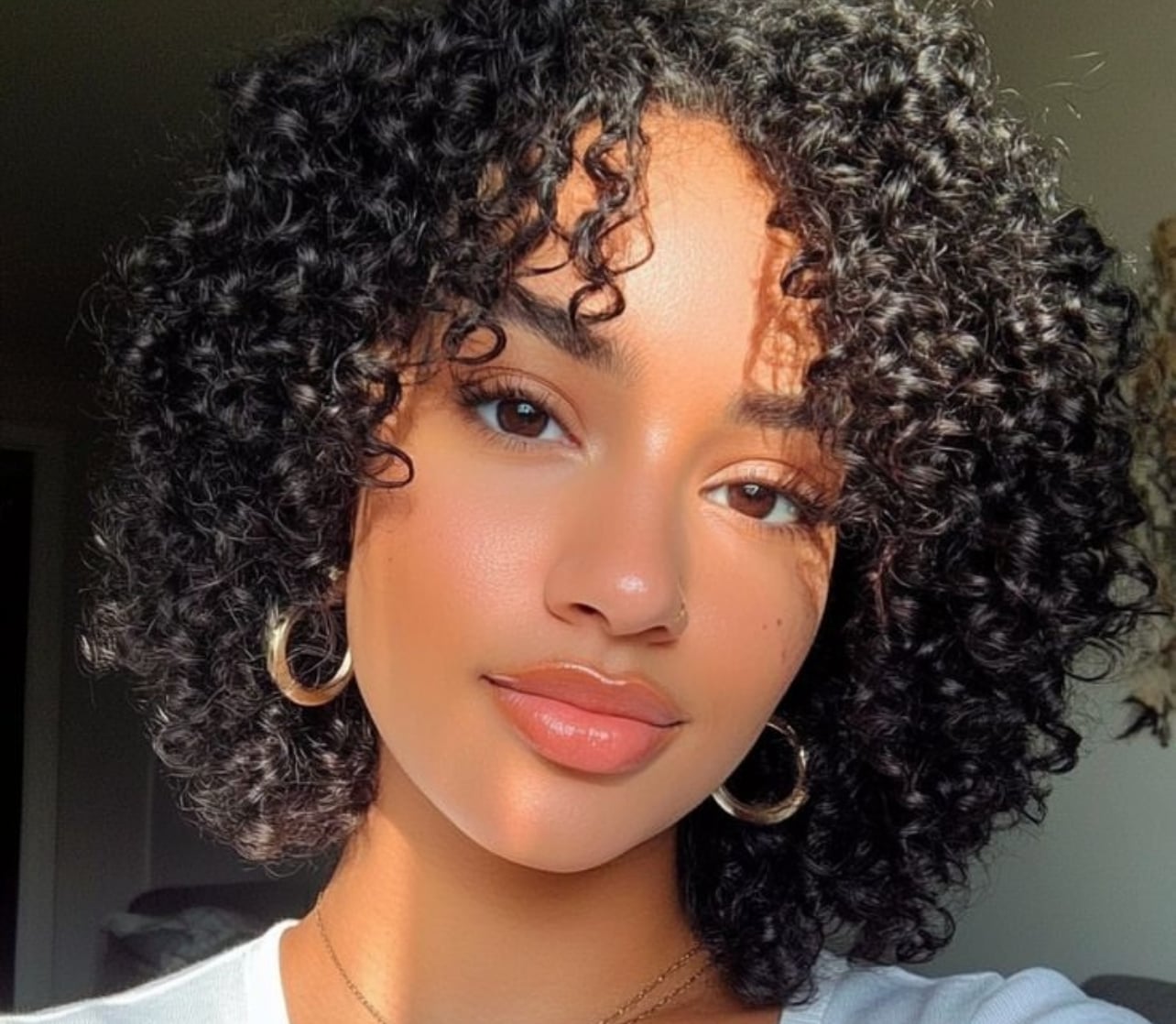
Ask your stylist for a shoulder length cut with curtain bangs, natural curls. The layers should start below the ear so the bangs have weight to connect to. This cut works on thick, curly hair because the density keeps the bangs from looking sparse. Use a leave-in conditioner to enhance curl definition when air drying. The middle parting and the bangs soften the overall shape, making it a solid everyday option. No heat styling needed, and the hold is just the curl pattern with a little product.
Textured Pixie Cut With Side Bangs
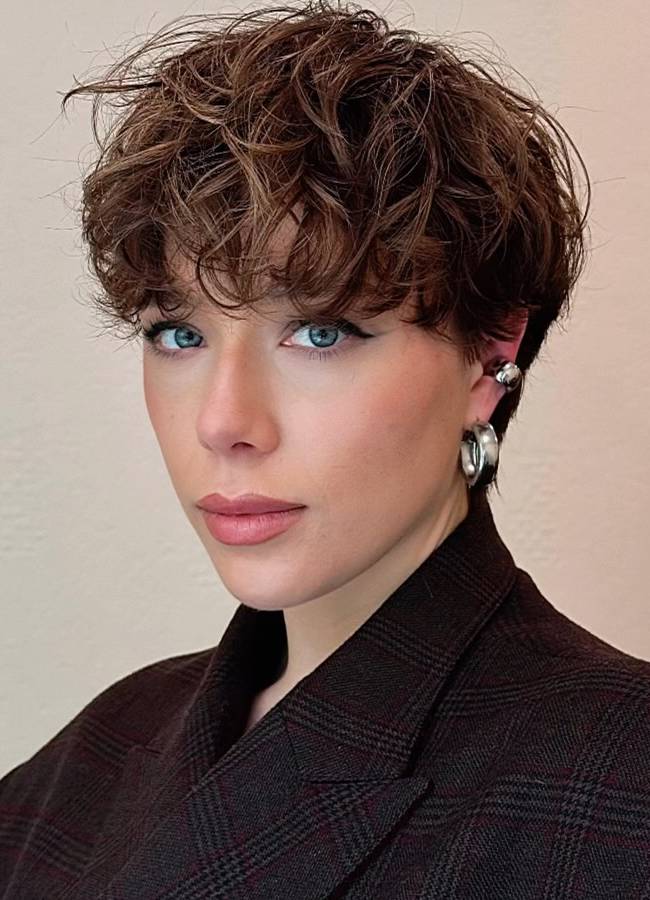
A textured pixie on thick curly hair is not a low-maintenance choice, but the payoff is a shape that does not need daily restyling. The dark brown base with lighter brown highlights adds dimension to the short length. Ask your stylist for a short curly pixie with side-swept bangs. Use a small amount of pomade to define the curls and bangs each morning. The side parting helps the bangs lie flat. Regular trims every four to six weeks are required. A pixie grows out fast, and the texture gets lost without a clean edge.
Chin Length Shag With Curly Bangs
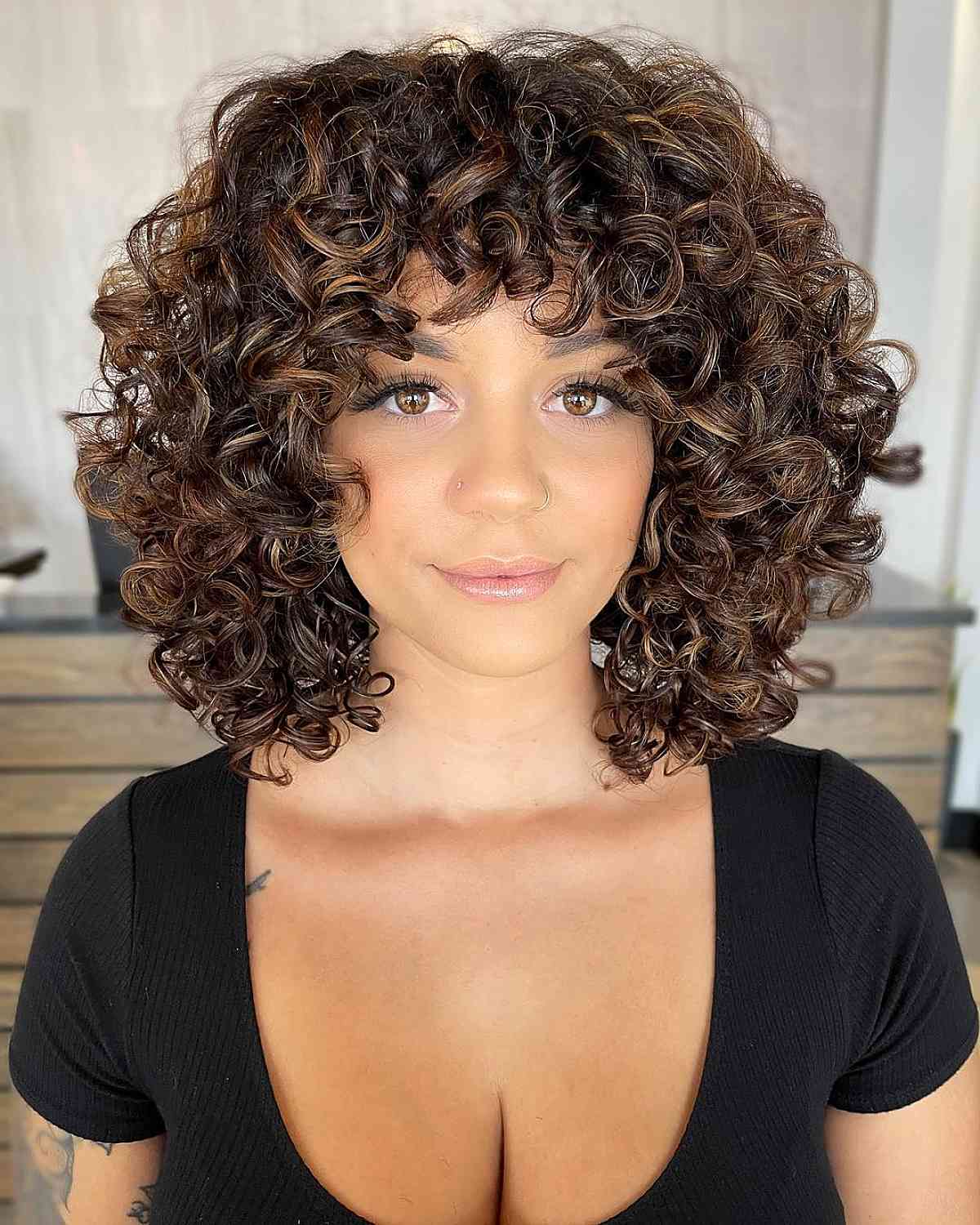
A chin-length shag with curly bangs is a lot of cut for a small amount of real estate. The shag layers stack volume at the crown, while the dense, thick texture keeps the shape from looking too round. The blonde highlights woven through the dark brown base add dimension so the layers read clearly, even when the curls are doing their own thing. This structure genuinely flatters rounder face shapes because the height at the top lengthens the silhouette, and the curly bangs break up width across the forehead. It is not a cut for fine, low-density hair, which can get swallowed by the layering. Ask your stylist for a chin length shag with full curly bangs. A volumizing mousse applied to damp hair before blow-drying helps the shag hold its shape through the day.
Collarbone Layers With Soft Curtain Fringe
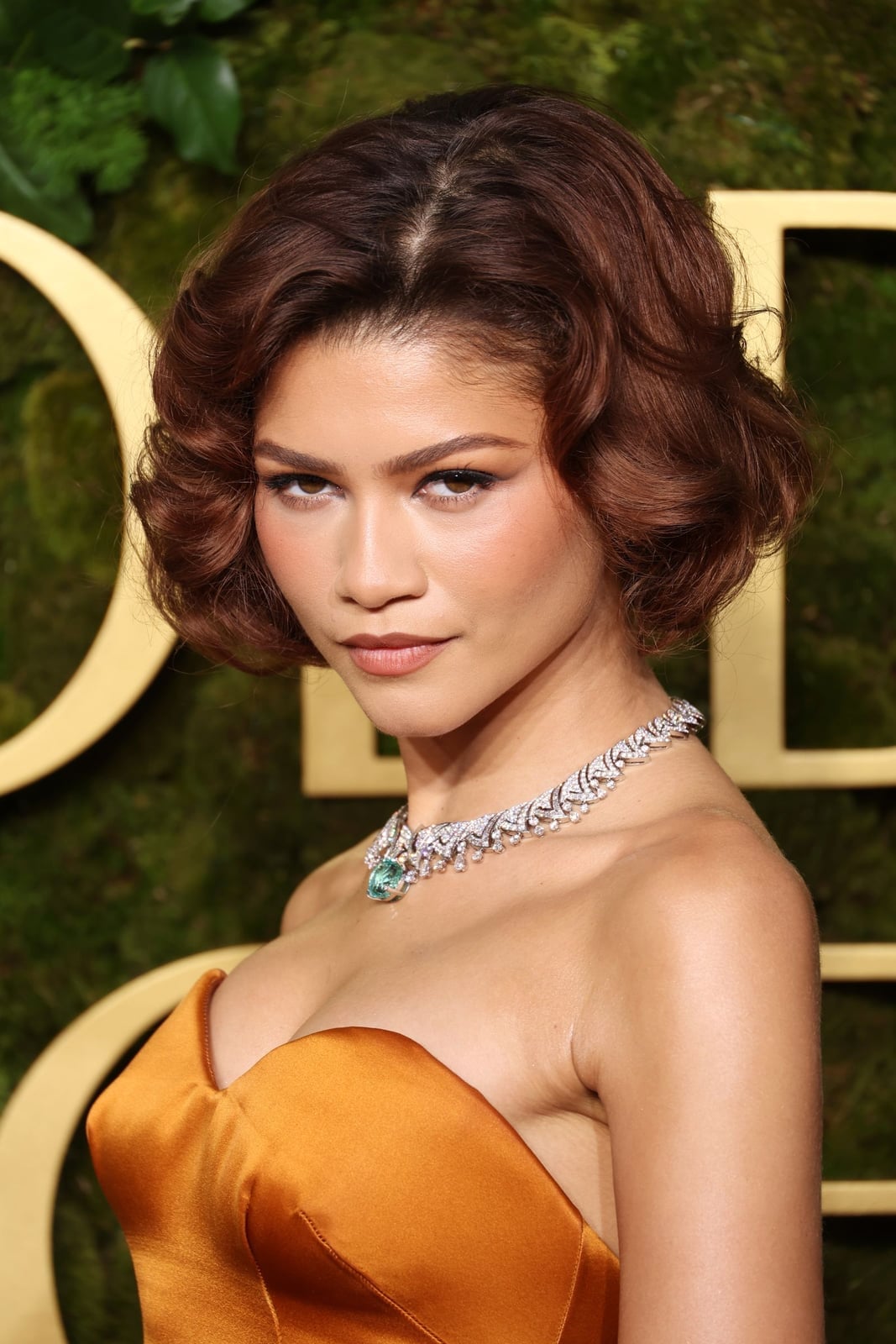
This cut looks like the low-maintenance cousin of a layered shag, but it asks for a different commitment. On fine, wavy hair, the collarbone layers and soft curtain bangs create movement without the density that thicker textures need to hold a shape. The subtle highlights add a little depth so the face-framing pieces stand out against the dark brown base. A square or round face benefits from the curtain bangs, which soften the jaw and cheekbone area without adding bulk up top.
The real drawback? Fine hair can look stringy by midday if the blowout is not polished enough. A medium barrel round brush, used on the fringe and front sections, makes the difference between intentional wave and flat weight. Ask your stylist for collarbone length layers with soft curtain bangs.
Mid-Back Layered Curls With Face-Framing Pieces
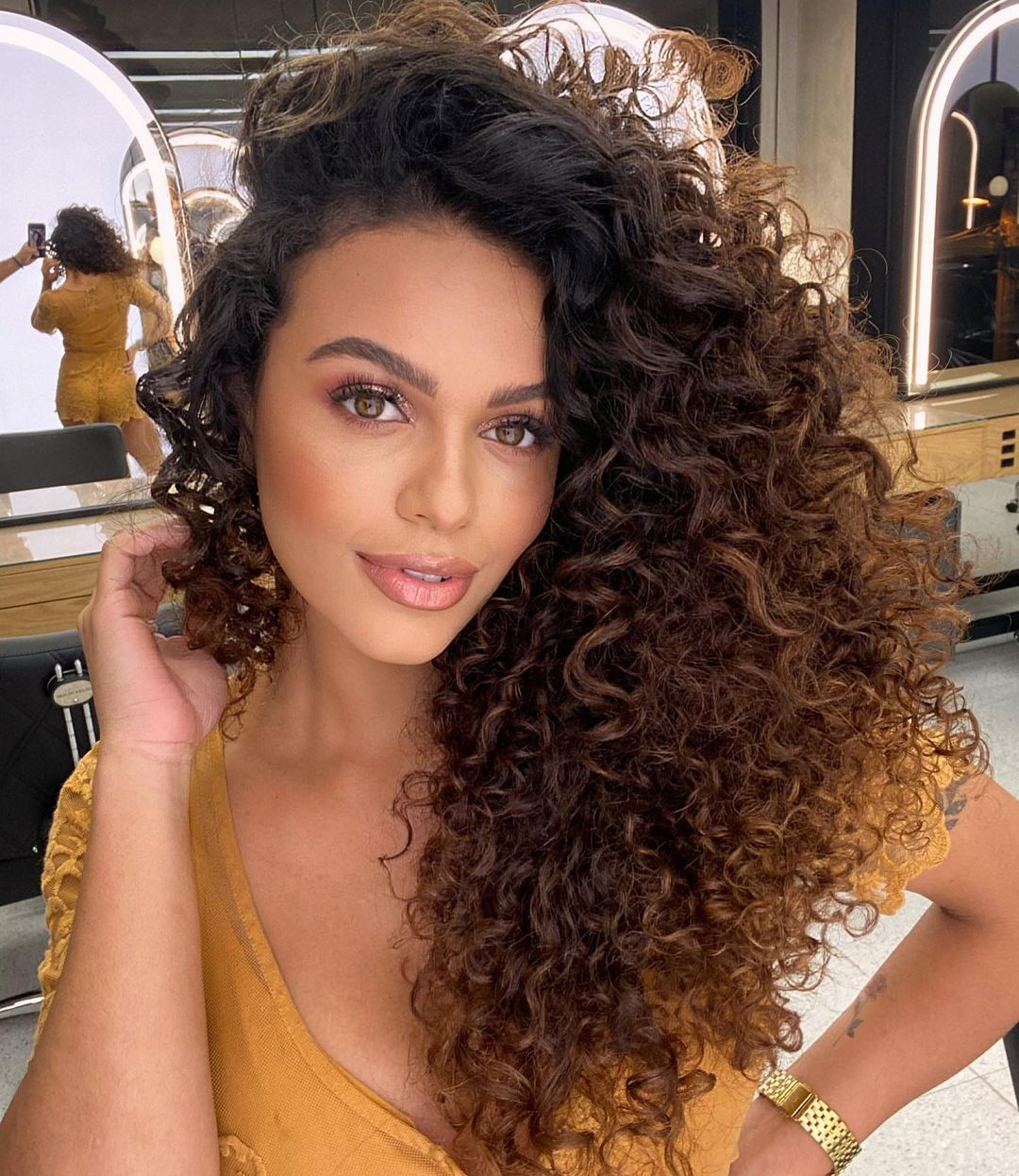
The technique here is about controlling volume without losing length. Long layers are cut through the mid-back length, removing weight from the interior so the thick, curly texture does not triangular out. The face-framing pieces are cut shorter, starting around the collarbone, so they move forward and soften the hairline rather than blending into the rest of the bulk. The defined curls are a blowout result, not an air-dry accident: a round brush stretches each section, then the stylist releases it and lets the curl spring back into a looser, more polished wave.
The subtle highlights are painted through the mid-lengths and ends, leaving the root area dark so the dimension reads only where the layers catch light. Ask your stylist for mid-back length layers with face-framing pieces and defined curls. A curl-enhancing serum applied to damp hair before a diffuser locks the shape in without frizz.
Voluminous Mid-Back Black Curls
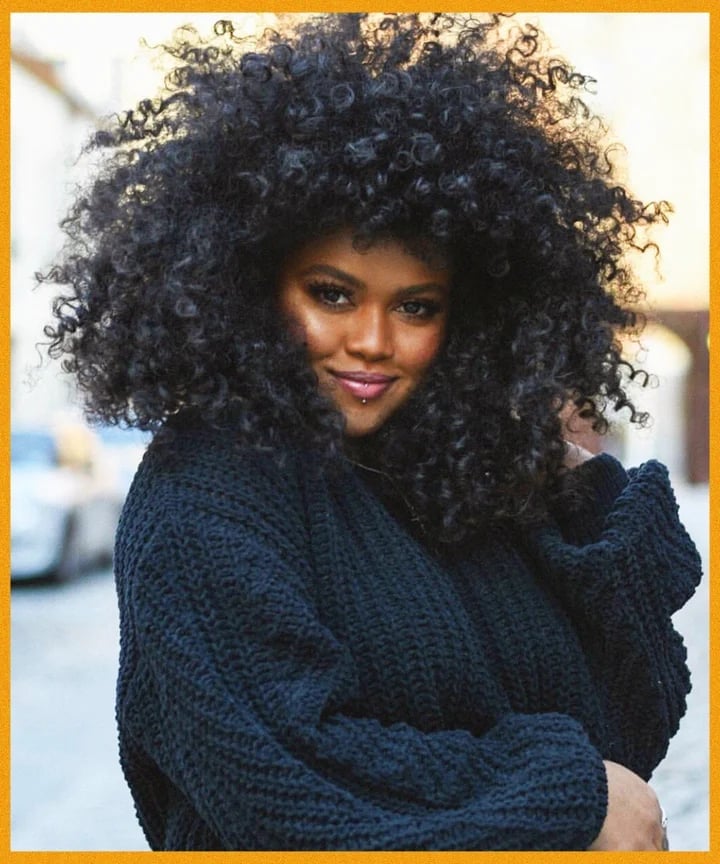
Can very thick, black curls hold volume without professional styling? Yes, but the answer depends on how you handle them between washes. This mid-back length cut uses layers throughout the interior to prevent the hair from weighing itself down, and the middle part lets the curls fall symmetrically on both sides. Air drying is the default here, which means the shape relies entirely on the cut and the natural curl pattern. A wide-tooth comb on damp hair only, followed by a curl refresher spray on day two, keeps the defined texture from collapsing into a single dense mass.
The trade-off is that second-day volume needs a refresh, not just a dry brush. Sleeping with the hair in a loose pineapple or silk scarf helps maintain the lift at the crown. Ask your stylist for natural mid-back length black curls with no bangs. A trim every ten to twelve weeks keeps the layers functional.
Mid-Back Defined Dark Brown Curls
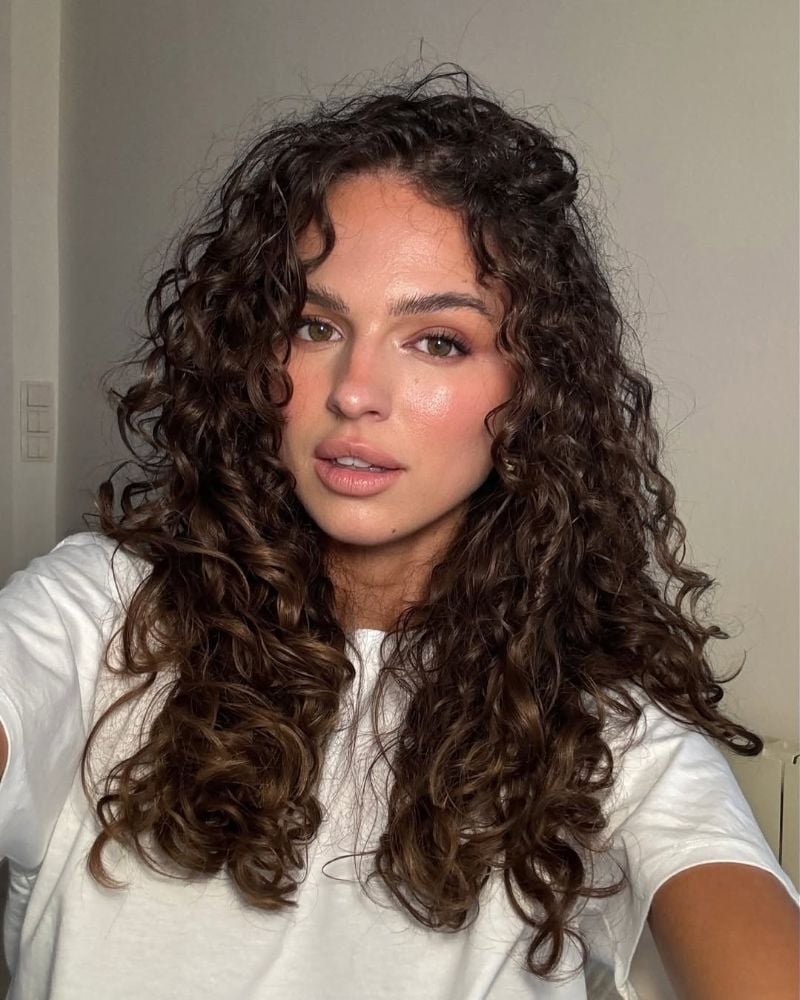
This is essentially the same mid-back length as the previous section, but the dark brown color and air-dried styling make it a lower-commitment version. The long layers are cut to enhance the curl pattern rather than stretch it out, so the shape stays defined from root to end without a blowout. It is a DIY-friendly style: a curl cream on wet hair, a scrunch, and an air-dry session replaces the hour of diffusing. The middle part keeps the fall even, and the lack of bangs means less daily maintenance.
Ask your stylist for mid-back length natural dark brown curls with long layers and no bangs. The key phrase is “long layers”, too short and the curls lose their downward shape. A salon visit every twelve weeks for a dusting is enough to keep the ends healthy without sacrificing length.
Collarbone Updo With Loose Tendrils
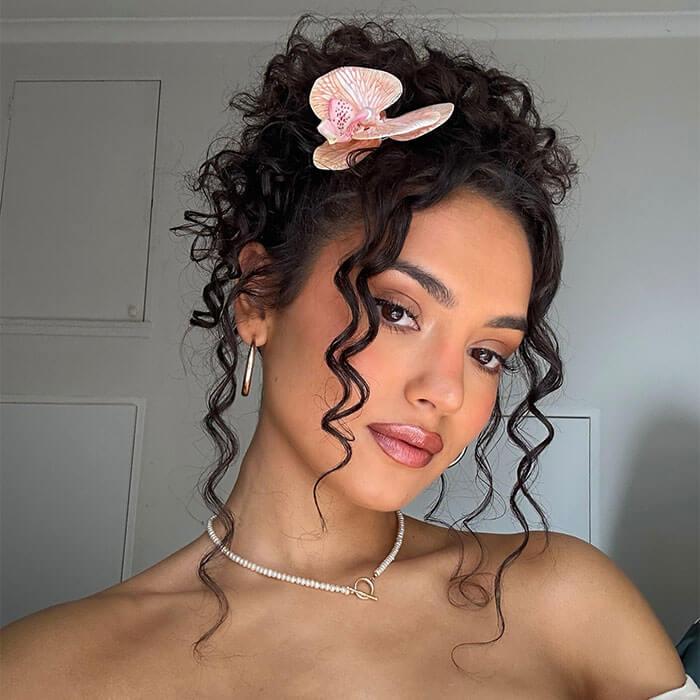
A collarbone-length updo on thick, dark brown curly hair relies on a middle part and loose tendrils to keep the silhouette from reading as severe. That orchid accessory is a shortcut to formal-event polish, but the real work is in the hold: a flexible hairspray on the tendrils keeps them defined without crunch. Ask your stylist for: a collarbone length curly updo with face-framing tendrils. The gloss finish and curtain bangs add enough structure that the updo holds through an evening of dancing, though a few strands will soften as the night goes on.
Chin Length Curly With Full Bangs, Layers
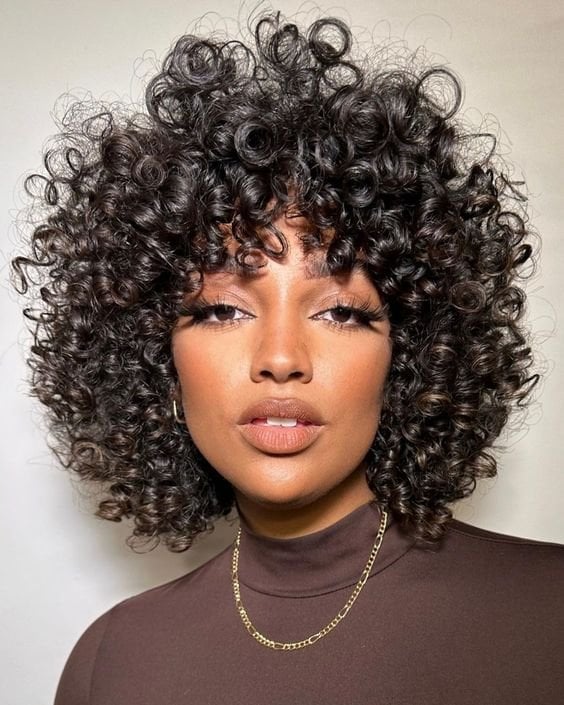
A chin-length cut with dense, curly hair and full bangs is a direct line to volume that does not rely on styling. The dark brown base with subtle highlights keeps the texture from reading as one flat mass, and the middle part lets the bangs land evenly across the forehead. Ask your stylist for: a chin length cut with full curly bangs. Those full bangs soften a strong jawline without needing to add length anywhere else. A curl-defining paste applied to damp hair gives the bangs and the rest of the cut a cohesive, air-dried finish.
Blonde Collarbone Lob With Root Shadow
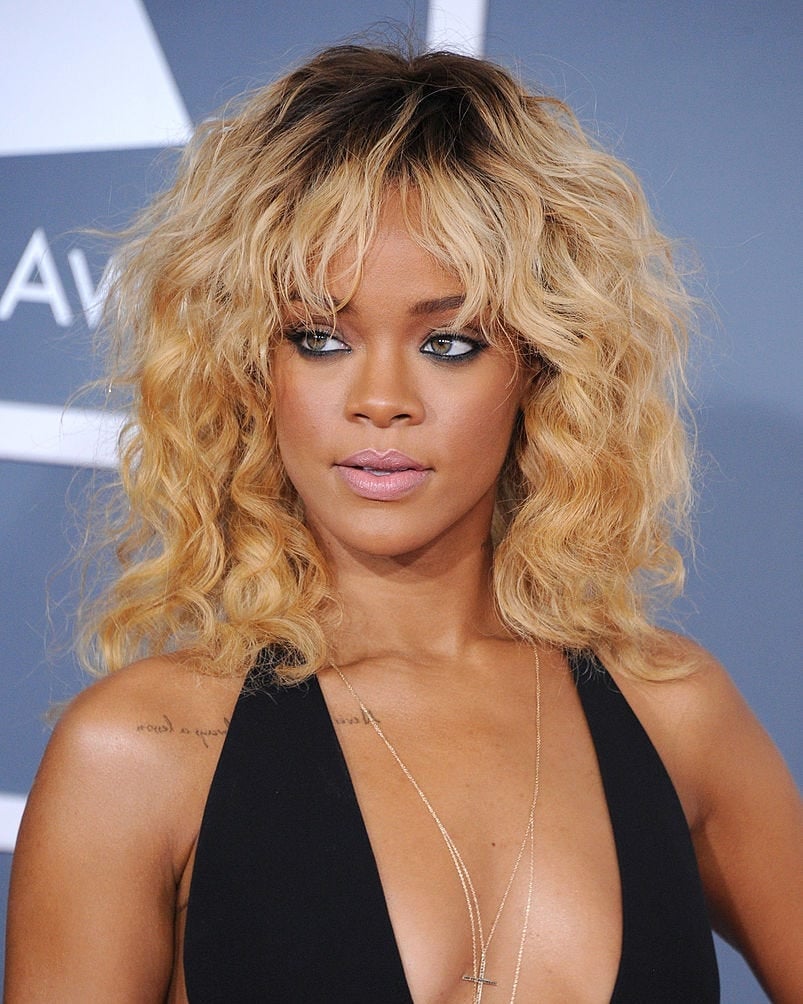
A blonde lob with a root shadow lives in the gap between high-maintenance color and low-maintenance hair. The collarbone length and curtain bangs give fine, wavy texture enough weight to hold a blowout finish, while the darker root means no visible grow-out for about six weeks. Ask your colorist for: a collarbone length blonde lob with root shadow and curtain bangs.
The payoff is a lived-in blonde that does not demand a toning appointment every four weeks. A heat protectant before blow-drying and a texture spray at the ends keep the waves from falling flat by midday, which is the main risk on fine hair at this length.
Short Black Curly With Undercut
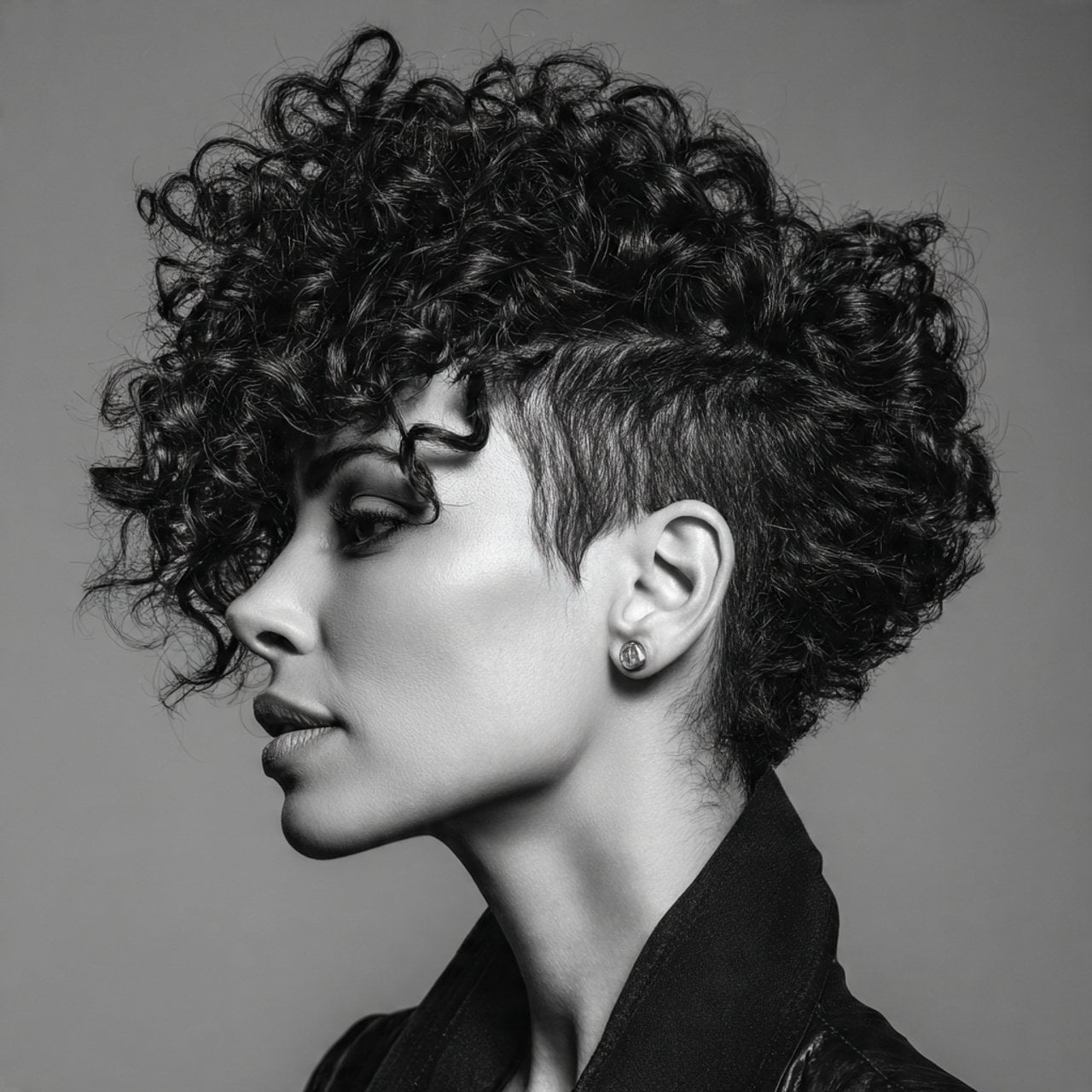
An undercut on short, thick, black curly hair turns the whole silhouette into a contrast of shaved sides against styled-up top curls. The side-swept bangs and soft face-framing layers give the edgy cut a wearable finish, but the real downside is the trim rhythm: that undercut needs a clipper pass every three to four weeks to stay sharp. Ask your stylist for: a short curly cut with undercut and side-swept bangs. A styling wax on the top section holds the upward shape without making the curls look greasy.
Collarbone Curly Cut No Bangs
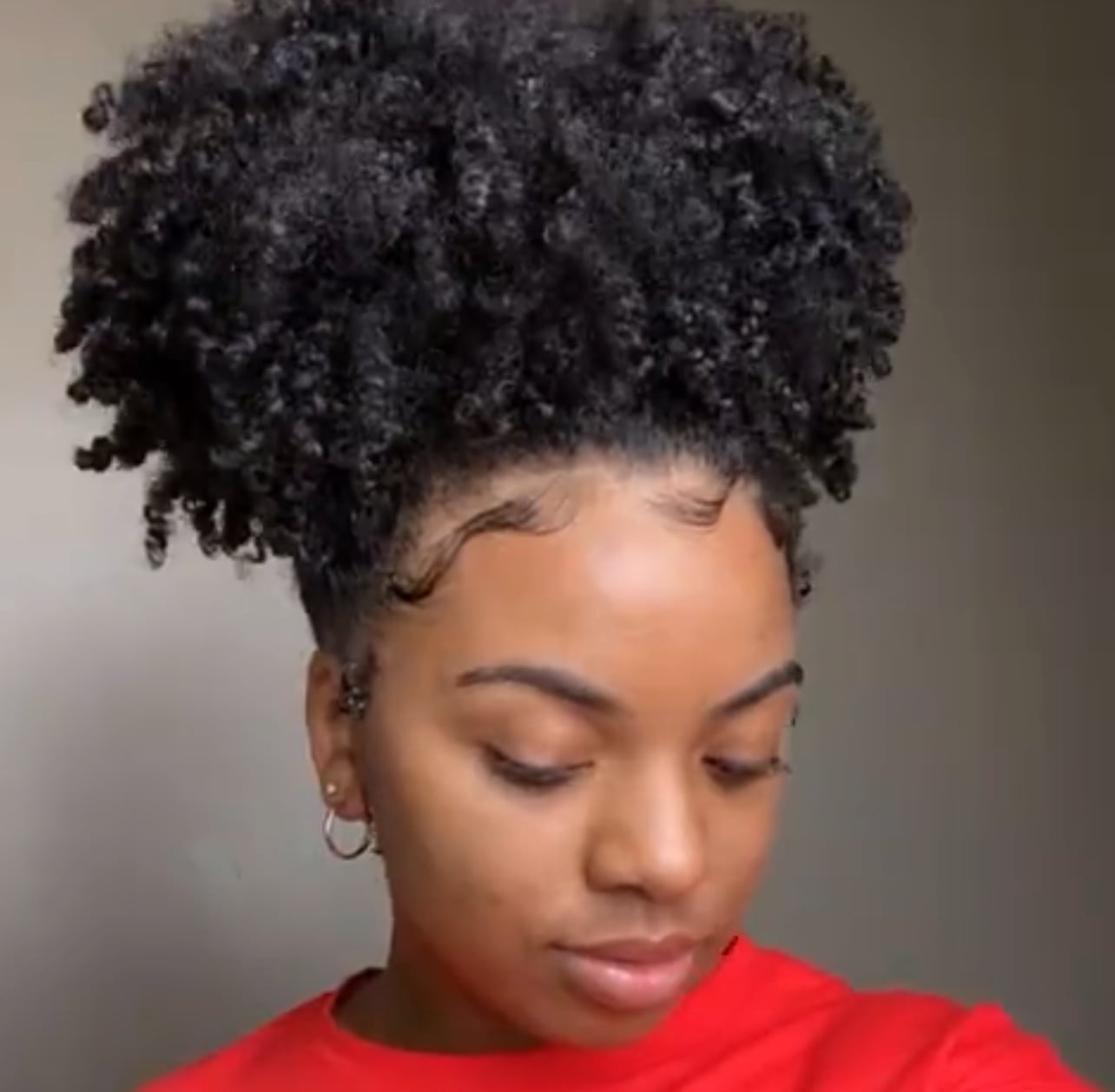
Thick, dark brown curly hair can look this defined without a salon appointment thanks to the layer pattern and the diffuser. A collarbone-length cut with no bangs and a middle part lets the natural curl pattern fall where it wants, creating a defined shape. Ask your stylist for: a collarbone length layered curly cut, no bangs. At home, a diffuser on a low heat setting encourages the bouncy, glossy finish shown here. The layers do the work, and the upkeep is a trim every eight weeks to keep the ends from tangling.
Mid-Back Curls With Face-Framing Bangs, Dark Brown
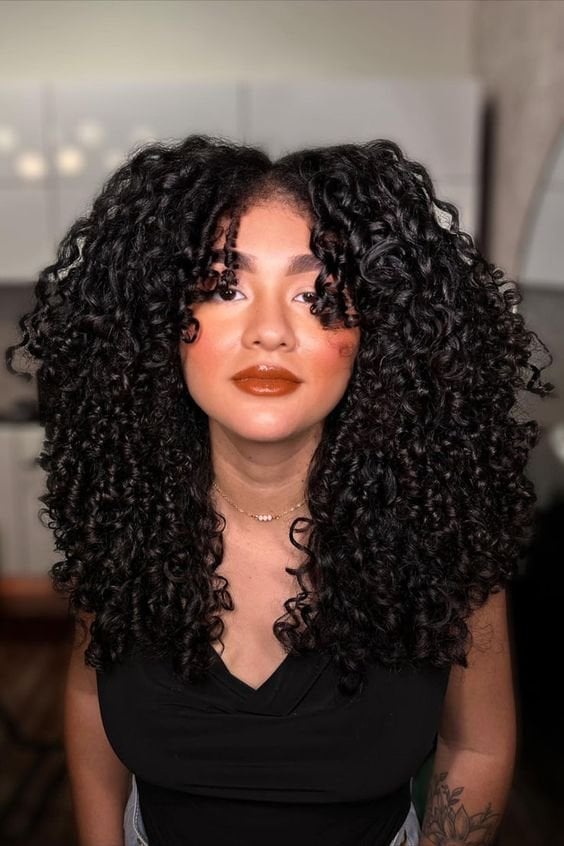
Face-framing bangs on mid-back curls do a different job than full bangs: they soften the shape without stealing focus from the length. The dark brown base stays solid, so the definition of each curl reads clearly rather than getting lost in multi-tone color. Thick, curly hair at this length can feel heavy, but the face-framing layers lighten the front without sacrificing the overall volume.
Ask your stylist for: mid-back length curly hair with face-framing bangs. This cut suits anyone who wants the drama of long curls but finds full bangs too much commitment on a daily basis. Apply a curl enhancer to damp hair, then let it air dry or diffuse on low. The goal is shape, not speed. The middle parting keeps things symmetrical, which helps the bangs blend into the rest of the hair rather than sitting as a separate piece.
Collarbone Blonde Curls Blowout
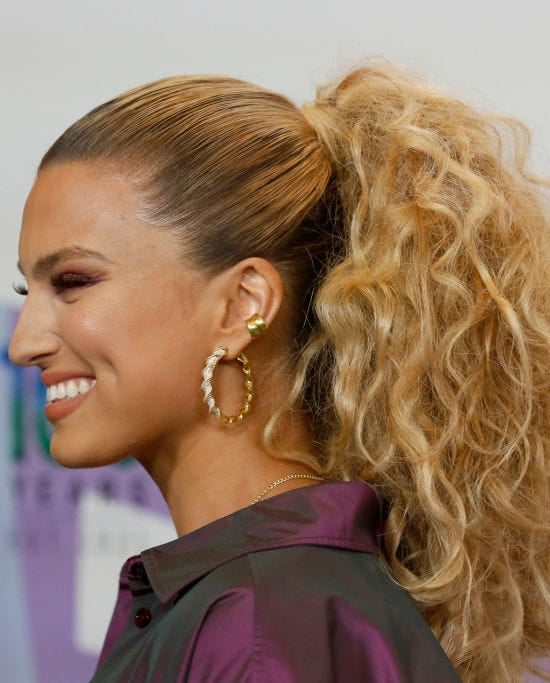
A collarbone-length curly blowout in blonde with subtle highlights is a two-part commitment: the color needs a toning appointment every four to six weeks to keep brassiness at bay, and the volume requires a round brush and medium heat to set. The curtain bangs frame the face without adding extra styling time, since they blend into the blowout. Ask your stylist for: collarbone length blonde curly blowout with curtain bangs. Thick curls hold the shape well for a day or two, but expect to refresh the front pieces with a quick blast of heat before the second wear.
Long Natural Dark Brown Curls
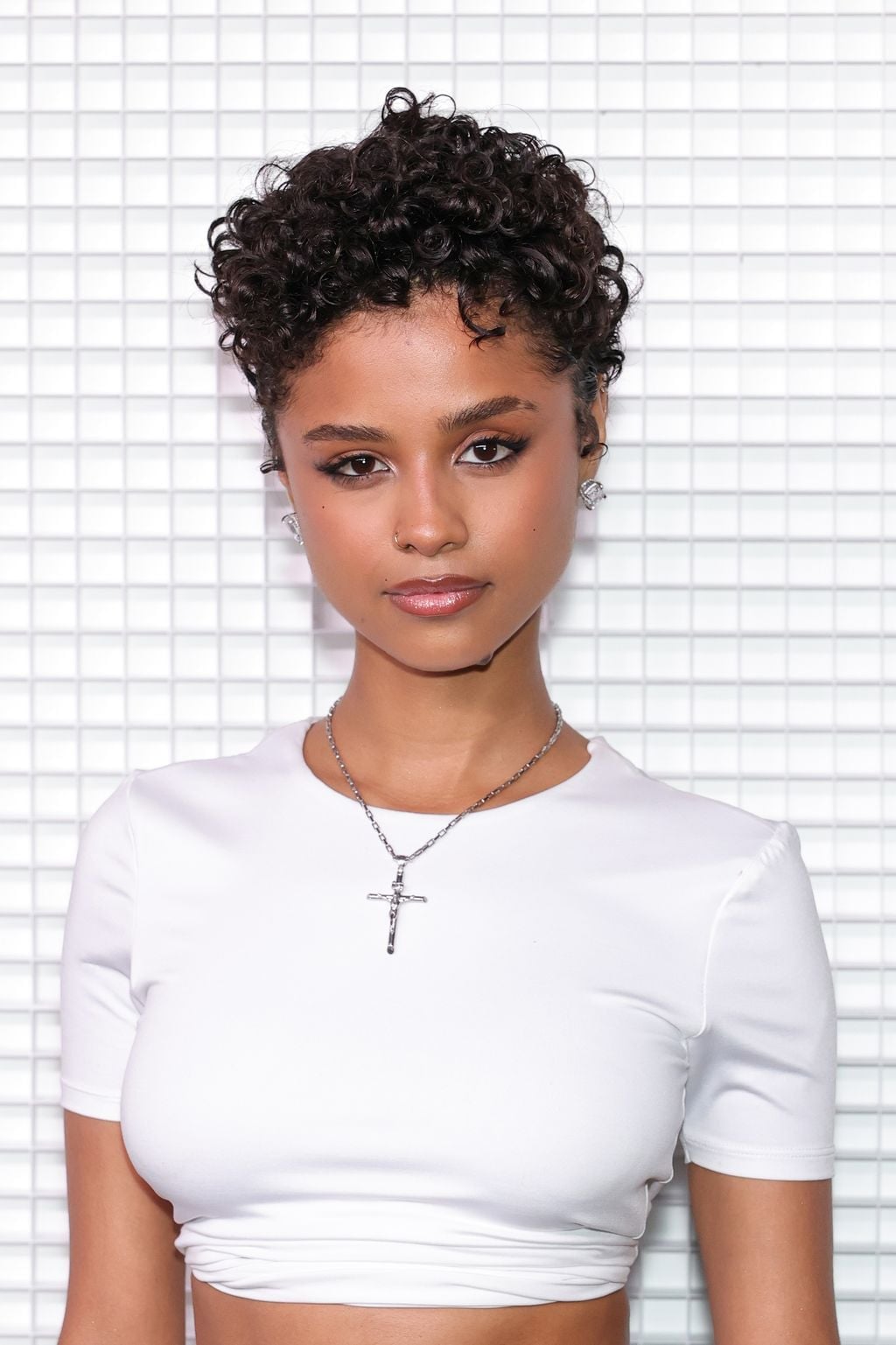
An air-dried finish on long, thick curls sounds like the low-effort option. The reality is that definition at this length still demands product: a curl-defining cream applied to soaking wet hair, then left alone to dry. Skip that step and the mid-back length pulls the curls straighter at the roots, leaving you with a triangle shape instead of a uniform wave. Ask your stylist for: long natural dark brown curls, no bangs. The subtle lighter highlights add depth, which helps the curls read as separate pieces instead of one dense block. This is a solid DIY option if you have the patience for the drying time, expect a few hours. Second-day hair rarely looks as polished as day one, so plan to refresh with water and a little more product.
Collarbone Grey Curls Air Dried
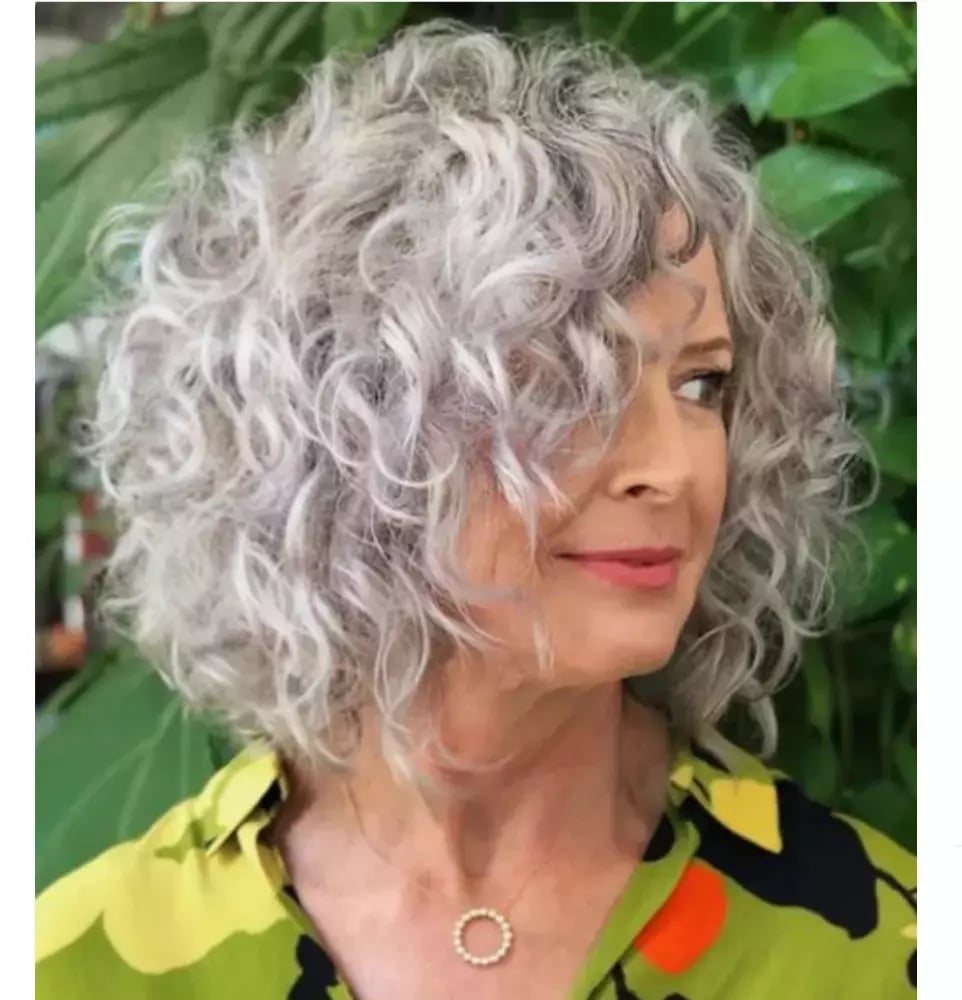
Grey curls at collarbone length land naturally in autumn, when the cooler light makes silver tones look deliberate rather than faded. The medium density means the air dried texture holds its shape without collapsing, and the side parting adds a little lift at the root that a middle part would flatten. Ask your stylist for: collarbone length natural grey curly hair, no bangs. This is a low commitment cut for someone who wants to let the natural color do the work, no toning appointments, no root shadow. A silk pillowcase helps preserve the curl pattern overnight, but the texture looks better on day one, right after air drying.
Chin Length Ash Blonde Curly Bob
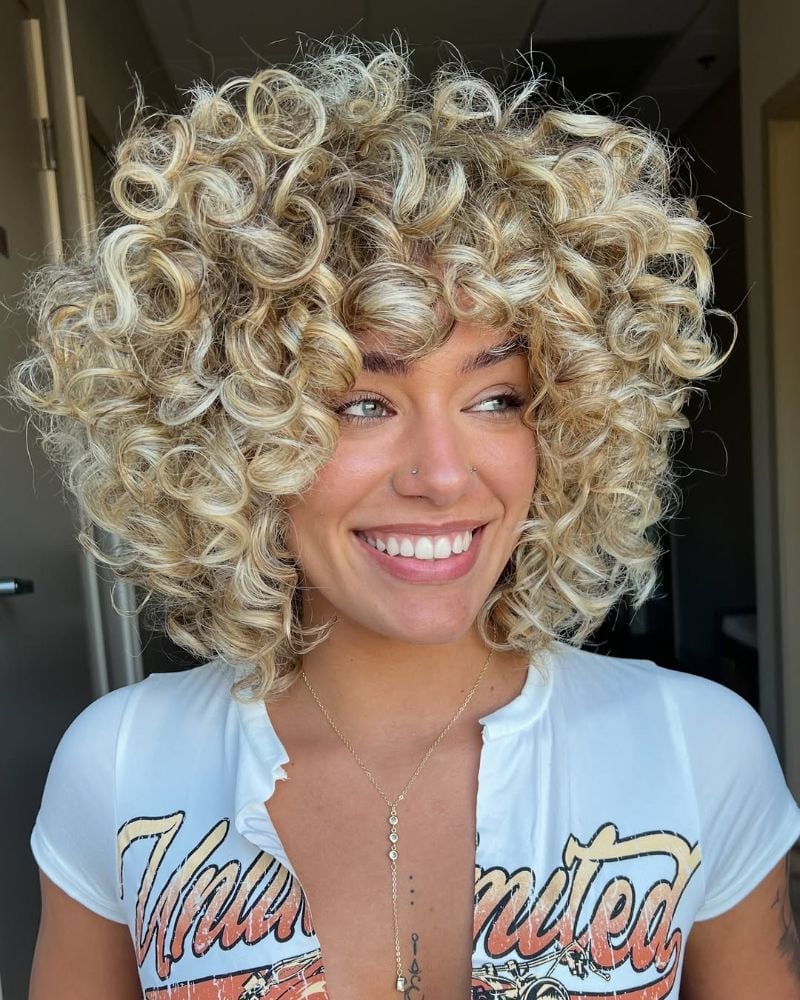
Can fine curly hair pull off a bob without looking flat? The answer depends on the bangs. Curtain bangs on a chin-length ash blonde bob add the illusion of volume at the crown because they break up the solid line of the cut. The fine texture means the curls need a lighter hand with product, a mousse rather than a heavy cream, to avoid weighing them down. Ask your stylist for: chin length ash blonde curly bob with curtain bangs. Ash blonde reads as cool and modern, but it requires a purple shampoo every other wash to stop the tone from warming up. The bob itself is low maintenance: a trim every eight weeks keeps the shape clean.
Short Layered Bob With Curly Bangs
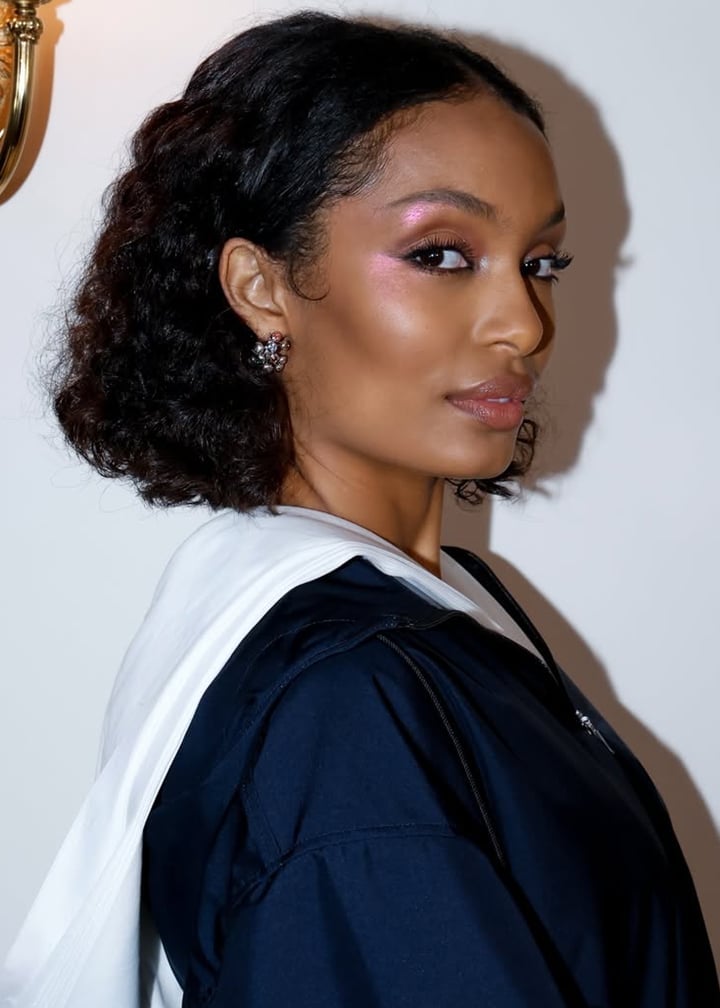
A short layered bob with curly bangs is a test of how well you negotiate with your own hair in the morning. The fine texture and middle part need a blowout that respects the natural curl pattern rather than fighting it, and those short curly bangs will do their own thing if you skip a quick refresh with a texturizing spray. Ask your stylist for: short layered bob with short curly bangs. The dark brown color keeps the definition visible, so a trim every six weeks is non-negotiable to keep the shape from turning into a puffball.
Collarbone Layers With Subtle Highlights
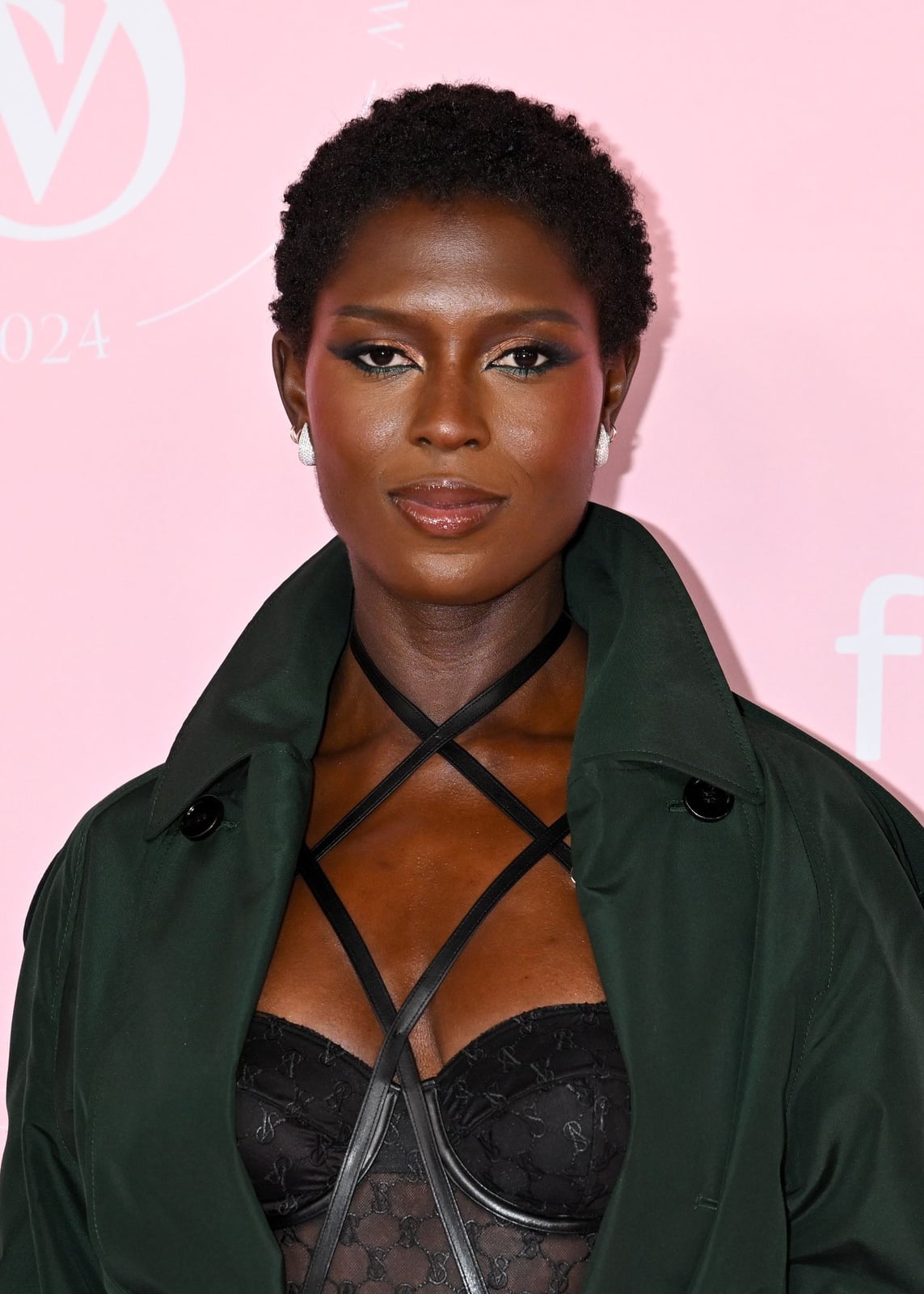
The precision of face-framing layers on fine wavy hair is the whole trick here: too heavy and they weigh the wave down, too light and they disappear. The collarbone length with soft curtain bangs and subtle lighter highlights needs a stylist who understands where the wave pattern breaks. Ask your stylist for: collarbone length layers with soft curtain bangs. The downside is that fine wavy hair shows split ends faster than coarse textures, so a trim at eight weeks keeps the layers from looking ragged.
Mid-Back Curls With Warm Highlights
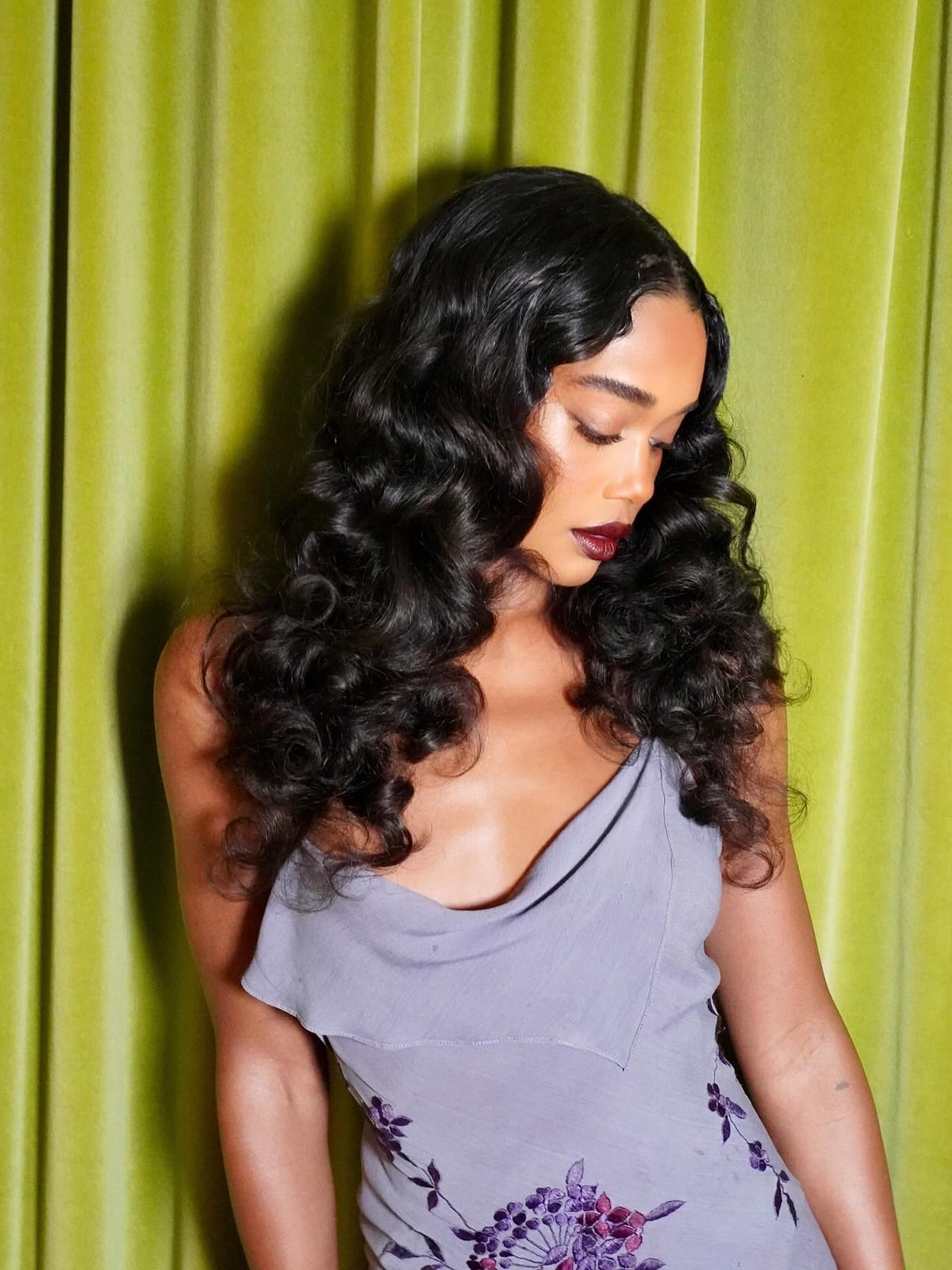
How do you ask for a color that looks sunlit but not brassy? The dark brown base with warm, lighter highlights is the answer, but only if the placement respects the curl pattern. The thick, curly texture at mid-back length needs a side part and loose, defined curls to show the dimension. Ask your colorist for: mid-back length dark brown curls with warm highlights. The highlights are woven through the mid-lengths and ends, so the root grows out softly and buys you about ten weeks before the first toning appointment.
The gloss comes from the contrast between the deep base and the lighter pieces, not from a high-shine product. A curl-defining cream applied to damp hair, then twisted section by section, gives you the definition without crunch. The side part lets the highlights fall on one side while the other stays darker, which is the goal of the placement.
Mid-Back Dark Brown Warm Highlights
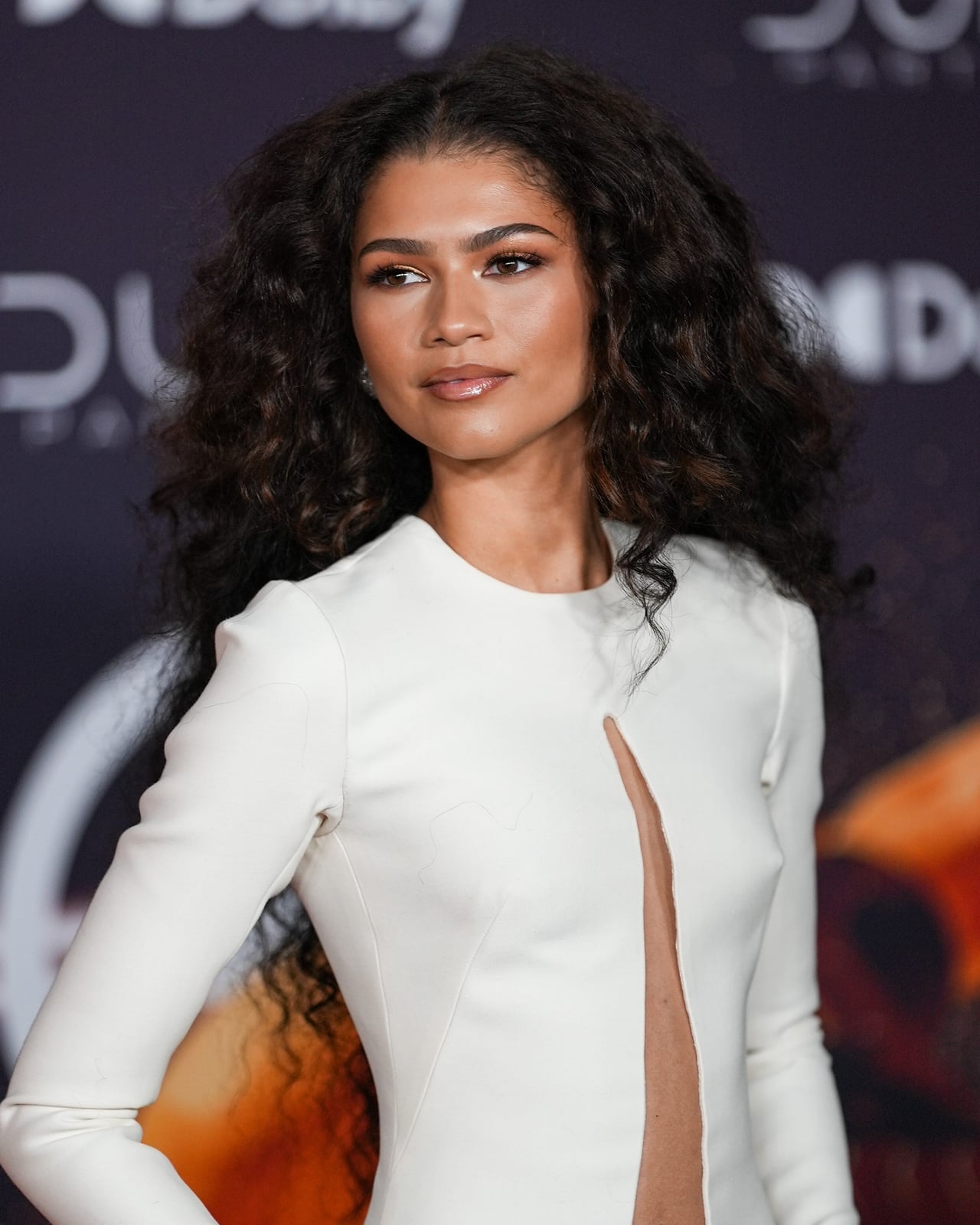
Warm highlights on dark brown hair look different depending on how tight the curl is. On loose, defined curls at mid-back length, the lighter pieces travel along the curve and create a ribbon effect. On tighter curl patterns, the same highlights tend to pool at the ends and look chunkier. Ask your colorist for: mid-back length dark brown curls with warm highlights. The thick texture and side part are the same, but the styling choice is where the comparison lands: loose curls let the color breathe, while tighter curls compress the highlights into smaller sections.
If your curl pattern is on the looser side, the warm highlights will look more blended and natural. Tighter curls need the highlights placed higher up the shaft to avoid a dark-root, light-tip look that appears grown out. A gloss treatment every eight weeks keeps the dark brown rich and the warm tones from turning orange.
Collarbone Shag With Ash Blonde Highlights
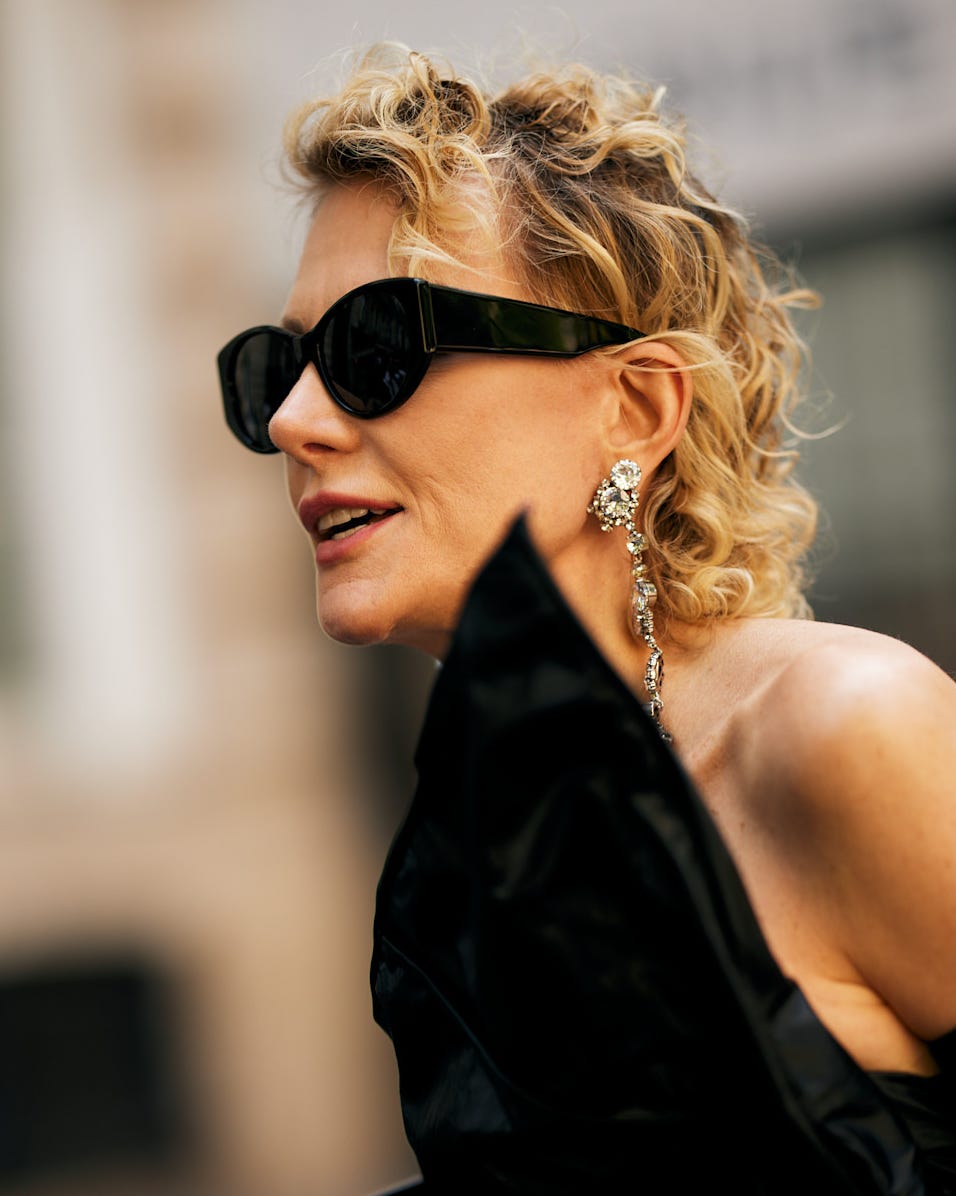
A collarbone shag with ash blonde highlights is a shape that relies on volume to hold its architecture, which means the styling routine matters more than the cut itself. The thick wavy texture and curtain bangs need a blowout with a round brush to lift the roots, followed by a texturizing spray to keep the layers from collapsing. Ask your stylist for: collarbone length ash blonde shag with curtain bangs. The ash blonde highlights need a purple shampoo once a week to stay cool, and the shag layers need a trim every eight weeks to keep the shape from losing its edge.
Collarbone Honey Blonde Balayage Curls
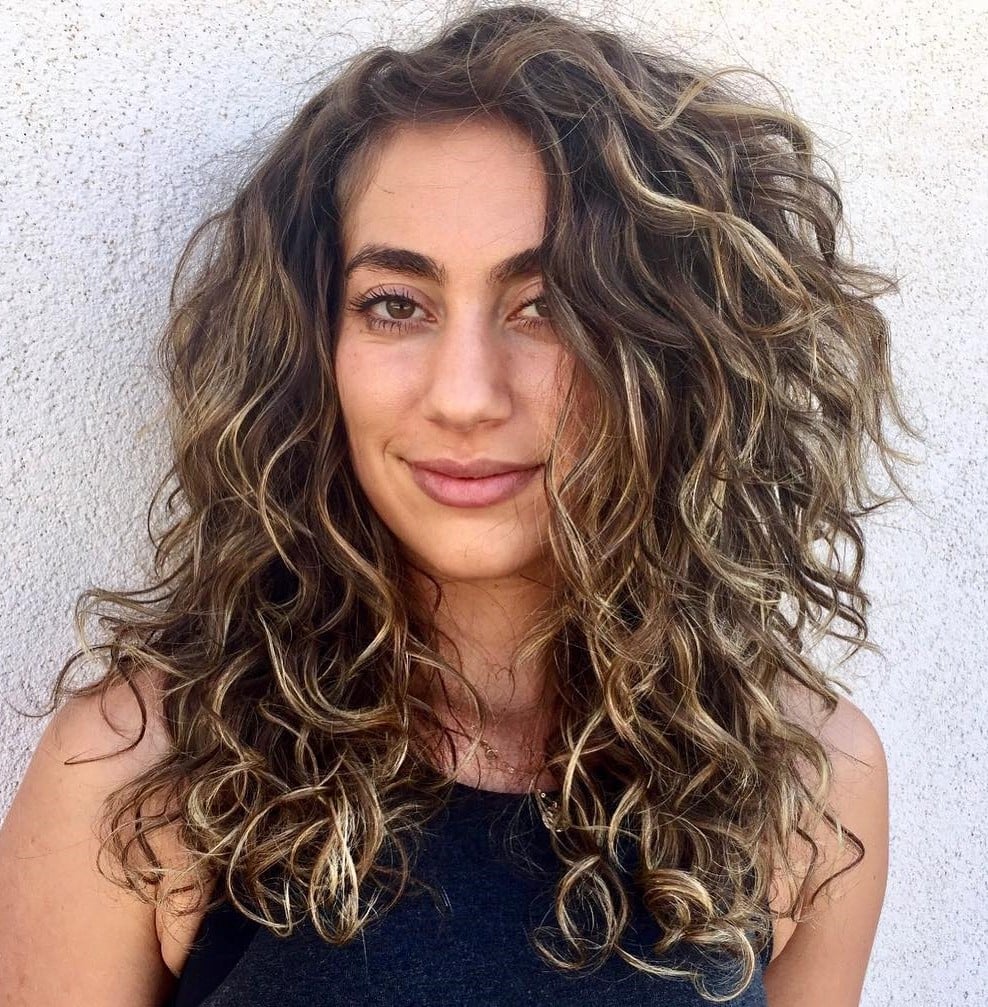
It looks like an air-dried wash-and-go, but that honey blonde balayage takes a salon visit to place correctly. The collarbone length keeps the medium-density curls from feeling heavy, while the balayage adds warmth and dimension that a single-process color cannot. Ask your colorist for: collarbone length curly hair with honey blonde balayage. A curl-defining serum on damp hair, scrunched and left alone, is all the styling this needs. A seamless balayage on natural curls is a salon skill, not a DIY weekend project, and the grow-out line will need toning every ten weeks or so to keep that honey tone from warming into brass.
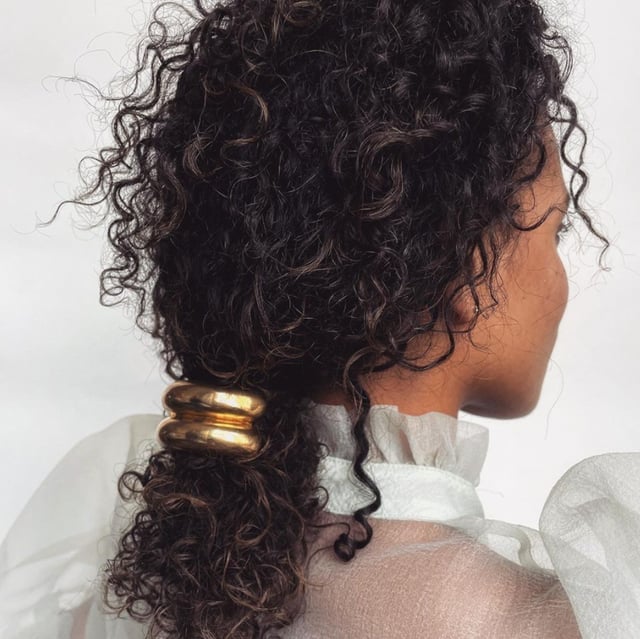
Mid-Back Ponytail With Gold Accessory
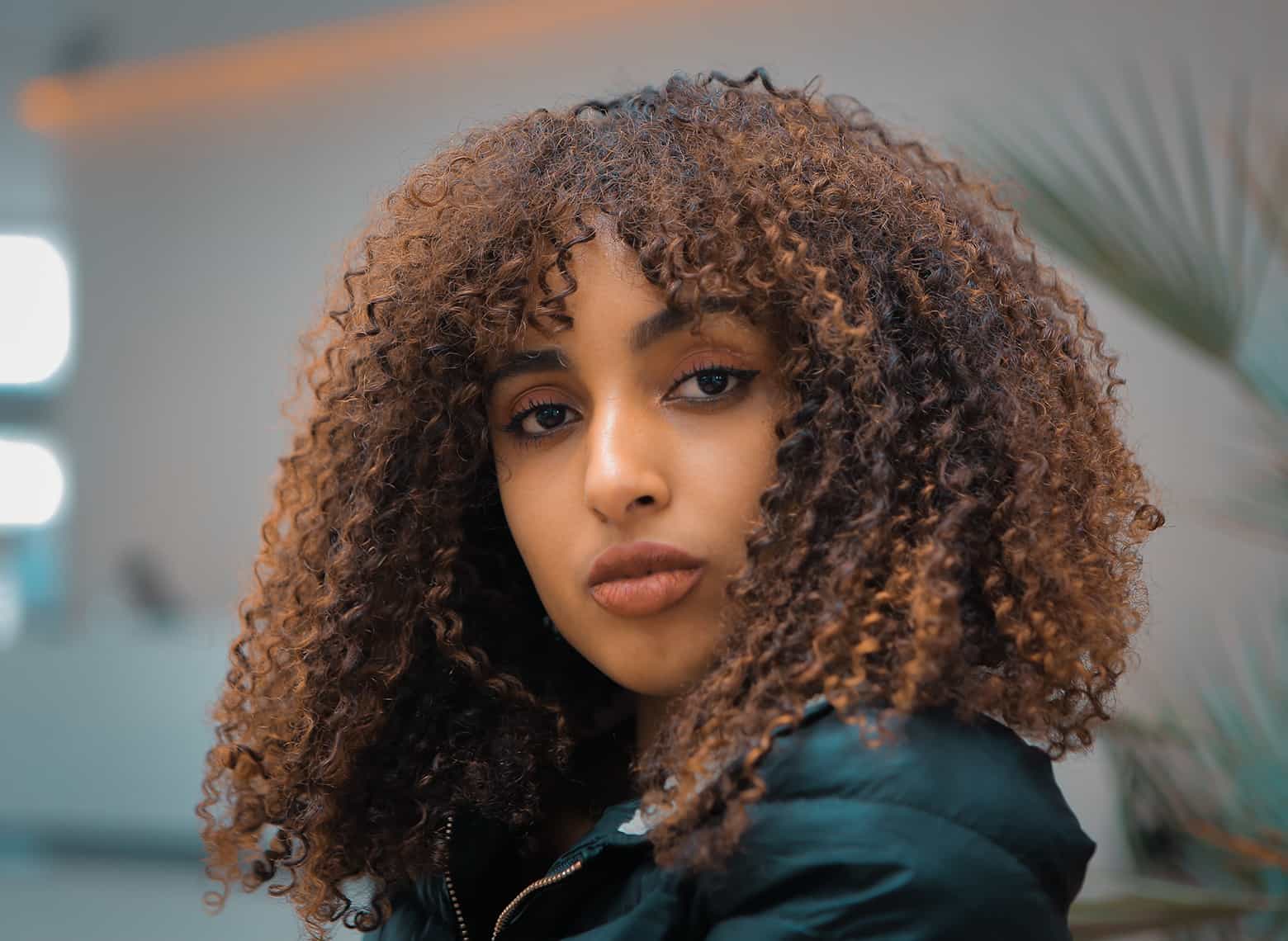
A gold accessory transforms a mid-back ponytail from a weekday default into something that belongs at a holiday party. The thick dark brown hair with subtle highlights is gathered high enough to keep the weight off the nape, and the remaining length shows off the natural curl pattern from the back view. Ask your stylist for: mid-back length curly ponytail with accessory. Use a strong hold hair tie and smooth the hairline gently before securing; the gold piece does the work.
This works best for medium to thick curl density at mid-back length or longer, since thinner hair can make the ponytail look sparse. The highlights add depth that a solid dark brown ponytail lacks, giving the style dimension in any lighting. For a summer wedding or a winter party, it is one of those styles that looks put together without taking an hour to build.
Short Honey Blonde Layered Curls
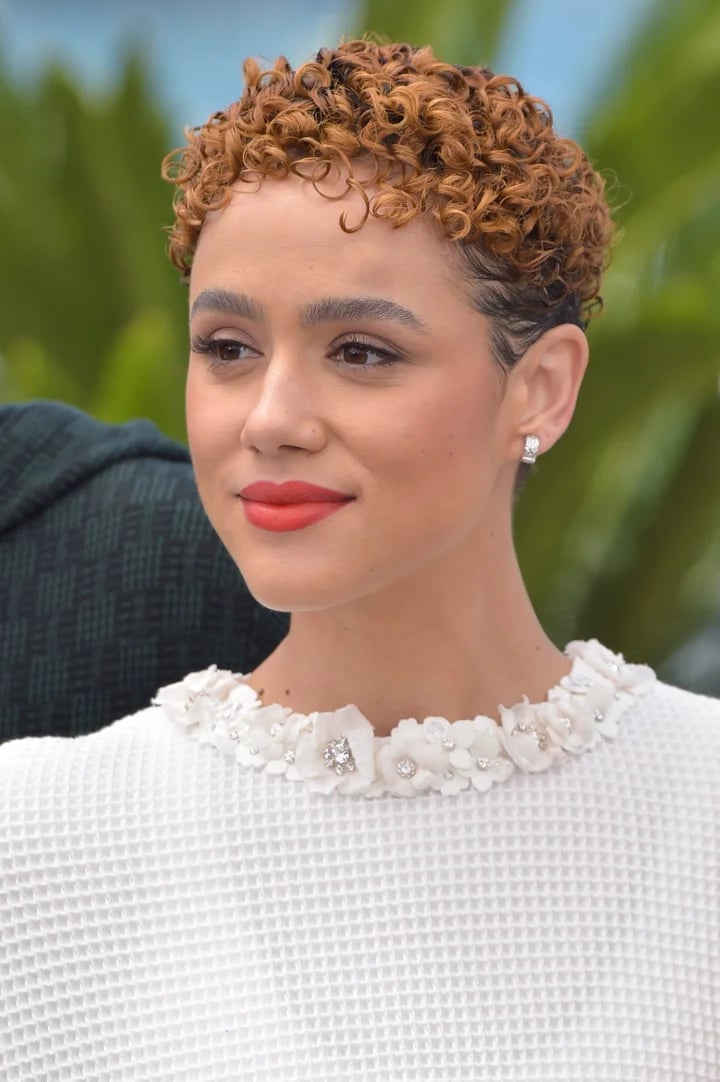
Short layers and honey blonde highlights do the heavy lifting for fine curly hair that tends to fall flat. The ear-length cut removes bulk so the tight, defined curls spring up instead of drooping, and the warm honey shade with lighter pieces adds the illusion of density. Ask your colorist for: short layered curly cut with honey blonde highlights. A curl-defining cream on damp hair, scrunched and air-dried, is all the styling required. This is a salon cut through and through: the layers need precise placement, and the highlights need a colorist who understands how light lifts on fine texture.
Chin Length Defined Dark Brown Curls
A chin length cut on thick dark brown curls works as a wash and wear haircut. Well defined bouncy curls do not need heat or product to look finished, just a microfiber towel to scrunch out excess water after washing. Ask your stylist for: chin length natural dark brown curls, no bangs. The upkeep is minimal: a trim every eight weeks to keep the shape from growing into a triangle, and a deep conditioner once a week to keep the curls defined and not frizzy. This is a true DIY style, since air drying is the main approach and the cut does the work.
Mid-Back High Ponytail With Loose Tendrils
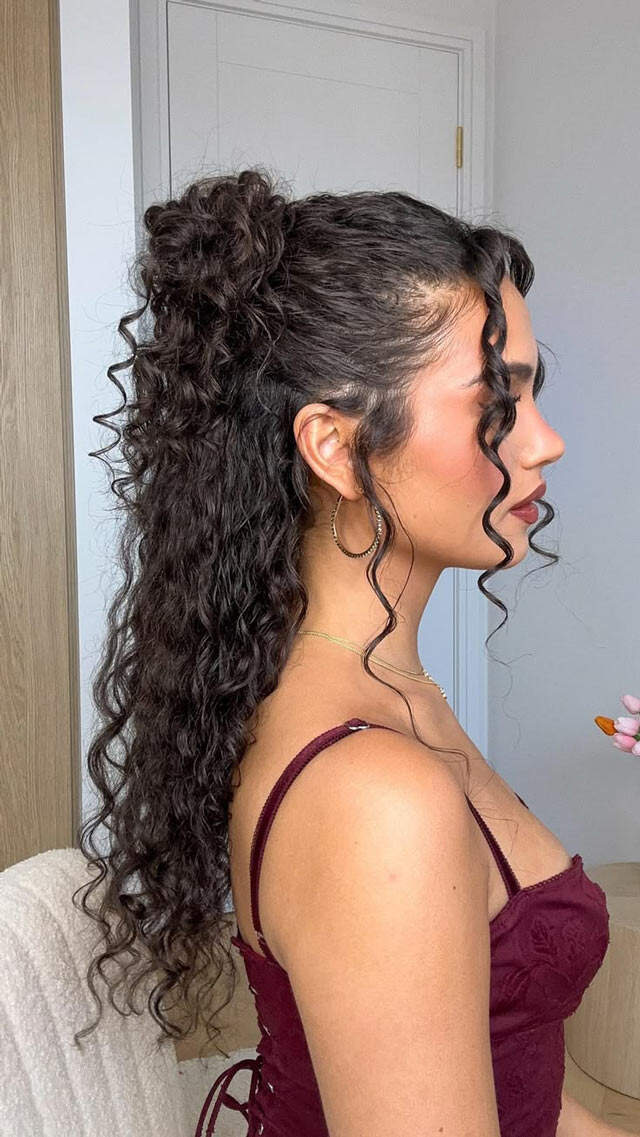
A high ponytail on thick curly hair is a study in tension and release. Long layers allow the mid-back length to gather smoothly at the crown, while the loose tendrils left out around the face soften what could otherwise look severe. Ask your stylist for: mid-back length high curly ponytail with face-framing tendrils. Smoothing serum on the hairline before gathering helps control flyaways, but expect a few shorter pieces to escape anyway.
The real drawback is that thick curly hair pulled high can feel heavy by hour four, especially if the ponytail is secured too tightly. A fabric-covered elastic reduces tension and prevents breakage at the root. This is a salon-leaning style: the long layers need professional placement to keep the ponytail from looking blunt, and the tendrils should be cut deliberately.
Back View Blonde Bob With Layered Ends
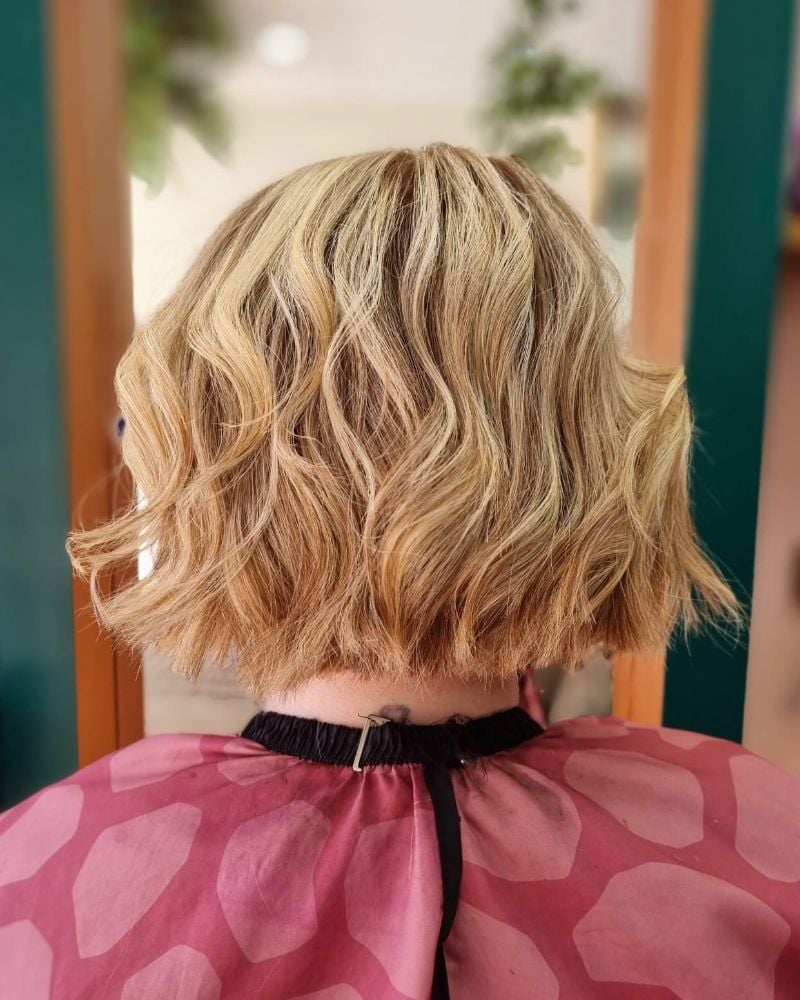
How do you get movement into fine, wavy hair without losing the shape? A collarbone-length bob with layered ends does exactly that. The blonde base with subtle highlights gives dimension, while the back view shows how the layers soften the line between the nape and the ends. Ask your stylist for: collarbone length blonde bob with layered ends. A texturizing spray on the ends after a smooth blowout helps hold the visible lift where the layers fall.
Final Thoughts
Fine curls keep their shape better with a blunt baseline and minimal internal layers. A round face benefits from length that falls below the chin and soft curtain fringe that draws the eye outward. For dense, coarse textures, strategic layering removes bulk without sacrificing volume. The common thread across every look is a commitment to the curl pattern itself, not a fight against it.
- Trim curly hair every 8-12 weeks to maintain shape and prevent split ends.
- Use a sulfate-free shampoo and a hydrating conditioner to preserve moisture.
- Apply curl-defining cream or gel to damp hair and air dry or diffuse for best results.
- Refresh curls between washes with a light leave-in conditioner or curl refresher spray.
Embrace your natural curl pattern with confidence.
