

Bangs are the fastest way to change your entire silhouette without losing length. Right now, the trend has shifted away from heavy, straight-across fringes toward softer, more blended shapes that move with your hair.
This collection of 29 Trendy Bangs Style ideas covers every texture and commitment level, from air-dried curtain fringes to voluminous butterfly bangs. Whether your hair is fine and falls flat or thick and needs weight removed, there is a fringe here that will actually behave. You will find options for round faces, long faces, and everything in between, with realistic upkeep advice so you know what you are signing up for.
Collarbone Layers With Blended Curtain Bangs

The trick to blended curtain bangs is that they don’t announce themselves; they just make everything look more intentional. On a collarbone-length cut with soft layers, this fringe starts shorter at the center and melts into the sides, so there’s no harsh line when you tuck hair behind an ear. Fine to medium wavy textures hold the shape best without fighting it, and the middle parting keeps the weight even. Ask your stylist for: collarbone length with blended curtain bangs. The subtle highlights add dimension without a full color commitment, which is handy because a trim every six to eight weeks is non-negotiable to keep the bangs from turning into face-framing layers.
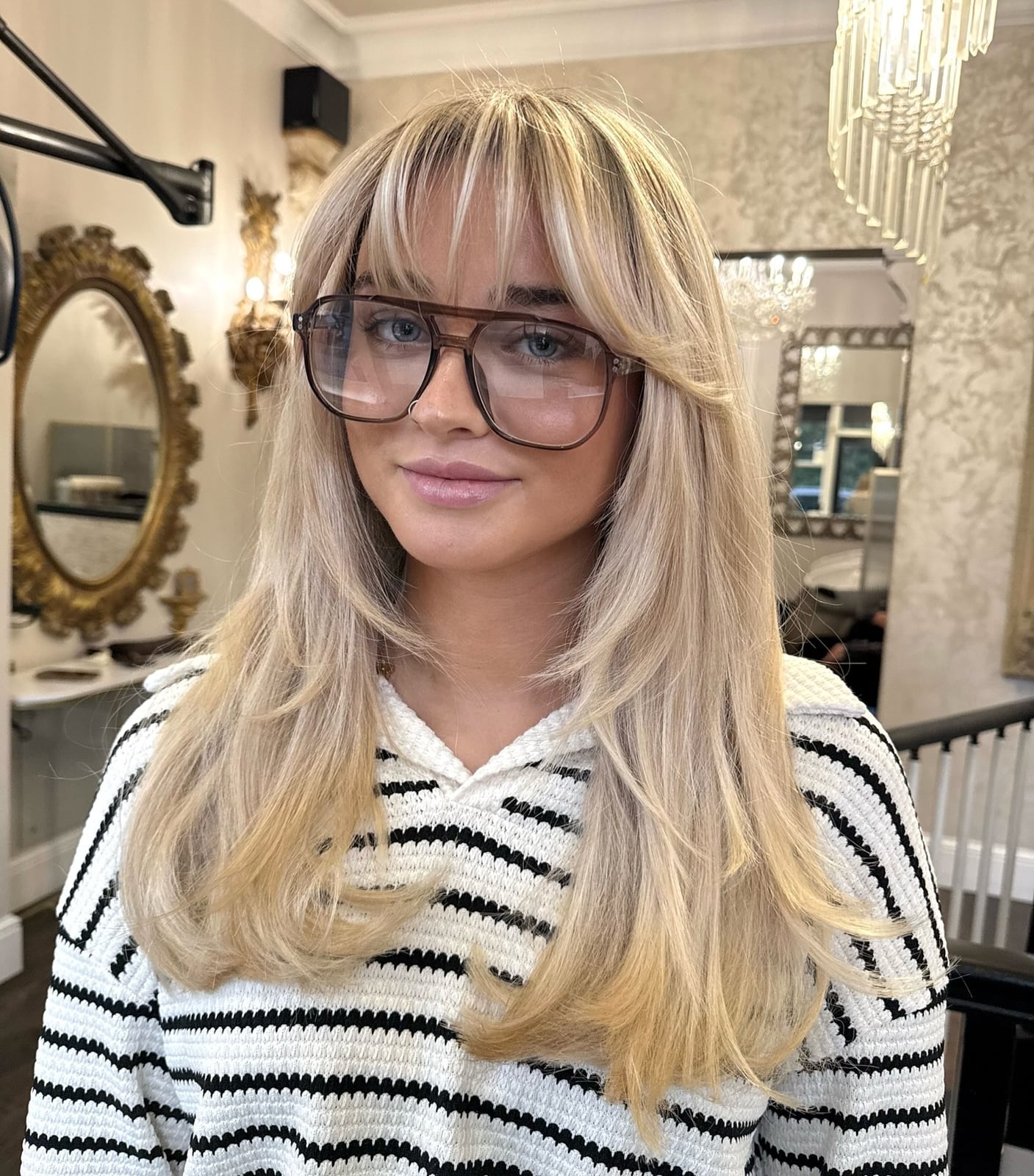
Blonde Updo With Face-Framing Butterfly Bangs
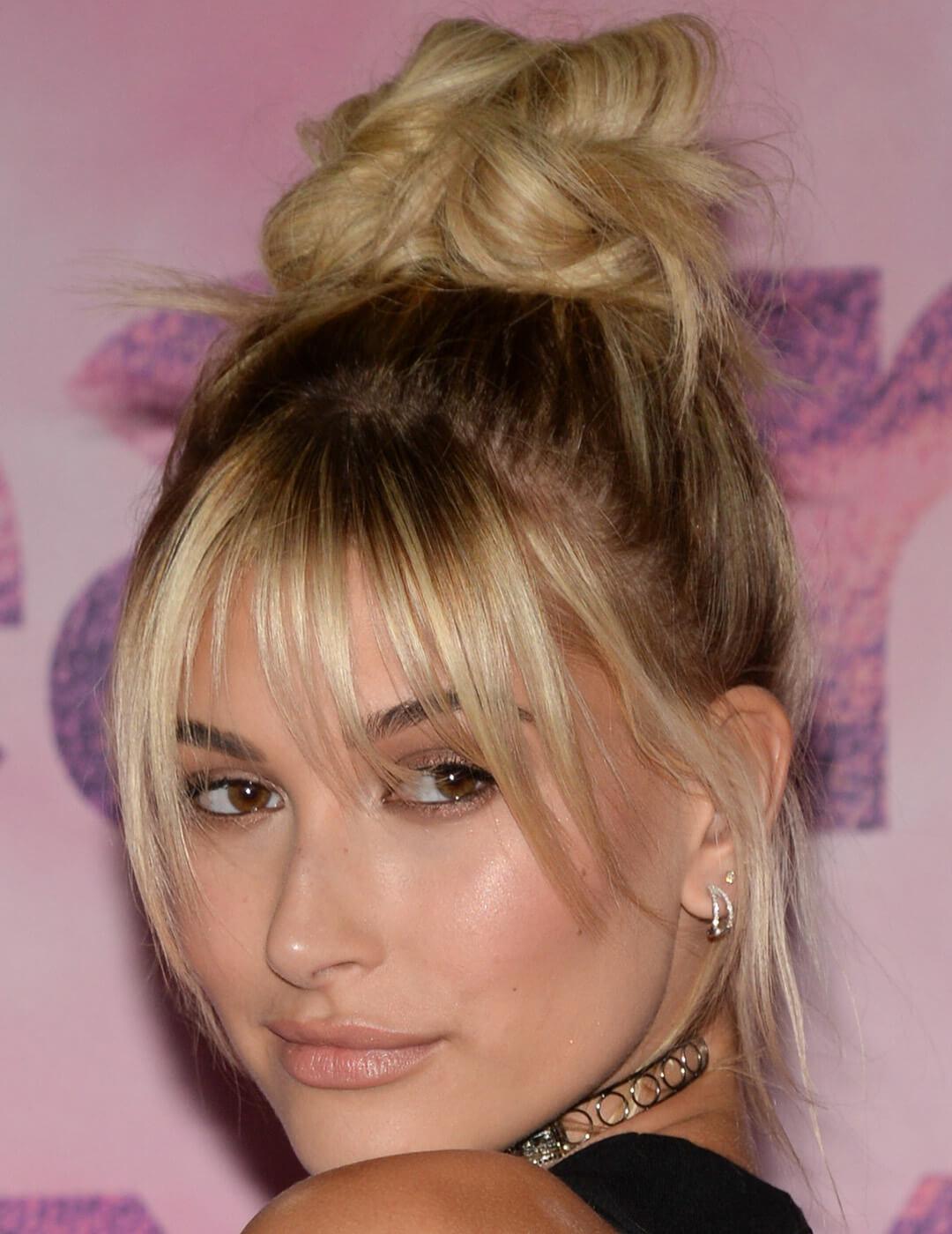
A messy bun typically lets the bangs do the work, and butterfly bangs are built for the job. The shorter face-framing pieces are cut with a soft point, so they fan outward rather than sitting flat, which gives fine wavy hair some actual presence around the hairline. The root shadow at the base keeps the grow-out from looking stark against the blonde highlights. Ask your stylist for: updo with face-framing butterfly bangs. The bun itself is loose enough that the bangs stay the focal point, and a texturizing spray on the fringe keeps it from collapsing into a curtain by midday.
Collarbone Layers With Side-Parted Butterfly Bangs
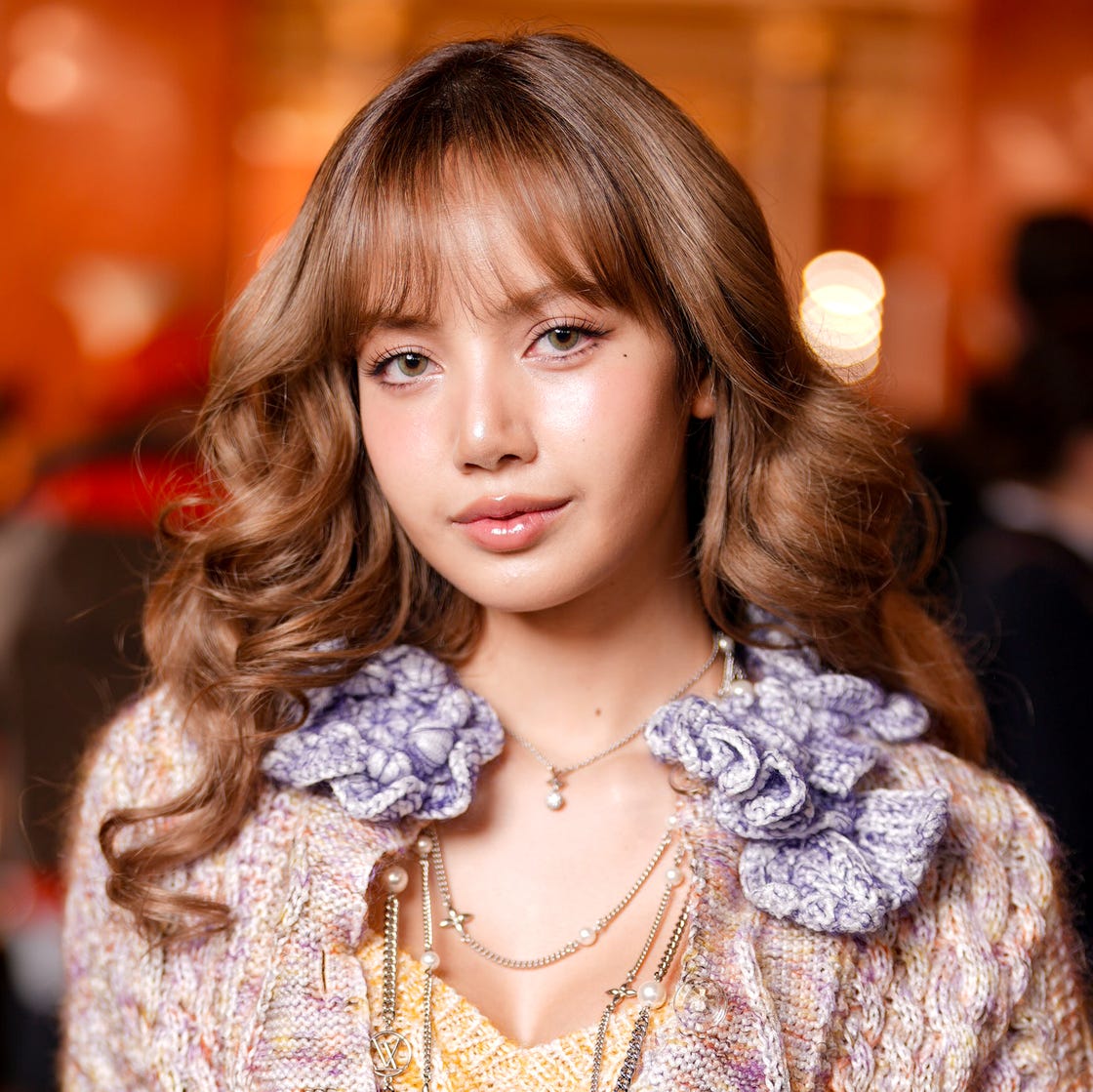
How do you get butterfly bangs to work with a side part without looking like you just pushed everything to one side? The answer is in the cutting pattern: the shorter pieces are concentrated on the heavier side of the part, while the opposite side gets longer, softer wispy bits that blend into the layers. On collarbone-length hair with medium density and a warm brown base, the subtle highlights help separate the fringe from the rest of the cut. Ask your stylist for: collarbone layers with side-parted butterfly bangs. The blowout waves hold the shape without extra product, which is the whole point.
Shoulder-Length Shag With Butterfly Bangs
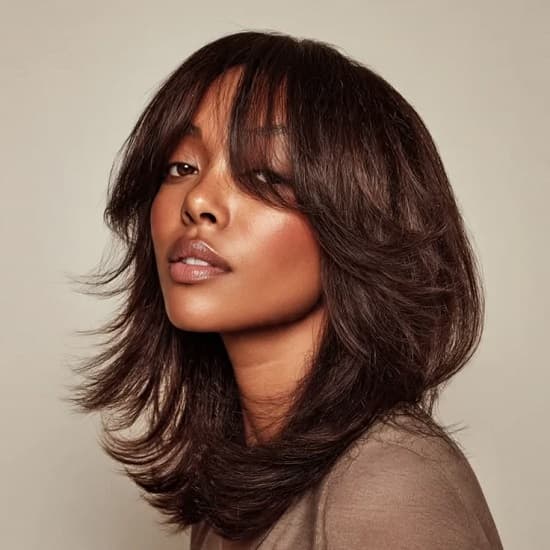
A shoulder-length shag with butterfly bangs works with many styles and face shapes. The shag layers remove bulk from thick wavy hair, so the butterfly bangs land softly rather than sitting like a heavy curtain.
The styling reality is that this cut rewards a low-effort approach. Rough-dry the fringe with your fingers or a diffuser, and the texture does the rest. The bangs stay piecey for about two days before you need a refresh. Ask your stylist for: shoulder-length shag with butterfly bangs. The dark brown base keeps the grow-out forgiving, so you can stretch trims to eight weeks.
Chin-Length Bob With Voluminous Butterfly Bangs

Voluminous butterfly bangs on a chin-length bob are a fast track to making fine hair look like it has opinions. The shorter fringe pieces are cut with a slight graduation, so they lift at the root, and the layers throughout the bob keep the ends from feeling sparse. The blonde highlights add depth, which fine wavy textures appreciate. Ask your stylist for: chin-length bob with voluminous butterfly bangs. This shape suits round faces best because the vertical lines from the center part and the lift at the crown create length. A trim every six weeks is required to keep the bangs from merging into the bob.
Mid-Back Straight Hair With Butterfly Bangs
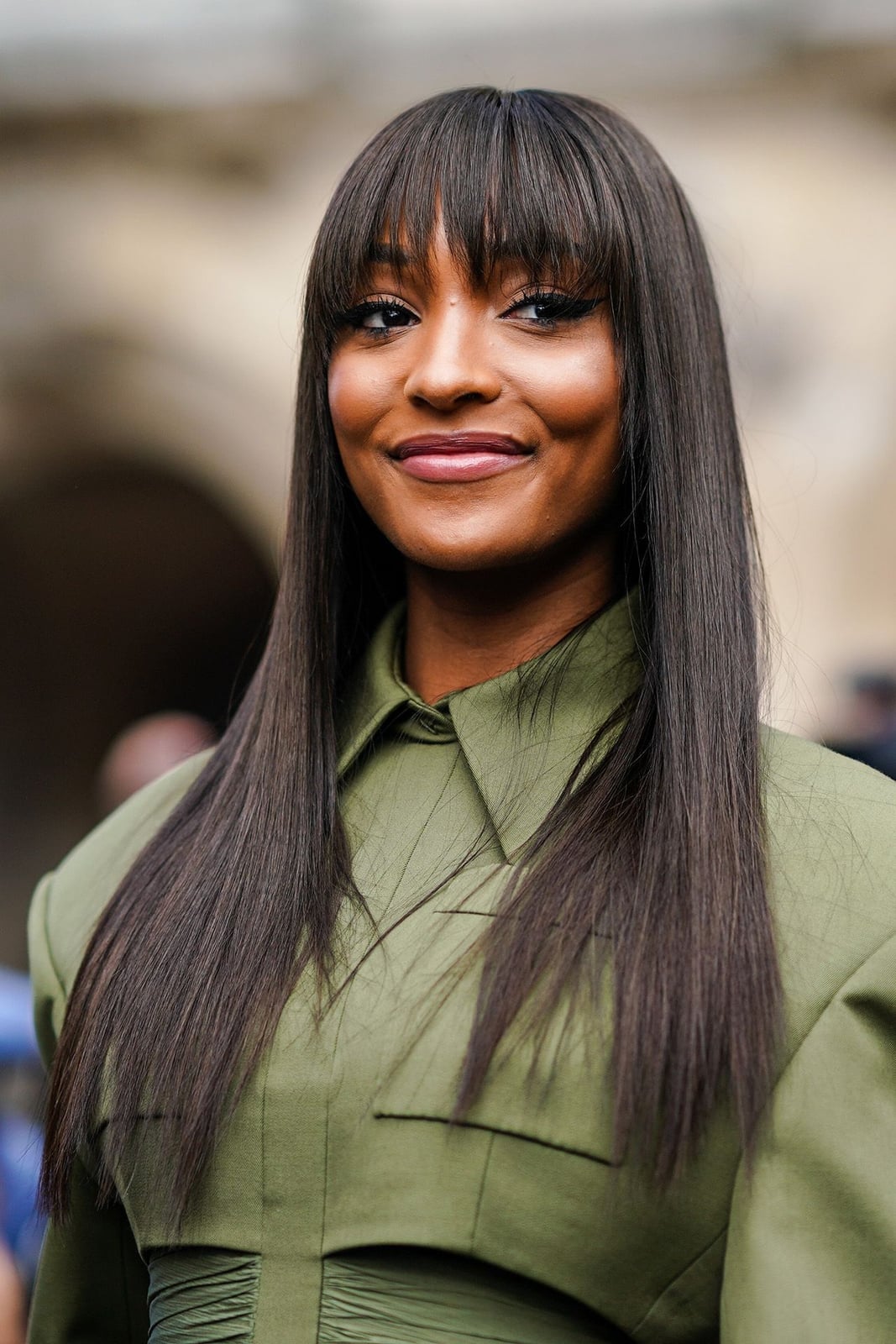
Butterfly bangs on straight fine hair behave differently than they do on wavy or thick textures. Here, the fringe is cut with longer face-framing pieces that blend into long layers, so it moves like a curtain but lands with more precision. A smooth blowout keeps the silhouette clean. Ask your stylist for: mid-back straight hair with butterfly bangs. Straight fine hair reaching mid-back is the ideal canvas for this: the length pulls the bangs into a soft V shape around the cheekbones. A round brush on the fringe during blow-drying adds the slight bend that keeps it from looking too flat. Long and oval faces get the most out of the vertical line.
Mid-Back Thick Hair With Soft Butterfly Bangs
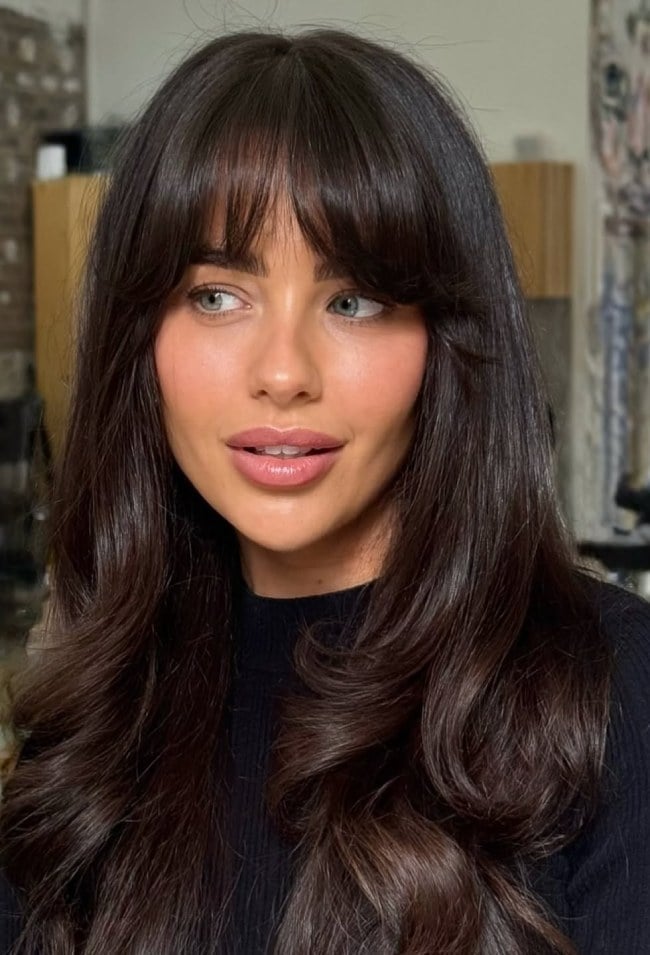
The design is clever: soft butterfly bangs carved into thick wavy hair so the fringe looks airy. The long layers underneath handle the bulk, while the middle parting lets the bangs fall symmetrically around the brows. Ask your stylist for: mid-back thick hair with soft butterfly bangs. Thick wavy hair of mid-back length suits this cut well, and the soft ends do a good job of softening square and angular faces. Daily styling is required. Thick waves need a blowout with a round brush to shape the fringe, or a smoothing serum and a quick flat iron if you are short on time. A trim every four to six weeks keeps the bangs neat.
Shoulder Shag With Shaggy Bangs And Balayage
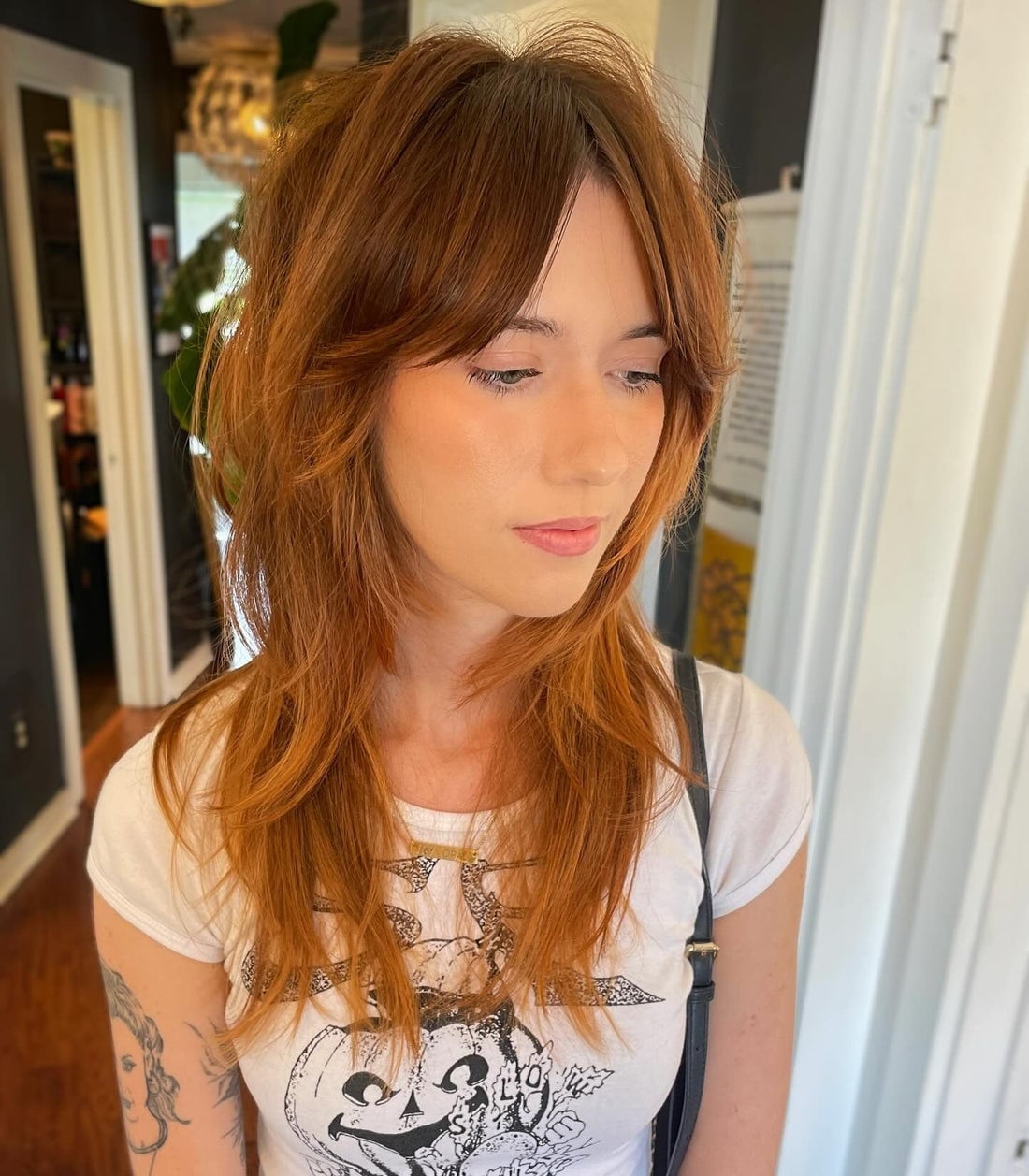
A copper base with blonde balayage is the color strategy here, painted through a shoulder-length shag cut so the lighter pieces hit the layers and the shaggy bangs. The side parting and air-dried texture give the whole thing a slept-in finish. Ask your colorist for: shoulder shag with shaggy bangs and balayage. Medium density wavy hair at shoulder length is the sweet spot: enough weight to hold the shape but enough movement for the bangs to land piecey. A sea salt spray on damp hair, then scrunch and go. Oval and heart faces get the most from the asymmetry of the side part.
Collarbone Shag With Textured Shaggy Bangs

A collarbone shag with fine wavy hair and ash blonde color relies on texture rather than volume. The shaggy bangs are cut short enough to clear the brows but left uneven so they land with a slight separation. Ask your stylist for: collarbone shag with textured shaggy bangs. Fine wavy hair starting at collarbone length is the right candidate, and the soft layers around the jaw do a decent job of softening round and square faces. The upkeep is minimal: air-dry with a texturizing paste worked through the fringe, skip heavy creams that weigh it down. A trim every six to eight weeks keeps the bangs from merging into the rest of the cut.
Shoulder Shag With Wispy Fringe
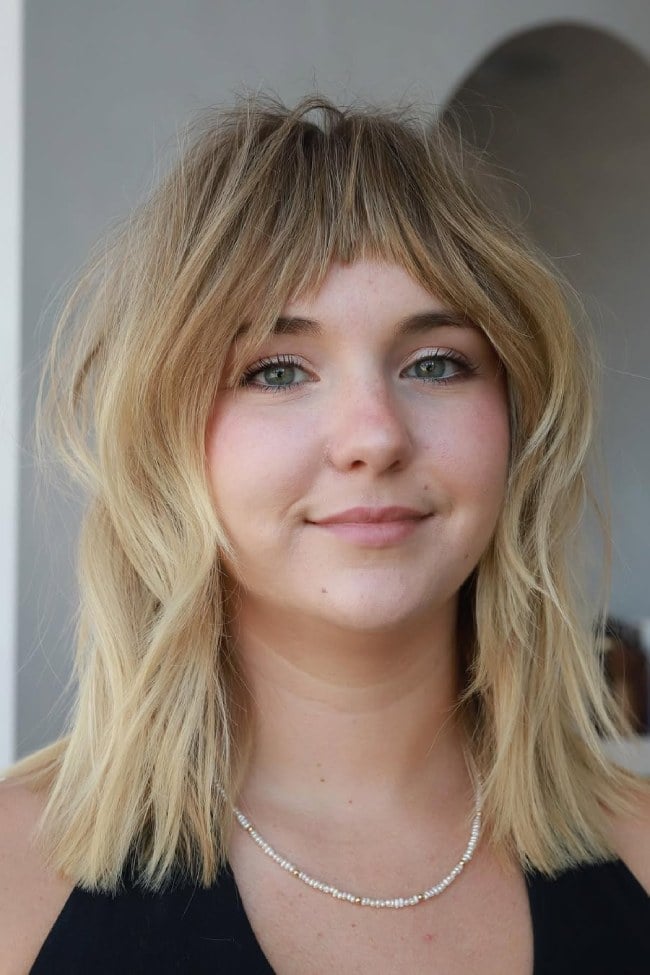
Can fine wavy hair carry a fringe without looking sparse? It can, if the fringe is cut wispy and the cut is a shag with subtle lighter highlights for dimension. Air dried texture keeps the whole thing low commitment. Ask your stylist for: shoulder length shag with wispy fringe. Fine wavy hair of shoulder length is the target here, and the wispy ends suit oval and heart faces best. The fringe lands just above the brows. A light hold spray on the fringe and a quick trim every four weeks are all it needs.
Mid-Back Shag With Tousled Shaggy Bangs

This mid-back shag with shaggy bangs on thick, wavy dark brown hair creates a tousled texture that holds all day. It works best on hair that already has some wave, and it softens oval and round faces. A middle parting completes the look.
Ask your stylist for: mid-back shag with shaggy bangs. The layered cut provides the shape, so styling is just a matte paste worked through the bangs. The rest of the hair can air-dry and do its thing.
Mid-Back Shag With Textured Blunt Bangs
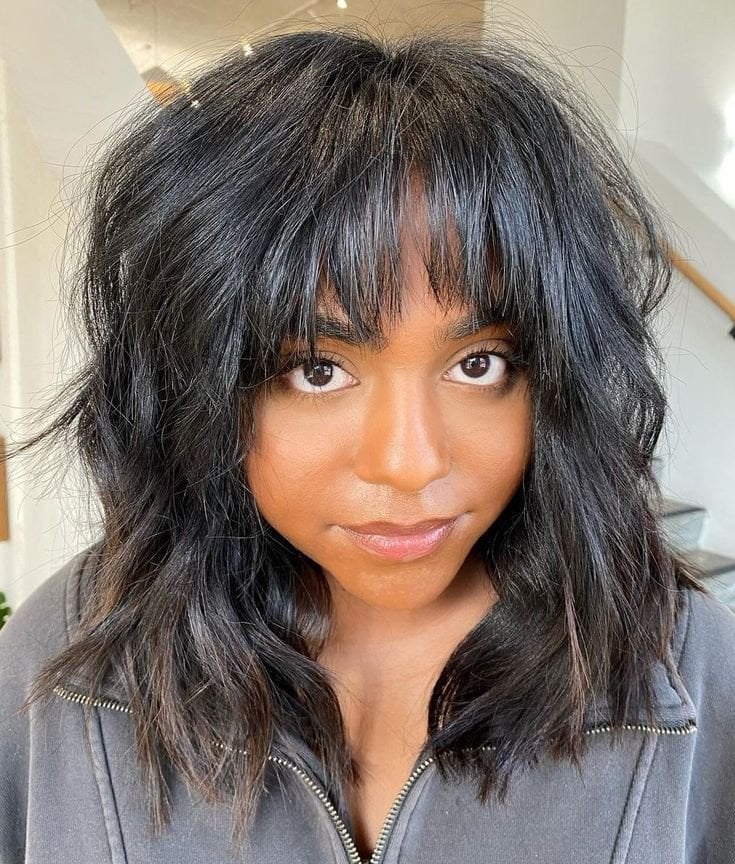
Textured blunt bangs sound like a contradiction until you see them on a mid-back shag with thick, wavy dark brown hair. The subtle lighter brown undertones add depth, and the middle parting keeps it from feeling heavy. It softens angular faces, but the bang maintenance is high.
Those blunt ends need a flat iron to stay crisp, and a trim every four weeks is required. This is not a low-effort fringe; textured blunt bangs demand regular styling and upkeep.
Mid-Back Shag With Full Textured Blunt Bangs and Wavy Texture
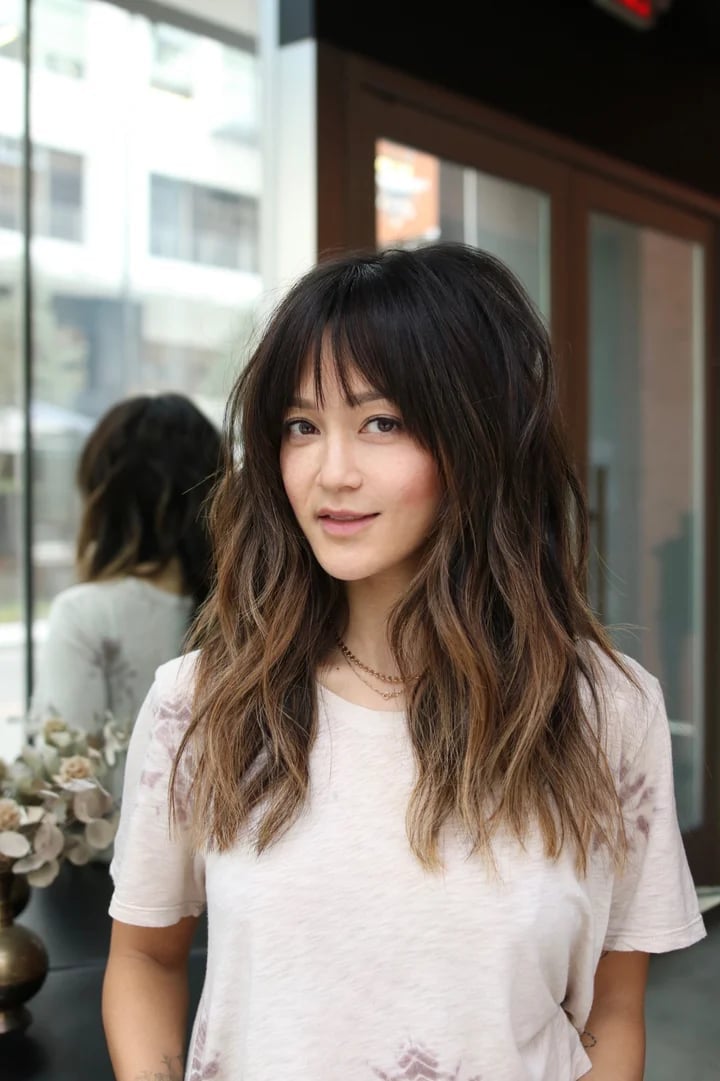
Full, textured blunt bangs on a mid-back shag with thick wavy dark brown hair and subtle balayage are built for the air-dry crowd. The middle parting and layered shag cut let the natural wave do the texturing work, so you skip the round brush entirely. A spritz of texture spray at the roots keeps the volume from falling flat by midday.
Collarbone Layers With Soft Face-Framing Bangs
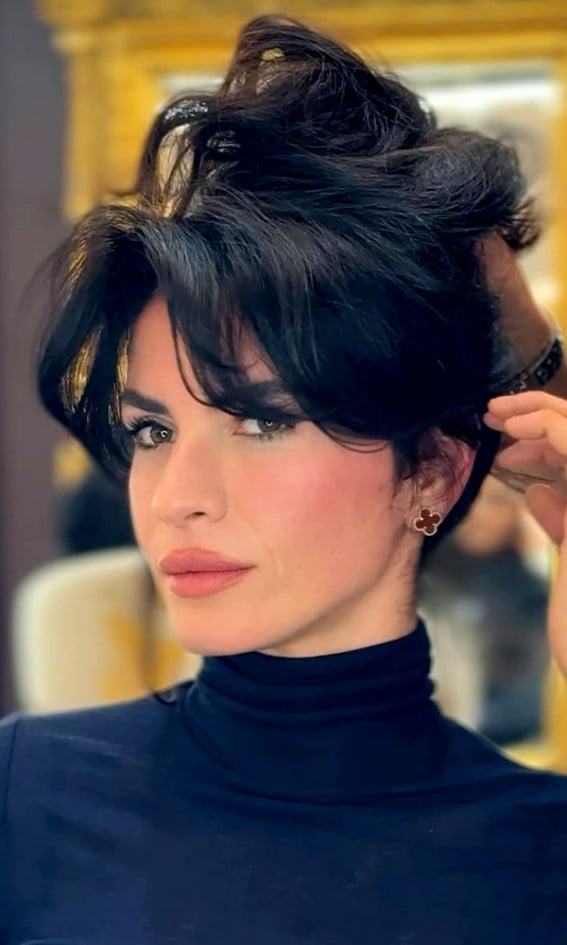
Can you get soft face-framing bangs without a daily blowout? On collarbone-length fine wavy hair in medium brown, yes. The blended curtain bangs and middle parting let you air-dry with a dab of lightweight mousse, and the layers prevent the ends from looking stringy.
Ask your stylist for: collarbone length with soft face-framing bangs. The bangs need a trim every four to six weeks, but the rest of the cut holds its shape for about eight.
Collarbone Layers With Ash Blonde Face-Framing Bangs

Ash blonde collarbone layers with face-framing bangs and subtle highlights are a solid bet for fine wavy hair that wants movement without losing density. The loose blowout waves and middle parting elongate a round face, and the bangs break up the length so it does not read as one solid block. Ask your colorist for: collarbone layers with ash blonde face-framing bangs. The cool tone needs a silver shampoo every other wash to stay ashy rather than brassy.
Collarbone Ash Blonde With Blended Curtain Bangs
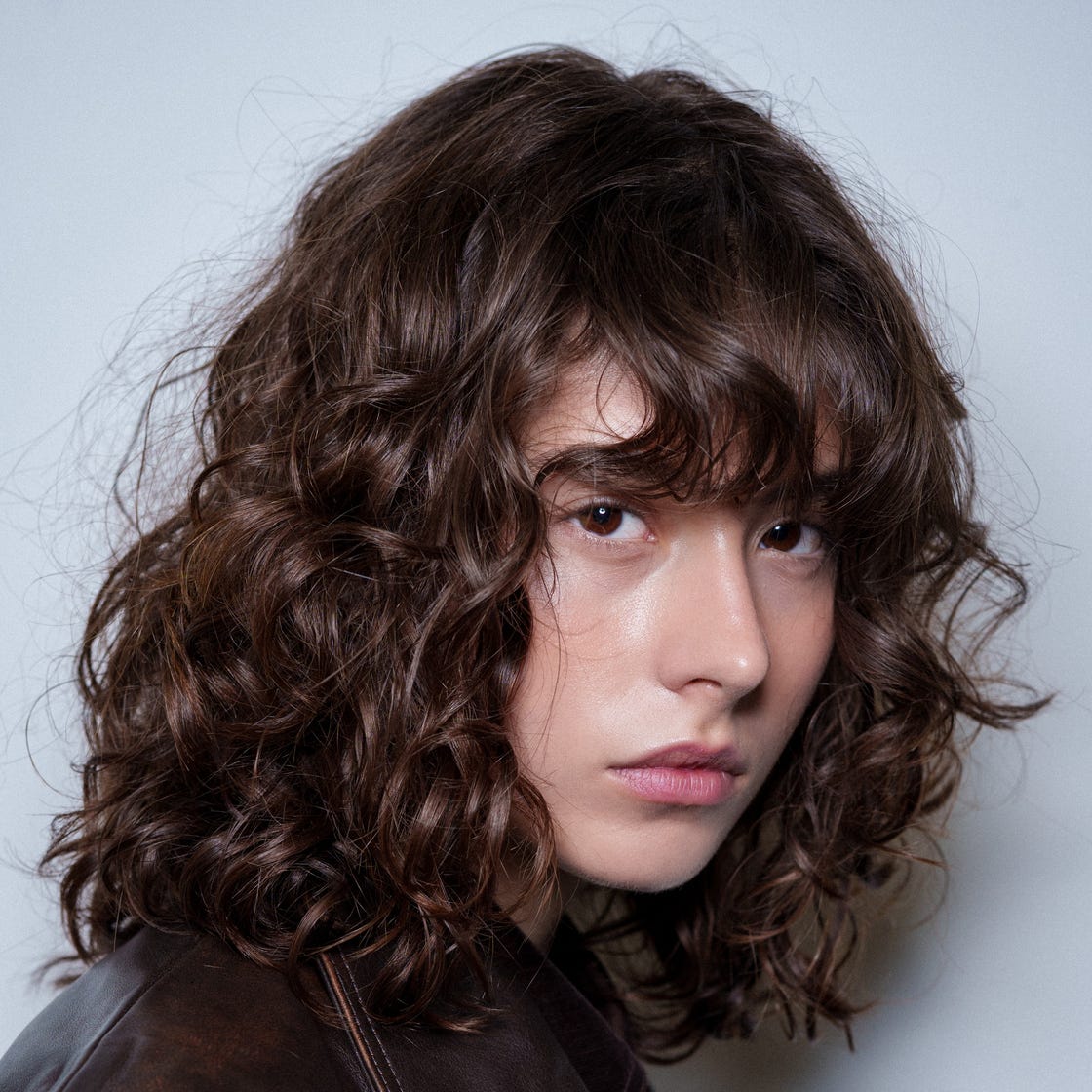
Ash blonde is a cooler cousin to the warmer blonde shades you see everywhere, and it needs a bit more maintenance to keep it from veering brassy. This collarbone-length cut with blended curtain bangs works best on fine wavy hair that can handle a blowout without going flat. Ask your stylist for: collarbone ash blonde with blended curtain bangs. Soft waves give it a polished finish. A toning shampoo once a week helps maintain the ash tone, and a texturizing spray keeps the bangs from blending into the hair.
Collarbone Dark Blonde With Blended Curtain Bangs, Wavy

Wondering how to ask for those soft, air-dried curtain bangs that don’t look like you tried? Start with the cut: collarbone length with long layers and blended curtain bangs, all in a dark blonde base with balayage highlights. Ask your stylist for: collarbone dark blonde with blended curtain bangs. The fine wavy texture does most of the work here, so you can air-dry with a diffuser or scrunch for volume. A trim every six to eight weeks keeps the bangs from turning into a pair of awkward wings.
Shoulder Layers With Dark Blonde Curtain Bangs

The layers here are cut so the curtain bangs fall naturally into the hair, not sit on top of it. Shoulder-length hair with medium density wavy texture holds the shape well, and the dark blonde base with blonde highlights adds depth without a full color commitment. Ask your stylist for: shoulder-length layers with dark blonde curtain bangs. A texturizing spray and a quick tousle with your fingers is all it takes to get those loose waves.
Collarbone Shag With Piecey Curtain Bangs
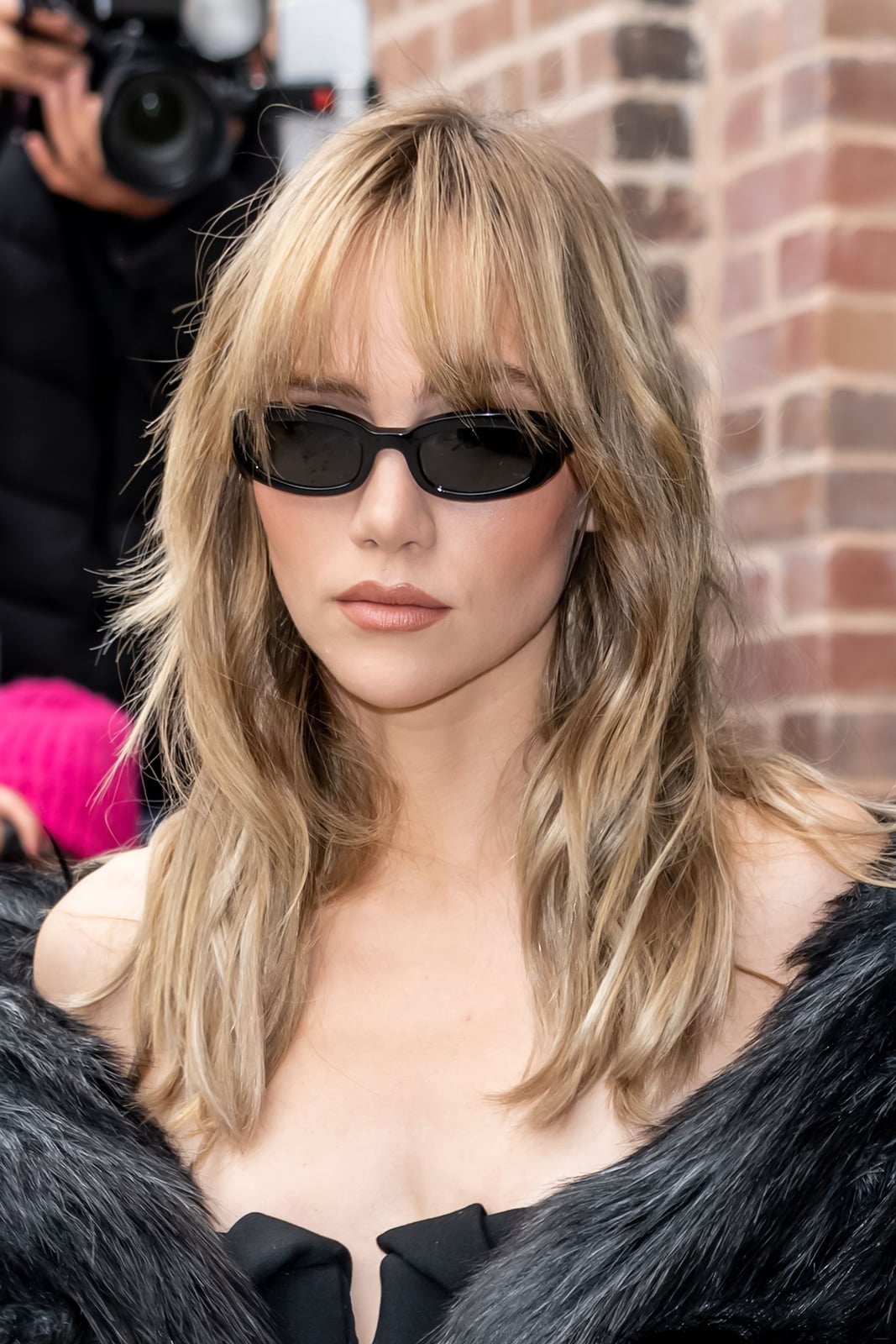
The shag cut is built on disconnection, so those piecey curtain bangs are meant to separate and move, not sit in a solid block. On collarbone-length wavy hair with medium density, the bangs blend into the layers without a harsh line.
Ask your stylist for: collarbone shag with piecey curtain bangs. A sea salt spray gives it that lived-in texture that looks better on day two than day one. The blonde highlights catch the light in each separate piece, which is the whole point of going piecey in the first place.
Collarbone Layers With Medium Brown Curtain Bangs
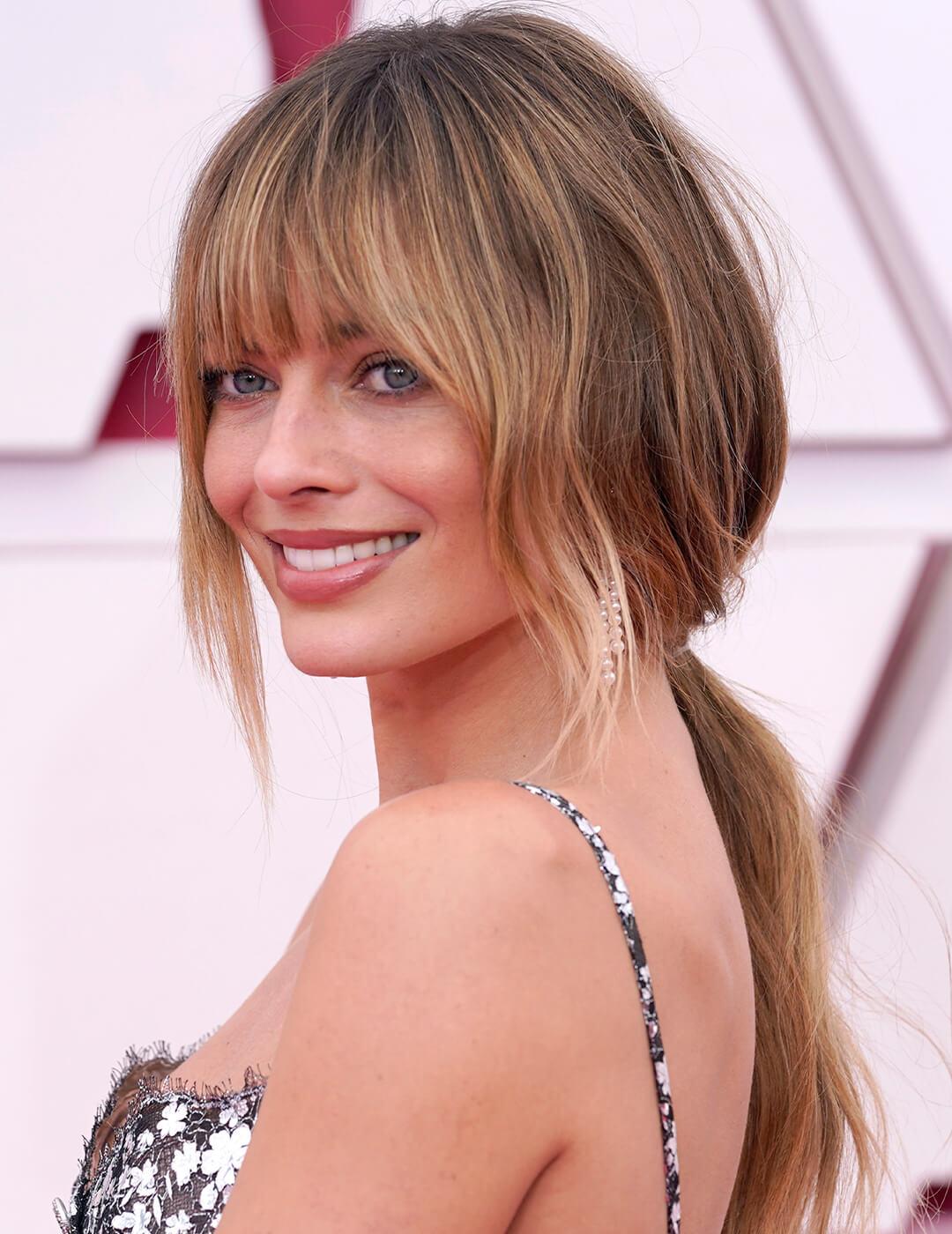
Curtain bangs on fine wavy hair can be tricky because they tend to disappear into the rest of the hair, but a collarbone-length cut with layers gives them somewhere to land. The medium brown shade with subtle highlights keeps it low-maintenance while adding a bit of dimension. Ask your stylist for: collarbone medium brown with blended curtain bangs. This suits round and heart faces best, as the bangs soften the sides without shortening the face. A round brush blow-dry on the bangs keeps them separate from the layers, and a trim every six to eight weeks stops them from grazing your chin.
Mid-Back Thick Hair With Blended Curtain Bangs
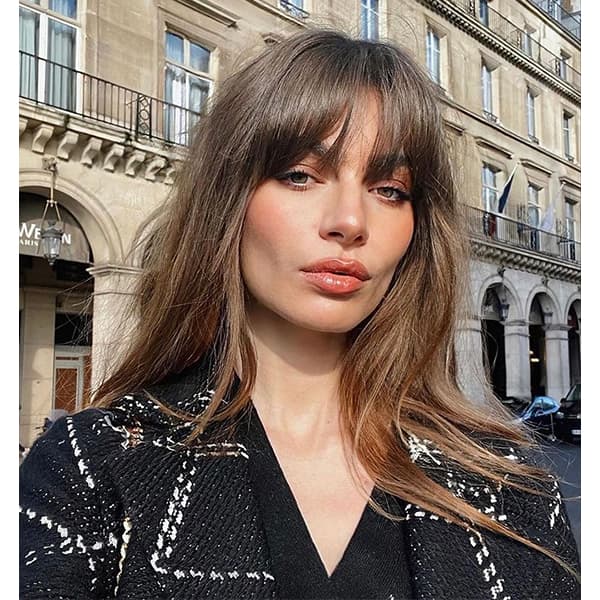
Blended curtain bangs on thick, wavy mid-back hair require a stylist who understands weight distribution. The layers and subtle highlights add dimension, but without proper internal thinning, that soft fringe can turn into a heavy curtain. Ask your stylist for: mid-back thick hair with blended curtain bangs. The design softens angular faces, though the trade-off is a more involved drying routine. A smoothing cream helps control the wave pattern, and those bangs need a trim every four to six weeks to keep the blend from looking blunt. If you prefer a truly low-maintenance option, this one asks for a bit more attention.
Collarbone Dark Brown With Soft Blended Bangs

How does a stylist get those blended bangs to look so soft? The technique relies on a round brush and a blow-dryer aimed downward, directing the thick, wavy dark brown hair forward from a middle parting. The collarbone-length layers prevent the cut from feeling heavy, while the soft bangs break up the density around the face. Ask your stylist for: collarbone dark brown with soft blended bangs. The blowout does the work, so once you leave the salon, a quick pass with the dryer is usually enough to reset the shape. It softens round and heart face shapes without demanding a full restyle every morning.
Collarbone Layers With Textured Side-Parted Bangs, Dark Brown

The side parting and textured bangs on this collarbone-length shag create a deliberately undone finish. The thick, wavy dark brown hair is air-dried, which means the texture does the talking rather than a round brush. Ask your stylist for: collarbone layers with textured side-parted bangs. A texturizing paste worked through the fringe keeps the pieces separated and prevents the bangs from merging into one solid block. The shape suits long and oval faces, and the upkeep is forgiving. A trim every eight weeks maintains the shag structure, though the bangs may need a touch-up at six weeks to keep the texture visible.
Collarbone Fine Hair With Textured Curtain Bangs

Fine, wavy blonde hair at collarbone length often struggles to hold shape, but textured curtain bangs with a side parting add movement without weighing the strands down. The long layers keep the cut light, and the blended bangs create the illusion of density at the front. Ask your stylist for: collarbone fine hair with textured curtain bangs. A volumizing spray at the roots lifts the crown, while the air-dried finish lets the natural wave do the rest. This cut softens round and heart faces, and it works best for those who want a low-effort fringe that doesn’t require a hot tool every day.
Mid-Back Ponytail With Casual Curtain Bangs
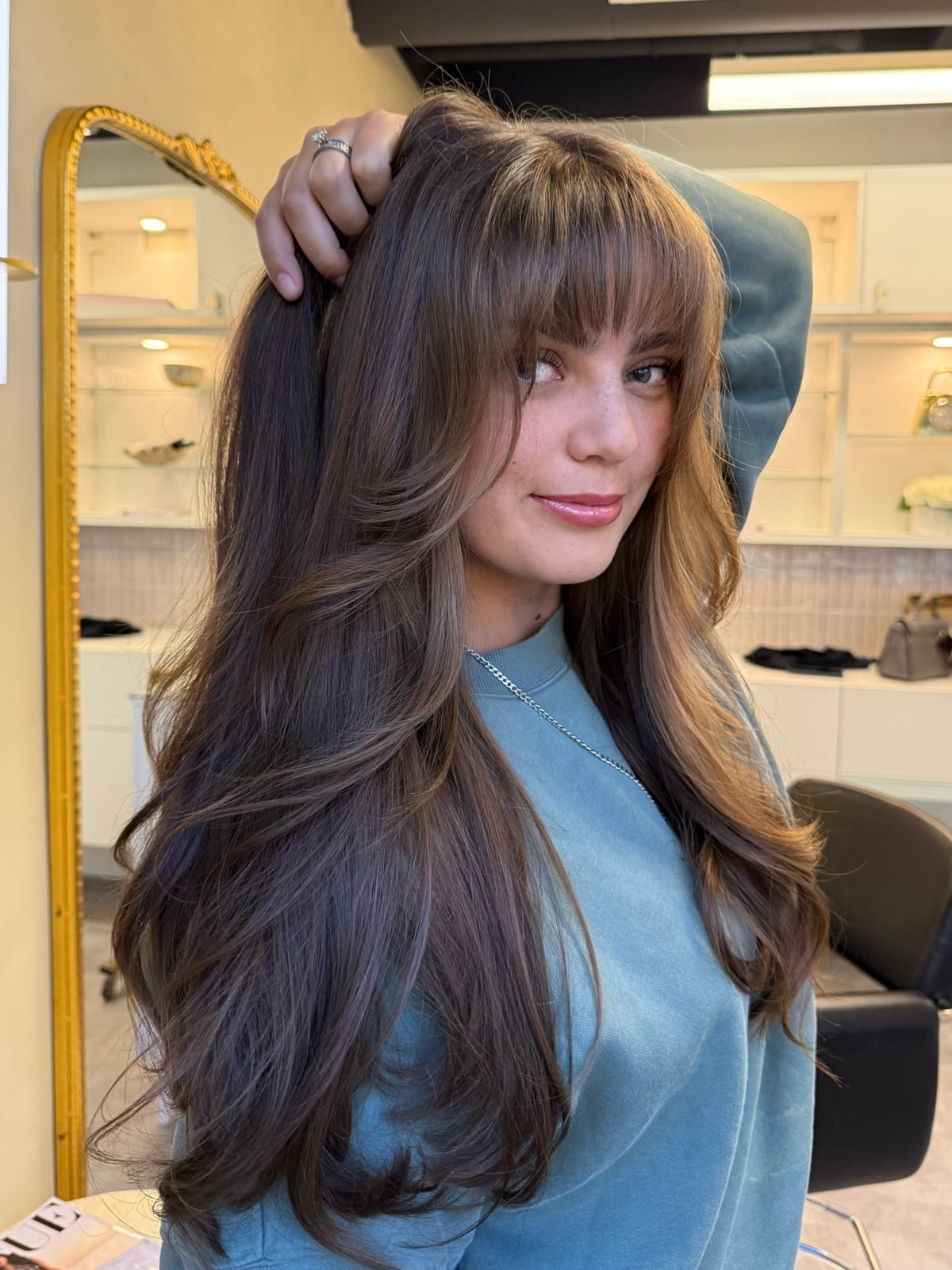
How do you ask for face-framing bangs that still work with a ponytail? The key is keeping the fringe long enough to tuck behind the ears or blend with the hair when it is down. This mid-back cut with long layers and a middle parting features soft curtain bangs that frame the face without shortening the overall length. Ask your stylist for: mid-back ponytail with casual curtain bangs. The stylist should cut the bangs dry and at a slight angle so they sit naturally when pulled back. A texturizing spray adds grip to the ponytail and keeps the face-framing pieces from slipping out. It suits oval and heart faces and requires a trim every six to eight weeks.
Shoulder Hair With Air-Dried Curtain Bangs

Here is the thing about air-dried curtain bangs on shoulder-length, straight, medium-textured hair: they look best when you do not fight the natural fall. Soft layers let the dark brown color sit evenly, and the bangs blend into the sides. Ask your stylist for: shoulder length with air-dried curtain bangs. On straighter textures, the bangs can fall flat by midday unless you give them a quick tousle. A product with grip helps hold the shape without heat. This is a salon-leaning cut that rewards a good initial shape, but after that, you are mostly hands-off.
Mid-Back Layers With Dark Brown Face-Framing Bangs
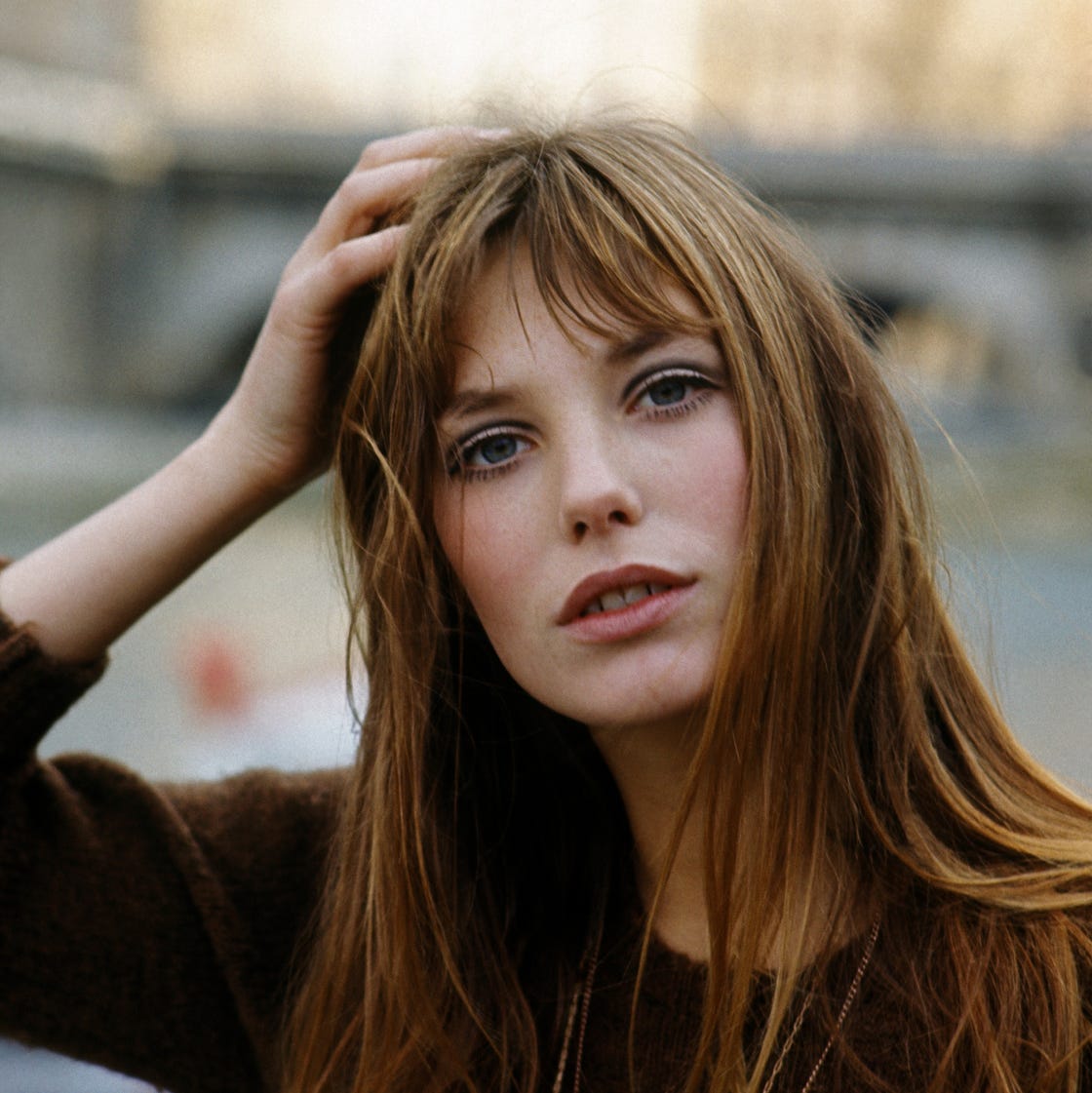
The Birkin bang on mid-back, medium-density wavy hair is built from a full fringe that is feathered rather than blunt. The subtle highlights in the dark brown base add depth to the layers, and the middle parting keeps the weight balanced. Ask your stylist for: mid-back layers with dark brown face-framing bangs.
To air-dry this style, apply a smoothing serum through damp hair and let the bangs fall forward naturally. The waves do the work of softening the edges, which is why this cut suits angular faces. A salon visit gets the layers and bangs cut precisely, but the daily finish is low-effort. The textured, air-dried result looks intentional without requiring a round brush.
Mid-Back Brunette With Birkin Bangs
The Birkin bang on mid-back, wavy, medium-density hair relies on a full, slightly feathered fringe and a middle parting. The brunette base with subtle highlights keeps the texture from looking flat, and the air-dried finish leans into the natural wave pattern. Ask your stylist for: mid-back brunette with Birkin bangs.
Upkeep is minimal: the bangs need a trim every four to six weeks to hold the feathered shape, and the length can go longer between cuts. A texture spray helps revive the wave on day two. This style suits oval and long faces because the full fringe shortens the visual length of the face. The retro feel is built into the cut itself, so no extra styling effort is needed to sell it.
Long Hair With Voluminous Blowout And Curtain Bangs

This is not a wash-and-go style, but it is also not a salon-only affair. The collarbone-length lob with soft layers and face-framing bangs relies on a round brush and a blow-dryer to build volume at the roots. The warm brown base with subtle lighter highlights catches the light when the hair is blown smooth. Ask your stylist for: long hair with voluminous blowout and curtain bangs. At home, you can get close with a large round brush and a heat protectant, though the initial cut is best left to a professional to set the layers correctly. The side parting and gentle waves keep the look polished without looking stiff. A trim every eight weeks keeps the bangs from grazing your chin.
Final Thoughts
Fine hair benefits from lighter, textured bangs that won’t weigh it down, while thicker hair can handle layered or shaggy styles that add movement and reduce bulk. The right fringe works with your routine, not against it.
- Trim bangs every 3-4 weeks to maintain shape.
- Wash bangs separately between full hair washes for freshness.
- Use dry shampoo at the roots to combat oiliness.
- Style with heat protectant when using hot tools.
Find the fringe that speaks to you and wear it with confidence.
