

Gray hair is no longer something to hide, but a color to embrace with modern blending techniques. The trend favors soft face-framing layers and lived-in color that complements natural texture and cut.
This collection of 27 haircuts spans collarbone lobs to short pixies, each built for low-maintenance grow-out and a seamless silver transition. Simple Gray Blending solves the visible root line and flat fine hair, offering options for round, square and long face shapes with varying density and texture. You get a cut that grows with your gray, not against it.
Collarbone Lob With Side Part And Soft Waves
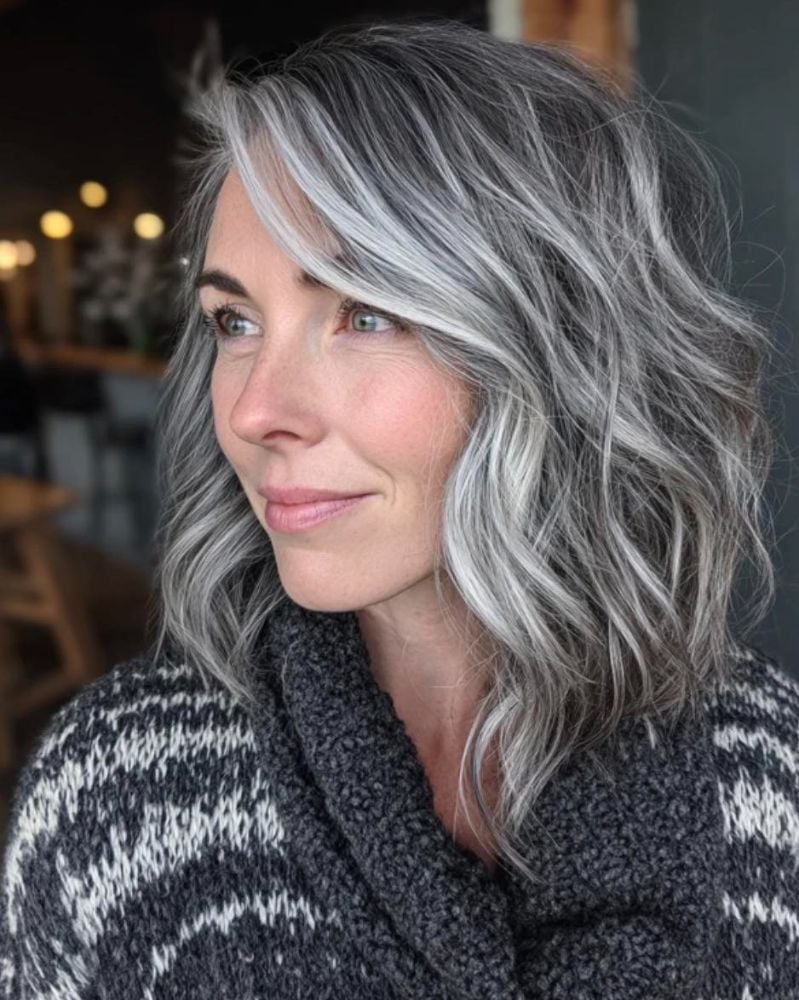
A collarbone lob with loose waves and a side part works because the layers hit just where the neck meets the shoulder, creating a frame that moves with you rather than sitting still. The side-swept bangs and lighter gray pieces woven through the darker base keep the grow-out line from feeling stark. Medium density wavy hair starting at collarbone length is the sweet spot; round and oval faces get the softest effect from the diagonal movement. Ask your stylist for: collarbone length lob, loose waves, side parting, natural gray blend. Apply a texturizing spray to damp hair before air-drying or blow-drying for soft, lived-in waves. A trim every six to eight weeks keeps the ends from splitting and the layers from collapsing.
Chin Length Bob With Straight Side Bangs
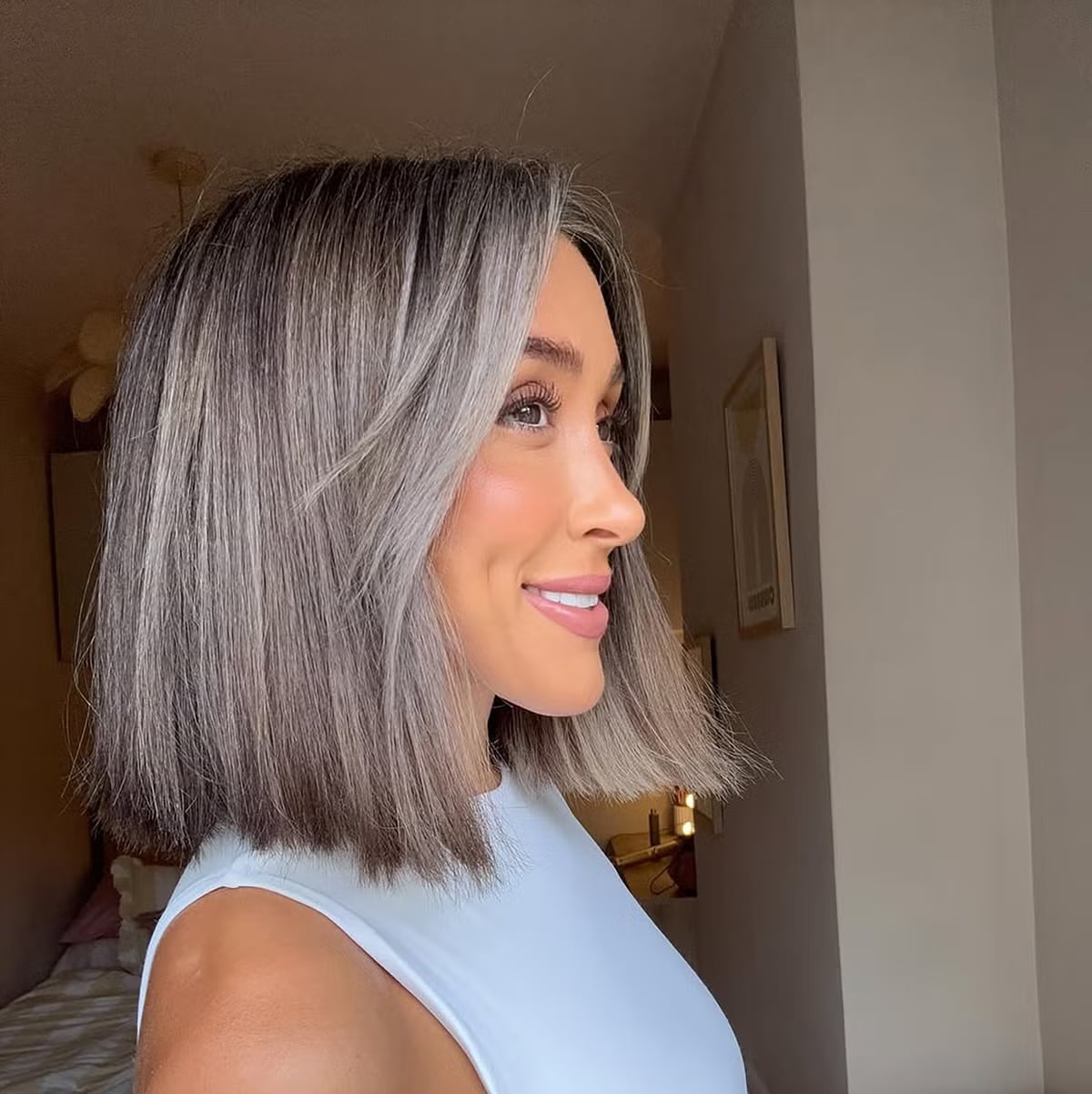
Can a chin-length bob with side bangs handle gray blending without looking severe? Yes, when the blunt line is balanced by soft, angled bangs that graze the brow. The gray base with subtle blonde highlights keeps the overall tone cool and modern rather than flat. Fine straight hair that can hold a crisp shape is ideal; side bangs help soften a square jaw. Ask your stylist for: chin length straight bob, side bangs, gray base with blonde highlights. The precision of the cut matters more than styling tricks, so bring a reference photo and expect the stylist to dry and refine the baseline before calling it done.
Mid-Back Wavy Hair With Gray Blend
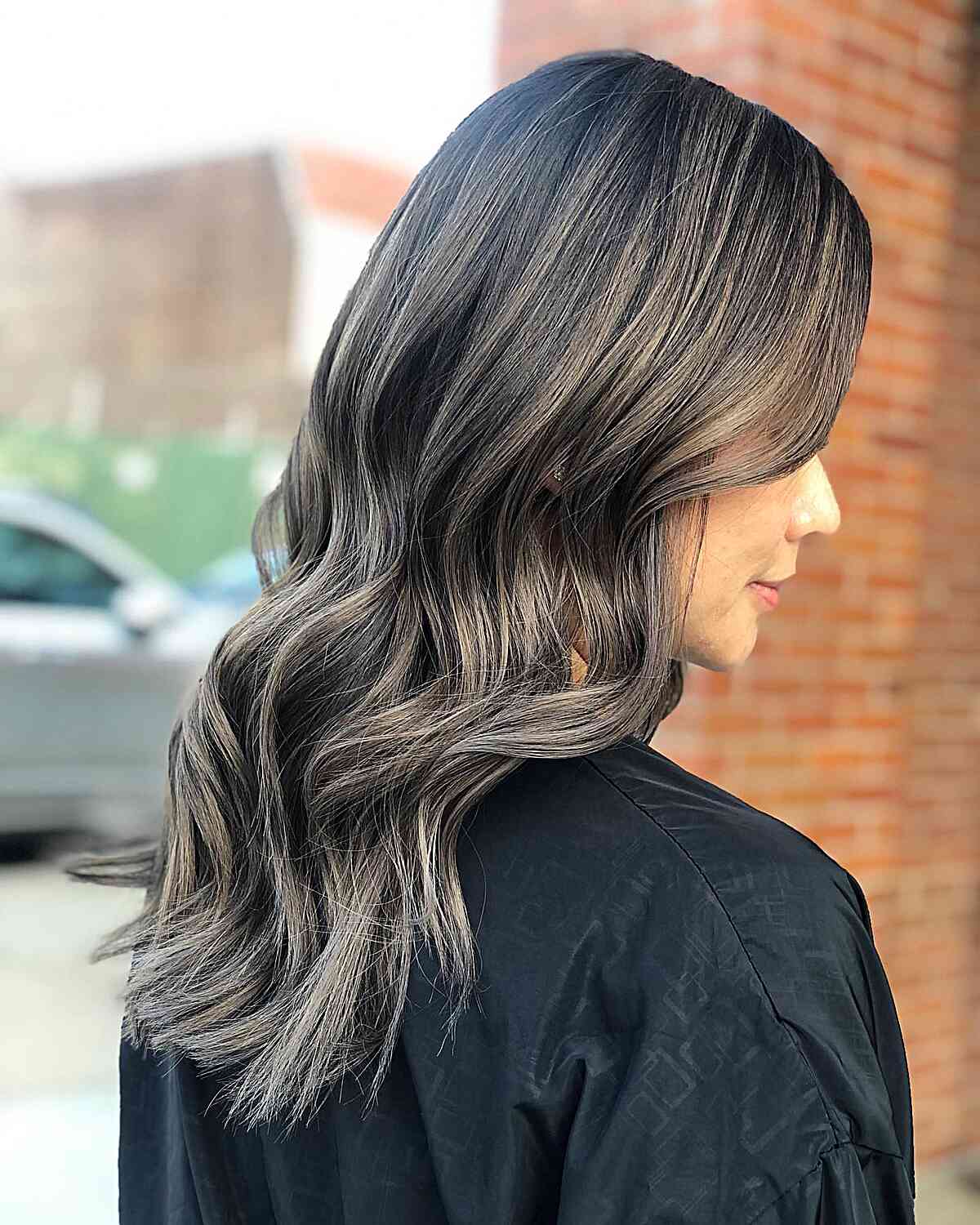
The trick with mid-back wavy hair and a gray blend is letting the darker base hold the depth while lighter strands weave through the ends. Side-swept bangs pull the eye across, which keeps the length from dragging the face. Medium density wavy hair benefits from the contrast because the texture catches both tones equally. Ask your colorist for: mid-back length wavy hair, side-swept bangs, gray blend with darker base.
A curl-enhancing cream and air drying give the most natural finish, but this cut also holds a diffuser set for extra volume. A trim every eight to ten weeks keeps the ends healthy without sacrificing length. It works best for everyday wear in warmer months when the lighter strands catch the sun.
Mid-Back Straight Hair With Gray Highlights
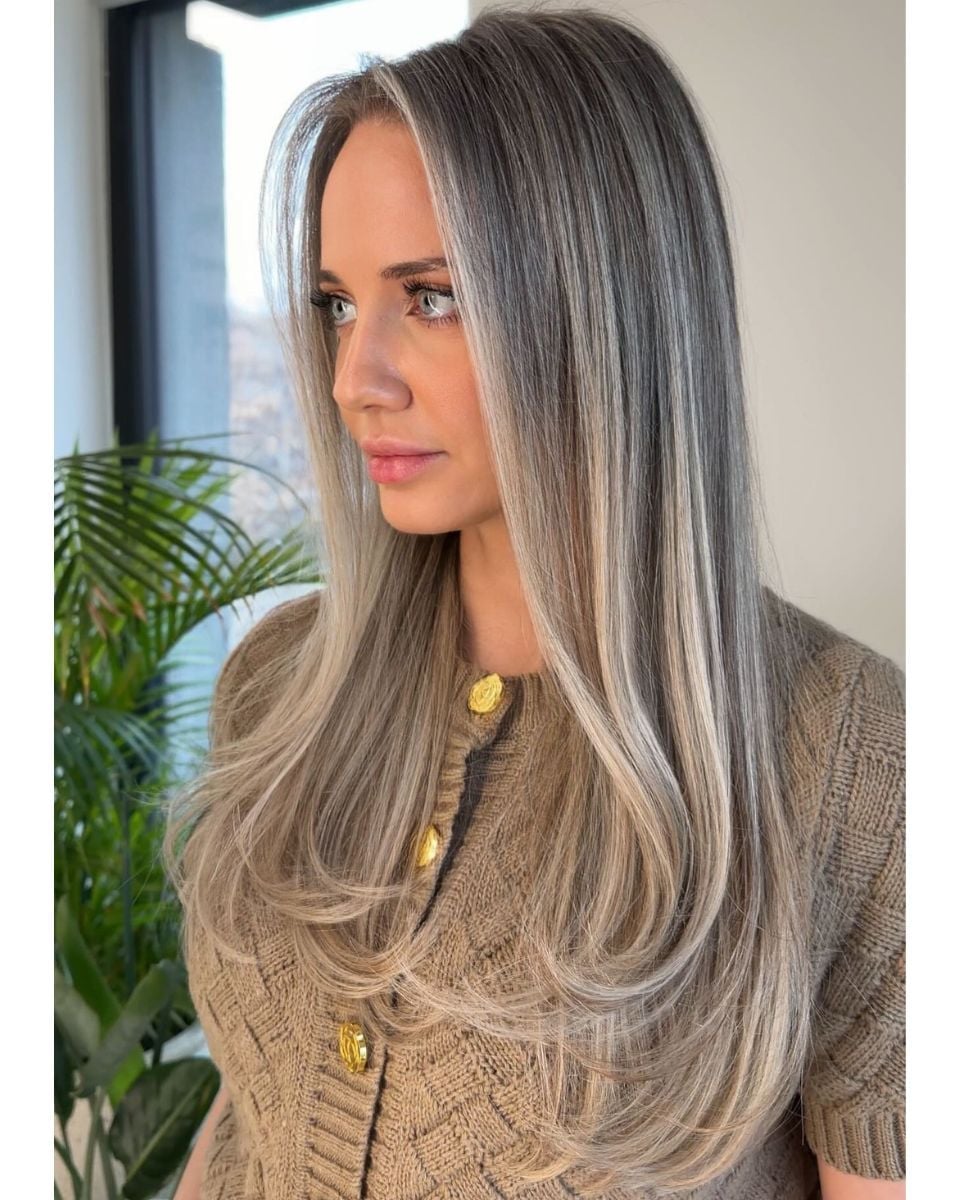
Straight mid-back hair with gray highlights is the more polished cousin of its wavy counterpart. The middle part and fine density keep the look clean, while the blonde base with gray highlights adds dimension without requiring a full color overhaul. A middle part elongates a round face, so it is a smart choice if that is your goal. Ask your colorist for: mid-back straight hair, blonde base with gray highlights, middle part.
The salon visit is straightforward: a toner appointment every six to eight weeks prevents the highlights from turning brassy against the blonde base. At home, a smoothing serum keeps the shine even. Straight texture shows every uneven piece, so the highlights need to be placed with precision.
Long Layered Hair With Dramatic Gray Blend

Long layered hair with a dramatic gray blend pairs a darker base near the roots with prominent silver strands through the lengths. The soft waves and side parting keep the silver from looking flat. Thick wavy hair of long length carries the layers without losing shape. Face-framing layers soften a square jawline, which is the standard advice for this cut. Ask your colorist for: long layered hair, dramatic gray to silver blend, soft waves.
The real drawback is the grow-out pace: the darker base and silver strands grow at the same rate, but the contrast means the line of demarcation shows faster than a single-process gray blend. A gloss treatment every four weeks keeps the silver bright and the dark base from turning muddy.
Mid-Back Ombré With Gray To Blonde Gradient
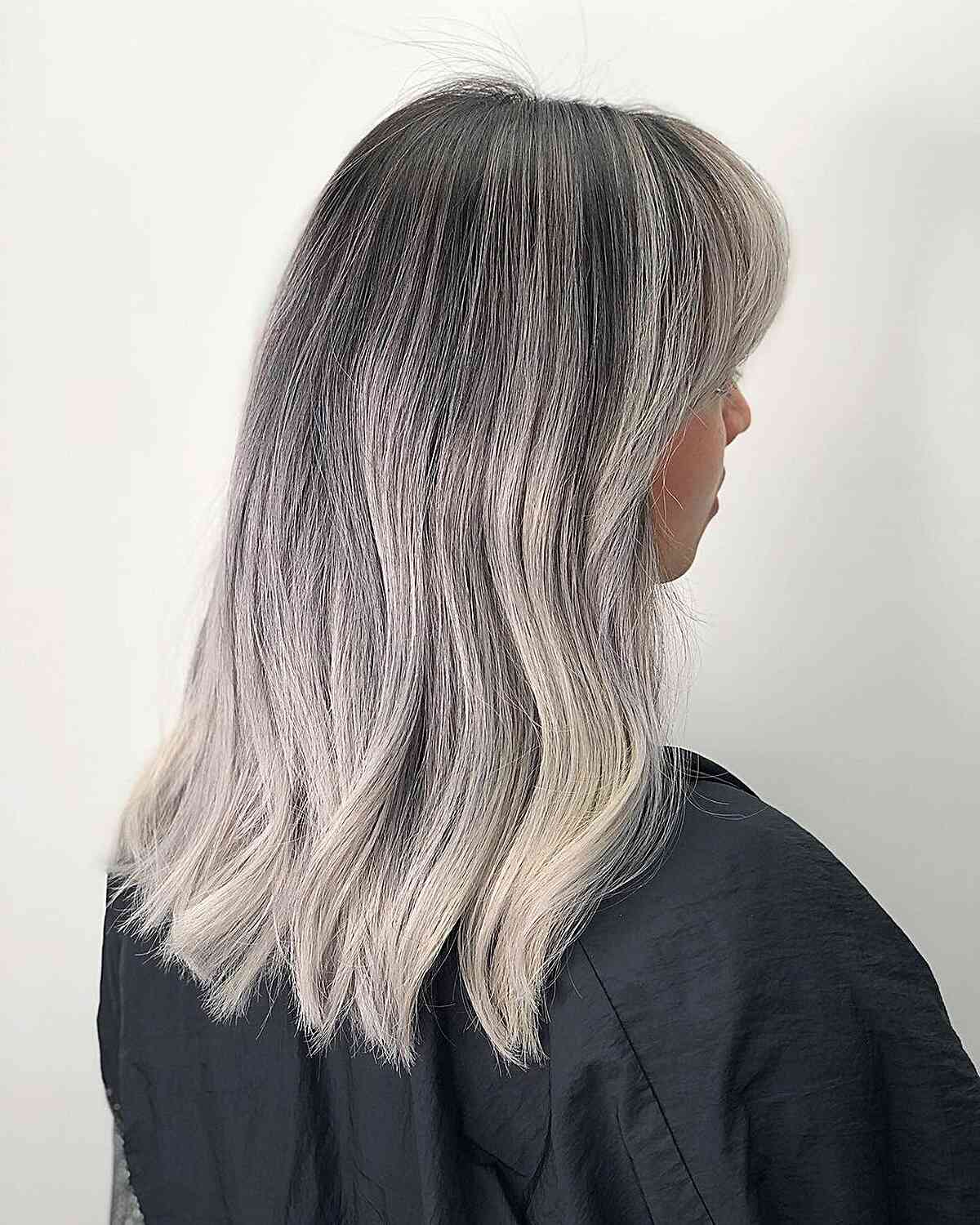
Wondering if warm weather can work with a cooler color? This mid-back ombré starts with a natural gray at the roots and shifts to a soft blonde at the ends, so the darkest part stays near the face. The long layers and loose waves make the gradient visible instead of just another solid tone. It works best on medium-density wavy hair that can hold the shape without extra heat. Ask your colorist for: mid-back length with long layers, gray to blonde ombré. A sea salt spray is enough to keep the texture loose, and a trim every eight to ten weeks stops the layers from disappearing into the length.
Layered Collarbone Lob With Gray Blend
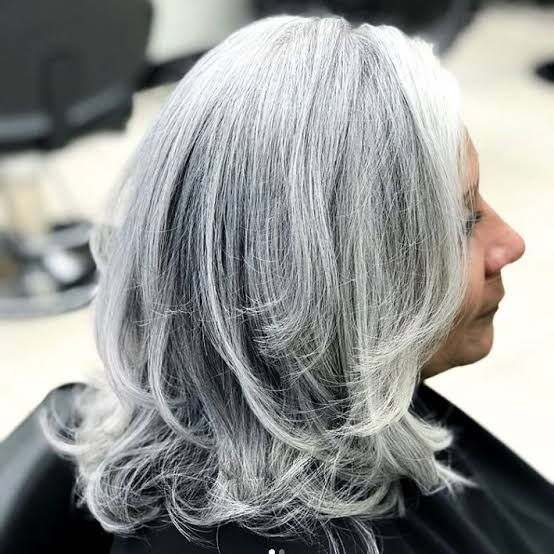
A collarbone lob with dark roots and a gray base is one of the most honest haircuts you can get. The darker root line means the growing-out phase never looks like a mistake, and the layered shape keeps thick, wavy hair from turning into a solid triangle. The side part and soft blowout give it polish without making it stiff. Ask your stylist for: layered collarbone lob, gray color with dark roots. A round brush and a blow dryer are all you need at home. Plan for a baseline trim every six to eight weeks to keep the hemline clean.
Mid-Back Layers With Gray And Blonde Highlights
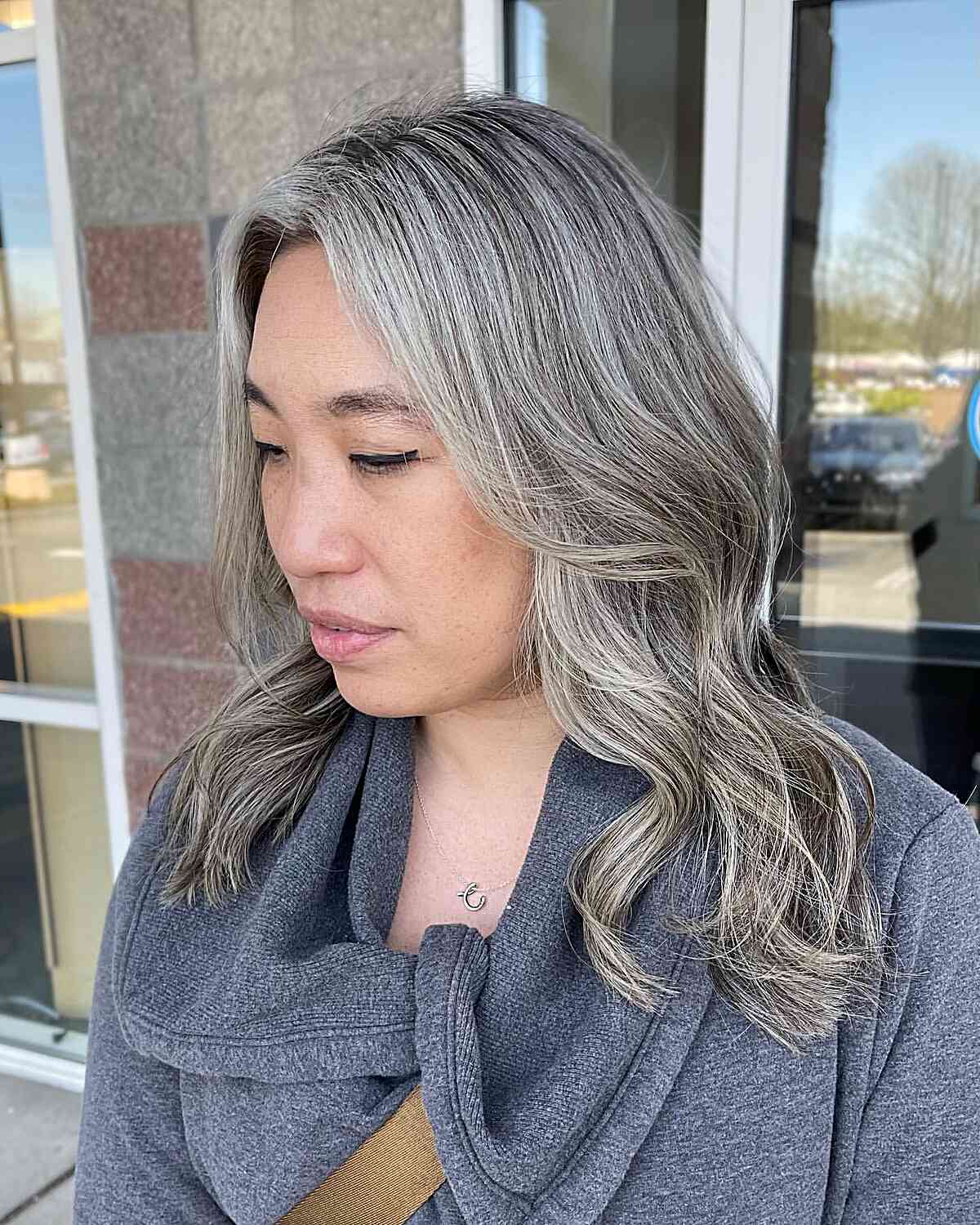
The idea with blended highlights on long hair is to create dimension without a distinct line of demarcation. Here, the gray base is woven with lighter blonde pieces through long layers, so the color shifts gradually from top to bottom. The loose curls help the highlights read as part of the texture rather than a separate stripe.
This is a salon project, not a kitchen-sink job. A stylist needs to place the highlights in a way that matches the natural wave pattern. Ask your colorist for: mid-back length with long layers, gray with blonde highlights. For at-home care, a curl-defining cream keeps the shape intact between washes. A trim every eight to ten months maintains the shape.
Chin Length Bob With Curtain Bangs
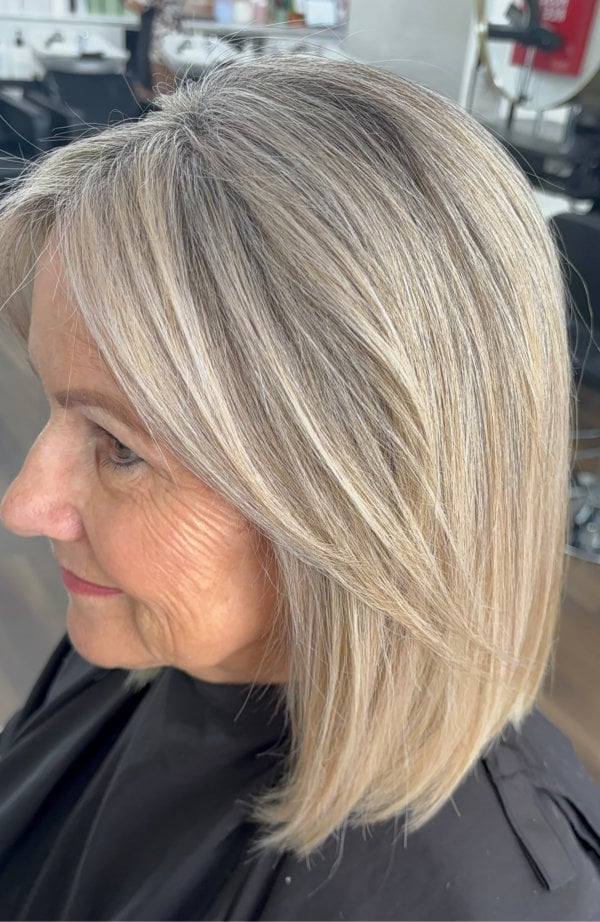
Is there a way to add gray without committing to a full head of silver? A chin-length bob with curtain bangs uses the bangs to introduce the lighter tones near the face, while the rest stays a darker gray base with subtle blonde highlights. The straight texture and fine density keep the bob sharp and defined. Ask your stylist for: chin length straight bob, curtain bangs, gray base with subtle blonde highlights. The curtain bangs are cut so they can be blown to the sides with a round brush. A trim every six weeks will keep the bob and the bangs in proportion.
Shoulder Length Wavy Hair With Gray Blend
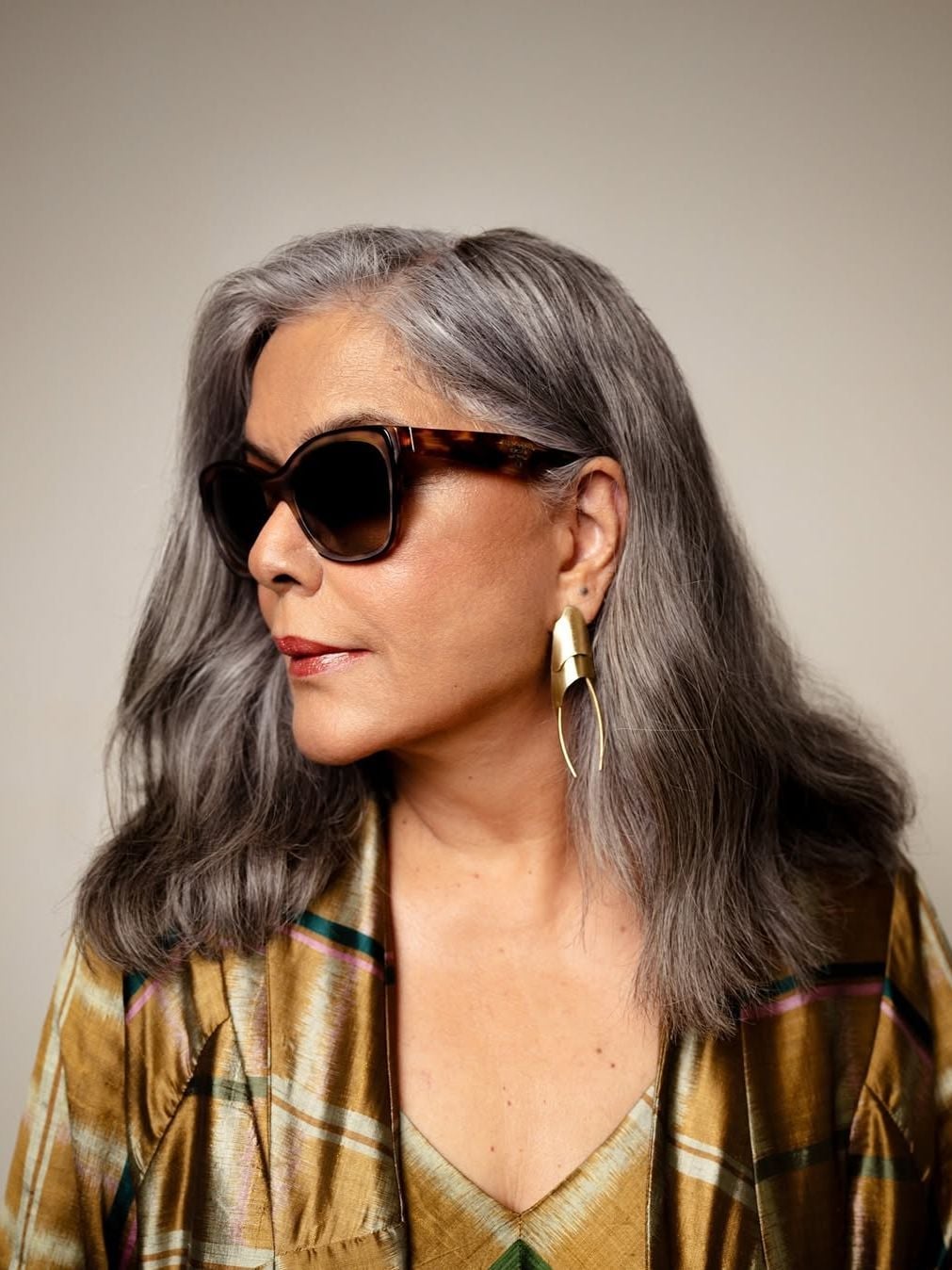
What makes a seamless transition work is a cut that lets the color and texture do the talking. This shoulder-length style blends gray and darker tones through soft waves, so there is no harsh line between the two. The side part adds volume at the top, which helps on medium-density hair that tends to lie flat. Ask your stylist for: shoulder length wavy hair, seamless gray and dark blend. Air drying will reproduce the same wave pattern at home. The layers need a trim every six to eight weeks to keep the shape from looking stringy.
Short Gray Bob With Blended Tones
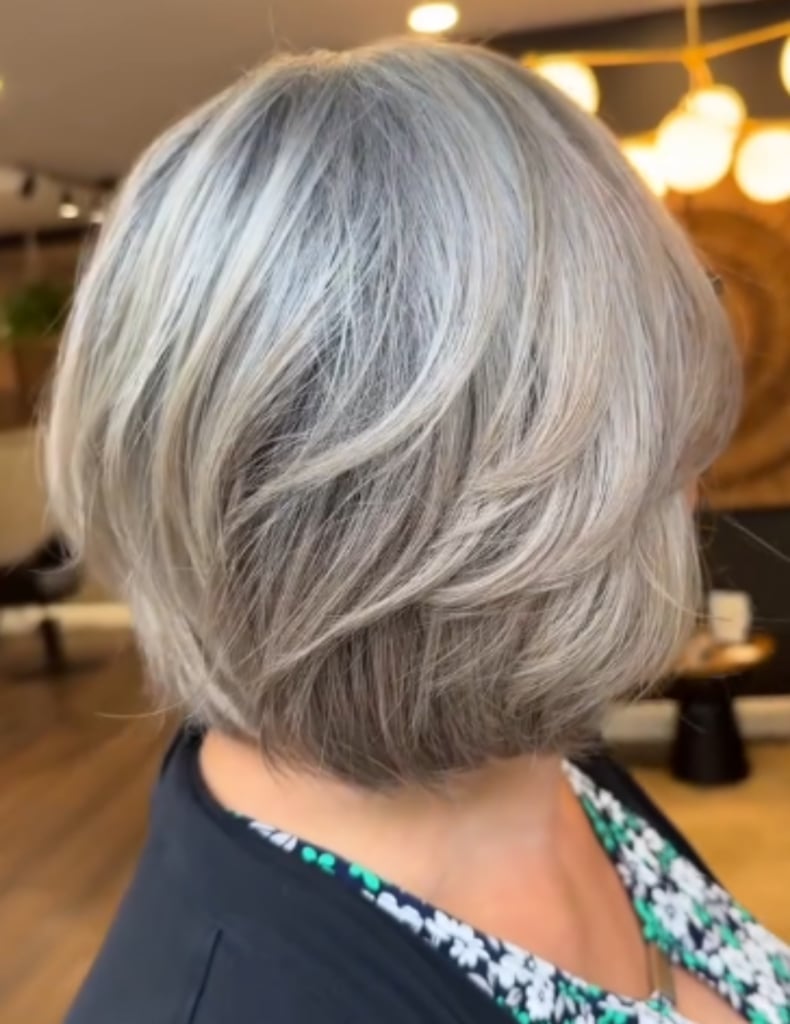
A short gray bob with blended tones is a smart choice if you have fine, straight hair, because the clean lines and subtle layers give the illusion of density without looking weighed down. The ear-length cut with a middle part works especially well for round faces, as the vertical line helps elongate the shape. Ask your stylist for: short bob, ear length, blended gray tones, middle part. To style, apply a smoothing cream and use a round brush while blow drying for that sleek finish; expect to trim every four to six weeks to keep the shape crisp.
Collarbone Lob With Gray Balayage
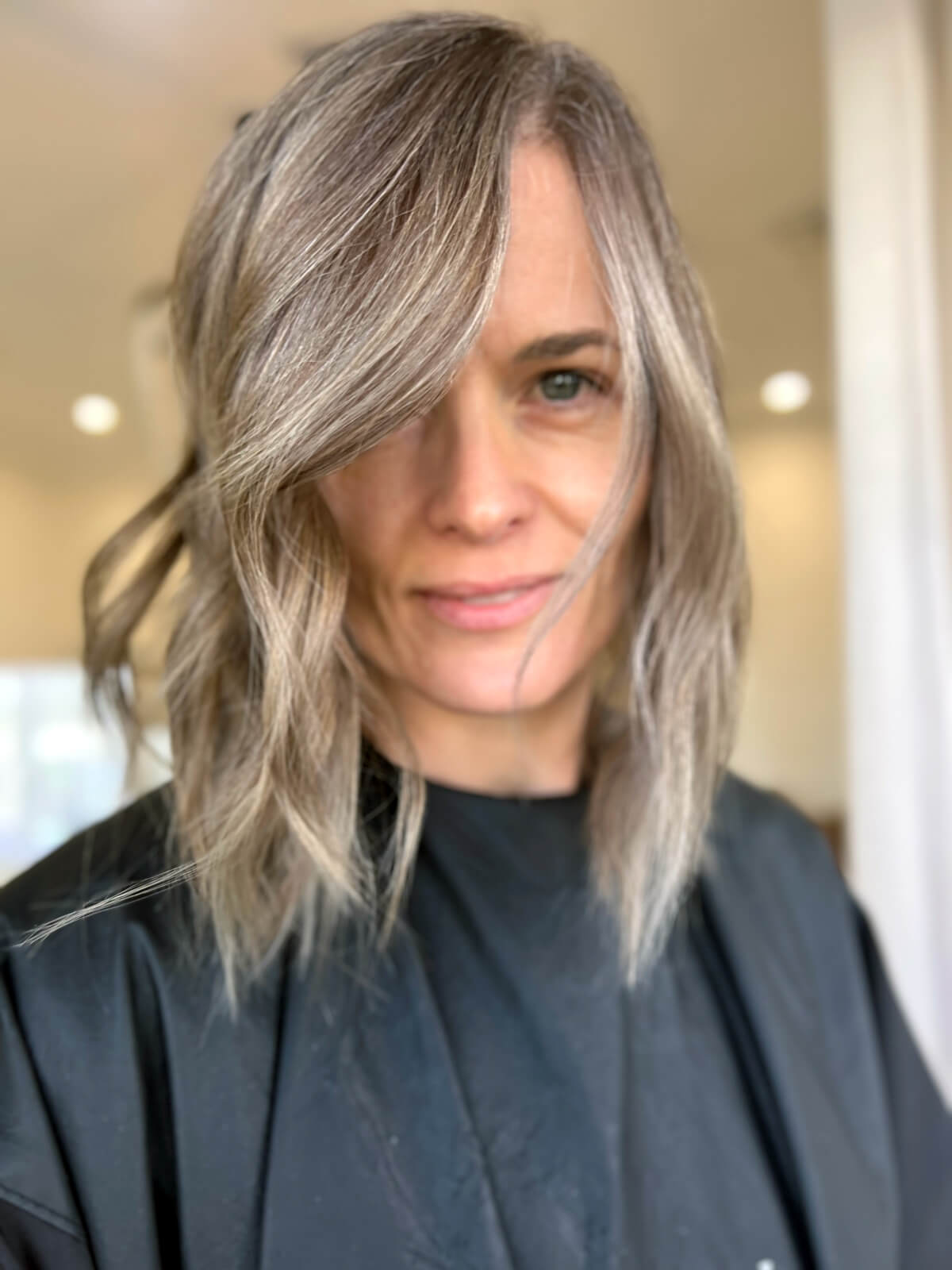
The collarbone lob with gray balayage is built around soft, face-framing pieces that blend gray with blonde for a lived-in effect. The side-swept bangs and side parting keep the air-dried texture looking intentional, not messy. Ask your colorist for: collarbone length lob, side swept bangs, gray with blonde balayage. For daily wear, spritz a texturizing spray on damp hair and let it air dry; the lob needs a trim every six to eight weeks to prevent the ends from looking straggly.
Layered Bob With Curtain Bangs
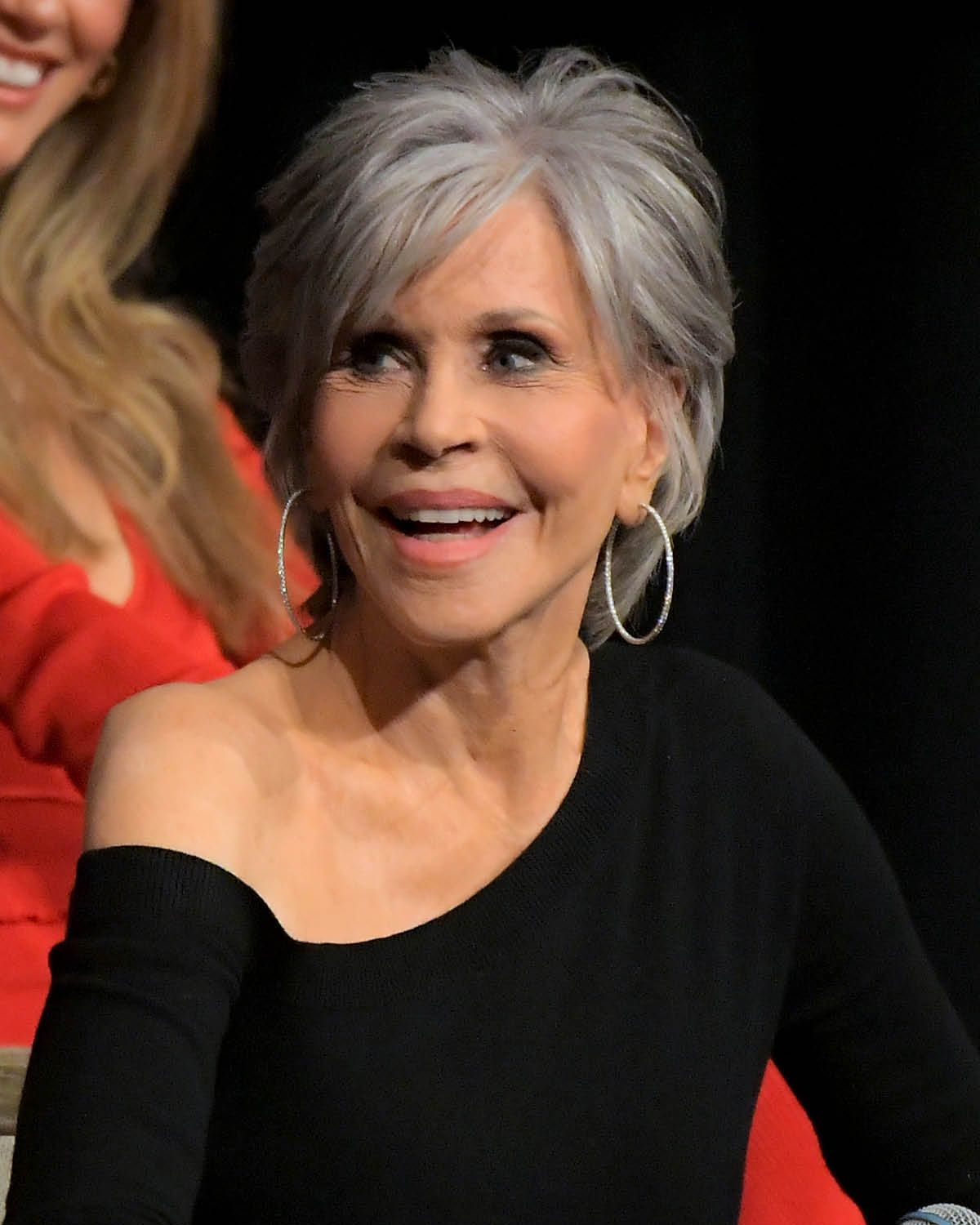
A layered bob with curtain bangs relies on precise interior layering to give fine, straight hair movement without losing the chin-length silhouette. The side parting and smooth blowout keep the gray blended with lighter highlights looking polished. Ask your stylist for: layered bob, chin length, curtain bangs, gray with lighter highlights. This cut is best left to a professional, since the layers need to fall exactly right; the honest downside is that curtain bangs require regular trims, about every six weeks, to hold their shape.
Collarbone Waves With Natural Gray Blend
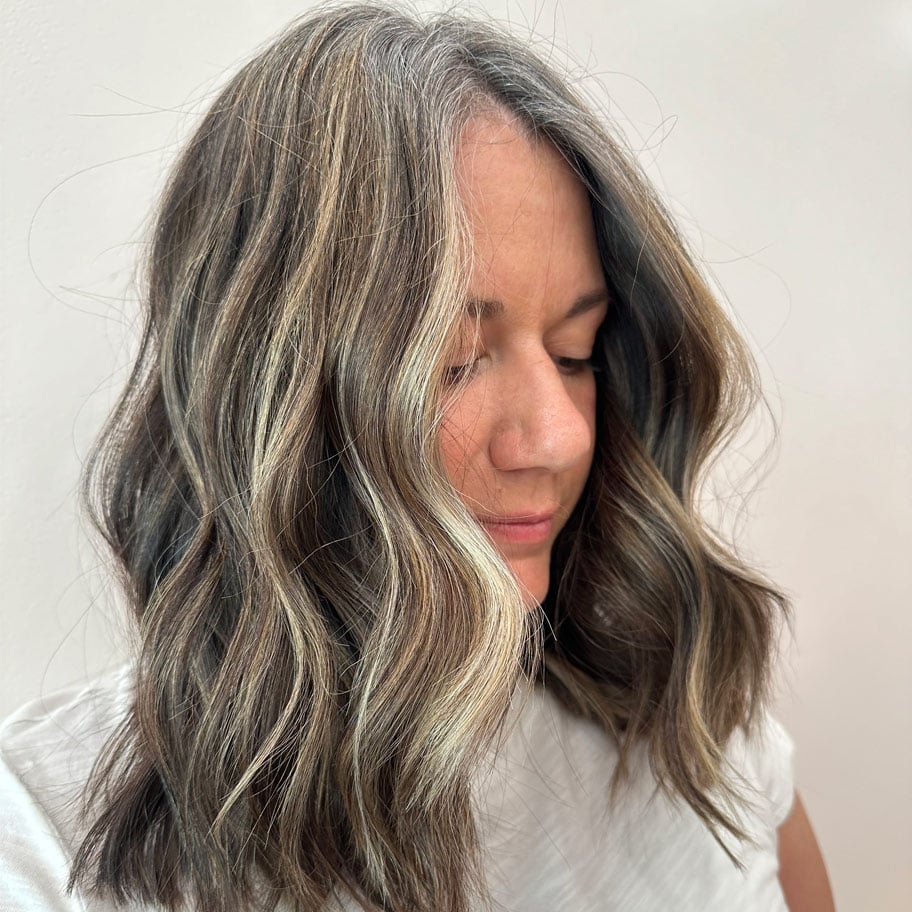
The natural gray blending here works because the lighter pieces are woven through the collarbone-length waves, so the transition never looks stark. A side parting gives the medium-density wavy texture a bit of lift at the root, which helps fine hair appear fuller. Ask your colorist for: collarbone length waves, side parting, natural gray blend. To keep the waves soft, apply a texturizing spray and scrunch while damp; the cut holds up for six to eight weeks between trims.
Mid-Back Layers With Ashy Gray Blonde, Wavy
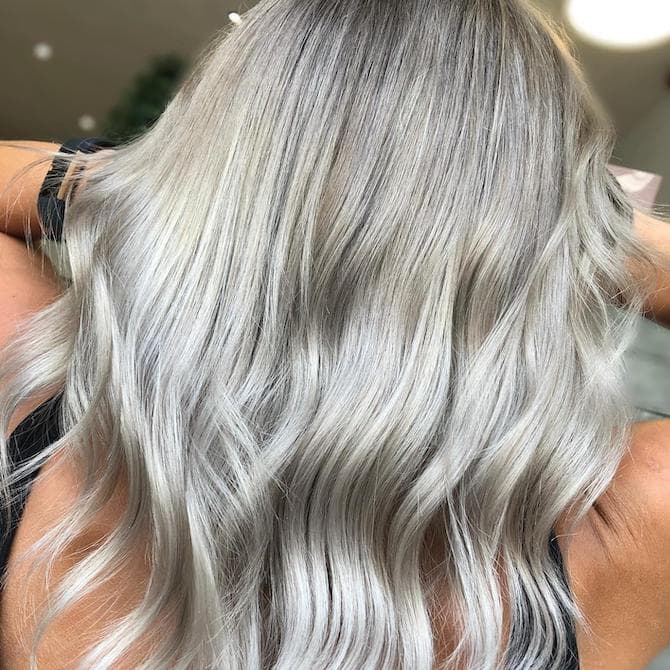
The ashy gray blonde hue with distinct gray undertones is the kind of color that looks equally at home in a boardroom or a beach bar, and the mid-back length with long layers gives it a relaxed, sophisticated feel. The loose waves and middle parting suit medium-density wavy hair best, since the length can weigh down finer textures. Ask your colorist for: mid-back length with long layers, ashy blonde with gray undertones. To keep the waves from falling flat, use a volumizing mousse before blow-drying, and plan for a trim every eight to ten weeks to maintain the layers.
Mid-Back Wavy Hair With Dark Gray Contrast
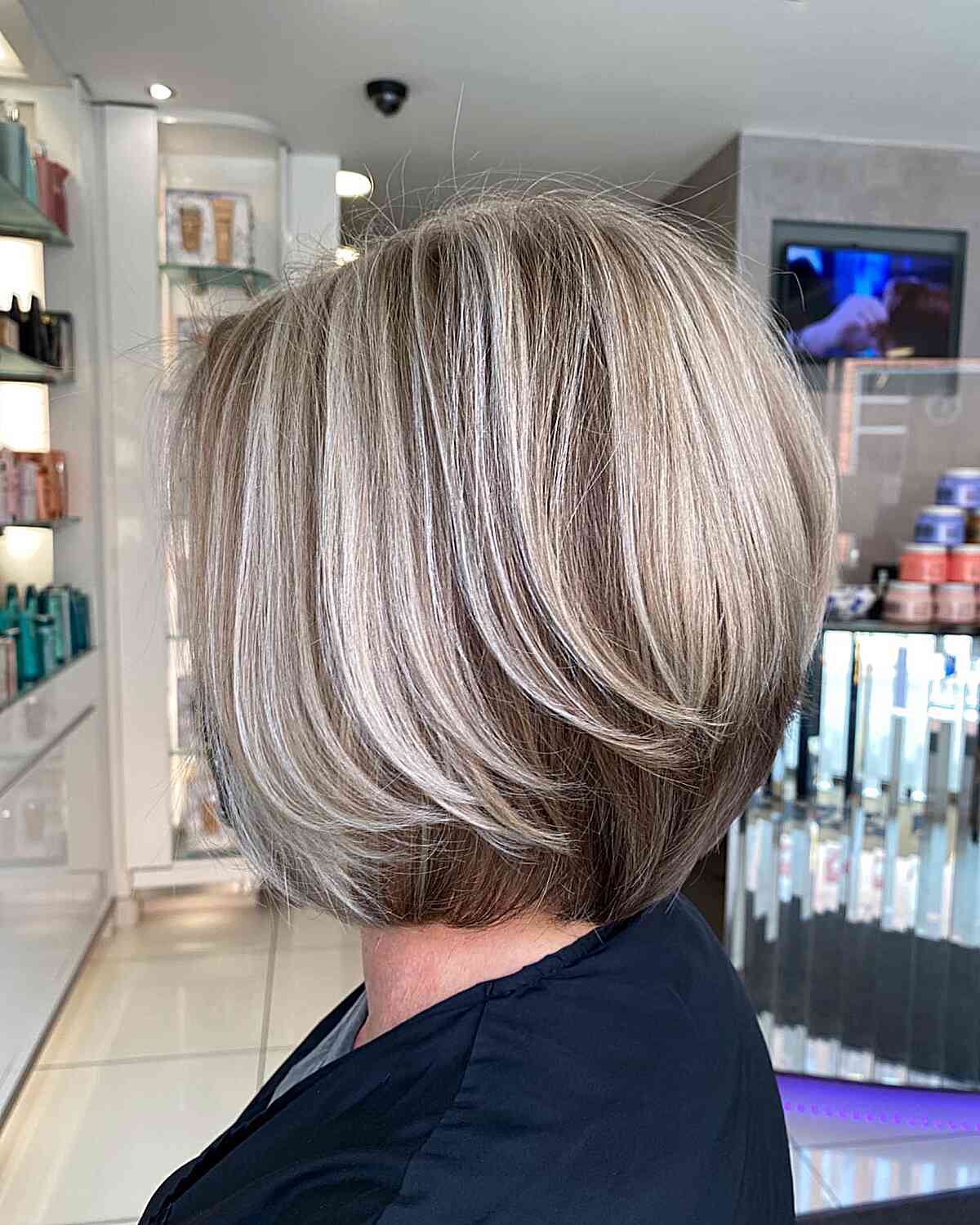
This mid-back length cut goes for contrast, weaving lighter gray strands through a dark base so the difference reads loud and clear. It suits medium-density wavy hair that can handle the drama; side-swept bangs soften the look for most face shapes. Ask your stylist for: mid-back length wavy hair, side swept bangs, gray blend with dark base. A curl-enhancing serum and air drying keeps the waves defined, and a trim every eight to ten weeks maintains the shape. This is a salon project. The high contrast takes precision foiling, not a quick at-home gloss.
Compared to a seamless gray blend, this version asks for more regular toning to keep the dark base from turning muddy and the lighter strands from warming up. The payoff is a two-tone effect that looks deliberate, not like a grow-out you have not gotten around to. If you like your gray with a side of attitude, this is the one.
Mid-Back Wavy Hair With Natural Gray Strands

The design here is deceptively simple: mid-back wavy hair where lighter gray strands are scattered through darker tones with no obvious pattern, as if the color decided to do its own thing. Medium-density wavy hair at mid-back length is the natural home for this look, and no bangs keep the focus on the texture. Ask your stylist for: mid-back length wavy hair, natural gray blend. A texturizing spray at the ends enhances the wave pattern, and a trim every eight to ten weeks keeps the layers from looking ragged. This is a salon application, but the grow-out is unusually forgiving. The randomness of the strands means the root line barely registers.
What makes it work is the lack of effort it projects. The gray is not painted on in neat sections; it looks like it arrived on its own schedule, which is exactly the point. The back view makes the blending look almost accidental, and that is the compliment.
Collarbone Waves With Natural Silver Gray, Wavy
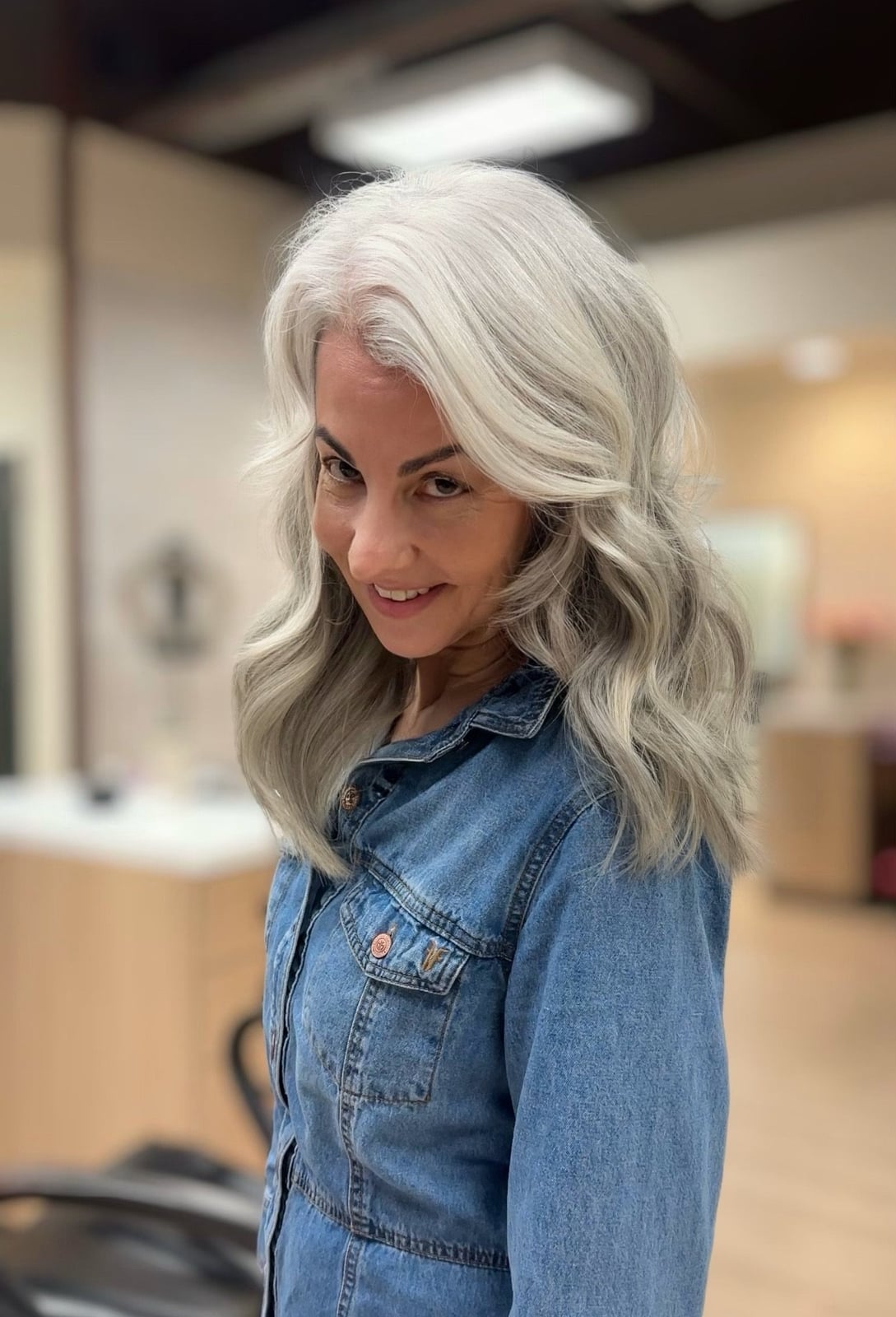
Collarbone-length hair in a wavy blowout with a middle parting, all done in a natural silver gray that relies on the cut’s shape for definition. Medium-density wavy hair starting at the collarbone works best here, and the middle part can create the illusion of a longer face shape. Ask your stylist for: collarbone length waves, middle parting, natural silver gray color. A smoothing serum and a round brush blowout create the polished wave pattern, with a trim every six to eight weeks to keep the ends clean. The salon visit covers both the cut and the color application, but the daily styling is just a few minutes with a brush.
Collarbone Long Bob With Ash Blonde Gray Blend
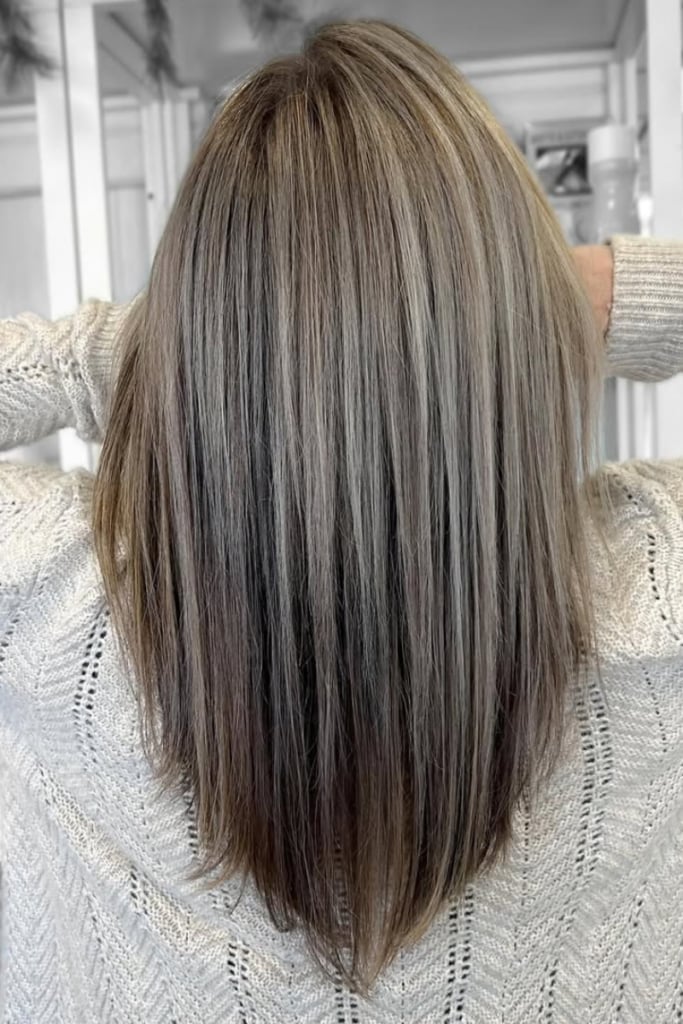
Wondering exactly what to say to get a gray blend that does not look like an afterthought? Start here. A long bob ending at the collarbone, parted in the middle and left with an air-dried texture, combines a gray base with ash blonde highlights for a seamless transition. Fine straight hair at collarbone length carries the blend well, and the middle part suits those looking to balance a rounder face. Ask your stylist for: collarbone length long bob, middle parting, gray blend with ash blonde highlights. Air drying is all the styling this needs. The salon handles the color, and the cut itself needs a trim every six to eight weeks.
Mid-Back Wavy Hair With Seamless Gray Blend, Layers
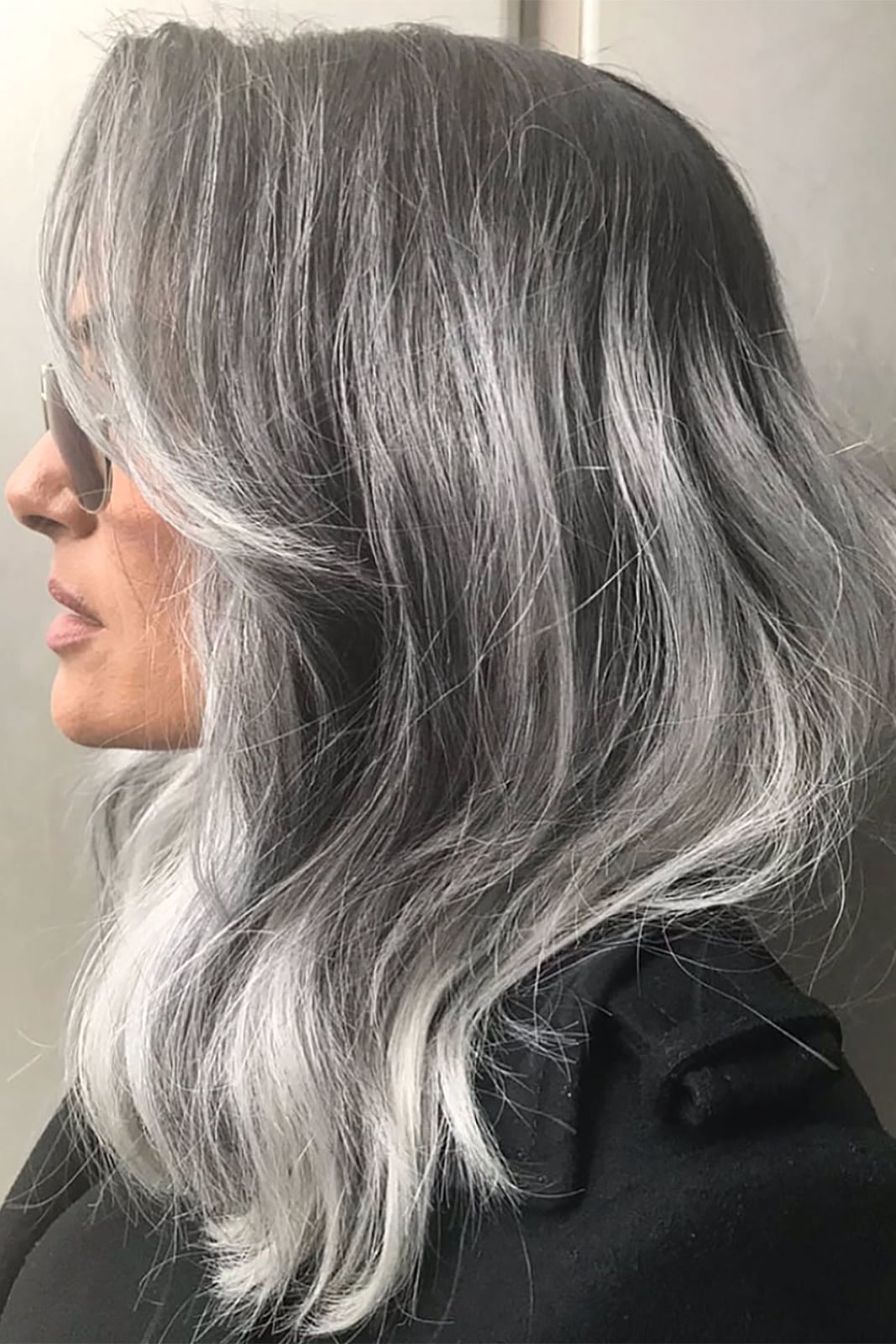
The technique behind this mid-back wavy style is all about avoiding hard lines. Lighter gray strands are woven into darker ones with a side parting that lets the blend read clearly from root to tip. Medium-density wavy hair at mid-back length is the ideal canvas, and the lack of bangs keeps the focus on the layers. Ask your stylist for: mid-back length wavy hair, side parting, seamless gray blend with darker strands. A curl-enhancing serum and air drying preserve the natural wave pattern, and a trim every eight to ten weeks keeps the layers from losing their shape. This is a salon technique. The seamless effect requires a colorist who understands how to place highlights so the grow-out line never announces itself.
The DIY alternative for upkeep is a purple shampoo once a week to keep the lighter strands from warming up, but the initial application is not something to attempt at home. The payoff is a color that moves with the hair rather than sitting on top of it.
Collarbone Long Bob With Curtain Bangs
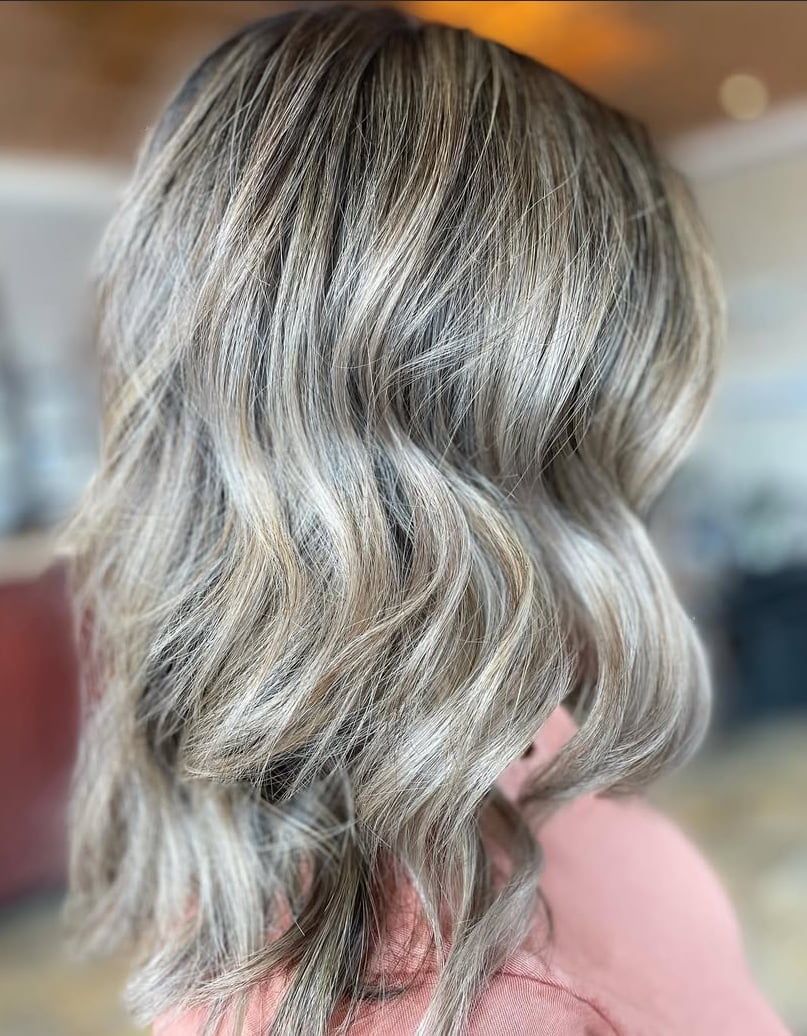
This long bob proves curtain bangs work for all ages. The collarbone length and side part soften a square jaw with thick wavy hair, while the face-framing pieces draw attention upward. Ask your stylist for: collarbone length long bob, curtain bangs, gray blend with ash blonde highlights. A round brush blow-dry on the bangs keeps them from splitting down the middle, and a trim every six to eight weeks preserves the shape. The gray and ash blonde blend looks like a deliberate choice, not a concession.
Ear Length Bob With Gray And Dark Blonde
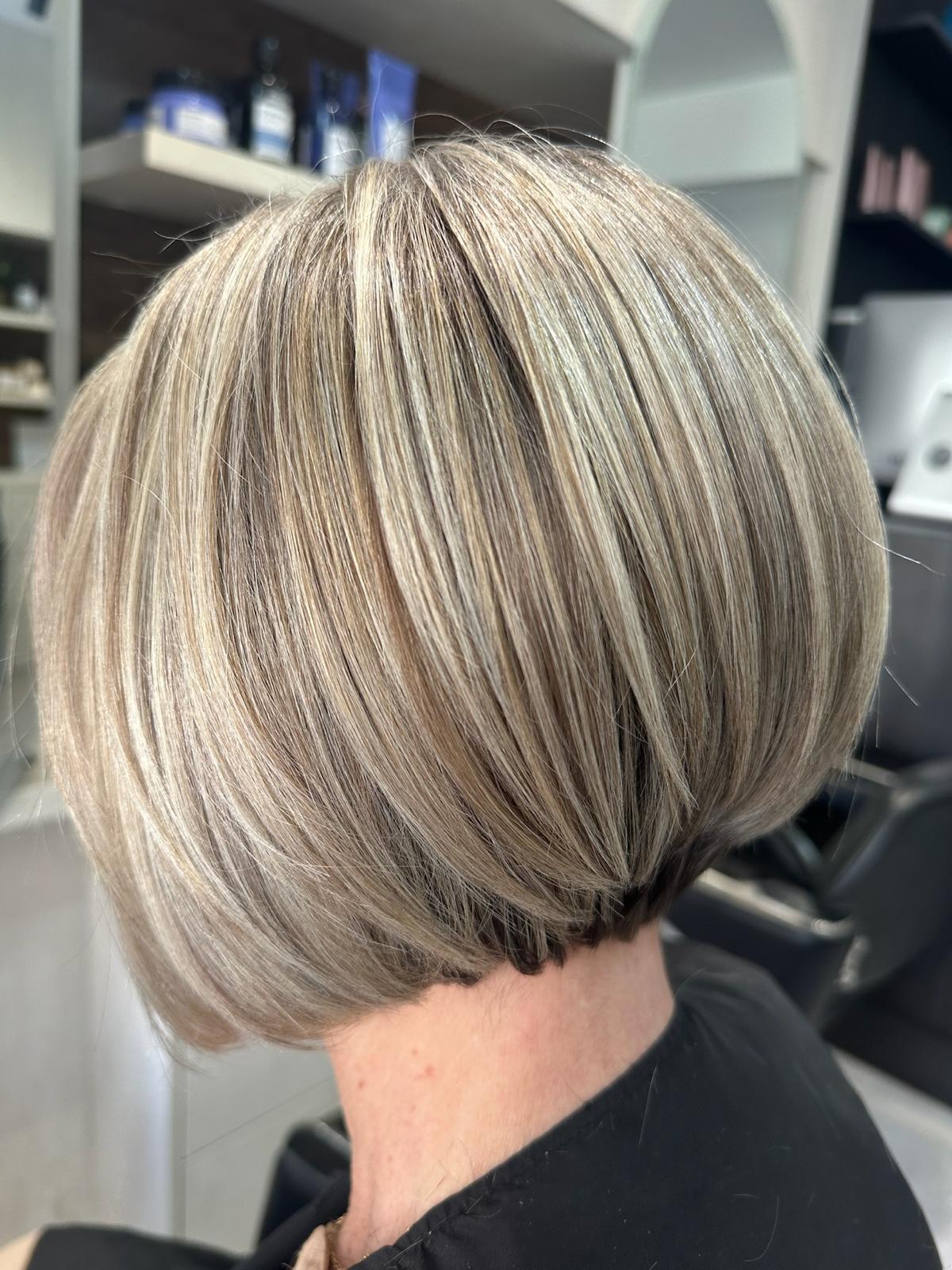
A rounded bob at ear length is a geometry problem solved. The middle part and sharp lines require a precise cut, and on fine straight hair, the silhouette is crisp but unforgiving. Ask your stylist for: ear length rounded bob, middle parting, gray with dark blonde highlights. The drawback is maintenance: this shape demands a trim every four weeks, or the rounded edge softens into something closer to a mushroom. The gray and darker blonde highlights add dimension, but the real star is the cut’s clean architecture.
Chin Length Bob With Blended Gray
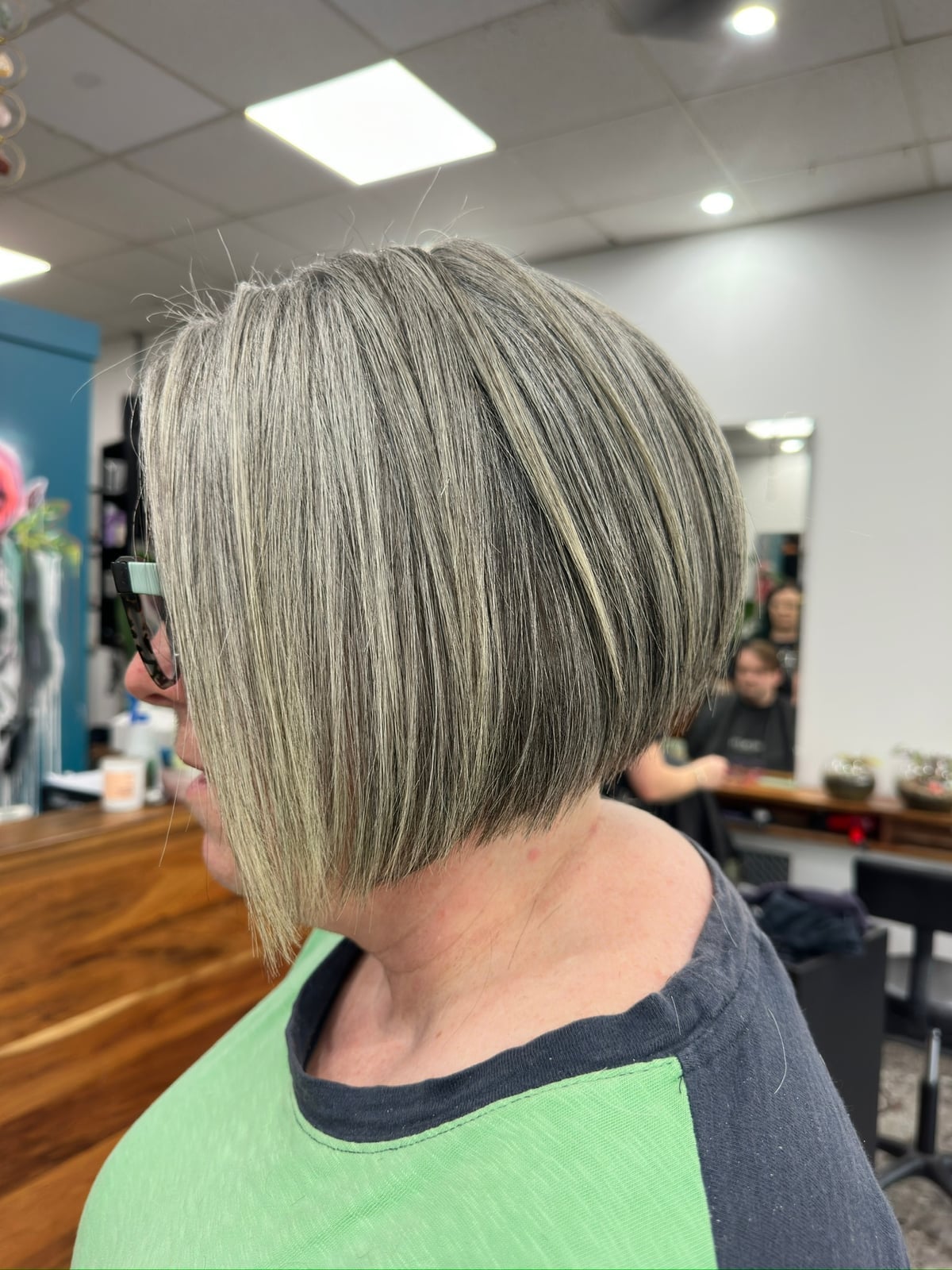
Unlike a blunt bob that can feel severe on thick hair, this chin-length version uses a side part and a sleek blowout to land somewhere between polished and approachable. The blended silver and dark gray tones keep the grow-out period civil. Ask your stylist for: chin length sharp bob, side parting, blended silver and dark gray. A smoothing serum and a flat iron are the only tools you need for the finish, and a trim every six weeks maintains the sharp edge. The texture stays straight and thick, so the shape holds its line without much fuss.
Chin Length Bob With Cool Ash Blonde
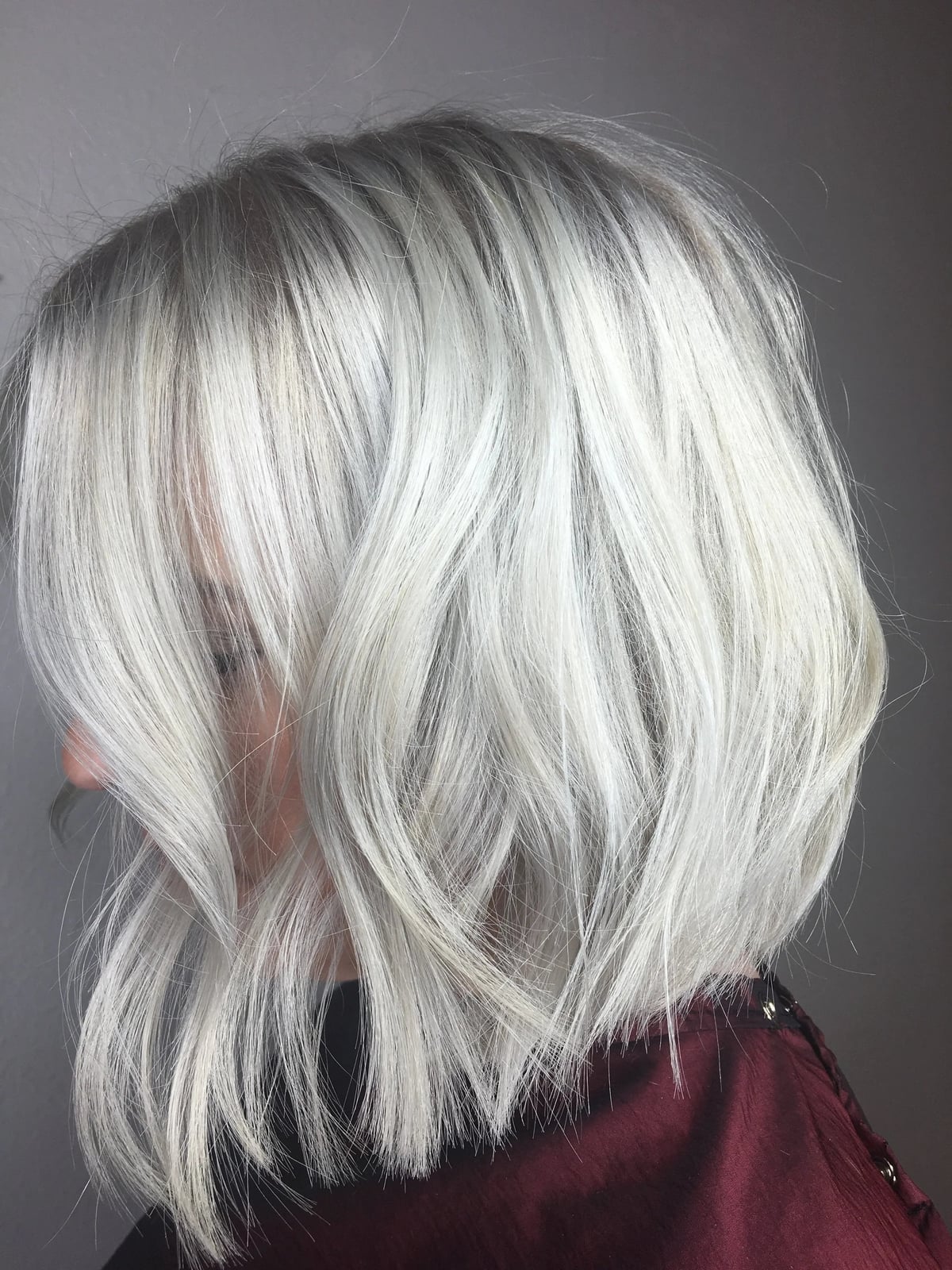
The ash blonde base with gray undertones on this chin-length bob showcases cool-toned blending. Soft waves and a side parting break up what could otherwise be a solid block of color, giving medium-density hair a fuller appearance. Ask your colorist for: chin length bob, soft waves, side parting, ash blonde with gray undertones. Air drying is enough to recreate the wave pattern, and the blend itself means the root line stays subtle for weeks. It is a low-stakes way to test the gray water.
Mid-Back Layers With Natural Gray Blend
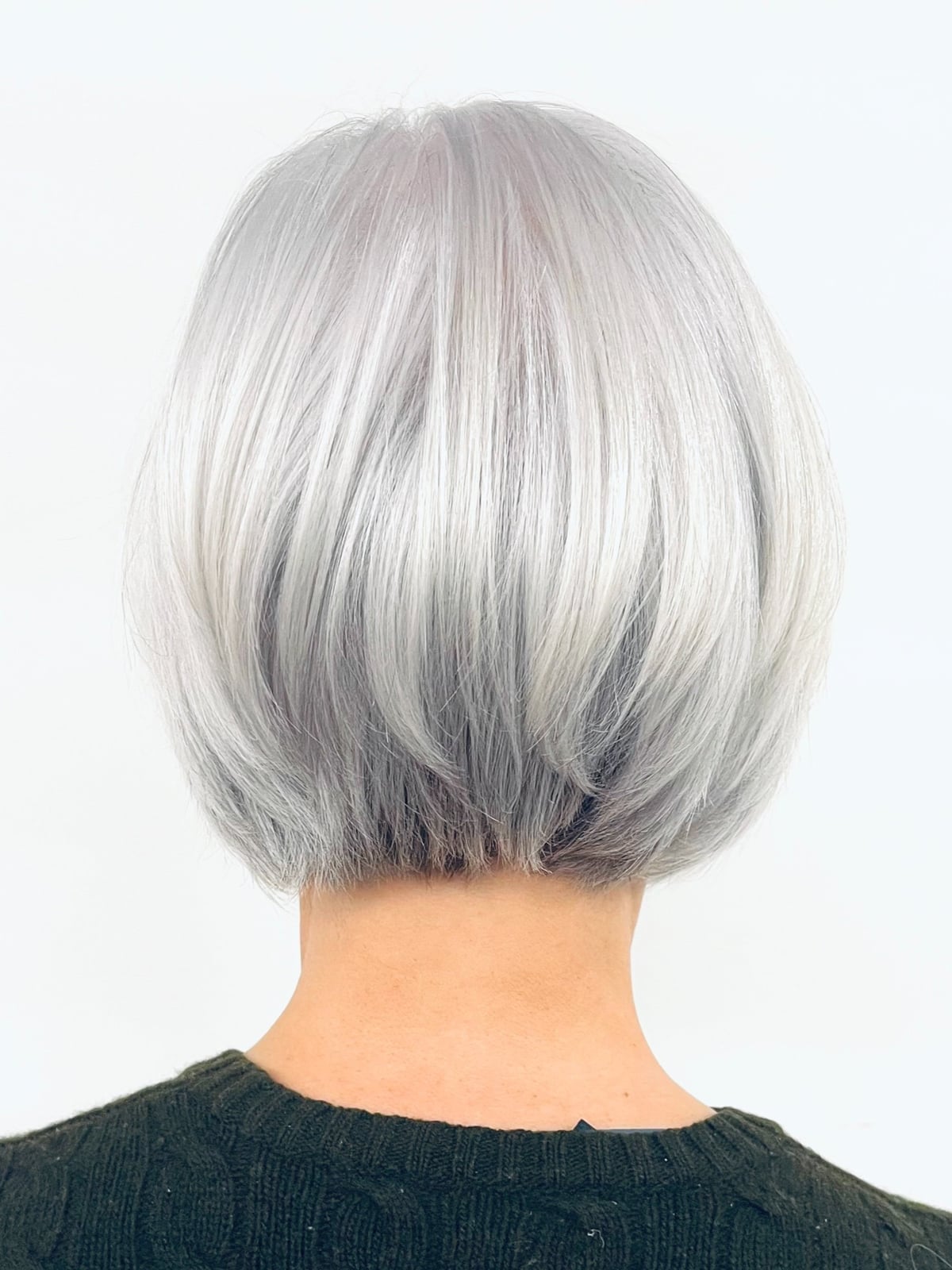
Long layers on thick wavy hair reduce bulk without sacrificing length, and the middle part keeps the weight distributed evenly. The natural gray blend is punctuated by subtle blonde lowlights, which add depth and prevent the overall effect from reading flat. Ask your colorist for: mid-back length with long layers, natural gray blend with blonde lowlights. This is a salon job for the base color, but the daily styling is simple: a curl-defining cream and a scrunch, then air dry. The lowlights mean you can stretch the time between toning appointments to about ten weeks.
Short Textured Pixie With Gray Highlights
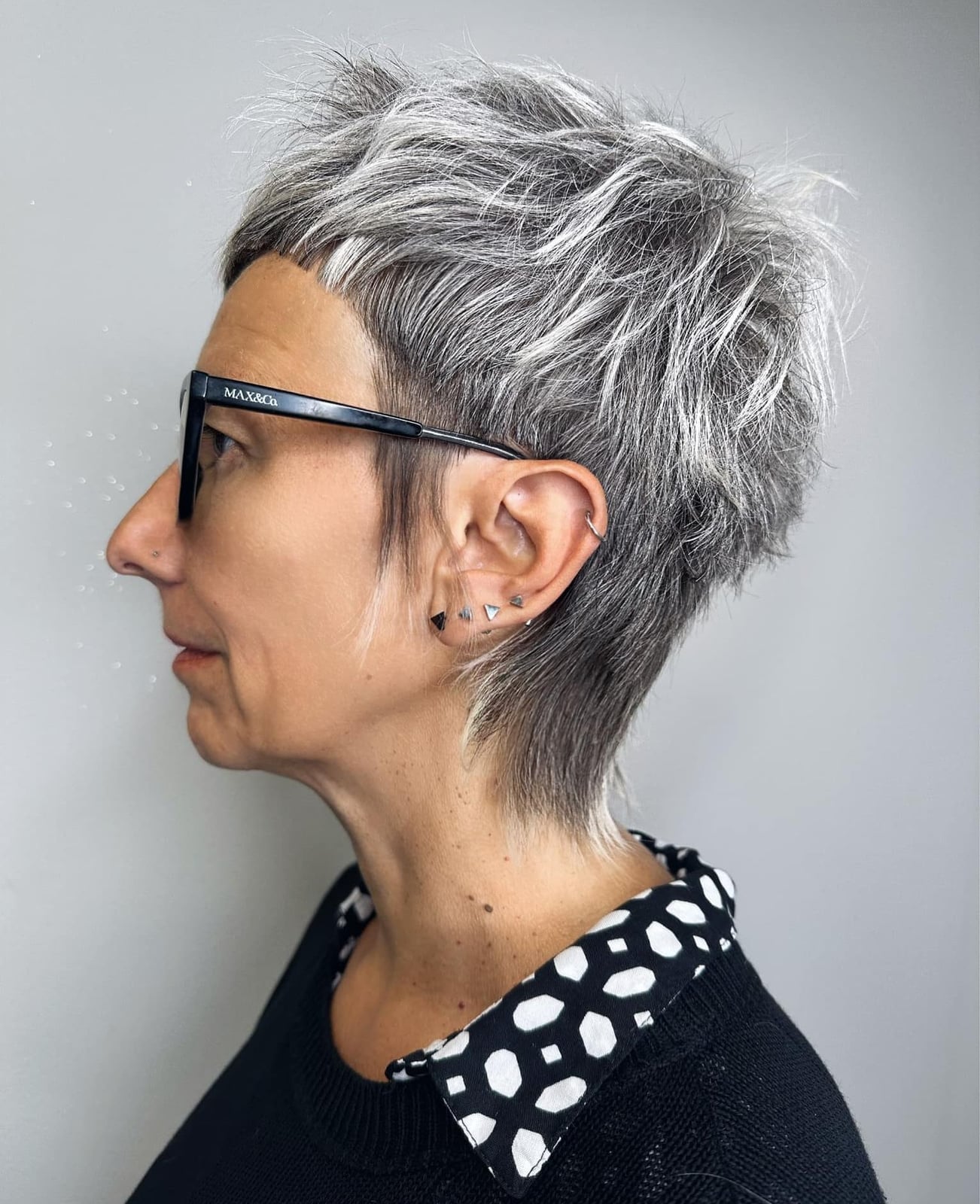
Can a pixie cut with gray and white highlights feel more polished than rebellious? This short textured version is slicked back at the crown with short bangs brushed forward, all in a cool gray blend with white highlights. Fine straight hair that can hold texture works best here, and the cut suits oval faces especially well. Ask your stylist for: short textured pixie, slicked back, short bangs, gray with white highlights. A texturizing paste and blow dryer are all you need to style it, though the trade-off is a trim every four to six weeks.
Shoulder Length Shag With Gray Blend and Curtain Bangs
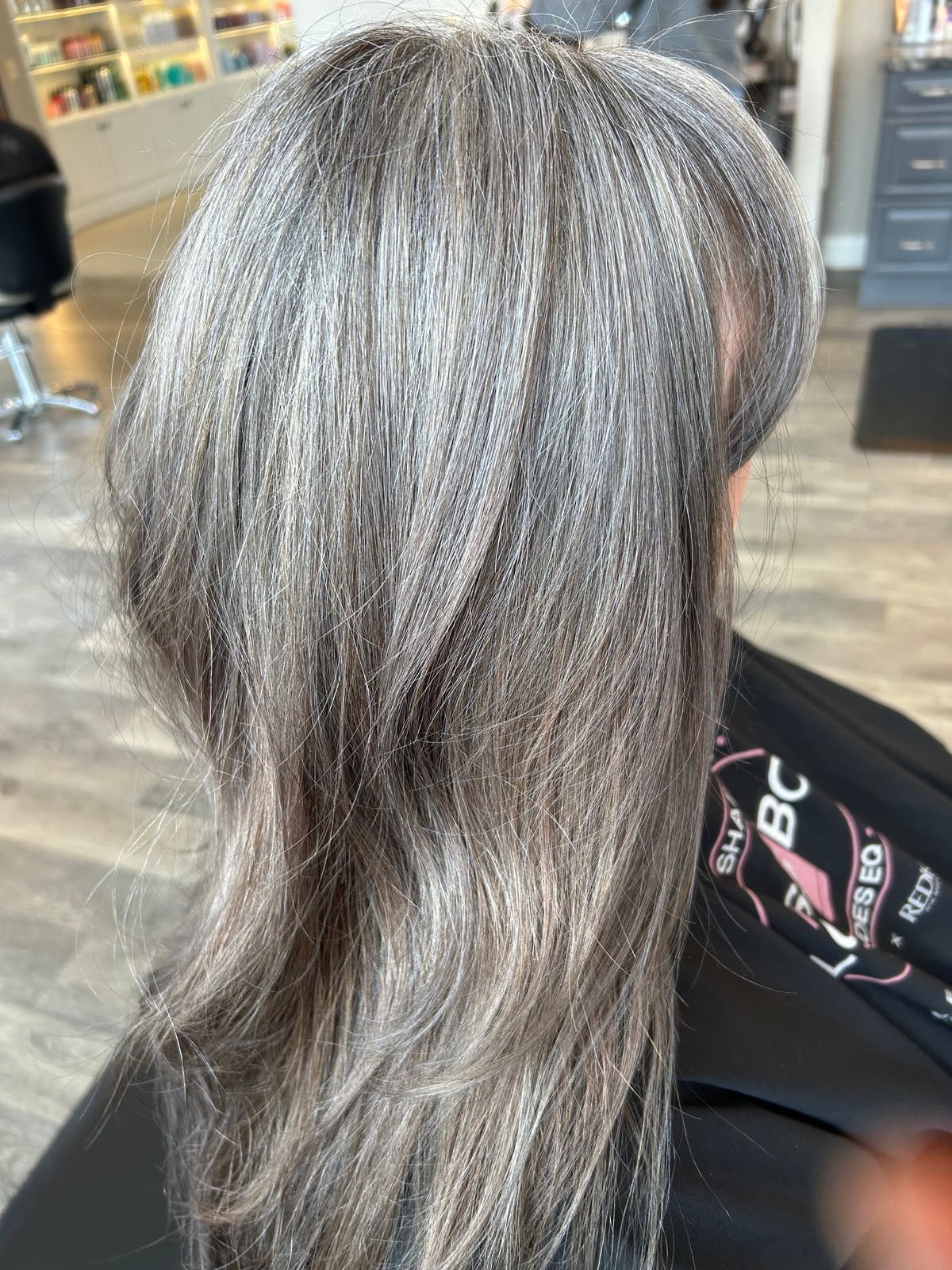
A shoulder-length shag with curtain bangs works because those textured layers keep the gray and silver highlights from settling into a solid block of color. The side parting and wavy blowout add movement without requiring much daily effort. Medium density wavy hair holds the shape well, and the curtain bangs soften a square face. Ask your stylist for: shoulder length layered shag, curtain bangs, gray and silver blend. A texturizing spray and air drying or diffusing will get you there; a trim every six to eight weeks keeps the layers defined. The honest drawback is that those layers can look a bit choppy if you skip that appointment.
Final Thoughts
For fine hair, keep one blunt baseline and skip heavy layers to maintain density. For thicker hair, layers can reduce weight and add movement. Always discuss your desired maintenance level with your stylist.
- Regular trims every 6-10 weeks to maintain shape and blend.
- Use color-safe shampoos and conditioners to preserve tone.
- Incorporate a purple or blue toning shampoo/conditioner once a month to combat brassiness.
- Protect hair from heat styling with a thermal protectant spray.
Embrace your gray with confidence and style.
