

Broad haircut labels can sound precise until two photos with the same general name are placed side by side. One can stop at the jaw while another reaches the shoulders, one can open at the forehead while another is dominated by fringe, and waves can blur an edge that would otherwise look compact. These November haircut ideas 2026 are therefore best read by visible construction rather than by name alone.
A useful comparison starts with decisions the eye can actually verify: where the outline ends, how much length sits in front versus at the back, whether the fringe is open or full, and whether curls or waves interrupt a clean perimeter. In this guide to November haircuts for 2026, viewpoint matters too, because a front, side, or back image can reveal one part of a cut while leaving another uncertain.
Wavy Shoulder Bob-Like Shape With a Soft Edge
The first reference shows dark, shoulder-length hair with loose waves and a compact bob-like outline that sits close to the shoulders. The white sunglasses are part of the visible scene but do not define the haircut itself. What matters for comparison is the way the waves break up the lower perimeter, so the shape reads as soft and mobile instead of forming one hard horizontal edge.

Photo via Instagram
The wave pattern changes how the shoulder boundary is perceived because individual bends turn inward and outward rather than falling in one uniform direction. That variation creates small shifts in width through the sides and ends, which makes the outline look less rigid even though the overall length remains compact. This is the main visual distinction to carry forward when comparing other wavy bob-like shapes.
The photo does not confirm an exact bob subtype, natural texture, or the method used to create the waves. It supports only a shoulder-level, dark, wavy silhouette with a softened perimeter.
Short Brunette Bob-Like Shape With a Side Sweep
This short brunette shape sits higher than the first reference, with the visible length clustered around the jaw and neck rather than resting at the shoulders. A pronounced side sweep moves across the forehead and toward one side of the face, while soft bends add volume through the shorter lengths. The result is a compact bob-like silhouette whose front carries visibly uneven weight, even though the exact cut structure is not shown.
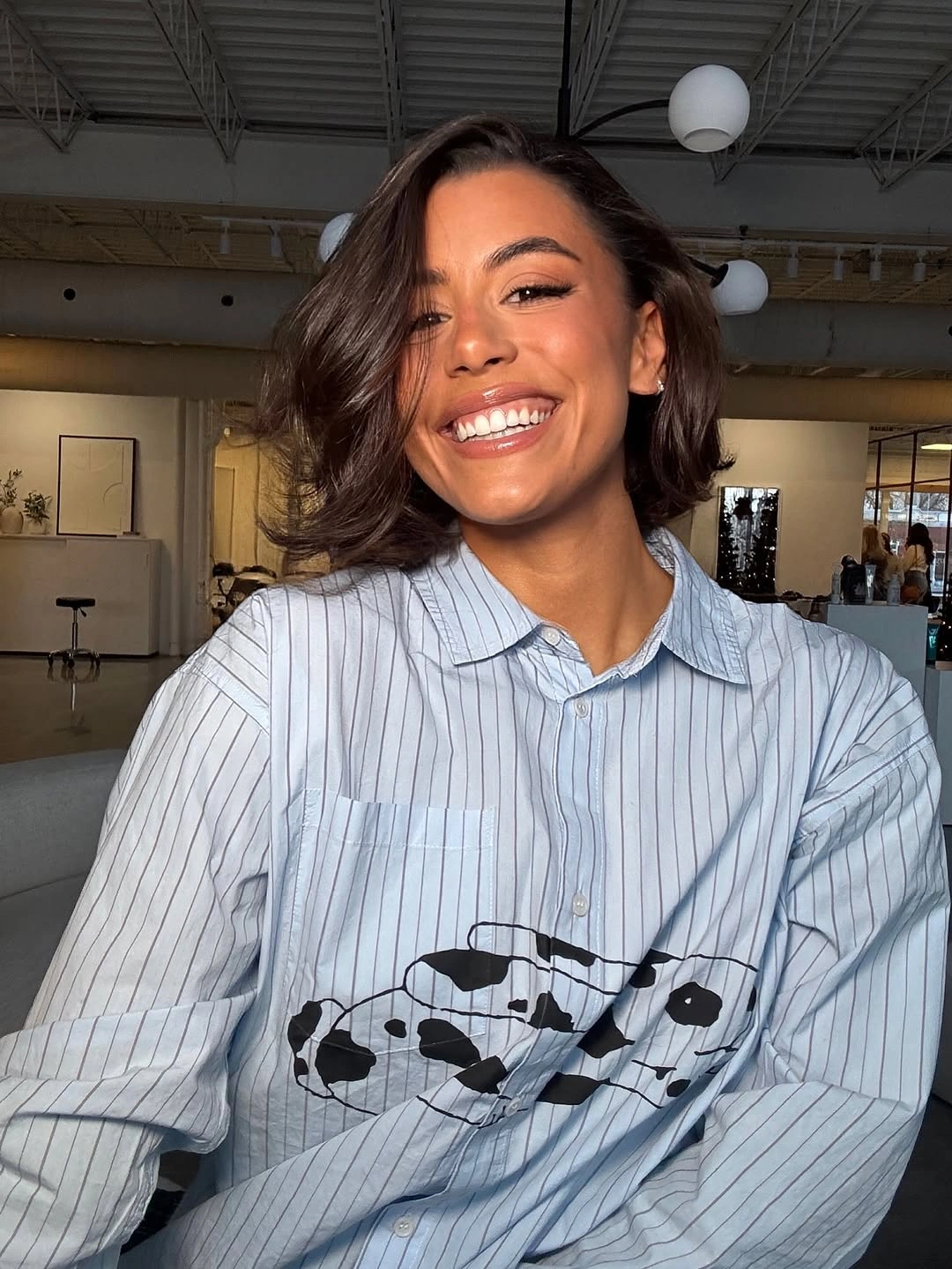
Photo via Instagram
The strongest comparison point here is front asymmetry. Because the heavier front section falls to one side, the haircut does not read like a centered, evenly divided short bob-like shape from the front; one side carries more visible mass and movement. That side sweep changes the balance of the silhouette before the eye even reaches the lower edge, making front placement more important than the precise name of the cut.
The image cannot confirm whether the swept front section is technically fringe or simply a longer front piece. It also does not establish a specific bob subtype or how the waves were created.
Pale Blonde Waves at Shoulder Length
Here the hair reaches roughly shoulder length and appears pale blonde, with a center opening that exposes a more balanced front than the previous side-swept reference. Loose, irregular waves run through the sides, while the lower edge remains compact enough to read as bob-like. The lighter surface makes individual bends easy to see, but the reliable evidence is still the visible shoulder length, centered opening, and softly broken perimeter.
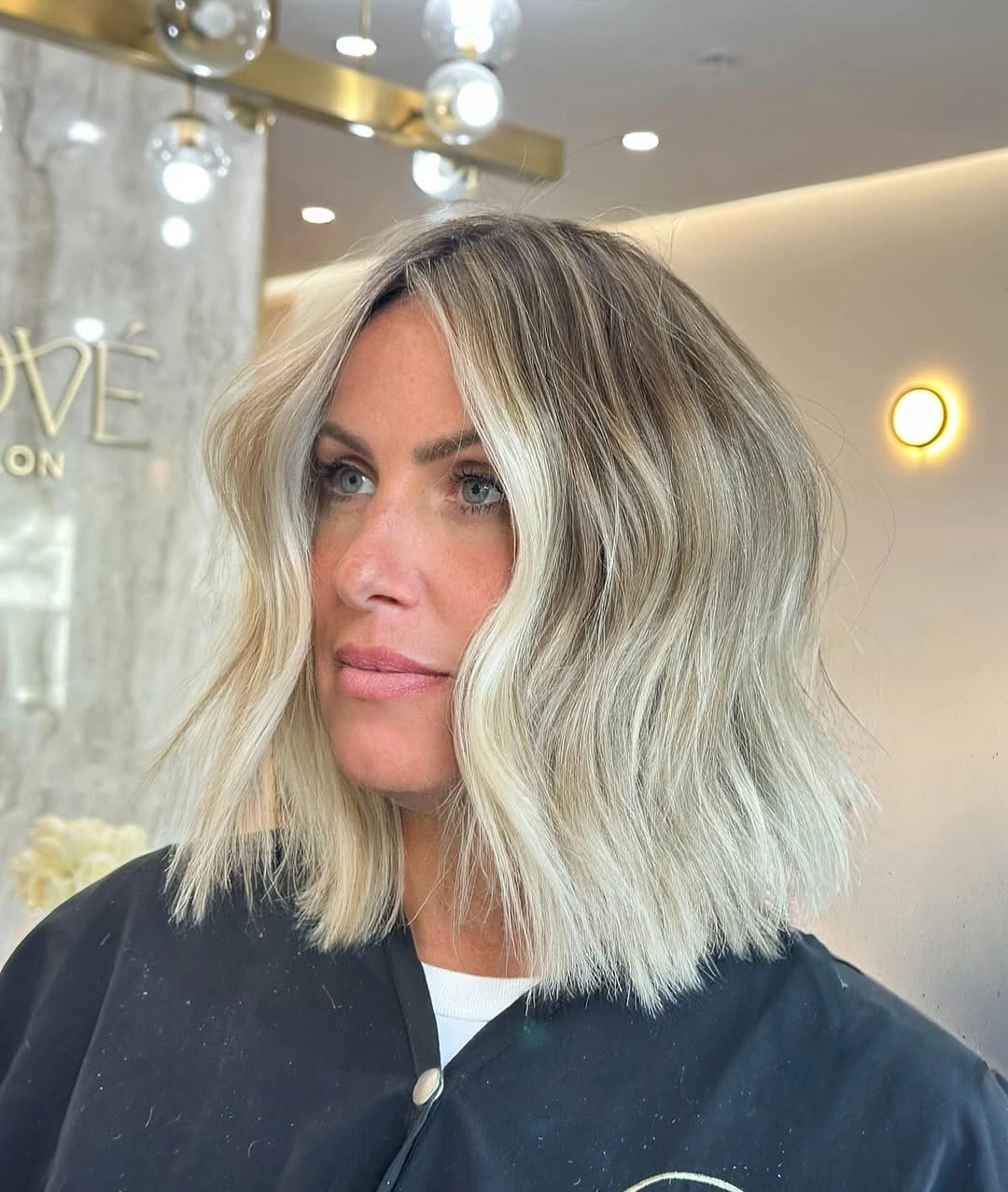
Photo via Instagram
This reference is useful because the light surface and wave separation make the relationship between length and movement especially clear. The overall outline stays close to the shoulders, yet each bend interrupts the idea of one solid block, so the cut reads as both compact and visually dispersed. Compared with a darker, denser-looking shape, the pale value also makes the internal direction of the waves more noticeable without proving anything about color technique.
The photograph does not establish an exact blonde tone, coloring process, or technical bob classification. It also cannot confirm the precise layer pattern or styling method behind the visible waves.
Shoulder-Length Waves Read Differently From Behind
This dark wavy reference is shown mainly from the back and side, so the visible information shifts away from fringe and front framing toward rear length and movement. The hair extends around the shoulder area, with repeated waves creating a broader, more fluid outline through the back. Because the face is mostly out of view, the image is more useful for judging where the rear length sits than for assigning a precise haircut name.
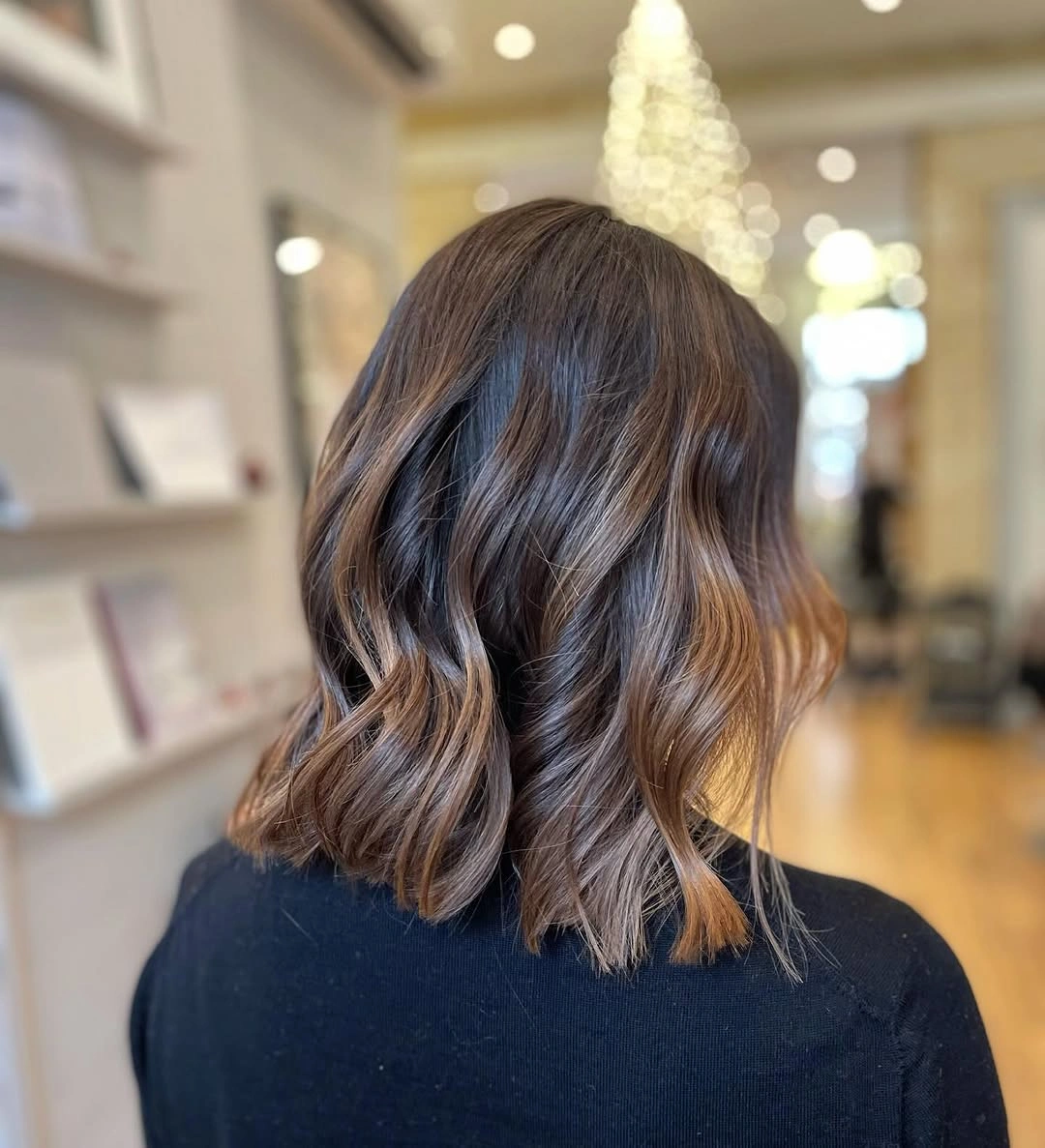
Photo via Instagram
Viewpoint is the key comparison tool in this section. A back or back-side image shows how much of the silhouette is carried by the rear perimeter, how the waves distribute volume across the length, and where the ends appear to gather, but it hides many of the details that often influence whether a cut is read as a bob, long bob, or longer layered shape from the front. That limitation is part of the visual evidence rather than something to fill with assumptions.
The photo does not reveal enough of the front to confirm fringe, face framing, or an exact bob-like classification. Any internal layering is also uncertain from this viewpoint.
Short Brunette Waves With a Compact Back
The fifth reference returns to a distinctly shorter rear outline, with brunette hair ending around the lower head and upper neck rather than extending to the shoulders. Broad waves create rounded movement across the back, but the compact hemline remains easy to locate because the photo exposes it directly. This makes the image a useful short bob-like comparison even though the exact subtype and internal structure cannot be confirmed.
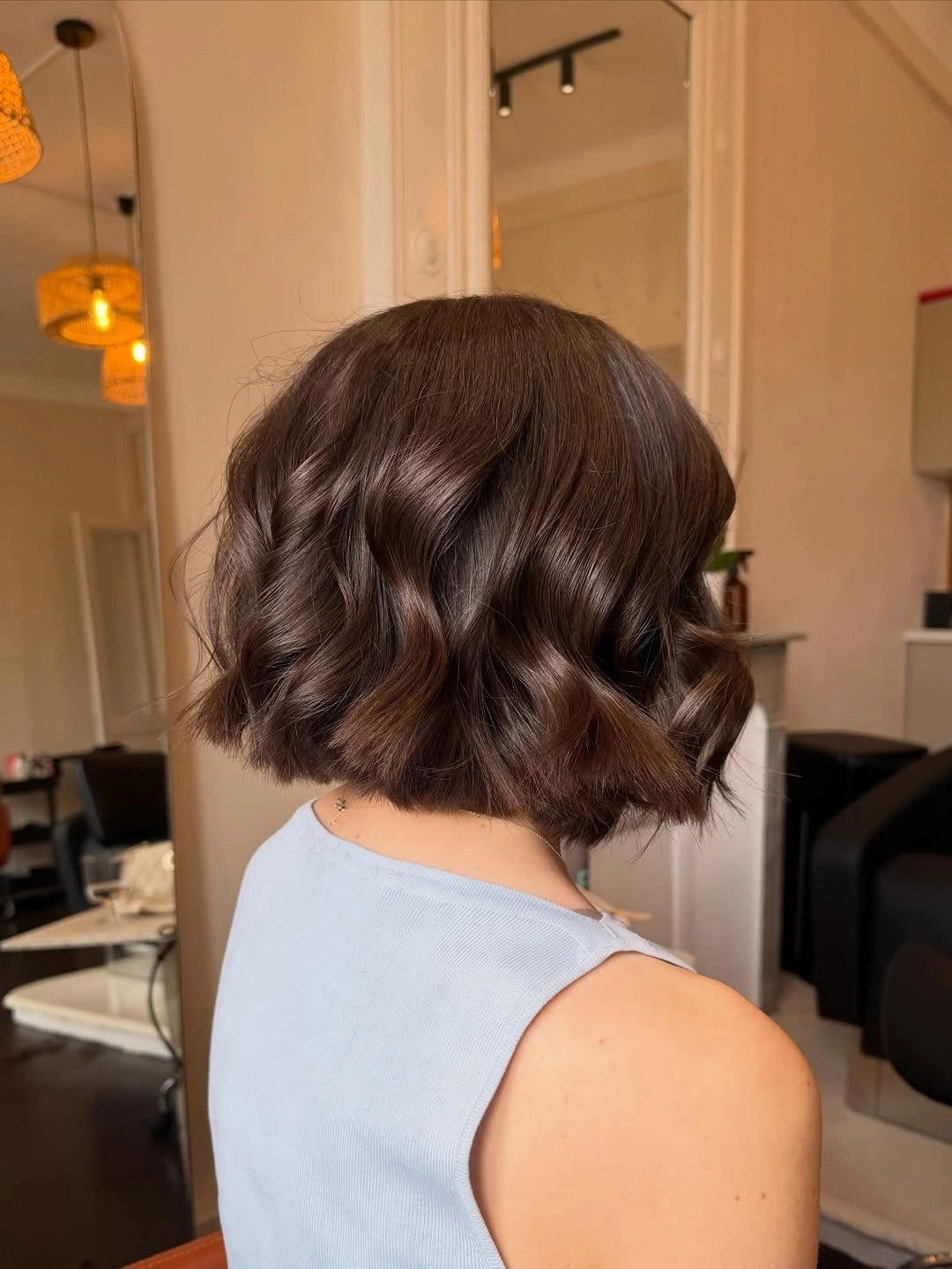
Photo via Instagram
Unlike a front view, this rear angle removes fringe and face-framing details from the comparison and makes the lower boundary the main event. The eye can follow the short hemline across the back while the waves add curves above it, so length and texture stay visually separate: the cut remains compact, while the surface movement keeps that compact edge from looking completely flat or rigid.
The back view does not provide enough evidence to identify a specific bob construction or layering method. It supports only a short brunette, wavy, bob-like rear silhouette with a compact visible hemline.
Pale Tousled Bob-Like Shape With a Broken Edge
This short pale shape is viewed mainly from the back and side, where loosely separated pieces create an airy, tousled surface around the head and neck. The hair appears light blonde to cool beige, with bends moving in different directions and ends that do not settle into one continuous line. The overall silhouette remains compact and bob-like, but the visible edge looks deliberately less uniform than the smoother short outlines shown earlier.
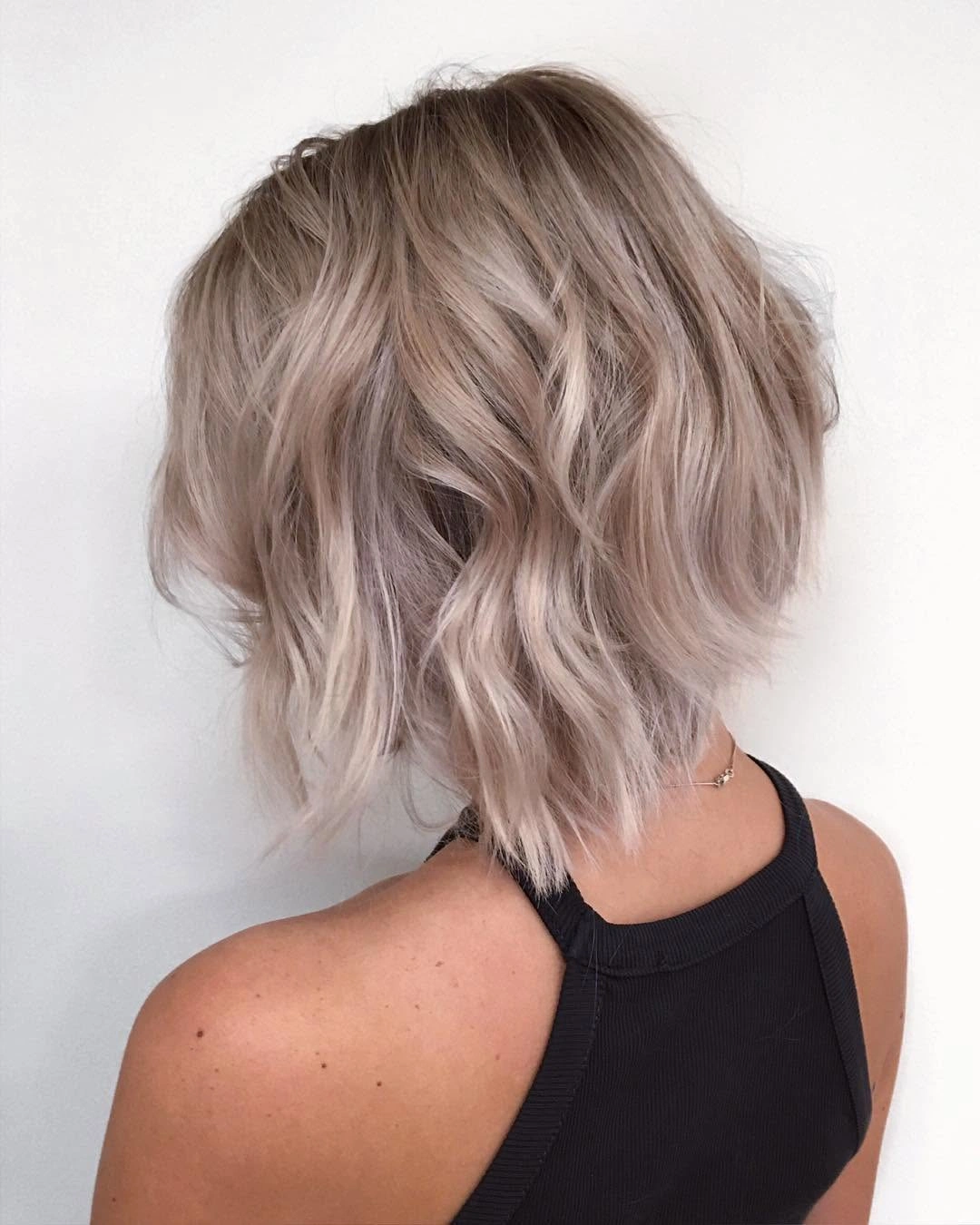
Photo via Instagram
The broken-looking perimeter is the main comparison point because individual pieces finish at slightly different visible positions and bend away from one another. Instead of presenting the eye with a single uninterrupted lower boundary, the surface divides into smaller sections that create gaps, projections, and soft changes of direction. That visual fragmentation makes the short outline feel lighter without proving how the underlying cut was constructed.
The photograph does not establish whether the irregular-looking edge comes from the haircut, temporary styling, natural movement, or a combination of factors. It also does not confirm an exact bob subtype, layer pattern, or method used to create the visible texture.
Dark Shag-Like Shape With Longer Nape Pieces
Very dark hair forms a compact but irregular silhouette here, with visible waves or curls through the top and sides, a full textured front, and separated pieces extending around the face. The lower shape is not evenly contained at one level because several sections continue farther at the nape. That mixture of shorter volume above and longer visible pieces below gives the haircut a shag-like appearance without establishing a precise technical category.
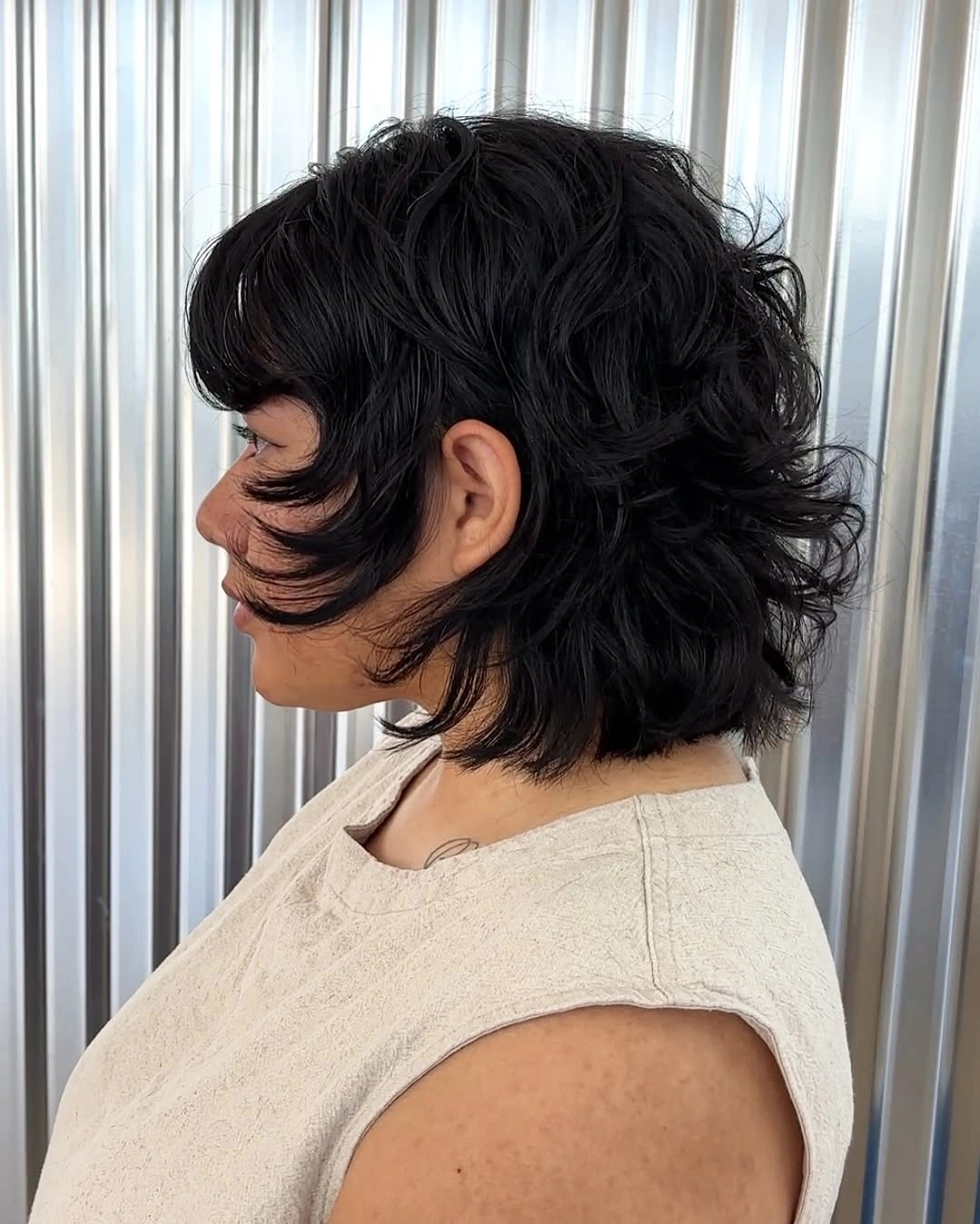
Photo via Instagram
Movement in this reference comes from irregular direction and visible differences in length rather than from one repeated wave pattern or a clean perimeter. Some sections curve forward, others turn outward, and the nape pieces extend beyond the more compact mass above them, so the outline changes continuously as the eye moves around the profile. This uneven distribution is what separates the silhouette from the smoother short bobs in the earlier group.
Shag-like is a visual comparison here, not confirmation of a specific named cutting system. The image does not justify calling the haircut a mullet, and it cannot establish natural texture, exact layers, or the way the visible movement was produced.
Dark Short Shape With Separated Sections
This very dark short haircut is shown from a side and back angle, revealing clear separation between the fuller upper area, shorter side sections, longer pieces near the face, and narrower lengths toward the nape. The surface is less curl-led than the previous reference, so the main impression comes from overlapping pieces and changing endpoints. The silhouette therefore reads as layered-looking even though the precise internal construction remains hidden.
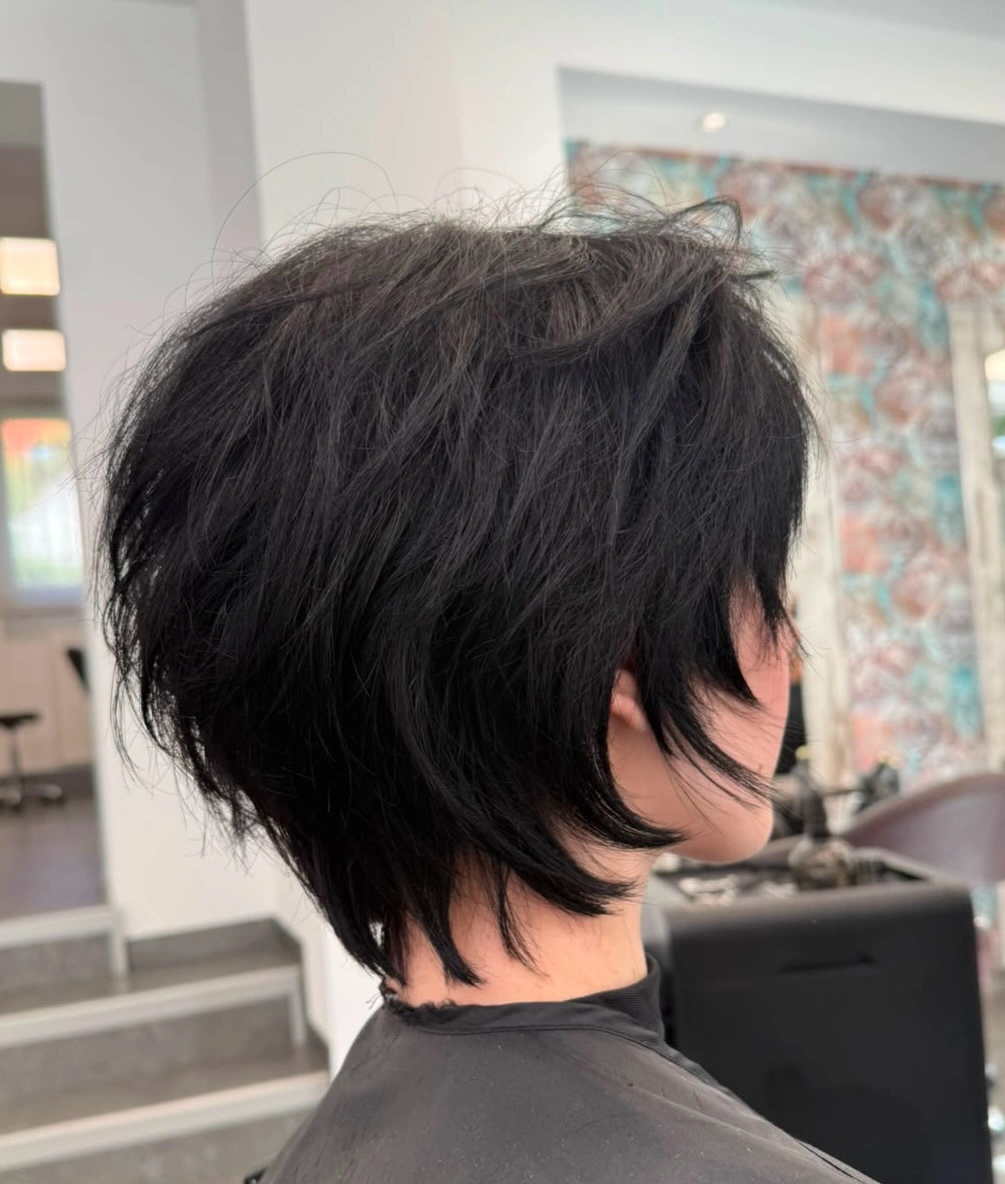
Photo via Instagram
Visible stepped sections create the strongest structural clue in this image. The upper mass projects farther in some areas, the side pieces fall to different levels, and the face-adjacent sections extend beyond neighboring lengths, producing a sequence of overlapping boundaries instead of one compact edge. That separation helps the eye read several length zones in profile without requiring a claim about exactly how those zones were cut.
The finished surface does not reveal a precise layer map, cutting method, or confirmed shag classification. The reliable evidence is limited to the short profile, dark color appearance, separated sections, and visible differences between upper, side, face, and nape lengths.
Rounded Blonde Shape With Full Fringe
This pale blonde short shape has a noticeably rounded profile, with smooth volume over the top and a broad fringe covering most of the forehead. The side length stays close to the head around the ear, while the back appears short and compact, producing an enclosed silhouette rather than an open or strongly separated one. Pixie-bob-like can be useful as a comparison term, but the visible shape is more certain than any exact haircut label.
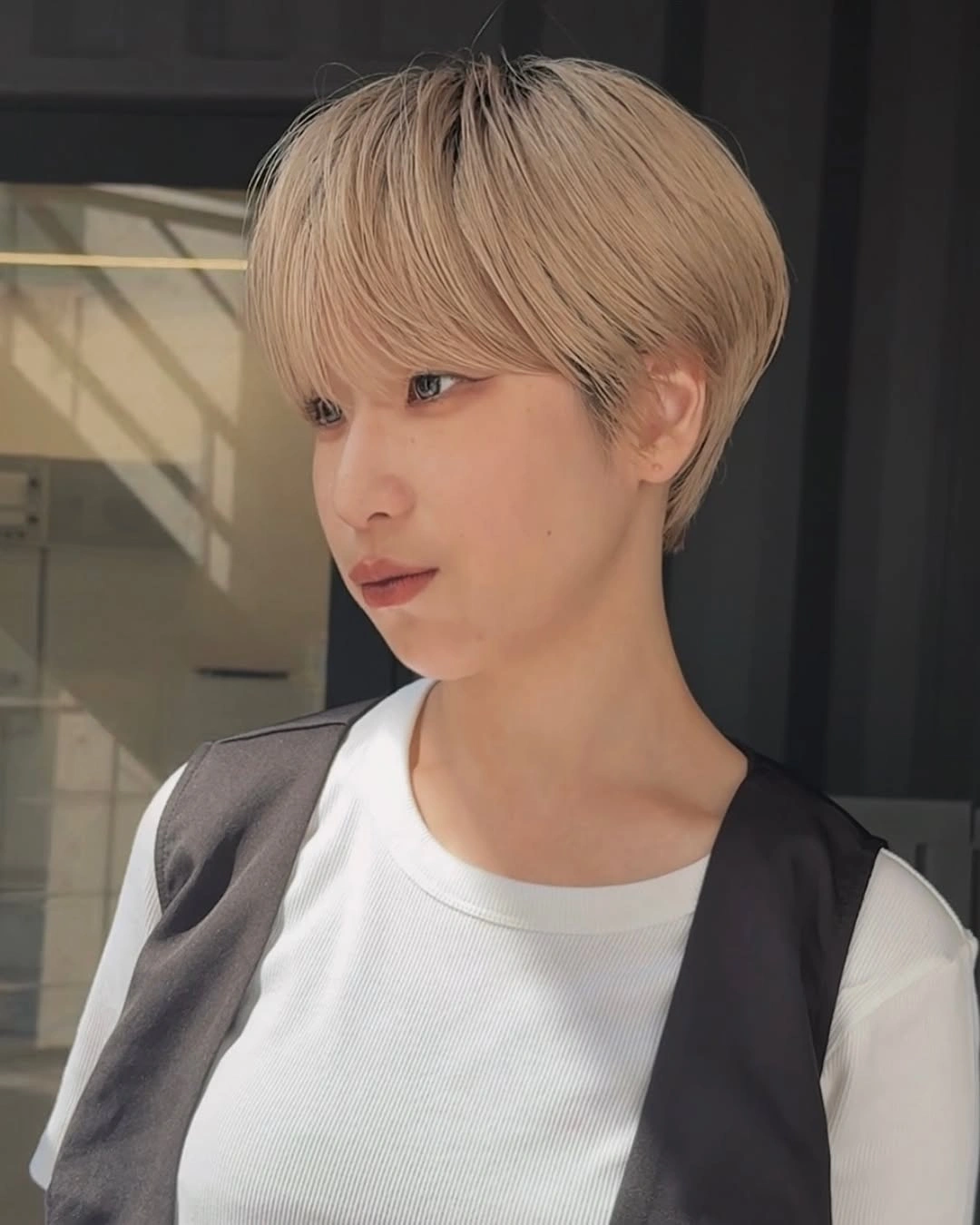
Photo via Instagram
Roundness and full fringe work together as the main visual mechanism. The curved upper outline carries the shape forward, while the broad fringe forms a substantial front boundary that reduces the amount of open forehead compared with center-parted or side-swept cuts. Because both the top and front read as continuous rather than heavily separated, the profile appears smooth and compact even though the exact internal structure cannot be seen.
The photograph does not confirm that this is technically a pixie-bob or establish the exact way the short shape was constructed. It supports only a pale, rounded short silhouette with substantial fringe and a compact side and back profile.
Dark Wavy Bob-Like Shape With Full Bangs
The dark short shape in this front view combines full bangs across the forehead with soft bends through the sides and ends. The overall length sits around the jaw and upper neck, creating a compact bob-like perimeter, but the lower edge is interrupted by gentle waves rather than reading as perfectly straight. The bangs remain one of the most clearly defined features because they create a strong horizontal presence above the looser side movement.
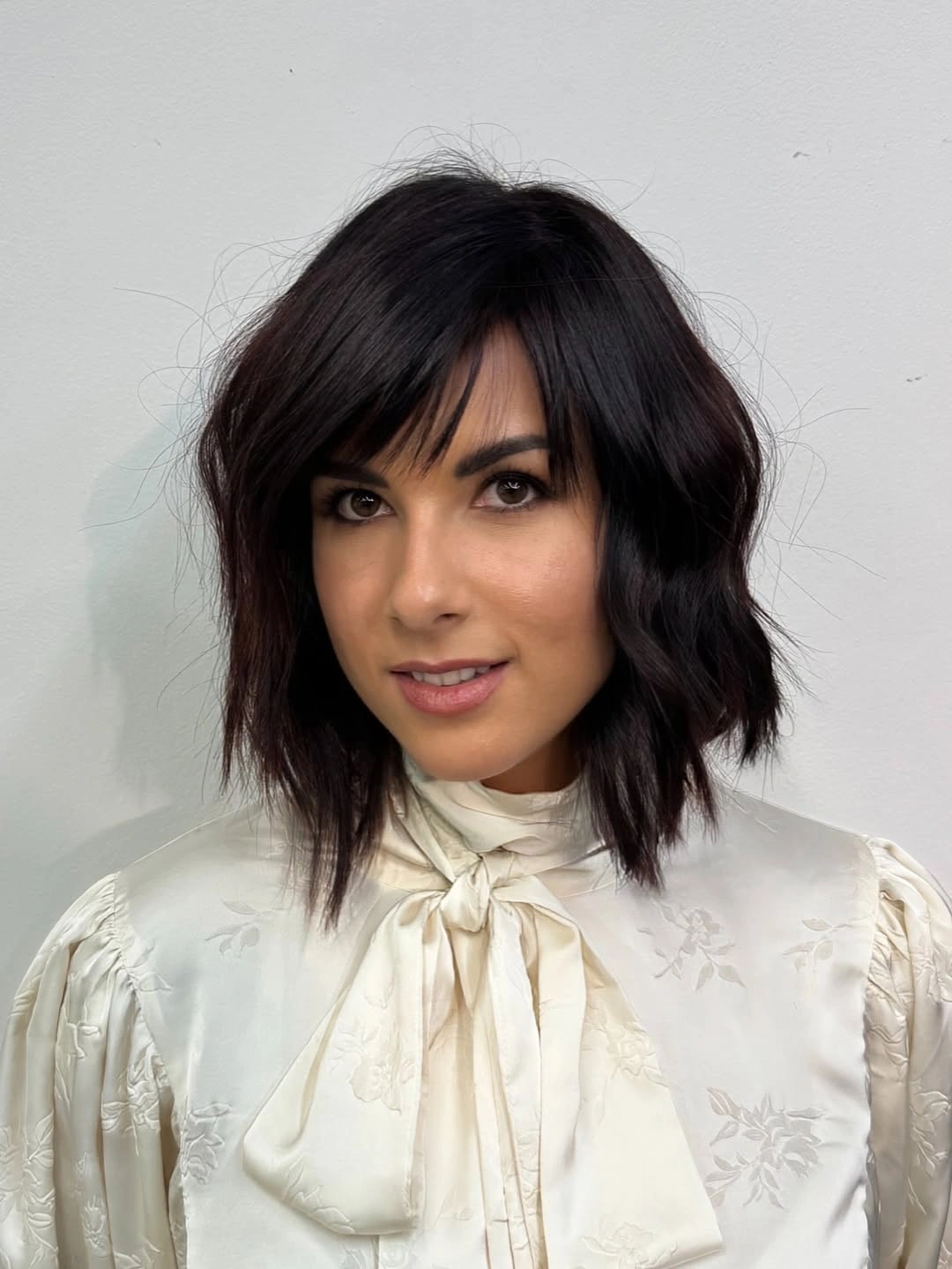
Photo via Instagram
The key contrast is between the firm upper boundary created by the bangs and the less rigid outline along the sides. Across the forehead, the fringe reads as a relatively continuous band, while the hair beside the face bends outward and inward in softer sections, allowing the lower silhouette to move more freely. That difference gives the haircut two distinct visual zones without proving a specific bob subtype or technical bang construction.
The image does not establish the exact bob classification, layer pattern, or method used to create the bangs and waves. It reliably shows a dark short bob-like outline with full fringe and softer movement through the sides.
Tight Curls Build the Outer Silhouette
Dense, tightly defined curls form the dominant visible shape in this reference, creating a rounded envelope that extends outward through the sides and downward past the shoulders. Individual ringlets overlap so closely that the outer contour is easier to read than any single lower baseline. The haircut therefore presents itself first through accumulated curl volume and repeated curved endpoints rather than through one clean, easily traced perimeter.
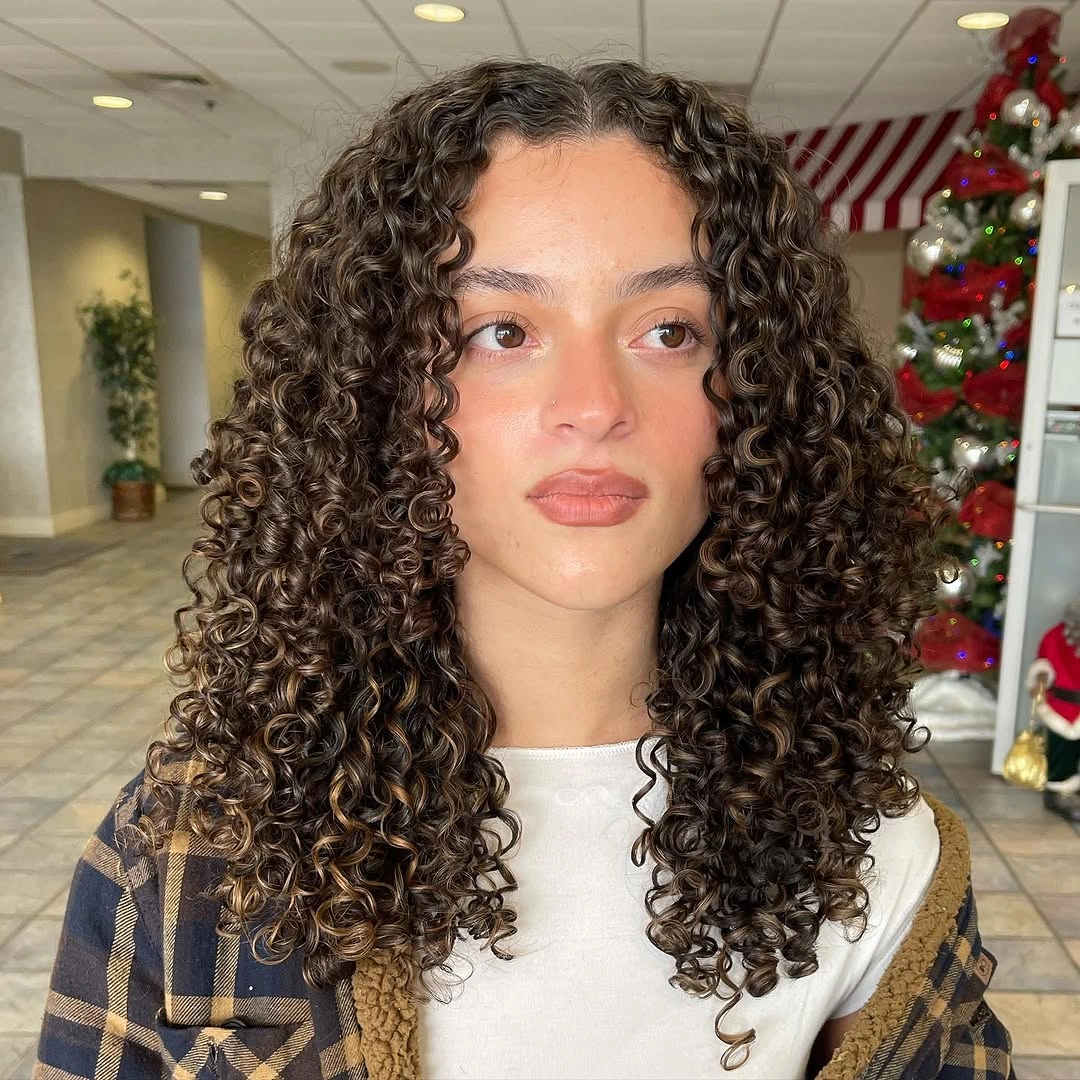
Photo via Instagram
The key comparison mechanism is the collective curl envelope. Because many curls project at slightly different positions, the eye reads width, fullness, and overall length through the outermost ringlets instead of through a straight hemline. That makes the apparent silhouette strongly dependent on where the curls sit in the photograph, while the exact underlying length distribution remains partly hidden inside the dense pattern.
The image does not reveal the stretched length, precise perimeter, or technical construction beneath the visible curls. It also does not establish whether the curl pattern is natural, styled, or altered in any particular way.
Long Dark Hair With Front Framing
This reference shows long dark hair extending well below the shoulders, with a relatively full body through the lengths and shorter visible pieces positioned around the front. Those front sections curve near the face while the remaining hair continues much farther downward, creating a clear difference between localized shorter lengths and the overall long silhouette. The photograph supports face framing, but it does not clearly prove that the shortest pieces are technically bangs.
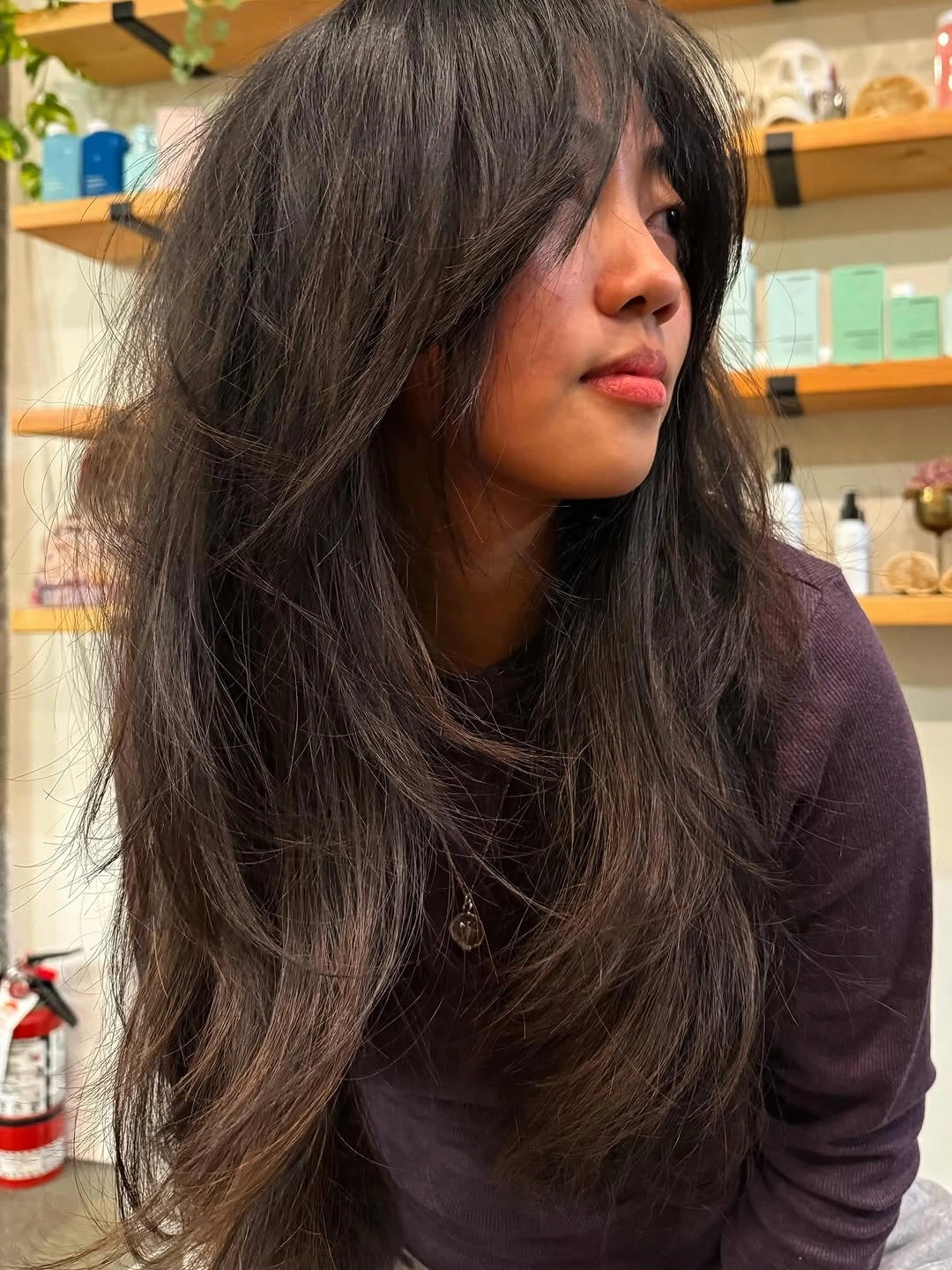
Photo via Instagram
The important comparison point is where the shortening occurs. Most of the visible hair remains long, so the overall cut scale is not changed by the shorter front pieces, yet those pieces alter how the front boundary is read by creating movement close to the face before the eye continues into the longer lengths. This distinction helps separate face framing from a haircut in which the entire perimeter is substantially shorter.
The image does not confirm whether the front pieces are technically fringe, curtain bangs, or simply shorter face-framing sections. The exact layer pattern and cutting method also remain uncertain from this single view.
Long Dark Length With a Quiet Back Line
Viewed from behind, this long dark haircut appears comparatively smooth through the upper and middle lengths, with only gentle movement becoming visible closer to the ends. The main mass falls in a continuous vertical shape rather than separating into strongly defined sections, and the lower edge curves softly instead of forming an obviously sharp line. This makes the overall rear length easier to read than any precise internal layering.
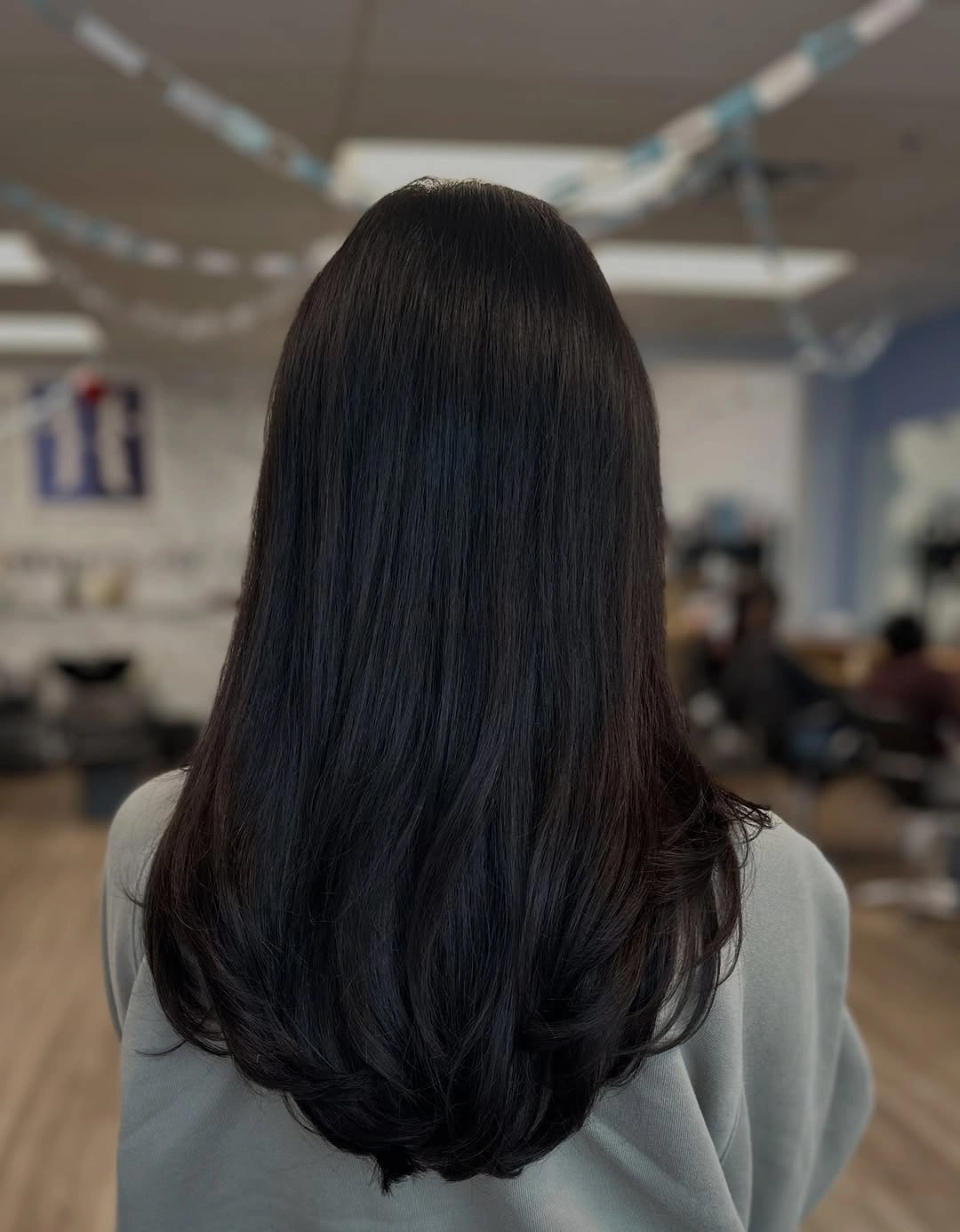
Photo via Instagram
The mostly quiet upper surface is the feature that sets this reference apart. Because there is little visible disruption through the top and center, the eye can follow the long back line almost continuously before reaching the subtle curves at the bottom. Those curved ends introduce movement without breaking the silhouette into obvious tiers, so the photograph gives stronger evidence about continuity and length than about a detailed layer structure.
The rear view cannot confirm fringe, front framing, or the exact internal construction of the cut. Any suggestion of layering should remain cautious because the visible evidence is strongest at the softly curved ends.
Very Short Bangs Against Long Brown Length
Long brown hair extends well below the shoulders in this front view, while a very short, blunt-looking fringe creates a sharply separate boundary high on the forehead. The contrast between those two length zones is immediate because the front edge stops far above the much longer body of hair. The remaining lengths appear relatively smooth, allowing the short fringe to become the most visually decisive structural feature in the entire silhouette.
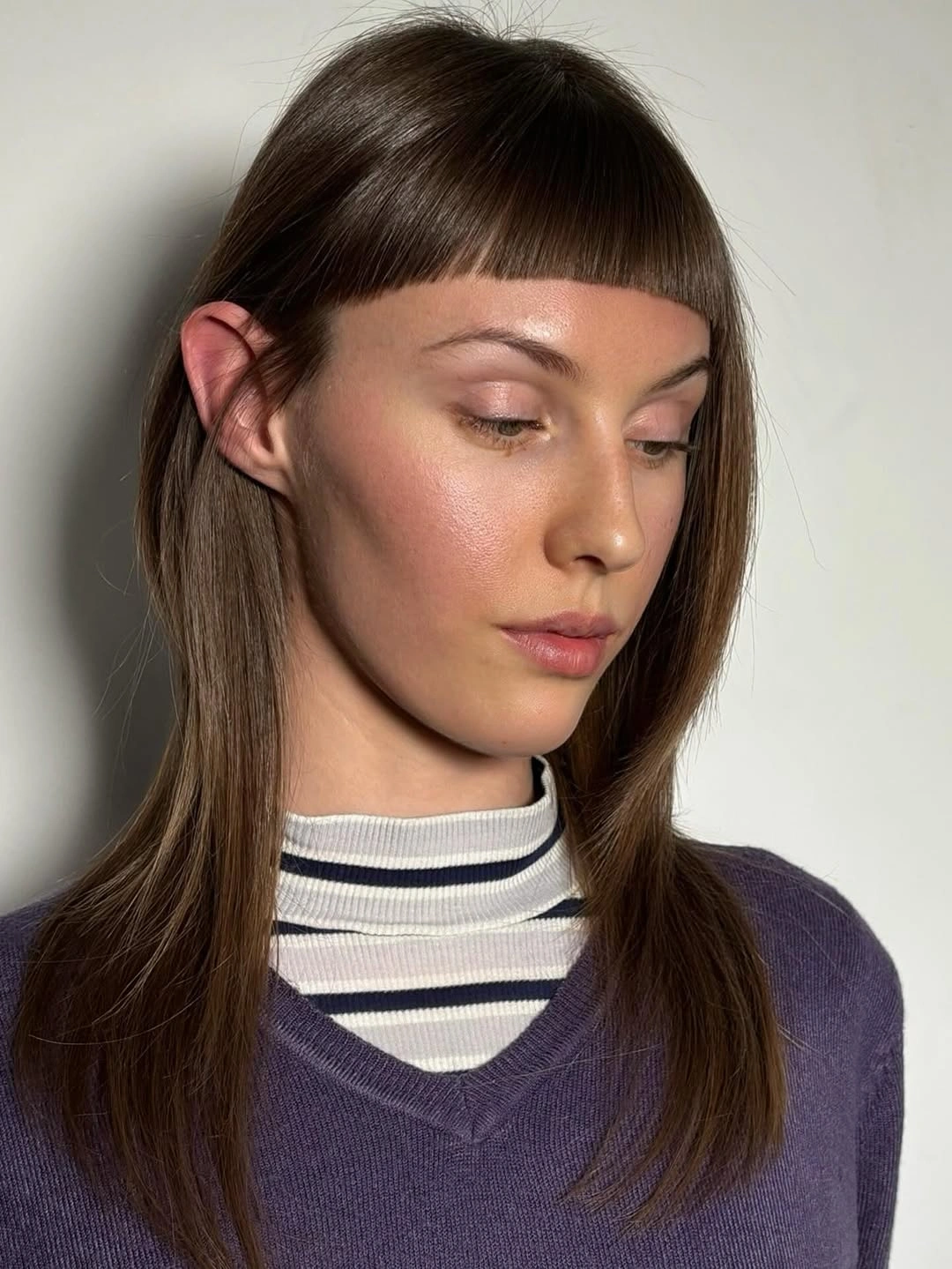
Photo via Instagram
This section works through direct length contrast. The fringe creates a short horizontal boundary at the front, while the rest of the haircut continues downward through a much larger vertical span, so the eye has to register two very different scales at once. That difference is stronger than a subtle face-framing effect because the front section is clearly separated from the long body rather than blending gradually into it.
The photograph clearly supports a very short fringe against long lengths, but it does not establish the technical method used to create either section. Any internal layering through the longer hair remains uncertain and should not be stated as a precise cut system.
Broad Waves Across a Medium-Long Cut
This warm copper-to-auburn-looking reference sits in a medium-to-long range, with broad waves repeating through the sides and lower lengths rather than clustering only at the ends. The overall scale is noticeably longer than a compact bob, yet the silhouette remains contained enough for the wave rhythm to shape the outline clearly. Color is visually prominent, but the more useful haircut evidence comes from length, repeated bends, and the softly moving perimeter.
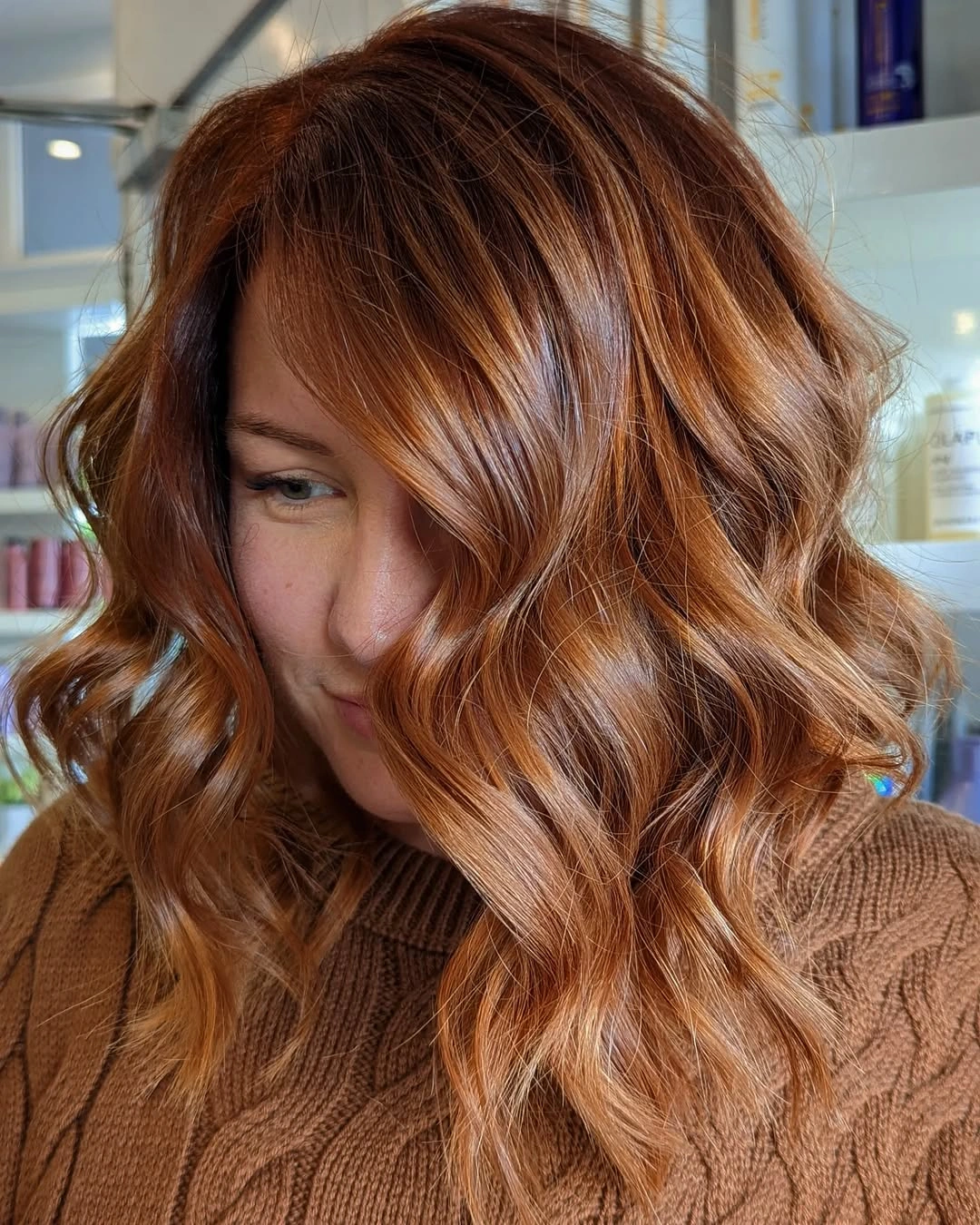
Photo via Instagram
The broad wave rhythm is the main mechanism here because each bend occupies more vertical space than the tighter patterns seen in curl-led references. Those larger arcs make it easier to see how much length exists between the upper head and the lower edge, which helps distinguish this medium-to-long scale from shorter wavy cuts. The movement changes the outline without proving where any layers begin or how the waves were produced.
The warm copper-auburn appearance may shift with lighting and should remain secondary to the visible cut scale. The photograph does not establish a specific layer pattern, color process, or styling method.
Blonde Face-Framing Pieces With Visible Length Shifts
This light blonde-looking reference falls around and below the shoulders, with a center opening and noticeably shorter front sections that sit higher than the longer lengths behind them. Those front pieces curve away from the face while the rest of the hair continues downward, creating a clear front-to-back change in visible length. The haircut reads as layered-looking because several endpoints appear at different levels, although the exact internal structure cannot be confirmed.

Photo via Instagram
Front-to-back length variation is the main mechanism in this image. The shorter pieces near the face create movement early in the silhouette, then lead the eye outward and downward into the longer sections at the sides and back. That progression makes the front feel more open and separated without requiring a heavy fringe, and it gives the haircut visible depth even though the precise number, position, and construction of the layers remain unknown.
The photograph supports shorter face-framing sections and a layered-looking transition into longer hair, but it does not reveal an exact layer map. It also does not establish how the movement was produced or how the blonde appearance was achieved.
Long Brunette Hair With Curved Endpoints
Long dark brown-looking hair extends well below the shoulders in this front view, with a center opening, smooth upper lengths, and several shorter sections becoming visible farther down. Multiple curved endpoints appear through the lower half rather than finishing at one uniform level, which gives the silhouette a layered-looking structure. The overall length remains substantial, but the repeated changes in endpoint make the lower shape feel more separated and dimensional.
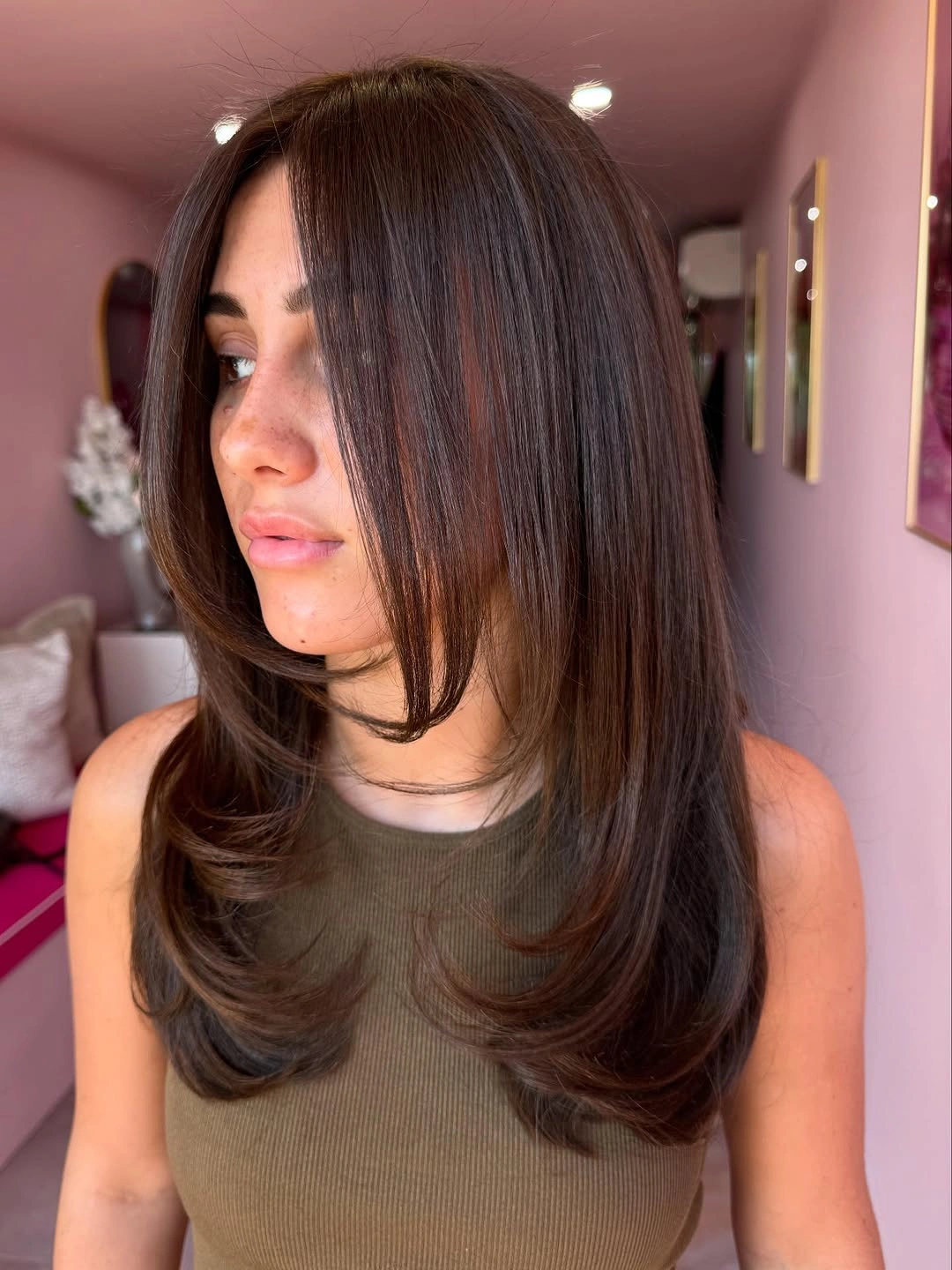
Photo via Instagram
The clearest comparison feature here is the repetition of curved endpoints at different visible levels. Instead of one continuous lower boundary, the eye finds several sections ending above, beside, and below one another, which breaks the long mass into overlapping zones. That separation makes the layered-looking construction easier to read from the front, while still leaving the exact number, depth, and technical arrangement of those layers uncertain.
The image supports visible length separation and multiple curved endpoints, but it does not establish a precise layering system. No specific cutting or styling method can be confirmed from the finished appearance alone.
Cool-Looking Short Waves in Side View
This short wavy shape is photographed from the side and back, with the visible length sitting around the jaw and nape and the upper area appearing fuller than the lower edge. The surface looks cool gray to silver-toned in the available light, while soft bends interrupt what might otherwise read as a compact bob-like contour. Because the face and front are only partly visible, the most reliable evidence comes from the side outline, rear length, and wave placement.
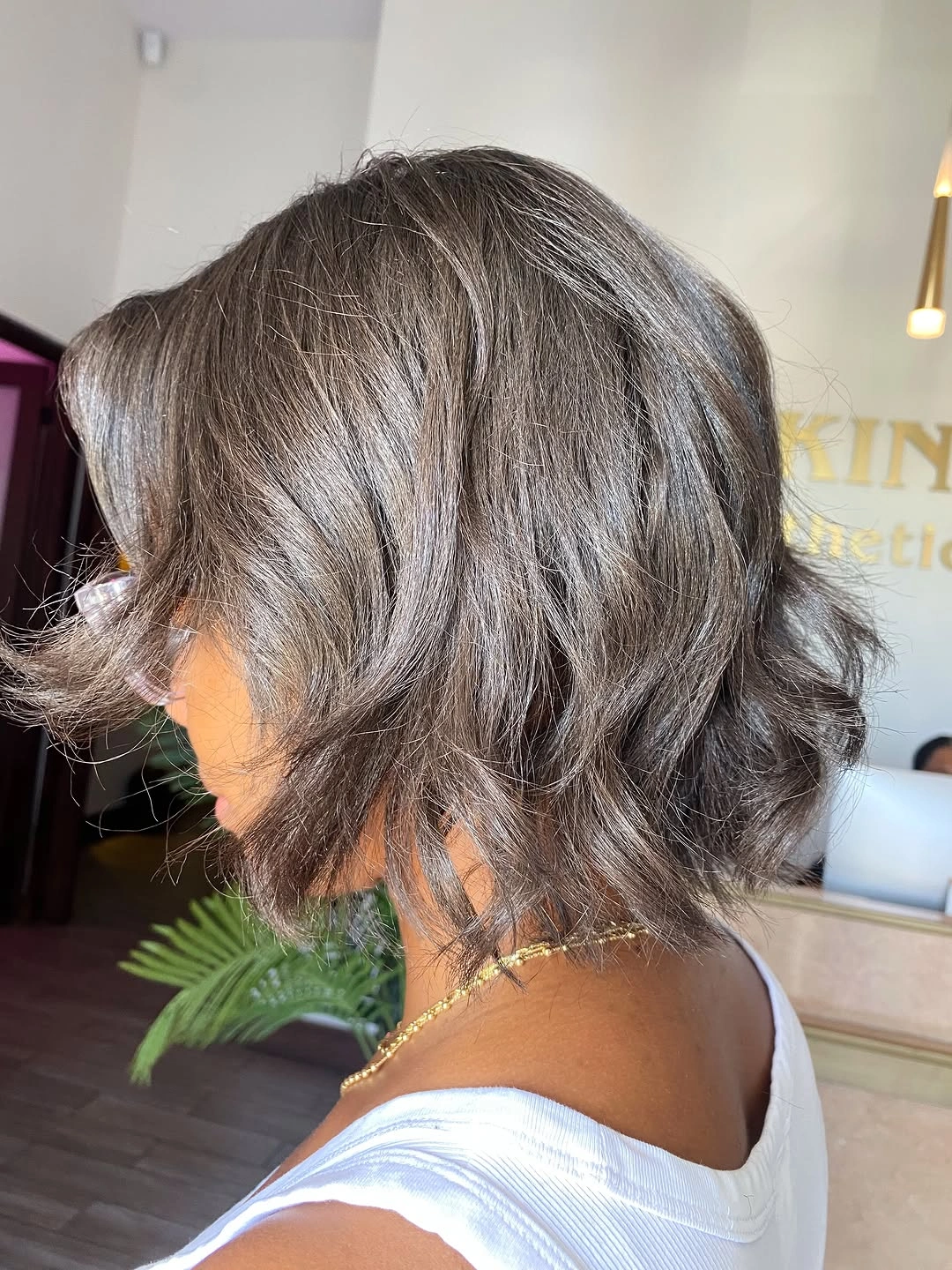
Photo via Instagram
The side and back viewpoint changes what can be compared most confidently. From this angle, the eye can follow the fuller upper contour into the shorter lower perimeter and see how the waves create small changes in width around the jaw and nape. That makes the profile more informative than the hidden front, while also preventing a firm claim about fringe, face framing, exact bob subtype, or the full distribution of any internal layers.
The cool gray-looking appearance may be influenced by lighting, so the image does not prove silver or gray dye. It also does not confirm a technical bob classification or the exact structure beneath the visible waves.
Very Long Blonde Waves Concentrated at the Ends
This very long pale blonde-looking reference is shown from behind, where the upper and middle lengths appear comparatively smooth before broader waves become more noticeable lower down. The hair continues well past the shoulders, creating a long continuous vertical line through most of the back. Movement is concentrated closer to the lower section, so the overall silhouette stays calm above while the ends spread into softer curves and repeated bends.
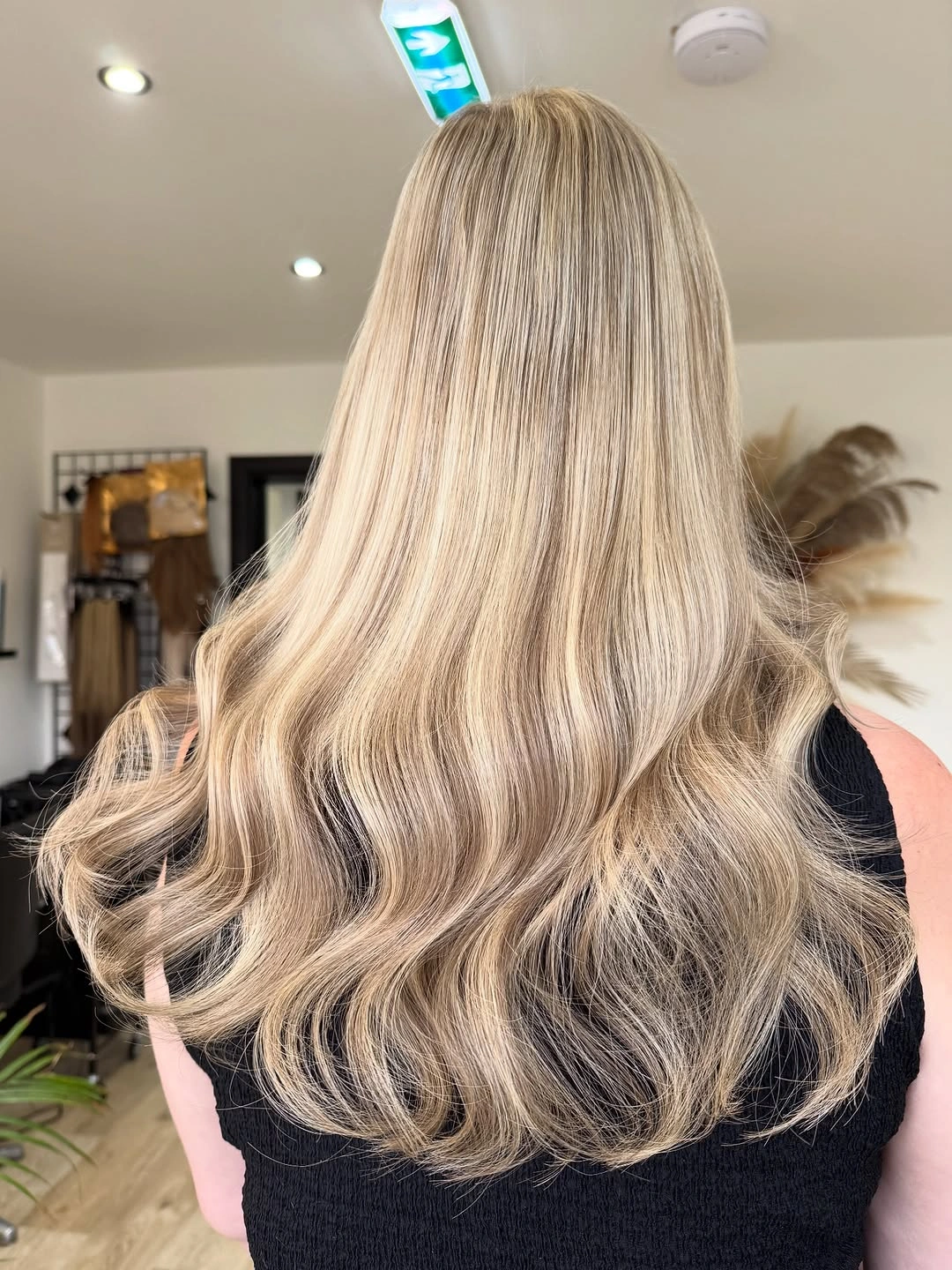
Photo via Instagram
The placement of movement is what distinguishes this long haircut reference. Because the upper length remains relatively smooth, the eye can trace the uninterrupted fall of the hair for a considerable distance before reaching the broader waves below. Those lower bends make individual endpoints easier to notice without breaking the entire silhouette into obvious tiers, so the photograph provides stronger evidence about length and lower movement than about exact layering.
The back view does not reveal where any internal layers begin or whether the lower movement reflects the cut, styling, or both. The pale blonde appearance is visible, but the image cannot establish any coloring process or exact tone.
Very Long Brunette Waves With Front Framing
Very long dark brunette-looking hair is shown from the front with a center opening, loose repeated waves, and shorter pieces positioned around the face. The main lengths continue far below the shoulders, while the front sections stop higher and curve into the longer body of hair. That visible difference creates a layered-looking front without changing the fact that the overall haircut remains very long and visually continuous through the lower sections.
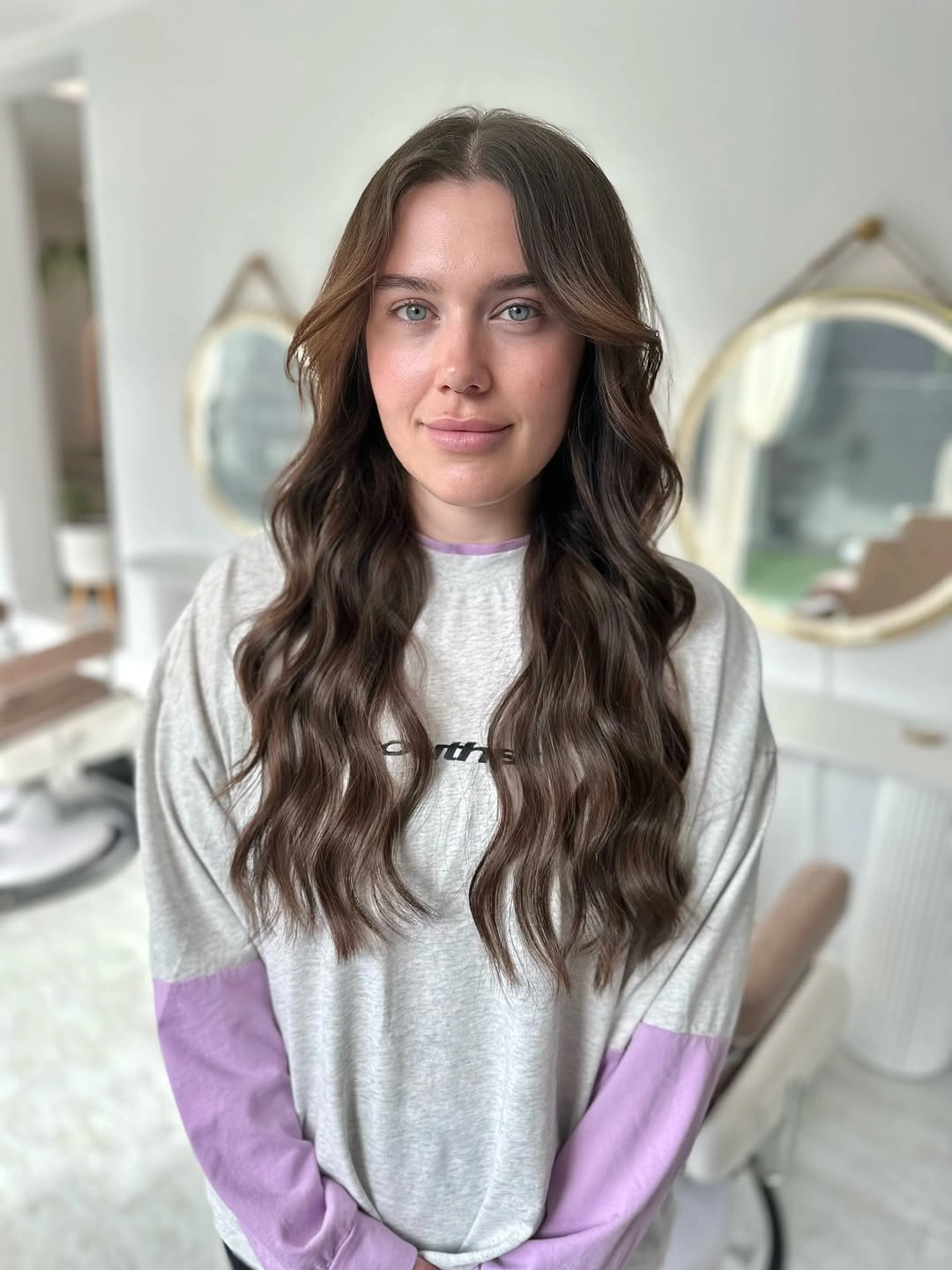
Photo via Instagram
The front view makes the transition between shorter face-framing pieces and the much longer body especially easy to compare. The eye first meets the center opening and shorter curved sections, then follows those lines outward into the repeated waves and extended length below. This viewpoint clarifies the front structure while hiding the exact rear perimeter, so the photograph supports visible front framing and wave movement more strongly than a complete layer map.
The image does not confirm the exact number, depth, or technical arrangement of the shorter front sections. It also cannot establish how the waves were created or what the unseen rear boundary looks like.
Shoulder Bob-Like Shape With a Center Opening
This brown-looking shoulder-length shape has a clear lower boundary that sits close to the shoulders, while the front opens through the center into shorter curtain-like sections. Those pieces curve away from the face and blend visually into the longer sides, while the ends turn softly rather than forming a rigid straight line. The overall impression is bob-like, but the visible outline is more certain than any exact technical label.
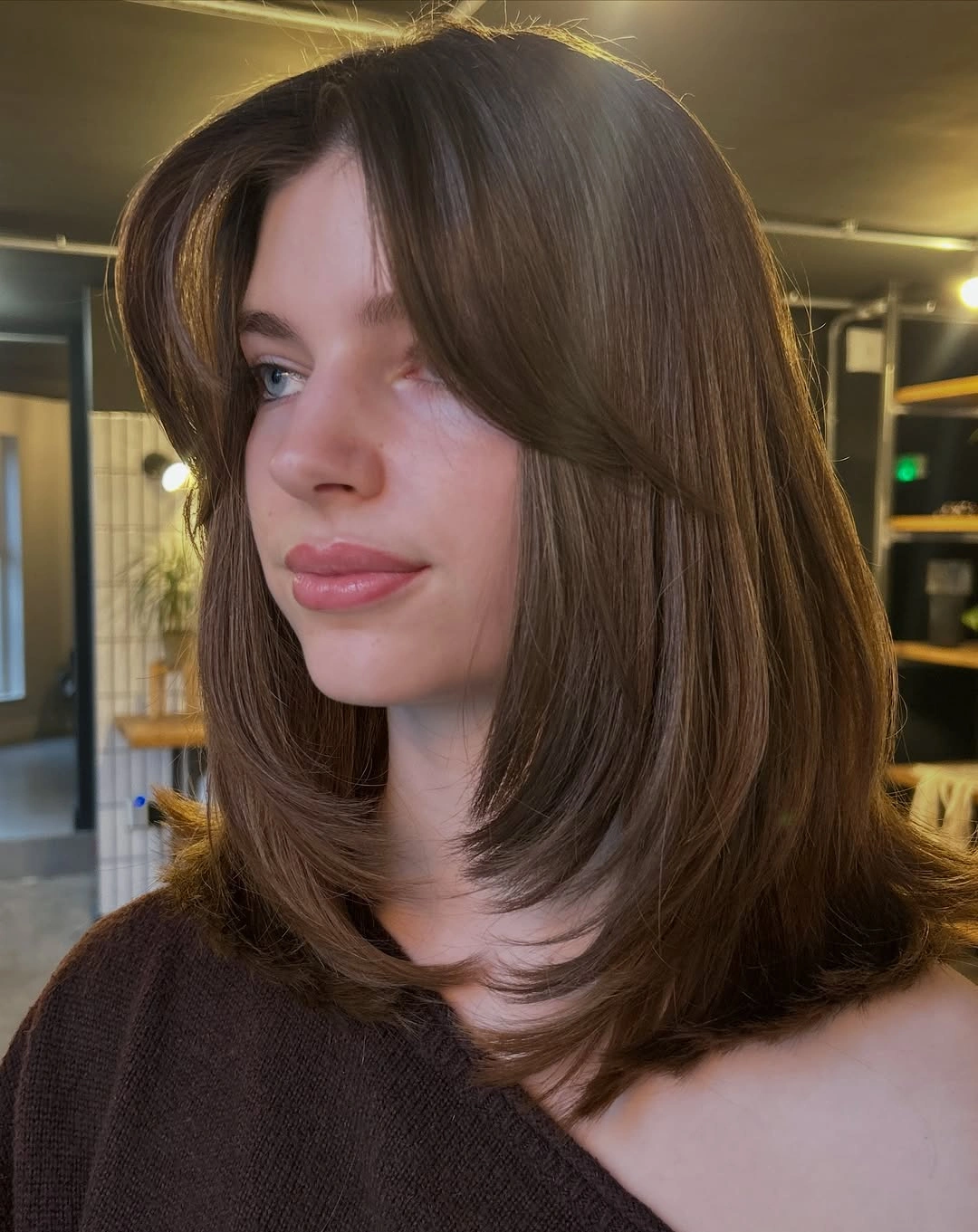
Photo via Instagram
The strongest comparison point is the combination of a readable shoulder baseline and an open center front. The shorter front sections create space through the middle while still framing the sides, so the top of the silhouette feels less closed than a full fringe and less uneven than a heavy side sweep. At the same time, the lower edge remains compact enough to keep the haircut visually anchored around the shoulders.
The photograph does not confirm a precise bob subtype or establish that the front sections follow a specific curtain-bang construction. It reliably shows a shoulder-level outline, a center opening, shorter front pieces, and softly curved ends.
Dark Layered-Looking Shag-Like Shape With Blue Contrast
Very dark hair forms a strongly separated layered-looking silhouette here, with a centered opening, shorter sections through the upper and side areas, and longer pieces extending through the front and lower lengths. Blue-looking sections are visible against the darker base, but color stays secondary to the way the endpoints separate from one another. The overall shape reads as shag-like because the outline changes repeatedly instead of settling into one compact edge.
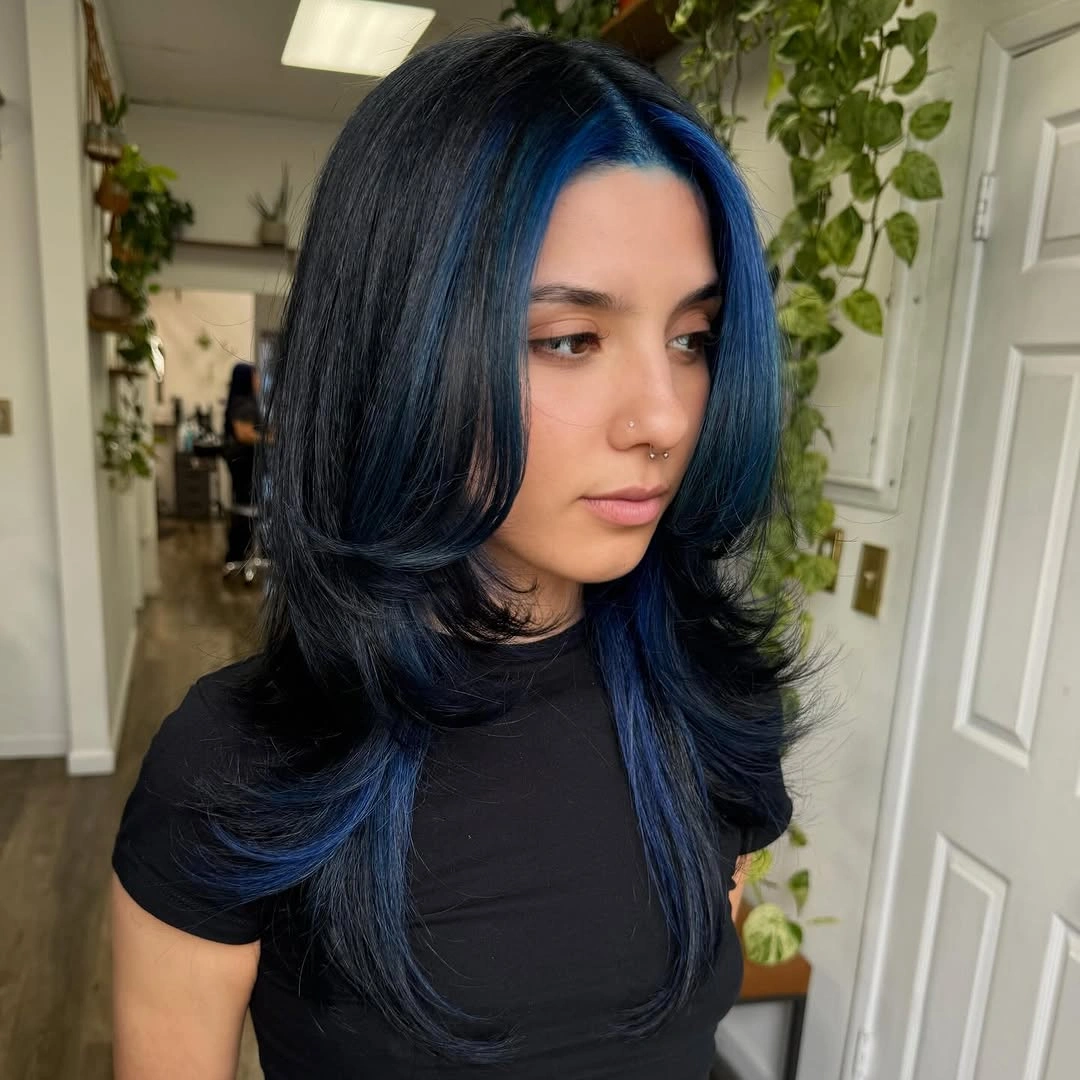
Photo via Instagram
Visible layer separation is the main mechanism in this final reference. Shorter upper pieces sit above longer side and front sections, while several endpoints project at different levels, creating a graphic stepped outline that is easy to follow. The dark surface and blue-looking contrast make some sections easier to distinguish from neighboring pieces, but they do not prove that the color was placed to emphasize the haircut.
Shag-like is a visual comparison rather than confirmation of a technical cut, and the photograph does not establish that this is a wolf cut. The exact dark or blue tone and any coloring method also remain uncertain from the visible evidence alone.