
A color label rarely tells the whole story. Two references can both read as brunette or blonde and still feel completely different because the overall depth, the amount of contrast, the placement of lighter areas, and the way the hair moves all change what the eye notices first. These November hair colours 2026 references are best used as visual comparisons, not as a forecast of what anyone is expected to wear.
A practical way to compare November hair colors for 2026 is to look beyond the shade name and read the photo in layers: first the overall lightness or darkness, then where tonal changes appear, and finally how waves, bends, or a straighter surface reveal them. That approach makes it easier to separate quiet dimension from stronger contrast while keeping every takeaway tied to what is actually visible.
Cool Ash-Brown Waves with Quiet Depth
The first reference reads as a deep cool brown with a muted ash or gray-brown cast, shown mostly from the back through long, broad waves. The overall field stays dark and relatively even, while the curved sections create small shifts between deeper and lighter-looking areas. That restrained contrast is the main visual idea, rather than any sharply separated band of color.
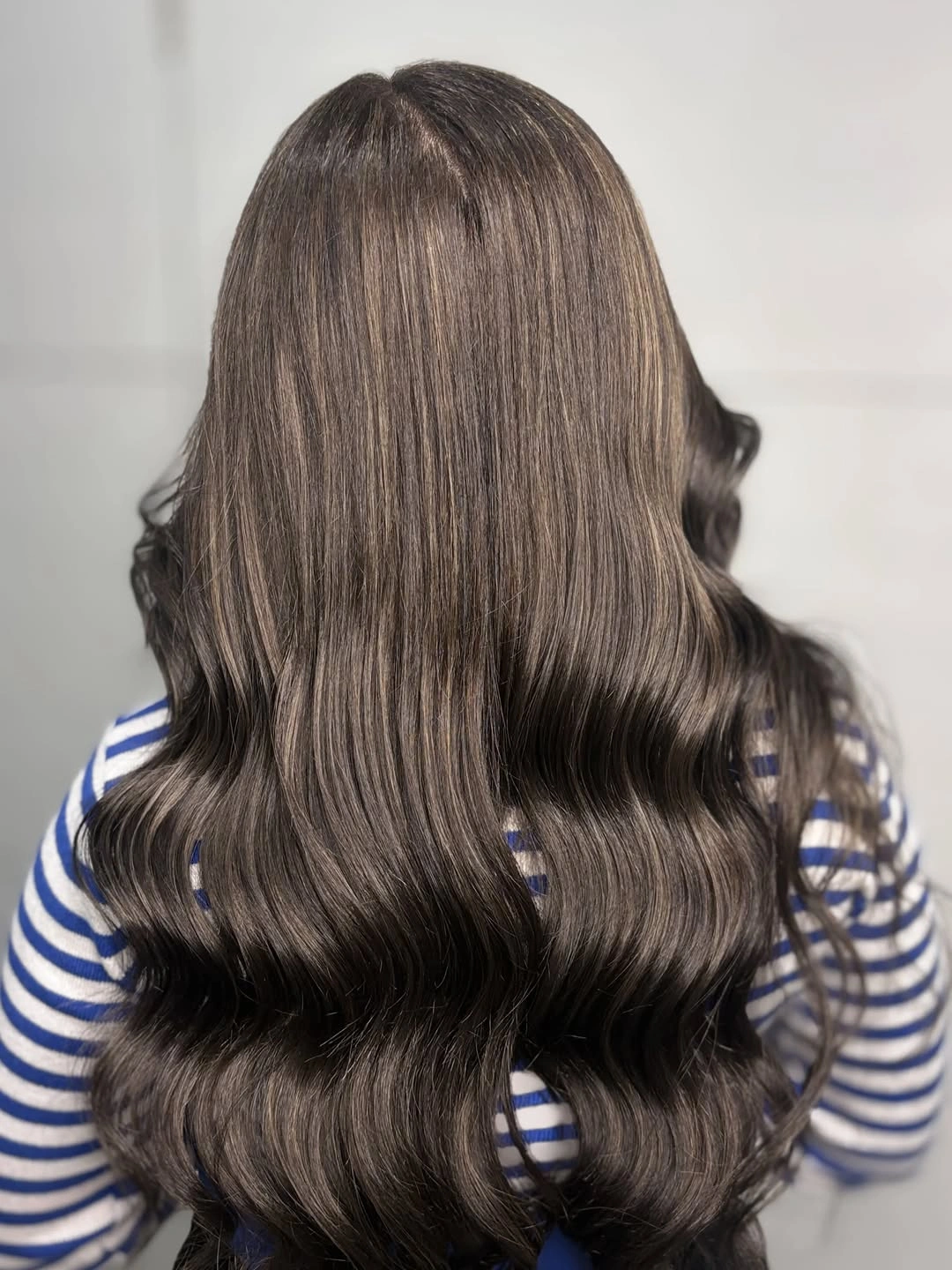
Photo via Instagram
The soft wave pattern matters because each curve turns the surface slightly toward or away from the light, making subtle tonal changes easier to notice across such a dark base. In a straighter presentation, the same low-contrast color could appear more uniform. Here, movement gives the brunette field enough variation to feel layered without relying on a strong light-versus-dark split.
The photo cannot confirm an exact ash-brown formula or explain how much of the cool cast comes from the lighting. It also does not establish a specific coloring method, so the safest reading is the visible depth and tonal variation only.
Muted Brown Waves with Cooler Light Dimension
This back-view reference shows long brown hair with noticeably lighter cool beige, gray, or blonde-looking sections running through the midlengths and ends. The upper area remains deeper, while the lighter portions appear in broader stretches rather than as one isolated accent. The result is a muted brown-to-light transition that breaks up the length without creating a hard boundary.
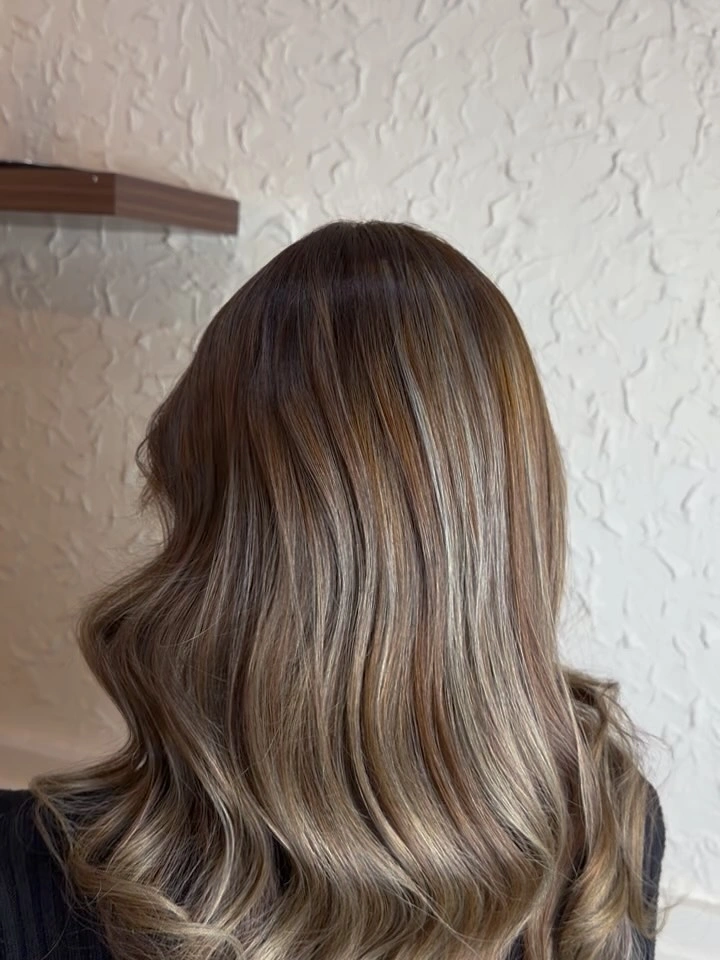
Photo via Instagram
Because the hair is arranged in repeated waves, the lighter sections appear more strongly on some curves and recede on others, which makes the tonal placement easier to read from the back. The useful comparison here is not simply dark versus light, but how distributed brightness can interrupt a long brown silhouette and create visible separation through the lower half.
The image may resemble a familiar salon technique, but the photograph does not prove how the lighter areas were created. It also cannot lock the color into one exact gray, beige, or blonde category because the room light may shift those undertones.
Pale Blonde Waves with Soft Tonal Shifts
This reference moves to a much lighter value, with pale blonde hair falling past the shoulders in a side and back view. The color appears very light overall, but gentle waves reveal small differences between brighter blonde areas and sections that look slightly more shadowed or muted. The effect is soft and low in contrast, with lightness itself carrying most of the visual impact.
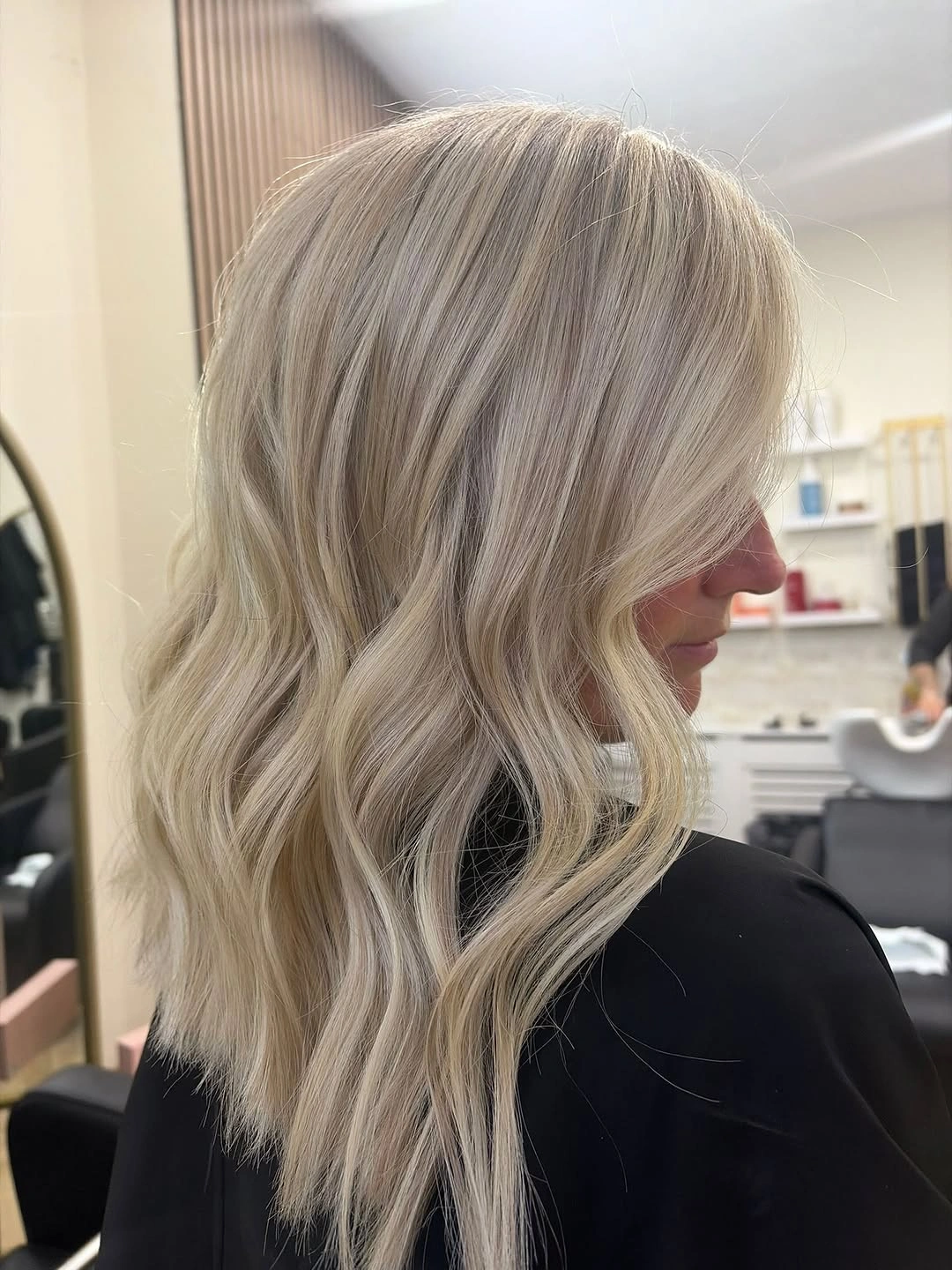
Photo via Instagram
The waves keep the pale color from reading as one flat sheet because every bend introduces a slightly different angle to the light. That makes faint tonal variation visible even though the overall blonde field remains quiet and closely related in value. As a comparison point, this image shows how movement can preserve depth in very light hair without requiring obvious dark ribbons.
The photo does not establish a precise platinum level, exact undertone, or any particular treatment. Indoor illumination can also influence whether the blonde appears cooler, creamier, or more neutral than it would under different light.
Near-Black Waves with Deep Tonal Weight
Here the hair reads as black or extremely deep brunette, shown from the side and back with long length and loose movement concentrated through the lower half. The color field is much darker and more uniform than the pale reference before it, yet the waves still create slightly lighter reflected areas along the curves. The main impression is depth first, with shape providing the visible variation.
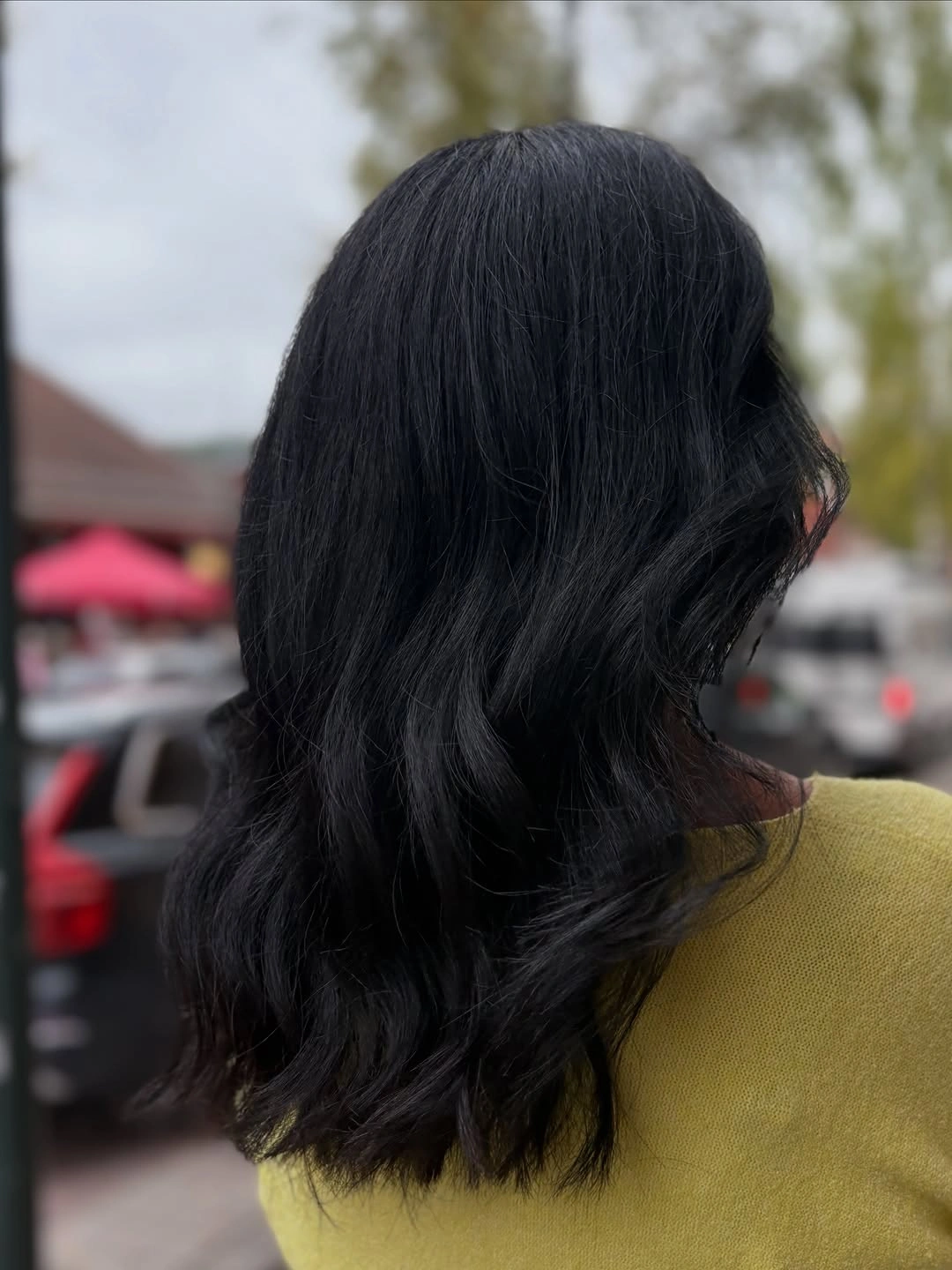
Photo via Instagram
On such a dark field, the wave pattern helps the outline stay readable because each bend separates one section from the next through small changes in reflected light. That keeps the long shape from collapsing into one flat mass in the photograph. The useful takeaway is how movement can reveal structure even when there is very little internal color contrast to work with.
The image cannot show whether this is a natural color or a dyed dark brunette, and it does not prove any glossing service or exact undertone. Reflected light on the waves should be treated as a visual effect in the photo, not as evidence of a product or formula.
Warm Chocolate-Brown Length with Soft Framing
The fifth reference shows long warm brown hair from the front, with a rich chocolate-brown appearance and slightly warmer reddish-brown areas visible through the length. The color remains fairly continuous around the face instead of breaking into sharply separated bright pieces. Soft movement through the front and lower sections lets the warm depth read clearly without turning the look into a high-contrast composition.
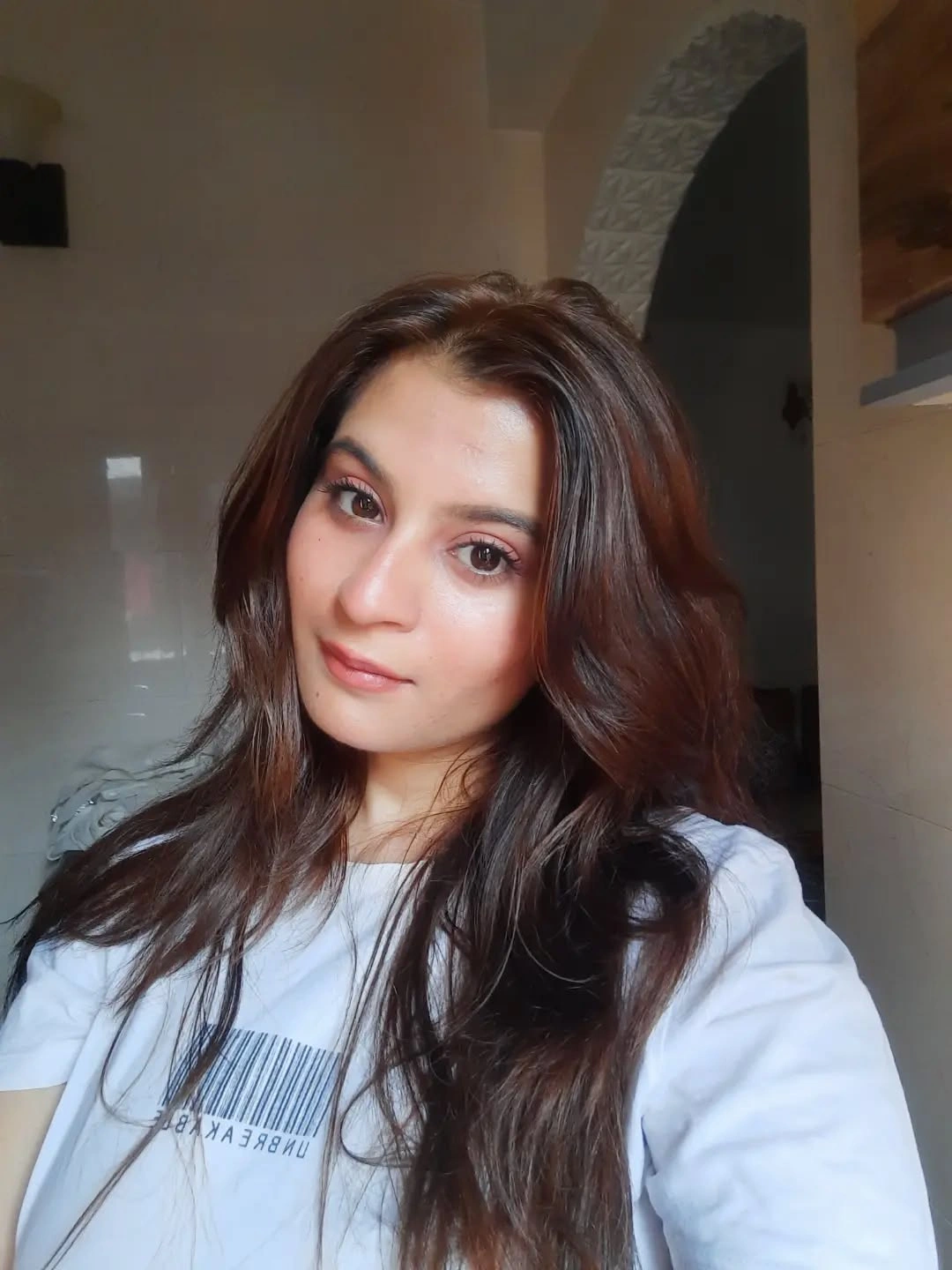
Photo via Instagram
A front view changes what can be judged because it shows how the color behaves around the parting, the face-framing sections, and the lengths on both sides at once. In this photo, the warmer brown stays connected across those areas, so the first impression is one deep brunette family with subtle internal variation rather than a dark base interrupted by conspicuous lighter panels.
The exact balance between chocolate brown, reddish brown, and other warm brunette labels cannot be fixed from this single image. Lighting may strengthen the warm cast, and the photo does not reveal a formula, service, or coloring history.
Mauve-Lavender Layers with Lighter Contrast
This shorter cut reads as a mauve-lavender or soft purple field, with lighter blonde-looking sections visible near the upper area and through parts of the surface. The hair falls around the shoulders with layered-looking movement and ends that curve outward. Because the silhouette is compact, the contrast between the purple color and the lighter areas stays concentrated and easy to see.
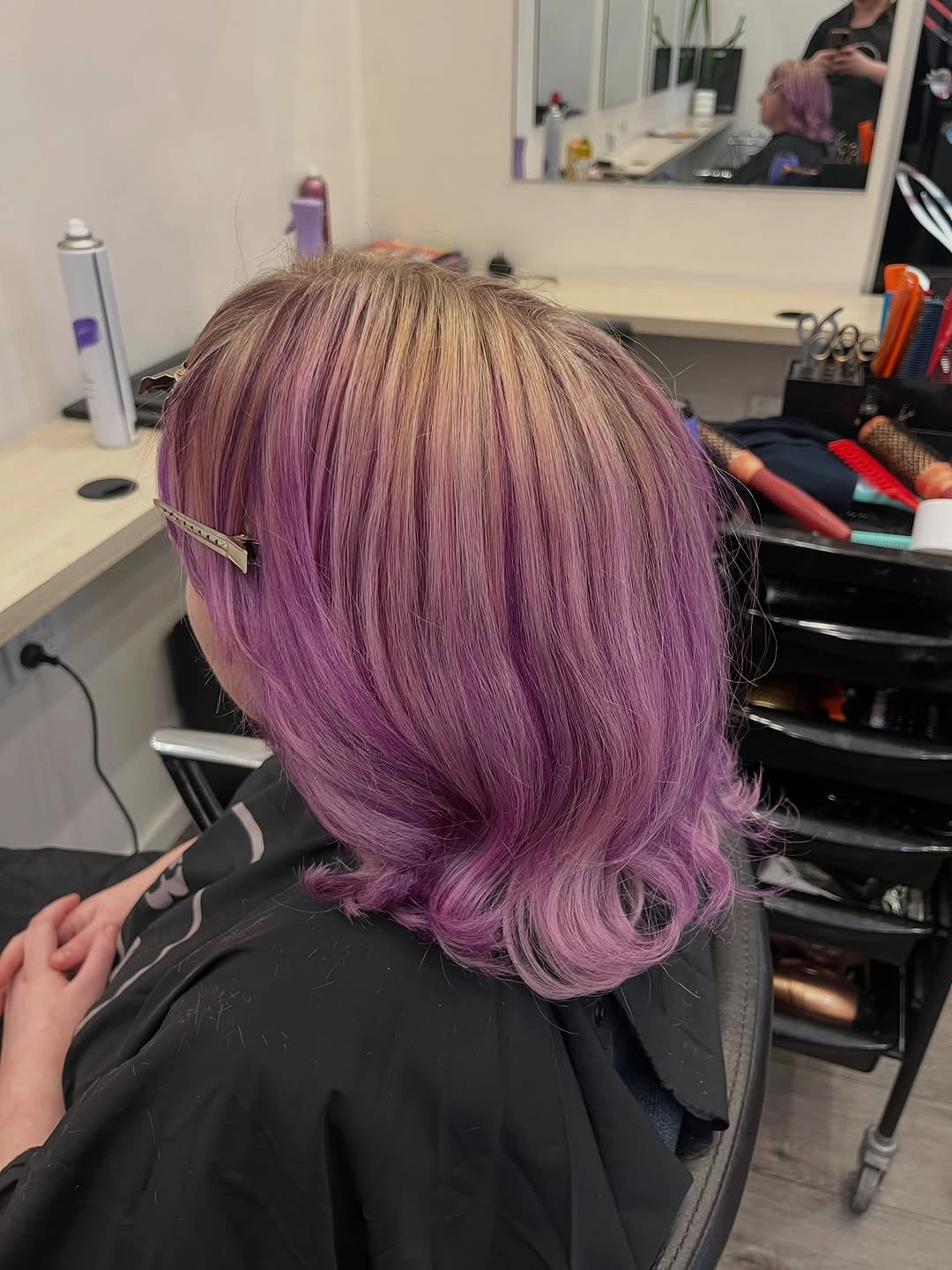
Photo via Instagram
The shorter layered shape changes how the color placement reads because there is less length for the different tones to spread across. Lighter sections near the top stand apart from the mauve-lavender body, while the curved ends add another change in direction near the lower edge. The result is a graphic color relationship built from visible contrast rather than a single uninterrupted pastel field.
The photograph does not show how the purple and lighter areas were created, so no specific coloring technique can be confirmed. It also cannot establish the formula or exact balance between lavender, mauve, and pink undertones.
Gray-Beige Blonde Waves with Muted Dimension
This long back-view reference has a light overall field that moves between blonde, gray-beige, and slightly deeper cool-looking areas. Repeated waves run through the length, creating visible bands where the hair appears brighter on one curve and more muted on the next. The contrast remains restrained, so the main impression is a cool light blonde range rather than sharply separated dark and bright sections.
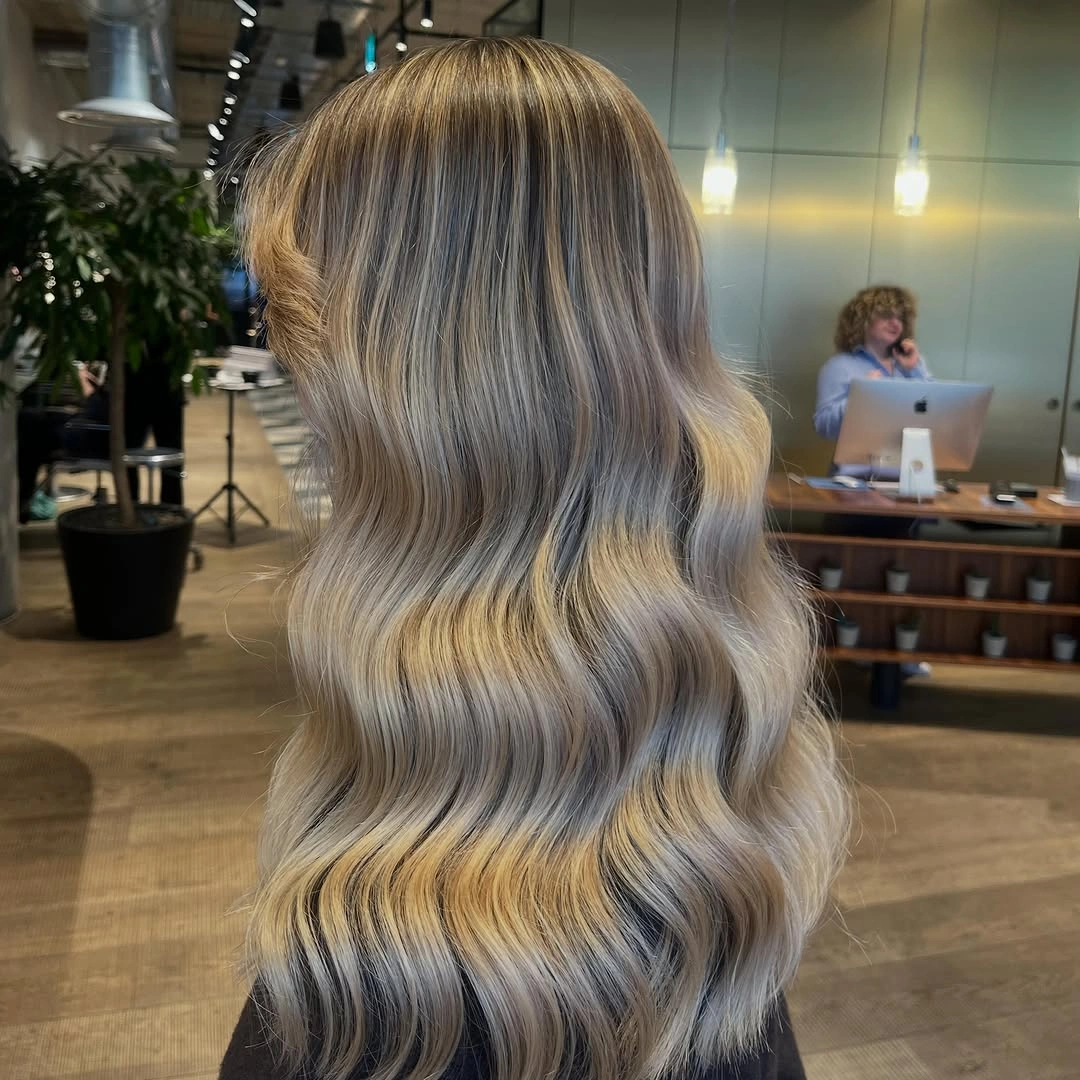
Photo via Instagram
The repeated wave pattern is especially useful here because it separates the lighter and deeper values without relying on a dramatic color boundary. Each curve exposes a different portion of the gray-beige and blonde range, helping the long hair retain visual depth from the upper area through the ends. The color therefore reads as softly varied while staying within one relatively light overall field.
The photo does not confirm a specific lightening or coloring technique, even if the placement resembles familiar salon patterns. Lighting may also influence whether the deeper areas appear gray, beige, or simply more shadowed than the surrounding blonde.
Copper-Auburn Waves with Continuous Warmth
The hair in this front and side view reads as a rich copper-auburn brown, with warmth extending from the upper sections through the long lengths rather than appearing as isolated bright accents. Broad waves create alternating lighter and deeper-looking areas, but the color remains visually connected across the whole shape. The dominant impression is continuous warm depth with a strong reddish-copper cast.
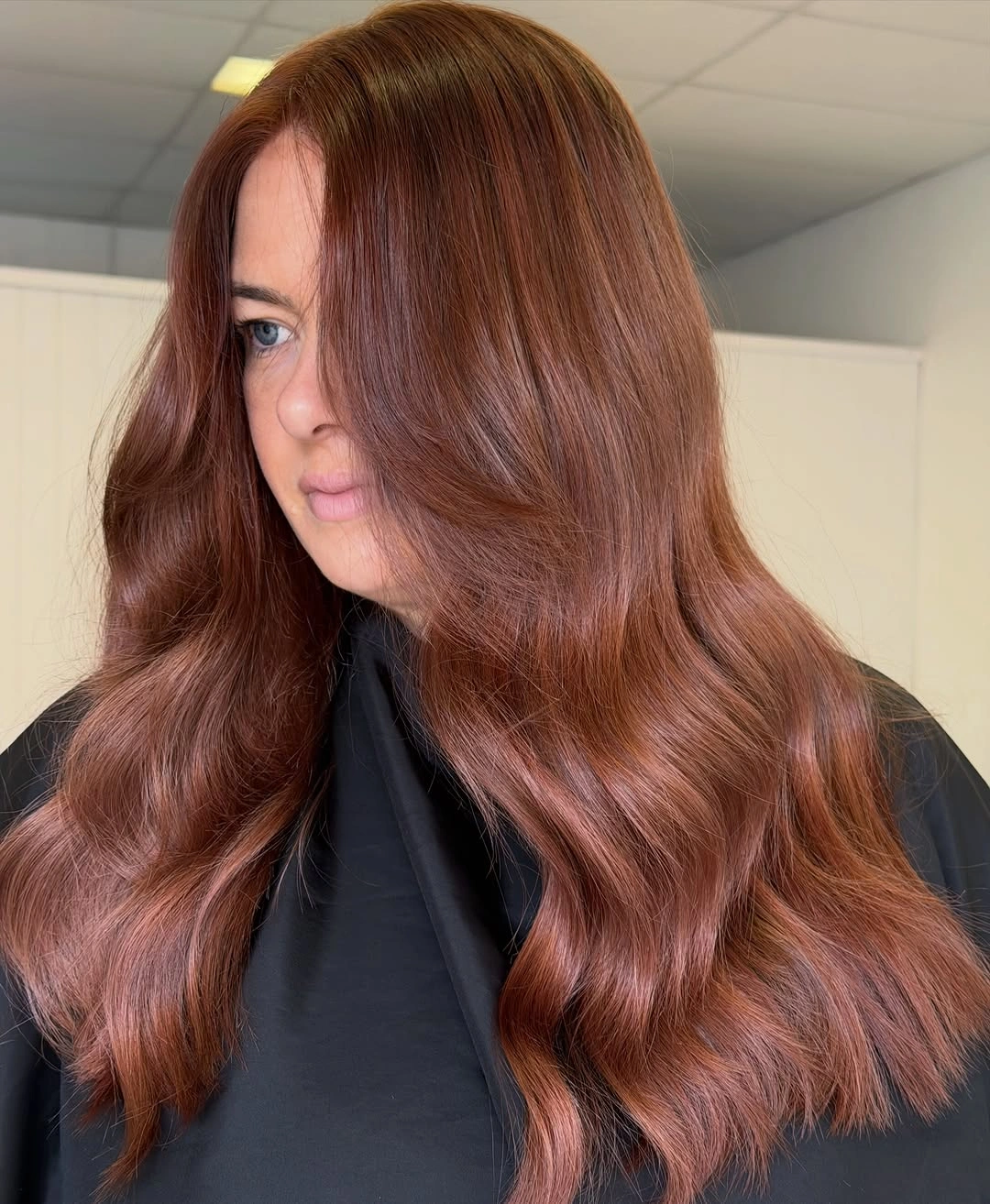
Photo via Instagram
Large waves distribute the warm color across several directions, so outward-facing curves appear brighter while recessed sections look deeper. That movement gives the copper-auburn field variation without breaking it into obvious separate panels. Compared with a more contrasted reference, the useful idea here is consistency: the same warm family remains visible across the front framing and the longer lower sections.
The image cannot establish the exact balance between copper, auburn, red-brown, or other neighboring shade labels. It also provides no evidence about formula, processing, or how the shade would appear under different lighting.
Vivid Magenta Waves with Saturated Color
This back-view reference is dominated by a vivid magenta-pink color that runs through long, defined waves, while deeper darker areas remain visible between some of the brighter sections. The saturated color extends across most of the visible length instead of appearing as one small accent. That broad distribution makes the pink-magenta field the first thing the eye reads before the individual wave pattern.
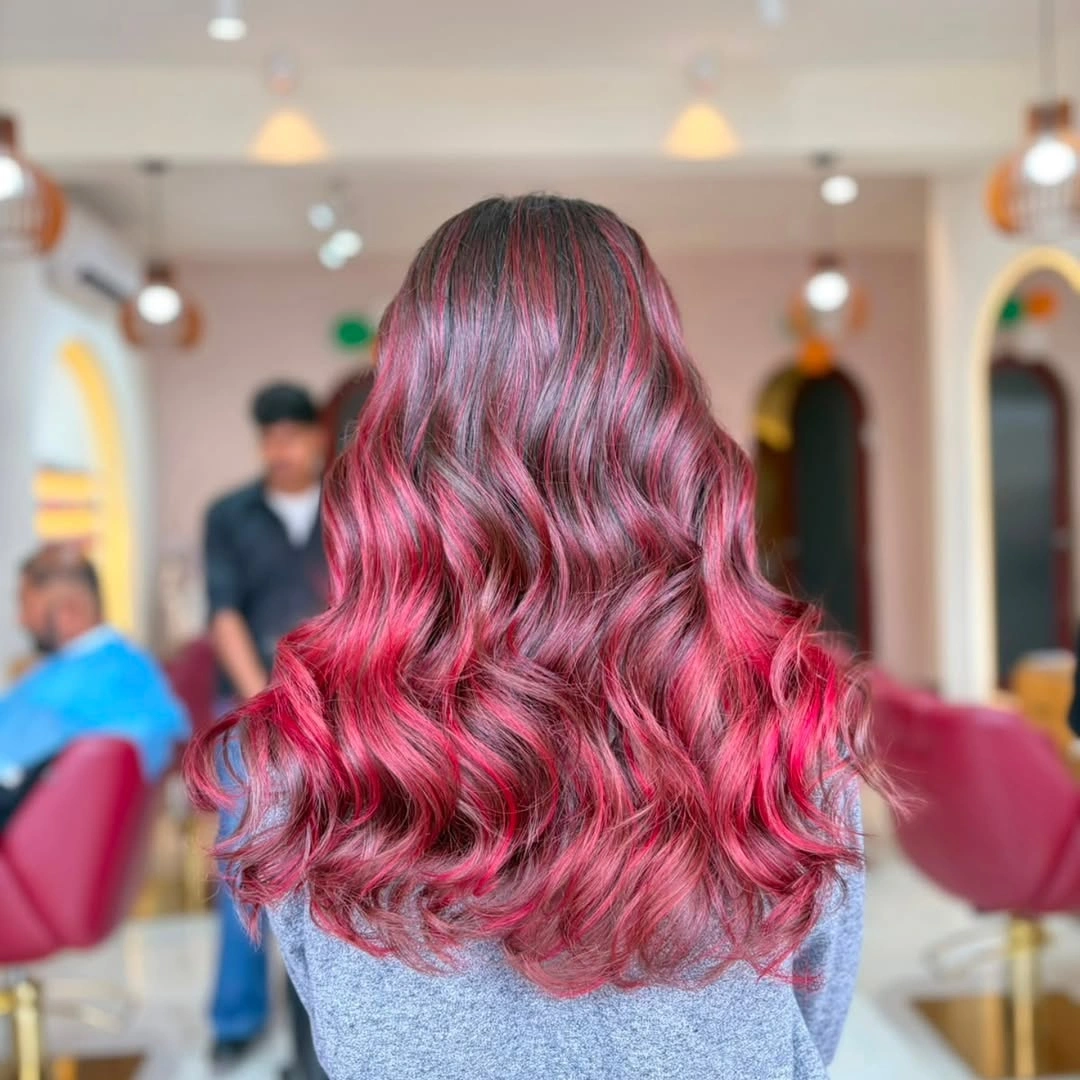
Photo via Instagram
The repeated waves carry the saturated color through the full silhouette, with each curve producing another bright section followed by a deeper interval. That rhythm prevents the strong pink from reading as one flat block while still preserving its visual intensity. The key comparison is scale of placement: the bright color occupies much of the length rather than being limited to a narrow front piece or isolated section.
The photograph cannot confirm the exact saturation, dye formula, or underlying base color. Camera processing and indoor lighting may also alter how strongly the magenta and darker areas appear.
Peach-Coral Length with a Straighter Finish
This back-view reference shows straight hair with a soft peach-coral appearance and a relatively even fall through the length. The surface has far less wave movement than the previous examples, so the warm color reads as one broad field before smaller tonal differences become noticeable. A clean-looking lower edge reinforces that simple visual structure and keeps attention on the overall peach-pink warmth.
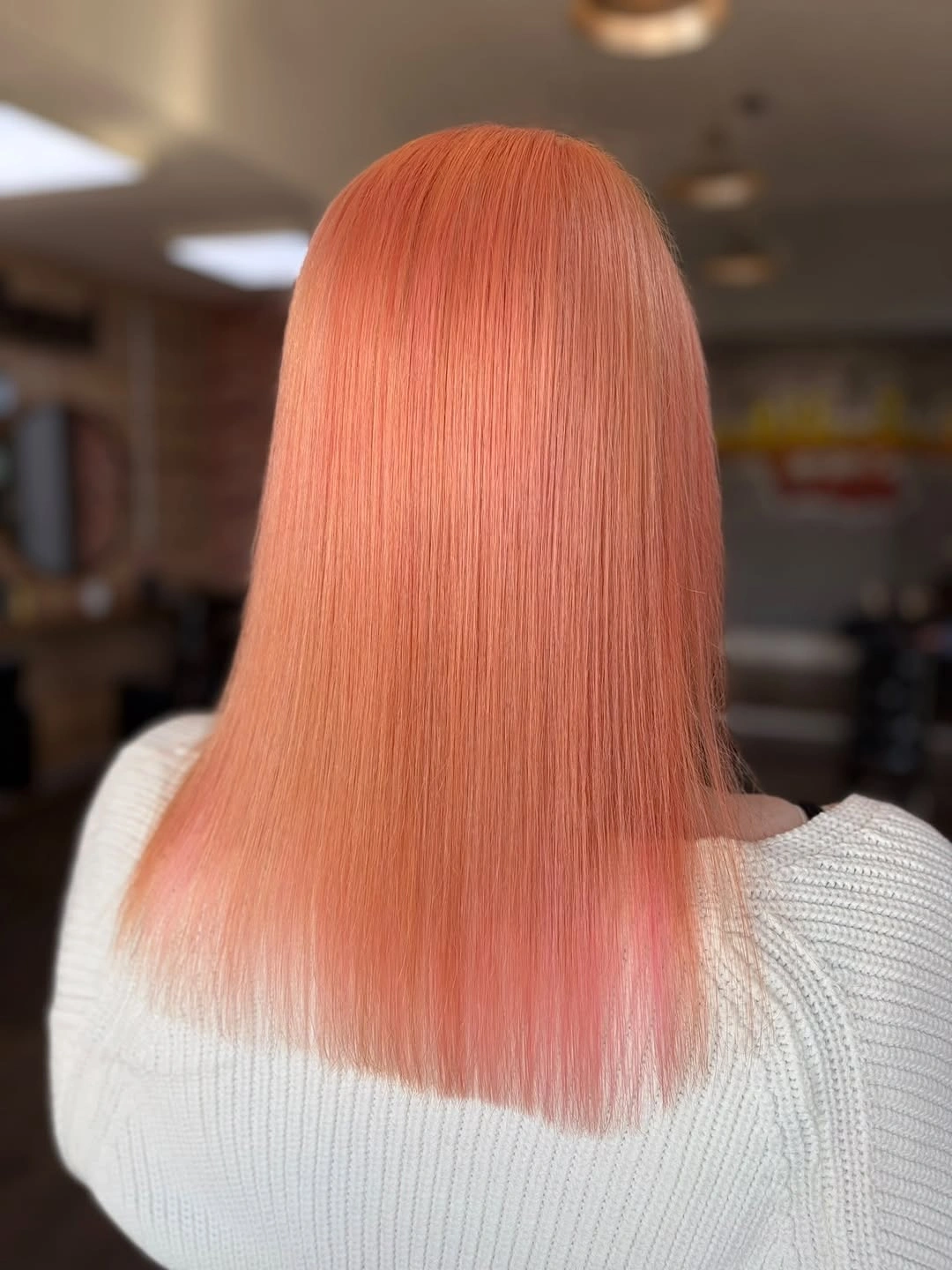
Photo via Instagram
Because the hair is presented on a straighter surface, the color is not repeatedly interrupted by curves or deep wave shadows. That makes the peach-coral field appear calmer and more continuous from the upper area toward the ends. The useful takeaway is how surface shape changes color perception: a straighter fall emphasizes the overall hue, while movement would divide that same field into more visible light and shadow.
Pastel warm shades can shift noticeably with lighting, so the exact balance between peach, coral, pink, and orange cannot be fixed from this photo. The image also does not establish any formula or coloring process.
Icy Pale Blonde with a Compact Outline
This shorter blonde reference reads as very pale and cool-looking, with the hair falling close to shoulder length and a soft center part visible from the front. Gentle outward bends near the lower sections keep the shape from appearing completely straight, while the overall color remains light and relatively even. The compact length makes the pale value especially noticeable around the lower edge.
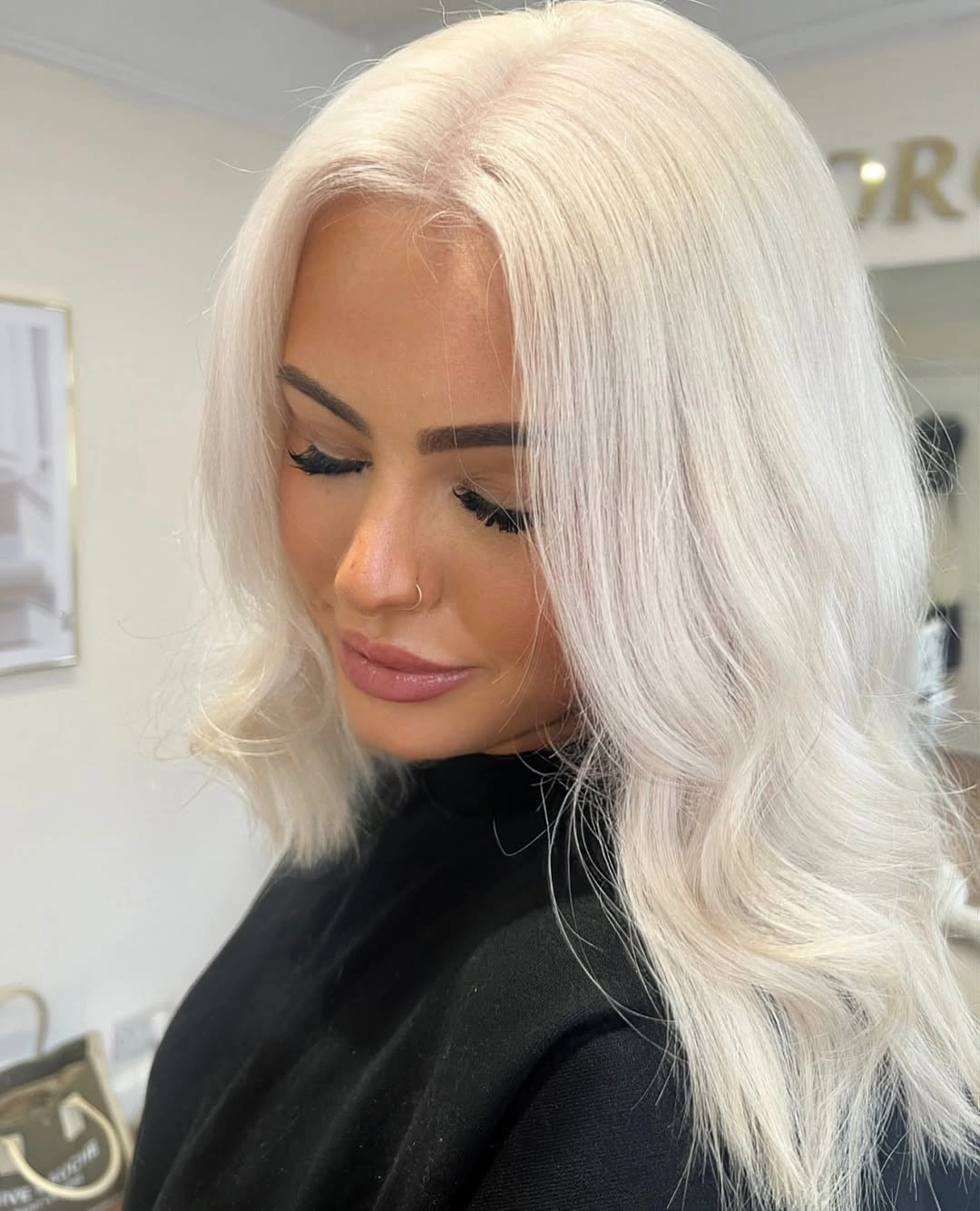
Photo via Instagram
The shorter outline is the main reason this color reads differently from the longer blonde references that follow. Because there is less length for shadows and tonal changes to spread across, the pale blonde field stays concentrated around the head and shoulders. Small bends near the ends introduce enough directional change to separate the lower sections without creating strong internal contrast.
The image supports a very pale, cool-looking blonde description but cannot establish a precise platinum level or exact undertone. It also provides no evidence about toner, lightening method, processing history, or any other technical service.
Creamy Pale Blonde through Long Framing Lengths
This long blonde reference appears very pale with a soft creamy cast, extending from the upper sections through substantial front-framing lengths. The hair is parted near the center, and the long sections fall forward with gentle bends rather than tight waves. Slightly deeper areas near the upper portion and between overlapping strands add quiet variation within the otherwise very light field.
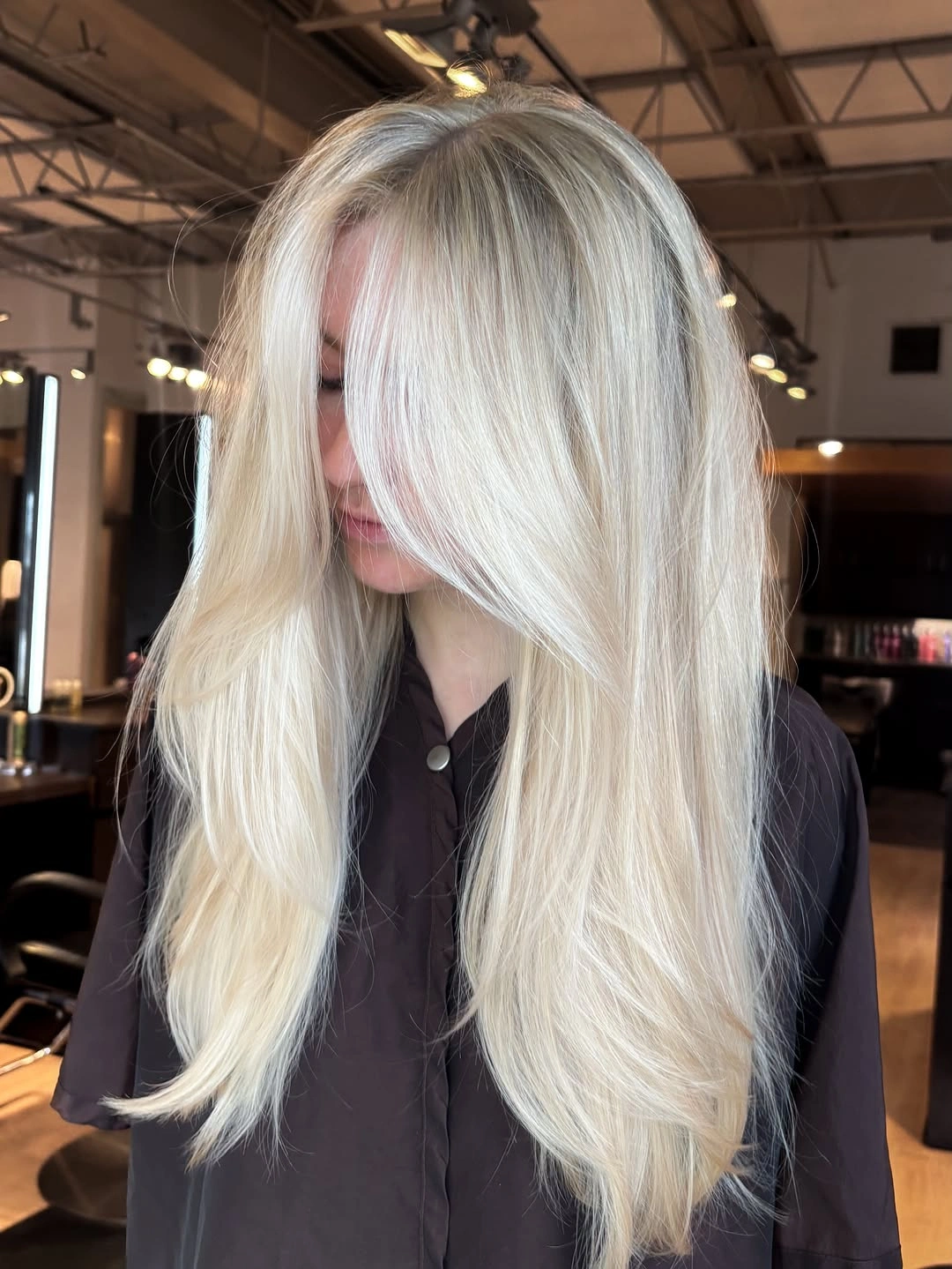
Photo via Instagram
Length is the key visual mechanism here because overlapping sections create gradual changes in brightness without requiring sharply separated colors. Front pieces sit over deeper portions of the hair, so some areas appear brighter while others fall into softer shadow. That layered visual arrangement gives the pale blonde more depth while preserving a continuous, light overall impression.
The photograph cannot determine an exact creamy, neutral, or cool undertone with certainty because lighting affects such pale colors strongly. It also does not reveal a specific lightening service, toner, formula, or technical process.
Beige Blonde with Restrained Neutral Depth
This front-view reference sits in a softer beige-blonde range, with light neutral sections mixed with slightly deeper, more muted areas through the long lengths. The front pieces curve away from the face, while the lower hair carries gentle movement without a dramatic shift in value. The overall effect is noticeably more neutral and subdued than the very pale blondes before it.
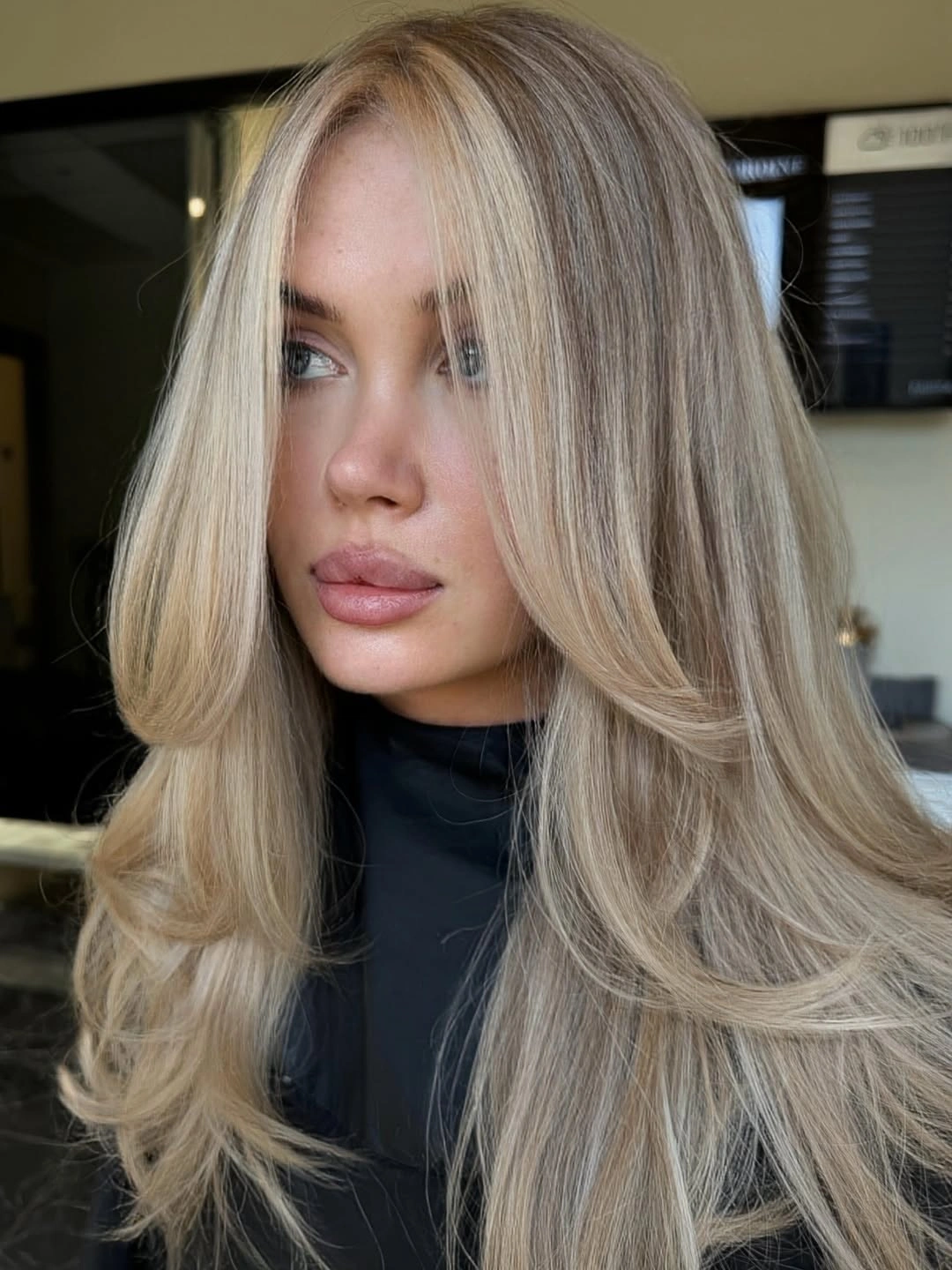
Photo via Instagram
The color remains visually connected from the upper area through the ends, which keeps the hair from breaking into obvious light and dark zones. Instead, the deeper beige and lighter blonde portions sit close enough in value to create restrained internal variation. This makes continuity, rather than sharp contrast or extreme brightness, the useful comparison point for the reference.
The photo does not show whether the visible tonal variation is natural, colored, or partly created by shadow and lighting. It also cannot establish a precise beige formula, exact undertone, or specific coloring method.
Warm Blonde with Brighter Front Placement
This front-view blonde reference appears warm and creamy overall, with some of the brightest visible sections concentrated around the front and along the curved pieces near the face. The rest of the length stays within a similar warm blonde family, so the contrast is noticeable without becoming abrupt. The placement of the brighter areas is more visually important here than a precise shade label.
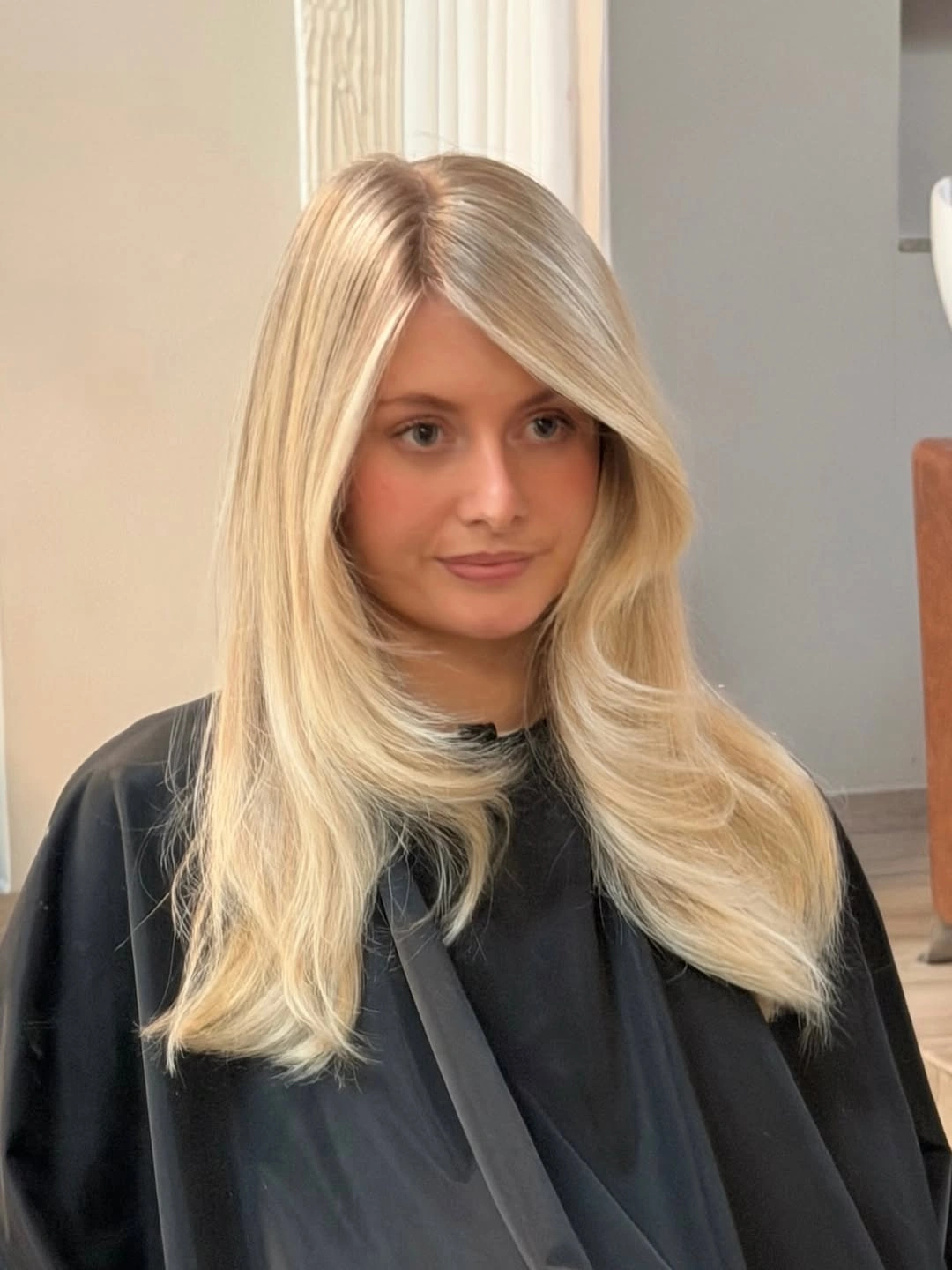
Photo via Instagram
Concentrating the strongest brightness near the front changes the first impression because those sections sit closest to the face and remain fully visible from this angle. The surrounding lengths are still light, but they do not compete with the brighter front pieces in the same way. This makes localized placement the defining idea, rather than overall lightness or wave pattern alone.
The photograph does not prove how the brighter front sections were created, so no specific highlighting technique should be assigned. Indoor light may also shift the apparent warmth, making the exact blonde balance difficult to define from one image.
Golden-Copper Waves with Rich Warm Movement
This long reference moves clearly into a warmer golden-copper range, with rich orange-brown and golden tones visible from the upper sections through the flowing lengths. The hair is arranged in loose, repeated waves that carry the warm color across a broad silhouette. Deeper areas near the upper portion and between the curves give the brighter golden sections more visible separation.
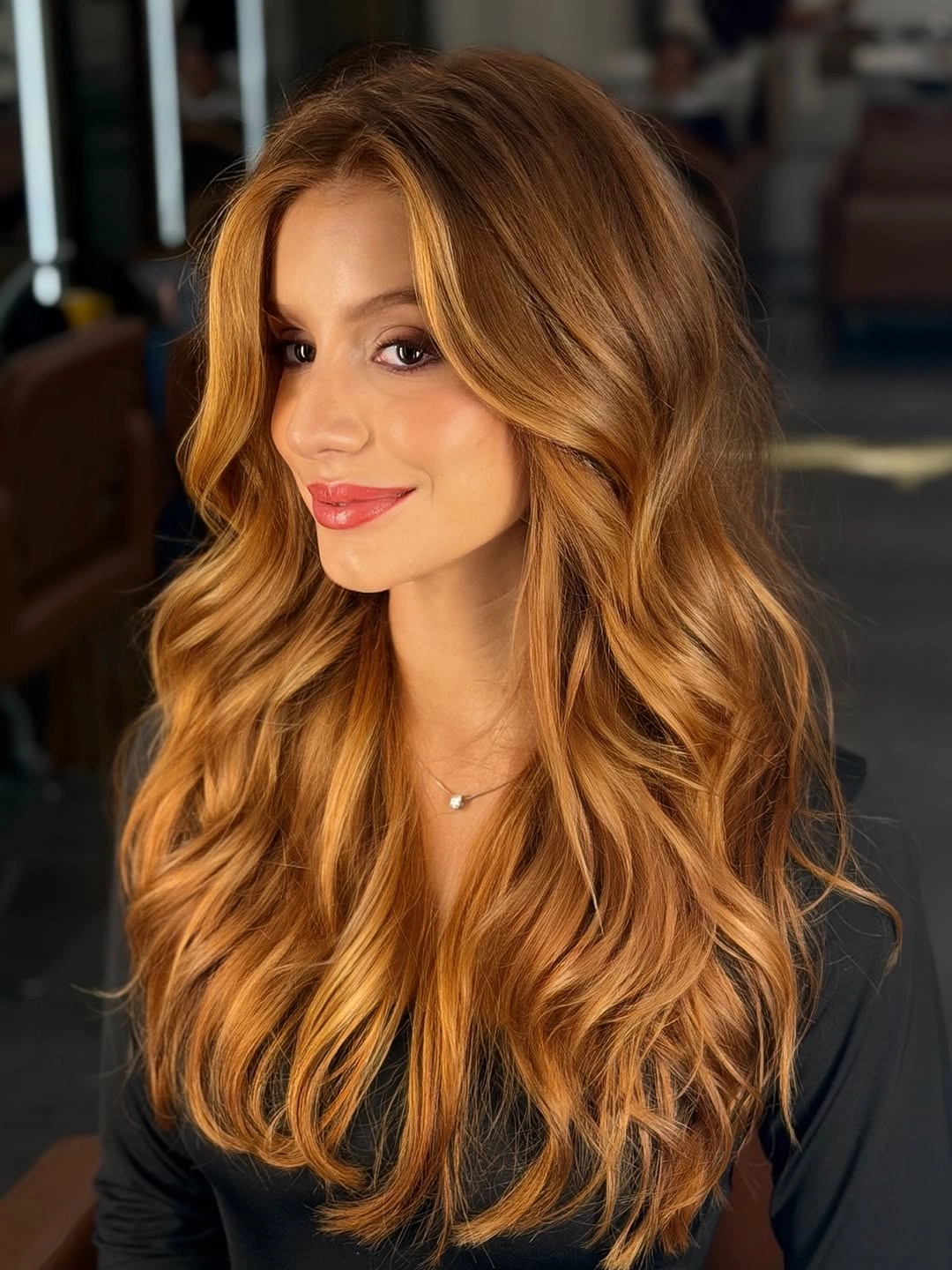
Photo via Instagram
Here the waves matter because they distribute the warm color across many directions rather than simply creating isolated patches of brightness. Outward-facing curves appear more golden, while recessed sections read as deeper copper-brown, producing a repeated warm rhythm through the length. The result stays connected as one color family while still showing clear variation from curve to curve.
Reflected light can strengthen the apparent gold in the brighter sections, so the exact copper-to-golden balance cannot be fixed from the image alone. The photograph also does not establish a formula, coloring process, treatment, or processing history.
Cool Beige Blonde with a Quiet Shoulder-Length Transition
This shoulder-length reference reads as cool beige to ash blonde, with a noticeably darker upper area that gradually gives way to lighter lengths. The hair falls in a relatively clean, compact shape with only slight movement through the ends, so the shift in value is easy to see without dramatic waves. The overall effect is restrained, with the darker top and lighter lower sections staying visually connected.
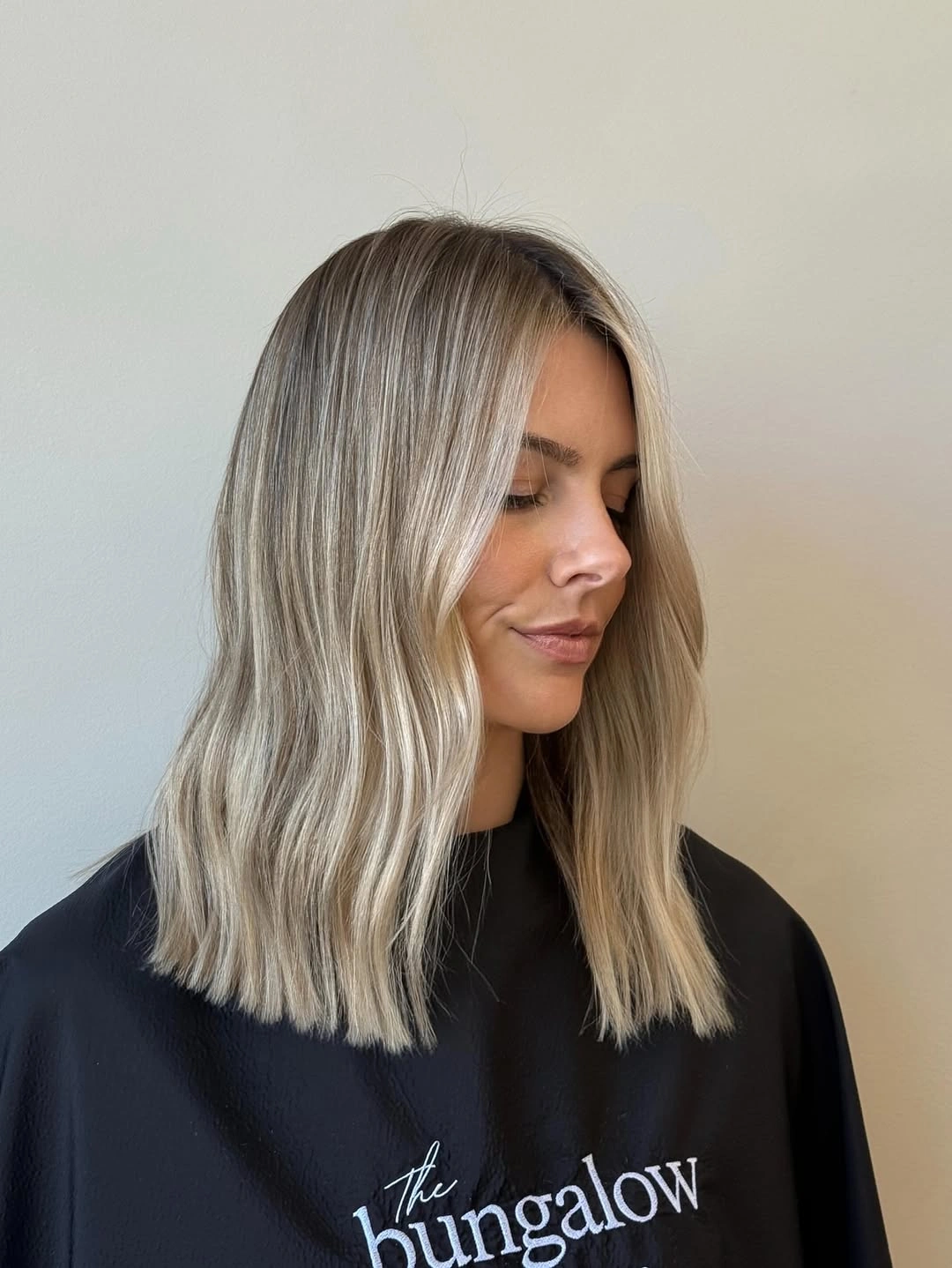
Photo via Instagram
Medium length makes the color transition especially readable because the darker upper portion and lighter ends remain visible within one compact frame. There is enough length to show a gradual change, but not so much that the tonal relationship becomes dispersed across a large silhouette. The main visual idea is a quiet root-to-length shift rather than bold contrast or isolated bright pieces.
The exact balance between ash, beige, and neutral blonde cannot be established from the photograph alone because lighting affects those distinctions. The image also does not confirm a toner, formula, coloring method, or any other technical process.
Dark Brunette with Soft Lighter Ribbons
This front-view reference has a dark brunette base with lighter beige to blonde-looking sections distributed through the visible front and longer lengths. The lighter areas appear in multiple places rather than as one single bright block, and loose waves help separate them from the deeper brown around them. The first impression remains brunette, but selective contrast changes how much depth is visible across the shape.
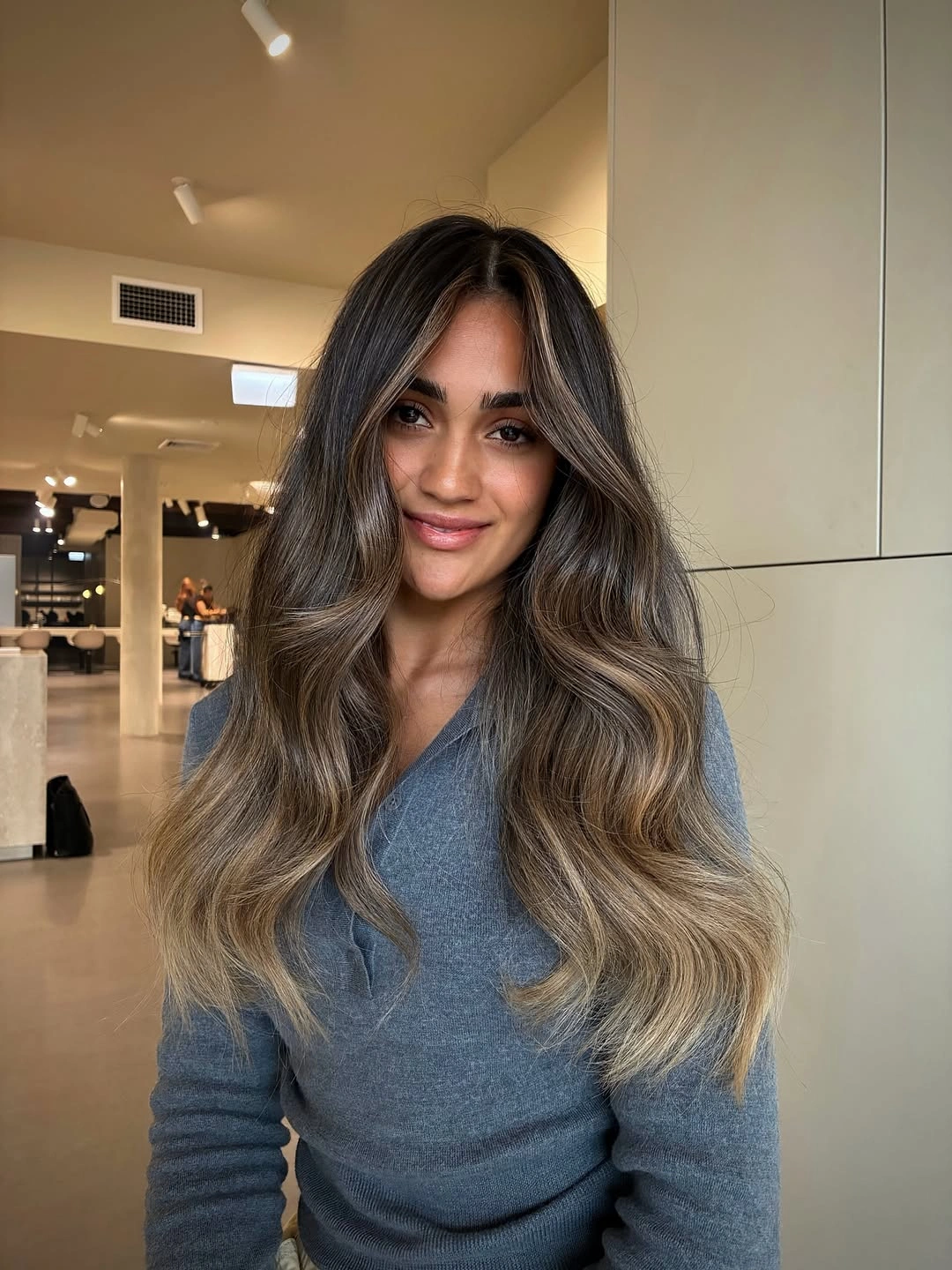
Photo via Instagram
The lighter ribbons matter because they interrupt the dark field selectively instead of replacing it, allowing the deeper brunette to remain dominant around much of the upper and inner hair. Brighter portions become more noticeable along the outer curves and front sections, so the eye moves between dark and light repeatedly. This creates contrast through placement rather than through one sharp boundary.
The photograph shows lighter sections clearly, but it does not reveal how they were created or whether one specific coloring technique was used. Exact beige, ash, or blonde undertones also remain approximate under the visible lighting.
Brown Hair with Bright Beige Front Framing
This front-view image shows brown hair with much brighter beige-blonde-looking sections concentrated around the front, while the remaining lengths stay noticeably deeper. The front pieces curve outward and the lower hair forms rounded movement, which makes the light areas especially prominent beside the darker brown. The strongest visual idea is the difference between the bright front framing and the richer base behind it.
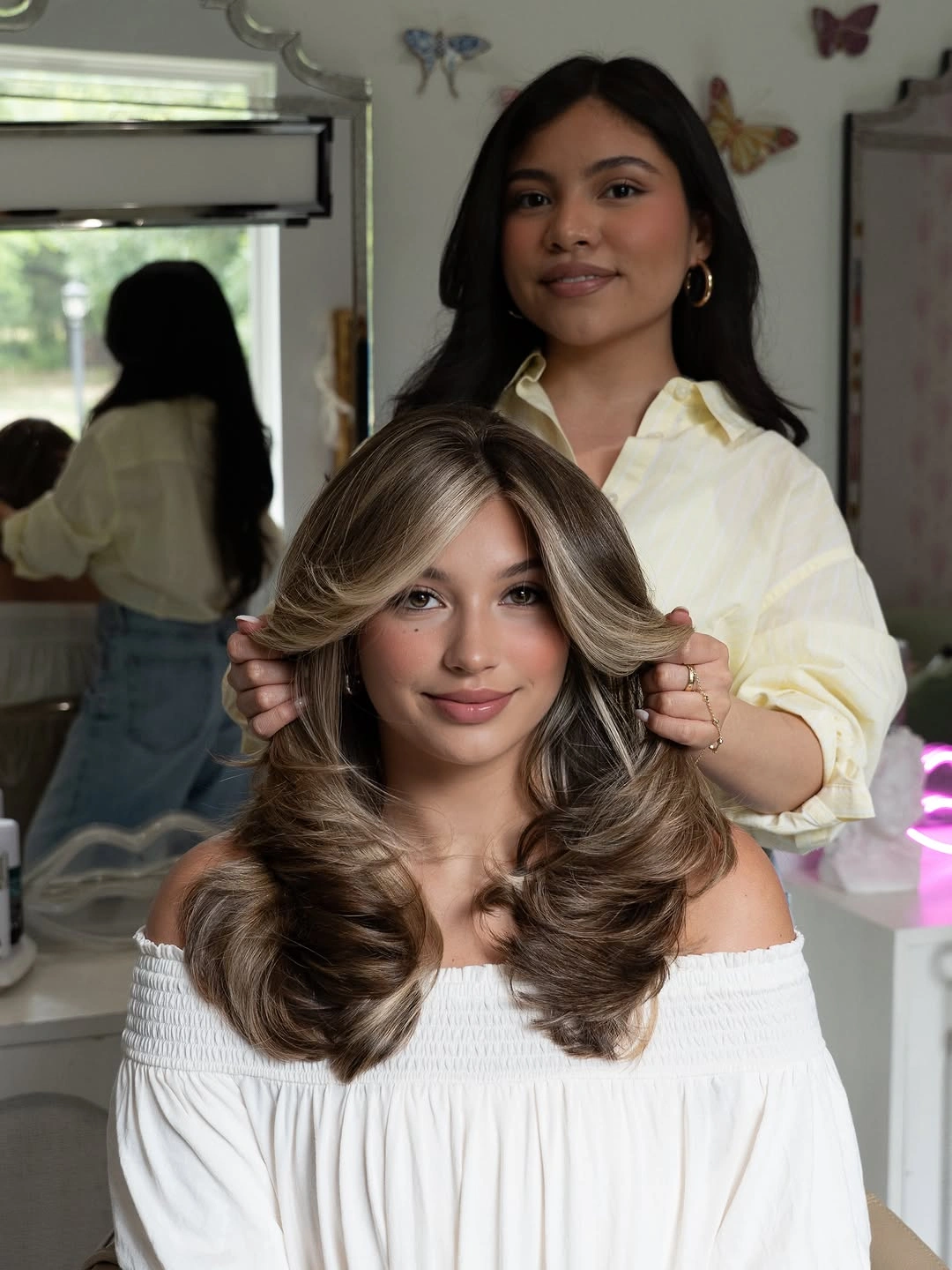
Photo via Instagram
Because the lightest color is concentrated near the front, it shapes the first impression more strongly than lighter pieces placed farther back would. The brown base still occupies much of the visible hair, but the brighter framing directs attention toward the face area and creates an immediate light-dark contrast. The rounded movement below carries both values into the lower shape without making them look evenly distributed.
The people visible in the image cannot be identified, and the photograph does not establish any profession, relationship, or service context. It also does not confirm the coloring method, while indoor light may affect how warm or neutral the beige-looking front sections appear.
Ash-Blonde Waves with Gray-Beige Separation
This medium-length reference combines ash-blonde, gray-beige, and lighter blonde-looking values through broad waves, with a somewhat deeper area visible closer to the top. The tones remain related, but they separate clearly enough across the curves to create a cool, muted composition. The length keeps those shifts close together, making the changes in value easy to compare within a relatively contained silhouette.
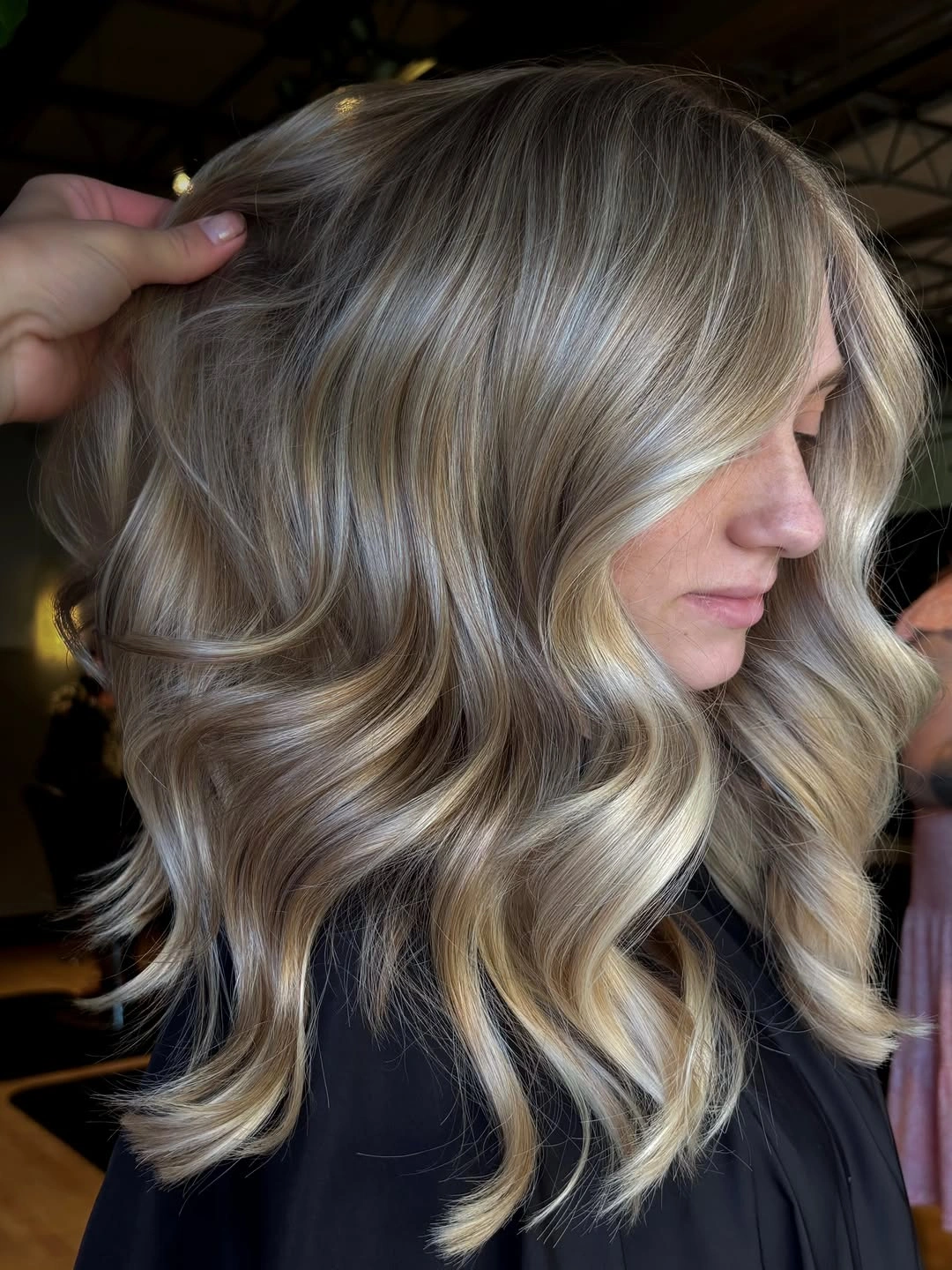
Photo via Instagram
Cool tonal separation is the main mechanism here. Each broad bend places a lighter section beside a deeper gray-beige or ash area, so the hair shows repeated value changes without moving into extreme dark-light contrast. At this medium length, the individual tonal zones remain visually close enough to read as one coordinated cool field while still retaining clear internal variation.
Some of the gray-looking areas may be influenced by shadow and surrounding light, so the photograph does not justify a precise silver or gray designation. It also provides no evidence about toner, formula, or the process used to create the visible color range.
Pale Blonde Waves with Airy Continuity
This long reference is very pale blonde overall, with broad soft waves running through the length and only limited darker contrast. The color field appears light and continuous from the upper area toward the ends, while gentle curves introduce small shifts between brighter and more shadowed sections. The effect is airy and unified, with movement doing more visual work than strong tonal separation.
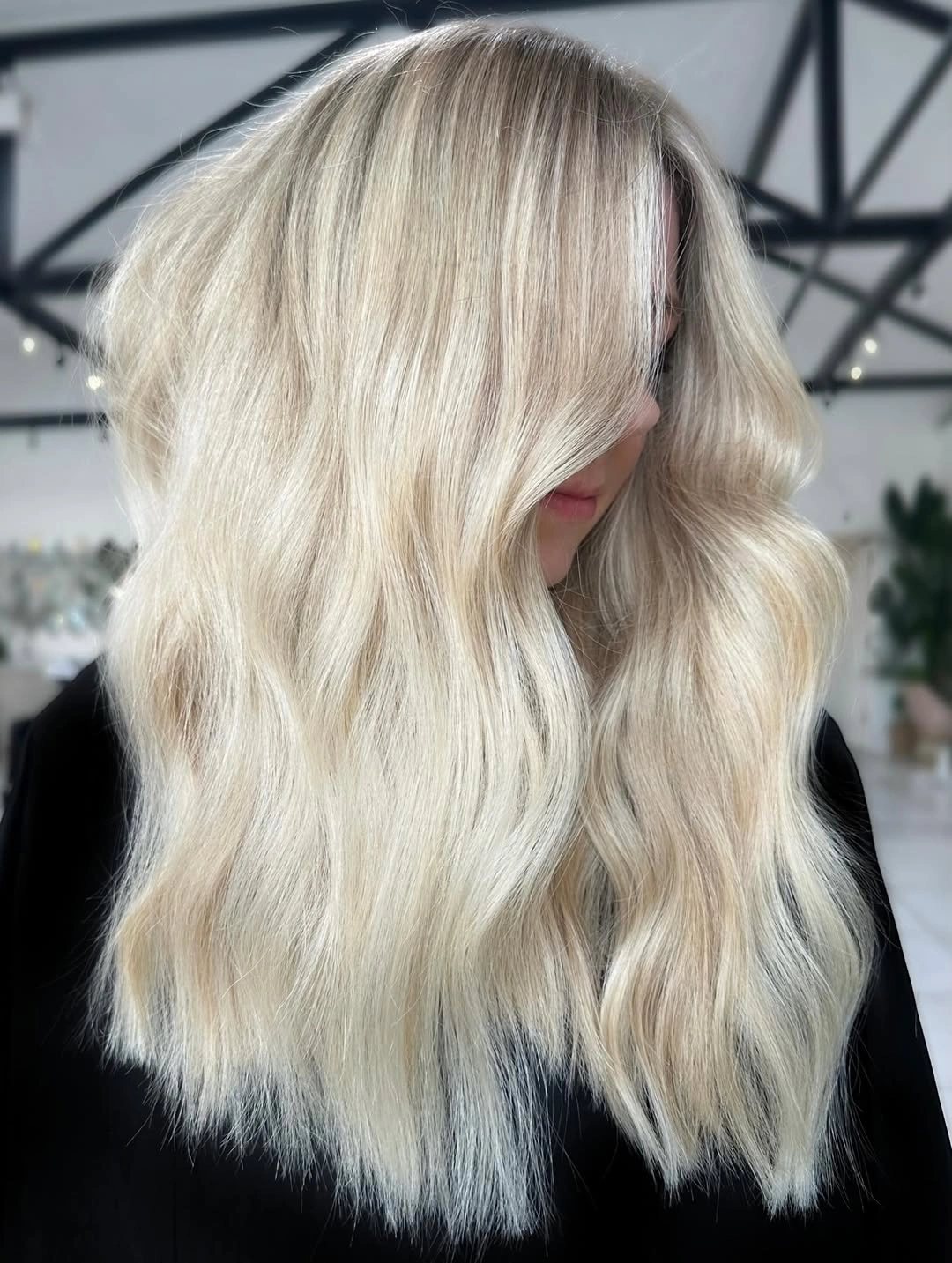
Photo via Instagram
The broad waves prevent the long pale field from reading as one flat block by changing the direction of the surface across the length. Those curves create soft areas of light and shadow, but the differences stay restrained enough that the hair still reads as one pale blonde family. The useful visual point is continuity with movement, not dramatic contrast between separate color zones.
The photograph cannot establish a precise platinum, ivory, creamy, or neutral shade label because very pale blonde changes noticeably under different lighting. It also does not show a formula, lightening process, toner, or any other technical detail.
Deep Chocolate Waves with Warm Brown Softness
This front-view reference reads as a deep chocolate-brown brunette, with very long waves carrying slightly lighter warm-brown areas through the lower lengths and around the front. The upper sections stay dark and rich, while the broad curves reveal softer variations in value rather than sharply separated bands. The overall impression remains deeply brunette, with warmth appearing inside the movement instead of taking over the base color.
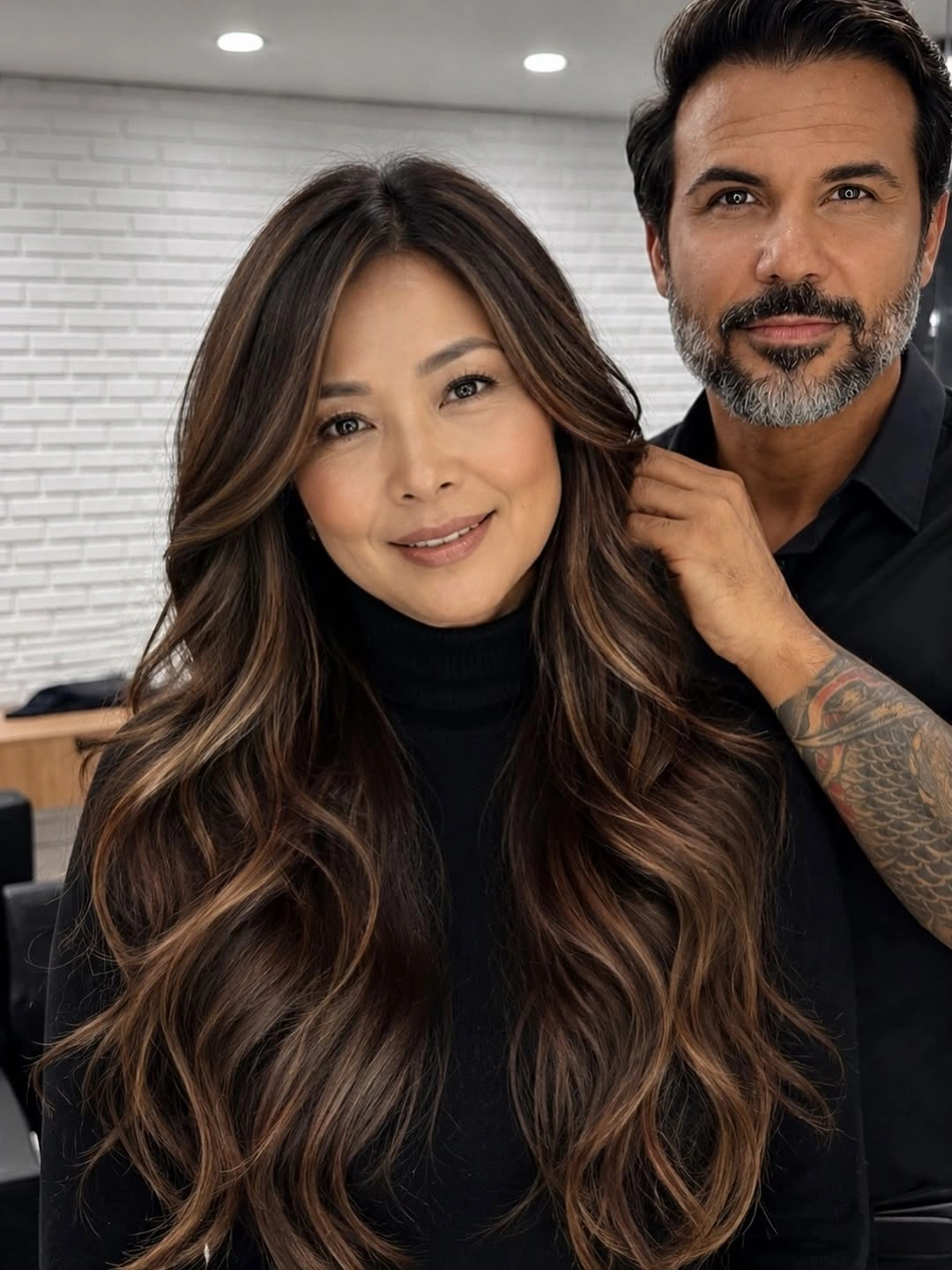
Photo via Instagram
The front-facing arrangement makes the relationship between depth and movement especially clear because the darkest areas frame the upper portion while the long waves open into warmer-looking brown through the sides and ends. Each large curve exposes another change in light and shadow, so the color gains visible softness without losing its dark first impression. The length gives those subtle shifts room to repeat across the full shape.
Another person is partly visible behind the hair, but the image does not establish that person’s identity, profession, or role. It also cannot confirm the exact brown formula, coloring process, or whether the warmer areas would read the same under different lighting.
Dark Brunette Depth with Beige-Blonde Lengths
This front-view reference begins with a dark brunette upper and root area, then shifts into much lighter beige-blonde lengths that become especially prominent from around the midlengths toward the curled ends. The contrast is easy to read because the darker color remains concentrated near the top while the lower half carries substantially more brightness. Soft curves at the ends reinforce that light lower field without changing the basic dark-to-light relationship.
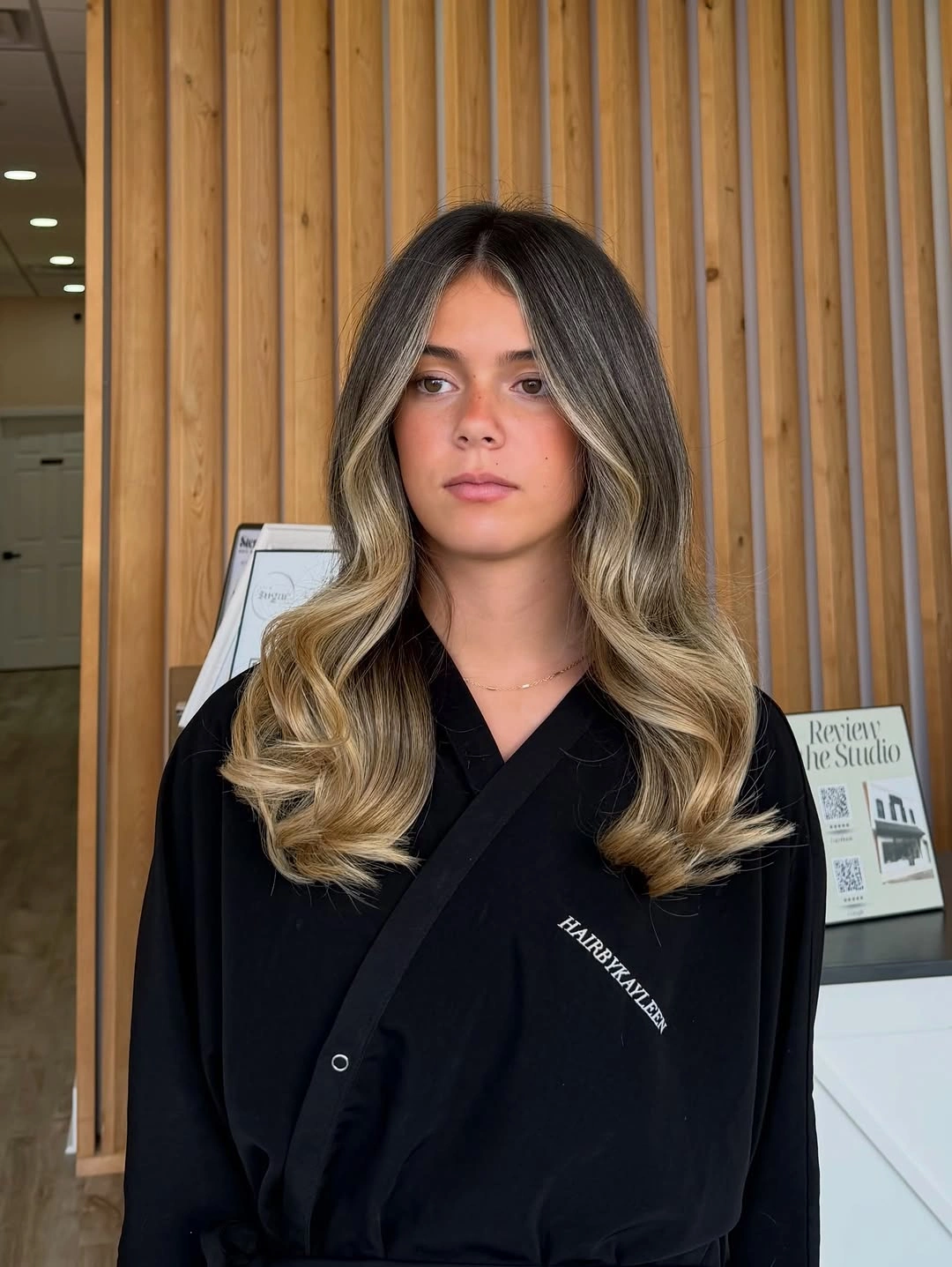
Photo via Instagram
The placement creates a strong vertical value contrast: deep brunette visually anchors the upper portion, while the lighter beige-blonde color becomes dominant through the moving lengths below. Because the brighter sections occupy a large part of the hair rather than one small accent, the eye reads a clear transition from depth to lightness. The curled ends add shape to the brighter area and make that separation especially visible from the front.
The photograph does not establish how the transition was created, so no specific coloring method can be confirmed. The exact balance between beige, neutral blonde, and warmer blonde may also shift with the indoor lighting.
Cool Ash-Beige Waves with Quiet Tonal Shifts
Viewed from the back, this very long reference combines a deeper cool upper area with ash-beige and light blonde values extending through the midlengths and ends. The waves are loose and broad, and the tonal changes appear gradual rather than sharply divided. Lighter sections become more visible lower in the length, while the darker upper field keeps the overall composition grounded and softly contrasted.
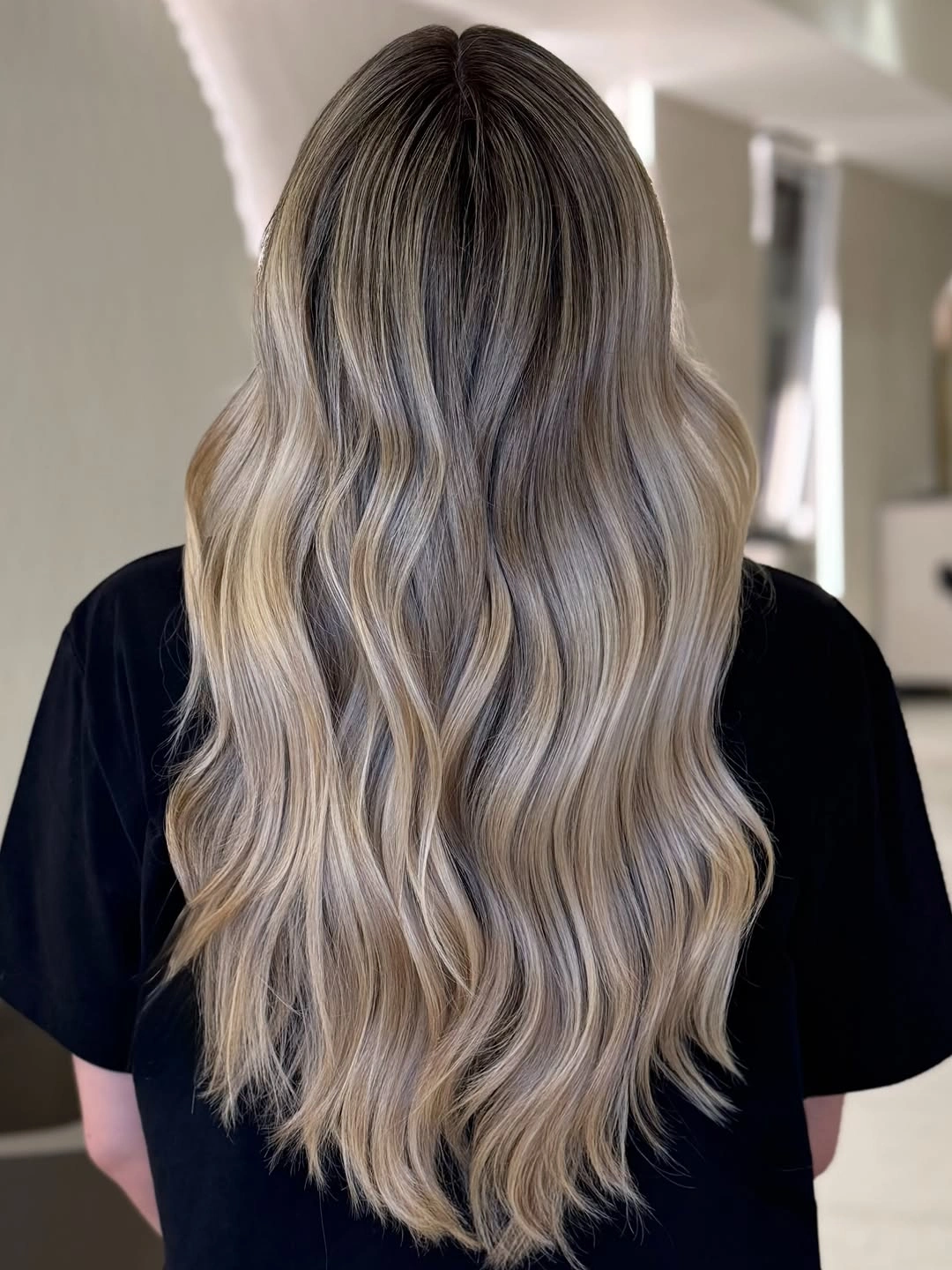
Photo via Instagram
The loose waves reveal the cool tonal shifts by placing lighter ash-beige sections beside slightly deeper areas at different points through the length. Unlike a strongly divided dark-to-light reference, the values here blend into one another with quieter transitions, so movement provides most of the visible separation. The back view makes that gradual relationship easy to follow from the darker top into the lighter lower lengths.
The image cannot establish the exact ash or beige formula, the process used to create the visible variation, or how the color would read under other lighting. It also provides no basis for claims about trend status, popularity, or any specific technical service.