

One parting line can change how two sides of a hairstyle relate to each other. The important decision is not always how much hair to keep, but where you want the eye to travel. Choosing among hairstyle ideas for Black women in 2027 becomes more personal when you can identify the detail you like, rather than treating a name as a complete description.
You do not have to stop liking your current hairstyle to be curious about another one. Familiarity can be useful evidence of your taste, not proof that you have run out of ideas. Give a new possibility time to feel familiar before deciding whether you actually want it; curiosity does not have to turn into an appointment.
A Rounded Bob With a Full Lower Edge
The full lower edge gives this dark bob its strongest line. Smooth lengths lead down to ends that sit close together, so the boundary against the neck reads clearly rather than breaking into wisps. That concentration at the bottom makes the shape feel substantial, even with very little surface texture competing for attention across the straight side panels.
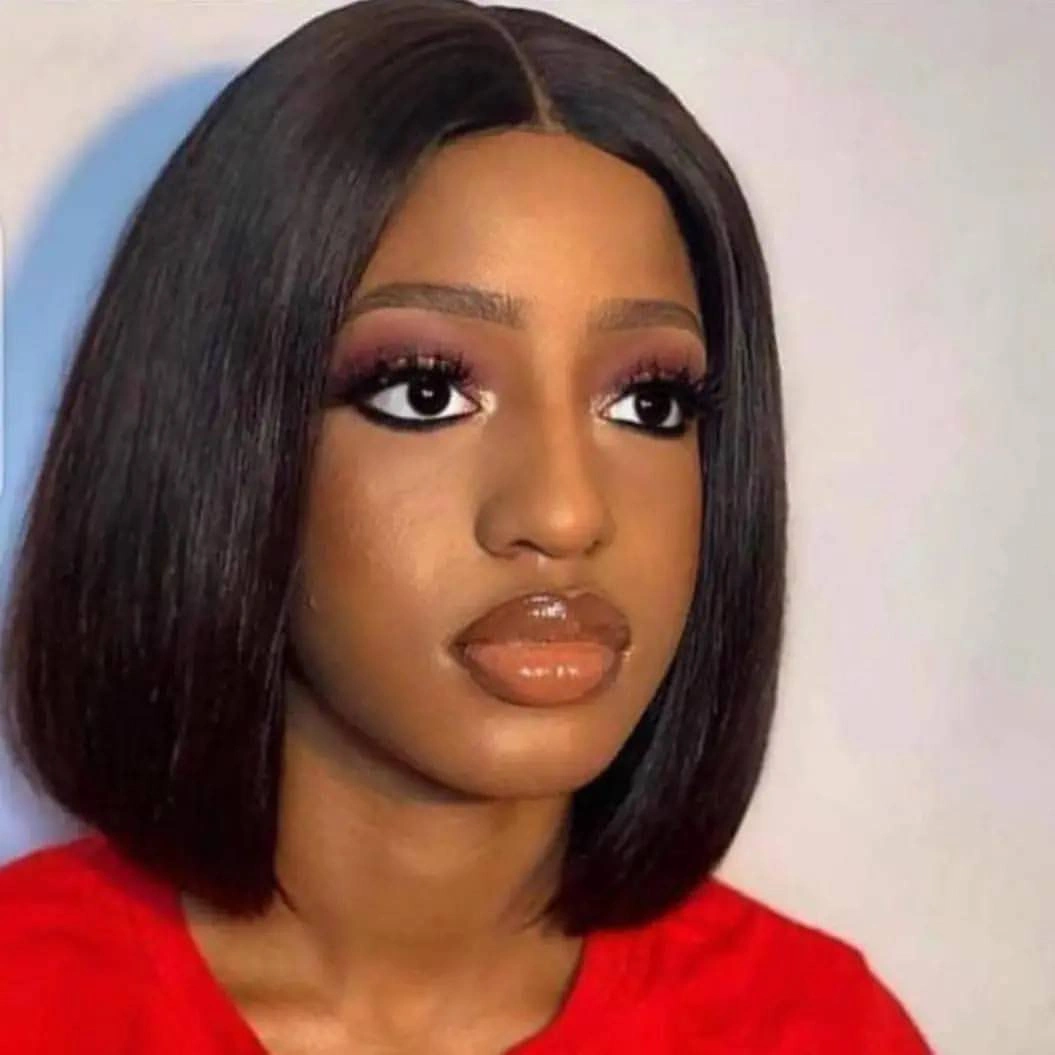
Photo via Instagram
The nearly centered part divides the front into two smooth panels with similar visual weight. Because neither side makes a broad sweep across the forehead, the central opening stays clear and the face sits between two steady vertical lines. That is the appealing restraint here: the placement gives the bob a sense of balance without asking the part itself to become the main feature.
At the lower sides, the hair bends toward the neck instead of projecting outward. Those inward turns narrow the shape below the cheeks, so the curved perimeter continues all the way to the ends rather than stopping at a straight corner.
Pale Streaks Within a Smooth Pink Bob
Pink does not reach every end of this bob with the same intensity. Pale gray-beige strands emerge near the face and along parts of the lower edge, breaking up what might otherwise read as one solid block of color. The interesting boundary is therefore not just where the hair stops, but where the pink gives way to those cooler-looking areas.
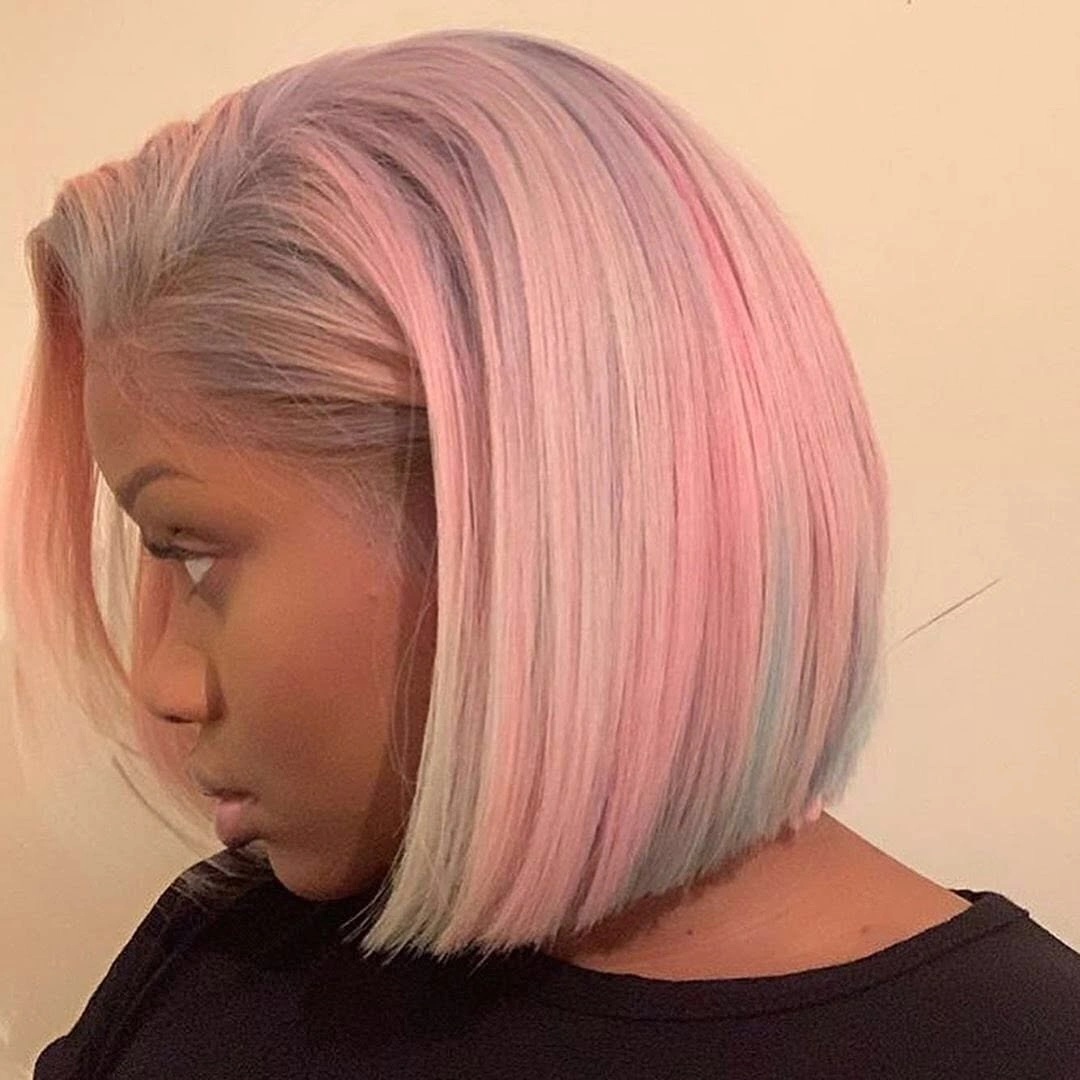
Photo via Instagram
Above that pale edging, a broad front section sweeps across the top and curves down beside the face. Its smooth surface lets the pink read as a generous band, while the bend changes the direction from sideways at the crown to downward beside the cheek. That change of direction makes the front more expansive than the tucked-in lower edge, even within a compact bob.
Thin, nearly vertical streaks keep the side from reading as a flat pink panel. They bring the pale tones of the ends farther up into the lengths, giving the smooth surface a fine linear pattern.
Long Curls That Make Width the Point
Width is the first thing I notice about these long dark curls. They spread well beyond the face and fill the space around both shoulders, so their scale comes from the distance between the outer edges as much as from the length below. The result is expansive rather than simply long, a useful difference when deciding what kind of volume actually draws your attention.
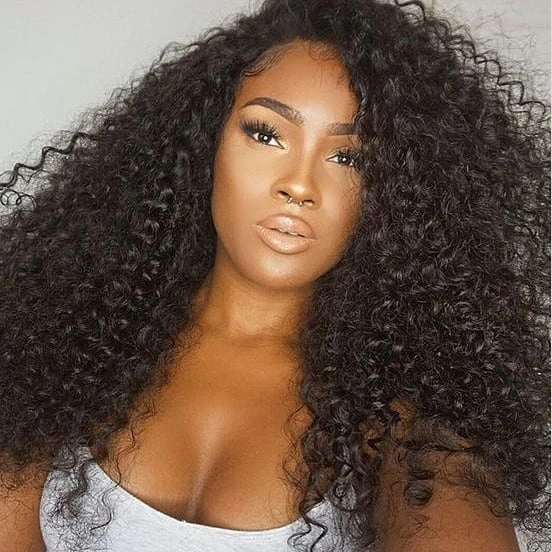
Photo via Instagram
The outline stays open because individual curl loops reach different distances from the main mass. Small gaps between them let the background show through, especially around the upper sides, and keep the perimeter from becoming a solid rounded wall. That broken edge is worth noticing: much of the softness comes from the spaces around the curls, not only from their curved shape.
At the face, the opening sits off center instead of dividing that fullness into equal halves. One side exposes more of the forehead, creating a small, angled break inside the much larger outline.
Broad Waves With Space Between the Bends
Each bend has room to register in these long dark waves. The curves are broad enough to follow from the side of the face toward the chest, with longer stretches between their crests than a tightly repeated curl would have. I like that unhurried rhythm: the hair changes direction in a few substantial movements instead of breaking the length into many small loops.
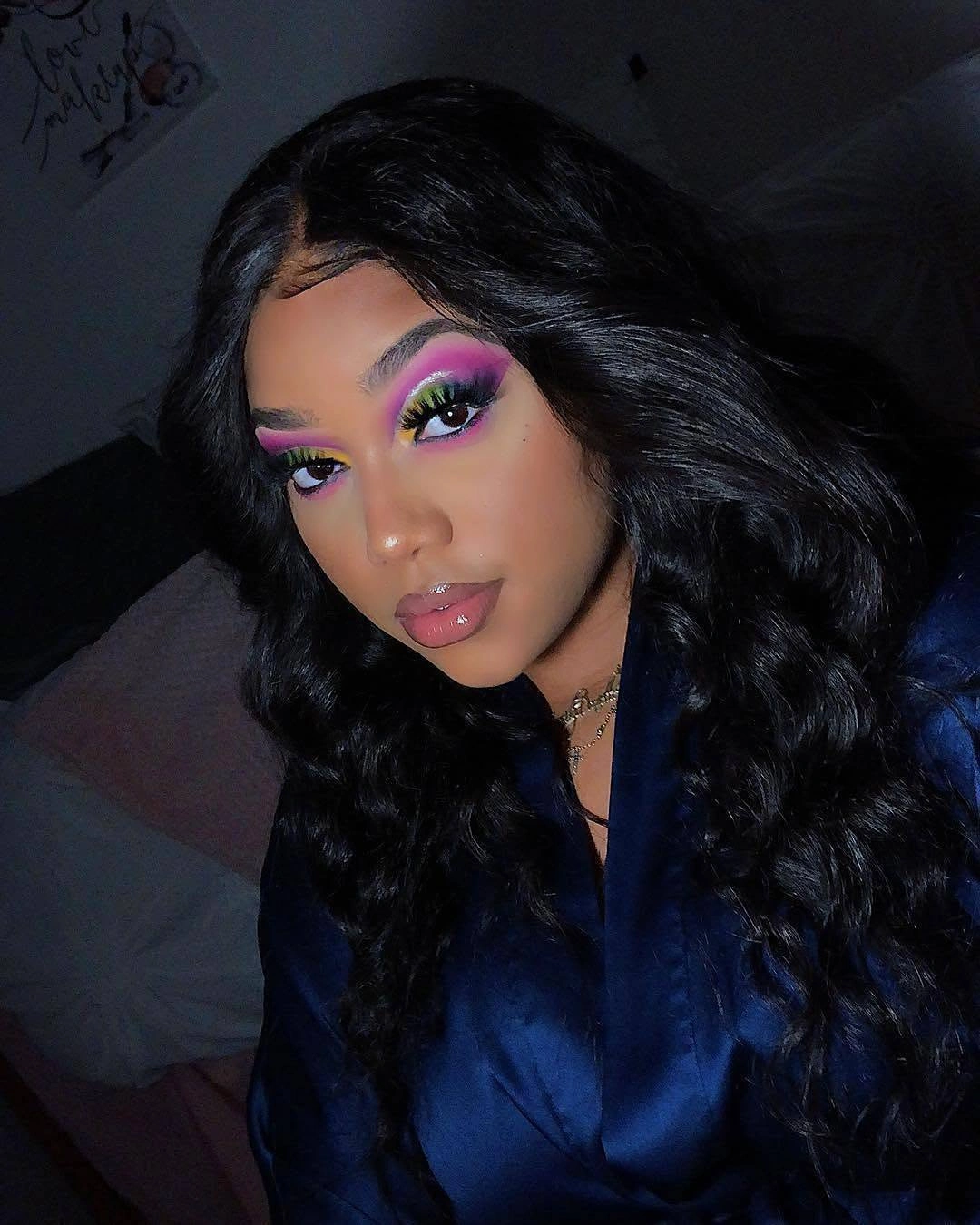
Photo via Instagram
There is a noticeable pause before the larger waves begin. Across the top, the hair sits relatively close and smooth, making the first outward bend beside the cheek stand apart from what comes before it. This places the broadest visible movement lower on the head and around the shoulders, rather than building the hairstyle around a high or expanded crown.
Each side takes a slightly different route around the face and shoulders. The resulting central opening has curved, irregular borders, giving the waves room to remain distinct instead of merging into one dark front panel.
Slim Temple Pins Above a Long Wavy Drape
A few slim silver-colored pins make surprisingly clear marks against the dark waves. Their short diagonal lines are easy to pick out because they interrupt a surface made mostly of curves, creating a small point of emphasis high beside the face. The attraction is the change in scale: a detail that occupies very little space can still establish where the eye enters a much longer hairstyle.
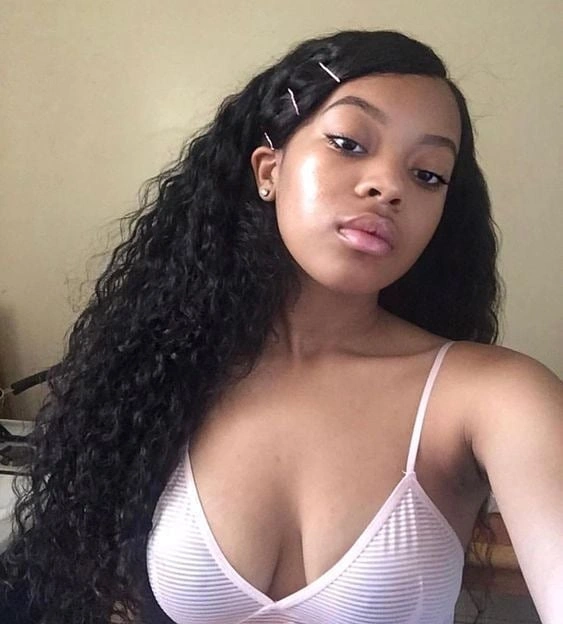
Photo via Instagram
The hair lies closer to the head at the pinned temple, leaving the ear and the side of the face open. Below that exposed area, the waves become fuller, so the upper shape and the hanging length have noticeably different widths. This is what gives the arrangement its definition beyond the pins themselves: the open side creates a clean break before the larger textured fall begins.
Most of the visible length falls over one shoulder, shifting the hairstyle's visual weight toward that side. The other shoulder remains more open, creating a broad asymmetry below the small, closely spaced marks at the temple.
Long Waves Defined by Small Separations
Fine separations give these long dark waves their definition. Narrow ribbons of hair bend beside one another, with light catching the curves and darker spaces making the individual shapes readable even where they overlap. The interest sits within the hanging lengths rather than along a dramatically expanded outer edge, so the texture feels detailed without appearing especially wide.
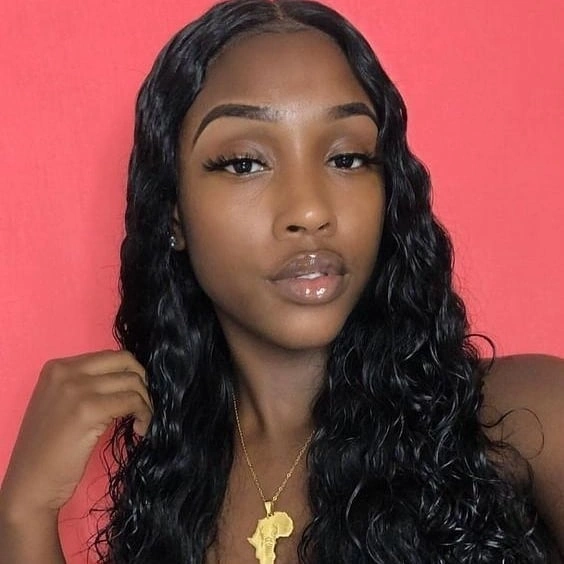
Photo via Instagram
At the center part, the hair divides close to the scalp and starts downward almost immediately. There is little lift above the temples, keeping the face framed by relatively slim upper lengths rather than a high, full crown. For someone drawn to visible wave definition but a closer outline around the head, that placement matters as much as the bends themselves.
Lower down, several ripples gather into smaller curling clusters around shoulder level. Their tighter turns put more texture near the bottom of the visible lengths, while the waves beside the cheeks remain easier to follow individually.
Swept Front Curves Over Finer Dark Ripples
The curves nearest the part are the ones I would keep my eye on here. They are broader and smoother than the finer ripples below, bending over the forehead before the hair drops beside the face. That difference gives the front a clear direction of its own instead of asking the same small wave to carry the entire hairstyle.
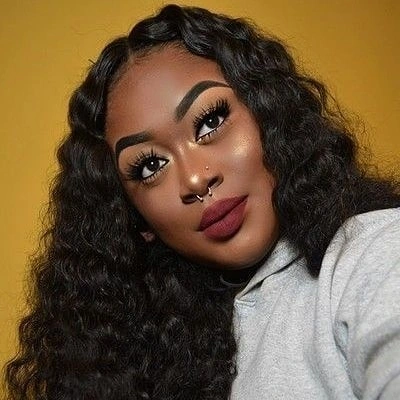
Photo via Instagram
Along the outer lengths, the outline looks much less exact than those front curves. Wispy strands and uneven bends soften the boundary, allowing the fine ripples to blend into one another rather than forming a row of identical scallops. I like that difference in definition: the front has enough shape to feel deliberate, while the longer hair keeps a looser visual finish.
The smaller ripples below do not all turn at the same height. Those staggered bends scatter the reflected light across the dark lengths instead of creating one continuous bright stripe.
Auburn Spirals Connect the Fringe and Sides
Auburn spirals reach across the forehead in a fringe made of individual loops. Their lower edge falls near the brows, but each curl turns back on itself rather than joining a single straight line. That gives the forehead coverage a scalloped shape, carrying the same rounded marks found at the sides into the space above the eyes.
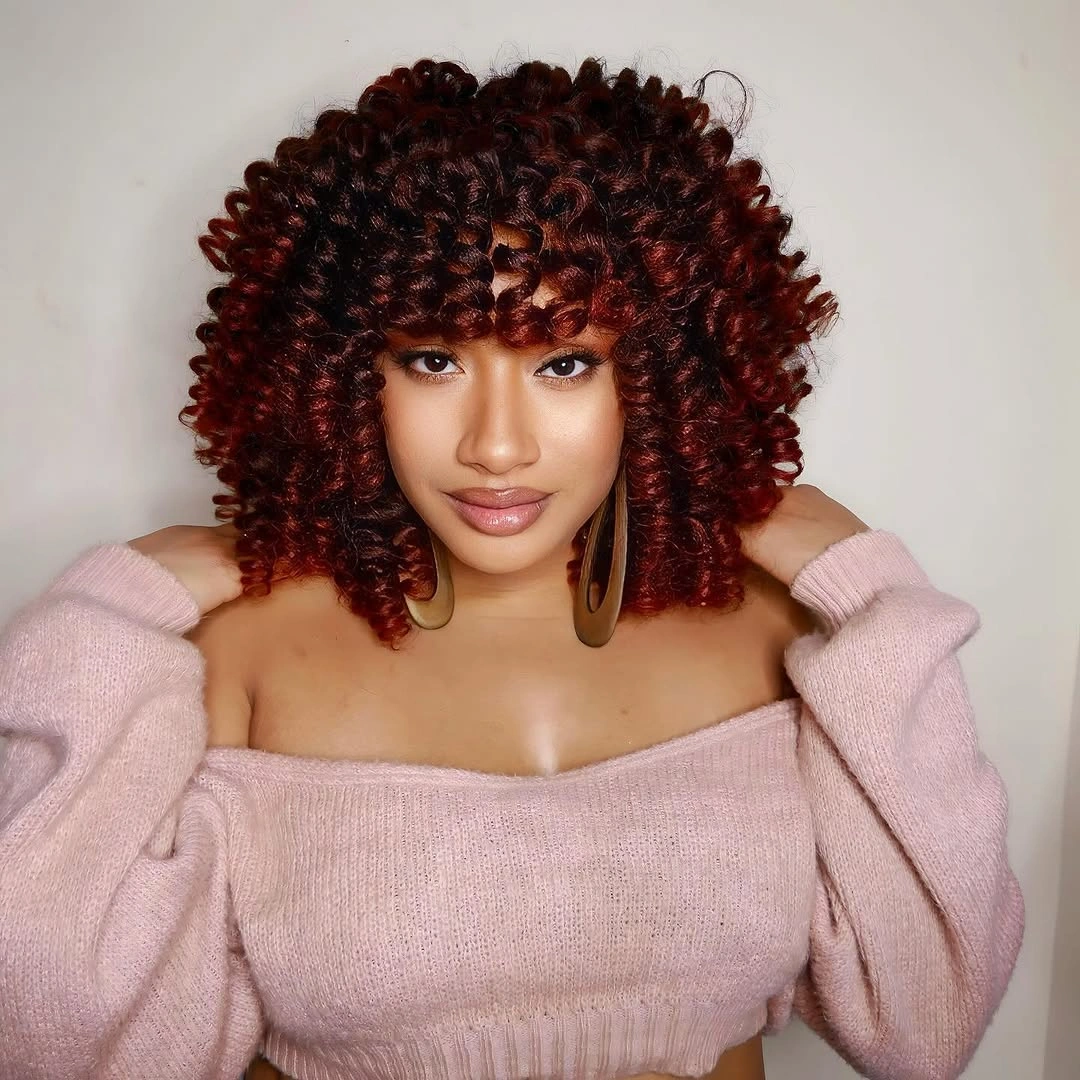
Photo via Instagram
The rounded outline is part of what draws me to fuller curly hairstyles for Black women. Here, the spirals stack above the crown and widen at the sides before dropping toward the shoulders, with no sharp corner separating the upper volume from the lower lengths. That gradual curve lets the fringe meet the side curls at a similar scale, so the eye follows one connected shape around the face.
The red-brown color also varies across the turns, with brighter outer curves and deeper-looking centers. Those small tonal differences separate overlapping spirals, making the curl pattern easier to trace through the fuller sides.
A Side Part Changes the Bob's Balance
This bob does not distribute its smooth surface evenly around the face. The side part sends a broad section diagonally across the top before it drops beside one cheek, giving that side a longer visual path than the other. The sweep gives the compact shape a clear direction, even though the side panels stay close and the surface is almost entirely straight.
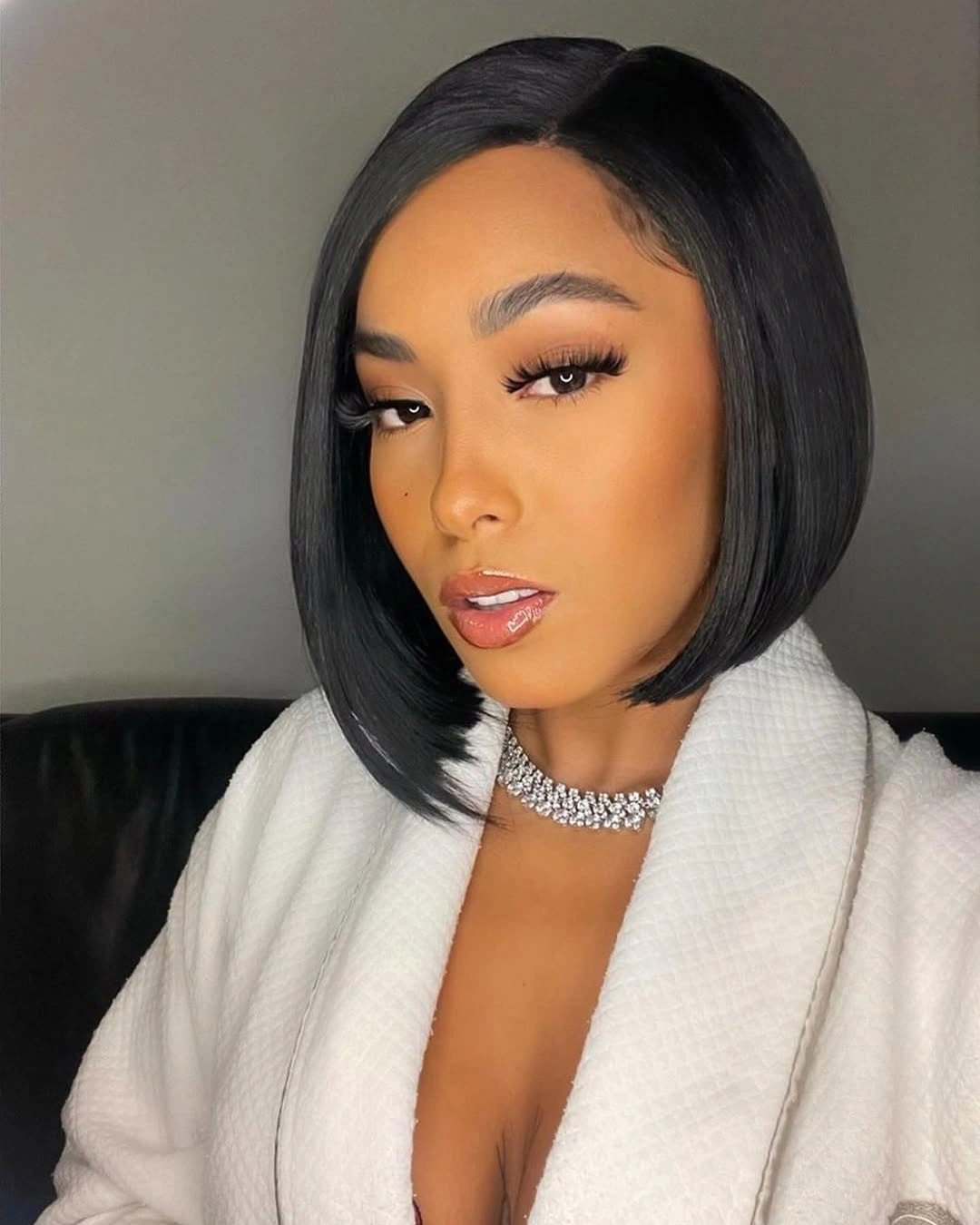
Photo via Instagram
At the bottom, one front edge appears to reach lower than the other. The longer-looking section continues toward the neck, while the opposite edge sits nearer the jaw and leaves more open space beneath it. In a reference for a similar bob, I would pay attention to that difference in where the panels finish, rather than expecting the word “short” to describe the whole outline.
Both lower edges turn gently toward the neck, but a few fine tips remain distinct from the smooth panels above. Those small separations make the finish look lighter precisely where the hair meets the exposed neckline.
Braid-Like Front Sections Meet Long Loose Ripples
Raised braid-like sections mark the front of this long hairstyle before the loose ripples spread outward. Those ridges follow the upper sides of the face, making a compact border beside the temples while leaving the forehead open. The contrast is appealing because the front remains easy to read as a defined arrangement even though the surrounding lengths have a much softer, less contained surface.
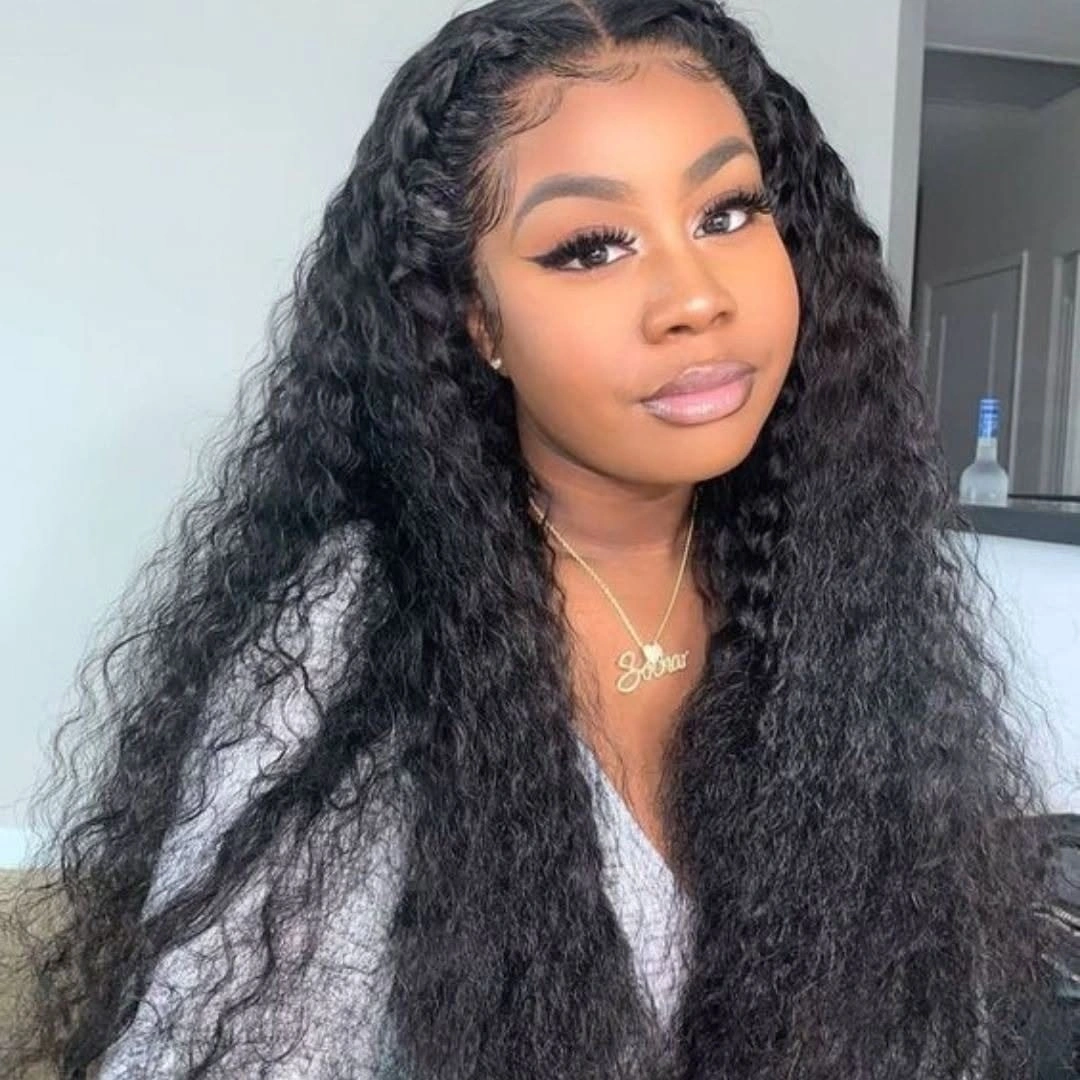
Photo via Instagram
The loose lengths are filled with finer ripples than the ridges at the front. As those small bends overlap across the shoulders and chest, they form a softly uneven surface rather than a row of distinct, matching curls. The breadth comes from many narrow strands spreading beside one another, so the hair has a different scale up close than it does as one long outline.
The narrow central part gives the raised front sections a clear dividing line. Its straightness is a small but noticeable contrast to both the rounded ridges beside it and the fine ripples spreading below.
Dark Curls With an Elevated Side Sweep
The lift above the forehead is more interesting to me than the length alone in these dark curls. Hair rises beside an off-center opening, then turns down across one side, giving the outline a high point without forming an evenly rounded crown. That raised beginning creates a diagonal path through the front before the curls settle into their longer fall.
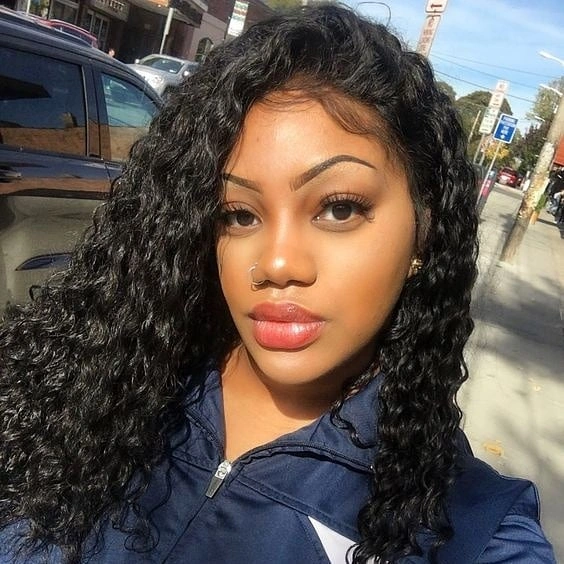
Photo via Instagram
The fuller side brings a dense curtain of curls close to the cheek, while the opposite side falls in a narrower group beside the neck. Both carry a closely rippled texture, so the imbalance comes mainly from how much hair occupies each side. More of the cheek and ear area remains exposed beside the smaller grouping, making the side opening as noticeable as the fuller sweep.
The lower curls hang in separate clusters, leaving the middle of the blue collar visible. Their loose tips trace small hooks against the fabric, giving the finish finer, more scattered detail than the lifted front.
A Center Part Extends Into Straight Lengths
There is very little sideways expansion in these long, straight lengths. The dark panels follow the sides of the face and continue over the chest without fanning outward at the shoulders. That close fall keeps the outline elongated, making the vertical distance more prominent than the amount of hair spread across the upper body.
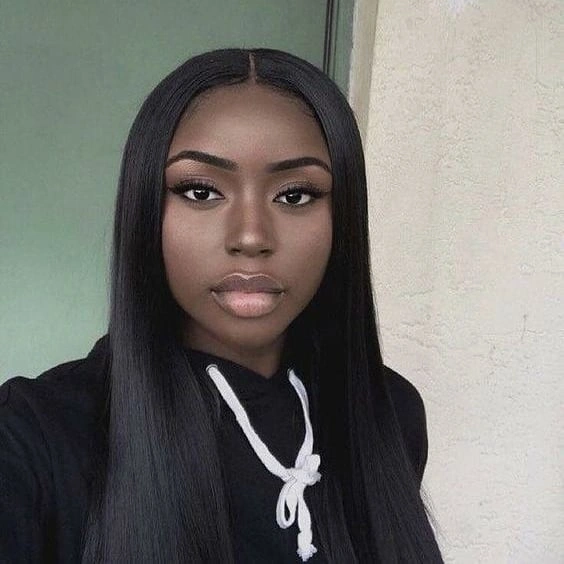
Photo via Instagram
The center part repeats that vertical direction in miniature. It is narrow and distinct above the forehead, and both sides turn away from it gradually before settling into the straight fall. Rather than introducing a side sweep, the opening gives the hair a central reference line, making its smooth, nearly parallel placement especially easy to notice.
The smooth surface remains consistent from crown to chest, with fine strands readable inside the larger dark panels. Even where the hair crosses the black hoodie, faint vertical highlights distinguish it from the fabric.
Close Sides Beneath a Raised Curled Top
The closely cropped side is essential to this short, tightly curled shape. It hugs the area above the ear before meeting a much fuller top, leaving a clear change in volume around the temple. That narrow side contour lets the upper curls feel substantial without extending the same amount of fullness down beside the face.
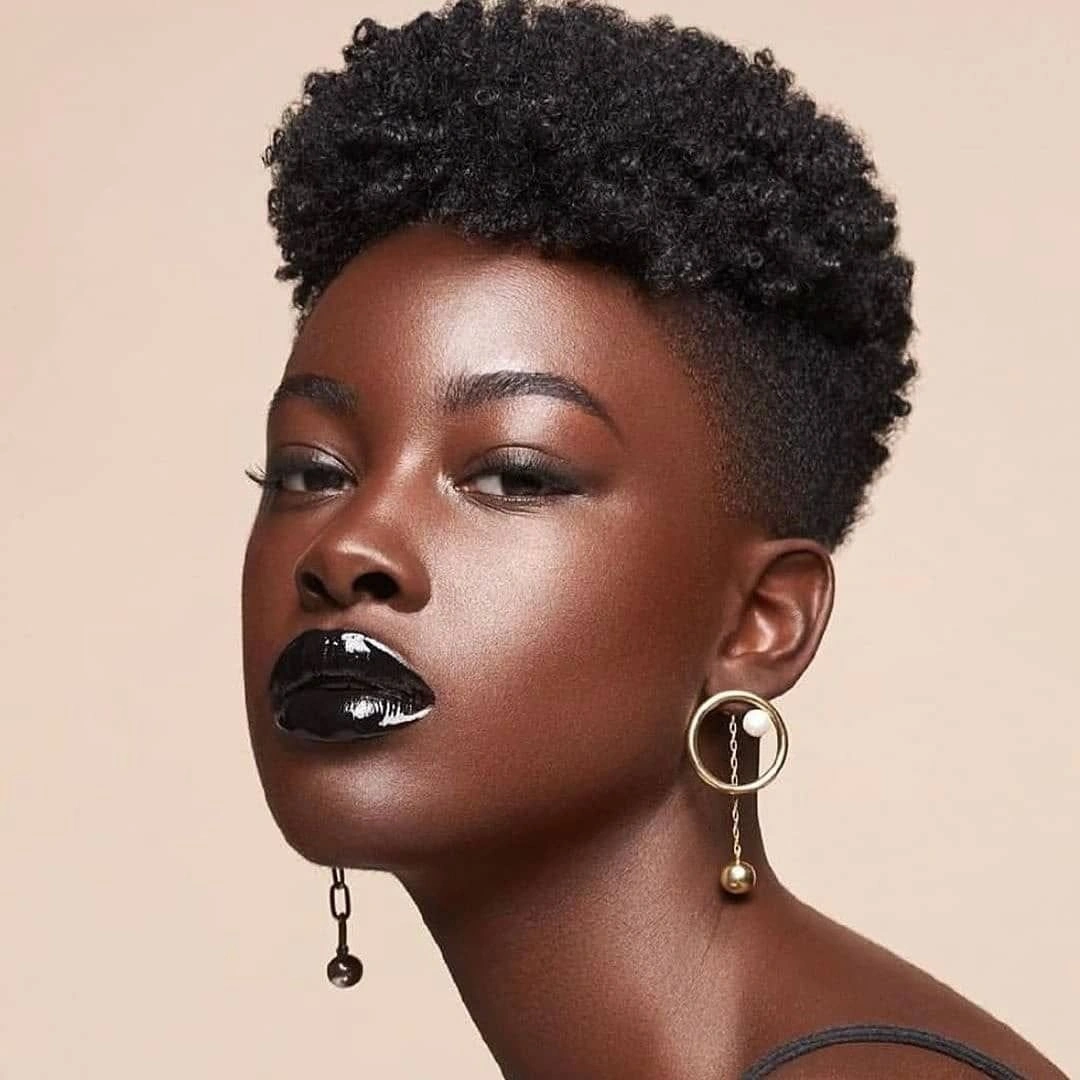
Photo via Instagram
Height can be a defining detail in short hairstyles for Black women, and here it sits almost entirely above the temples. The top has enough fullness to form its own rounded profile, rather than simply following the head as closely as the sides do. That is the proportion I find most appealing: plenty of visible curl volume, concentrated in one part of a compact shape.
Tiny curls interrupt the top edge, making it irregular at close range even though the overall shape is rounded. Along the front, those same small loops create a softly notched border above the forehead.
Red Curves With a Deep Sweeping Fringe
The fullest part of this red hairstyle sits around the shoulders, where broad curves overlap and turn outward. The lengths above are smoother and closer together, so the lower hair opens into a wider shape instead of hanging at one constant width. Bands of reflected light follow the outer bends, making the red appear brighter on their crests and deeper where the sections overlap.
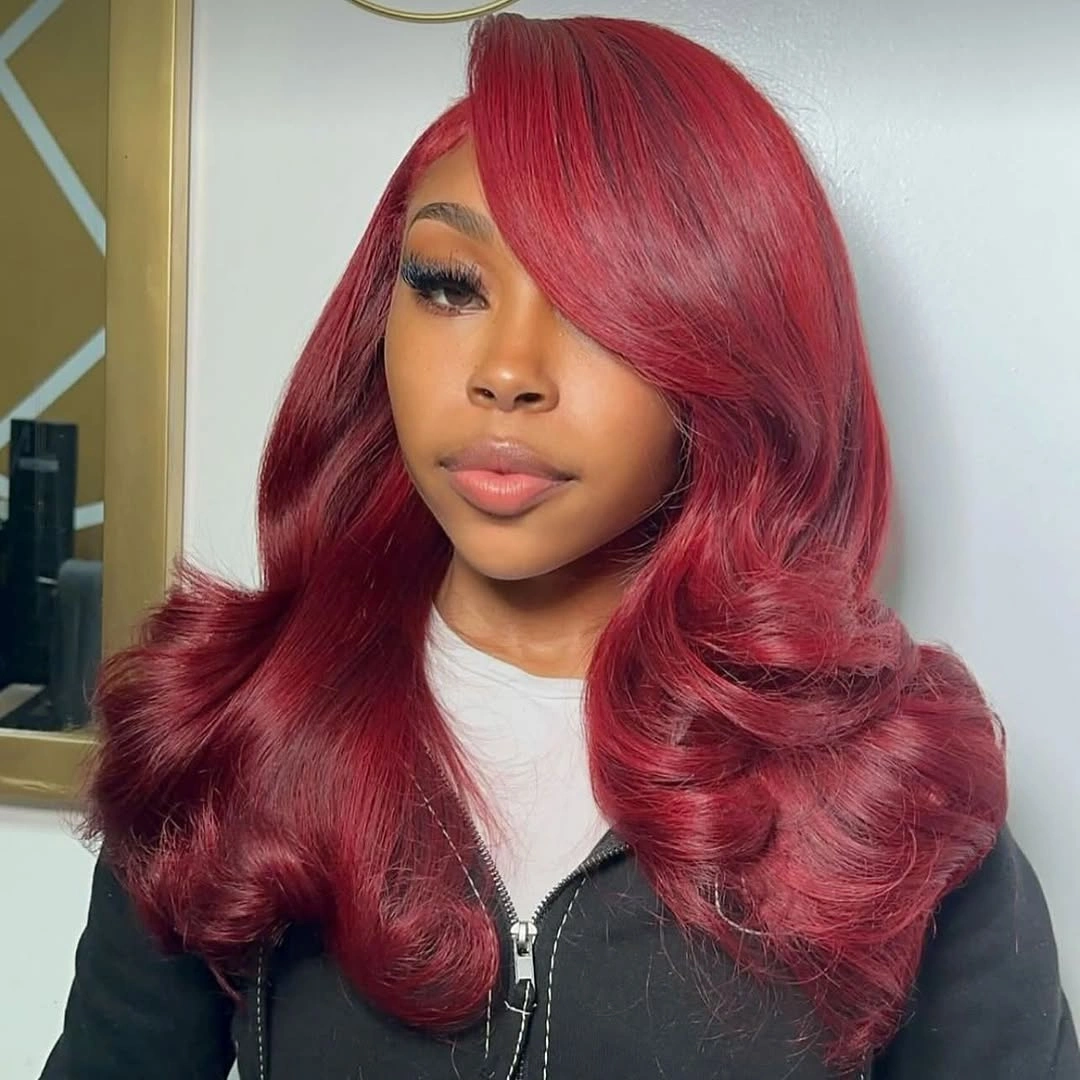
Photo via Instagram
I like the sweep of the fringe here, but the amount of coverage is as important as its direction. The wide red section crosses the forehead and falls over one eye before curving toward the cheek, leaving the opposite side more open. That difference in coverage gives the upper shape a much stronger slant than a narrow side part alone.
Some of the lower ends curl inward in rounded hooks, while others flare away from the shoulders. They finish at several visible heights, so the red perimeter breaks into overlapping curves instead of forming one continuous line across the chest.
Small Brown Ringlets Form a Rounded Crop
The warm brown color draws attention to how small and closely packed these ringlets are. Lighter-looking curves sit beside deep little centers, allowing neighboring curls to remain distinct even where they press together across the crown. At this scale, the surface is richly detailed without needing large gaps between the loops to make the pattern readable.
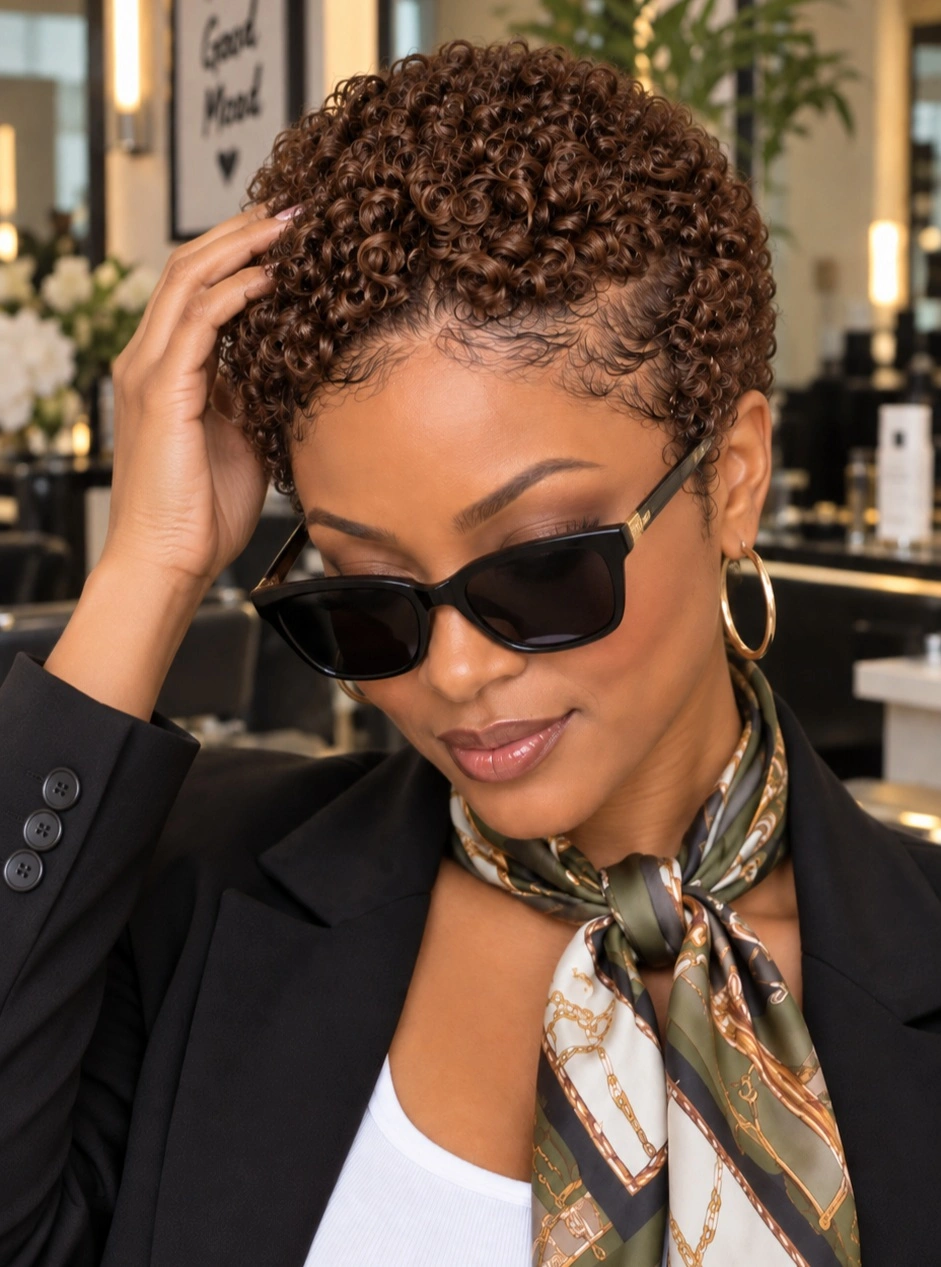
Photo via Instagram
The crown and visible side connect in a gentle slope rather than an abrupt change in height. Although the top is fuller, the ringlets draw closer to the head near the temple, keeping the ear clear beneath the rounded edge. The effect is more contained than the busy surface might suggest, with many separate loops fitting inside a compact outline.
The finest curves sit at the hairline, below the much denser ringlets. Those short, flatter arcs trace the forehead and temple in a delicate border, leaving a small change in texture between the curl surface and the face.
Curved Partings Give Long Braids Their Direction
The partings between these dark braids do more than separate the rows. Their narrow curves sweep from the front toward the back, tracing exposed arcs across the scalp that remain easy to follow beside the thicker hair. I would choose this arrangement for that drawn-line effect at the crown, where the spaces have as much visual presence as the braids.
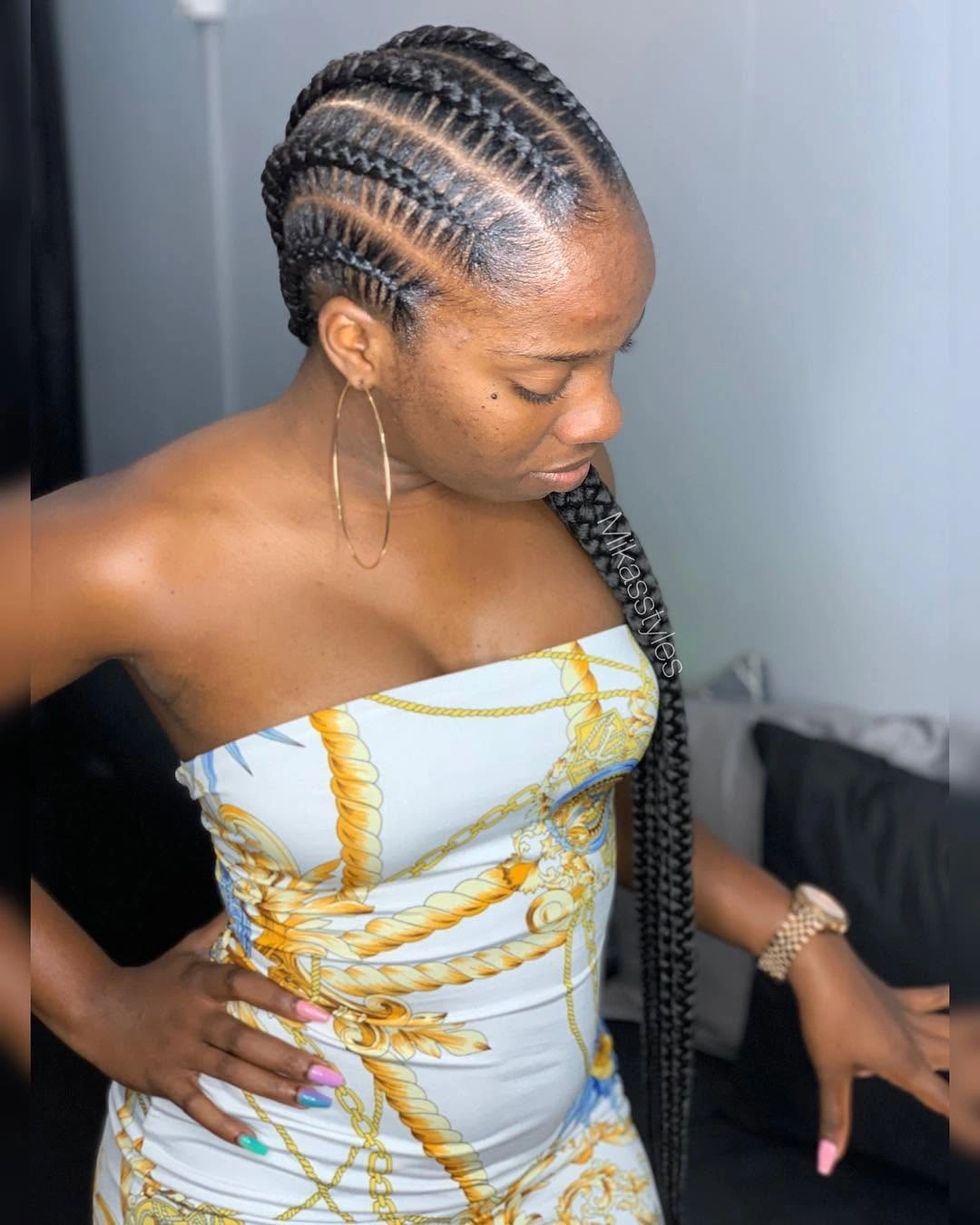
Photo via Instagram
Each braid carries a second, smaller pattern in its diagonal crossings. Those repeated marks give the raised rows a textured surface, while their low profile keeps the overall outline close to the head. Above the ear, the lowest rows follow the side contour rather than widening away from it, leaving the ear and the side of the neck clearly exposed.
The hanging braids change direction as they come forward over one shoulder. Against the pale patterned fabric, their long, nearly parallel outlines make a much straighter pattern than the curves across the scalp.
A Curved Part Above a Straight Ponytail
The ponytail falls over one shoulder in a broad, straight band, rather than spreading around both sides of the neck. Its dark surface makes a strong boundary against the bare shoulder and orange-red top, keeping the hanging length easy to follow. A few finer strands curve away along the inner edge, introducing a small change of direction beside the otherwise straight fall.
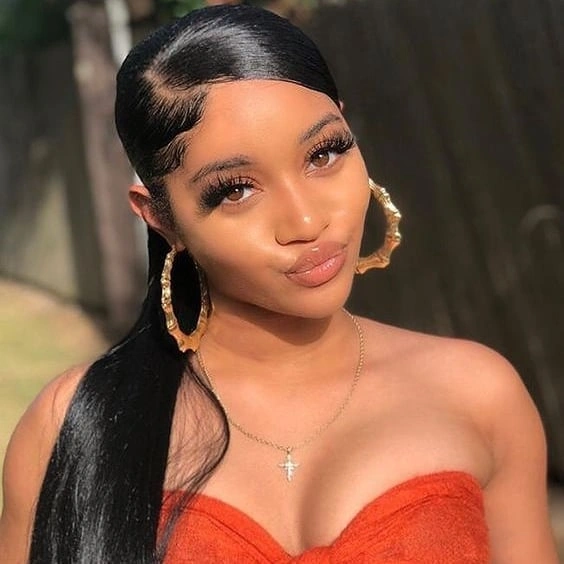
Photo via Instagram
The curved side part is a detail worth considering in smooth ponytail hairstyles for Black women. It separates a broad front sweep from the much smaller area above the ear, setting up two unequal sections before the tail begins. The sweep follows the upper forehead rather than falling across it, giving the front a slant without the coverage of a hanging fringe.
There is little added height at the crown, where the smooth surface follows the head closely. The long tail begins below that close outline, putting most of the hairstyle's apparent scale beside the shoulder instead of above the head.
Scalp Braids Gather Low With Curly Ends
Two low gathered sections give these braids a paired finish at the nape. The rounded shapes sit apart rather than merging into one central bundle, and the exposed space between them keeps each one distinct. Placing the fullness this low leaves the upper outline close to the head, making the back arrangement about side-to-side balance rather than height.
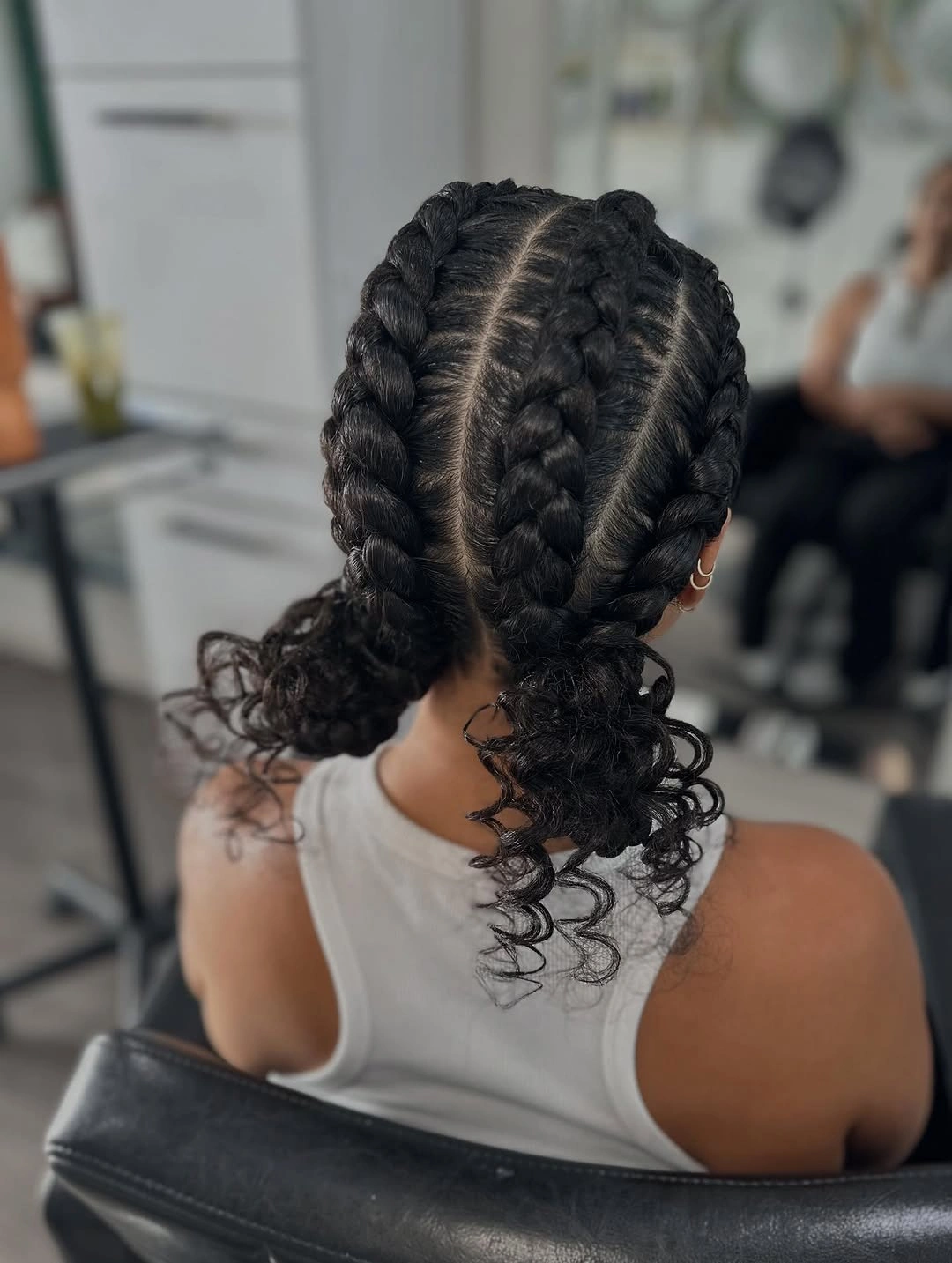
Photo via Instagram
The braids above those gatherings have broad, clearly visible crossings, much larger than the fine strands curling below. Long partings bend between them, separating the upper hair into substantial curved sections rather than many narrow rows. There is enough space between the ridges to follow each path toward the nape, where the individual braids meet the fuller gathered shapes.
Loose spirals extend from both gathered sections, with some curling sideways and others reaching farther down the back. Their unequal lengths loosen the otherwise paired outline, leaving the lower edge irregular instead of perfectly matched.
Long Individual Braids With a Fine Repeating Pattern
These long dark braids get their texture from repetition rather than a single uninterrupted surface. Each narrow braid has its own small diagonal crossings, and the similar widths keep the pattern consistent across the many hanging lengths. I like this finer scale in braided hairstyles for Black women because the strands stay individually readable even across such a long fall.
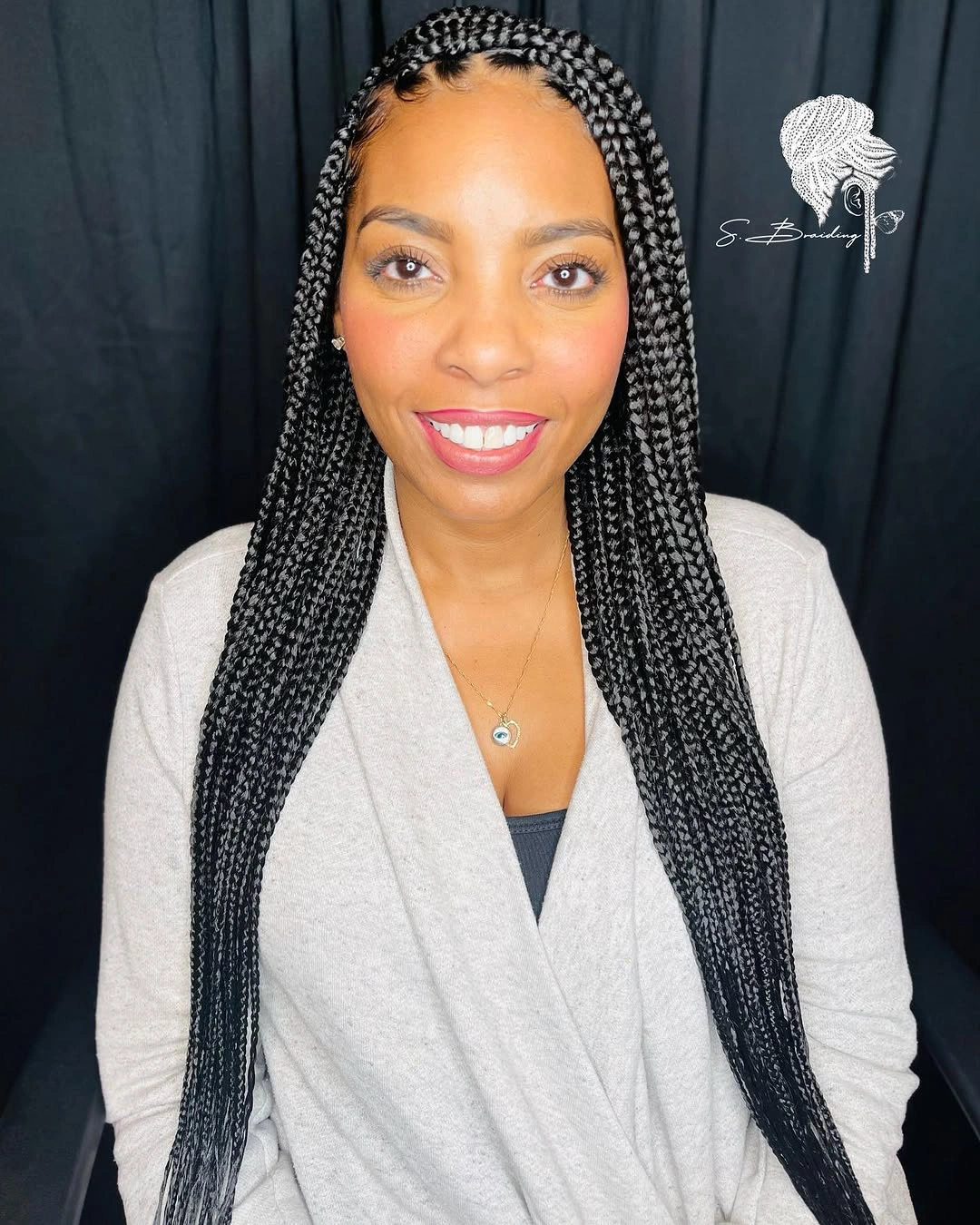
Photo via Instagram
At the hairline, small visible root sections separate the braids before the hanging lengths overlap. The front braids sit back from the forehead, leaving short curved hairline details visible beneath their larger crossings. This smaller pattern at the roots gives the face a more open border than the denser fall at the shoulders, where many of the strands sit closely beside one another.
The lengths divide into two nearly balanced groups over the pale gray cardigan, leaving the pendant and neckline visible between them. Each group narrows as it drops past the chest, so the sides of the hairstyle gradually draw closer to the torso.
Brown Twists Broken Up by Loose Spirals
A loose spiral hangs forward of the thicker brown twists, tracing a separate line beside the cheek. It continues toward the neckline with open bends, while the bulk of the hair overlaps farther back around the shoulder. The gap between that single curl and the main fall lets the two shapes stay distinct, even though their brown tones are similar.
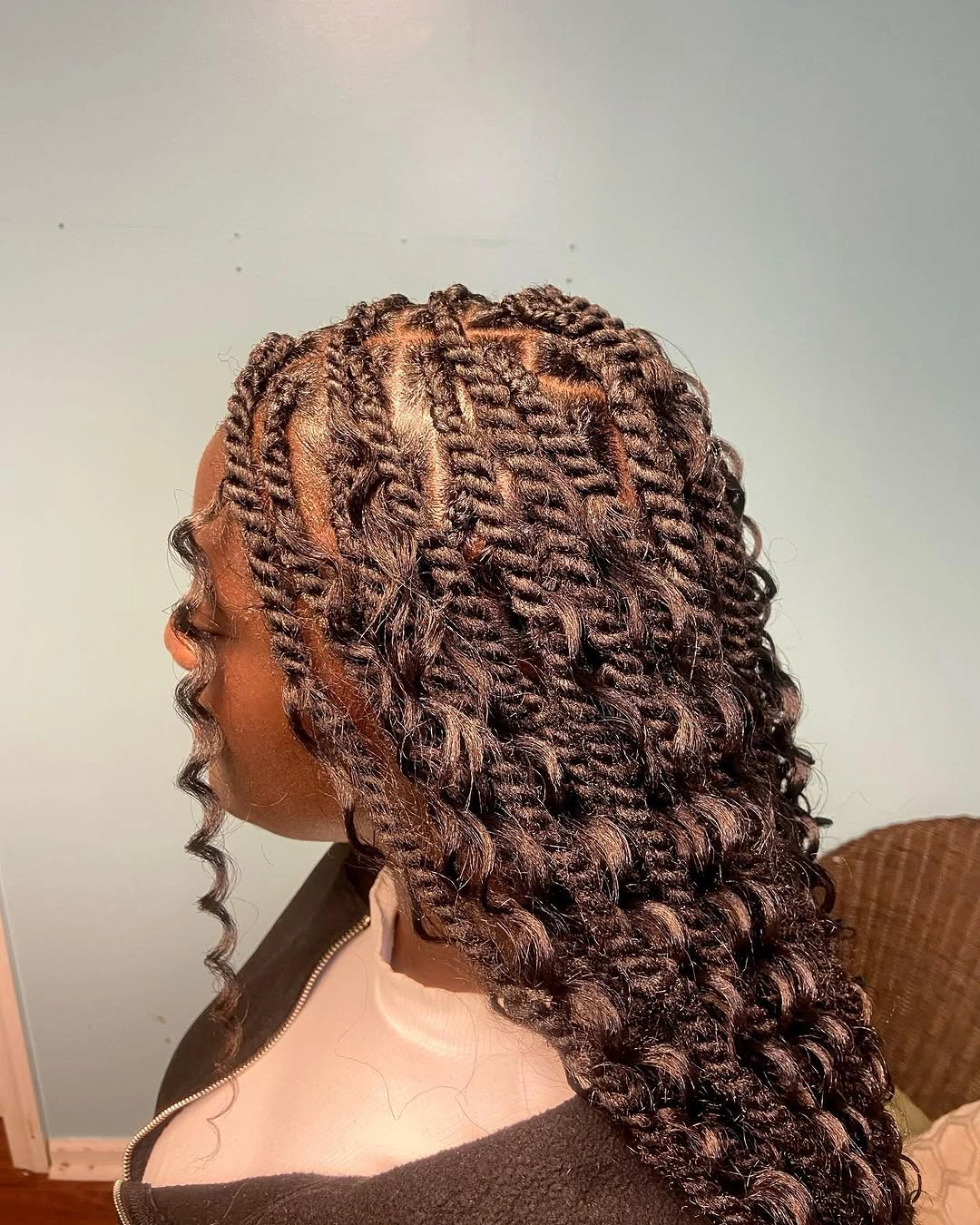
Photo via Instagram
Loose curls can be part of the appeal of twist hairstyles for Black women, and here they appear throughout the brown lengths rather than only at the ends. Their open loops cross in front of the closer rope-like turns, interrupting the repeated pattern without hiding it. Some twists remain clearly outlined from the roots downward, while others sit partly behind curls that turn in several directions.
Near the crown, angular partings give the twists distinct starting points. Those straight-edged patches of scalp make a small geometric pattern above the loose spirals and overlapping lengths.