
The salon chair next to mine was getting a gloss in a shade I’d call ‘midnight cherry.’ Dark hair in winter is a reflex, sure, but lately the reflex has nuance. I see more women asking for violet undertones and cool espresso than for the old solid black. It’s still dark, just smarter.
This roundup of 30 Dark Winter Hair Colors runs from a straight-from-the-glossary uniform brown to a black-to-silver ombré lob. Some need a pro, others a good toning shampoo. If your hair goes flat by 4pm like mine, or you’re tired of roots showing at week five, there’s a shade here that buys you time. I wrote it for anyone who wants depth without the drama.
Dramatic Dark Red and Brown Two-Toned Hair
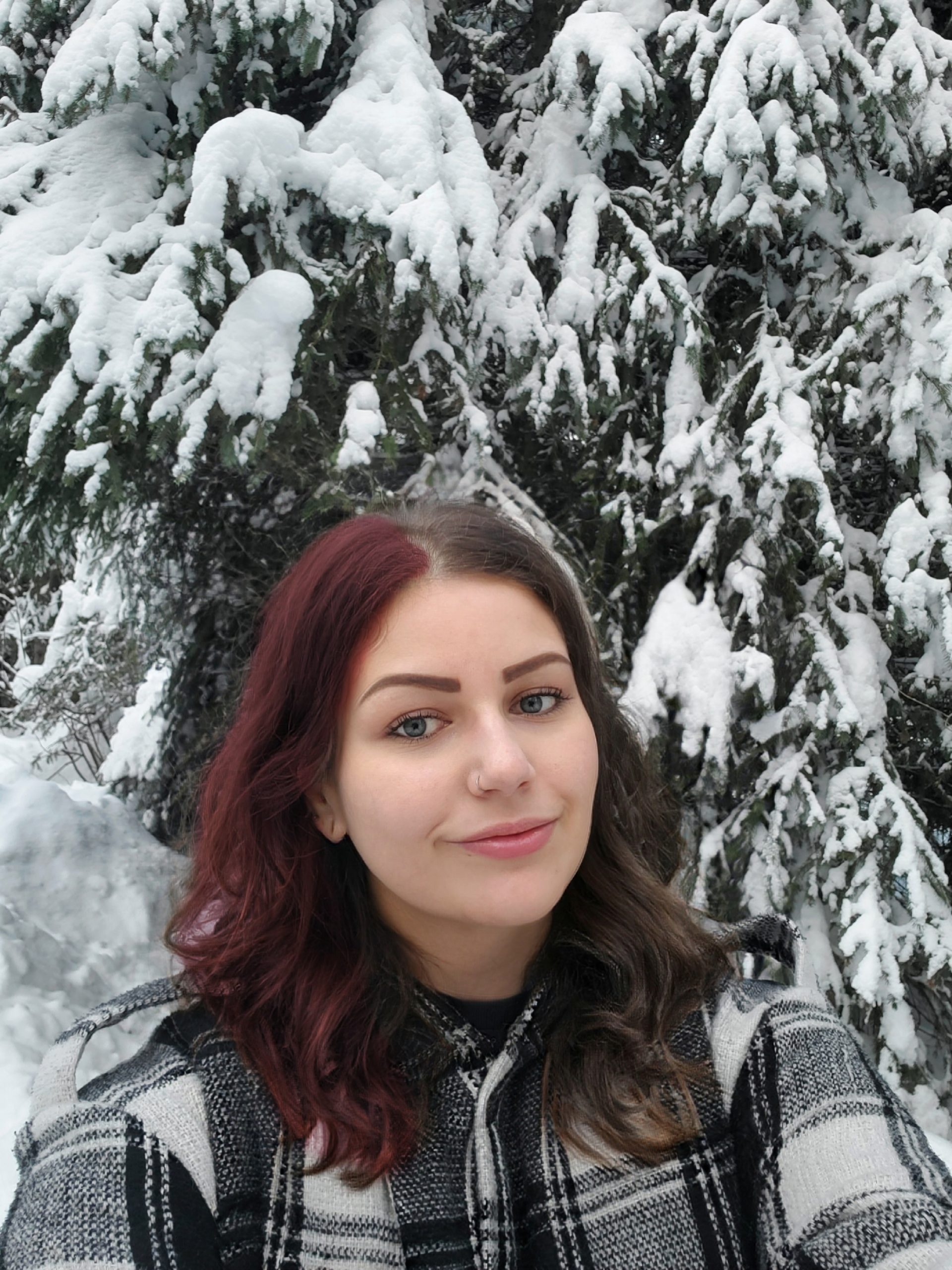
Two-toned dark hair is a bold compromise: one side dark brown base with deep red undertones, the other solid dark brown. You get red’s excitement without committing your whole head. The shoulder-length wavy cut and middle part make the contrast the point – it’s intentional, not an accident. But the upkeep is real. The red side fads by week three; the dark side holds steady. Color-safe shampoo and cool water slow the shift, but a tinted gloss every month is non-negotiable. The technique uses two separate formulas, so your stylist needs to be precise. Tone on the red side leans violet at first, then softens to a muted rose. The wavy texture, medium density, catches light differently on each half. If you’re tired of just brown or just red, this solves it.
Rich Dark Red with Violet Undertones
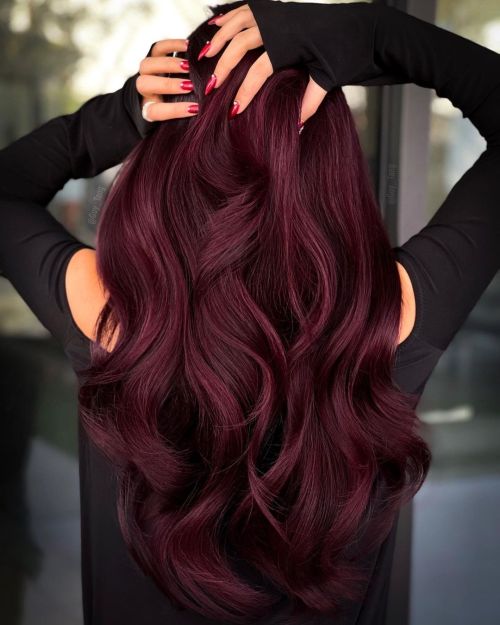
Achieving a rich dark red with violet undertones is about layering, not luck. The base is a dark red, then violet added via a gloss or demi-permanent tone. This technique creates depth that a single formula can’t achieve. The mid-back wavy, thick hair shows off the complexity – each wave catches a different shade. But here’s the honest downside: red fads faster than any other color. Within three weeks, the violet will start to soften; by six, you’ll be reaching for a tinting gloss.
Upkeep is the price of this depth. Color-safe shampoo and cold water help, but a semi-permanent violet gloss every four to six weeks is essential. The technique demands a skilled stylist – you need the violet placed carefully so it doesn’t compete with the red base. The wavy texture works in your favor: movement scatters light, making the color look multi-dimensional even as it fads. If you’re ready to commit to toning, this is the dark red hair color to choose. That’s the commitment it takes.
Dark Brown Shag with Cool Highlights
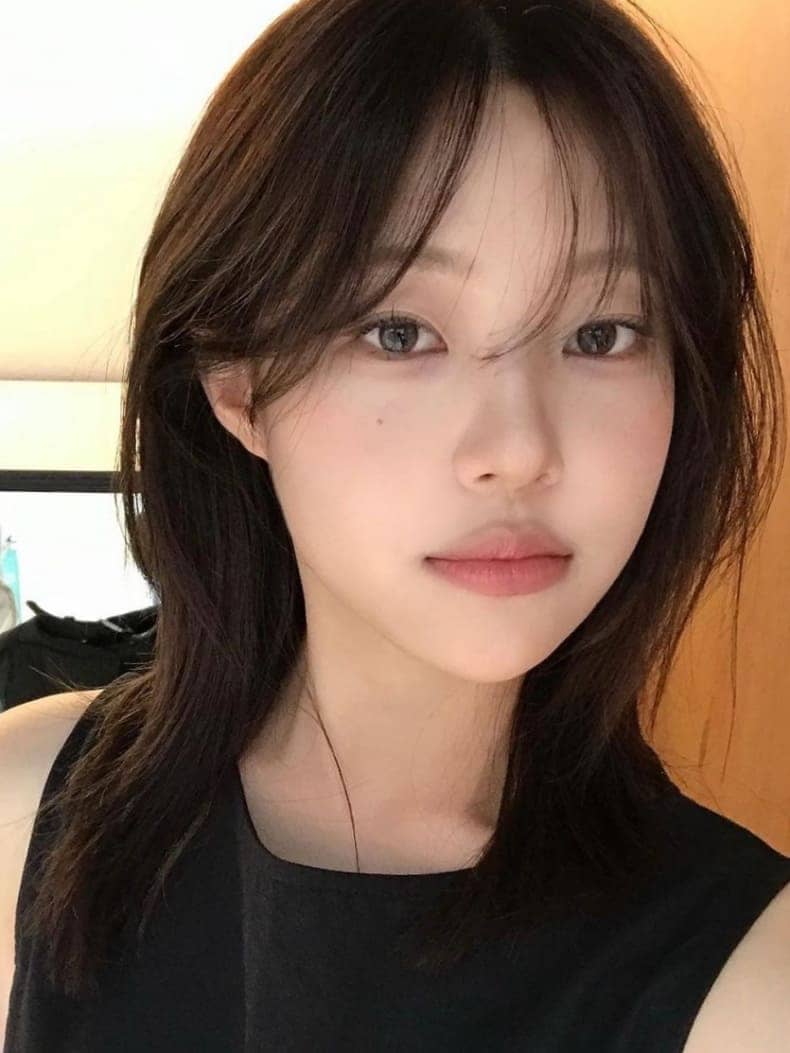
Styling is simple: air-dry after washing, then scrunch with a texturising spray. The middle part works with the shag’s natural movement. Keep a diffuser on hand for quicker dry times. The highlights need refreshing every eight to ten weeks, but the cut’s low-maintenance nature means you can skip wash days without looking greasy. That’s the real win – a cut that works harder than you.
Deep Black with Blue Undertones
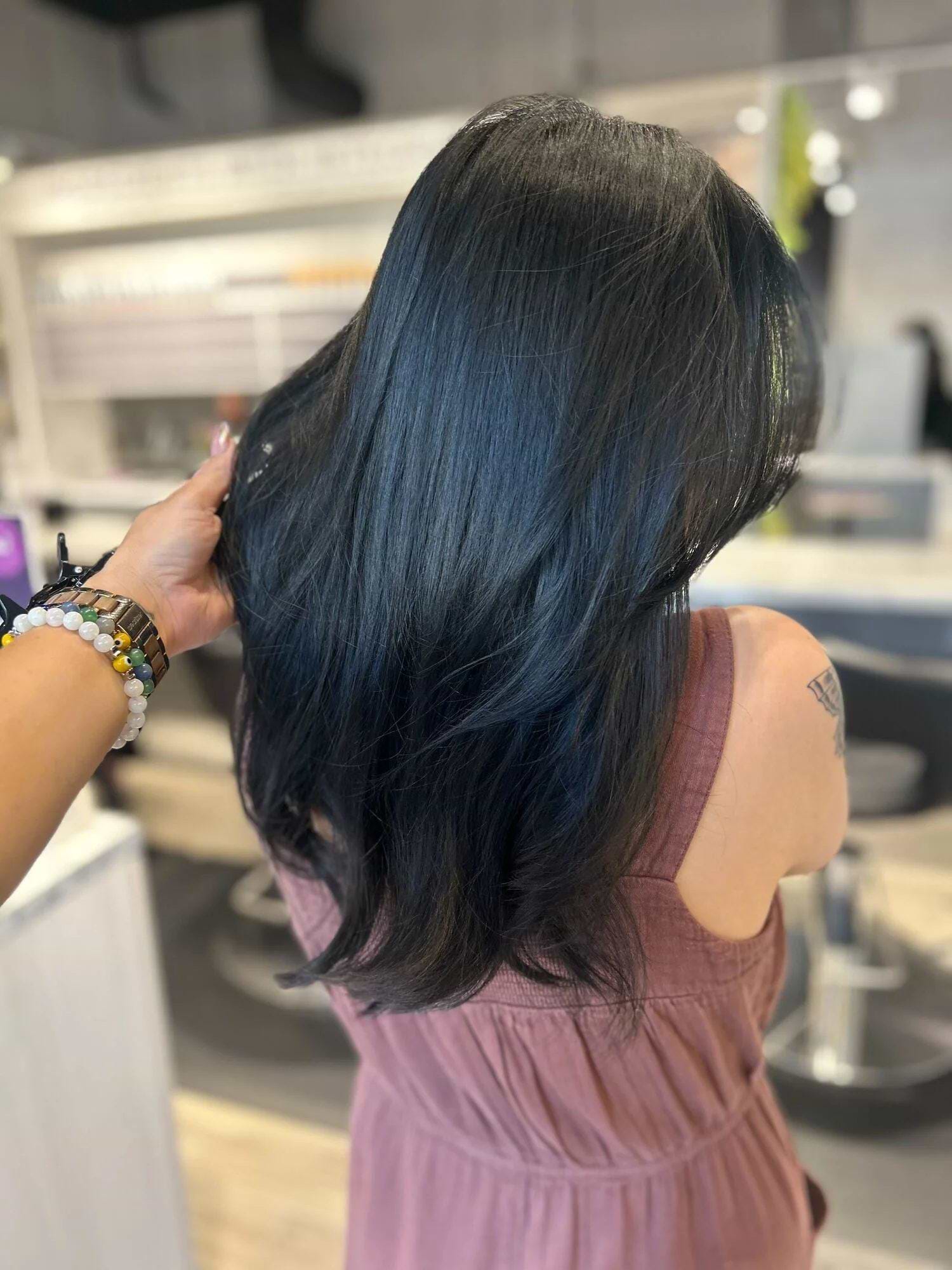
Deep black hair color with blue undertones resonates. Straight, thick waves at mid-back glow with a cool blue sheen in certain light – it’s undeniably dramatic. But black dye is the hardest to correct if you change your mind. Salon is the only smart choice here; a box dye can turn greenish or purple as it fads, and color removal is a nightmare. A professional uses a blue additive on a deep black base, creating a tone that stays cooler longer.
Once it’s done, maintenence is simple: use a gloss treatment every few weeks to keep shine and prevent brass. Avoid excessive heat, which strips color faster. The technique is straightforward – single process with a custom tone – but the choice of salon matters. This is not a bathroom-mirror job. The payoff is a color that looks bottomless on straight, thick hair, but be aware that roots on black are highly visible. You’ll need touch-ups every four to six weeks. If you’re ready for that commitment, go ahead. If not, maybe a dark brown with blue undertones is safer. But for the brave, this is it.
Jewel-Toned Plum with Magenta and Violet
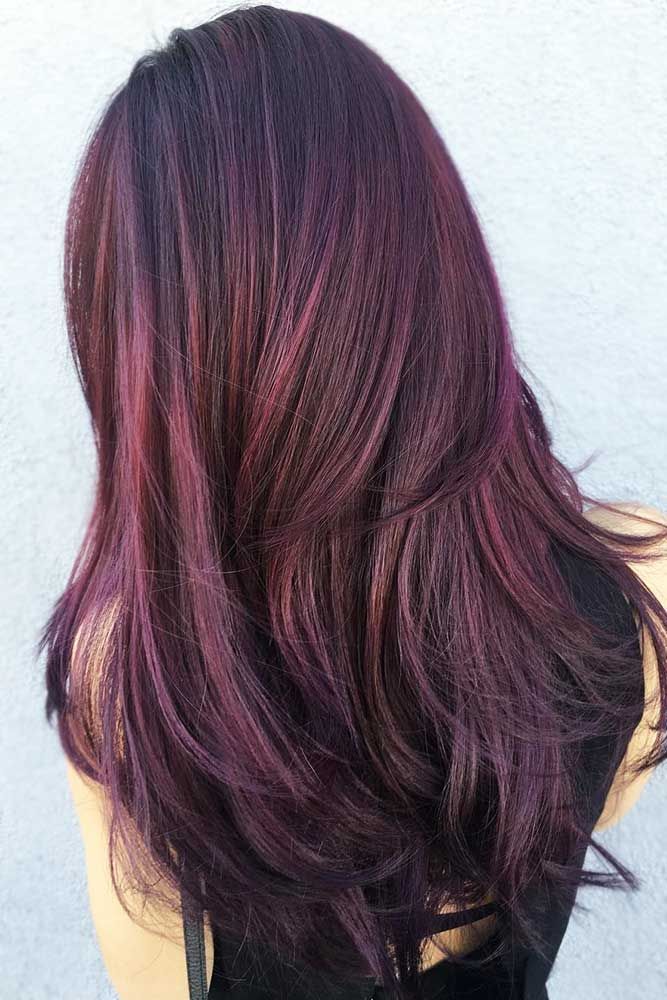
My verdict: plum hair with violet undertones works on more skin tones than you might guess. The deep plum base carries magenta and violet, applied as a global color with hand-painted accents for depth. On thick, wavy hair cut with long layers and no bangs, the jewel tones shift between purple, berry, and deep red depending on the light. The mid-back length gives the color room to travel, and loose waves enhance the multidimensional effect. The middle part shows off the color’s complexity, and the lack of bangs keeps the focus on the hue.
Fair skin with pink undertones glows next to the violet. Medium to deep skin with cool or neutral undertones reads as radiant — warm undertones need a magenta-leaning formula to avoid looking ashy. This is a winter color that also works for fall weddings and evening events. It requires regular toning every four to six weeks to keep the magenta from fading to brown. Book a colorist who does vivids, not just brunettes. Avoid harsh shampoos to protect the tone. The upfront time in the chair is worth the weeks of compliments.
Solid Dark Brown Hair
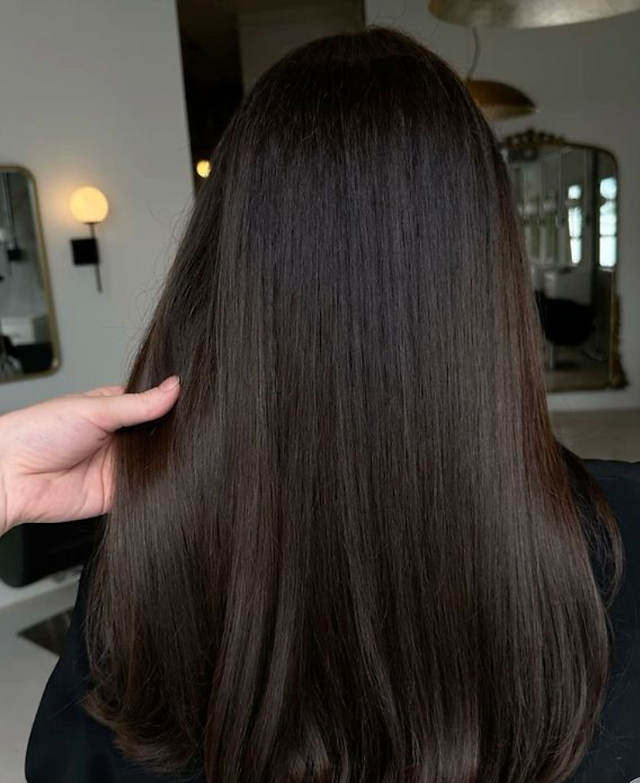
I used to think solid dark brown hair was boring. I was wrong. The first time I asked for this deep, uniform shade on my thick, straight hair cut to mid-back with a straight cut and middle part, I realized how sophisticated it could look. The tone is cool without being ashy — exactly the kind of brown that catches light and looks healthy. I’ve tried box dyes in the past, but they always pulled reddish at the ends after a few weeks.
Maintaining it without brassiness is the challenge. A salon color is non-negotiable for the first application because getting that even, cool depth requires professional mixing. After that, a color-safe shampoo and an occasional gloss treatment at the salon keep it from warming up. Air-drying works well for this texture. Trims every eight to ten weeks keep the line clean. The time saved on daily styling is worth the salon visit. My stylist tells me to come back when I see warmth, not on a calendar schedule.
Dark Plum with Red Undertones
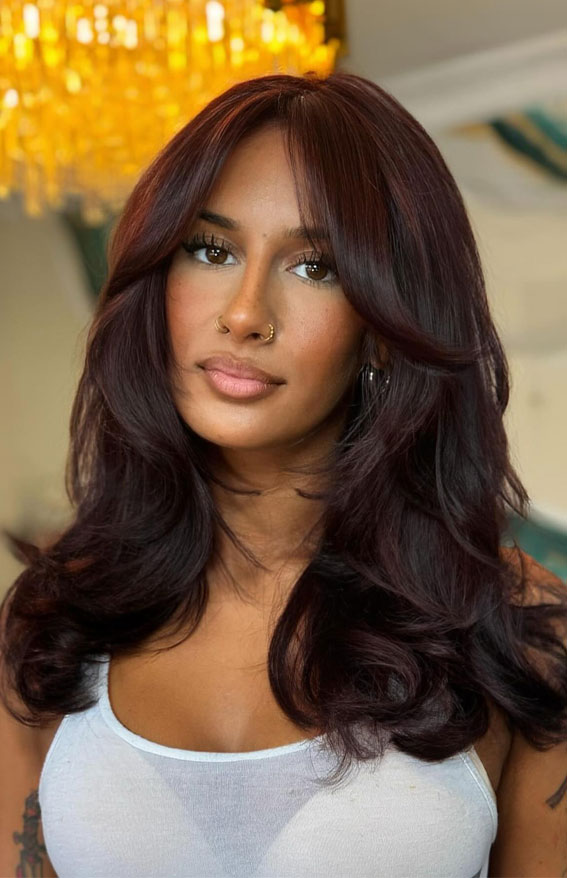
Can a dark plum hair with red undertones work on your skin tone? Yes, but it depends on the balance. This color features a dark plum base with red undertones, applied with layers and curtain bangs on wavy, medium-density hair cut to mid-back. The middle part and loose waves show off the feathered layers and the red shift in the color.
This shade is surprisingly versatile. Fair skin with warm undertones picks up the red and looks luminous. Medium to deep skin with neutral or cool undertones reads the plum most strongly — the red keeps it from looking flat. Even olive skin can wear it if the formula leans more red than blue. It flatters a range because the red undertone adds warmth without going brassy. The soft drape of the curtain bangs helps balance face shapes by breaking up the length.
Deep Auburn with Copper Highlights
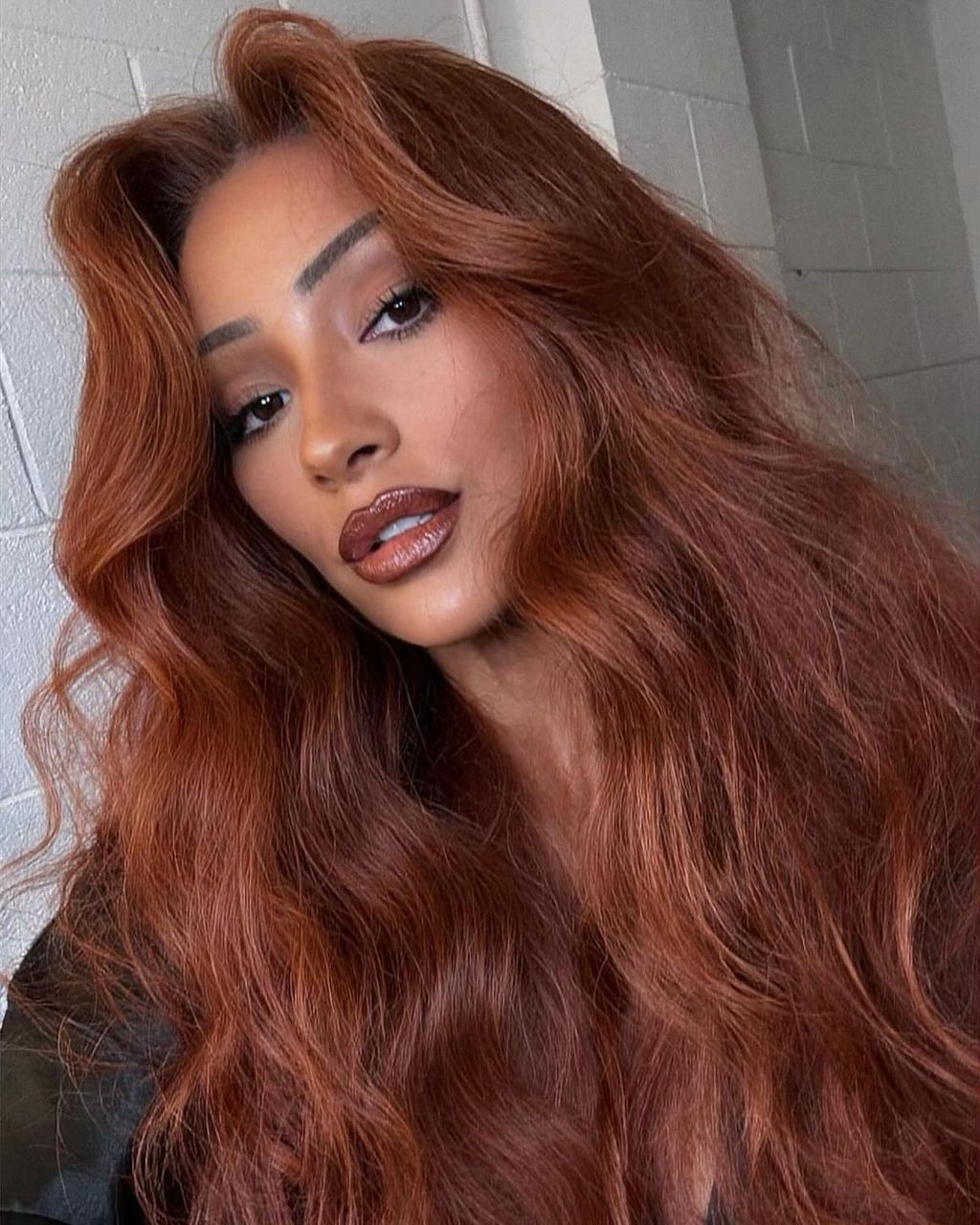
This auburn hair with copper highlights is beautiful, but it asks for commitment. The deep auburn base with subtle copper highlights is achieved via balayage on long, thick, wavy hair ending mid-back. A side-swept bang frames the face, and the voluminous blowout makes the copper pop. It is a winter color that transitions well into spring with careful toning. The upkeep means using color-depositing products to maintain both the auburn base and the copper highlights, because copper fades faster than auburn. Touch-ups every eight to ten weeks keep the balayage line fresh. The result is a dimensional color that catches light from every angle.
Mid-Back Dark Plum with Aubergine Undertones
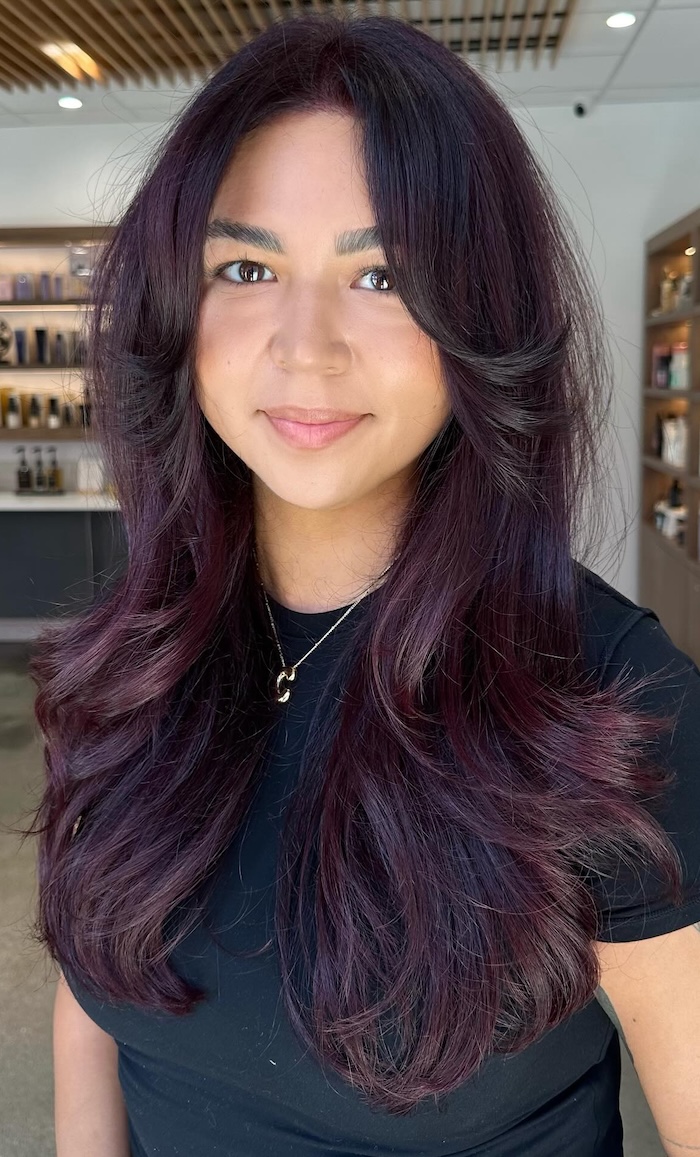
Ever asked for plum and ended up with something closer to magenta? This dark plum with aubergine undertones is the fix. The technique is a single-process colour, applied to mid-back length wavy hair with feathered layers and curtain bangs. The tone is cool, leaning into violet rather than red, so it reads sophisticated, not cartoonish.
It genuinely flatters cool and neutral skin, especially if your natural base is already dark. The depth of the aubergine catches light without screaming. Who should pass? Anyone with strong yellow undertones in their skin; this can read as a bruise rather than a richness. To get it right, tell your stylist: “I want a deep plum with aubergine undertones, no red base, and keep it deep enough that it reads brown in dim light.” That’s the sweet spot.
Deep Burgundy Brown Hair
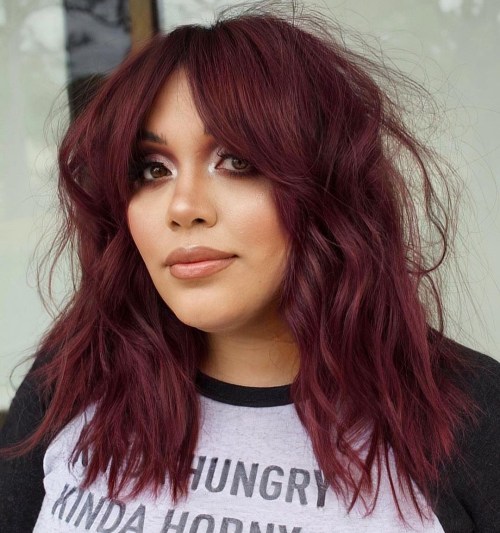
This is what I want my January to feel like: rich, warm, a little decadent. The deep burgundy brown colour is a single-process dye, applied to thick, wavy mid-back length hair with long layers. The tone is cool burgundy, not red-bright, with enough brown to keep it grounded. Winter asks for colours that hold their own against heavy coats and muted skies, and this one does. It’s not trying to scream; it’s deeply present. The thickness of the waves helps the colour saturate, catching whatever thin winter light exists. That’s why it lands here: it matches the season’s need for depth without drama.
Deep Plum Brown Hair for Winter
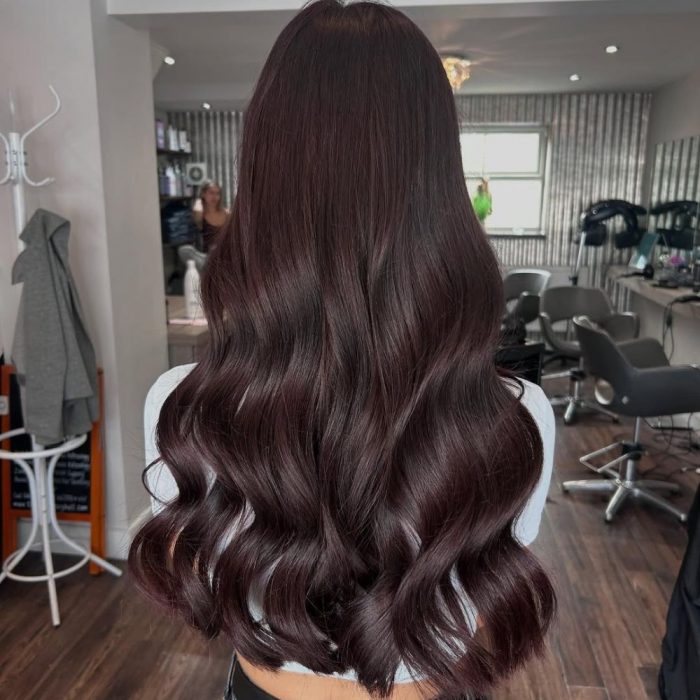
Is there a winter shade that reads rich without screaming for attention? This deep plum brown hair might be it. The technique is a single-process colour, cool-toned from root to end, applied on thick, wavy mid-back hair. The tone leans violet, not magenta, which makes it flattering on anyone with cool undertones in their skin. I have watched friends with warm undertones try this and the colour pulls muddy, so know your base. The length stays mid-back, the texture is naturally wavy, and the result is a shade that shifts in low light and catches a blue-purple glint in direct sun.
This is not a colour that fades gracefully into a brassy mess. It fades to a dusty mauve, which is still wearable. The trick is starting with a salon application — this is not a box-dye shade. The long layers keep the waves from turning into a single heavy curtain, and the middle part lets the colour read evenly on both sides. If you have cool skin and want a winter colour that does not shout, this is the one.
Rich Deep Merlot Hair
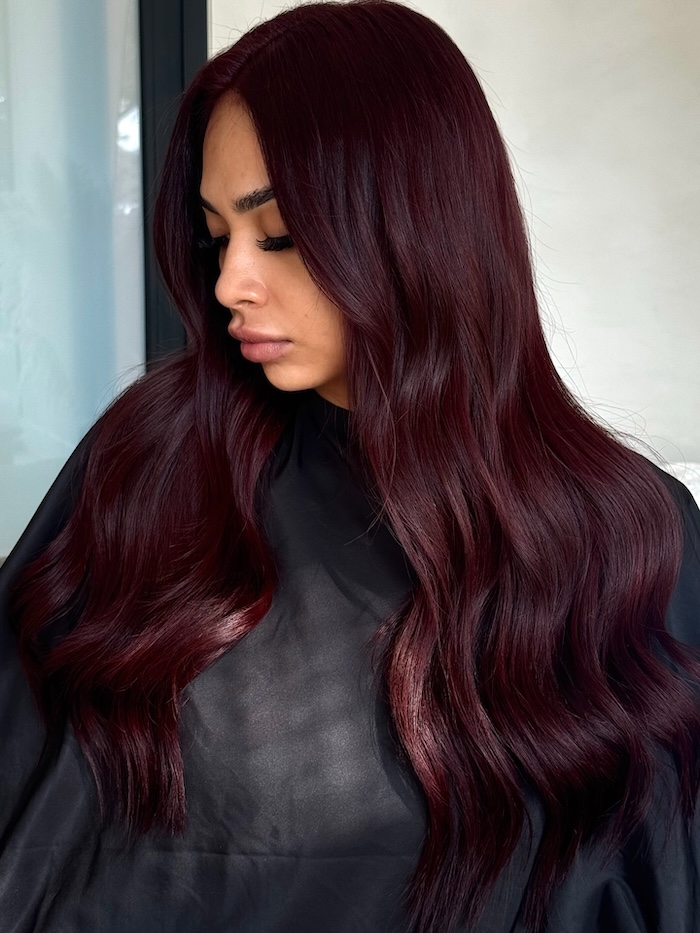
Merlot sits in a specific place between burgundy and true red. It is deeper than a wine red, less brown than a burgundy, and it reads as expensive in a way that straight red sometimes does not. This deep merlot hair color is a single-process application on medium-density, wavy mid-back hair, with a cool violet tone that keeps it from leaning too warm. The layers and loose waves let the colour show its depth — it looks almost black in shadow and opens to a dark berry in the light. If you want a bold colour that still feels grown-up, this is the one. The other reds can wait.
Dark Brown with Bronzed Highlights
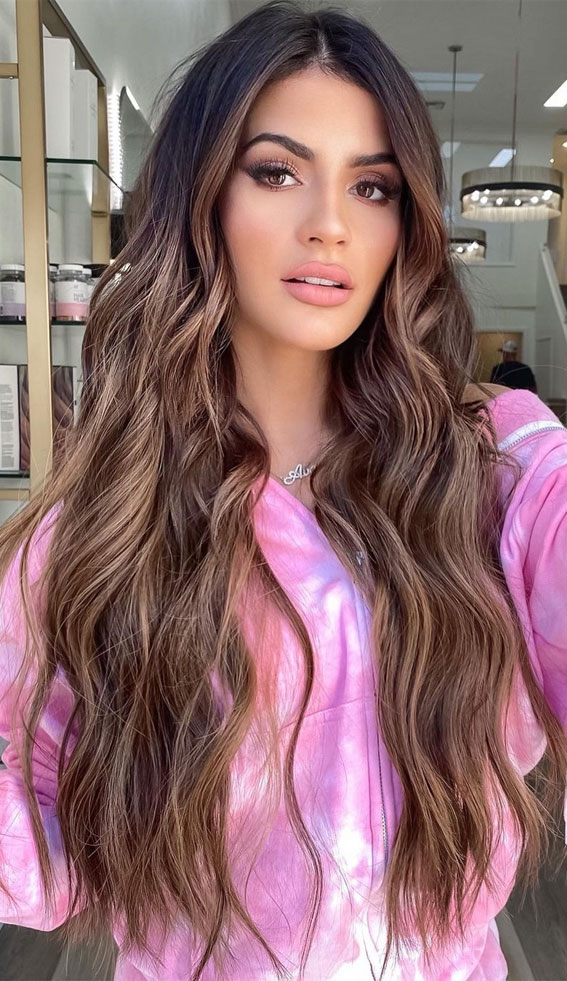
Here is the verdict: bronzed highlights on a dark brown base are the least risky way to add dimension. The technique is a partial highlight, painted onto thick, wavy mid-back hair, with the lightest pieces concentrated around the face and through the mid-lengths. The base stays dark brown, the highlights are a warm, coppery bronze, and the tone is balanced so the contrast reads as sunlit, not striped. This is a salon job — the placement matters, and a DIY kit will give you uneven chunks. The loose waves in the front view show how the highlights catch light from different angles, which is the whole goal.
The highlights need refreshing every eight to ten weeks, depending on how fast your hair grows and how much contrast you want to keep. I have seen this look on friends with naturally wavy hair and on those who curl it with a wand, and it works both ways because the highlights are placed to follow the wave pattern. The middle part keeps the colour balanced on both sides. It is dimension without drama, which is exactly what a lot of us want in winter.
Deep Espresso Brown with Cool Undertones
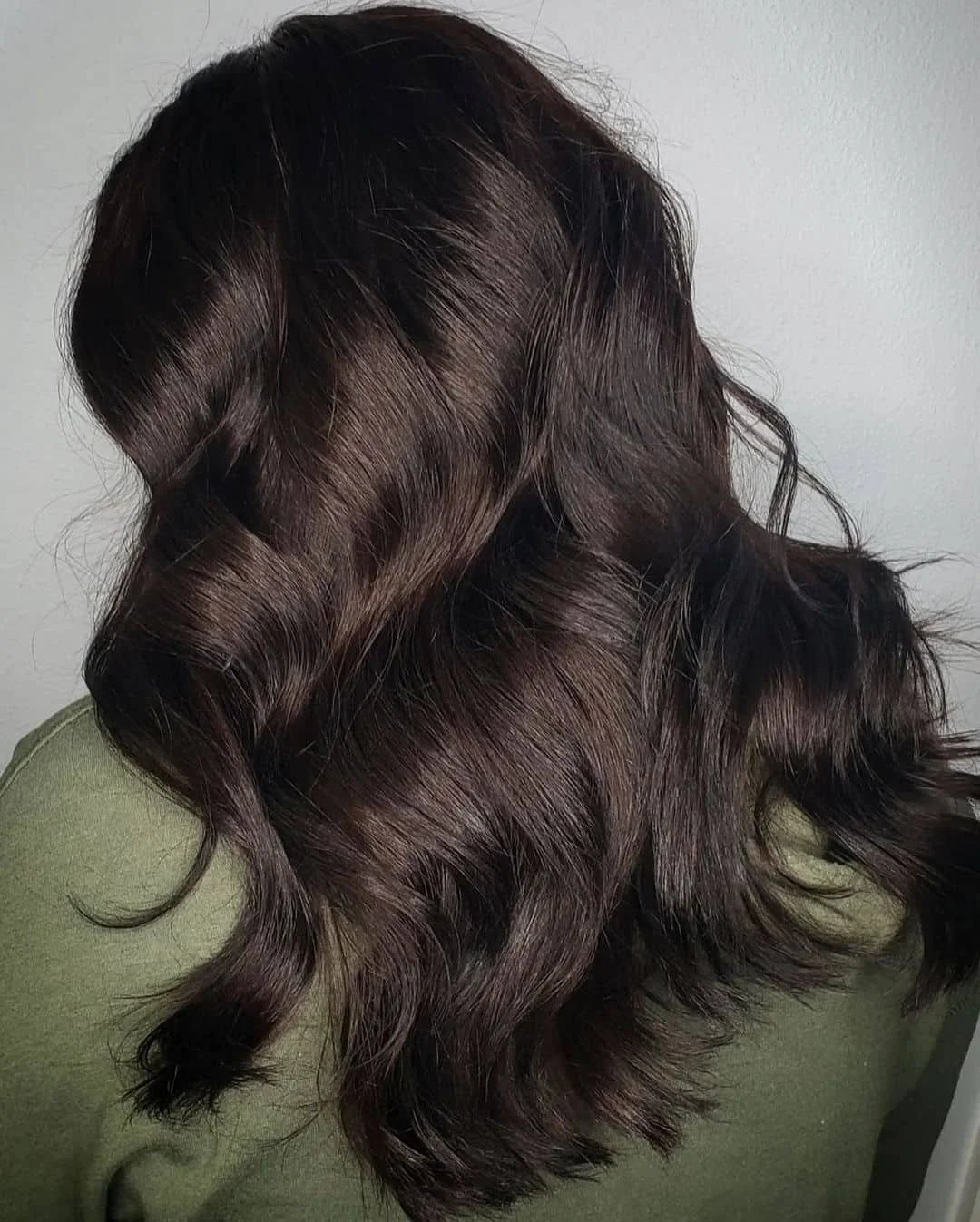
That deep espresso brown hair reads almost black in low light, but catches a cool brown sheen under direct sun. The cool undertones keep it from going brassy, which is the main headache with any dark brown. I have found it holds its cool tone for about four weeks before a subtle warmth creeps in. A purple shampoo once a week buys you two more weeks of that glossy, neutral finish. The mid-back length and thick waves show off the depth without needing a refresh every month.
Dark Brown with Auburn Undertones
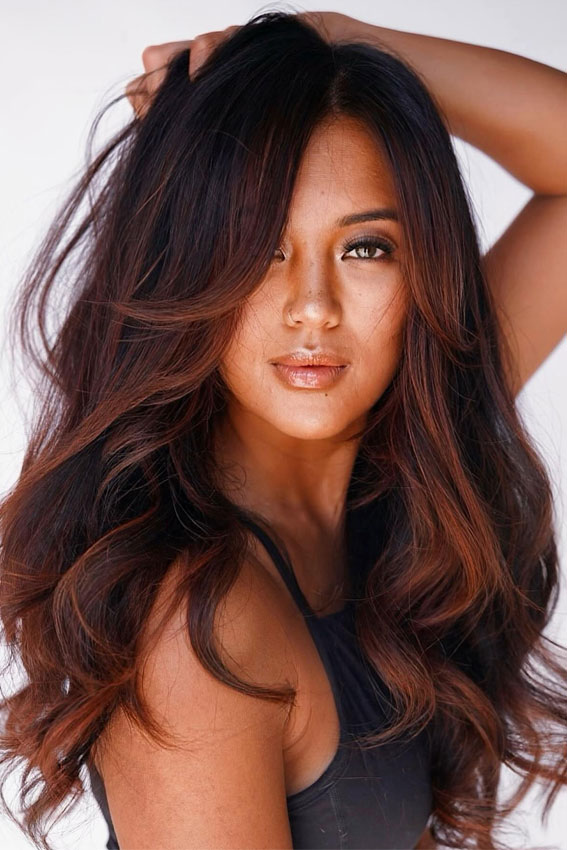
I saw this dark brown auburn undertones shade and immediately thought of fallen leaves. It is warm without being bright, which is exactly what I want when the weather turns. The dark brown base keeps it grounded, while the auburn undertones catch the light and give it a subtle glow. The lighter brown highlights add dimension without screaming for attention.
This is a salon color, not a box job. Getting those auburn undertones right requires a professional who can lift the base just enough to deposit the warm tone without going brassy. I tried a DIY version once and ended up with a muddy orange. The mid-back layers and loose waves make the most of the multi-tonal effect, but even a simple ponytail shows off the depth.
Dark Chocolate with Caramel Highlights
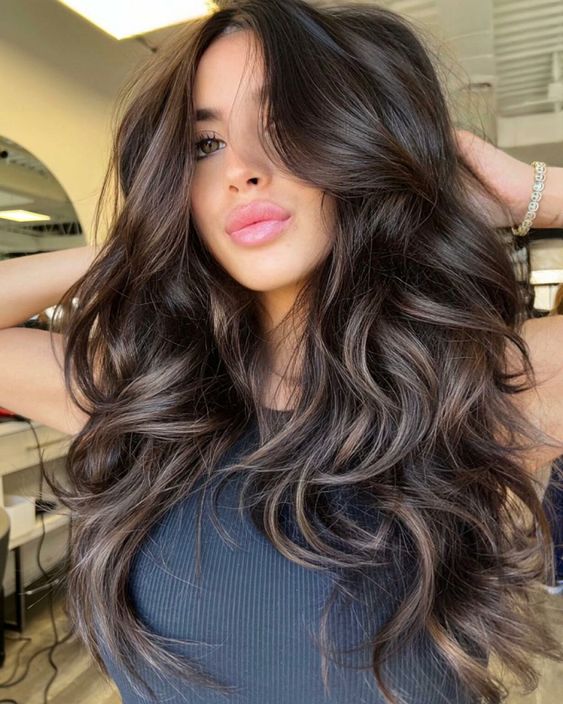
Balayage is the right call for dark chocolate with caramel highlights, not foils. The hand-painted technique lets the caramel melt into the dark chocolate base without harsh lines. The curtain bangs catch the light and frame the collarbone length nicely. The honest downside: those highlights need refreshing every eight to ten weeks, and the caramel can pull warm if you skip the toning shampoo. But the dimensional effect is worth the chair time.
Dark Brown with Ash Blonde Highlights
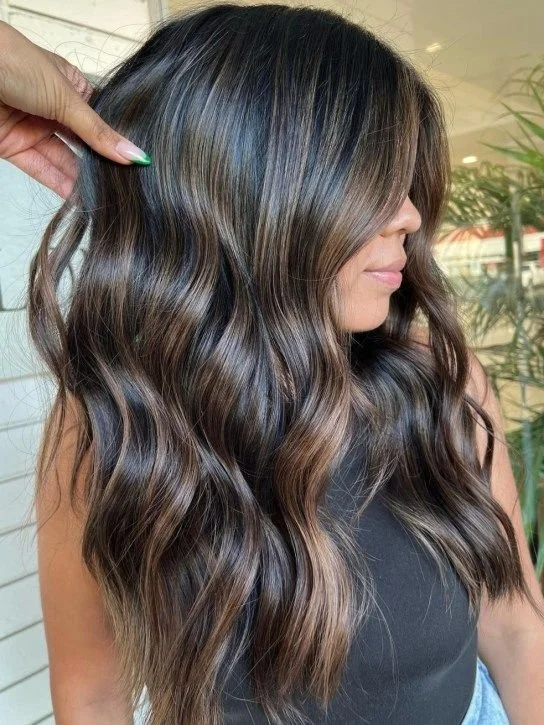
Ever wonder why ash blonde highlights on dark brown hair sometimes look muddy? The mistake is going too ashy without considering the base tone. A dark brown base with cool brown highlights as a bridge keeps the ash blonde from turning greenish. The side part and loose waves let the highlights peek through without overwhelming the base. The result is a cool, dimensional look that flatters cool skin tones without the dreaded brassiness.
Dark Chocolate with Mocha Highlights — This Image Showcases Thick
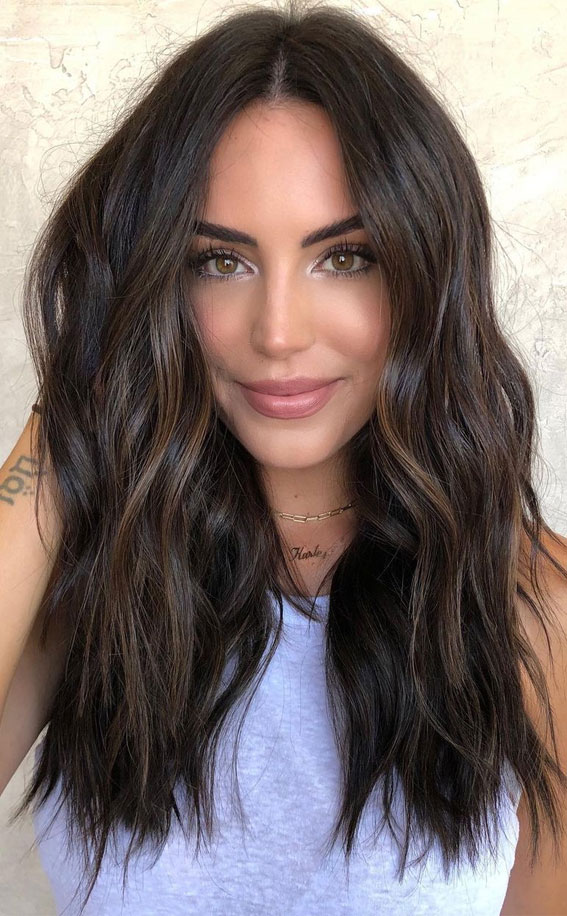
The mocha highlights in dark chocolate mocha highlights are so subtle they almost disappear in dim light. But under direct sun, they add a soft warmth that keeps the deep brown from looking flat. The thick, wavy texture and mid-back length make the most of that subtle dimension. I have found this color holds up well across a week: the mocha tones fade gracefully, blending back into the dark chocolate base without a harsh grow-out line.
Upkeep is minimal compared to bolder highlights. A gloss treatment every six weeks keeps the shine, and a color-safe shampoo prevents the mocha from turning brassy. The middle part and no bangs mean the color does the work, not the styling. It is a set-it-and-forget-it winter color that still looks intentional.
Dark Brown with Caramel Highlights — Long
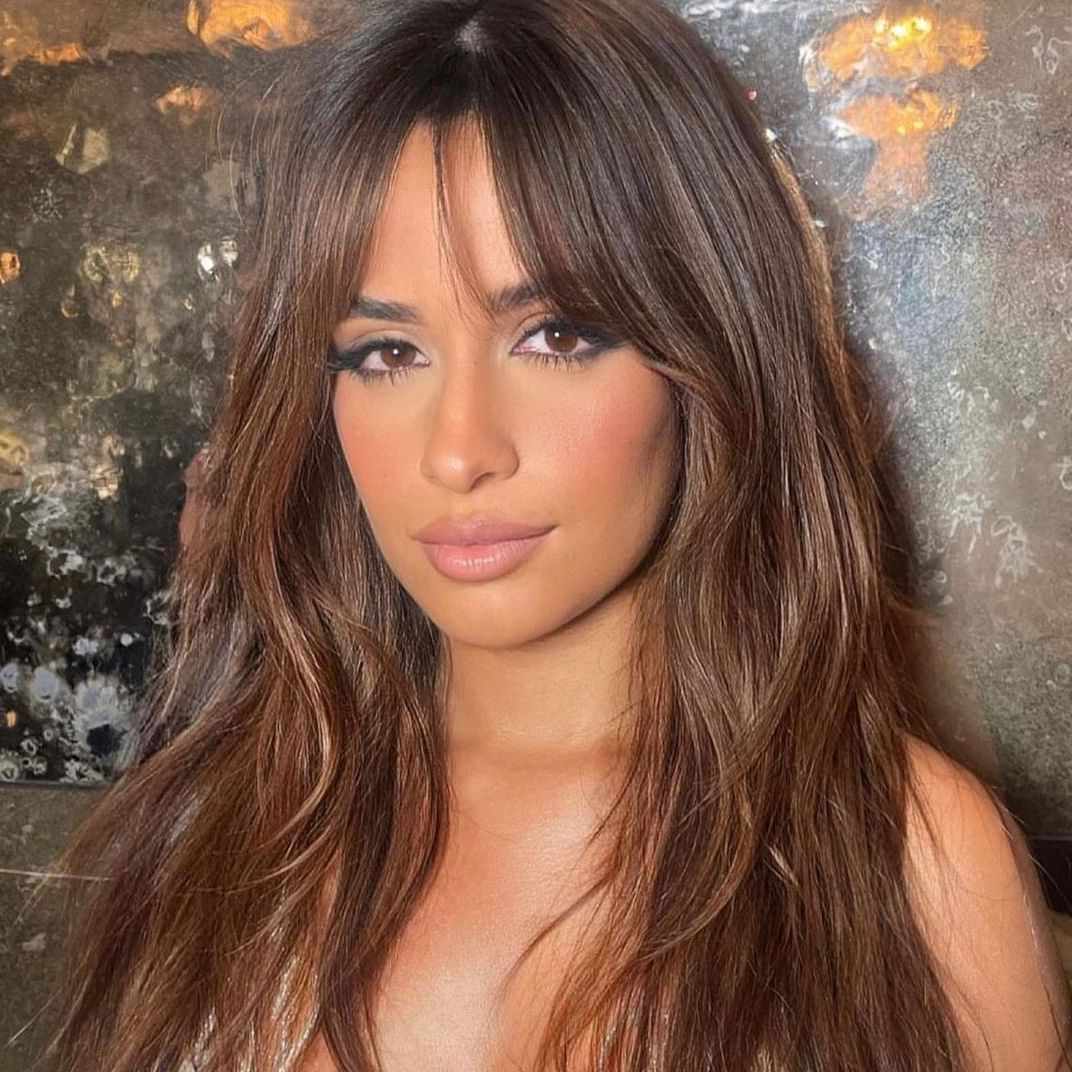
I’ll admit it: I spent years convinced caramel highlights belonged to people with lighter natural color, and that a dark base would just look muddy next to them. My own hair looked like a solid brown blanket in every photo. Then my stylist wove a few fine ribbons through my dark brown and I got it. The contrast is not the point. The blend is.
The whole look hinges on the tone of the caramel. It should sit a few shades lighter than the base, warm enough to glow but not so honeyed that it competes. On long, thick, wavy hair, those pieces catch the movement and the dimension appears on its own. I tried the at-home version once and ended up with a stripe road map. This is a salon color, no question. A stylist sees the back of your head and keeps the dark brown caramel highlights woven close to the root, so the blend reads as one expensive shade instead of two warring ideas.
Espresso Brown with Violet and Ash Highlights
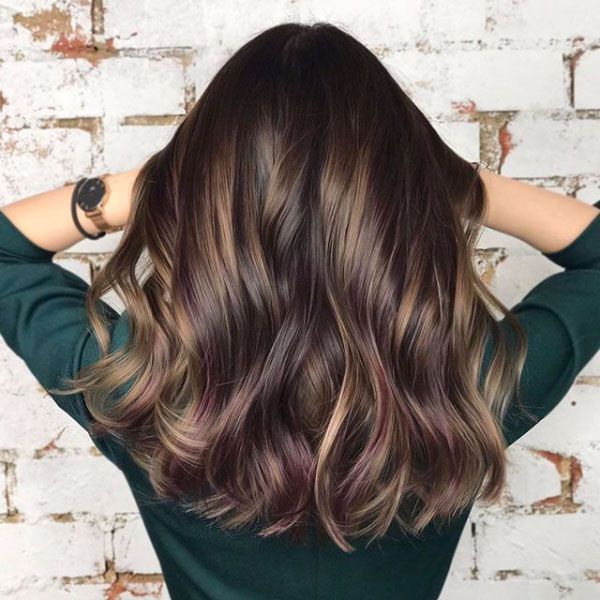
Solid espresso is fine, but the espresso brown violet highlights are the version I would book: a deep espresso base with thin violet and ash blonde highlights woven through collarbone-length waves. The hair shifts between silver and plum as it moves, which a solid dark brown simply cannot do. On medium-density, wavy texture, those strands catch light without looking striped. The honest downside is that ash reads grey against warm skin, and a violet load that is too subtle just looks like the brown missed its toner appointment.
Dark Brown with Blonde Face-Framing
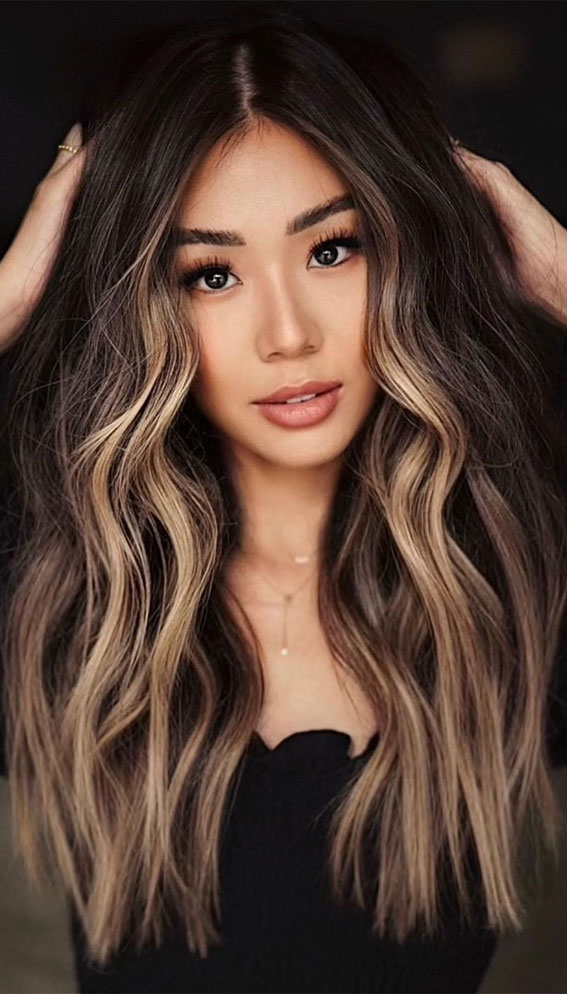
The blonde starts where the hair turns toward the face, not scattered through the whole head. Dark brown blonde face framing is the whole trick: the stylist keeps the mid-back length mostly brunette and paints the front sections a few shades lighter, so the two colors meet exactly where you notice first. The tone of that blonde matters, bright enough to register, neutral enough not to fight the brunette.
On long, thick, wavy hair, those face-framing pieces catch the light every time you push a side back, and the movement makes the contrast feel built-in rather than applied. The middle part matters here, too: with the hair split evenly, each blonded section owns its side and the dark brown stays the anchor. The effect is high-contrast without being severe, because the blonde is woven in narrow slices instead of one solid block. This is a color that asks to be seen, and it earns it.
Multi-Dimensional Dark Auburn Hue
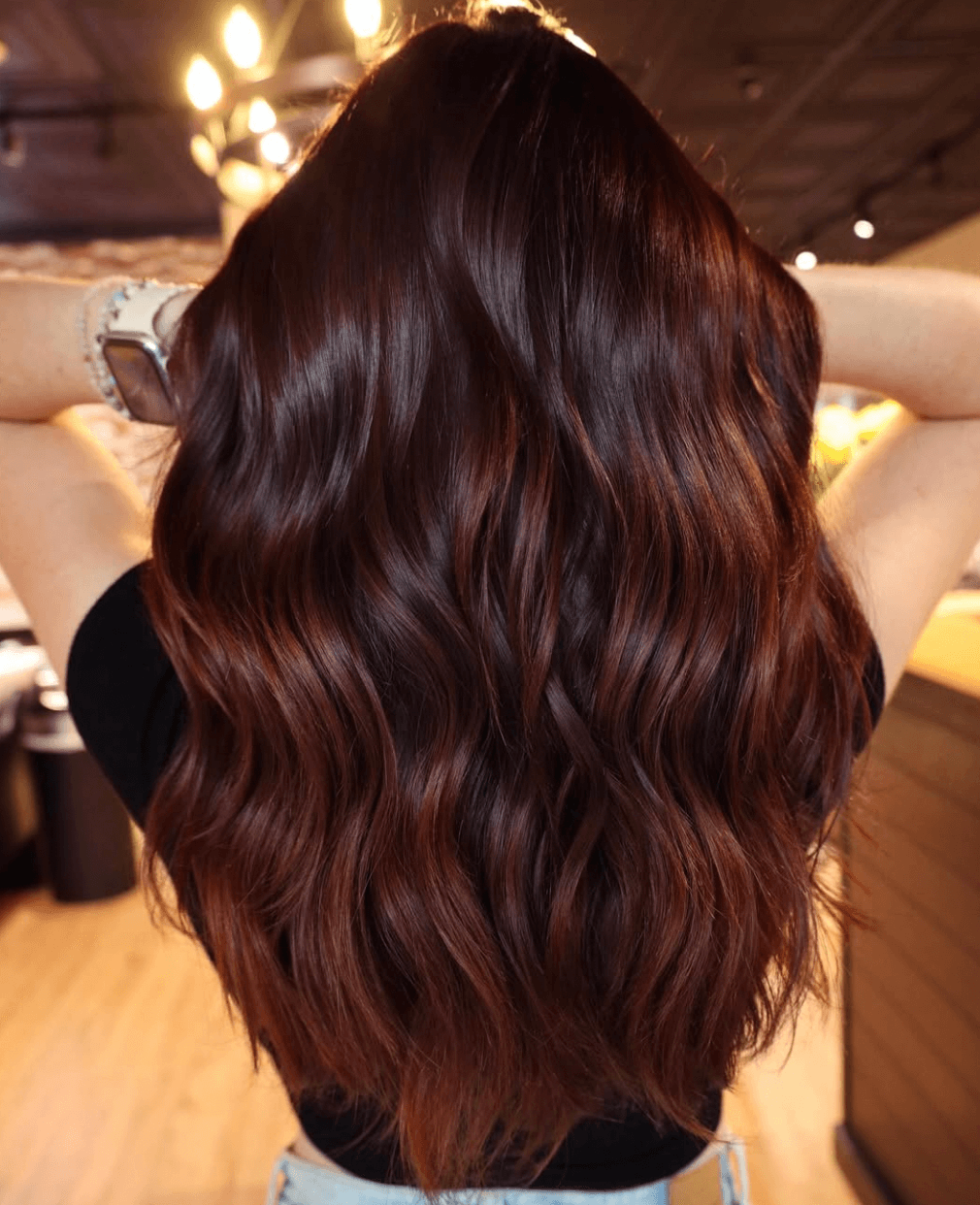
Why does a dark brown base still fall flat when the light goes flat? Because a solid color leaves the depth no place to catch. Dark auburn multi-dimensional color solves that: a dark brown base with subtle auburn highlights woven through the mid-back layers, so the hair gathers warmth without going full copper. In dim light, that warmth keeps the brown alive instead of letting it sink into a black hole.
The auburn pieces should sit close to the brown, a few shades brighter, not a separate color family. On thick, wavy hair, those warm strands ride the curves and surface in the bends, which is how the whole head reads as rich instead of striped. A wavy blowout makes the effect obvious, but the layers do the work either way. No chunky pieces, no brassy edge, just a glow that travels with the wave. The red-brown undertone flatters warmer skin tones because it matches the warmth already there, no contrast required. It is dark hair with a pulse.
Mid-Back Dark Brown with Dimensional Caramel Highlights
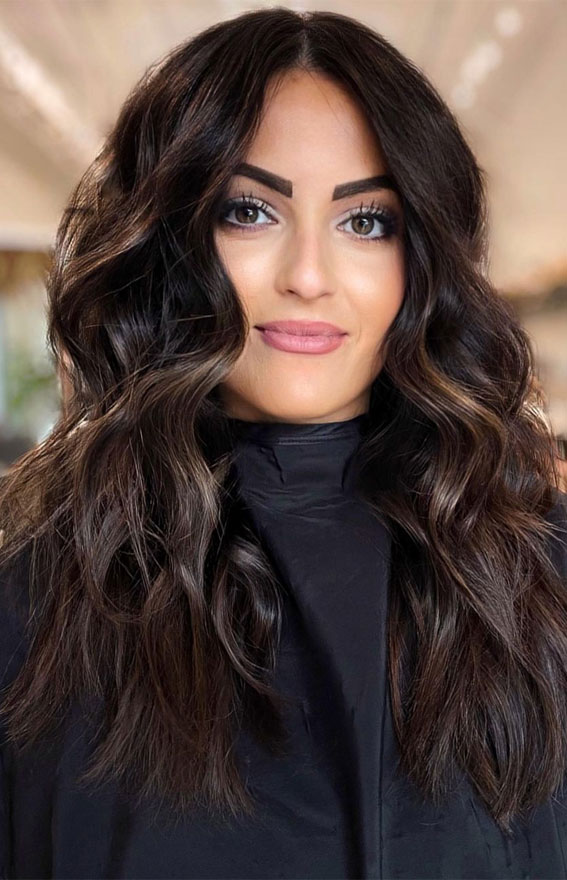
This is the color I recommend when someone wants dimension without the maintenance schedule. The dark brown caramel dimension stays subtle: a dark brown base with thin caramel highlights buried in the layers, so the mid-back waves get a warm glow instead of obvious stripes. On thick hair, the highlights show up when the hair moves and disappear when it rests, which means the grow-out line never makes itself obvious. Refreshing every eight to ten weeks keeps the caramel from vanishing, but honestly, you can stretch it and the roots just look like the color.
Final Thoughts
Seeing all 30 together, I’m struck by how many ways dark can read. It’s not one note. Violet, auburn, espresso, plum, merlot, each with its own grow-out rhythm and personality. I started this list ready to defend the solid dark brown. I’m ending it booking the deep plum with aubergine undertones. My roots will stay hidden till February.