
I kept seeing the same thing in the salon chair next to mine: blondes adding darkness back in. Not all-over dye, just thin ribbons of brown and ash that made the blonde look like it had always been there. It’s the grown-up version of the highlight—less upkeep, more dimension, and it doesn’t scream at you from across the room.
This roundup has 26 takes on Lowlights for Blonde Hair, from barely-there champagne strands to reverse balayage that flips the whole idea. I tested them across lengths from chin to mid-back, on textures from pin-straight to wavy, and for face shapes that need a soft framing line. My fine, flat-by-4-pm hair wanted to know which ones actually hold up past lunch—truth is, more than half of these do.
Champagne Blonde With Subtle Lowlights
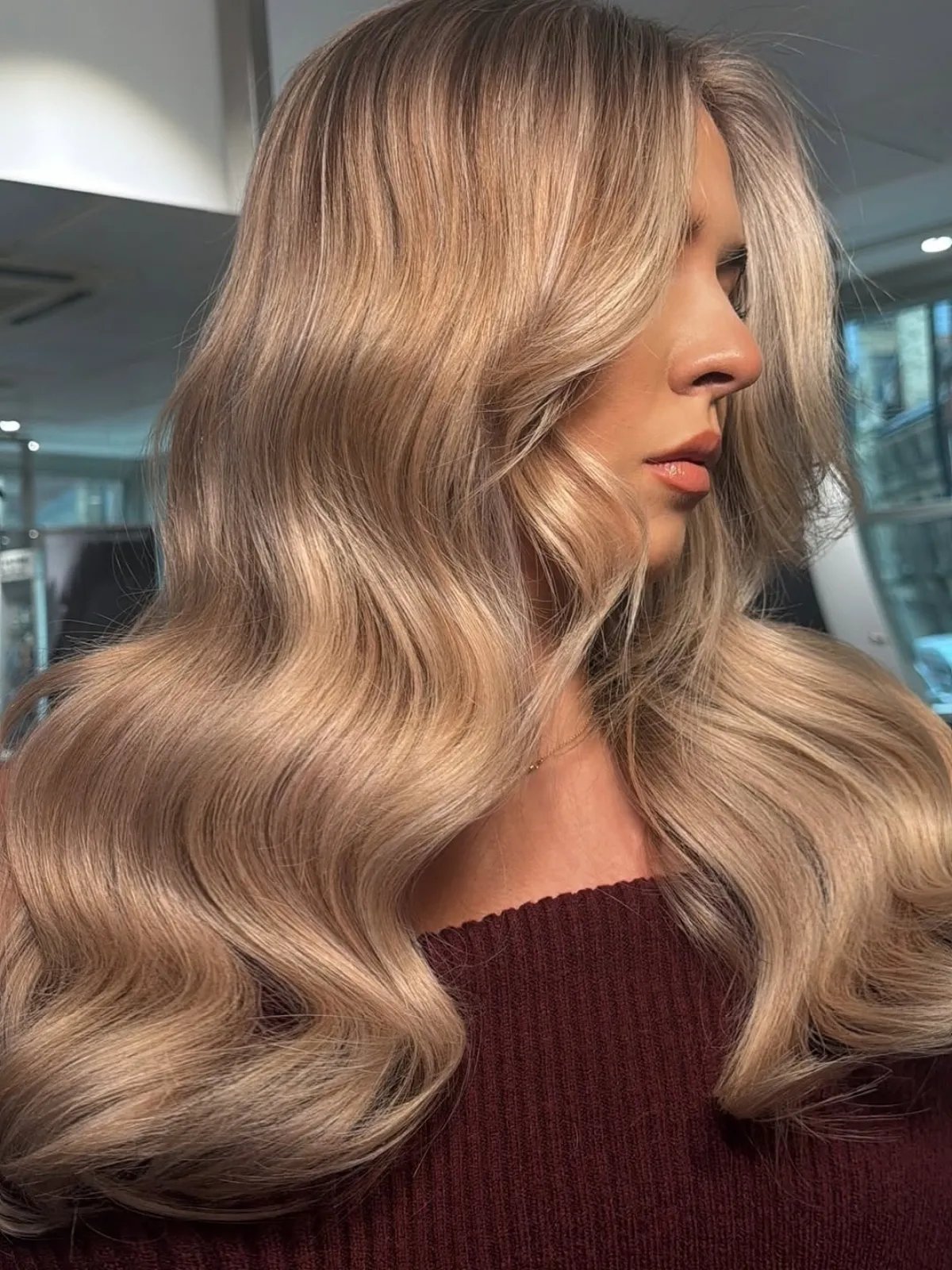
How do you add depth to fine, straight blonde hair without making it look heavier? Dimensional lowlights. On this shoulder-length cut, ash blonde lowlights are weaved in sparingly to mimic shadow. The honest downside: on fine straight texture, lowlights placed too thick can separate the strands and look stripy, not fuller. Restraint is key – fine, face-framing pieces and a few scattered through the lengths, never a solid band.
Sleek Shoulder Length Ash Blonde With Lowlights
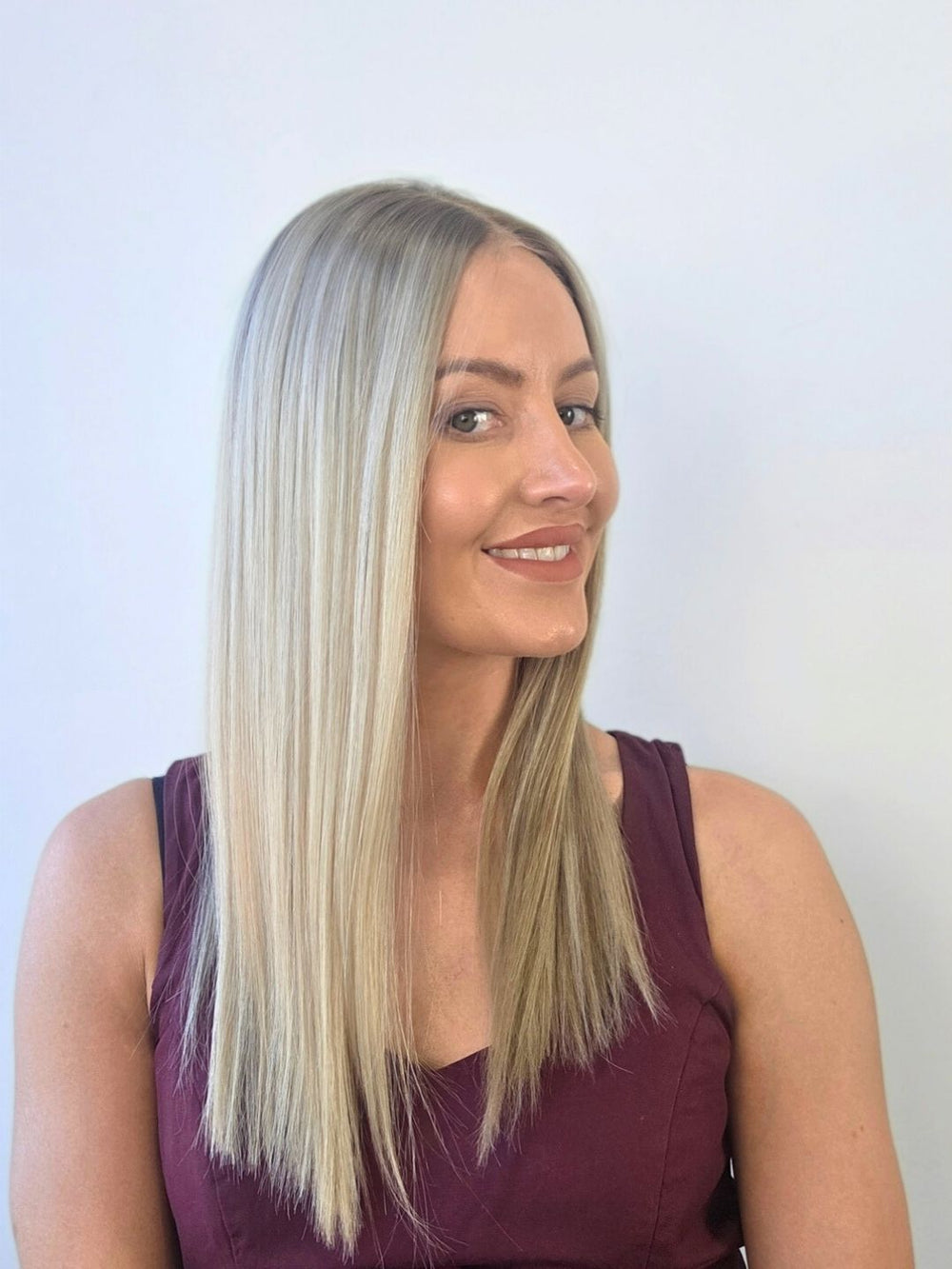
The back view is where this blonde reveals its full depth. Lowlights in a darker blonde sink into the waves, while lighter highlights catch the surface light, so the hair reads dimensional rather than flat. The mid-back length and medium-density wave help scatter that colour rhythm naturally – each curl shows a different layer. Without lowlights, this would be a uniform blonde, pretty but predictable. With them, it has a quiet richness that makes you look twice. The layers in the cut keep the weight distributed, so the wave moves without tangling. From every angle, it is the lowlights doing the heavy lifting.
Chin Length Bob With Ash Blonde Lowlights
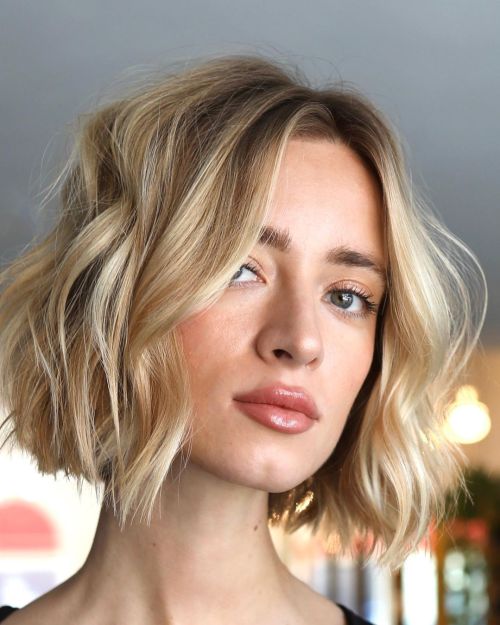
I’ll admit it: I thought a chin-length bob would make my fine hair look thinner. Then I saw this one, wavy, medium density, with ash blonde lowlights woven through the base. The technique here is a soft weft, not chunky streaks, so the darker pieces sit underneath and the ash blonde sits on top. That tone, cool but not silver, keeps the whole thing from reading muddy. The side bangs help, too. They break up the blunt line at the chin. On a straight texture, this bob would read sharper. On waves, it lands somewhere between polished and lived-in. That is the sweet spot.
Mid-Back Wavy Blonde With Dark Lowlights
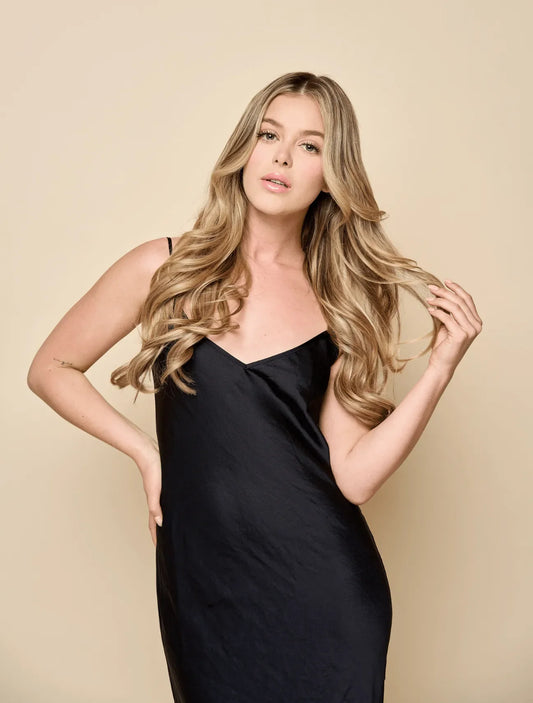
Subtle lowlights are fine. Dark lowlights are a whole other thing. On this mid-back, thick, wavy blonde hair, the dark pieces do not whisper. They land in the middle of the strand, not at the root, so the contrast reads like shadow rather than regrowth. The tone is a cool brown, not warm, which keeps the blonde from pulling brassy. For thick hair, this is the move: the dark lowlights add visual weight without adding bulk. Loose waves soften the line between light and dark. Ask your stylist for a partial weave, mid-shaft to ends, with a demi-permanent colour in a cool brown shade. That is the formula.
- Length: mid-back, layers cut to break up the weight
- Technique: partial weave, mid-shaft to ends, demi-permanent colour
- Tone: cool brown, not warm, to avoid brassiness
- Texture: thick and wavy, loose waves soften the contrast
- Ask for: a cool brown demi, weaved through the middle section
I have seen this on finer hair, too, and it works, but you want the dark pieces fine and spaced out. Thick hair can handle the density. Fine hair needs a lighter hand.
Side-Swept Chin Bob Ash Blonde With Subtle Lowlights
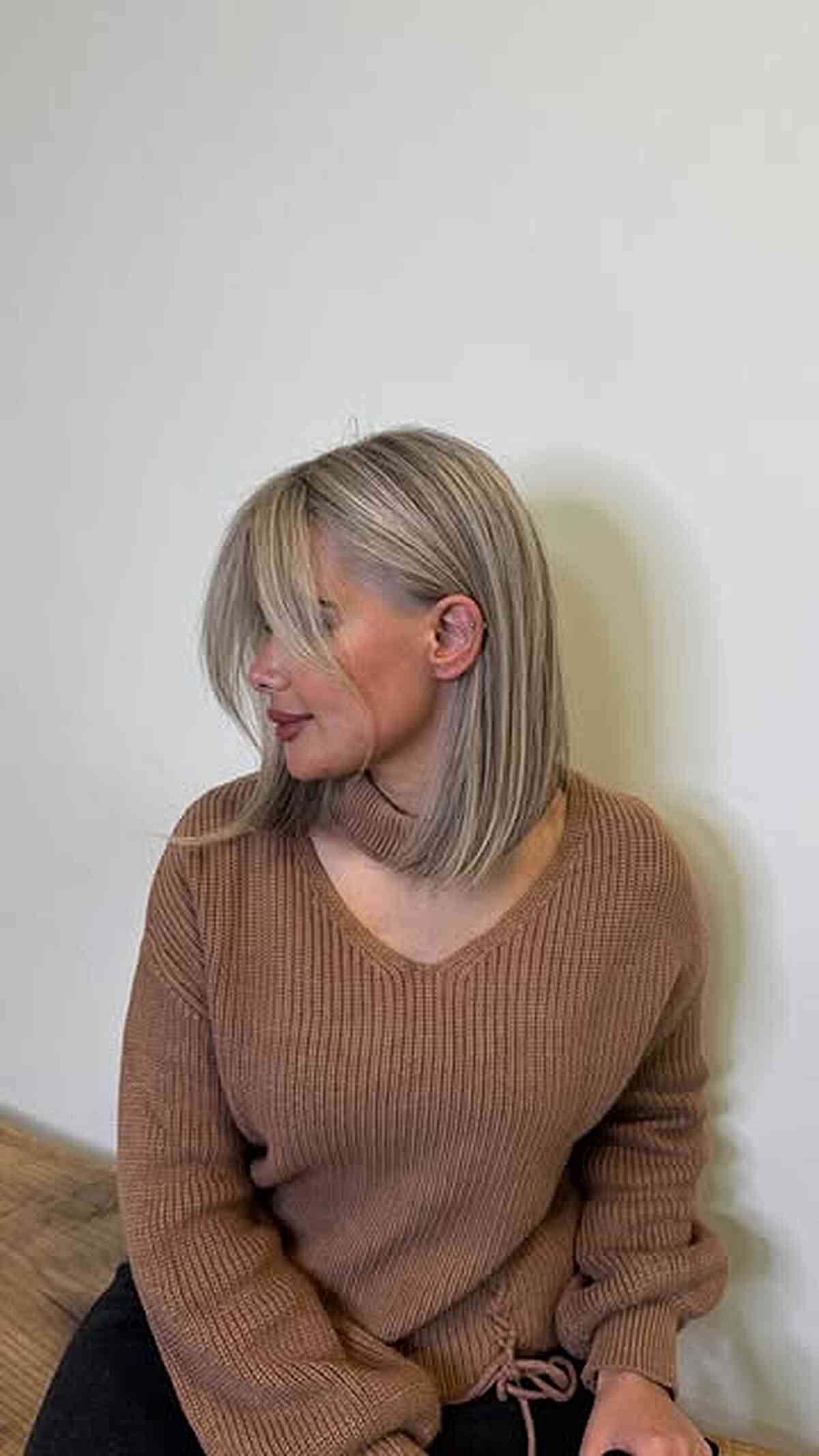
Here is the thing about a side-swept chin bob on straight, medium density hair: it either reads sharp or it reads severe. The subtle darker lowlights save it. They sit underneath the ash blonde surface, so the bob keeps its clean line but gains a shadow that softens the whole silhouette. The side parting helps, too. It pushes the weight to one side, which makes the chin-length cut feel less blunt and more deliberate. This is not for very fine hair, the lowlights can get lost. But for medium density, straight texture, it is a polished, low-fuss shape that does not need heat every day.
Golden Blonde With Curtain Bangs And Lowlights
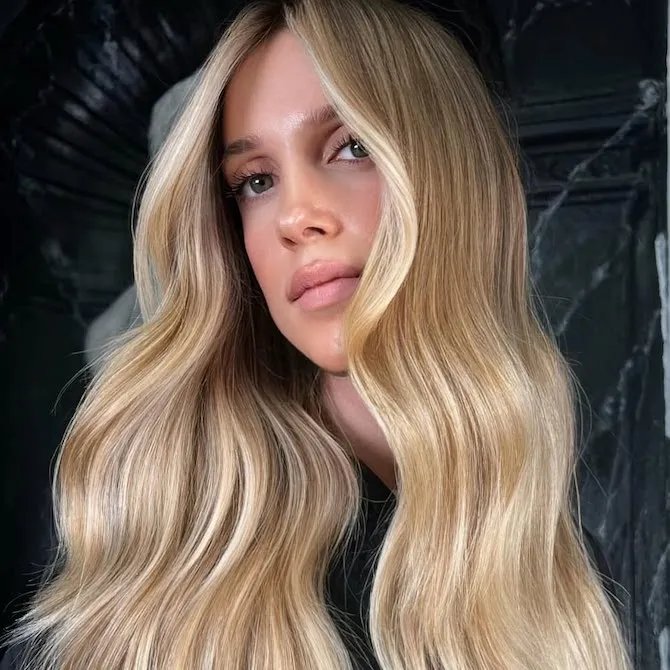
There’s something about this golden blonde that hits differently in autumn. The subtle lowlights add enough shadow to keep the colour from washing out under grey skies, and the curtain bangs frame the collarbone-length waves without stealing the show. The technique is simple: a few darker strands woven through to anchor the warmth, so the golden tone reads rich instead of brassy. On medium-density wavy hair, the lowlights catch the light at different angles, which is exactly what you want when the days get shorter. It’s the kind of colour that makes you reach for a sweater and call it a season.
Dark Brown Base With Blonde Balayage Lowlights
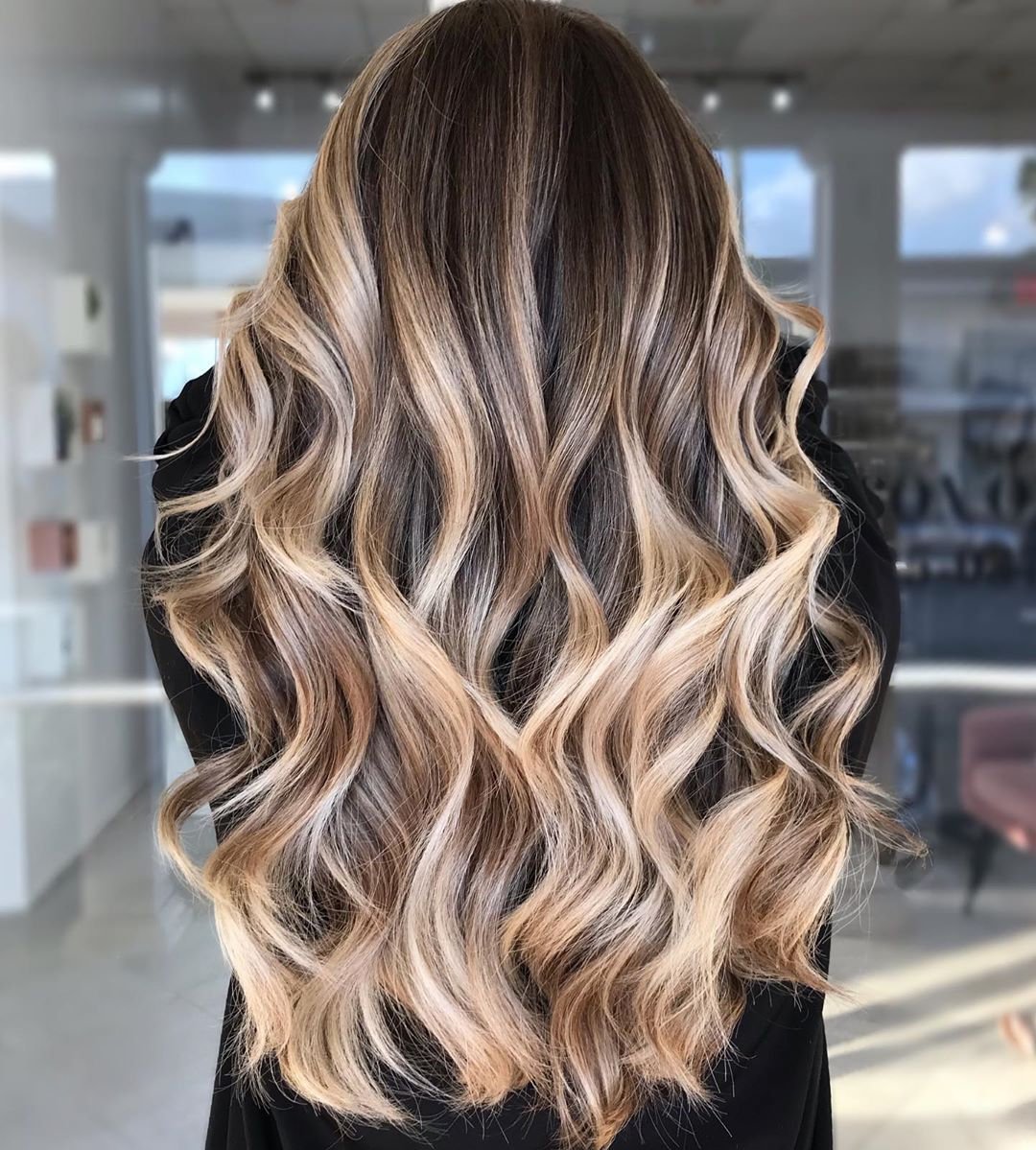
This one deserves a verdict: the dark brown base with blonde balayage lowlights is the most flattering way to bring dimension to long, thick hair without committing to all-over colour. The technique uses balayage to paint lighter strands onto a deep brown canvas, creating lowlights that look grown-in from day one. The result is a mid-back length of loose waves that move from dark to blonde in soft ribbons, no harsh lines. The tone stays cool because the blonde is woven sparingly, so the contrast is deliberate, not patchy.
As for upkeep, the balayage application means roots grow out softly, so you can stretch salon visits to 10 or 12 weeks. But a toner refresh at eight keeps the blonde from shifting warm. And let’s be clear: this is not a bathroom-mirror job. The painting technique requires a skilled hand to place those lowlights where hair naturally catches light. Book a stylist who understands depth, not just lightness.
Dark Blonde With Face-Framing Highlights
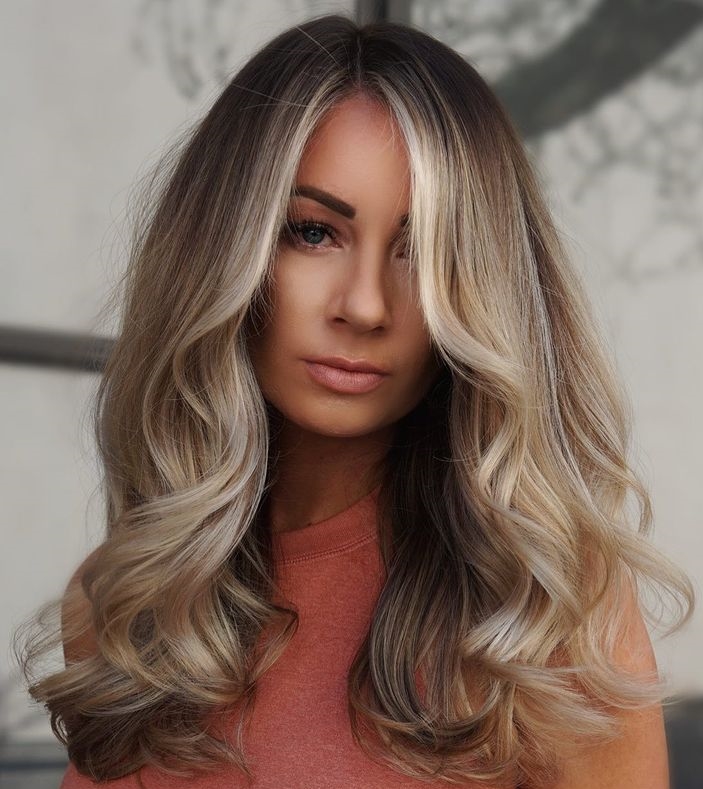
I walked into the salon complaining about flat colour and left with a new face. The dark blonde base keeps things grounded, but the lighter lowlights woven through the layers add depth. What really changes the look is the face-framing highlights, those few pieces around the curtain bangs and cheekbones that catch every stray bit of sunlight. On collarbone-length wavy hair, medium density, the placement makes the colour feel intentional without being high-maintenance. The tone is a soft neutral, not too warm or ash, so it works with most skin undertones. It’s the kind of subtle shift that people notice but can’t quite name.
Blonde With Dark Blonde And Ash Blonde Lowlights
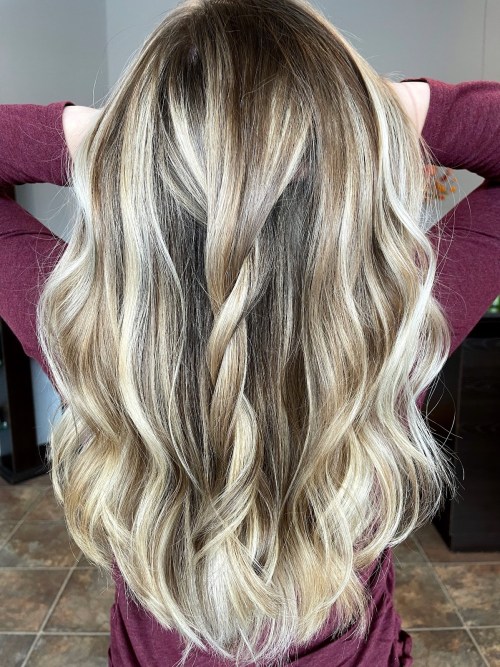
The real achievement here is that the lowlights don’t compete, they layer. The blonde base sits in the middle, with dark blonde strands adding warmth and ash blonde lowlights pulling it cool. On thick, wavy mid-back length hair, the alternating tones create a depth that simple highlights can’t match. The technique uses fine slices of colour placed close to the root, so the dimension reads as natural shadow rather than obvious stripes.
What makes this work visually is the mix of undertones. The dark blonde reads rich, like honey left on the counter, while the ash blonde cuts the warmth just enough to keep the whole thing from looking brassy. That balance is harder to achieve than it looks, it requires a stylist who understands tone temperature, not just lightness versus darkness. The result is a blonde that has personality from every angle, whether it’s loose waves or braided back.
Visual Idea
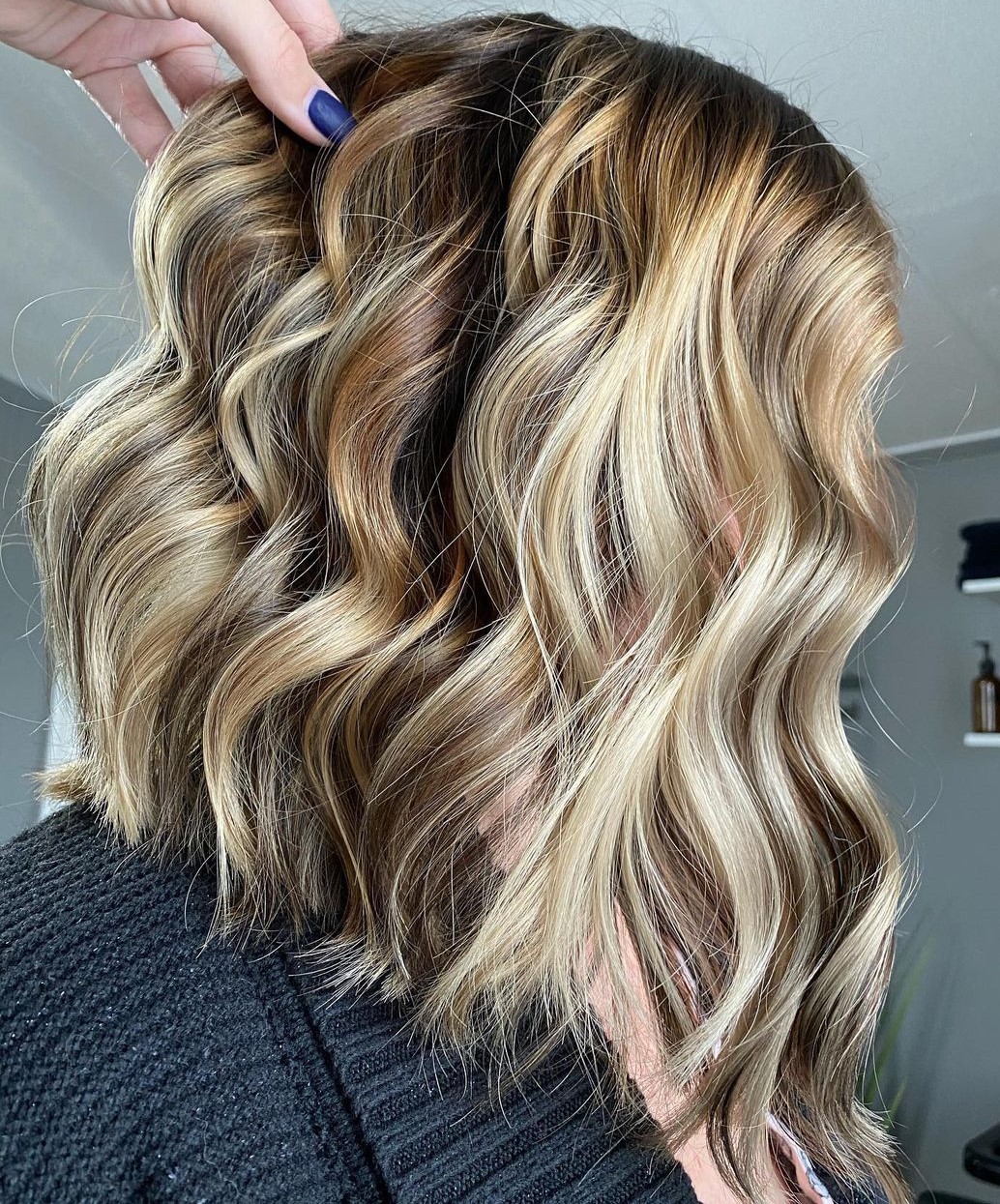
Can you really mimic a chin-length bob with chunky dark brown lowlights at home? I wouldn’t try it. The bold contrast between the blonde base and those dark strands is so sharp that one uneven section will look like a mistake. The technique requires precise sectioning to keep the dark pieces spaced evenly, and the wavy texture will exaggerate any blotchiness. A salon is non-negotiable if you want that crisp, intentional stripe effect rather than something that reads as grow-out.
Shoulder Visual Idea
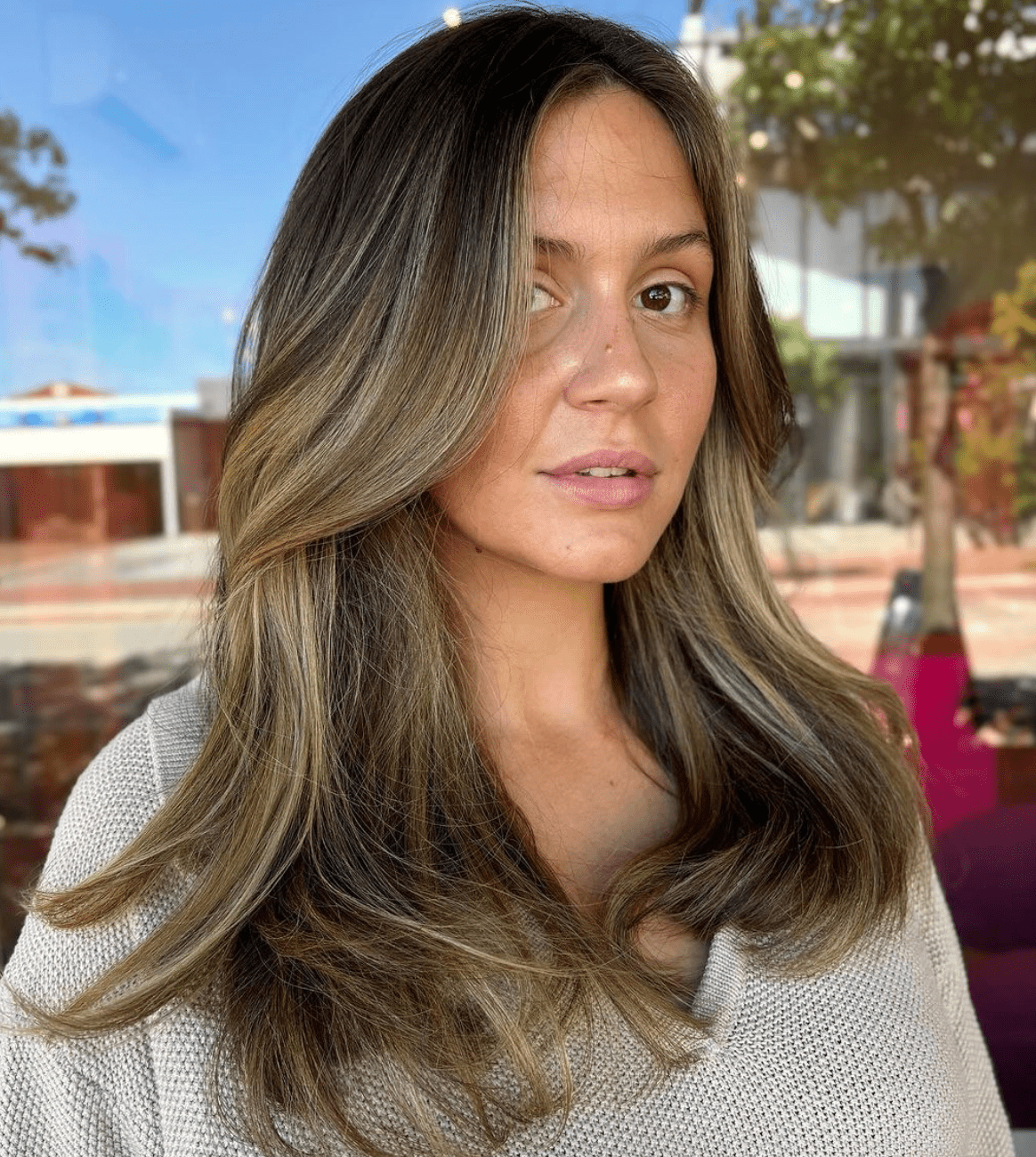
If you have thick, wavy hair, this is the combo that finally makes your texture look intentional. The dark blonde base carries blonde highlights on the top layers and subtle lowlights woven through the bottom, so the waves don’t collapse into one dense block. The side-swept bangs catch the lighter pieces, while the lowlights add enough weight to keep the shoulder-length shape from feeling too bouncy. It flatters round faces because the asymmetry draws the eye diagonally, and the thickness holds the blowout shape all day.
Collarbone Visual Idea
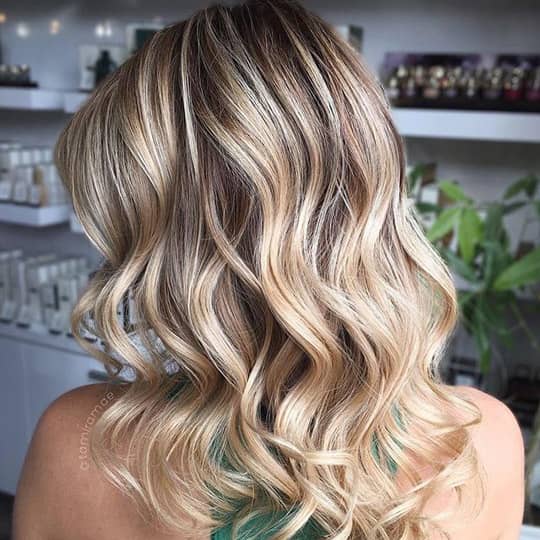
What makes this collarbone-length cut work is how the lowlights are placed exclusively underneath the top layer. The beige blonde sits on the surface, while subtle, cooler lowlights hide beneath, creating soft shadow without darkening the overall look. When the hair is wavy, those bottom pieces peek through at random intervals, so the dimension reads as natural movement rather than striping. The technique relies on fine sections and a middle part to keep the blend smooth — any chunkier application would ruin the soft, sunlit effect.
Layers Visual Idea
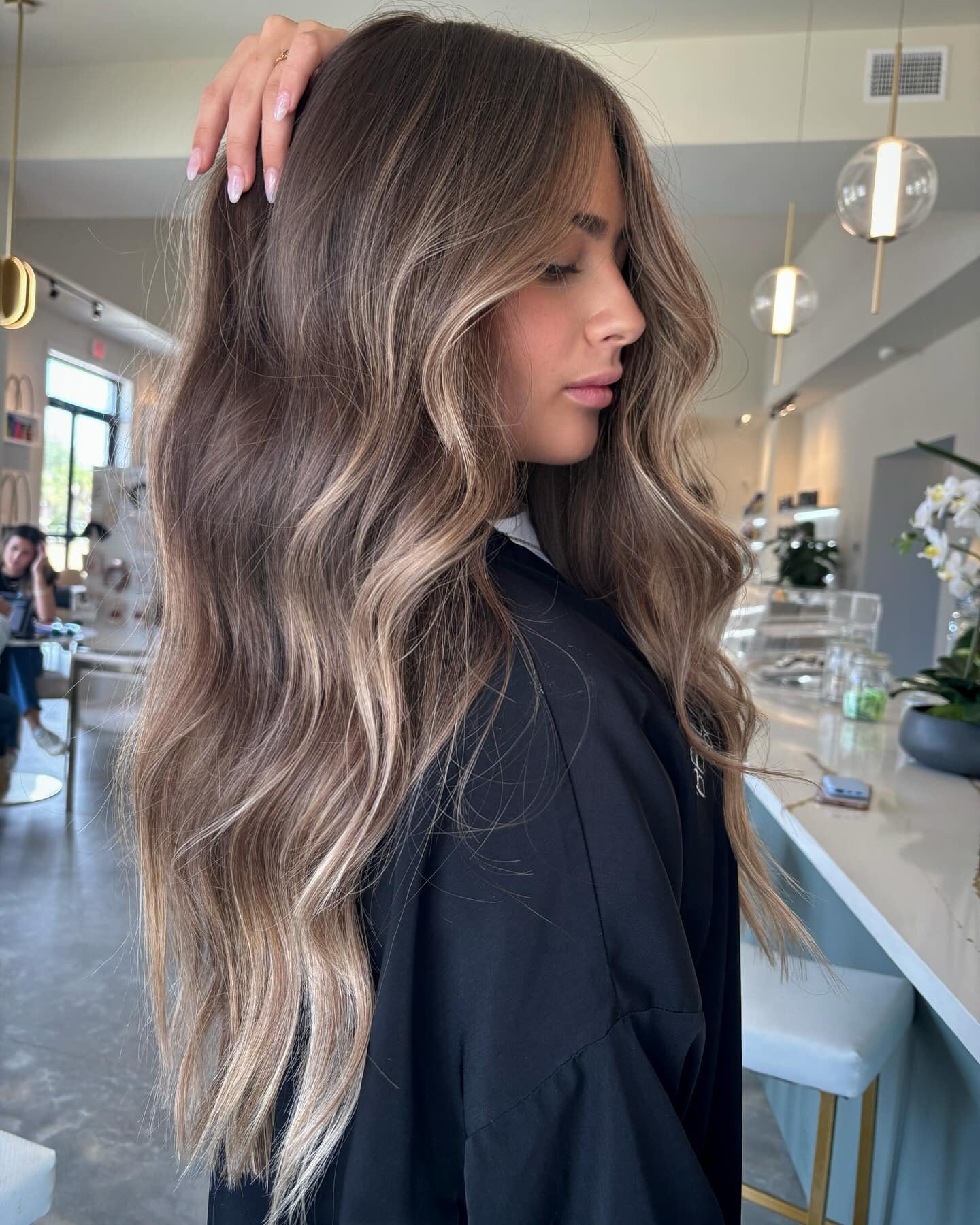
This is what happens when lowlights do the heavy lifting — the layers actually read as separate shapes instead of one flat blonde curtain. The ash blonde base forms the backdrop, and the dark blonde lowlights drop into each layer like subtle shadows, so every tier of hair gets its own depth. From the back view, the middle parting lets the light hit the surface strands while the lowlights stay tucked underneath, creating a dimensional effect that no single-process colour can replicate.
The wavy texture amplifies the result because each wave twists a different combination of light and dark, making the layers shift as you move. That contrast is what keeps this mid-back length from feeling heavy — the eye never lands on one solid block of colour.
Side-Swept Visual Idea
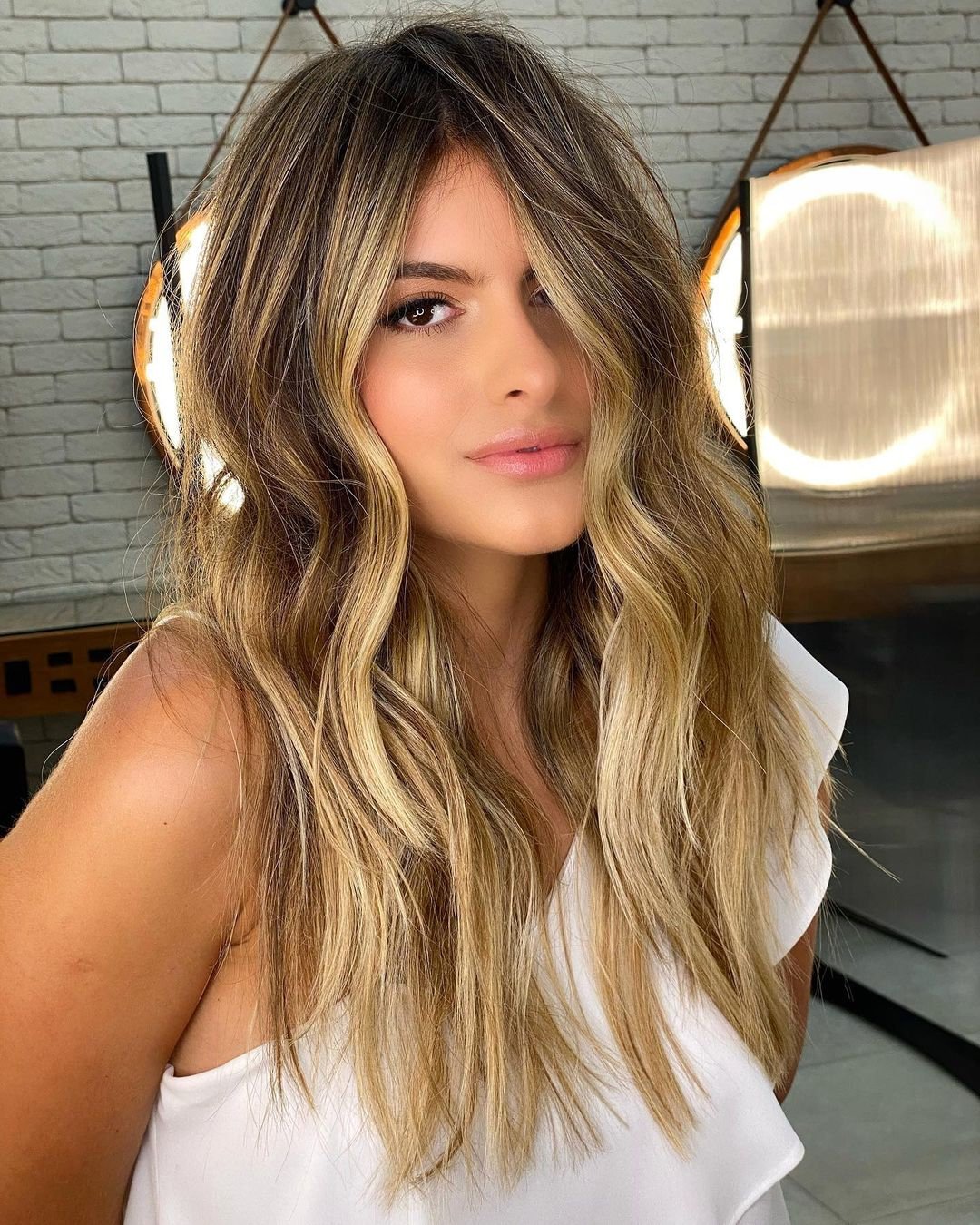
Who is this dimensional blonde colour with subtle lowlights actually for? Someone with a round or square face who wants softness without losing structure, because the side-swept part breaks up the symmetry and the collarbone length keeps the eye moving down. The wavy blowout adds volume at the roots, which suits medium density hair that tends to lie flat. If your hair is fine and you skip the blowout, the layers can separate and read as stringy by afternoon. The dark blonde base with lighter blonde highlights gives movement, while the subtle lowlights tuck depth underneath so the colour doesn’t wash out a fair complexion. Best on wavy, medium density hair with a stylist who can place the lowlights low, not just at the crown.
No Bangs Visual Idea
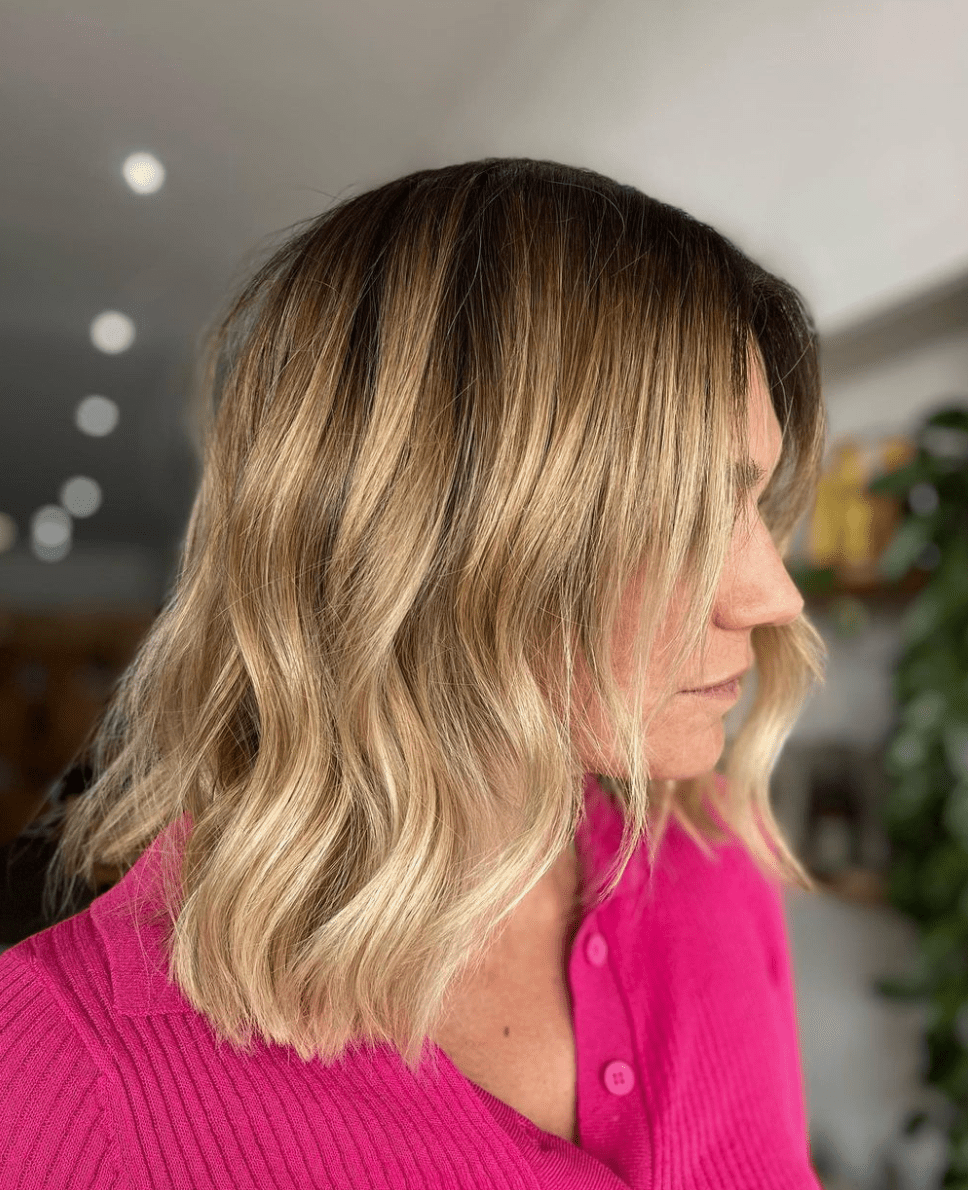
I’ll confess, I booked this rich contrast twice in one season. The dark blonde base with lighter blonde lowlights is striking, but the reality of maintaining it is a weekly appointment with a purple shampoo. The contrast fades first at the ends, so by week four the lighter lowlights turn brassy while the base stays dark. On wavy, thick hair with no bangs, the mid-back length shows every tone shift, which means you’ll notice the fading more than someone with a shorter cut. The honest downside: this colour needs a toner refresh every six weeks or the whole dimensional effect goes muddy. It’s not a set-and-forget blonde, but if you’re ready to babysit it, the depth is worth it.
Side View Visual Idea
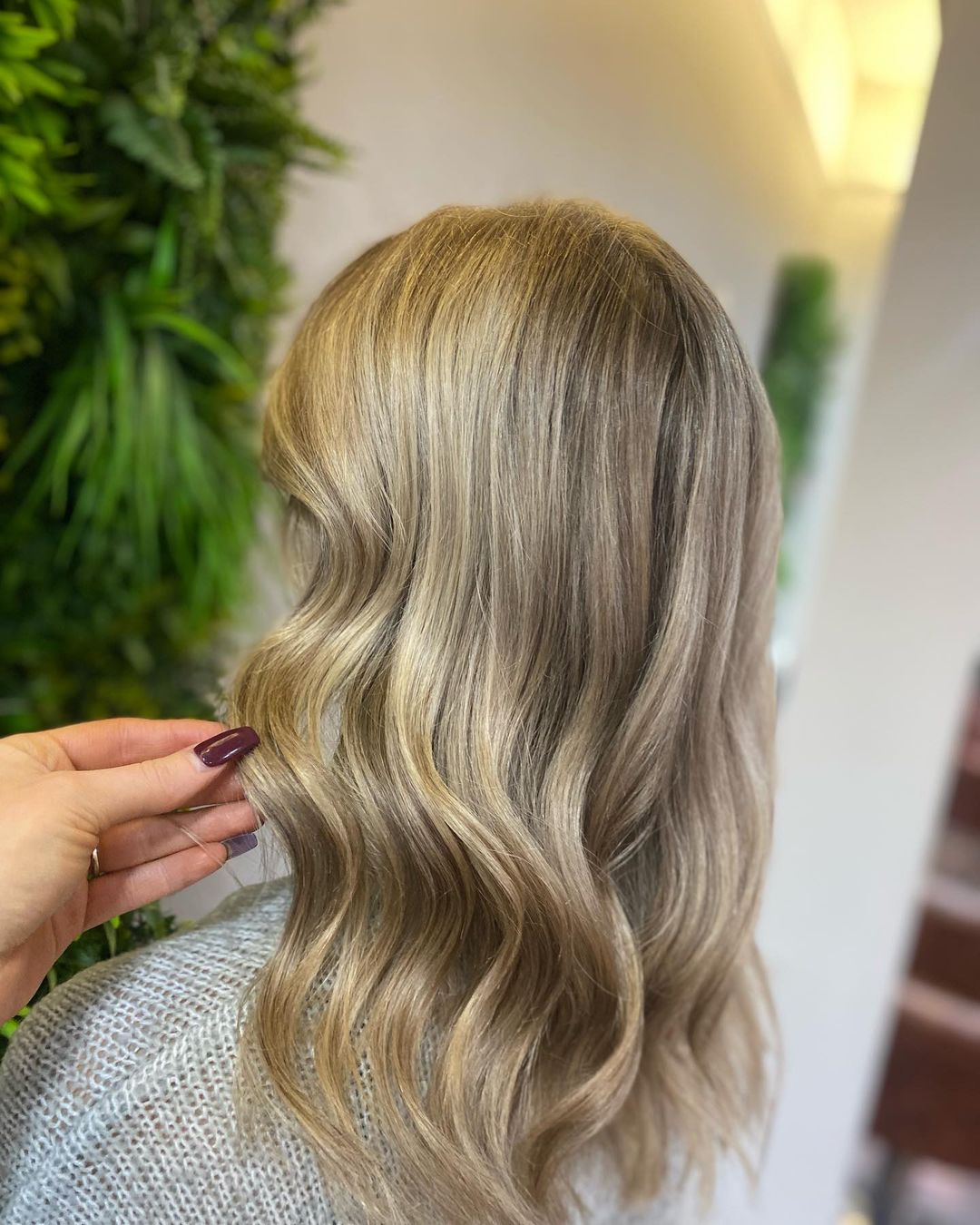
The side view is where the real work shows up. Ash blonde base, dark blonde lowlights woven through the mid-lengths and ends, each slice placed to catch the light differently. Collarbone length keeps the waves from weighing down, and the medium density means the lowlights read as depth, not chunkiness. The tone stays cool, no warmth fighting the contrast. This is dimensional colour built from the inside out, not painted on top.
Platinum Blonde With Dark Lowlights Visual Idea
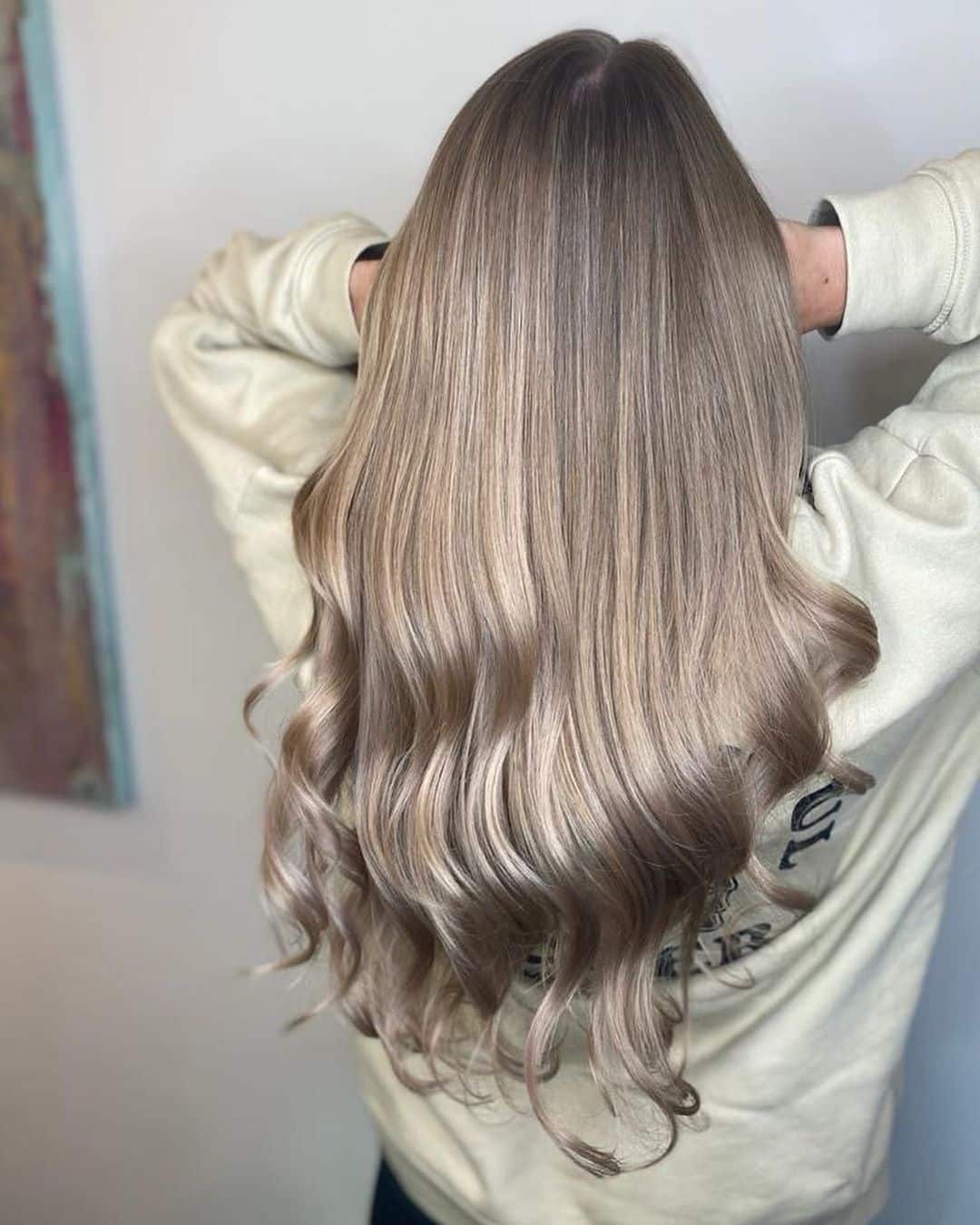
Does platinum with dark lowlights belong to winter or just the holidays? The mid-back length gives the loose waves room to move, and the thick texture carries the contrast without the dark lowlights swallowing the platinum. The tone is all cool, no warmth to soften the edge, which is exactly what makes it feel seasonal.
This is the colour you book for November and wear through February. The high contrast reads as intentional against grey skies and works for evening events where you want the hair to do the talking. Holiday parties, New Year’s, a winter wedding that asks for drama without glitter. The dark lowlights keep the platinum from washing out under dim restaurant lighting, and the length means you can pull it back without losing the dimension. It’s not a spring colour, and that’s the point.
Front View Visual Idea
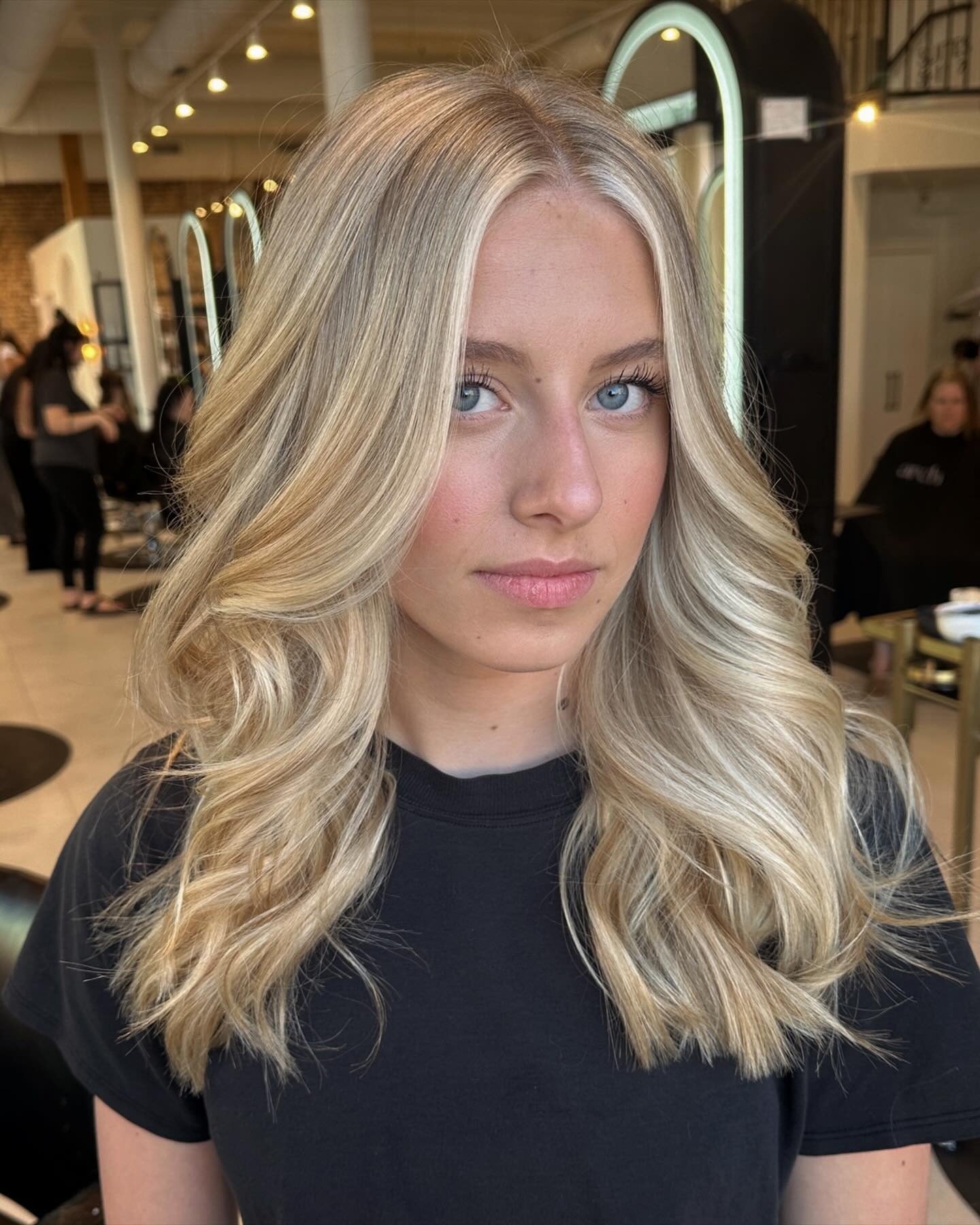
This is the kind of contrast that stops you mid-scroll. Platinum blonde base, deep lowlights sliced through the collarbone-length layers, each wave catching a different shade. The tone stays cool across the board, no brassy notes to muddy the separation. Medium density helps the lowlights read as deliberate depth, not accidental darkness. From the front, the lowlights hit around the cheekbones and taper through the ends, so the brightness stays near the face while the depth anchors the rest. The wavy texture breaks up the colour just enough to keep it from reading as stripes. It’s the kind of colour that looks different in every light, which is exactly why you book a salon appointment for it.
Ash Blonde With Darker Blonde Lowlights Visual Idea
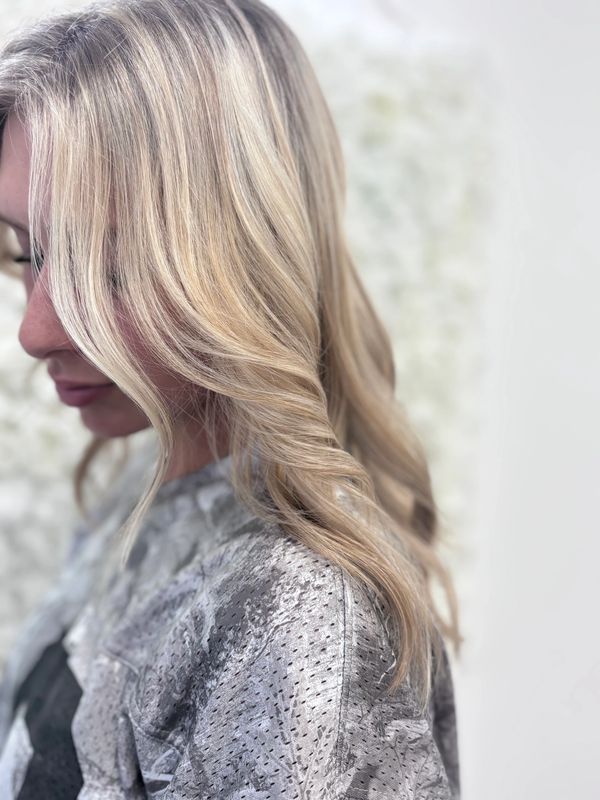
Ash blonde with darker blonde lowlights is the fix for a round or square face that needs shadow to break up the width. The darker pieces run beneath the ash tone in loose vertical seams, and that placement is the technique doing the real work: the eye follows the dark through the mid-back length instead of stopping at the jaw. Cool ash next to warm skin creates enough contrast to lift the complexion without fighting it. For a heart-shaped face, lowlights sitting lower in the front layers soften the point of the chin.
This one is for thick wavy hair that can hold a shadow without swallowing it. On fine or low density strands, the darker sections take over fast and the whole thing reads dark brown. If your undertones run very warm, pass: ash will fight the warmth in your skin and leave you looking washed out. Keep the base ash, keep the lowlights woven not painted in thick chunks, and the length plus the depth does the flattering work.
Honey Blonde With Caramel Lowlights Visual Idea
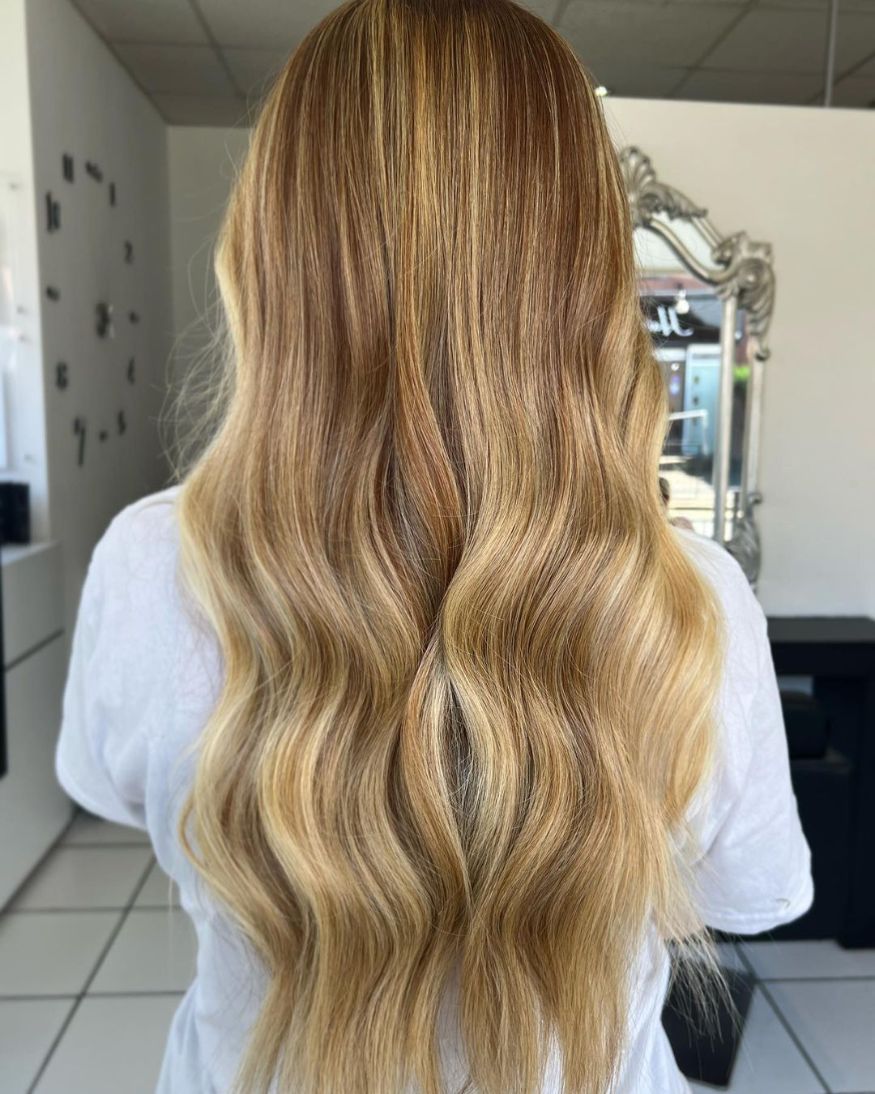
Ever wonder why honey blonde goes flat in pictures? The answer is usually technique: a warmth-on-warm base with nothing darker to make the light move. Honey blonde with caramel lowlights fixes that by adding a shadow two steps deeper. The stylist weaves each slice of the base, then paints the caramel so it lands as shadow rather than stripe, staying in the same warm tone family. The caramel sits underneath the loose waves, so it catches movement instead of sitting on top.
The wear is forgiving in a specific way: because the caramel stays close to the honey base in depth, the regrowth reads as a soft shadow around week six instead of a hard line. The upkeep is one warm gloss every eight weeks to keep the shine even across both tones. Could you do this at home? I would not. The sectioning alone is a three-hour chair visit, and this is not a box-dye weekend. Thick wavy hair at mid-back length shows the dimension best; straight fine hair swallows it.
Back View Visual Idea
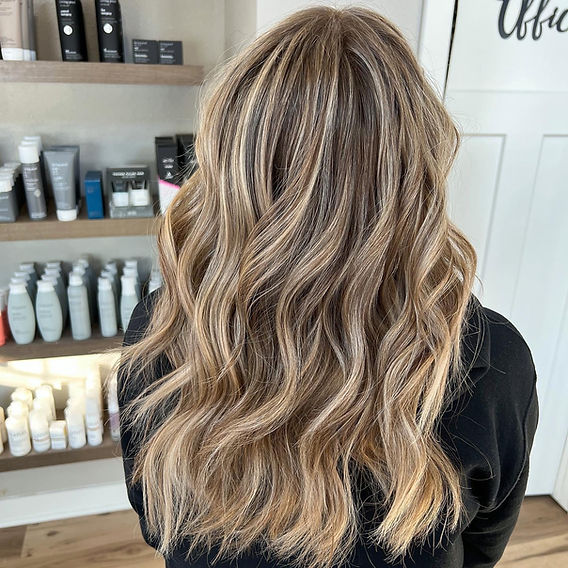
Champagne blonde with lowlights might sound like a mouthful, but the result is understated dimension. The base is warm and bright, then subtle lowlights in a darker blonde tone are woven through the mid-lengths and ends. On mid-back length hair with wave and thickness, these lowlights catch light differently, creating soft movement rather than harsh stripes. This depth works best on hair that can hold its own wave – fine strands might flatten the effect. The face-framing pieces keep the front from feeling too heavy, so round and oval faces get lift without bulk. It is not a drastic change; it is the kind of depth that makes you stop tilting your head.
Middle Visual Idea
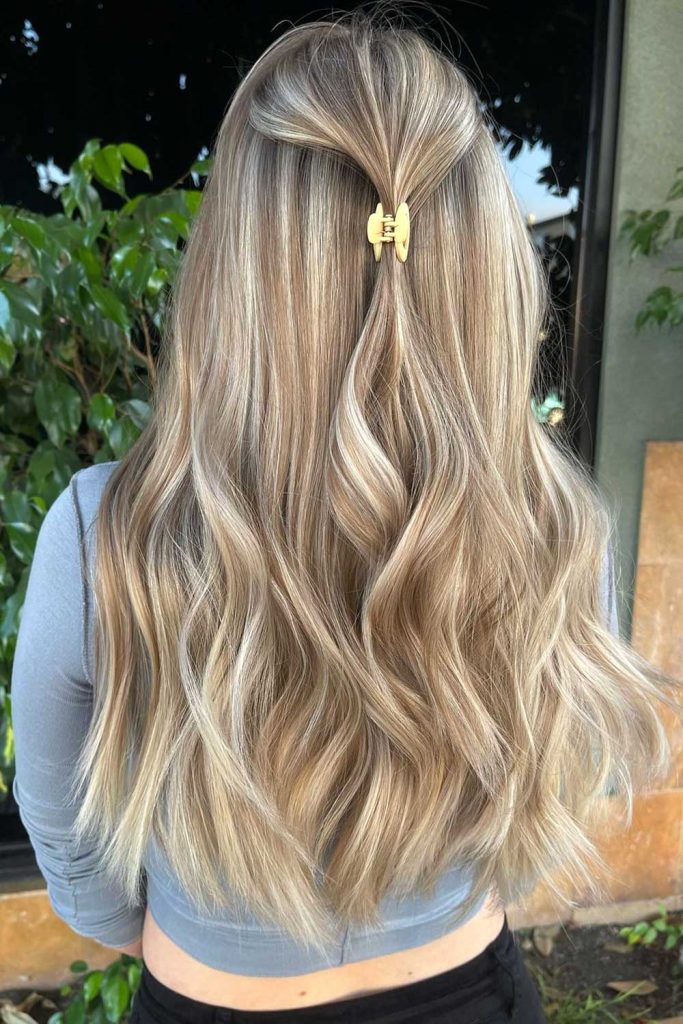
Lowlights for Blonde Hair deliver more depth than a root shadow ever could. Where a root melt blends the line, lowlights pepper the strands with darker tones that create actual movement in a mid-back length with thick, wavy texture. The technique uses dark blonde lowlights woven through a blonde base, visible even from the back view. A middle part helps, letting the contrast show evenly on both sides. Tones stay warm enough to read natural, not streaky. This is not subtle dimension, it is depth you can see from across a room, and the thick wave pattern amplifies it.
Compared to a single-process darkening, which can feel flat, lowlights keep the blonde identity intact while adding shadows. They move with the wave pattern, so each curl or bend catches light differently. The effect is three-dimensional without looking like you tried that hard. You get the richness of a darker shade without losing the lightness that made you go blonde in the first place. It is a deliberate contrast, not a correction. The dark blonde pieces sit deep enough to read as texture, not just colour.
Side Visual Idea
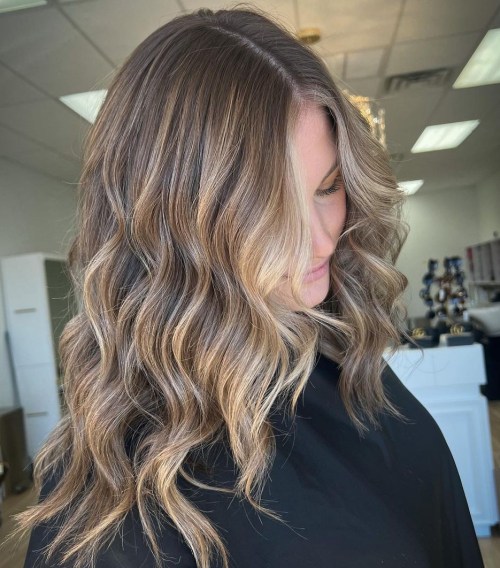
I spent a lot of years convinced highlights were the only way to add interest. Then I tried Lowlights for Blonde Hair on my own collarbone-length, wavy hair and realised how much dimension I had been missing. The light blonde base with darker blonde lowlights creates a contrast that reads natural, not striped. From the side view, the pieces fall into the wave pattern so the depth shows at every turn. It made my medium-density hair look fuller without adding bulk. That confession might sound small, but it changed how I see colour placement entirely.
Wavy Visual Idea
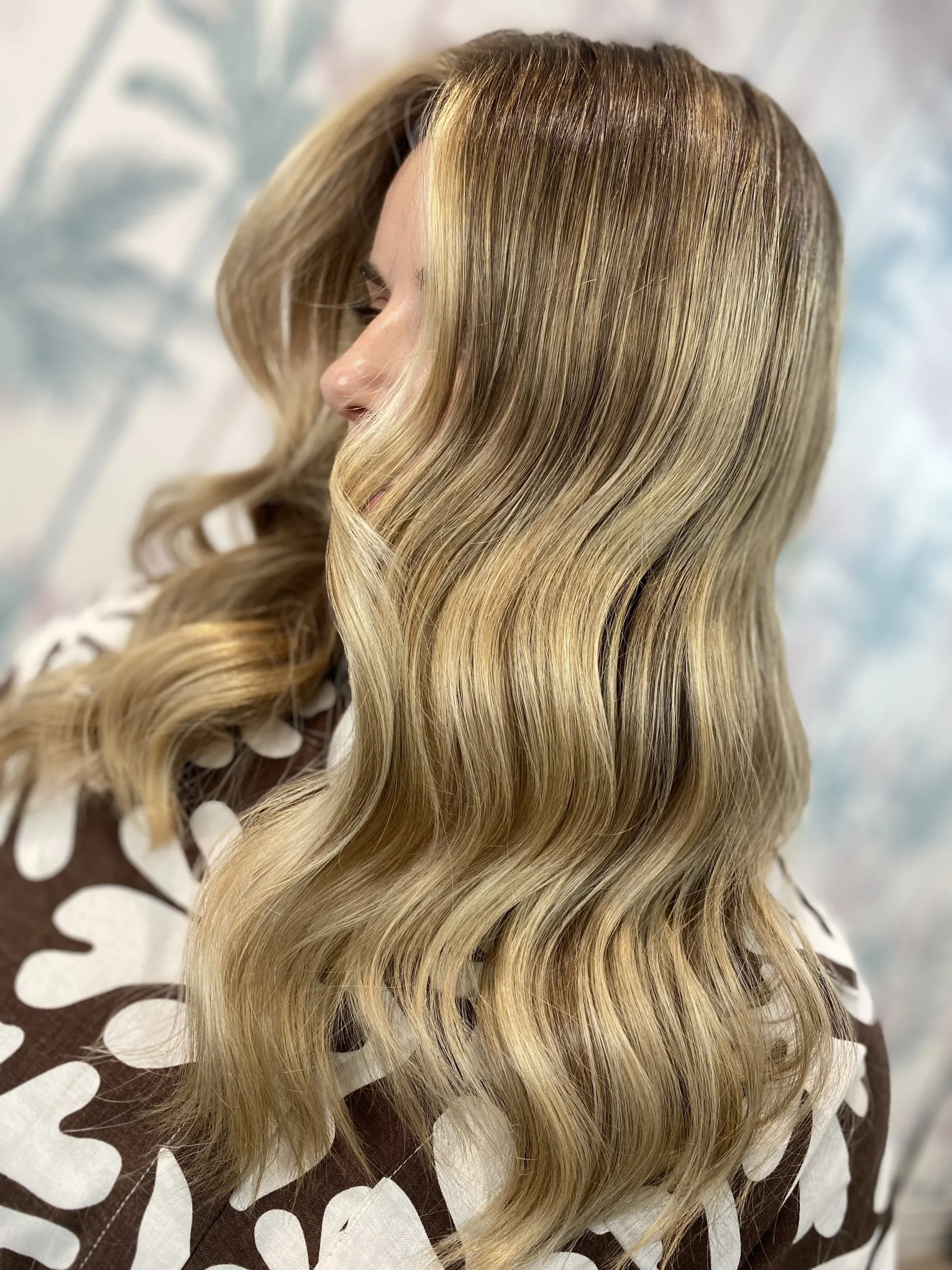
I spent a decade convinced that warm blonde and warm lowlights would melt into one flat, muddy mess. This is proof I was wrong. The golden tones sit underneath, not on top, so the wave pattern catches them every time the hair moves. On thick, wavy hair with a collarbone cut, the lowlights behave like shadow, giving the blonde a depth that a single process never will. The side part helps: it breaks up the weight and lets the colour fall in alternating ribbons of light and dark.
Air Dried Wavy Visual Idea
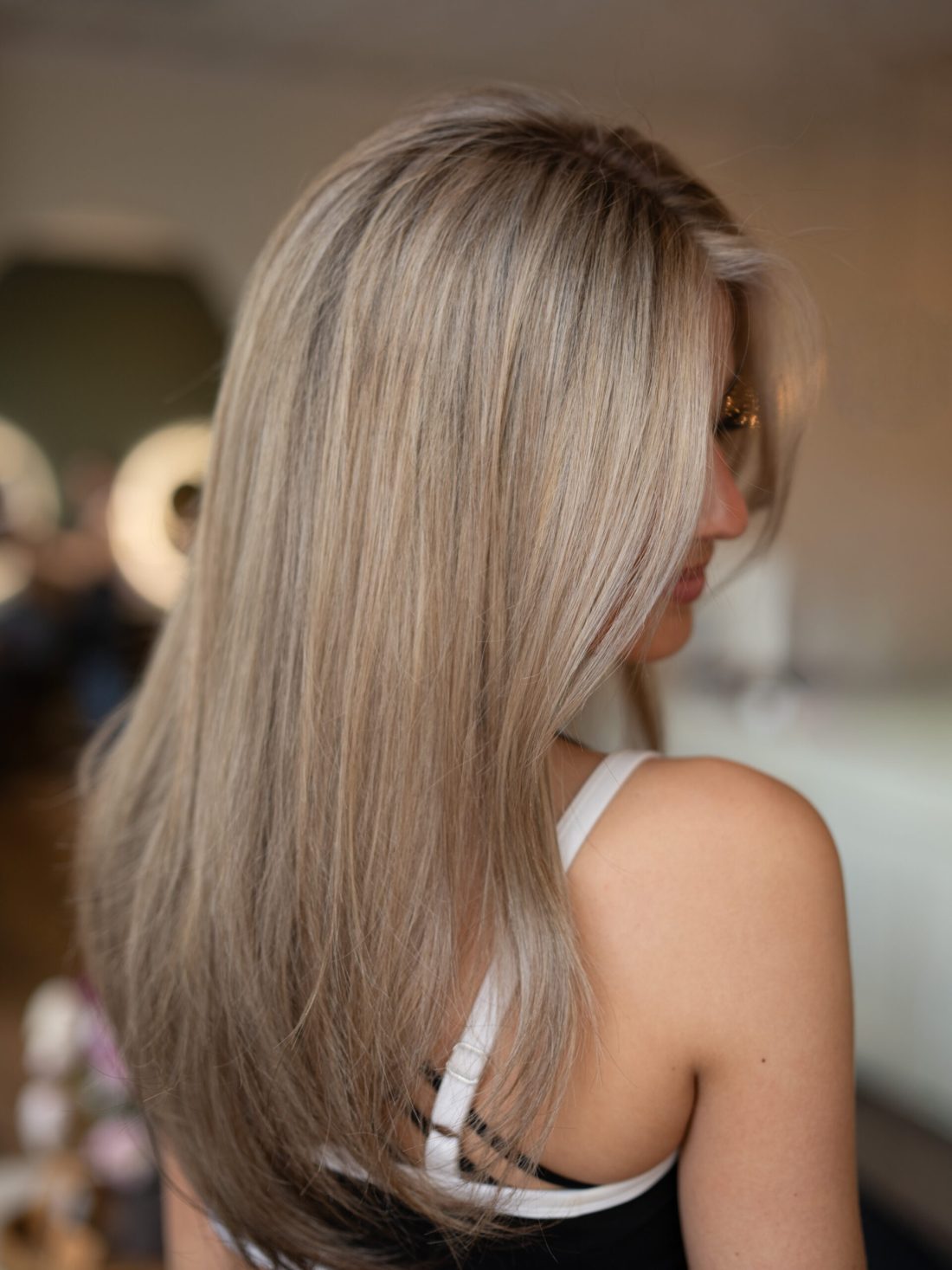
Air-dried hair usually betrays me by 10 am, and I love that this colour doesn’t care. Ash blonde with darker blonde lowlights, collarbone length, waves that were never touched by a round brush. The subtle lowlights are doing the work: they stop the ash from turning flat and silver, and they give the messy texture something to catch on. In late summer, when humidity is a threat, this is the only look that survives my walk to the car. No blowout, no product, just the colour making the chaos deliberate. It is the rare winter-approved summer hair, and I’m not mad about it.
Loose Waves Visual Idea
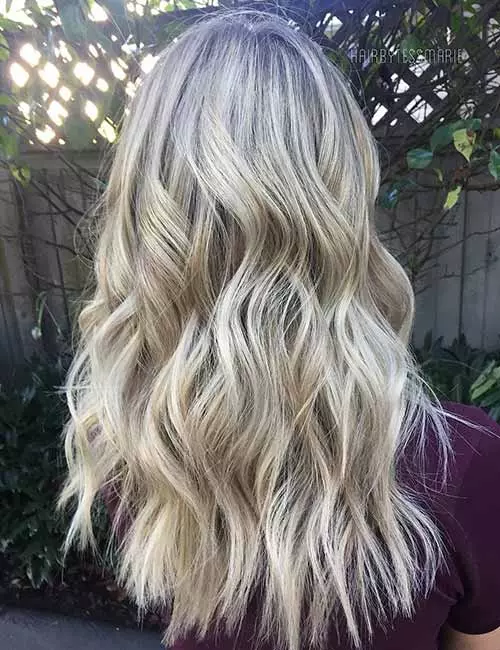
Have you ever looked at dimensional colour in a salon and thought, I could do that with a box? I tried it once. The result was two tones that never met in the middle, and it took three months to fix. This is the kind of ash blonde with darker lowlights that makes you want to attempt it. Mid-back length, loose waves, medium density, no bangs to hide behind.
Here is the reason the salon wins: placement. A professional maps the lowlights so they sit where the waves will catch them, not where they will look like stripes. At home, you paint in a mirror and guess. The upkeep is real, a toning visit every six weeks or the ash turns brassy, but the dimensional payoff is worth the calendar slots.
Final Thoughts
After writing all 26 ideas, I kept coming back to the dark brown base with blonde balayage. It is the one that does the most with the least maintenance. No root panic, no purple shampoo tango, just six calm weeks between trims.
The one I am booking next? The chin-length bob with ash lowlights. Blunt, cool, and the lowlights keep it from looking like a helmet by day three. That is the whole trick—lowlights are not about going darker, they are about staying interesting longer.
- Gloss every six weeks to keep ash from turning brassy
- Trim the baseline every eight weeks for blunt shapes
- Skip purple shampoo on lowlight sections, it mutes the brown
- Dry shampoo at the roots, not the lengths, or the lowlights go muddy