

Soft locs have moved from a protective style to a styling statement in their own right, and the current shift favors lived-in color and soft face-framing layers over uniform texture. The look is polished without being stiff, which is exactly what classy soft locs hairstyles are about.
This collection of 26 ideas covers the range from sculpted updos to loose, flowing waves, with plenty of options for different lengths and densities. If you have fine locs that lack volume or a visible grow-out line that needs softening, you will find a solution here. Every style is built to hold its shape without demanding constant attention.
Elegant Mid-Back Locs Updo with Braids
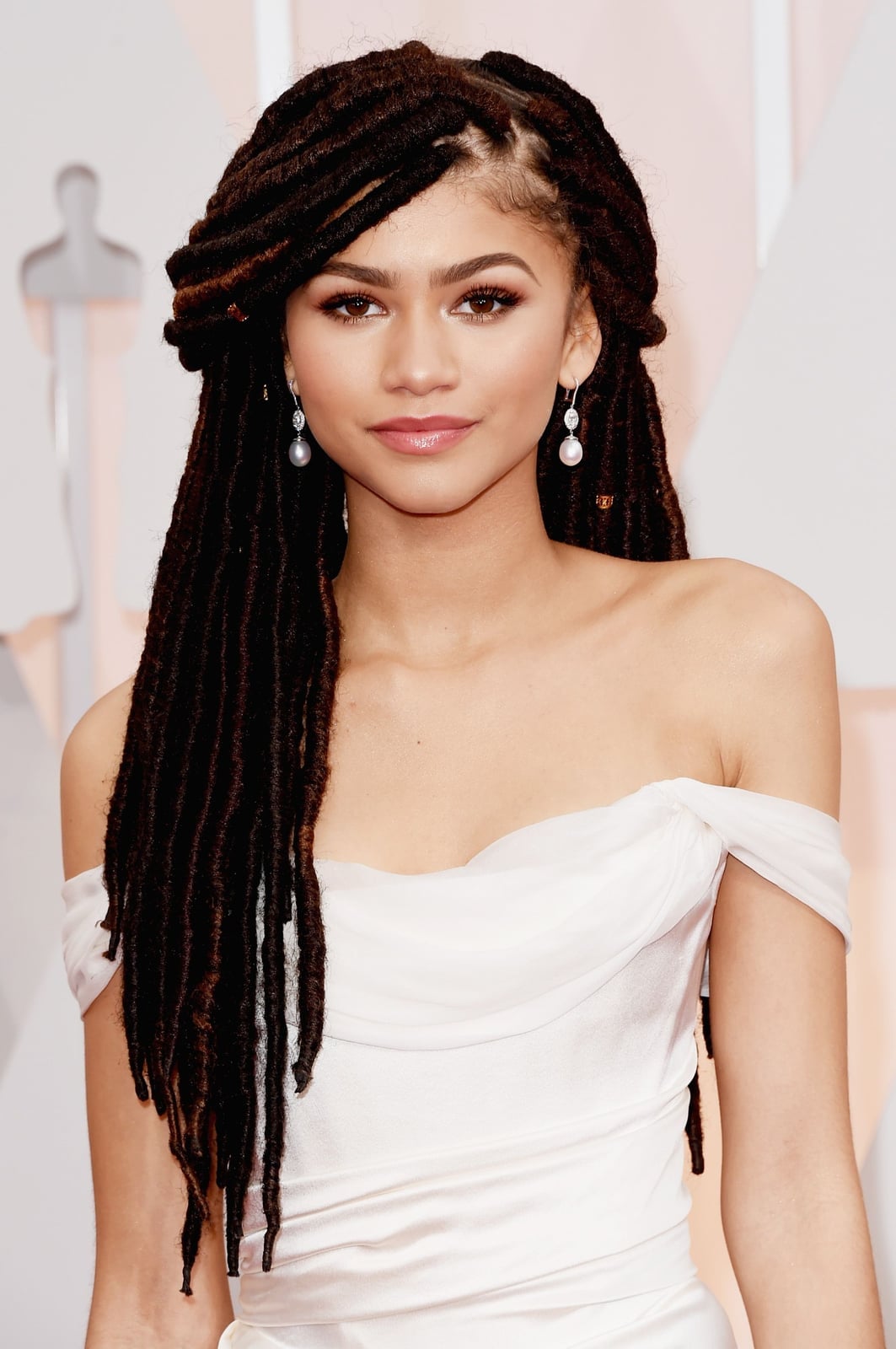
The trick to this updo is the braided crown: a dense band of interwoven locs that sits across the top of the head, anchoring the rest into a soft, wavy bun. The dark brown color stays uniform, so the braid structure reads clearly without competing highlights. Ask your stylist for: elegant updo with intricate braided crown, mid-back locs. The middle parting keeps the front clean while the crown adds architectural weight. This is a salon-only design, built from thick mid-back locs that hold the braid tight without slipping. A silk bonnet at night preserves the shape for the full event.
Collarbone Butterfly Locs with Curtain Bangs
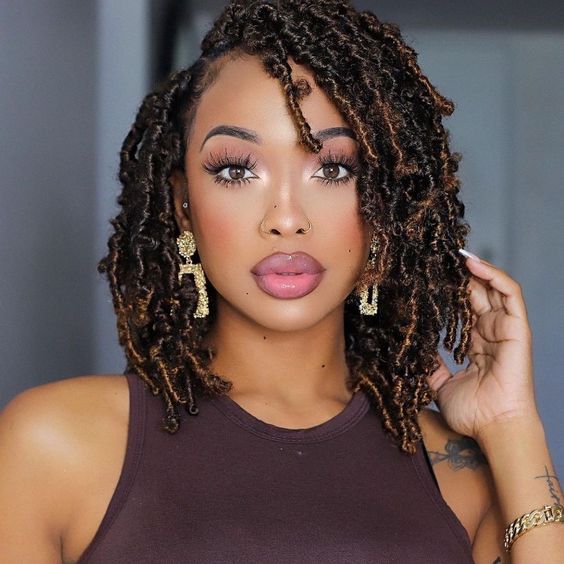
Wondering if curtain bangs work with locs at collarbone length? They do, as long as the locs are thick enough to hold the wavy texture. The side parting pushes volume to one side, and the bangs fall in soft, face-framing pieces that blend into the brown and blonde highlights. Ask your stylist for: collarbone butterfly locs, loose curls, curtain bangs. The lived-in color means the bangs don’t need a harsh line at the forehead. This length suits medium to thick hair density; fine locs may not carry the curl as well. A large barrel curling iron refreshes the waves between washes.
Mid-Back Black Butterfly Locs Side Profile
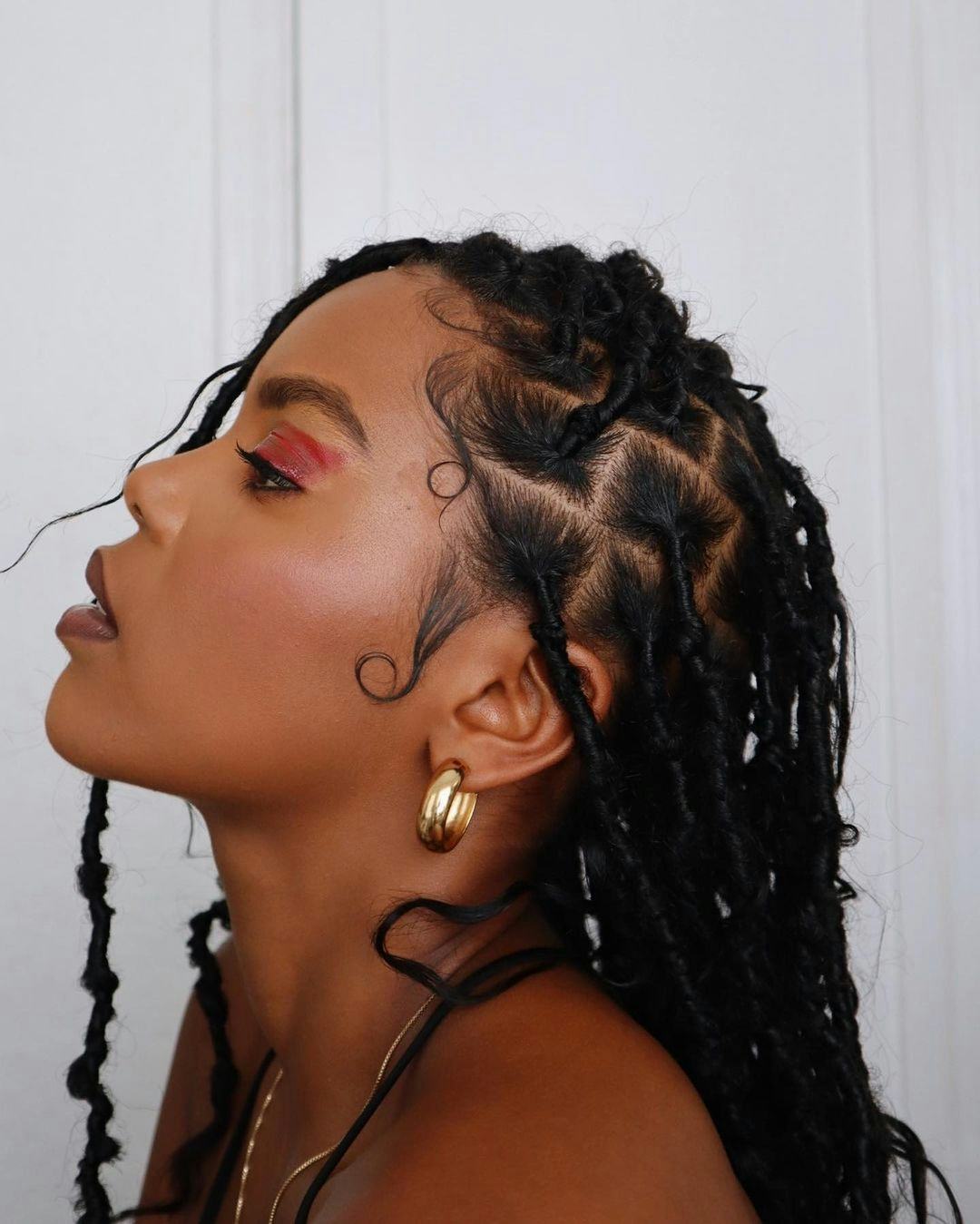
A side view reveals what a front shot hides: the defined parts running from crown to nape, each section neatly separated, and the baby hairs laid flat along the hairline. The black color is solid, no dimension, which makes the parting lines the main visual event. Ask your stylist for: mid-back butterfly locs with defined parts and baby hairs. The wavy texture stays soft, not stiff, because the parts are set with a light gel rather than a heavy wax.
Upkeep is daily. A satin scarf at night keeps the baby hairs from lifting, and a water-based moisturizer on the locs prevents the ends from drying. The parts need a finger-comb reset each morning, about five minutes. Without that, the crisp lines soften into a more casual look by day two.
Bridal Blonde and Brown Locs High Updo
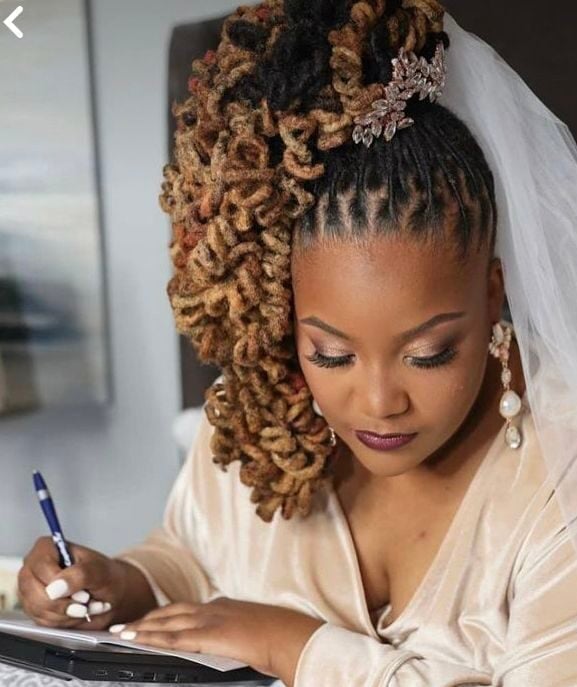
It is not a standard updo tucked into a bun. This bridal style keeps the locs long and visible, gathered high on the crown with the blonde and brown mix fanning out like a structured ponytail. The middle parting is visible at the base, and the bridal hairpiece and veil sit behind the gathered locs rather than over them. Ask your stylist for: bridal updo with locs, blonde and brown mix, with hairpiece. The wavy texture gives the updo body without needing backcombing. This is a wedding-only commitment: expect a consultation and a trial run before the day itself.
Elegant Brown and Blonde Locs Updo
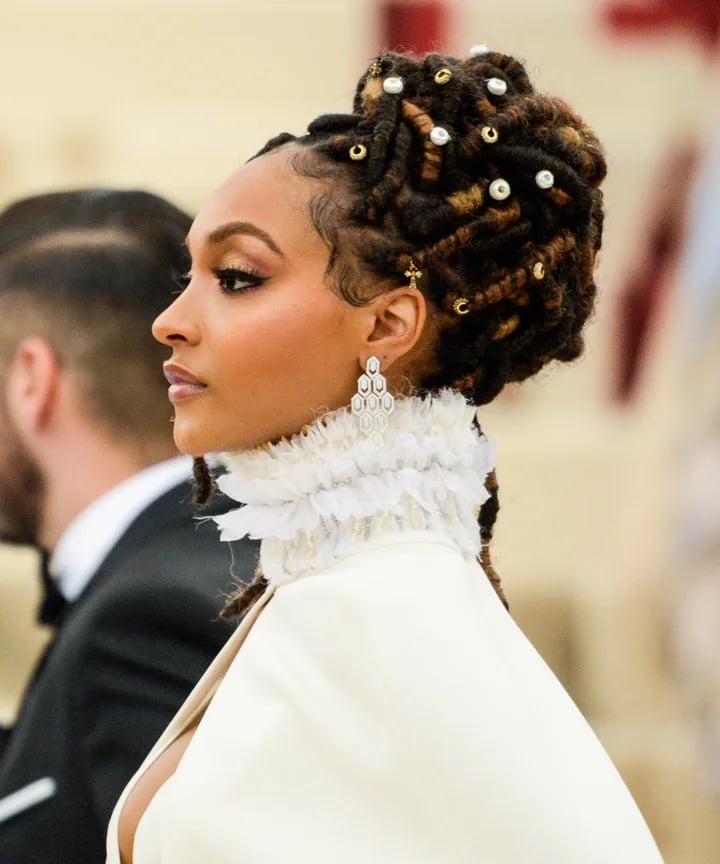
Where the bridal updo keeps the locs visible, this one twists them into a compact shape, with decorative gold and pearl elements tucked into the spiral. The side view shows the blonde highlights catching the light against the darker brown base, adding depth to the wavy texture. Ask your stylist for: elegant updo with decorative elements, brown and blonde locs. The ornaments are clipped into the locs, not pinned into the scalp, so the hold depends on how tightly the locs are wrapped. A side view also reveals the shape is asymmetrical, fuller on one side, which gives it movement that a symetrical bun lacks.
Collarbone Butterfly Locs with Defined Curls
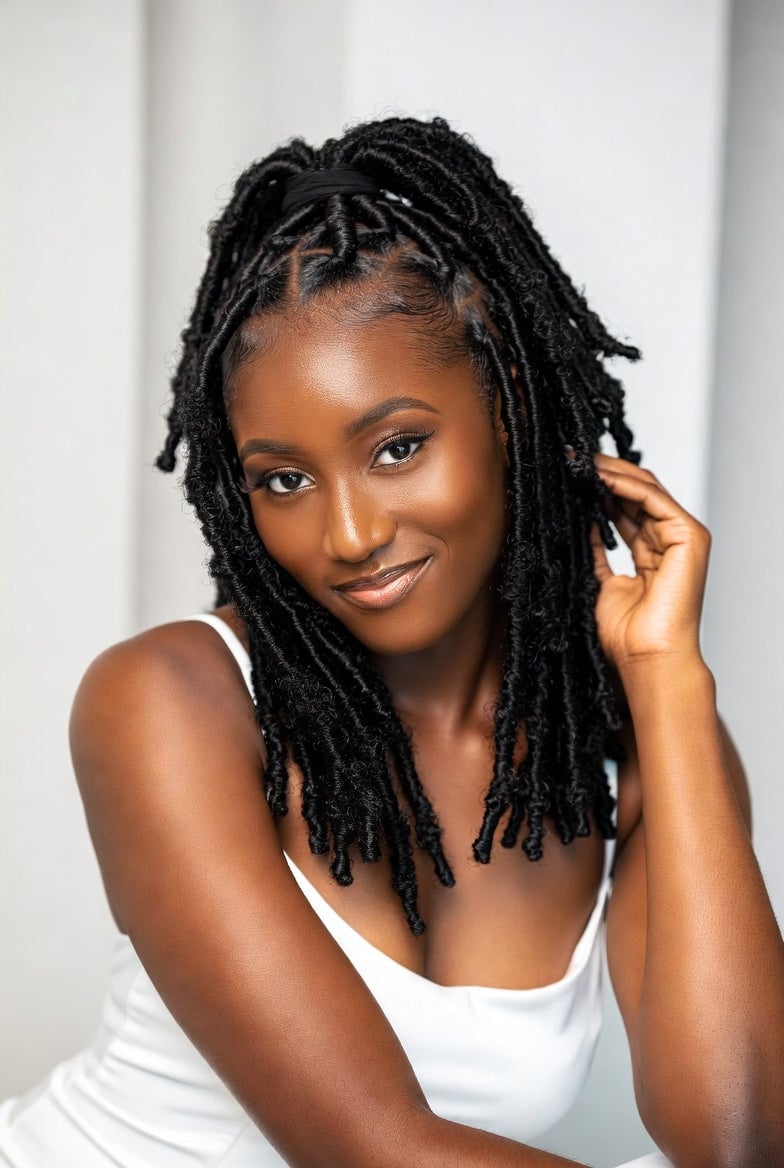
Wondering how to get those defined curls without the crunch? These collarbone butterfly locs use a wavy texture and a middle parting to create a soft, bouncy finish. Subtle baby hairs frame the face, adding a deliberate touch of softness. Ask your stylist for: collarbone butterfly locs with defined curls and baby hairs. A curl-defining cream enhances the texture, and the baby hairs should be trimmed as needed to maintain the shape.
Mid-Back Locs Loose Waves Dimensional Color
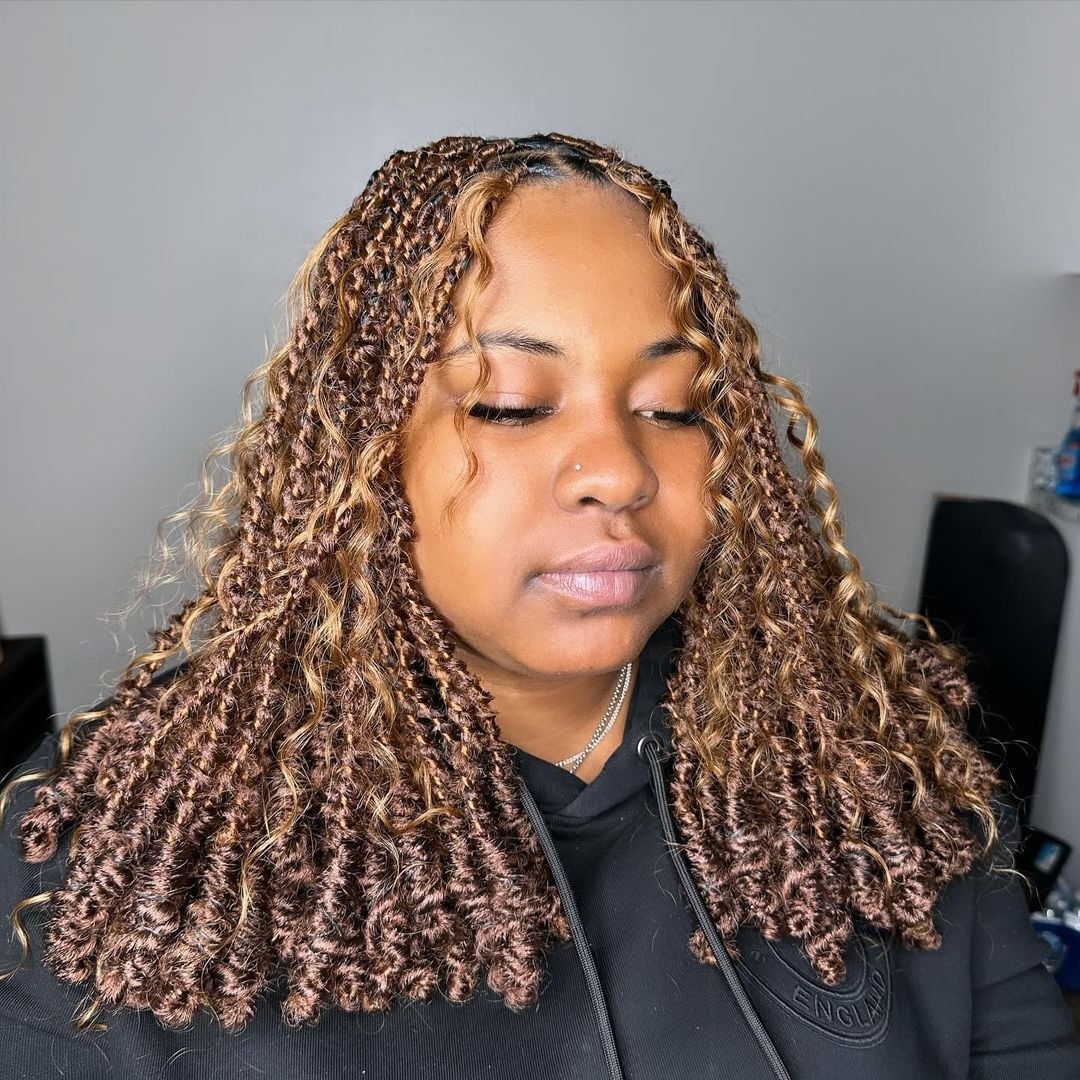
The trick to dimensional color on locs is placement, not saturation. Here, a rich brown base gets subtle blonde highlights woven through the lengths and ends, so the color adds brightness without dominating. The loose, curly texture and middle parting keep the effect soft and natural. Ask your colorist for: mid-back loose locs with subtle blonde highlights. A texturizing spray helps define the waves, and a trim every eight to ten weeks keeps the ends healthy.
The technique relies on hand-painted highlights instead of foils, which prevents harsh lines as the locs grow. The brown base grounds the look, while the blonde pieces add movement without requiring a full bleach commitment. A toning appointment every six to eight weeks keeps the blonde from shifting brassy, but the root shadow hides grow-out for longer.
Dark Brown Faux Locs High Bun Flow
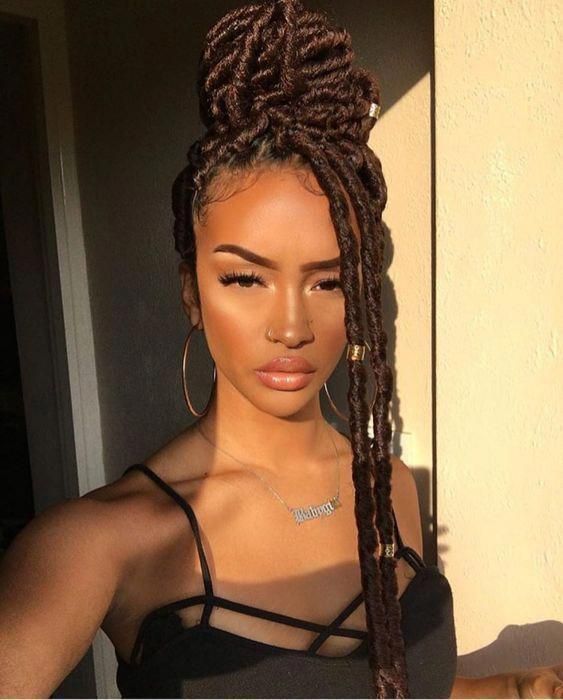
A high bun with loose locs falling forward is a clever trick: it reads as a full updo from the back but keeps face-framing pieces in play from the front. These dark brown faux locs use a middle parting and a textured finish, with enough loose strands to soften the silhouette. Ask your stylist for: high bun with loose faux locs, dark brown. The bun needs a firm base, secure it with a hair tie and wrap a loc around the base to hide the elastic. A light oil on the loose pieces tames flyaways without weighing the texture down.
The upkeep is straightforward: the faux locs hold their shape for several weeks, though the bun may loosen slightly over time and need a quick retwist. A trim to the overall length every eight to ten weeks keeps the ends neat, and a satin scarf at night preserves the bun’s structure.
Mid-Back Black Soft Locs Wispy Bangs
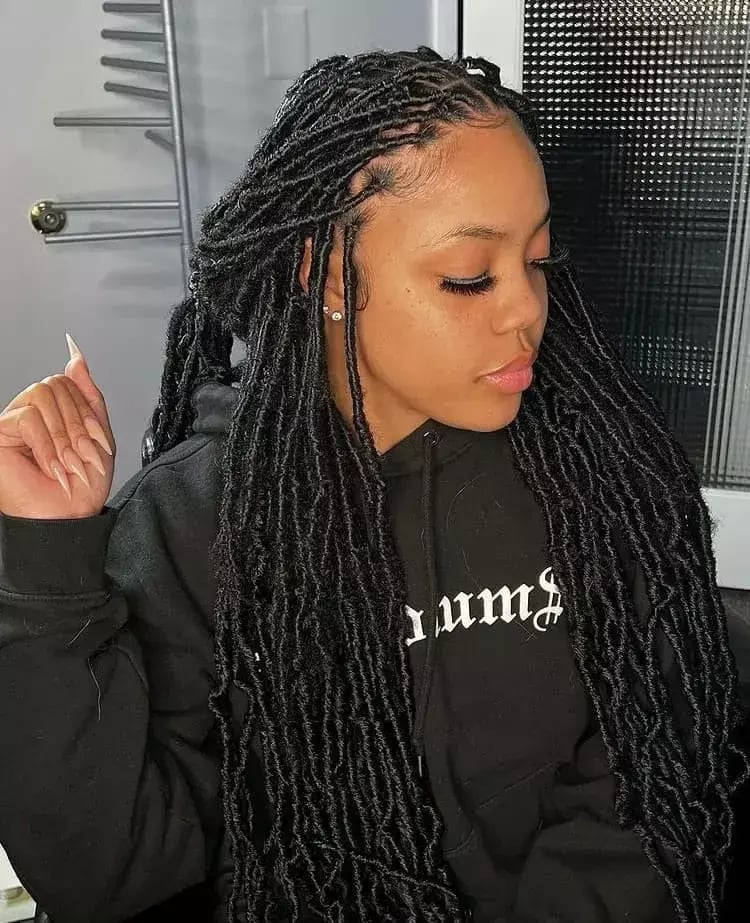
Wispy bangs on soft locs work best when the hair stays loose and medium-density, too thick, and the bangs get lost; too thin, and they look sparse. These mid-back black locs use a wavy texture, with the bangs cut to graze the brows for a soft frame. Ask your stylist for: mid-back soft locs with wispy bangs. The bangs should be cut dry so the stylist can see exactly how they fall against the locs’ natural wave.
Collarbone Black Butterfly Locs Soft Texture
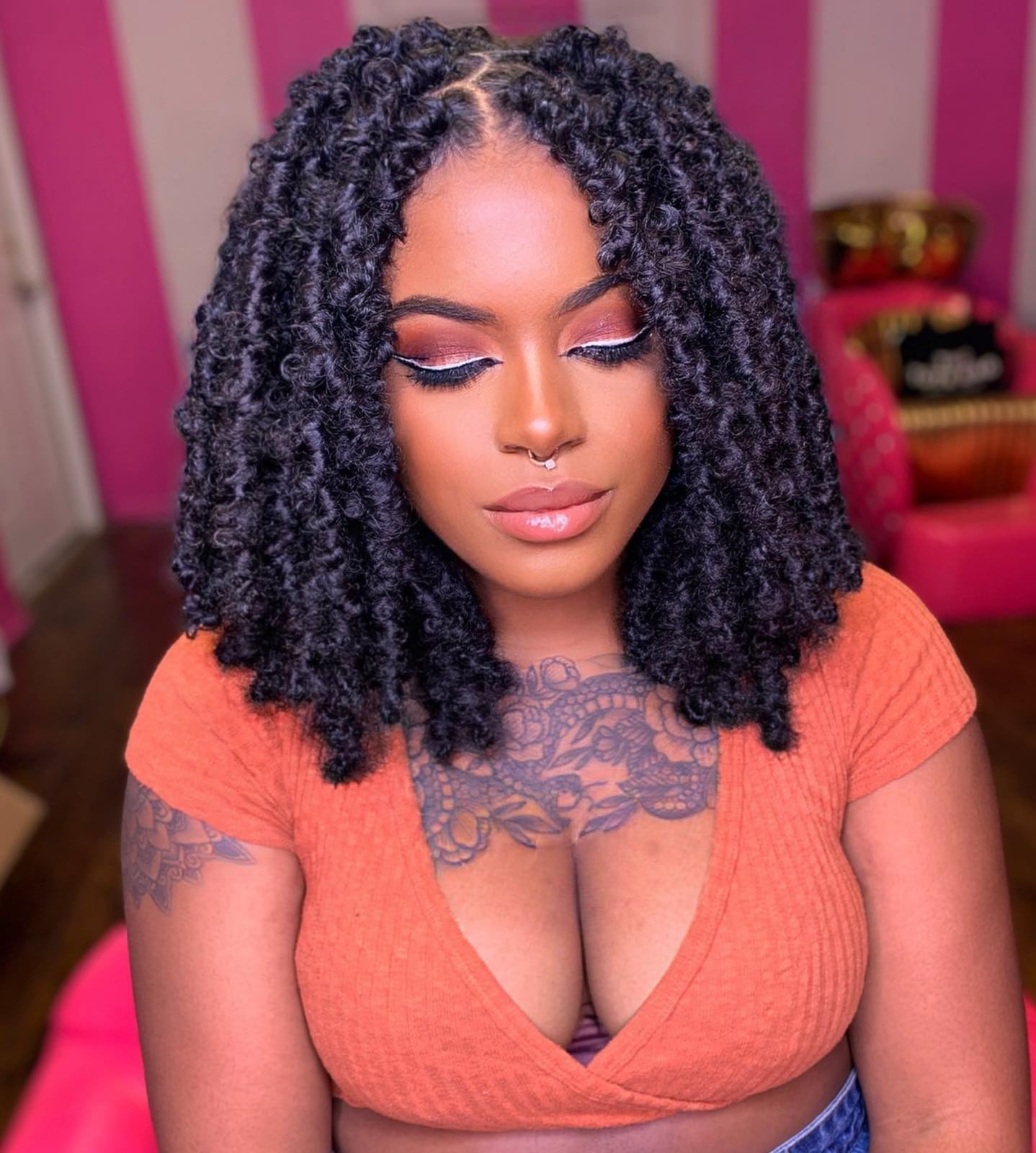
Compared to tighter, more uniform locs, collarbone butterfly locs trade some definition for a noticeably softer handfeel and more movement. The wavy texture can frizz if not sealed properly during installation. These black butterfly locs use loose styling to keep the look airy. Ask your stylist for: collarbone butterfly locs, soft wavy texture. A light serum after installation helps maintain the softness, but anyone who prefers a very uniform, sleek finish should skip this technique. The loose texture is the defining feature of this style.
Collarbone Black Locs Defined Waves
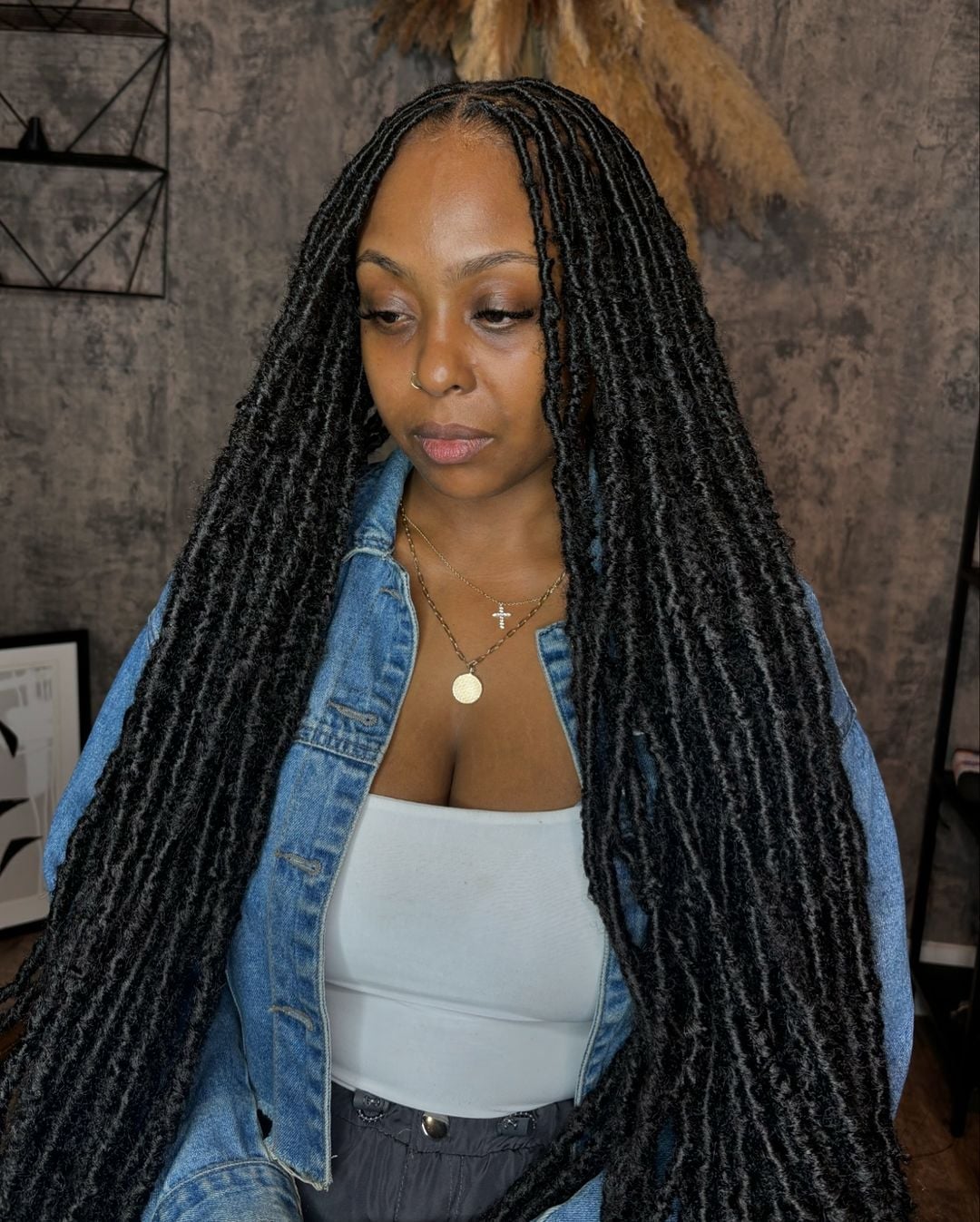
Getting defined waves on collarbone black locs takes more than a prayer and a curling wand. The middle part and subtle highlights add dimension, but the wave pattern itself requires a salon visit for proper setting. Ask your stylist for: collarbone soft locs with defined waves, subtle highlights. The technique involves wrapping sections around flexi rods or perm rods, then steaming or drying under a hood dryer. At home, those waves tend to loosen within a day unless you sleep in a satin scarf and use a wave-enhancing mousse. The result is a polished, wavy texture that holds its shape for about a week with minimal re-setting.
Shoulder Length Black Locs Textured Style
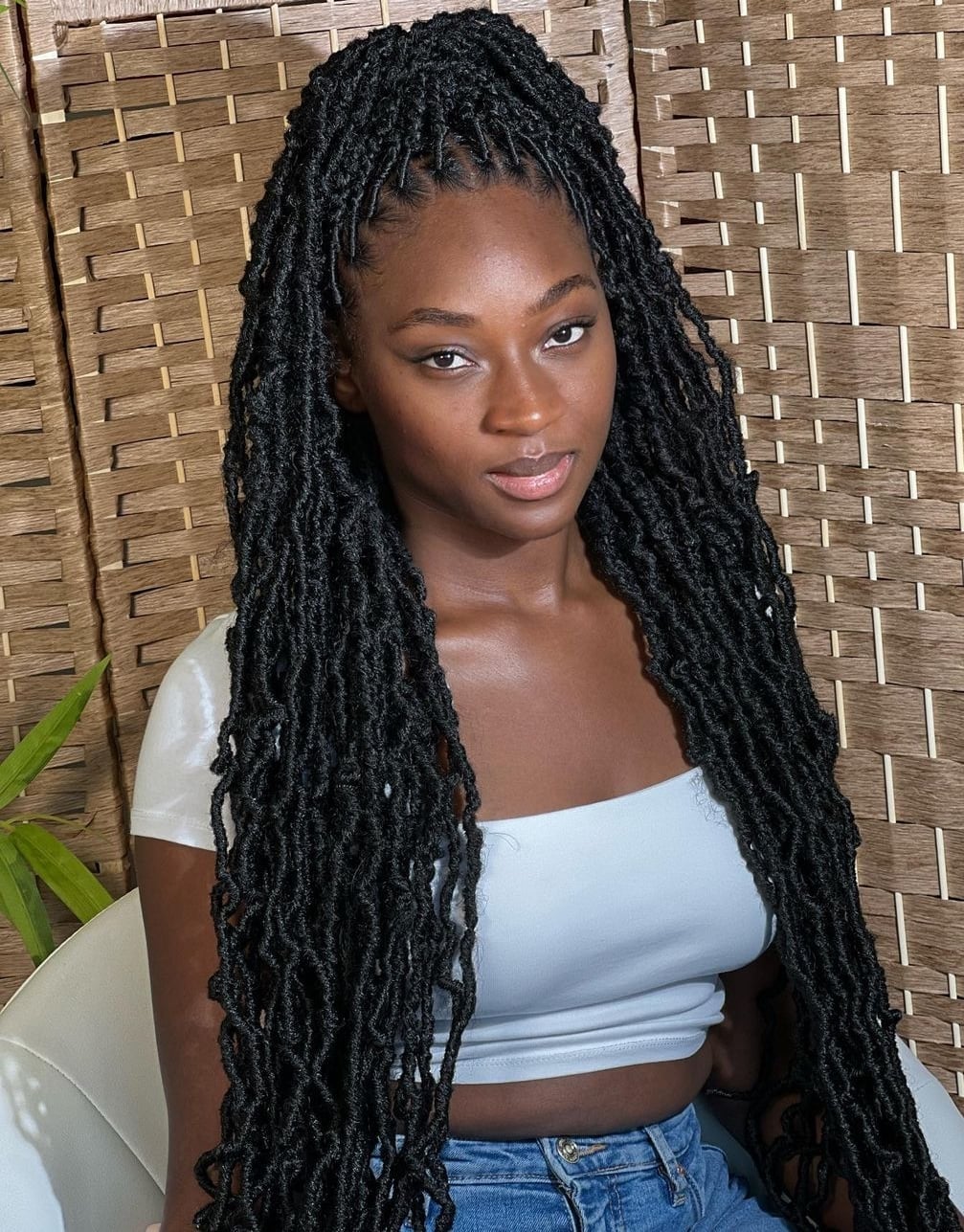
Shoulder length black locs with a thick, wavy texture handle seasonal transitions better than most. In humid months, the natural wave pattern holds without frizzing out; in cooler weather, a light oil sheen keeps the texture from looking dry. Loose styling gives it a relaxed finish that works for brunch or a workday. Ask your stylist for: shoulder length loose locs, focus on texture. A trim every six to eight weeks keeps the ends from thinning, which is the main thing that makes a textured style look unkempt.
Mid-Back Black Locs High Bun Updo
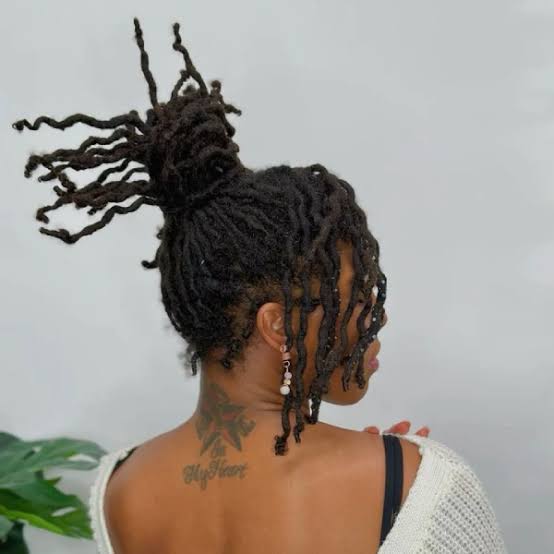
Can a high bun on mid-back black locs stay put through a full evening? Yes, but only if the foundation is right. The thick, wavy texture needs a secure base: the locs are twisted into a tight coil at the crown, then pinned in a circular pattern. A few locs left out at the nape soften the silhouette, which keeps the style from reading as severe.
Ask your stylist for: high bun updo with mid-back locs, nape framing. The hold depends on hairpins placed at the bun’s base rather than relying on the locs’ own weight. Expect to re-pin two or three stray pieces during the night, but the overall shape stays intact. A trim every eight weeks prevents the nape pieces from looking ragged.
Mid-Back Brown Locs Flowing Loose Waves
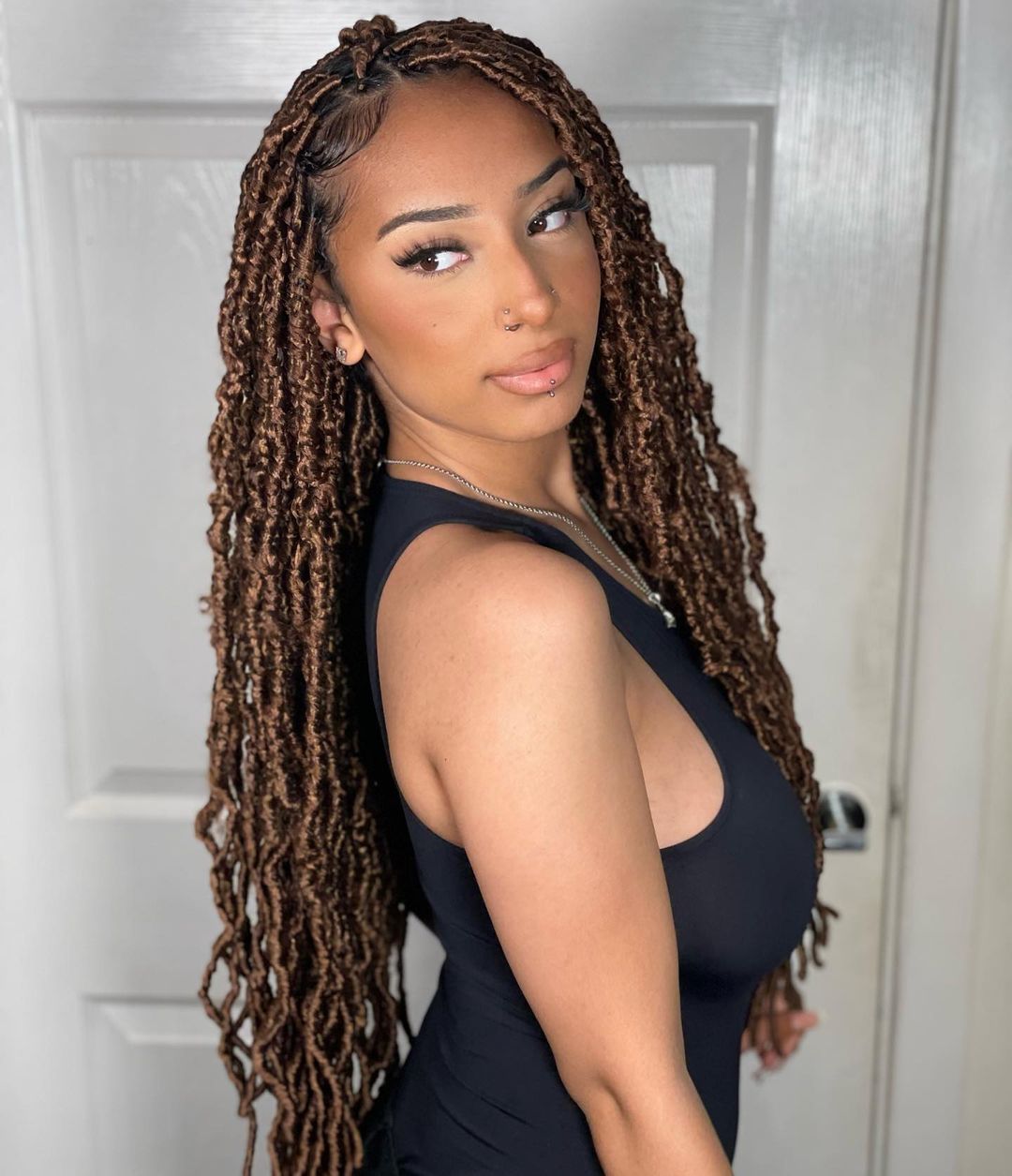
The technique for loose waves on mid-back brown locs with lighter highlights starts with the parting. A clean middle part distributes the locs evenly, so the wave pattern falls symmetrically on both sides. Each loc is wrapped around a large roller, then steamed to set the bend without flattening the natural volume. The lighter highlights create contrast at each curve, which gives the hair more movement than a single-tone set.
Ask your stylist for: mid-back soft locs, loose waves, brown with highlights. The waves are set at the ends, leaving the roots straight to avoid a top-heavy curl. This technique works best on thick locs, as fine locs tend to lose the wave shape by midday. A trim every ten to twelve weeks keeps the ends from splitting, which would interrupt the flowing line.
Mid-Back Black Butterfly Locs Defined Parts
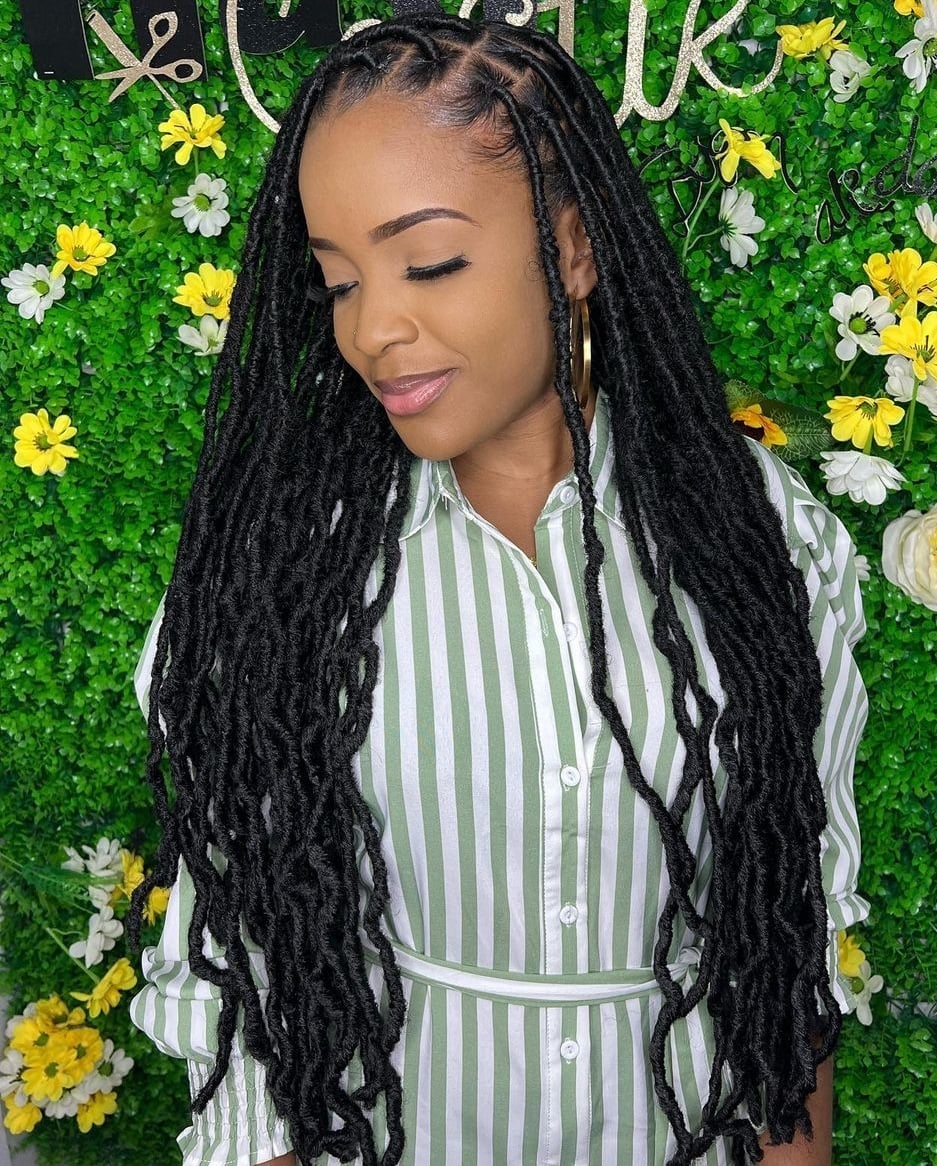
Defined parts and baby hairs turn a standard butterfly loc set into something deliberate. The parts are sectioned in straight, clean rows from the front hairline to the crown, with each loc installed precisely along the line. The baby hairs are brushed forward and shaped into soft curves that frame the face. Ask your stylist for: mid-back butterfly locs with defined parts and baby hairs. The side view shows how the defined parts create a geometric contrast against the soft, wavy texture of the locs. A styling cream keeps the baby hairs sleek without stiffness. The parts hold their definition for the full installation cycle, roughly six to eight weeks, before new growth softens the lines.
Mid-Back Black Locs Voluminous Waves
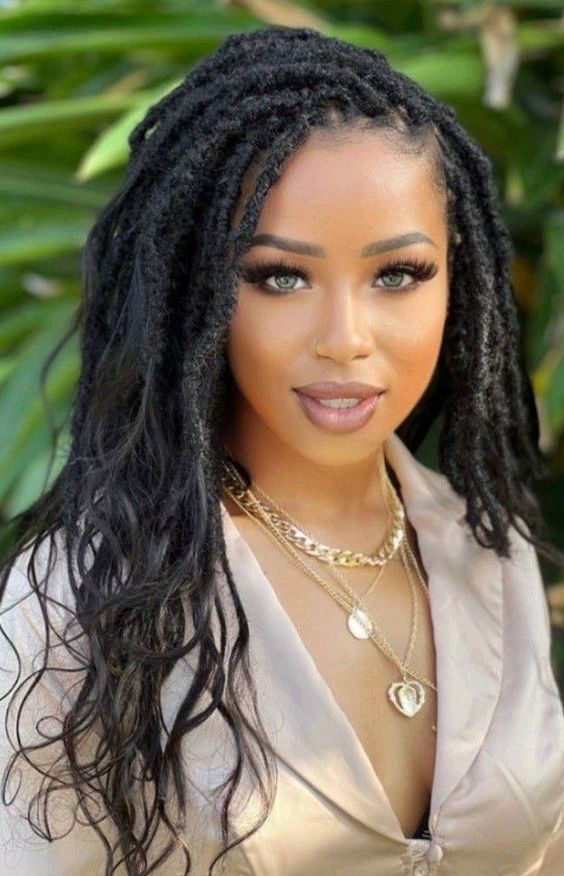
What is it about voluminous locs that feels like a visual exhale? This mid-back style layers deep black with subtle greyish highlights, the loose waves adding a soft, airy quality that keeps the density from appearing heavy. The middle part and thick texture work best for those with medium to high hair density, since the volume needs enough substance to hold its shape without collapsing by midday.
Ask your stylist for: mid-back soft locs, voluminous wavy style, greyish highlights. A volumizing spray applied at the roots before air-drying will maintain the lift, and a trim every ten to twelve weeks keeps the ends looking fresh. One honest catch: the greyish highlights will need a toning appointment every six to eight weeks to stay cool, so factor that into your maintenance calendar.
Shoulder Copper Locs Curtain Bangs
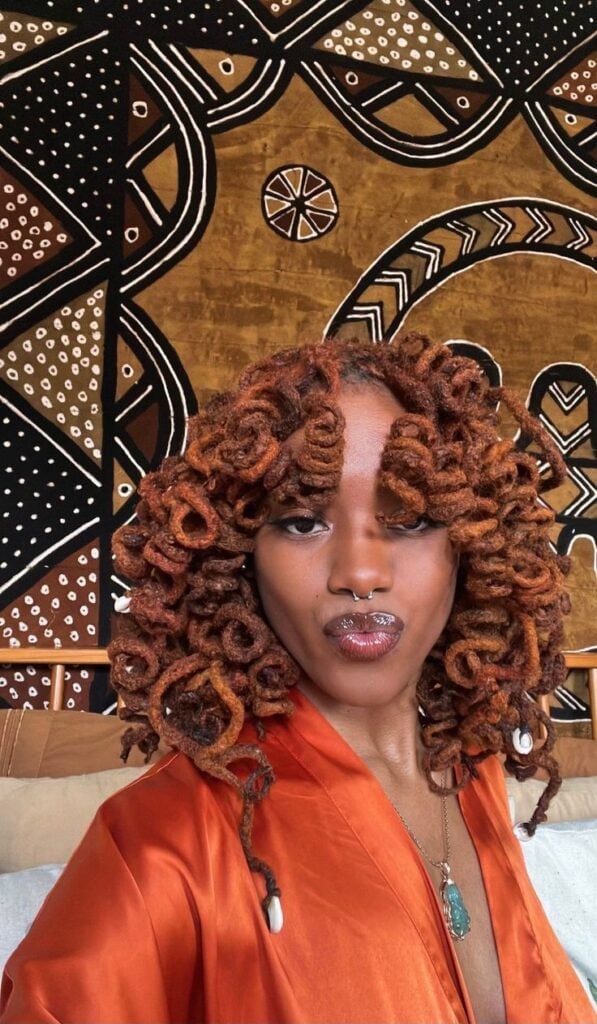
Copper locs sit somewhere between a statement and a conversation starter, and at shoulder length they avoid the commitment of a full mane of color. The curtain bangs frame the face without the weight of a full fringe, and the loose curls keep the texture from looking too uniform. If you are torn between a warm tone like copper and a cooler blonde, go with copper if your natural base has any red or gold undertones, since it will fade warmer rather than brassy. Soft waves help this style hold its shape for a full day, with a quick finger-comb refresh in the afternoon.
Mid-Back Dark Brown Locs Full Volume
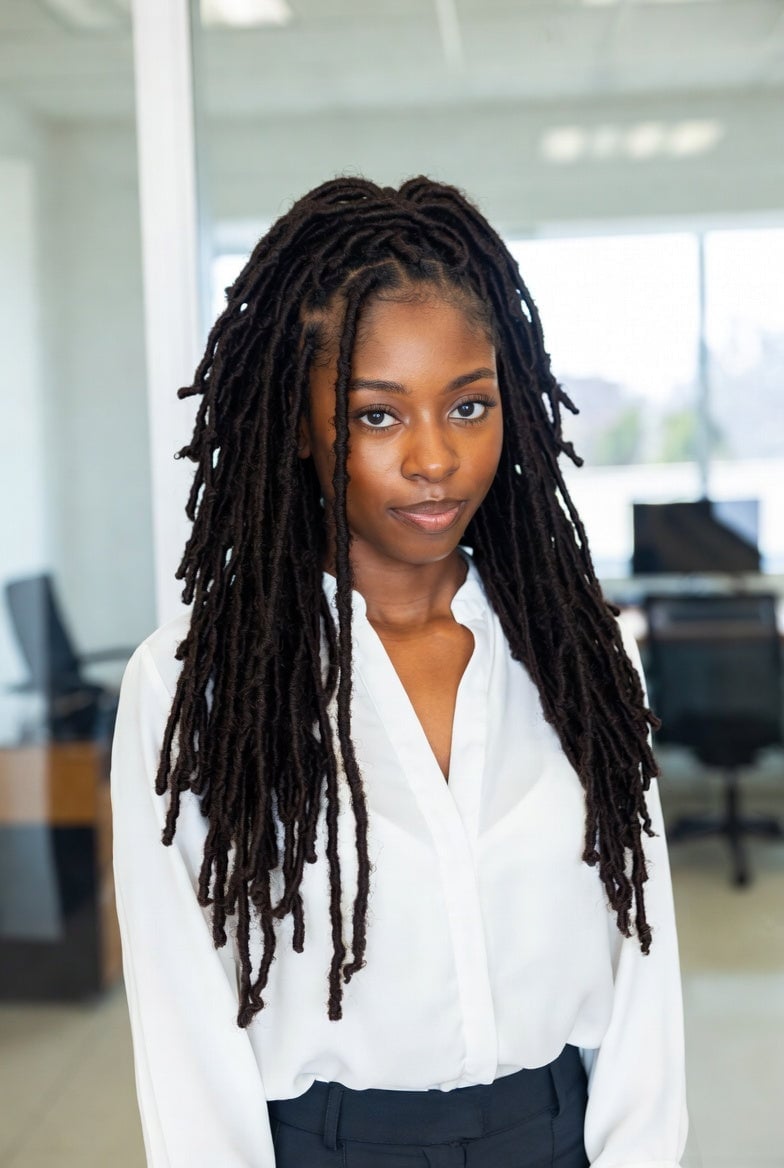
Full volume on mid-back locs is not a set-it-and-forget-it situation. The dark brown shade appears rich and dimensional, but maintaining that lift requires a texturizing spray applied to damp roots before drying, then a quick shake-out once the locs are fully dry. The loose styling and middle parting allow the thickness to fan out naturally.
A trim every ten to twelve weeks prevents the ends from thinning out and reducing the overall fullness. This style looks best when the locs are freshly done or recently retwisted, so plan for a salon visit every four to six weeks to keep the roots neat and the volume consistent.
Mid-Back Black Locs Natural Wavy Texture

Natural texture on locs is a gamble that pays off when you accept the wavy pattern for what it is. This mid-back style keeps the black hue unaltered, letting the thick waves do the work. The side view reveals the true length and movement, but the honesty of the texture means it will not hold a uniform curl pattern, so skip this if you want defined waves that stay put all day.
The drawback is that the natural wavy texture can develop frizz at the ends within a few days, especially in humid weather. A light oil or serum applied to the mid-lengths and ends will tame the flyaways without weighing the locs down. This is a style for those who prefer a low-maintenance rhythm and are not chasing a polished finish every single day.
Mid-Back Black Butterfly Locs Full Volume
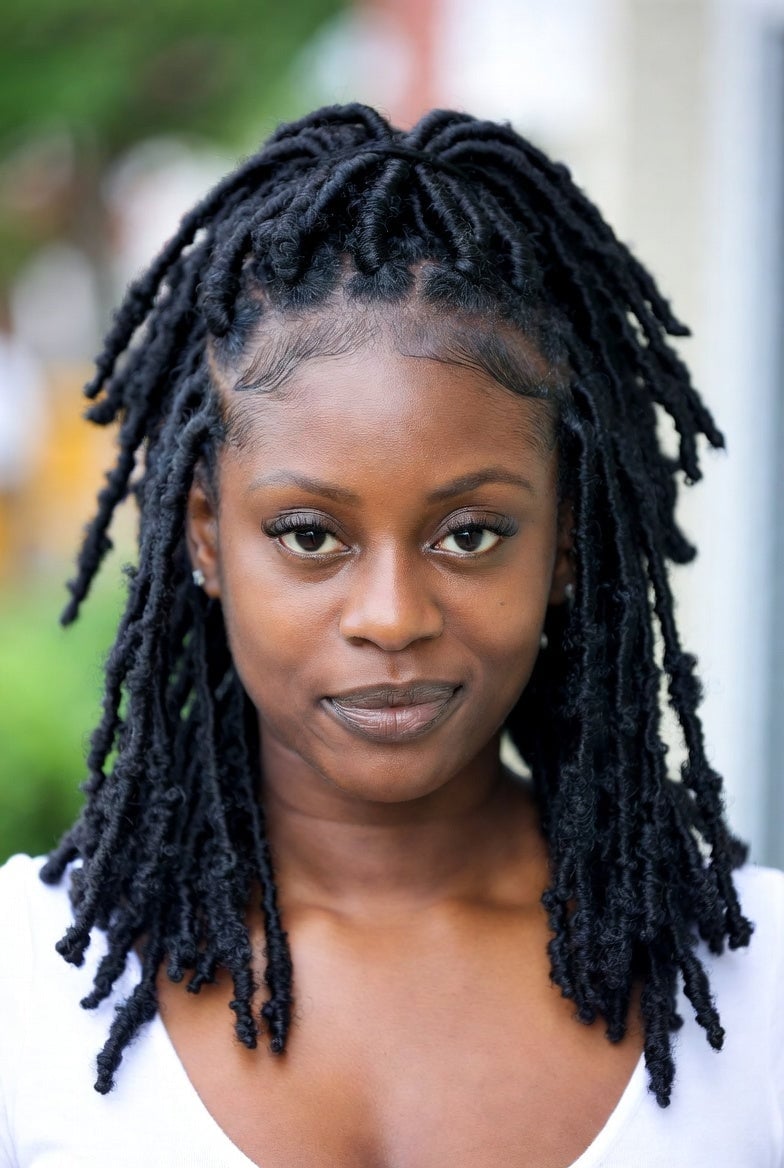
Butterfly locs at mid-back length with full volume are a salon project, not a weekend DIY. The technique involves wrapping hair around the loc to create the signature fluffy texture, and achieving that consistent fullness from root to tip takes practice. The baby hairs add a polished finish, but getting them to lay flat requires a small brush and a setting gel.
Ask your stylist for: mid-back butterfly locs, full volume, baby hairs. The installation alone takes three to five hours in the chair, so book accordingly. Once installed, the style holds for two to three weeks with minimal fuss, though the volume will settle slightly after the first wash. This is not a quick-change style, but for the right occasion, the payoff is a look that stays put.
Collarbone Dark Brown Faux Locs Glossy Finish
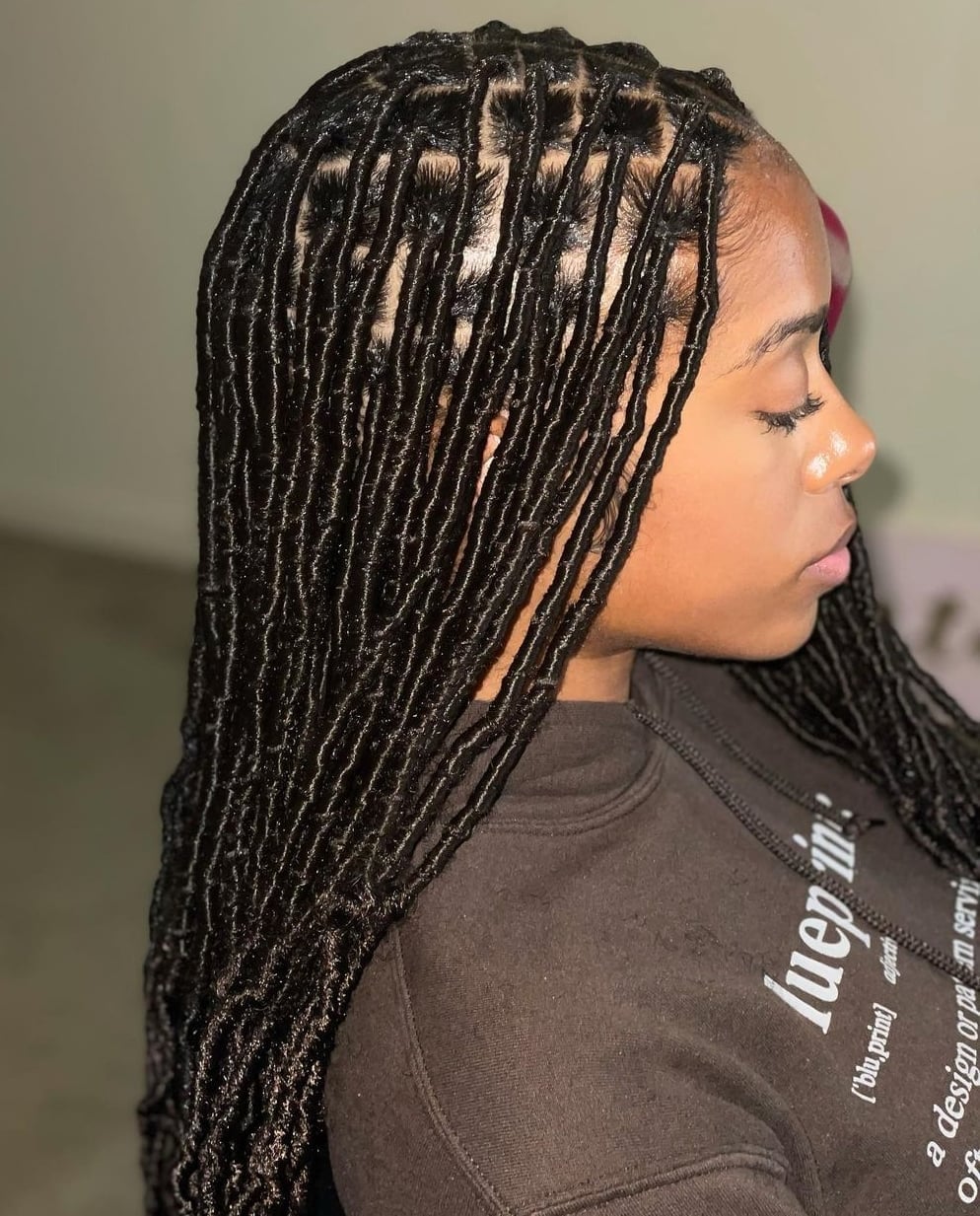
The glossy finish on these collarbone dark brown faux locs signals that the style is fresh and cared for. The loose, wavy texture keeps the look soft and natural, while the middle parting gives it a balanced, polished frame. This style holds up well in humid weather, when a matte finish might dull or frizz, and the shine stays put through a workday or a weekend event. Ask your stylist for: collarbone faux locs, glossy finish. A shine serum applied lightly over the lengths will maintain that smooth surface, and a trim every six to eight weeks keeps the ends from looking ragged.
Mid-Back Soft Locs Ombre Ponytail
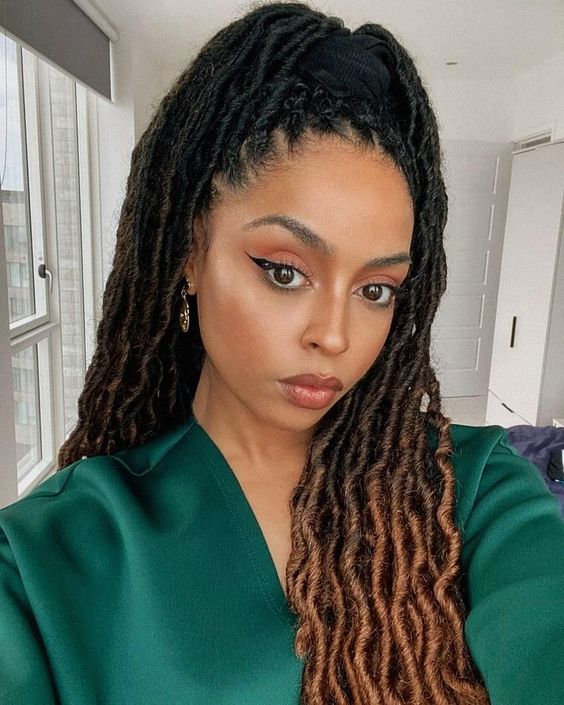
The technique here is all in the transition: black at the roots melts into a warm brown at the ends, and the ombre is a deliberate color choice. The high ponytail pulls the mid-back soft locs up, while a few strands are left loose to soften the line. The wavy texture gives the ponytail body, so it swings instead of hanging flat.
Ask your colorist for: black to brown ombre, high ponytail. This style suits anyone with mid-back length locs who wants movement without losing the polish of a pulled-back look. The ponytail holds its shape all day with a strong elastic at the base, and a light oil on the loose strands keeps them from looking dry.
Mid-Back Blonde Locs Ponytail Wrap
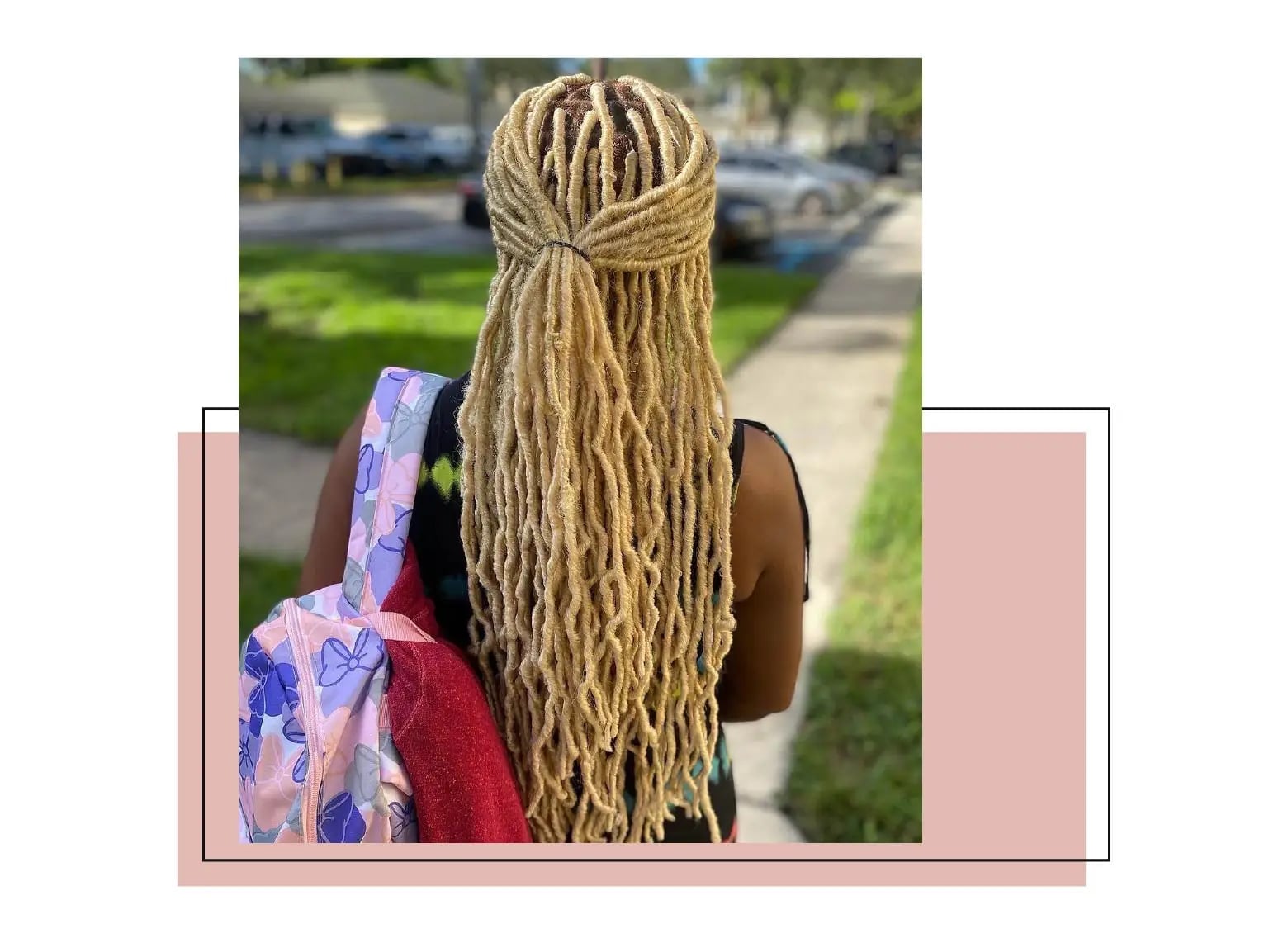
How does a ponytail wrap stay put when the locs are thick and wavy? The trick is in the base: a tight elastic anchors the mid-back blonde locs, then a single loc is wound around the tie and pinned underneath. The wrap hides the hardware and gives the ponytail a finished edge, which is why this style holds up through a busy day without looking like it started to slip.
Ask your stylist for: mid-back blonde locs ponytail with wrap. The blonde shade needs a toning appointment every four to six weeks to keep the color from going brassy, and the wrap itself should be secured with bobby pins at the base. It is a salon-built style, so expect about an hour in the chair to get the wrap smooth and the middle parting straight.
Mid-Back Black Butterfly Locs Volume, Close-Up Take
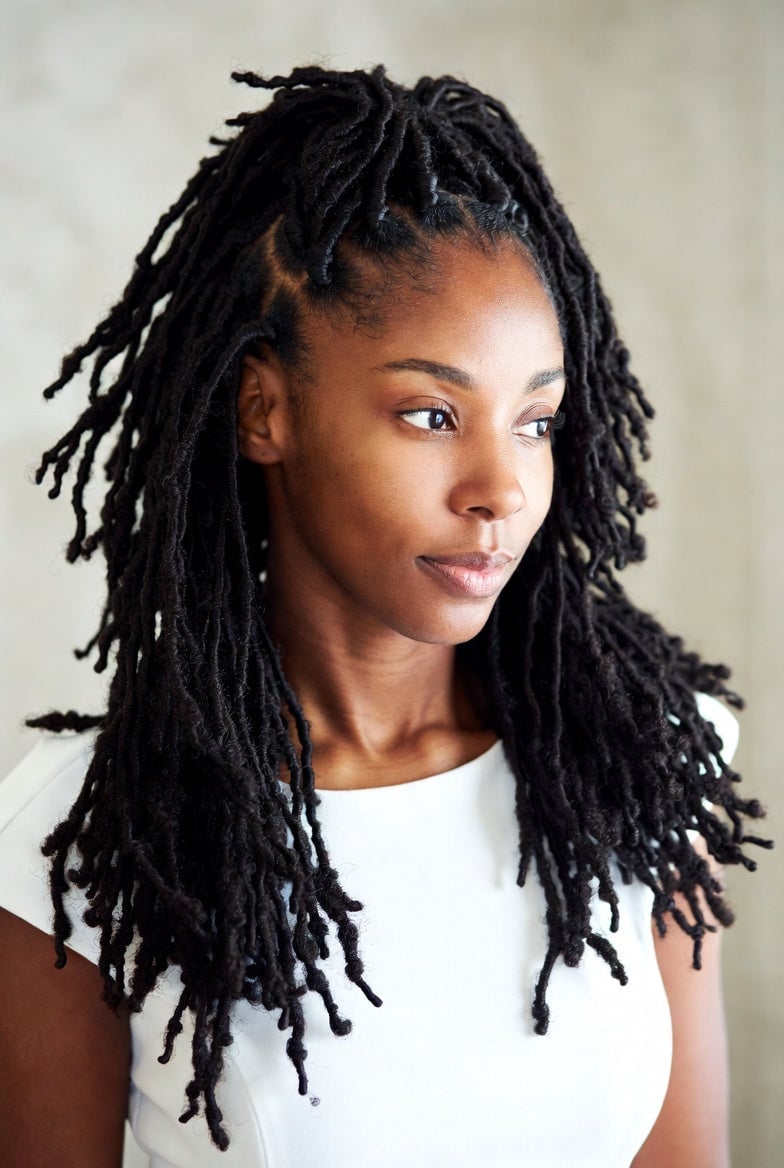
These mid-back butterfly locs are the definition of volume: the wavy texture and loose styling create real width, not just length. The baby hairs are smoothed down along the forehead, which adds a refined edge to all that fullness. This shape suits those with medium to high hair density who want the locs to feel substantial, and the mid-back length keeps the volume from overwhelming a smaller frame.
Ask your stylist for: mid-back butterfly locs, significant volume. A root-lifting spray at the scalp will keep the volume from falling flat by midday, and a light pomade on the baby hairs holds them sleek without stiffness.
Mid-Back Black Locs Half Updo
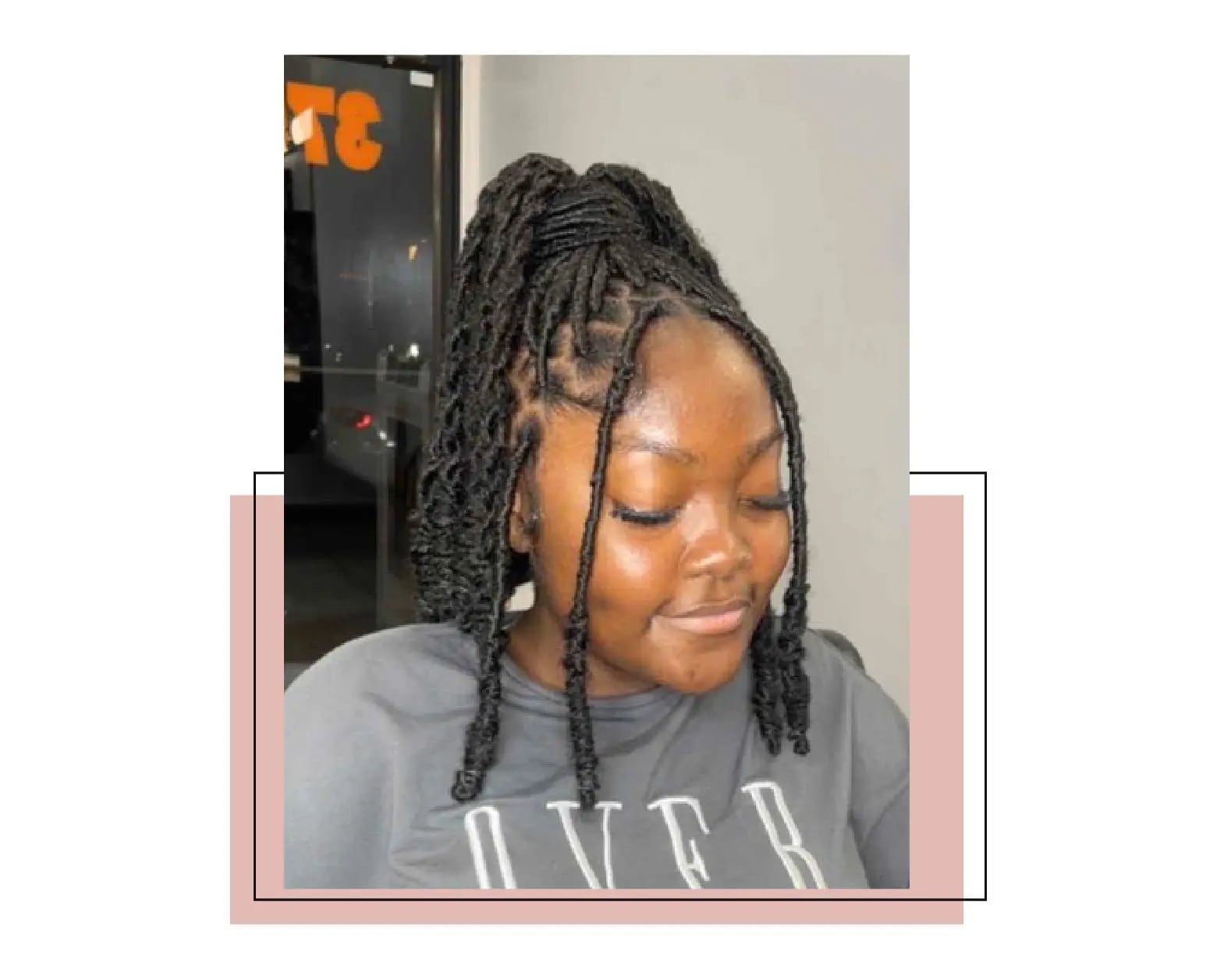
The half updo on these mid-back black locs is a precise balance: the top section is pulled back and secured, while the rest cascades down in thick, wavy layers. The middle parting keeps the front clean, so the style looks polished and put together. It is a versatile choice for anyone with mid-back length locs who wants the face clear without committing to a full updo.
Ask your stylist for: mid-back soft locs, half updo style. The top section can slip as the day goes on, especially if the locs are heavy. A firm elastic and a light hairspray over the secured section will hold it in place for hours, and the style is easy enough to redo yourself between washes.
Mid-Back Black Faux Locs High Ponytail
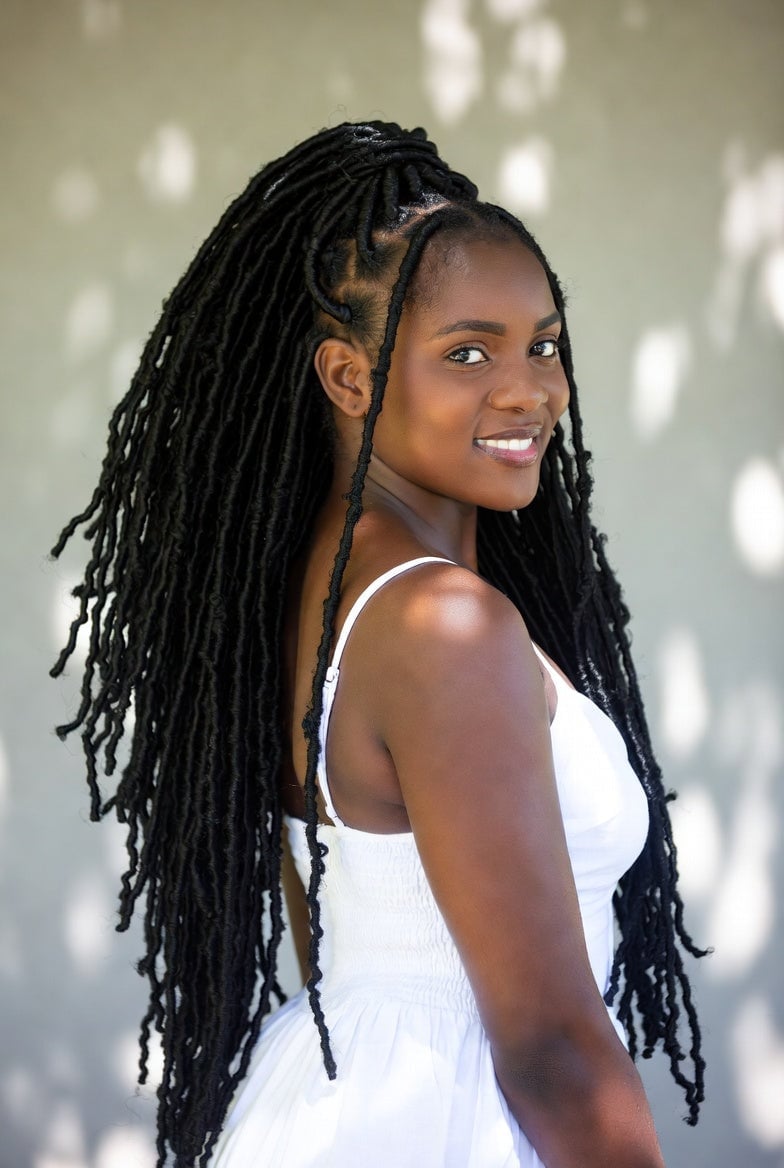
Can you get a high ponytail with faux locs that actually stays sleek without a salon visit? The answer depends on how much patience you have for tension and symmetry. This style pulls black faux locs up to a high ponytail that falls to the mid-back, with a soft, wavy texture that keeps the look from reading as severe. A middle part and a few front strands left loose to frame the face add polish without effort.
Ask your stylist for: mid-back black faux locs high ponytail, face framing. This is a salon-only move. Getting the ponytail base smooth and the locs evenly distributed requires a second set of hands and a strong elastic. DIY versions tend to sag within an hour or show bumps at the crown. The payoff for booking the appointment is a clean, sophisticated silhouette that holds all day.
Final Thoughts
If you are after significant volume or intricate braiding, book a professional. For looser, everyday styles, focus on keeping the locs moisturized and the parts defined. The right maintenance makes the difference between a style that works and one that falls apart by lunch.
- Cleanse locs gently every 1-2 weeks, focusing on the scalp.
- Moisturize locs regularly with a leave-in conditioner or spray.
- Protect locs at night with a silk or satin bonnet.
- Avoid excessive heat styling to preserve texture and integrity.
- Schedule professional touch-ups or retouches as needed, typically every 6-12 weeks.
Mastering classy soft locs means embracing their natural texture with elegant styling.
