

The part is the quiet workhorse of any braided style. A clean, deliberate line sets the foundation, turning a simple braid into something considered. This season, the shift is toward softer, lived-in color and glossy natural texture, with parts that stay sharp.
Here are 27 Classy Parts Braids, ranging from low-maintenance shoulder-length styles to high-impact cornrow-to-braid combinations. Whether your hair is fine or thick, straight or coily, there’s a look here that holds its line. We’ve solved the struggle of braids that look messy by noon: precise parts that stay put.
Blunt Collarbone Bob With Clean Middle Part
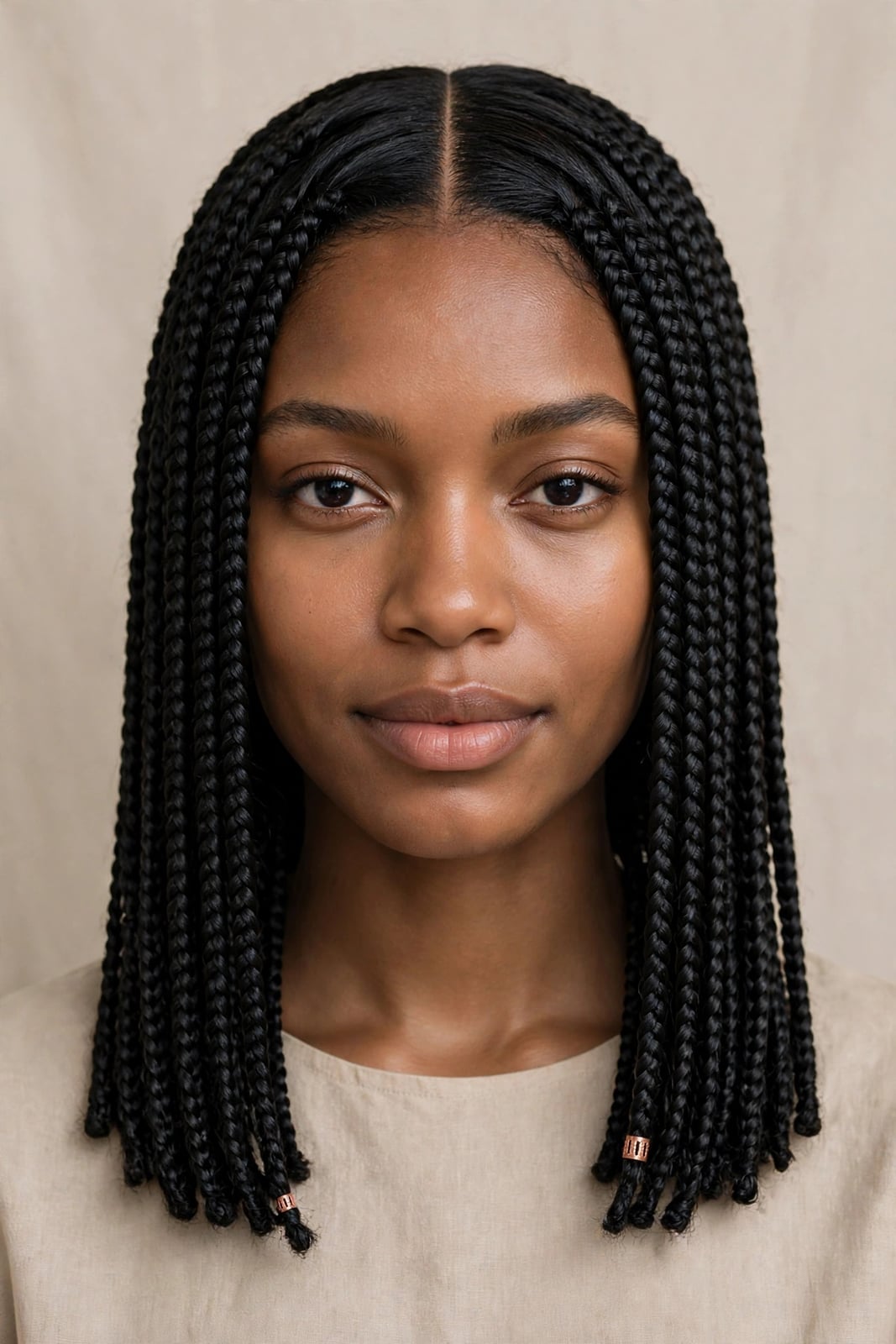
Thick black box braids cut to a blunt collarbone bob and parted in the center create a sharp horizontal line. The even density helps the shape hold its line without constant smoothing. Oval and heart-shaped faces get the clearest benefit from that edge. Ask your stylist for: blunt collarbone bob with box braids, clean middle part. A trim every six to eight weeks keeps the baseline crisp and the braid ends from feathering.
Long Box Braids With Amber Beads and Baby Hairs
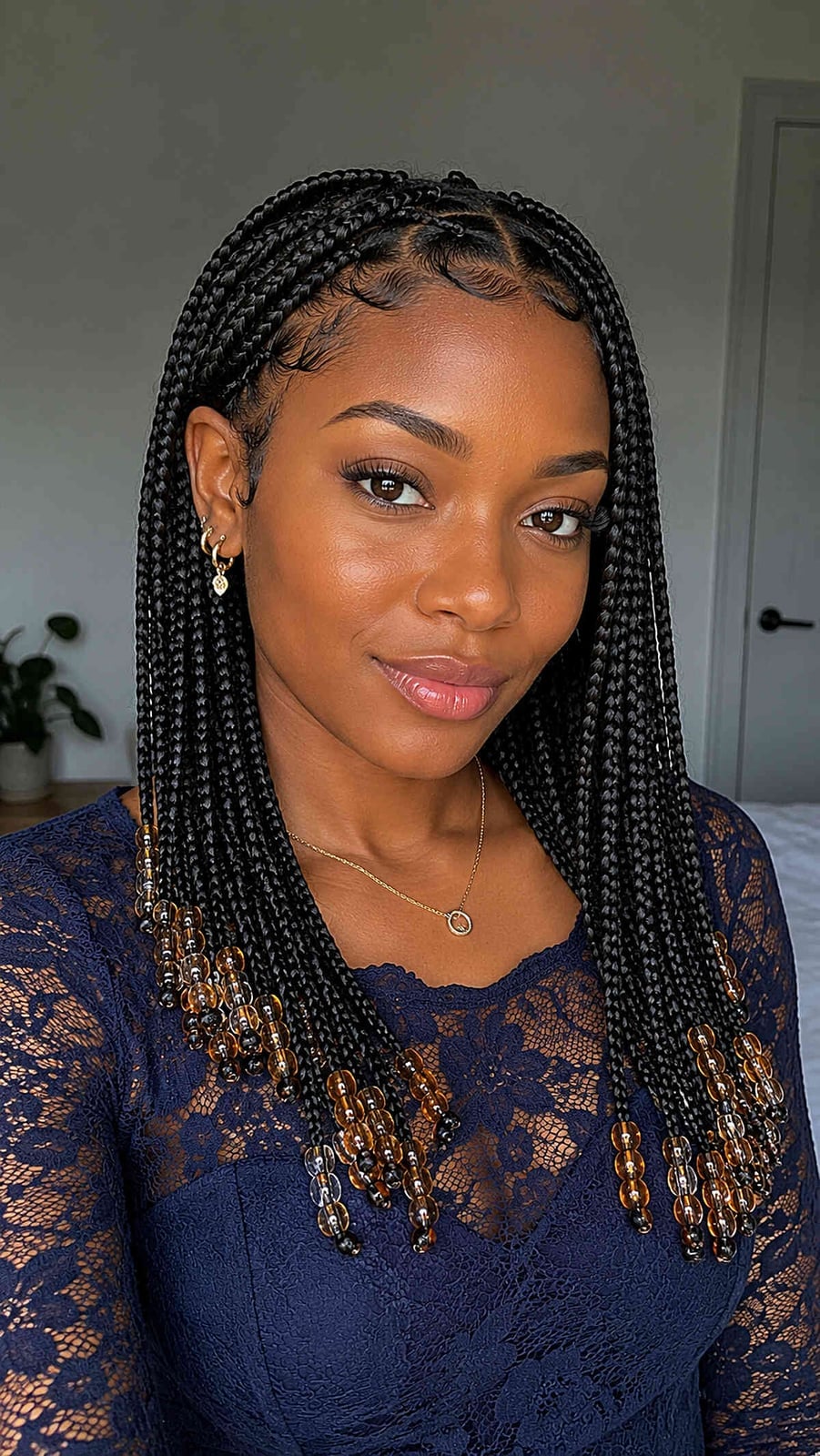
Long black box braids reaching mid-back gain structure from a clean middle part and weight from the amber beads threaded onto select sections. The beads add both sound and visual rhythm, so the braids need to be installed securely enough to handle the extra heft without pulling at the scalp. Ask your stylist for: long box braids with amber beads and styled baby hairs.
The baby hairs are shaped with a small brush and gel into curved swoops that frame the face without competing with the braids. The beads sit best on medium to thick braids; fine braids may not support them evenly. Expect the installation to take longer with the bead placement factored in.
Short Chin-Length Bob With Side-Swept Bangs
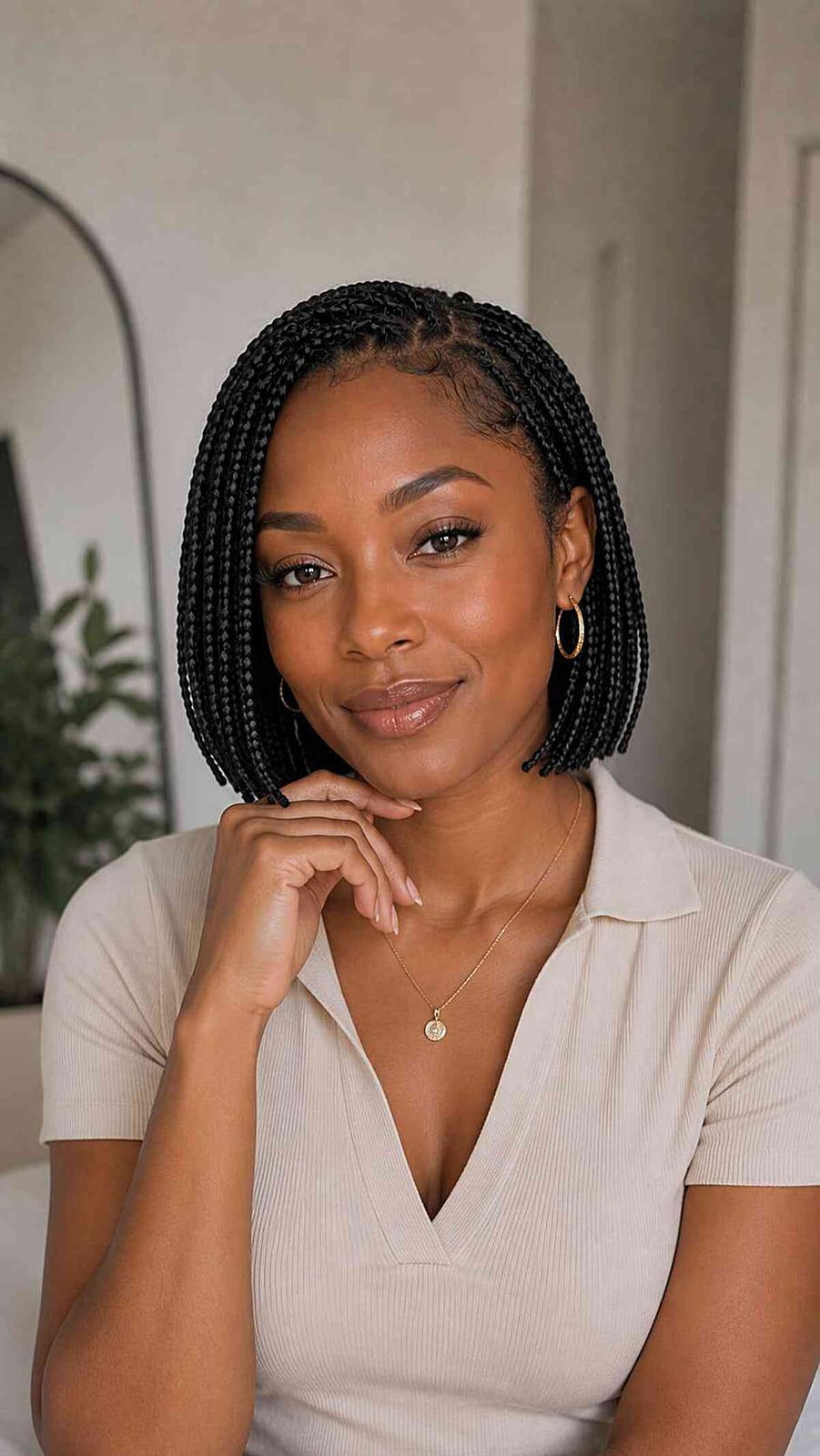
How do you get a short braided bob to land exactly at the chin with bangs that sweep to one side rather than lie flat across the forehead? The answer is in the parting. A side part creates the pivot point for the bangs to fall diagonally, and the fine braids keep the shape from feeling bulky at the corners. Ask your stylist for: short box braid bob, side part, soft side-swept bangs. The chin length works well for oval and heart-shaped faces.
Mid-Back Box Braids With Neat Middle Part
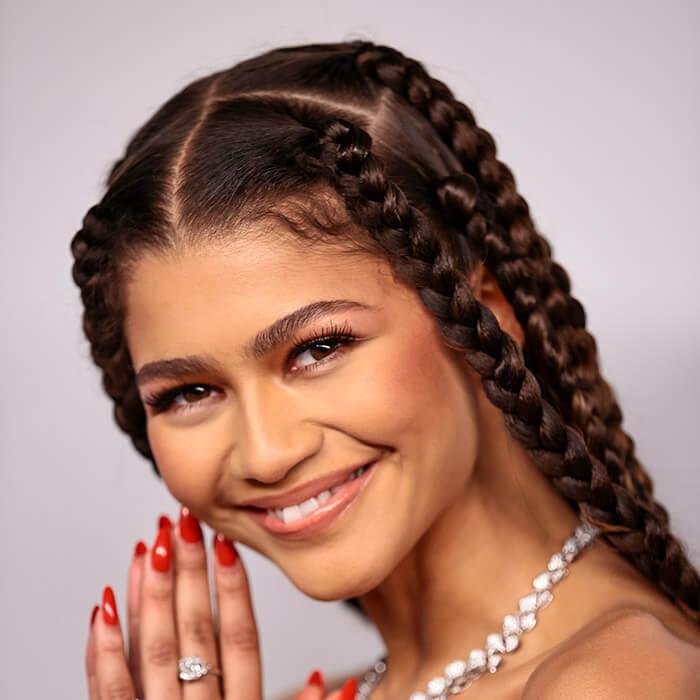
Dark brown thick box braids that hit mid-back rely on the middle part for their polish. When the part is straight and the braids are uniform in size, the whole style reads as one deliberate unit rather than a collection of strands. That clean line is the first thing to soften as the style ages. Ask your stylist for: mid-back box braids, neat middle part.
To keep the part sharp, run a fine-tooth comb along the center line each morning and press a dab of pomade onto the scalp. The braids themselves hold their placement for the full wear cycle, so the main daily task is maintaining that one straight line. A trim every six to eight weeks keeps the ends even.
Shoulder-Length Medium Box Braids Side Part
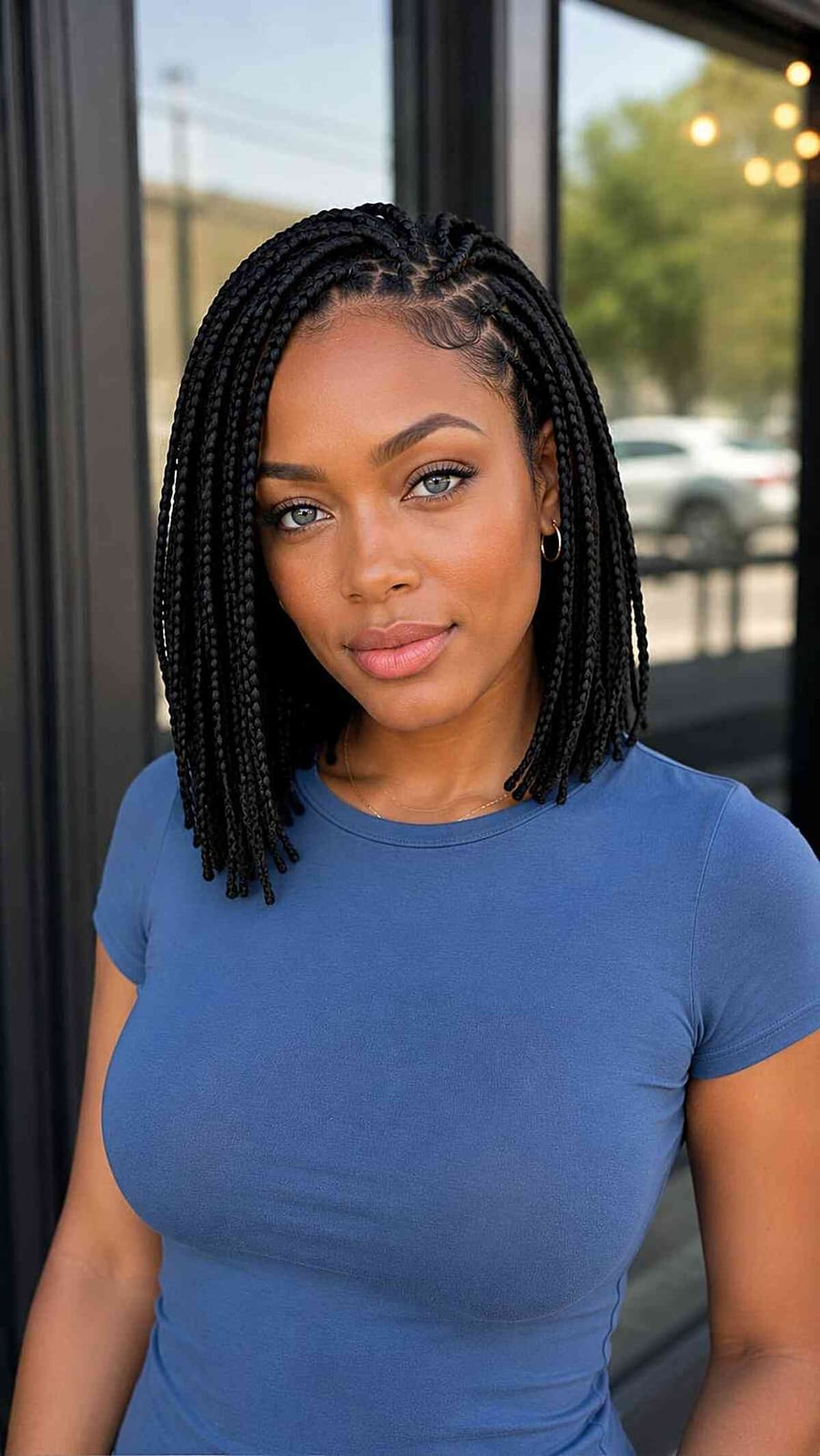
Longer braids can feel heavy on the scalp, and short bob braids require frequent baseline trims. Shoulder-length medium box braids with a side part split the difference: they clear the shoulders without dragging at the roots, and the side part adds crown volume that a middle part cannot. Ask your stylist for: shoulder-length medium box braids, side part. The straight texture and medium density keep the style manageable for daily wear. It is not a high-commitment length, but it is not a short one either.
Long Dense Box Braids With Middle Parting
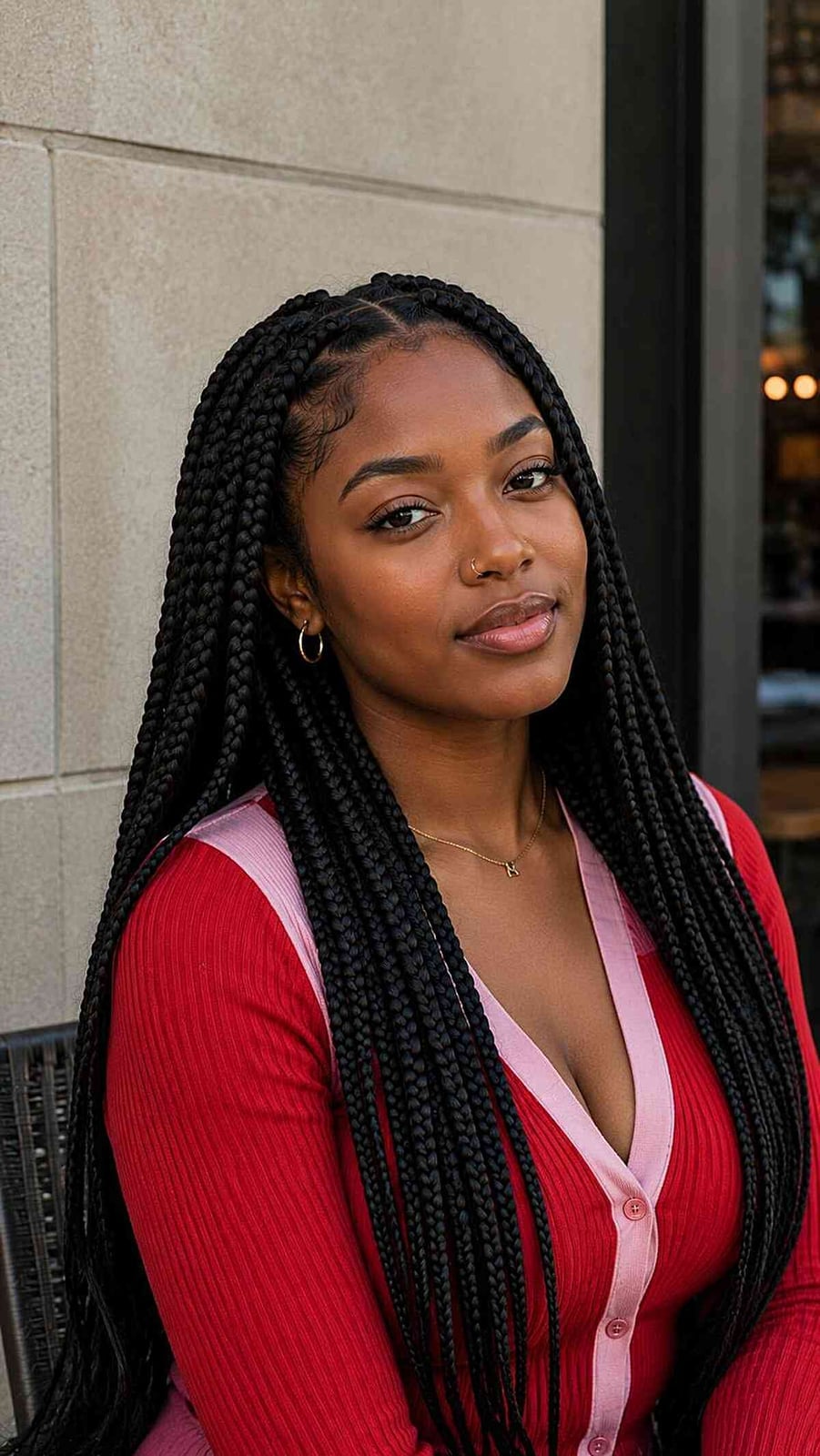
A middle part only works if it can stay put, and these long, dense black box braids at mid-back prove the point. The straight, uniform texture keeps the center line defined, making it a clear design choice in the style. This is a look for those with thick hair who want a classic, long braided style that holds its shape. A strong jawline pairs well with the clean symmetry, while finer hair may not support the density.
Ask your stylist for: long dense box braids, middle parting. The braids need to be secured tightly at the scalp before they extend, which is what keeps the part crisp for weeks. A trim of the ends every eight weeks maintains the blunt finish, and a light oil at the roots keeps the part looking sharp without weighing the braids down.
Thick Defined Box Braids With Dual Parting
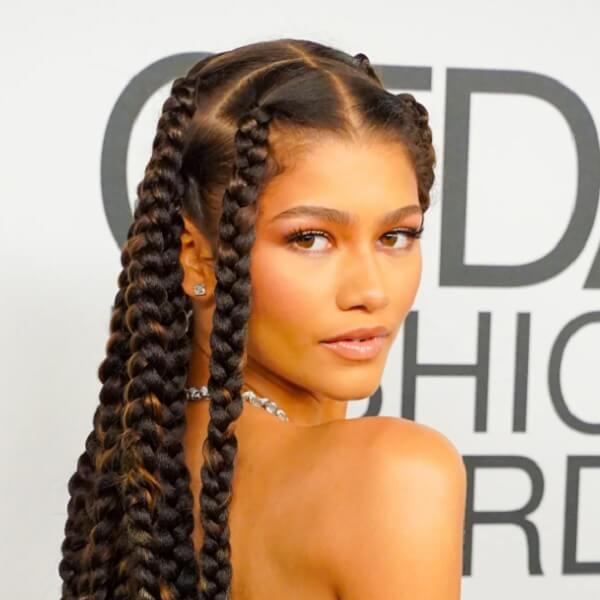
The trick to dual parting is in how the sections are mapped before a single braid is started. Here, thick dark brown box braids with subtle lighter streaks fall to mid-back, and the middle part anchors the design while side parts break up the scalp into defined zones. The straight texture of these large, defined braids makes the geometry read clearly, and the lighter streaks add depth without turning brassy.
Ask your stylist for: thick defined box braids, middle and side parts. Shifting the side part slightly from one week to the next changes the whole silhouette, which is a free styling trick. The hold depends on the parting being cut cleanly during installation, so a stylist who maps sections with a comb and clips is non-negotiable. For thick hair, this dual parting adds versatility and keeps the style from looking monolithic.
Blunt Bob Box Braids With Decorative Beads
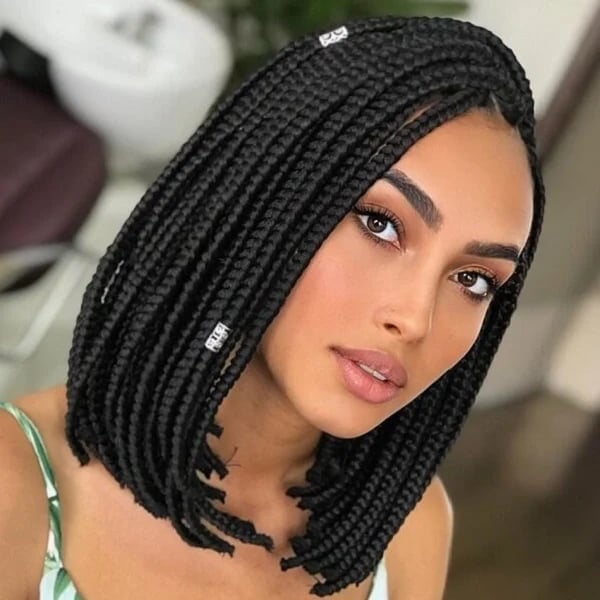
Can a bob made of box braids hold a blunt line? Yes, but only if you accept the maintenance. These collarbone-length black box braids with a middle part are cut straight across, and the small decorative beads add a playful touch that keeps the severity in check. The wavy, thick texture of the braids means the ends will want to curl under or splay out, so the blunt shape needs regular attention. Ask your stylist for: blunt bob box braids with decorative beads, middle part. The beads can snag on clothing or shed if not secured well, and the blunt hem requires a touch-up every four to six weeks to stay sharp. For thick hair that holds a bob shape, this is a festival-ready look with a bit of personality.
Cornrows Leading to a Low Bun
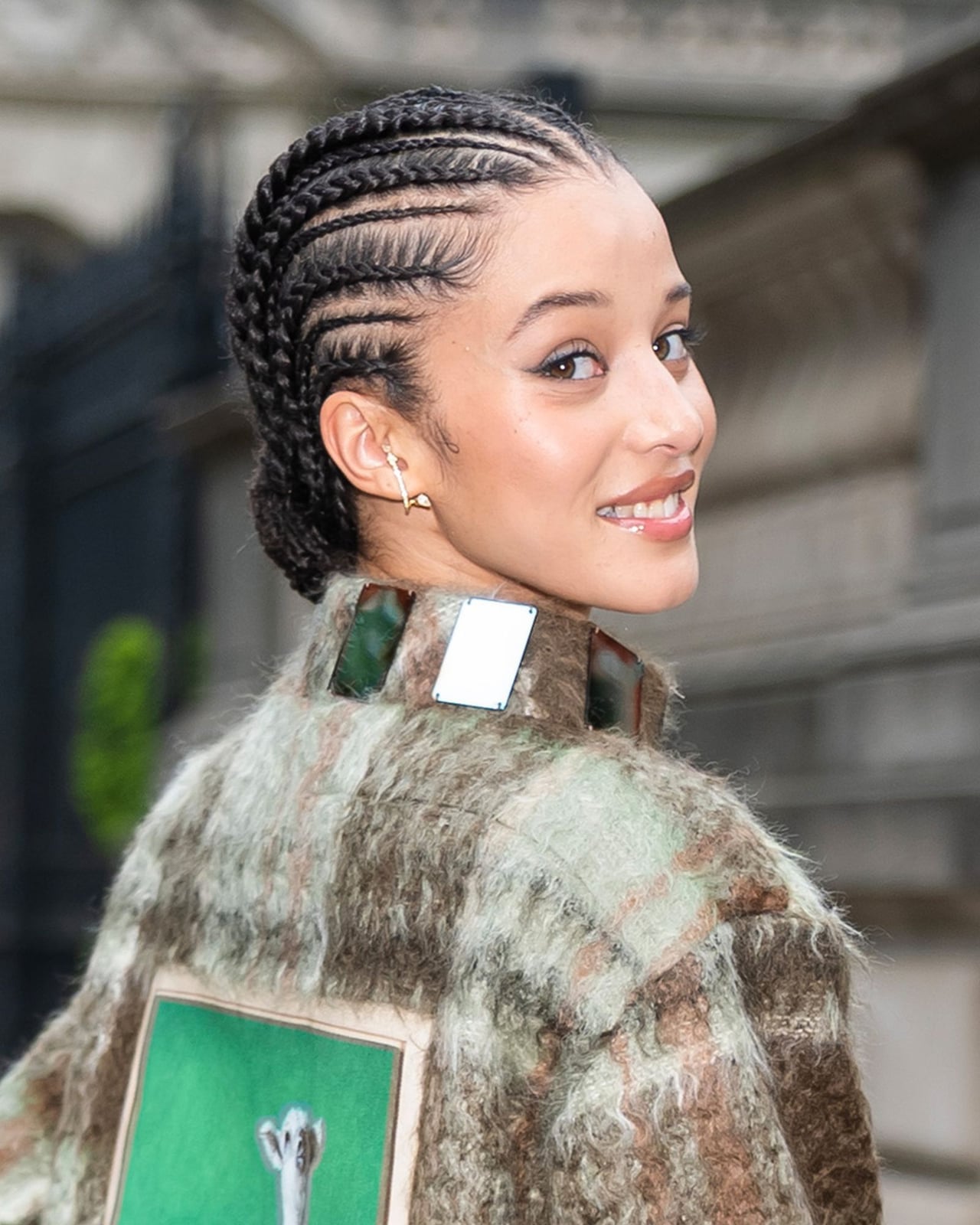
Cornrows that transition into a low bun are a study in controlled geometry. The black, thick cornrows are braided flat against the scalp with distinct parts, and they gather into a sleek bun that sits low on the back of the head. Ask your stylist for: cornrows styled into a low bun. The parts need to be mapped evenly from the front hairline back, and the bun should sit low enough to feel secure. This is a go-to for formal events or weddings, where the intricate pattern at the scalp adds interest without competing with other accessories. The hold is excellent because the cornrows anchor the style, and the bun stays put with a few pins and a strong-hold hairspray.
Box Braids With Geometric Parting and Curly Ends
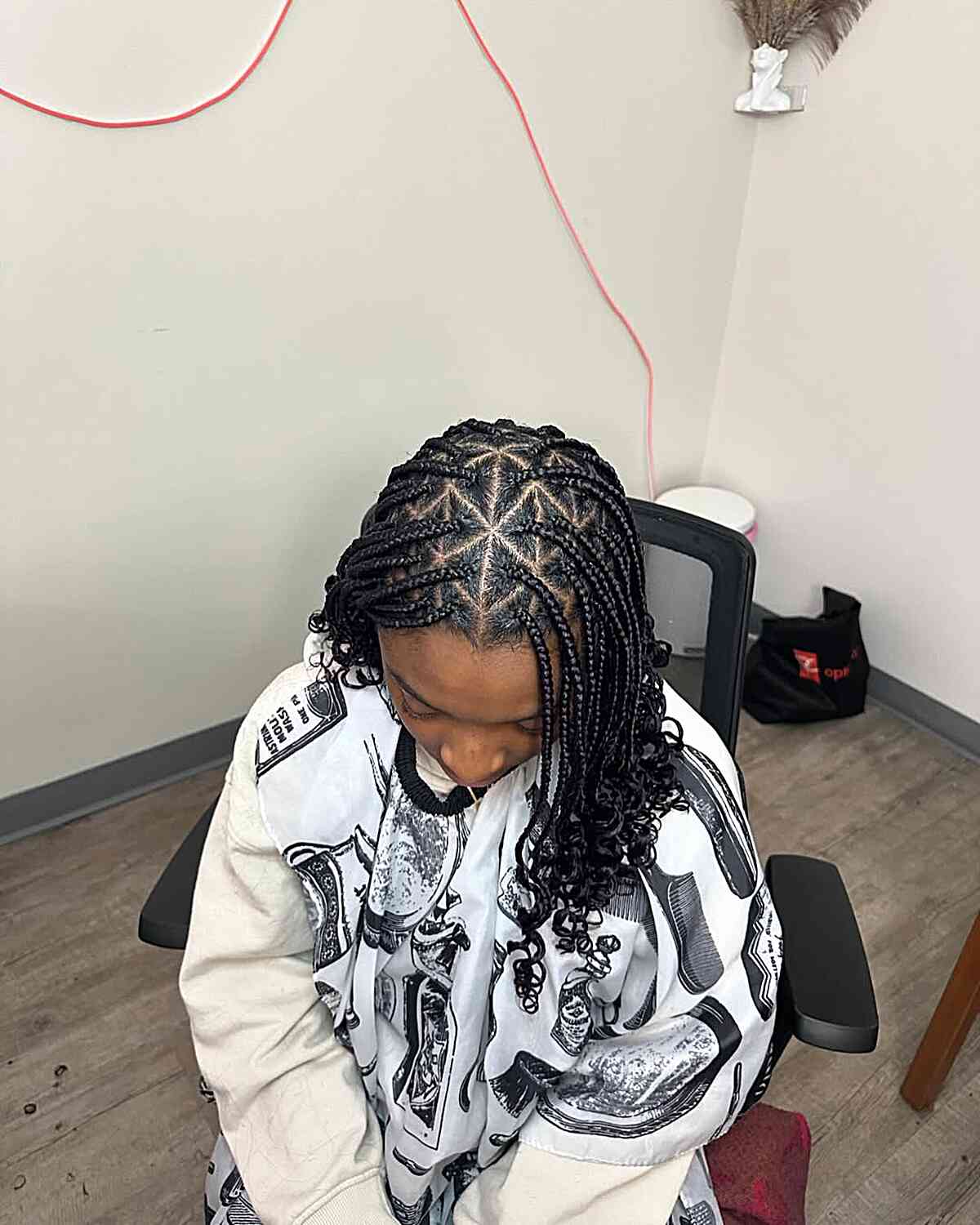
A geometric parting is a commitment to detail, and this collarbone-length box braids style makes that clear. The star pattern on the scalp is created with fine black braids, and some ends are styled into loose curls, which gives the design a soft finish. The sharpness of the geometric part is what holds the whole look together, so it requires a skilled hand during installation. Ask your stylist for: box braids with geometric scalp parting and curly ends. To keep the pattern visible, the braids need to be tight at the root, and a curl-defining cream on the ends helps maintain the wavy texture without frizz. The hold is strong, but the upkeep is real: the part needs to be re-defined with a rat-tail comb every few days to stop it from blurring, and the curls may need refreshing with a spritz of water.
Long Thick Box Braids With Curly Ends
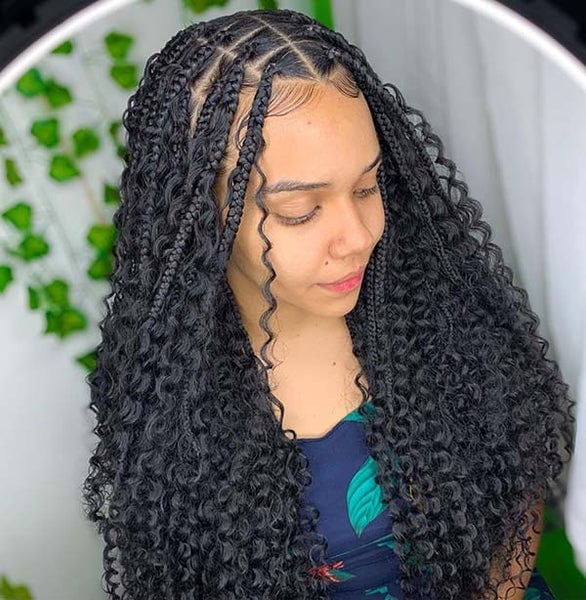
Long, thick box braids with curly ends read completely differently from their straight counterparts. The curls add movement and softness, so the overall silhouette feels fuller and less rigid, even though the black color and middle parting are identical. This is the version that hides some of the density of thick hair, making it a good match for anyone who wants volume without the visual weight of sleek, straight lines.
Ask your stylist for long thick box braids with curly ends and a middle part. The texture needs a bit more attention than straight braids: gently separate the curly ends with your fingers to keep their definition and volume intact. The braids themselves hold their shape well, but the ends will frizz if you rough them up too much, so treat them like the delicate part of the style.
Large Box Braids With Wavy Ends
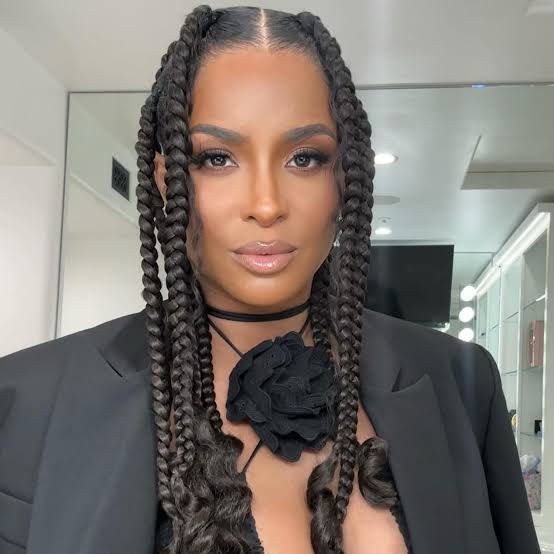
Large box braids cut the installation time down considerably, since fewer braids means fewer hours in the chair. These two substantial braids sit on either side of a middle parting, falling to mid-back with wavy ends that frame the face instead of hanging like sticks. The thicker sections hold their shape and stay put through a full day, which makes them a practical pick for thick hair.
Ask your stylist for two large box braids with wavy ends and a middle part. The key to keeping the look balanced is making sure the braids are evenly distributed on each side, so the parting stays dead center. This is a bolder style, and it suits anyone who wants the braided look without the meticulous upkeep of dozens of smaller sections.
Thick Straight Box Braids With Charms and Baby Hairs
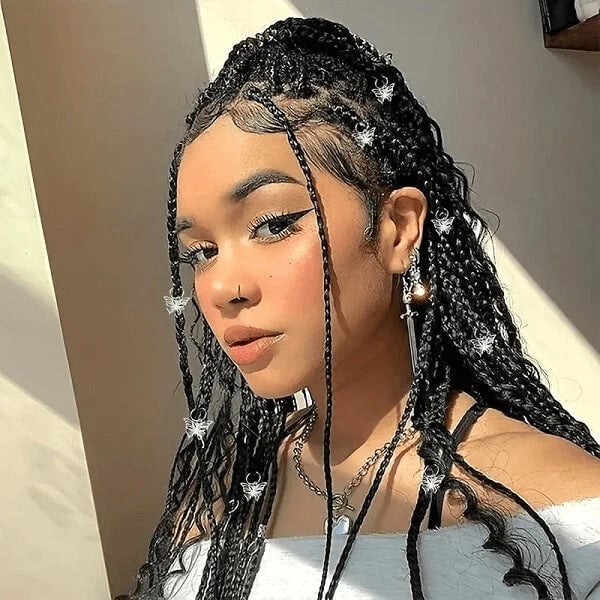
Small charms threaded onto thick, straight box braids turn a simple style into something with a bit of personality. The braids themselves are uniform and sleek, falling to mid-back with visible parts that keep the scalp neat, while the baby hairs around the hairline are laid down to finish the frame. The charms catch the eye without overwhelming the overall shape.
Ask your stylist for thick straight box braids with small charms and baby hairs. The technique matters here: charms need to be attached securely but not so tightly that they pull on the braids. Lightweight options are the safe call, since heavier ones will tug and stretch the roots over time. This style holds its structure well, and the straight texture keeps the look crisp for weeks.
High Ponytail With Long Box Braids
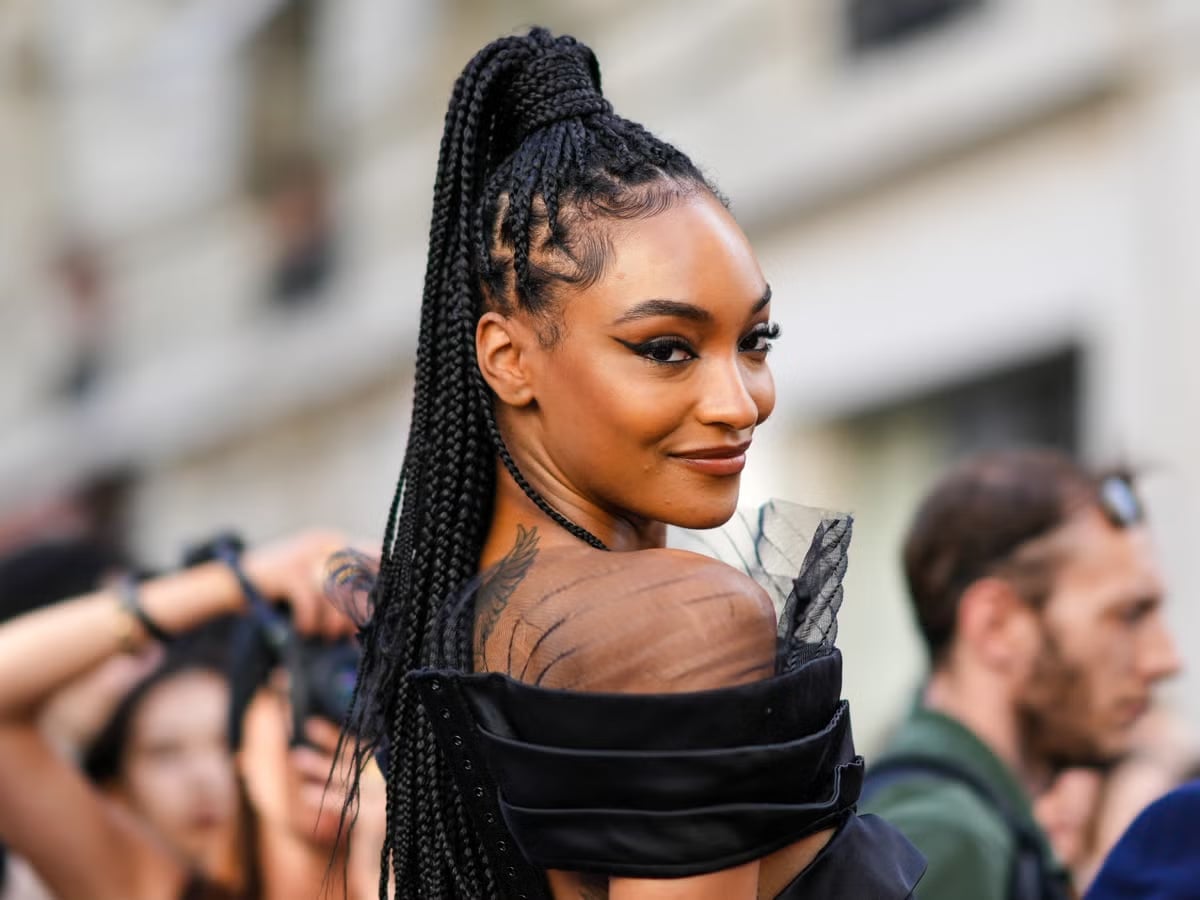
A high ponytail with long box braids is one of those styles that looks simple until you try to do it yourself. The braids are already heavy, and gathering all that length and thickness into a smooth, high gather takes more than a hair tie. The middle parting stays visible, and small accent braids at the hairline keep the front from looking bare, which is why the whole thing has a deliberate finish.
Ask your stylist for a high ponytail with long box braids and a middle part. This is a salon job, because getting the base tight and even requires an extra pair of hands and a strong elastic that won’t sag under the weight. Once it is up, it holds through workouts and long days, making it a smart option for anyone with an active routine.
Fine Wavy Box Braids With Loose Strands
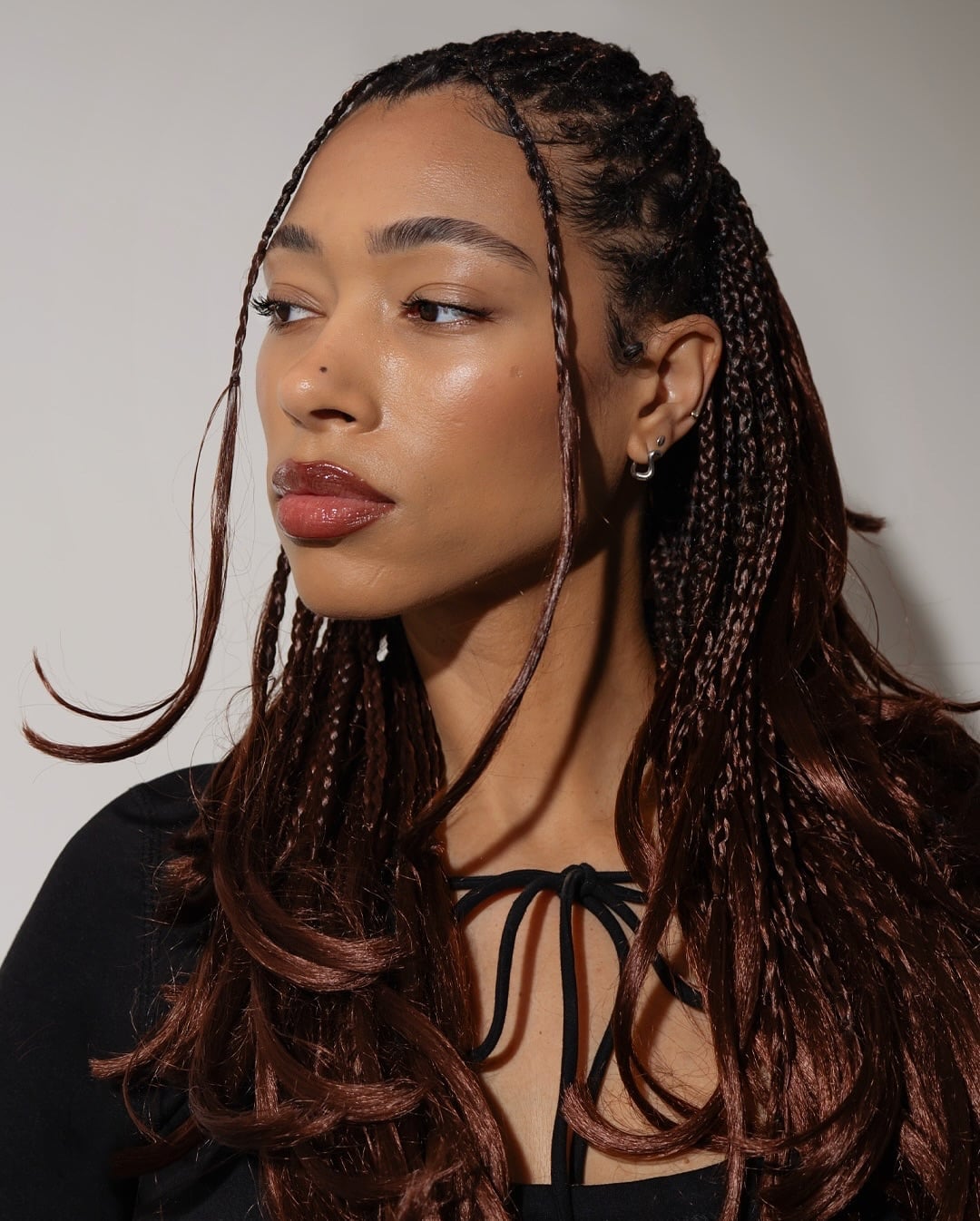
Fine wavy box braids with loose strands around the face give off a softer, more relaxed feel than their thicker counterparts. The dark brown color and middle parting keep the structure tidy, but the wavy ends and the few strands left out at the hairline add a lived-in quality that’s hard to fake with a heavy braid. It’s a good middle ground for anyone who wants braids without the severe, uniform look.
Ask your stylist for long fine box braids with wavy ends and loose strands around the face. The honest trade-off is that fine braids don’t stay put as neatly as thick ones: the loose strands will need tucking behind the ears or a quick re-smooth every few days, and the ends can frizz faster. If you’re not up for occasional tidying, a thicker braid will hold its line longer.
Thick Braids With Wavy Ends and Visible Parts
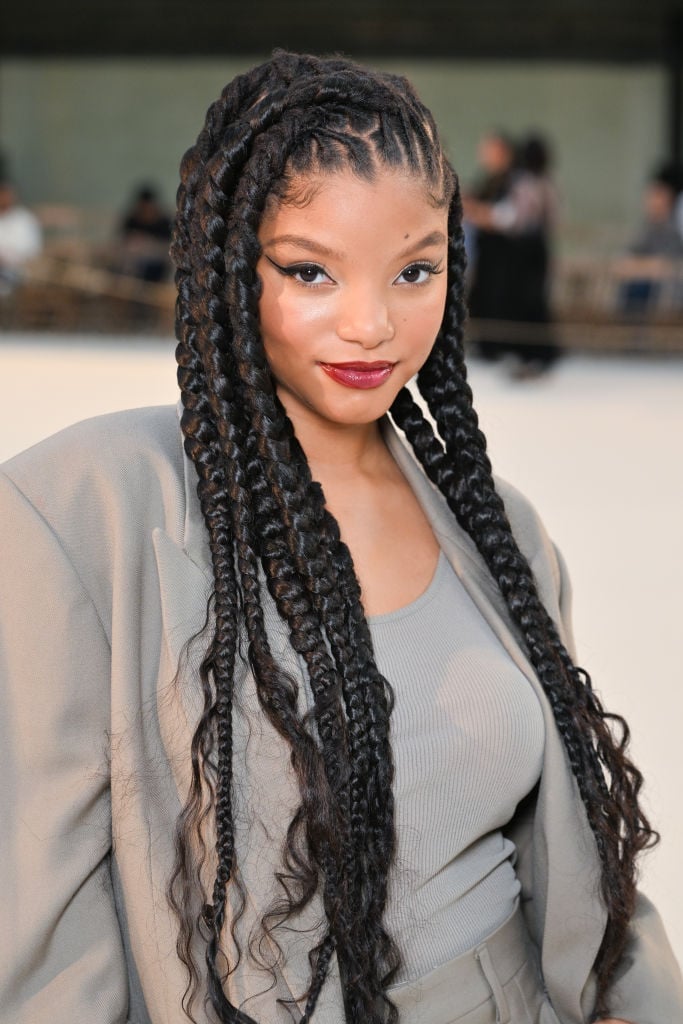
Thick braids hold their shape well, but the ends are where the personality shows. These long black box braids with a middle part and a slight wave at the tips keep the scalp sections clean and defined. The look suits anyone with thick hair who wants a classic long braid style with subtle texture. Ask your stylist for: long thick box braids with wavy ends and a defined middle part. A scalp serum or light oil on the parts keeps the skin moisturized and the lines sharp. The wavy ends need minimal fuss, a light spritz of water and a twist resets them between washes.
Cornrows Transitioning to Shoulder-Length Braids
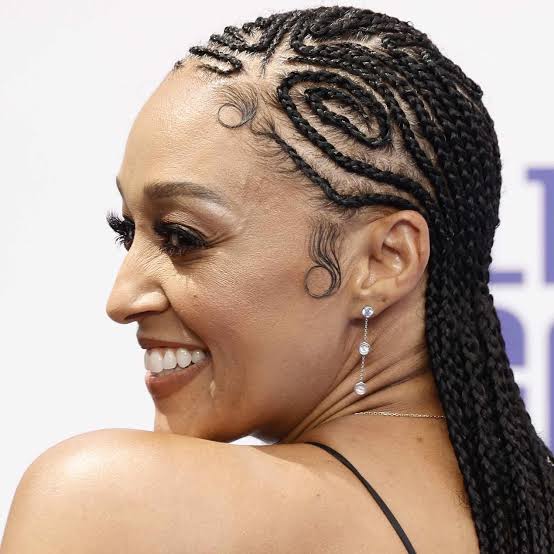
The design starts at the scalp with intricate black cornrows, then releases into thick shoulder-length braids. A clean middle parting anchors the pattern, while swirled baby hairs soften the hairline. This technique works best on thick hair that can hold the cornrow tension without strain. Ask your stylist for: cornrows transitioning to shoulder-length braids with swirled baby hairs. The precision of the cornrow sections determines how polished the transition looks, even spacing is non-negotiable. The braids land just past the shoulders, giving the weight of a longer style without the full length.
Uniform Dark Brown Box Braids Side View
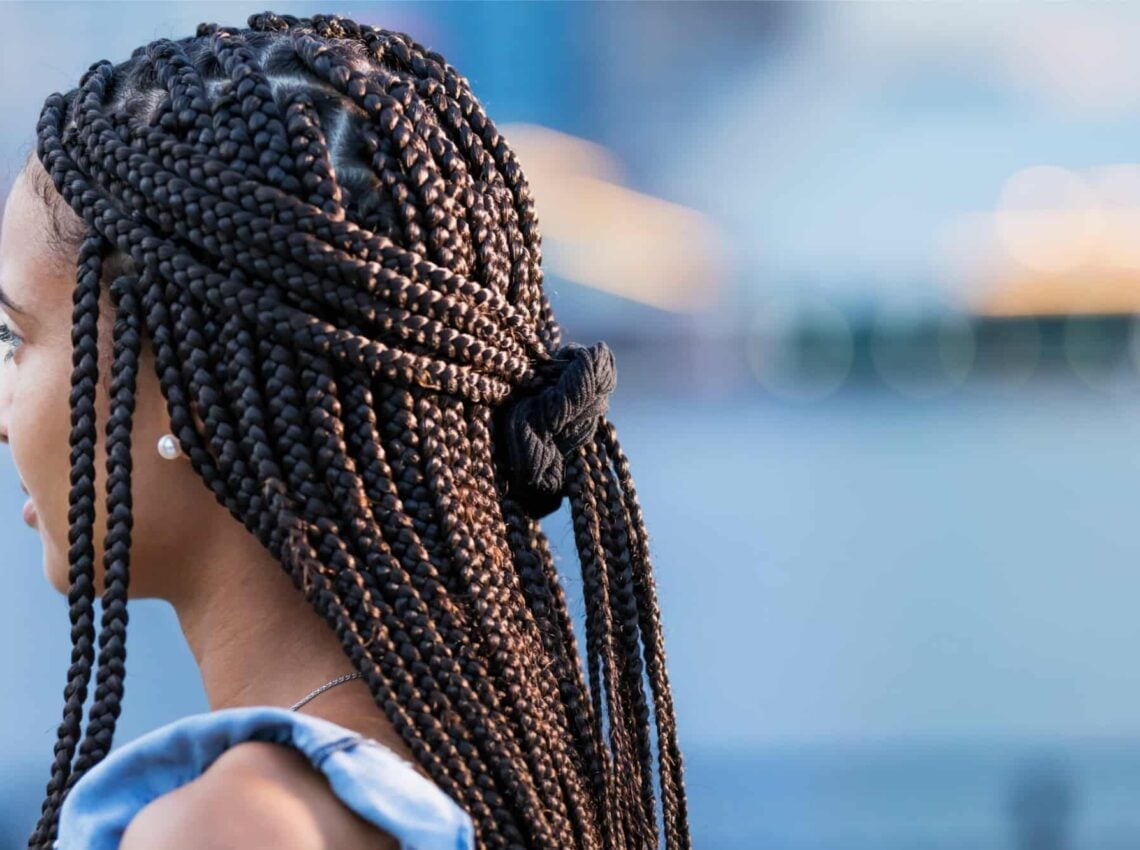
Uniformity is the quiet achievement here. These dark brown box braids are consistent in size from root to end, with visible parts that create neat, even sections all the way to mid-back. The straight, thick texture and side view emphasize how identical each braid is. This suits anyone who wants a reliably neat style every day. Ask your stylist for: uniform dark brown box braids with visible parts. If your natural texture is consistent, the braids will sit evenly; if not, a skilled braider can match the tension to compensate. The side view tells the whole story, no loose ends, no size variation.
Geometric Cornrows With Loose Curly Braids
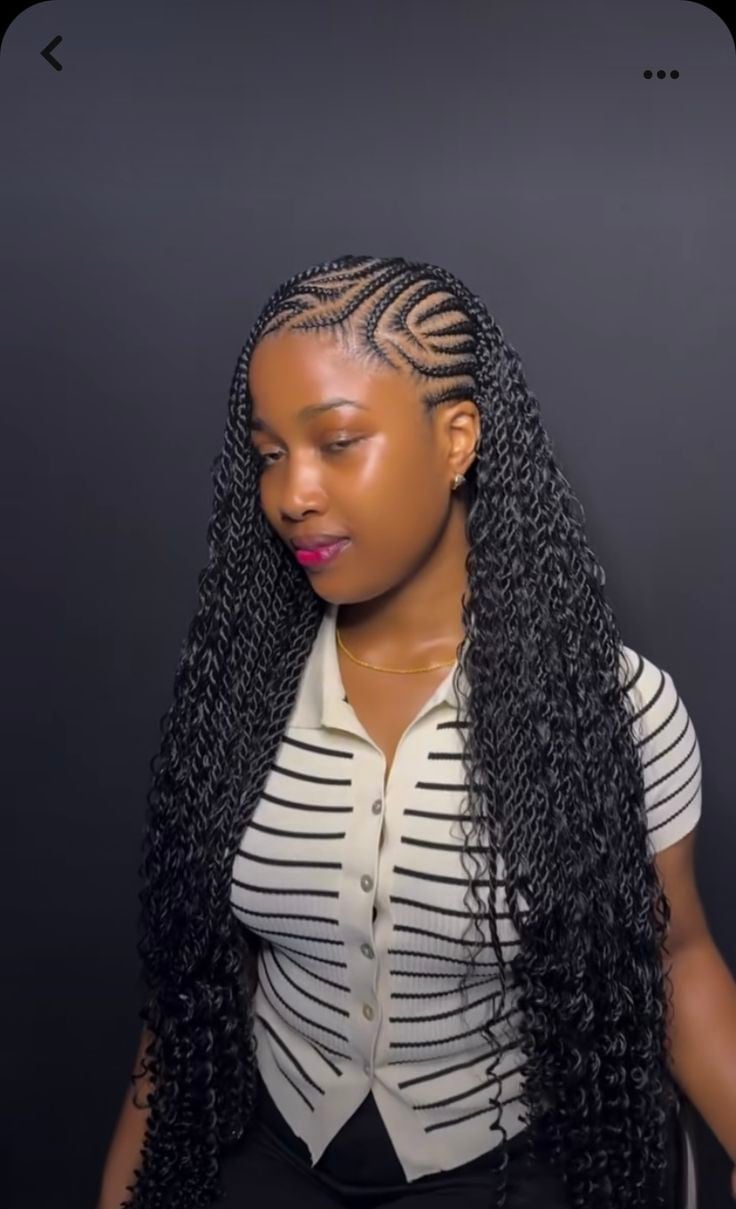
Geometric cornrows on one side transition into loose long braids with curly ends, anchored by a clear side parting. The contrast is the point: tight, angled cornrows against relaxed, curly lengths. Thick hair can support the cornrow pattern without pulling. Ask your stylist for: long braids with geometric cornrows on one side and loose curly ends. The side parting keeps the geometry visible. A light mousse on the curly ends helps them hold their shape without frizzing out.
Honey Brown Box Braids With Clean Middle Part
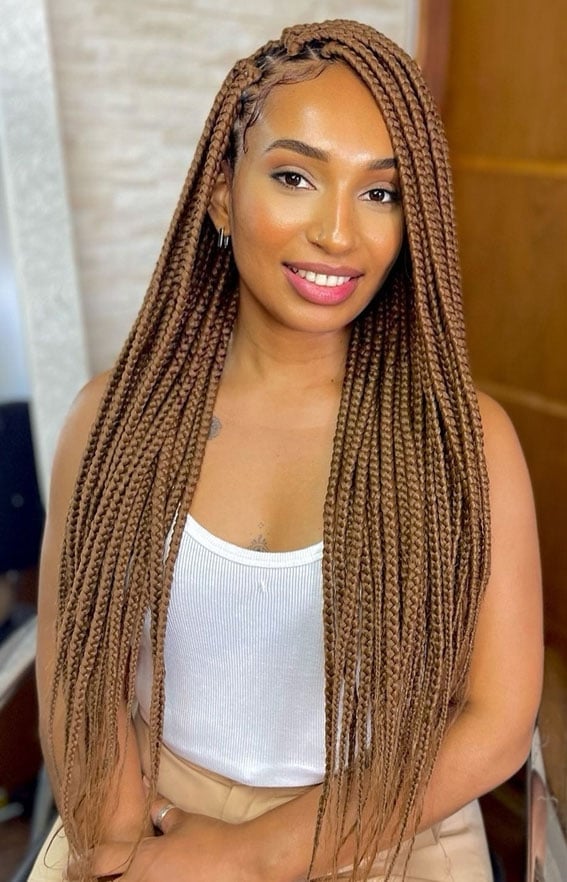
Honey brown adds warmth without going light enough to need constant toning. These long box braids are neat and uniform, with a straight, thick texture and a clean middle part that extends to mid-back. The part stays visible because the braids are installed with even tension from the start. This style suits anyone with thick hair who wants a dimensional color in a classic long braid format. Ask your stylist for: long honey brown box braids with a clean middle part. To keep the color from dulling, use a sulfate-free shampoo and avoid heavy oils on the lengths. A satin scarf at night protects both the part and the shade.
Brown Knotless Braids With Loose Tendrils
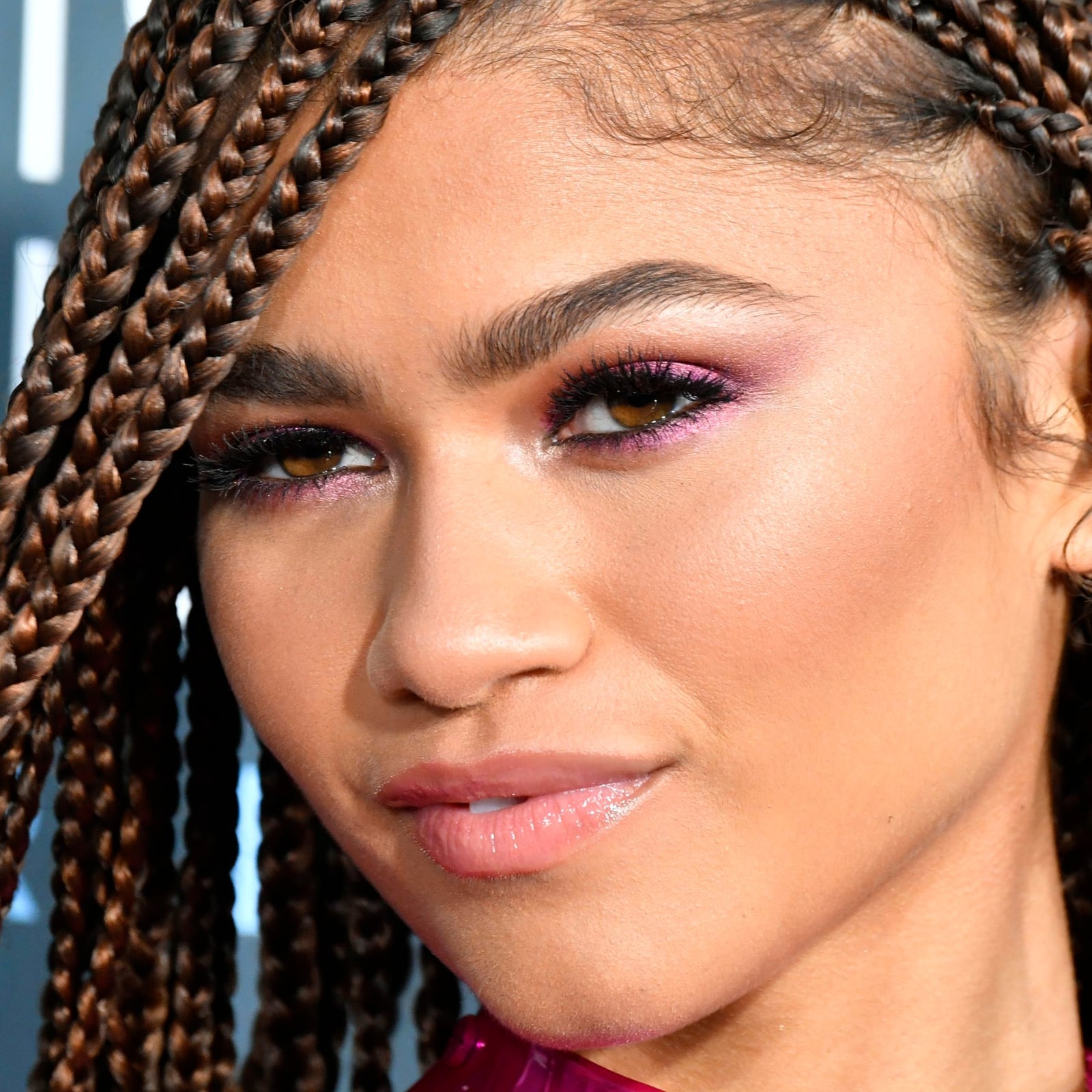
The brown color reads as one solid shade, and the wavy ends keep the mid-back length from feeling heavy. Ask your stylist for: brown knotless braids, middle part, loose tendrils. The loose tendrils are the detail that sells it: they break up the line of the braid and land softer than a straight row of sections. A bit of styling balm on those pieces stops them from fraying before the day is done. Who it suits: Thicker hair takes the knotless technique well, since the braid stays anchored without bulk at the scalp.
Box Braids With Curtain Bangs and Curly Ends
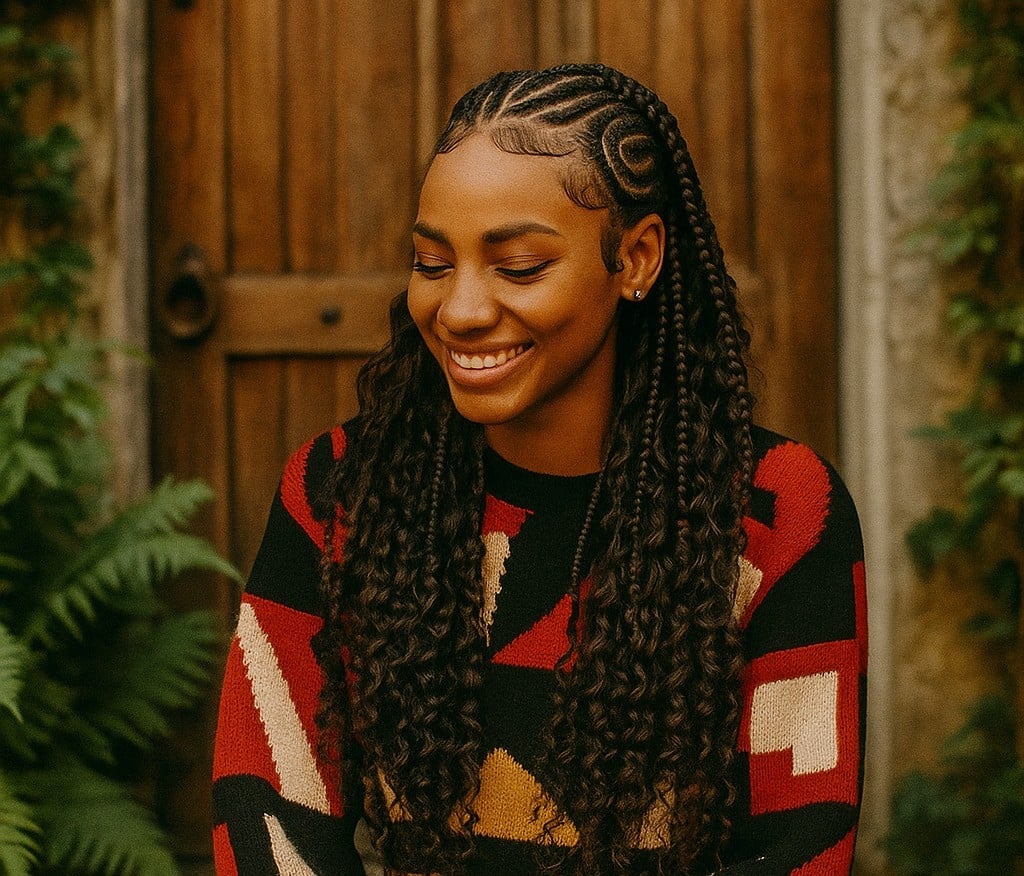
Dark brown box braids with subtle highlights fall to mid-back. The curly ends add a loose finish that straight braids do not give you. The curtain bangs frame the face without committing to a full fringe, which is useful if you like the option of pulling them back. Ask your stylist for: box braids with curtain bangs and curly ends. The middle part keeps the bangs balanced on both sides, and the highlights add dimension to the overall look.
Who it suits: The curtain bangs and curly ends work well on round and oval face shapes, since the soft arc of the bangs and the width of the curls balance the proportions without adding sharp lines. Thicker hair holds the curl at the ends longer, so the style keeps its shape between washes. If your hair is fine, the box braid technique can still work, but the curly ends may loosen faster and need a reset with a perm rod or flexi rod set.
Straight Box Braids With Blonde Highlights
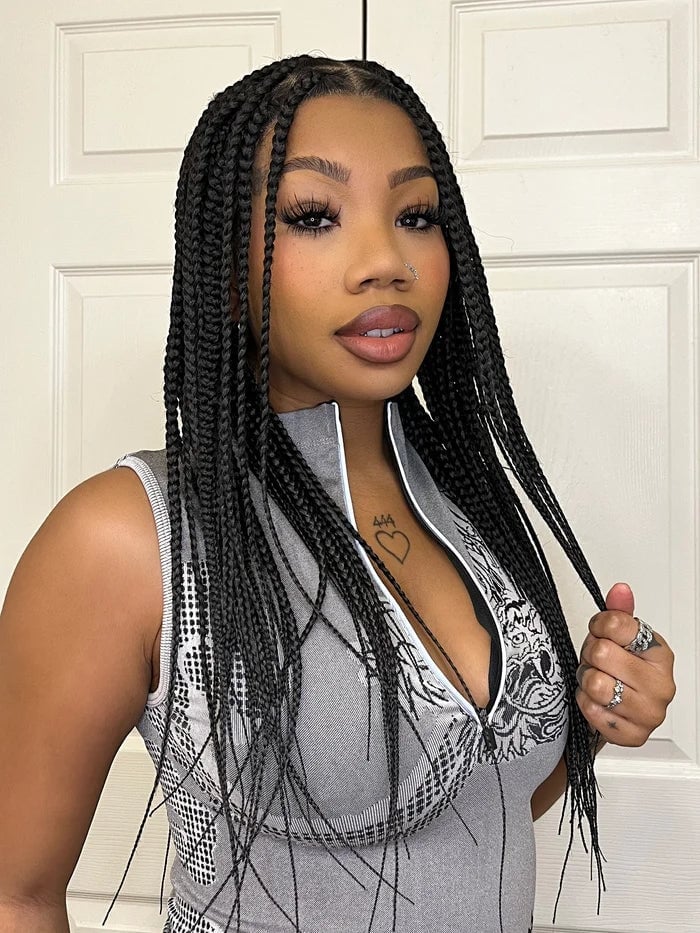
The neat parts are the foundation here: each section is a clean rectangle, and the middle part runs straight from the hairline to the nape without any drift. Long black box braids with subtle blonde highlights fall to mid-back, and the straight texture means the braids hang without kinks or bends. Ask your stylist for: long straight box braids with blonde highlights, middle part. The technique requires the stylist to map the sections before braiding, so the part lines stay crisp and the highlights sit evenly through the length.
Blonde highlights on a black base need a toner appointment every six to eight weeks if you want to avoid a brassy shift. A color-safe shampoo and a purple shampoo used once a week will stretch the time between toning sessions. The straight braid holds its shape for about six weeks before the new growth at the part lines starts to soften the definition, which is the signal to book a refresh.
Cornrows Transitioning to Mid-Back Braids
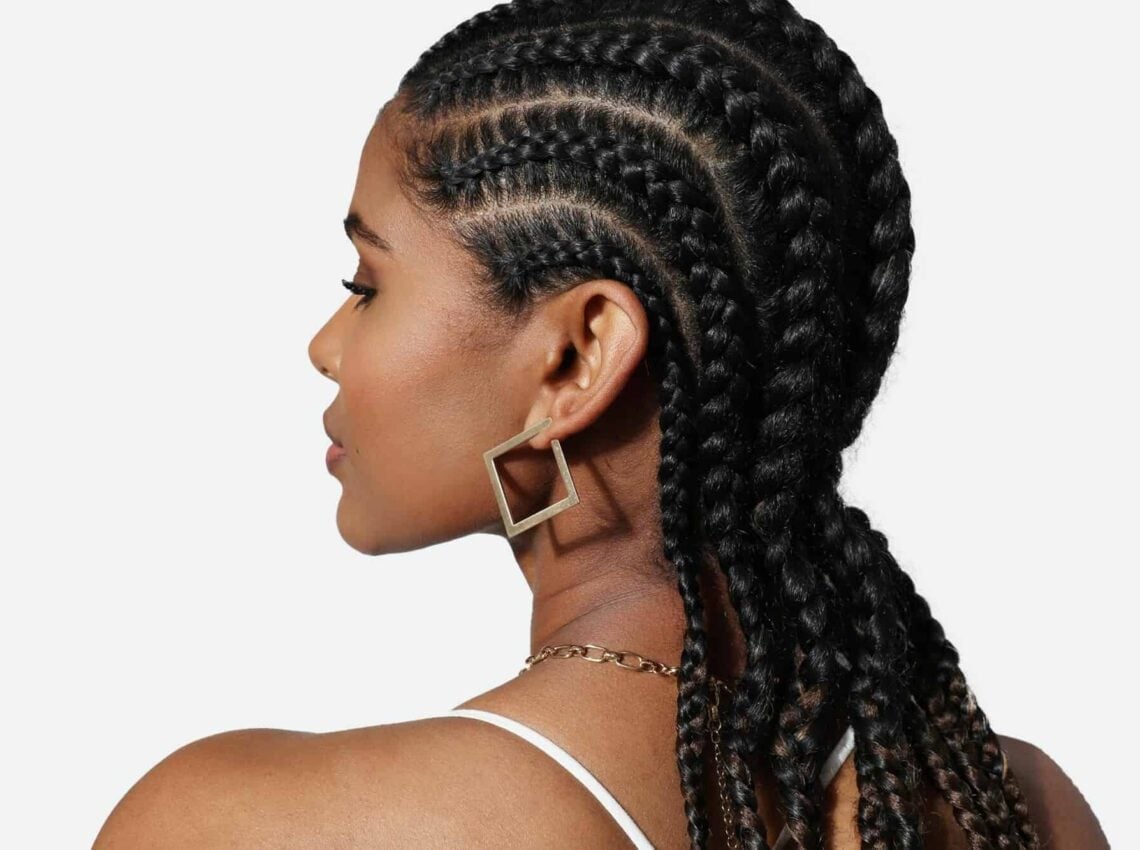
The intricate parting and braid pattern run from the front hairline to the crown, then the cornrows release into thick, straight braids that reach mid-back. The visible parts are what make the transition work: the cornrow sections stay tight against the scalp, while the braids below hang freely. Ask your stylist for: cornrows transitioning to thick mid-back braids. This is a salon-only style, not a DIY project. The cornrow base demands even tension and precise sectioning that is hard to replicate on your own head, and the transition point where the cornrow becomes a loose braid needs to be sealed so it does not unravel. Plan for three to four hours in the chair, depending on the density and length of your hair.
Dimensional Braids With Gold Accents and Beads
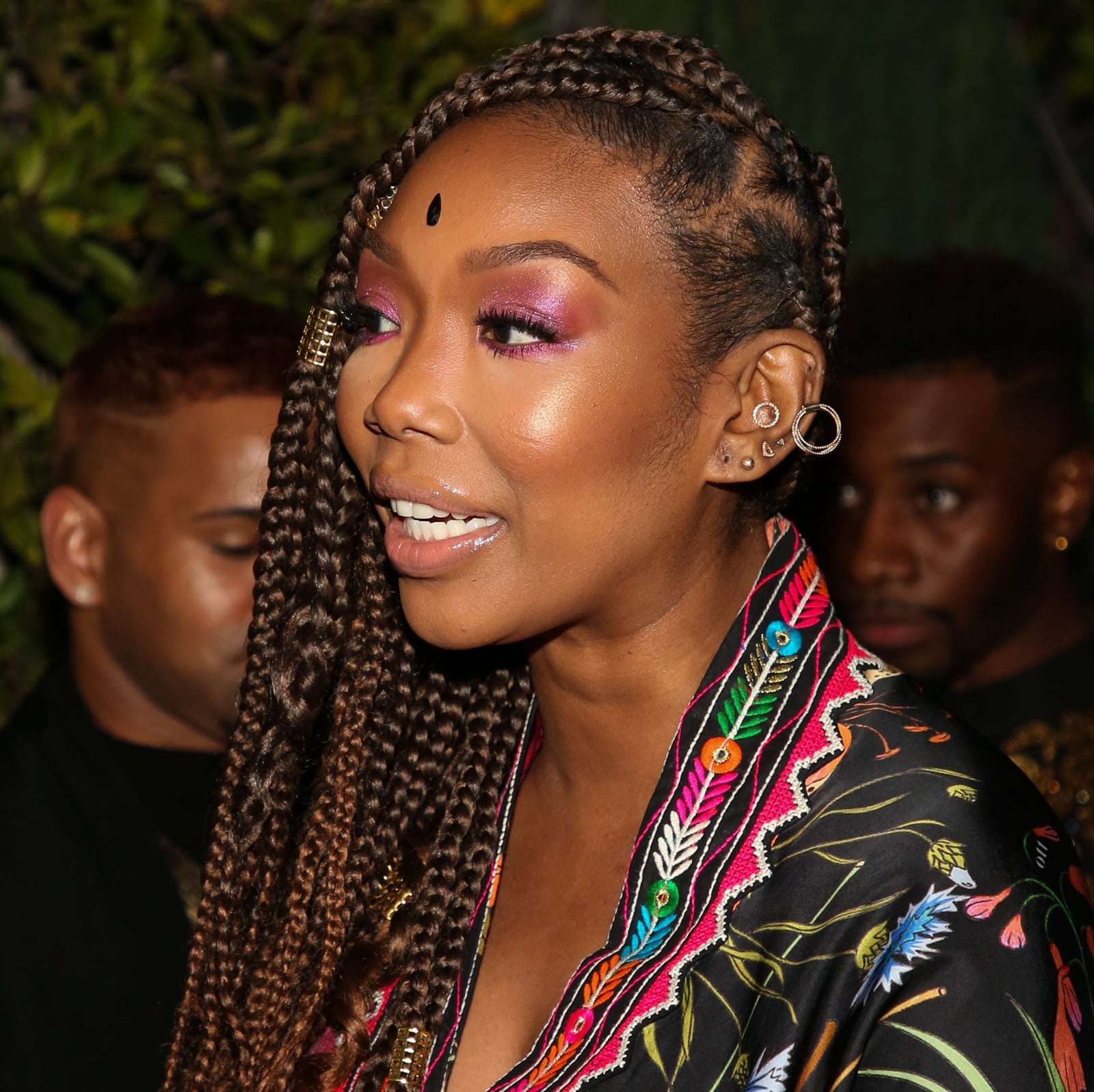
Long, thick braids in brown and blonde tones are parted down the middle, and gold accents and beads are threaded through the length at intervals. The dimensional color comes from alternating dark and light strands, which gives the braid depth without needing highlights painted on later. Ask your stylist for: long dimensional braids with gold accents and beads, middle part. The beads and gold accents are the draw, but they come with a trade-off. They can snag on scarves, jacket collars or seat belts, and a loose bead requires a trip back to the stylist to rethread. This is a party and special event style, not an everyday default, since the metal pieces pull on the braid and can cause tension at the root over a full week of wear. If you sleep on your side, wrap the braids in a silk scarf to keep the beads from pressing into your scalp.
Long Micro Braids With Clear Middle Parting
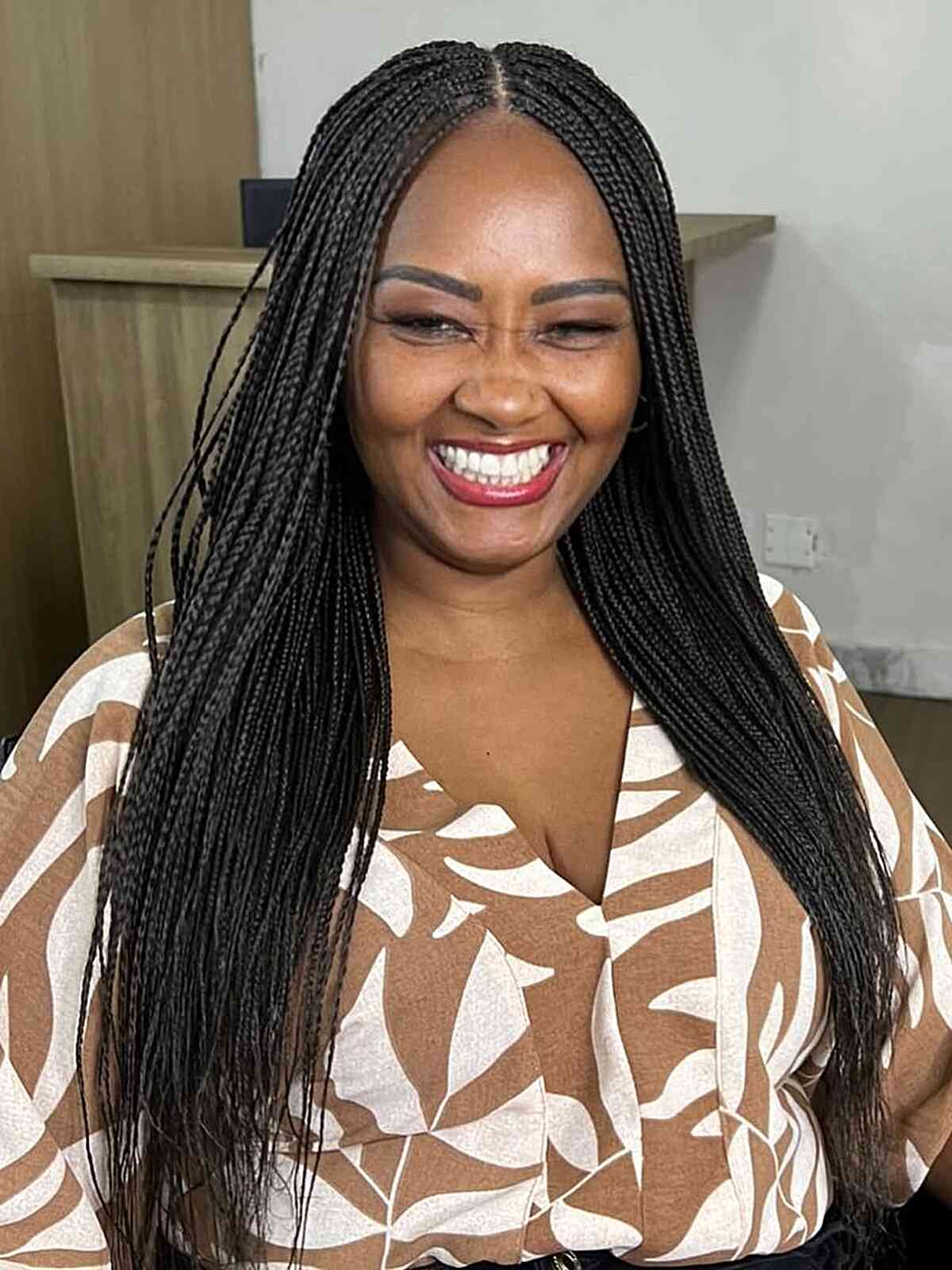
How long do you actually want to sit in a stylist’s chair? If the answer is “a good while,” long micro braids with a clear middle parting are worth the appointment time. These tightly woven black braids have a straight texture and no bangs, giving you maximum detail per inch.
This style suits fine to medium hair that can handle the tension of small sections without looking sparse. Ask your stylist for: long micro braids, clear middle parting. The installation alone takes several hours, and removal requires just as much patience. Plan for professional maintenance every four to six weeks to keep the edges neat and prevent unraveling at the nape.
Box Braids With Black and Blonde Tones
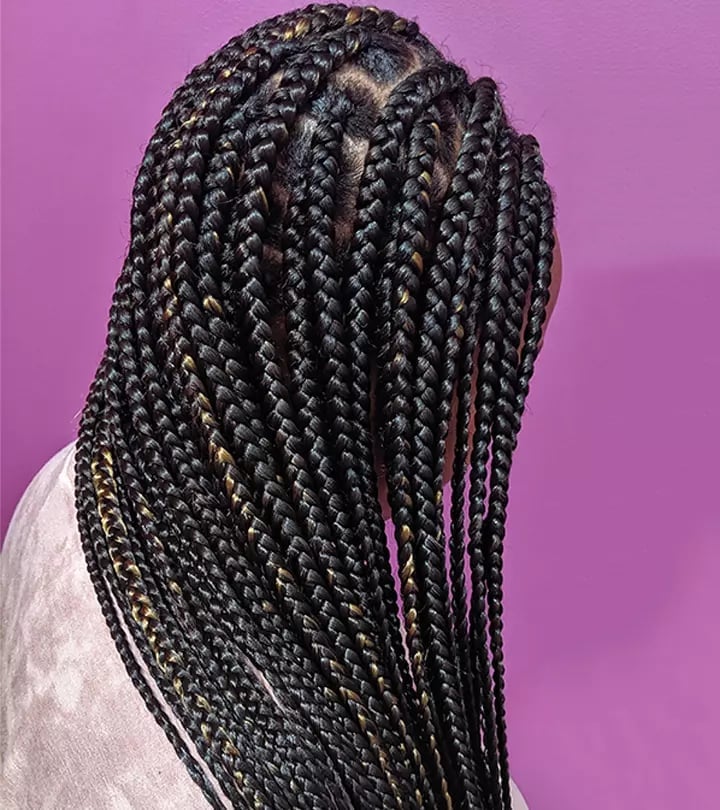
Black and blonde tones alternate through each braid, creating a two-tone effect that stays readable from the back. Thick hair carries the look best, since the alternating colors need enough braid width to register clearly. Ask your colorist for: box braids with black and blonde tones, middle part. Alternate washing with a color-safe shampoo to keep the blonde from turning brassy and the black from fading too warm.
Final Thoughts
For a sharp, modern look, opt for blunt ends and a precise middle part. For a softer feel, consider side parts or styles with face-framing tendrils. Your part sets the tone, so choose the one that matches your daily routine.
- Maintain clean parts with regular touch-ups every 2-3 weeks.
- Use a silk scarf or bonnet at night to preserve braid structure and shine.
- Apply a lightweight braid sheen spray to combat frizz and add gloss.
- Avoid excessive manipulation to prevent tension and breakage at the roots.
Mastering the part is mastering the braid.
