

Ombré hair is essentially a graduated fade from a darker base to lighter ends, and right now the most refined versions skip harsh lines in favor of a soft, blended transition. The current shift favors lived-in color over chunky highlights, which means less time in the chair and a more natural grow-out.
This collection of 33 cuts and color combinations covers collarbone bobs with curtain bangs all the way to long, layered waves, so there is a Classy Ombré Hair look for most textures and face shapes. If fine hair tends to fall flat or a visible root line drives you crazy, these ideas solve both without sacrificing dimension.
Collarbone Lob With Curtain Bangs And Ashy Ombré
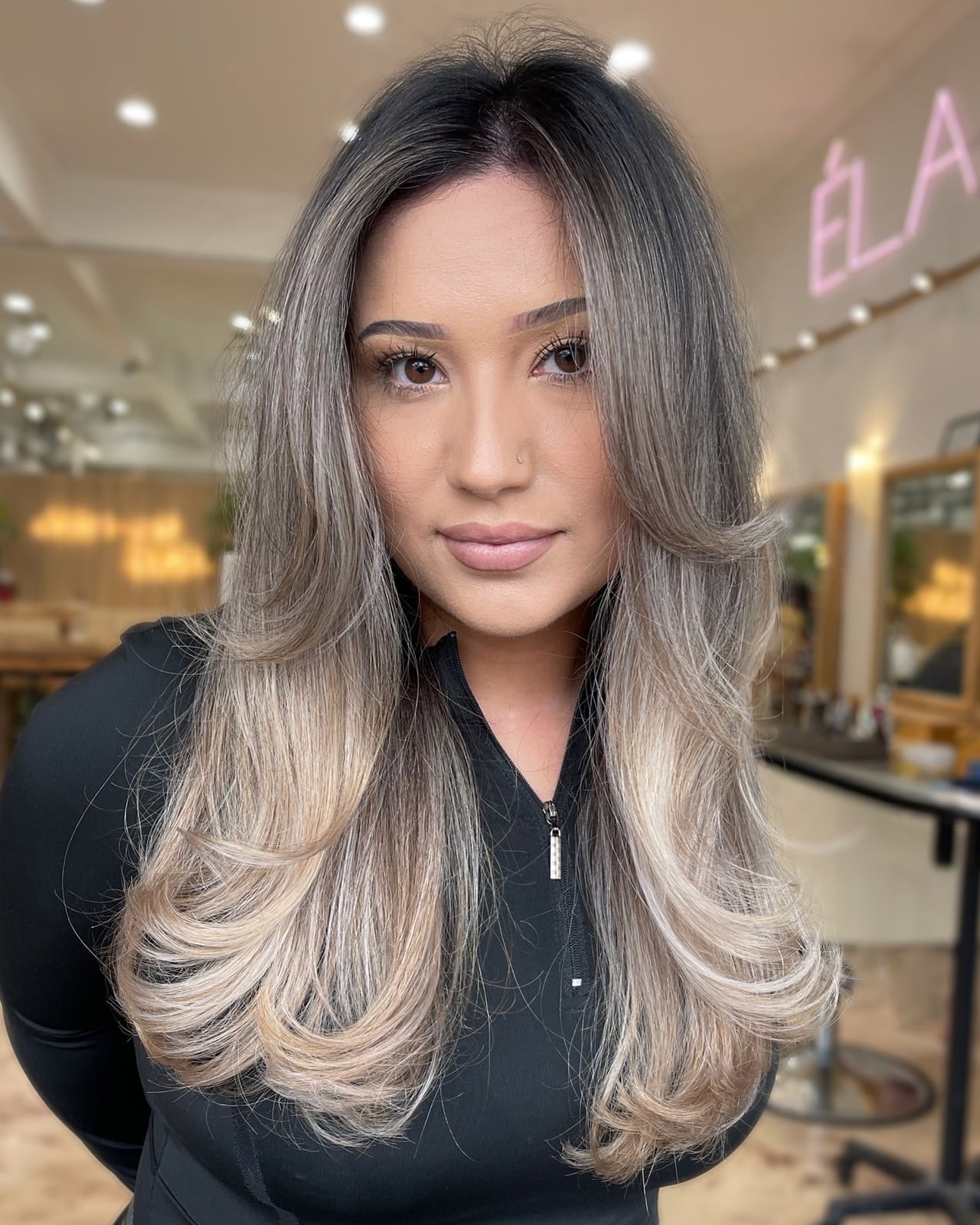
This lob uses long layers to keep the collarbone length from feeling heavy, which matters when you are working with medium-density wavy hair. The dark ash blonde to platinum blonde ombré lands the lightest pieces around the ends, so the curtain bangs stay dark at the root and catch brightness only where they graze the cheekbones. That placement tends to soften round and heart faces without requiring a full fringe commitment. Ask your stylist for: collarbone lob, long layers, dark ash to platinum blonde ombré, curtain bangs. Blow-dry the fringe with a round brush to set the curve, and book a trim every six to eight weeks to keep the ends blunt.
Long Layered Hair With Dark Brown To Blonde Ombré
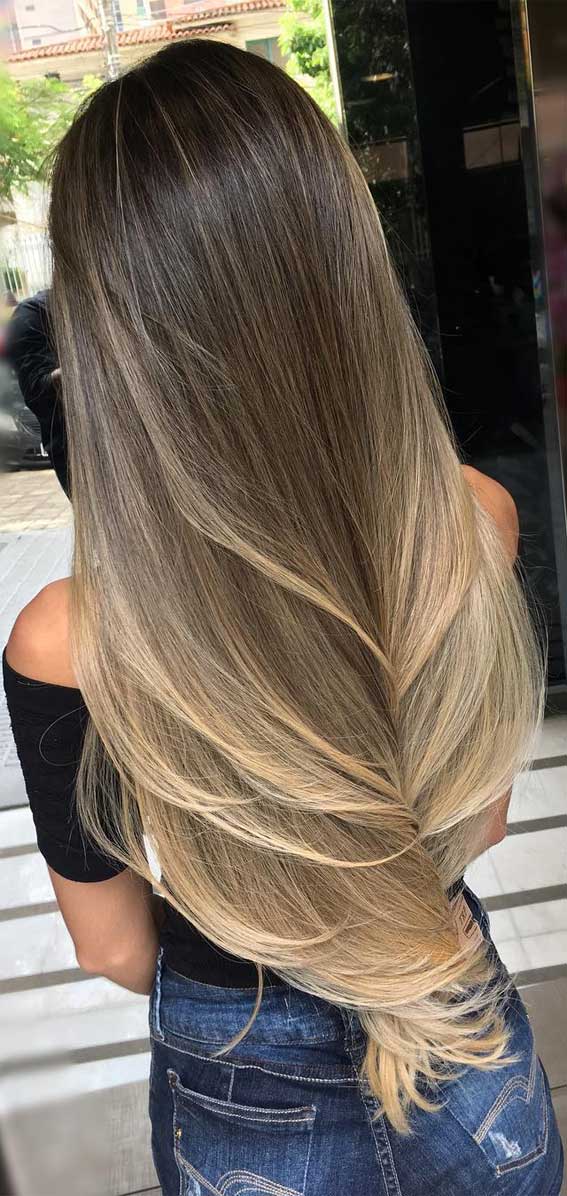
The seamless transition from dark brown roots to bright blonde ends is the technical trick that makes this ombré read as intentional rather than grown out. Long layers are cut throughout the mid-back length to prevent thick hair from turning into a triangle, and the loose waves are set with a large-barrel curling iron to show off the gradient. A middle parting helps the color fall symmetrically down both sides, which is useful for balancing a long face with volume at the sides.
Ask your colorist for: long layers, dark brown to blonde seamless ombré. The process takes a few hours in the chair because the blend needs to be painted section by section. A trim every eight to ten weeks keeps the layers from tangling at the ends.
Thick Wavy Mid-Back Hair With Bronde Ombré
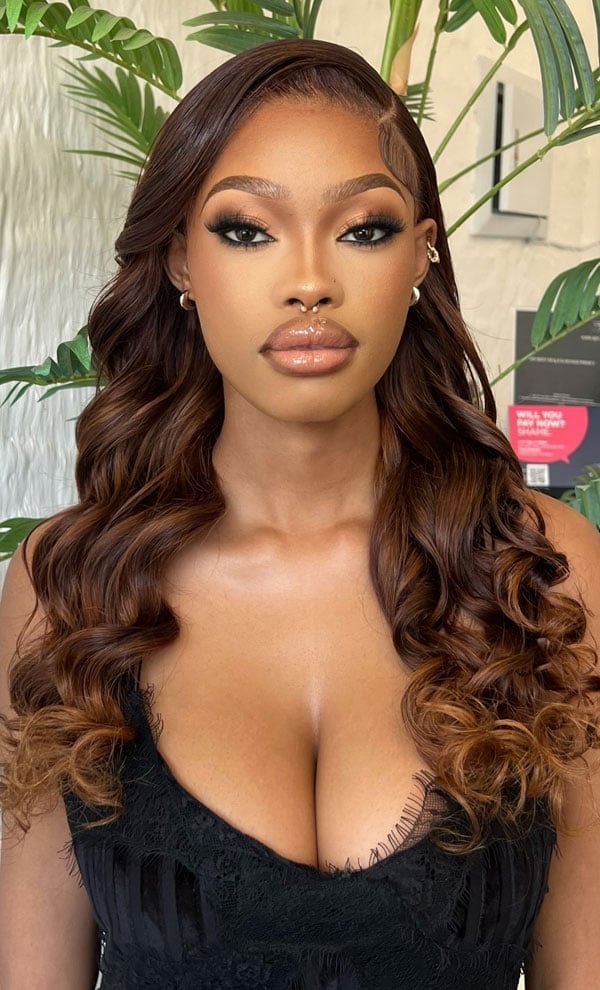
Does thick wavy hair lose definition as it gets longer? Yes, which is why the bronde ombré here does double duty. The transition from dark brown to bronde tones adds lightness without the maintenance of full blonde, and the long layers stop the mid-back length from feeling bulky. Loose waves are the default styling move for this texture, and a smoothing serum helps control the frizz that thick hair tends to produce at the ends.
Ask your stylist for: mid-back length, long layers, dark brown to bronde ombré. The color grows out softly because the root stays dark, so you can stretch toning appointments to about ten weeks. A trim every eight to ten weeks keeps the shape clean.
Shoulder-Length Bob With Dark Brown To Blonde Ombré
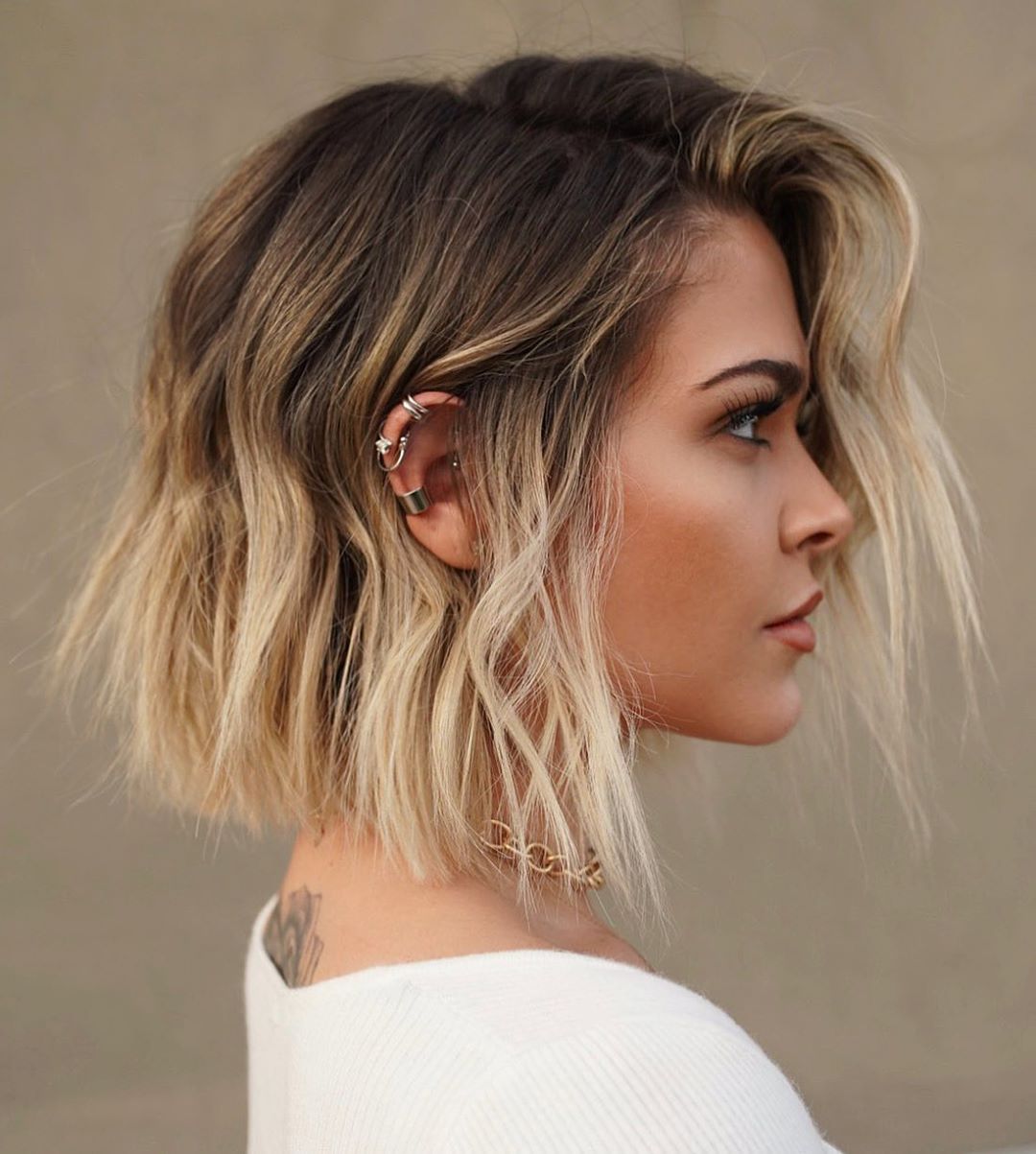
A chin-length bob with a side parting and dark brown to blonde ombré is a straightforward request, but the texture is what sells it. The loose, textured waves break up the bob line so the ombré ends look piecey rather than solid. Fine hair benefits from the lightness at the bottom because it mimics the volume that fine textures naturally lack at the roots.
Ask your colorist for: chin-length bob, dark brown to blonde ombré, textured waves. Sea salt spray adds grip without weighing the hair down. A trim every six to eight weeks keeps the bob line sharp enough to hold the shape.
Collarbone Waves With Dark Brown To Caramel Ombré
This is not the dramatic blonde-on-brown contrast that demands a full makeup reset. The dark brown to caramel ombré on collarbone-length waves reads as glossy and warm, which suits the kind of brunch or daytime event where you want the hair to look done without looking like you tried. The side parting and voluminous waves add lift at the crown, which elongates rounder face shapes.
Ask your colorist for: collarbone length, dark brown to caramel ombré, voluminous waves. A volumizing mousse applied before blow-drying holds the shape through the afternoon. Trim every six to eight weeks to keep the ends from thinning out.
Long Layered Hair With Dark Blonde To Light Blonde Ombré, Mid-Back
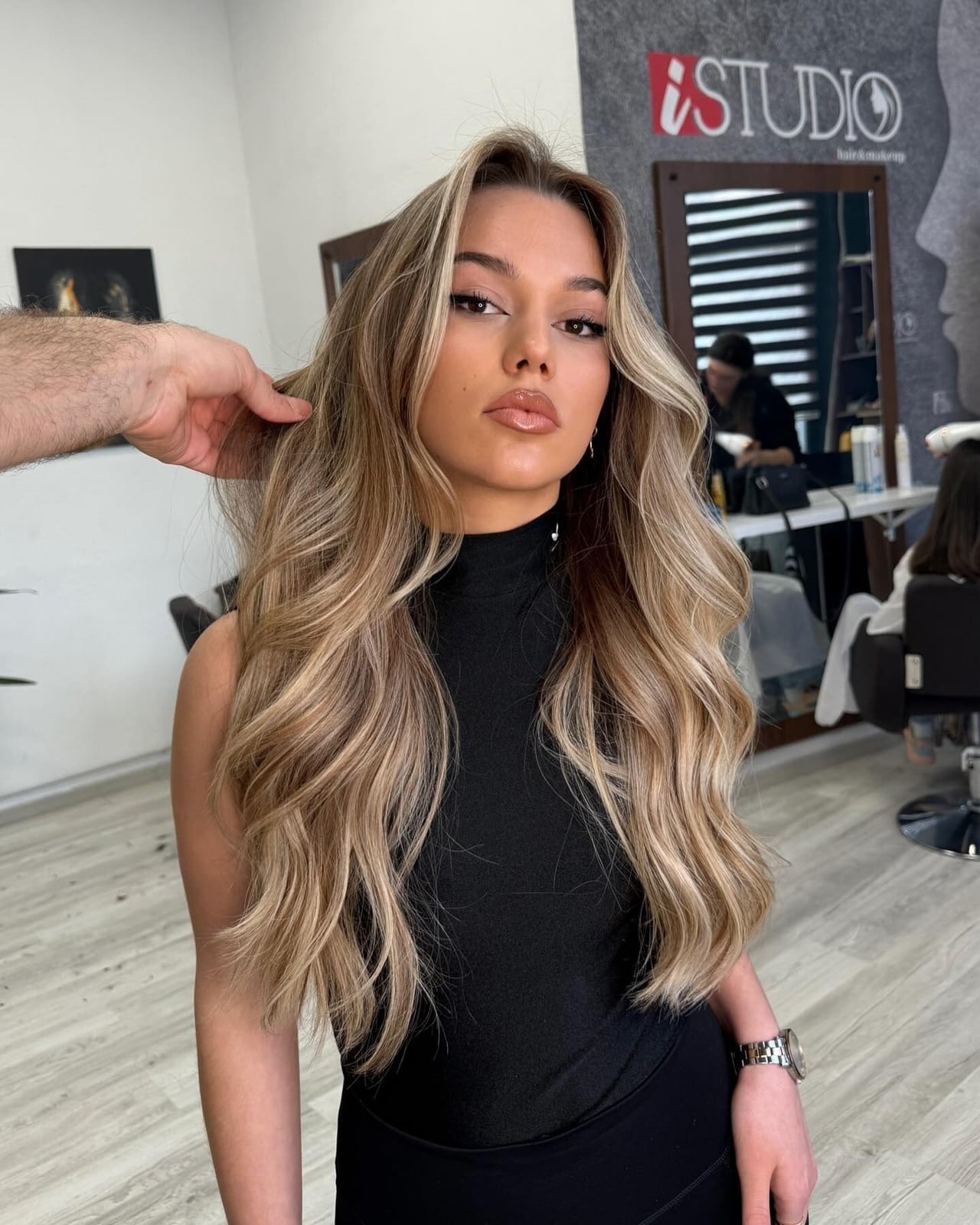
This is a mid-back length cut with long layers and a side part, designed to let thick, wavy texture do its thing. The ombré shifts from dark blonde at the roots to a lighter blonde at the ends, so the transition is gradual. Curtain bangs soften the forehead and draw attention to the cheekbones, which makes this a strong option for square face shapes. Ask your stylist for: mid-back length, long layers, dark blonde to light blonde ombré, curtain bangs.
Compared to an ombré that starts higher up, this version keeps the darker tone closer to the root, meaning less frequent toning appointments. A trim every eight to ten weeks keeps the ends healthy without losing the shape. A texturizing spray on the mid-lengths and ends is all it takes to maintain the lived-in wave pattern.
Angled Bob With Auburn To Blonde Ombré And Side-Swept Bangs
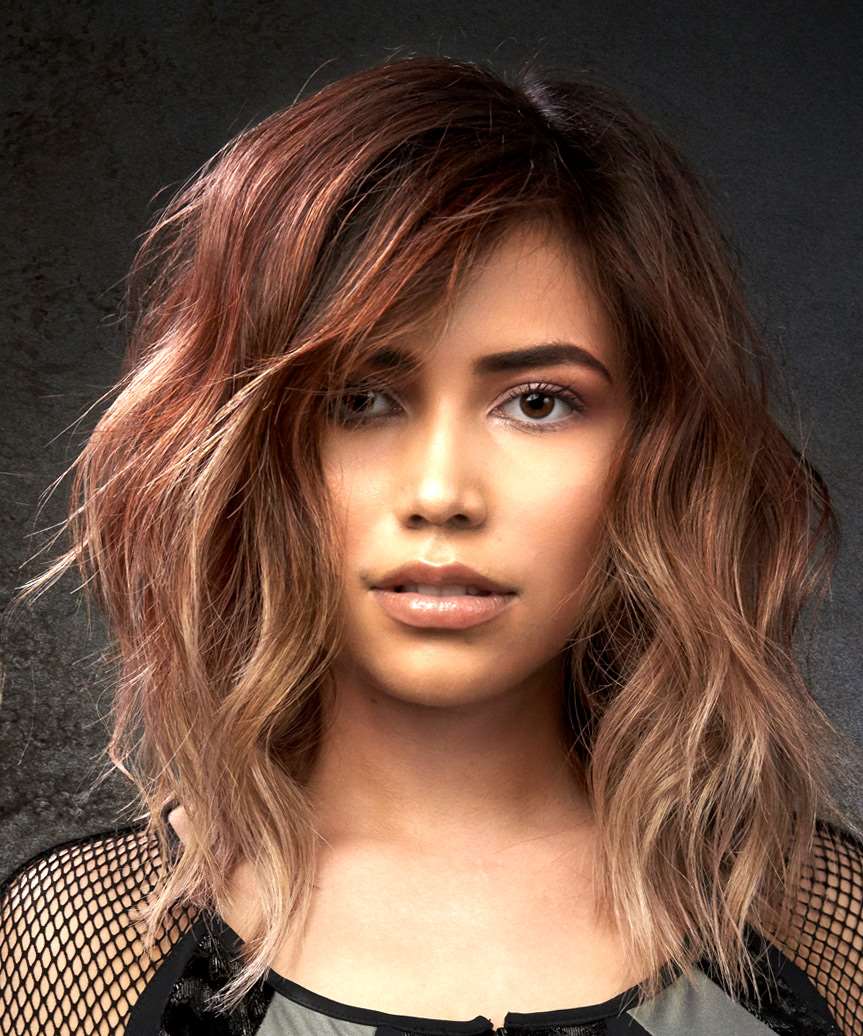
Side-swept bangs add asymmetry, which works well for fine, wavy hair that needs the illusion of density. Ask your stylist for: angled bob, auburn to blonde ombré, side-swept bangs. The honest trade-off: the angled cut demands a trim every six to eight weeks, and fine hair can look stringy if the ombré lift is too high. Skip this if you prefer a uniform color or a blunt perimeter.
Long Wavy Hair With Dark Brown To Caramel Ombré
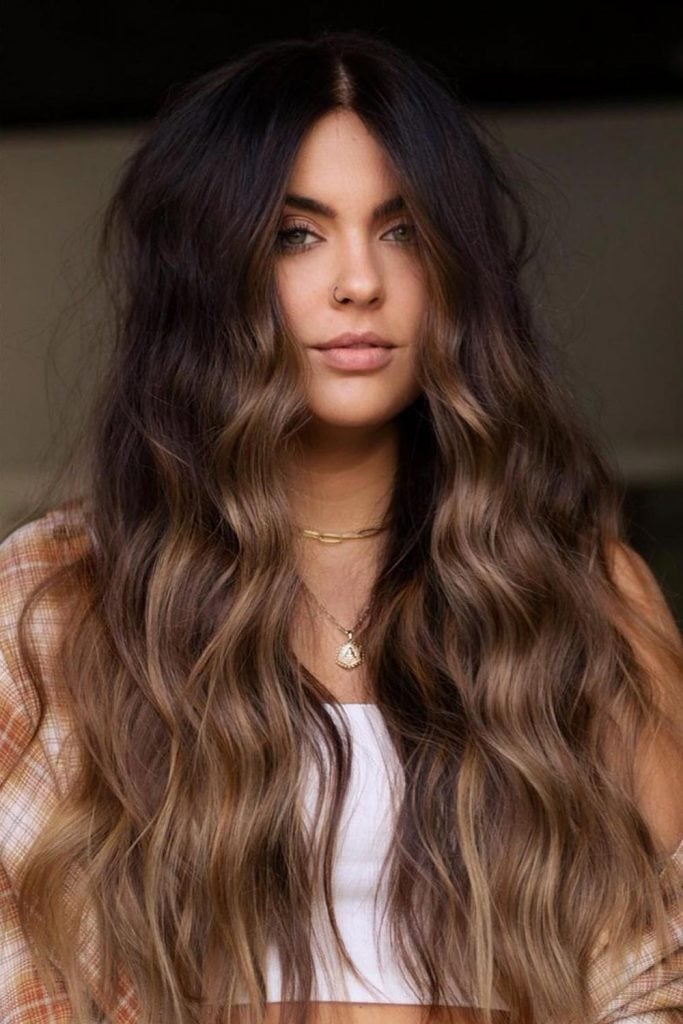
How does a dark brown to caramel ombré hold up on thick, wavy hair that reaches mid-back? The answer lies in the long layers and loose wave pattern. The middle part lets the color fall symmetrically, and the caramel tones warm the ends without a harsh line. Ask your stylist for: mid-back length, long layers, dark brown to caramel ombré, loose waves. A leave-in conditioner applied to damp hair keeps the waves defined and the color glossy.
Upkeep is straightforward: a trim every eight to ten weeks prevents split ends, and a toning appointment every ten to twelve weeks keeps the caramel from pulling orange. The seamless transition means roots are forgiving for the first month, so this is a low-commitment way to add dimension.
Collarbone Bob With Dark Brown To Blonde Ombré
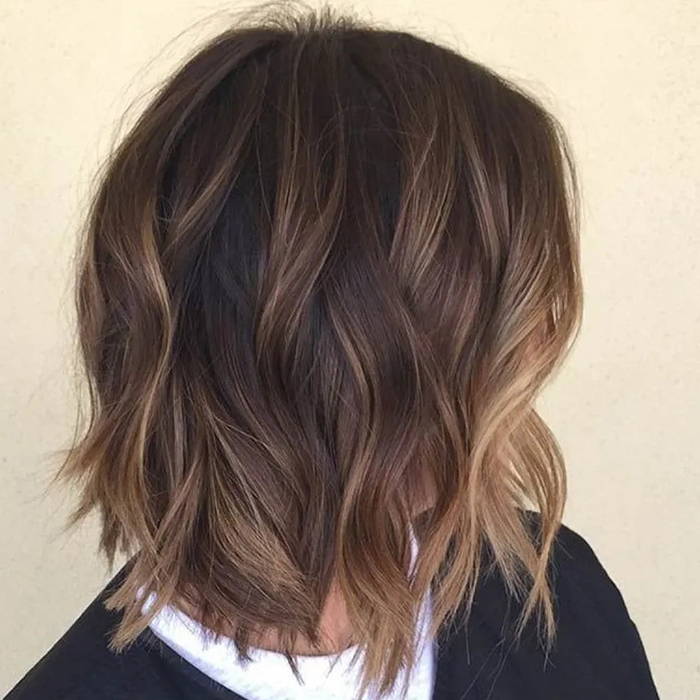
A collarbone bob with a dark brown base and blonde ombré is a cut that lands squarely in the sweet spot for medium density, wavy hair. The soft waves break up the color transition, and the side part adds a bit of asymmetry to the silhouette. Ask your stylist for: collarbone bob, dark brown to blonde ombré, soft waves. This length suits square faces because the ends hit below the jaw, softening the angles. Medium density hair holds the wave pattern without falling flat, so the ombré shows clearly through the mid-lengths and ends. Pass on this if your hair is very fine, as the bob can look heavy at the perimeter.
Shoulder-Length Waves With Face-Framing Layers And Ombré
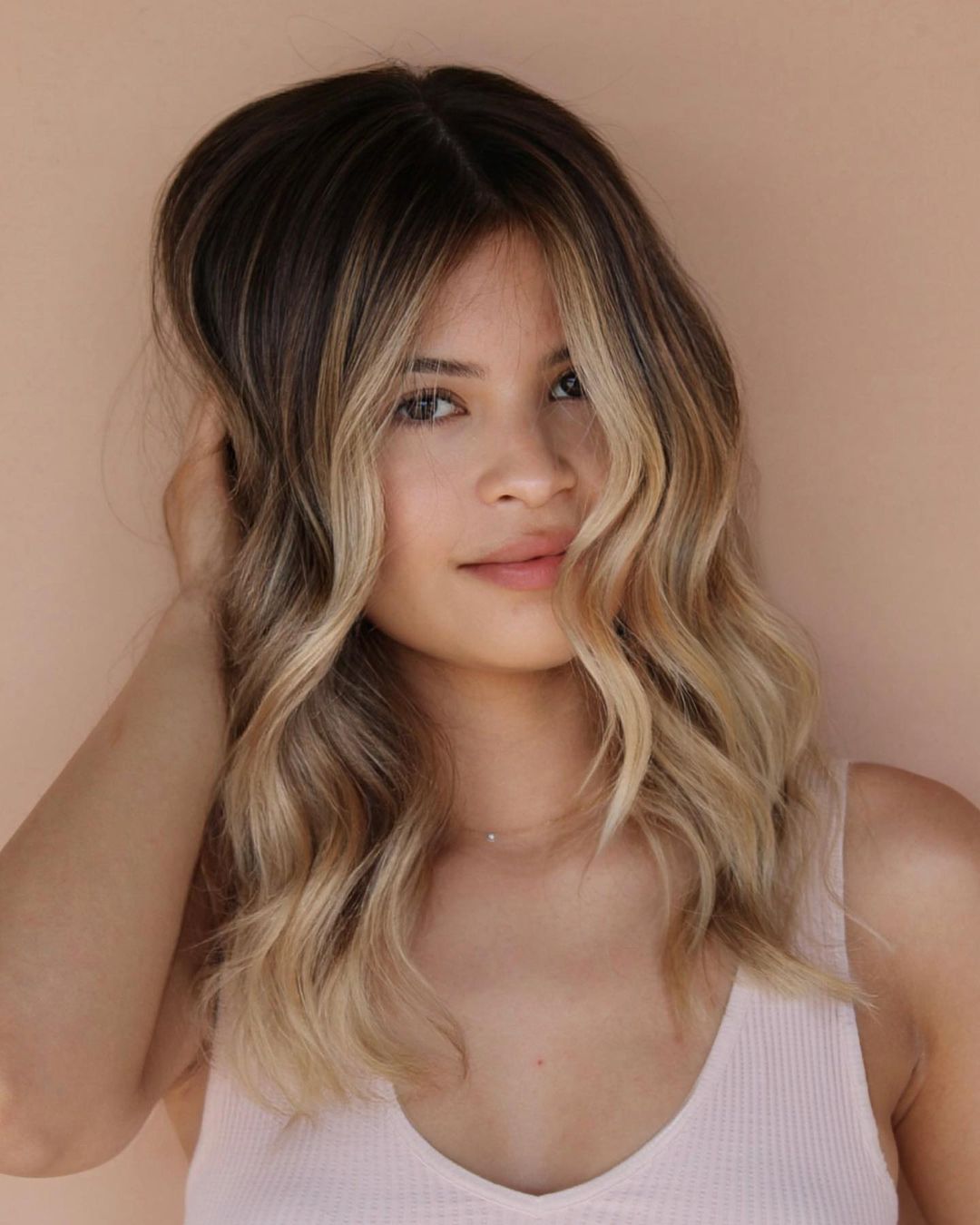
Styling steps are simple: apply a volumizing spray at the roots, blow-dry with a round brush to lift the layers, then wrap sections around a medium barrel for loose curls. The face-framing pieces highlight the ombré transition from dark brown to blonde. A trim every six to eight weeks preserves the layer shape.
Mid-Back Hair With Dark Brown To Blonde Ombré Transition
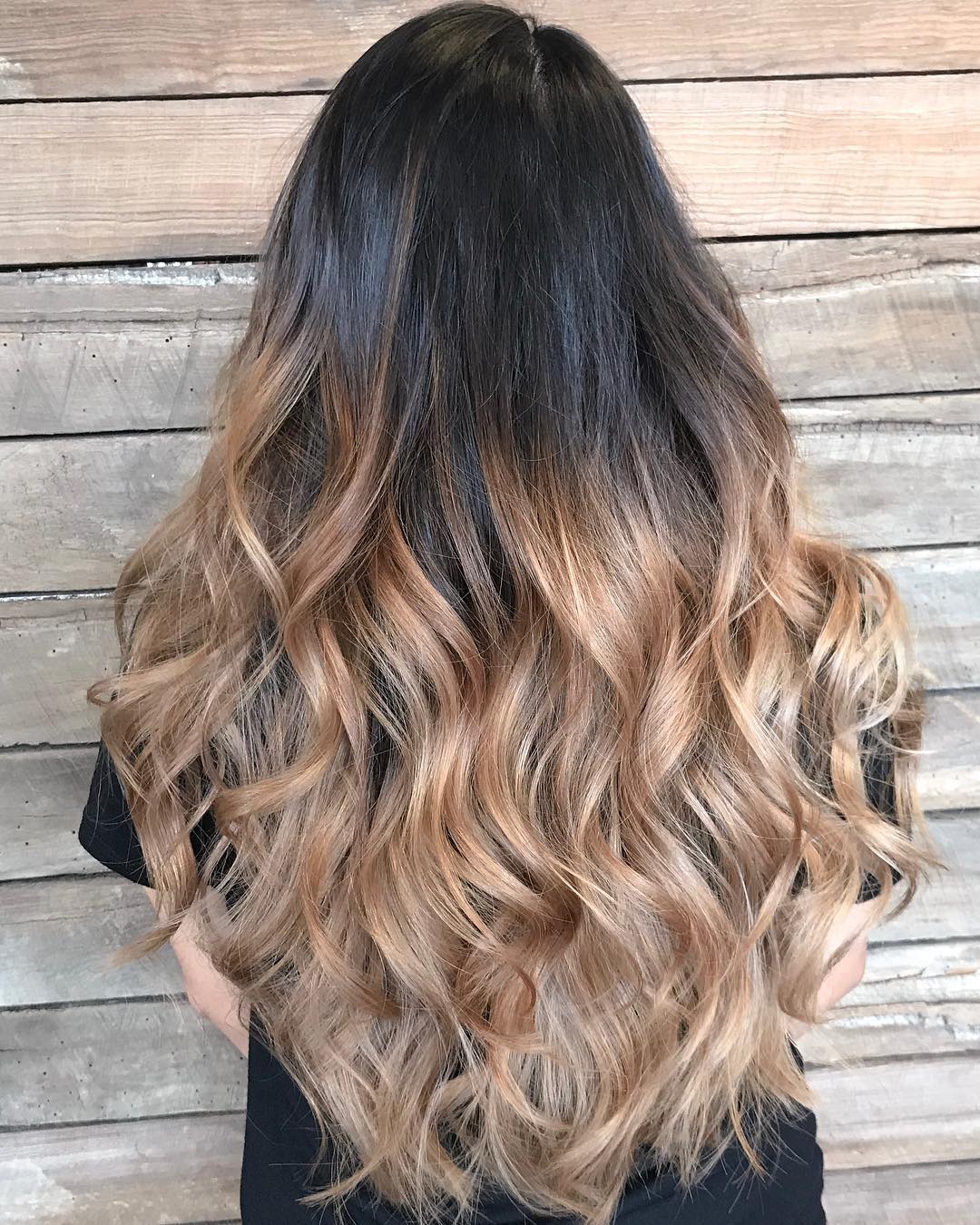
Can you get this mid-back dark brown to blonde ombré transition done at home? Technically yes, but the thick, wavy texture and smooth gradient shown here are why most people end up in a salon chair for about three hours. The long layers keep the waves from falling flat, and the middle part draws the eye down the length, which works well for elongating rounder face shapes. A DIY bleach job on this much hair risks uneven lift and brassy patches that a pro would avoid with a slow, sectioned application. Ask your colorist for: mid-back length layers, dark brown to blonde ombré.
That said, the salon route means you also get a cut that works with the color. The layers here are placed to let the ombré show at different points, not just the ends. A trim every eight to ten weeks keeps the shape and the gradient looking deliberate. A lightweight oil on the waves helps the lighter ends catch the light evenly, which is the whole point.
Mid-Back Ash Brown To Silver Grey Ombré
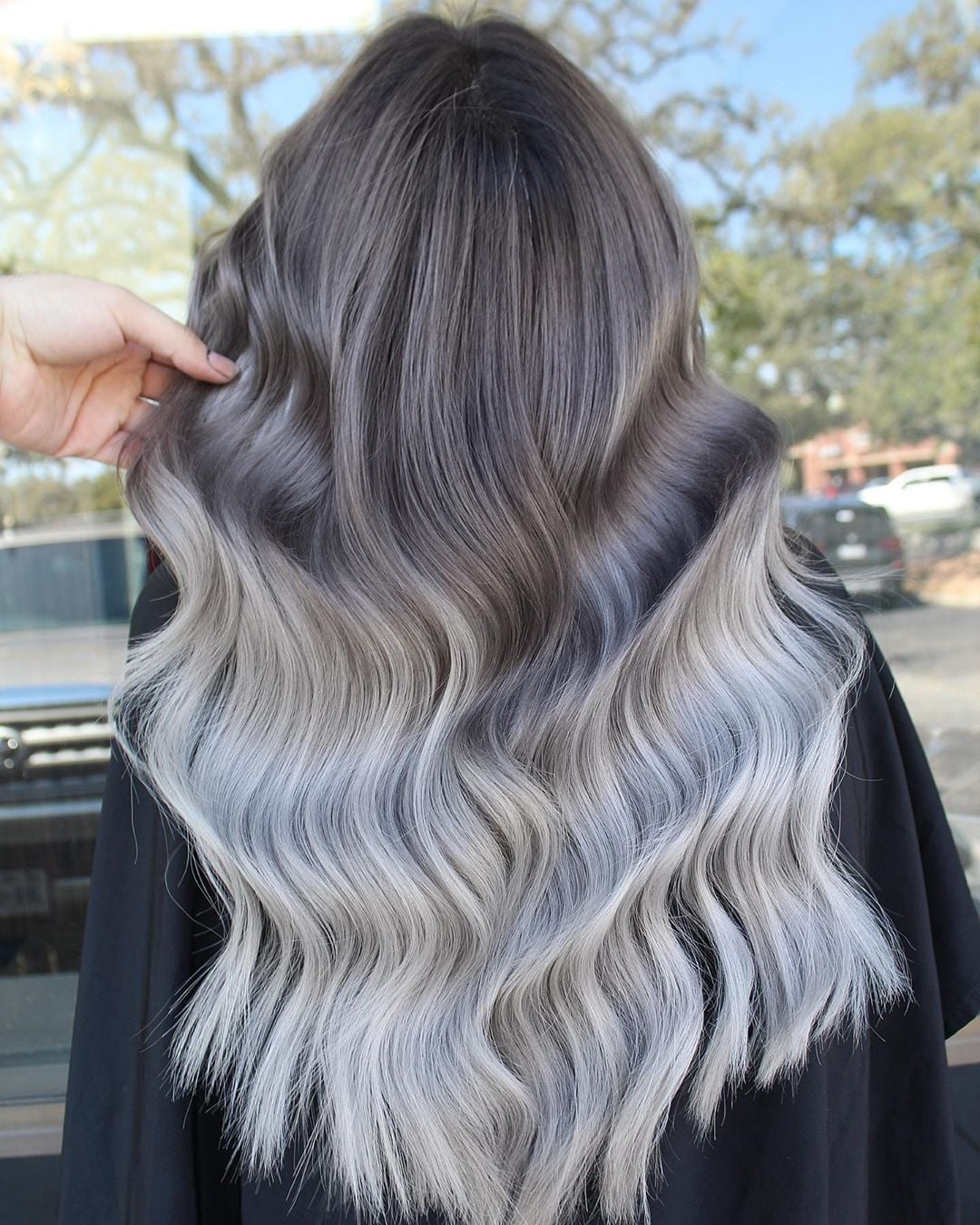
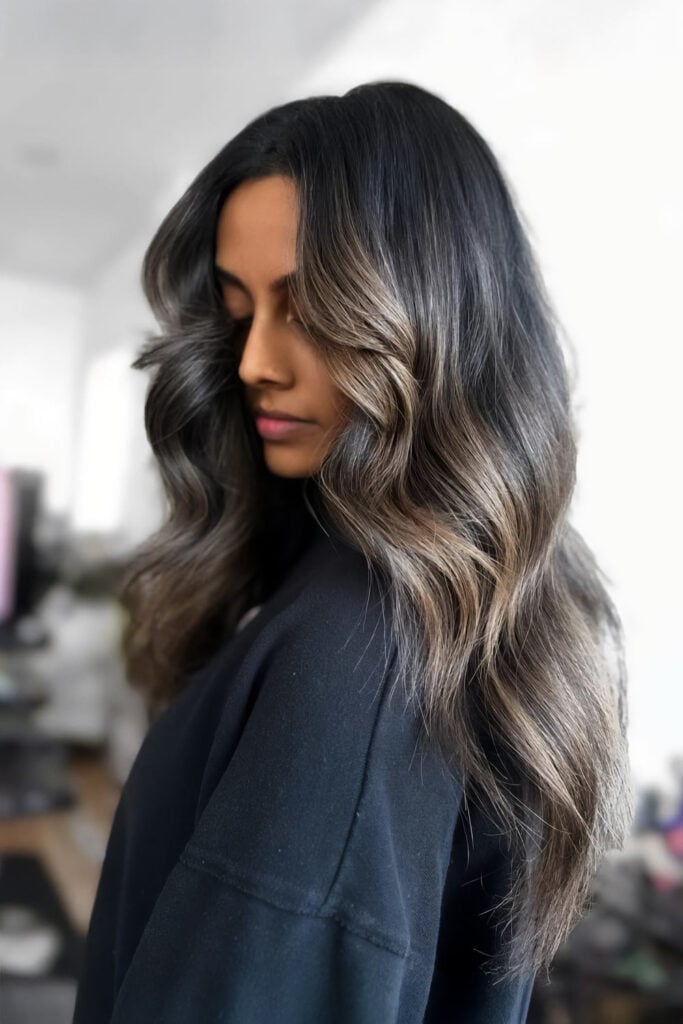
Warm caramel ombré gets all the attention, but this cool-toned dark ash brown to silver grey version is a fashion-forward choice. The long layers in this mid-back cut let the silver fade spread gradually, so it does not land as a harsh stripe. The loose waves and middle part give it a soft finish that suits the cooler months or anyone who wants a statement color without going full platinum. Thick, wavy hair carries the grey tones well because the texture reflects light at different angles, making the fade look dimensional.
Ask your colorist for: mid-back long layers, ash brown to silver grey ombré. Maintaining this requires a purple shampoo used weekly to keep the silver from yellowing. The dark roots mean you can stretch the time between toning appointments to about six weeks, which is a small mercy for a color this high-maintenance. It is not an everyday work look unless your office is very relaxed, but for a weekend event or a night out, it lands exactly right.
Textured Angled Lob With Medium Brown To Blonde Ombré
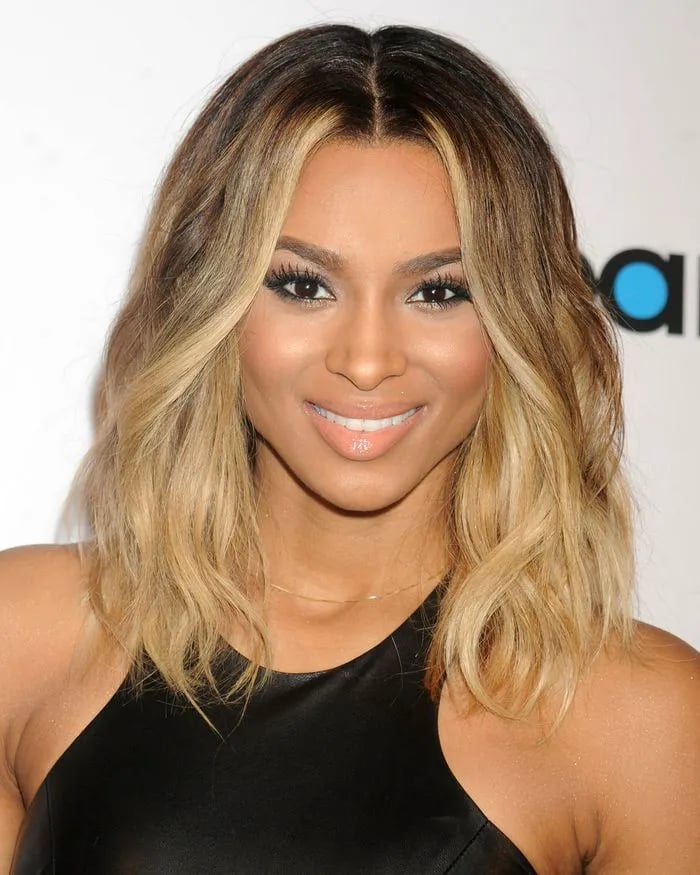
The angled lob here is designed so the front hits the collarbone and the back sits shorter, which gives the medium brown to blonde ombré a built-in graduation. The side-swept bangs soften the angle and keep the cut from feeling severe on fine, wavy textures. A texturizing paste worked through the ends defines the waves and prevents the ombré from looking like two separate colors that forgot to blend. Ask your stylist for: collarbone angled lob, medium brown to blonde ombré, side-swept bangs. The trade-off is that an angled shape needs a trim every six to eight weeks to hold its line, or the ombré gradient starts pooling at the wrong spot.
Collarbone Layers With Dark Brown To Caramel Ombré And Curtain Bangs
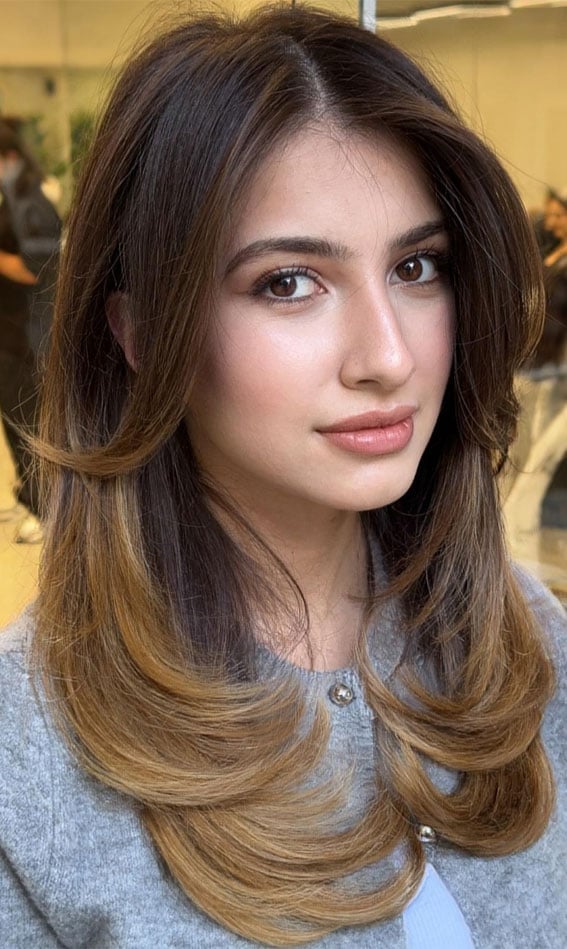
What exactly do you say to get collarbone layers with curtain bangs and a dark brown to caramel ombré? Start with the cut: ask for long layers that start below the chin and curtain bangs that sweep to the sides, not a straight-across fringe. The middle part here lets the face-framing layers fall naturally around the jaw, which softens rounder face shapes without hiding them. The caramel ombré should begin a few inches from the root so the dark brown base stays rich and the lighter pieces catch the light around the cheekbones. Ask your colorist for: collarbone long layers, dark brown to caramel ombré, curtain bangs. Medium density wavy hair holds this shape well because the layers have enough weight to move without going flat.
Mid-Back Hair With Dramatic Dark Brown To Blonde Ombré and Long Layers
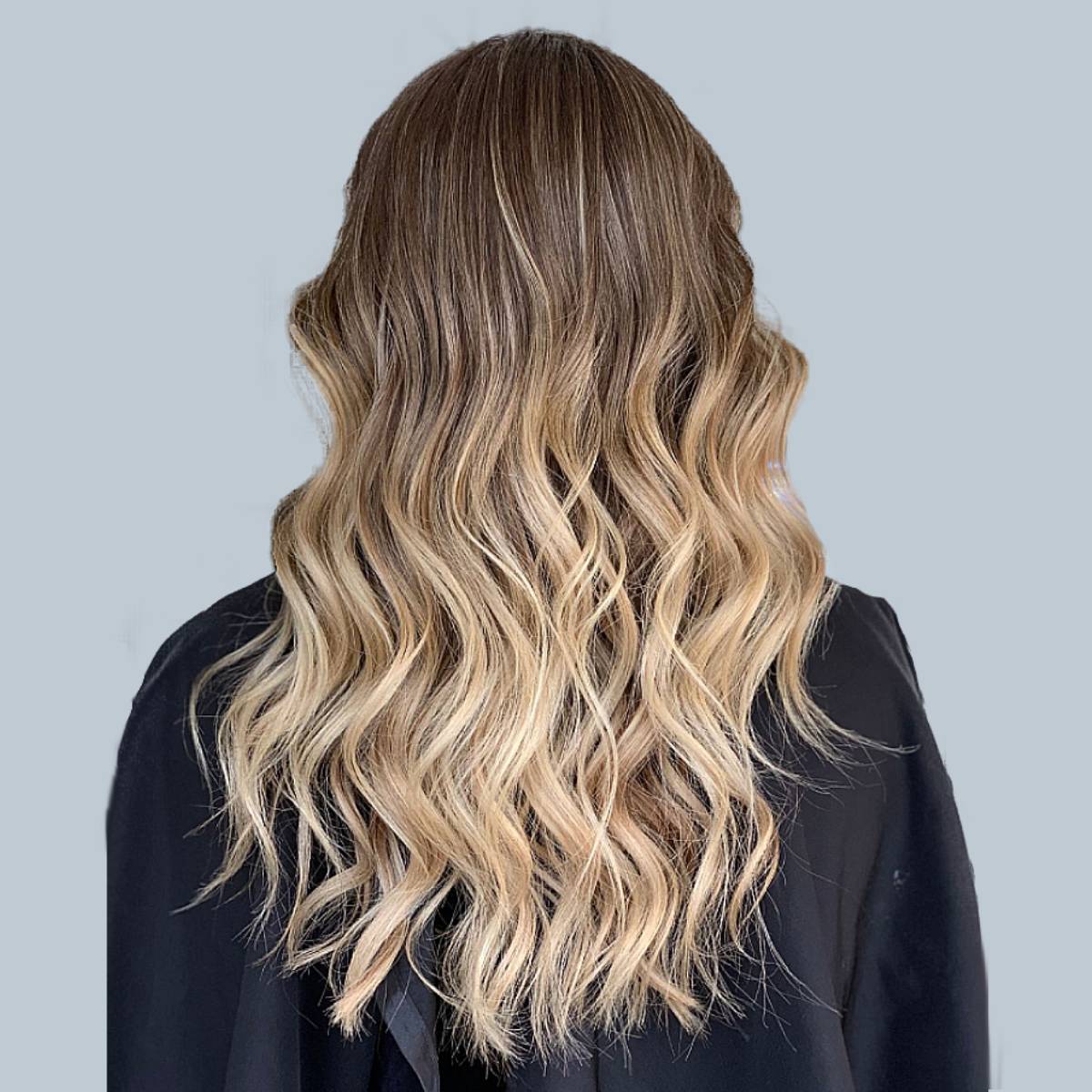
The dramatic dark brown to blonde ombré on this mid-back length relies on a technique where the lightener is applied more heavily toward the ends and feathered upward through the long layers. That creates the visible jump from dark to light without a solid line. Thick, wavy hair needs those layers to prevent the color from sitting in one heavy block; the waves break up the transition so it reads as dimensional rather than flat. The middle part and loose styling let the ombré show symmetrically on both sides, which is the most straightforward way to wear this kind of contrast.
Ask your colorist for: mid-back long layers, dramatic dark brown to blonde ombré. The lightness at the ends means they will need a toning gloss every six to eight weeks to stay cool rather than warm. The dark roots are the advantage here: they grow out naturally for months before the line becomes obvious, so this is a low-upkeep color on a high-impact cut.
Mid-Back Waves With Dark Blonde To Lighter Blonde Ombré
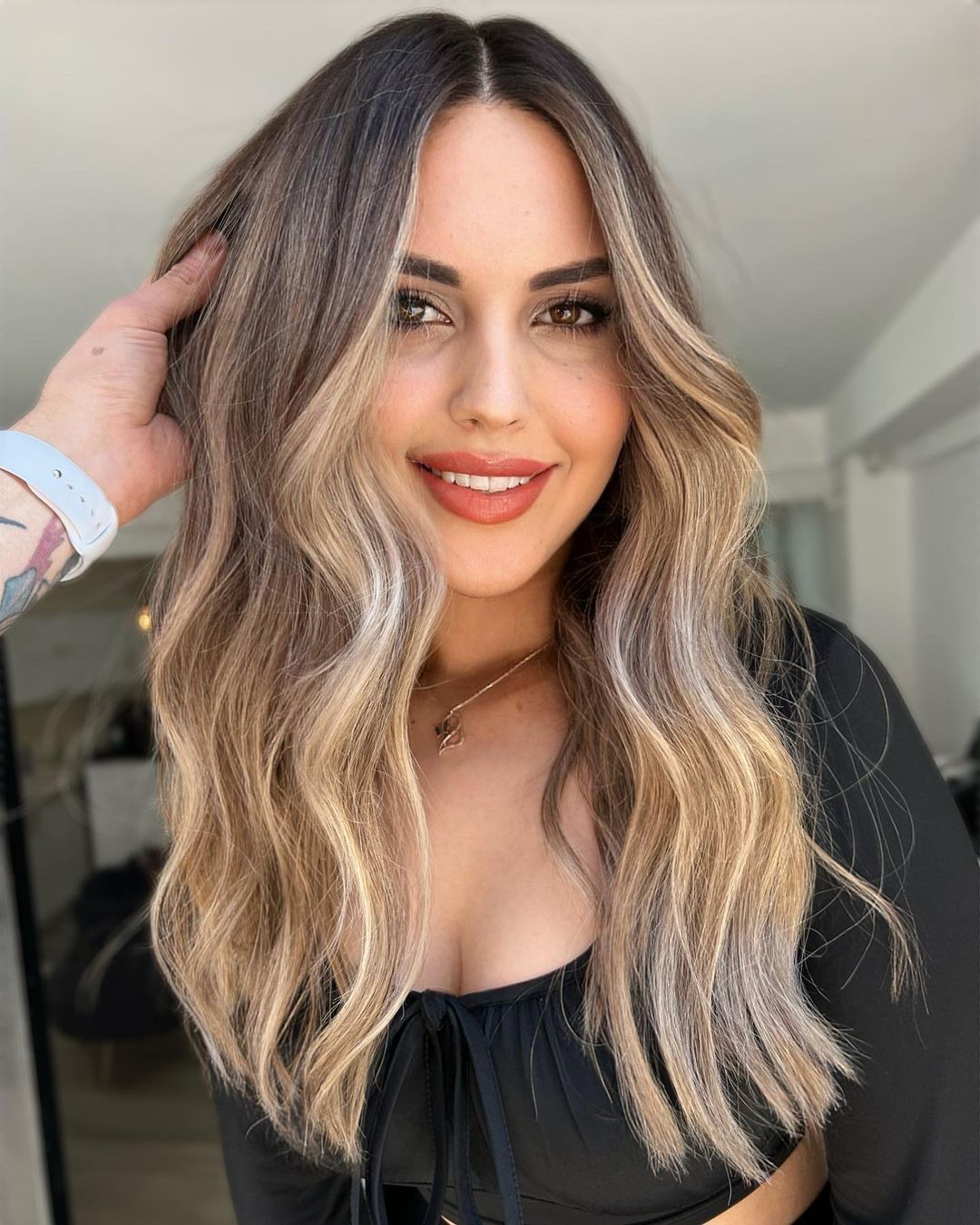
Curtain bangs at mid-back length do something unexpected: they make thick, wavy hair look deliberate rather than just big. The dark blonde base keeps the root area low-maintenance, while the lighter blonde ombré adds lift through the ends. A middle part and loose waves complete the soft, open shape.
This length and texture works best for those with naturally thick hair who want movement without losing density. The fringe softens a square jawline and balances a longer forehead. Ask your stylist for: mid-back length, long layers, dark blonde to lighter blonde ombré, curtain bangs. Tuck the bangs behind the ears on day two for a quick refresh. A trim every eight to ten weeks keeps the layers from looking straggly.
Layered Angled Bob With Dark Brown To Blonde Balayage Ombré
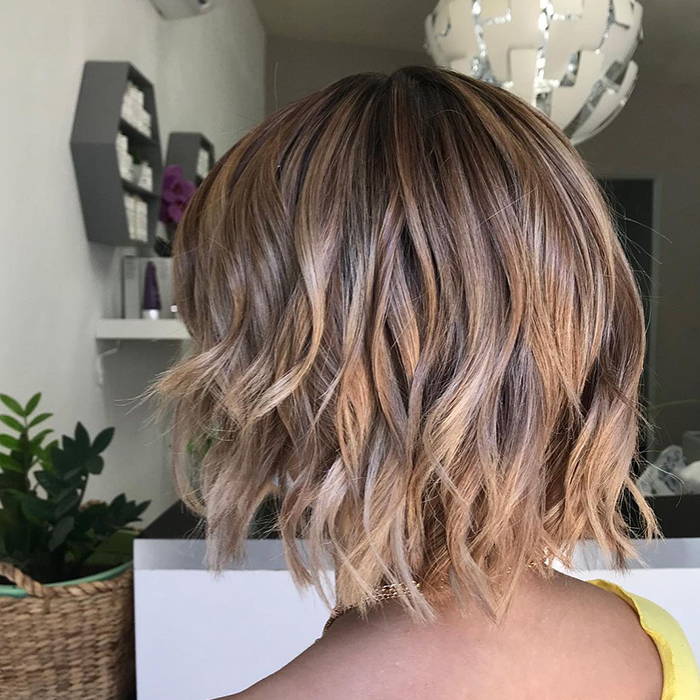
A traditional ombré starts dark and ends lighter in a clear line. A balayage ombré, like this one, paints the transition so the dark brown base melts into blonde with no hard edge. The angled bob reaches the collarbone and stacks slightly longer in front, which gives thick, wavy hair a lighter silhouette. The back view reveals the cut’s geometry and the colour’s soft blend. Ask your stylist for: collarbone length angled bob, layers, dark brown to blonde balayage ombré. The balayage technique suits anyone who wants dimension without a visible grow-out line. Those with fine hair should stick to softer layers to avoid losing volume.
Collarbone Layers With Dark Brown To Blonde Ombré, Close-Up Take
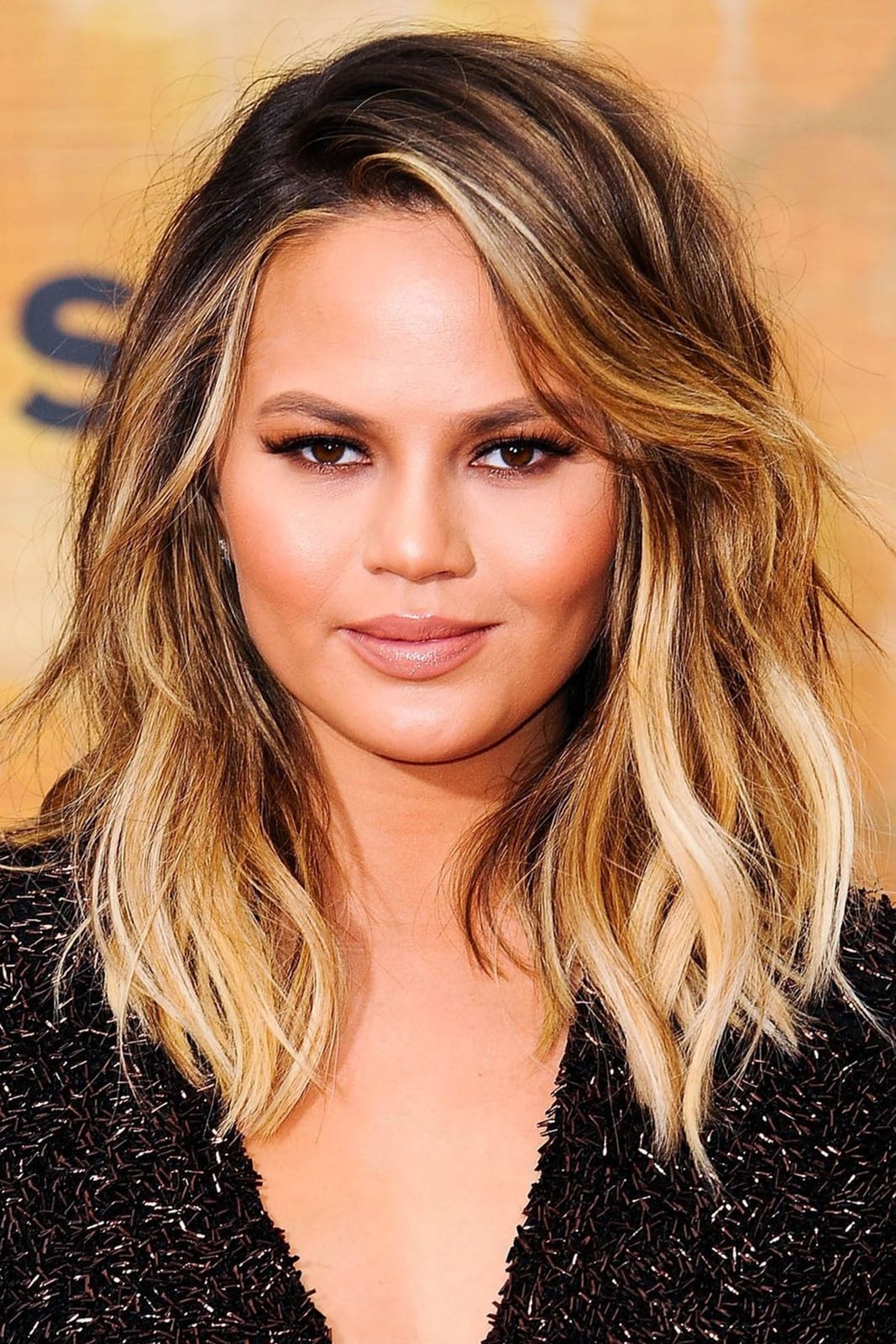
Face-framing layers at collarbone length do the work of a haircut and a highlight in one move. The dark brown to blonde ombré here is subtle enough that the roots stay dark for weeks, but the lighter ends brighten the jawline. Curtain bangs with a side parting pull the focus outward instead of straight down. Styling takes about fifteen minutes: blow-dry the fringe with a round brush, then wrap the rest in a large-barrel iron for loose bends. Ask your colorist for: collarbone length, layers, dark brown to blonde ombré, curtain bangs. A trim every six to eight weeks preserves the shape and keeps the ends healthy.
Long Layered Hair With Dark Brown To Blonde Seamless, Close-Up Take
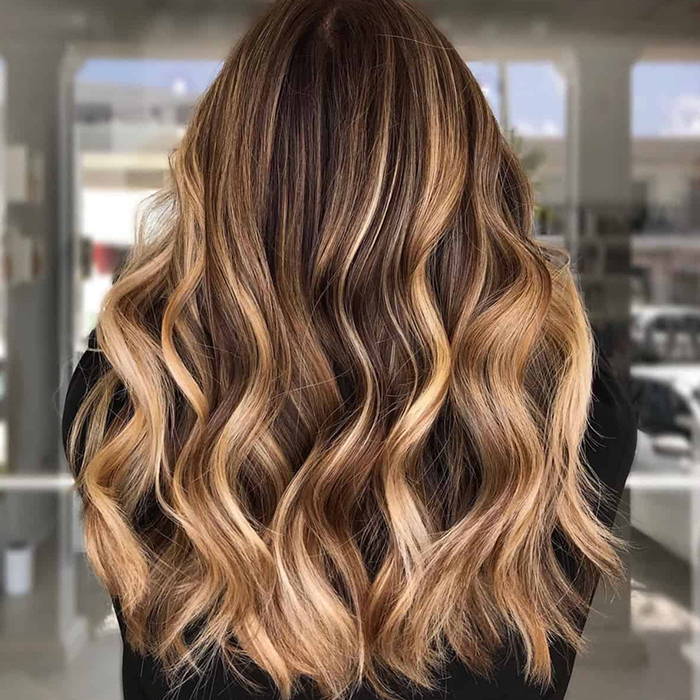
Can a seamless ombré look as polished as a full blonde? Yes, but it demands a skilled hand. The dark brown base fades into a lighter blonde through long, loose waves, with no obvious line where one colour stops and the next starts. The middle part and thick, glossy texture make the transition appear smooth. The lighter ends require a purple shampoo every few washes to stay cool. Ask your colorist for: mid-back length, long layers, dark brown to blonde seamless ombré. Those with very fine hair should skip the heavy layers, as the length can pull out volume.
Collarbone Lob With Face-Framing Layers And Natural Ombré
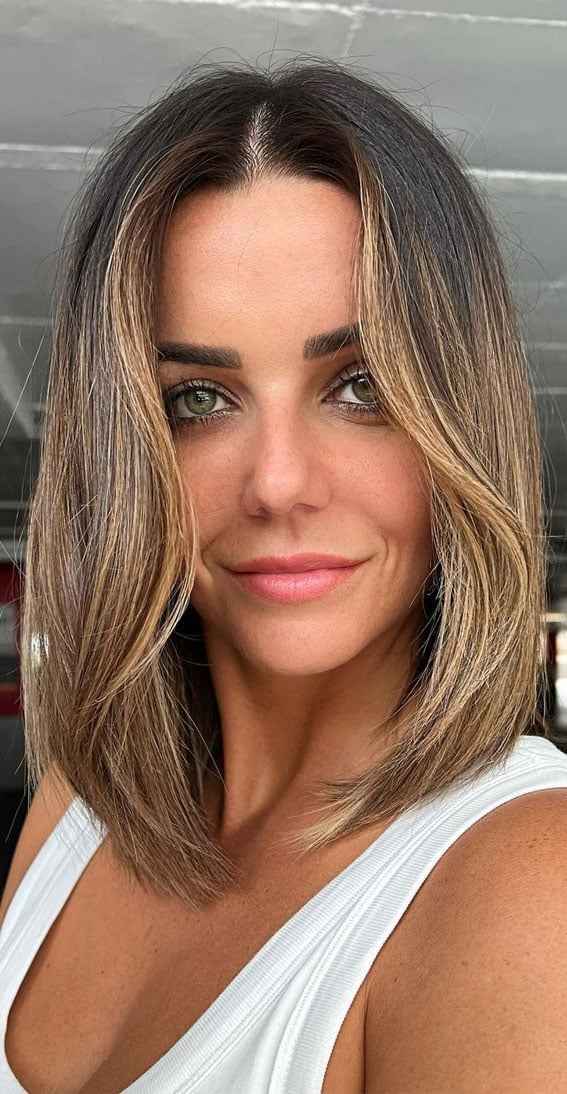
A collarbone lob with a middle part and soft waves is the neutral base of the haircut world. Add face-framing layers and a natural ombré from dark blonde to lighter blonde, and it becomes a cut that works for almost anyone. The layers sit around the cheekbones, which softens a square jaw without shortening the overall line. Medium-density, wavy hair holds the shape best, as the texture adds volume without requiring heavy styling. Ask your colorist for: collarbone lob, natural dark blonde to blonde ombré, face-framing layers. A texturizing spray on the mid-lengths gives a lived-in finish that lasts through day two.
Collarbone Layers With Vibrant Magenta Ombré Ends
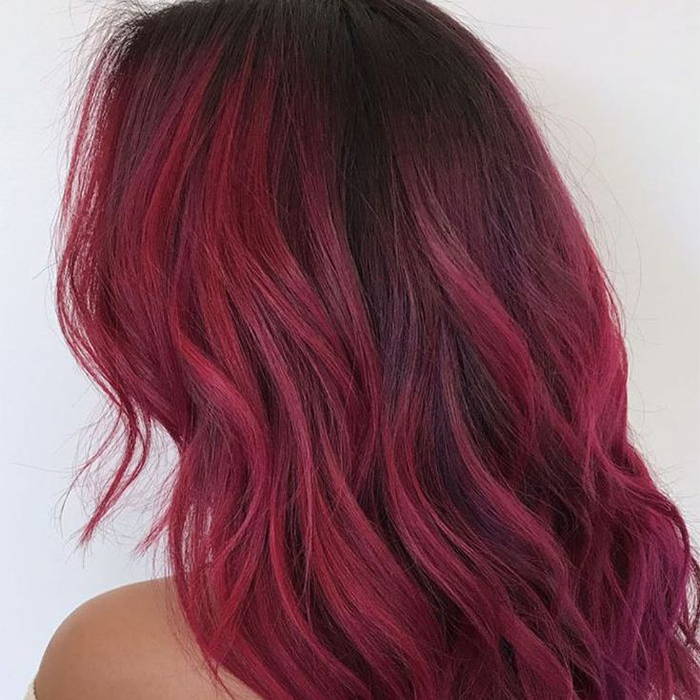
A side part and loose waves let the color do the talking here, with a dark brown base that shifts into a vibrant magenta at the collarbone-length ends. The layers keep the weight off the bottom so the ombré transition looks like a planned design. Medium-density wavy hair starting at collarbone length will hold the shape best. Ask your colorist for: collarbone length, layers, dark brown to vibrant magenta ombré. A color-safe shampoo and conditioner will slow fading, and a trim every six to eight weeks keeps the ends healthy. This one lands at festival season or any time you want a statement that does not involve rhinestones.
Mid-Back Thick Wavy Hair With Seamless Blonde Ombré
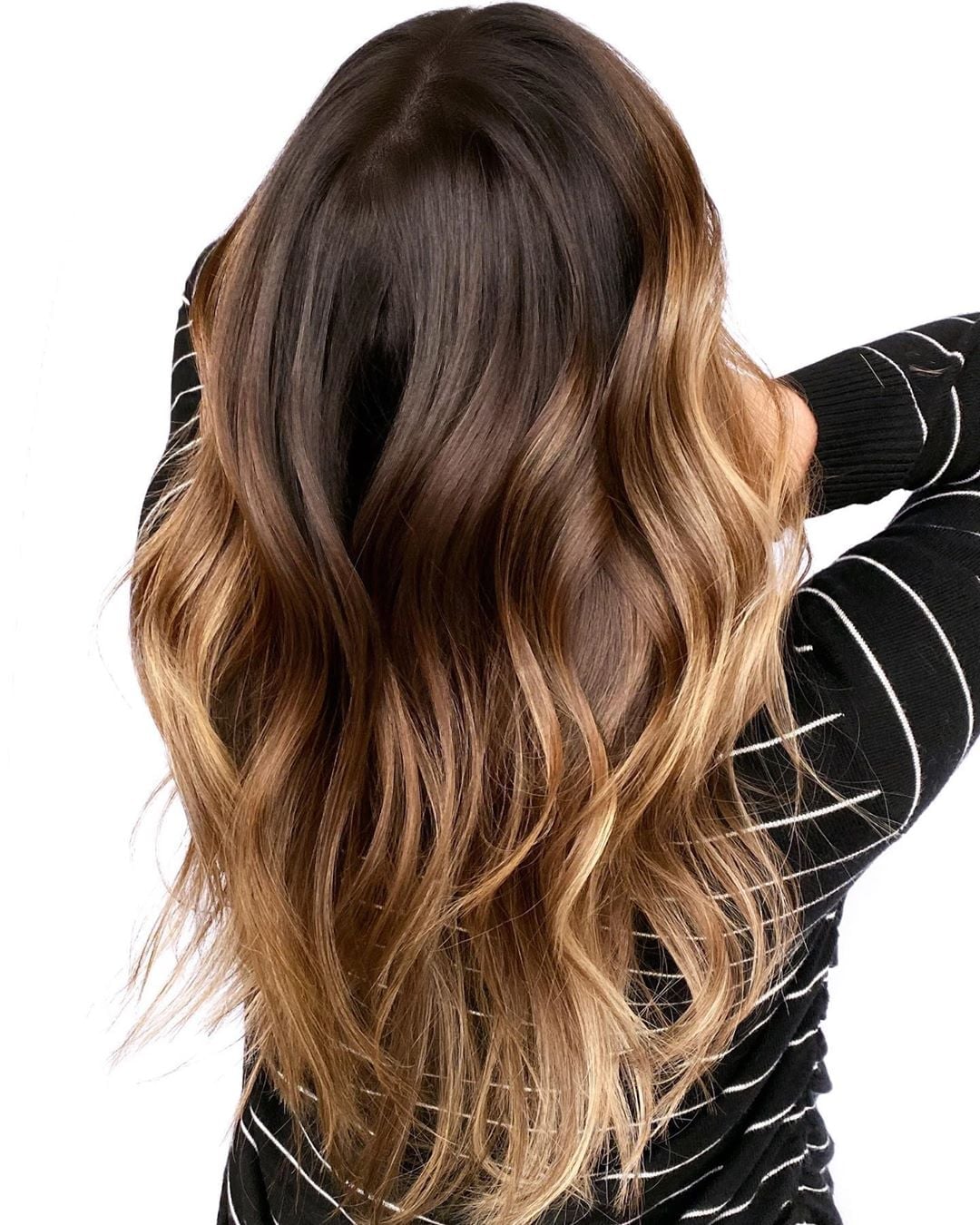
The ombré transition here is the whole point: dark brown roots melt into a lighter blonde that lands around the mid-back, with no harsh line in between. Thick, wavy hair gives the color depth to read as dimensional rather than flat. The middle part and the length below the chin work well for elongating a round face. Ask your colorist for: mid-back length, layers, dark brown to blonde seamless ombré. A smoothing serum helps control the wave pattern and keeps the ends looking polished. Trims every eight to ten weeks maintain the shape without sacrificing length.
Mid-Back Blowout With Dark Brown To Blonde Ombré, Close-Up Take
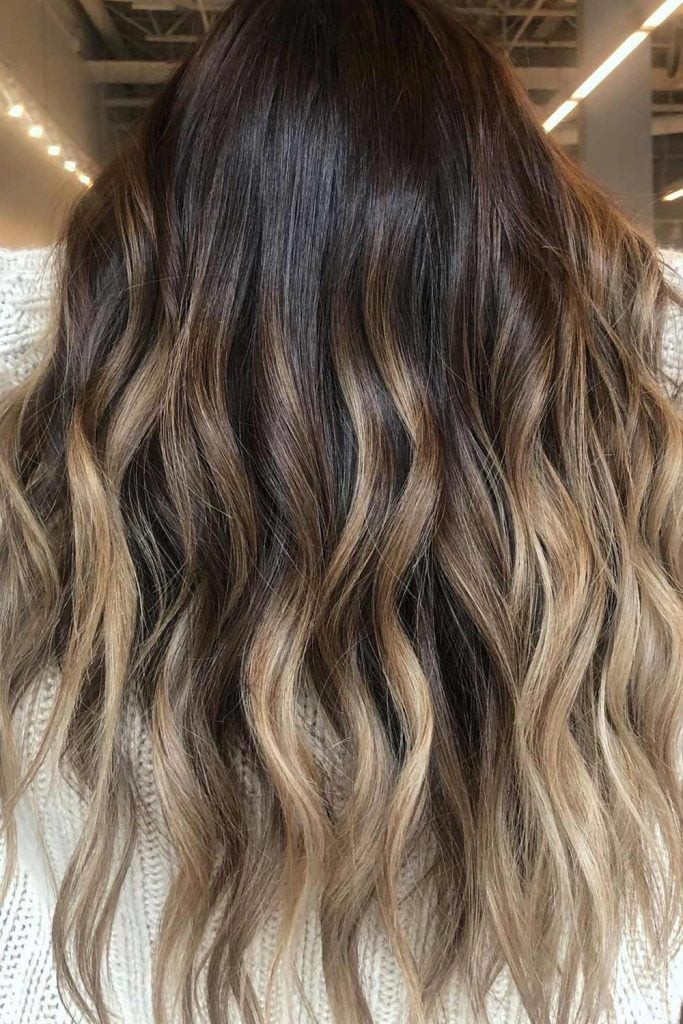
Can you get this ombré transition and that wavy blowout at home? The color work is a salon-only process: the dark brown base needs a gradual lightening to avoid a stripe effect, and the mid-back length means a lot of surface area to cover evenly. The blowout, on the other hand, is achievable with a round brush and some patience. Thick, wavy hair at mid-back length holds the wave pattern well once it is set. A middle part adds symmetry and length. Ask your colorist for: mid-back length, layers, dark brown to blonde ombré. The layers help the ends curl under rather than fluff out.
Collarbone Bob With Dark Brown To Bright Blonde, Everyday Version
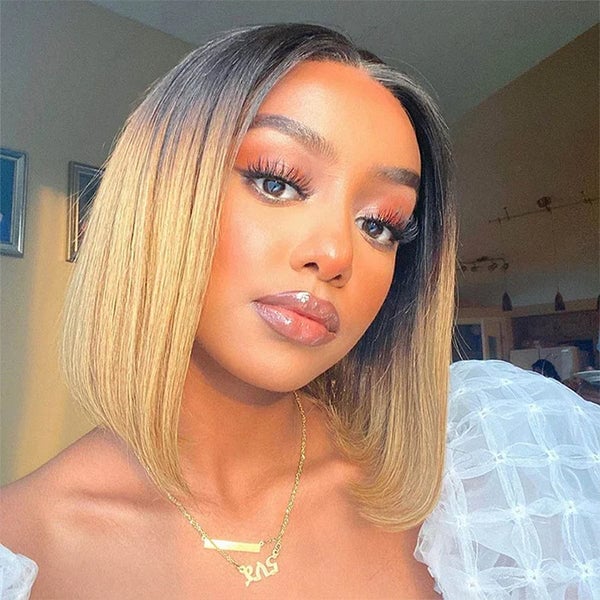
A blunt bob at collarbone length keeps the line sharp while the dark brown to bright blonde ombré adds contrast without needing constant root touch-ups. Fine, straight texture works best here because the smooth blowout and side parting rely on a clean surface to show the color shift. Ask your stylist for: collarbone blunt bob, dark brown to bright blonde ombré. A flat iron will get the sleek finish, but the cut itself is low-maintenance: a trim every six to eight weeks stops the ends from looking straggly. The side parting softens a square jawline without requiring bangs.
Long Thick Hair With Classic Dark Brown To Blonde Ombré
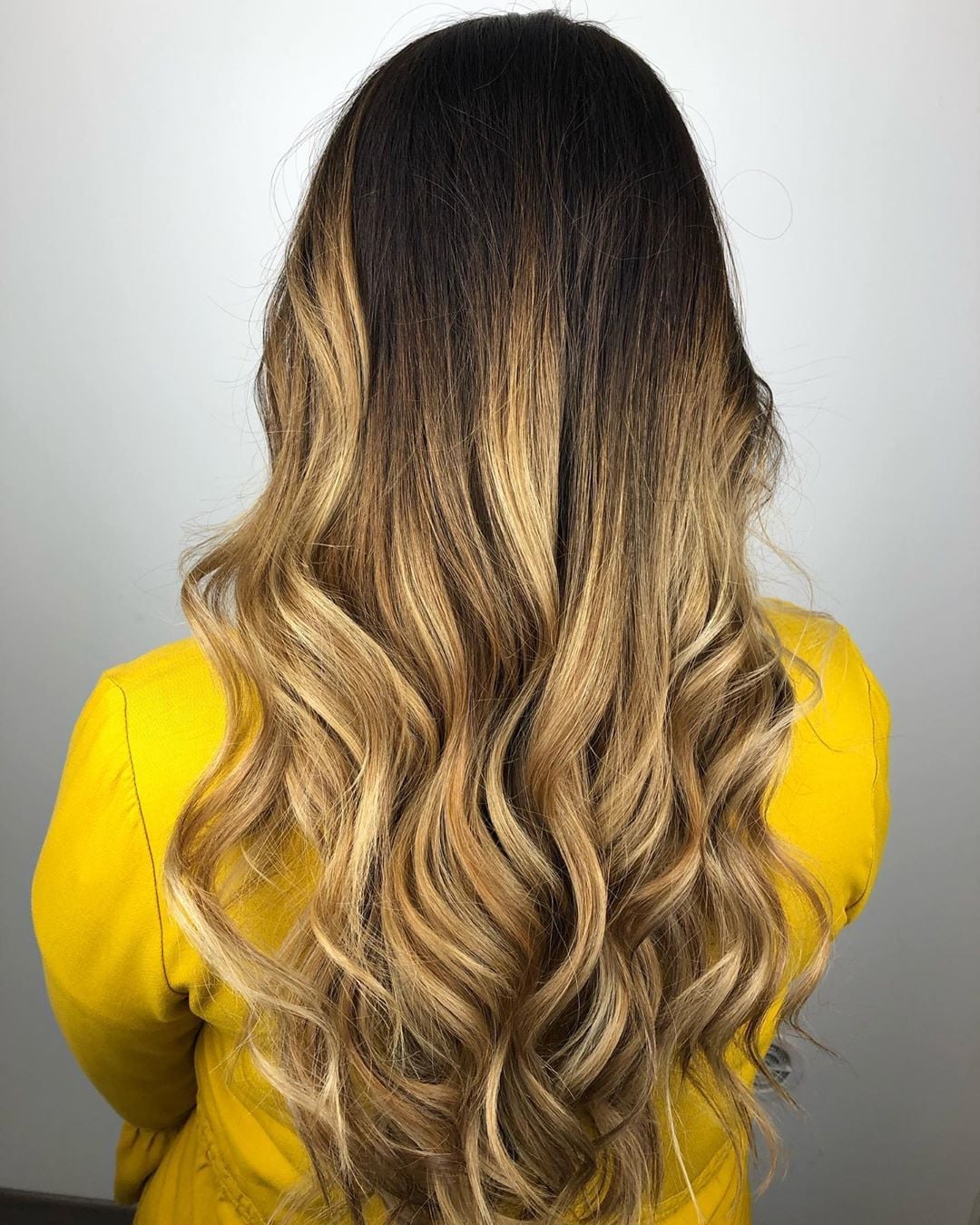
The classic dark brown to warm blonde ombré on long, thick, wavy hair is a reference point for a reason: the gradient mimics natural sunlight. This length and density suit anyone who wants movement without losing volume. A middle part draws the eye down, which flatters round and oval face shapes. Ask your colorist for: mid-back length, layers, classic dark brown to warm blonde ombré. The layers prevent the wave from forming a triangle shape, and a curl-defining cream will keep the texture soft. Thicker hair should skip this if you want a blunt, one-length hemline.
Mid-Back Hair With Distinct Blonde Ombré
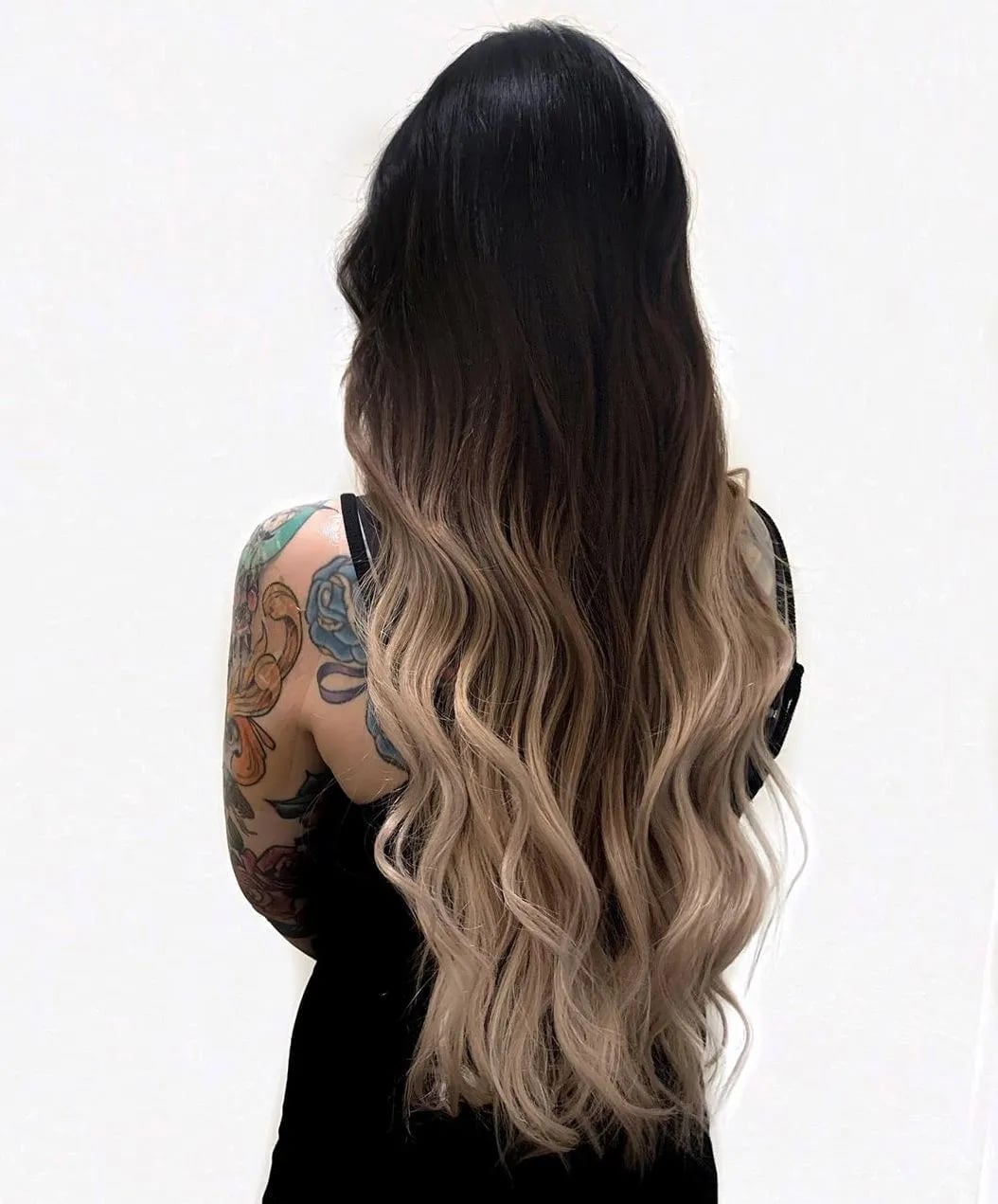
This ombré doesn’t whisper. Compared to the soft, blended versions that fade like a watercolor wash, this one draws a clear line between dark brown roots and blonde ends. That distinct contrast gives thick, wavy mid-back hair a graphic quality that blended ombré can’t match. It suits those who want the color change to read as a deliberate feature, not a grown-out highlight. A middle part keeps the look symmetrical and elongates the face. Ask your colorist for: mid-back layers, visible dark to blonde ombré.
The payoff is a weekend-ready look that works with a simple texturizing spray and a scrunch. The trade-off? That visible line means regrowth is more noticeable, so plan on a trim and tone every eight weeks to keep the edge clean. Loose waves, a middle part, and you’re out the door.
Textured Bob With Dark Brown To Blonde Balayage Ombré, Close-Up Take
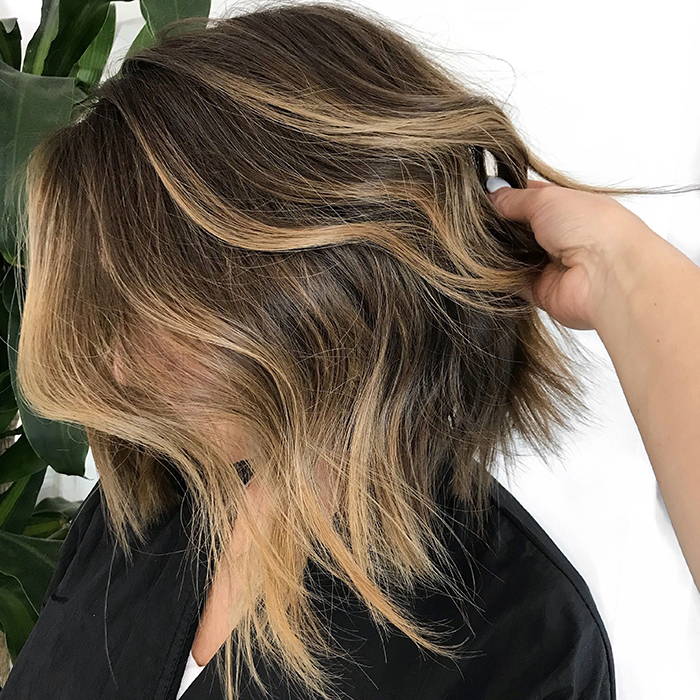
A blunt ear-length bob is carved into choppy waves, with balayage lifting the ends to blonde while the base stays dark. On fine, wavy hair, the textured ends look piecey, but they can also appear frizzy or split if the cut is not maintained. Ask your stylist for: ear-length textured bob, dark to blonde balayage ombré. The side part and piecey waves add volume, but this is a trim every four weeks commitment, and anyone prone to dryness should skip the aggressive texturizing.
Long Layered Hair With Rich Caramel Ombré
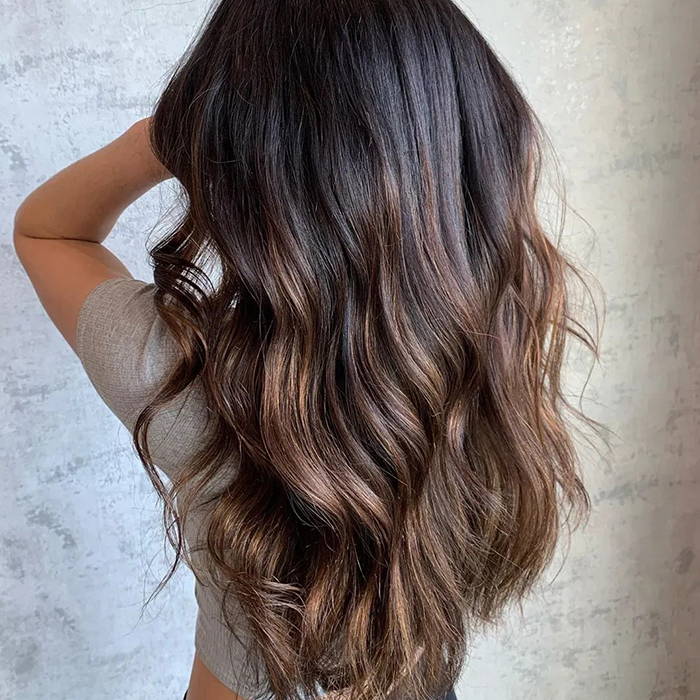
A rich caramel ombré on long, layered hair relies on a gradual lightening technique that deposits warmth. The colorist paints the caramel tone starting below the ears, then blends it upward through the mid-lengths so the dark brown base melts into a golden-brown end without a hard line. Thick, wavy hair can carry the weight of long layers, and a middle part helps the gradient appear even on both sides.
The depth comes from the base staying dark and the caramel sitting as a mid-tone, never lifting to a bleached blonde. Ask your colorist for: mid-back long layers, dark brown to rich caramel ombré. The result is a low-contrast ombré that looks sun-warmed, and it stays soft for weeks because the caramel fades into a tone that still looks planned.
Mid-Back Wavy Hair With Classic Blonde Ombré
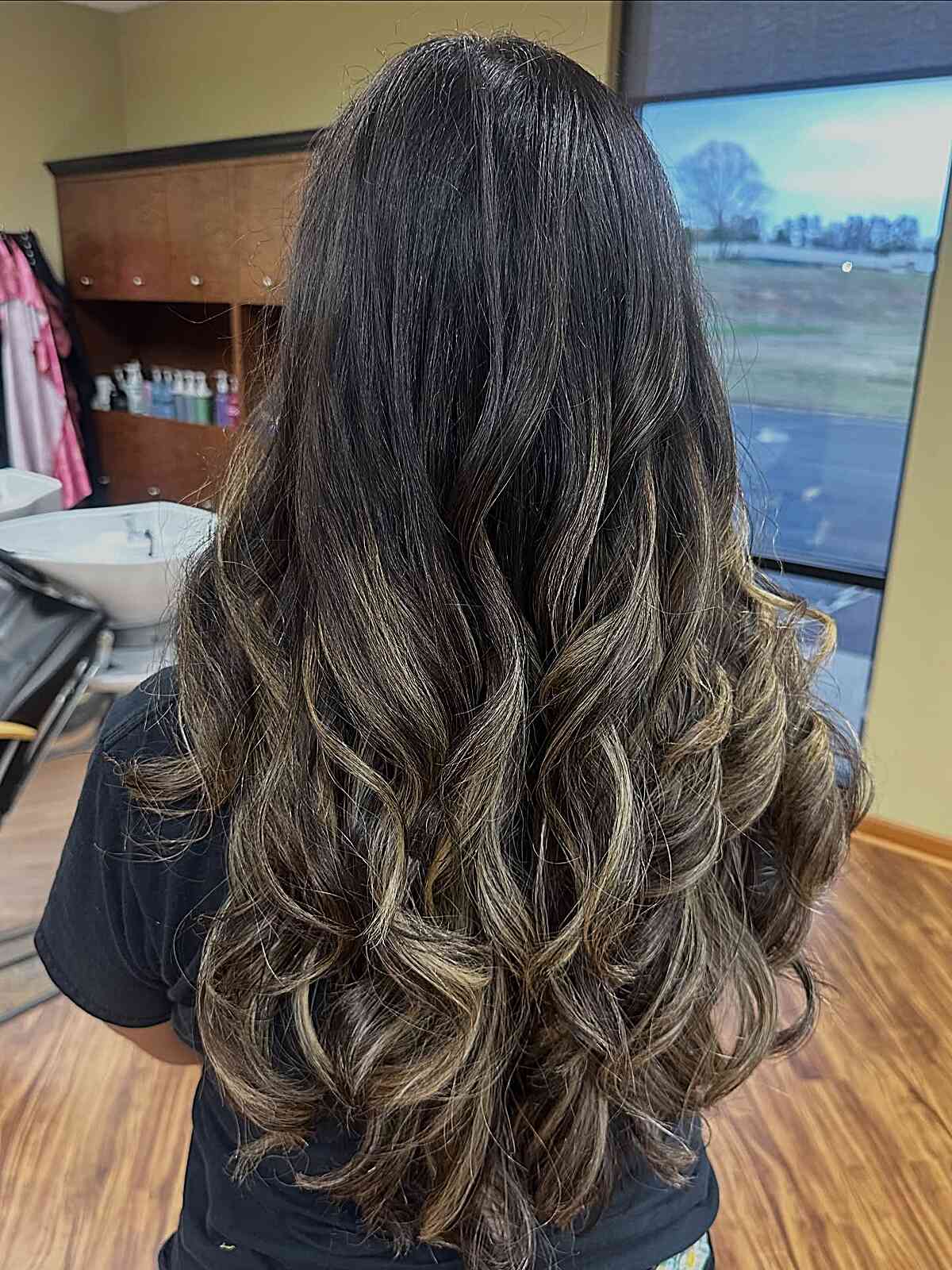
Want the classic ombré that everyone pictures when they say the word? Here is the formula: a dark brown base that lightens gradually from mid-shaft to ends, finishing in a warm blonde on thick, wavy mid-back hair. The key is asking for a seamless transition, not a stripe. Ask your colorist for: mid-back layers, classic dark to blonde ombré with a soft blend.
The wavy blowout matters here. Loose curls reflect light differently along the gradient, making the ombré look dimensional and not flat. A middle part splits the color evenly, which helps the blend look natural. This is a salon-only project, and the blonde ends will need a toning gloss every six to eight weeks to keep them from pulling brassy.
Mid-Back Hair With Visible Blonde Ombré Blend
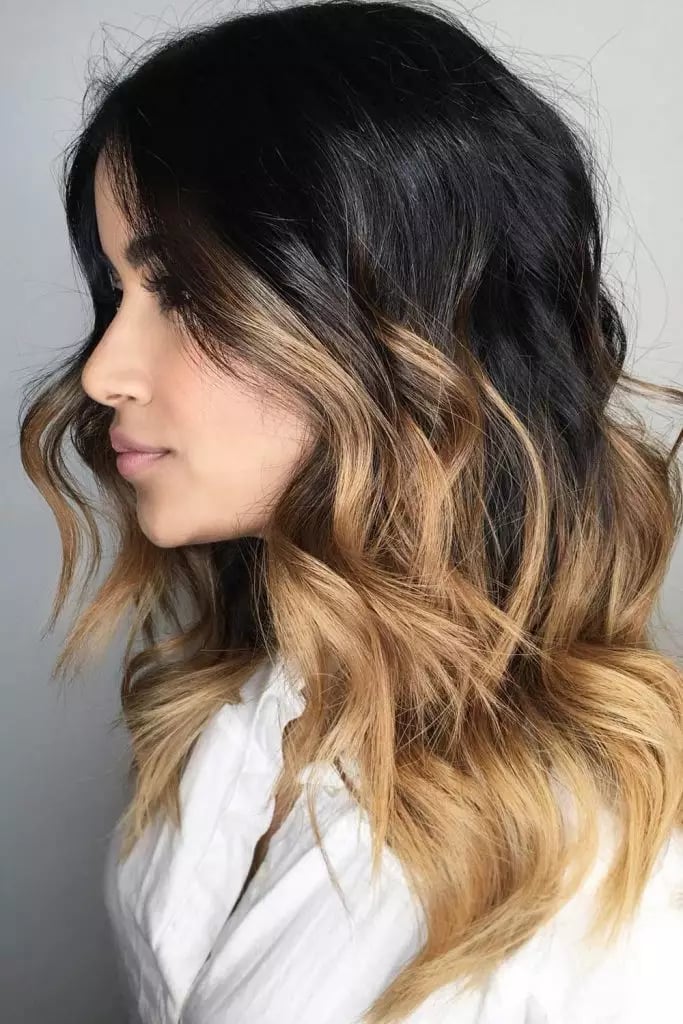
On thick, wavy mid-back hair with a middle part, the color reads as a lived-in gradient rather than a hard line. Ask your colorist for: mid-back layers, visible dark to blonde ombré with a blended edge. Expect a trim and tone every eight to ten weeks to keep the ends fresh. The loose waves help the blend read as movement, not demarcation.
Collarbone Long Bob With Subtle Blonde Ombré
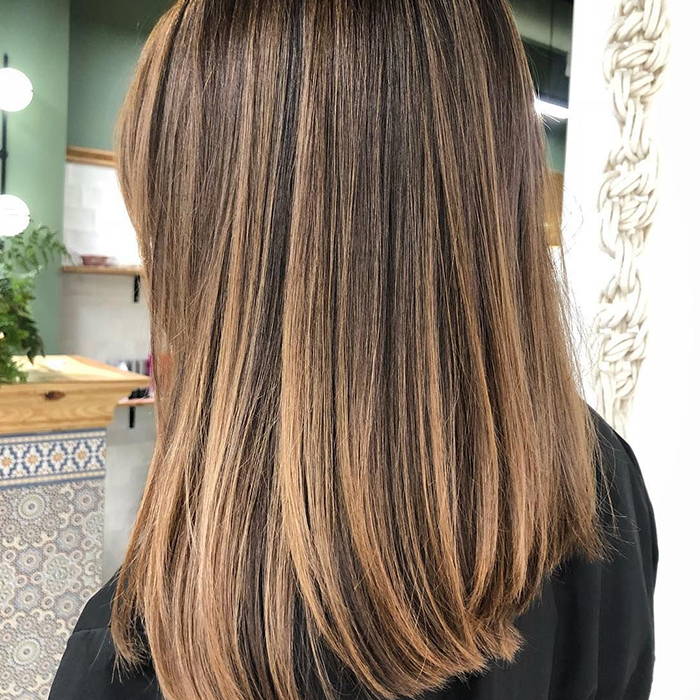
A collarbone long bob with a middle part and a slight wave keeps the ombré transition from dark brown to blonde understated rather than dramatic. The straight-to-slight-wave texture and medium density mean the color gradation reads as a soft glow, not a hard line. Ask your colorist for: collarbone long bob, dark brown with subtle blonde highlights and ombré. This length and part work well for elongating rounder face shapes. A smoothing cream helps the sleek finish hold, and a trim every six to eight weeks keeps the bob shape sharp.
Mid-Back Wavy Hair With Dark Brown To Warm Brown Ombré
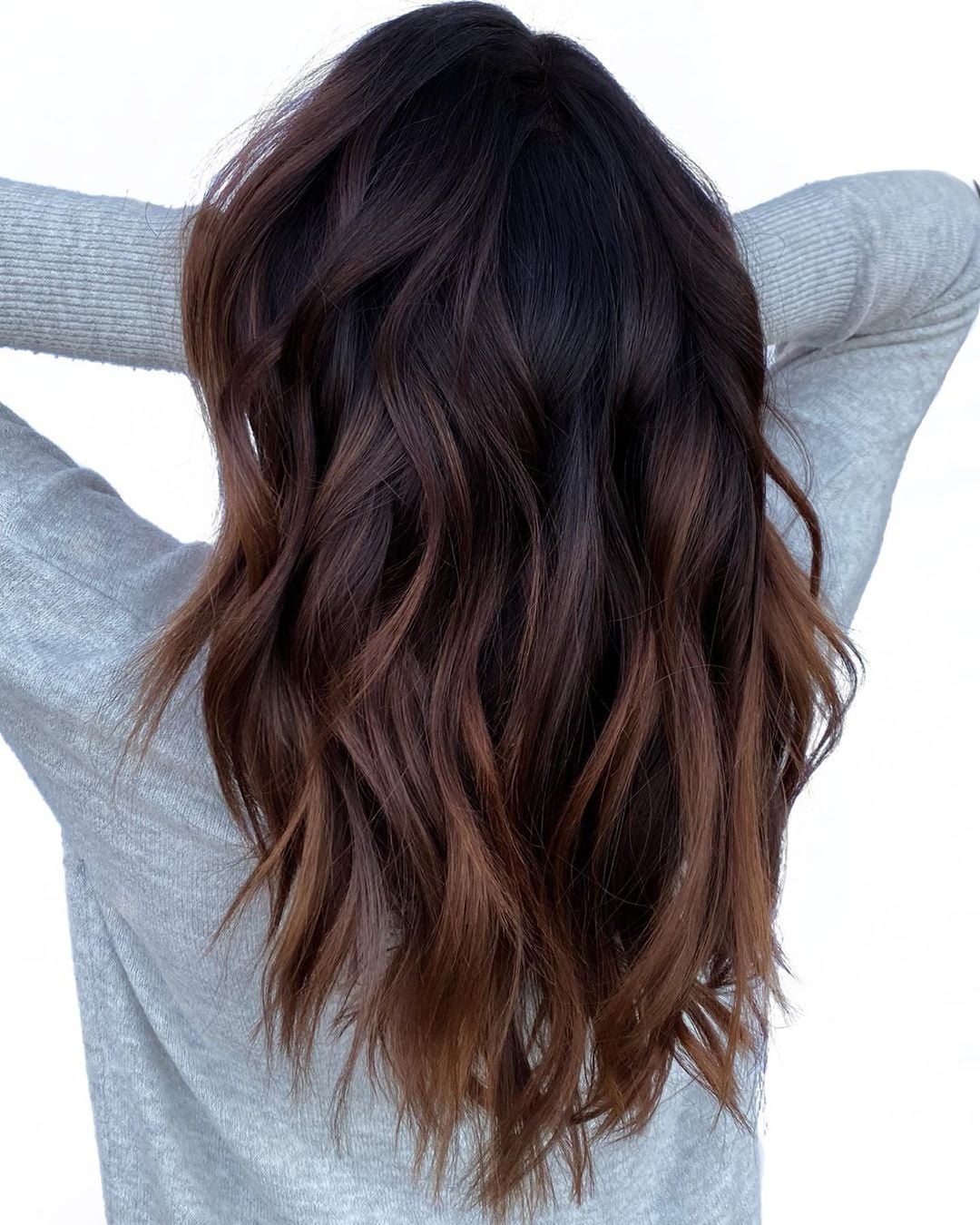
It is not a cool-toned ash blonde ombré; this version shifts from deep dark brown into a warm, lighter brown, and the middle-part wavy blowout makes the transition feel like a cozy sweater for your hair. The thick, mid-back length waves carry the warmth evenly, so the color looks like a deliberate choice. Ask your colorist for: mid-back length, layers, dark brown to warm brown subtle ombré, voluminous waves. A middle part elongates most face shapes. A volumizing spray at the roots helps the waves hold their lift.
This shade lands naturally in autumn, when cooler ombrés start to feel out of place. The warm brown end color pairs well with richer wardrobe tones without competing. Layers through the mid-back length prevent the ombré from sitting as a heavy block of color, letting the wave pattern break it up instead.
Wavy Bob With Dark Brown To Caramel Blonde Ombré
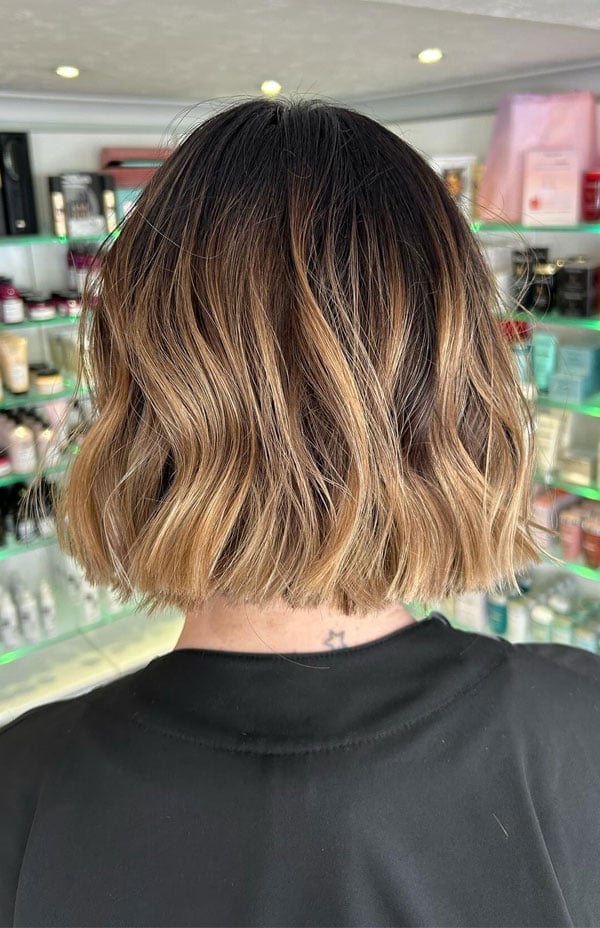
A chin-length wavy bob with a middle part and a distinct ombré from dark brown to caramel blonde relies on the cut doing the work: the bob’s blunt base gives the color a clean stopping point, while the soft waves diffuse any hard line. Medium density hair carries the caramel without looking thin at the ends. Ask your colorist for: chin-length wavy bob, dark brown to caramel blonde ombré. The shorter length means the ombré gradient is more concentrated, so the color shift feels deliberate. A texturizing spray keeps the waves defined and the transition visible.
Final Thoughts
For fine hair, keep the baseline blunt and skip heavy layering so the ends hold fullness. For thick hair, embrace the dimension that layers and varied ombré depths can create.
- Maintain ombré color with color-depositing conditioners or glosses every 4-6 weeks.
- Trims for layered cuts are typically needed every 8-10 weeks, while blunt cuts may require them every 6-8 weeks.
- Protect colored hair from heat with a heat protectant spray before styling.
- Wash hair 2-3 times per week to preserve color and moisture, using sulfate-free shampoos.
Ombré offers a versatile and elegant way to update your look.
