

Natural twists have moved past the utility-only category into something you actually want to be seen in. The current shift favors a glossier finish, softer face-framing pieces, and a lived-in color that adds dimension without demanding weekly toning.
This collection of 30 Classy Natural Twists covers the range from five-minute styles to salon-grade installations, across lengths from ear to mid-back and textures from flat twists to voluminous passion twists. If you have fine hair that never holds volume, a visible grow-out line you are tired of hiding, or a fringe that will not cooperate, there is a twist pattern here that solves it.
Elegant Locs Updo With Side-Swept Fringe
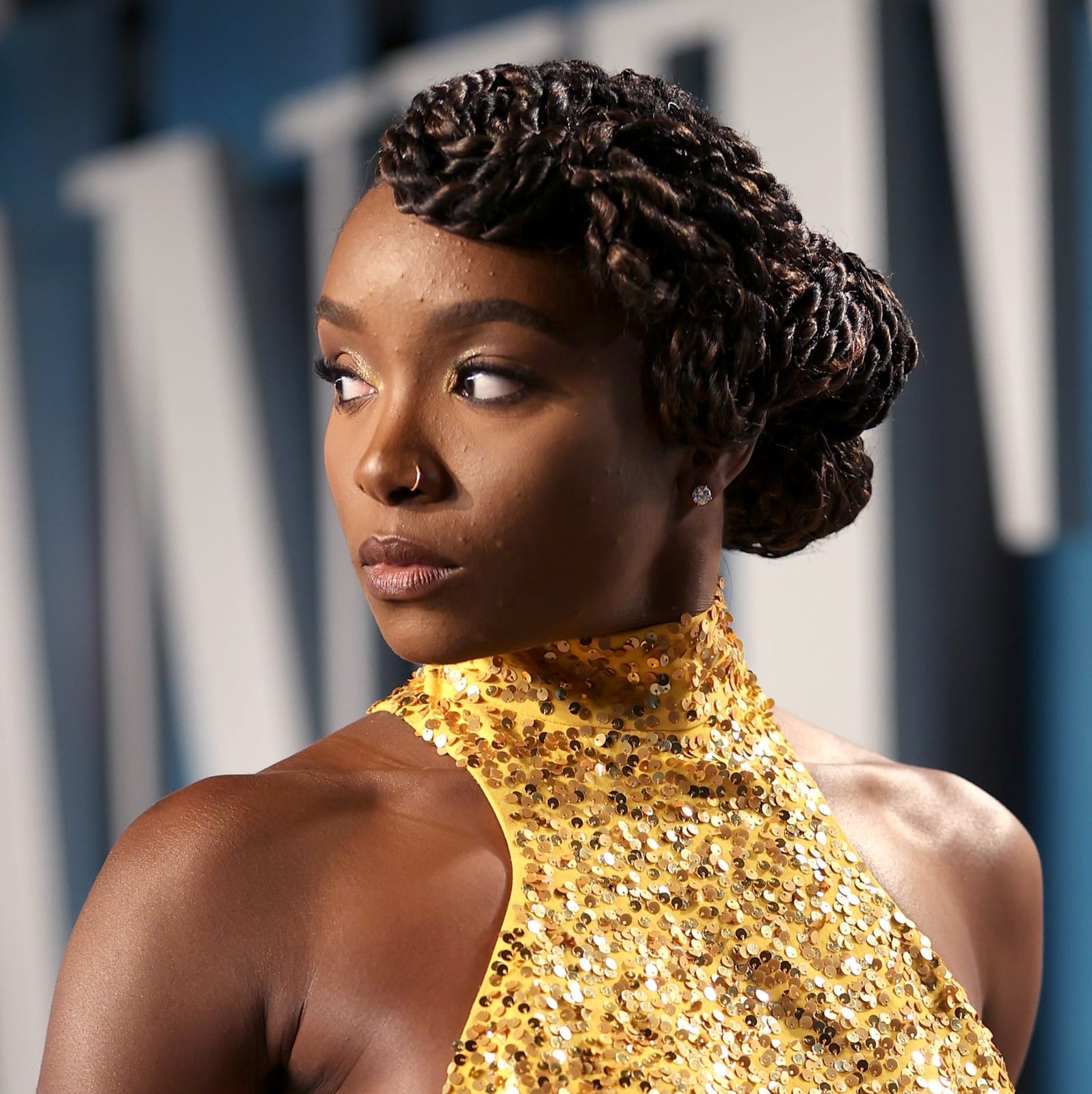
An updo that sweeps locs to one side and lets a side-swept fringe define the shape. The dark brown base with lighter wavy tips adds depth without looking busy. This construction works best for those with locs past the shoulders: the extra length gives the stylist enough material to build a secure bun and still leave that fringe piece. A rounder face benefits from the asymmetry of the side part, while a longer face gets balance from the volume at the crown. Ask your stylist for: elegant locs updo with side-swept fringe. The style requires a salon visit to place the pins correctly, but the hold lasts through dinner and dancing.
Glossy Mid-Back Two-Strand Twists
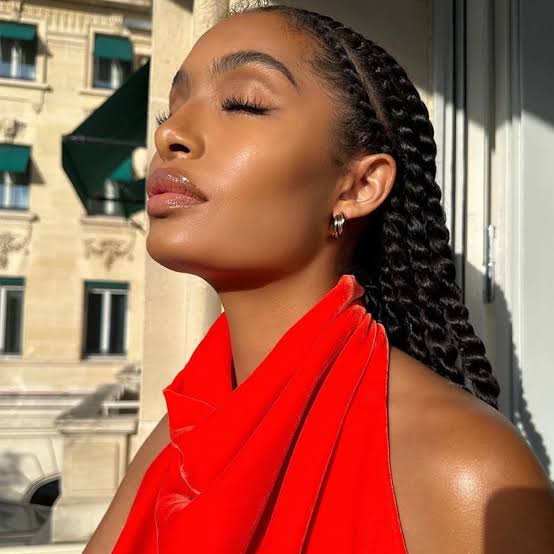
Two-strand twists that reach mid-back and carry a glossy finish are built by wrapping each section tightly from root to tip, then sealing the ends with steam or hot water. The black base with subtle brown highlights creates a natural dimension that shows up in sunlight. Medium to thick hair starting at shoulder length gives the best result: thinner hair may not fill the twist evenly along the full length.
Ask your stylist for: mid-back two-strand twists with a glossy finish. To keep that shine, apply a lightweight serum to the ends every morning. A trim every 8 to 10 weeks prevents the twists from looking frayed at the bottom. The middle part keeps the frame symmetrical and clean.
Ear Length Halo Flat Twists
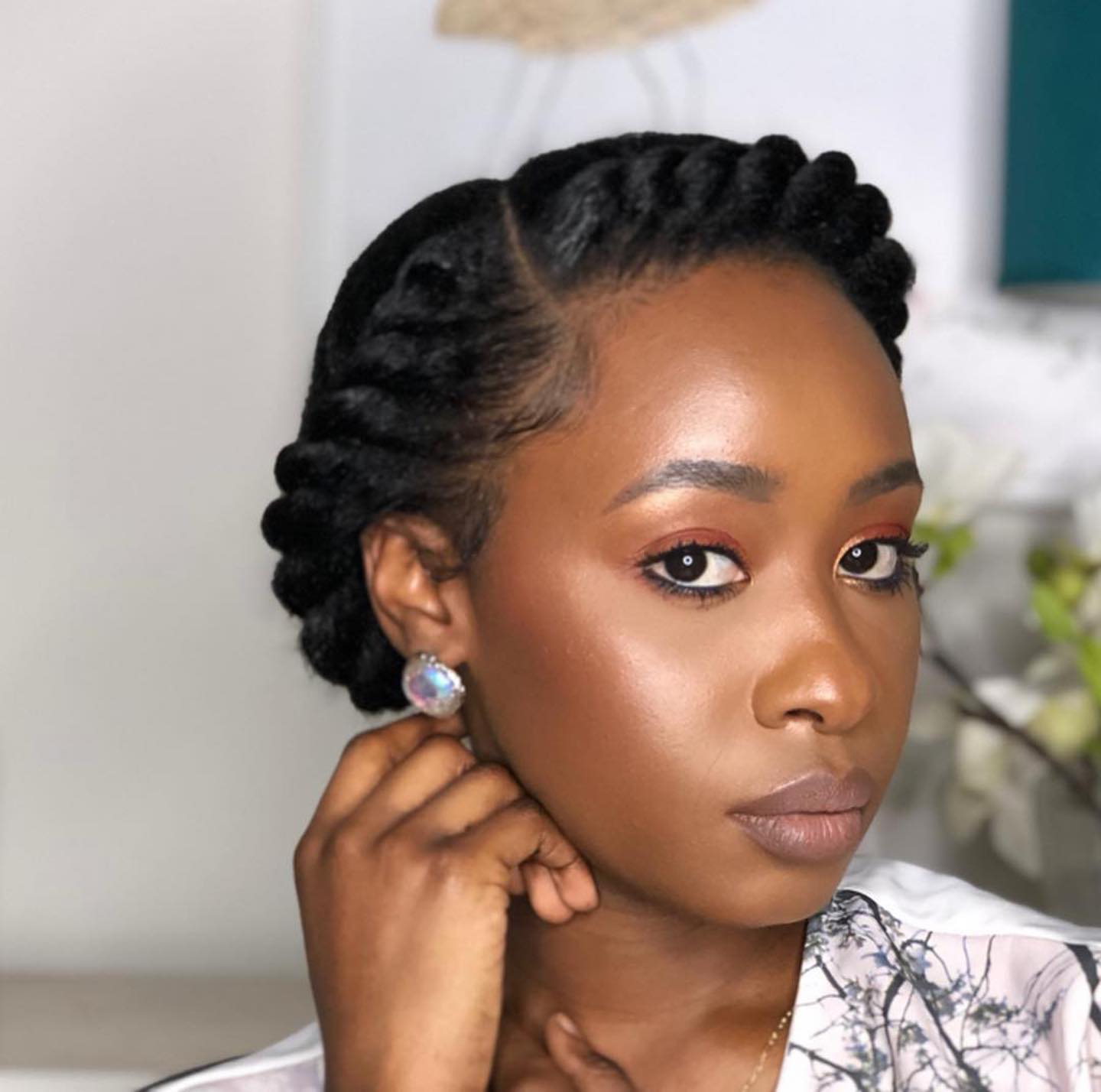
How do you ask for a style that sits flat against the scalp and circles the head like a headband? The halo shape is the key detail. Flat twists at ear length require the stylist to cornrow the hair in a continuous circular path, keeping the tension even so the finished surface looks smooth rather than lumpy. Ask your stylist for: ear length flat twists styled in a halo. The side part adds a natural break to the symmetry. A light-hold spray helps the halo keep its shape through the day. This is a polished option for short hair that still wants a sculpted silhouette.
Defined Shoulder Length Twists
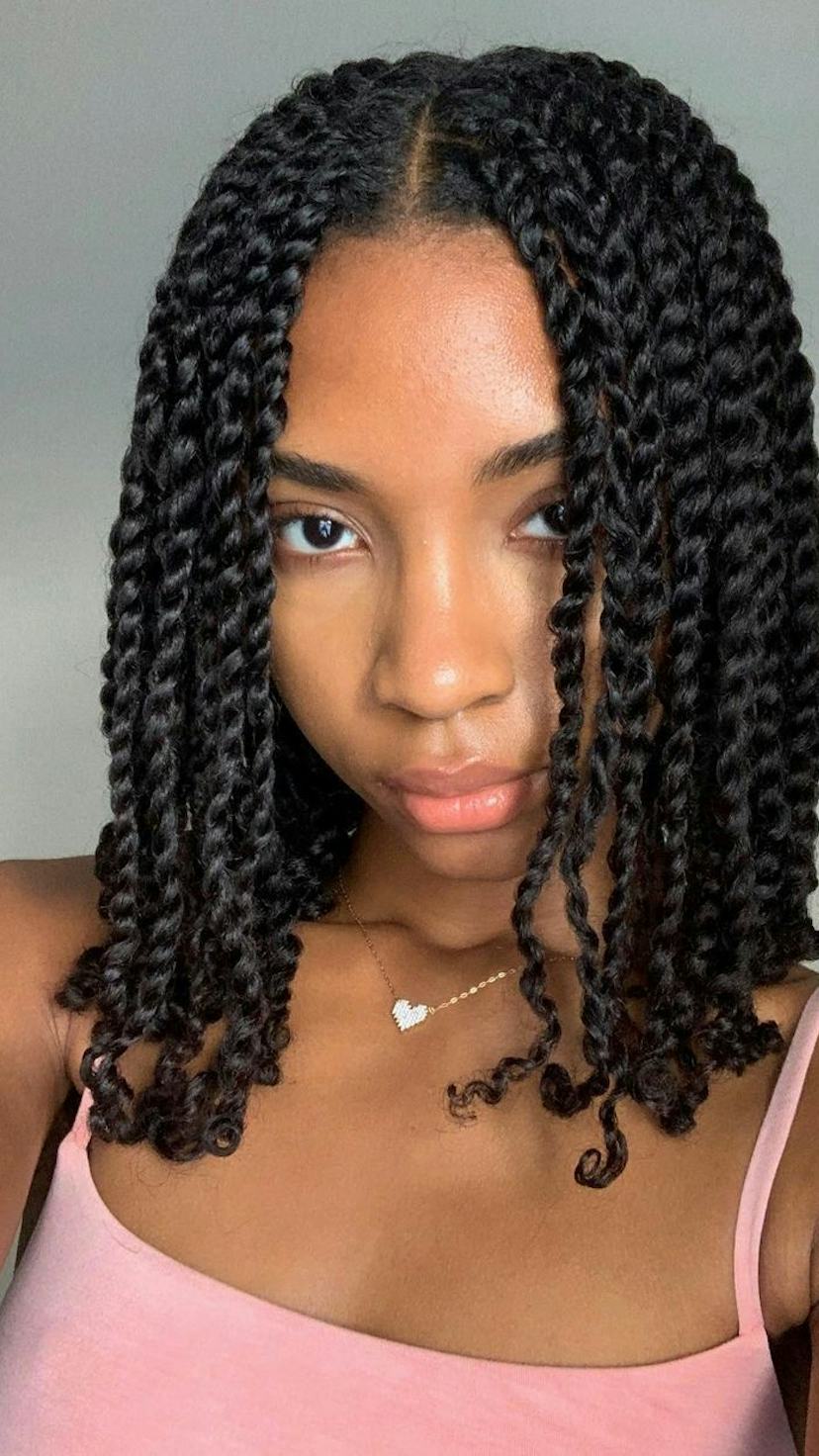
Ask your stylist for: shoulder length defined twists, middle part. To keep the twists soft and frizz-free, apply a moisturizing cream every few days. The ends need trimming every 6 to 8 weeks to maintain the clean line at the shoulder. This style works for everyday wear and requires minimal daily effort once installed.
Mid-Back Marley Twists With Charms
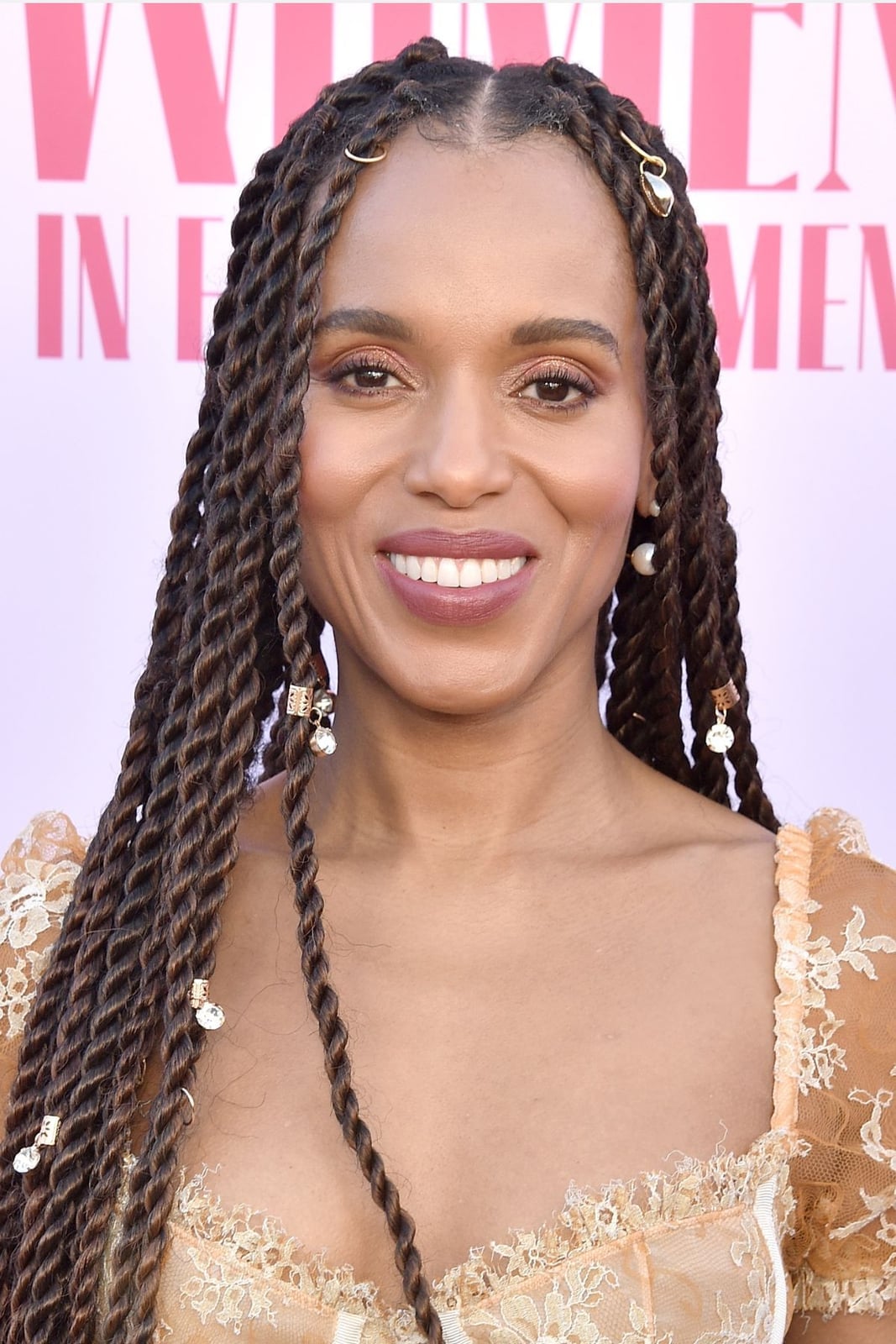
Marley twists have a matte, textured surface that grips decorative charms better than a glossy twist would. The deep dark brown base keeps the focus on the silver beads and charms scattered along the length. Standard box braids lie flatter and take charms less securely; the Marley texture holds them in place without sliding. Ask your stylist for: mid-back Marley twists with decorative charms. A middle part keeps the distribution even.
This is a festival or event style, not an everyday workhorse. The charms add weight, so the twists need a secure install at the root to avoid tension. Avoid heat styling near the charms, and check the attachments weekly so nothing goes missing mid-event.
Glossy Collarbone Two-Strand Twists
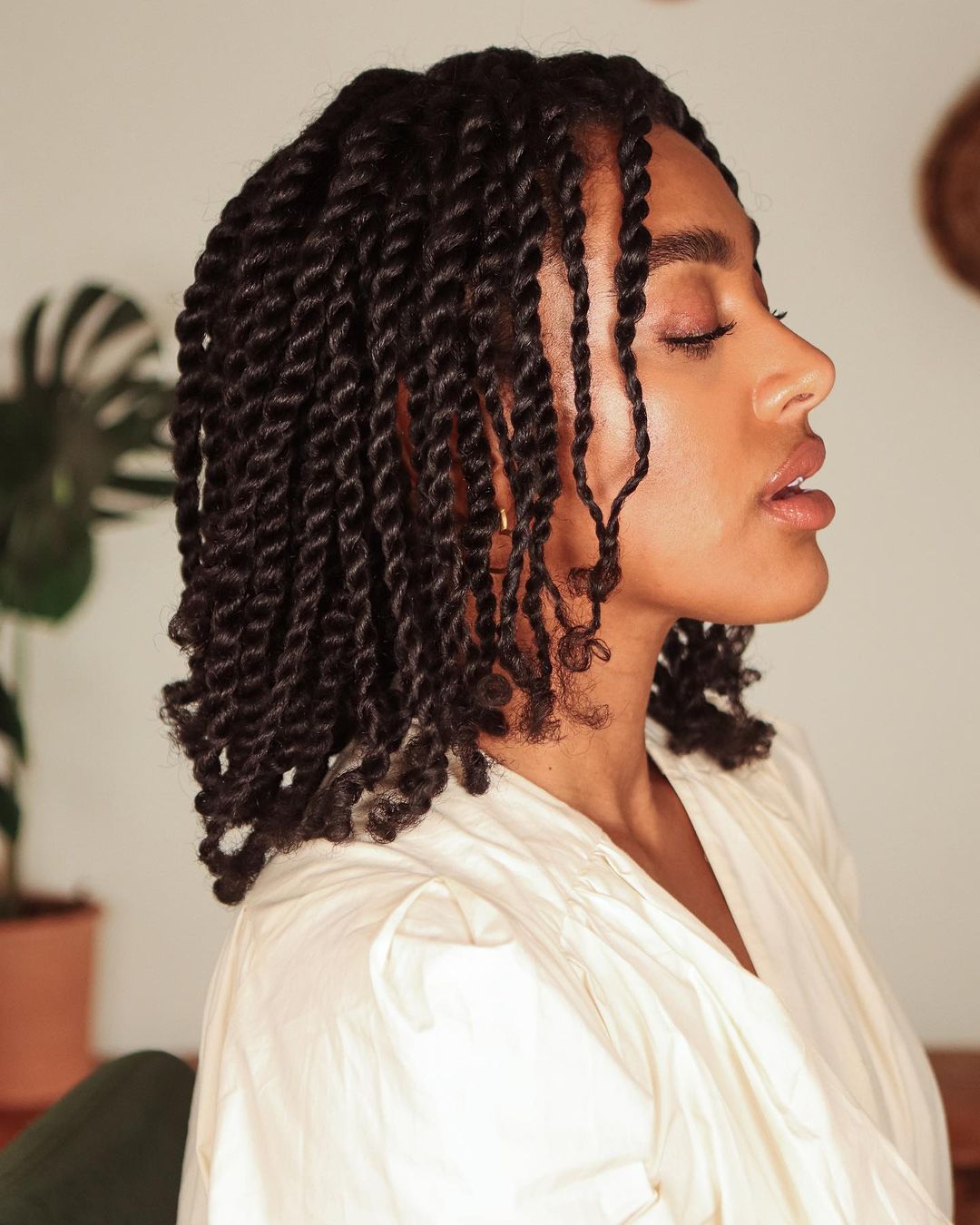
The polish here hinges on one detail: the gloss. Those collarbone two-strand twists catch light evenly, which means no dry spots or fuzzy ends. The wavy texture and middle part keep the look wearable for the office or a dinner out. Ask your stylist for: collarbone length glossy two-strand twists. A consistent glossy finish takes a salon install and a lightweight shine spray at home. A soft brush daily preserves the sheen, and a trim every six to eight weeks keeps the ends neat. Fine hair may find that the two strands pull the style flat by midday.
Wavy Brown Flat Twist Updo
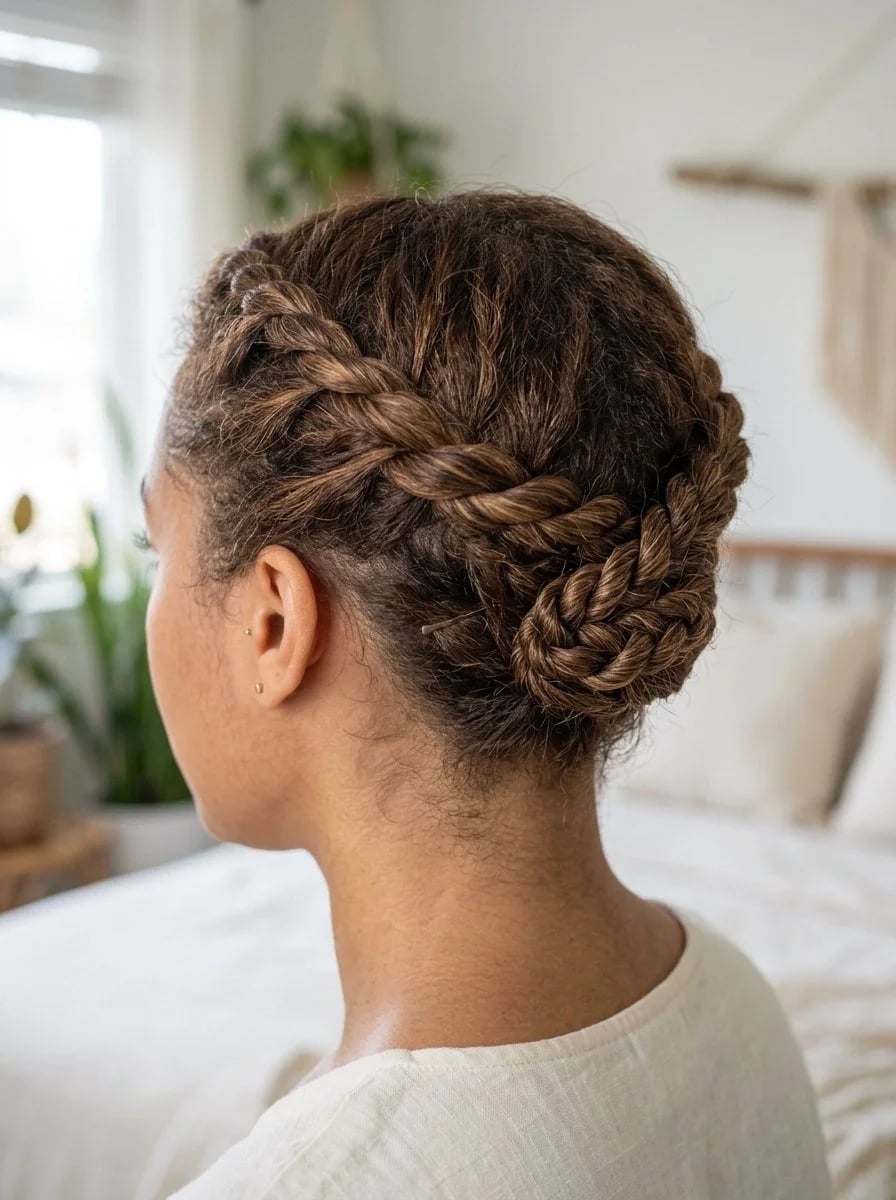
The construction starts at the hairline and works backward. Flat twists follow a circular path around the head, each one pinned into the next until the whole shape tapers into a low bun at the nape. The brown color and wavy texture give the pattern depth, so the twists read as separate pieces rather than a single braid. Ask your stylist for: intricate flat twist updo with a circular pattern. This is a salon-only build, about two hours in the chair for medium density hair at collarbone length or longer. A light mist of hairspray holds the shape through an evening.
Loose Passion Twists With Face-Framing
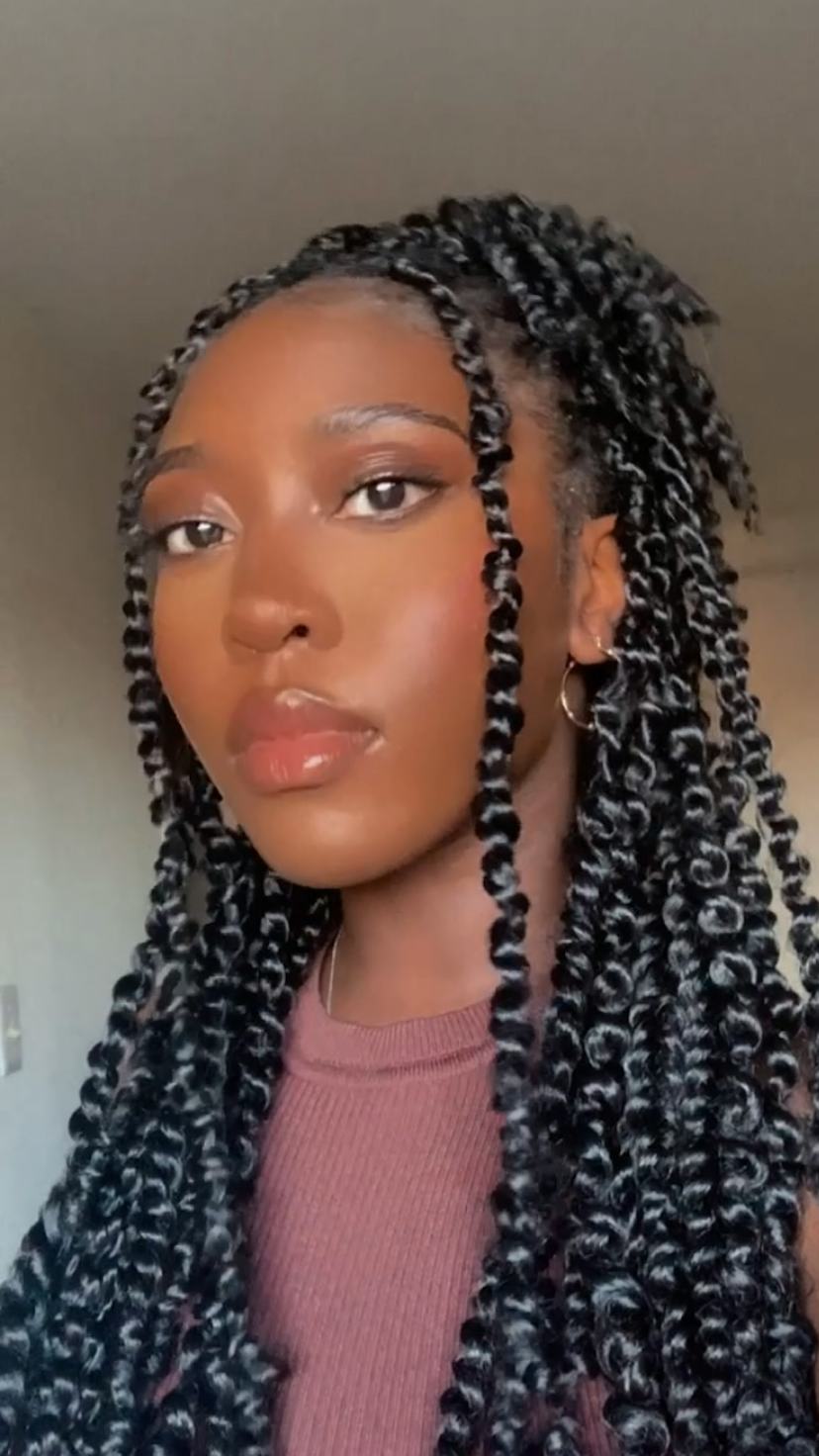
How do you get texture without bulk? Loose passion twists with face-framing pieces. The shoulder length keeps the style light, while the middle part and subtle highlights add dimension without weight. Ask your stylist for: shoulder length loose passion twists with face-framing pieces. A curl-defining cream on the ends maintains the twist definition between washes. The pieces around the face soften a square jaw and balance a round face. Medium density hair holds this shape best, and a trim every eight weeks prevents the face-framing sections from looking straggly.
Thick Mid-Back Defined Twists, Close-Up Take
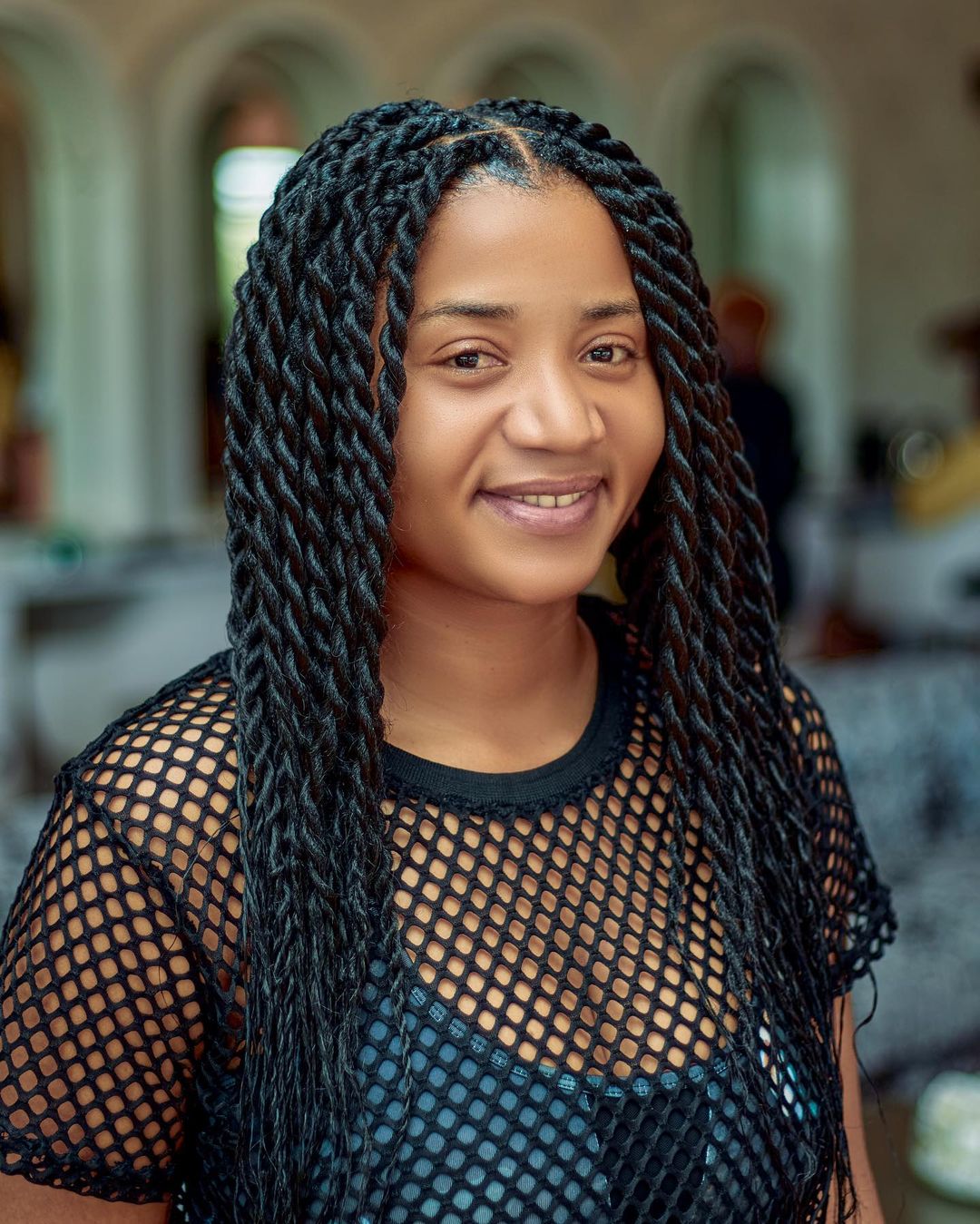
The density here is the first thing you notice: each two-strand twist is packed with hair, creating a full silhouette that holds its shape from root to mid-back. The wavy texture adds movement, so the twists do not sit stiffly, and the middle part keeps the volume distributed evenly on both sides. This is a salon install, not a weekend DIY. The thickness means the twists have real weight, which pulls them down rather than letting them fan out at the ends.
Ask your stylist for: thick mid-back two-strand twists. The black color keeps the definition sharp, and the uniform twist size makes the style read as deliberate rather than casual. A moisturizing balm applied every few days maintains the shine and prevents the twists from drying out, which thick twists are prone to do. Over-manipulation is the enemy here: twisting too often at the roots can loosen the tension. Stick to your regular wash rhythm and let the style do its work.
Defined Collarbone Two-Strand Twists, Black
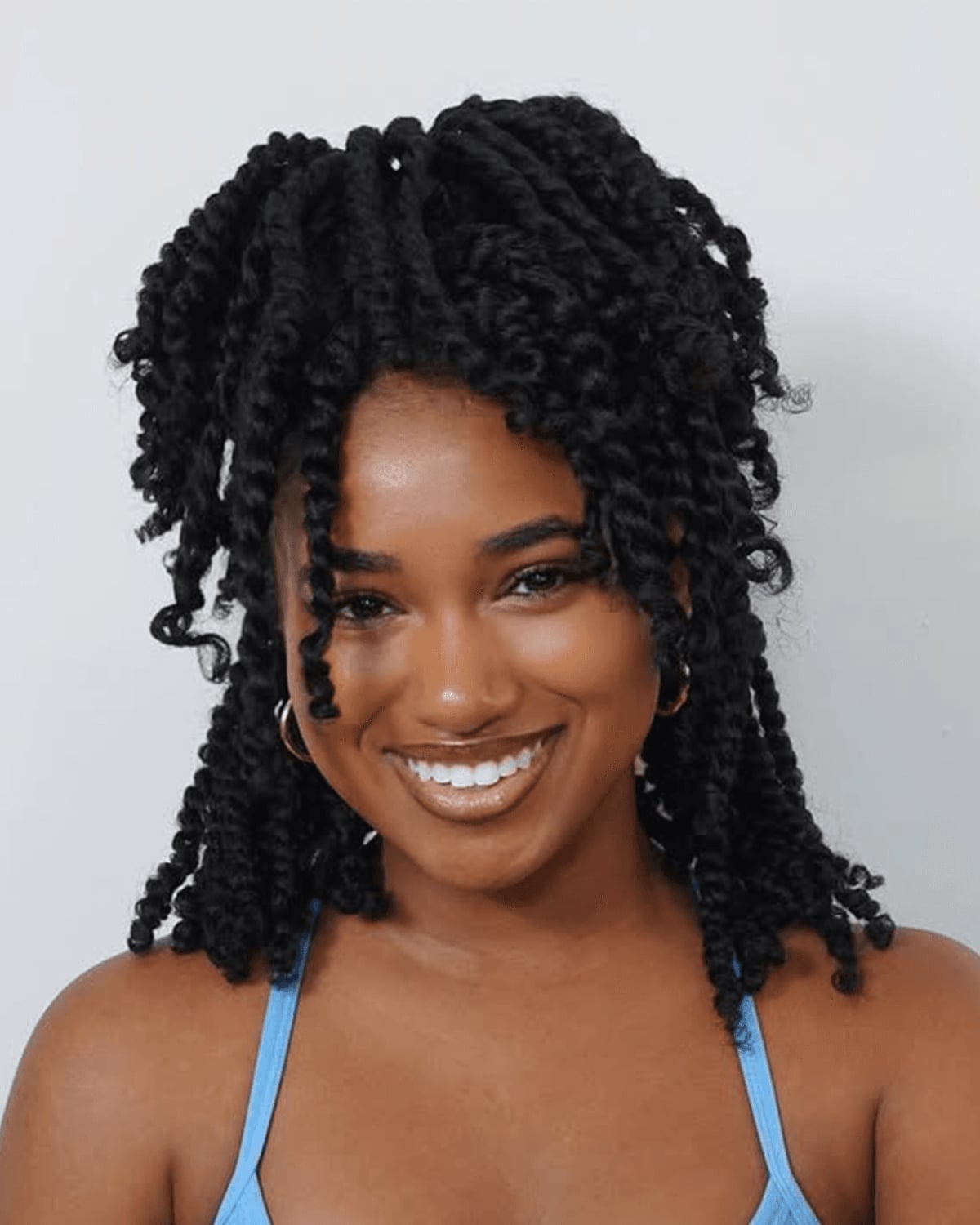
What do you call a twist that sits exactly at the collarbone with a clean middle part and a wavy finish? You ask for defined collarbone two-strand twists. The black color and uniform twist size make the style read as intentional, not casual. Ask your stylist for: collarbone length defined two-strand twists. Bring a reference photo showing the parting and the twist thickness. A light oil on the ends prevents frizz and keeps the shine consistent. The face-framing effect comes from the length hitting the collarbone, which elongates a round or oval face nicely. A trim every six to eight weeks keeps the ends blunt and the shape precise.
Mid-Back Passion Twists With Two-Tone Color
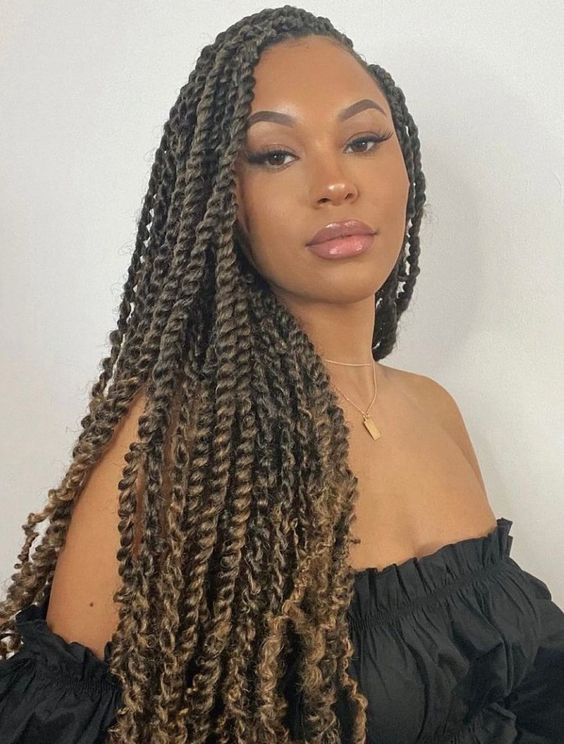
A two-tone color effect on passion twists is built in stages. The stylist first installs the dark brown extensions, then weaves in pieces of pre-colored blonde hair at intervals, creating a blended highlight that runs through the mid-back length. The wavy texture of the twisted braids helps the two shades merge so they do not sit in separate blocks.
This design works best if your natural hair is long enough to be braided into a mid-back style. Ask your stylist for: mid-back passion twists with dark brown and blonde highlights. The lighter strands add dimension compared to a solid color. Maintenance centers on protecting the blonde sections from brassiness, so a purple shampoo used every other wash keeps the tone from shifting warm.
Voluminous Mid-Back Passion Twists
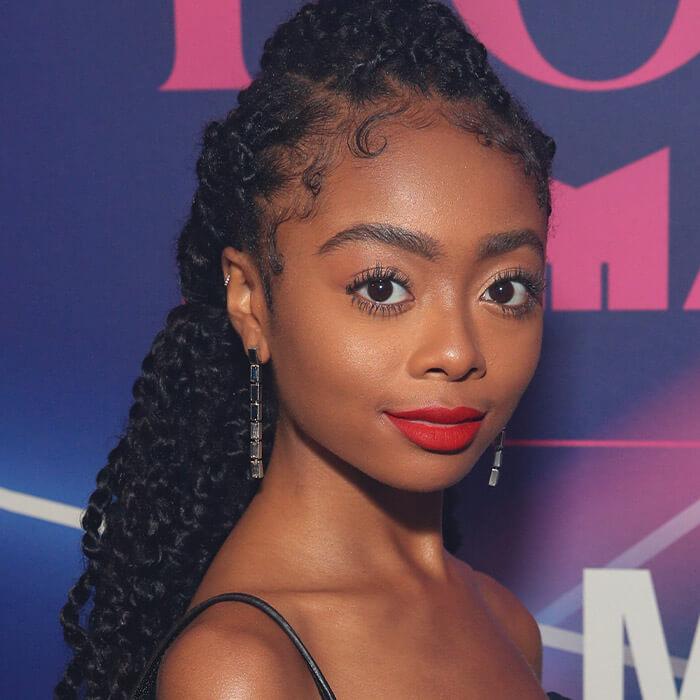
The volume here comes partly from the twist size and partly from the density of the install. These passion twists are defined enough to show individual texture but packed closely together, so the hair appears full and not sparse. The middle parting frames the face evenly, and the wavy texture keeps the silhouette from looking too stiff.
This style works well for medium to thick hair densities. If your hair is on the finer side, the stylist can use smaller sections to create the same fullness without the twists feeling too heavy. Ask your stylist for: mid-back voluminous passion twists with face-framing. A lightweight mousse applied at the roots after washing helps maintain the lift, and the twists hold their shape for up to six weeks before needing a touch-up along the hairline.
Shoulder Length Twists With Space Buns
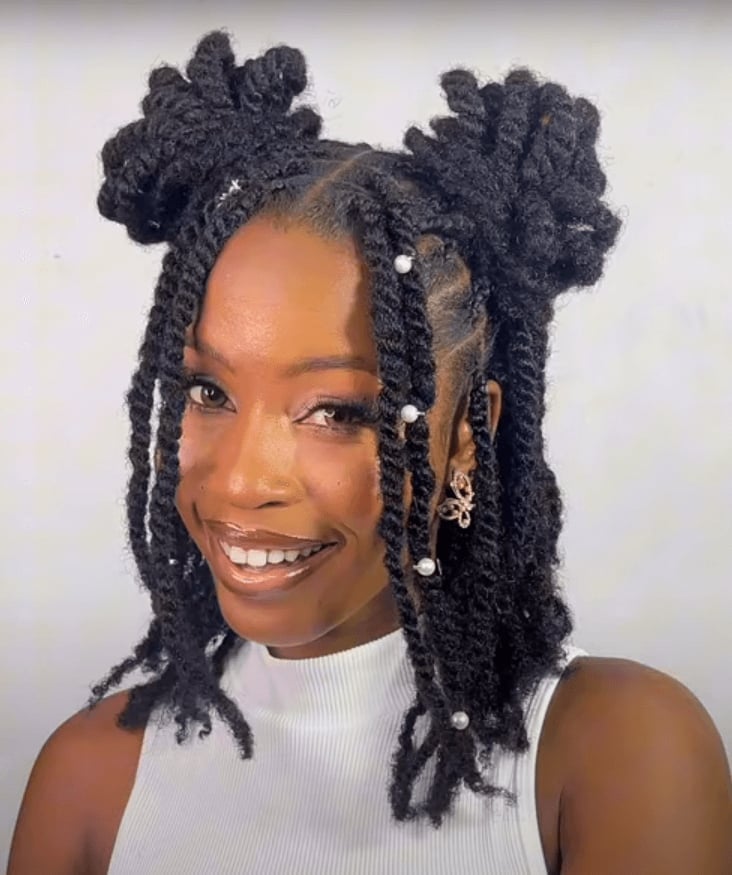
Space buns on shoulder-length twists are a warm-weather style through and through. The hair is sectioned into two high buns, each twisted into place, leaving a side-swept fringe to break up the symmetry. Small pearls woven into the buns add a decorative touch without weighing the twists down. The wavy texture of the two-strand twists gives the buns a softer edge than a slicked-back version would. This look lands best at festivals or outdoor gatherings where the playful silhouette matches the setting. Ask your stylist for: shoulder length two-strand twists in space buns with a side-swept fringe.
Voluminous Side-Parted Twists
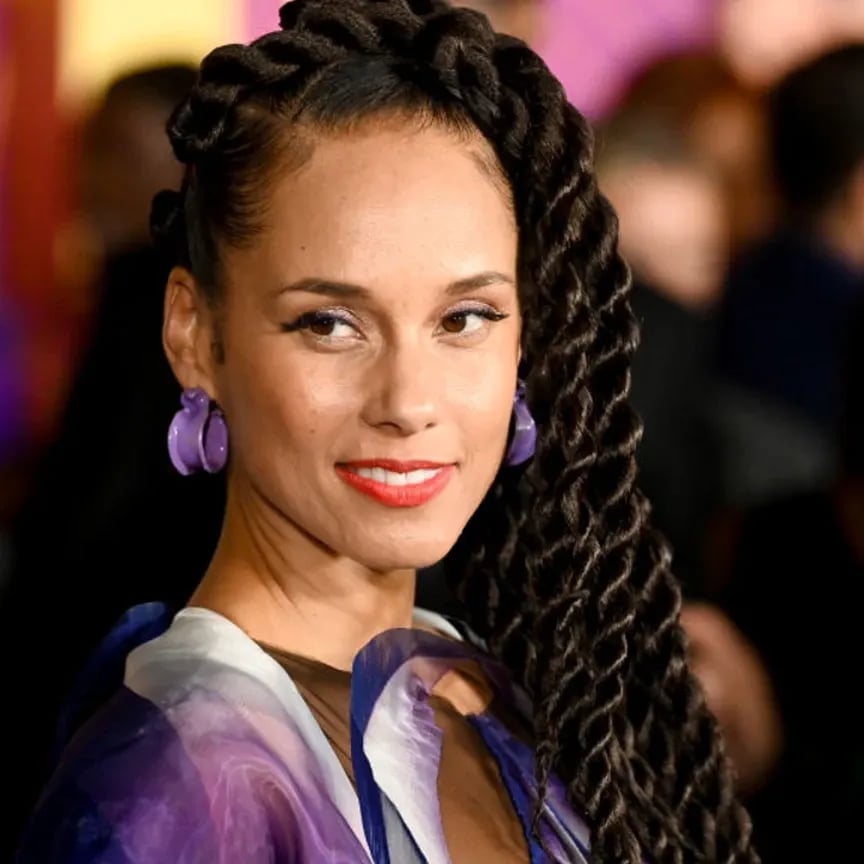
A side part changes the weight distribution of voluminous twists. Here the bulk of the two-strand twists falls to one side, which creates a deeper sweep of color where the dark brown base meets the lighter brown highlights. The wavy texture adds movement, so the hair does not sit flat against the head even with the extra volume on one side.
The main challenge of this silhouette is keeping the lower-density side from looking thin. Flipping the parting every few days redistributes the root lift and prevents the twists from settling into a permanent crease. Ask your stylist for: long voluminous two-strand twists with lighter brown highlights. A texturizing spray applied to the lengths helps maintain the fullness between washes, and the side part naturally elongates rounder face shapes.
Ombre Twists High Ponytail
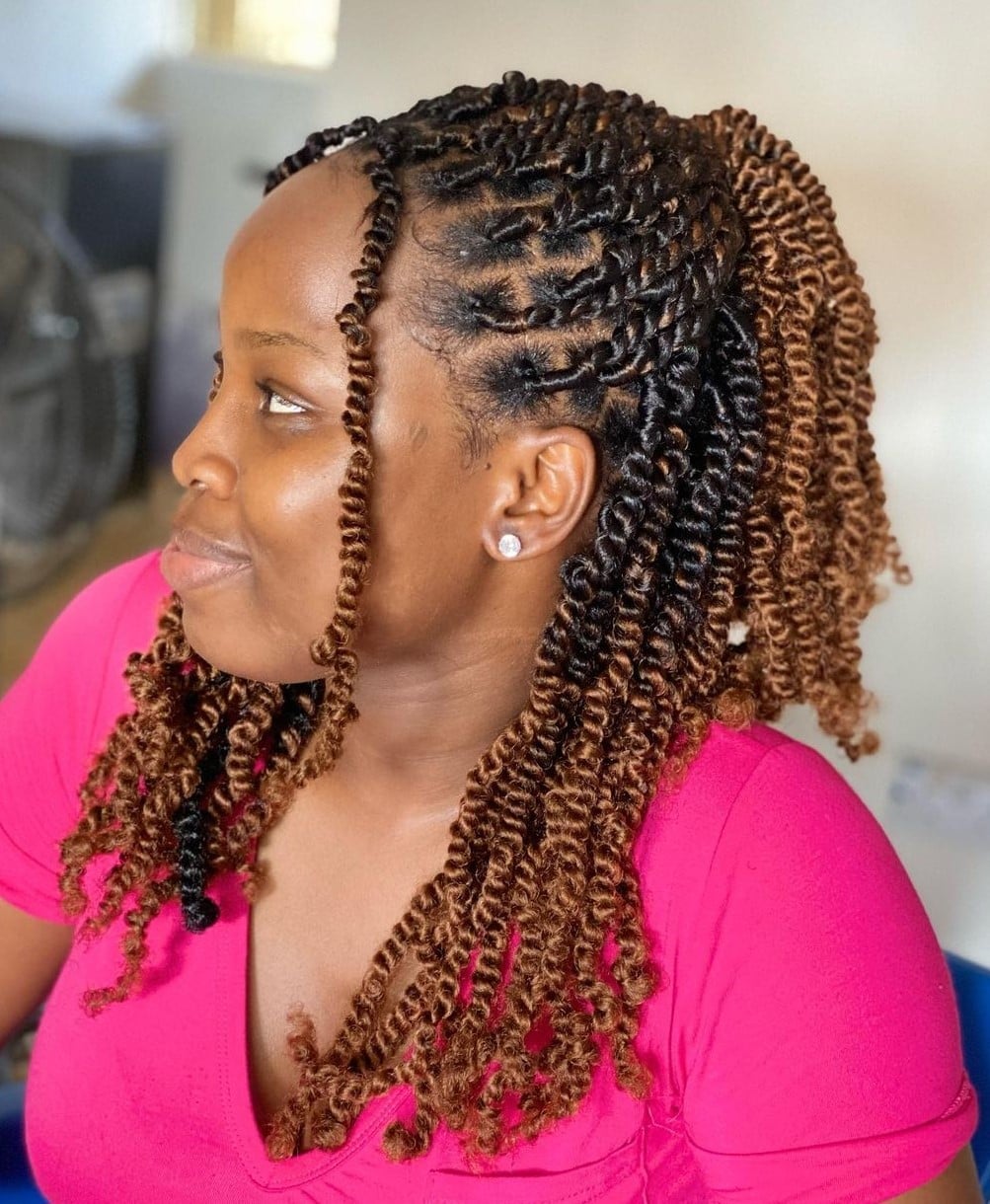
The ombre gradient on these twists starts dark at the roots and transitions to a lighter brown toward the ends. When pulled into a high ponytail, the color shift becomes the focal point, with the darker sections near the scalp contrasting against the lighter, curly ends that fan out past the shoulders. The middle parting keeps the front polished, while the loose ends add a relaxed finish to an otherwise structured updo.
Building this look requires pre-colored extensions: the stylist blends the dark and light shades at the mid-lengths so the transition appears seamless. Ask your stylist for: mid-back ombre twists in a high ponytail with loose ends. The hold is excellent, a tightly wrapped elastic at the base keeps the ponytail secure all day, and the ombre effect hides new growth better than a solid lighter color would.
Collarbone Micro Braids Ponytail
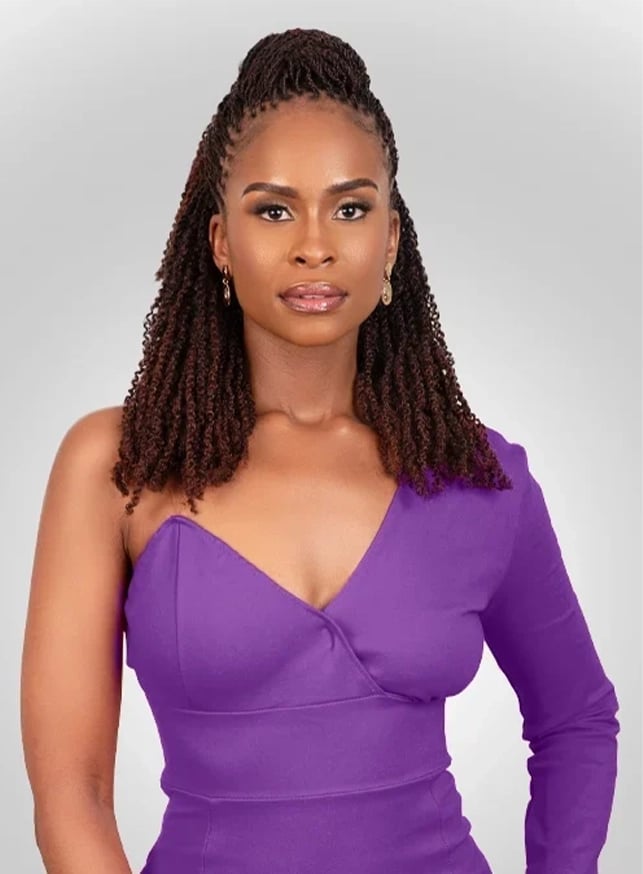
Have you ever wondered how to get micro braids that don’t look like a second job? The trick is collarbone length with subtle auburn highlights against the dark brown base, then pulled into a high ponytail. A middle part and coily texture keep the intricate pattern visible even when the hair is up. Ask your stylist for: collarbone length micro braids in a high ponytail. The loose twists around the elastic soften the line and stop the style from reading as too severe.
Defined Collarbone Flat Twists
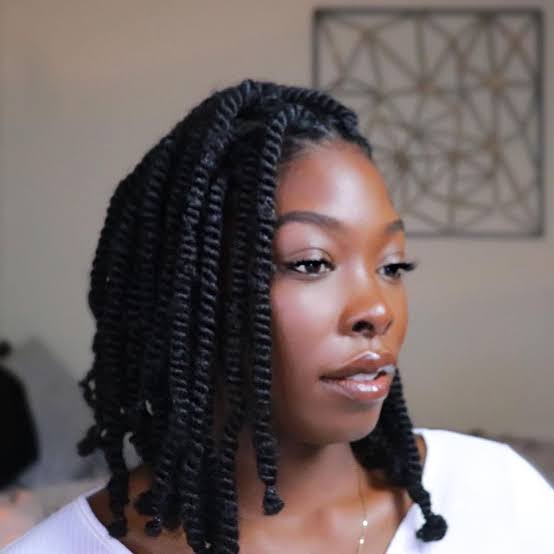
The neatness of these flat twists depends entirely on the parting. A middle part and even sectioning are required for the defined, wavy finish around the collarbone. This is a salon style, not a weekend project. The real drawback is unraveling near the edges: the ends need securing with small bands or a sealant, and even then, the front twists may loosen by week two. Who should skip it? Anyone who wants a low-touch style that lasts a full month without a touch-up.
Sculpted Chin Length Crown Twists
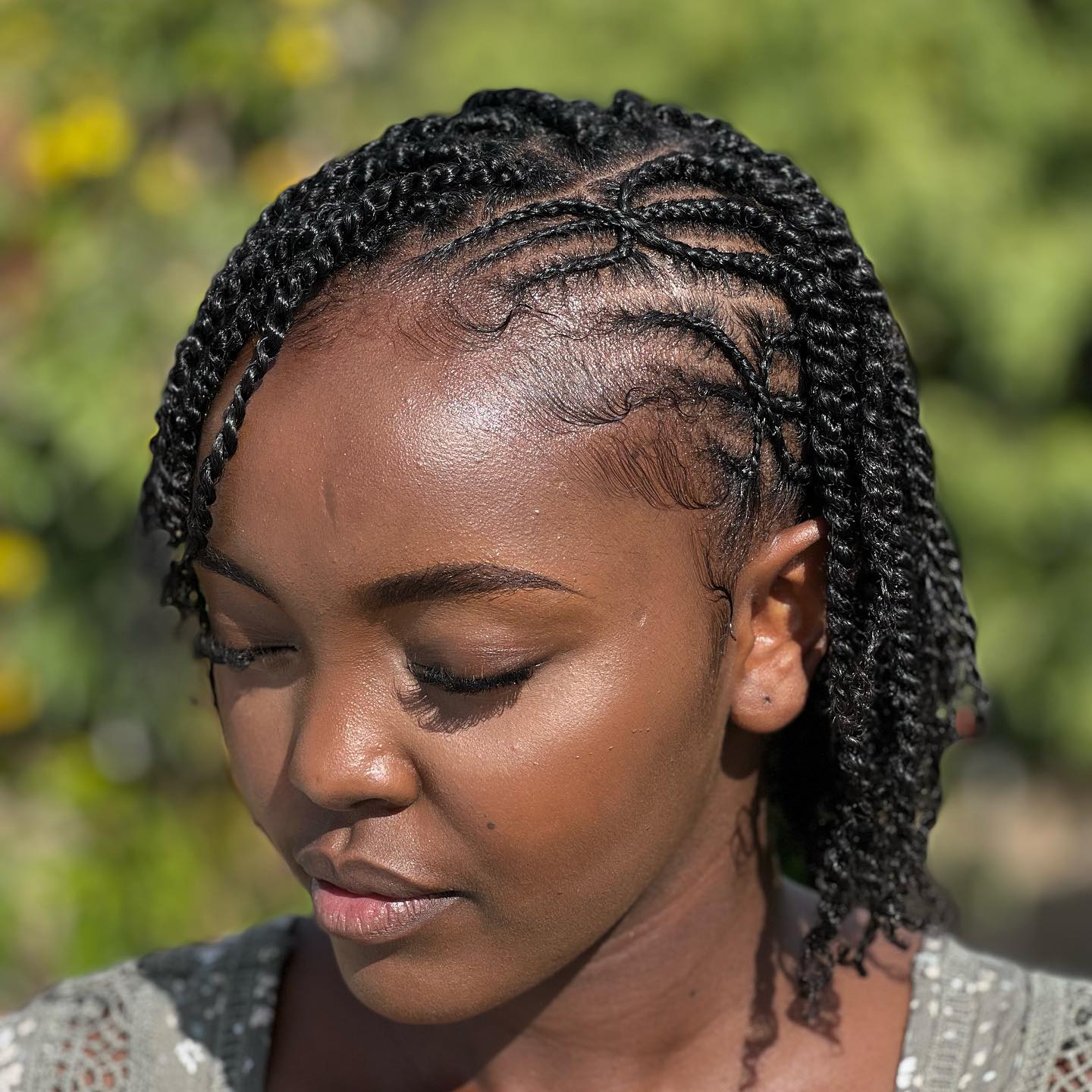
The side part here is doing real work, allowing the flat twists to wrap around the head in a smooth crown shape. Chin length keeps the silhouette compact. Upkeep is about maintaining the sculpted line: a strong hold hairspray or a dab of pomade at the edges will stop the twists from lifting overnight. The polished, straight texture means any frizz reads instantly, so a satin scarf at night is less optional than it sounds.
Neat Shoulder Length Mini Twists
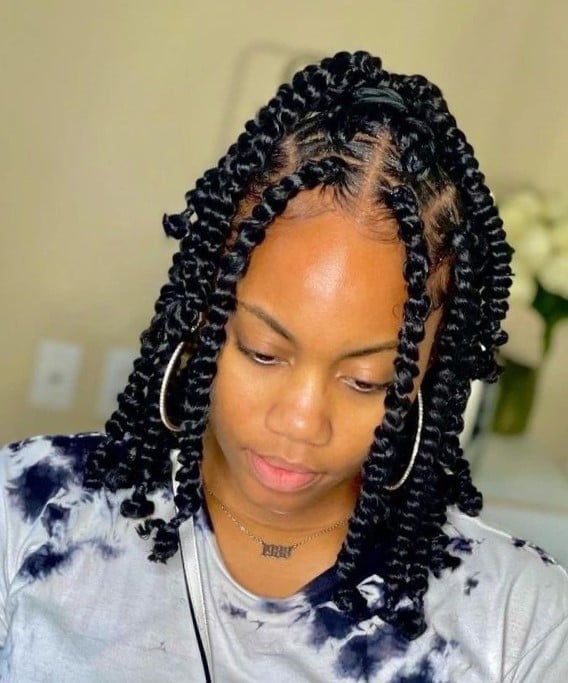
Wondering if mini twists work on shoulder length hair? They do, provided the texture has enough curl to grip itself. The neat middle parting is the anchor here, creating a clean, natural appearance that works for everyday wear. This style is salon-leaning rather than fully DIY, since even sectioning and consistent tension require a second pair of hands. The curly texture helps the twists hold their shape without product buildup at the roots.
Asymmetrical Shoulder Twists With Fringe
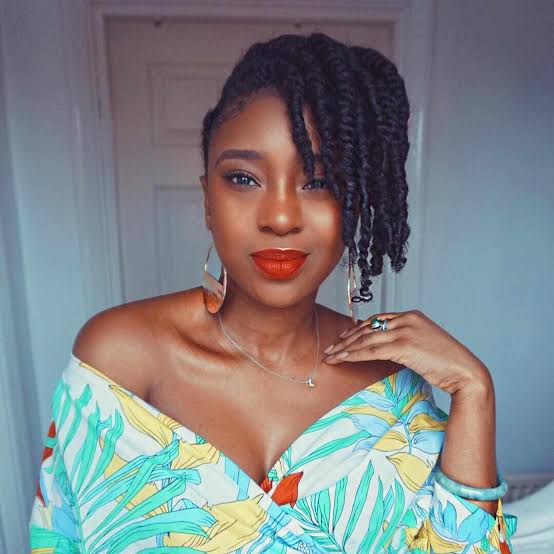
Compared to a symmetrical style, these thick two-strand twists look more modern. The side part and side-swept fringe create an asymmetrical shape that adds volume on one side, making the style look fuller without adding length. Ask your stylist for: shoulder length asymmetrical two-strand twists with a side-swept fringe. The fringe keeps the asymmetry from feeling unbalanced, and the thick texture gives the twists enough weight to hold the side part in place.
Mid-Back Linear Pattern Flat Twists
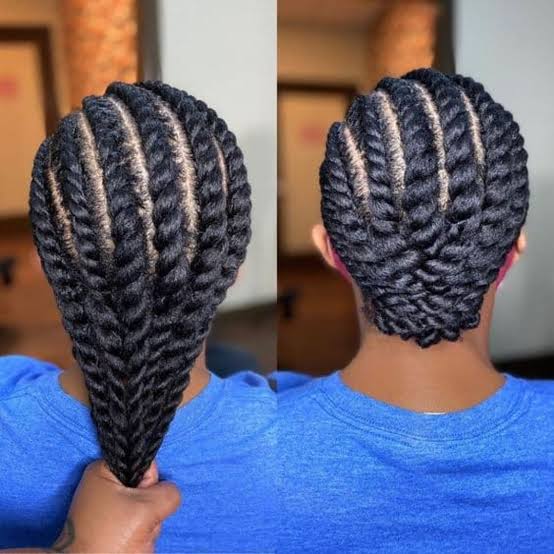
The geometry here is the point, clean straight-line partings at the scalp form an intricate linear pattern that extends all the way to mid-back. Each thick, black flat twist follows its assigned path without deviation, making the design visible from both the front and back. This is technique-forward styling, not something you improvise at the kitchen table.
It suits anyone with hair long enough for mid-back twists who wants a highly structured, polished finish. Ask your stylist for: mid-back thick flat twists in a linear pattern. The partings require edge control to stay sharp, and a silk scarf at night helps preserve the pattern between salon visits. A trim every eight weeks keeps the ends clean and the lines intact.
Long Straight Twists With Volume
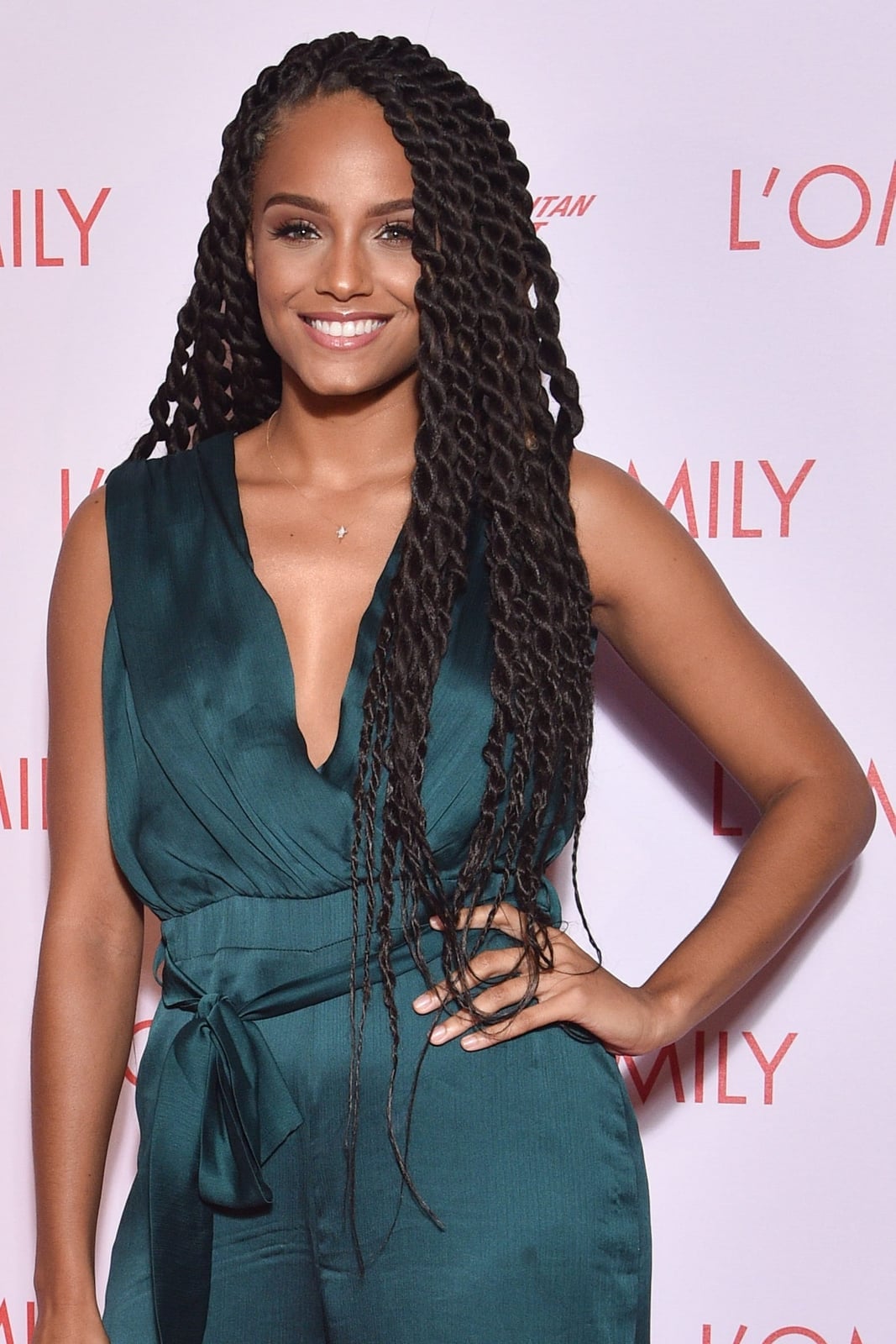
Dark brown twists with subtle lighter highlights add extra density, and at mid-back length, the volume is the first thing you notice. The middle parting and uniformly straight texture give it a sleek, almost architectural profile. It looks substantial without being fussy.
Anyone with hair long enough for mid-back styles can wear this, provided they want a look that holds its shape without constant rearrangement. Ask your stylist for: long straight twists with volume and subtle highlights. A smoothing serum keeps the texture straight and frizz-free. Plan for a trim every eight to ten weeks and a toning appointment every six to eight weeks to keep the highlights from drifting brassy.
Collarbone Kinky Twists With Wavy Ends
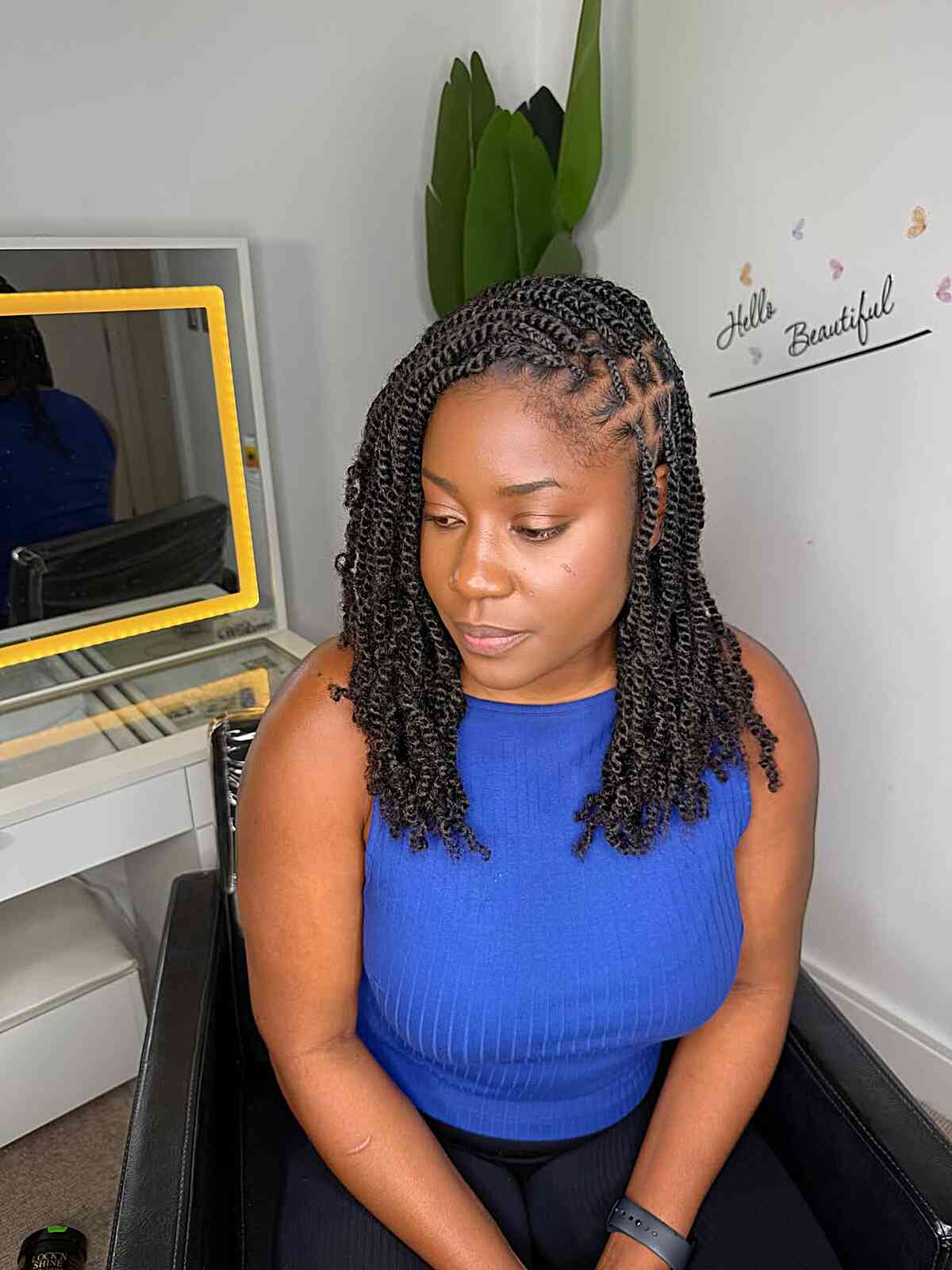
Wondering how to get the neat middle parting and the relaxed wavy ends in one style? The trick is asking for collarbone-length kinky twists with the ends left loose and wavy. The dark brown color keeps it natural, while the texture contrast, tight at the root, softer at the tips, gives movement without sacrificing the clean part line. Ask your stylist for: collarbone length kinky twists with wavy ends. It works best on hair that already reaches the collarbone, so the twists land at a flattering, versatile length.
Mid-Back Straight Twists With Silver Beads
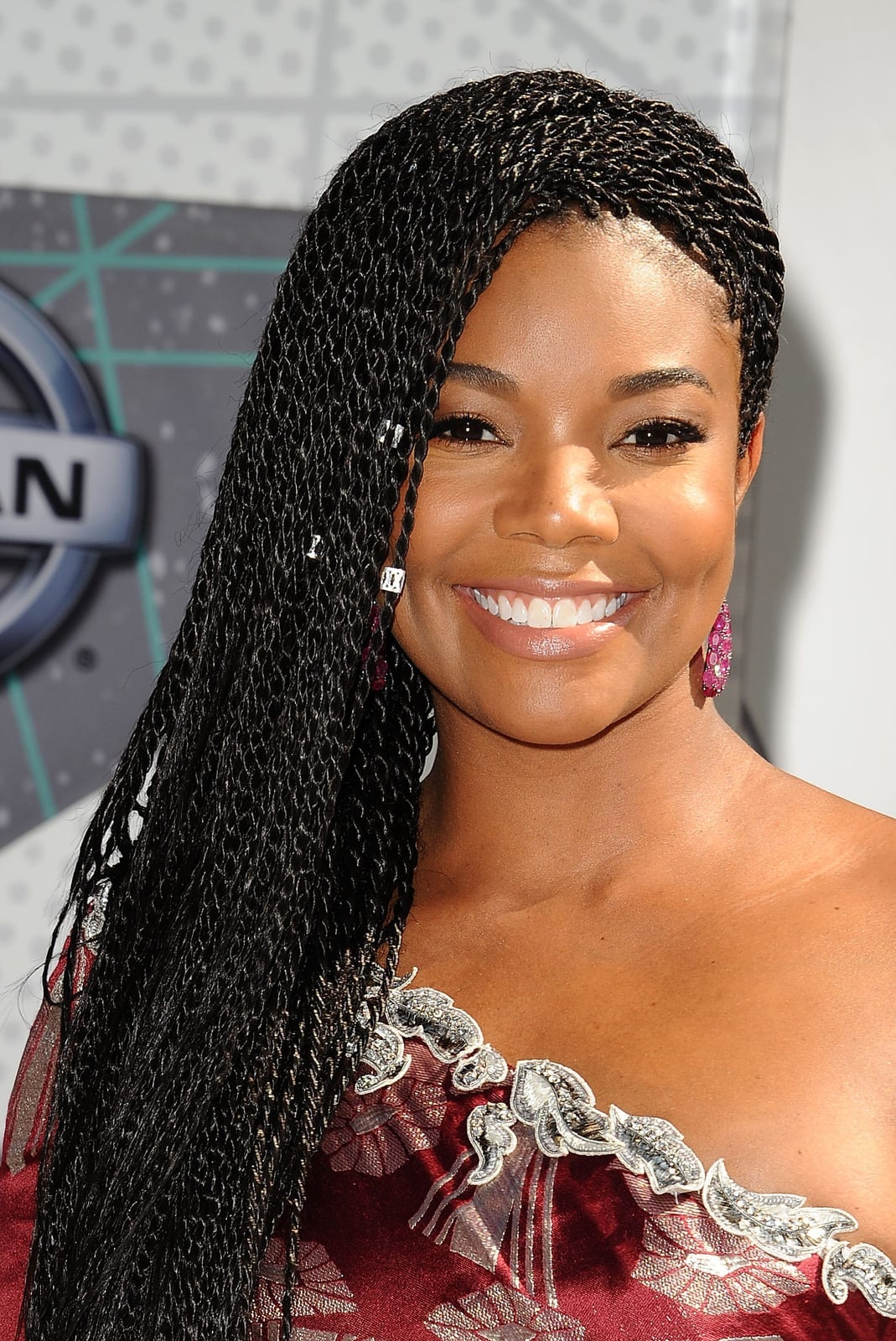
The small silver beads woven into these straight black twists add a festive touch for evening events. The uniform mid-back length keeps the look polished and celebratory but not overdone.
Hair that reaches mid-back is the starting point here. Ask your stylist for: mid-back straight twists with silver beads. The beads need to be secured properly during installation to avoid snagging, and removal should be gentle. This is a salon style, not a between-wash experiment. Reserve it for parties, weddings or any occasion that calls for a bit of sparkle.
Mid-Back Curly Thick Twists, Black
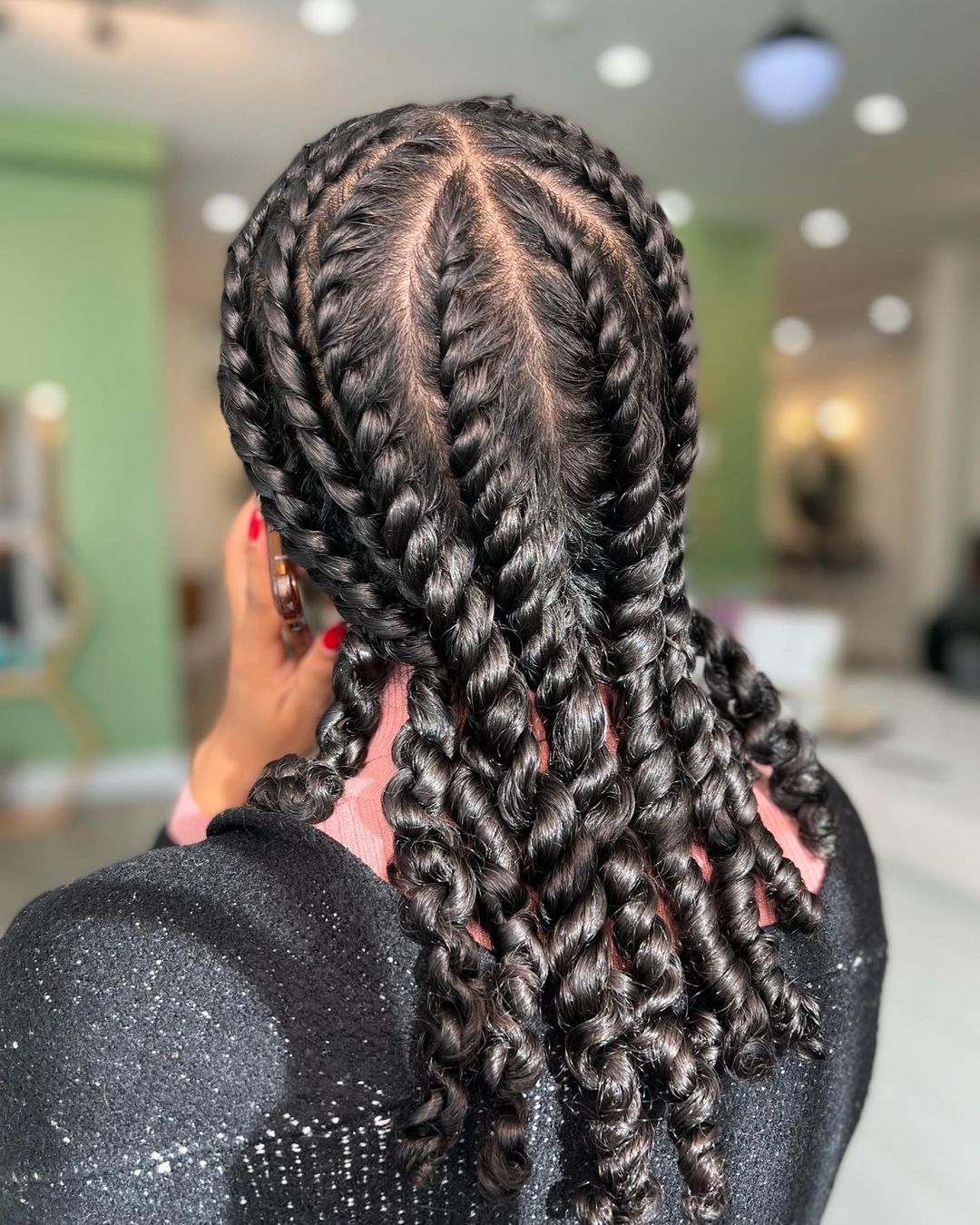
These thick, black two-strand twists have defined springy curls at the ends that look fantastic, but keeping that bounce takes work. The mid-back length gives it a classic silhouette, and the curly texture adds movement that straight twists cannot match. It is a salon style, expect to sit for a few hours, and the main drawback is that the curl definition at the ends can loosen faster than you would like.
A curl-enhancing cream helps, and avoid over-brushing if you want the springs to last. A trim every eight weeks prevents the ends from looking ragged. Ask your stylist for: mid-back thick two-strand twists with springy curls. This style has real personality, provided you are willing to tend to it.
Mid-Back Wavy Two-Tone Twists
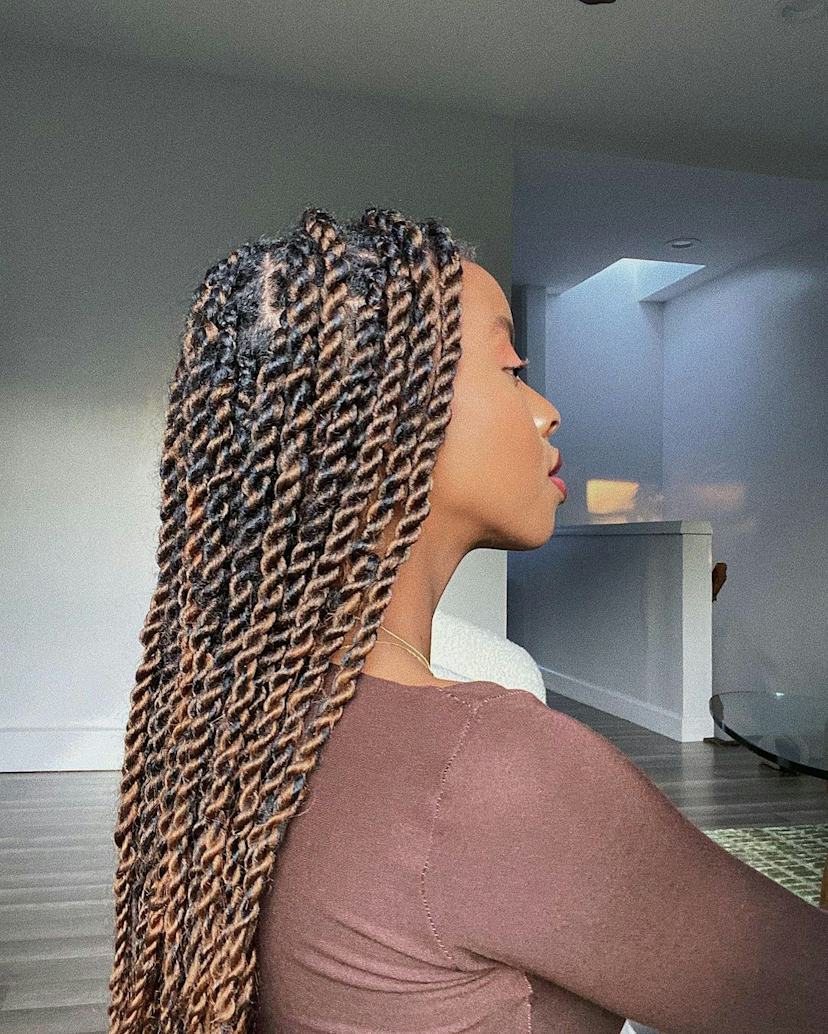
Two-tone twists rely on a technique where each section is wrapped with both dark brown and blonde extensions, creating a blended stripe effect. The color placement starts at the root and travels through the entire mid-back length, so the contrast is visible from every angle. A middle parting shows off the symmetry of the two shades. Ask your colorist for: mid-back two-tone twists with dark brown and blonde highlights. This is a salon design, not a weekend DIY project.
The wavy texture at the ends comes from the wrapping pattern itself, not from heat styling. The twists hold their wave for the life of the install, which is typically six to eight weeks. Use color-safe shampoo and a lightweight conditioner to keep the dark brown from fading and the blonde from going brassy. A toning appointment every four to six weeks maintains the blonde pieces.
Mid-Back Golden Brown Rope Twists

Rope twists are thicker than standard two-strand twists, which means they work best on medium to high density hair. The golden brown color is warm and solid, but the metallic gold strands woven throughout add a shimmer that catches light without being loud. Ask your stylist for: mid-back golden brown rope twists with metallic gold strands. This is a look that benefits from having enough hair to support the thickness of each twist. Fine or low-density hair will find the individual twists look sparse rather than full. The metallic strands are permanent additions, so there is no upkeep beyond a standard trim every eight weeks.
Defined Collarbone Twists Away From Face
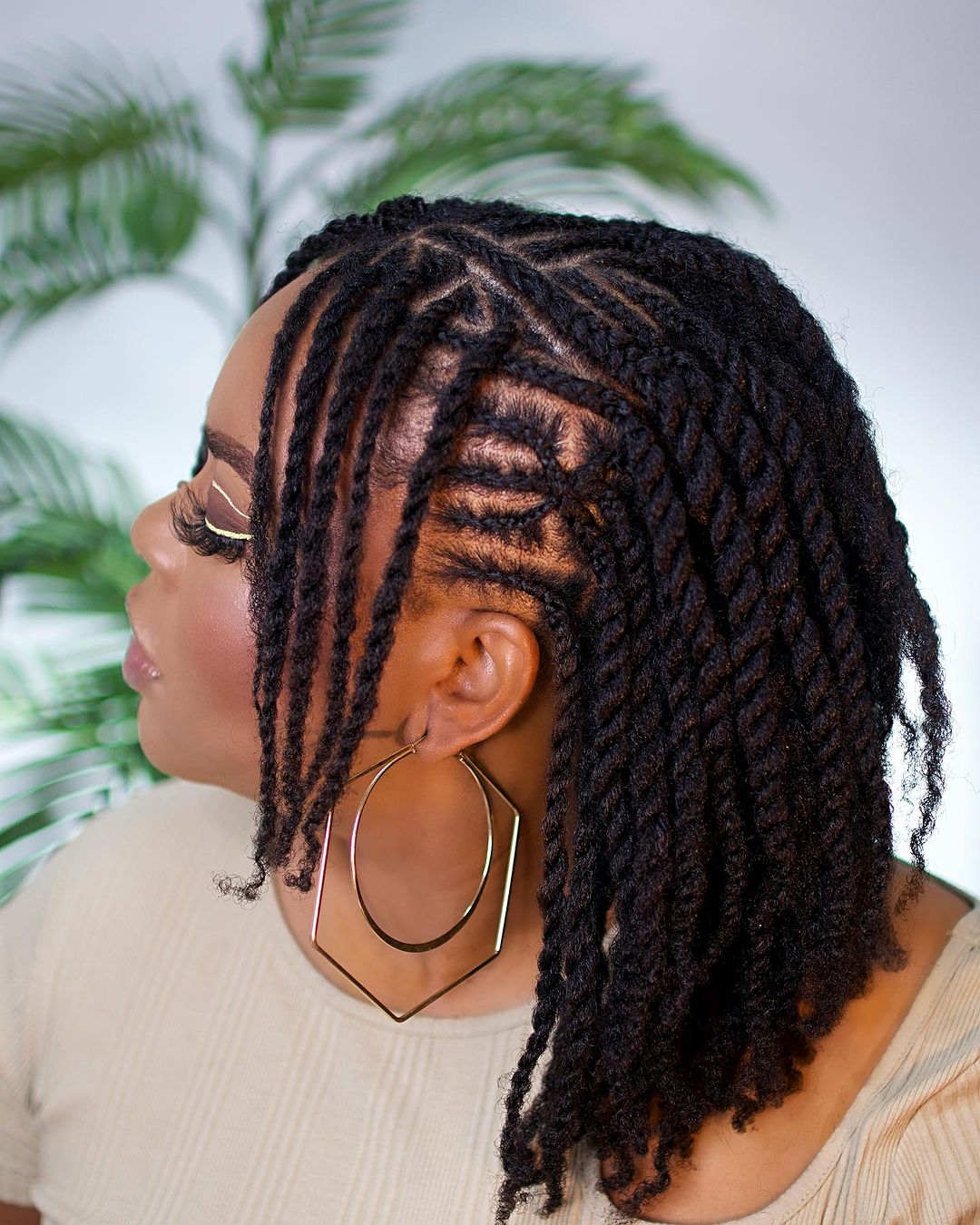
A middle part and twists swept behind the ears is a practical rule for anyone who wants their hair out of the way without pulling it back. Collarbone length is the sweet spot: long enough to show off the twist pattern, short enough that the twists do not get caught in a bag strap or under a coat collar. The defined texture comes from consistent parting and tension during installation. Ask your stylist for: collarbone length defined twists styled away from the face.
These twists hold their shape for about a month before the roots need attention. A light oil on the ends every few days keeps them from drying out. Trimming the ends every six to eight weeks prevents the split ends that become visible on solid black hair. The middle part needs a re-part after each wash to keep the lines clean.
Collarbone Flat Twists With Clean Lines
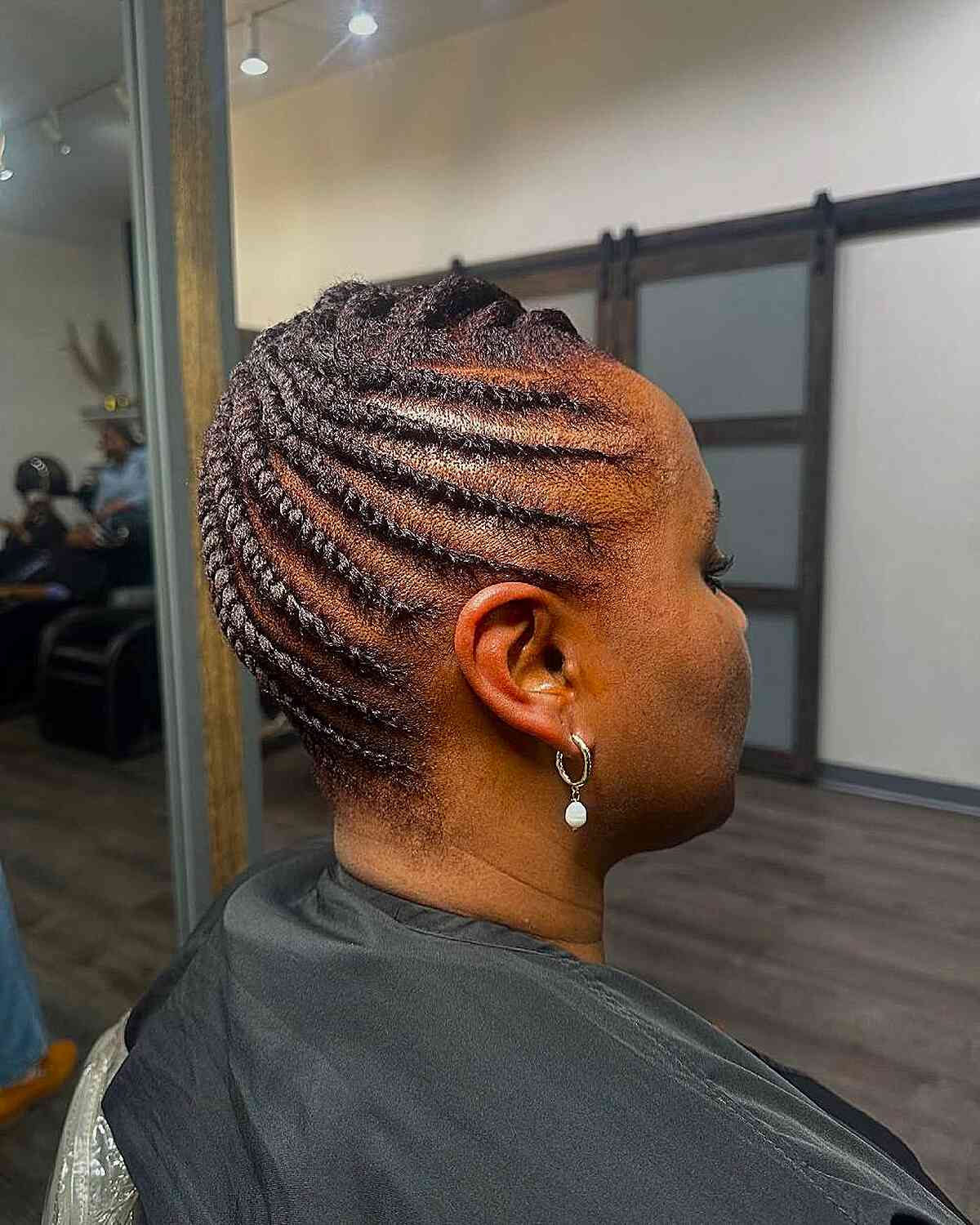
To get flat twists that look this neat, ask for a precise pattern that starts at the front hairline and follows a consistent angle toward the nape. The twists lie flat against the scalp, so the collarbone length hangs as a solid curtain of texture, not a series of loose strands. Ask your stylist for: collarbone length flat twists with clean lines. A middle parting is key for symmetry; a side part would break the forward-to-back flow. The black color is a single solid shade, which makes the twist definition the star. No highlights, no dimension, just the shadow and light of the pattern itself. This look works because every twist has a job.
Long Auburn Twists With Blonde Highlights
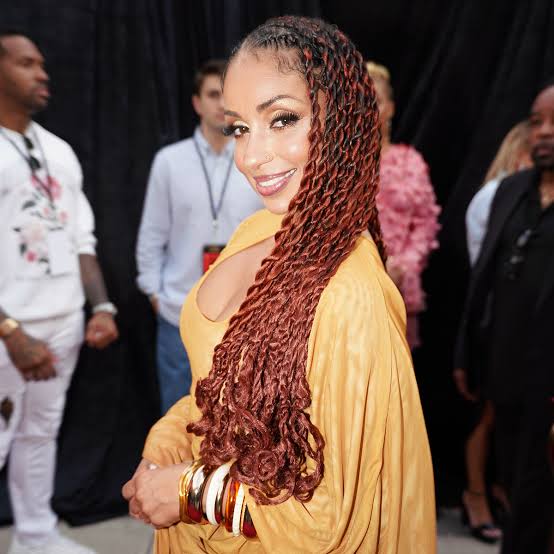
Two-strand twists in long lengths need a color that holds visual weight, and auburn delivers. The base is a warm, vibrant red-brown. Blonde highlights are woven in at the parting and spaced throughout the length, not concentrated at the ends. Ask your colorist for: long two-strand twists in vibrant auburn with blonde highlights. The middle parting is standard, but the real design work is in the highlight placement: thin enough to be highlights, not a separate color block.
The wavy texture at the ends is natural to the twist technique, not added afterward. These twists hold their wave and color saturation well because the auburn base is permanent and the blonde pieces are pre-lightened before installation. A toning appointment every four to six weeks keeps the blonde from pulling warm, and a color-depositing conditioner on the auburn sections prevents fading between salon visits. The long length means the twists have some weight, so they hang straight.
Final Thoughts
For a polished, put-together look, choose defined, uniform twists with a clean part and minimal accessories. If you prefer a bit of personality, subtle beads or charms add movement without making the style feel busy. The right twist style depends on your length and how much time you want to spend on it.
- Trim the baseline of your twists every 6-8 weeks for maintained shape.
- Deep condition twists weekly to maintain moisture and prevent dryness.
- Refresh styles with a light-hold spray or serum as needed.
- Protect twists at night with a silk bonnet or scarf.
Classy twists are a versatile canvas for personal style.
