

Dyed locs have moved past the experimental phase into a sophisticated canvas for color, with soft face-framing layers and lived-in tones leading the charge for a polished finish. The trick is choosing a shade and technique that work with your loc texture, not against it.
This collection of 30 Classy Dyed Locs ideas spans from subtle dimension to bold statements, covering every length from chin-grazing crops to mid-back lengths. Whether your locs are fine or thick, low or high density, you’ll find a color approach that suits your lifestyle. Struggling with a visible grow-out line or a flat root area? These ideas address those real concerns with practical solutions.
Shoulder Length Locs In Uniform Light Brown
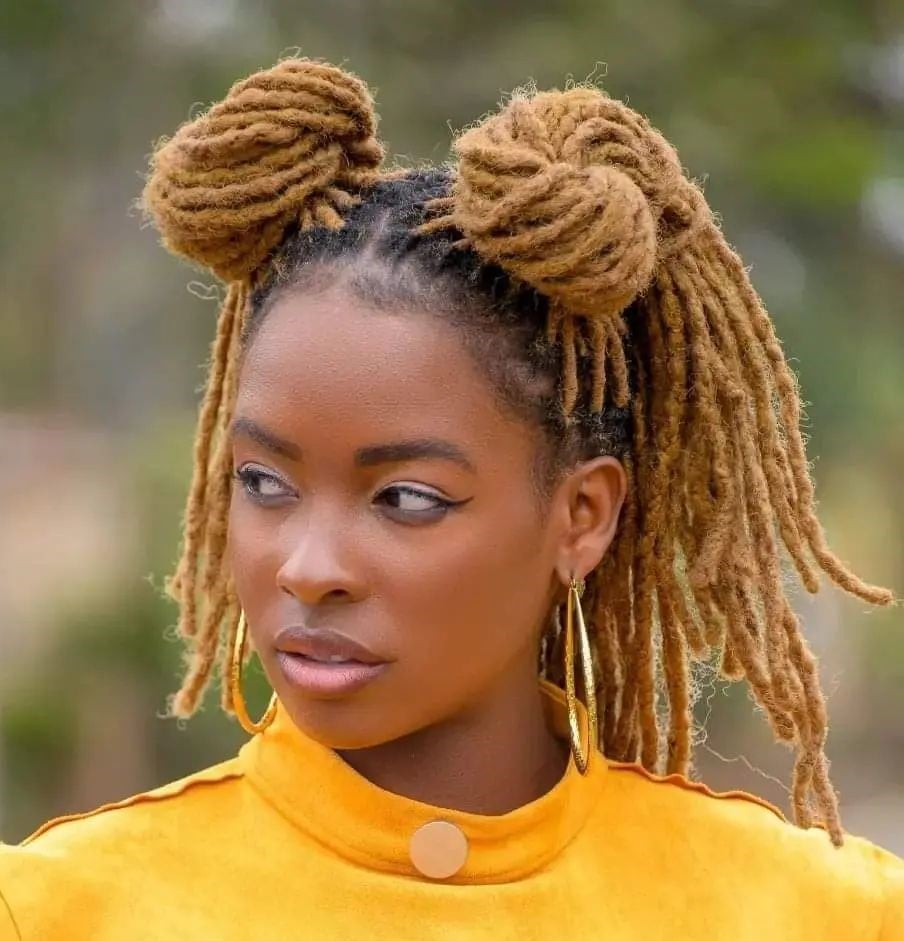
A uniform light brown base on thick, wavy locs is the rare solid color that doesn’t feel flat. The trick is exactly how even the shade is, no highlights, no shadow root, just one consistent tone across every loc. This look suits medium to thick locs that hold a style, since the two space buns need weight to stay up. Ask your colorist for: shoulder length locs, uniform light brown, space bun style. The middle parting keeps the symmetry clean, and the color stays true for about six weeks before a gloss appointment.
Micro Locs With Subtle Brown Highlights
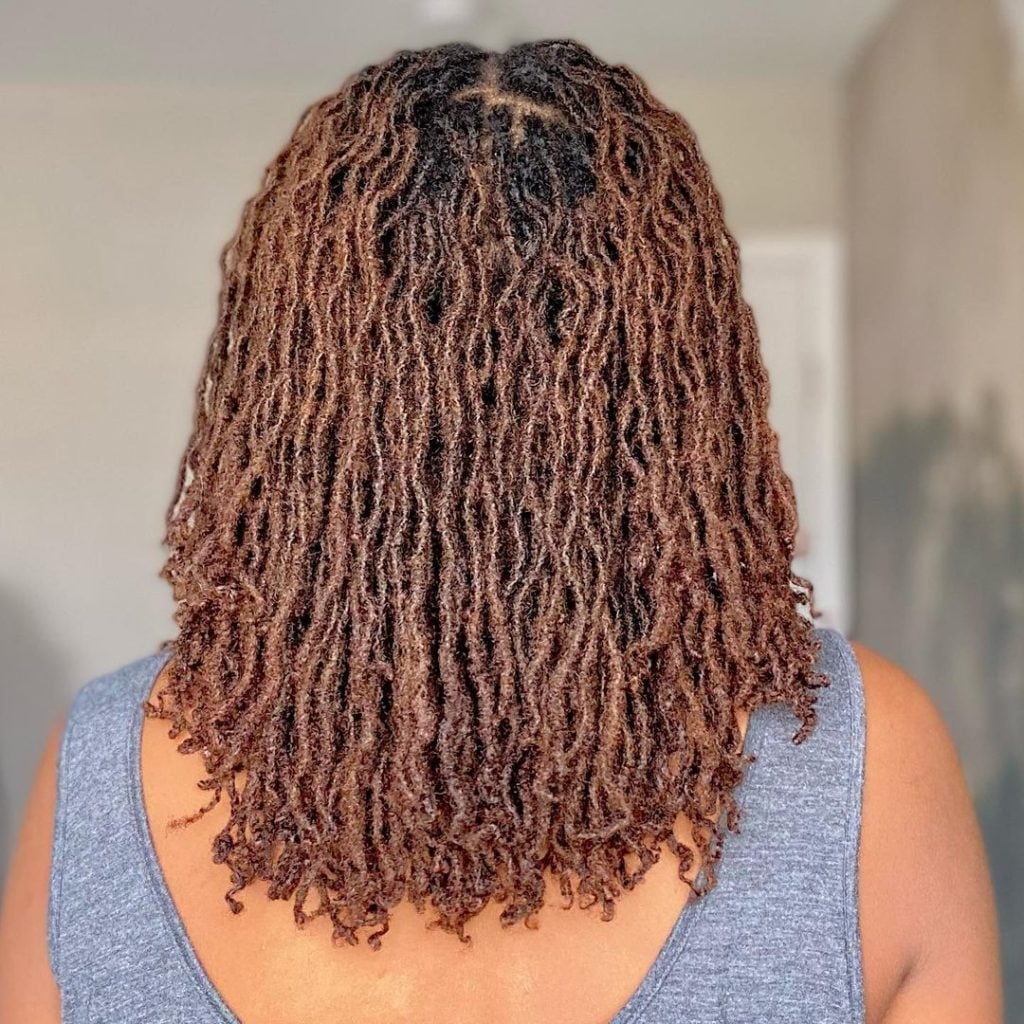
Micro locs at shoulder length gain dimension from lighter brown highlights woven through a rich brown base. The back view here shows exactly how fine, wavy locs catch a few lighter strands without the color looking busy. Ask your colorist for: shoulder length micro locs, brown base with subtle highlights. A middle parting keeps the distribution even. The highlights need a toning appointment every eight weeks to stay warm, and a color-safe shampoo helps the brown base resist fading between visits.
Collarbone Locs With Braided Scalp Detail
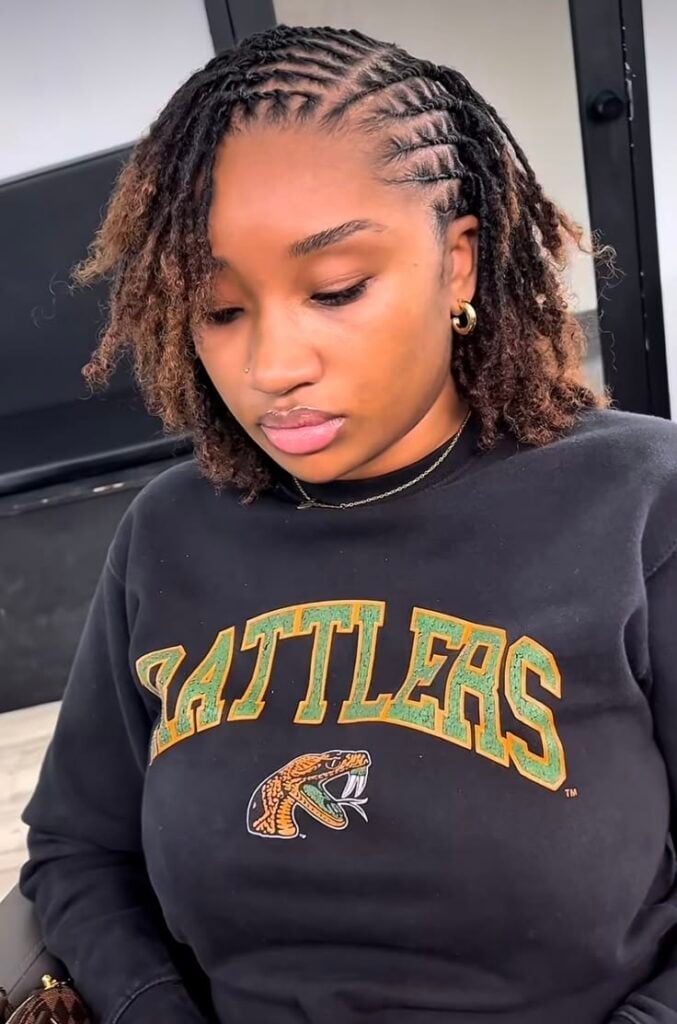
How do you keep a middle parting from feeling basic? Braid the scalp along the part line. This collarbone-length style pairs a natural brown base with lighter brown highlights on fine locs, then adds an intricate braided section right where the parting meets the hairline. Ask your stylist for: collarbone locs, braided parting, natural brown with highlights. The braided detail holds the parting in place and turns a standard look into one that took thought. A light styling cream keeps the braids neat between retwists.
Shoulder Length Natural Black Locs
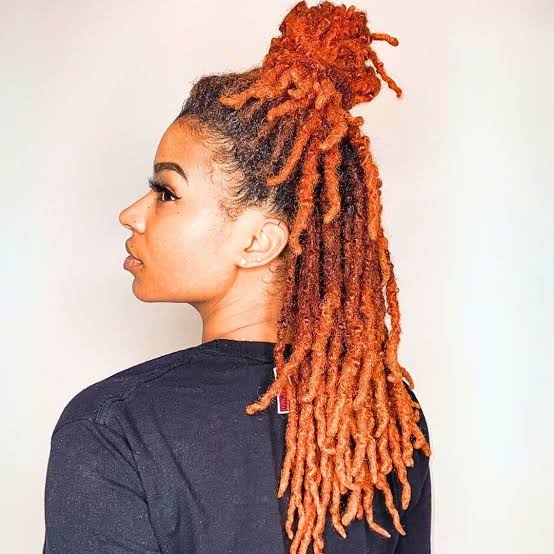
It is not the same as a fresh dye job, but natural black shoulder-length locs with side-swept bangs require almost no daily effort. The side parting and face-framing bangs give shape to medium-density locs that might otherwise sit as a single block. Ask your stylist for: shoulder length locs, natural black, side-swept bangs. A trim every ten to twelve weeks keeps the ends tidy, and a little texturizing spray on the bangs helps them sweep where you want them.
Chin Length Twisted Locs Updo
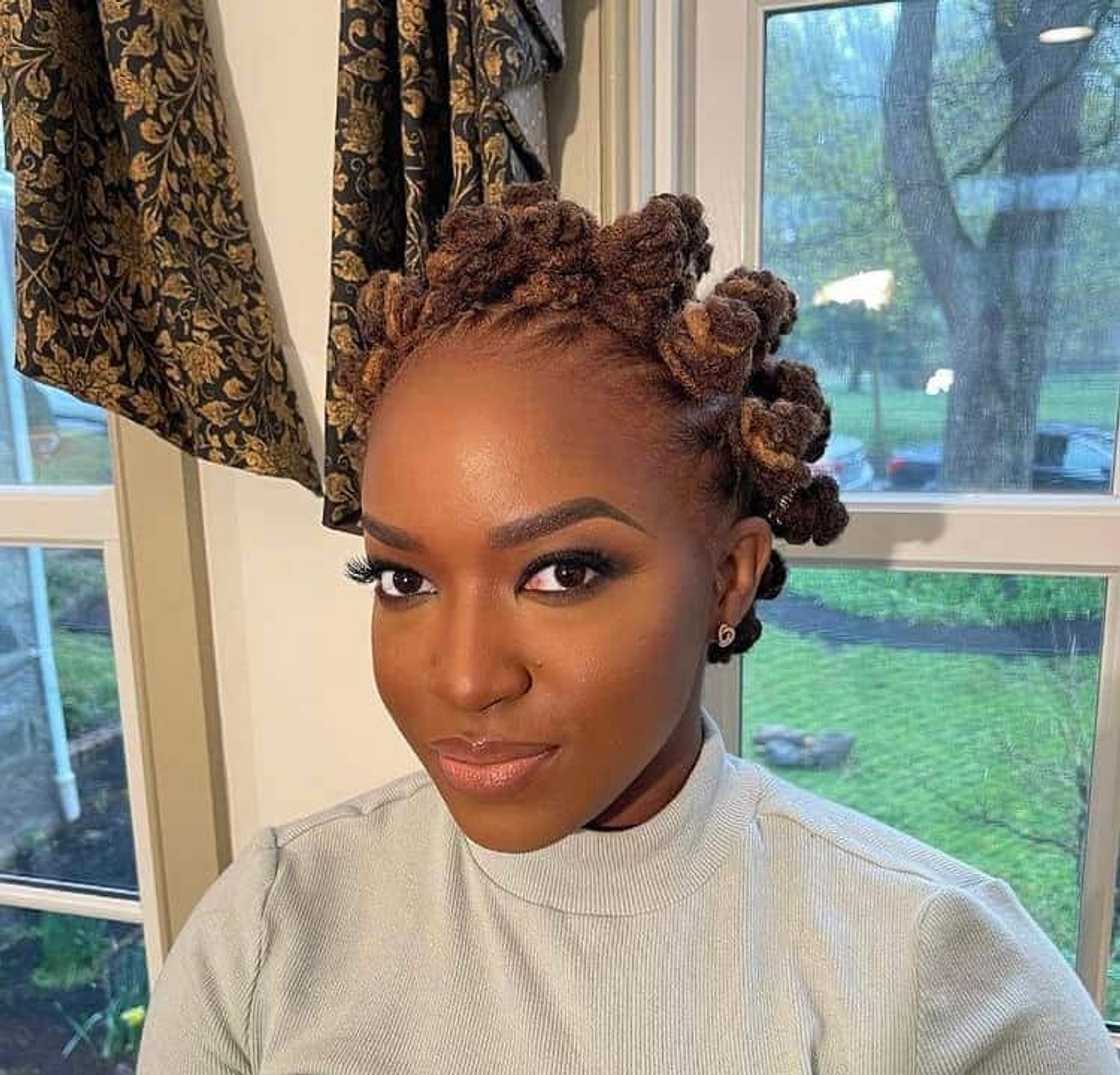
Chin length locs with a wavy, thick texture can still pull off an updo, but only if the twists are placed with intention. This one uses lighter brown twists against a brown base to give the piled shape some visible depth. Ask your stylist for: chin length locs, twisted updo, brown with lighter twists. This is a salon only design, about two hours to install. The twisted sections hold for over a week without redoing, so it works for events where you want a single, lasting shape.
Collarbone Locs With Burgundy Undertones
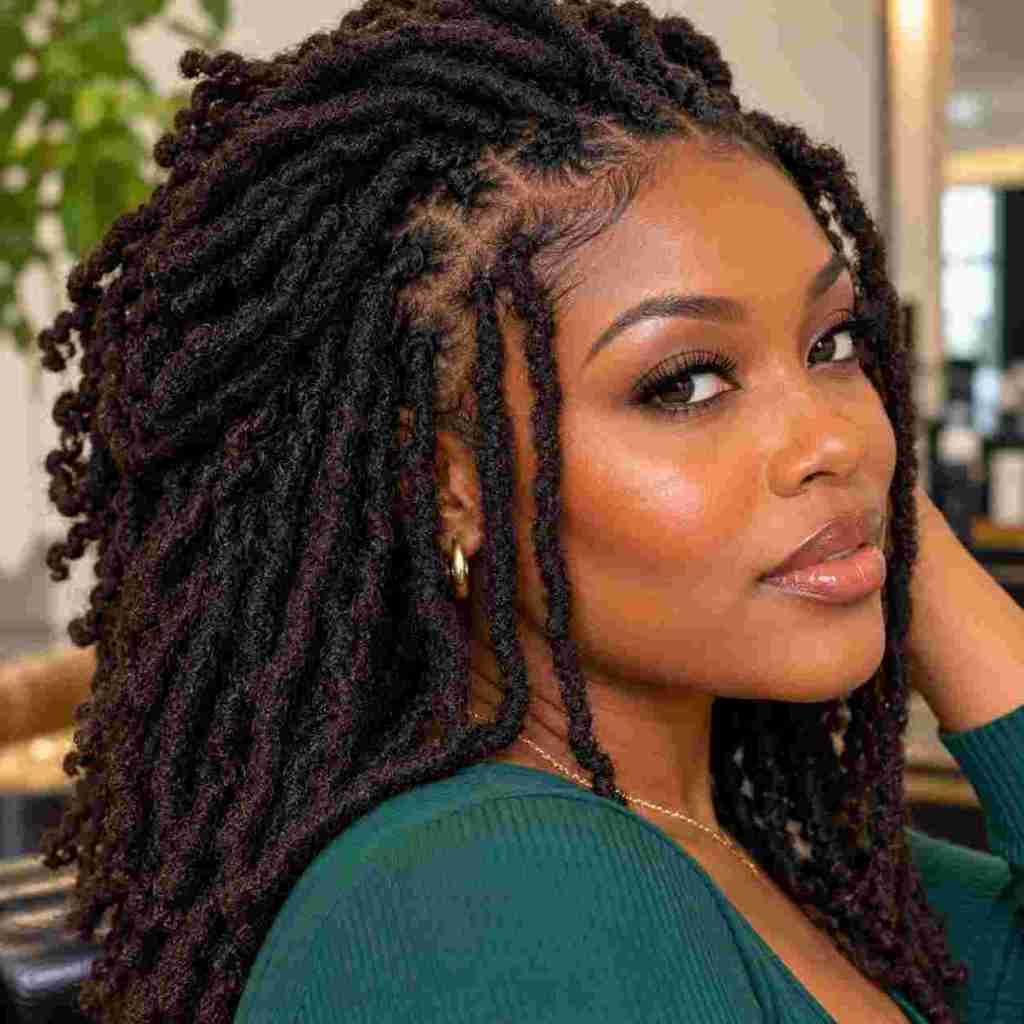
Wondering how to carry dark brown locs into fall without going full black? A dark brown base with subtle burgundy undertones catches the low autumn light without screaming for attention. These collarbone-length locs have a wavy, thick texture, styled loosely with curled ends and a side parting. The burgundy shows up as a warm whisper rather than a shout, which is exactly what makes it versatile. Ask your colorist for: collarbone locs, dark brown with burgundy undertones, curled ends. Apply a heat protectant before curling ends, and plan a root touch-up every 8-10 weeks to keep the undertones consistent.
Shoulder Locs With Side Bangs And Highlights
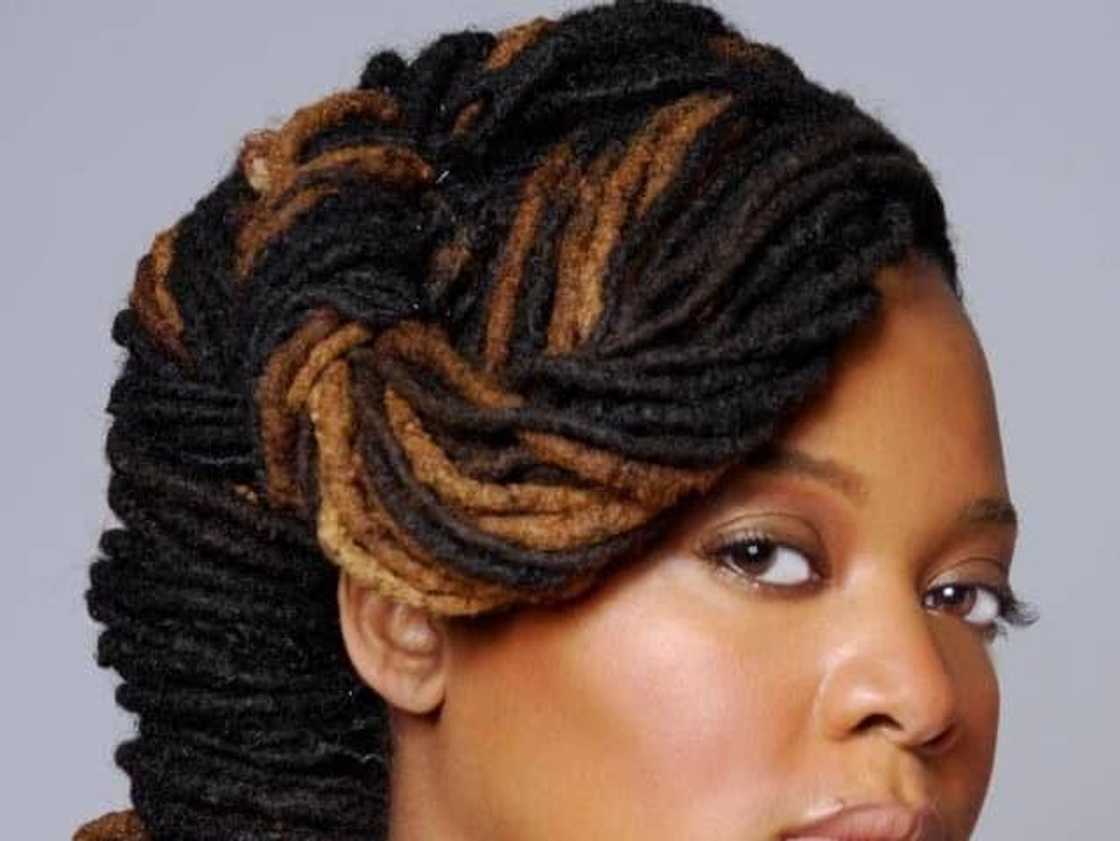
Side bangs on locs create a soft asymmetry that changes the whole silhouette. Here, shoulder-length locs with a wavy, thick texture use a black base with subtle brown highlights to add depth without going lighter overall. The side-swept bangs break up the weight of thick locs, and the highlights catch light along the face. Ask your colorist for: shoulder length locs, black with brown highlights, side bangs. Use a texturizing spray on bangs for hold, and refresh the highlights every 8 weeks to keep the dimension clear.
Collarbone Locs With Honey Blonde Balayage
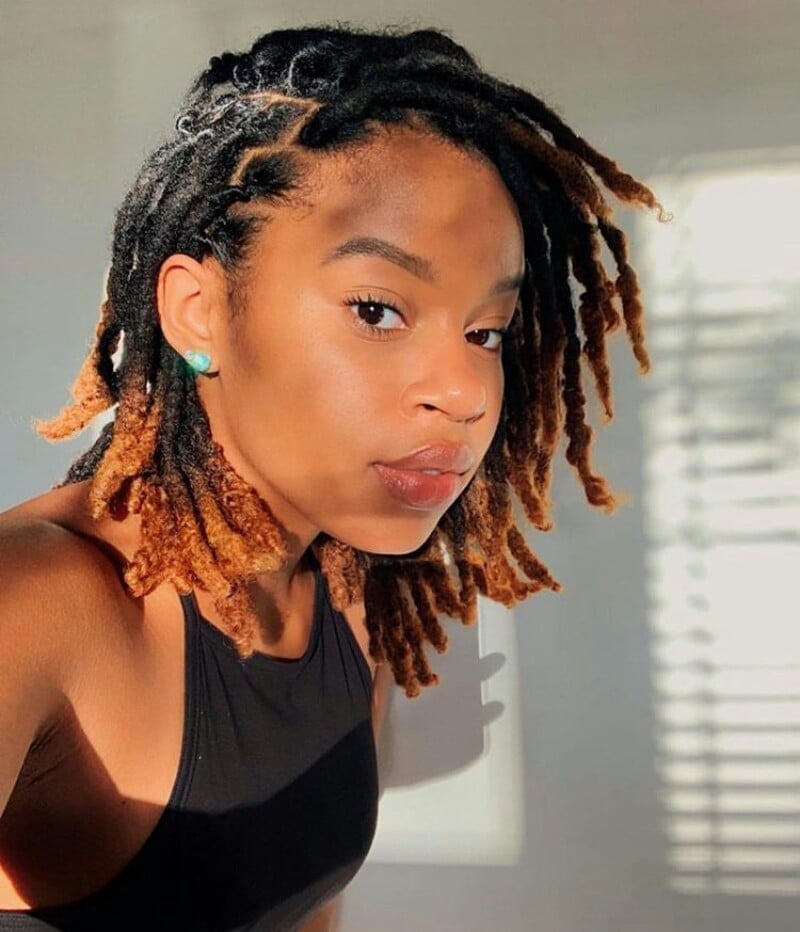
A balayage on locs is not the same as a balayage on loose hair: the colorist paints sections rather than individual strands, which gives a softer melt. These collarbone-length locs have a wavy, thick texture and a side parting, with a black base transitioning into honey blonde balayage. The warm blonde sits mostly on the lower half, so the roots stay dark and low-maintenance. Ask your colorist for: collarbone locs, black with honey blonde balayage. A toning gloss every 6 weeks keeps the blonde from pulling brassy, and a trim every 8 weeks keeps the ends clean.
Collarbone Locs With Blonde Balayage and A Middle Parting
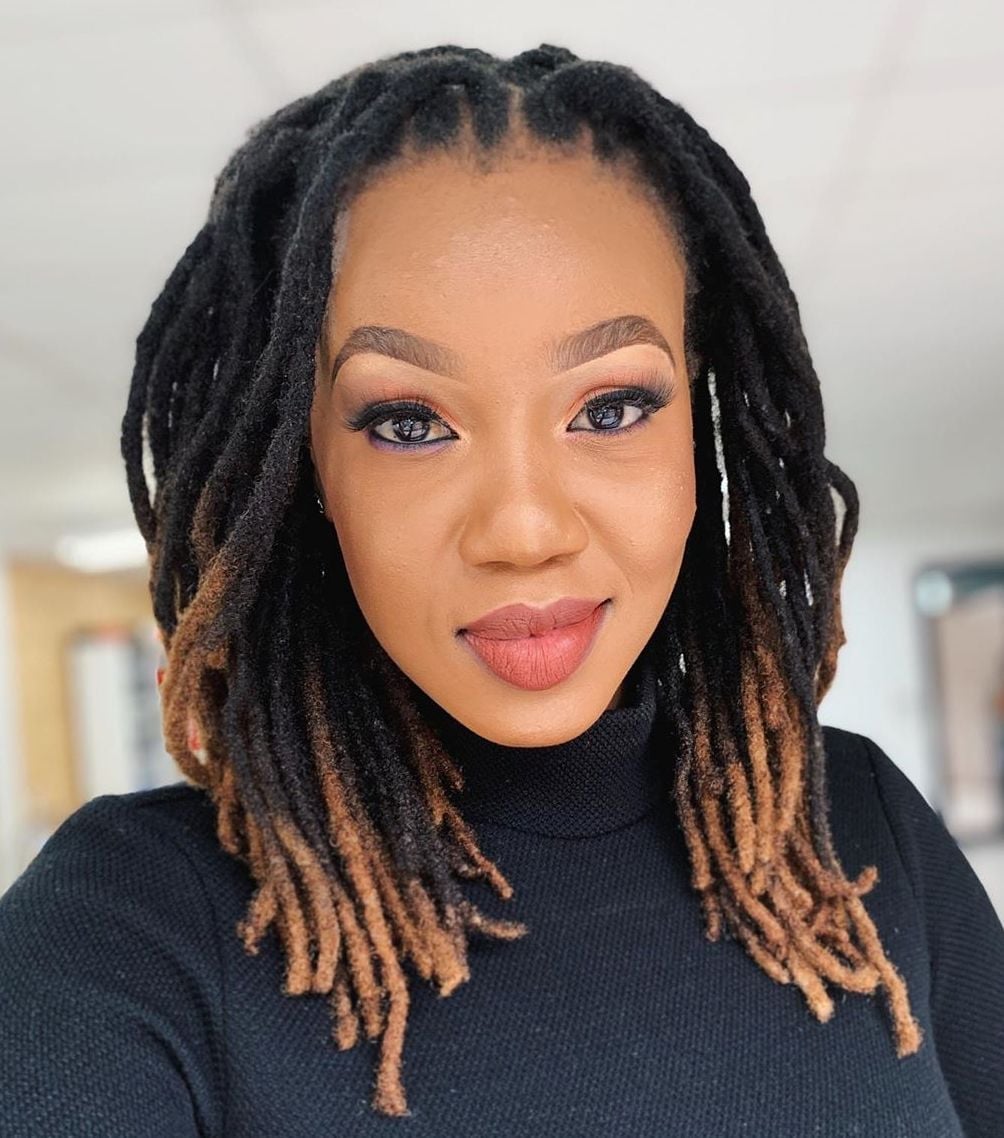
A middle parting does something a side part cannot: it mirrors the color transition on both sides, making the blonde balayage read as intentional and balanced. These collarbone-length locs have a wavy, thick texture with a black base and blonde balayage that graduates from dark roots to lighter ends. The middle parting lets the color fall symmetrically, which suits round face shapes by elongating the vertical line. Ask your colorist for: collarbone locs, black with blonde balayage. Use a purple shampoo occasionally to maintain the blonde tone, and trim the baseline every 8 weeks.
Mid-Back Faux Locs With Subtle Highlights
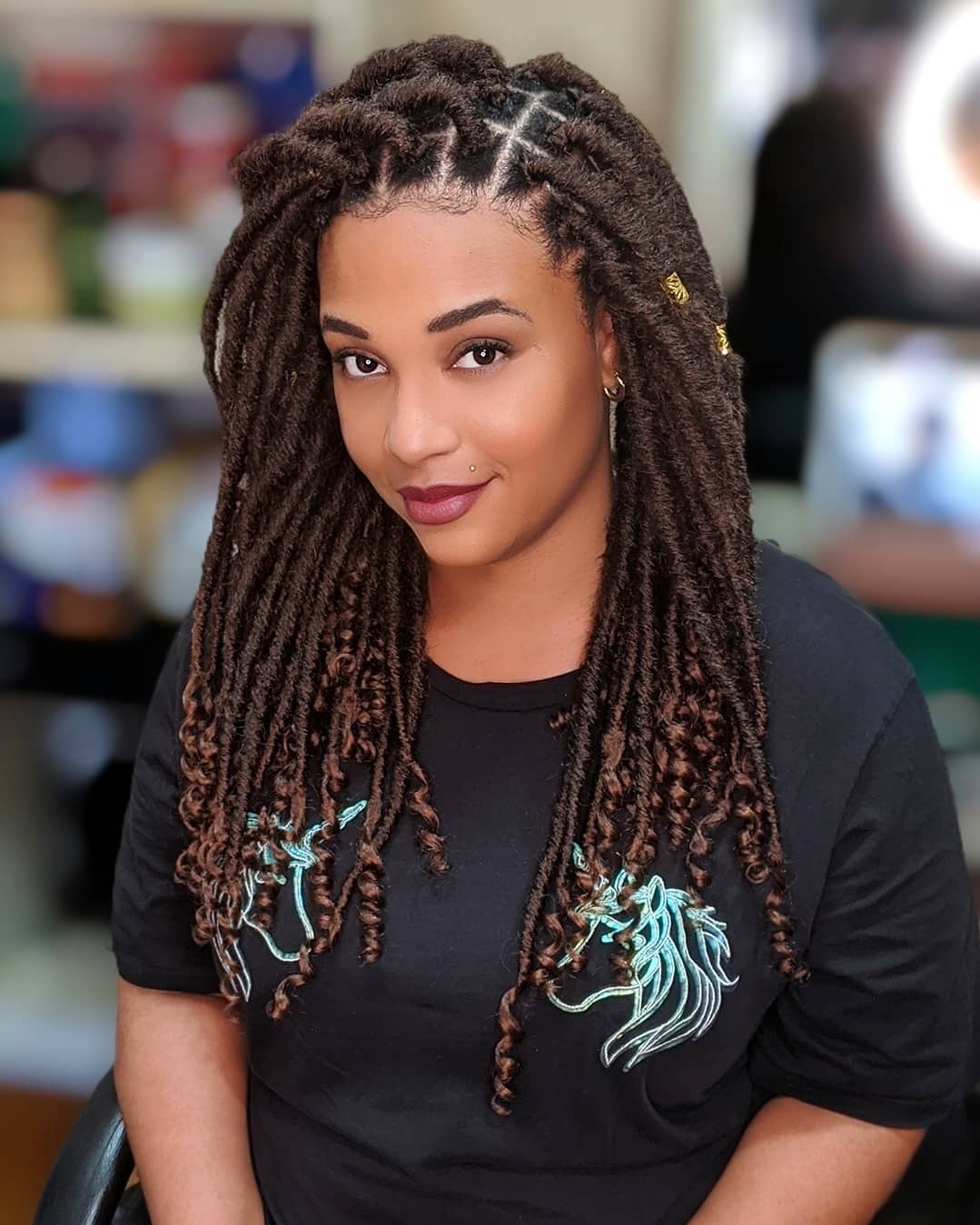
Faux locs let you test dimensional color without committing to a permanent lightener on your natural hair. These mid-back length faux locs have a wavy texture, styled loosely with a middle parting. The dark brown base is accented with subtle lighter brown highlights that run through the length, creating movement without high contrast. Ask your colorist for: mid-back faux locs, dark brown with subtle highlights. A leave-in conditioner keeps the faux locs from drying out, and the highlights should be refreshed every 8 weeks to maintain the dimension. The wavy texture helps the lighter pieces catch light naturally.
Mid-Back Locs With Reddish-Brown Highlights

Ever wondered how to add warmth without going full copper? These mid-back locs keep a dark brown base and weave in subtle reddish-brown highlights for a glow that reads as natural dimension. The wavy texture and middle parting let the color peek through evenly, so it never looks patchy.
The highlights need enough length to travel, so wavy locs that already reach mid-back are ideal. Ask your colorist for: mid-back locs, dark brown with reddish-brown highlights. A color-depositing conditioner keeps the red tones from fading to brass between salon visits, and a trim every 10-12 weeks keeps the ends clean.
Mid-Back Locs With Braided Updo
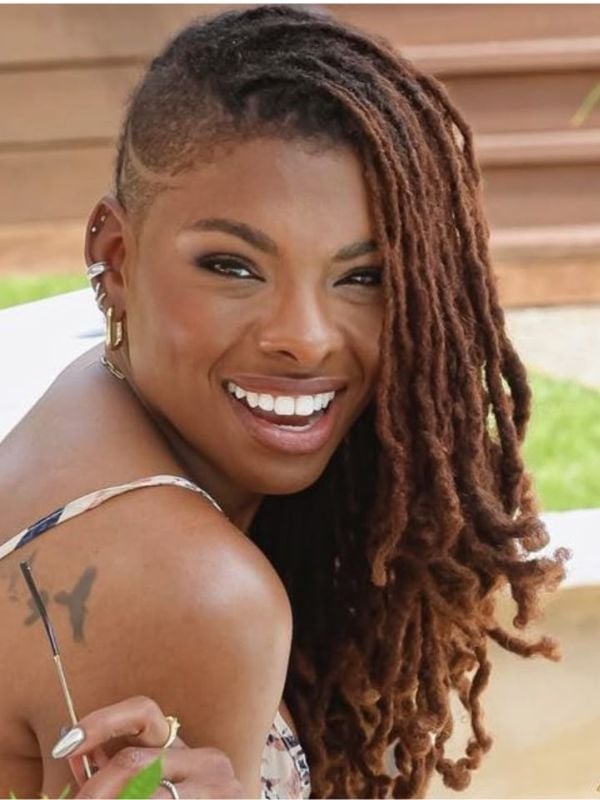
The design here is less about the color and more about the architecture. Thick, wavy mid-back locs get pulled into an updo with braided sections woven at the scalp, creating a pattern that holds even on dense hair. The dark brown base with lighter brown highlights adds just enough contrast to make the braids read clearly without competing.
This is a salon-only project: the braiding requires tension control and a second pair of hands to get the sections even. Ask your colorist for: mid-back locs, updo with braided sections, dark brown with highlights. Expect about three hours in the chair for the full install.
Mid-Back Locs Partially Updo With Accessories
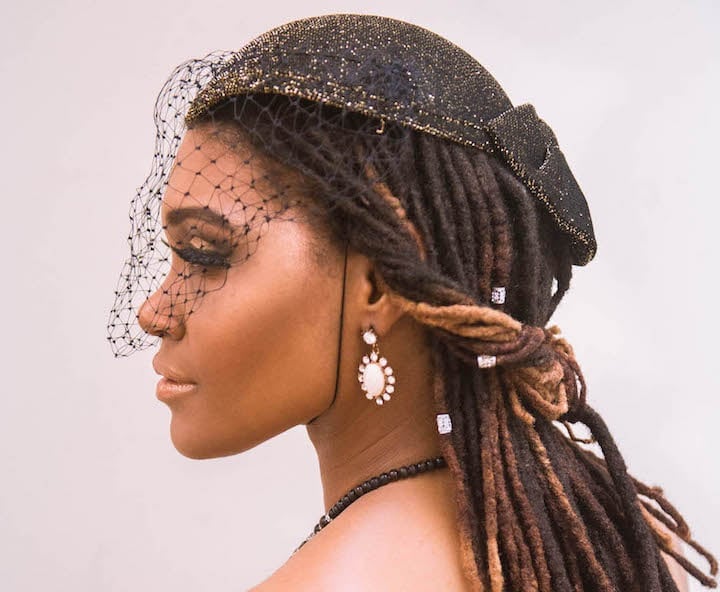
A side parting and a partially tied-back section give these thick, wavy mid-back locs a shape that works for formal settings without looking stiff. The dark brown base gets lift from lighter brown and blonde highlights, so the hair looks dimensional. Accessories like clips or pins add polish without requiring a full updo.
This style suits anyone with thick, wavy locs at mid-back who wants an elegant option that still shows off length. Ask your colorist for: mid-back locs, partially updo, dark brown with blonde highlights. It lands naturally at weddings or evening events, and the highlights need a toning refresh every 8-10 weeks to keep the blonde from turning brassy.
Mid-Back Locs Half Updo With Blonde Highlights
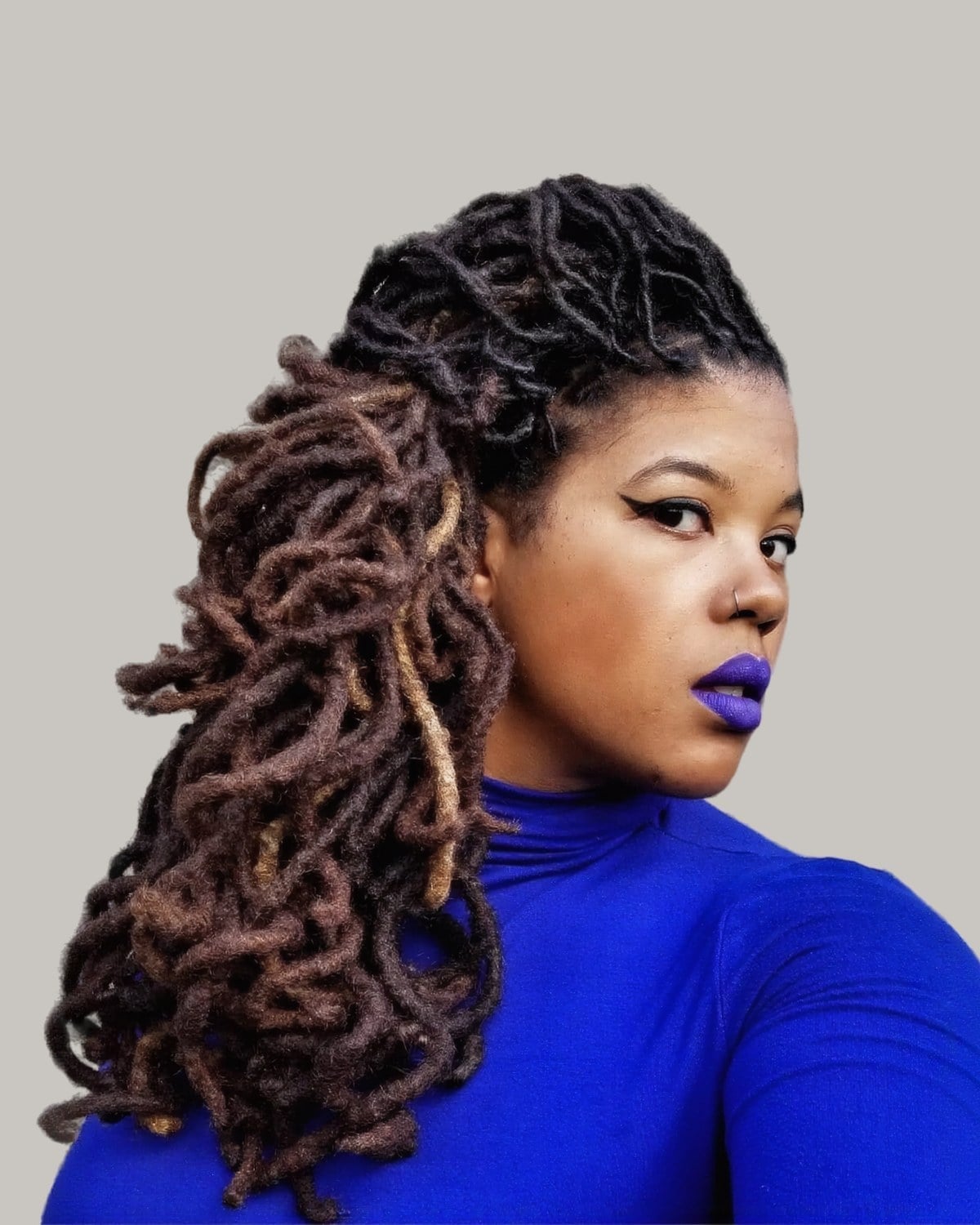
Does a half-up style actually hold on locs without sliding off? It does when the top section is secured with pins or a tie at the crown, leaving the rest to fall freely. These mid-back locs have a dark brown base with blonde highlights that create a sharp contrast, especially when the half-up section pulls the lighter pieces forward.
The wavy, thick texture gives the style volume that lasts all day. Ask your colorist for: mid-back locs, half up half down, dark brown with blonde highlights. Upkeep is straightforward: the blonde sections need a purple shampoo once a week and a toning appointment every 6-8 weeks to keep the color from drifting into yellow.
Mid-Back Locs In Braids With Copper Tones
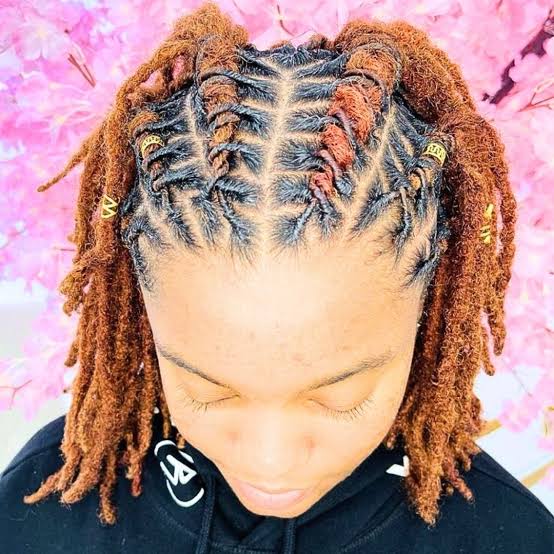
Intricate braids running through mid-back locs already catch the eye, but the warm copper color with darker roots makes them look deliberately seasonal. The wavy texture keeps the braids from looking too tight, and gold beads add a finishing detail that feels festive without being fussy.
This lands best in autumn or around the holidays, when the copper tones echo the seasonal palette. Ask your colorist for: mid-back locs, braided style, copper with dark roots. A light pomade on the braids prevents frizz between wears, and the copper needs refreshing every 6-8 weeks to stay vibrant.
Mid-Back Microlocs In Copper And Auburn
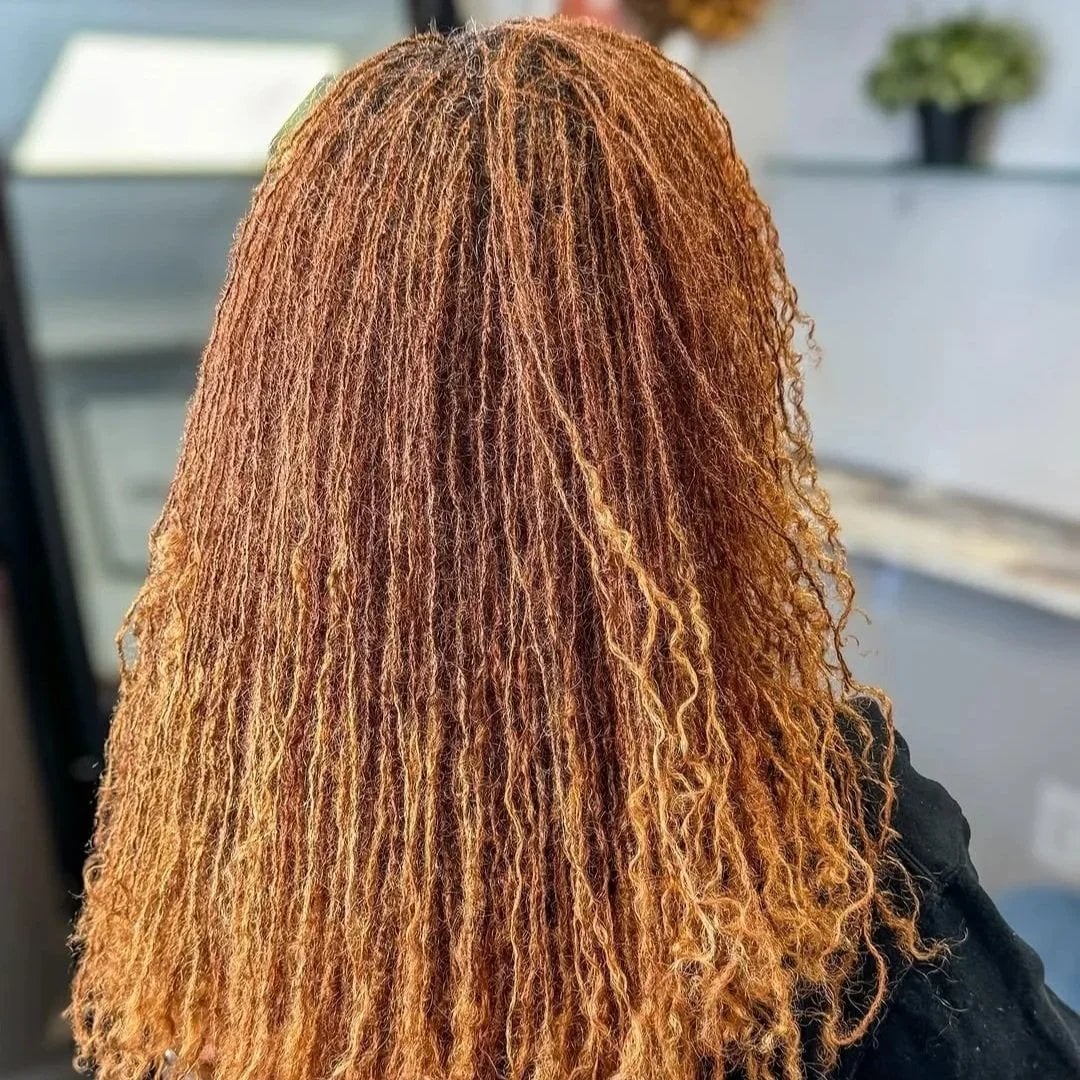
Fine, wavy microlocs or sisterlocks at mid-back length gain serious dimension from a warm blend of copper and auburn tones. The color placement is deliberate, with copper catching light near the crown and auburn deepening the lower half. This combination works best on fine, wavy textures that can handle the density of microlocs without looking weighed down.
Ask your colorist for: mid-back microlocs, copper and auburn blend. The two-tone effect relies on precise sectioning during the color application, so expect a solid few hours in the chair. Because copper and auburn fade at slightly different rates, a color-depositing conditioner every other wash keeps the blend from turning muddy. Plan a toning refresh every six to eight weeks to maintain the warmth.
Shoulder Locs With Blonde And Auburn Highlights
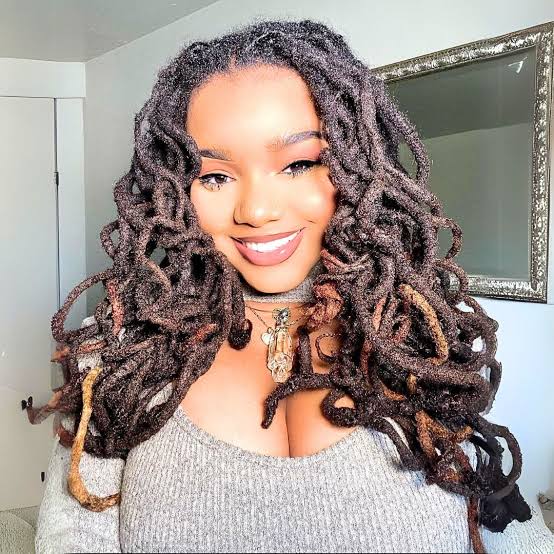
Can thick, wavy locs hold a voluminous blowout without losing the curl pattern? Yes, when the styling starts with a curl-defining cream and a diffuser on medium heat. These shoulder-length locs have a dark brown base with blonde and auburn highlights woven through the midsection and ends, creating a multi-tonal effect that mimics natural dimension. The middle parting keeps the color distribution even. Ask your colorist for: shoulder locs, dark brown with blonde and auburn highlights, curly blowout style. To keep the highlights from turning brassy, use a purple shampoo once a week. Schedule a toning appointment every six to eight weeks.
Shoulder Microlocs In Warm Copper
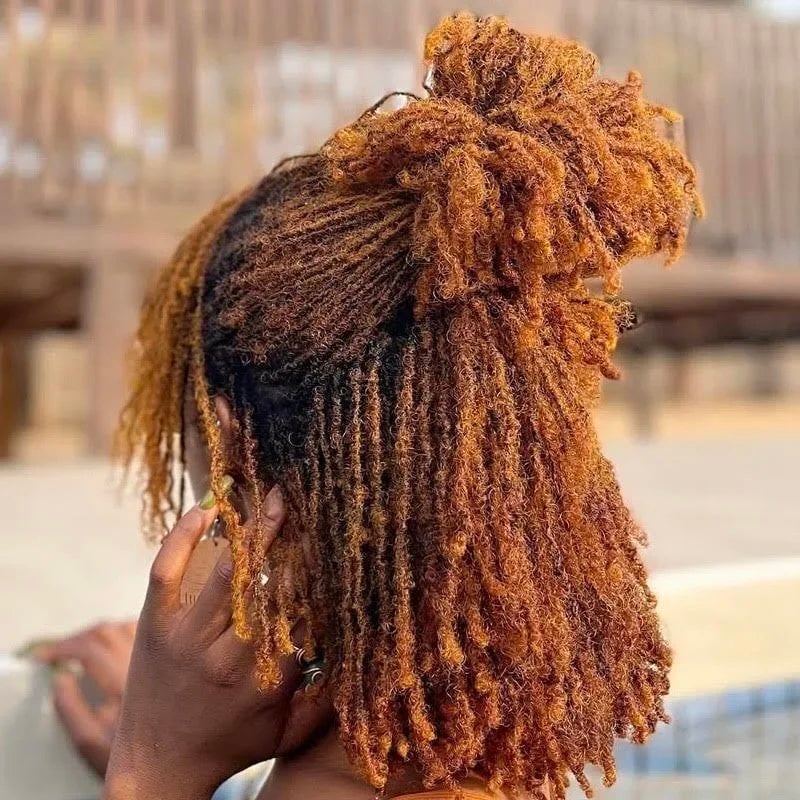
Coily, fine textures often look richer when the color starts darker at the roots and brightens toward the ends. These shoulder-length microlocs are styled into an updo that shows off the warm copper shade, with the darker root section adding depth and a lived-in feel. The updo keeps the fine strands from tangling while still displaying the copper tone. This color and texture combination is especially forgiving on new growth, since the root shadow extends the time between touch-ups. Ask your colorist for: shoulder microlocs, updo, warm copper with dark roots. The darker base means you can stretch root retouches to eight or ten weeks.
Mid-Back Locs In Vibrant Red
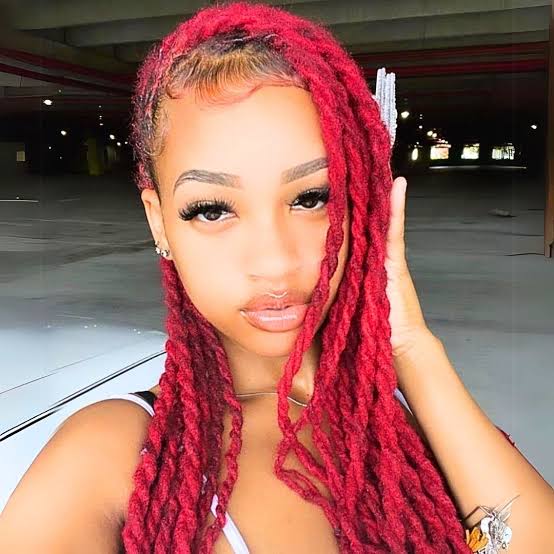
Vibrant red on thick, wavy mid-back locs is a commitment that pays off in visibility, but the upkeep is real. The color sits evenly across the locs because the wavy texture grabs and holds pigment well, especially on a middle-part foundation. Red molecules are large and fade faster than cooler tones, so a color-safe shampoo is essential from day one. Ask your colorist for: mid-back locs, vibrant red color. Expect to refresh the hue every four to six weeks to keep it from shifting toward orange. A cool-water rinse and a sulfate-free routine will extend the life of the color between salon visits.
Mid-Back Locs In Vibrant Purple, Middle
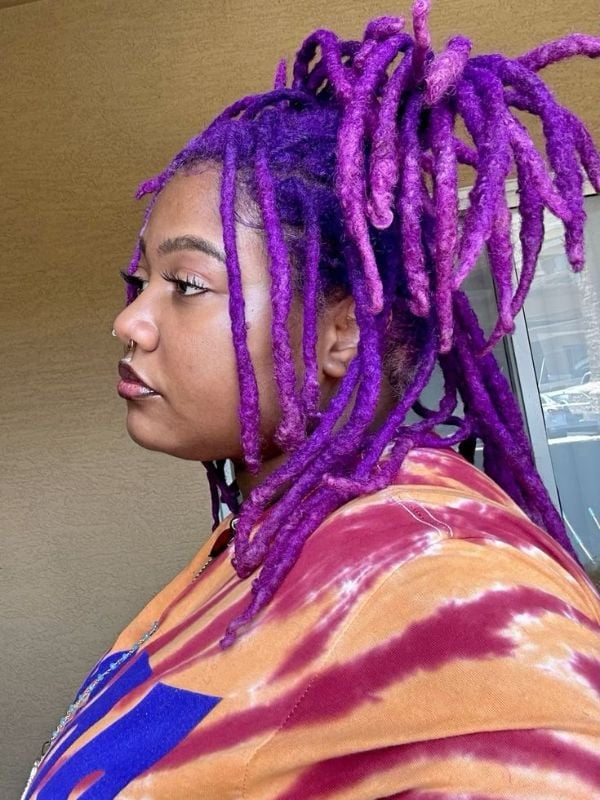
Loose, vibrant purple locs at mid-back length read differently than the same color in an updo. Worn loose, the thick wavy texture and middle parting let the purple shade catch light from multiple angles, creating a more dimensional look than a pulled-back style would allow. The density of the locs means the color appears saturated rather than sheer. Ask your colorist for: mid-back locs, vibrant purple color. The comparison to an updo is straightforward: loose styling shows off the color’s range, while an updo concentrates the hue into a compact, intense block. A color-depositing shampoo in a similar violet tone will help maintain the vibrancy between four- to six-week touch-ups.
Short Locs With Undercut In Vibrant Red, Close-Up Take
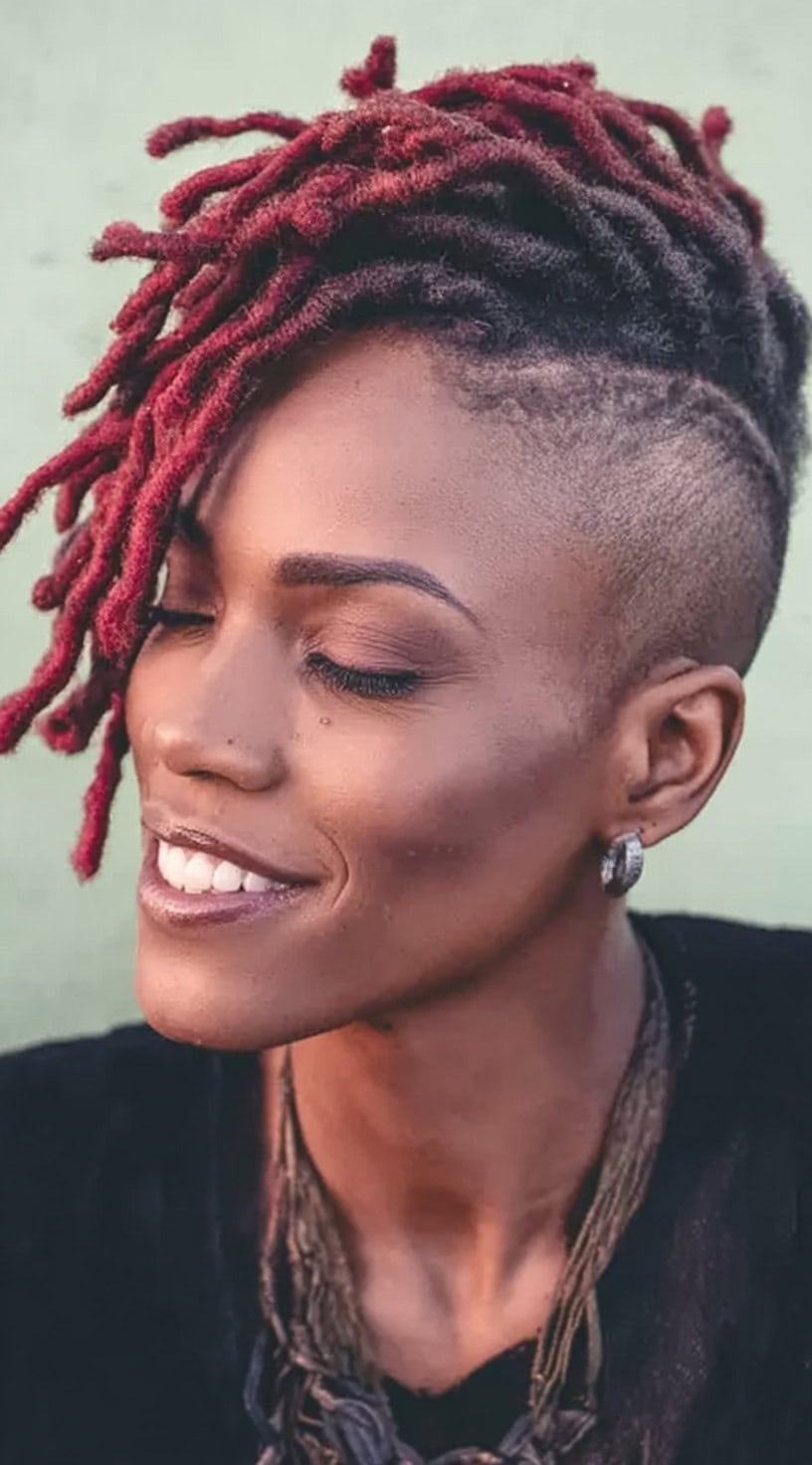
Fine, dense locs in vibrant red sit on top while the bare side keeps the silhouette sharp, and the side view makes the difference visible from across the room. Ask your colorist for: short locs, vibrant red, shaved undercut. This is a salon project: the undercut needs a clipper every two to three weeks to stay clean, and the red requires a professional dye that saturates each loc evenly. Split ends on the shorter locs from the friction against collars and scarves are a common issue, so plan for a trim every six weeks.
Short Locs In Vibrant Red With Showcasing The Striking Colour
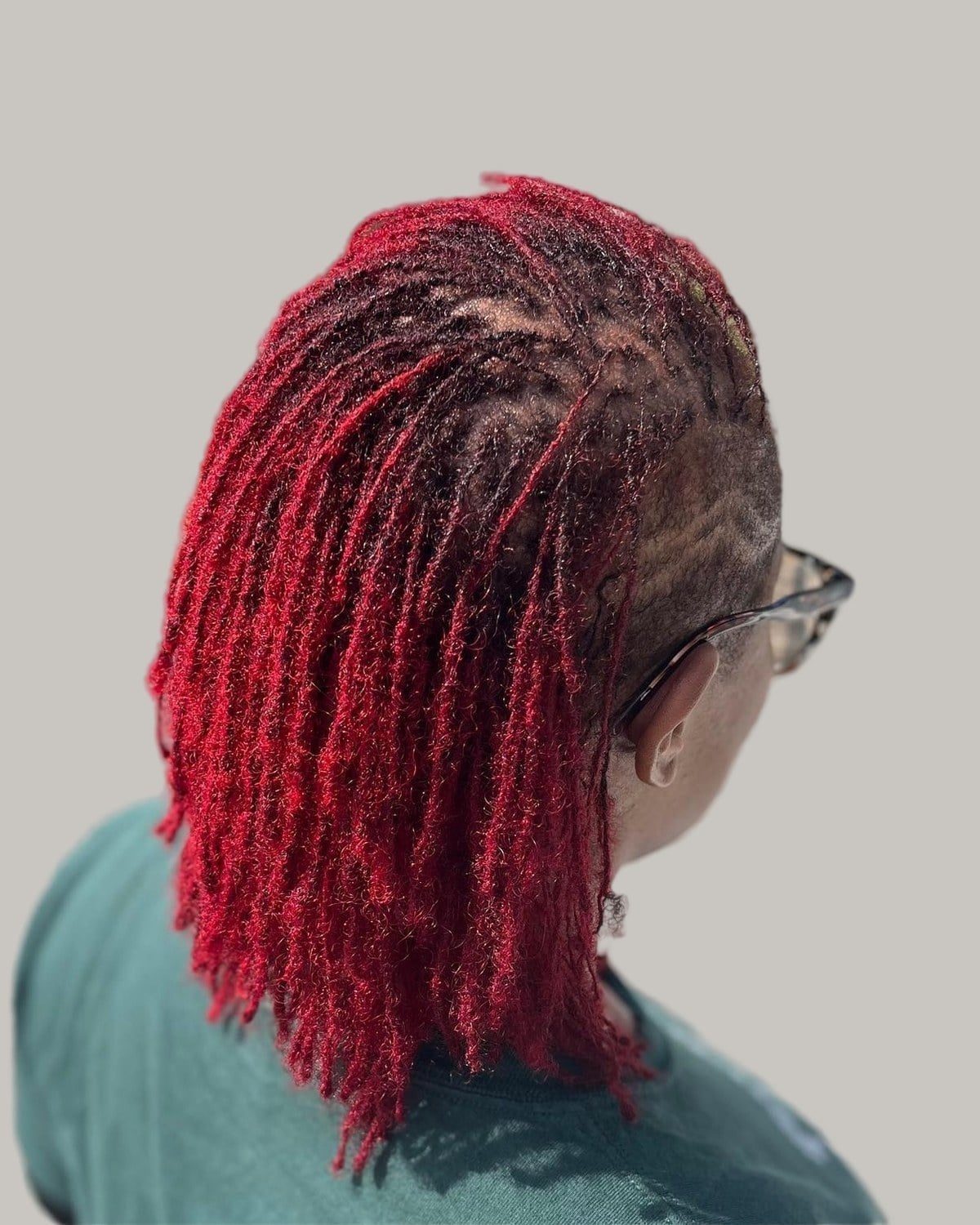
The technique is a full saturation dye, applied section by section on dry locs, then processed under heat to ensure the color penetrates the twists. Ask your colorist for: short locs, vibrant red color. The simple styling lets the color speak, but achieving that even tone on short, fine locs takes experience: expect the colorist to apply a pre-lightener first, then the red pigment. The color is a solid, unapologetic block of red.
Shoulder Locs With Rainbow Dyed Tips
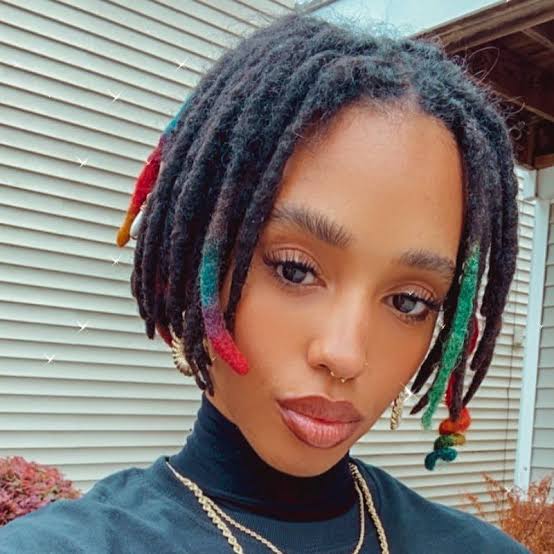
Then specify that the color starts about three inches from the ends, with each tip a different rainbow shade. Ask your colorist for: shoulder locs, black with rainbow tips. The wavy texture helps the colors blend naturally, but the placement matters: a straight horizontal line reads as a dip-dye, while a soft diagonal fade looks more grown-up. The colorist will section the locs, apply a lightener to the tips only, then hand-paint each section with a separate shade. It is a half-day commitment in the chair.
Long Locs With Fiery Orange And Red Ends
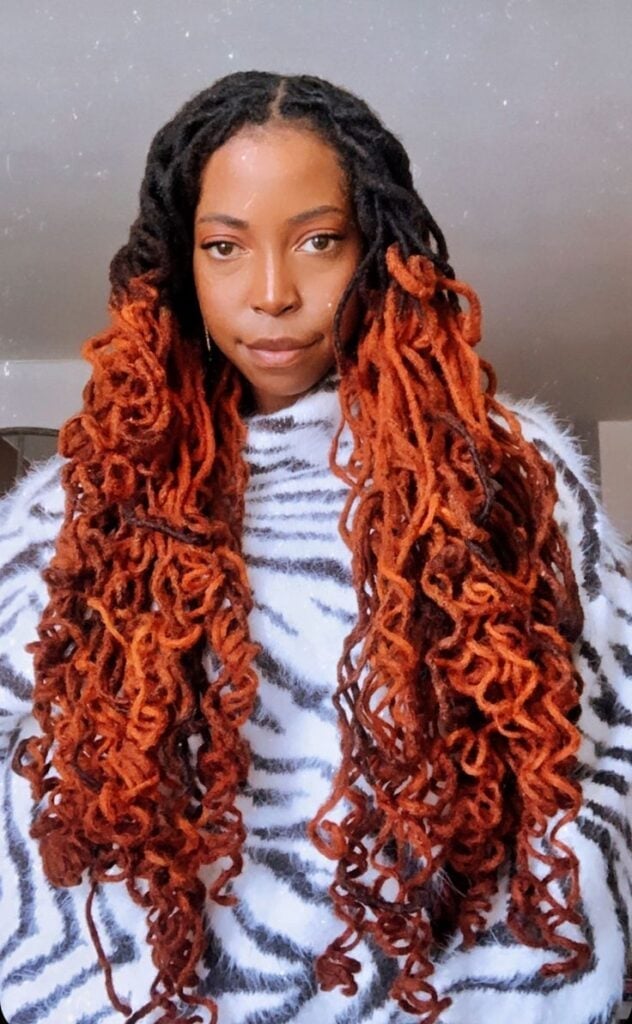
A black base that shifts into fiery orange and red ends creates a sunset effect, but the daily reality is that those ends demand attention. The color transition on long, thick, curly locs with a middle parting is a balayage-style application: the colorist paints the lighter shades onto the ends, leaving the roots dark. Ask your colorist for: long locs, black with orange and red ends. The curly texture grips the pigment well, but the ends are the oldest hair and will fade first.
Upkeep means using a color-safe shampoo on the ends only, and a toning session every six to eight weeks to keep the orange from turning brassy. A trim every ten to twelve weeks removes the inevitable split ends that show on long locs. The middle parting keeps the color distribution symmetrical, so the fade appears intentional.
Mid-Back Locs In Multi-Colored Updo
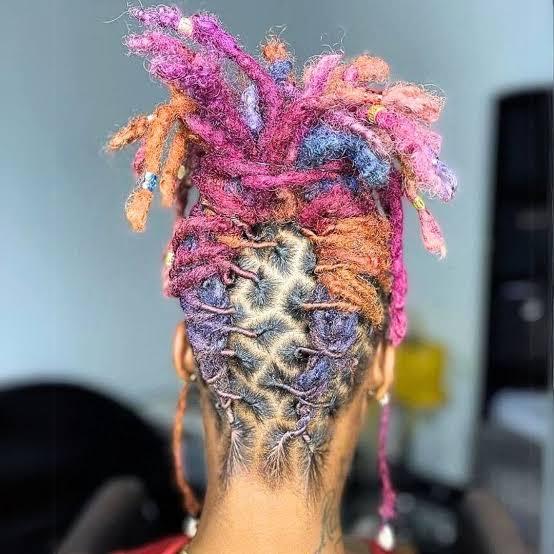
A multi-colored updo on mid-back length locs is a festival-ready statement, but it suits thick, dense hair best: the locs hold the braided sections in place without pins slipping. The palette here is pink, purple, blue, and orange, applied in sections so each color stays distinct. Ask your colorist for: mid-back locs, multi-colored updo. The braided sections at the nape add structure, and the beads reflect light, making the colors pop.
This is a look for a specific occasion: a music festival, a birthday party, or any event where you want the hair to be the conversation starter. The thick texture means the updo will hold its shape for hours, but the multiple colors mean each shade will fade at its own pace. Plan for a refresh every four to six weeks if you want the vibrancy to last.
Mid-Back Locs With Pink Ombre
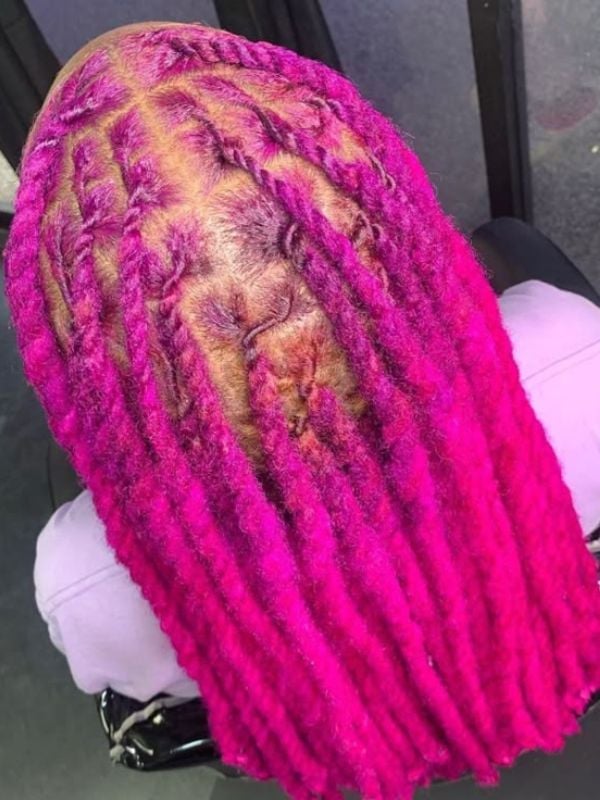
How do you get a pink ombre that looks like a deliberate gradient? It starts with a lighter root, usually achieved by gently lifting the base to a pale blonde before applying the pink. On thick, wavy mid-back locs, the technique involves painting the color from mid-shaft to the ends, leaving the roots a shade or two lighter so the transition is a deliberate gradient. The vibrant pink deepens toward the tips, and the wavy texture shifts the color at every turn. Ask your colorist for: mid-back locs, pink ombre. A middle parting keeps the symmetry clean, and the loose styling lets the color breathe.
Mid-Back Locs With Orange And Yellow Ombre
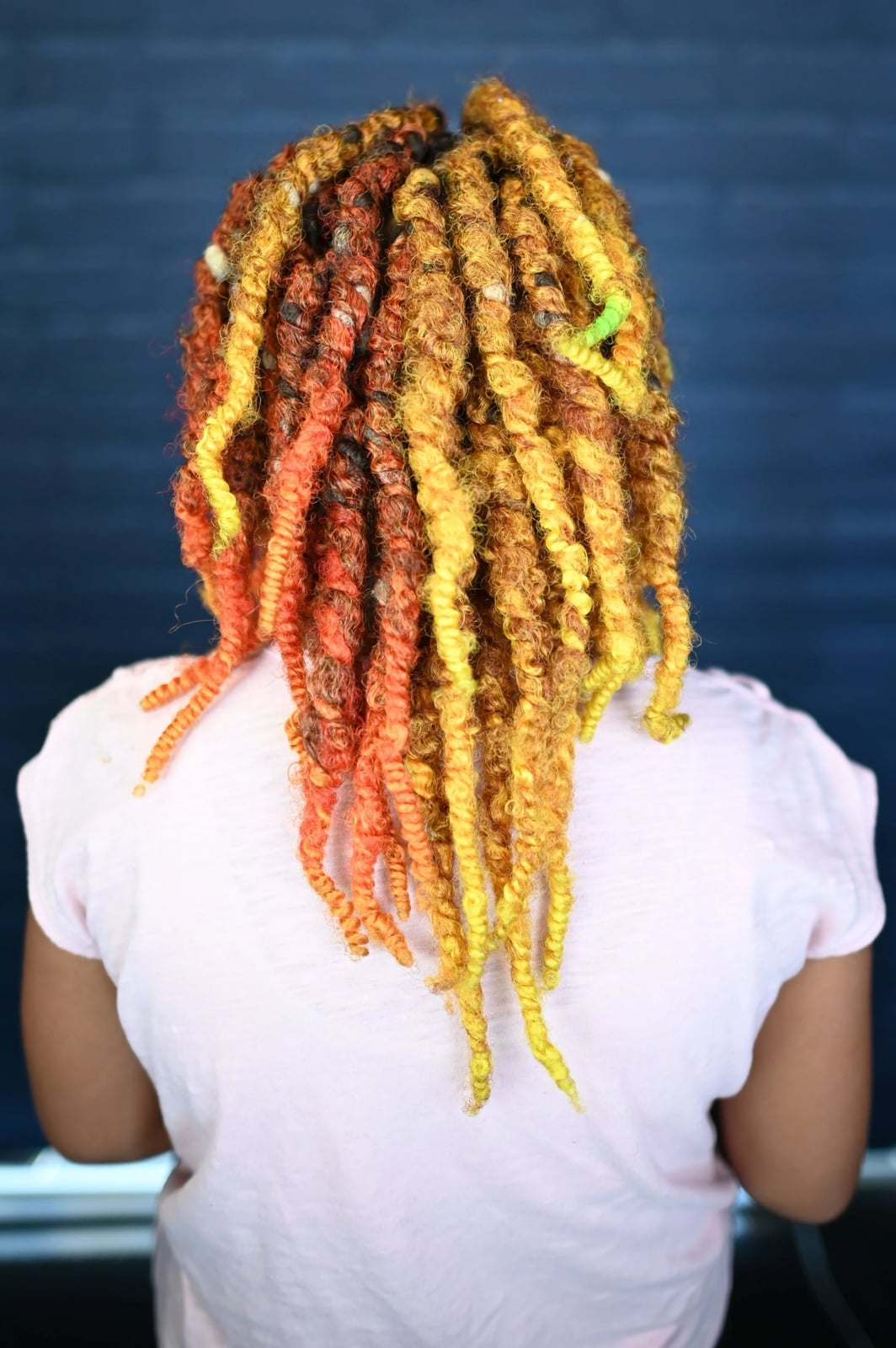
A single vibrant color makes a statement, but a two-tone ombre from deep orange to bright yellow does something else entirely. On thick, wavy mid-back locs, the gradient works like a sunset: the orange anchors the roots while the yellow takes over the ends, creating a lift that feels energetic. The back view here shows how the color wraps around each loc, so no strand is the same shade from top to bottom. Ask your colorist for: mid-back locs, orange and yellow ombre. For a more unified look, stick with one warm tone. For dimension that shifts as you move, this is the direction.
Shoulder Locs In Vibrant Teal, Close-Up Take
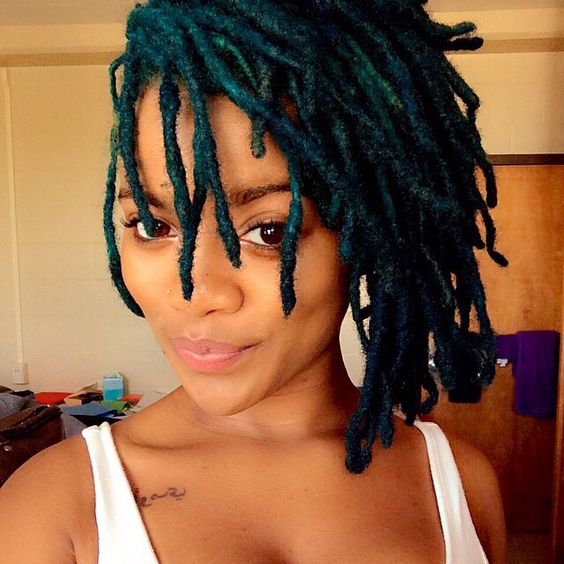
Vibrant teal is not a color that fades politely. On shoulder-length wavy locs styled into an updo, with a few face-framing strands left loose, the shade is glossy and a deliberate choice, but keeping it that way requires a color-depositing conditioner every second wash. The middle parting and updo let the teal appear as a single block of color, not a patchy experiment. Ask your colorist for: shoulder locs, updo, vibrant teal color. This is a salon application: achieving true teal means pre-lightening the locs to pale blonde before applying the blue-green pigment, which takes about four hours. Roots show within three weeks, so a root touch-up every four to six weeks is the reality of this shade.
Shoulder Locs Updo In Platinum Blonde
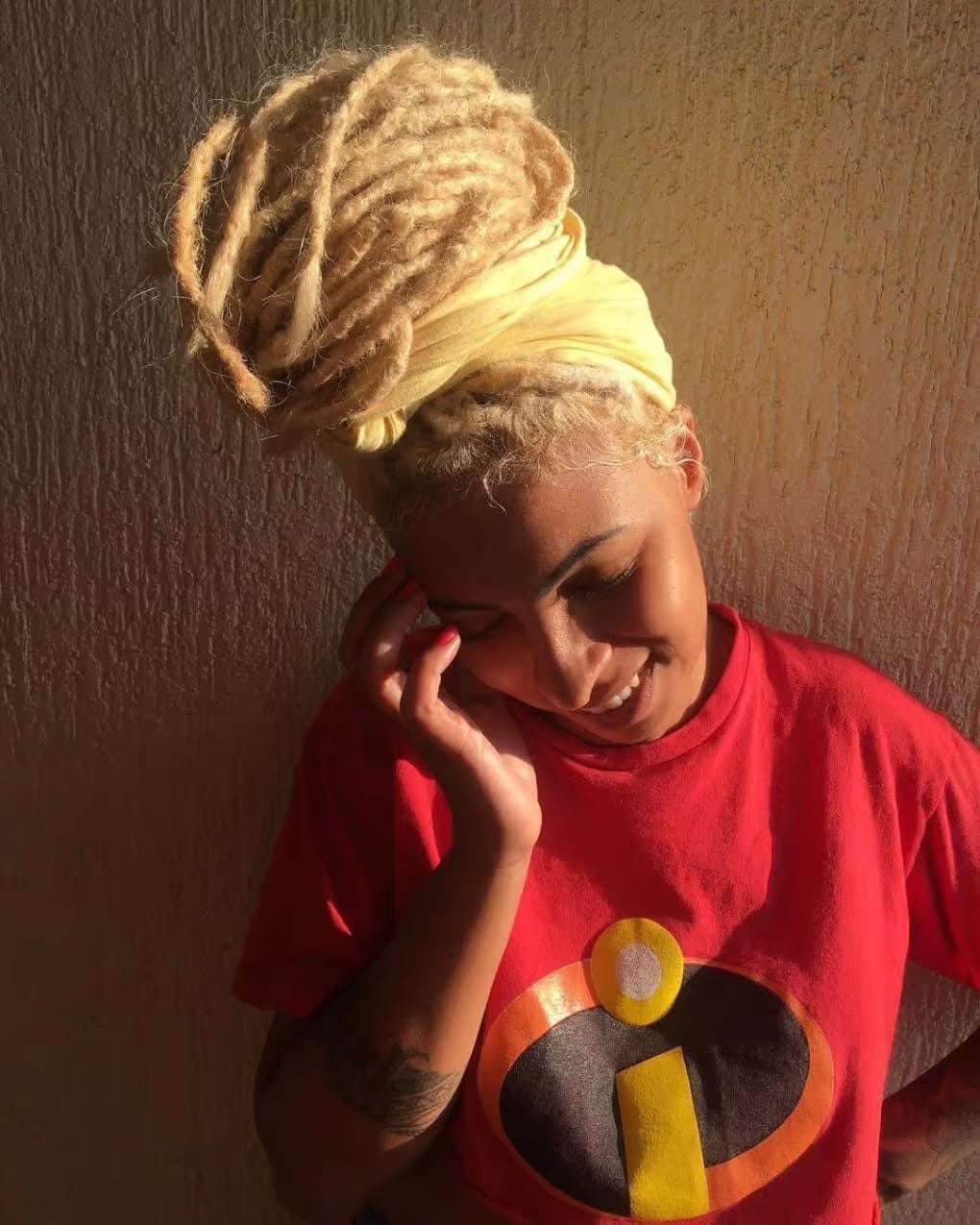
Platinum blonde on locs is not a quick lift. Getting shoulder-length wavy locs to this bright shade requires a careful, gradual lightening process to avoid compromising the hair structure. The visible lighter roots here are a deliberate part of the look, softening the grow-out line and giving the updo a lived-in feel. A yellow headwrap adds contrast without hiding the color entirely. Ask your colorist for: shoulder locs, updo, platinum blonde with headwrap. Plan on a purple toning treatment every few washes and a root refresh every four to six weeks to keep the blonde from drifting toward brassy.
Mid-Back Locs With Rainbow Ombré
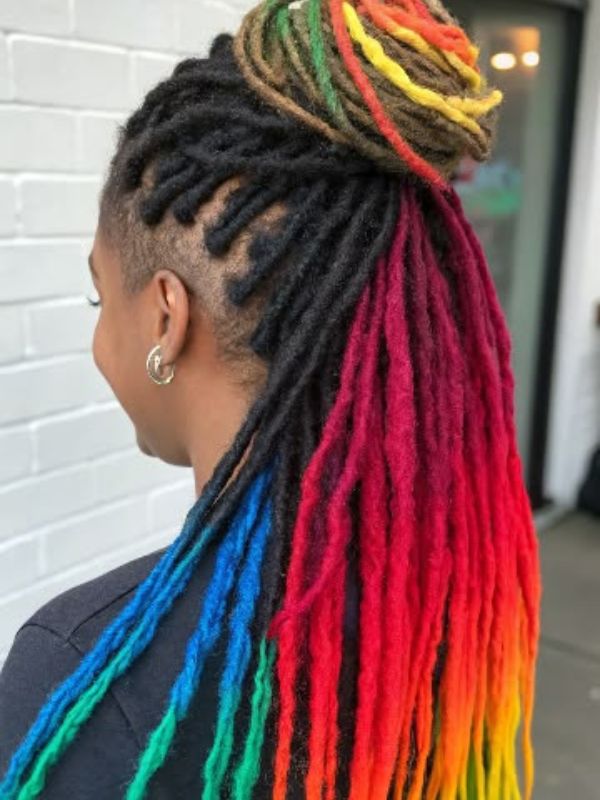
How do you describe a rainbow ombré to a colorist without getting a blank stare? Start with the base: black locs at the roots, then a clean transition into red, orange, yellow, green and blue toward the ends. On mid-back wavy locs, the technique works best as a dip-dye or hand-painted gradient, with each section of the rainbow applied to individual locs so the colors stay distinct. The partial updo keeps the front tidy while letting the loose ends show off the full spectrum. Ask your colorist for: mid-back locs, black with rainbow ombré. A middle parting and wavy texture give the colors room to read clearly without blending into each other.
Final Thoughts
When you pick a dyed loc look, let the color technique do the talking. For understated polish, balayage or subtle highlights beat a full block of bright color, and they fade softer at the root line. Dense locs carry multi-tonal work well, while finer locs read clearer with one solid shade or a gentle ombre.
- Schedule salon toning every 6-8 weeks to keep color vibrant.
- Use color-safe shampoo and conditioner to slow fading.
- Deep condition every 2-3 weeks to maintain moisture.
- Trim ends or refresh base color every 8-10 weeks.
- Shield dyed locs from heavy sun to prevent color shift.
Pick the color that speaks for you.
