
I have seen more ombre in the salon chairs this winter than any other season. Not the barely-there kind. People are going for it, and honestly, winter is the best cover for a bold color transition. Hats hide the week-five root line, and scarves protect the ends from the cold.
These 21 Winter Ombre Hair ideas range from a simple root shadow to full fantasy shades. Low upkeep for those of us with fine hair that goes flat by 4pm, and high impact for thick hair that holds a curl. My own grow-out showed at week five, so I appreciate any blur that buys six calm weeks.
Dark Blonde To Ash Blonde Collarbone Lob
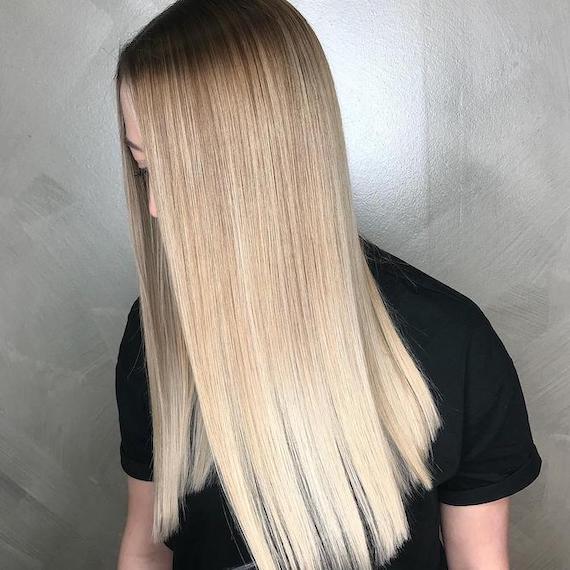
I will admit I was skeptical about a dark blonde to ash blonde ombre on fine, straight hair. The ash blonde transition felt risky, because ash can turn flat on straight textures without movement to catch the light. But this collarbone lob uses a soft ombre that starts below the chin, which keeps the dark root volume where fine hair needs it most and places the lighter, cooler tone at the ends where it can swing. The grow-out is forgiving, the ash tone refuses to go brassy for a good eight weeks if you use a purple shampoo twice a month. Straight, clean, no bangs. It holds up through a work week without a re-style, which is rare for fine texture.
Black To Light Grey Ombre
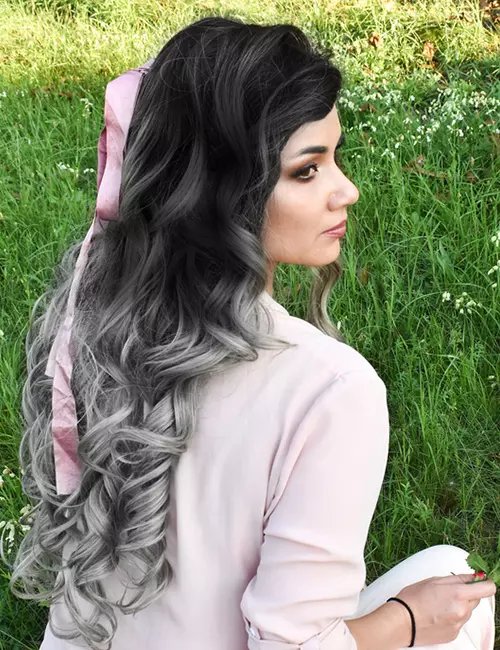
The black to grey ombre is a two-step lift, not a one-process trick. The stylist lightens the mid-back length to a pale beige first, then tones the light grey ends over it. The black base stays true, no greenish cast, because the ombre gradient is layered, not blended into the same strand. On thick, wavy texture, the grey reads almost metallic, but only if the tone stays cool, not beige.
This is not a bathroom-mirror job. The black-to-grey shift requires sectioning and foils to keep the root boundary sharp. I watched my stylist paint the transition zone dry, not on wet hair, to control the lightness exactly. If you attempt this at home, you risk a muddy grey. Book a colourist who understands cool bases and be prepared for a four-hour appointment. The result is worth the chair time, but plan for a toner every four weeks to keep the light grey ends from dulling.
Dark Brown With Ash Blonde Balayage
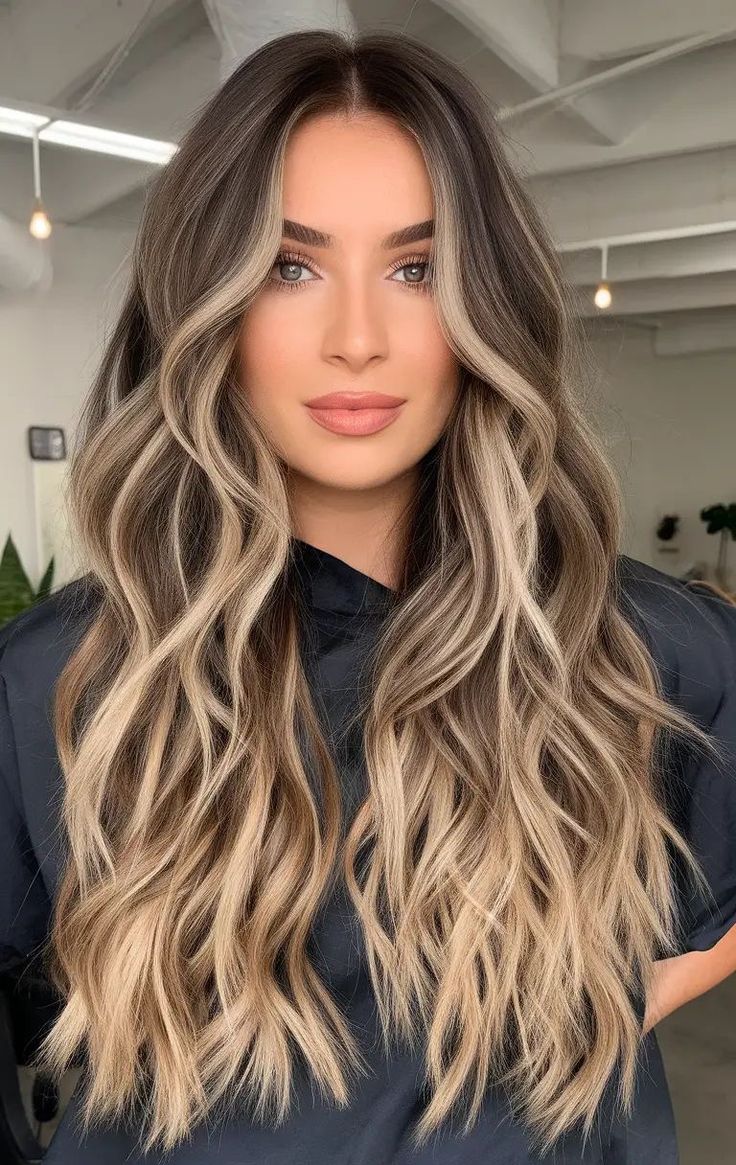
I saw the curtain bangs first. Then the mid-back length with loose waves. The dark brown ash blonde balayage starts deep and fades into ash blonde highlights that catch the light without screaming. Thick, wavy texture holds the gradient so the line never looks harsh. A middle part keeps it balanced. The honest downside: ash blonde highlights need a purple shampoo every third wash or they drift warm. By week six, the tone starts shifting. I keep a bottle in the shower and call it maintenance.
Dark Brown Root Shadow With Ash Blonde
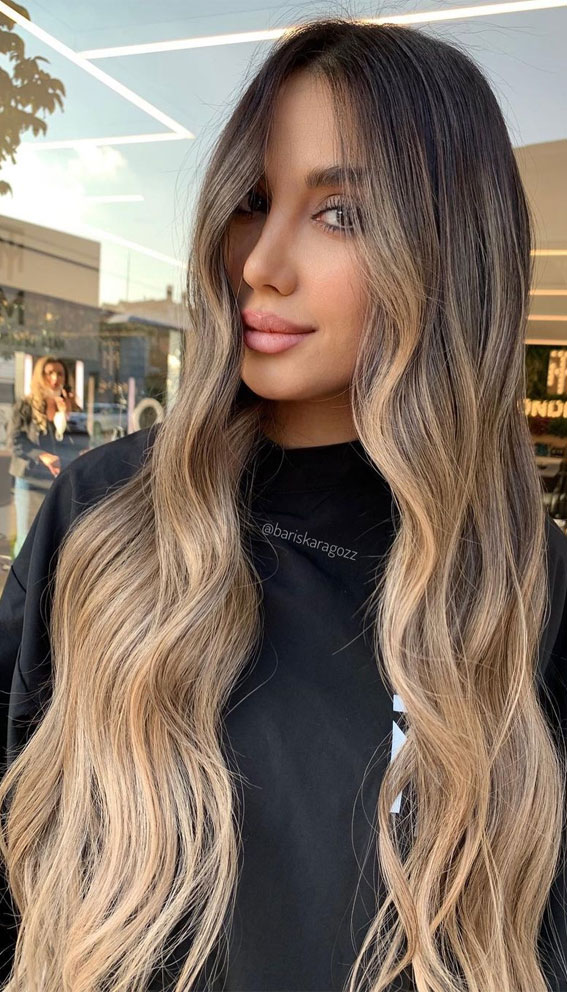
Here is what happens by day three: the loose waves settle, the curtain bangs part a little wider, and the dark brown root shadow ash blonde still looks intentional. The root shadow at the top means no harsh regrowth line, just a soft fade into ash blonde ends. Thick, wavy texture helps the transition read natural. I would not try this at home. The root shadow needs a stylist who can paint the dark into the blonde without a stripe. Book it.
Ice Blonde To Navy Blue Ombre
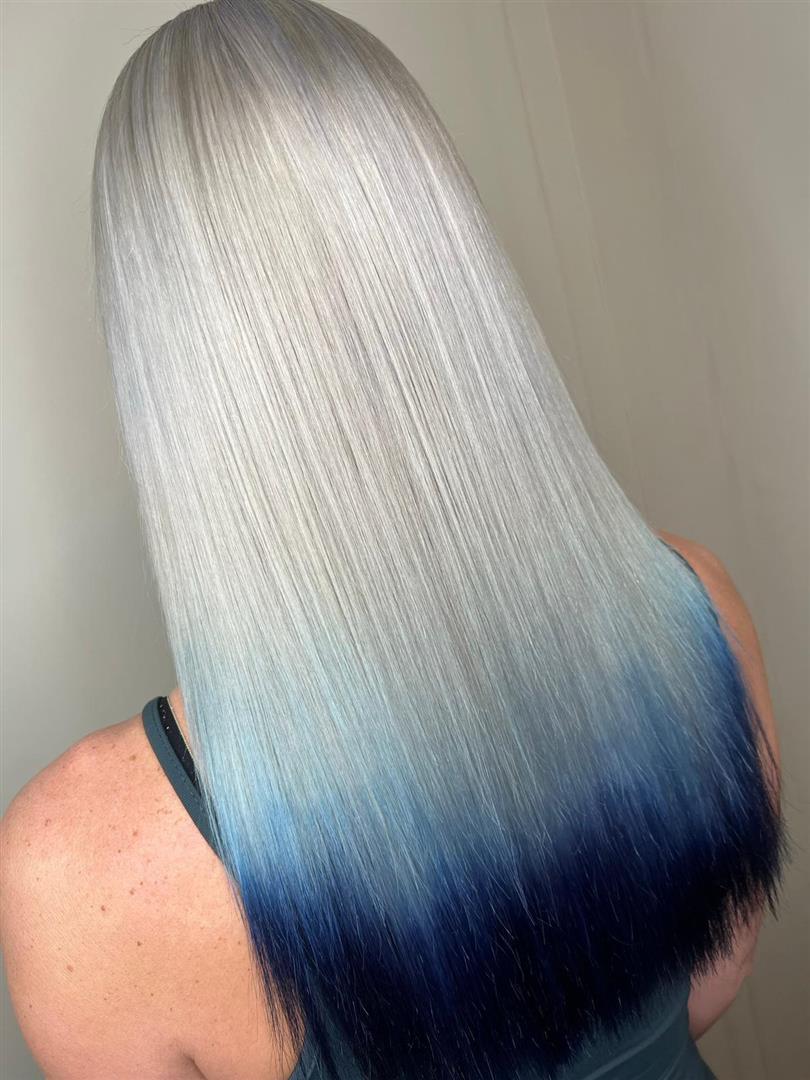
I saw the back view and stopped scrolling. The ice blonde to navy blue ombre runs down mid-back length, long layers, straight and thick, with a middle part. The vibrant blue starts as ice blonde at the crown and deepens into navy at the ends. It lands in winter because the cool tones match the low light. Holiday events? It reads sophisticated, not costume. The upkeep: the lighter sections need toning every four weeks, and the blue will fade faster than you expect. A cool-water rinse keeps it from turning green.
Dark Base To Deep Burgundy Ombre
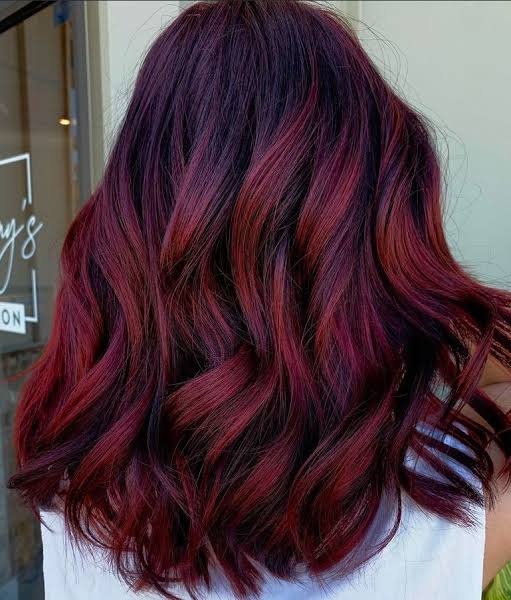
I’ll confess: I used to dismiss dark base to burgundy ombre as a high school phase. This color proves me wrong. The deep burgundy hue starts inky at the roots and melts into a wine red at the shoulder-length ends. The technique matters: a soft painted transition, not a hard line. Tell your stylist to keep the base dark, start the burgundy past the ears, and use a gloss for that rich sheen. The wavy texture helps the color shift catch light. The honest downside? Burgundy fades fast. Plan for a color-depositing conditioner every few weeks to keep the red from turning rusty.
Dark Brown With Copper Auburn Ombre
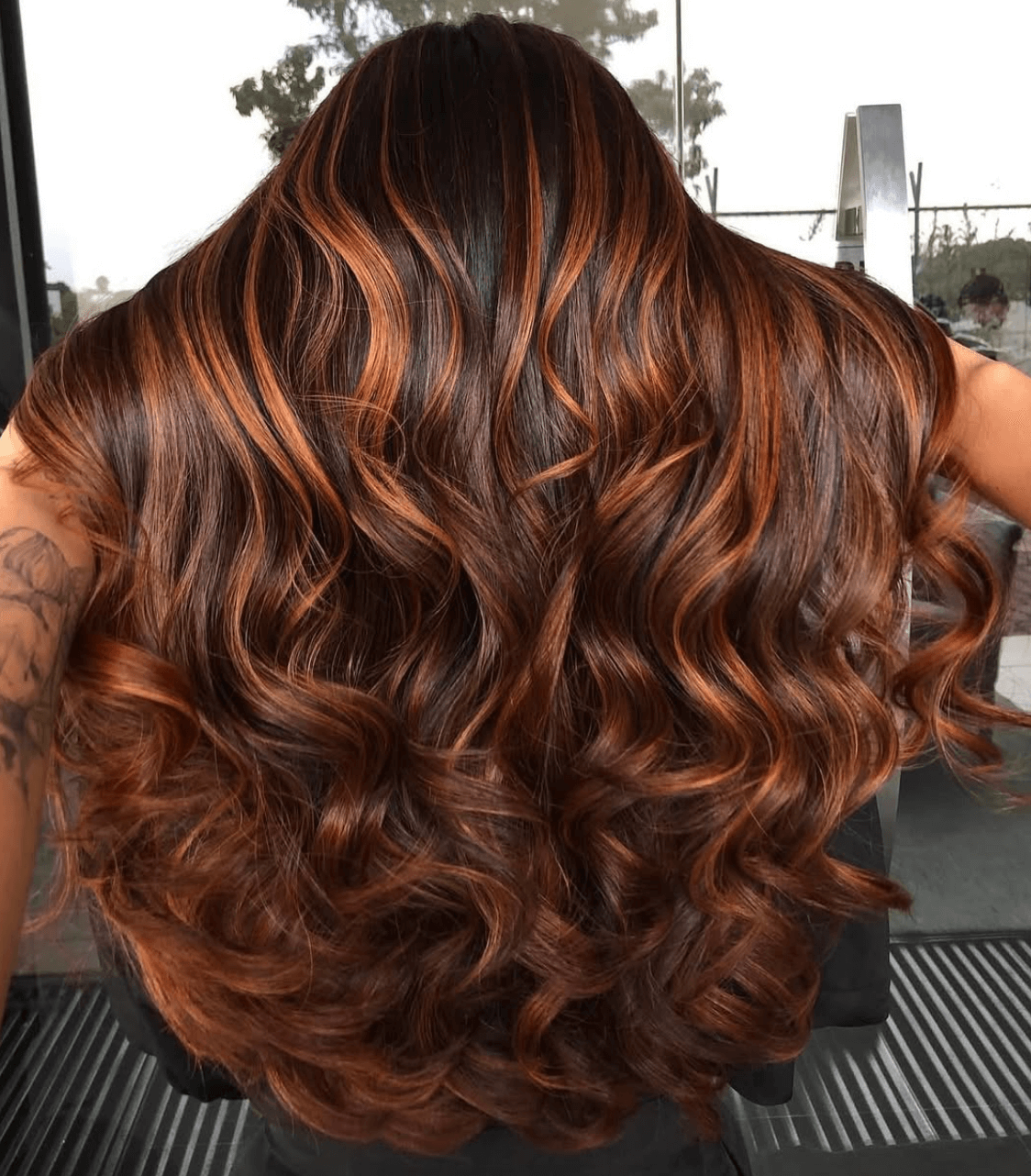
Copper auburn beats ash this winter. This dark brown copper auburn ombre starts deep at the roots and releases into vibrant copper auburn highlights that cascade through the mid-back length. The tone is warm and dimensional, a rich foil to winter’s cooler neutrals.
Set it against an icy palette. Ash blonde or silver can disappear into grey winter light, especially on thick curly texture. Copper auburn stays present. It flatters warm and neutral skin, adds life to pale winter complexion, and keeps thick curls defined. If you want winter depth without looking washed out, this is the side I pick. The loose curls here let the copper shift from deep brown to bright auburn in every twist.
Ash Blonde To Silver Ombre
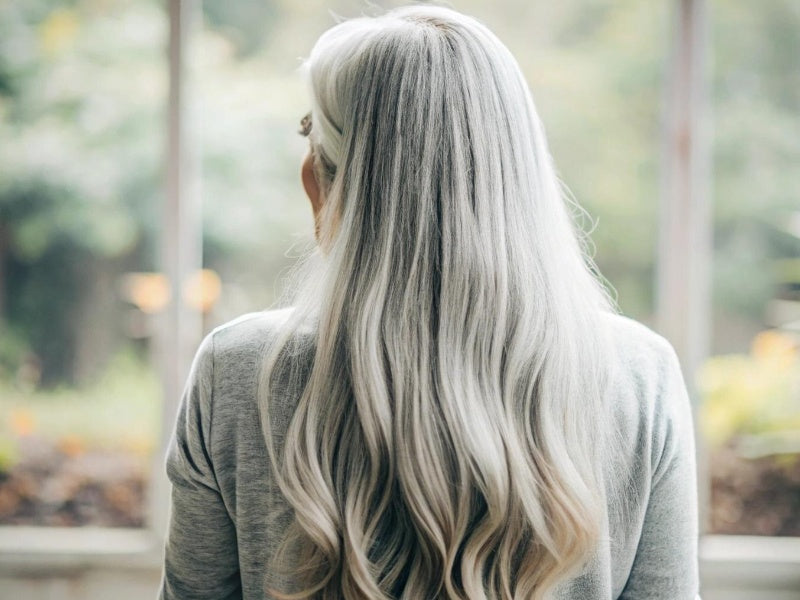
Are you cool-toned enough for this ash blonde to silver ombre? The icy silver transition starts as a pale ash at the roots and shifts to a bright silver at the mid-back ends. The curtain bangs frame the face, but they also show regrowth quickly.
This suits people with cool undertones and fine straight to wavy hair. The silver reads sharp, not muddy, on pale skin. But if you have warm skin or low porosity hair, skip it because the toner lifts unevenly. Silver requires high maintenance: toning every two to three weeks and frequent salon visits to keep the banding away. Heat protection is non-negotiable because the bleach has compromised the cuticle. It is a commitment, not a casual color.
Dark Brown To Blonde Bob
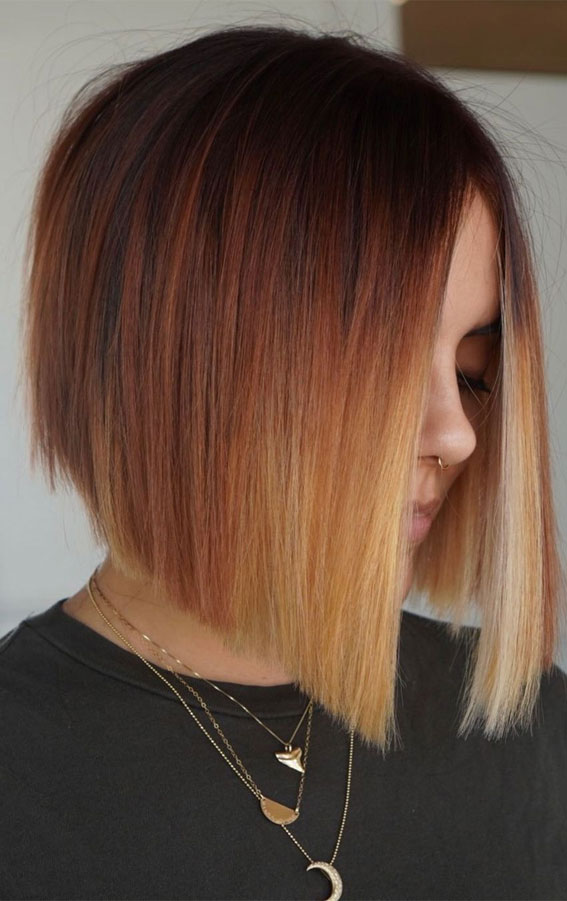
Monday morning, I wiped toner off my collar. That is the reality of a dark brown to blonde bob. The bright blonde ends need a precise root melt: a salon job for sure. Roots show at week six, and the blonde turns brassy by week four without a toning shampoo. The bob shape demands a trim every six weeks or the blunt line loses its edge. This is for someone who likes their stylist.
Brunette To Rose Gold Ombre
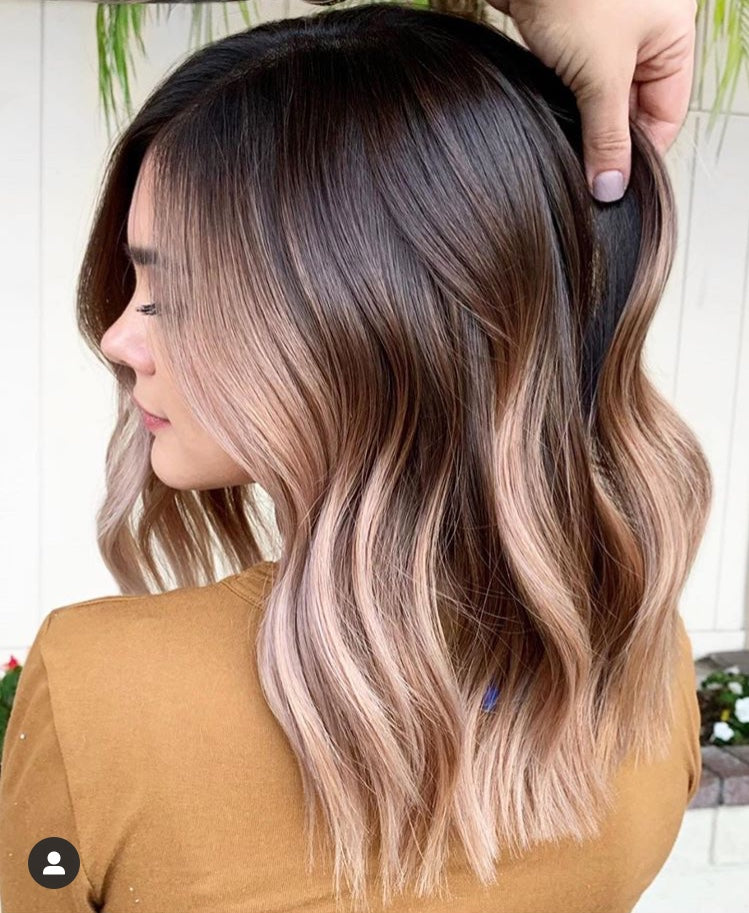
I tried brunette to rose gold ombre on a dare. The rose gold tones at the collarbone ends caught the light beautifully for about two weeks. Then they washed out to a peachy beige. The honest downside? Pastel tones fade faster than any other color I have tried. A color-depositing conditioner becomes your best friend, used every two washes to keep the pink alive. The wavy lob helps blur the line between brunette and rose gold, but the fade is real. This ombre demands upkeep or it turns into a brassy memory.
Mid-Back Ash Blonde To Platinum Blonde Ombre
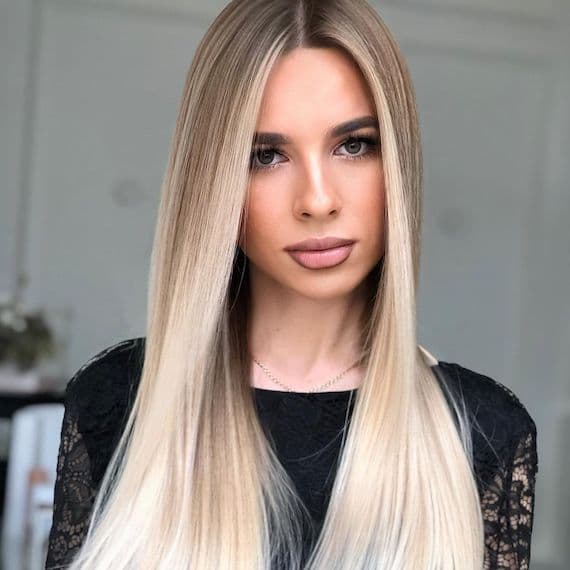
The gradient from ash blonde to platinum blonde ombre is so gradual it looks almost monotone from a distance. Up close, the mid-back length catches light differently at each layer, the fine, straight texture letting the cool tones read cleanly. That tonal shift is the technique: a soft, hand-painted transition that avoids a harsh line. No bangs, a middle part — the palette does the work.
This is a three-hour salon job, no shortcuts. The payout is a winter-appropriate brightness that works for any formal event without shouting. Winter light is low and grey; this colour catches what little there is. To keep the platinum blonde from turning yellow, expect a toning appointment every two to three weeks. Styling straight with a slight wave takes about fifteen minutes. A trim every eight weeks keeps the ends from looking tired.
Dark Brown To Ash Blonde Ombre
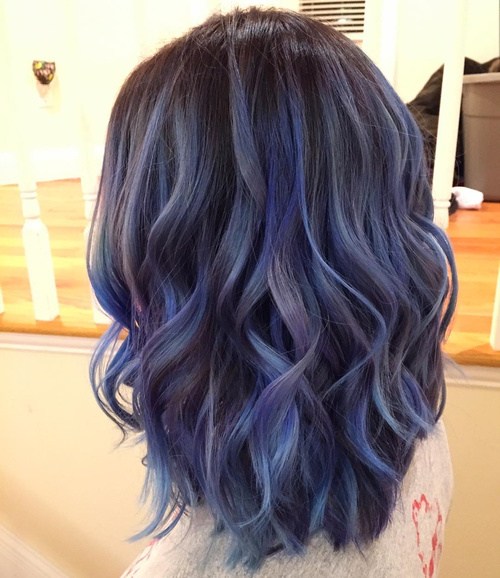
What does it take to go from dark brown to ash blonde ombre without looking brassy? A two-step process: first, a gentle lightener lifts the dark brown base through the mid-lengths and ends, then an ash toner cancels the warmth. The technique requires precision — too high and you get a harsh line, too low and the transition loses shape. The wavy, thick texture helps blur the boundary.
This is not a bathroom-mirror project. The salon will use a slow-acting lightener to protect the dark brown at the roots while achieving an ash blonde ombre that reads cool and dimensional. Expect three to four hours in the chair. The grow-out is forgiving: because the lightening starts further down, roots stay dark and natural for weeks. A color refresh every eight to ten weeks keeps the ash tone from warming up.
Icy Blue Base With Lighter Highlights
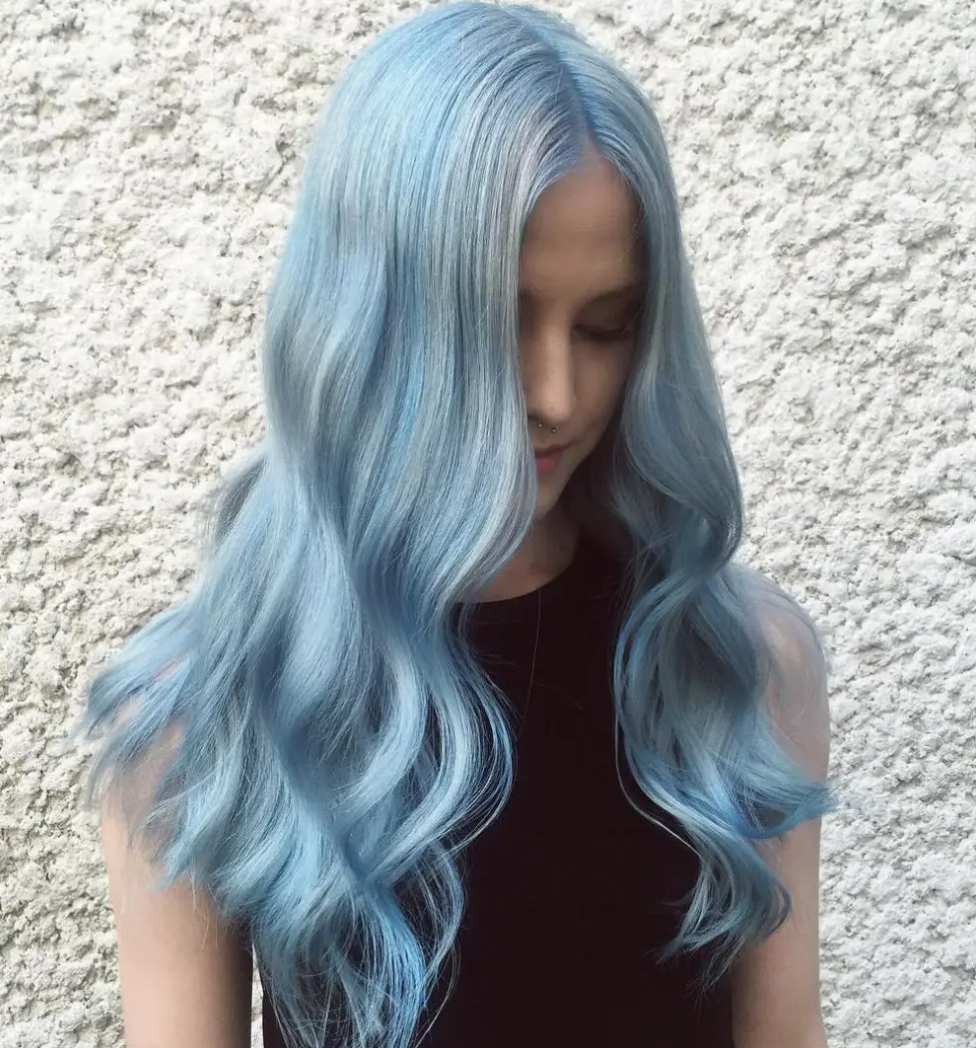
This colour demands a salon, but once it’s done, the styling is simple. Start with a heat protectant on damp hair. Section and wave with a medium-barrel iron, holding each section for five seconds. Release, let cool, then gently brush through with your fingers. The collarbone length keeps waves from falling flat, and the thick, wavy texture helps blend the lighter blue highlights into the icy blue base. The whole process takes about fifteen minutes. Finish with a light-hold hairspray. That’s it — the colour does the heavy lifting.
Blonde To Teal Green Ombre
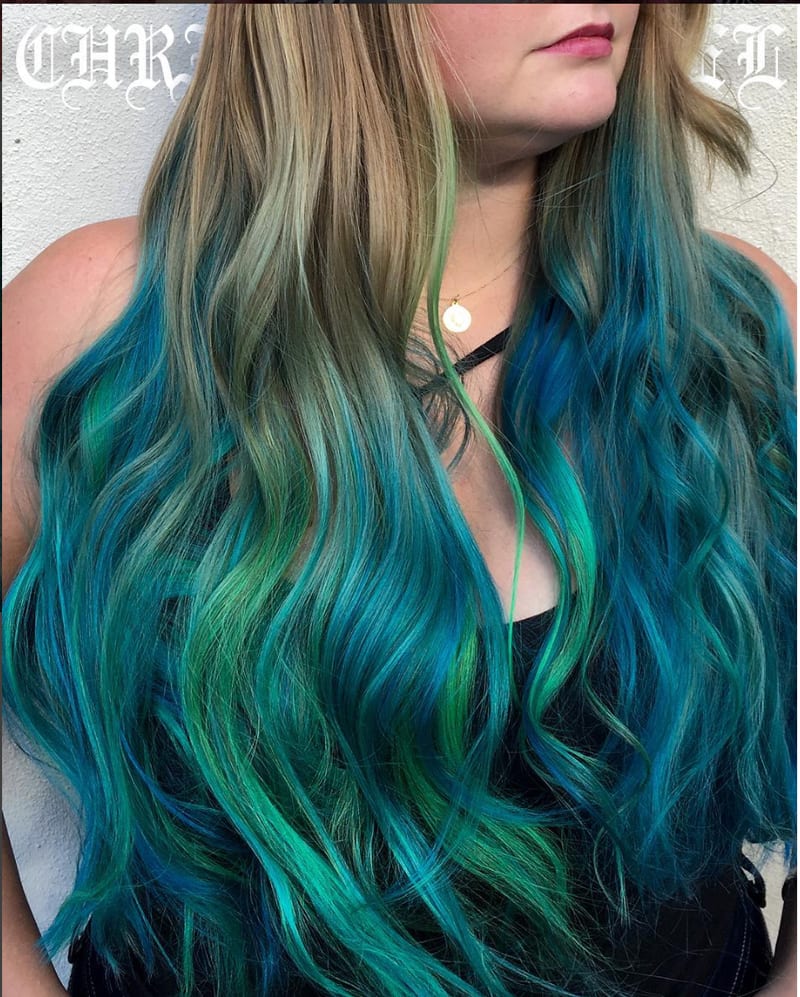
I want to love this. Blonde to teal green ombre looks like mermaid hair in the sunlight, the wavy, thick texture making the transition look intentional. But here’s the truth: those vibrant teal and green ends are going to fade. Within three washes, the teal dulls to a swampy blue-green if you don’t use the right shampoo.
The ombre placement means the colour sits on the most porous part of the hair — the ends — so it bleeds out fastest. You’ll be back at the salon every four to six weeks for a refresh, and that’s if you baby it with cold water and sulfate-free wash. The initial appointment takes three hours plus. Gorgeous in the chair, a project everywhere else.
No Bangs Dark Brown To Blonde Collarbone Lob
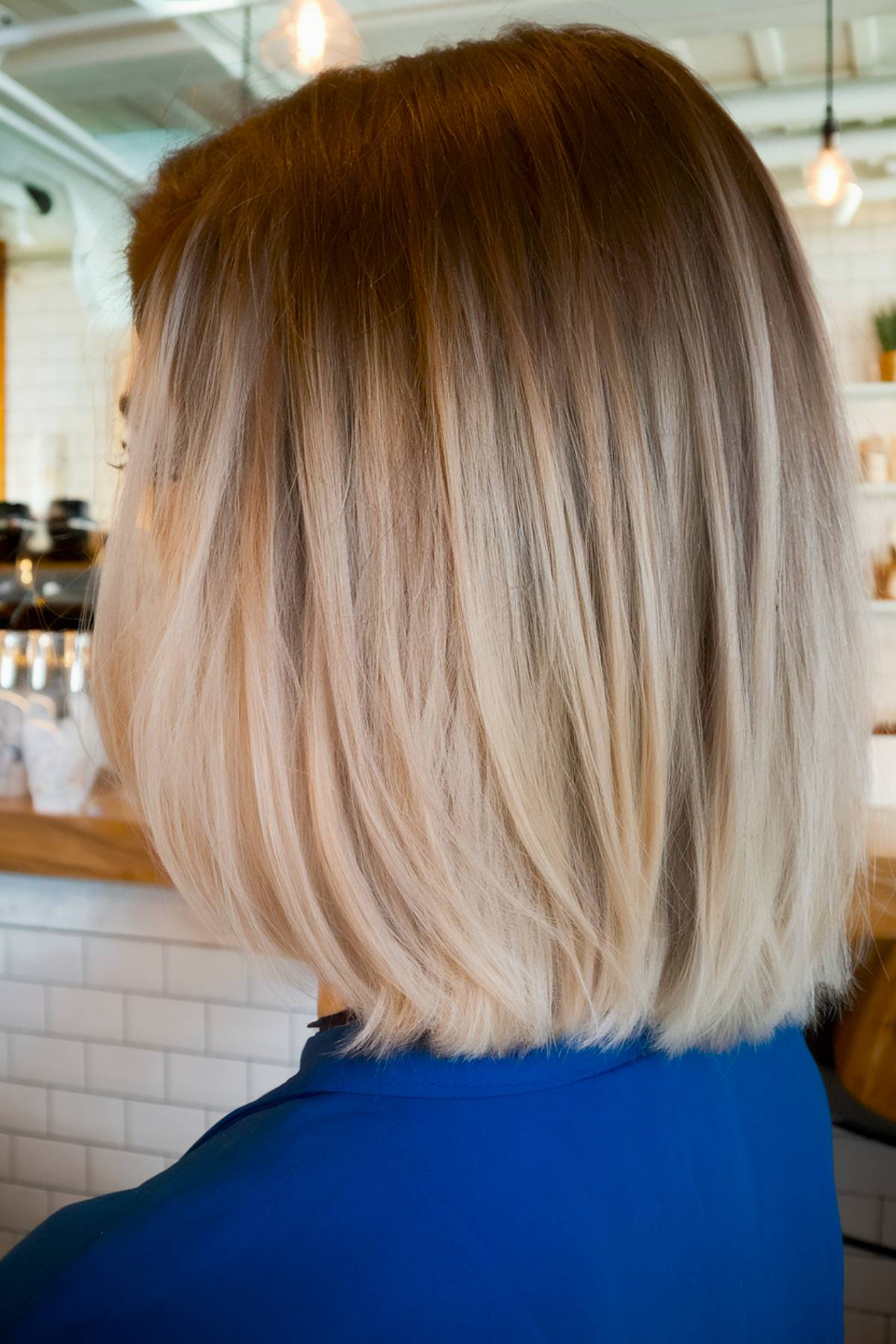
A collarbone lob with no bangs and a dark brown to blonde lob is a precise balance. The straight, medium texture needs a good cut to hold the shape. This length flatters oval and heart-shaped faces best, and the bright blonde ends draw the eye down, lengthening the face. Maintenance is moderate: a toning every six to eight weeks, a trim every eight weeks to keep the lob crisp. Styling straight takes about ten minutes flat.
Medium Brown With Caramel Balayage
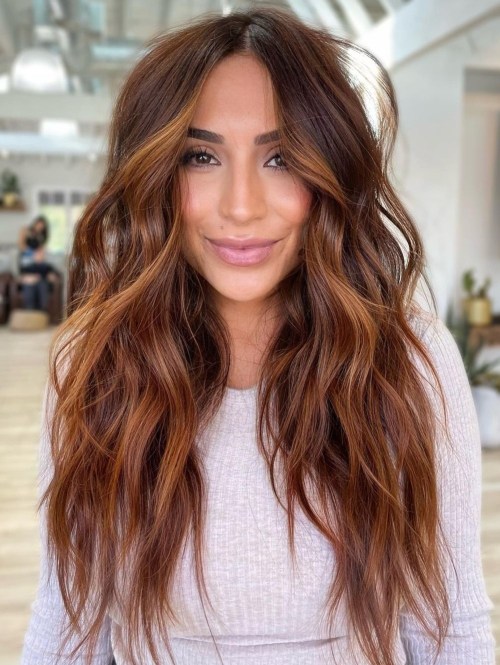
Caramel balayage is the coat that works in November and February. A medium brown caramel balayage on wavy mid-back hair does not scream summer, it reads like a warm scarf against grey sky. The technique is hand-painted, no foil lines, the tone a soft caramel that never turns brassy. Thick texture, loose waves that show off the dimension without trying.
It transitions from autumn to winter because caramel is a shade, not a season. The upkeep is forgiving: a refresh every ten to twelve weeks, a toner every eight if the brown base leans cool. I have worn this through two winters. The grow-out is invisible for weeks, the balayage just softens into the base. It is the winter ombre for people who want warmth without work. Wear it through the holidays, wear it through March. It lasts.
Dark Brown To Ash Blonde Ombre — This Image Showcases A Woman’S Long
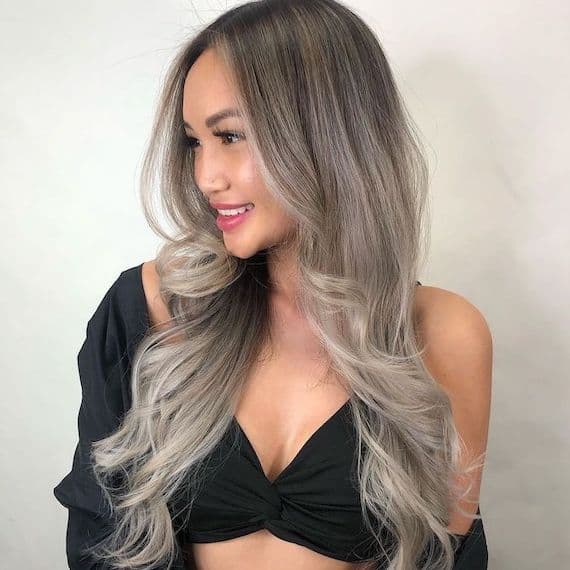
Why pick an ash blonde ombre over a warmer caramel or honey transition? Because you want the coolest possible fade from a dark brown base, no gold, no yellow, just grey-blonde that reads expensive. The mid-back layers and side part give it movement, the wavy blowout shows off the gradient. Honest downside: ash blonde pulls brassy faster than any warm tone I have tried, and on thick, wavy hair the brass shows up at the ends first. You will need a purple shampoo and a toning visit every six to eight weeks to keep it from turning the color of old straw.
Dark Brown With Blue-Grey Highlights
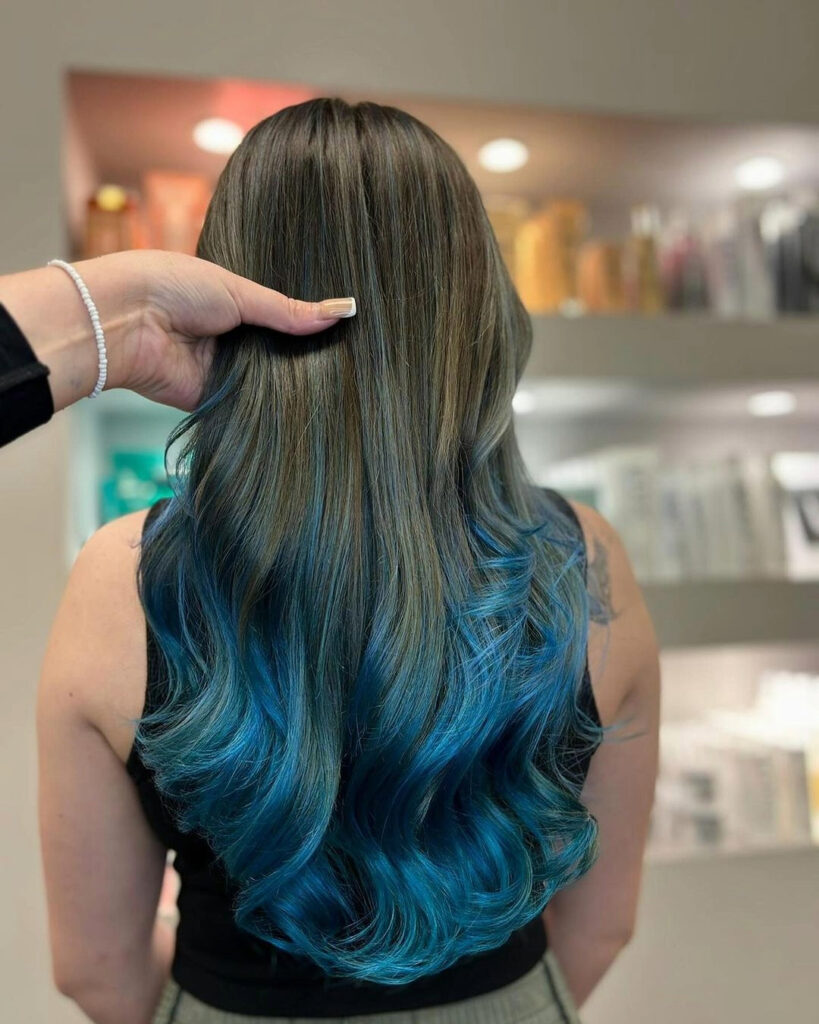
I will admit, I was skeptical about blue-grey hair. My skin leans warm, and cool tones usually make me look like I haven’t slept in a week. But this mid-back length with wavy texture and no bangs changed my mind. The dark brown base keeps things grounded, while the blue-grey highlights at the ends add just enough edge without going full Smurf. The middle part helps balance the coolness, making it work surprisingly well on warmer undertones too. I’d call this a calculated risk that pays off.
Upkeep is real with blue-grey tones. They fade fast, and you will need to tone every two to three weeks to keep that slate effect. The base color needs refreshing every eight to ten weeks, and heat protection is non-negotiable. Styling these loose waves takes about 20 minutes. It is not a low-commitment color, but the payoff is a look that actually reads as dimensional and intentional.
Mid-Back Dark Brown To Caramel Blonde Ombre
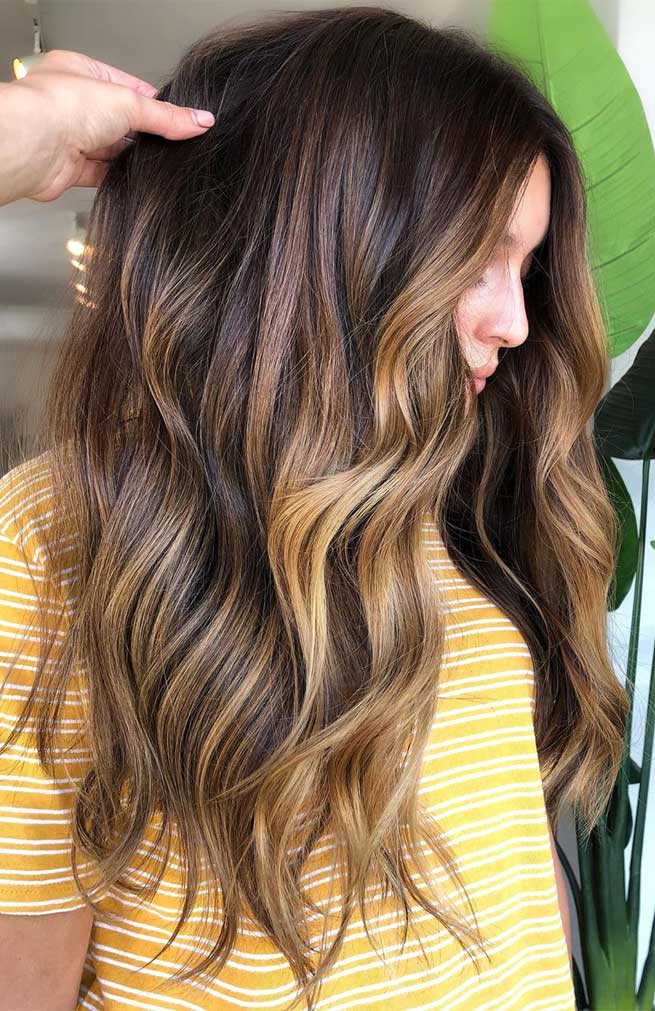
Monday morning, you stare at your ends and wonder if they look more brassy than last week. That is the caramel blonde reality. This mid-back length with thick, wavy texture and a middle part starts dark brown at the roots and transitions to warm caramel blonde. The ombre technique means the grow-out is forgiving, no harsh line. But caramel tones oxidize. They go orange, not golden, about three weeks in.
A color-depositing conditioner every two to three weeks keeps the warmth in check. The waves take about 20 minutes to style with a heat protectant. Trims every eight weeks keep the ends looking intentional. The beauty of this dark brown to caramel blonde ombre is that you do not have to touch your natural base for months. Just watch those ends and be ready with the purple conditioner when they start screaming “fall leaf.”
Dark Brown To Vibrant Purple Ombre
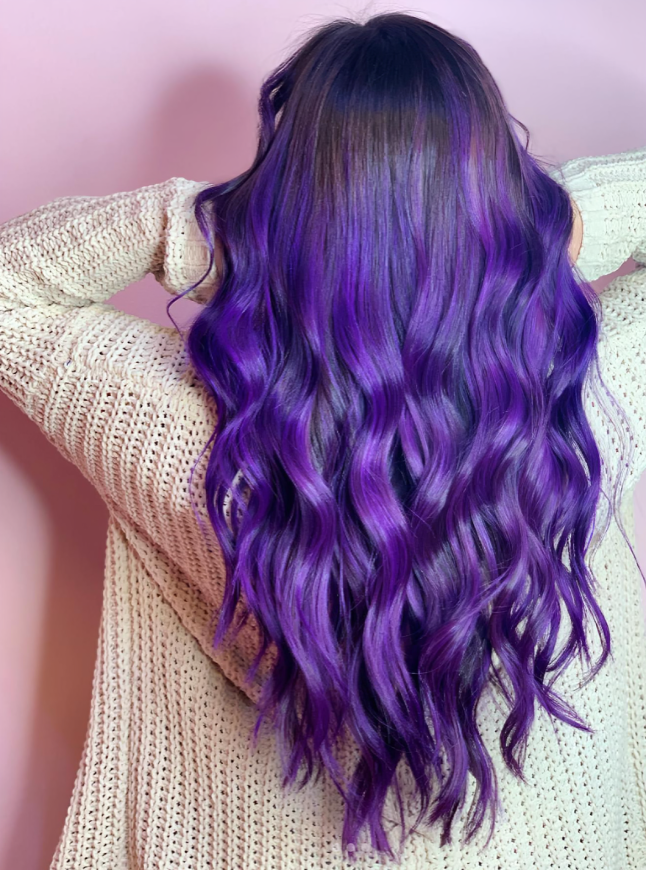
My first thought when I saw this: that is not a hair color, that is a personality trait. A mid-back length with thick, wavy texture, no bangs, and a middle part. The dark brown base gives way to vibrant purple ombre that starts subtly and hits full saturation at the ends. It is bold, unapologetic, and absolutely not for anyone who wants to blend in. The loose waves make the gradient look intentional. But here is the honest downside: vibrant purple fades to a muddy pink in about four weeks without regular toning and salon visits every four to six weeks. And harsh shampoos will strip it fast. This is a commitment, not a flirtation.
Dark Brown To Bright Turquoise Ombre
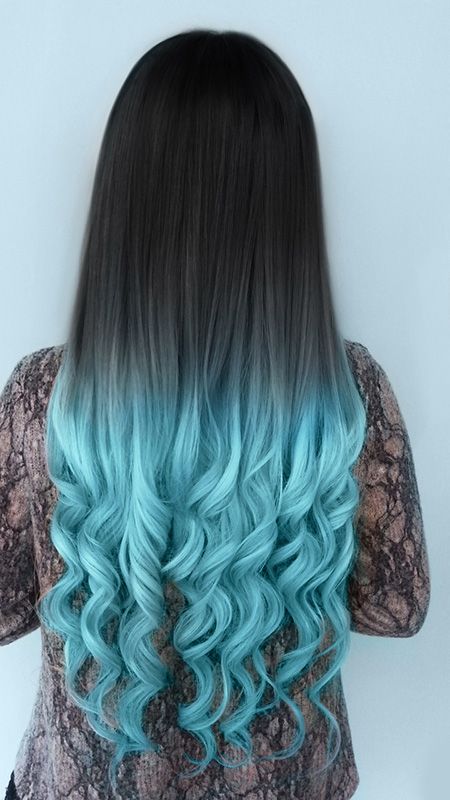
My first reaction to this dark brown to turquoise ombre: gorgeous, but who has the time? The dark brown base is straightforward, the technique is a mid-shaft ombre, and the tone is a bright turquoise that screams for attention. On mid-back, wavy hair it looks like a mermaid gradient. But here is the honest downside: vibrant turquoise ends fade fast. Within two washes the tone shifts to a greenish-teal, and by week three it is a muddy mint if you do not refresh.
The texture is thick and wavy, which helps camouflage uneven fading, but the colour still needs a toning shampoo every wash and a salon visit every four to six weeks. I am not convinced this is a realistic winter colour unless you are ready for that schedule. The cold months dry hair out, and turquoise is unforgiving on dry ends. It looks incredible for the first week. After that, it is a job.
Final Thoughts
After writing all of these, I realized winter ombre is less about the season and more about the commitment. The best ones share a dark base that buys time. I am booking the ash blonde balayage next. No hat required.