33 Blonde to Brunette Hair Inspiration 2027 Looks for a Stunning Transformation

Lately, every second person in the chair next to me has the same conversation. ‘I want brown, but not all brown. Just enough to stretch the grow-out.’ That’s the sweet spot between blonde and brunette, a strategy more than a color.
This roundup has 24 Blonde to Brunette Hair ideas, from low-maintenance root shadows to high-contrast face-framing pieces. They work for fine hair that flattens by 4pm, for coarse hair that needs dimension, for anyone who wants a grown-out line that looks intentional rather than overdue. I found that out the hard way with my own week-five roots.
Seamless Dark Brown To Blonde Balayage
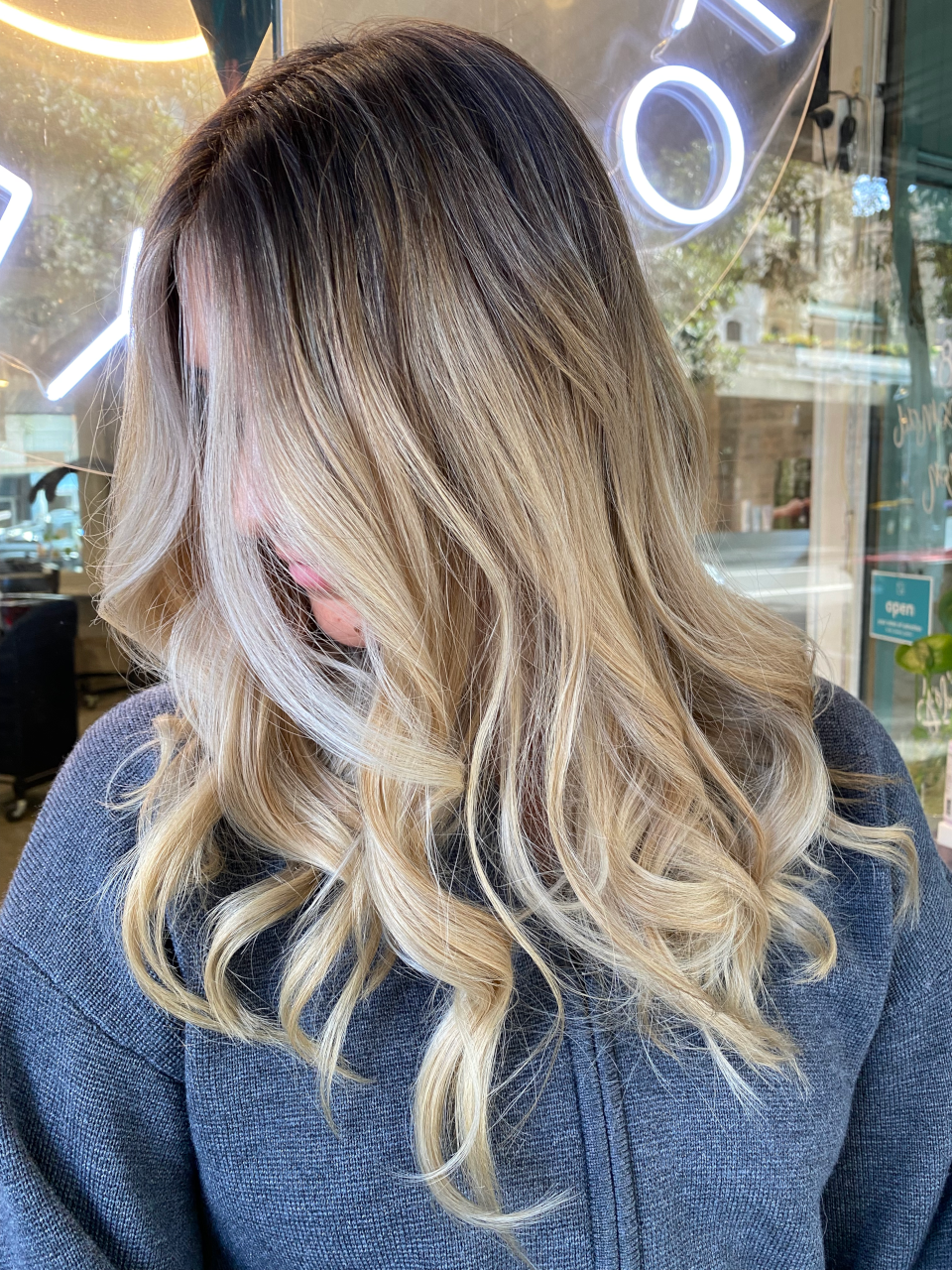
The seamless blend from dark brown to bright blonde is the kind of transition that makes you look like you just came back from a month at the beach—if the beach had a very good colourist. This dark brown to blonde balayage softens a square jaw because the lighter pieces land around the cheekbones, drawing the eye upward. A round face gets the same vertical lift, and for a heart shape, the mid-back length balances the width at the temples. The middle part is the key—it creates symmetry, so if your face is asymmetrical, this might not be your easiest option. The wavy texture here is medium density, which means the balayage shows through without looking sparse, and the tone stays warm enough to flatter most skin without turning brassy.
Bold Two-Toned Bob With Blunt Bangs
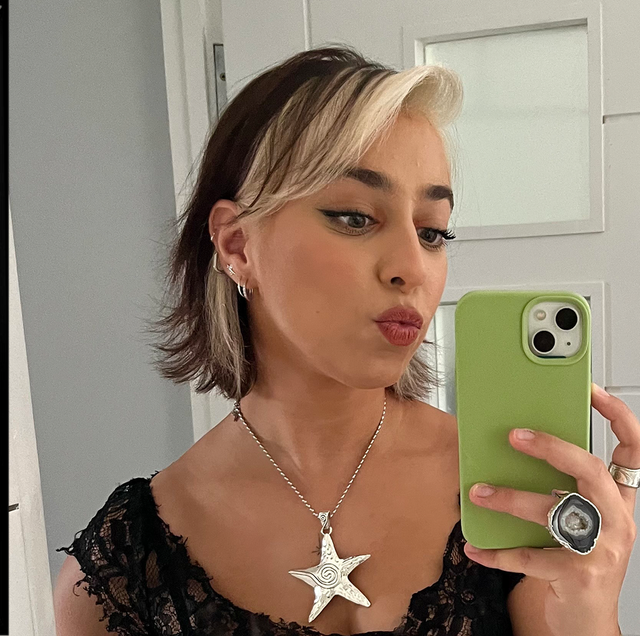
A two-toned blonde and brown bob with blunt bangs is not a subtle change—it’s a full commitment to contrast. Where balayage whispers, this bold color blocking shouts. If you want your roots to show at week three in a cool way, this is it. But that bold colour blocking means your part is non-negotiable—move it and the whole effect shifts. The straight texture is necessary to keep the lines sharp; curls would blur the division. Tone-wise, the warm blonde against the cool dark brown creates a graphic clash that reads as intentional. Ordinary upkeep means a trim every six weeks to keep those blunt ends crisp, and the chin length means no excuses for sloppy styling.
Subtle Blonde Undertones in Dark Brown Lob
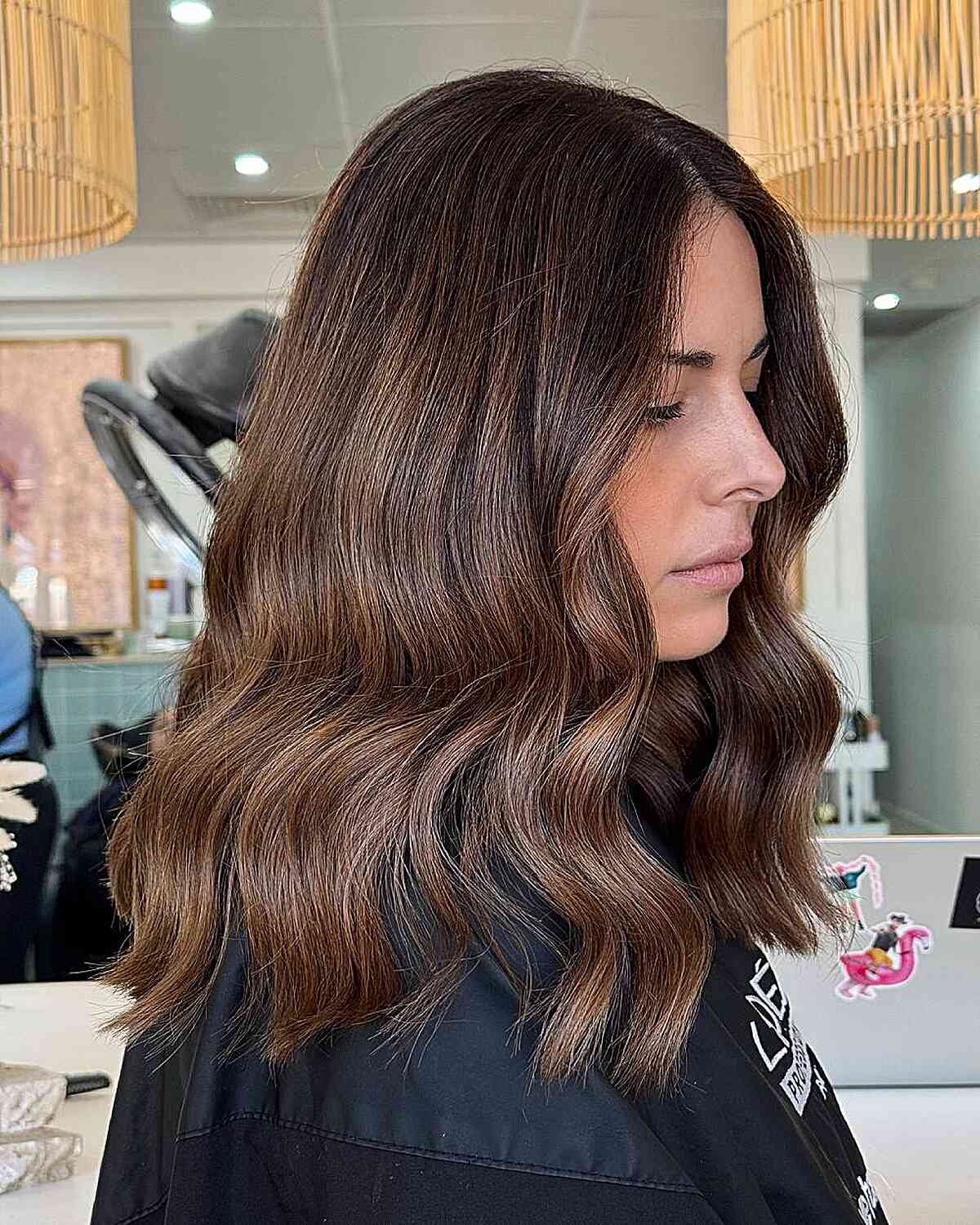
The rich dark brown lob with blonde undertones is the colour equivalent of a whisper—it rewards a second look. The technique here is fine, woven highlights placed at the midshaft and ends, not the root, so the colour graduates like a natural fade. This works best with a warm brown base, because the cool blonde peeks through without turning muddy. I get about eight weeks before the undertones fade into a soft gold, and a toner brings them back. A trim every ten weeks keeps the collarbone shape tidy. The wavy texture keeps the lob from looking flat, and medium density ensures the undertones aren’t lost.
Sleek Dark Blonde Blowout
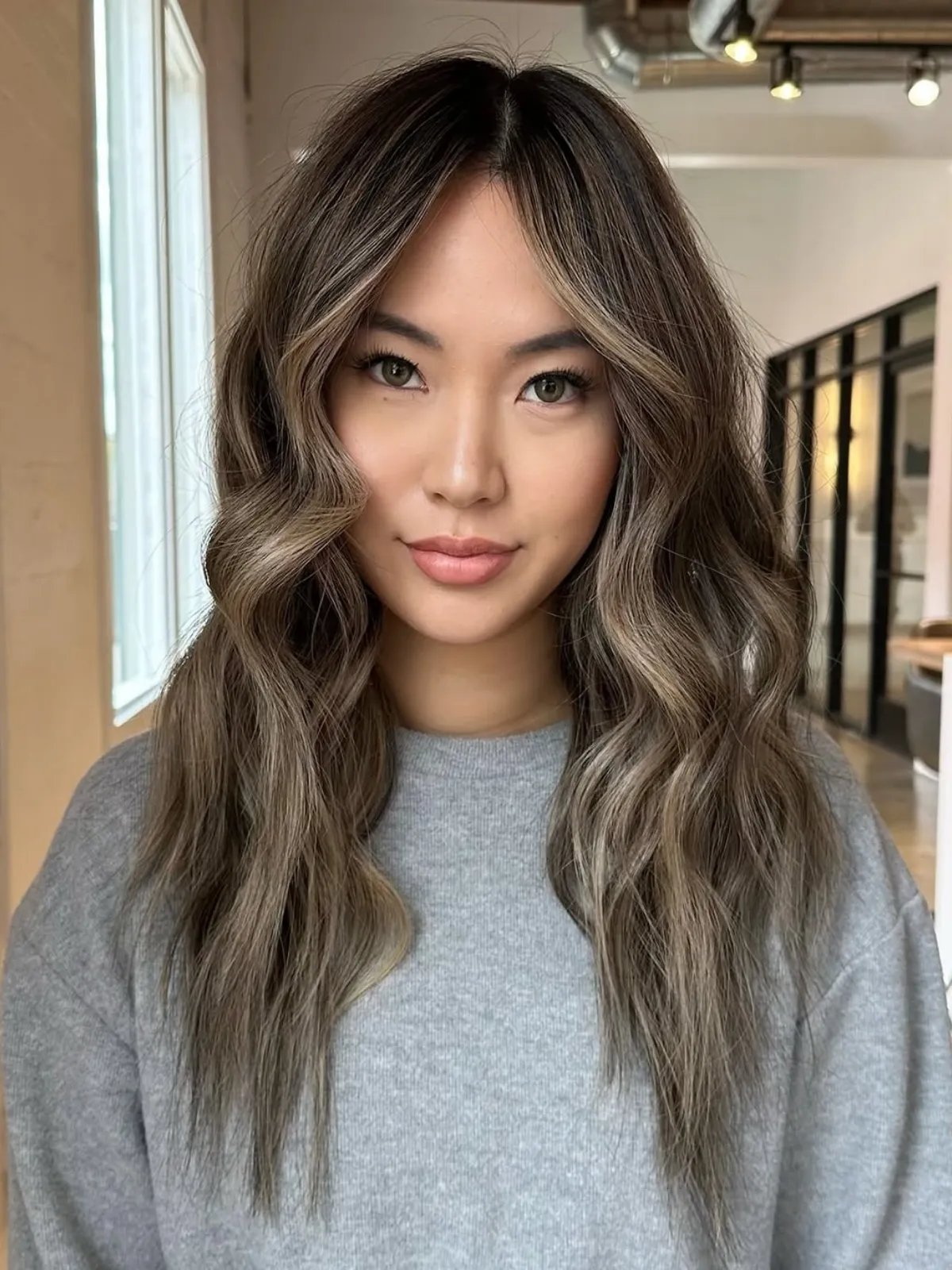
A sleek dark blonde blowout with highlights looks polished on Monday morning and, if you sleep on a silk pillowcase, still holds on Wednesday. The smooth blowout depends on the medium straight texture; if you have natural wave, you’ll need a round brush and some patience. The dark blonde base adds dimensionality without needing a full refresh—the highlights are fine, so they fade gently. But by day four, the roots might show a half-inch of your natural base, so a root shadow is your friend. Shoulder length keeps it manageable for daily styling, and the tone stays neutral so it works for any undertone.
Dark Brown With Bold Blonde Money Piece
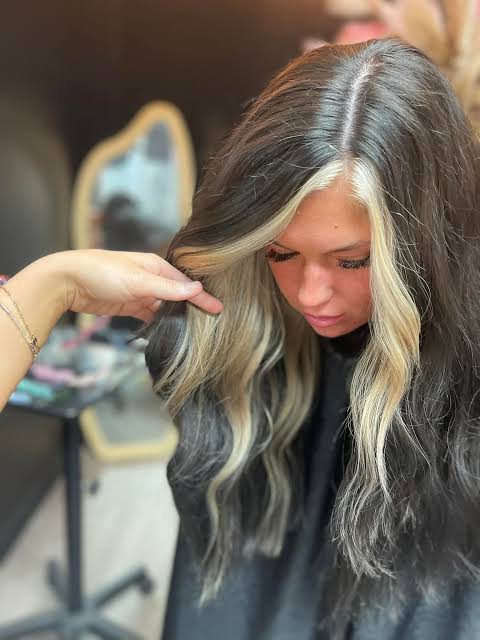
I will confess: I tried this at home with a box dye once. It turned orange in three washes. This mid-back length with long layers and a middle part is a salon job, no shortcuts. The dark brown base sits deep, almost black, and the bold blonde streaks frame the face and drop through the waves. Thick, wavy texture carries the contrast. Tell your stylist to keep the money piece no wider than your brows and use foils for separation. It is dramatic up close and reads as a deliberate pop, not an accident.
Sable Brown With Face-Framing Blonde Highlights
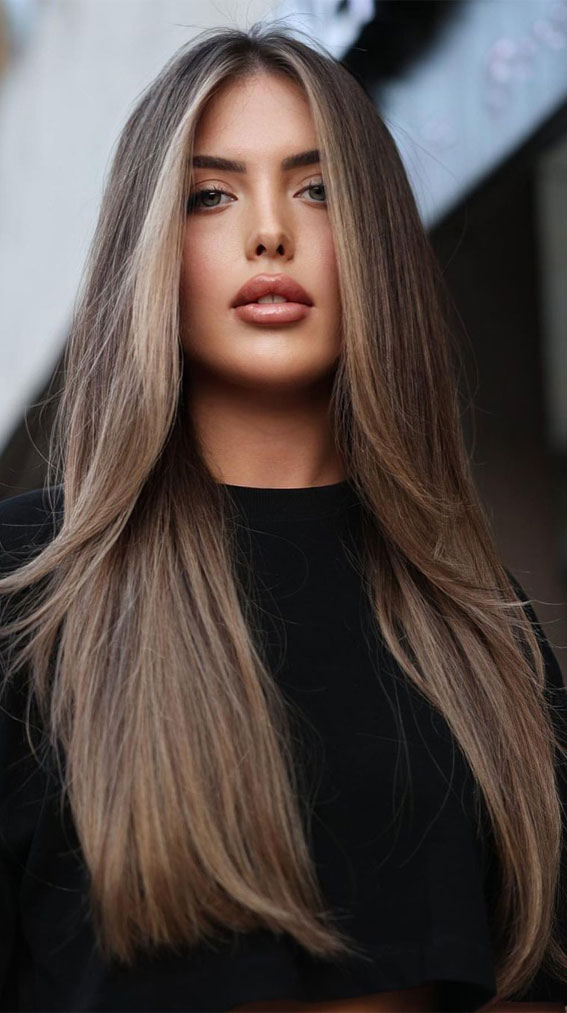
Does your brown hair look flat under office lighting? This sable brown base with blonde highlights might fix it. Sable is a cool, deep brown. Not black, not warm. The face-framing blonde pieces are placed from mid-length to the ends. They curve around the cheekbones and fall with the layers. Straight, thick hair suits this placement best because the highlights sit where the light hits. A middle part widens a rounder jaw. Skip this if your hair is very fine. The contrast can feel too stark.
The blowout is polished, but not stiff. Subtle waves at the ends keep the blonde from looking stripey. Touch-ups will hit the face-framing pieces sooner than the rest. Plan for that.
Dark Blonde With Golden Bronde Root Melt
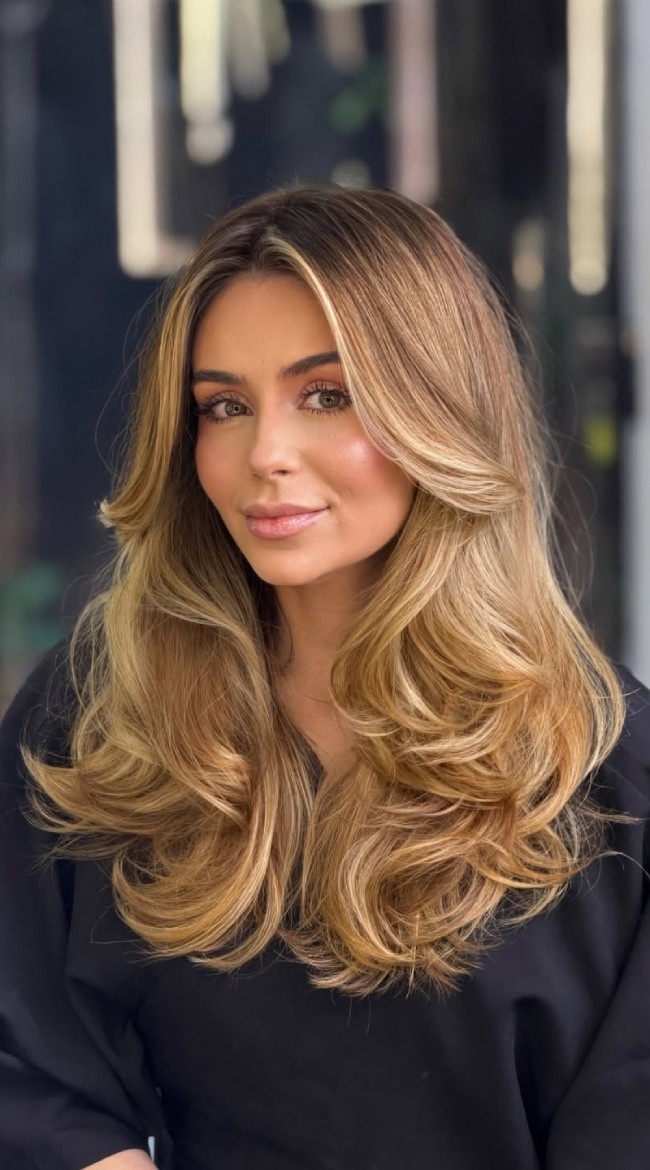
I was skeptical of the dark blonde root melt for at least a year. A root melt sounds like it should look like a root, right? But this one sold me. The golden bronde highlights wrap around the face, and the root melt blurs the line so there is no grow-out panic at week four. The collarbone length works with the curtain bangs, and the thick, wavy texture holds the blowout without a fight. Upkeep? A trim every six to eight weeks and a toner refresh maybe every two months. The root melt itself buys eight weeks of calm roots. That is a good deal.
Dramatic Ombre Dark Brown To Platinum
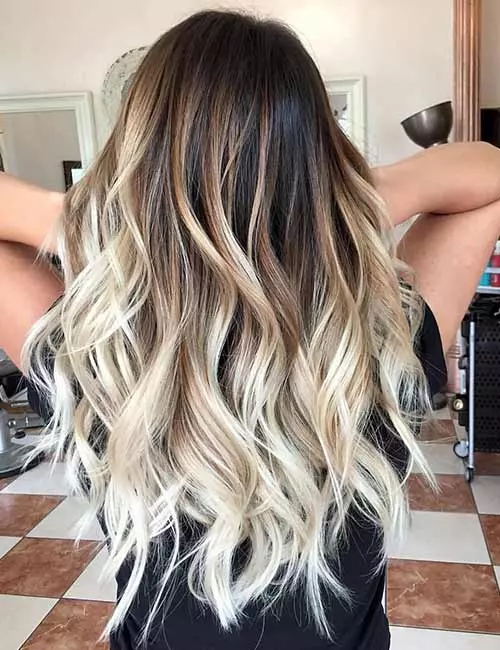
The dark brown to platinum ombré is not a compromise. It’s a statement. A balayage blends gradually, but this ombré draws a clear line: dark at the roots, platinum at the ends, with no intermediary zone. The technique keeps the base intact while the ends lift to a cool, white-blonde tone. On thick, wavy hair at mid-back length, the extreme contrast becomes the focal point. It is deliberate, bold, and wears its boundary openly.
Compared to a root shadow, which softens the transition, this ombré celebrates the sharp gradient. The stylist paints lightener from mid-shaft down, leaving the crown untouched. The cool platinum tone requires lifting to pale yellow, then toning with violet to cancel warmth. The result is a dramatic shift that stays visible even as waves fall. On wavy texture, the line softens slightly but never disappears. For someone who wants the grow-out to read as intentional, this is the better bet. It demands a precise hand, but that is the trade-off for such a striking finish.
Dark Brown Base With Blonde Balayage
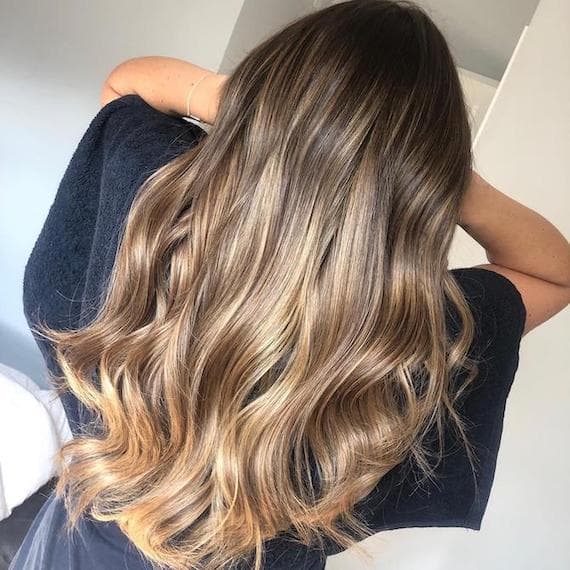
How does a dark brown base with blonde balayage hold up through a real week? The roots stay dark, so grow-out is gradual. The balayage technique paints highlights vertically, so they sit naturally along the wave pattern. Mid-week, when the blowout drops, the dimensional blend still catches light. The mid-back length helps the gradient read smoothly from root to tip.
Upkeep is straightforward. A trim every 10 to 12 weeks keeps the ends clean. The dark base means you can stretch touch-ups to 12 weeks without a visible root. The blonde ends may need a toner refresh every two months to keep the warmth in check. It is a low-commitment way to add light without the constant root chase.
Medium Brown With Harmonious Blonde Highlights
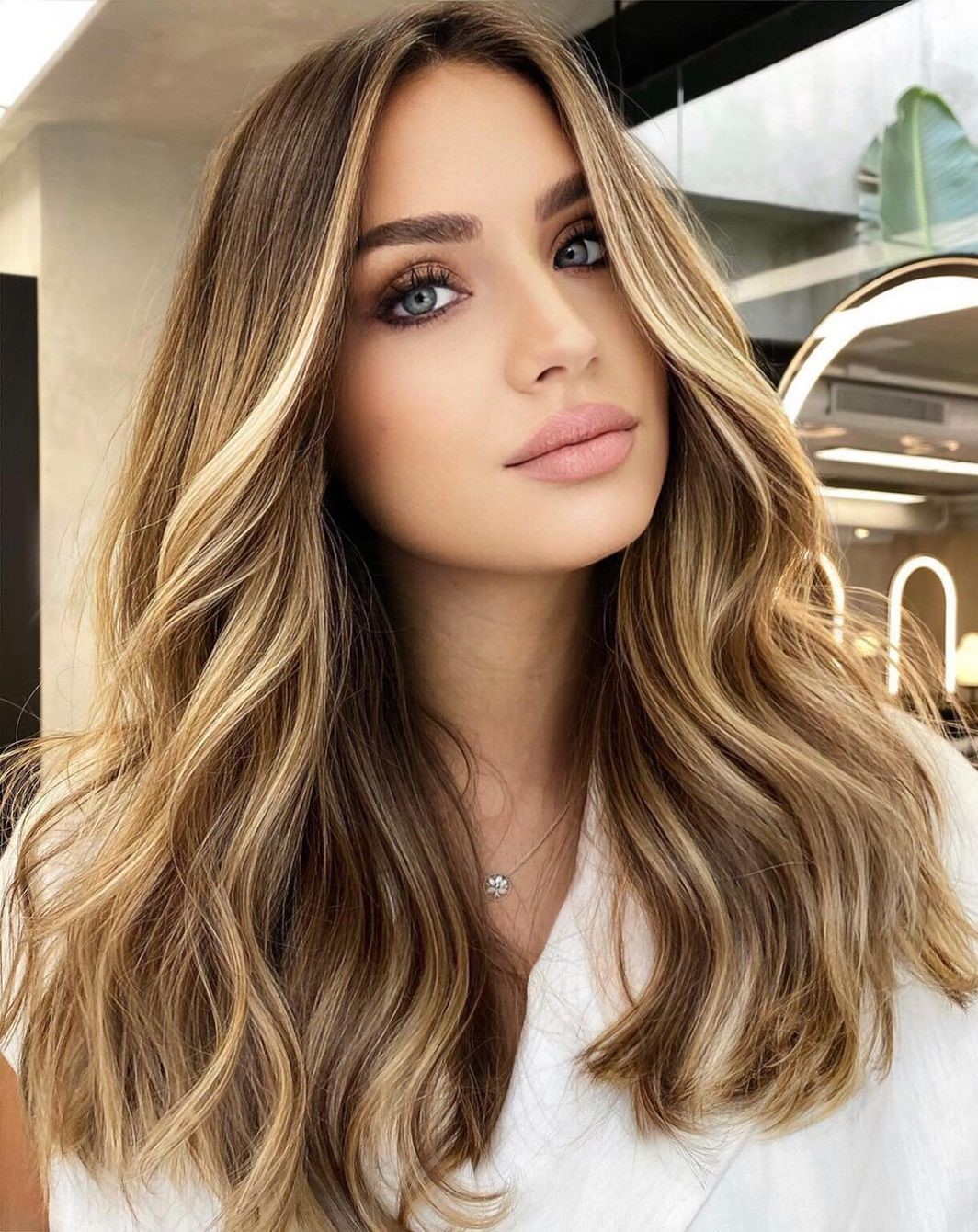
Medium brown with blonde highlights works best when the contrast is soft and the blend is seamless. The technique weaves fine ribbons of blonde through the mid-shaft, leaving the base intact. On wavy, thick hair at mid-back length, the harmonious blend reads as natural dimension, not streaks.
This look suits warm skin tones and medium-contrast features because the soft blonde echoes the skin’s undertone without competing. Those with very cool undertones or high-contrast faces may find it washes them out. The face-framing pieces around the front catch light first, making it ideal for softening a strong jaw or a rounder cheek line. It is subtle by design, so it flatters gentle features best.
Striking Ombre Dark Brown To Ash Blonde
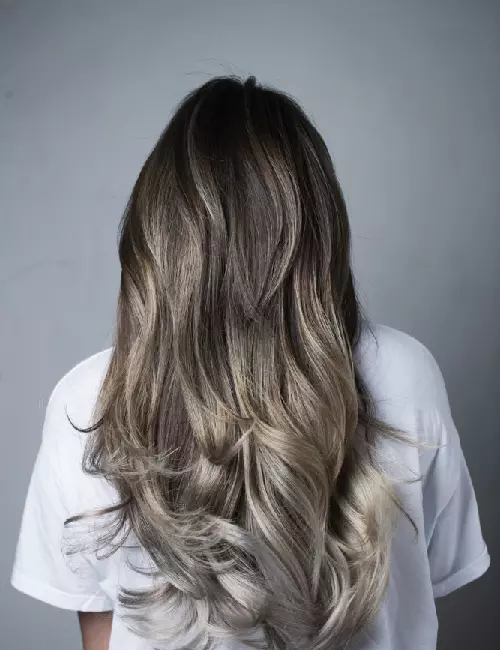
The dark brown to ash blonde ombré relies on a sharp gradient, not a soft brush. The stylist sections the hair and applies lightener from mid-length to ends, using foils to create a distinct boundary. The ash blonde tone requires lifting the ends to pale yellow, then toning with violet to cancel any warmth. On thick, wavy hair at mid-back length, the striking ombré reads as deliberate and cool.
The technique means the ends lighten several shades while the crown stays dark. The result is a two-tone effect that holds its shape even as waves fall. Unlike a balayage, which blends into the roots, this ombré keeps a visible line. The cool tone works best against neutral or pink undertones; golden skin may pull the ash green. It is a precise look that asks for an experienced hand and a commitment to the tone.
Brunette Base With Dimensional Balayage
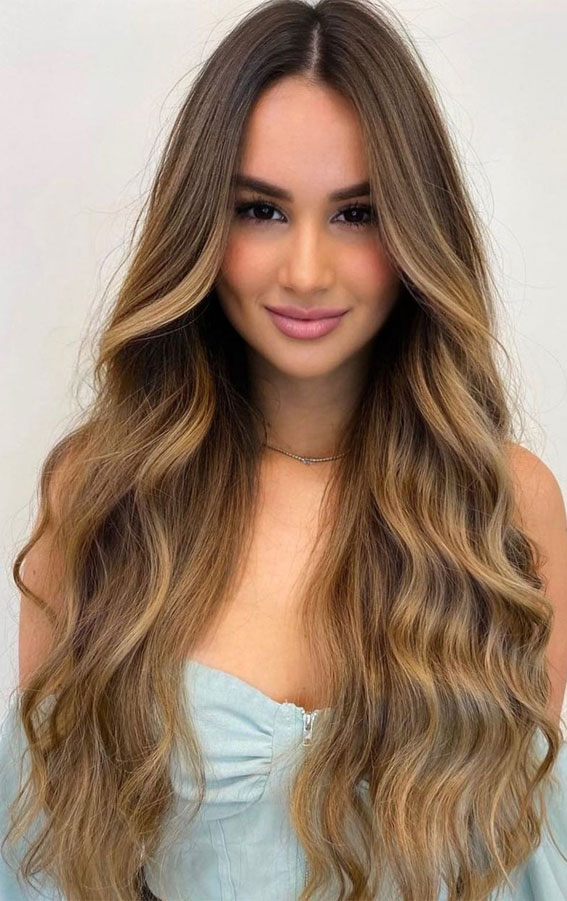
I was ready to hate balayage on my thick hair. Thought it would look patchy. But the brunette base with blonde balayage surprised me. The technique hand-paints ribbons of lighter colour along the surface, so each section catches light at a different angle. On wavy, mid-back length hair, the dimensional highlights add depth without looking heavy.
The result lifted the whole look. Where single-process colour flattens, this balayage created movement. The dark base stayed rich, while the blonde pieces gave a sunkissed effect that felt natural. It was the first time I understood why people pay for custom placement. It does not shout; it shifts as you move.
Face-Framing Pieces Medium Brown With Harmonious Blonde Highlights
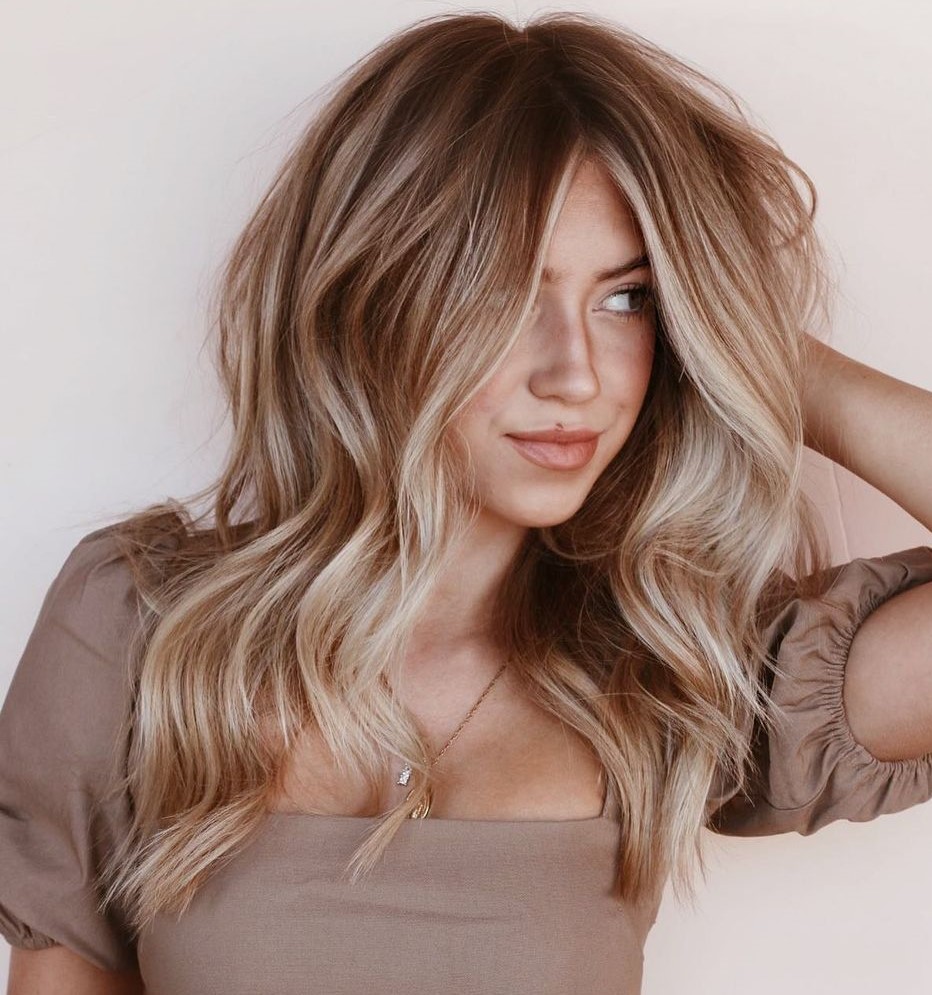
The face-framing version of the medium brown blonde highlights is the one I would book over the all-over version every time. It concentrates the light where it matters: around the oval of the face. The rest of the mid-back length stays a rich medium brown, so the overall effect is a harmonious blend rather than a stripe.
Section 13 gave the same brown and blonde tones but scattered them through the whole head. This version keeps the density on the lengths and lets the face-framing pieces do the work. The wavy thickness helps it blend naturally. Less maintenance, more impact. That is the math.
Rich Brown With Voluminous Caramel Highlights
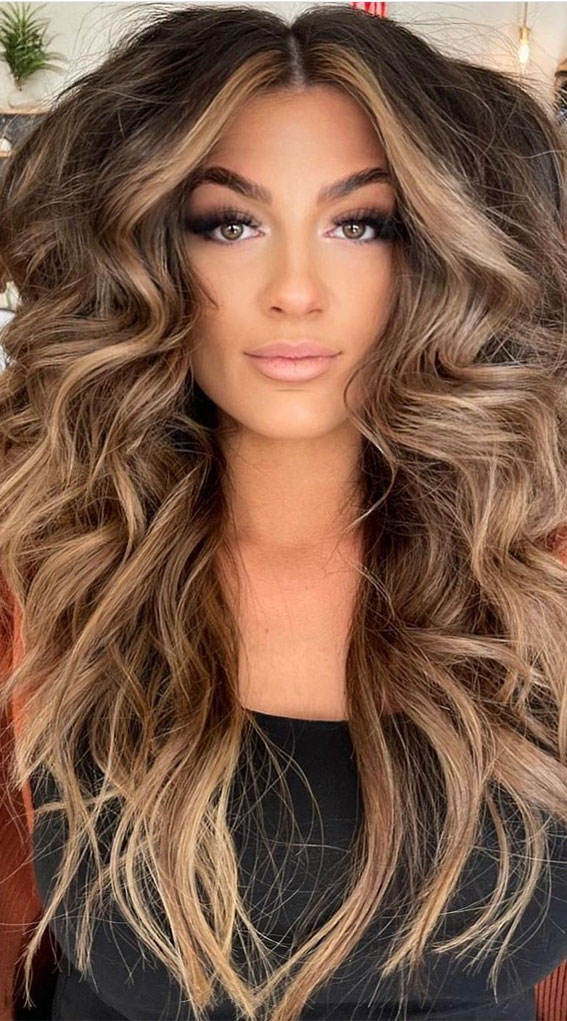
Are you warm-toned or cool? Because this rich brown with caramel highlights is strictly for the warm side. The caramel is a warm caramel, golden and buttery, sitting on a deep brown base that runs through mid-back length in thick, wavy sections. It adds dimension without going brassy, and the texture keeps it from looking flat. The highlights are hand-painted for a soft blend, so there’s no stripe.
If you lean cool, this will pull orange against your skin. Stick with ash or beige tones instead. For warm skin, especially olive or golden undertones, this is the most flattering way to lighten up without going full blonde. The voluminous waves help the caramel catch the light, and the thickness of the texture gives it that lived-in richness.
Dark Blonde With Ash Blonde Balayage
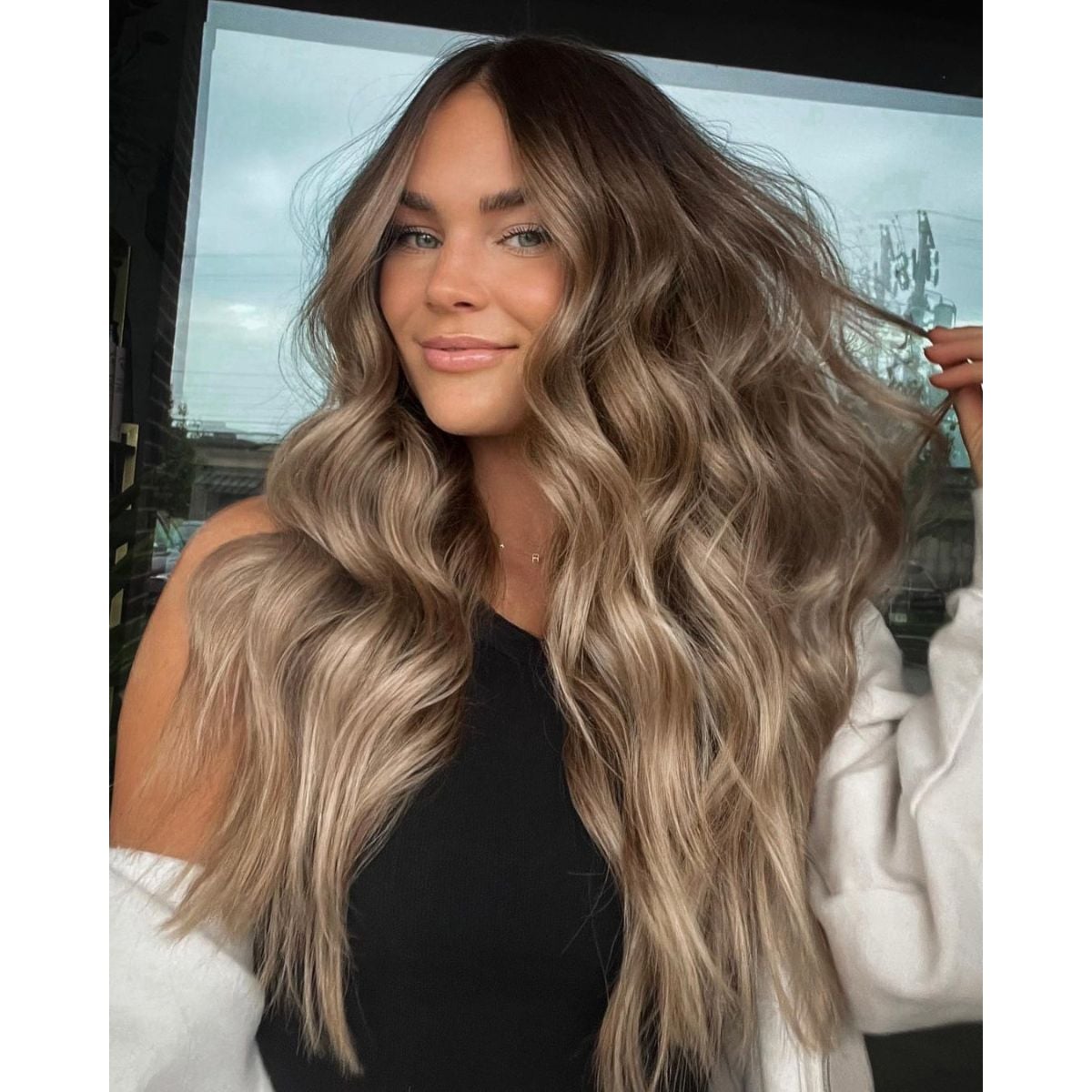
The trick to ash blonde is the undertone. This dark blonde ash blonde balayage starts with a dark blonde base, then the ash blonde balayage is hand-painted onto the mid-lengths and ends. The stylist applies the lightener freehand, avoiding the roots, then tones it with a violet-based gloss to lock in the ash. The result is a cool, smoky tone that sits on thick, wavy hair down to mid-back. No warmth, no yellow.
But ash is high maintenance. The toner fades fast, and without a purple shampoo every other wash, it turns brassy within four weeks. The balayage placement means the regrowth is soft, but the tone itself needs a refresh every 6-8 weeks. It looks best blown straight or in loose waves, because the cool tone catches the light differently. If you’re not ready for that schedule, pick a warmer blonde.
Medium Brown With Root Shadow And Highlights
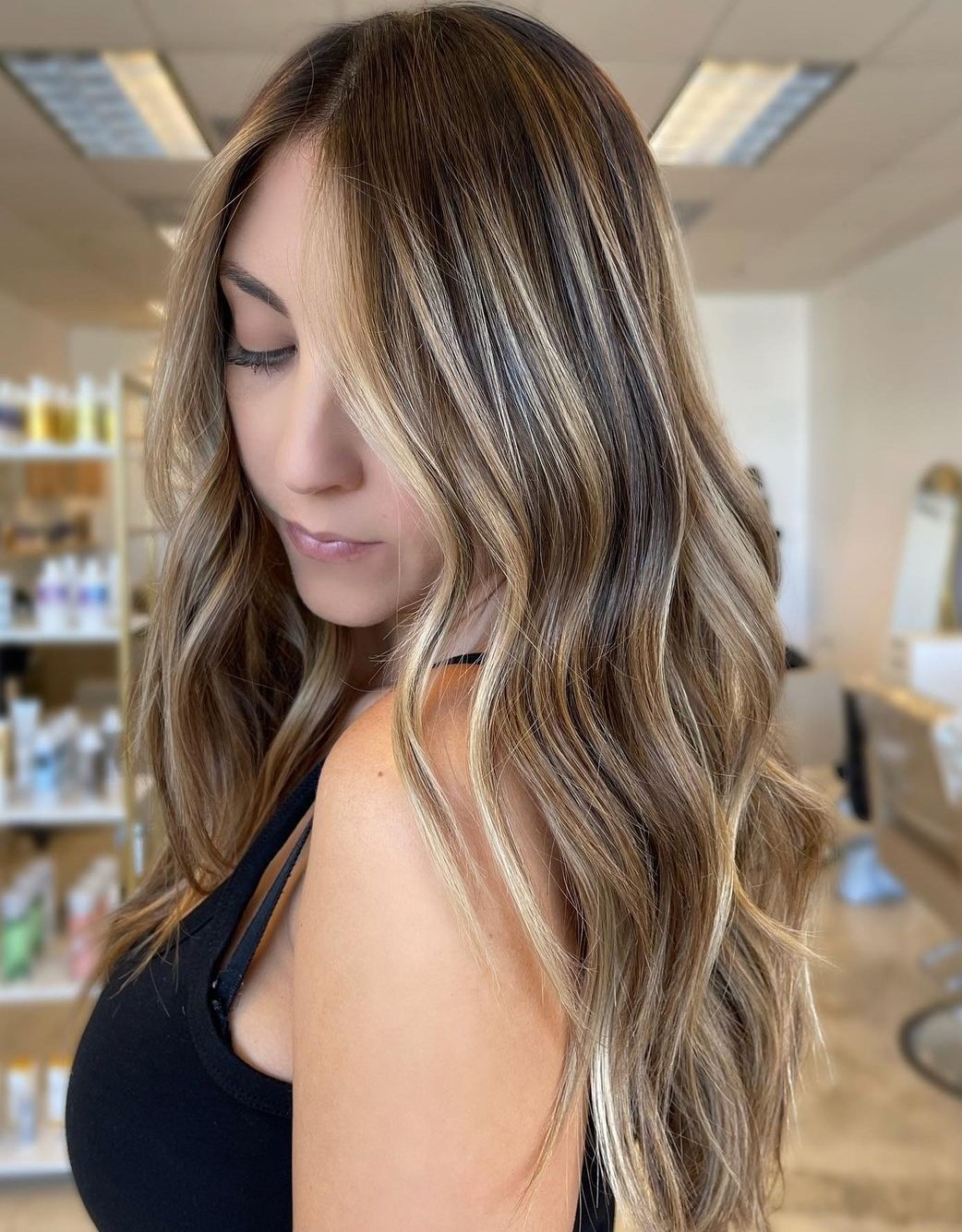
Monday morning, no wash, and the curtain bangs still sit right. That’s the magic of this medium brown root shadow. The subtle root shadow blurs the line between your natural colour and the blonde highlights, so grow-out is invisible for weeks. The face-framing highlights are placed around the cheekbones, so they catch light even when the rest of the hair is flat. Collarbone length, wavy texture, medium density. It takes about 15 minutes to refresh the waves with a curling iron. The root shadow means you can skip the salon for 10 weeks before the highlights need a touch-up.
Mid-Back Dark Brown With Caramel And Blonde Highlights
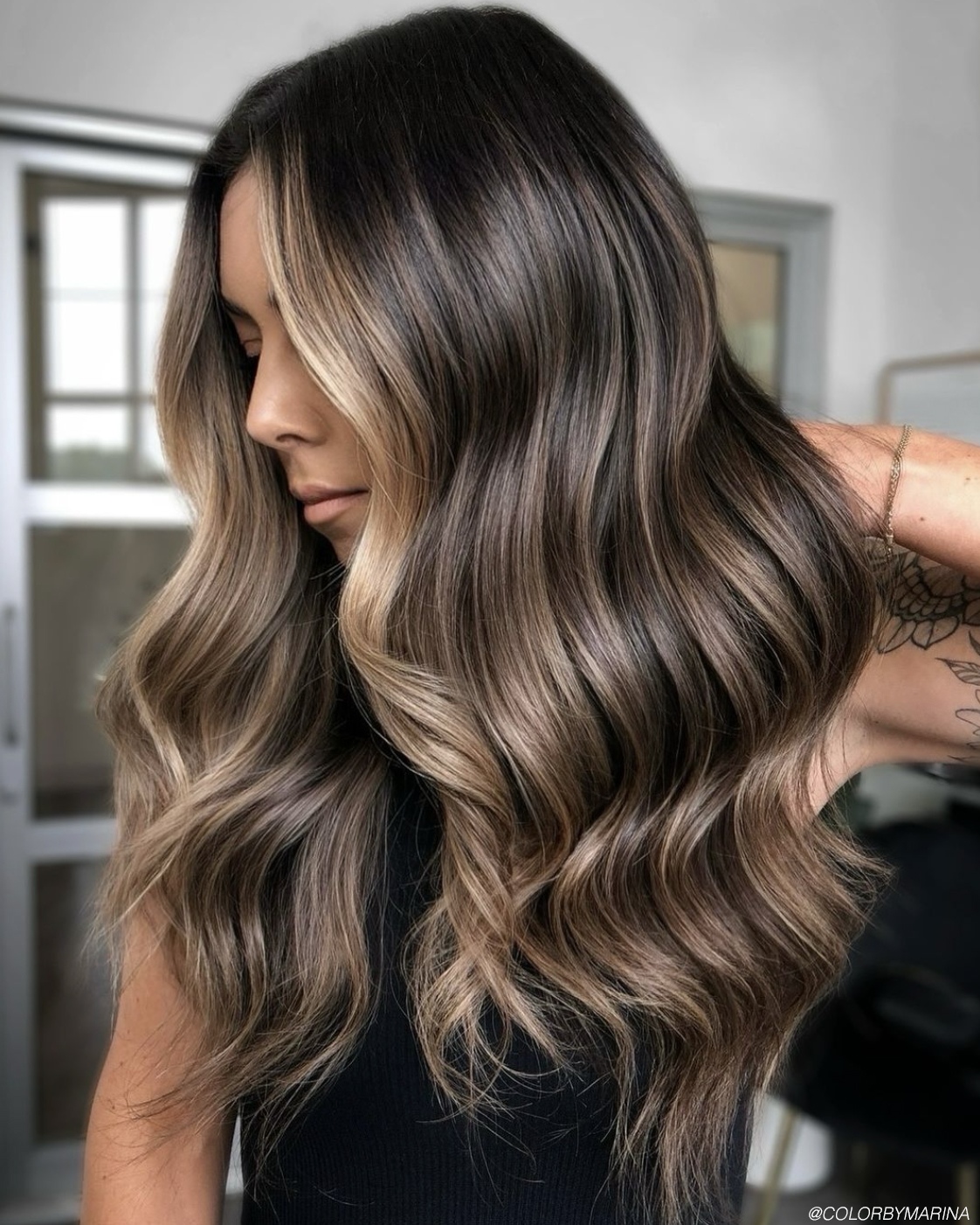
I’ll admit it: I used to think caramel highlights were the safe choice, the one you pick when you can’t commit to anything. Then I sat in the chair and watched the rich caramel highlights catch the light against that dark brown base, and I got it. The mid-back length gives the colour room to move, and the loose waves show off every layer. My hair is thick and wavy, so the face-framing pieces actually hold their shape past noon, which is more than I can say for most things. The side part helps the caramel read warm next to my skin, and the blonde pieces add just enough dimension that it doesn’t look flat. I booked a gloss refresh at eight weeks because that’s when the warmth starts to dull, and a trim every ten to twelve keeps the ends from splitting. It’s not a dramatic change, but it’s the kind of colour that makes you look like you spent a month somewhere sunny.
Collarbone Medium Brown With Root Shadow And Bangs
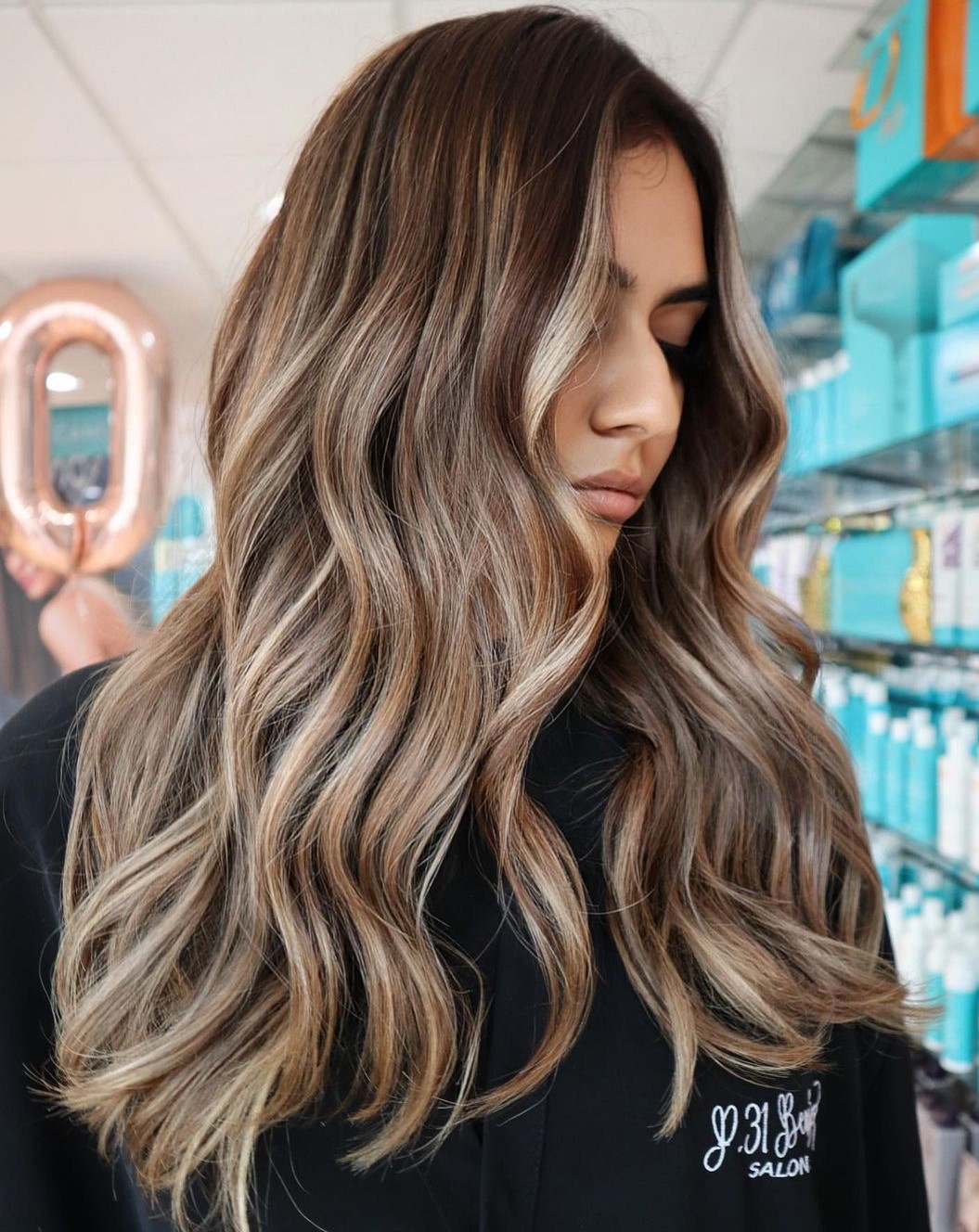
The medium brown root shadow wins over a solid colour root every time, because it blurs the line instead of drawing it. This collarbone cut with curtain bangs and face-framing highlights looks natural, like your hair just grew that way, not like you sat in a salon for three hours. The root shadow means you can push touch-ups to every eight or ten weeks, which is the real gift here. The honest downside: the curtain bangs need a trim every six to eight weeks, or they start to curtain over your eyes instead of framing them. The loose waves take about fifteen minutes with a medium-density texture, and the blonde highlights catch the light without shouting. It’s the colour equivalent of a good pair of jeans: reliable, flattering, and you forget you’re wearing it until someone compliments you.
Rich Brunette With Sun-Kissed Blonde Highlights
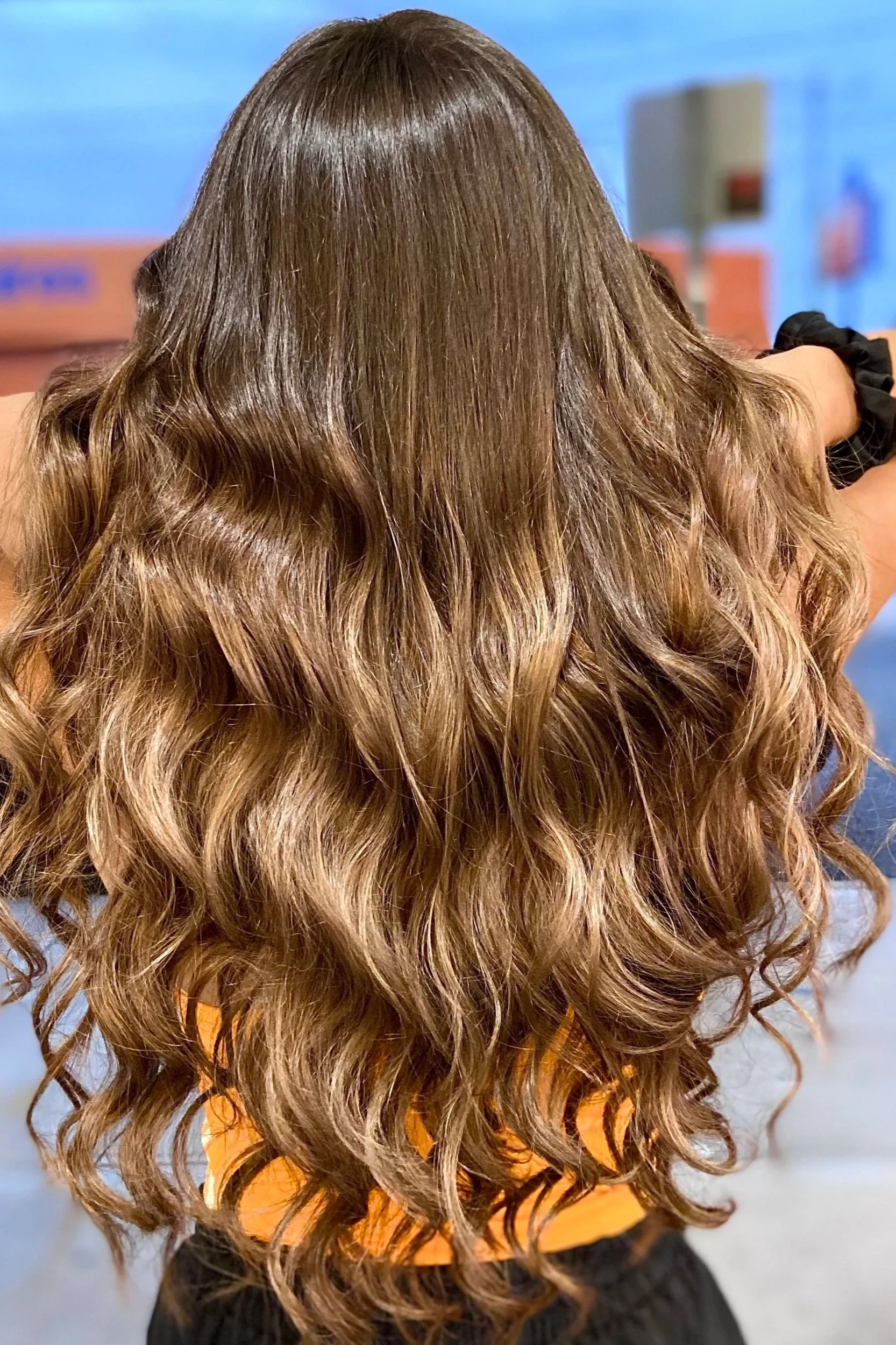
Ever wonder how some people look like they just came back from a beach vacation, even in February? That’s the trick of the rich brunette with blonde highlights. The technique is subtle: the blonde is painted on in fine, scattered pieces, not chunky streaks, so it mimics the way the sun naturally lightens the top layer of hair. The mid-back length and thick, wavy texture help the colour blend, and the loose waves catch the light in a way that straight hair just can’t. The sun-kissed blonde sits close to the face and fades out toward the ends, which keeps the roots looking softer for longer. Wear it down and it looks effortless, which is ironic because it takes about twenty minutes of styling. The upkeep is a toner refresh every eight to ten weeks and a trim every ten to twelve, and if you skip the toner, the blonde starts to look muddy instead of sun-kissed.
Collarbone Dark Blonde With Ash Blonde Highlights
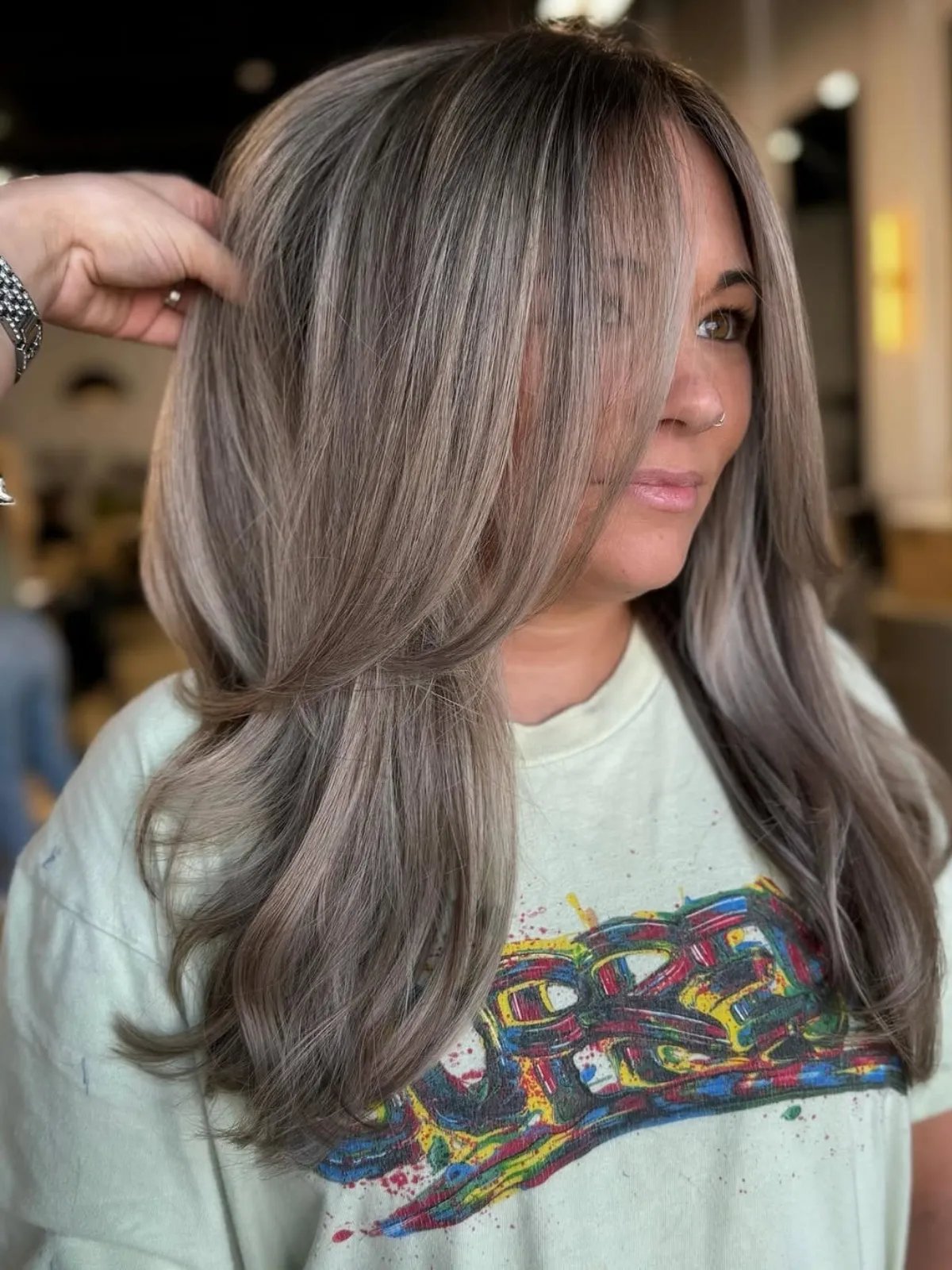
Tuesday morning, 7:45, and I’m staring at my roots like they’ve personally offended me. That’s the reality of dark blonde ash blonde highlights: they look incredible on day one, but by day five, the ash starts to dull and the roots start to show. The collarbone length helps, because the curtain bangs and layers keep the colour moving, and the medium-density texture holds a blowout with loose waves for about a day before it goes flat. The ash blonde highlights are cool and subtle, not stark, which means they blend into the dark blonde base without a harsh line. But here’s the catch: ash blonde needs regular toning, every four to six weeks, or it turns brassy and warm, and then you’re back to being a blonde who forgot she was cool-toned. I’ve learned to book my toner appointment before I need it, because waiting until the brass shows is too late.
Medium Brown With Voluminous Warm Blonde
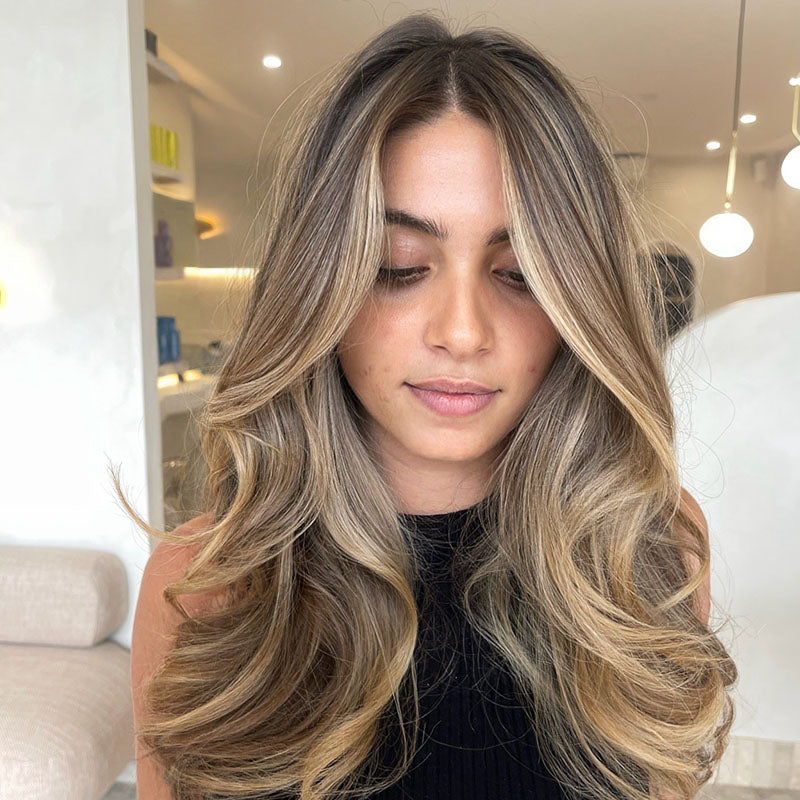
Warm blonde highlights suit skin with golden undertones, the kind that tans instead of burns. On a medium brown base, the warm blonde reads like light hitting hair on a long summer afternoon, not like a chemical process. The long layers here matter as much as the color: they let the voluminous waves stack without getting heavy, which is the difference between movement and a triangle. The mid-back length keeps the proportion safe for round or square faces, because the vertical line down from the middle part adds length instead of width.
What this does for thick, wavy texture is temper it. The medium brown warm blonde highlights break up the mass, so the hair looks full rather than dense. For fine or straight hair, the same warm blonde can fall flat, because there’s no wavy texture to hold the lighter pieces up. The undertone is the other gatekeeper: if your skin reads pink or rosy, the gold in the warm blonde will fight you, and the whole effect goes muddy instead of bright. Starting with a gloss at the base is the smart move, it sets the warm tone before the highlights go in.
Dark Blonde With Low-Contrast Highlights
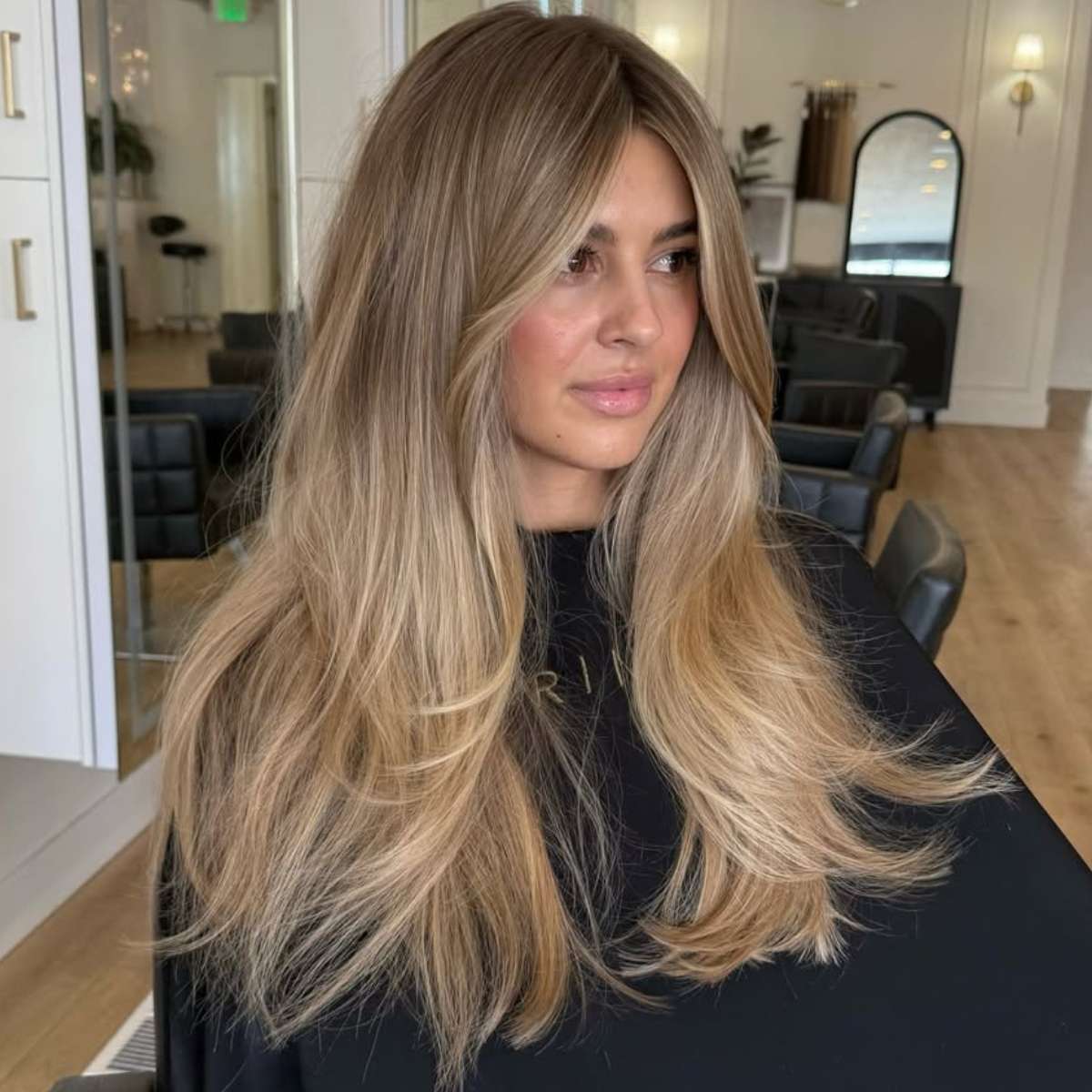
What if the easiest color to live with was the one nobody talks about? Dark blonde low contrast highlights start just a shade or two lighter than your base, so the effect is a soft sheen rather than a pattern. The technique keeps the weave close together, no chunky foils, which means the color melts instead of striping. The collarbone length helps it sit subtly, because shorter lengths show the transition faster. On this wavy, thick texture, the low-contrast highlights give the look a lit-from-within quality that a single process color can’t match. The payoff lands in upkeep: with less tonal jump, the regrowth line barely registers, so you can stretch toning to every ten weeks or more when the base stays close to your natural.
Dark Brown With High-Contrast Ash Blonde
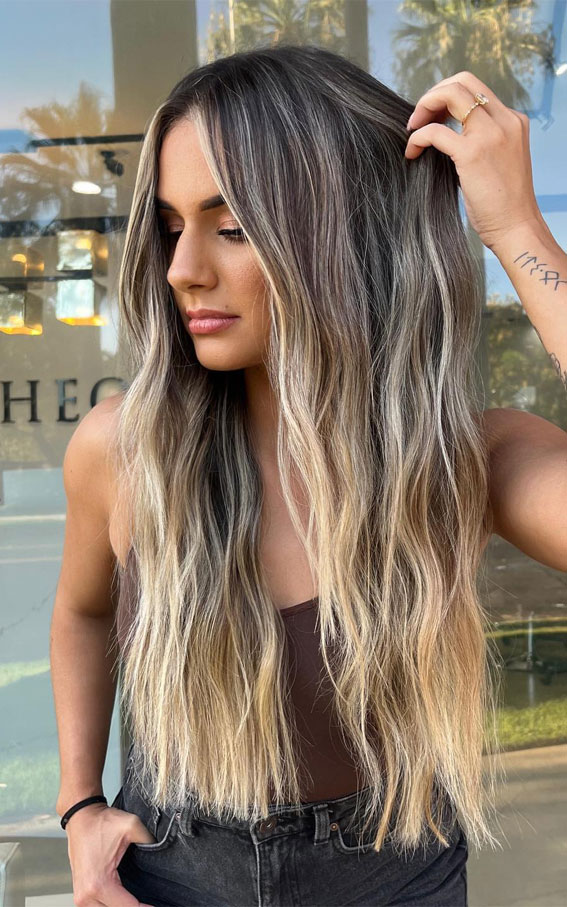
High-contrast ash blonde beats the softer stuff, but only if you’re ready for the upkeep. The dark brown base is deep and cool, and the ash blonde highlights are nearly silver, so the gap between the two is stark and unapologetic. On this mid-back length with long layers, the contrast gives the texture a geometric sharpness, the waves almost look cut out rather than curled. It flatters cool, porcelain skin tones best; warm complexions end up looking washed out next to that icy brightness. The honest downside is the maintenance, ash blonde tones migrate warm at week four, so a toner refresh every four to six weeks is non-negotiable.
Compared to a lower-contrast balayage, this reads as a statement rather than a suggestion. The high-contrast ash blonde placement is precise, and the thick, wavy texture carries it without losing the lines. But if you can’t commit to the toning schedule, choose the softer version; a muted ash blonde on the same base gives you the cool edge without the constant clock-watching.
Cappuccino Brunette With Bold Blonde Highlights
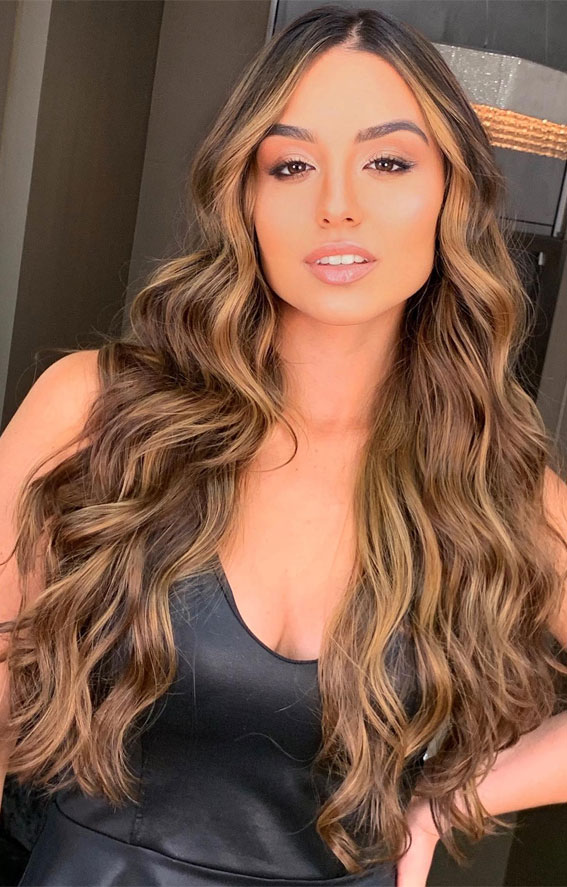
Ever noticed how some brunettes get those striking blonde streaks that look deliberate rather than accidental? The key is a warm cappuccino brunette base — rich but not flat — paired with bold blonde highlights that sit a few shades lighter. The technique here uses a foil method for the highlights to keep the contrast sharp, while the base is painted with a semi-permanent gloss to maintain depth. On thick, wavy mid-back hair, the result reads dimensional, not brassy.
- Mid-back length with layered movement
- Cappuccino brunette base, warm tone
- Bold blonde highlights, high contrast
- Loose waves for soft separation
- Ask your stylist for a warm gloss with bright face-framing pieces
To keep the boldness from fading, touch up highlights every six to eight weeks. A trim every ten to twelve weeks keeps the ends healthy and the layers from losing shape. Loose waves take about twenty minutes with a medium-barrel iron.
Final Thoughts
That conversation in the salon chair makes sense now. After writing through all 24 of these, the best ones give you room to breathe. I thought it would be about covering blonde, but it’s about keeping both. I’m booking the medium brown with root shadow and bangs next. It lets the blonde peek through without the upkeep. That’s the whole point, really.