
A coat often decides the scale of an outfit before the smaller pieces are noticed. That is why a thoughtful comparison begins with proportion: the distance between shoulder and hem, the amount of the base that remains visible, and the way accessories create points of focus. These relationships give an outer layer character without requiring an exaggerated statement, a complicated wardrobe, or a formula borrowed from someone else.
Style becomes easier to read when a coat is considered as part of the whole silhouette rather than as an isolated purchase. Structure can come from a belt, a pattern, a clean color break, or the contrast between a generous outer line and a narrower base. The right balance depends on the relationship between those elements, not on following a fixed checklist or copying a single seasonal direction.
Burgundy and White Build a Strong Vertical Contrast
The first thing that carries this outfit is not the handbag or the shoes, but the uninterrupted burgundy line created by the long coat. Its hem falls well below the knee, so the coat reads as a dominant vertical block beside the broad white trousers, giving the outfit enough scale that the two large color fields can compete without looking fragmented.
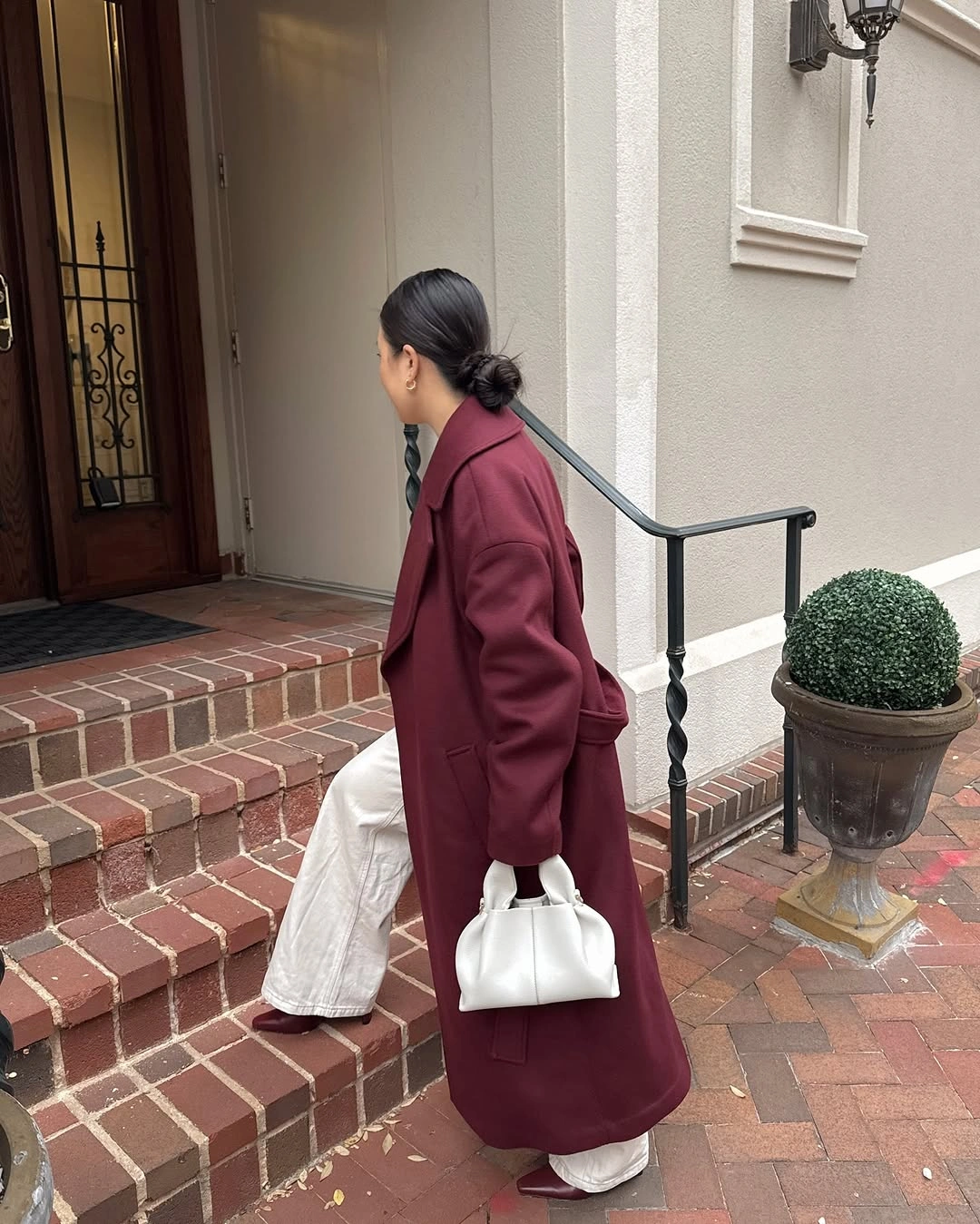
Photo via Instagram
White appears in two separated places, first through the wide-leg trousers and again in the compact handbag, so the lighter half of the palette feels intentional rather than concentrated in one area. That spacing matters because the trousers create a large pale plane while the bag repeats the same visual brightness near the hand, keeping the contrast active from top to bottom.
The burgundy shoes quietly return the coat color at ground level, which closes the color loop without introducing another strong hue. That small repetition is what makes the outfit feel connected even though the coat and trousers are divided into two very different color blocks.
A Belt Gives Burgundy Outerwear a Defined Center
Here the belt changes the coat more decisively than the burgundy color alone. The long leather-look outer layer has a wrap-like front, and pulling it inward at the waist gives the silhouette a clear center before the line opens again toward the hem, so the coat reads as shaped rather than simply long and glossy-looking.
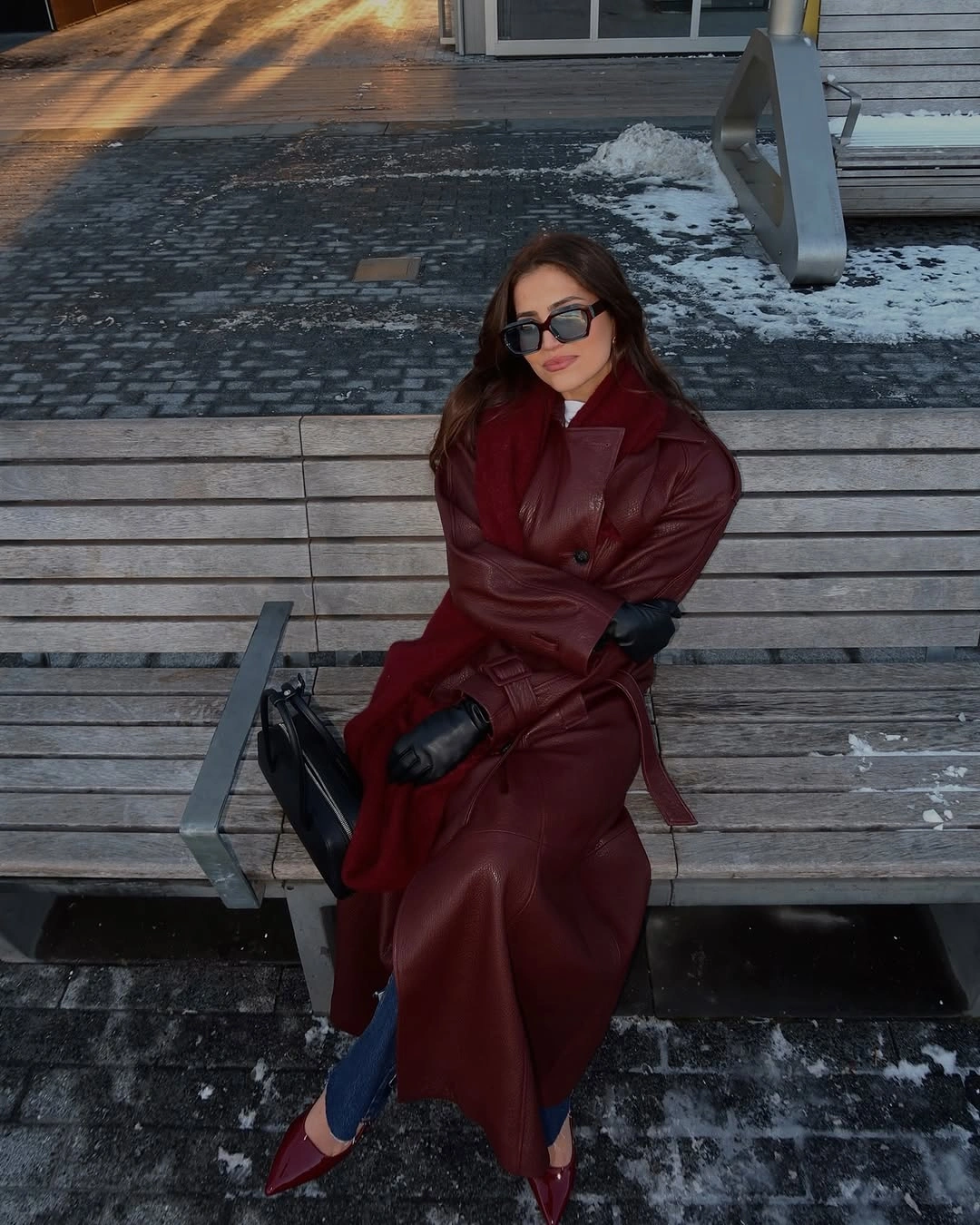
Photo via Instagram
Blue denim interrupts the run of burgundy between the upper layer and the pointed shoes, and that break gives each part of the outfit a cleaner boundary. Instead of extending one color continuously down the body, the jeans create a cooler middle zone that makes the coat’s length, the exposed lower leg area, and the return of burgundy at the feet easier to register.
The black gloves and black bag sit outside that burgundy-and-denim sequence as a compact secondary pair. Because both are relatively small against the long coat, they add a darker note without taking over the main color relationship.
Cream Accessories Lift a Deep Brown Coat
The long brown coat has a visibly plush, shearling-style surface, so texture becomes part of its silhouette rather than a minor finishing detail. Its substantial length and broad surface give the brown tone plenty of visual weight, while the darker trousers keep the center narrow enough for the coat’s fuzzy-looking outline to remain easy to read.
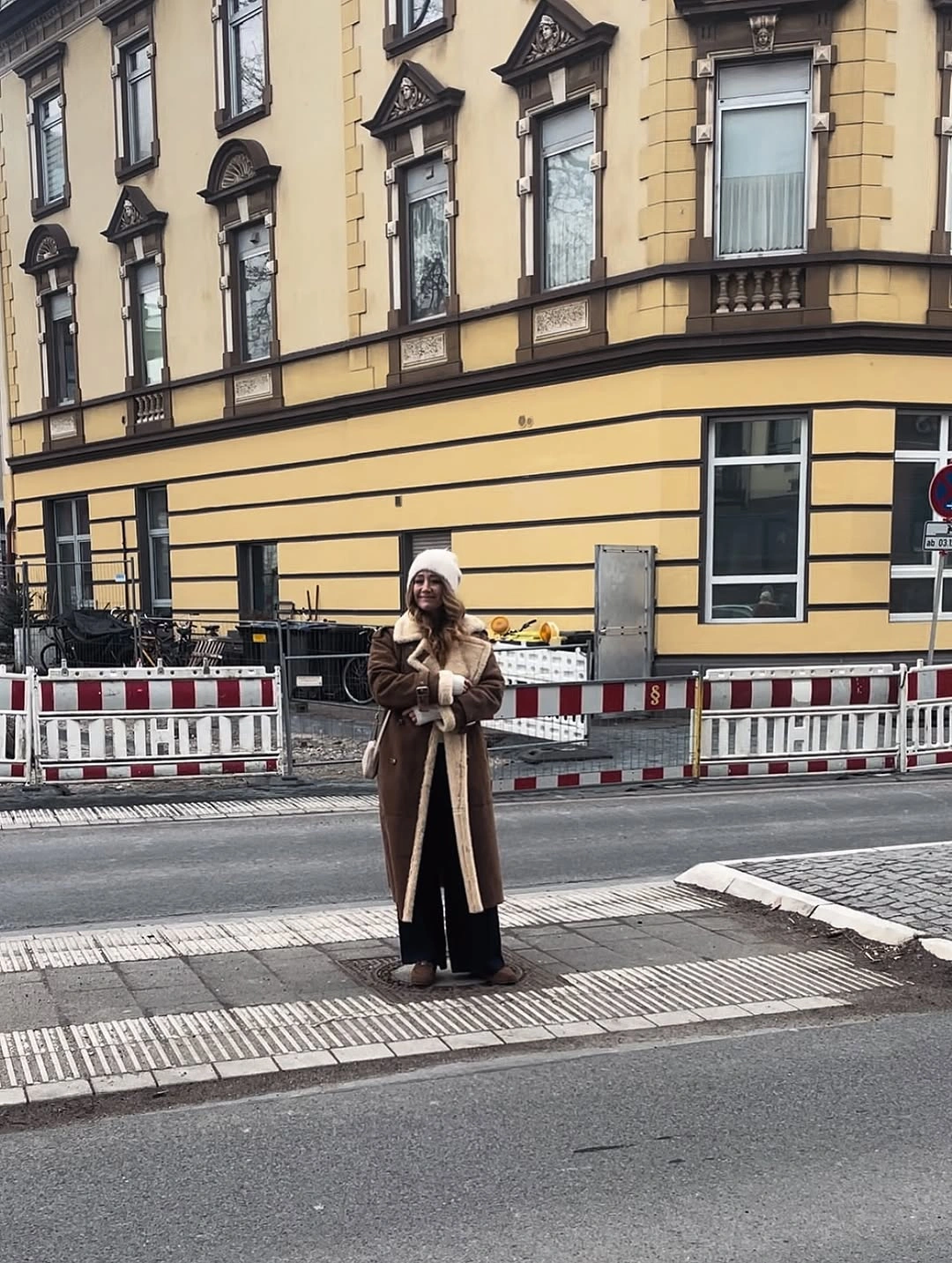
Photo via Instagram
A cream scarf and cream hat create a concentrated light zone around the head and neckline, where they stand out strongly against the deeper brown outer layer. Because the rest of the outfit stays anchored in brown and black, those pale accessories change the upper balance without turning the winter coat outfit into an all-over neutral blend.
The brown boots bring the outerwear color back below the black trousers, linking two separated parts of the silhouette. That return keeps the dark trouser section from becoming a visual endpoint and gives the lower half a deliberate connection to the coat.
Houndstooth Makes the Coat the Graphic Center
The houndstooth pattern does most of the visual work here before any accessory needs to enter the conversation. Its large black-and-white checks spread across the full length of the coat, so the outer layer becomes a graphic surface with enough contrast to define the outfit immediately, even though the clothing underneath stays comparatively simple.
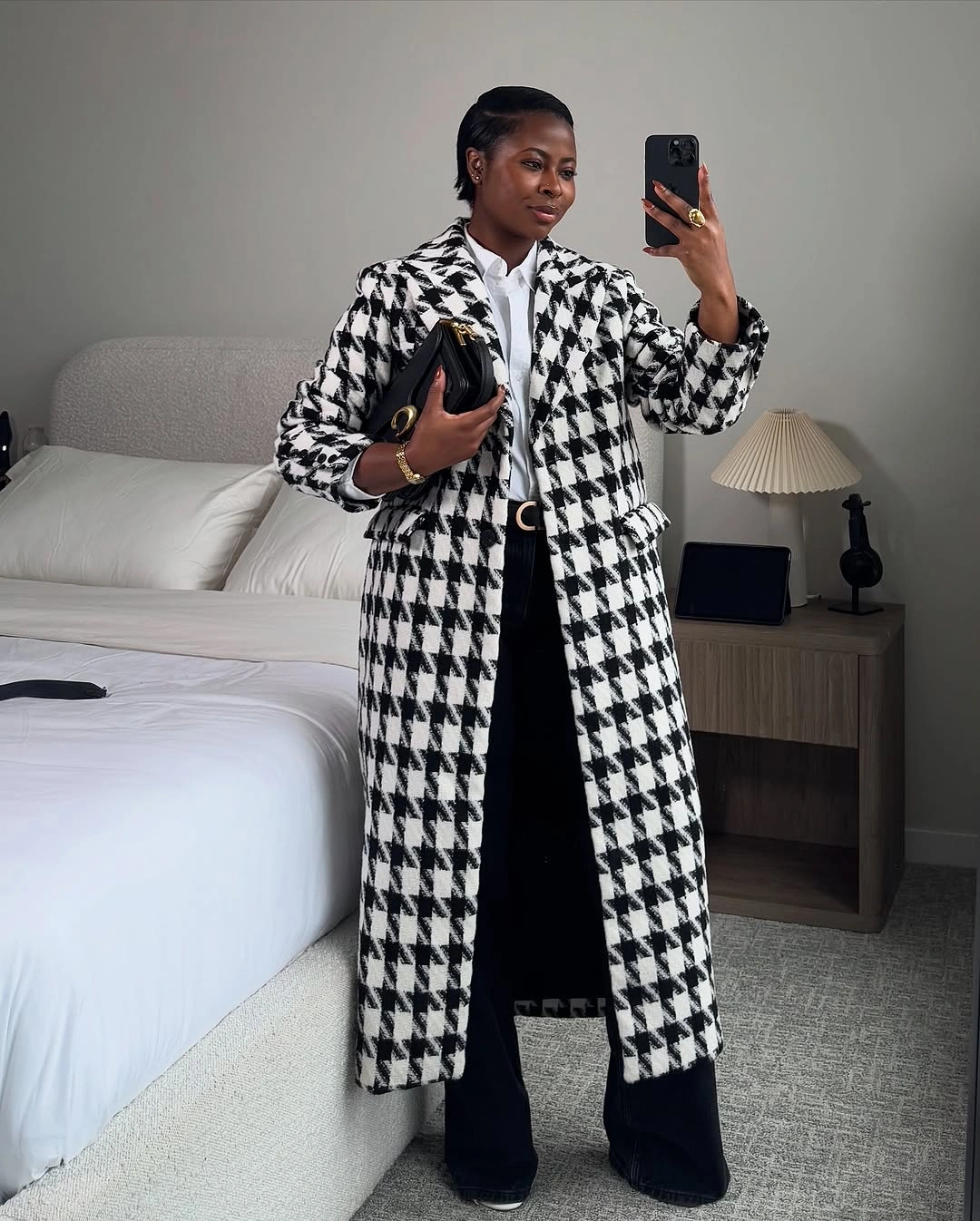
Photo via Instagram
The white shirt and black wide-leg trousers repeat the same two colors already present in the coat, but they do so as solid areas rather than another pattern. That shift from graphic surface to plain blocks gives the eye a place to rest and makes the relationship feel deliberate, because the base supports the coat’s palette without copying its visual activity.
The wide trousers also matter for scale: their broad shape continues the sense of volume below the long coat instead of tapering sharply away from it. The result is a strong vertical silhouette built from two large forms rather than a statement coat placed over a narrow base.
Soft Neutrals Let Double-Breasted Structure Lead
This taupe-gray coat earns attention through its front structure rather than through sharp color contrast. The double-breasted layout creates visible rhythm across the torso, and that repeated button placement gives the muted coat enough definition to hold its own beside the light scarf and pale trousers without needing a brighter accent.
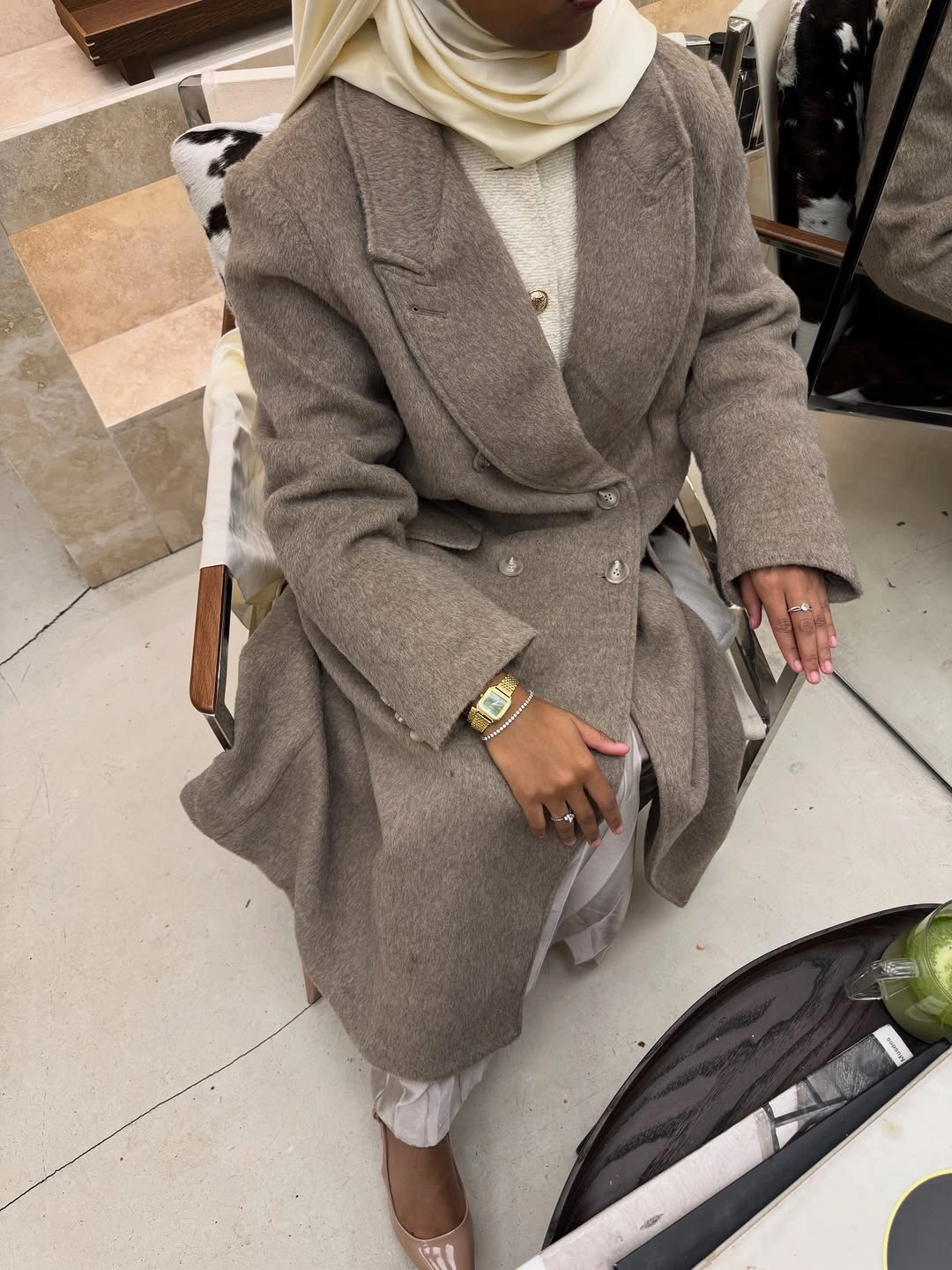
Photo via Instagram
The scarf, trousers, and shoes all stay within a light neutral range, but they are not exact copies of one another, which keeps the outfit from flattening into a single beige-gray block. Those small shifts in tone let the coat remain the deepest and most structured element while the surrounding pieces create a softer progression toward the lower half.
The light shoes extend that pale sequence all the way to the floor instead of ending it with a dark boundary. In a low-contrast coat outfit like this, that choice makes the eye notice the double-breasted shape and tonal transitions before any isolated accessory.
Oversized Camel Volume Frames a Darker Center
The coat’s oversized shape creates a broad camel frame that extends well beyond the darker clothing underneath, so the outer layer carries most of the silhouette before any accessory enters the picture. Its roomy body and dropped-looking shoulder line make the coat feel expansive, while the darker center keeps that volume from turning into one uninterrupted pale block.
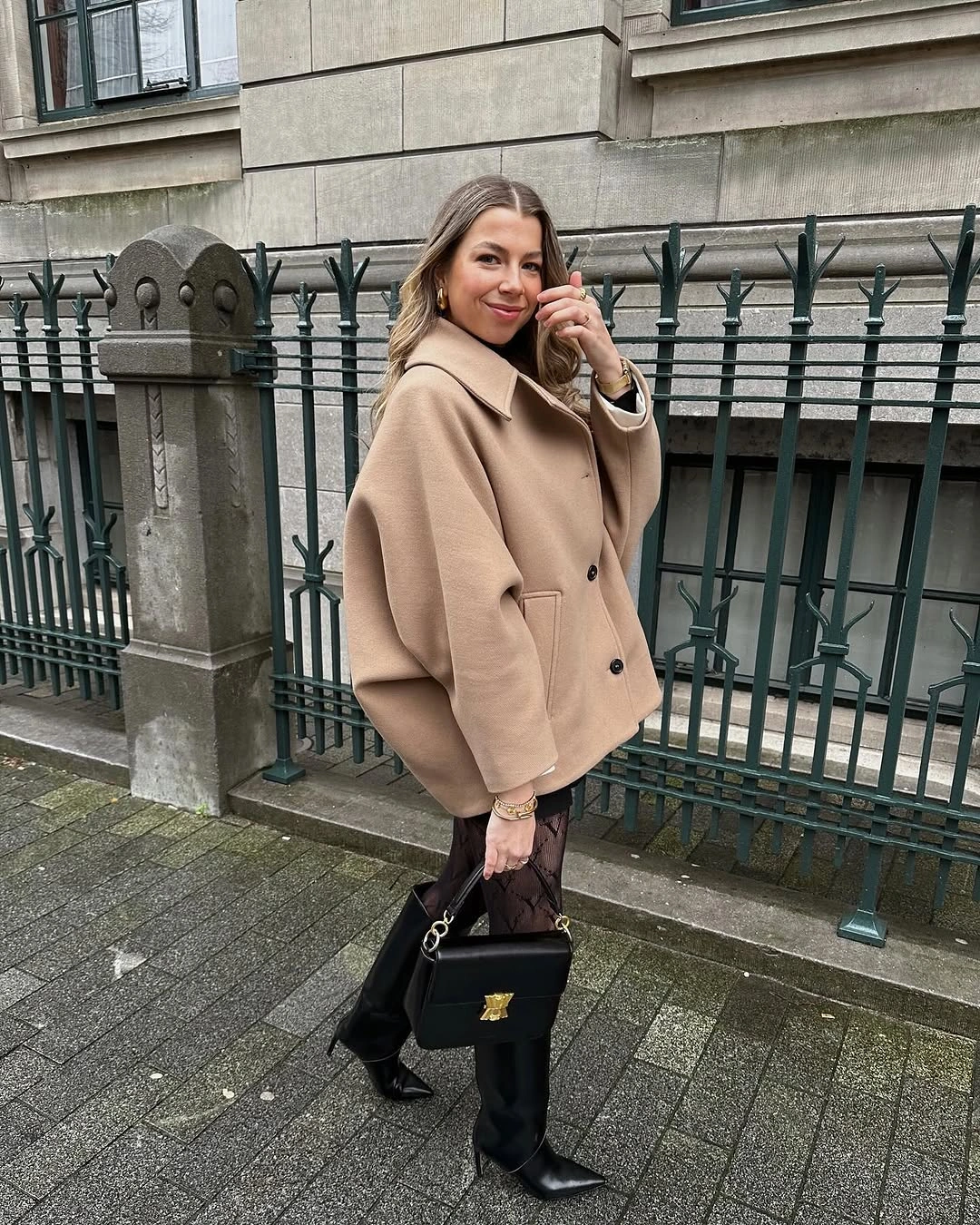
Photo via Instagram
What keeps the inner outfit visible is the dark patterned lower layer that appears beneath the coat and continues toward the tall black boots. That contrast gives the eye a narrower vertical path inside the larger camel shape, so the coat can stay generous in proportion without erasing the clothing below or reducing the outfit to outerwear alone.
The structured black handbag and knee-high boots place matching dark anchors at different heights instead of forming one continuous block. Their separation helps define the edges of the outfit while leaving the camel coat as the largest visible shape.
A Belt Reshapes the All-Black Coat Silhouette
The belt is the decisive feature here because it interrupts what could otherwise read as one long black column. By pulling the coat inward at the waist and allowing the fabric to fall away again below it, the silhouette gains a clear midpoint, making the relationship between upper body, waist, and hem more legible than it would be in a straight-cut shape.
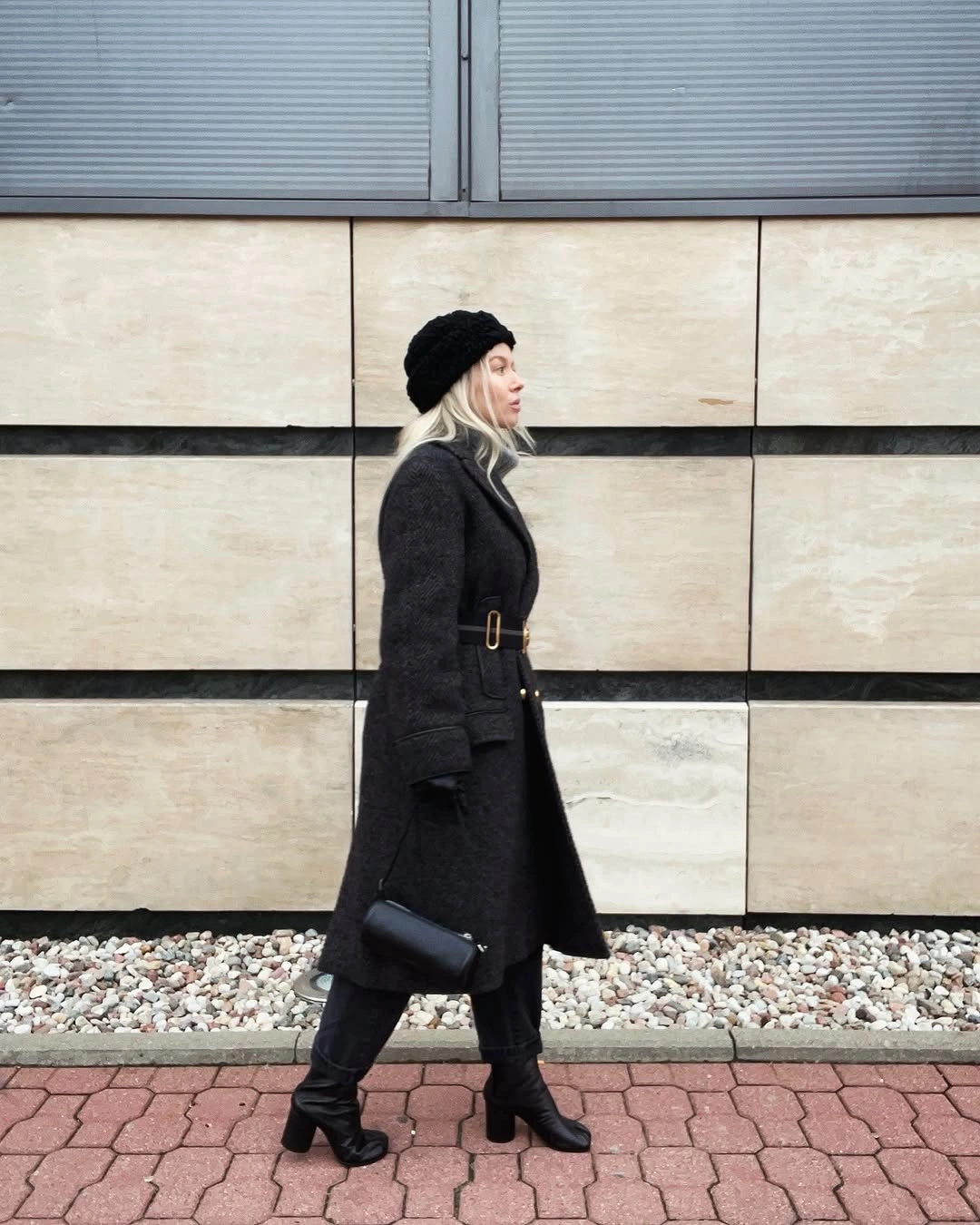
Photo via Instagram
Because nearly everything is black, color does not separate the individual pieces for the eye, so outline becomes more important. The beret, fitted waist, trouser line, coat hem, and heeled boots are all read through changes in contour and proportion, which gives the monochrome outfit definition without relying on contrast between different hues.
The beret and clutch stay compact against the extended length of the coat, giving the outfit two smaller shapes that do not blur its long profile. That contrast in scale makes the waist placement and coat length easier to notice.
An Oversized Scarf Changes the Coat’s Proportions
The oversized brown scarf changes the proportions of this outfit as much as the coat itself, adding noticeable volume around the shoulders and upper chest. Instead of sitting as a small finishing detail, it becomes part of the outer silhouette, widening the top area and creating a warmer-toned focal zone against the long dark coat beneath it.
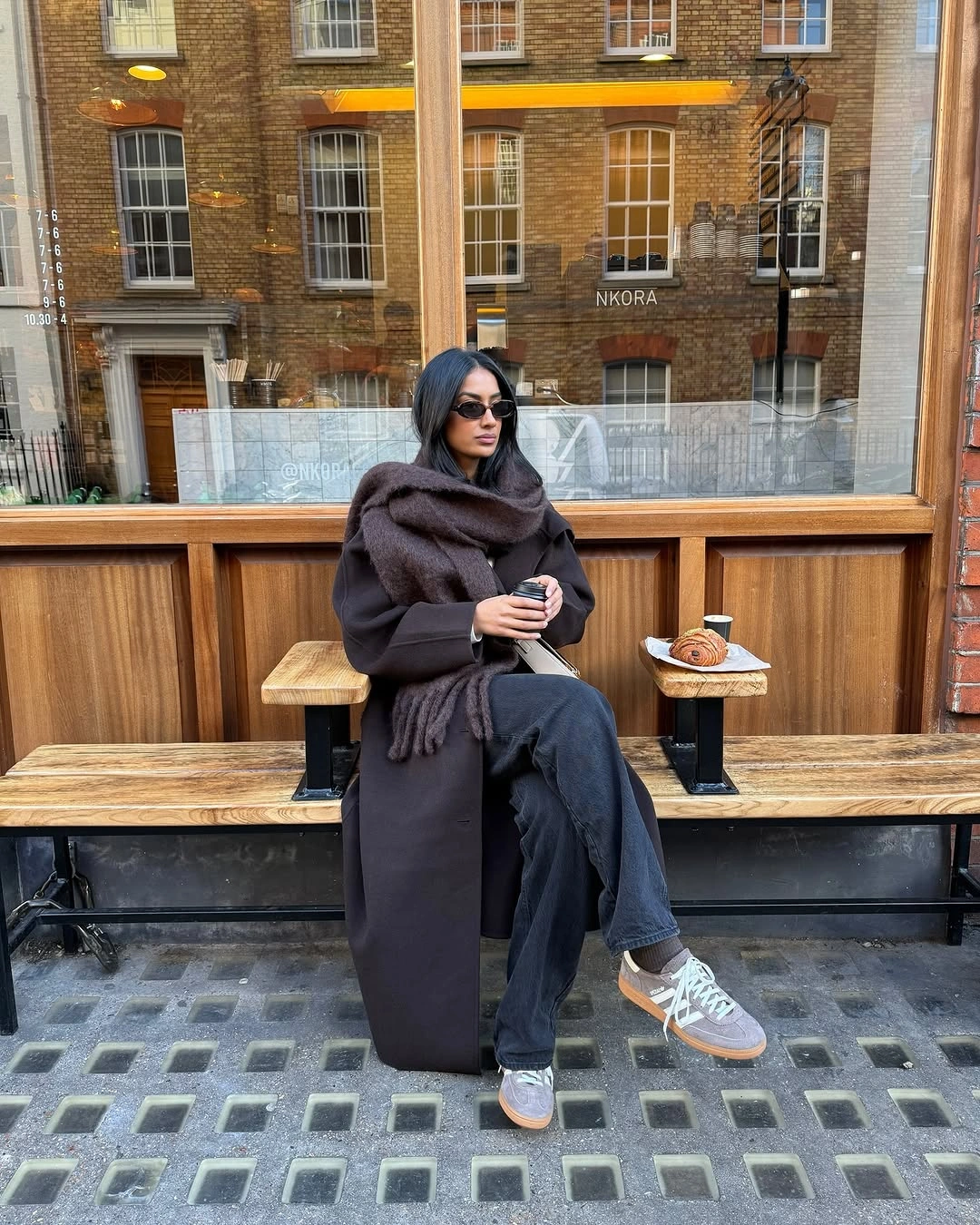
Photo via Instagram
Dark jeans extend the coat’s deep color downward, so the center of the coat outfit reads as a fairly continuous vertical column even where the outer layer opens. That continuity makes the scarf stand out more clearly above, while also giving the gray sneakers room to register as a lighter endpoint rather than another competing statement in the middle.
The gray sneakers change the finish at ground level without repeating the scarf’s brown tone or the deep color of the coat and jeans. Their lighter appearance gives the long dark column a distinct stopping point and keeps the lower edge visually separate.
Light Denim Breaks Up a Broad Brown Coat
The brown double-breasted coat covers enough of the upper body to establish one broad warm-toned field before the lighter jeans enter the composition. Its overlapping front and repeated buttons give the surface structure, so the coat does not depend on accessories or dramatic contrast to create definition across the torso.
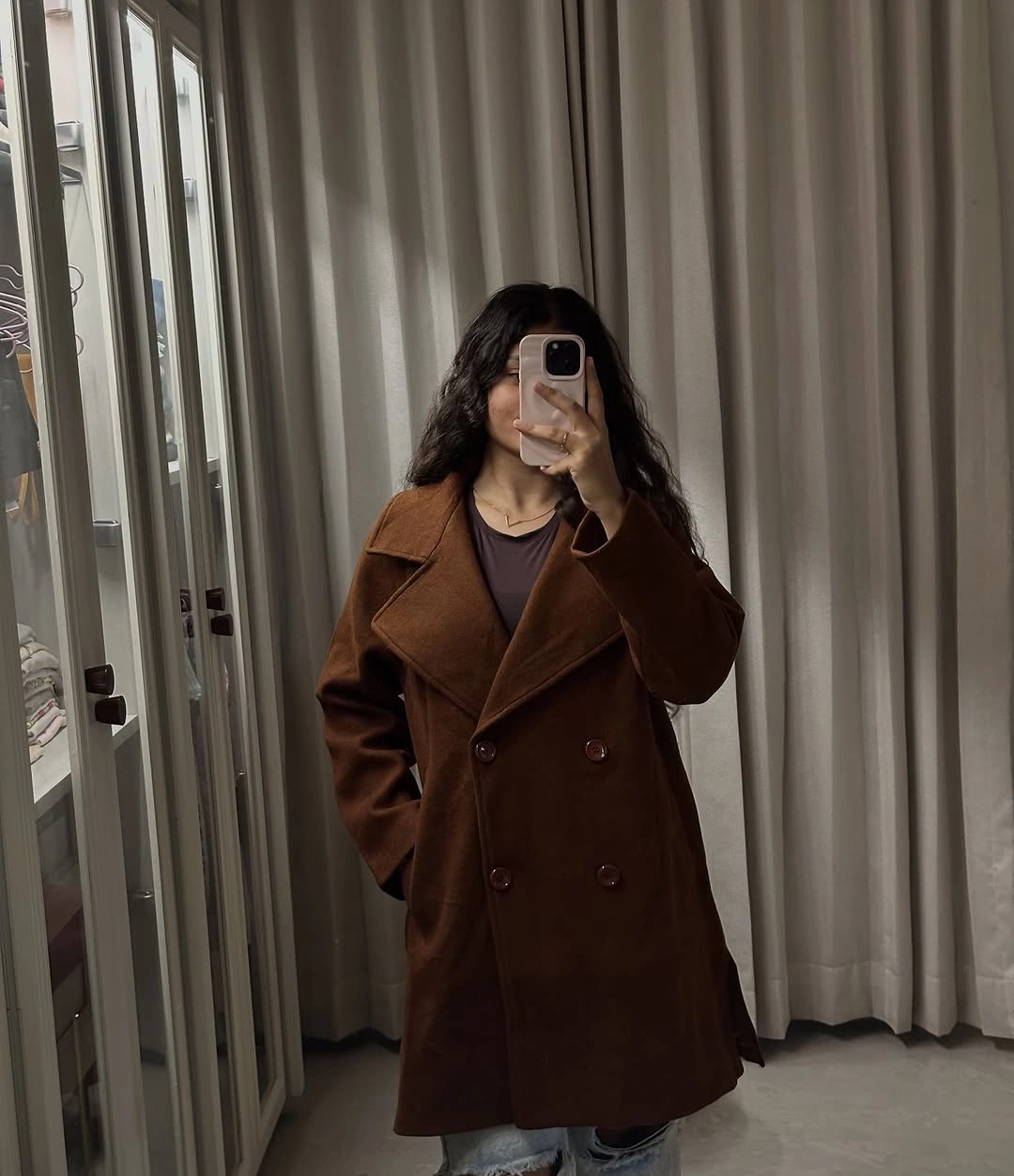
Photo via Instagram
A dark top sits inside the open neckline and creates a deeper center against the brown outer layer, which helps the coat’s edges stay visually clear. Below that, the light blue jeans introduce a much brighter value, dividing the outfit into distinct upper and lower zones without adding another strong pattern or complicated color story.
That shift from dark center to pale denim is especially useful because it makes the coat’s lower boundary easy to read. The outfit stays straightforward, but the difference in value prevents the long brown outer layer from visually merging with everything beneath it.
Gray Chevron Creates a Base for Warmer Accents
The gray chevron coat has enough visible pattern to keep the neutral outer layer from reading as a flat block. Its repeated angled lines create movement across the long surface, so the coat remains visually active even before the burgundy sweater, red handbag, or tan boots add their warmer notes to the composition.
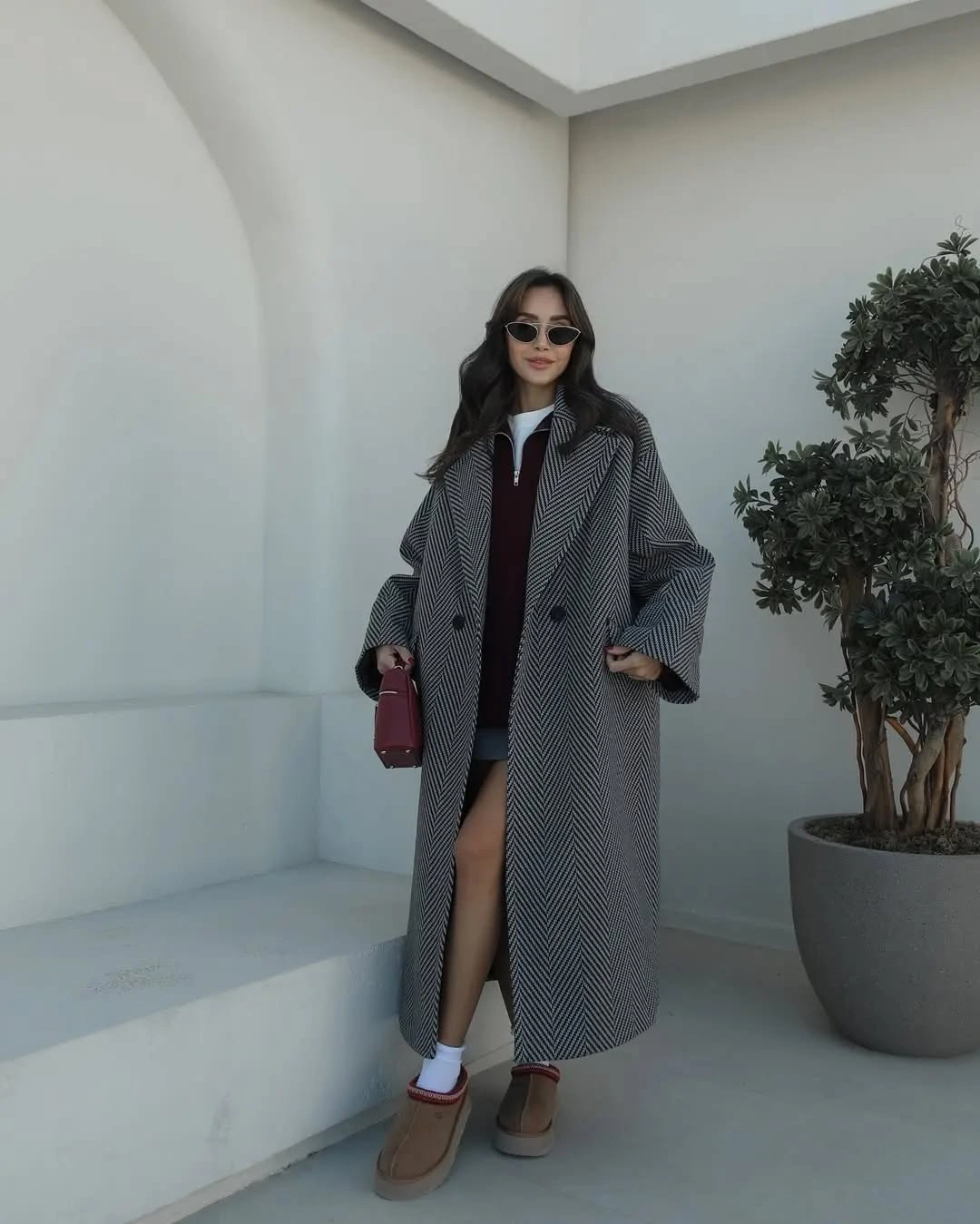
Photo via Instagram
Burgundy at the torso and red at the handbag sit close enough in color to feel related, but they are separated by placement and scale rather than matched exactly. That distinction matters because the sweater creates a broad inner color field while the bag works as a smaller accent at the side, giving the outfit two different kinds of warm emphasis around the gray coat.
The tan shearling-style boots introduce a third warm zone at the bottom, so the color structure is more layered than a simple gray-and-red pairing. Their placement gives the lower half its own distinct note while the chevron coat remains the visual bridge between all three warmer areas.
Long Outerwear Sharpens a Short Inner Hem
The striking proportion here comes from the distance between the coat hem and the much shorter black layer visible underneath. The dark gray coat drops close to the boots while the inner hem sits high on the leg, so the outerwear functions almost like a moving frame around a compact center rather than simply continuing the length of the clothing beneath it.
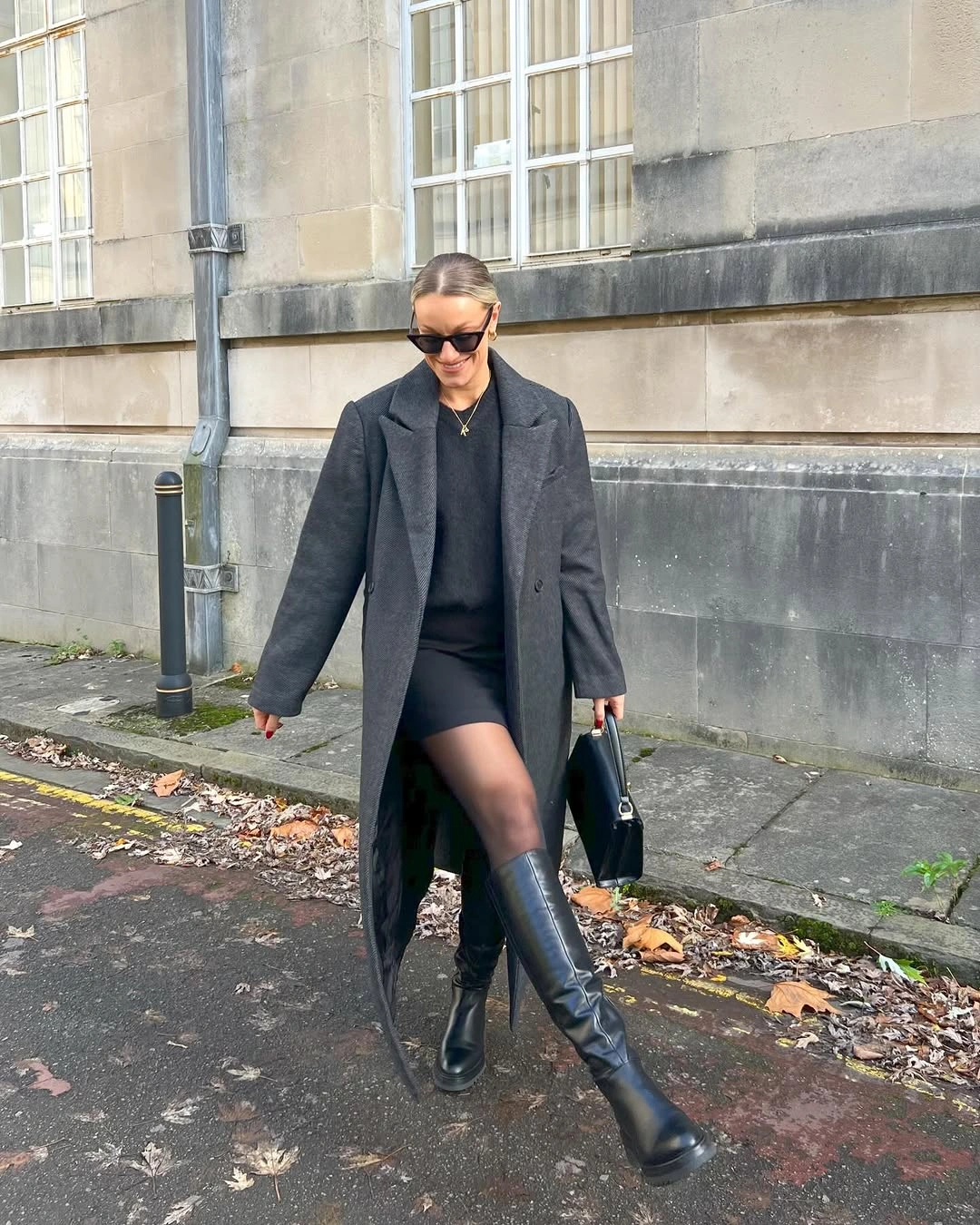
Photo via Instagram
Sheer black tights make the space between the short hem and tall boots an active part of the coat outfit instead of an empty interval. Their transparency creates a softer transition from exposed leg to the dense black footwear below, which preserves the contrast in length while preventing the lower half from breaking into several unrelated horizontal bands.
Tall black boots give the lower silhouette substantial visual weight, while the black handbag repeats that darkness much higher at the side. The two placements keep black present beyond the inner layer without turning every visible area into the same solid block.
Wide Denim Holds Its Own Under Camel
The camel-brown coat creates two long vertical sides around the black turtleneck, leaving a darker strip through the center before the blue denim widens below. I like that the coat is not asked to dominate every inch of the silhouette: its length provides structure, but the open front still gives the inner layers enough room to establish their own proportions.
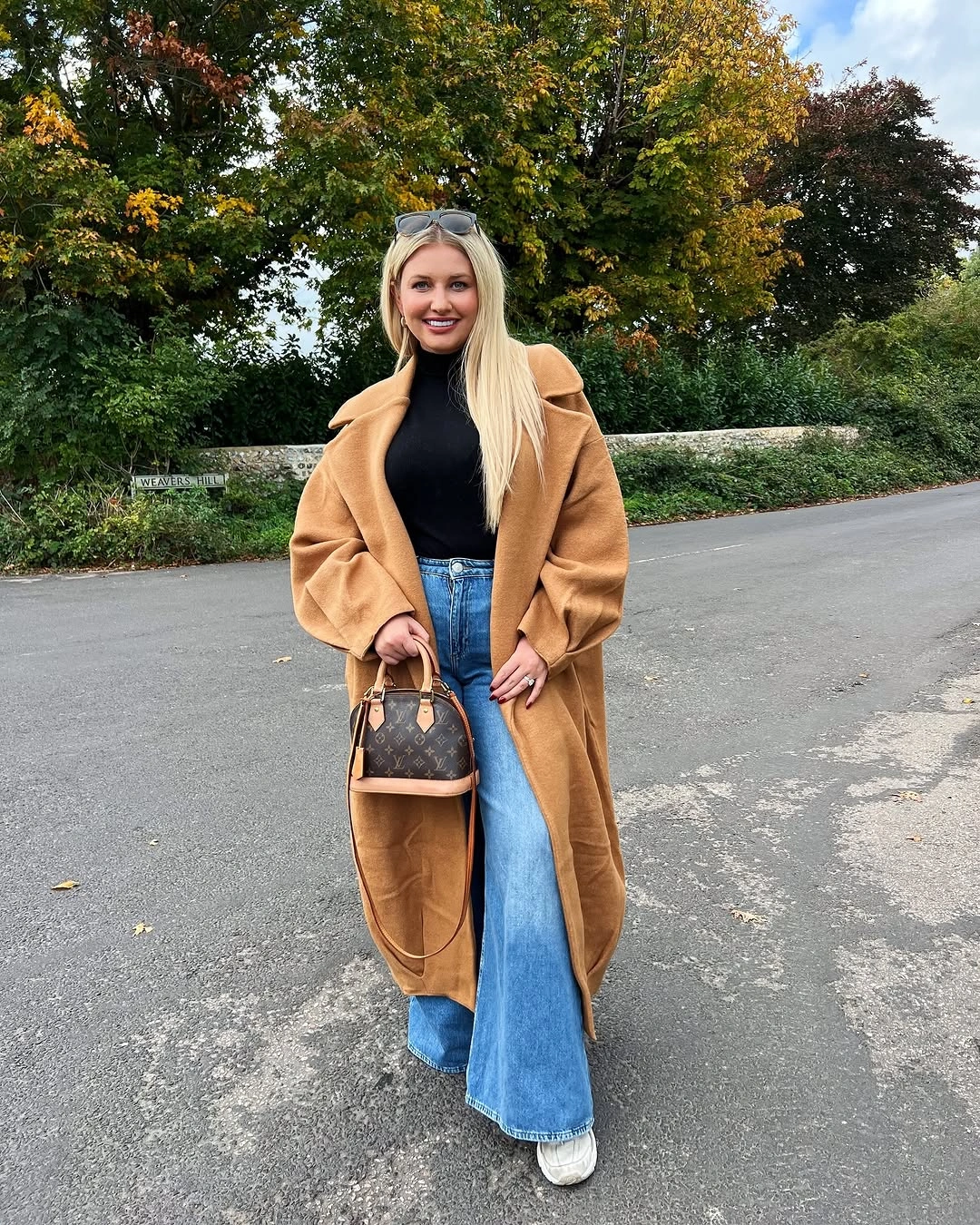
Photo via Instagram
The wide-leg jeans are important because they refuse the familiar assumption that a long coat needs a narrow lower half to stay controlled. Their generous width continues below the coat with plenty of visible presence, creating a substantial base that feels intentional beside the long outer layer rather than visually disappearing beneath it.
The brown patterned handbag relates back to the coat through color, while the white sneakers move in the opposite direction by creating a brighter endpoint. Those two accessories do different jobs, which gives the lower and middle portions of the outfit clearer separation.
Denim Interrupts a Warm Camel and Brown Palette
The camel double-breasted coat is the largest light-warm shape in the outfit, and its repeated front buttons give that broad surface a visible internal structure. A deeper brown turtleneck sits close to the face inside the coat, so the upper half stays within a related color family without collapsing into one undifferentiated neutral tone.
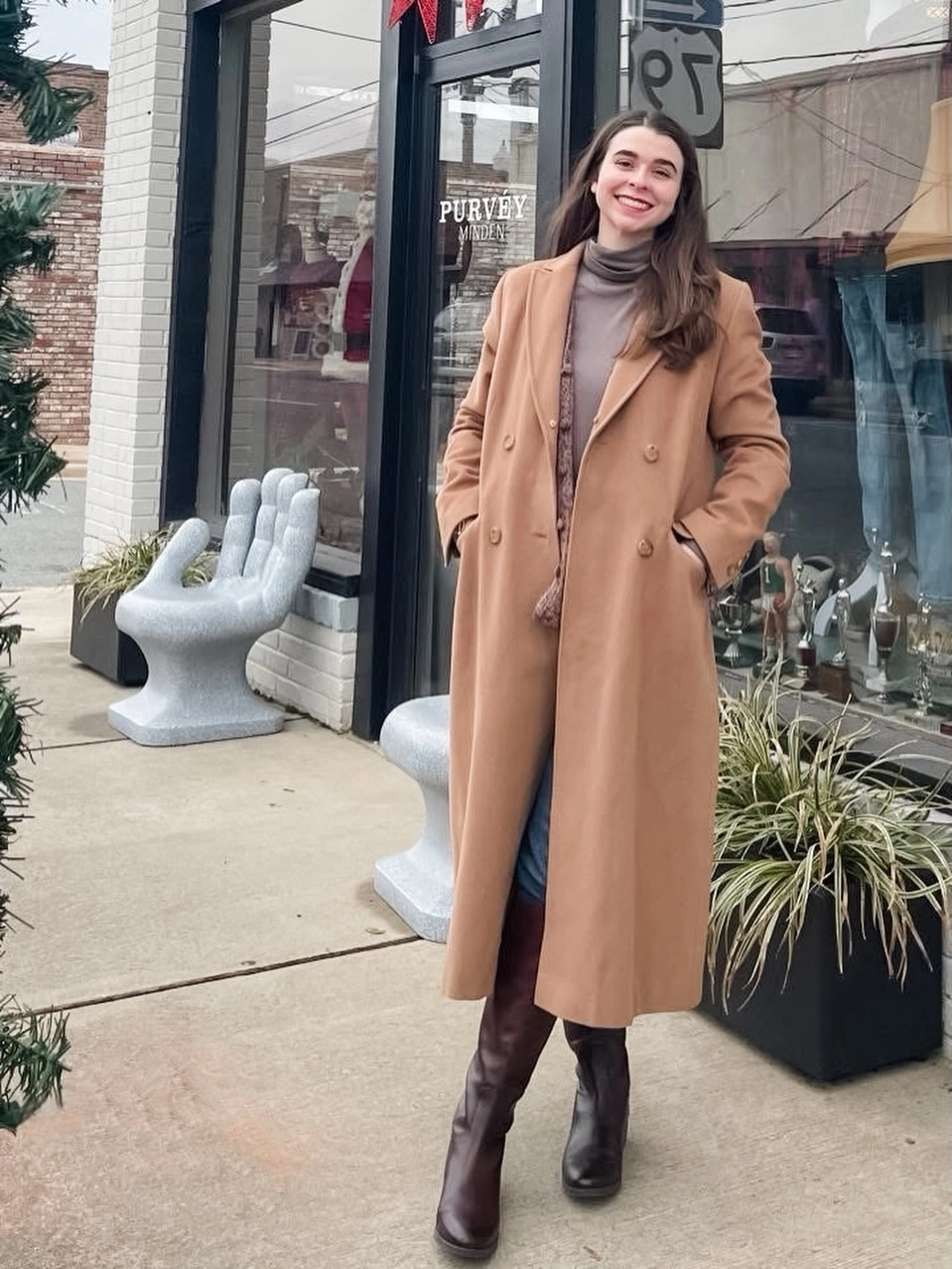
Photo via Instagram
Blue jeans create the useful interruption. Instead of carrying camel and brown continuously from shoulder to foot, the denim places a cooler band through the middle of the coat outfit, making the difference between the outerwear, inner layer, and tall boots more legible while still leaving each color substantial enough to register on its own.
Brown knee-high boots bring a deeper warm tone back below the denim, reconnecting the lower half with the turtleneck and the coat’s broader camel family. The echo is separated rather than literal, which makes the color relationship more interesting than a head-to-toe tonal match.
A Back View Makes Coat Length the Story
Seen from behind, the long black coat becomes less about its front closure and more about the uninterrupted outline running from shoulder to hem. That shift is useful because it exposes how much of a coat’s character comes from its rear silhouette: the dark surface stays broad and continuous, while the hem establishes the strongest horizontal boundary in the composition.
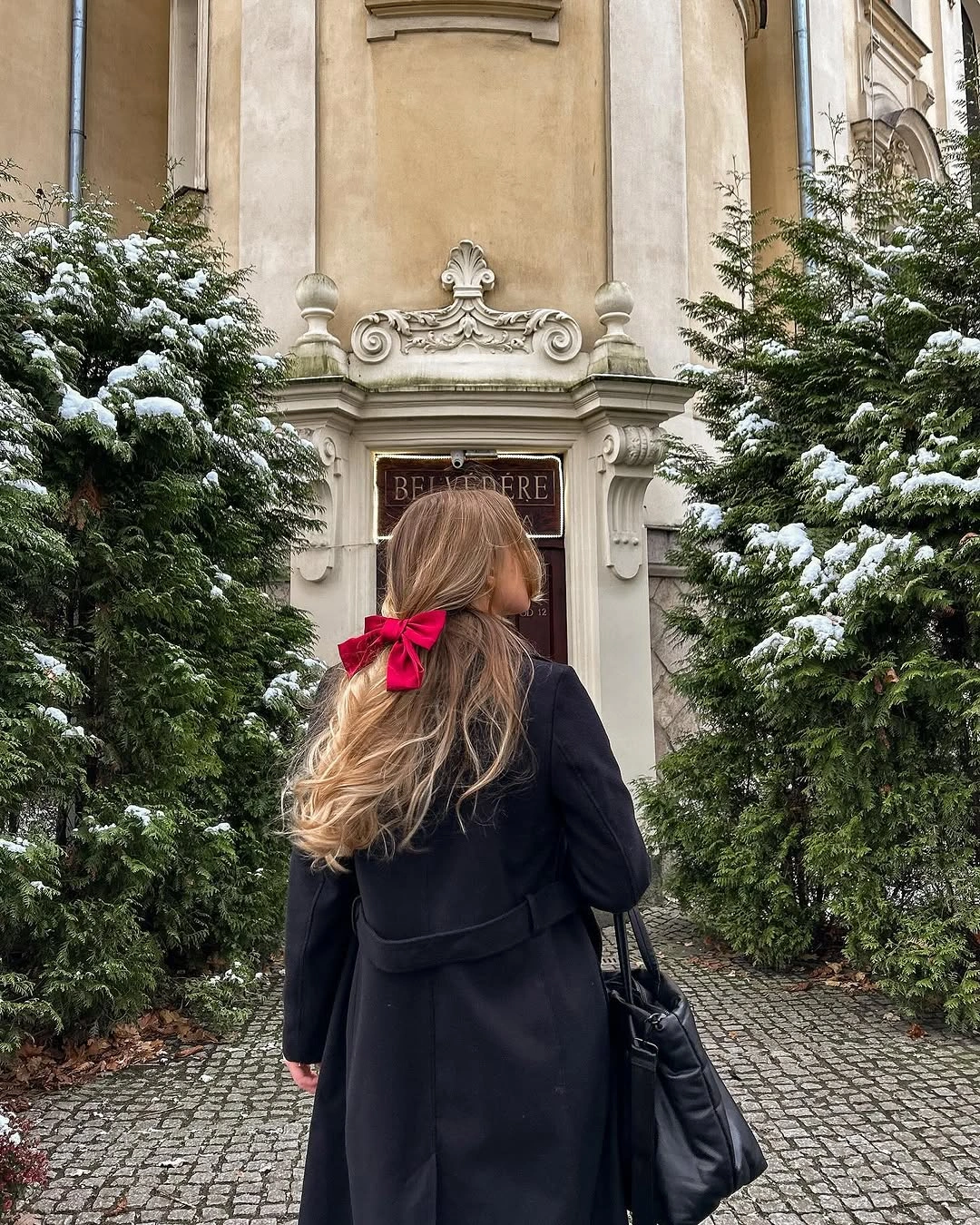
Photo via Instagram
The black tote does not separate sharply from the coat, and that is precisely what makes it interesting here. Positioned against the same dark field, it partially merges with the outerwear rather than creating an obvious accessory block, allowing the eye to keep following the coat’s long outline instead of stopping at the bag.
The bright red bow sits high in the hair and pulls attention upward from an otherwise nearly all-black rear view. Its placement matters as much as its color because the accent is concentrated above the coat rather than scattered across the silhouette.
A High Neck Defines the Taupe Coat
The raised neckline is the detail I would notice first here because it changes the upper silhouette before the coat’s length even becomes the main consideration. By closing the shape closely around the neck, it creates a compact, enclosed top line that contrasts with the much longer uninterrupted taupe surface falling below it toward the calves.
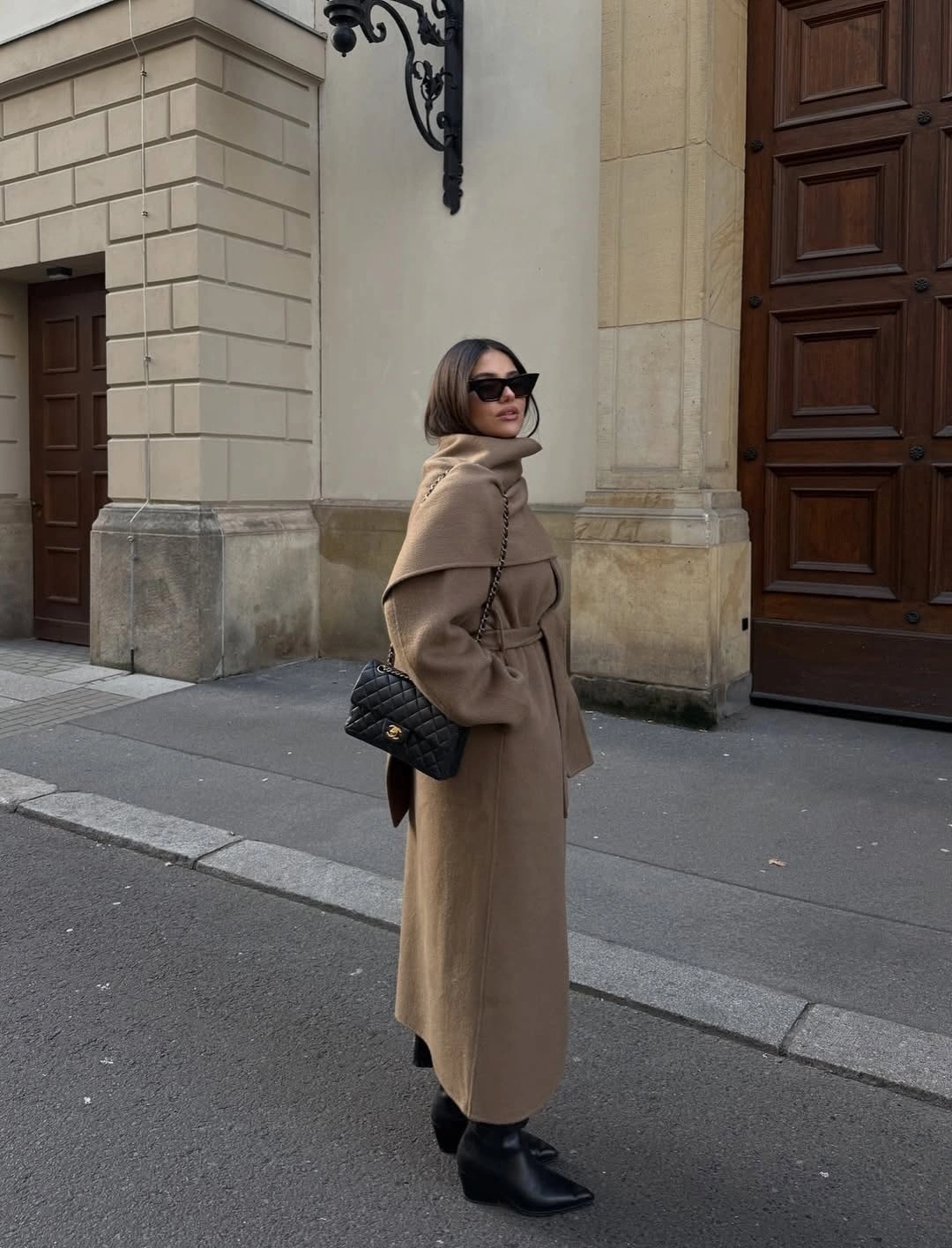
Photo via Instagram
That broad taupe plane has relatively few strong color breaks, so the eye is free to register the coat as one extended shape rather than a series of separate zones. The result is especially clear around the torso and lower body, where the neutral outer layer carries most of the visual area and lets the neckline remain the defining structural feature.
The black quilted-looking handbag and pointed ankle boots punctuate that neutral field at two precise positions rather than forming another large color block. Their darker edges give the long taupe silhouette a sharper finish without distracting from the high neck that sets the coat apart.
Wrap Lines Give a Cream Coat Direction
The cream coat gets its character from the diagonal wrap front rather than from color contrast alone. One side crosses over the other before the belt gathers the shape at the waist, creating visible movement from shoulder to center and then downward again. That geometry makes the pale outer layer feel directional instead of reading as one straight block from neckline to hem.
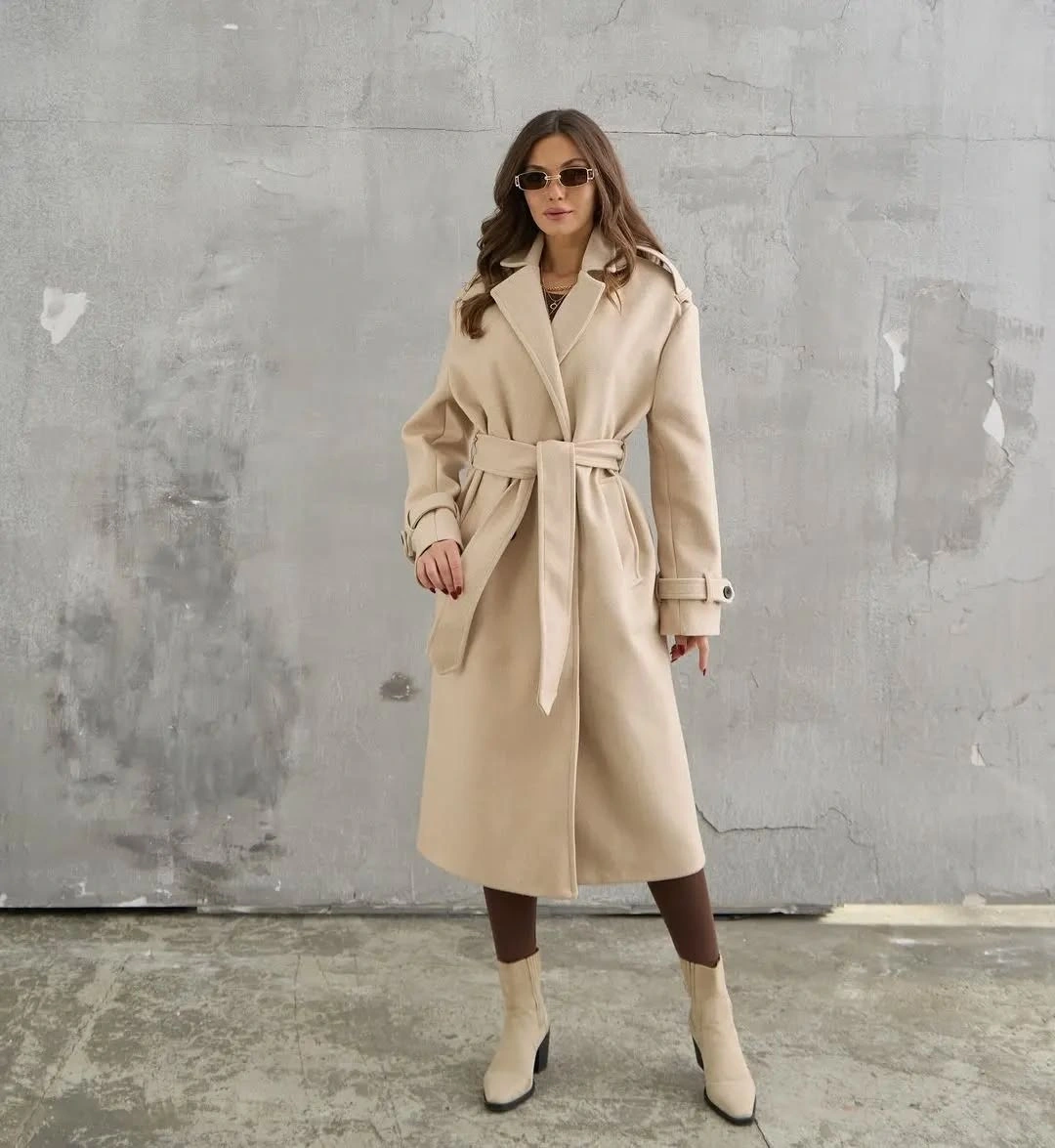
Photo via Instagram
Brown leggings form a narrow, darker neutral strip inside the much broader cream silhouette, so the open lower portion of the coat has a clear center to frame. The contrast is restrained, but it is strong enough to separate the legs from the outer layer and make the coat’s wrap construction easier to notice without introducing another large or highly saturated color area.
Cream ankle boots bring the light tone back below the brown leggings, creating a separated echo of the coat at ground level. The interruption of brown between those pale areas makes the repetition more visible than a continuous head-to-toe cream column would be.
A Short Puffer Changes the Outerwear Scale
The short black puffer-style jacket changes the proportions immediately because its hem ends high enough to leave nearly the full gray jean line visible. Instead of building a long vertical frame around the body, the outerwear concentrates volume around the torso, giving the upper half a compact, rounded presence while the legs remain comparatively uninterrupted below.
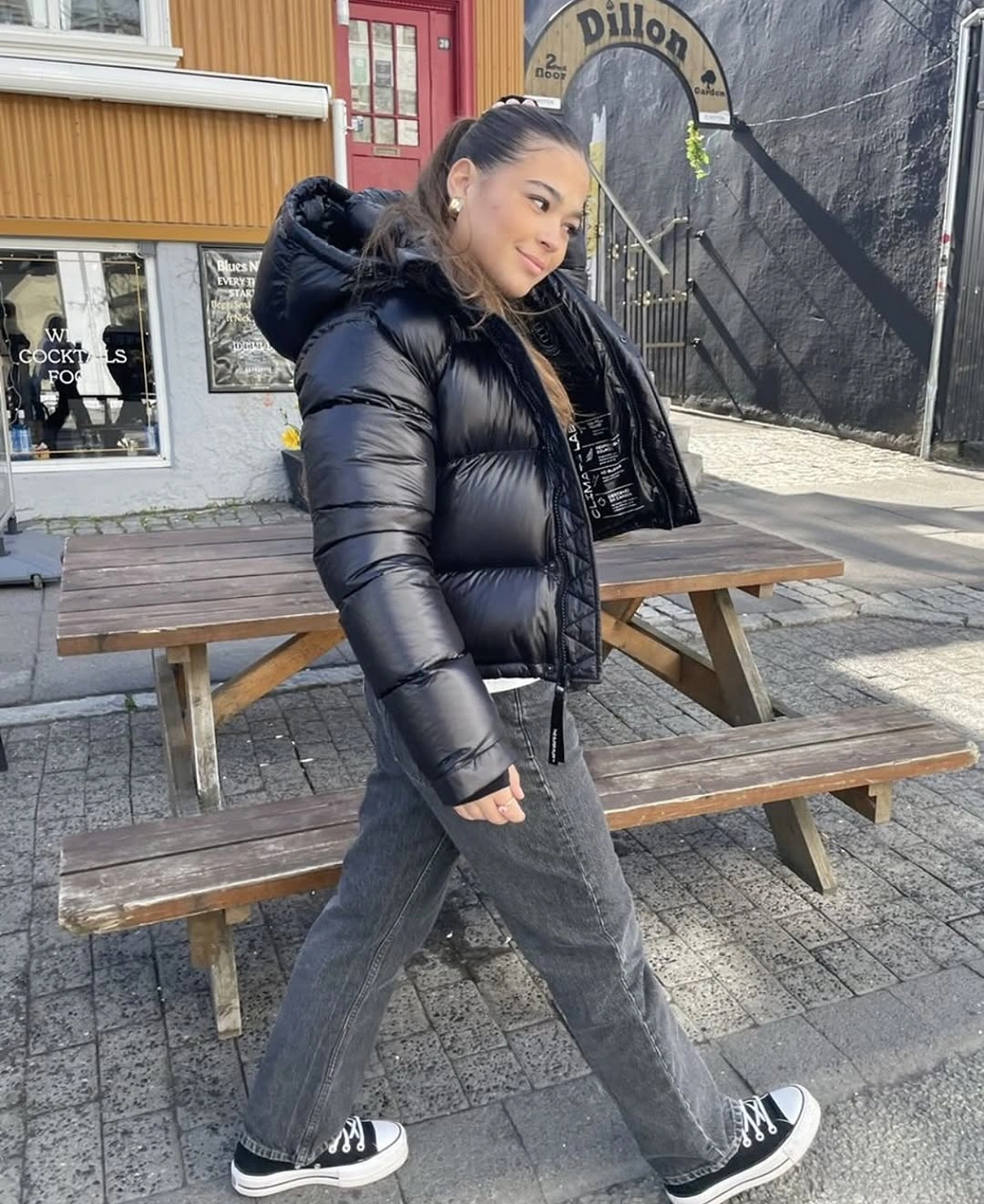
Photo via Instagram
Gray denim is a useful middle value here because it keeps the black upper volume distinct without creating the sharp contrast that white trousers would. The jeans occupy most of the lower silhouette, so their cooler gray surface acts as a visual bridge between the dark jacket and the black-and-white shoes, giving trendy coats and jackets a noticeably different proportional option from full-length outerwear.
The high-top sneakers finish the outfit with a compact shape that echoes black from the jacket while adding visible white details near the floor. Their casual appearance suits the shorter outerwear scale without needing the footwear to imitate the jacket’s volume.
Red and Yellow Interrupt an All-Black Column
The long black coat has a visibly textured-looking surface, but its strongest effect comes from how that dark outer layer connects with the black leggings and boots below. Those pieces create a nearly continuous vertical column, while the black crossbody sits close enough to the coat to blend into the same general field rather than establishing a separate accessory color.
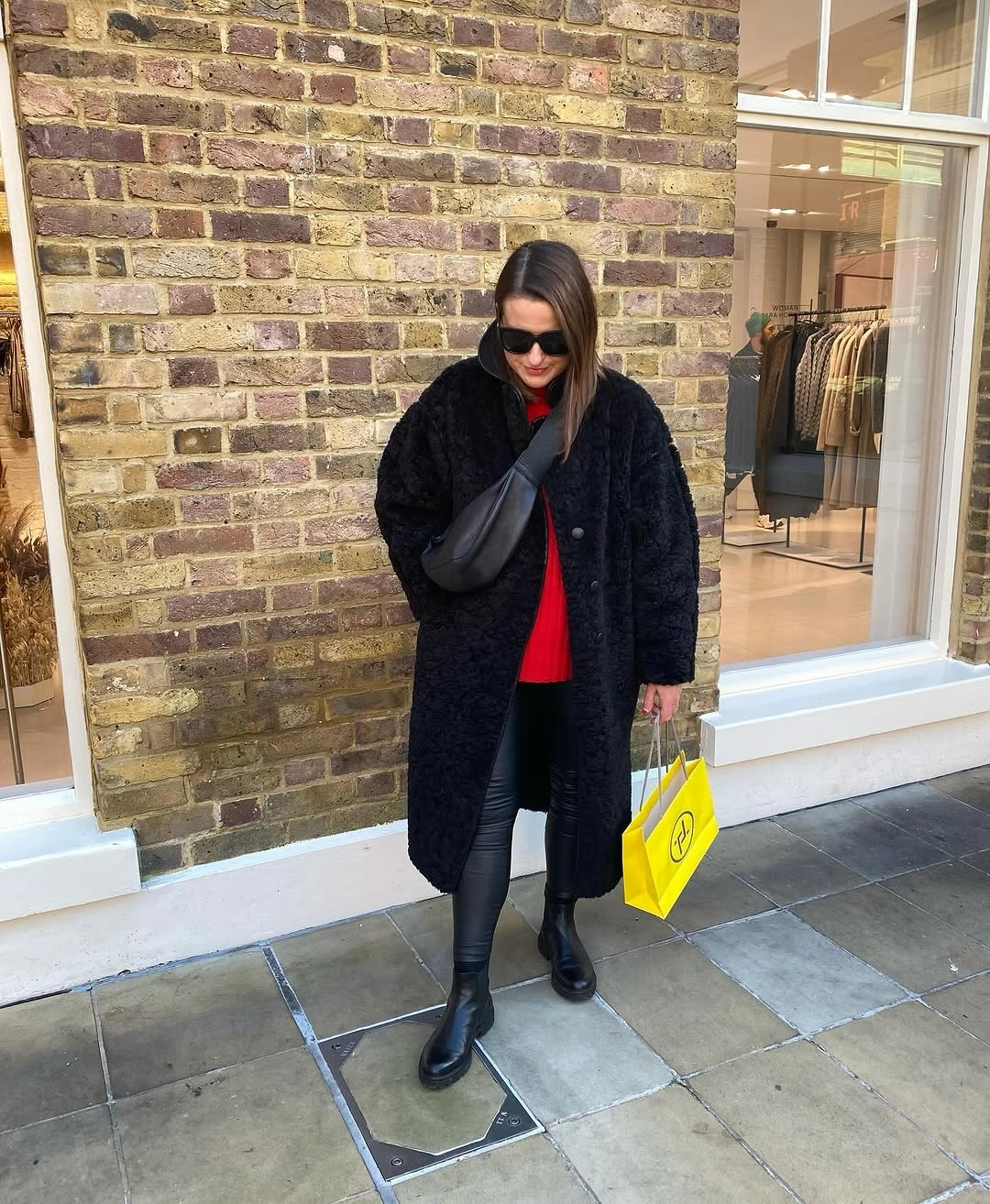
Photo via Instagram
The red top works differently because it appears inside the coat opening at torso level, creating a broad internal color field rather than a small accent attached to the outside. Its position makes the red feel embedded in the coat outfit, with black surrounding it above, beside, and below, so the color reads as part of the central structure rather than decoration added at the edge.
The bright yellow shopping bag sits lower and farther outward, so its effect is spatially different from the red at the torso. Having two vivid colors at separate heights makes the eye travel between distinct points instead of treating either one as the single required focal element.
Texture and Stripes Share the Same Neutral Frame
Two different kinds of surface interest meet here without looking like copies of one another. The gray long coat has a visibly textured-looking finish, while the sweater introduces horizontal stripes through the open center, so the outer layer supplies irregular surface depth and the inner layer provides a clearer repeated pattern within the same muted overall palette.
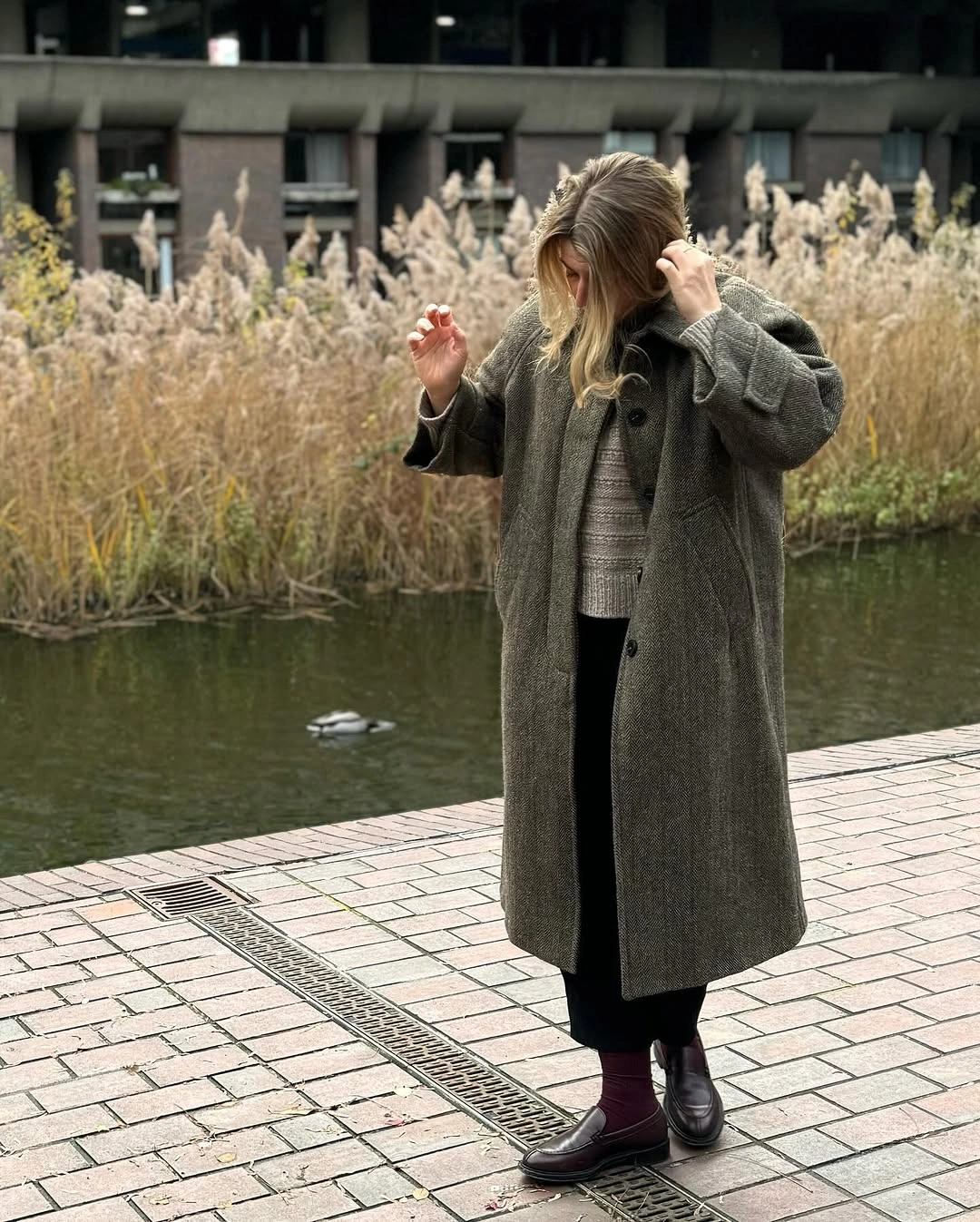
Photo via Instagram
The coat and black trousers both carry substantial volume, which gives the silhouette weight through more than one layer. Wide trouser legs continue beneath the long outer hem rather than narrowing away from it, so the lower half remains visually present even when much of the body is surrounded by the gray coat. That combination feels deliberately generous in scale rather than merely oversized in one place.
A narrow strip of burgundy sock appears between the dark trouser hem and brown loafers, placing color at one of the smallest visible intervals in the outfit. Because it sits so low, the burgundy rewards a second glance rather than competing with the larger coat, sweater, and trouser shapes.
Long Coat and Short Hem Create Distance
The useful tension here comes from how far the gray chevron coat extends beyond the much shorter dark lower layer underneath it. The outer hem drops toward the calves while the inner hem stops high on the leg, producing two clearly separated horizontal boundaries. That distance makes the coat’s length feel especially pronounced even before the footwear enters the proportion.
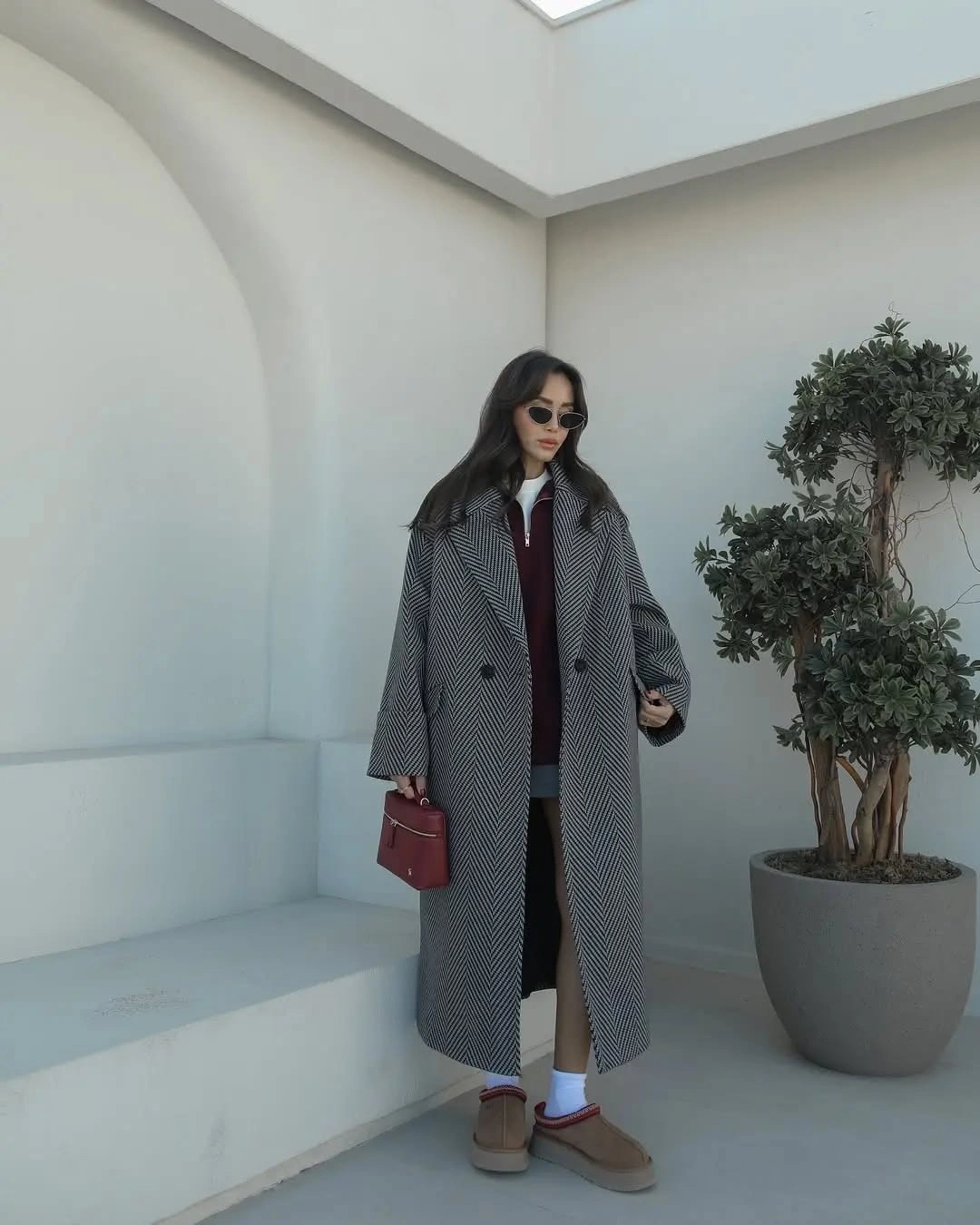
Photo via Instagram
Exposed leg creates another interval between the short inner hem and the tan shearling-style boots, so the lower half is divided into distinct vertical stages rather than one continuous dark column. The boots begin well below the inner layer while the coat continues alongside that open space, which lets the eye compare three different endpoints at once: inner hem, coat hem, and boot height.
The red handbag and tan boots provide color at opposite sides and heights, but they remain secondary to the spacing between those hems. Their placement gives the composition additional punctuation without repeating the color-based argument that the same gray chevron coat can support elsewhere.