

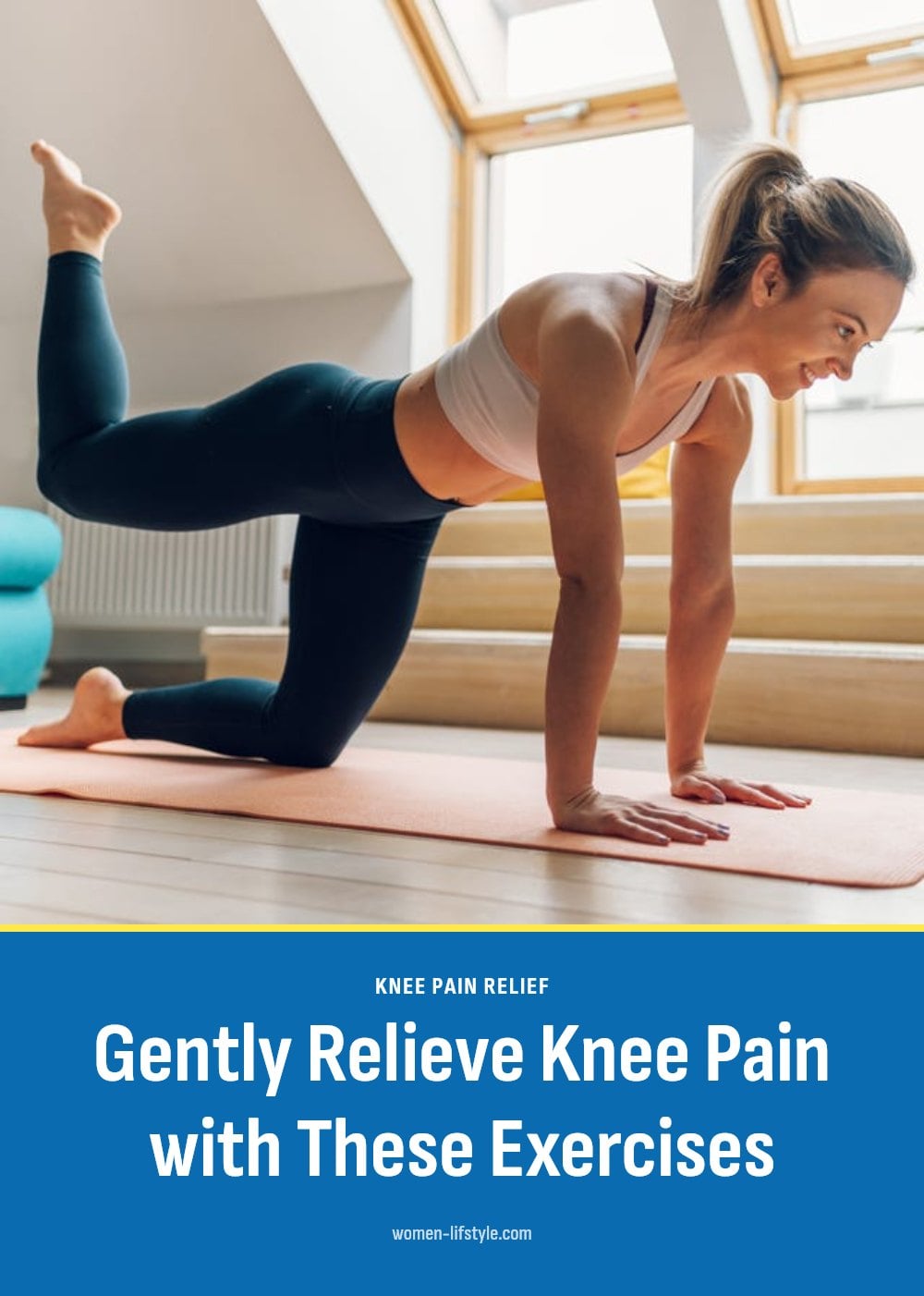
If your knees ache, you might be surprised how much the muscles above and below them matter. Strengthening your quadriceps, hamstrings, hips, and core takes pressure off the knee joint itself. When those muscles are stronger, they absorb more of the load during walking, stairs, and other daily movements. This article covers gentle exercises and safety tips to help you manage mild to moderate knee pain at home.
Key Takeaways
- Strengthen quadriceps, hamstrings, hips, and core to reduce stress on the knee joint.
- Warm up for 5-10 minutes before strengthening exercises and cool down with stretches afterward.
- Stop any exercise immediately if you feel sharp, shooting, or worsening pain.
- Aim for 2-3 sessions per week on non-consecutive days for consistent improvement.
- Consult a doctor or physical therapist if pain is severe, persistent, or accompanied by swelling or redness.
How Exercises Can Help Relieve Your Knee Pain
If your knees ache, you might be surprised how much the muscles above and below them matter. Strengthening your quadriceps, hamstrings, hips, and core takes pressure off the knee joint itself. When those muscles are stronger, they absorb more of the load during walking, stairs, or standing. Flexibility work, like gentle hamstring and quadriceps stretches, loosens tight tissues that pull on the knee. That extra range of motion reduces tension with every step. Stability exercises, such as standing on one leg, train your body to sense its position and react. Better proprioception means your knee stays aligned during movement, which helps prevent future pain before it starts.
Essential Tools for Your Knee Pain Relief Routine
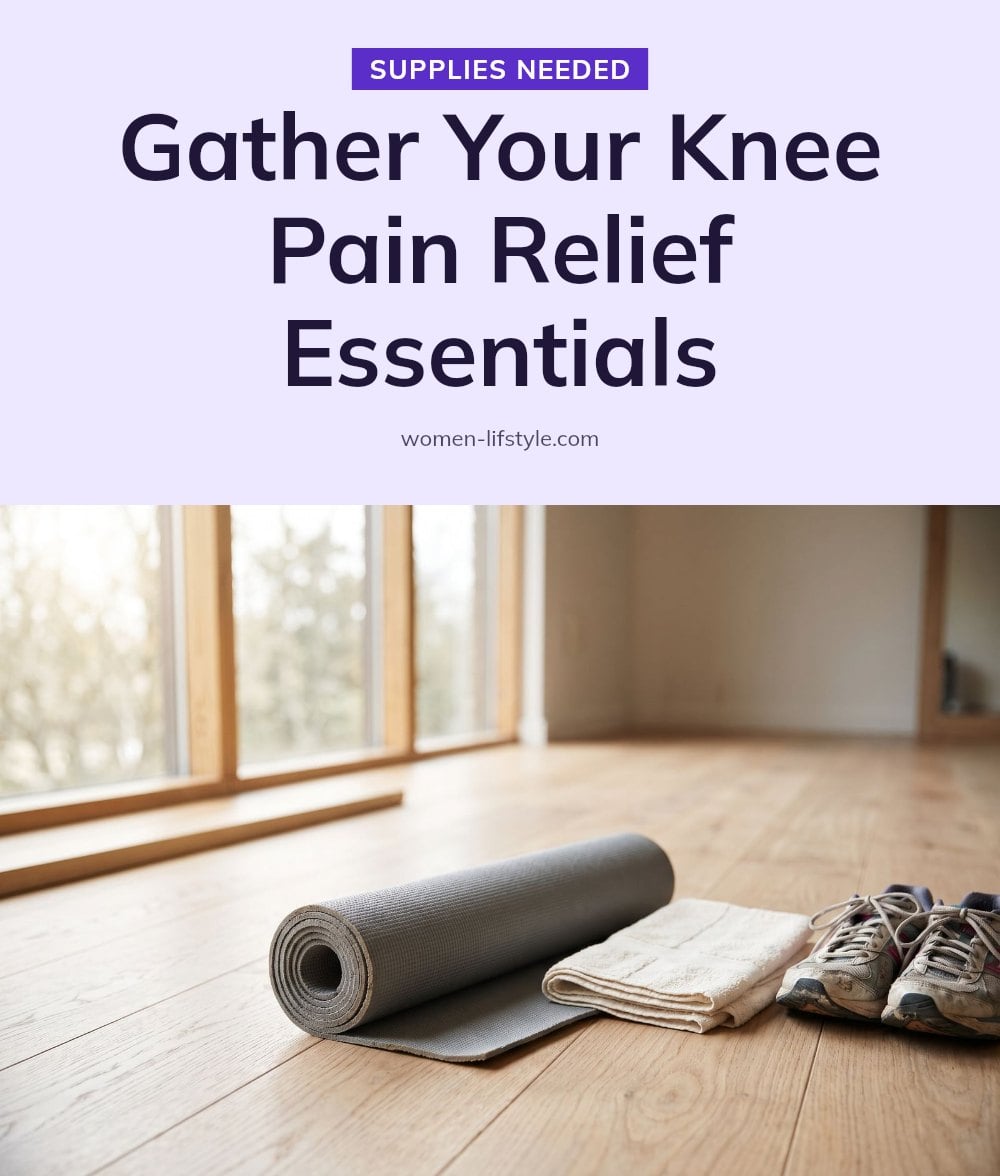
You don’t need a gym full of gear to start. Here’s what I keep on hand for my own knee routine:
- Comfortable athletic shoes: Supportive footwear keeps your ankles and knees aligned during standing exercises. Flat, worn-out shoes throw off your whole chain.
- Yoga mat or soft surface: Floor work on a hard floor hurts your knees. A mat cushions your kneecaps during glute bridges, clam shells, and stretches.
- Resistance bands: Light bands let you add gradual resistance without jarring the joint. Loop one above your knees for clam shells or around your ankles for side steps.
- A sturdy chair: Use it for seated hamstring curls, balance support during single-leg stands, or as a prop for standing stretches.
- A small towel: Roll it up to place under your knee for heel slides or use it to gently pull your foot during hamstring stretches.
Before You Start: Important Safety Considerations
Consult a Professional First
Before you begin any new exercise program, especially if your knee pain is chronic or severe, talk to a doctor or physical therapist. They can rule out underlying conditions and tell you which movements are safe for your specific situation.
Stop at Sharp Pain
My tip: never push through sharp, shooting, or worsening pain. That’s your body’s signal that something is wrong. Mild discomfort or a pulling sensation during a stretch is normal, but pain means stop and modify the exercise or skip it entirely.
Listen to Your Body
Some days your knees will feel better than others. Respect that. If an exercise hurts today, try a gentler version or do it fewer times. Pushing through discomfort often sets you back instead of moving you forward.
Always Warm Up and Cool Down
Spend 5-10 minutes warming up before any strengthening work. Gentle movement increases blood flow and prepares your muscles and joints. After your workout, cool down with stretches to maintain flexibility and reduce soreness.
1. Gentle Warm-Up Exercises for Your Knees
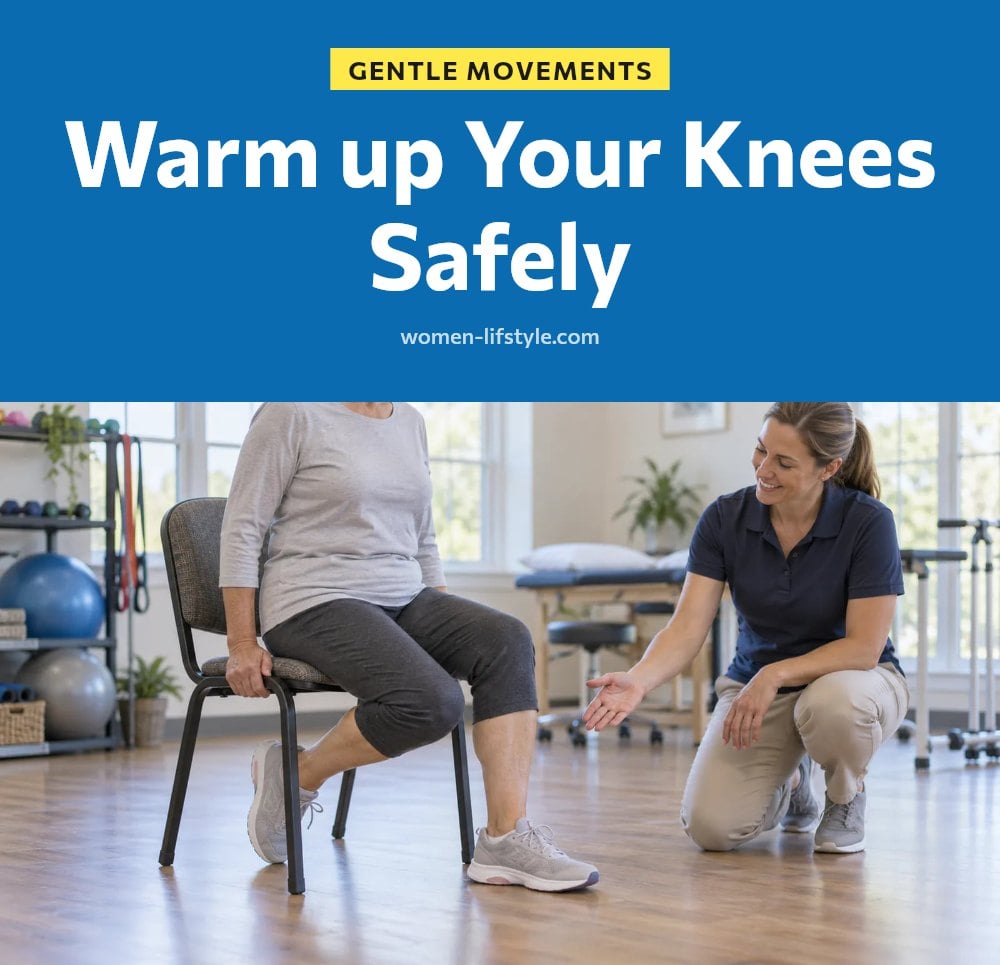
Start every session with these three gentle movements. They take about five minutes and prepare your knees for harder work.
Knee bends: Sit in a sturdy chair with your feet flat on the floor. Slowly bend your right knee, bringing your foot a few inches back under the chair, then straighten it again. Repeat 10 times on each side. Keep the movement slow and controlled. This wakes up the muscles around your kneecap without any impact.
Heel slides: Lie on your back on a mat with both knees bent and feet on the floor. Slowly slide your right heel toward your glutes, keeping your foot in contact with the floor. Slide it back to the starting position. Do 10 repetitions per leg. Place a small towel under your heel if the floor is sticky.
Ankle circles: While seated or lying down, lift one foot slightly off the floor. Rotate your ankle in a full circle, first clockwise 10 times, then counterclockwise 10 times. Switch legs. This improves circulation in your lower leg and warms up the joints that connect to your knee.
Targeted Strengthening Exercises for Knee Support
Quadriceps Strengthening
Your quads are the big muscles at the front of your thighs, and they do a lot of the work when you straighten your knee. Strong quads help absorb shock, which can reduce the load on the joint.
- Straight leg raises: Lie on your back with one knee bent and the other leg straight. Tighten the thigh muscle of the straight leg and lift it to the height of the opposite knee. Hold for 2-3 seconds, then lower slowly. Do 10-15 reps per leg.
- Wall sits: Stand with your back flat against a wall, then slide down until your knees are bent at about a 90-degree angle. Hold for 20-30 seconds, then slide back up. Start with a higher position if 90 degrees is too intense.
My tip: If a wall sit feels too hard on your knees, try a shallower bend or hold for just 10 seconds. The goal is to feel the quads working, not to push through joint pain.
Hamstring Strengthening
The hamstrings run along the back of your thigh and help bend your knee. Balanced strength between quads and hamstrings keeps the knee stable.
- Hamstring curls (seated or standing with band): While seated, loop a resistance band around one ankle and anchor it to a chair leg. Bend your knee, pulling your heel toward your glutes, then slowly straighten. Do 10-15 reps per leg. You can also do this standing while holding onto a chair for balance.
Caution: If you feel a pinch at the front of the knee during curls, reduce the resistance or shorten the range of motion.
Glute Strengthening
Weak glutes, especially the gluteus medius, can cause your knee to cave inward during movement, which increases strain. Strengthening them improves alignment.
- Clam shells: Lie on your side with knees bent at a 45-degree angle and feet together. Keeping your feet touching, open your top knee like a clam shell, then lower slowly. Do 15 reps per side.
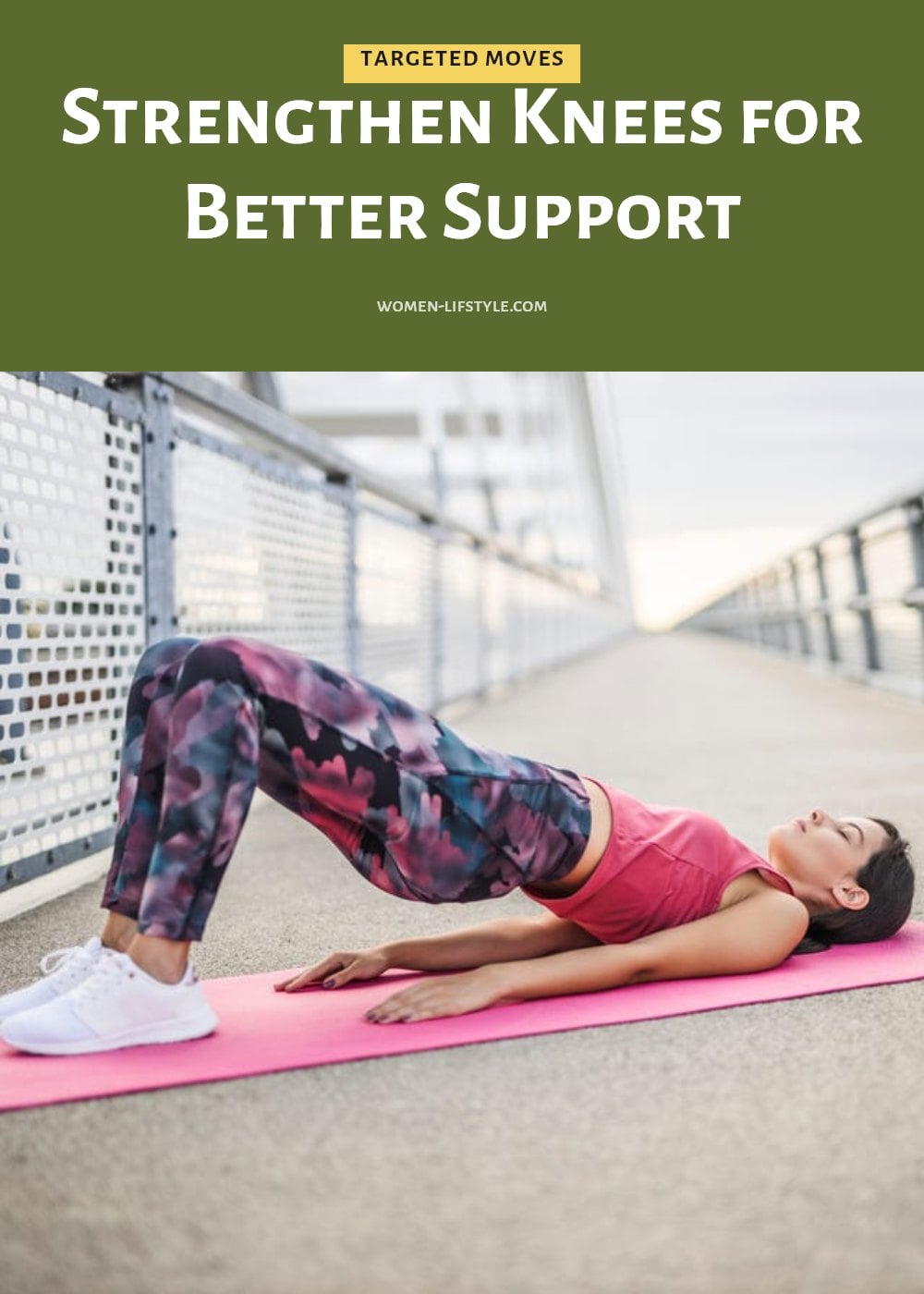
- Glute bridges: Lie on your back with knees bent and feet flat on the floor. Squeeze your glutes to lift your hips until your body forms a straight line from shoulders to knees. Hold for 2 seconds, then lower. Do 10-15 reps.
Pro move: For glute bridges, press through your heels and avoid arching your lower back. You should feel it in your glutes, not your lower back.
Calf Strengthening
The calves help control ankle movement, which affects how forces travel up to the knee.
- Calf raises: Stand with your feet hip-width apart, holding a chair for support. Rise up onto your toes, hold for a second, then lower slowly. Do 10-15 reps. For a gentler version, do them seated with your feet flat on the floor.
Start with one set of each exercise and gradually increase to two or three sets as your strength improves. Aim to do these 2-3 times per week on non-consecutive days.
2. Flexibility and Stability Exercises
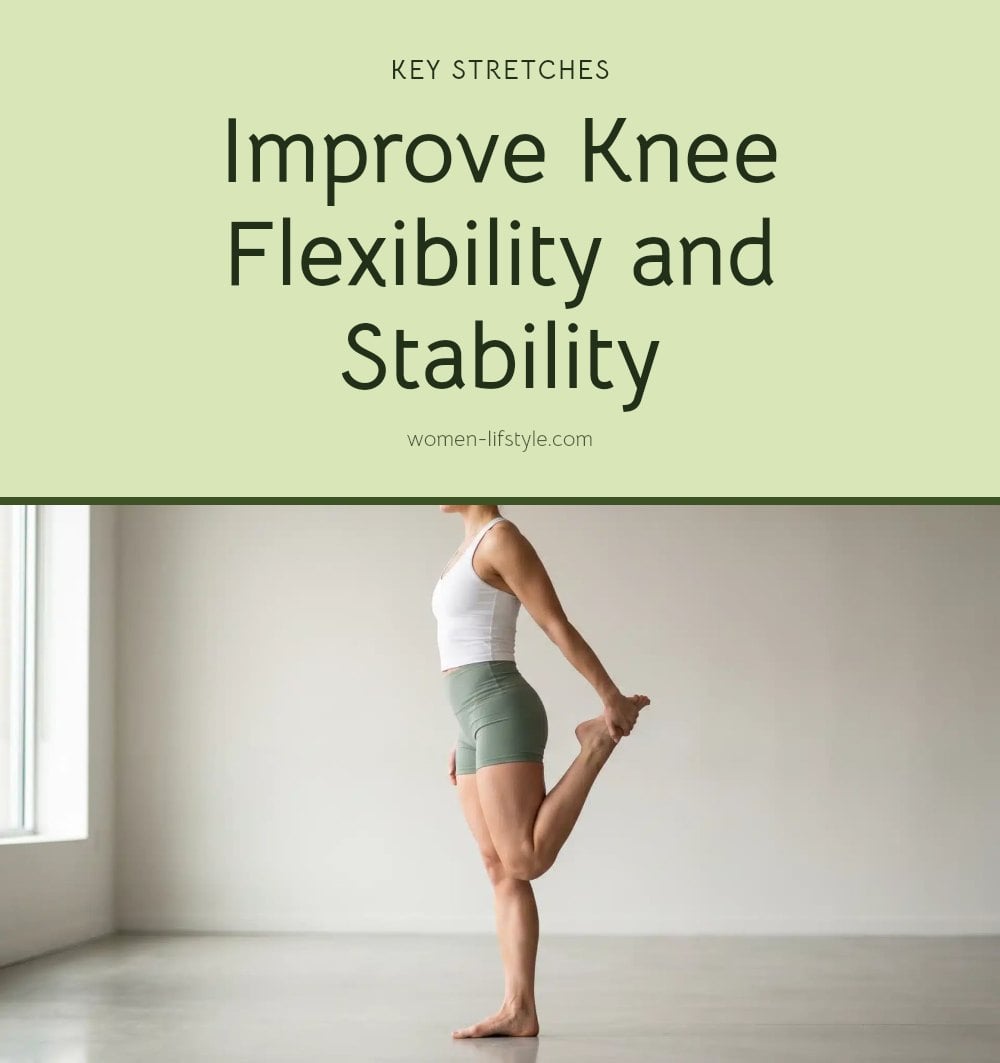
Hamstring stretch: Sit on the floor with one leg straight and the other bent, then reach gently toward your toes. You should feel a pull along the back of your thigh. Hold for 20-30 seconds on each side. This reduces tension that pulls on your knee.
Quadriceps stretch: Stand holding a chair for balance, bend one knee, and grasp your ankle behind you. Keep your knees together and gently pull your heel toward your glutes. Hold for 20-30 seconds per leg. This loosens the front of the thigh, which can ease pressure on the kneecap.
Calf stretch: Stand facing a wall with one foot forward and one back, both heels flat. Lean into the wall until you feel a stretch in the back leg’s calf. Hold 20-30 seconds per side. Tight calves can alter how your knee tracks.
Single-leg stand: Stand on one leg near a chair for support. Hold for 20-30 seconds, then switch sides. This trains proprioception, your body’s sense of joint position, which improves knee stability and may help prevent future pain.
Common Mistakes to Avoid When Exercising with Knee Pain
I’ve made plenty of mistakes with my own knee routine, and each one taught me something. Here are the ones worth skipping.
- Ignoring pain signals: Sharp pain is your body telling you to stop or modify the move. Pushing through it can turn a small issue into a bigger one. If it hurts, back off and try a gentler version.
- Neglecting hips and glutes: Weak hips change how your knee tracks, which can add strain. Add glute bridges and clam shells to your routine, even if they feel unrelated to your knee.
- Prioritizing reps over form: Doing more repetitions with sloppy technique won’t help and may hurt. Slow down, check your alignment, and master the movement before adding volume.
- Skipping warm-ups and cool-downs: Jumping straight into strengthening without a warm-up is like starting a car in winter and flooring it. Five minutes of gentle moves and a few stretches afterward keep muscles ready and recovery on track.
- Being inconsistent: Sporadic sessions won’t build the support your knee needs. Aim for 2-3 times a week on non-consecutive days, and stick with it for several weeks to see real change.
When to Consult a Doctor or Physical Therapist
These exercises are meant for mild to moderate knee pain. If your pain is severe or doesn’t improve with rest and gentle movement, see a doctor or physical therapist. Also seek medical advice if your knee is swollen, red, or warm to the touch, or if you can’t put weight on that leg.
A sudden injury that brings immediate sharp pain or a feeling of instability needs prompt attention. And if you hear or feel clicking, popping, or grinding that hurts, get it checked out. Trust your body, and when in doubt, ask a professional.
Frequently Asked Questions
How often should I do knee exercises for pain relief?
For strengthening exercises, aim for 2-3 times per week on non-consecutive days to allow muscles to recover. Flexibility and stability moves can be done more frequently, such as daily gentle stretching. Consistency matters more than intensity, so find a schedule that works for you and stick with it.
Can walking help with knee pain?
Yes, walking is a low-impact exercise that can help strengthen the muscles around your knees and improve joint function. Start with short, gentle walks on level ground and wear supportive shoes. If walking causes sharp or increasing pain, reduce the distance or consult a professional.
What kind of shoes are best for knee pain?
Comfortable athletic shoes with good arch support and cushioning are generally recommended. Flat, worn-out shoes can throw off your alignment from ankles to knees. Supportive footwear helps keep your knees aligned during standing exercises and daily walking, which can reduce strain on the joint.
Should I use heat or ice for knee pain after exercise?
For reducing inflammation and pain after exercise, many people find applying ice for 15-20 minutes helpful. Heat can be used before exercise to warm up muscles and increase blood flow. Always wrap ice or heat packs in a cloth to protect your skin, and stop if you experience discomfort.
Are there any stretches I should avoid for knee pain?
Avoid stretches that cause sharp pain, clicking, or grinding in the knee joint. Deep knee bends or stretches that put excessive pressure on the kneecap may aggravate patellofemoral pain. If a stretch causes discomfort, modify it or skip it, and consult a professional for personalized guidance.
Final Thoughts
Start with gentle moves like straight leg raises and hamstring stretches, and listen to your body every step of the way. With consistent effort, you may notice improvements in strength and reduced pain within several weeks to a few months. Remember, the goal is to support your knees, not push through discomfort, so take it slow and stay patient.
This article provides general information for managing mild to moderate knee pain with exercise and is not a substitute for professional medical advice. If you have severe, persistent, or worsening knee pain, or if you have a diagnosed knee condition, consult a doctor or physical therapist before starting any new routine.
