

You’ve probably heard about creatine as a go-to supplement for athletes, but maybe you’re wondering if it’s right for you as a woman. The short answer is yes. It can help boost your strength, power, and high-intensity exercise performance without making you bulky. This guide covers everything you need to know about taking creatine safely and effectively, from choosing the right form to timing your doses.

Key Takeaways
- Choose creatine monohydrate for the most researched and effective form.
- A loading phase of 20 grams daily for 5-7 days saturates muscles quickly.
- Take 3-5 grams daily for maintenance, even on rest days.
- Drink at least 8-10 glasses of water daily to avoid dehydration.
- Consult a doctor before use if you have kidney or liver conditions.
What is Creatine and Why Should Women Consider It?
Creatine is a natural compound your body produces and also gets from foods like red meat and fish. It’s essential for producing energy in your muscles, especially during short, intense efforts like weightlifting or sprinting. For women, supplementing with creatine can improve strength, power, and lean muscle mass without adding bulk. It may also support bone density and cognitive function. The most effective and researched form is creatine monohydrate, typically taken with a loading phase followed by daily maintenance doses.
How Creatine Boosts Your Performance and Health
Creatine works by increasing your muscles’ stores of phosphocreatine. This compound helps regenerate adenosine triphosphate (ATP), the primary energy currency of your cells. When you have more phosphocreatine available, your body can produce ATP more rapidly during high-intensity exercise.
This faster ATP production allows you to push harder and longer during bursts of activity, directly improving strength and power output. Supplementation can increase your muscle creatine stores by 10 to 40 percent, which translates into noticeable performance gains over time.
Additional Benefits for Women
- Bone density support: Creatine may help maintain bone density, particularly in post-menopausal women.
- Cognitive function: Some research suggests creatine could enhance cognitive performance, especially during mentally demanding tasks.
- Natural production: Your body makes creatine from amino acids, and you also get it from dietary sources like red meat and fish.
Essential Supplies for Your Creatine Journey
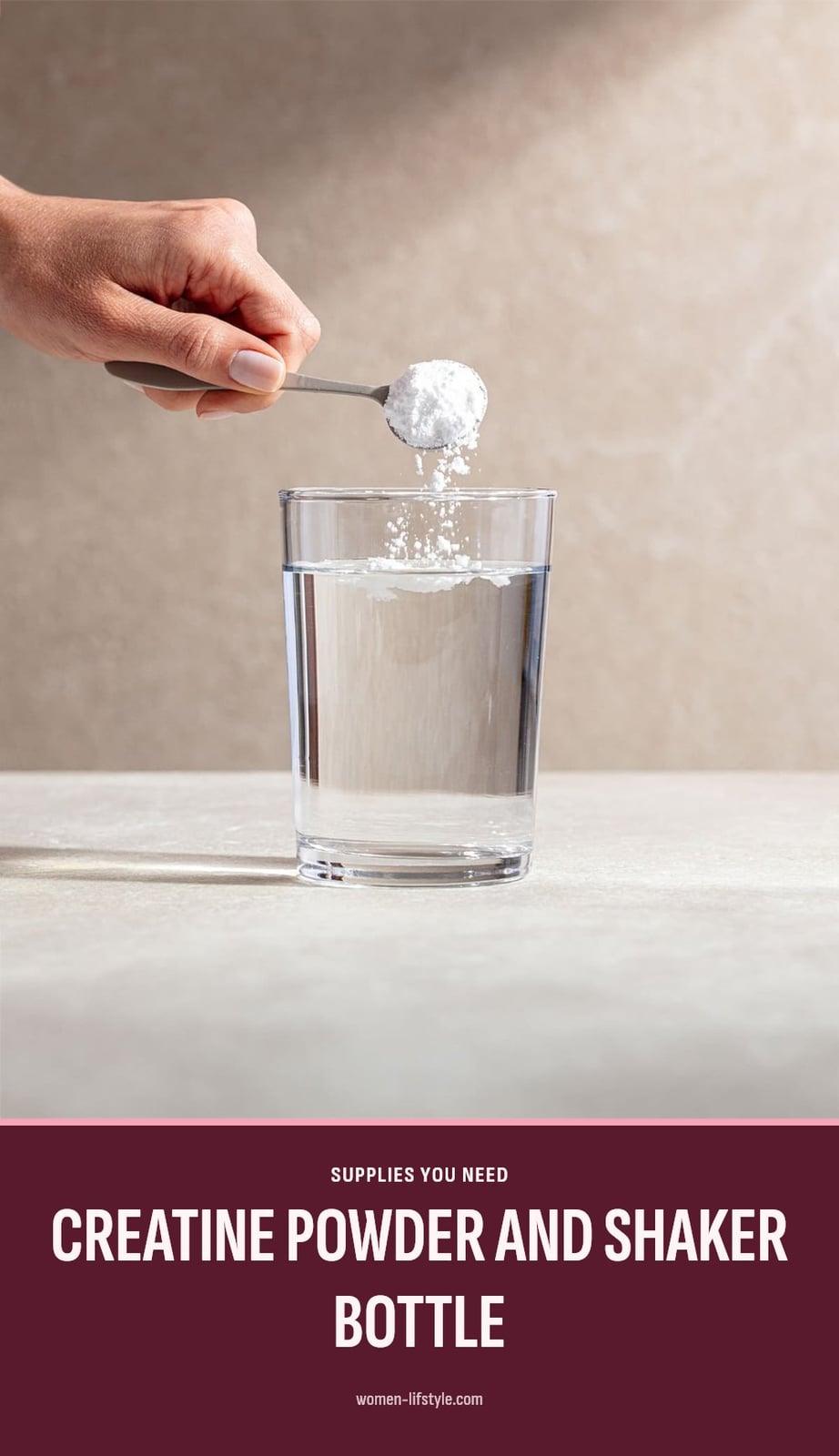
You only need a few basics to get started with creatine supplementation. Here is what to have on hand:
- Creatine monohydrate powder: This is the most researched and effective form. Stick with it for reliable results.
- Water, juice, or protein shake: You will mix your creatine with a liquid. Pairing it with carbohydrates or protein can improve absorption.
- Measuring spoon or scoop: Accurate dosing matters. Most powders come with a scoop, or you can use a kitchen scale.
Step-by-Step: How to Take Creatine Effectively

- Choose creatine monohydrate: It has decades of research backing its safety and effectiveness. Avoid unproven forms.
- Decide on a loading phase: For faster results, take 20 grams daily for 5 to 7 days. Divide this into 4 doses of 5 grams each throughout the day. If you prefer to skip loading, just take 3 to 5 grams daily from the start. It will take about 3 to 4 weeks to saturate your muscles this way.
- Transition to maintenance: After the loading phase, take 3 to 5 grams daily. Stick with this amount every day, even on rest days, to keep your muscle stores saturated.
- Mix for better absorption: Combine your creatine with a carbohydrate-rich drink like juice or a protein shake. The insulin spike from carbs or protein can help shuttle creatine into your muscles.
- Stay hydrated: Creatine pulls water into your muscle cells, so you need extra fluids. Aim for at least 8 to 10 cups of water daily, more if you are active.
- Be consistent: Take your creatine at roughly the same time each day. Timing around workouts is less important than consistent daily intake.
Common Creatine Mistakes Women Make and How to Avoid Them
One of the biggest mistakes I see is not drinking enough water. Creatine pulls water into your muscle cells, so you need extra fluids to avoid dehydration and digestive discomfort. My tip: aim for at least 8-10 glasses of water daily when supplementing.
Another common error is quitting too soon. Creatine needs consistent daily intake to saturate your muscles, so give it at least 3-4 weeks before judging results. Many women also fear creatine will make them look bulky, but the water retention it causes stays inside muscle cells, not under the skin. That fullness actually gives muscles a firmer appearance.
Stick to 3-5 grams daily during maintenance, and always choose creatine monohydrate over unproven forms. Finally, don’t expect creatine to replace proper training and nutrition. It enhances your effort but doesn’t do the work for you.
Top Tips for Maximizing Your Creatine Results

Consistency is Key: Take your creatine every single day, even on rest days, to keep your muscle stores saturated. I set a daily reminder on my phone so I never miss a dose.
Hydrate, Hydrate, Hydrate: Creatine pulls water into your muscles, so drink plenty of water throughout the day. This keeps the supplement working effectively and prevents cramps.
Pair with Carbs or Protein: Taking creatine with a meal or shake that contains carbs or protein can boost its absorption. A post-workout shake works perfectly for this.
Listen to Your Body: If you notice unusual digestive upset, try splitting your dose or taking it with food. If symptoms persist, consult a professional.
Focus on Training: Creatine is a supplement, not a shortcut. Pair it with a consistent strength training program for the best results.
When to Expect Results and What to Budget
You can expect noticeable benefits after the 5-7 day loading phase, or within 3-4 weeks if you skip loading. Continued improvements in strength and power occur over months of consistent use.
Creatine must be taken daily for sustained benefits. The good news is that creatine monohydrate is one of the most cost-effective supplements available, typically costing $15 to $30 for a month’s supply, depending on the brand and quantity.
When to Consult a Healthcare Professional About Creatine
Consult a healthcare professional before starting creatine if you have pre-existing kidney or liver disease, or any other chronic medical condition. Creatine is not recommended during pregnancy or breastfeeding due to limited safety research.
Also seek medical advice if you experience severe or persistent digestive upset, muscle cramps, or other unusual symptoms after beginning supplementation. If you take diuretics or NSAIDs regularly, check with your doctor about potential interactions. When in doubt, a quick consultation ensures you use creatine safely.
Frequently Asked Questions
Will creatine make me look bulky?
No, creatine does not cause significant muscle bulk in women. It can increase water retention inside muscle cells, which may make muscles appear slightly fuller, but this is not the same as gaining large amounts of mass. Women typically have lower testosterone levels, so substantial muscle growth requires dedicated training and nutrition, not just supplementation.
Can I take creatine if I’m trying to lose weight?
Yes, creatine can be part of a weight loss plan. It may help preserve lean muscle mass while you’re in a calorie deficit, which supports a higher metabolism. Just keep in mind that the initial water retention in muscles could cause a small, temporary increase on the scale. This is not fat gain.
How long should I take creatine?
You can take creatine continuously for months or even years, as long as you follow recommended doses and stay hydrated. Many people cycle off after 8-12 weeks, but there is no evidence that cycling is necessary for safety. If you stop, your muscle stores will gradually return to baseline over several weeks.
Are there any side effects of creatine for women?
Some women experience mild digestive upset, especially during the loading phase, or muscle cramps if they don’t drink enough water. These side effects are usually temporary and can be minimized by staying hydrated and splitting doses. Serious side effects are rare when creatine is taken as directed.
Does creatine affect hormones in women?
Current research does not show that creatine significantly alters hormone levels in women, including estrogen or testosterone. It works primarily on energy production in muscle cells, not on the endocrine system. If you have concerns about hormonal effects, consult your healthcare provider before starting.
Final Thoughts
For most women, starting with a loading phase is the quickest way to see results, but skipping it and taking 3-5 grams daily works too. It just takes 3-4 weeks to feel the difference. Keep in mind that creatine is a tool, not a shortcut; pair it with consistent training and a balanced diet for the best outcomes. Stick with it daily, stay hydrated, and you’ll likely notice steady improvements in your strength and performance over time.
This article is for informational purposes only and does not constitute medical or professional advice. Creatine supplementation may not be suitable for everyone, especially those with pre-existing health conditions. Always consult a doctor or registered dietitian before starting any new supplement, and stop use if you experience unusual symptoms.
