

If you’ve spotted that telltale three-leaf pattern creeping into your yard, you know you have a problem that won’t just go away on its own. Poison ivy contains an oily resin called urushiol in every part of the plant, leaves, stems, roots, and even dead plants, that causes an allergic reaction in most people. This article covers the safest and most effective ways to remove poison ivy from your property, whether you choose manual removal for small patches or chemical herbicides for larger infestations, plus how to avoid common mistakes and keep it from coming back.
Key Takeaways
- Wear heavy-duty gloves, long sleeves, pants, closed-toe shoes, and eye protection every time you handle poison ivy.
- Manual removal works best for small, young plants; dig out every bit of root to prevent regrowth.
- Apply glyphosate-based herbicides on a calm, dry day in spring or early summer for larger areas.
- Never burn poison ivy, inhaling the smoke can cause severe respiratory distress from airborne urushiol.
- Monitor the area regularly for new sprouts and re-treat as needed, since established plants may require multiple applications.
The Safest Ways to Remove Poison Ivy from Your Yard
Getting rid of poison ivy in your yard comes down to two main approaches: manual removal for small patches or targeted chemical application for larger areas. Whichever method you choose, always wear heavy-duty gloves, long sleeves, long pants, closed-toe shoes, and eye protection to shield yourself from urushiol, the irritating oil found in every part of the plant. This persistent plant often regrows, so plan on checking the spot regularly and re-treating as needed until no new shoots appear.
Essential Tools and Materials for Poison Ivy Removal
Before you start, gather everything you need. Your protective gear should include:
- Heavy-duty gloves: Essential for keeping urushiol off your hands.
- Long-sleeved shirt, long pants, closed-toe shoes: Full body coverage is a must.
- Eye protection: Shields your eyes from plant debris and splashes.
For the removal itself, you will need:
- Gardening hoe or shovel: Helps dig out roots thoroughly.
- Heavy-duty trash bags: For secure disposal of all plant material.
For clean-up and follow-up:
- Dish soap or specialized cleanser: Removes urushiol from skin and tools.
- Glyphosate-based herbicide and pump sprayer: A common chemical option for larger infestations, applied precisely.
Effective Methods for Eradicating Poison Ivy
Manual Removal
Manual removal works best for small, young plants or isolated patches. The key is to get every bit of root out, because any piece left behind can regrow. This method is safest for surrounding plants and avoids chemicals, but it demands full protective gear and careful handling.
Chemical Herbicides
For larger, established infestations, a glyphosate-based herbicide is a practical choice. Apply it on a calm, dry day to prevent drift onto desirable plants. Tip: Treat poison ivy in spring or early summer when the plant is actively growing and most vulnerable. You may need to reapply after a few weeks, especially for mature vines.
Smothering
Covering the area with cardboard or black plastic can kill poison ivy by blocking sunlight. This method takes time, often an entire growing season, and the covering must stay in place and weighted down. It is a good option for patches where you are willing to wait.
Biological Control
Goats and other livestock can eat poison ivy without harm, making them a natural control method for some properties. This option works best for large, open areas and requires containing the animals properly. It is not a quick fix but can be effective over time.
Step-by-Step: Manual Poison Ivy Removal
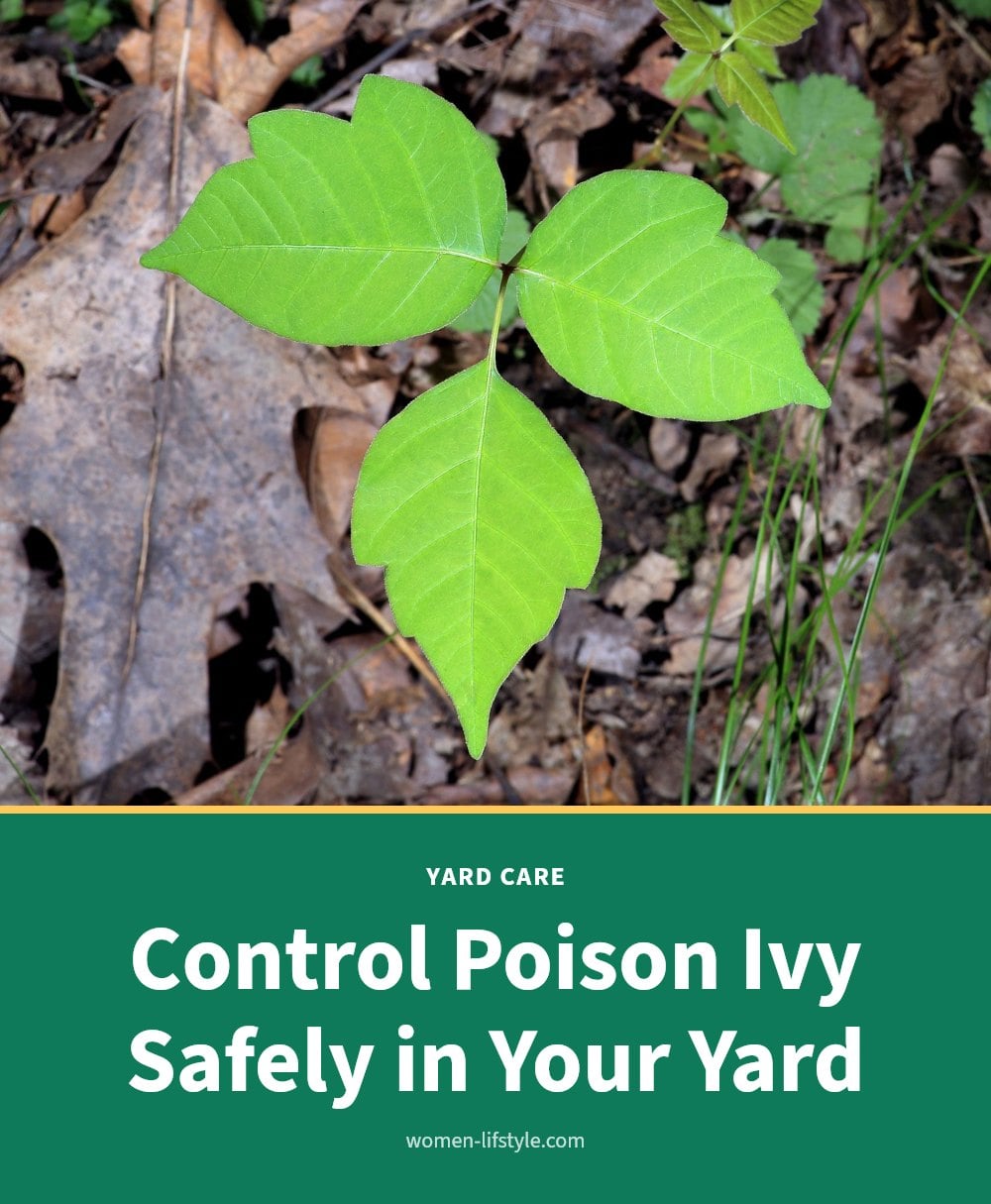
Identify the plant: Confirm it is poison ivy by its classic “leaves of three” pattern. Look for three leaflets on one stem, with the middle leaflet on a longer stalk. The plant can grow as a vine, shrub, or ground cover.
- Gear up: Put on heavy-duty gloves, long sleeves, long pants, closed-toe shoes, and eye protection. Do not skip any piece, urushiol can transfer through thin clothing.
- Dig out the plant: Use a hoe or shovel to loosen the soil around the root system. Pull gently but firmly, trying to extract the entire root. Work slowly to avoid breaking roots underground.
- Bag it: Place all plant material, including leaves, stems, and roots, directly into a heavy-duty trash bag. Seal the bag tightly for disposal. Never compost poison ivy, because urushiol stays active.
- Clean tools and clothing: Wash your tools, gloves, and any clothing that touched the plant with soap and water immediately. Dish soap works well to break down urushiol.
- Shower thoroughly: As soon as you are done, shower with soap and water to remove any potential urushiol from your skin. Wash your hair too if it may have been exposed.
Common Mistakes to Avoid When Dealing With Poison Ivy
Burning poison ivy is never safe. The heat releases urushiol into the smoke, and inhaling it can cause severe respiratory distress. String trimmers and mowers are just as dangerous: they shred the plant and aerosolize the oil, which can land on your skin, clothes, and anything nearby.
Wearing short sleeves or skipping eye protection is a common error that leads to direct contact and a rash. After you finish, urushiol stays active on tools, clothing, and pet fur for up to five years. Failing to wash everything with soap and water right away can cause secondary exposure days later.
Misidentifying the plant is another frequent mistake. Learn the “leaves of three” pattern so you do not remove a harmless plant or miss a patch of poison ivy. And do not assume one treatment is enough. Regrowth is common, so plan to monitor the area and re-treat as needed.
Preventing Poison Ivy From Returning to Your Yard
Check your yard regularly for new poison ivy sprouts, especially in spots where you removed it before. Catching them early makes manual removal much easier. Pull young plants as soon as you see them, roots and all.
Planting dense ground covers or shrubs in areas prone to poison ivy can help crowd it out over time. Keeping the yard tidy also reduces hiding spots where new growth can go unnoticed. A little consistent effort now saves you from a bigger problem later.
When to Seek Professional Help for Poison Ivy Exposure or Removal
If you develop a severe rash with extensive blistering or any signs of infection, see a doctor right away. Do not wait for it to clear on its own. Seek immediate medical help if you inhale smoke from burning poison ivy; the respiratory distress can be serious.
For large, established infestations that feel too risky or time-consuming to handle yourself, hire a professional landscaper or removal service. They have the right gear and experience to get the job done safely.
Frequently Asked Questions
Can I use household items like salt or dish soap to kill poison ivy?
Household vinegar (acetic acid) can act as a non-selective herbicide, but it typically requires a higher concentration than what you have in your kitchen to be effective on established poison ivy. Salt and dish soap mixtures are not reliable for killing the roots, so they may only damage the leaves temporarily. For large or stubborn patches, a targeted herbicide is usually a better bet.
How long does it take for poison ivy to die after herbicide application?
You may start to see wilting within a few days, but it can take one to three weeks for the plant to fully die back, especially if it is well established. Repeated applications may be necessary if regrowth appears. Be patient and re-treat as needed, following the herbicide label instructions carefully.
What should I do if my pet comes into contact with poison ivy?
Wash your pet thoroughly with pet-safe soap and water as soon as you suspect contact, wearing gloves yourself. The urushiol oil can stick to their fur and transfer to you later. If your pet develops a rash or seems uncomfortable, consult your veterinarian. Do not use human poison ivy treatments on animals.
Is it safe to plant new things where poison ivy used to be?
Yes, once the poison ivy is completely removed and the area is cleared, you can plant new vegetation. Wait until you are sure no roots or regrowth remain, then plant dense ground covers or shrubs to help block sunlight and prevent poison ivy from returning. Avoid planting edible crops in that spot unless the soil has been thoroughly cleaned.
Final Thoughts
For most homeowners, the best approach is to start with manual removal for any small patches you can safely handle, then use a targeted herbicide for larger or established infestations. Realistically, expect to monitor the area for several weeks or months and re-treat as new growth appears, poison ivy roots can be stubborn. My tip: always bag the plant material securely in heavy-duty trash bags and wash your tools and clothing with soap and water immediately after. Stay safe out there.
This article provides general information for safely removing poison ivy from your yard. It is not a substitute for professional medical or horticultural advice. If you develop a severe rash, extensive blistering, or respiratory symptoms, or if you are unsure about safe herbicide use near water or edible plants, consult a doctor, dermatologist, or professional landscaper.
