

You’ve probably heard that primer is the secret to makeup that lasts all day, but what does it actually do? Simply put, primer creates a smooth, even base that helps your foundation stay put and look better. In this article, I’ll cover the different types of primers, how to apply them, and common mistakes to avoid so you can get the most out of your makeup routine.
Key Takeaways
- Apply primer after moisturizer and SPF, but before foundation or concealer.
- Use a pea-sized amount for your whole face to avoid pilling or a heavy feel.
- Choose a primer based on your skin concern: mattifying for oil, hydrating for dryness, silicone for pores.
- Allow primer to set for one to two minutes before applying foundation for best results.
- Consider using different primers on different areas of your face for targeted benefits.
What Exactly Is Makeup Primer?
Makeup primer is a cosmetic you apply after your skincare routine and before foundation or concealer. Its job is to create a smooth, even base that helps your makeup last longer and look better. Different primers target different concerns: some control oil, others add moisture, and some blur pores. Think of it as the prep step that sets the stage for everything else.
Why Primer Is Your Makeup’s Best Friend
Primer is the unsung hero of a long-lasting makeup look. It forms a barrier between your skin and your makeup, which stops foundation from sinking into fine lines and pores. That barrier also gives makeup something to grip, so it adheres better and stays put through the day.
Without primer, makeup can slip, fade, or settle into creases by midday. With it, your base looks smoother and more even from the moment you apply it. My tip: don’t skip this step, especially if you have oily skin or large pores. A good primer is the difference between makeup that moves and makeup that stays.
Choosing the Right Primer for Your Skin Concerns
Not all primers are the same. Here’s a quick breakdown to match the right one to your skin’s needs.
| Primer type | What it does | Best for |
|---|---|---|
| Silicone-based | Smooths and blurs pores | Large pores, fine lines |
| Water-based | Lightweight, gentle | Sensitive or acne-prone skin |
| Hydrating | Adds moisture with hyaluronic acid | Dry skin |
| Mattifying | Controls oil, reduces shine | Oily skin |
| Color-correcting | Neutralizes redness or sallowness | Redness, dull tone |
| Illuminating | Adds glow | Dull or tired skin |
| Eye or lip | Prevents creasing and feathering | Eyeshadow, lipstick longevity |
Pick one that targets your main concern, and you’ll see the difference.
How to Apply Primer for a Flawless Base

- Start with clean skin: Apply primer after your moisturizer and SPF, but before foundation. Make sure your skin is clean and hydrated.
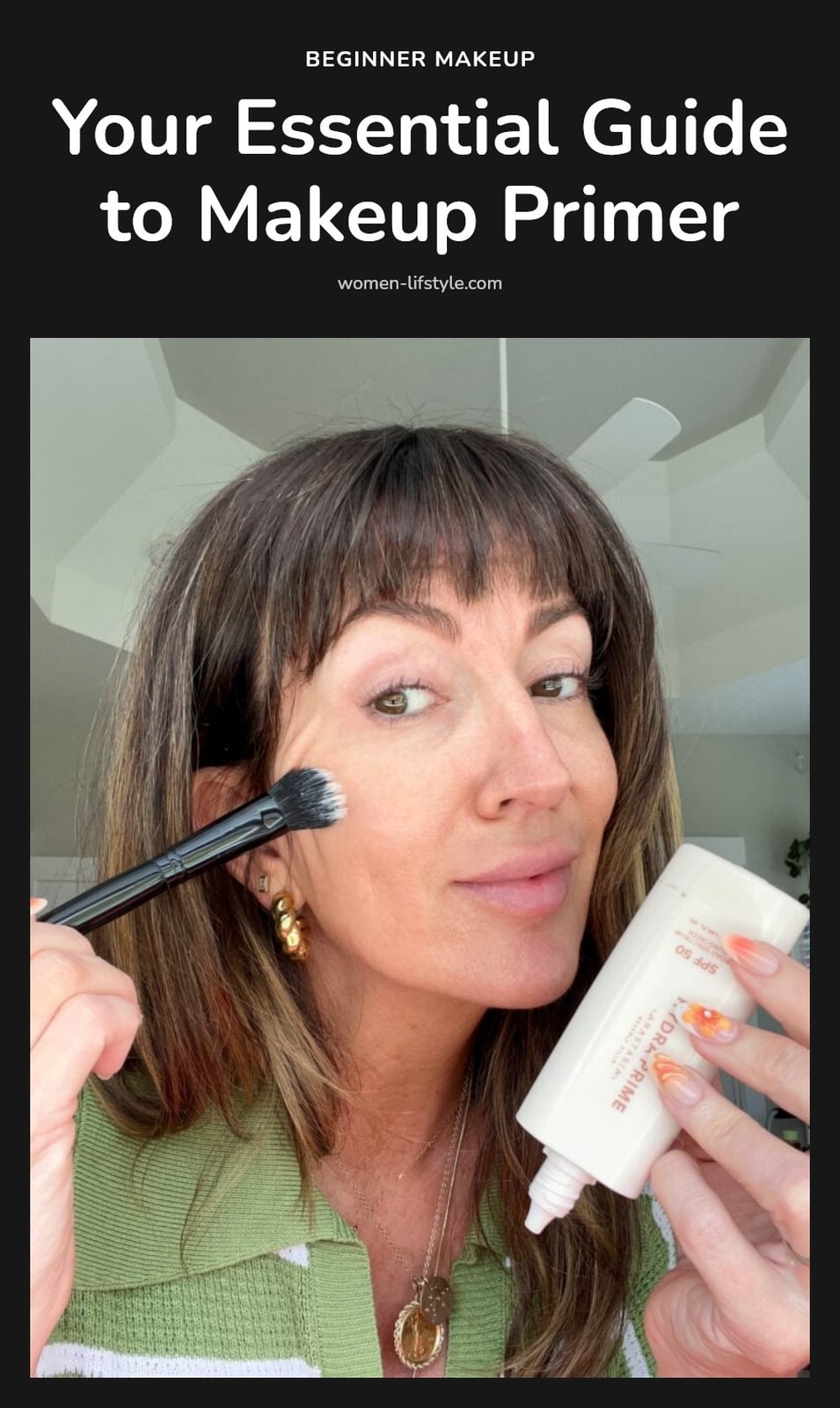
- Use a pea-sized amount: That’s all you need for your whole face. Squeeze it onto your fingertip.
- Dot and blend: Dot the primer on your forehead, cheeks, nose, and chin. Blend evenly using your fingers, a brush, or a sponge. Press and smooth, don’t rub.
- Let it set: Wait 1 to 2 minutes before applying foundation. This lets the primer form that smooth barrier.
My tip: if you have dry patches, press the primer gently into those areas instead of rubbing.
Common Primer Mistakes and How to Avoid Them
Using too much primer: A pea-sized amount is enough for your whole face. Applying more can cause pilling, where the product balls up, and make your makeup feel heavy or greasy.
Mismatched primer and foundation bases: Silicone-based primer with water-based foundation can separate and pill. Check the first few ingredients: if they end in “-cone,” it’s silicone-based; if water is listed first, it’s water-based. Keep them in the same family.
Skipping setting time: Primer needs 1-2 minutes to dry and form that barrier. If you apply foundation immediately, you lose the smoothing effect and longevity.
Rubbing instead of pressing: Vigorous rubbing can disturb your skincare and push primer into pores. Use gentle pressing or smoothing motions with your fingers, a brush, or a sponge.
Pro Tips for Maximizing Your Primer’s Power

Patch test for sensitivity: Before using a new primer all over your face, dab a small amount on your jawline or behind your ear. Wait 24 hours to check for redness or irritation.
Try multi-priming: Different areas of your face have different needs. Use a mattifying primer on your T-zone to control oil and a hydrating one on your cheeks to add moisture.
Apply after moisturizer and SPF: Primer works best when it adheres to a fresh layer of moisturizer, not bare skin. Skipping your moisturizer and SPF means the primer won’t grip properly.
Stop use if irritation occurs: If you notice burning, itching, or breakouts after applying a primer, wash it off and discontinue use. Not every formula works for every skin type.
Frequently Asked Questions
Can I skip primer?
Yes, you can skip primer, especially if you have naturally even skin or don’t wear heavy makeup. However, primer helps your makeup last longer and can address specific concerns like oiliness or large pores. If you don’t use it, your foundation may not stay as fresh throughout the day.
Is primer necessary for everyday makeup?
No, it’s not necessary, but it can be helpful if you want your makeup to last longer or look smoother. For a quick, natural look, you might not need it. If you have oily skin or wear makeup for long hours, primer can make a noticeable difference in how your makeup holds up.
Can I use primer without foundation?
Yes, you can wear primer alone. Some primers have a blurring or illuminating effect that can improve the look of your skin even without foundation. If you want a lighter makeup day, a tinted or color-correcting primer can even out your complexion on its own.
Does primer go on before or after moisturizer?
Primer goes on after your moisturizer and SPF, but before your foundation or concealer. Your skin should be clean and hydrated first. Applying primer directly onto moisturizer helps it blend smoothly and creates the right base for your makeup.
How long should I wait after applying primer?
Wait about one to two minutes for the primer to set before applying foundation. This gives it time to form an even layer on your skin. If you apply foundation too soon, the primer may not work as effectively, and your makeup could slide or pill.
Final Thoughts
If you want your makeup to last longer and look smoother, a good primer is worth adding to your routine. My tip: start with a pea-sized amount and let it set for a minute before applying foundation. You’ll see a difference in how your makeup wears throughout the day. Once you find the right primer for your skin, it becomes a simple step that makes everything else work better.
