

You know that moment when you’re talking to someone and suddenly realize you’ve been staring at their forehead, or worse, you’ve been avoiding their eyes entirely? It’s a common struggle that can leave you feeling awkward and self-conscious. This article breaks down the simple, practical techniques that will help you master the art of eye contact, so you can communicate with confidence and build real connections.

Key Takeaways
- Maintain eye contact for about 50-70% of a conversation in Western cultures.
- Break eye contact naturally every few seconds to avoid staring.
- Shift your gaze between both eyes or look at the bridge of the nose.
- Use more eye contact when listening and distribute it among group members.
- Combine eye contact with a slight smile to appear approachable.
The Secret to Confident Eye Contact
Effective eye contact is about balance, not staring. It signals engagement and sincerity without being aggressive. In Western cultures, aim for eye contact during 50-70% of the conversation. This balance helps you appear confident, approachable, and trustworthy, making your interactions more meaningful.
1. Find Your Sweet Spot: The 50-70% Rule

In Western cultures, maintaining eye contact for about 50-70% of the conversation is generally ideal. This range shows you’re engaged and attentive without being overwhelming. It’s a comfortable middle ground that builds rapport.
My tip: Think of it as a comfortable gaze, not a rigid stare. To gauge your time, notice the other person’s reactions. If they seem at ease, you’re likely in the sweet spot.
2. Break Eye Contact Naturally
It’s perfectly natural and even necessary to break eye contact periodically. This allows you to formulate thoughts, listen actively, or simply give the other person space. Forcing constant eye contact can feel unnatural and tense.
My tip: Glance away briefly to the side or slightly down, then return your gaze. This small break keeps the conversation relaxed and shows you’re thinking, not disengaging.
3. Look Between the Eyes
If direct eye contact feels too intense, try looking at the area between someone’s eyebrows or at their nose. This creates the illusion of direct eye contact for them without feeling overwhelming for you. It’s a great trick for building confidence gradually.
Start with this technique in low-pressure chats, then slowly shift to true eye contact as you become more comfortable. You’ll find the other person won’t notice the difference.
4. Shift Your Gaze Between Both Eyes
Instead of locking onto just one eye, gently shift your gaze between both of the person’s eyes. This small movement feels more natural to them and prevents that unsettling, frozen stare. It also softens your overall expression, making you look engaged rather than intense.
Tip: Let each single gaze last about 3-5 seconds before shifting to the other eye. A slow, rhythmic shift between left and right keeps the connection warm without feeling like you’re inspecting them.
5. More Eye Contact When Listening
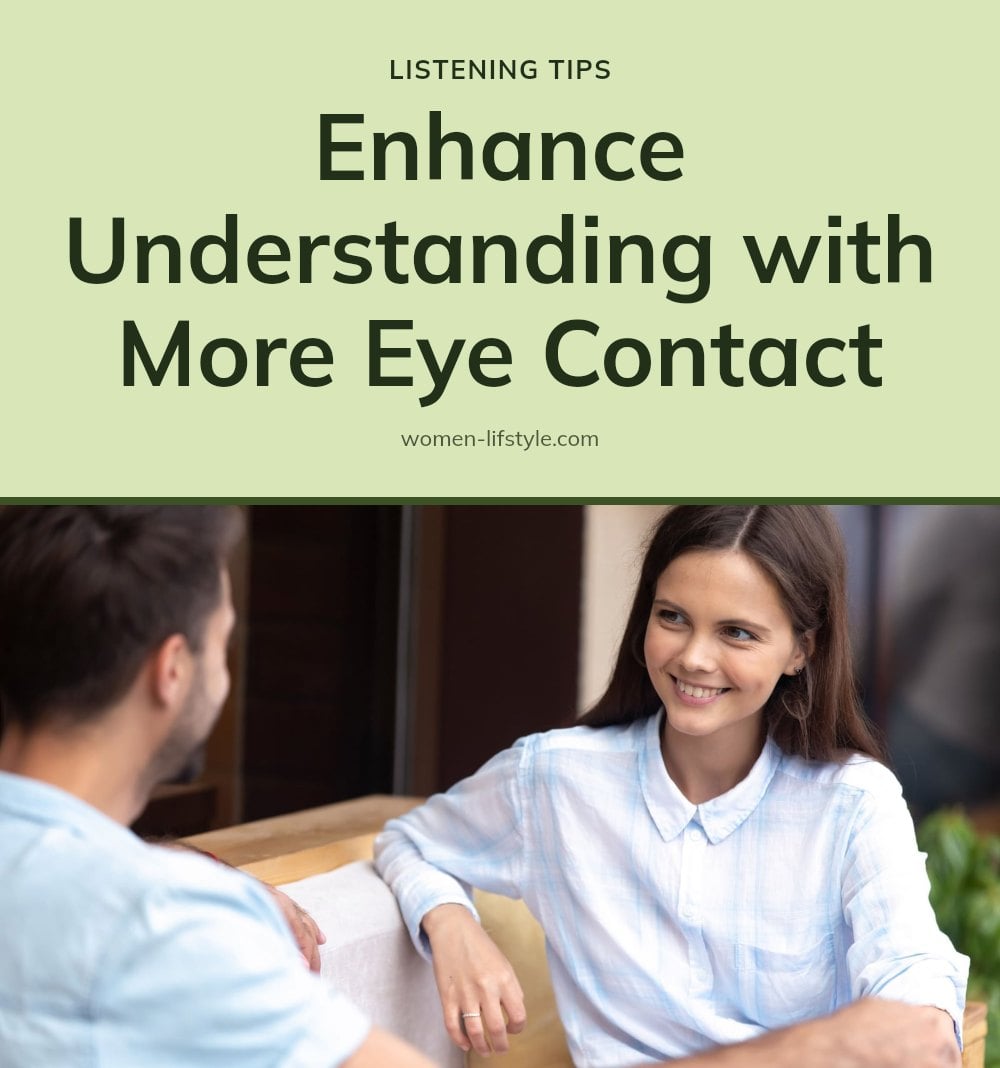
When you’re the listener, increase your eye contact slightly compared to when you’re speaking. This tells the other person you’re fully absorbing their words, not just waiting for your turn to talk. It signals respect and genuine interest in what they’re sharing.
Pro move: While listening, hold eye contact through the end of their sentence, then give a small nod before you respond. That extra beat shows you heard them completely.
6. Distribute Eye Contact in Groups
In a group conversation, make a point to share your eye contact with everyone present. This includes people who aren’t currently speaking. Each person should feel briefly acknowledged, not just the one talking.
Good to know: A quick 2-3 second connection with each person during a round of discussion keeps everyone included. If someone is quiet, a glance their way invites them to join in.
7. Combine with a Gentle Smile

A slight, genuine smile while you make eye contact softens your gaze and makes you appear more approachable. It transforms direct eye contact from intense into inviting, encouraging the other person to open up. The smile should reach your eyes, not just your mouth.
Tip: Practice a ‘smize’ in the mirror, smile with your eyes by crinkling the corners slightly. It creates a warm, welcoming expression that feels authentic without being over-the-top.
8. Practice in Low-Stakes Situations
Start practicing with people you already feel comfortable around, like friends or family. This builds your confidence in a safe environment before you try it in more formal settings like work meetings or first dates. Good to know: Even a quick chat with a store clerk counts as practice and helps you get used to holding a natural gaze.
9. Be Mindful of Cultural Norms

Eye contact norms vary significantly across cultures. What feels polite and engaged in one country might come across as rude or aggressive in another. When you travel or interact with someone from a different background, watch their cues and mirror their comfort level rather than following your own habits.
10. Record Yourself (Optional)
If you want to see how you actually come across, record yourself having a mock conversation or practice in front of a mirror. Watching the playback shows you habits you don’t notice in the moment, like how often you look away or whether your gaze feels stiff. It gives you a real sense of how others perceive your eye contact.
11. Observe Others’ Effective Eye Contact
Watch how confident speakers in meetings, podcasts, or social settings use eye contact. Notice the rhythm they follow, how long they hold a gaze, and when they look away. Observing real examples gives you a clear model to adapt for your own conversations.
Common Eye Contact Mistakes to Avoid
Staring Intensely: Fixating on someone’s eyes without looking away can feel aggressive or creepy. Break eye contact naturally every 3-5 seconds to keep the interaction comfortable.
Avoiding Eye Contact Completely: Staring at your shoes or over their shoulder signals disinterest, shyness, or even dishonesty. Aim for consistent, gentle engagement throughout the conversation.
Only Looking at One Eye: Staring at just one eye can be unsettling for the other person. Distribute your gaze naturally between both eyes to keep it soft and natural.
Forgetting Group Members: In a group, neglecting to make eye contact with everyone can make some feel excluded. Share your gaze around the whole group, not just the person speaking.
Ignoring Context: Don’t use the same eye contact intensity in every situation. Adjust based on the formality of the setting and your relationship with the person.
Frequently Asked Questions
How long should I hold eye contact?
In Western cultures, aim to hold eye contact for about 50-70% of the conversation. Break it naturally every few seconds to avoid staring. A typical hold is around 3-5 seconds before glancing away briefly.
Is it rude to break eye contact?
No, breaking eye contact is not rude. It’s a natural part of conversation that signals you are thinking, listening, or giving the other person space. The key is to break it smoothly by looking to the side or slightly down, not abruptly at your feet.
How do I make eye contact in a group?
Distribute your eye contact among all group members, not just the person speaking. Make a brief 2-3 second connection with each person, including those who are quiet. This makes everyone feel included and engaged.
Can I practice eye contact alone?
Yes, you can practice alone. Try holding eye contact with yourself in a mirror for a few seconds at a time. You can also record a mock conversation on your phone to observe your habits, such as how often you look away or whether your gaze is too intense.
What if eye contact feels too intense for me?
Start with a softer approach. Look at the area between someone’s eyebrows or at their nose instead of directly into their eyes. This creates the illusion of eye contact without the intensity. Gradually increase the duration as you become more comfortable.
Final Thoughts
My recommendation: start with one small change, like looking at the area between someone’s eyebrows during a conversation. It’s a low-pressure way to build comfort. Realistically, improving your eye contact is a gradual process that gets easier with consistent practice over a few weeks. Focus on being present and genuinely engaged, and the right gaze will follow naturally.
