

You already know that keeping your floors clean is a constant chore, but what if the best cleaner is already sitting in your pantry? Homemade floor cleaners are a simple, low-cost alternative to store-bought products, and they let you skip the harsh chemicals. This article covers the basic recipe, step-by-step mopping tips, and how to customize the mix for tile, laminate, linoleum, and more.
Key Takeaways
- Mix 1/2 cup white vinegar with 1 gallon of hot water and 2-3 drops of dish soap for an all-purpose cleaner.
- Always test any new solution on a hidden spot before mopping the whole floor.
- Wring your mop thoroughly to avoid excess water that can warp wood or laminate.
- Sweep or vacuum before mopping to remove grit that can dull your finish.
- Mop high-traffic areas once a week and less-used rooms every two weeks.
Why Homemade Floor Cleaners Are Your Best Bet
Homemade floor cleaners are a smart swap for store-bought options. They cost less, cut down on packaging waste, and let you skip harsh chemicals that can linger on your floors. With just vinegar, dish soap, and baking soda, you can tackle tile, laminate, and more. The trick is matching your ingredients to your flooring. Use the right combo, and you get a deep clean without damage or dullness. Choose wrong, and you risk streaks or worse.
All-Purpose Homemade Floor Cleaner Recipe
This basic recipe works for most sealed hard floors. Mix 1/2 cup white vinegar with 1 gallon of hot water in a bucket. Add 2-3 drops of liquid dish soap. Stir gently.
- White vinegar: disinfects and neutralizes odors thanks to its acetic acid.
- Dish soap: cuts grease and lifts dirt that water alone can’t.
- Hot water: dissolves grime faster than cold, so your mop works harder.
For a deeper clean on tile or linoleum, make a paste of baking soda and water for stubborn spots before mopping.
Step-by-Step: Mopping Your Floors with Homemade Cleaner
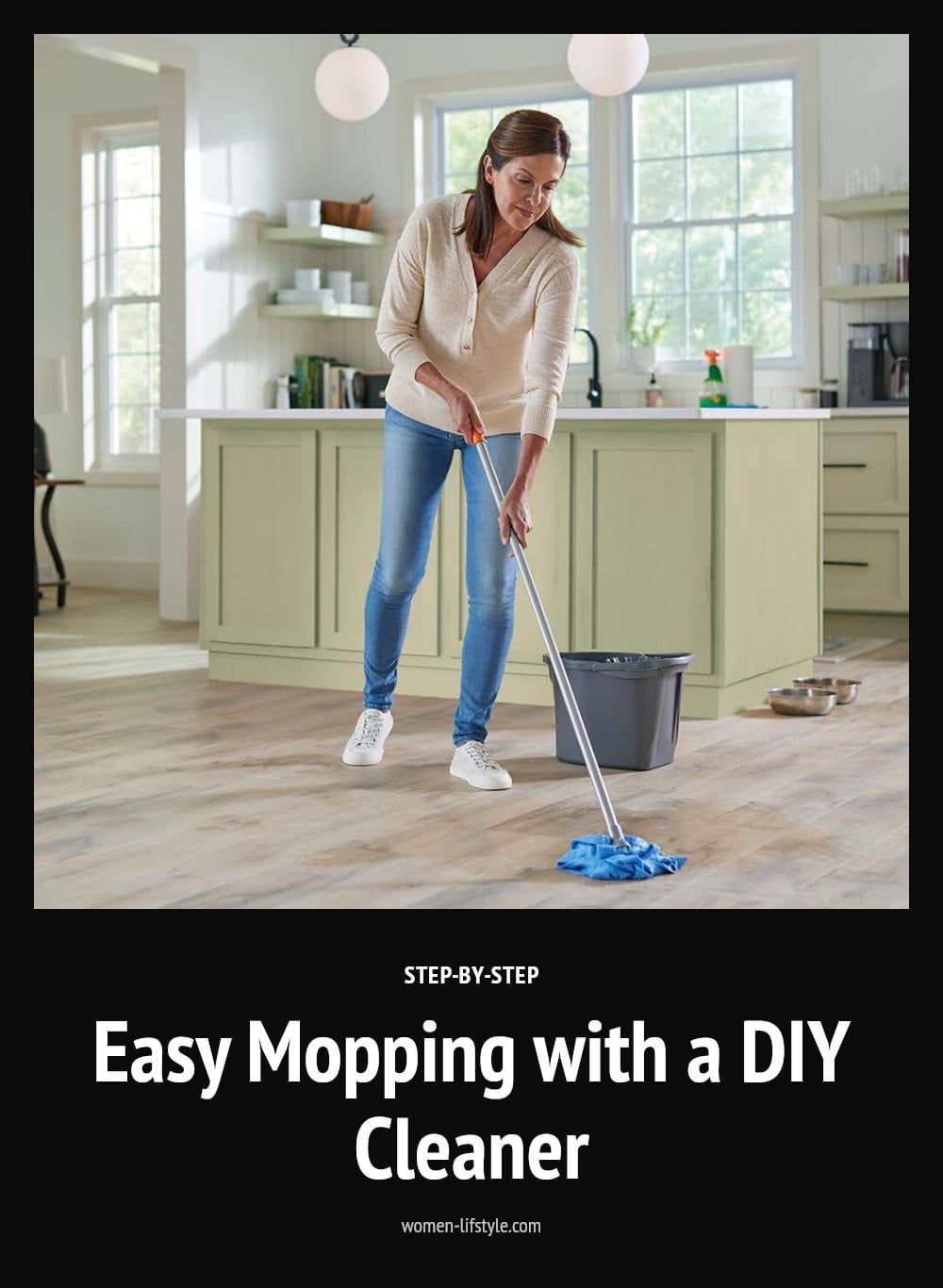
Before you dip the mop, do the prep work. It makes the whole job easier and prevents muddy streaks.
- Sweep or vacuum: Remove loose dirt, dust, and debris from the entire floor. Skipping this step just pushes grit around and dulls your finish.
- Mix your cleaner: Combine the vinegar, dish soap, and hot water in a bucket. Use hot water, not cold, because it dissolves grime more effectively.
- Test first: Apply a small amount of the solution to an inconspicuous corner. Wait a few minutes and check for discoloration or damage. This is especially important on colored grout or unsealed stone.
- Wring your mop: Squeeze out as much liquid as you can. The mop should feel damp, not dripping. Over-wetting is the fastest way to warp wood or swell laminate.
- Mop in sections: Start at the farthest corner and work toward the door. Work in small areas, rinsing your mop in a separate bucket of clean water between dips. Change the cleaning solution when it looks visibly dirty, usually after 2-3 rooms.
- Rinse with clean water: After mopping with soap, go over the floor with a mop dipped in plain water and wrung well. This removes any sticky residue that attracts dirt.
My tip: Use a two-bucket system: one with the cleaning solution and one with plain water for rinsing the mop head. This keeps dirt from redepositing on the floor.
Pro Tips for a Streak-Free Shine
These small tweaks make a big difference in how your floors look and how long they stay clean.
- Distilled Water: Swap tap water for distilled in your cleaning solution. It lacks the minerals that cause streaks, especially in hard water areas.
- Two-Bucket Method: Fill one bucket with your cleaning solution and another with plain water for rinsing the mop. This keeps your cleaning solution from turning gray after the first few wrings.
- Ventilation is Key: Open a window or turn on a fan while mopping. Vinegar’s smell fades fast, but good airflow keeps it from lingering.
- Wear Gloves: Always protect your hands with rubber gloves. Even mild solutions can dry out skin or cause irritation over time.
Customizing Your Cleaner for Different Floor Types

Tile and Linoleum
For greasy kitchen floors, add a few drops of liquid dish soap to the basic vinegar and water recipe. The soap cuts through cooking residue without leaving a film. For stubborn spots, make a paste of baking soda and water, apply it directly, let it sit for a few minutes, then scrub gently before mopping.
Hardwood and Laminate
These floors hate excess moisture. Wring your mop until it is just damp, not wet. To help the cleaner evaporate faster and leave a streak-free finish, use a solution of 1/2 cup white vinegar to 1 gallon of warm water. Skip the vinegar if your wood floor has a wax coating, as vinegar can dull it.
Natural Stone (Marble, Granite, Travertine)
Vinegar is off-limits for stone. Its acidity can etch the surface permanently. Use only a few drops of mild dish soap in warm water. Rinse thoroughly with clean water to remove any soap residue that could dull the stone over time.
Extra Freshness
Add 5-10 drops of lemon or tea tree essential oil to your cleaning solution. Lemon oil adds a clean scent, while tea tree oil offers mild antimicrobial benefits. Stir the oil into the water first before adding the vinegar or soap to help it disperse evenly.
Caution: Avoid vinegar on unsealed grout, as its acidity can damage the grout over time.
Common Mopping Mistakes and How to Avoid Them
Using the Wrong Cleaner: A cleaner that works on tile can ruin stone or wood. My tip: Test a small, hidden spot first before you mop the whole floor.
Too Much Water: Puddles seep into wood and laminate seams, causing warping. Wring your mop until it is just damp, not dripping.
Dirty Mop Water: Once the water looks gray, swap it out. Mopping with dirty water just smears dirt back onto the floor.
Skipping the Pre-Clean: Loose crumbs and hair turn into muddy streaks when wet. Sweep or vacuum first for a cleaner result.
Not Rinsing: Soap residue left on the floor attracts dust and leaves a sticky film. Rinse with clean water after mopping with soap.
Maintaining Your Sparkle: Mopping Schedule and Care
Regular Mopping: Mop high-traffic areas like kitchens and entryways once a week. Less-used rooms can go every two weeks.
Spot Cleaning: Wipe up spills as soon as they happen. Letting them sit increases the chance of stains or sticky buildup.
Mop Care: Rinse the mop head thoroughly after each use and let it air dry completely. A damp mop head breeds mildew and bacteria.
Storage: Pour leftover homemade cleaner into a clearly labeled bottle. Keep all cleaning solutions out of reach of children and pets.
Frequently Asked Questions
Can I use essential oils in my homemade floor cleaner?
Yes, you can add a few drops of essential oils like tea tree or lemon oil for fragrance and mild antimicrobial benefits. Just make sure the oils are diluted in the water mixture first, and avoid direct skin contact with undiluted oils. Always test on a small area first to ensure the oil doesn’t affect your floor’s finish.
What if my floors still look streaky after mopping?
Streaks often come from using too much soap, hard water minerals, or not rinsing the floor. Try switching to distilled water in your cleaning solution, reduce the dish soap to just 2-3 drops, and rinse the floor with clean water after mopping. Wringing your mop more thoroughly also helps prevent streaks.
Is homemade cleaner safe for pets?
Vinegar and dish soap are generally safe for pets once the floor is dry, but some animals may be sensitive to strong smells. Rinse the floor well after mopping to remove any soap residue, and keep pets off the floor until it is completely dry. If your pet has a history of skin or respiratory issues, consider using a pet-safe commercial cleaner instead.
What is the best homemade floor cleaner for tile?
For tile floors, the basic vinegar and water recipe works well for everyday cleaning. If you have greasy kitchen tile, add a few drops of liquid dish soap to the mix. For stubborn spots, make a paste of baking soda and water, apply it to the spot, let it sit, then scrub gently before mopping. Avoid vinegar on unsealed grout, as the acid can damage it.
Final Thoughts
For most sealed hard floors, stick with the basic vinegar and water recipe, and add a few drops of dish soap only when you need extra grease-cutting power. Expect to spend about 15 to 20 minutes per room, and change your mop water when it looks dirty. With the right prep and a little care, your floors will stay clean and streak-free between moppings.
