

If your hair gets greasy just hours after washing, you’re probably using the wrong shampoo or technique. The real solution is a professional shampoo that keeps your scalp clean for at least three days without leaving residue. My tip: apply it directly to your scalp, not your hands first, and wash only when your hair is actually dirty. In this article, I’ll cover the exact washing method, common mistakes, and how to keep oil under control between washes.

Key Takeaways
- Choose a professional shampoo that keeps your scalp clean for at least three days.
- Apply shampoo directly to your scalp, not to your hands first, and work it in firmly.
- Only wash your hair when it is actually dirty and oily, regardless of your old schedule.
- Condition only from mid-lengths to ends, and clean your hair brushes weekly to avoid transferring oil.
How to Stop Greasy Hair and Keep it Fresh Longer
The fastest way to stop greasy hair is to switch to a professional-grade shampoo that keeps your scalp clean for at least three days without leaving residue. Proper application matters just as much as the product: apply shampoo directly to your scalp (not your hands first), work it in firmly, and do a second wash with half the amount to fully dissolve excess oil. Then adjust your wash schedule so you only wash when your hair is truly dirty, not on a fixed routine. This breaks the over-washing cycle and helps your scalp rebalance its natural sebum production.
Understanding Why Your Hair Gets Greasy So Quickly
What Causes Greasy Hair
Greasy hair starts with overactive sebaceous glands in your scalp. These glands produce sebum, a natural oil that keeps your hair and skin moisturized. When they produce too much, your hair looks oily and heavy.
Several factors can make this worse:
- Over-washing: Washing too often strips natural oils, which signals your scalp to produce even more sebum to compensate. This creates a cycle of greasiness.
- Hormones and genetics: Fluctuations during puberty, pregnancy, or menstruation can ramp up oil production. Your genetic makeup also influences how oily your scalp naturally is.
- Product buildup: Heavy conditioners, silicones, and styling products left on the scalp weigh hair down and make it look greasier.
- Touching and brushing: Every time you run your fingers or a brush through your hair, you spread sebum from the roots down the shaft, making the whole length look oily faster.
Understanding these triggers is the first step to choosing a routine that actually works.
Your Essential Toolkit for Managing Oily Hair
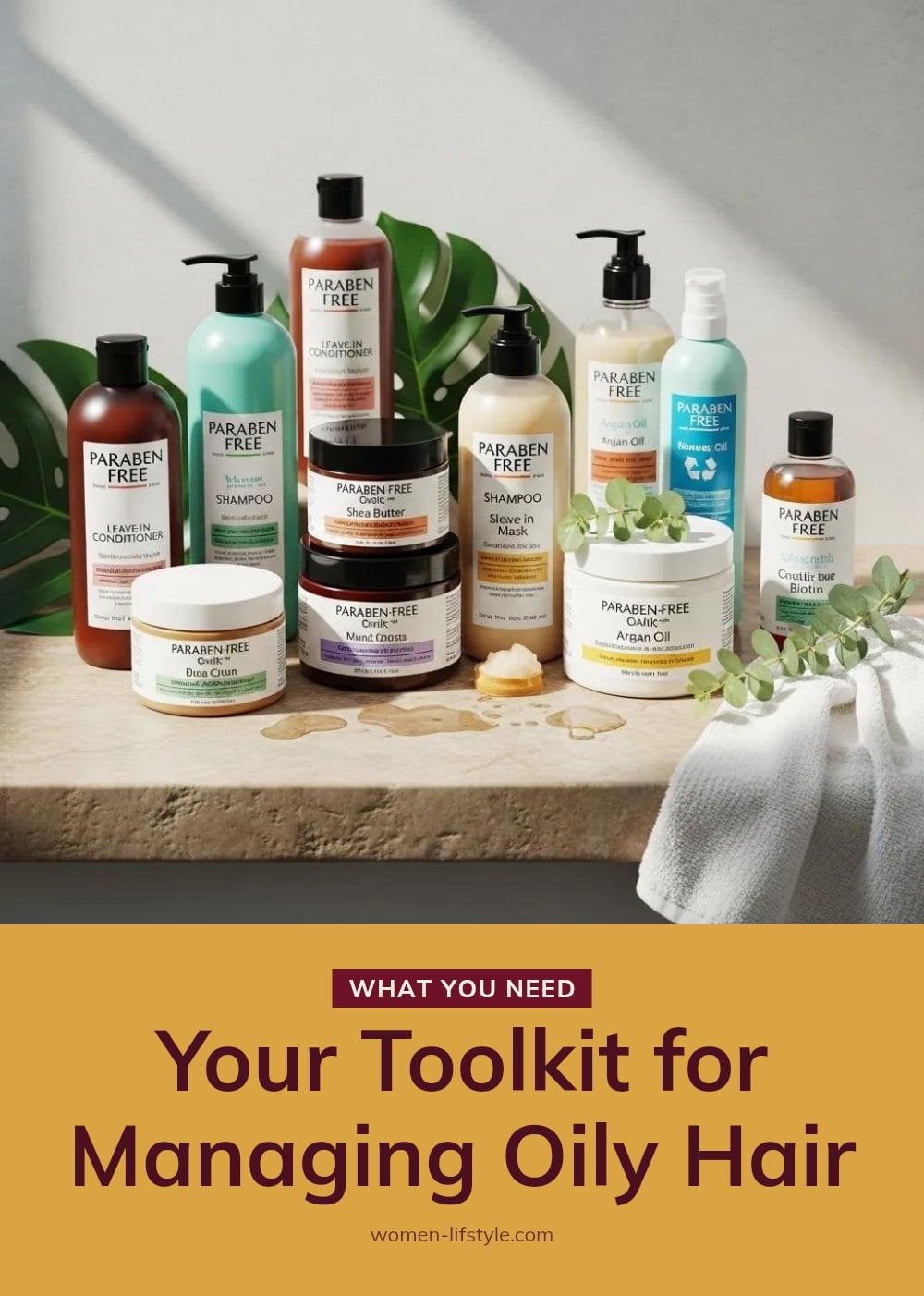
Managing oily hair starts with the right products. Here is what you need and why each one matters:
- Professional-grade shampoo for oily hair: This is non-negotiable. A good shampoo removes dirt and oil without leaving residue, keeping your scalp clean for days. Cheap formulas often fail to cut through sebum.
- Lightweight conditioner: Apply it only to your mid-lengths and ends. Keeping it off your roots prevents weighing your hair down and adding grease near the scalp.
- Dry shampoo: A powder or spray that soaks up excess oil between washes. It is your best tool for extending the time your hair looks fresh.
- Leave-in conditioner: Use it on your mid-lengths and ends only, never on the scalp. It adds moisture inside the hair shaft (not just on the surface), which prevents dryness that can trigger your scalp to overproduce oil.
- Hair oil: Use a tiny amount on your ends to seal and polish them. Never apply it to your scalp or roots.
Your Step-by-Step Guide to Washing Greasy Hair Correctly
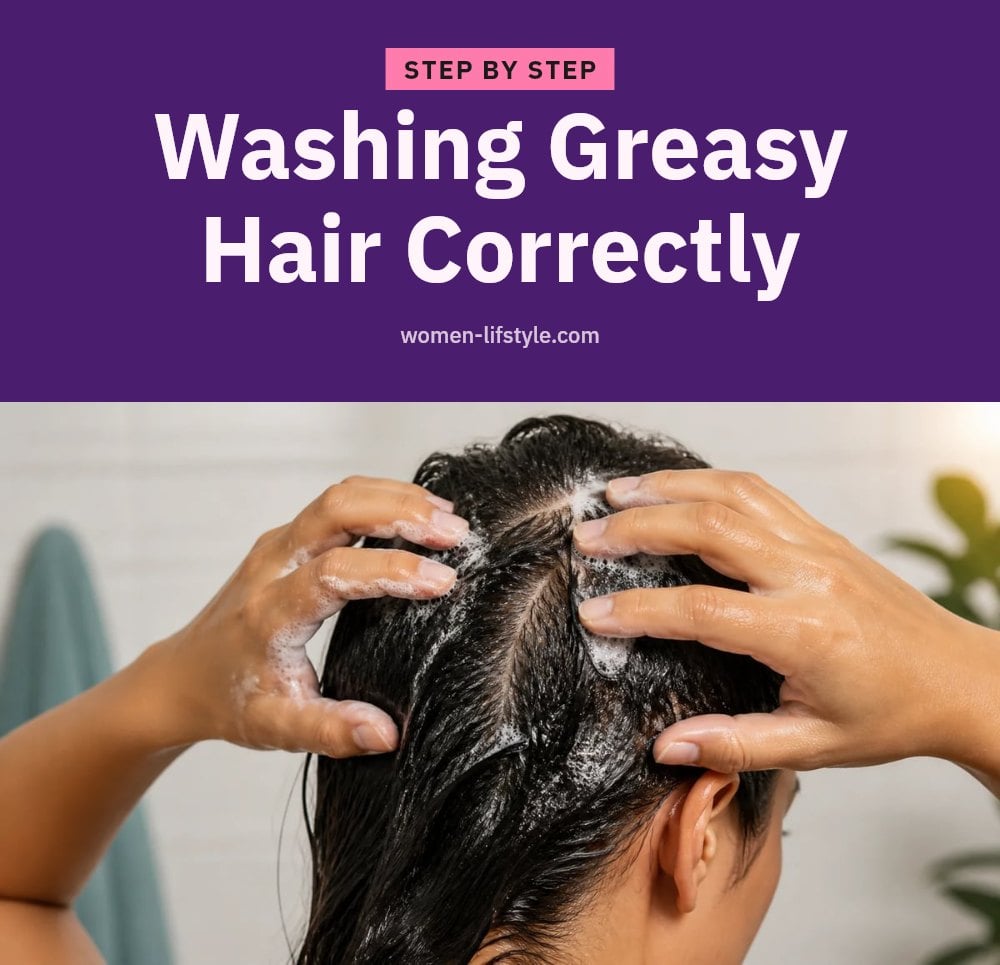
- Choose the right shampoo: Pick a professional shampoo that keeps your hair clean for at least three days. Look for a simple formula that removes dirt and buildup without leaving any residue.
- Apply shampoo directly to your scalp: Start at the back of your head. Spread your hair and apply the shampoo while it is still liquid (before it lathers). Push it down to your scalp, not just on top of your hair. Repeat for the top and sides.
- Work it in firmly: Press your fingertips into your scalp and scrub. Focus on dissolving the oil by making direct contact with your scalp, not just the hair surface. This also stimulates blood flow.
- Do a second wash: Use half the amount of shampoo you used the first time. A good lather means your hair is clean. If you do not get much lather, add a little more shampoo until you do.
- Wash only when dirty: Do not stick to a fixed schedule. Only wash your hair when it is truly oily and dirty. After switching to a stronger shampoo, you will likely need to wash less often.
- Apply leave-in conditioner to mid-lengths and ends: On wet, hydrated hair, spray a leave-in conditioner only from the mid-lengths down to the ends, avoiding the scalp and roots. Use 8 sprays for fine hair, 12 for medium, and 16 for coarse hair. Brush it through with a wet brush.
- Seal your ends with oil: Rub a small amount of hair oil between your palms and apply it to your ends only. This seals and polishes them. Use sparingly because oil is heavy.
If you learn better by watching, this 14-minute video from Blowout Professor shows every step. The how-to part starts at 1:27.
Common Mistakes Making Your Hair Greasier
Several habits can make greasy hair worse. Washing daily is the most common one. Over-washing strips natural oils, and your scalp responds by producing more sebum, which starts a cycle of greasiness.
Applying conditioner to your roots is another frequent error. Heavy conditioners near the scalp weigh hair down and contribute to oiliness. Instead, keep conditioner on mid-lengths and ends only.
Not rinsing thoroughly also causes problems. Residue from shampoo or conditioner builds up over time, making hair look dull and oily. Rinse until the water runs completely clear.
Using cheap shampoos can backfire too. Ineffective formulas may not properly remove oil and dirt, leaving residue that makes hair greasy faster. A professional-grade shampoo cleans without buildup.
Finally, touching your hair frequently spreads oils from your hands onto your strands. That transfer can quickly make clean hair look greasy. Keep your hands off your hair between washes.
Keeping Greasy Hair at Bay Between Washes
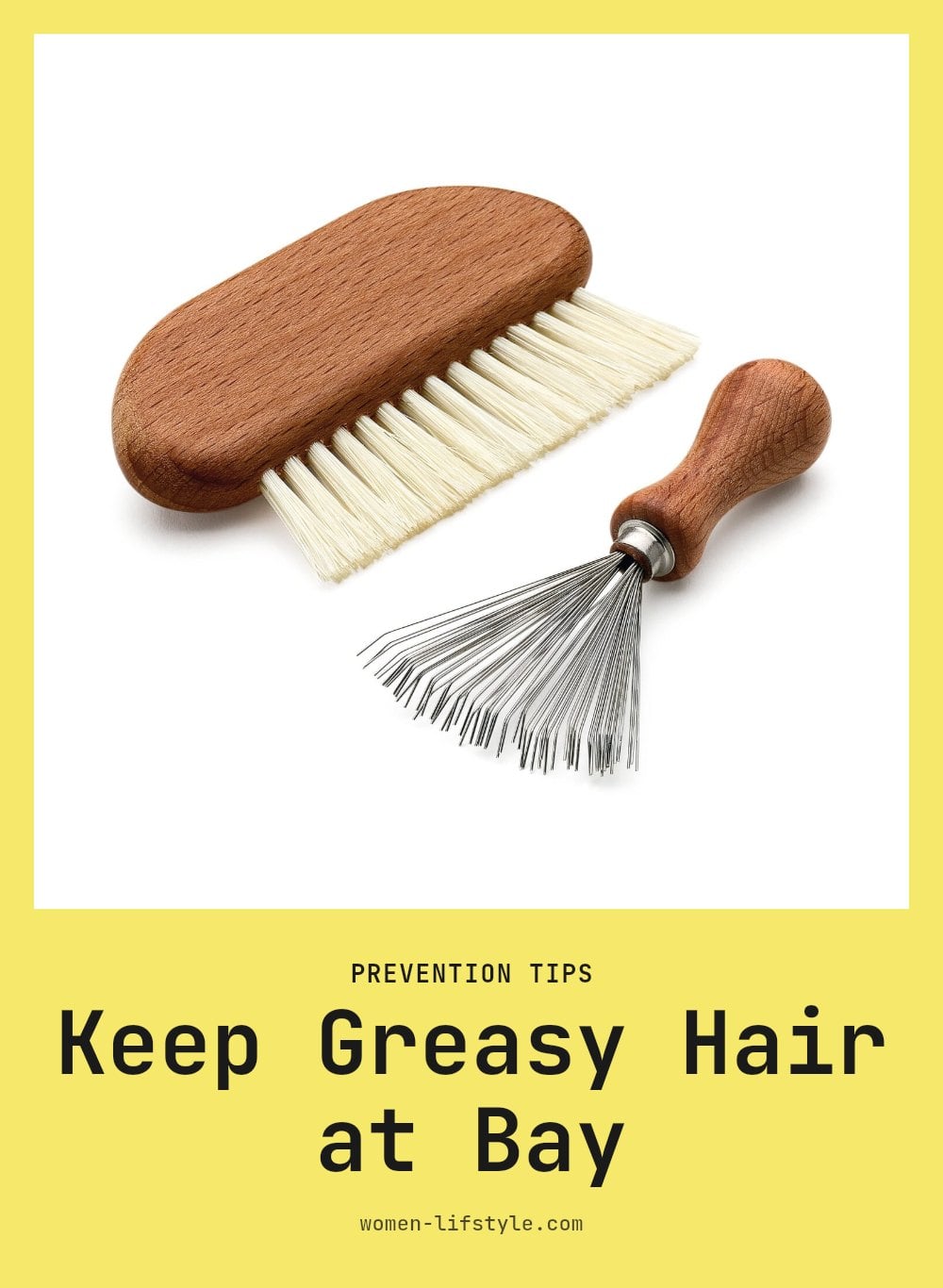
Your hair care routine doesn’t end when you step out of the shower. To keep grease at bay, start by cleaning your hair brushes weekly. Old oil and product buildup hide in the bristles and transfer right back onto your fresh hair.
Between washes, reach for dry shampoo. Spray it onto your roots, wait a minute, then brush through. It absorbs excess oil and buys you an extra day or two of clean-looking hair.
Also, be mindful of your hands. Touching your hair throughout the day spreads sebum from your scalp down the strands, making it look greasy faster. If you have long hair, tie it back loosely to keep it off your face and neck, where oils collect.
Finally, wash with lukewarm water, not hot. Hot water can stimulate your sebaceous glands, leading to more oil production. Stick to warm rinses to keep your scalp calm.
When to Consult a Professional for Oily Hair
If your oily scalp comes with redness, irritation, or itching that won’t quit, it’s time to see a dermatologist. These symptoms can point to a skin condition like seborrheic dermatitis, which needs medical treatment rather than another shampoo switch. A dermatologist can give you a proper diagnosis and prescribe targeted products that actually address the root cause.
Also consider booking a session with a professional stylist if you’ve adjusted your routine and products without real improvement. They can assess your hair type, spot what you’re missing, and recommend techniques or formulas tailored to your scalp. Sometimes a fresh pair of trained eyes solves what trial and error can’t.
Frequently Asked Questions
How often should I wash greasy hair?
Wash your hair only when it feels dirty and oily. A good professional shampoo should keep your scalp clean for at least three days, so you can often stretch between washes. Over-washing can trigger more oil production.
Can diet affect greasy hair?
The link between diet and greasy hair is debated, but some research suggests that a diet high in refined sugars and unhealthy fats might increase sebum production. Eating a balanced diet may help, but it’s not a guaranteed fix.
What ingredients should I look for in shampoo for oily hair?
Look for a simple, professional-grade shampoo that removes dirt and oil without leaving residue. Avoid shampoos with heavy silicones or extra oils that can build up and weigh hair down.
Does stress make hair greasier?
Stress can influence hormone levels, which may increase sebum production in some people. Managing stress through relaxation techniques might help reduce oiliness, but it’s not a direct solution for everyone.
Can dry shampoo damage my hair?
Dry shampoo is generally safe when used as directed. It absorbs excess oil and can extend time between washes. Avoid getting it in your eyes, and don’t rely on it as a replacement for washing your scalp.
Final Thoughts
The most effective step you can take is to switch to a professional shampoo that truly cleans without residue and to apply it correctly. Be patient: it can take a few days to a few weeks for your scalp to balance out. Stick with the routine, and you’ll see your hair stay fresher for longer.
The information in this article is for general informational purposes only and is not a substitute for professional medical advice. If you experience persistent scalp irritation, redness, or itching, consult a dermatologist for a proper diagnosis and treatment.
