

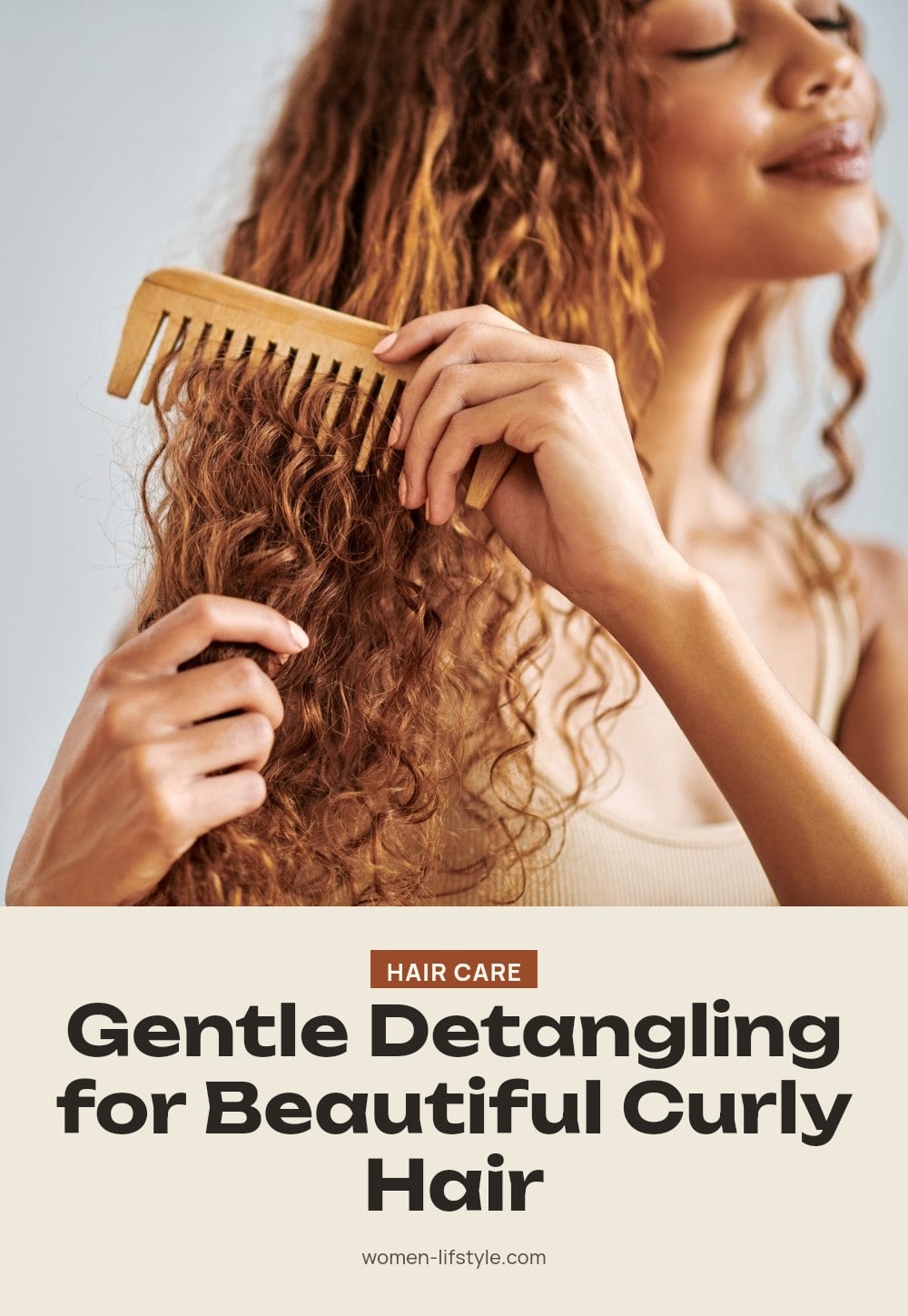
If you have curly or thick hair, you know the struggle of dealing with tangles and knots that can lead to breakage and frustration. The key to pain-free detangling is a gentle, systematic approach that starts with wet or damp hair and a generous amount of conditioner. In this article, I’ll walk you through the step-by-step method I rely on to keep my curls smooth and healthy.
Key Takeaways
- Always detangle hair when it is wet or damp and saturated with conditioner.
- Start detangling from the ends and work upward to avoid pushing tangles into larger knots.
- Use your fingers first to separate large knots, then a wide-tooth comb or detangling brush.
- Work in small sections to reduce stress on individual strands.
- Detangle regularly on wash days to prevent small tangles from becoming stubborn knots.
The Secret to Pain-Free Detangling
Detangling curly and thick hair without breakage or pain comes down to one rule: always work with wet or damp hair saturated with conditioner. Start from the ends and move toward the roots so you don’t push tangles into tighter knots. Patience and the right tools, like a wide-tooth comb or detangling brush, make the process smooth and damage-free.
1. Always Detangle Wet or Damp Hair
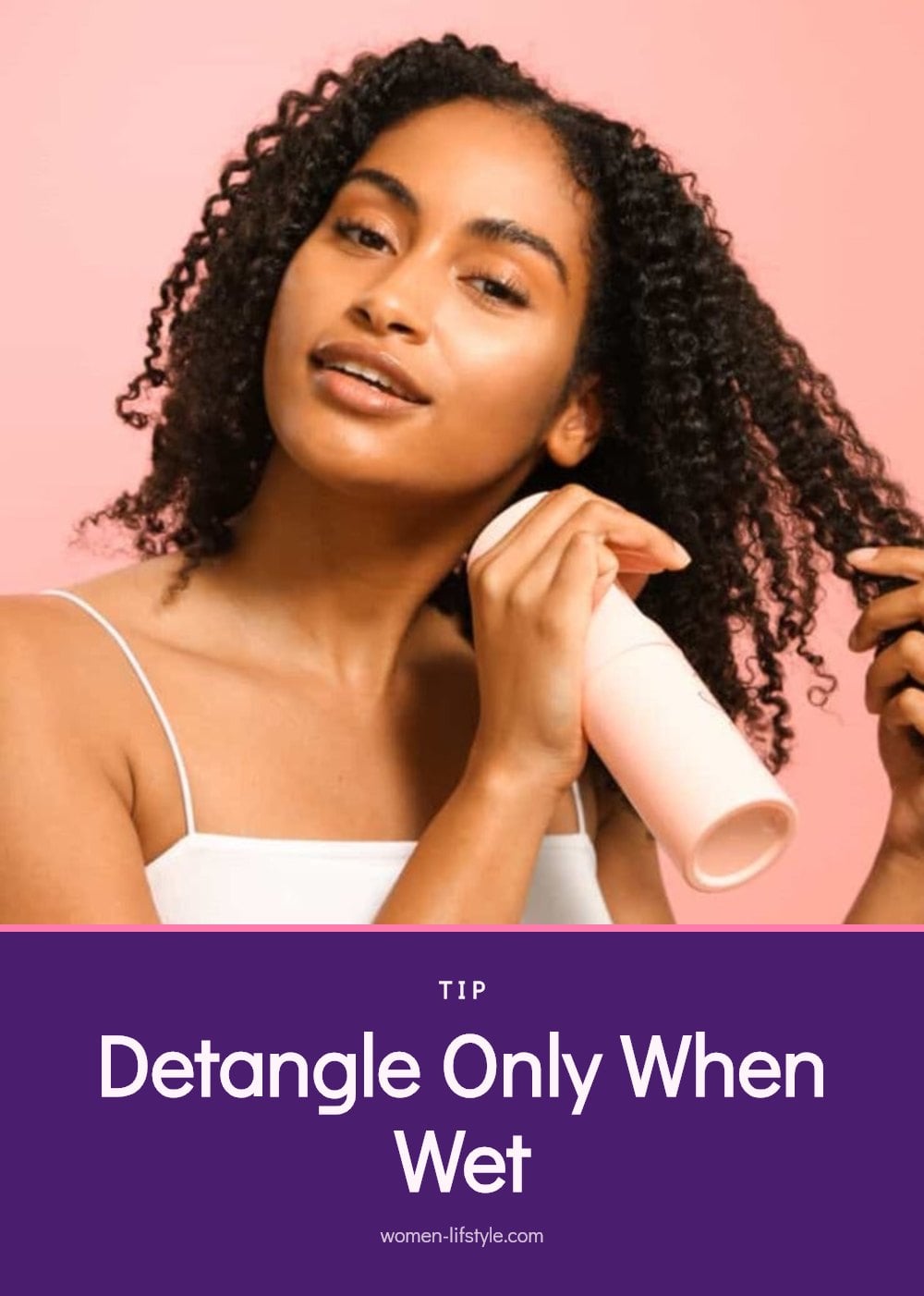
Detangling dry hair is the fastest way to cause breakage and damage to the hair shaft. Saturate your hair with water or a dampening spray before you apply any product.
- Water softens the hair and reduces friction between strands.
- Work under running water or use a spray bottle to keep hair fully wet.
- My tip: Keep a spray bottle handy if your hair starts to dry out during the process.
2. Conditioner is Your Best Friend
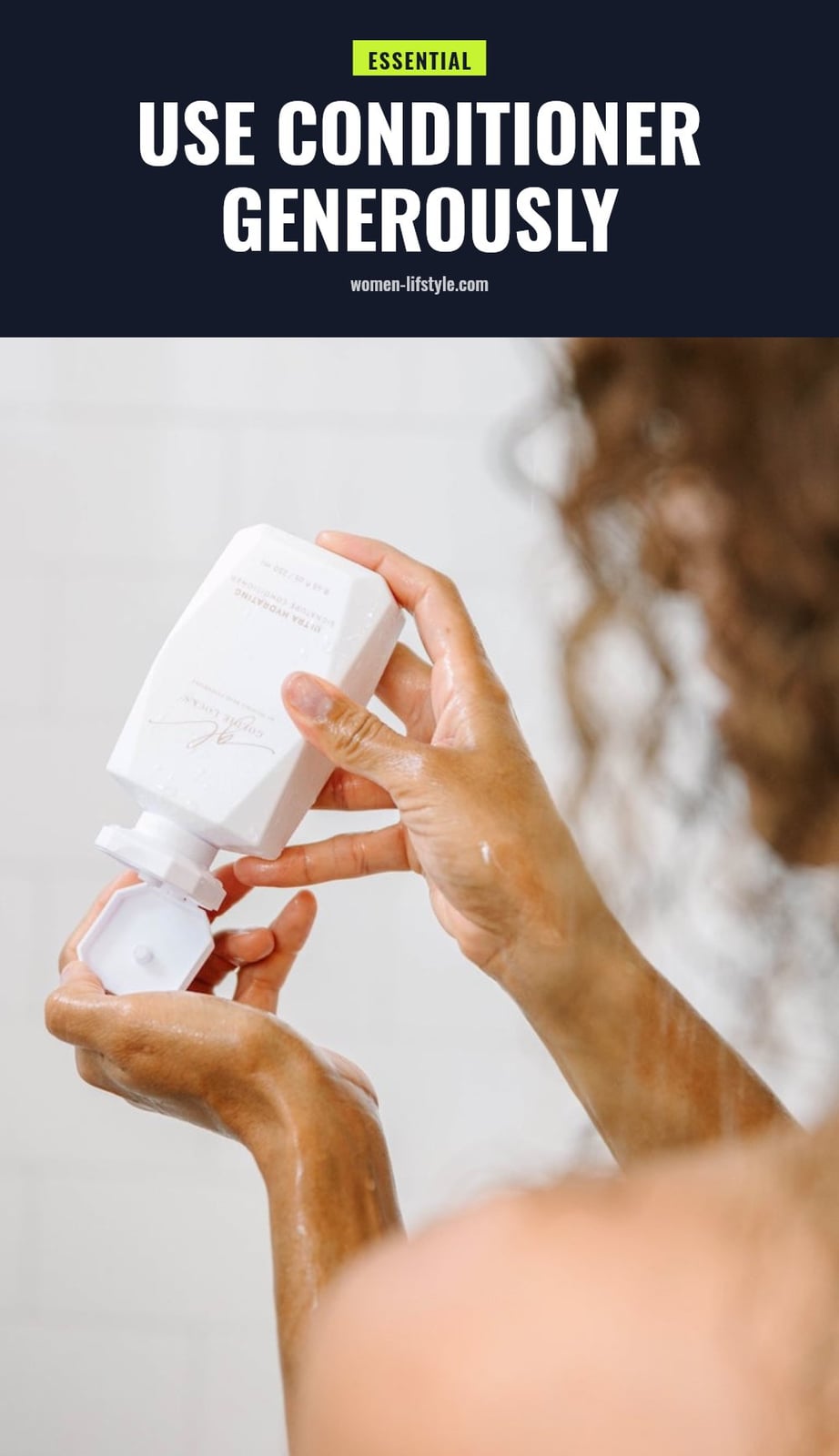
Conditioner is the lubricant that lets strands slide apart instead of snapping. Apply a generous amount of conditioner or a dedicated detangler from mid-length to ends, making sure every tangle is coated.
- The slip reduces friction, so strands separate without pulling or breakage.
- Leave it in for a few minutes to soften the hair and increase pliability.
- Use your fingers to work the product through large knots before reaching for a comb.
3. Section Your Hair
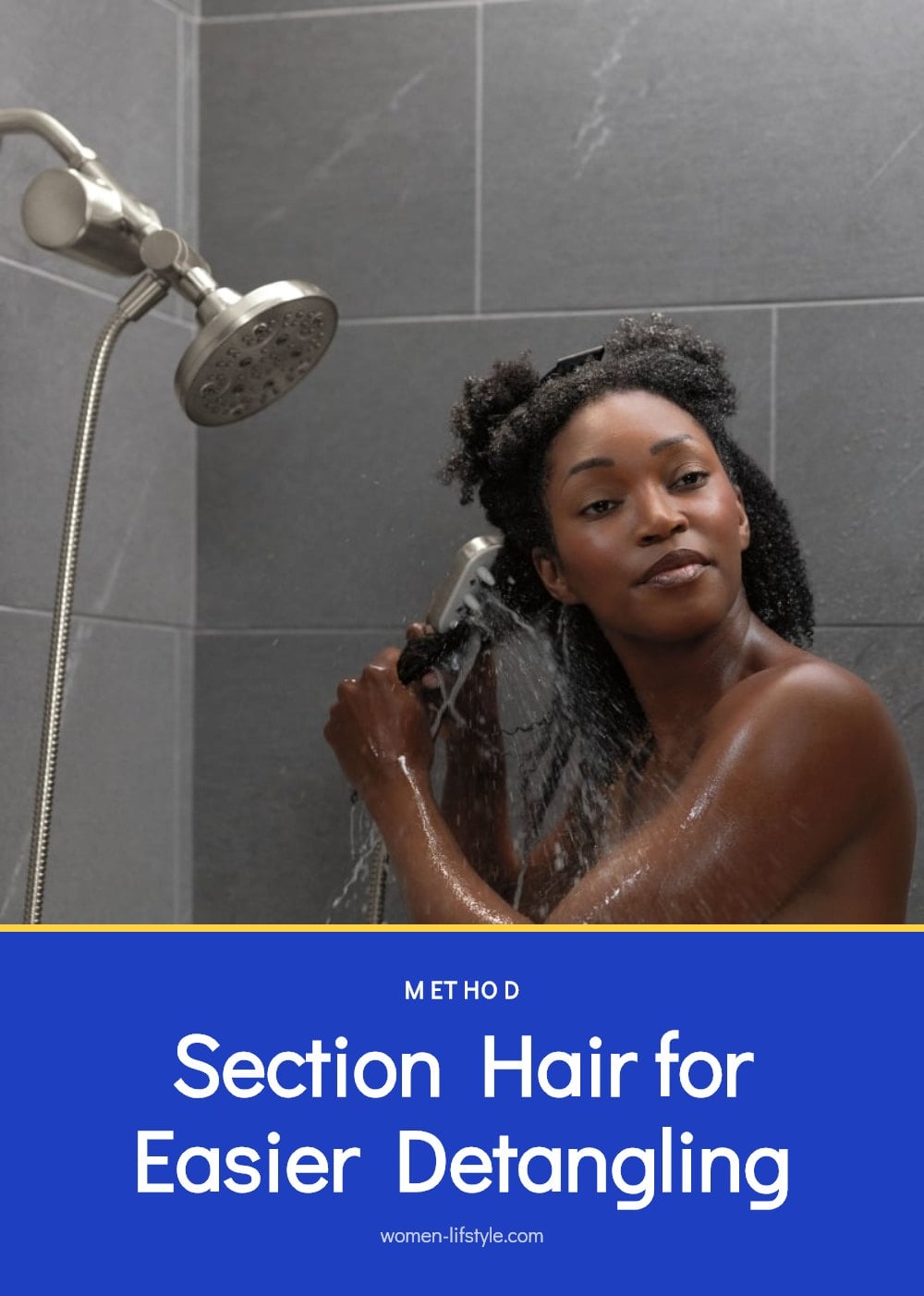
Detangling your whole head at once creates unnecessary stress on individual strands. Divide your hair into small, manageable sections using hair clips or ties.
- Smaller sections let you focus on each tangle without pulling on surrounding hair.
- My tip: The thicker or curlier your hair, the smaller your sections should be.
- Clip away the sections you aren’t working on so they stay out of the way.
4. Start From the Ends, Work Up
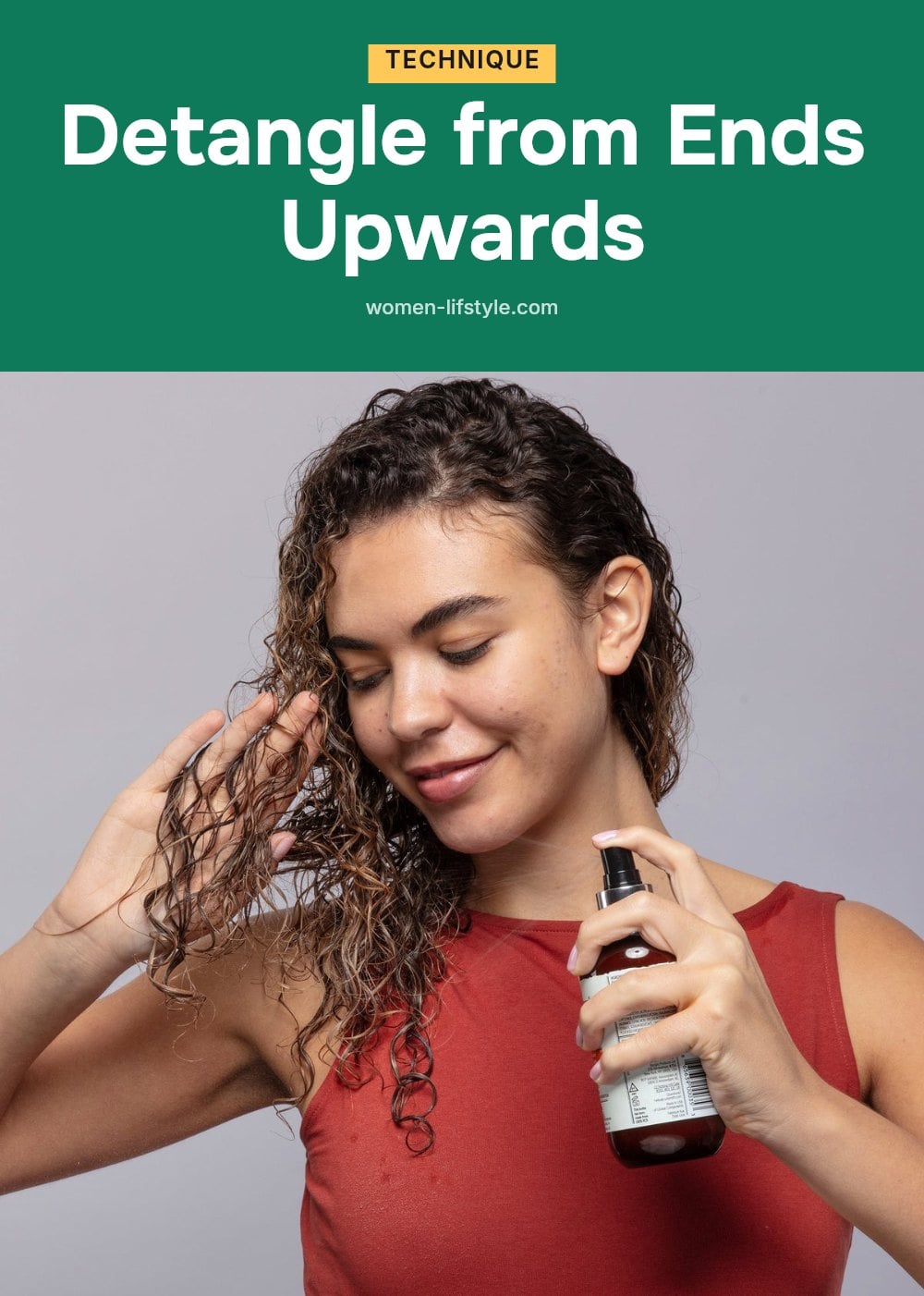
Always start detangling from the very ends of your hair and gradually work upwards to the roots. This prevents you from pushing tangles further down and creating larger, more stubborn knots.
- Why it works: Starting at the ends lets you release the smallest tangle first. Once the ends are smooth, the rest of the hair glides through without resistance.
- How to apply: Hold the section of hair a few inches above the ends. Comb or brush from that point down. Then move your hold up by an inch and repeat until you reach the roots.
5. Use Your Fingers First
Before introducing any tool, use your fingers to gently separate large knots and tangles. Your fingers can feel exactly where the tangle is tight and how much pressure to apply.
- Why it works: Fingers are softer than any comb or brush, so they minimize pulling on the hair shaft and scalp.
- Pro move: Work through the hair in small sections. If you feel a stubborn knot, use your thumb and forefinger to gently tease the strands apart rather than yanking.
6. Choose the Right Tools
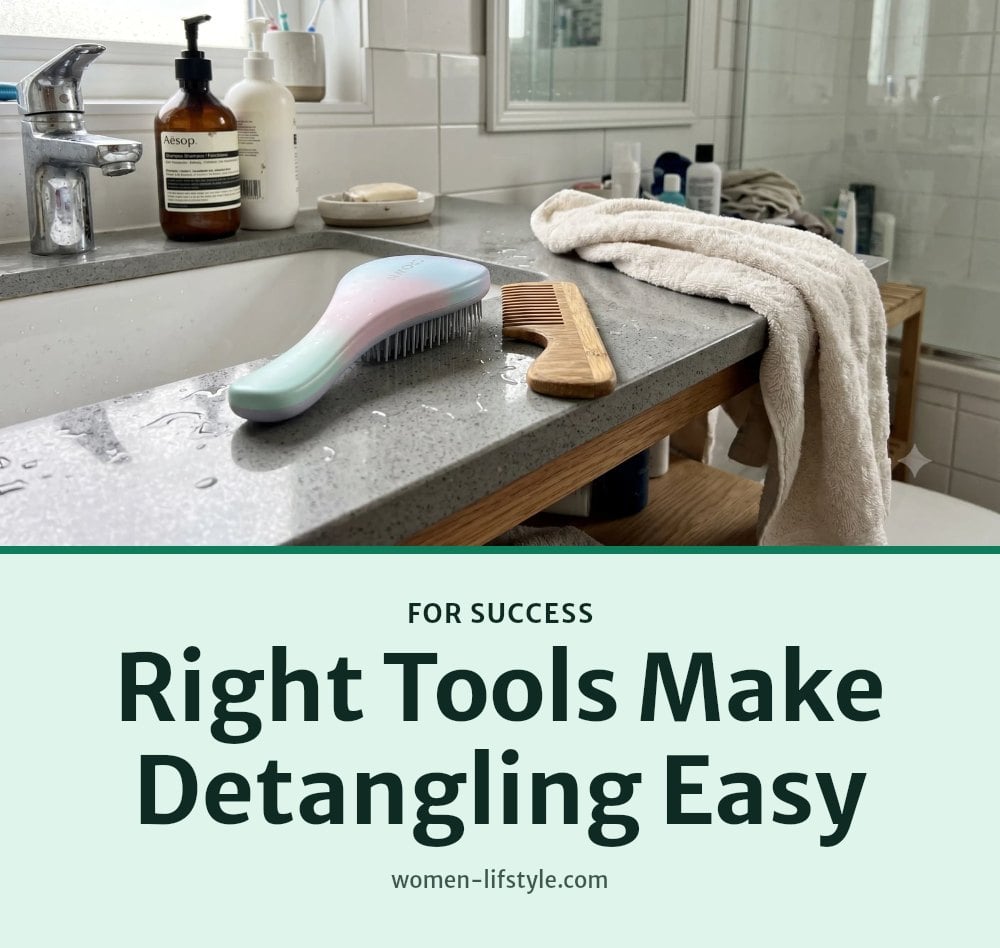
Wide-tooth combs or detangling brushes with flexible bristles glide through tangles with less resistance. Fine-tooth combs and regular brushes snag and break delicate curly or thick hair strands.
- Good tools: A wide-tooth comb, a detangling brush with flexible nylon or boar bristles, or a wet brush designed for wet hair.
- Bad tools: Fine-tooth combs, paddle brushes with stiff bristles, or any brush with ball-tipped bristles that catch on curls.
7. Be Patient and Gentle
Patience is key. Avoid aggressive pulling or tugging at knots. Excessive pulling can cause scalp irritation, hair follicle damage, and hair loss over time.
- Why it matters: Your scalp is sensitive. Forceful detangling can inflame hair follicles and weaken the root, leading to shedding.
- How to stay gentle: Work through each tangle slowly. If you hit a knot, stop and apply more conditioner or detangler. Use a finger to loosen it before combing again.
8. Rinse After Detangling
After you have thoroughly detangled each section, rinse out the conditioner with warm water. This step removes any loose hairs that came free during detangling and clears away product residue that could weigh your hair down. Your hair will feel clean, smooth, and ready for your next styling step.
9. Consider a Leave-In
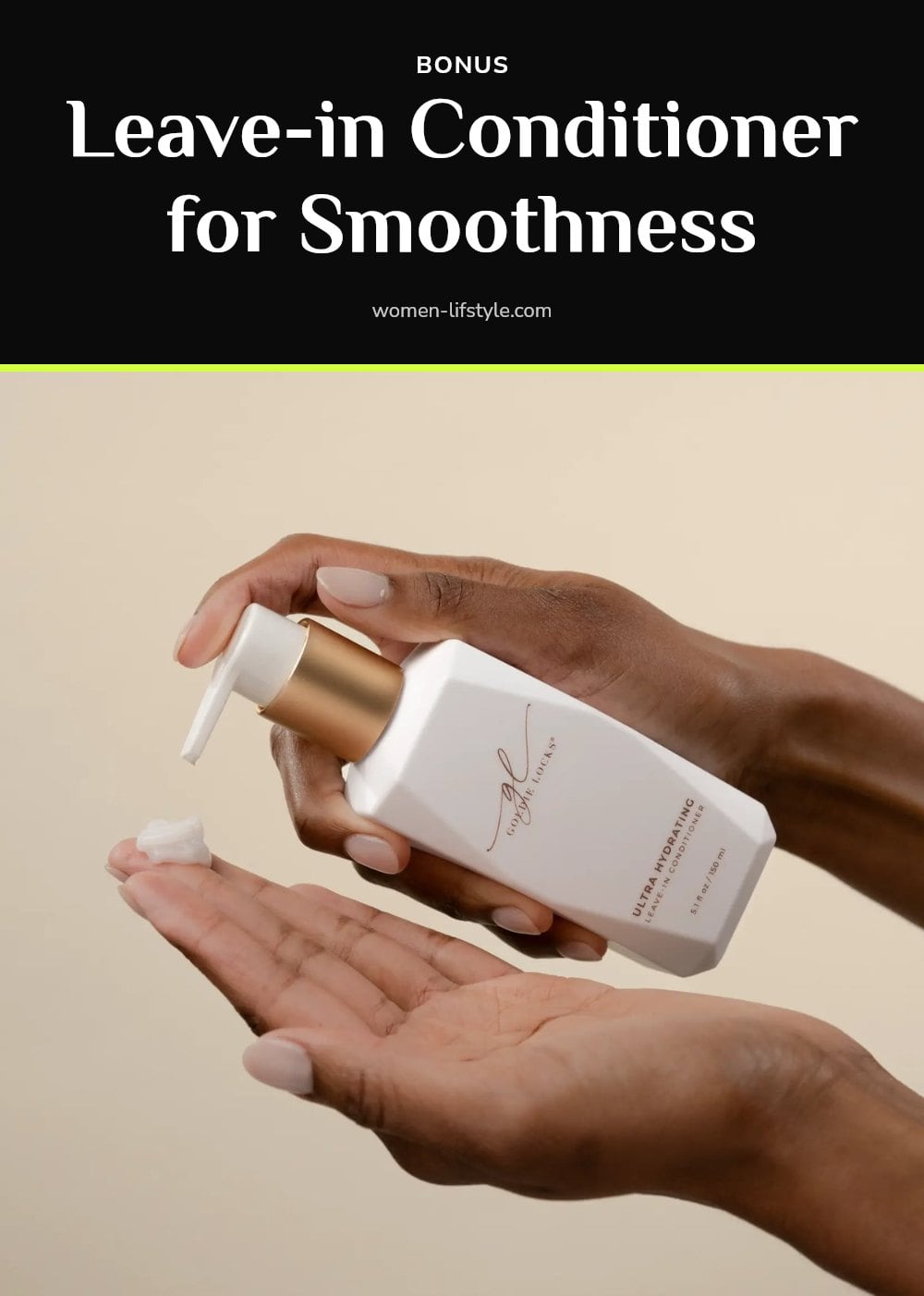
Once you have rinsed, apply a leave-in conditioner or a detangling spray from mid-length to ends. This adds an extra layer of moisture and slip that makes future detangling sessions easier. Pro move: It also helps keep your curls defined and frizz-free between washes.
10. Regular Detangling Prevents Knots
Detangling regularly, typically on wash days, stops small tangles from turning into large, stubborn knots. This makes the whole process quicker and less painful over time. Tip: Do not wait until your hair is severely matted to tackle it, a few minutes each wash day saves you an hour of frustration later.
11. Clean Your Tools
Clean your detangling tools after each use to remove product buildup and prevent bacterial transfer to your scalp. A simple rinse with warm water and a drop of shampoo works well. A clean tool glides more effectively through your hair and keeps your scalp healthier.
Common Detangling Mistakes to Avoid
Detangling dry hair: This is the biggest culprit for breakage. Always wet your hair first.
Starting from the roots: Combing from the roots pushes tangles down, creating bigger knots. Always start at the ends.
Using the wrong tools: Fine-tooth combs and regular brushes are not for detangling curly or thick hair; they cause damage.
Rushing the process: Impatience leads to forceful pulling, which can damage your hair and scalp.
Detangling large sections: Trying to tackle too much hair at once makes knots harder to separate. Work in small sections instead.
Frequently Asked Questions
How often should I detangle my curly hair?
Detangle your hair as often as needed, typically on wash days. For most people with curly or thick hair, this means once or twice a week. Regular detangling prevents small tangles from turning into larger, more stubborn knots and keeps your hair manageable.
Can I detangle my hair in the shower?
Yes, the shower is actually an ideal place to detangle because your hair is already wet and saturated with conditioner. Apply your conditioner, let it sit for 2-3 minutes, then detangle under running water or with a spray bottle. Just be gentle and work in sections.
What’s the best detangling product for very thick hair?
Look for a conditioner or detangling cream that provides plenty of slip and moisture. A thick, creamy conditioner or a dedicated detangling spray works well. The key is to use a generous amount so strands can slide apart without pulling.
Why does my hair get so tangled?
Curly and thick hair types are more prone to tangling because their unique structure allows individual strands to interlock easily. Dryness, friction from clothing or pillows, and skipping regular detangling can also make tangles worse. Keeping your hair moisturized and detangling regularly helps.
Is it okay to use a regular brush for detangling?
No, regular brushes and fine-tooth combs can snag and break curly or thick hair. Instead, use a wide-tooth comb or a detangling brush with flexible bristles. These tools glide through tangles with less resistance and are much gentler on your strands.
Final Thoughts
For the best results, stick with the wet-and-conditioned method every time you detangle, and be patient with your hair. Expect the process to take anywhere from 10 minutes to over an hour depending on your hair’s length and thickness, especially if you have a lot of tangles. With consistent care, you’ll notice fewer knots and less breakage over time.
