

Dealing with a burnt pan is a kitchen moment we all know too well. The good news is you don’t need harsh chemicals or heavy scrubbing to make it sparkle again. With a few pantry staples like baking soda, vinegar, and dish soap, you can lift even the most stubborn scorch marks. The right method depends on your pan type and how burnt it is, so I’ll walk you through the most effective techniques and the mistakes to avoid.
Key Takeaways
- Match the cleaning method to your pan material to avoid damage.
- Start with the gentlest method, like baking soda paste, and escalate.
- Let cleaning agents sit for at least 15 minutes to overnight.
- Never use metal scrubbers on non-stick or harsh chemicals like oven cleaner.
- Always let the pan cool completely before cleaning to prevent warping.
Quick Answer: How to Clean a Burnt Pan
For a burnt pan, start with common household ingredients: baking soda, vinegar, and dish soap. The best strategy combines soaking, heat, and mild abrasion to lift scorched food without harsh scrubbing. Always match the method to your pan’s material: non-stick needs gentle care, while cast iron can handle more. Soak first, then apply a paste or fizz, and give it time to work.
1. Baking Soda and Water Paste
Baking soda is an alkaline substance that breaks down acidic food residues, making it a gentle but effective cleaner. Mix baking soda with a small amount of water to form a thick paste, then spread it over the burnt area.
- Apply: Coat the paste evenly, covering all burnt spots.
- Wait: Let it sit for at least 15-30 minutes, or overnight for tough stains.
- Scrub: Use a non-abrasive sponge to gently work the paste in circular motions.
Rinse thoroughly after scrubbing.
2. Vinegar and Baking Soda Fizz
This method uses a fizzing chemical reaction to lift burnt-on food. Pour white vinegar into the pan, just enough to cover the burnt area. Bring the vinegar to a simmer, then remove from heat and add 2 tablespoons of baking soda. Caution: Ensure good ventilation and be ready for vigorous fizzing as the mixture bubbles up.
- Fizz: The reaction helps break the bond between food and pan surface.
- Soak: Let it fizz and sit for 15-30 minutes.
- Scrub: After soaking, scrub with a non-abrasive sponge.
Rinse well to remove any vinegar taste.
3. Boiling Water and Dish Soap
Heat is a powerful tool for loosening stubborn, stuck-on food. Fill the pan with water, add a few drops of dish soap, and bring to a boil. Let it simmer for 10-15 minutes, then turn off the heat and let it cool.
- Boil: The hot water softens burnt residue.
- Simmer: The soap helps lift oily and greasy bits.
- Scrape: Once cooled, use a plastic scraper or wooden spoon to gently remove loosened food.
This method is safe for most pan materials.
4. Coarse Salt as an Abrasive
Coarse salt is a natural abrasive that works especially well on cast iron pans. Sprinkle a generous layer of salt directly onto the burnt area, then add just enough warm water to make a thick paste. Scrub in circular motions using a non-abrasive sponge or, for cast iron, a cut potato half. The potato adds gentle moisture while the salt grinds away residue without scratching the seasoned surface.
5. Lemon Juice for Stains
Lemon juice contains citric acid, which breaks down burnt food and lifts stains from the pan surface. Cut a lemon in half and rub it directly over the burnt area, squeezing as you go to release the juice. For tougher spots, drop a few lemon slices into the pan with water and simmer for 10-15 minutes. Let the pan cool completely, then scrub with a soft sponge.
6. Hydrogen Peroxide and Baking Soda
For stubborn stains on stainless steel pans, hydrogen peroxide paired with baking soda is a powerful option. Mix the two into a thick paste, then spread it over the burnt area. Let the paste sit for several hours or overnight so the peroxide can work on discoloration. Scrub off with a non-abrasive sponge and rinse thoroughly.
7. Overnight Soaking Method
When the burn is severe, time does the hard work for you. Fill the pan with hot water and add a generous squirt of dish soap. Let it soak overnight so the burnt residue softens and loosens on its own. The next morning, most of the stuck-on bits will scrape away easily with a plastic scraper or wooden spoon.
8. Plastic Scraper or Wooden Utensil
Before you reach for any cleaning agent, take a moment to scrape off the loose burnt bits. Use a plastic scraper or a wooden spoon to gently dislodge the charred food that hasn’t fused to the pan. This initial step exposes the more stubborn residue underneath so your cleaning solution can actually reach it. Avoid metal tools at all costs, especially on non-stick or delicate surfaces, since even one scratch can ruin the coating permanently.
9. Re-seasoning Cast Iron
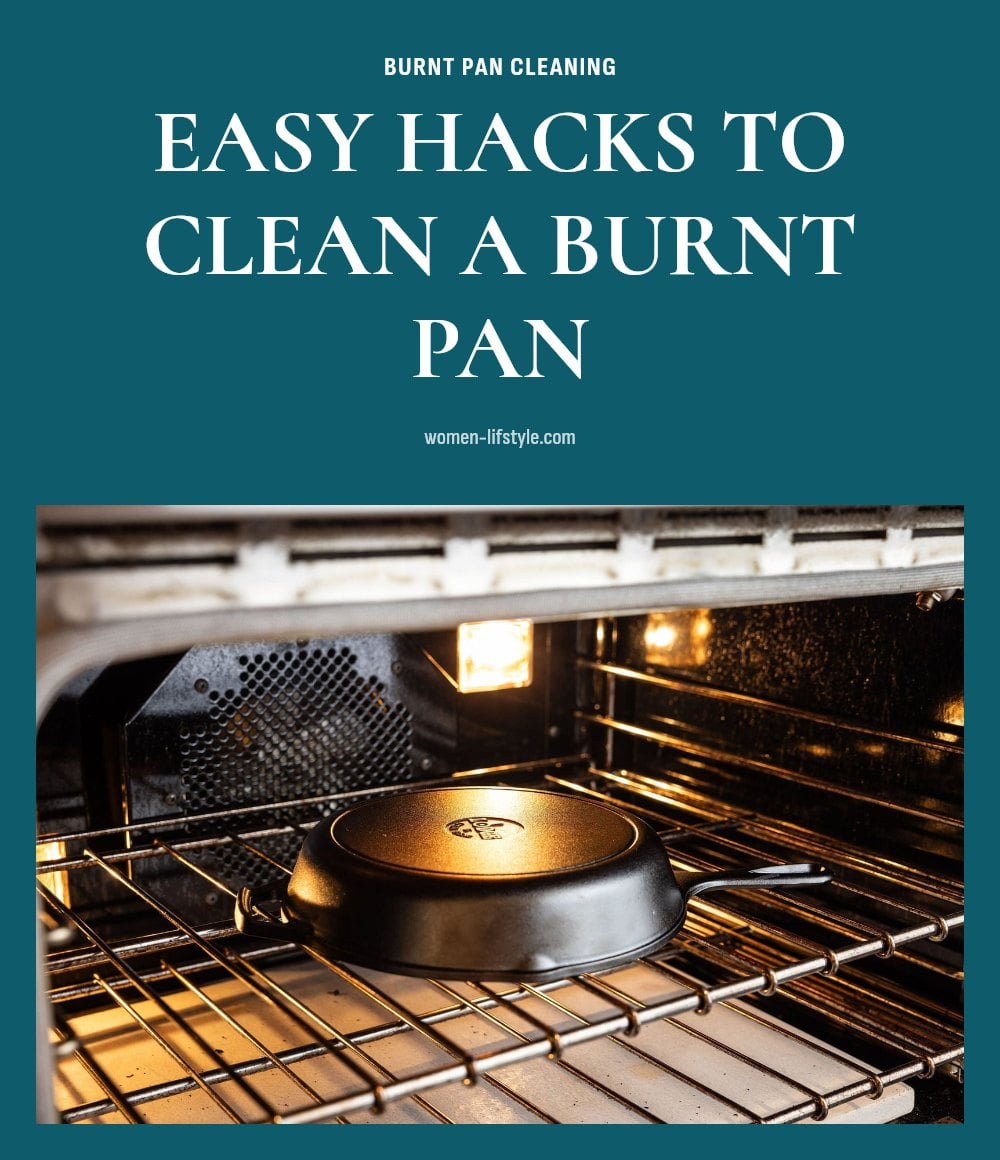
After a deep clean, cast iron pans need re-seasoning to prevent rust and keep them non-stick. Dry the pan completely, then rub a thin layer of cooking oil (vegetable or flaxseed oil) over the entire surface, inside and out. Preheat the oven to 375-400°F (190-200°C): Place the pan upside down on the middle rack and bake for one hour. Let it cool completely inside the oven before removing it.
10. Cool Down Before Cleaning
Always let your pan cool down fully before you start cleaning it. Dropping a hot pan into cold water can cause warping, especially with non-stick pans, which ruins their shape and performance. Cooling also makes the pan safer to handle and allows your cleaning agents to work without evaporating too quickly. Patience here prevents damage and keeps you safe from steam burns.
11. Wear Gloves for Protection
Protect your hands by wearing rubber gloves whenever you scrub a burnt pan. Cleaning agents like vinegar and lemon juice are acidic and can irritate your skin, while vigorous scrubbing can cause chafing. Gloves also keep your hands clean and prevent any leftover burnt residue from getting under your nails. A good pair of kitchen gloves is a simple investment that makes the whole process more comfortable.
Common Mistakes When Cleaning Burnt Pans
Using Metal Scrubbers on Non-Stick: Metal scrubbers will permanently scratch and ruin the non-stick coating. Always use a soft sponge or a plastic scraper instead.
Not Soaking Long Enough: Cleaning agents need time to break down burnt residue. Let them sit for at least 15-30 minutes, or overnight for heavy burns. Patience makes the difference.
Cleaning a Hot Pan: Placing a hot pan under cold water can cause warping, especially in non-stick pans. Always let it cool completely before cleaning.
Ignoring Pan Material: Cast iron can handle coarse salt, but the same abrasive will ruin a non-stick surface. Match your method to the pan type to avoid damage.
Using Harsh Chemicals: Oven cleaners and strong bleaches can damage pan finishes or leave harmful residues. Stick to baking soda, vinegar, and dish soap.
Frequently Asked Questions
Can I use oven cleaner on a burnt pan?
No, avoid oven cleaner on most cookware, especially non-stick. The harsh chemicals can damage the coating and leave residues that are unsafe for cooking. Stick to the gentler methods like baking soda, vinegar, and dish soap, which are effective and safe for your pans.
How do I prevent my pans from burning in the future?
Prevention starts with using the right heat level. Cook at medium or low heat, and avoid leaving the pan unattended. Also, make sure the pan is properly preheated before adding food, and use enough oil or liquid to prevent sticking. These habits can significantly reduce the chance of burnt food.
Is it safe to mix cleaning agents?
Be cautious when mixing cleaning agents. Baking soda and vinegar are safe together and create a useful fizz, but never mix bleach with vinegar or other acids, as this can produce toxic chlorine gas. Always ensure good ventilation when using any cleaning products.
How long should I let cleaning solutions sit in the pan?
Let cleaning solutions sit for at least 15 to 30 minutes for light burns, and up to overnight for stubborn residue. The longer you let them work, the easier the burnt food will lift. Patience is key, so don’t rush the process.
What if the burnt food won’t come off after trying these methods?
If the burnt food persists, try a combination approach, like the boiling water with baking soda and vinegar. You can also repeat the method or extend the soaking time. For stainless steel, a hydrogen peroxide and baking soda paste left overnight can work wonders. If nothing works, the pan may be beyond saving, but most burns respond to these techniques.
Does cleaning a burnt pan damage its seasoning?
Yes, deep cleaning can strip the seasoning from cast iron pans. After a thorough cleaning, it’s important to re-season your cast iron to prevent rust and restore its non-stick surface. Dry the pan completely and apply a thin layer of cooking oil before storing.
Final Thoughts
My tip: start with the simplest approach, a baking soda and water paste, and give it time to work. For most burnt pans, that will do the trick. If you’re dealing with a heavy burn, try the overnight soak with dish soap before you resort to stronger methods. Expect results after the first attempt, but for very stubborn residue, you may need to repeat the process or let it soak longer. With patience and the right technique, your pan will look as good as new.
