

Thinking about a 3-day detox cleanse to feel lighter, more energized, or just hit the reset button on your eating habits? You are not alone, many women turn to a short cleanse to break free from sugar cravings and processed foods. This guide covers exactly what a 3-day cleanse involves, what foods to eat and avoid, common mistakes to sidestep, and how to ease back into your regular diet afterward.

Key Takeaways
- Your body naturally detoxifies through the liver and kidneys; a cleanse simply supports those processes.
- Focus on whole foods like fruits, vegetables, lean protein, and healthy fats for three days.
- Drink 8 to 10 glasses of water daily plus herbal teas to stay hydrated.
- Plan your meals and snacks ahead of time to avoid temptation when hunger hits.
- Reintroduce eliminated foods slowly after the cleanse to maintain benefits and avoid digestive upset.
What is a 3-Day Detox Cleanse?
A 3-day detox cleanse is a short-term dietary adjustment that centers on whole, unprocessed foods and increased hydration. Its purpose is to support your body’s natural detoxification processes, which happen mainly in the liver and kidneys, not to ‘flush out’ toxins the body isn’t already handling. The real goal is to reset eating habits, boost energy, and improve digestion by temporarily eliminating common inflammatory foods like sugar, caffeine, and processed items.
Your Shopping List for a 3-Day Cleanse
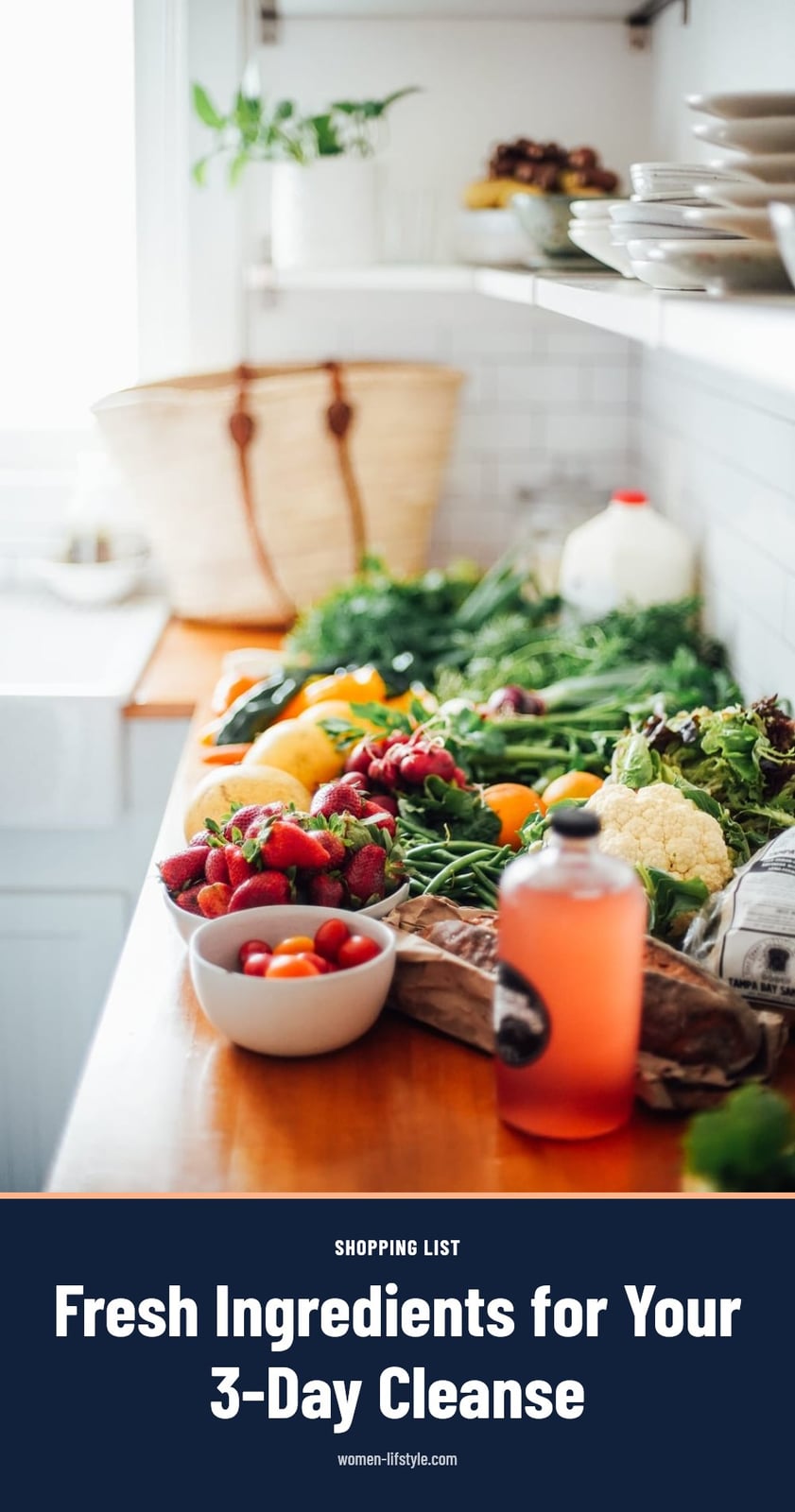
Before you start, stock your kitchen with fresh, whole foods. Here is what you will need:
- Fresh fruits: For vitamins, minerals, and natural sugars. Think berries, apples, citrus.
- Fresh vegetables: Leafy greens, broccoli, bell peppers, cucumbers for fiber and antioxidants.
- Lean protein sources: Chicken, fish, legumes, or tofu to keep you full and support muscles.
- Whole grains: Brown rice, quinoa, oats for steady energy and fiber.
- Healthy fats: Avocado, nuts, seeds, olive oil for hormone function and nutrient absorption.
- Herbal teas: Caffeine-free options like peppermint or chamomile for hydration and comfort.
- Plenty of water: The foundation of hydration. Aim for filtered or spring water.
Your 3-Day Cleanse Meal Plan
Each day follows a simple structure: whole foods, hydration, gentle movement, and rest.
| Day | Meal Focus | Key Habits |
|---|---|---|
| Day 1 | Start with a fruit smoothie or oatmeal. Lunch is a large salad with lean protein. Dinner is grilled fish with steamed vegetables. | Drink water and herbal tea. Take a 20-minute walk. Aim for 7-9 hours of sleep. |
| Day 2 | Breakfast is eggs with sautéed greens. Lunch is quinoa bowl with roasted vegetables and chickpeas. Dinner is chicken stir-fry with brown rice. | Hydrate consistently. Do gentle yoga or stretching. Prioritize sleep. |
| Day 3 | Breakfast is a green smoothie. Lunch is lentil soup with a side salad. Dinner is baked salmon with sweet potato and asparagus. | Continue water and herbal teas. Take a gentle walk. Wind down early for restful sleep. |
Throughout each day, include healthy fats like avocado or a small handful of nuts with meals to maintain satiety.
Common Mistakes to Avoid During Your Cleanse
Even with good intentions, certain missteps can derail your cleanse. Here is what to watch for:
- Believing the body needs external help for detox: Your body has sophisticated detox systems. A cleanse supports them, it does not replace them.
- Confusing a cleanse with a weight-loss diet: Some initial weight loss may occur from reduced calories and water loss, but this is not a sustainable long-term strategy.
- Not staying adequately hydrated: Dehydration can cause headaches and fatigue. Aim for 8-10 glasses of water daily.
- Ignoring hunger cues or feeling deprived: If you are genuinely hungry, eat approved snacks like fruits, vegetables, or a handful of nuts.
- Failing to plan for the post-cleanse period: Reintroduce eliminated foods slowly to avoid digestive upset and a quick return to old habits.
Practical Tips for a Successful Cleanse

Set yourself up for success before day one. Shop for all your ingredients ahead of time so you are not tempted by convenience foods when hunger hits. Pre-wash and chop vegetables, portion out snacks, and have your water bottle filled and ready.
Stay hydrated: Carry a water bottle everywhere and sip herbal teas throughout the day. My tip: add a slice of lemon or cucumber to your water for a refreshing twist. Prioritize sleep: Aim for 7-9 hours of quality sleep each night to support your body’s repair and recovery processes.
Engage in gentle movement: Light activities like walking, yoga, or stretching can enhance circulation and well-being without overtaxing your body. Listen to your body: If you experience severe symptoms like dizziness or extreme fatigue, stop the cleanse and consult a healthcare professional.
What to Do After Your 3-Day Cleanse
The way you transition out of your cleanse matters as much as the cleanse itself. Reintroduce foods slowly instead of jumping back into processed items, sugar, or caffeine. Start with easily digestible whole foods like steamed vegetables or plain rice.
Observe your body’s reactions: Pay attention to how different foods make you feel as you add them back. This can help you identify sensitivities you may have overlooked. Maintain healthy habits: Continue prioritizing whole foods, hydration, and mindful eating. The cleanse is a reset, not an end point. Plan for the future: Consider incorporating elements of your cleanse into your regular diet for sustained well-being.
When to Consult a Healthcare Professional
Consult a healthcare professional before starting any new dietary regimen, especially if you have underlying health conditions like diabetes, kidney disease, or liver disease. If you are pregnant or breastfeeding, cleanses are generally not recommended.
If you are taking medications, dietary changes can affect their efficacy or cause adverse interactions. During the cleanse, stop and seek medical advice if you experience severe symptoms such as extreme dizziness, fainting, persistent nausea, unusual pain, or extreme fatigue. For personalized advice on nutrition and detoxification tailored to your specific health needs, a professional can provide safe, individualized guidance.
Frequently Asked Questions
How often can I do a 3-day cleanse?
Most people can safely do a 3-day cleanse once a month or every few months, but there is no one-size-fits-all rule. Listen to your body and consult a healthcare professional if you have any chronic conditions or concerns. Frequent cleanses are not necessary if you maintain a balanced, whole-foods diet between them.
Can I drink coffee during a cleanse?
Most 3-day cleanses eliminate caffeine, including coffee, to give your body a break from stimulants and support natural energy levels. If you are used to coffee, you may experience withdrawal headaches for a day or two. Herbal teas are a good substitute, and you can slowly reintroduce coffee after the cleanse if you wish.
What if I feel hungry during the cleanse?
Feeling hungry is common, especially on the first day. Make sure you are drinking enough water and eating enough fiber-rich vegetables, lean protein, and healthy fats at each meal. If hunger persists, add a small snack like an apple with almond butter or a handful of raw nuts. The goal is to feel satisfied, not deprived.
Is weight loss the primary goal of a cleanse?
No, weight loss is not the primary goal of a 3-day cleanse, though some people do lose a few pounds, often due to reduced calorie intake and water loss. The real purpose is to support your body’s natural detox processes, break unhealthy eating habits, and boost energy and digestion. Sustainable weight loss comes from long-term dietary changes, not a short cleanse.
What are the main goals of a 3-day cleanse?
The main goals are to support your body’s natural detoxification systems, increase hydration, reduce bloat, and break the cycle of cravings for sugar, caffeine, and processed foods. Many people also use it as a psychological reset to transition into healthier eating habits. Improved energy and digestion are common reported benefits.
Final Thoughts
My tip: treat this cleanse as a reset, not a punishment. The real payoff comes from the habits you carry forward, like drinking more water, eating more vegetables, and paying attention to how different foods make you feel. Realistic expectation: you may feel more energetic and less bloated by day three, but lasting change depends on what you eat in the weeks after. Listen to your body, take it easy, and let the cleanse be the start of a healthier relationship with food.
This article is for informational purposes only and is not a substitute for professional medical advice. Always consult with a healthcare provider before starting any new dietary regimen, especially if you have a chronic condition, are pregnant or breastfeeding, or take medications. If you experience severe symptoms during a cleanse, stop and seek medical attention.
