

If you have spotted signs of termites in your home, you might be wondering if there is a way to handle them without harsh chemicals. The good news is that for small, localized problems, natural methods can work as a first step. This article covers the most effective natural approaches, from diatomaceous earth to orange oil, and explains what to expect in terms of results and timing.
Key Takeaways
- Identify the termite type first, since natural treatments work differently on subterranean and drywood species.
- Reduce moisture around your home by fixing leaks and improving drainage to deter termites.
- Apply diatomaceous earth lightly in cracks and termite pathways to dehydrate them on contact.
- For localized drywood infestations, inject orange oil directly into infested wood for quick kill.
- Call a professional if you see widespread signs like mud tubes or hollow-sounding wood.
Can You Really Get Rid of Termites Naturally?
Natural methods can deter termites and manage small, localized infestations, but they are not a substitute for professional help in severe cases. I usually start with these as a first step for minor issues, but their effectiveness varies and they may not be as potent or fast-acting as chemical treatments. If you suspect a widespread problem, call an exterminator right away.
Your Natural Termite Control Toolkit

Here is what you need to get started with natural termite control:
- Food-grade diatomaceous earth dehydrates termites on contact.
- Boric acid powder acts as a stomach poison and abrasive.
- Orange oil (d-limonene) kills on contact by dissolving exoskeletons.
- Beneficial nematodes microscopic worms that prey on soil-dwelling termites.
- Spray bottle and gloves for safe application.
Natural Methods to Tackle Termites

Diatomaceous Earth
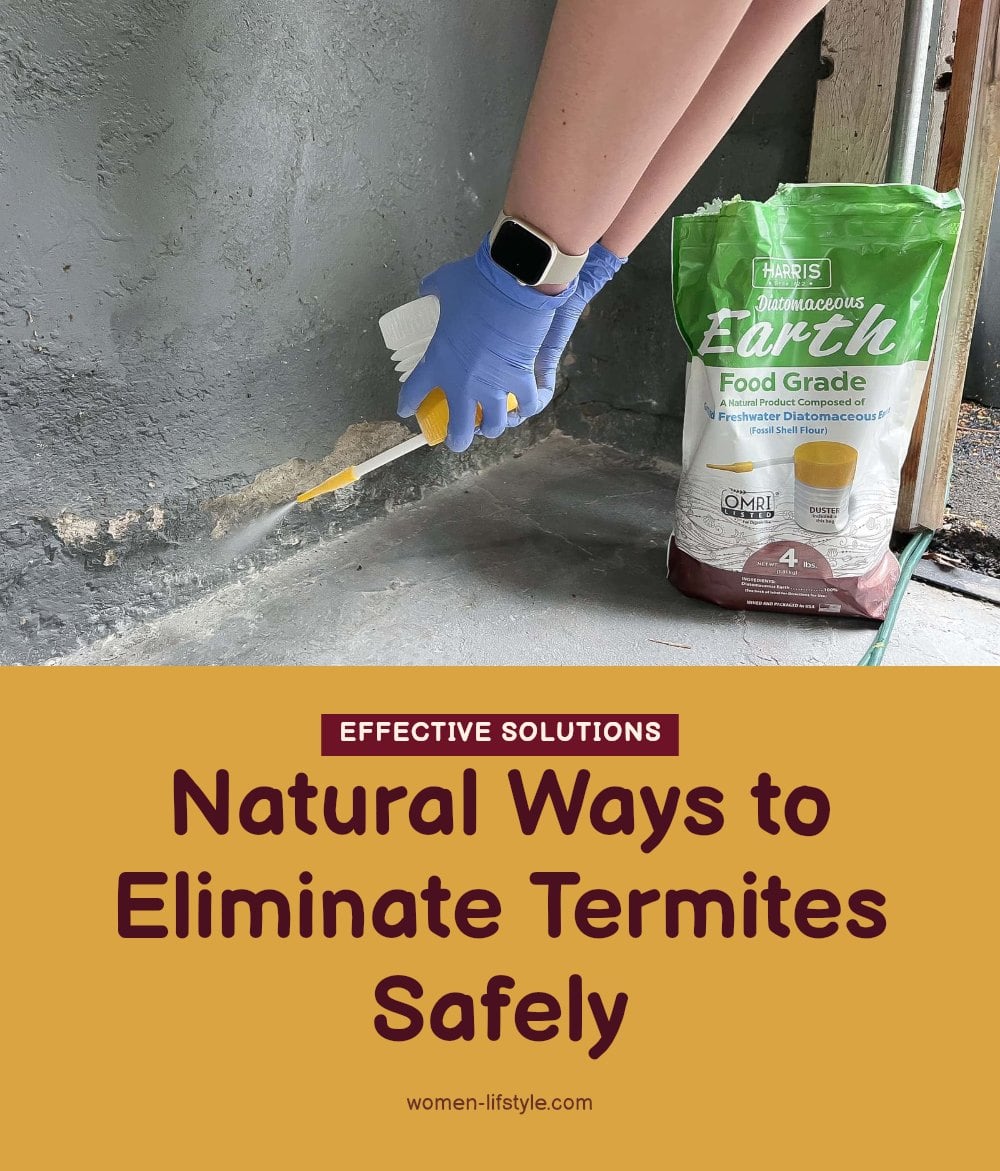
Diatomaceous earth (DE) is a fine powder made from fossilized algae. When termites walk through it, the sharp particles cut their exoskeletons and absorb their moisture, leading to dehydration and death. My tip: Use food-grade DE only, and apply it lightly in cracks, crevices, and along termite pathways. Avoid applying it to mud tubes, as those areas are typically moist and DE must stay dry to work. Reapply after rain or moisture.
Boric Acid
Boric acid works as a stomach poison and abrasive. Termites ingest it while grooming, and it disrupts their digestive system. Caution: For best results, mix boric acid powder with water according to the product label and use it as bait rather than spraying it on wood surfaces. Spraying may not be as effective because boric acid is primarily a stomach poison. Keep it away from pets and children. It is toxic if swallowed.
Orange Oil
Orange oil contains d-limonene, which dissolves termite exoskeletons on contact. It is most effective for localized drywood termite infestations. Inject the oil directly into holes in infested wood. Caution: Orange oil can irritate skin and eyes, so wear gloves and goggles during application.
Beneficial Nematodes
Beneficial nematodes are microscopic roundworms that naturally prey on soil-dwelling termites, especially subterranean species. Mix them with water and apply to the soil around your foundation. My tip: Apply nematodes in the evening or on a cloudy day to protect them from UV light, which can kill them.
Preventing Termites From Coming Back

Once you have treated the immediate problem, keep termites from returning with these steps:
- Control moisture: Fix leaky pipes, improve drainage around the foundation, and ensure crawl spaces are well ventilated. Termites need water to survive.
- Remove wood-to-soil contact: Clear away wood debris, old stumps, and mulch that touches the ground. Store firewood off the ground and away from the house.
- Seal entry points: Fill cracks and crevices in the foundation and exterior walls with caulk or sealant.
- Inspect regularly: Check for discarded wings, mud tubes, frass, or hollow-sounding wood at least twice a year.
Common Mistakes in Natural Termite Treatment
One of the biggest mistakes is underestimating how bad the infestation is. Termites can cause significant structural damage over time, so delaying professional help while you try natural methods can make the problem worse. I have seen people wait months, only to find the damage is far more extensive than they thought.
Applying remedies incorrectly is another common error. For example, diatomaceous earth must stay dry to work, and boric acid needs to be placed where termites will actually encounter it. If you confuse termites with ants, you might treat the wrong areas entirely. My tip: always identify the pest first by looking for mud tubes (subterranean) or frass (drywood).
Failing to fix underlying moisture issues is a big one. Subterranean termites need water to survive, so a leaky pipe or poor drainage will keep them coming back no matter what you apply. And do not expect a single application to solve a long-standing problem. Natural methods usually require repeated treatments over weeks, not one-and-done results.
When to Call a Professional Exterminator
If you suspect a severe or widespread infestation, call a professional. Signs like extensive mud tubes, hollow-sounding wood, or piles of wings in multiple rooms mean the colony is large. Natural methods will not keep up.
Also call if you have applied natural treatments consistently for a few weeks with no improvement. Some areas are just too difficult to reach, like inside wall cavities or deep in the foundation. If you see structural damage, such as sagging floors or buckling wood, do not wait. And if you are unsure what type of termite you have or how far they have spread, a professional inspection gives you a clear answer before you waste time on the wrong approach.
Frequently Asked Questions
How quickly do natural termite treatments work?
Natural methods can start showing results in a few days to a couple of weeks for small, localized infestations. However, they are slower than chemical treatments and may need ongoing application to keep termites away. Complete eradication of a colony can take much longer or may not be possible without professional help.
Can termites come back after natural treatment?
Yes, termites can return if the conditions that attracted them in the first place are not fixed. Moisture problems, wood-to-soil contact, and untreated entry points can lead to reinfestation. Regular inspection and continued prevention steps, like sealing cracks and controlling moisture, are essential to keep them away long term.
Are natural termite remedies safe for pets and children?
Some natural products, like boric acid, can be toxic if ingested, so they must be kept out of reach of pets and children. Diatomaceous earth is generally safer but can still irritate lungs if inhaled. Always read labels, wear gloves and eye protection during application, and ensure good ventilation. When in doubt, store treatments in a locked cabinet.
What is the best natural termite killer?
There is no single best natural termite killer because effectiveness depends on the termite species and the size of the infestation. For drywood termites in a small area, orange oil works well on contact. For subterranean termites in the soil, beneficial nematodes are a good option. Diatomaceous earth is versatile and safe for many indoor uses.
How do I know if my termite problem is too big for DIY methods?
If you see extensive mud tubes, hollow-sounding wood, piles of wings in multiple rooms, or evidence of damage in structural beams, the colony is likely large. Natural methods will not keep up with a widespread infestation. In that case, it is time to call a professional exterminator to prevent further structural damage.
Final Thoughts
For a small, early-stage infestation, natural methods like diatomaceous earth or orange oil can be a safe first line of defense. But remember, these treatments often require repeated applications over several weeks, and they rarely eliminate a large colony completely. If you see persistent signs or extensive damage, do not hesitate to call a professional. Your home’s structure is worth protecting.
This article provides general information about natural termite control methods and is not a substitute for professional pest inspection or advice. If you suspect a severe infestation or have concerns about structural damage, please consult a licensed pest control professional. Always follow safety guidelines on product labels.
