

You might be in your 40s and noticing your periods are changing, you’re waking up drenched in sweat, or your mood feels like a roller coaster. These shifts could be your body’s way of telling you it’s entering perimenopause, the natural transition toward menopause. This article covers the most common signs to look for, what’s actually happening with your hormones, and practical tips for managing each symptom.
Key Takeaways
- Perimenopause typically begins in your 40s but can start in your mid-30s or late 40s.
- Irregular periods, hot flashes, and sleep problems are among the earliest and most common signs.
- Symptoms like vaginal dryness, brain fog, and joint aches are linked to declining estrogen levels.
- The transition can last anywhere from a few months to 10 years, averaging about 4 years.
- Talk to your healthcare provider about any new or concerning symptoms instead of self-diagnosing.
Understanding Perimenopause: What’s Happening in Your Body
Perimenopause is the natural transition your body makes as it moves toward menopause, the point when you’ve gone 12 months without a period. It often begins in your 40s, but can start earlier or later. During this time, your estrogen levels fluctuate and eventually decline, triggering a range of symptoms. While it’s a normal phase of aging, recognizing the signs helps you understand what’s happening and take steps to feel better.
1. Changes in Your Menstrual Period

A shift in your menstrual cycle is one of the earliest and most common signs of perimenopause. Your periods may become irregular, heavier, lighter, or the time between them may change. These changes happen because your hormone levels are fluctuating, and they vary a lot from person to person.
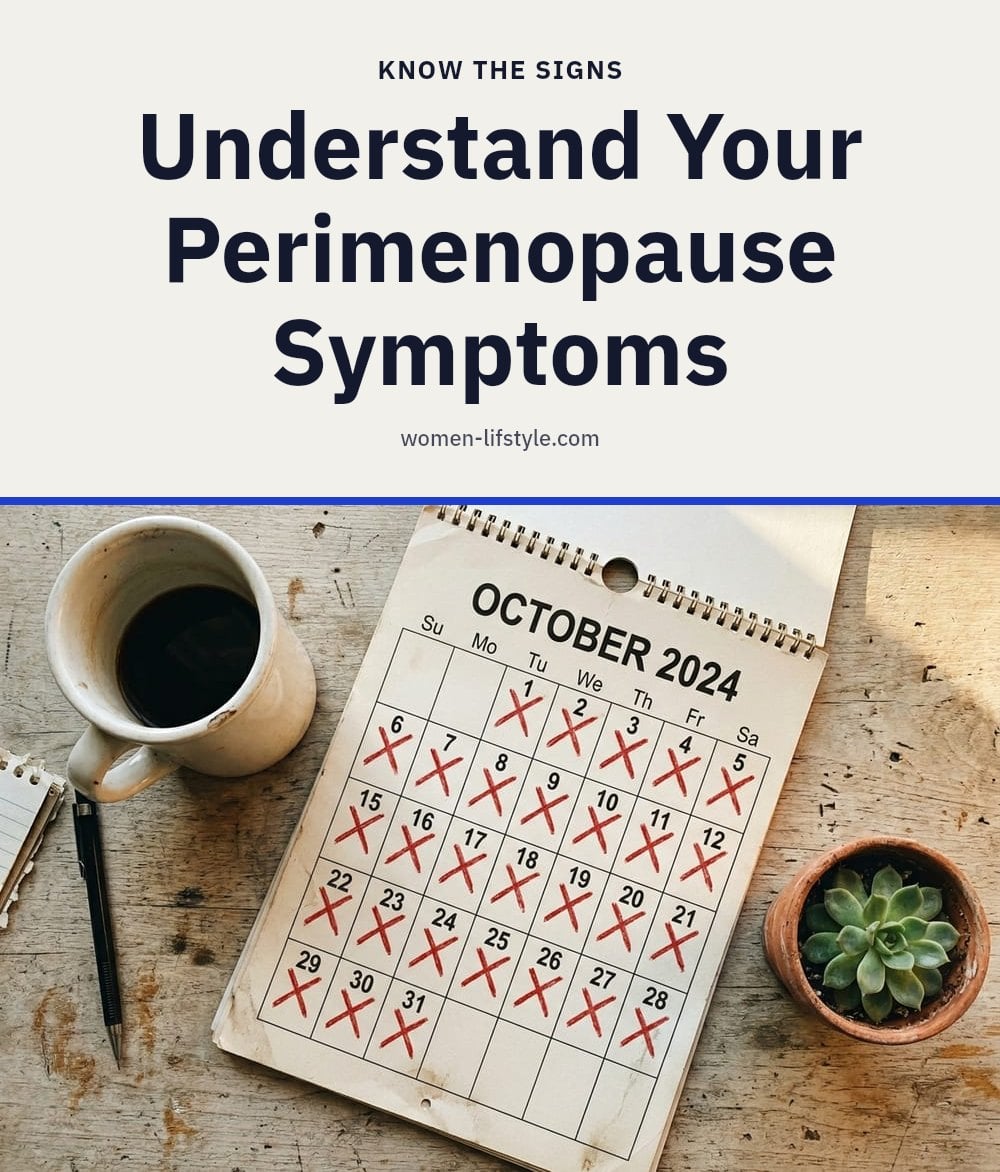
My tip: Keep a symptom journal. Note the start and end dates of each period, how heavy it is, and any spotting between cycles. Tracking these patterns helps you see what’s normal for you and gives your doctor useful information if you need to discuss concerns.
2. Hot Flashes and Night Sweats
Hot flashes and night sweats are the classic perimenopause symptoms most people think of. They come on as a sudden, intense feeling of warmth, sometimes followed by sweating. They can range from a mild flush to a drenching sweat that soaks your clothes or bedding and disrupts your sleep.
My tip: I keep a set of lightweight layers I can peel off quickly when a flash hits. Cooling pillows or moisture-wicking bedding can also make a big difference during the night. Keep a glass of ice water by your bed for quick relief.
3. Sleep Problems and Insomnia
Many women find themselves lying awake or waking up several times a night during perimenopause. Sometimes this is because night sweats disturb your sleep, but hormonal shifts can also directly affect your sleep cycles, making it harder to fall asleep and stay asleep.
Tip: Build a consistent bedtime routine that signals your body it’s time to rest. Keep your bedroom cool, dark, and quiet. Avoid caffeine after lunch and skip heavy meals within two hours of bedtime. A small, consistent wind-down ritual helps more than you’d expect.
4. Mood Swings and Irritability
Hormonal fluctuations can significantly impact your mood, leading to increased irritability, anxiety, or even mild depression. It’s not ‘all in your head’; these are real physiological responses to changing estrogen levels.
Good to know: Practice stress-reduction techniques like meditation or yoga to help manage mood changes. If moods become severe, don’t hesitate to seek professional support from a therapist or counselor.
5. Vaginal Dryness and Discomfort

Declining estrogen levels can cause the vaginal tissues to become thinner, drier, and less elastic, leading to discomfort. This can make sexual activity uncomfortable or even painful.
Pro move: Over-the-counter lubricants and vaginal moisturizers can provide significant relief. Discuss long-term solutions with your healthcare provider to find what works best for you.
6. Decreased Libido
A dip in sex drive is a common, though often unspoken, symptom of perimenopause. This can be due to hormonal changes, vaginal discomfort, or even fatigue.
Quick tip: Open communication with your partner and exploring new ways to maintain intimacy can be helpful. Remember, it’s a phase, and solutions are available.
7. Brain Fog and Memory Lapses
Many women report feeling ‘fuzzy’ or having trouble concentrating and remembering things. This ‘brain fog’ is another symptom linked to fluctuating hormones.
Tip: While frustrating, it’s usually temporary. Try staying mentally active with puzzles or reading, getting enough sleep, and eating a brain-healthy diet to support cognitive function.
8. Joint and Muscle Aches

It’s not just ‘getting older’; many women experience new or worsening joint and muscle aches during perimenopause. Estrogen plays a role in joint health, so its decline can contribute to these discomforts.
Good to know: Regular, gentle exercise like walking or yoga can help keep your joints mobile and muscles strong. Staying hydrated also supports joint lubrication. If the pain persists or becomes severe, discuss it with your doctor to rule out other causes.
9. Weight Gain and Body Changes
Many women notice weight gain, especially around the abdomen, during perimenopause. This is often due to a combination of hormonal changes, a slower metabolism, and lifestyle factors.
Pro move: Maintaining a healthy lifestyle with regular exercise and a balanced diet becomes even more crucial during this time. Focus on strength training to preserve muscle mass, which naturally declines with age and can help support your metabolism.
10. Urinary Changes
You might experience increased urinary urgency or even mild incontinence. Lower estrogen levels can weaken the pelvic floor muscles and thin the lining of the urethra, making it harder to hold urine.
Quick tip: Pelvic floor exercises (Kegels) can be very beneficial. Practice tightening and releasing the muscles you use to stop the flow of urine, holding for 10 seconds and repeating 10 times, twice a day. If symptoms are bothersome, talk to your doctor, as there are effective treatments available.
11. Fatigue and Low Energy

Feeling constantly tired, even after a full night’s sleep, is a common complaint. This fatigue can be a direct result of hormonal shifts, or a consequence of disturbed sleep and mood changes.
Tip: Prioritize rest, manage stress, and ensure your diet provides sustained energy, think protein, healthy fats, and complex carbs. If fatigue is debilitating, it’s always worth discussing with your doctor to explore possible underlying causes.
When to Talk to Your Doctor About Perimenopause
If you’re experiencing new or concerning symptoms that are significantly impacting your quality of life, it’s time to talk to your healthcare provider. Any new or unusual vaginal bleeding, especially after your periods have become irregular, should always be evaluated by a doctor to rule out other conditions. If mood changes are severe, including prolonged feelings of sadness or hopelessness, seek professional medical advice.
Remember, while these symptoms are often normal for perimenopause, some can overlap with other medical conditions. A professional diagnosis is important for your health and peace of mind. Don’t hesitate to bring up any symptom that worries you, no matter how minor it seems.
Frequently Asked Questions
How long does perimenopause typically last?
The average length is about 4 years, but it can last anywhere from a few months to up to 10 years. The duration varies widely from woman to woman, and symptoms may come and go in intensity throughout the transition.
Can perimenopause start in your 30s?
Yes, while it most often begins in your 40s, perimenopause can start as early as your mid-30s. If you’re experiencing symptoms like irregular periods or hot flashes before age 40, it’s a good idea to check in with your healthcare provider to rule out other causes.
What is the difference between perimenopause and menopause?
Perimenopause is the transitional period leading up to menopause, when your hormone levels fluctuate and symptoms begin. Menopause is officially diagnosed after you’ve gone 12 consecutive months without a menstrual period. Perimenopause can last years; menopause is a single point in time.
Are there tests to confirm perimenopause?
There is no single test that definitively confirms perimenopause because hormone levels fluctuate day to day. Your doctor may order blood tests to check follicle-stimulating hormone (FSH) or estradiol levels, but the most reliable indicator is your menstrual history combined with your symptoms.
Can lifestyle changes help with perimenopause symptoms?
Yes, many women find relief through regular exercise, a balanced diet, stress-reduction techniques like yoga or meditation, and prioritizing sleep. While lifestyle changes won’t eliminate all symptoms, they can significantly improve your energy, mood, and overall well-being during the transition.
Final Thoughts
Perimenopause is a gradual and highly individual experience, so don’t compare your timeline to anyone else’s. If you’re struggling with a symptom like severe hot flashes, mood changes, or sleep disruption, a conversation with your healthcare provider can open up options like hormone therapy or non-hormonal medications. Remember, this phase is temporary, and most women find that tracking their symptoms and making small lifestyle adjustments helps them feel more in control.
This article provides general information about perimenopause and its symptoms. It is not a substitute for professional medical advice, diagnosis, or treatment. Always consult your healthcare provider or a gynecologist for persistent, severe, or concerning symptoms, especially any unusual vaginal bleeding or significant mood changes.
