

If you’re noticing irregular brown patches in your lawn that pull up like a loose carpet, or if raccoons and skunks are suddenly digging up your yard, grubs are likely the culprits. These C-shaped white larvae feed on grass roots, and they can do serious damage before you even see them. The good news is that with the right timing and approach, you can protect your lawn and stop the damage in its tracks. Here’s what you need to know about identifying, treating, and preventing grub infestations.
Key Takeaways
- Confirm grubs with a digging test: lift a square foot of turf and count the larvae.
- Apply preventative grub control in late spring to early summer before eggs hatch.
- Use curative products in late summer to early fall when grubs are small and feeding.
- Mow at 3 inches or higher and water deeply to help your lawn tolerate grubs.
- Treat only if you find more than 5-10 grubs per square foot.
What Are Grubs and Why Are They a Problem?
Grubs are the C-shaped larvae of beetles that live in the soil and feed on grass roots. This feeding causes irregular brown patches and spongy turf that pulls up easily. Grubs are most vulnerable to treatment in late summer to early fall when they are young and actively feeding near the surface. Effective control means identifying them, understanding their life cycle, and applying the right treatment at the right time.
1. Confirm You Have a Grub Problem
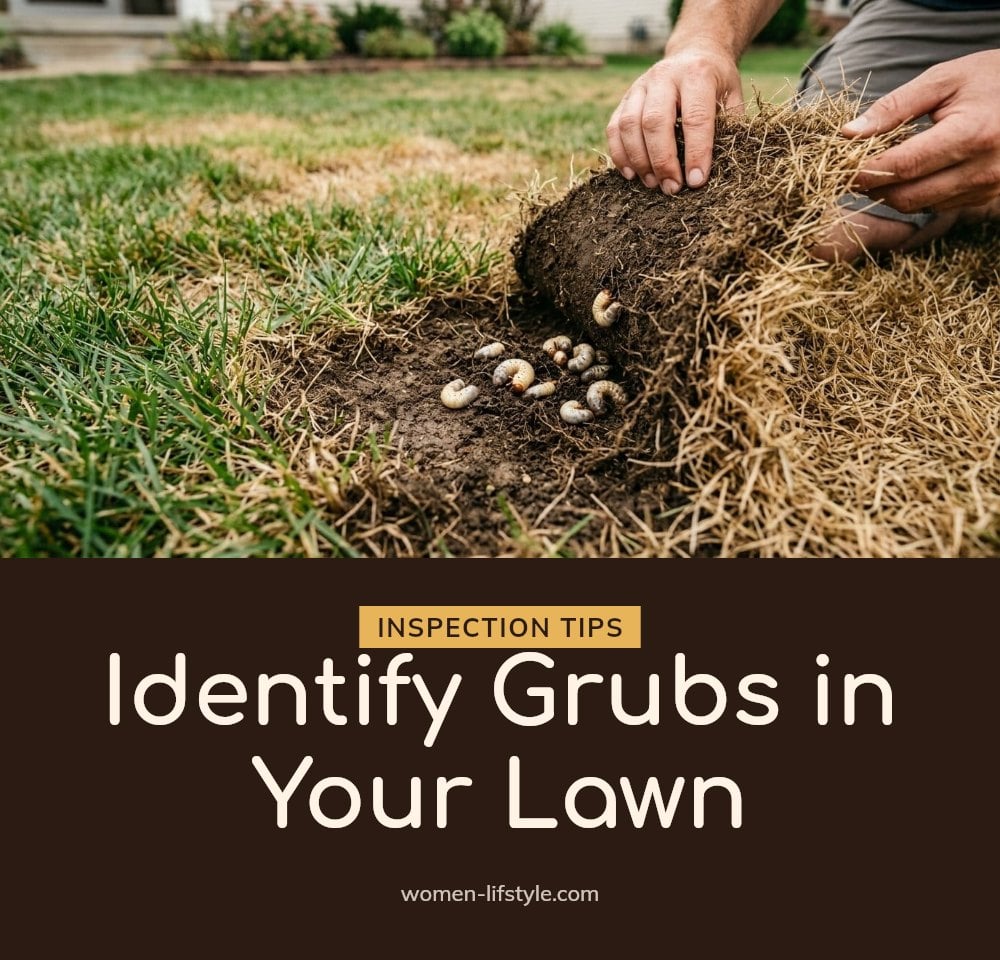
Look for irregular brown patches in your lawn that easily pull back, revealing severed roots. Increased digging from raccoons, skunks, or birds can also signal grubs beneath the surface.
Confirm with a digging test: Cut a square foot of turf in an affected area and peel it back. Check for C-shaped white larvae with brown heads curled in the soil. If you find more than 5 to 10 grubs per square foot, it’s time to treat.
2. Understand the Grub Life Cycle
Most problematic grubs follow a predictable cycle. Eggs are laid in early to mid-summer, and larvae begin feeding in late summer and fall. They then overwinter deep in the soil, resume feeding again in spring, pupate, and emerge as adult beetles in early summer.
Why timing matters: You want to target grubs when they are young and actively feeding near the surface. That window is late summer to early fall for curative treatments and late spring to early summer for preventative ones, aligning with egg-laying and early larval stages.
3. Choose Preventative Grub Control
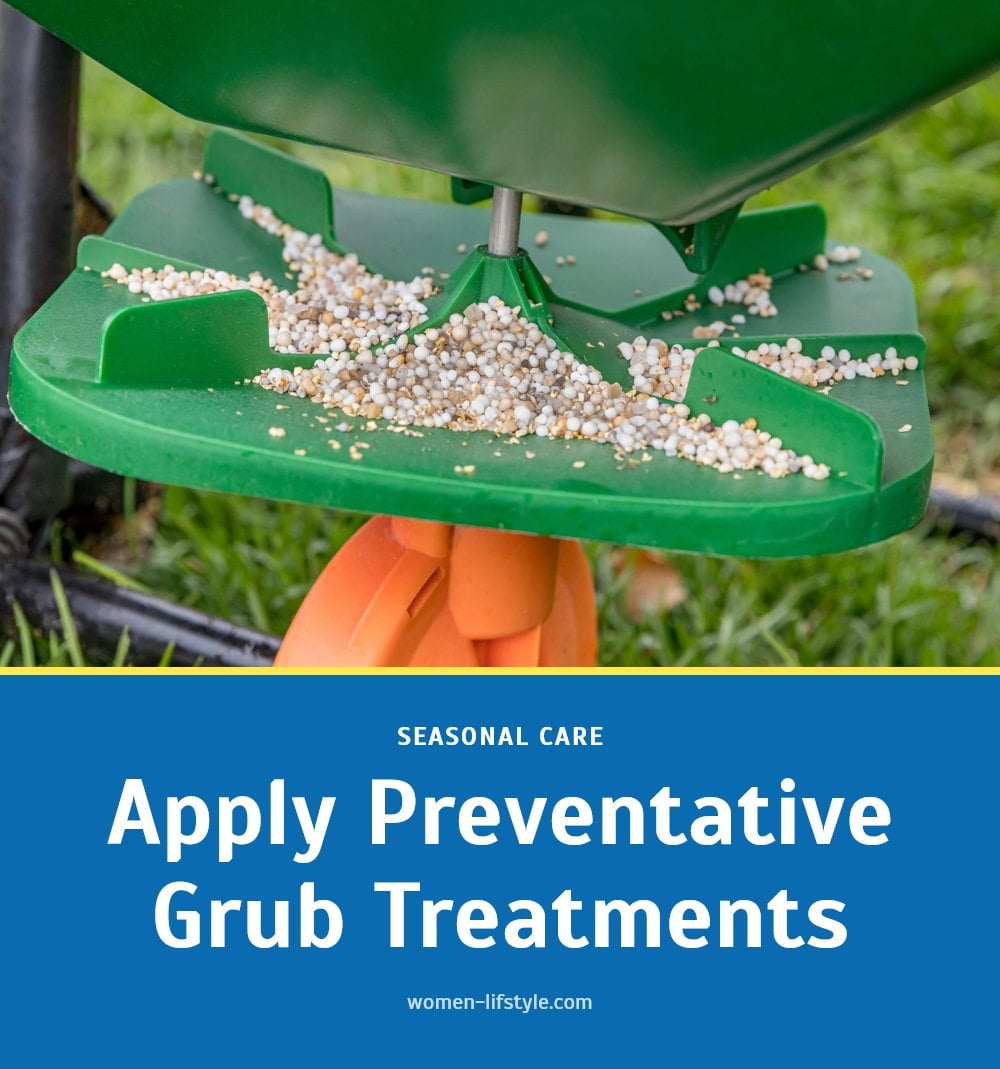
Apply preventative grub control in late spring to early summer, before eggs hatch. These products contain active ingredients like chlorantraniliprole or imidacloprid that kill grubs before they cause visible damage.
My tip: This is the easiest way to stay ahead of the problem if you’ve had grubs before. One well-timed application can save you from brown patches and animal digging later in the season.
4. Use Curative Grub Control
Apply curative grub control products in late summer to early fall, when grubs are small and actively feeding near the soil surface. These products, often containing trichlorfon or carbaryl, are designed for existing infestations that you’ve already confirmed by digging.
Caution: Curative products are less effective on large, mature grubs or when grubs have burrowed deep into the soil to overwinter. For best results, apply when soil is moist and water the area right after treatment to move the insecticide down to the root zone.
5. Consider Beneficial Nematodes

Beneficial nematodes (Heterorhabditis bacteriophora and Steinernema carpocapsae) are microscopic worms that parasitize and kill grubs from the inside. Apply them when soil temperatures are warm and the soil is moist, typically in late summer or early fall, and follow the package instructions precisely.
My tip: Water your lawn thoroughly before application and again after to help the nematodes move into the soil where grubs are feeding. They need consistent moisture to survive, so avoid applying during dry spells.
6. Try Milky Spore for Japanese Beetles
Milky spore (Paenibacillus popilliae) is a natural bacterium that targets only Japanese beetle grubs. It can take several years to build up in your soil, but once established it provides long-term control for that specific pest.
This is a slow-acting but persistent solution, so it works best as part of an ongoing management plan rather than a quick fix. Apply it according to the package instructions and be patient.
7. Mow Your Lawn Higher

Set your mower deck to 3 inches or higher. Taller grass encourages deeper root growth, which helps your lawn tolerate some grub feeding without showing damage.
The extra shade from longer grass also cools the soil, making it less attractive to beetles looking for a place to lay their eggs. This simple cultural practice is one of the easiest ways to reduce future infestations.
8. Water Deeply and Infrequently
Water deeply and infrequently: Give your lawn a good soak once or twice a week rather than a light sprinkle every day. Deep watering pushes roots deeper into the soil, where they can access more moisture and nutrients. Deeper roots make your lawn more tolerant of grub feeding and less likely to show drought stress, which is easily mistaken for grub damage.
9. Avoid Over-Fertilizing
A healthy lawn naturally resists pests, but too much fertilizer, especially nitrogen, can backfire. Research suggests that lush, over-fertilized grass actually attracts adult beetles looking for a good spot to lay their eggs.
Tip: Test your soil before any spring feeding. Grub-prone areas need balanced nutrition, not just a nitrogen boost. A slow-release, low-nitrogen fertilizer in early fall is usually plenty for most lawns.
If you notice thatch buildup from over-fertilizing, core-aerate in fall to improve root health. That alone often reduces grub damage without any extra product.
10. Always Read Product Labels
Read the label before every application: Each product has specific instructions for dosage, timing, and safety gear. Follow them exactly. Good to know: Set a timer or mark your calendar so you don’t forget the re-entry interval for kids and pets. This protects your family, your lawn, and the environment.
11. Monitor Your Lawn Annually
Inspect your lawn every year: Even after successful treatment, check for brown patches and animal digging in late summer. Dig a small square foot of turf in suspicious spots. If you find more than 5-10 grubs, treat early before the damage spreads.
Common Grub Control Mistakes to Avoid
Treating at the wrong time: This is the most common mistake. Applying grub control in winter or when grubs are pupating is a waste of effort. However, early spring feeding before pupation can still be a target window for curative products. Always use preventative products in late spring to early summer and curative ones in late summer to early fall, when grubs are young and feeding near the surface.
Misdiagnosing the problem: Not every brown patch means grubs. Drought stress, fungal diseases, and pet urine spots can look identical. Always dig a small section of turf and confirm you see C-shaped white larvae before you treat.
Ignoring lawn health: A weak lawn is a magnet for grubs. Focus on mowing high (3 inches or more), watering deeply and infrequently, and avoiding over-fertilizing. Healthy grass can tolerate some grub feeding without showing damage.
Over-applying pesticides: More product does not mean better control. It can harm beneficial insects and the environment. Always follow label instructions for dosage, timing, and safety. Pro move: Measure your lawn area before you buy so you apply the correct amount.
Frequently Asked Questions
What do grubs look like?
Grubs are C-shaped, white larvae with brown heads, typically found curled up in the soil. They range in size depending on their stage, but their distinctive shape and creamy color make them easy to spot when you dig them up.
How do I know if I have grubs?
Look for irregular brown patches in your lawn that pull back easily, revealing severed roots. Also watch for increased digging from raccoons, skunks, or birds. To confirm, cut a square foot of turf in an affected area and count the grubs you find.
Can grubs kill my lawn?
Yes, severe grub infestations can kill grass by destroying its root system. When roots are severed, the grass can’t take up water and nutrients, leading to large dead patches. However, a healthy lawn can tolerate some grub presence, so not every infestation is fatal.
Are nematodes safe for pets?
Yes, beneficial nematodes are safe for pets, humans, and beneficial insects. They only target soil-dwelling pests like grubs. Just follow the application instructions, and keep pets off the treated area until the soil has dried, as you would with any soil treatment.
How long does it take for grub treatment to work?
Chemical treatments can show results within days to weeks, as grubs die after ingesting the product. Biological controls like nematodes may take longer, often a few weeks, and milky spore can take several years to establish full effectiveness.
When is the best time to apply grub killer?
Preventative grub control should be applied in late spring to early summer, before eggs hatch. Curative products are best applied in late summer to early fall, when grubs are small and actively feeding near the soil surface. Applying at other times is often ineffective.
Final Thoughts
Start by confirming you have grubs, then choose a treatment based on the season. If it’s late spring, go with a preventative product; if it’s late summer or early fall, use a curative one. For a long-term, low-chemical approach, consider beneficial nematodes, but be patient: they take time to work. Keep your lawn healthy with higher mowing and deep, infrequent watering, and you’ll reduce the chance of future infestations. Check your lawn every year in late summer, and you’ll stay ahead of the problem.
