

You want a bathroom that’s truly clean, not just surface-level tidy. Deep cleaning goes beyond a quick wipe to tackle hidden grime, soap scum, and bacteria in every corner. This article walks you through a step-by-step approach, from gathering supplies to tackling tough spots, so you can get a sparkling, hygienic space without missing anything.

Key Takeaways
- Work from top to bottom so dirt falls on surfaces you haven’t cleaned yet.
- Allow cleaning products to dwell for 5-10 minutes for best results.
- Use separate cloths for the toilet and other surfaces to avoid cross-contamination.
- Deep clean every 1-3 months with weekly maintenance in between.
- Never mix bleach with ammonia or acid-based cleaners.
Why Deep Cleaning Your Bathroom Matters
Deep cleaning your bathroom means more than wiping down the sink. It targets hidden grime and bacteria that surface cleaning leaves behind. A thorough, systematic approach ensures a truly hygienic environment, reducing the spread of germs and odors. The result is a space that feels and smells clean for weeks, not just hours.
Gather Your Bathroom Cleaning Arsenal
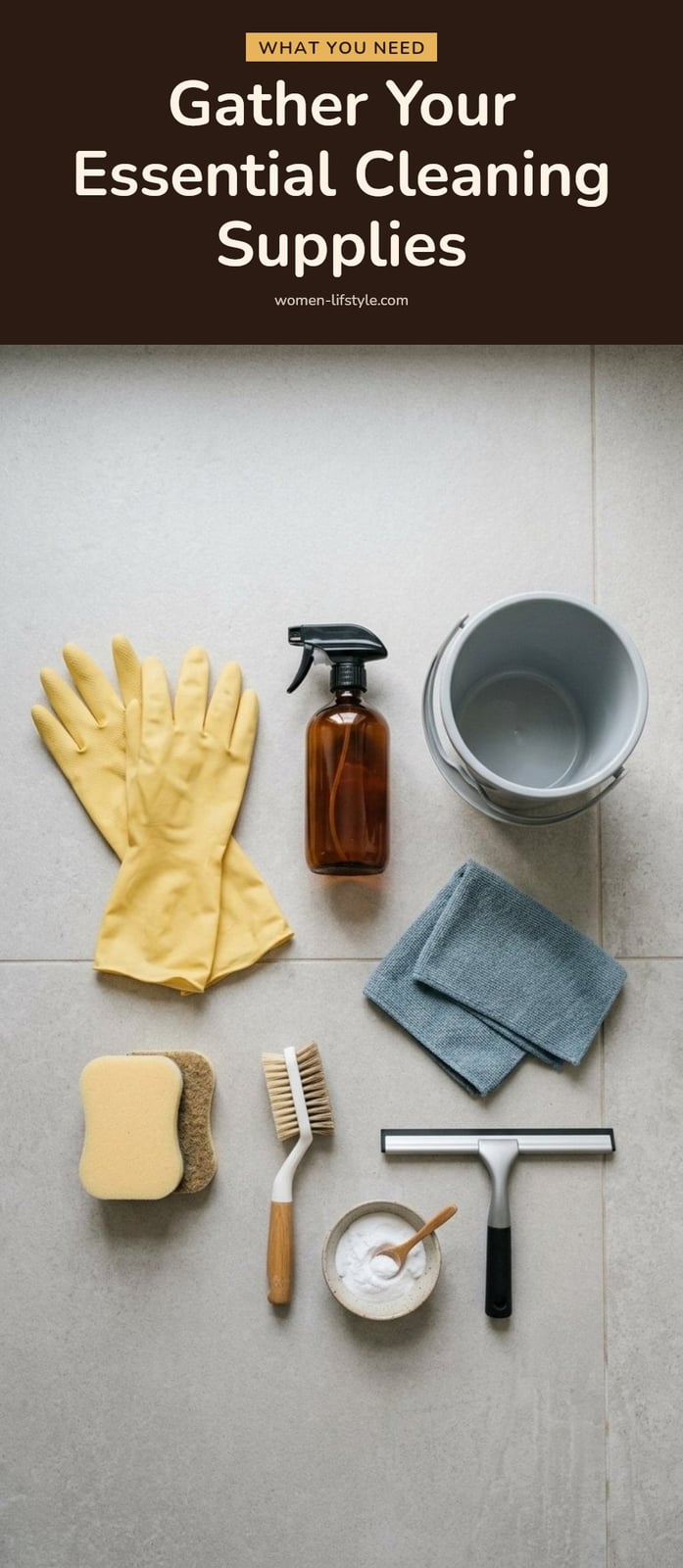
Before you start, gather everything in one caddy or bucket. This saves trips and keeps the job moving.
- Rubber gloves: essential for hand protection from chemicals and hot water.
- Microfiber cloths: for streak-free cleaning and polishing without lint.
- Scrub brushes: separate brushes for toilet, grout, and general scrubbing.
- All-purpose cleaner: for general surface cleaning on counters, tubs, and sinks.
- Toilet bowl cleaner: dedicated product for tough stains and disinfection inside the bowl.
- Glass cleaner: for mirrors and windows without streaks.
- Grout cleaner: to target embedded dirt and mildew in tile lines.
- White vinegar and baking soda: natural alternatives for descaling and deodorizing.
- Bucket: for mixing solutions or holding dirty water.
- Vacuum or broom: for initial dry debris removal before wet cleaning.
Step-by-Step: Deep Cleaning Your Bathroom from Top to Bottom

Work from top to bottom so dirt and grime fall onto surfaces you haven’t cleaned yet. Follow this order for a thorough, efficient clean.
- Ventilate: Open a window or turn on the exhaust fan. This clears fumes and speeds drying.
- Declutter: Remove all items from counters, shelves, the shower, and the floor.
- Dry dust and vacuum: Dust light fixtures, shelves, and corners. Vacuum or sweep the floor to lift hair and debris.
- Apply cleaners: Spray all-purpose cleaner on surfaces, toilet cleaner in the bowl, and grout cleaner on tile lines. Allow 5-10 minutes of dwell time for them to break down grime.
- Clean mirrors and windows: Use glass cleaner and a clean microfiber cloth. Wipe in an S-pattern to avoid streaks.
- Tackle shower and tub: Scrub walls, doors, and fixtures with a sponge or brush. Rinse thoroughly.
- Deep clean the toilet: Scrub inside the bowl with a toilet brush, then wipe the exterior, including the base, lid, and behind the seat.
- Clean sink and counter: Scrub the basin, faucet handles, and countertop. Rinse and dry.
- Mop the floor: Start at the far corner and work toward the door so you don’t walk on wet areas. Let the floor dry completely before moving on.
- Scrub grout lines: Use a dedicated grout brush and cleaner, working in small sections. Rinse each section with a damp cloth and dry it so no residue or moisture remains on the floor.
Tackling Tough Spots: Grout, Showerheads, and Drains
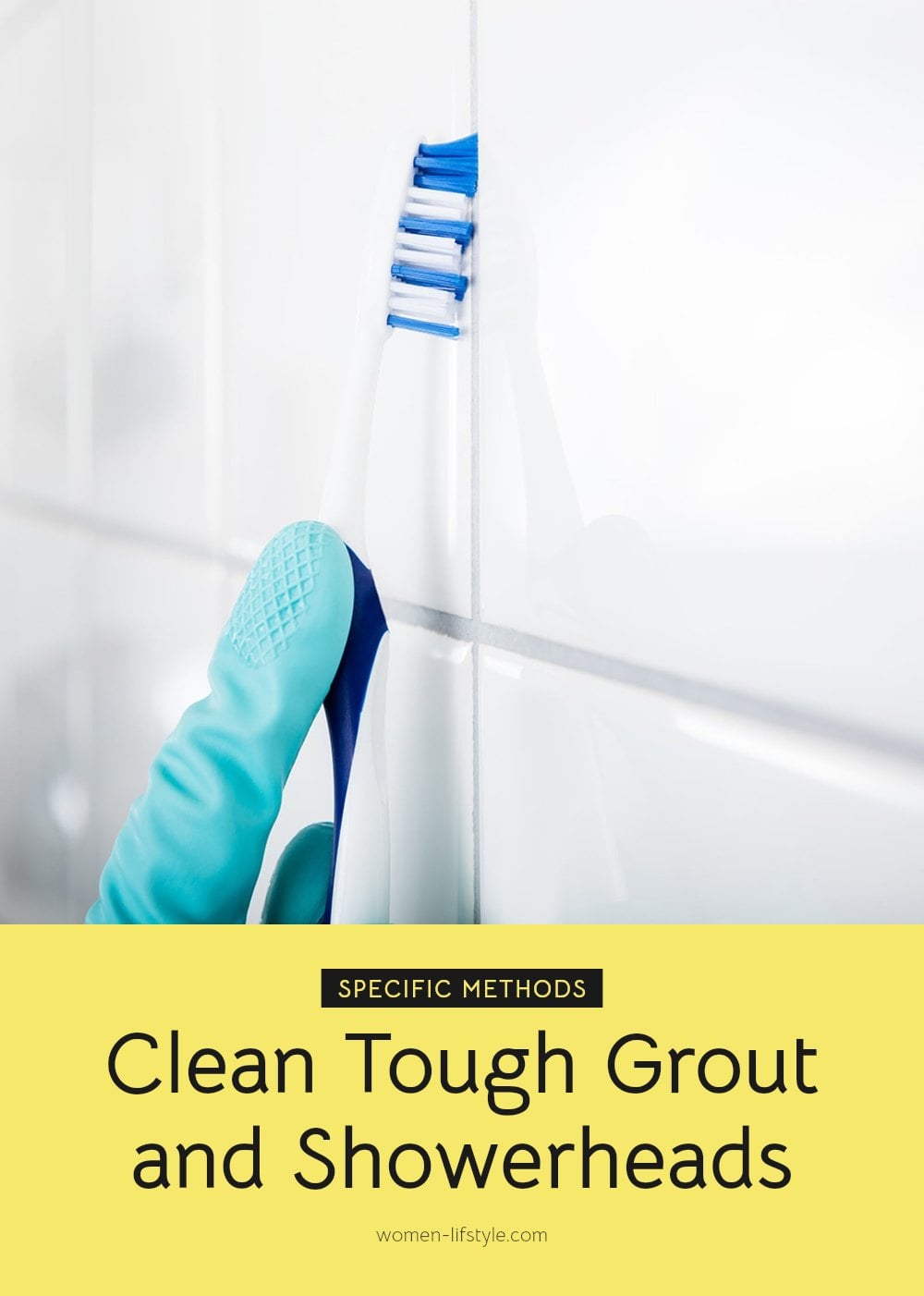
Some areas need special attention. Here are methods for three common trouble spots.
Grout lines
Apply a grout cleaner and let it sit for 5-10 minutes so it can penetrate the porous surface. Scrub with a stiff brush, then rinse with water. For stubborn stains, make a paste of baking soda and water, apply it, and let it sit for the same time before scrubbing.
Showerhead
Hard water deposits can clog nozzles and reduce water flow. Fill a plastic bag with white vinegar, secure it over the showerhead with a rubber band, and let it soak overnight. Rinse and run the shower for a minute to clear the vinegar. My tip: If your showerhead is fixed and hard to bag, fill a shallow dish with vinegar and hold it against the head with a towel for a few hours, though overnight works best.
Drains
To freshen a slow or smelly drain, pour 1/2 cup baking soda down the drain, then 1 cup white vinegar. The fizzing action helps loosen debris. Wait 5-10 minutes, then flush with hot water for a minute or two. Repeat if the drain is very slow. Caution: Do not use this method if you have recently used a chemical drain cleaner, as mixing can cause fumes. My tip: Do this monthly to prevent buildup before it becomes a problem.
Common Bathroom Cleaning Mistakes to Avoid
Not allowing products to dwell: Many cleaners need 5-10 minutes to break down grime effectively. Don’t spray and immediately wipe. Apply, then step away to let the product work.
Mixing chemicals: Never mix bleach with ammonia-based cleaners or acids. This creates dangerous toxic fumes. Always read labels before combining any products.
Using the same cloth for everything: This spreads germs. Use separate cloths for the toilet, sink and counter, and mirrors. Color-code them to keep track.
Forgetting hidden spots: Don’t neglect behind the toilet, under the sink, light fixtures, or the exhaust fan cover. These areas collect dust, grime, and mildew over time.
Using abrasive scrubbers on delicate surfaces: Acrylic or fiberglass can scratch easily. Opt for soft sponges or microfiber cloths instead of steel wool or harsh scrub pads.
Pro Tips for a Faster, More Effective Bathroom Clean

Ventilate well: Always open windows or run the exhaust fan to ensure good airflow and minimize fume inhalation. Tip: Start this even before gathering your supplies so the air is already moving.
Wear gloves: Protect your hands from harsh chemicals and hot water. Good rubber gloves make a real difference for comfort and safety.
Work smart, not hard: Let your cleaning products do the heavy lifting. Apply, then step away for a few minutes before scrubbing. The dwell time breaks down grime so you don’t have to.
Keep it stocked: Having all your supplies readily available prevents interruptions and makes cleaning less of a chore. Store them in a caddy or bucket ready to go.
Wipe down daily: A quick daily wipe of the sink and toilet can drastically reduce the need for deep cleaning. It takes two minutes and keeps buildup at bay.
Maintain a Clean Bathroom: Prevention is Key

Regular wipe-downs: Make it a habit to quickly wipe down the sink and counter after each use. This prevents toothpaste residue, soap scum, and water spots from hardening.
Squeegee the shower: A quick squeegee after showering prevents soap scum and hard water buildup on glass doors and tiles. It takes 30 seconds and saves scrubbing later.
Hang towels properly: Ensure towels dry completely between uses to prevent mildew growth and odors. Spread them out on a bar or hook, not bunched up.
Ventilate after showering: Run the exhaust fan for 15-20 minutes after every shower to remove humidity. This cuts down on mold and mildew growth on walls, ceilings, and grout.
Clean shower curtains and liners: Wash or replace your shower curtain and liner regularly to prevent mold and mildew. Machine-wash fabric ones monthly, or wipe plastic liners with a vinegar solution.
How Often to Clean Your Bathroom and How Long It Takes
Deep clean frequency: Aim for a deep clean every 1-3 months, depending on usage and household size. More people means more frequent deep cleaning.
Weekly maintenance: A quick clean of the toilet, sink, and floor spot clean should be done weekly to prevent major buildup. This takes about 15-30 minutes.
Time commitment for deep clean: Expect 1-3 hours for a thorough deep clean, varying by bathroom size and current grime level. Break it into sections if needed.
Cost of supplies: Basic cleaning supplies are relatively inexpensive, often under $50 for a full set that lasts months. Invest in good tools like microfiber cloths and a quality scrub brush.
Frequently Asked Questions
How often should I deep clean my bathroom?
Deep clean every 1-3 months, depending on how often the bathroom is used and how many people are in your household. More frequent use means you’ll want to lean toward the 1-month end. In between, a weekly quick clean of the toilet, sink, and floors helps prevent major buildup.
Can I use natural cleaners for a deep clean?
Yes, for some tasks. Baking soda and white vinegar can work well for unclogging drains or removing hard water stains. However, for disinfecting high-touch surfaces or tackling heavy mildew, a dedicated cleaner is usually more effective. Always test any natural solution on an inconspicuous area first.
What’s the best way to clean shower grout?
Apply a grout cleaner and let it sit for 5-10 minutes to break down dirt and mildew. Scrub with a stiff brush, then rinse thoroughly. For stubborn stains, a paste of baking soda and water can help. Regular maintenance prevents grout from getting too dirty.
How do I prevent mildew in my bathroom?
Keep the bathroom well-ventilated by using the exhaust fan or opening a window during and after showers. Squeegee the shower walls after each use to remove standing water, and wipe down surfaces regularly. Addressing leaks or damp spots quickly also helps prevent mildew growth.
Is it safe to mix cleaning products?
No, never mix different cleaning chemicals. Combining bleach with ammonia or acid-based cleaners can create toxic fumes. Always use products as directed and avoid mixing unless the label specifically says it’s safe. When in doubt, stick to one product per surface.
Final Thoughts
My recommendation: stick to the top-to-bottom order and let each product sit for the full dwell time. That alone will make a huge difference in how clean your bathroom looks and feels. Expect a deep clean to take 1-3 hours depending on your bathroom’s size and condition. With regular weekly wipe-downs, you’ll keep things manageable and your bathroom will stay fresh longer.
This article provides general information on bathroom cleaning. It is not a substitute for professional advice. Always follow product label instructions and safety guidelines. If you have persistent mold, mildew, or a serious hygiene issue, consult a professional cleaner or your healthcare provider.
