

You know that sticky feeling when the air in your home just feels off, or the opposite when your skin is cracking and static shocks are everywhere? That’s your humidity level talking. Getting the balance right between too much and too little moisture is key to comfort and protecting your home. This article covers practical, room-by-room tips to help you control humidity and keep your living space feeling just right.

Key Takeaways
- Keep indoor relative humidity between 30% and 50% for comfort and to prevent damage.
- Use a hygrometer to monitor humidity levels in different rooms, especially basements and bathrooms.
- Run exhaust fans in bathrooms and kitchens during and for 15-20 minutes after moisture-producing activities.
- Use a dehumidifier when humidity stays above 50-60%, and a humidifier when it drops below 30%.
- Fix leaks and seal air leaks around windows and doors to maintain stable humidity levels.
Why Humidity Matters in Your Home
Keeping your home’s relative humidity between 30% and 50% is one of the simplest ways to protect both your health and your house. When humidity climbs above that range, you’ll want to start monitoring closely, levels consistently above 50% can lead to mold, dust mites, and musty odors. When it drops too low, you’ll notice dry skin, static shocks, and wood floors that start to crack. The good news is that a few basic tools and daily habits can keep things balanced all year.
1. Monitor Humidity Levels with a Hygrometer
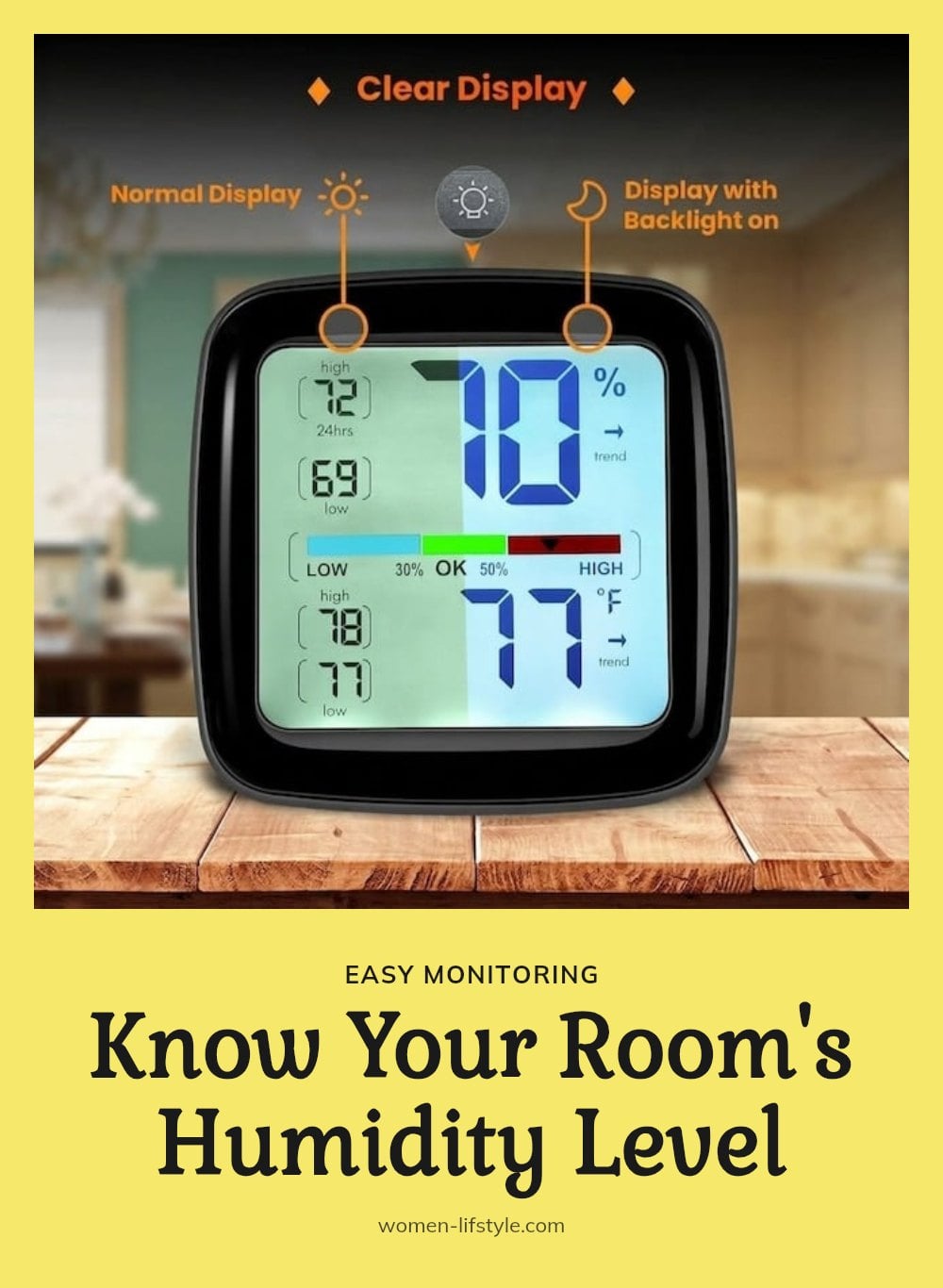
A hygrometer is a small, inexpensive device that tells you the exact relative humidity in a room. Without one, you’re guessing. Place hygrometers in several spots around the house, especially in basements and bathrooms, where moisture levels vary the most.
My tip: I keep one in my living room and another in the basement so I can spot seasonal shifts before they cause problems. Digital models are easy to read and cost under $15.
- Check the reading in each room at different times of day to see peaks
- Place hygrometers away from direct sunlight and vents for accurate data
2. Use Exhaust Fans in Bathrooms and Kitchens
Cooking, showering, and bathing pump a surprising amount of moisture into the air. Running your exhaust fan during these activities and for at least 15 to 20 minutes afterward vents that damp air outside before it settles into walls and furniture.
Make sure your fans actually blow outdoors, not just into an attic or crawl space. Recirculating moist air into hidden areas can lead to mold growth and wood rot that you won’t notice until it’s serious.
3. Run a Dehumidifier for High Humidity
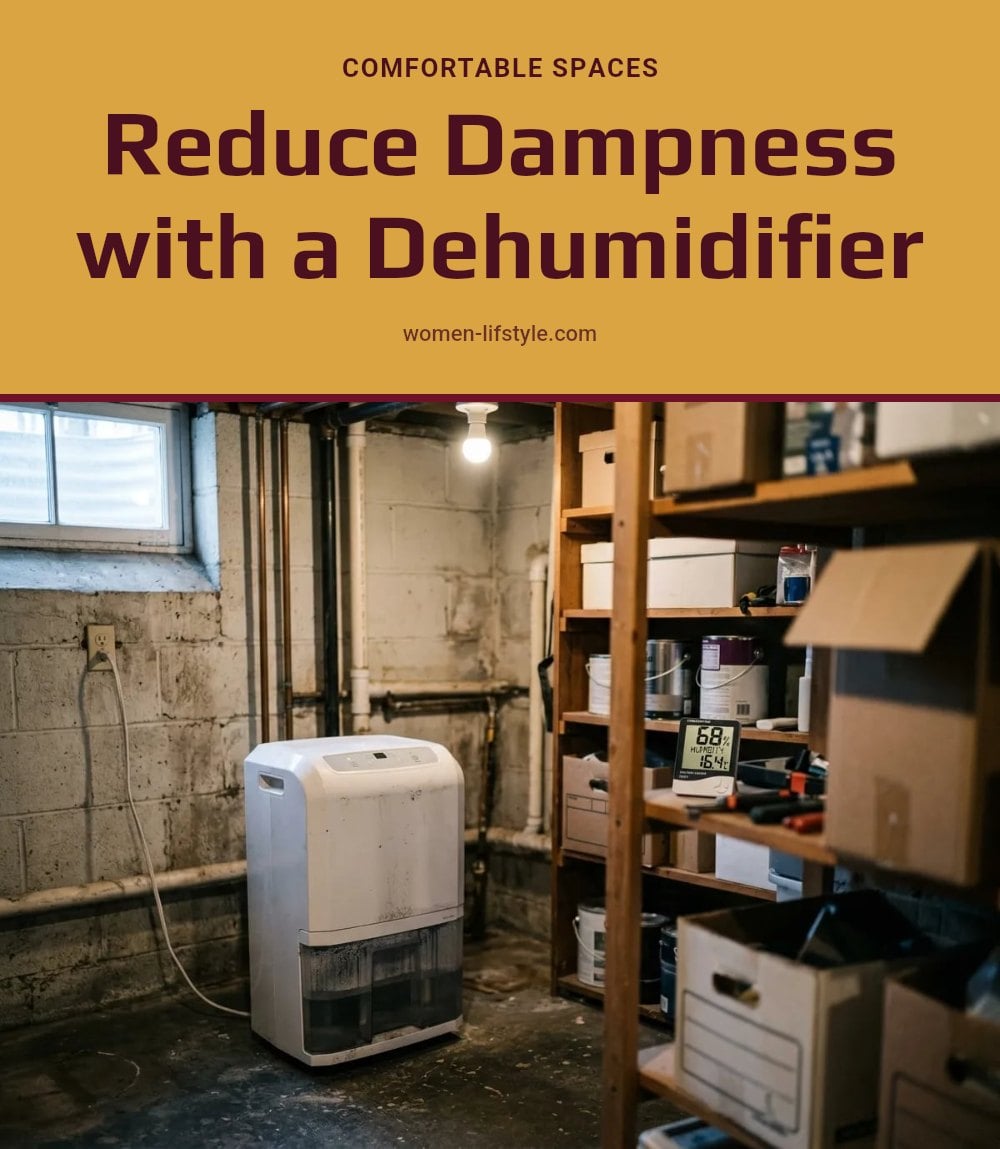
If your hygrometer consistently reads above 50-60%, a dehumidifier is your best tool for pulling excess moisture out of the air. These machines work especially well in basements, crawl spaces, and during humid summer months when the air feels heavy indoors.
My tip: Empty the water reservoir every day or two to prevent mold and bacteria from growing inside the tank. Many models offer a continuous drain option, so you can attach a hose and let it run without checking the bucket constantly.
- Set the dehumidifier to maintain 30-50% relative humidity
- Place it in the dampest room first for the biggest impact
4. Use a Humidifier for Low Humidity
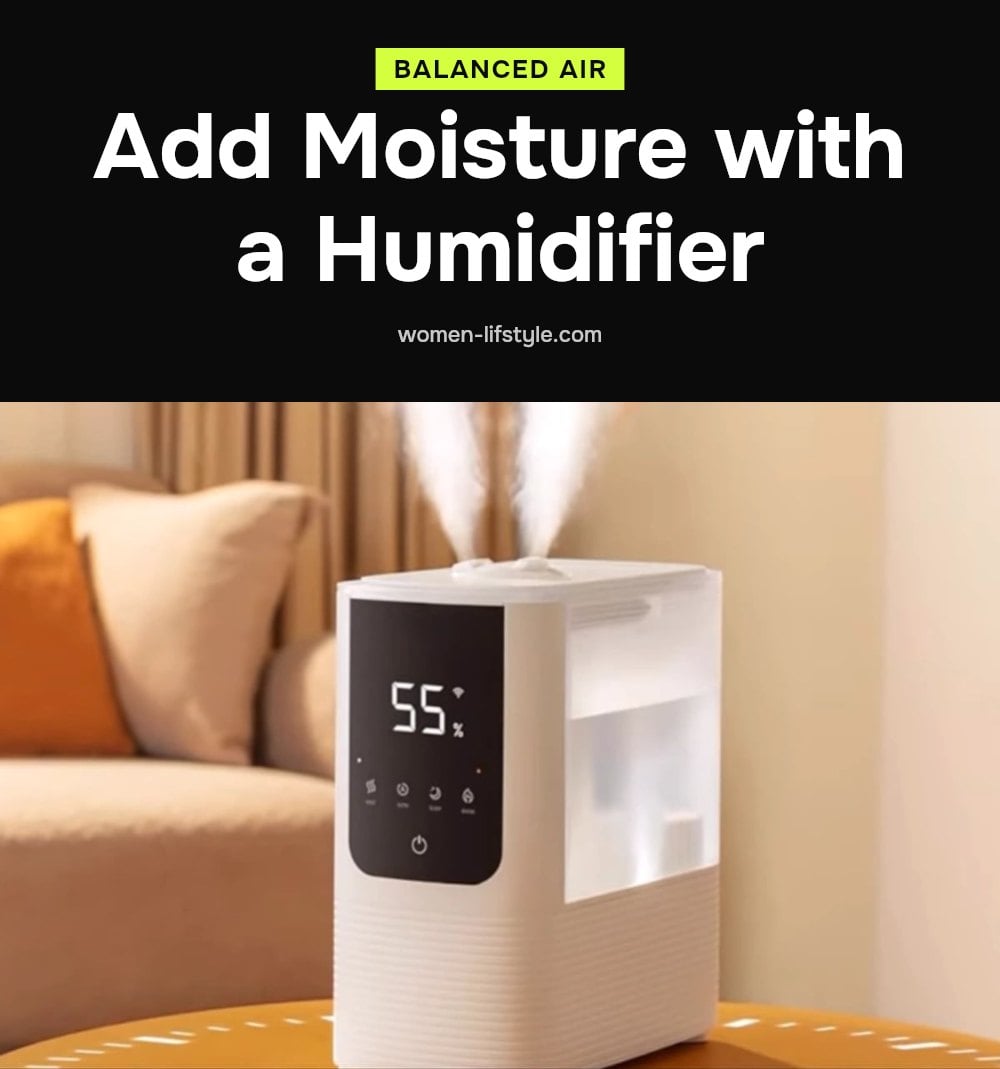
When humidity drops below 30%, especially in winter or dry climates, a humidifier adds moisture back into the air. This can help with dry skin, irritated sinuses, and prevent wood furniture from cracking. Caution: Use distilled water in your humidifier to avoid white dust from mineral deposits. Clean the unit regularly according to the manufacturer’s instructions to prevent bacteria from being dispersed into the air.
5. Improve Air Circulation and Ventilation
Good airflow stops stagnant, moist air from settling where mold can grow. On dry days, open windows for 10-15 minutes after showering or cooking to let fresh air circulate. Also check that attic and crawl space vents are clear of debris so air can move freely through those spaces.
6. Seal Air Leaks Around Windows and Doors

Drafts around windows and doors don’t just let in cold air. They also let in humid outdoor air or let conditioned air escape. Apply weatherstripping along movable parts of windows and doors, and use caulk to seal stationary gaps. This helps your home hold its target humidity level more efficiently.
7. Address Leaks and Water Intrusion Promptly
Any unwanted water source, a leaky pipe, a damp foundation, or a roof leak, directly raises indoor humidity. Check plumbing, roofs, and foundations regularly, and fix leaks as soon as you find them. Standing water encourages mold growth and can cause structural damage over time.
8. Manage Indoor Moisture-Producing Activities
Manage indoor moisture sources: If your home already runs humid, skip drying clothes on indoor racks. Use a dryer or an outdoor line instead. Cover pots while cooking to trap steam, and consider shorter, cooler showers.
Tip: Houseplants can release minor moisture through transpiration, so avoid overwatering them. This small step helps keep humidity in check without sacrificing your greenery.
9. Utilize Air Conditioning to Reduce Humidity
Air conditioners naturally pull moisture from the air as they cool. Running your AC during warm, humid weather can help lower indoor humidity. It works best when the system is properly sized and maintained.
Caution: Don’t rely on AC alone for severe humidity problems, especially in very humid climates. It’s not a substitute for a dedicated dehumidifier.
10. Clean Up Mold and Mildew Immediately
A musty smell or visible mold means your humidity is too high and needs fixing. For small patches, clean with a mold cleaner or a bleach solution (1 cup bleach to 1 gallon water).
Caution: Always wear gloves and eye protection when cleaning mold, and keep the area well-ventilated. If the mold covers more than 10 square feet, call a professional.
11. Consider Desiccants for Small, Enclosed Spaces
For small, enclosed spaces like closets, drawers, or safes, desiccants work well. Silica gel packets or moisture absorbers pull water vapor from the air, preventing mildew and protecting items like documents or electronics.
Good to know: Desiccants are a temporary fix. They can’t replace a dehumidifier for whole-room control, but they’re handy for targeted spots.
When to Call a Professional
Most humidity problems can be handled with the methods above, but some situations need a professional. If you spot a patch of mold larger than about 10 square feet, or suspect mold is growing behind walls or under flooring, call a mold remediation specialist. They have the equipment and training to remove it safely without spreading spores. For high humidity that won’t budge after you’ve tried dehumidifiers, ventilation fixes, and sealing leaks, an HVAC professional can inspect your home’s ventilation system and recommend whole-house solutions like a central dehumidifier. And if you or someone in your home has persistent respiratory issues, coughing, or sinus problems that you suspect are linked to indoor air, consult your doctor. They can help determine whether humidity or mold is a factor.
Frequently Asked Questions
Can houseplants help with humidity?
Some houseplants release moisture into the air through transpiration, which can slightly raise humidity. However, their impact is generally minor compared to a humidifier or dehumidifier. If you keep many plants, water them sparingly to avoid adding too much moisture to a room that’s already humid.
How do I know if my home has a humidity problem?
Common signs of high humidity include condensation on windows, musty odors, visible mold or mildew, and a feeling of stickiness. Low humidity often shows up as dry skin, static electricity, cracked wood furniture, and irritated sinuses. A hygrometer gives you a precise reading to confirm the issue.
Is too much humidity bad for electronics?
Yes, high humidity can damage electronics by causing corrosion on circuit boards and metal components, and it may even create fire risks over time. Keep electronics in rooms with humidity levels between 30% and 50%, and use a dehumidifier in damp areas like basements where electronics are stored.
How often should I clean my humidifier or dehumidifier?
Clean your humidifier or dehumidifier at least once a week during regular use. Empty the water reservoir daily to prevent mold and bacteria growth. Follow the manufacturer’s instructions for deep cleaning, and use distilled water in humidifiers to reduce mineral buildup and white dust.
What is the ideal humidity level for a house?
The ideal indoor relative humidity for comfort, health, and protecting your home is between 30% and 50%. Staying within this range helps prevent mold, dust mites, dry skin, and damage to wood furniture and electronics. A hygrometer helps you keep track.
Final Thoughts
Start by grabbing a hygrometer and checking the humidity in your most-used rooms. If it’s above 50-60%, a dehumidifier is your go-to; if it’s below 30%, a humidifier will help. Expect to see improvements in comfort and fewer musty smells or static shocks within a week or two of consistent use. A little monitoring and adjustment goes a long way toward a healthier, cozier home.
This article is for general informational purposes only and does not constitute medical or professional advice. Humidity issues can affect health, especially for those with allergies or respiratory conditions. For persistent mold, severe moisture damage, or health concerns, consult a doctor or a qualified professional.
