

I kept seeing the same silhouette in every salon chair this winter: mid-back length, soft layers, curtain bangs grazing the cheekbone. Not a dramatic change, just a smarter way to keep your neck warm without hiding your face. I think that’s the point.
This roundup of 19 Long Winter Haircuts runs from air-dried waves to sleek blowouts, for fine strands that go flat by 4 pm and coily textures that need room to shrink. Every one of them respects grow-out, because my week-five root line taught me that a good winter cut doesn’t demand a monthly touch-up.
Mid-Back Layers With Curtain Bangs
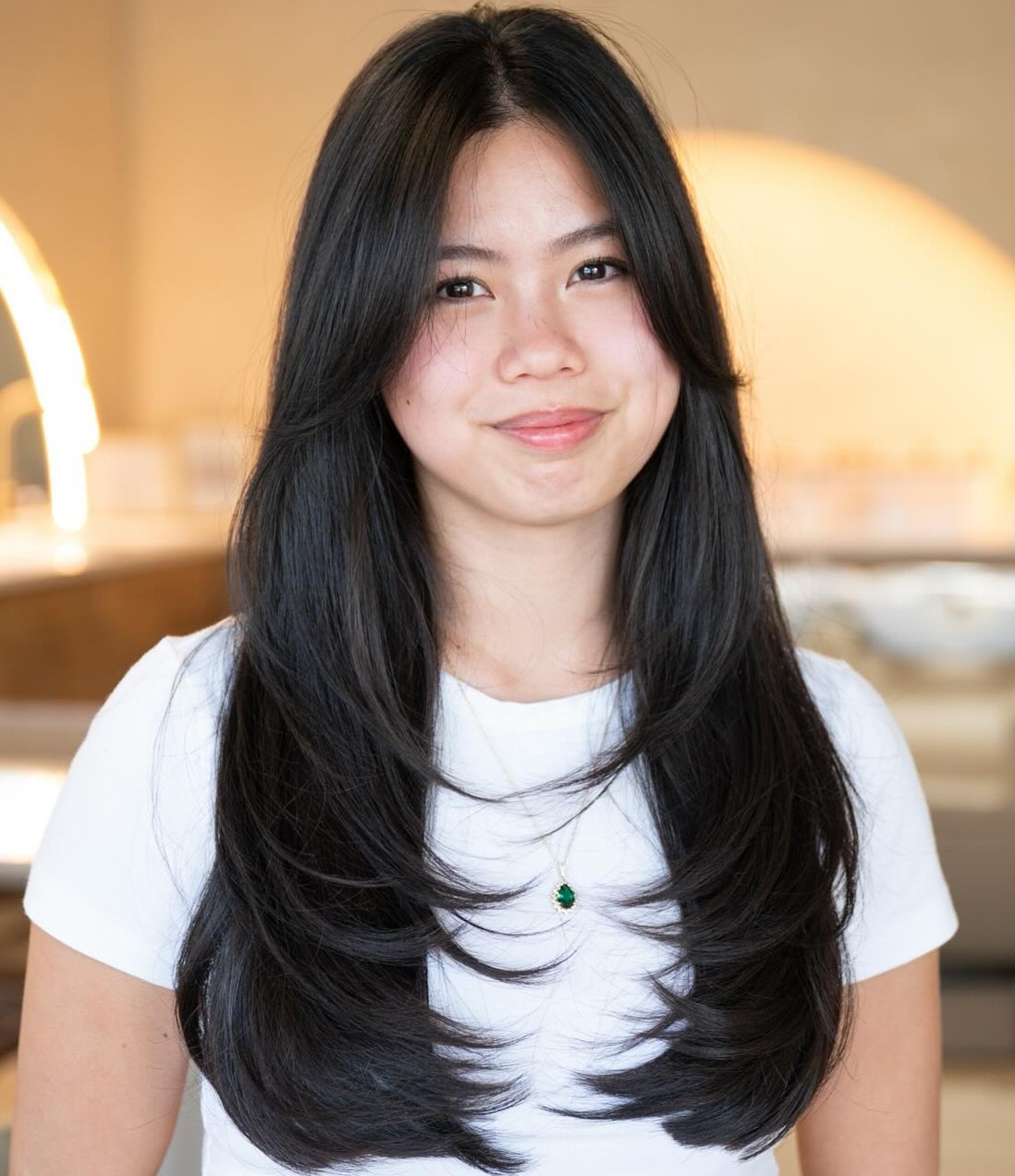
Not sure if curtain bangs are worth the daily round brush? Here is how the technique works: long layers with curtain bangs are cut so the shortest piece hits your cheekbone and the rest blends into the mid-back length. The layers add movement, the bangs soften the face, and the texture stays straight but the bangs need a quick blowout every morning. Upkeep is real: you are drying those bangs before you drink coffee. But the face-framing layers mean the grow-out is gradual, not awkward.
Collarbone Ash Blonde Shag

The ash blonde shag cut lands at collarbone, which means it hits the exact spot where waves either hold or collapse. Full bangs add a curtain of texture that looks deliberate when air-dried but separates by noon if you skipped product. The layers are cut short through the crown, so the shape stays round even when my fine waves flatten. Ash blonde reads cool against warm skin but needs a purple shampoo every third wash or it goes brassy. Texture is the whole point here: wavy, slightly messy, lived-in. The honest downside is the frizz potential on humid days and the fact that those bangs need a trim every four weeks to stay sharp. It is not a set-it-and-forget-it cut.
Voluminous Mid-Back Blowout
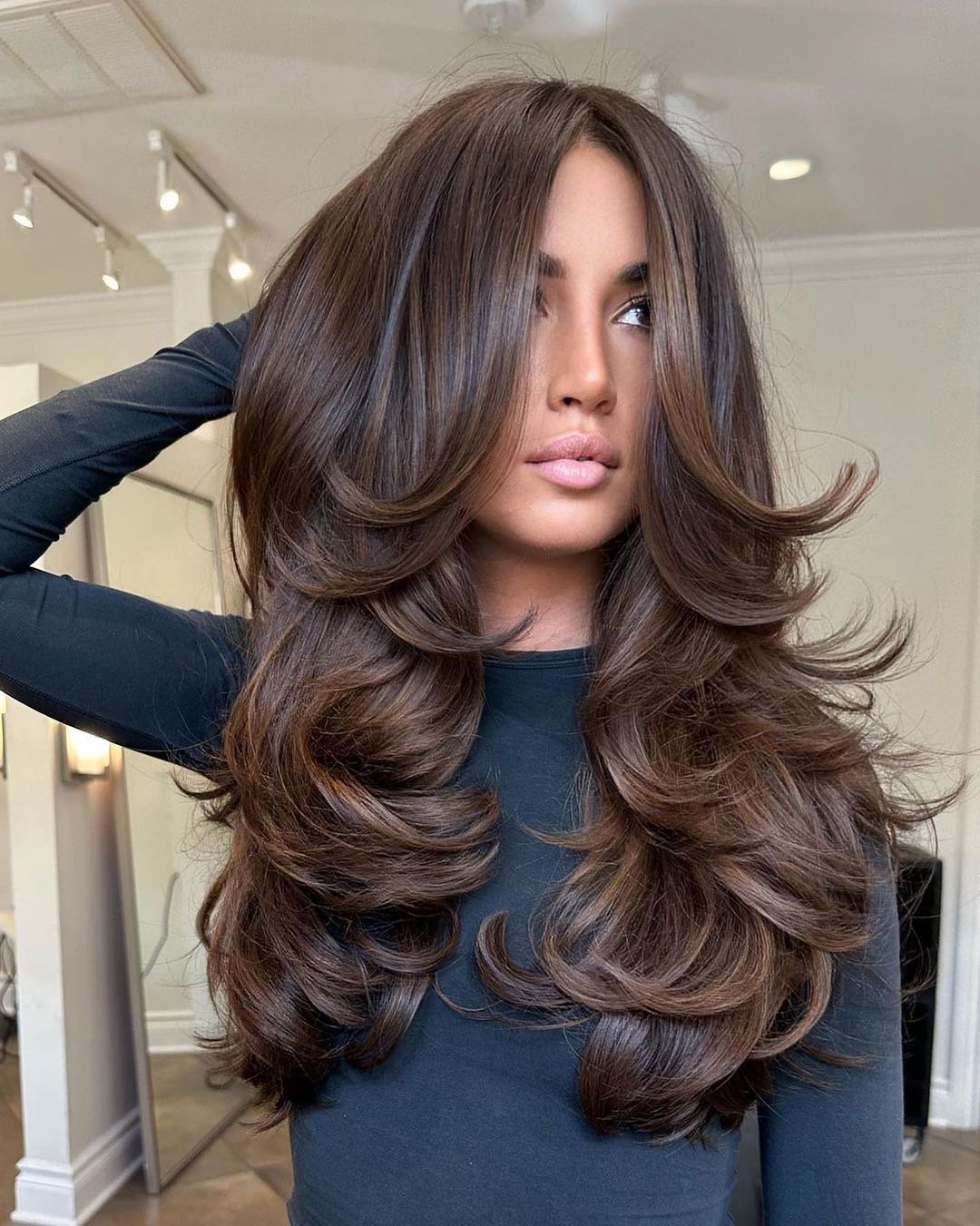
A voluminous blowout long hair like this one takes commitment. The cut is long layered from mid-back to collarbone, with bouncy layers that stack volume through the midsection and taper at the ends. No bangs here, so the face is fully open and the parting is a clean middle. The technique requires a round brush and a blow-dryer with a concentrator nozzle: lift at the roots, roll the ends under, then cool-shot each section to lock the shape. Soft curls are wrapped around a large barrel after the blowout, brushed out for that polished wave.
Texture matters here: thick, wavy hair holds this shape best. Fine hair needs a volumizing mousse at the roots or it drops by late afternoon. The rich brown base with subtle lighter highlights adds dimension so the curls read as movement, not just fluff. This is a salon-only style if you want it done right; the blowout itself is a skill that takes practice.
Dark Brown Mid-Back Blowout With Curtain Bangs
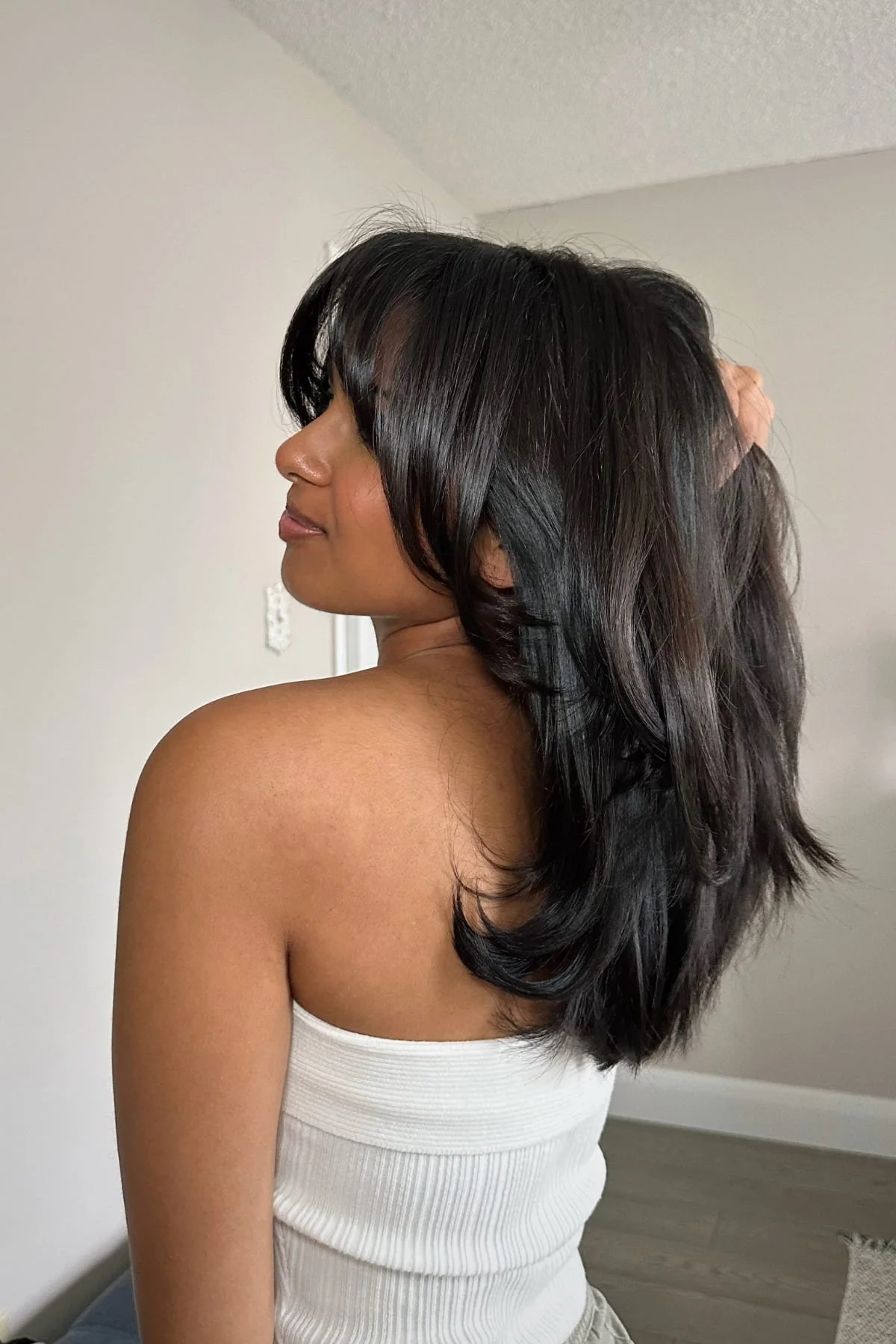
The dark brown blowout curtain bangs combination works best for straight hair that holds a blowout without fighting back. The cut is layered through the mid-back length, with face-framing layers that start at the jaw and blend into the curtain bangs. That side view in the photo shows exactly how the layers sweep away from the cheekbone, which softens a square jaw or a strong chin. Straight texture is ideal because the curtain bangs land cleanly and the blowout stays smooth without extra product. If your hair is wavy or coily, you will need to flat-iron the bangs separately every morning. This is not a cut for anyone who air-dries and walks out the door, the parting must be blown dry in the right direction or the bangs split wrong.
Mid-Back Face-Framing Layers
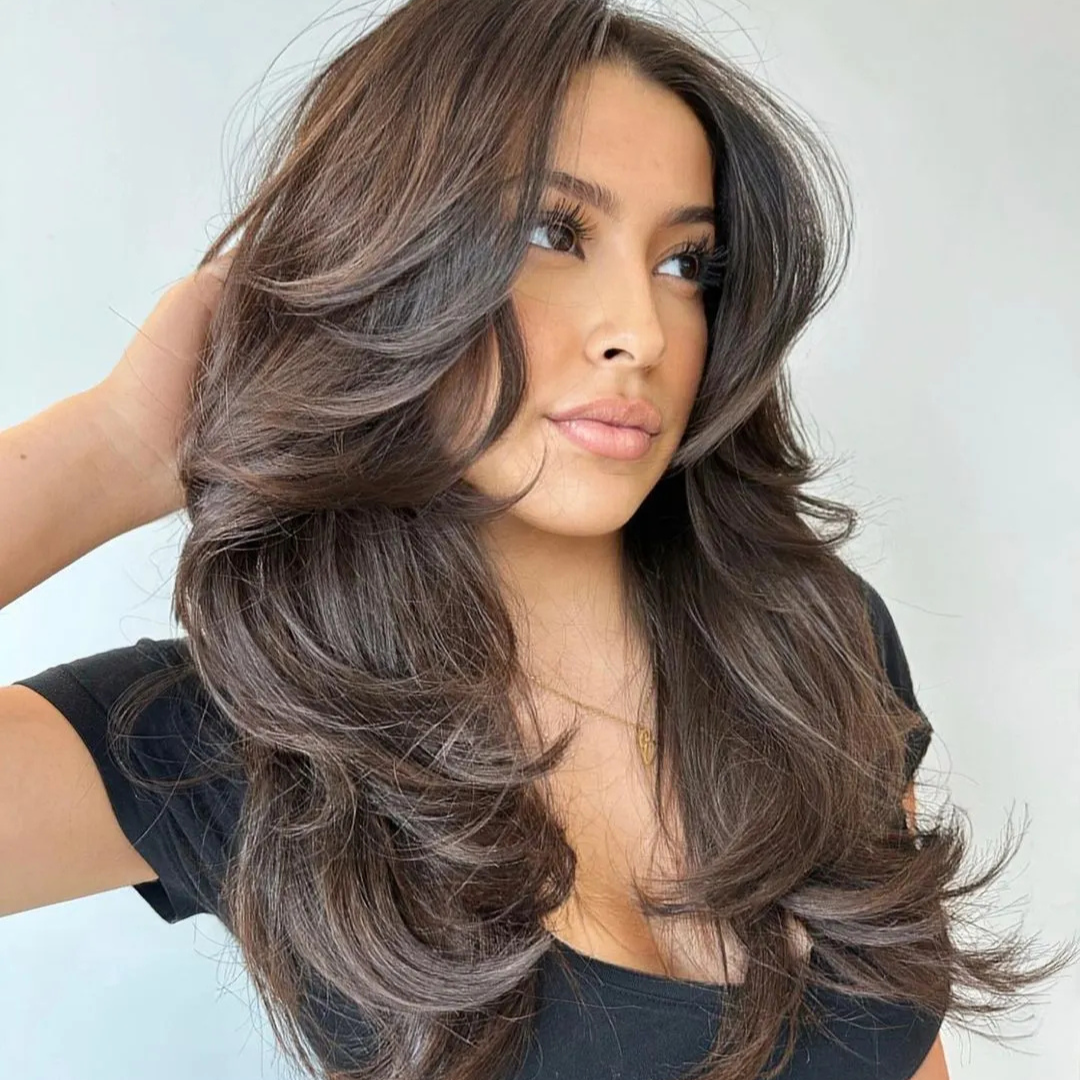
Face-framing layers have a habit of vanishing into the rest of the hair if you don’t give them a reason to stay. The cut itself is precise: long layers that start around the cheekbone and blend down through the mid-back, no bangs, just graduated pieces that catch light. For thick, straight hair, that graduation is everything — without it, the weight pulls everything flat by noon.
The fix isn’t complicated, but it takes focus. A round brush and a blow-dryer with tension on those front sections, curling the ends under or over, gives the face-framing pieces their shape. The caramel highlights help, too — they add dimension so the layers read as deliberate, not accidental. On thick hair, this cut works because the layers remove enough bulk to let the hair move without losing length. Trim every eight weeks to keep the face-framing pieces hitting at the right spot, not drifting toward your collarbone.
Dark Brown With Subtle Highlights Collarbone Layers With Full Bangs
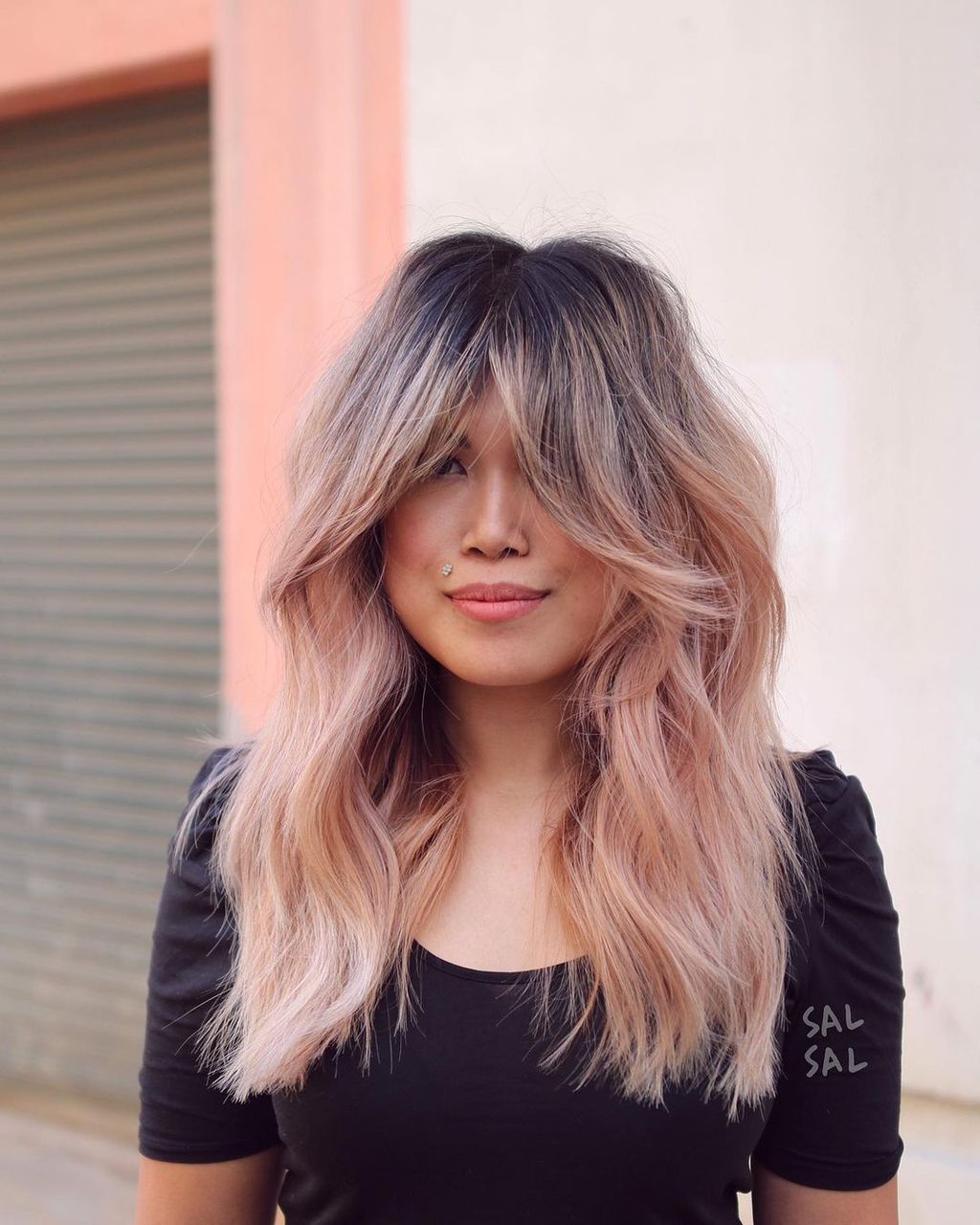
Is your face longer than you’d like? Full bangs and collarbone layers are the combination that shortens the visual length without cutting everything short. The cut is layered through the body to add movement, while the bang hits just above the brow, drawing attention outward. The textured finish — slightly tousled, wavy, medium density — keeps it from looking too sharp. It’s a salon cut, no question, but the grow-out is forgiving if you keep the bangs trimmed every three weeks.
Mid-Back Loose Waves With Curtain Bangs
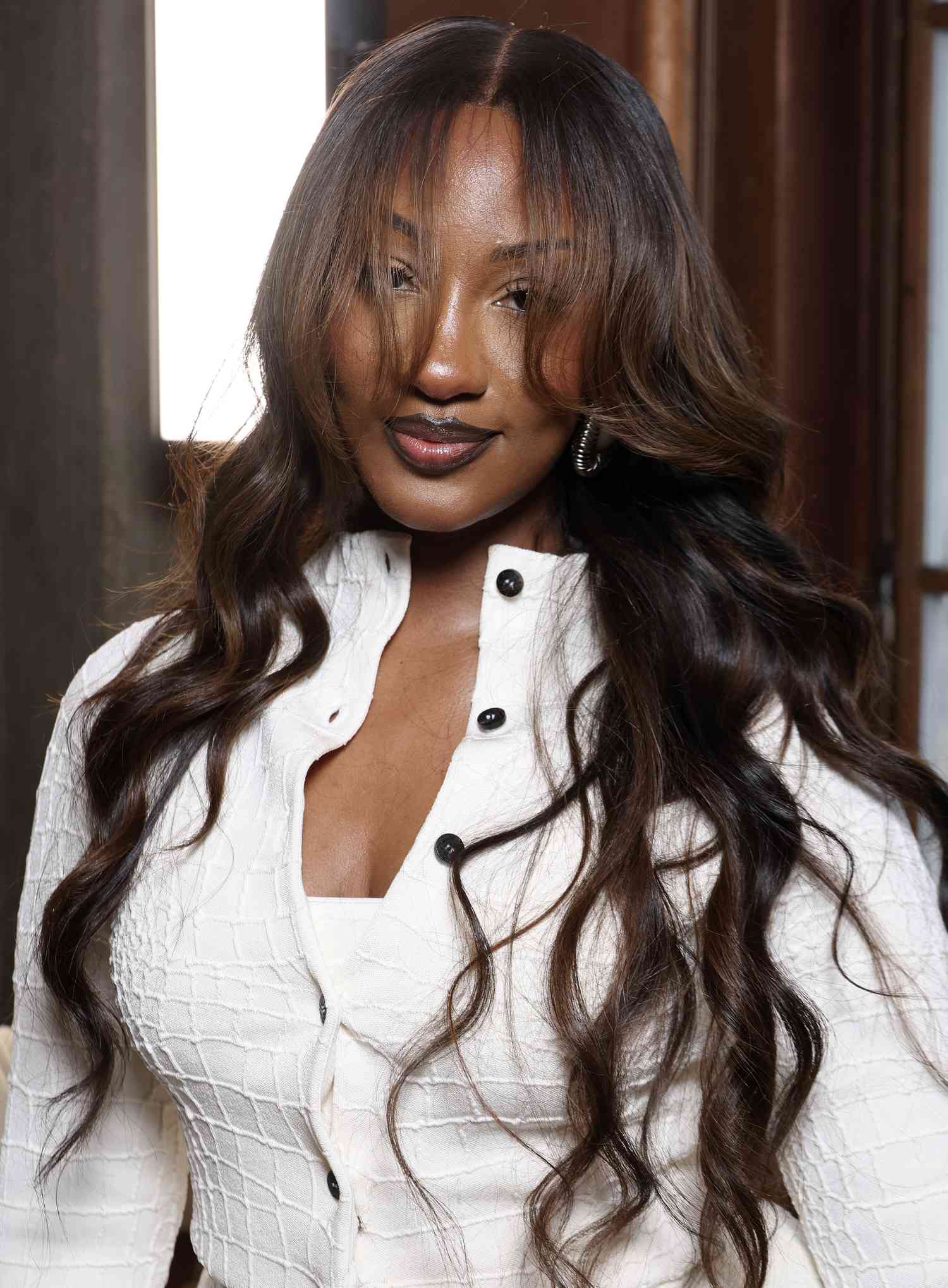
Verdict: this cut looks incredible exactly twice a week, and the rest of the time it’s a negotiation. The curtain bangs demand a round brush and a cool shot to stay off your forehead, and the voluminous blowout needs hot rollers or a large curling iron to lift the roots. The long layers add movement, but without that lift, the waves fall flat by noon. You have to plan your day around this cut to get the look from the photo.
The honest downside is the daily effort: the loose waves curtain bangs need a separate styling window of about ten minutes just for the bangs. The voluminous blowout creates the shape, but it doesn’t last through humidity. The thick wavy texture helps hold curl, but you still need a texturizing spray for grit. Upkeep means curtain bangs trims every six weeks and a deep conditioner to combat heat damage. If you air-dry, this cut becomes a plain, flat layer with bangs that separate awkwardly.
Ultra-Long Straight Platinum Blonde
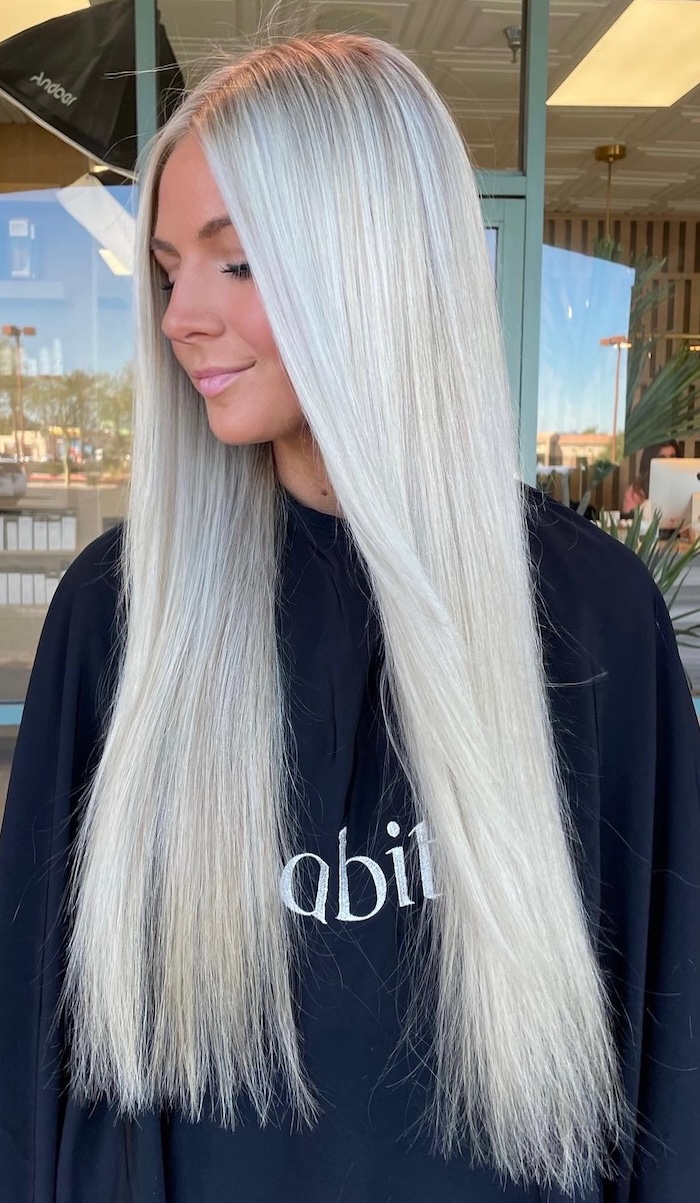
Platinum starts looking expensive at the root line, not the ends. This ultra long straight platinum colour lands icy, no hint of brass, and the cut runs one-length with no bangs to interrupt the shine. My dark hair showed warmth at week three. This holds cool for maybe five. The texture is aggressively straight, which means every new half-inch of regrowth reads as a separate colour. You can DIY a toner but you cannot DIY the lift: this is a salon booking, full stop. Sleek polished requires a flat iron and a patient hand. Side by side with a darker tone, the upkeep gap is the whole story.
Mid-Back Ash Blonde With Side Bangs
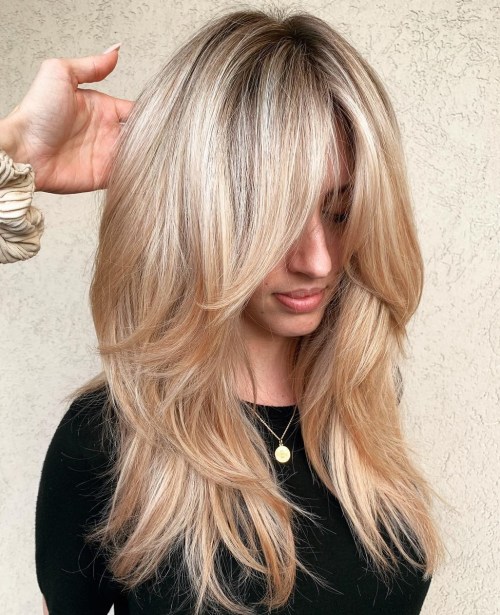
Ash blonde side swept bangs and my fine hair walk into a bar. The bartender says, is that a root shadow? Yes, it is. The cut uses long layers through the mid-back to keep weight at the hem while the side-swept bangs create a diagonal line that breaks up a round face. The ash blonde colour sits cool, and the root shadow is non-negotiable: without it, the regrowth at week three looks like a different colour. Texture is fine density, wavy, which means the layers hold a soft bend but the bangs need a blow-dry directional change to sit right. Book the salon for the cut and the colour, then maintain with a purple shampoo every fourth wash.
Mid-Back Layered Caramel Chestnut
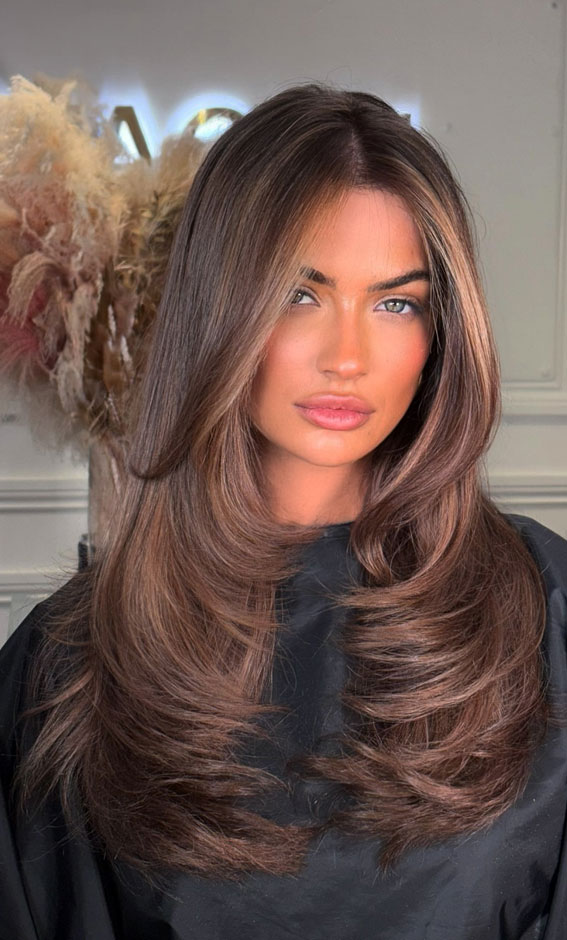
Caramel chestnut highlights beat flat brown every time. This mid-back cut uses layered sections to catch the light, with a glossy finish that makes the colour look liquid. No bangs means the focus stays on the rich tone, and the subtle waves add movement without demanding a curl routine. The depth of caramelised chestnut against highlights gives dimension that one-note shades just cannot match. Wear holds through day two if you refresh the ends with a quick iron pass. The colour stays rich about four weeks before the highlights soften, which actually looks intentional. A root shadow appointment at that point buys another six weeks of calm. Upkeep: a trim every eight to ten weeks keeps the layers from getting stringy.
Mid-Back Copper Brown Layers
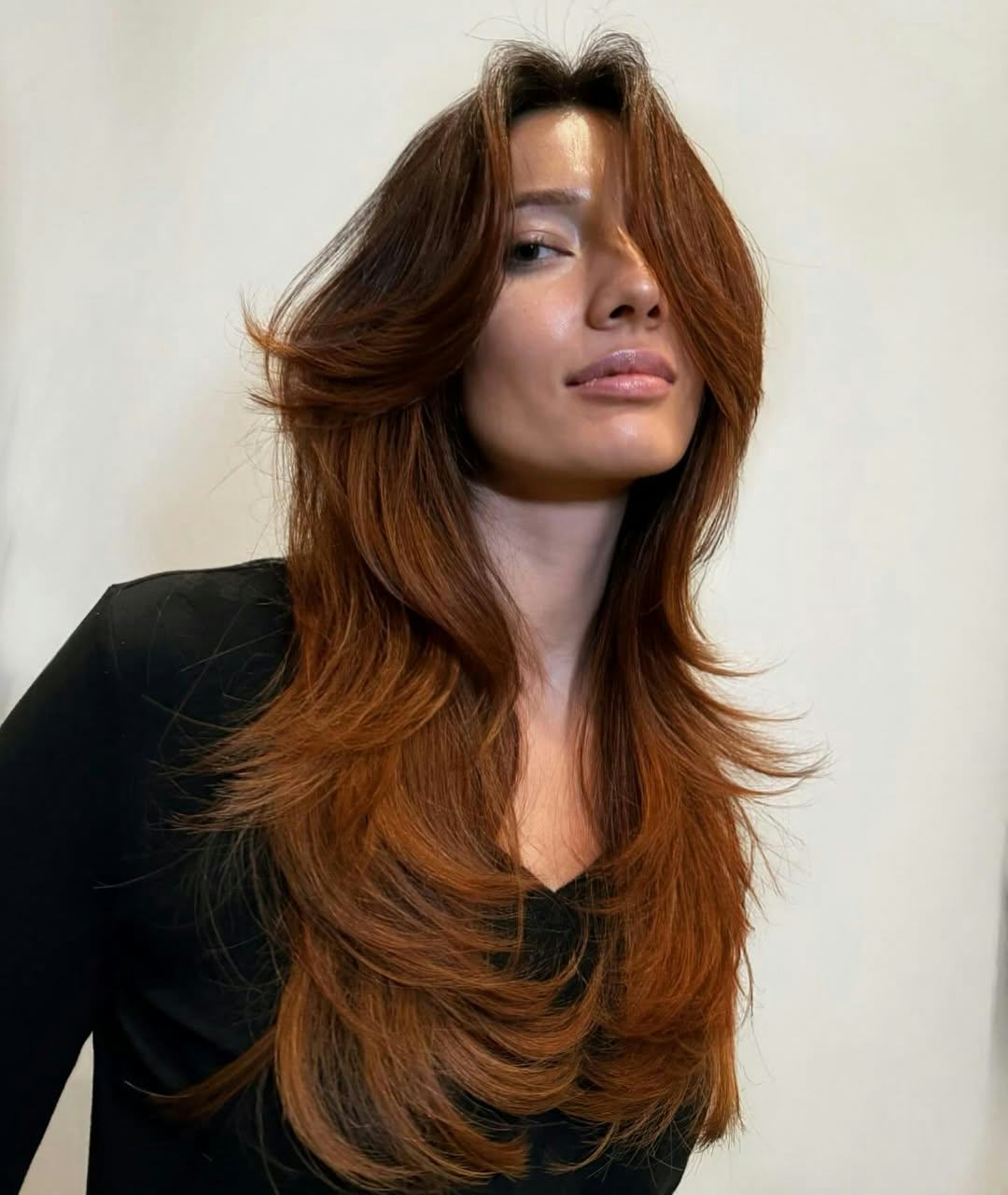
How do these copper brown layers hold through the week? Start with a beach wave spray on damp hair, then blow dry the curtain bangs forward with a round brush. Once dry, run a flat iron through the mid-lengths only, leaving ends slightly bent. The layers give volume at the crown without looking puffy. The copper tones catch light differently each day — warmer under indoor lights, cooler in natural daylight. By day three, the bangs separate, so a quick dry shampoo refresh and a finger comb brings them back. The volume stays if you sleep with a loose ponytail on top of your head.
Long Layered Haircut Mid-Back Smooth Face-Framing Layers
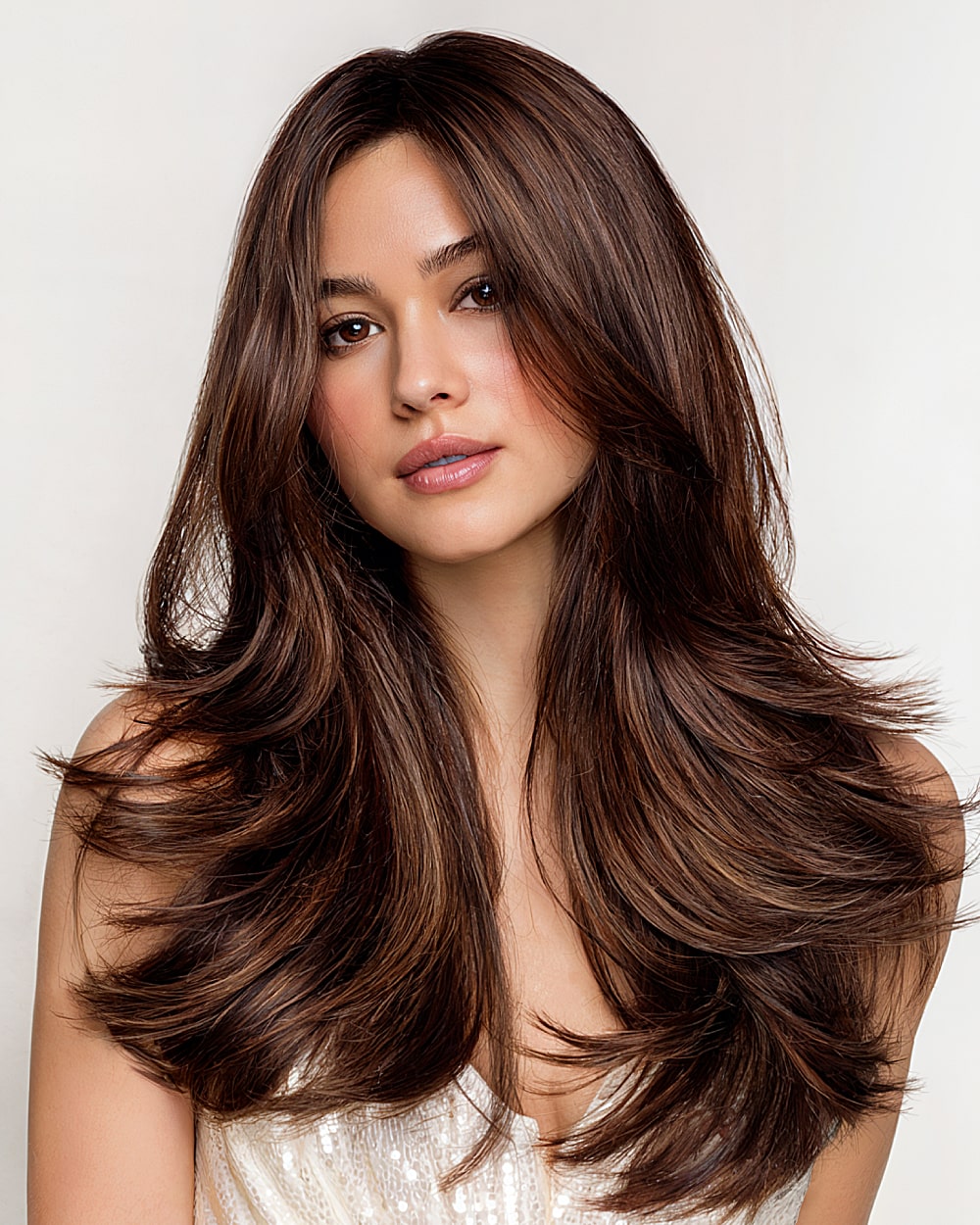
I was not expecting this cut to be so precise. The smooth face framing layers are cut at an angle that sweeps from chin to collarbone, and the rich dark brown color hides any unevenness in the shape. No bangs means the layers need to sit perfectly every time — one uneven snip and the whole fall shifts. The stylist sectioned the hair into four quadrants, cutting each face-framing piece at a 45-degree angle for that graduated effect.
The back is cut in a subtle U-shape to keep the length feeling long while the front layers soften the face. The thick straight texture holds the shape well; on finer hair, the layers might blend too quickly and disappear. The technique uses a point-cut on the ends to avoid a heavy block, which also lets the hair move without losing the sleek line. This cut is a commitment to precision — not one for a rushed trim.
Collarbone Layered Shag
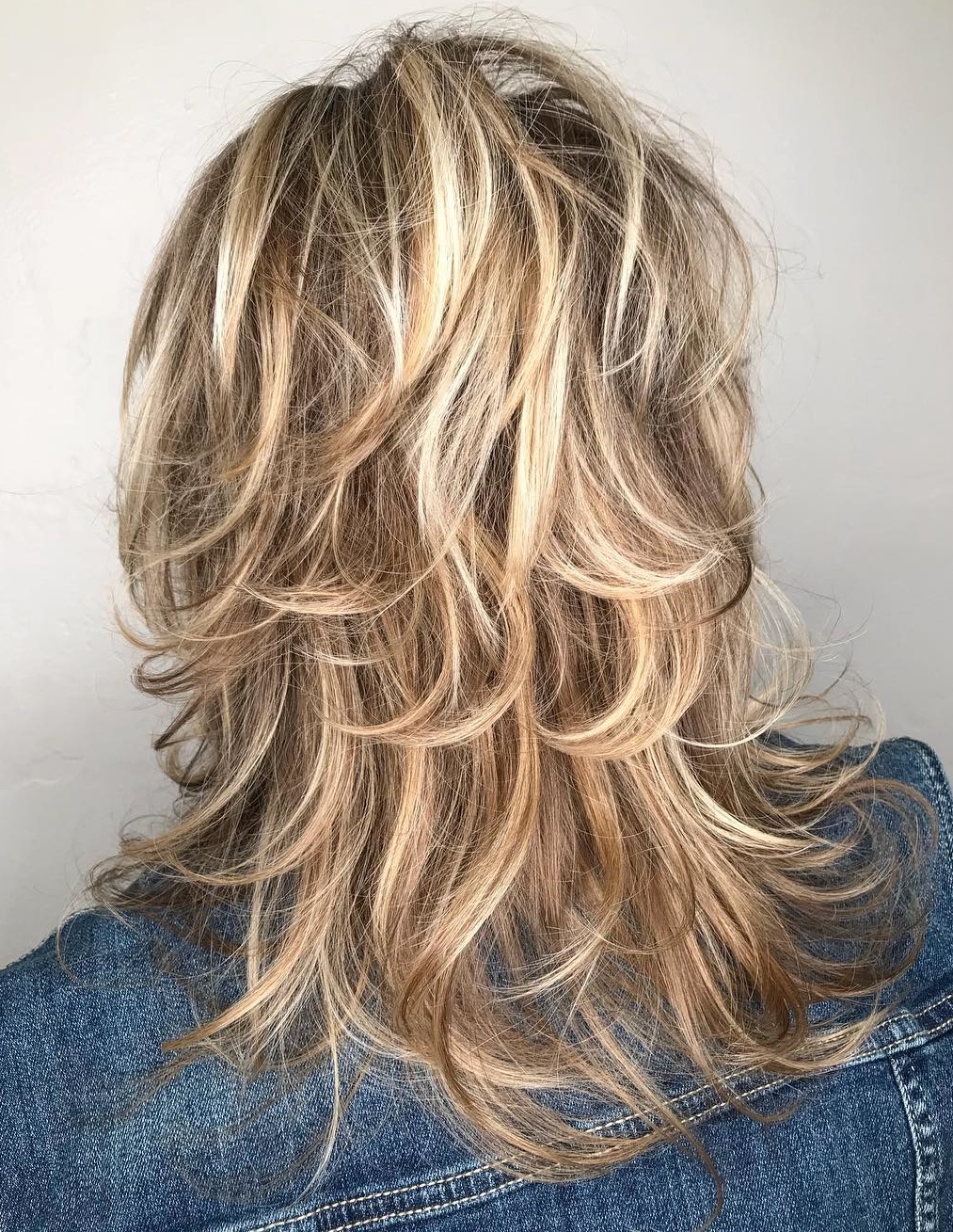
I resisted the collarbone layered shag for two seasons. Now I am booking a trim every eight weeks. The choppy layers are cut to air-dry into shape, which saves time in the morning when the heat is off. For winter, it works under beanies without flattening and dries fast after wet snow. The ash blonde highlights add brightness against grey coats. No bangs means one less thing to style. This is a salon cut — the choppy layers need precise graduation to avoid looking like a bad mullet. But for low-effort winter with texture, it lands perfectly.
Front View Mid-Back Dark Blonde With Curtain Bangs
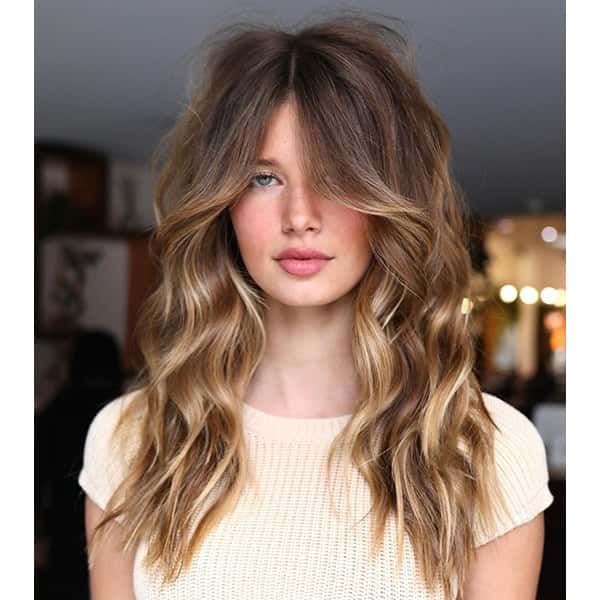
Dark blonde curtain bangs beat a blunt cut every time. The face-framing layers start at the cheekbone and feather down into the mid-back length, so the weight stays in the back where it belongs. A middle part with those curtain bangs widens a round face just enough. My hair goes flat by 4 pm. This one held its wave past dinner. Those lighter blonde highlights catch the light in a way a single shade cannot, and the wavy texture gives it movement without an hour of styling. A trim every eight weeks keeps the bangs from turning into a sad triangle.
Mid-Back Layered Blonde With Balayage
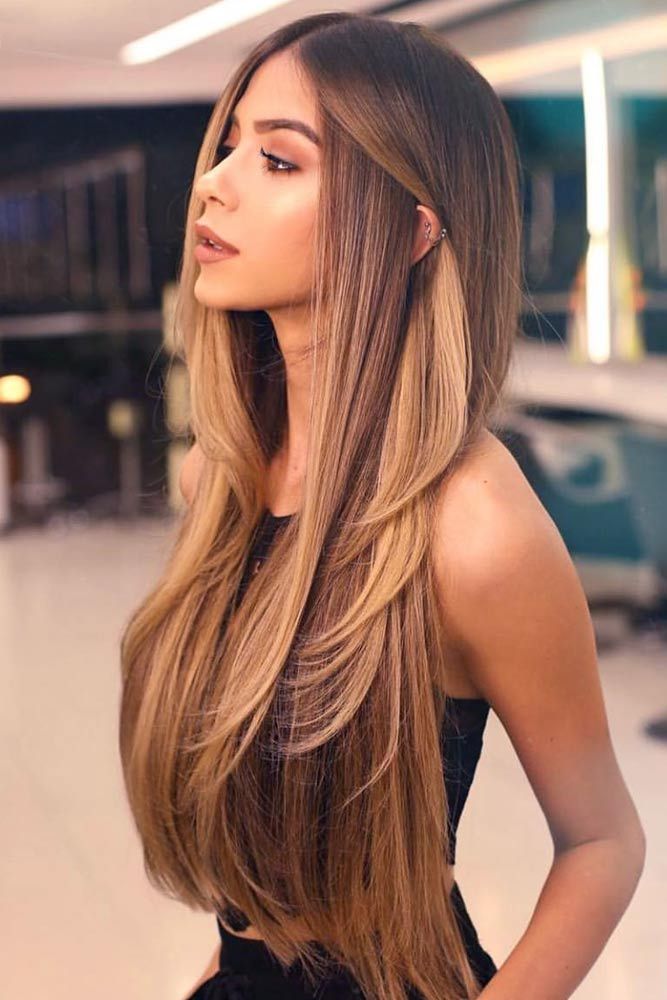
The layered blonde balayage works because of the long layers. The balayage sweeps from mid-shaft to the ends, so the blonde lands exactly where the layers fall. No harsh line, no stripe. The side view shows it best: the colour wraps around the face without a single solid band. Straight hair with subtle waves at the ends lets the dimension breathe. Fine hair needs this. The layers prevent that flat, heavy curtain effect. Thick hair gets the same benefit, just faster. A middle part keeps the face open. The grow-out is soft, no aggressive root line. I booked this twice in one season.
Mid-Back Layered Half-Up Braid
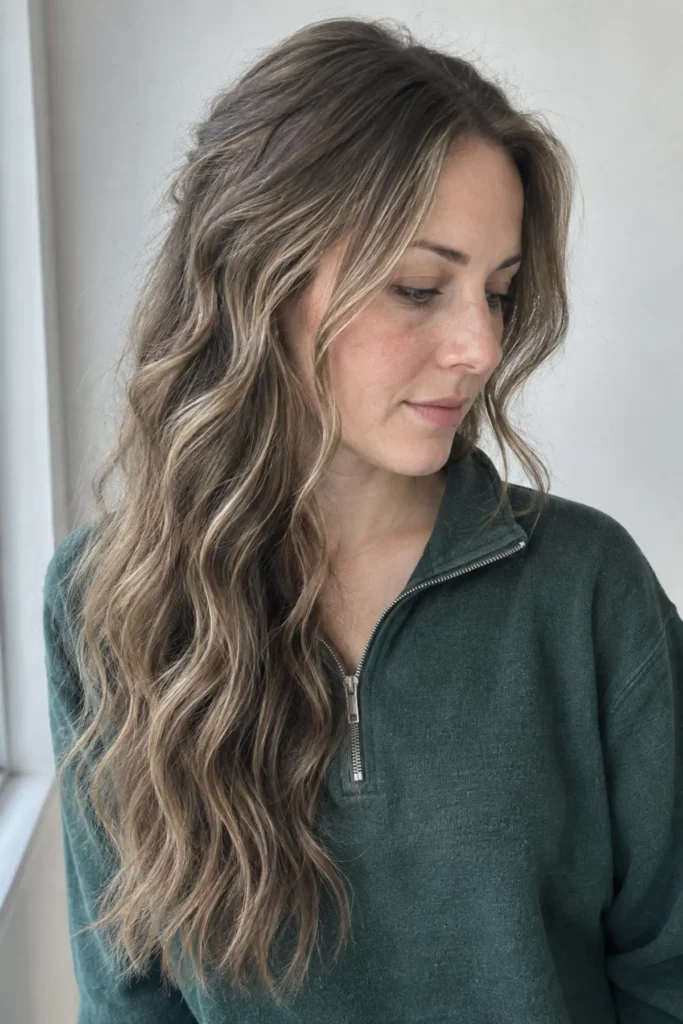
Can a half up braided detail survive a real Tuesday? Yes, with a catch. The layered cut gives the braid something to grip, and the dark brown with balayage adds depth so the braid reads as intentional, not messy. But the braiding takes skill. A texturizing spray is non-negotiable here, otherwise the sections slip apart by noon. The back view shows the real work: the braid sits at the crown, the rest falls in loose waves. Thick hair holds the shape. Fine hair will need more product and a tighter weave. The honest downside is time. This is not a five-minute style.
Mid-Back Voluminous Platinum Waves
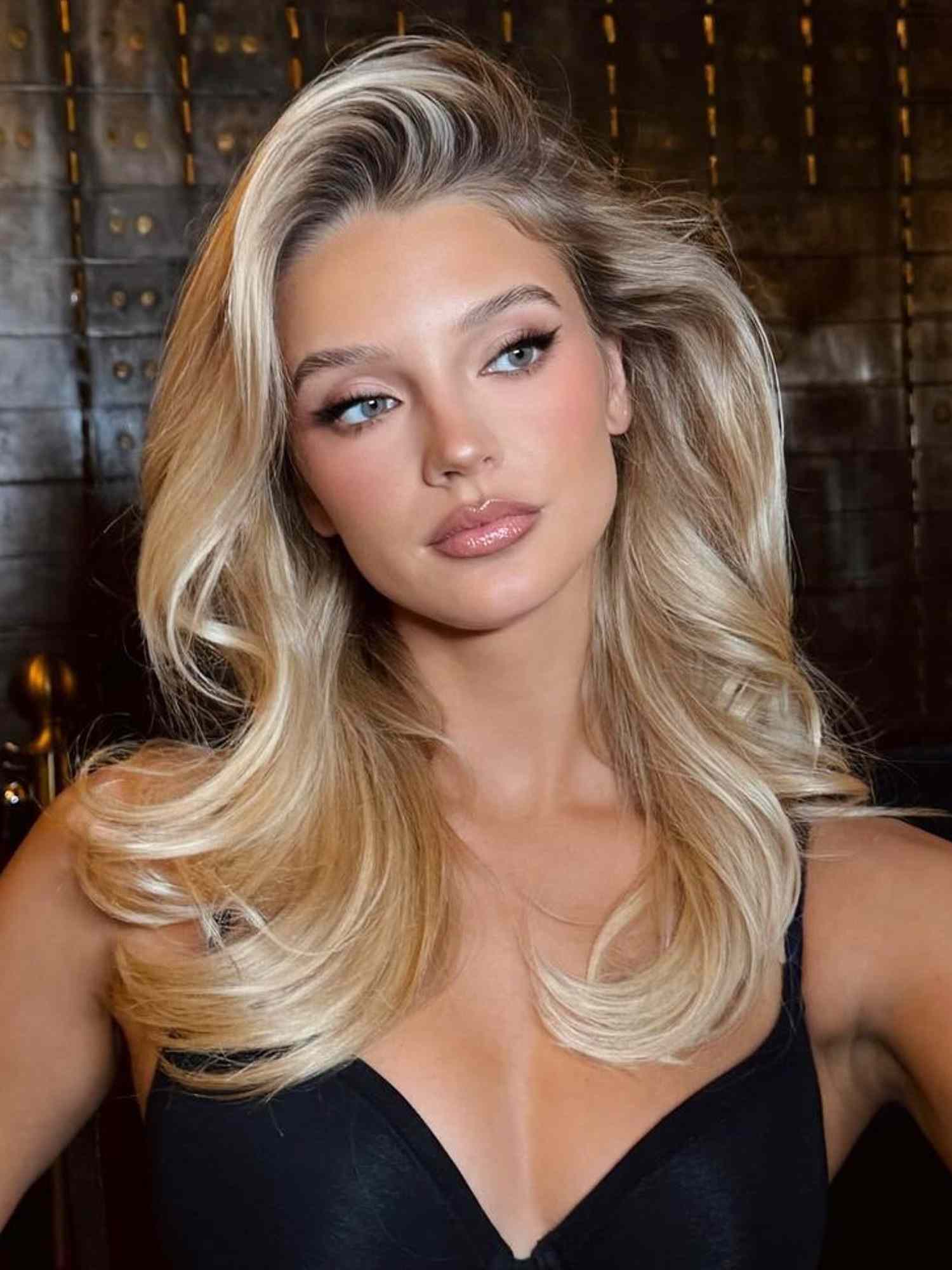
Voluminous platinum waves are a winter party move. The long layered haircut keeps the length while the layers push the volume upward, not outward. The face-framing highlights lighten the front sections, so the colour lands where the eye goes first. A blowout builds the base, then a curling wand creates big waves that hold. Thick hair handles the texture. Fine hair needs mousse at the roots, or the volume drops by the second hour. The middle part works because the layers frame both sides evenly. This is a statement, not an everyday cut. The upkeep is real, toner every four weeks, but the payoff is a room that notices.
Layered Mid-Back Voluminous Layers
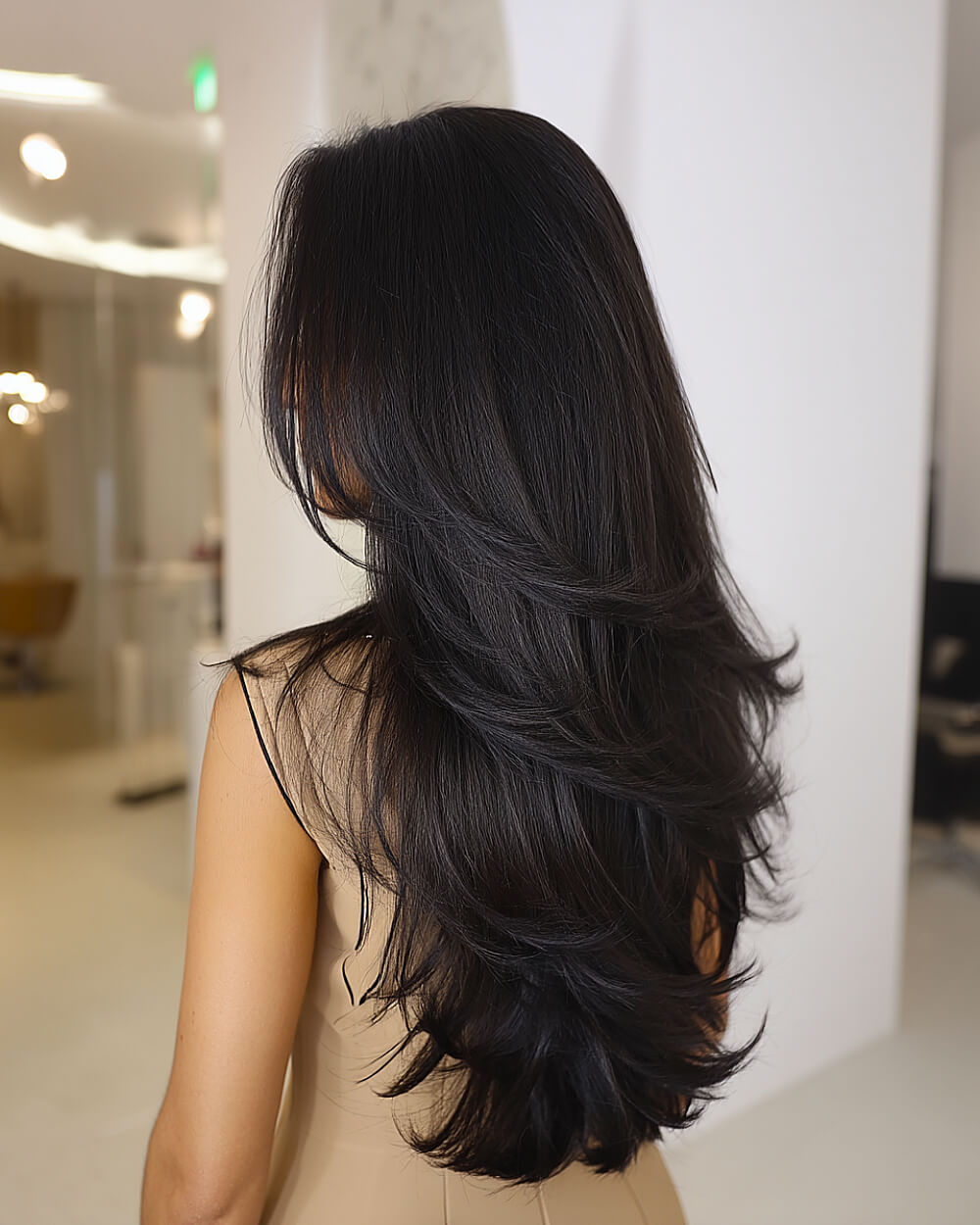
Have you ever watched thick hair eat a good layer cut? The weight just pulls everything flat by 4 pm. Voluminous layers dark brown work best when the stylist carves them deep enough to actually lift, not just skim the surface. With straight hair that waves at the ends, the blowout gives the root volume, then soft waves hold the shape. The honest downside: this needs a round brush and patience, and a trim every 8-10 weeks or the layers start to sag. The face-framing layers save it, though, because they keep the front light even when the back goes heavy.
Mid-Back Loose Waves With Subtle Layers
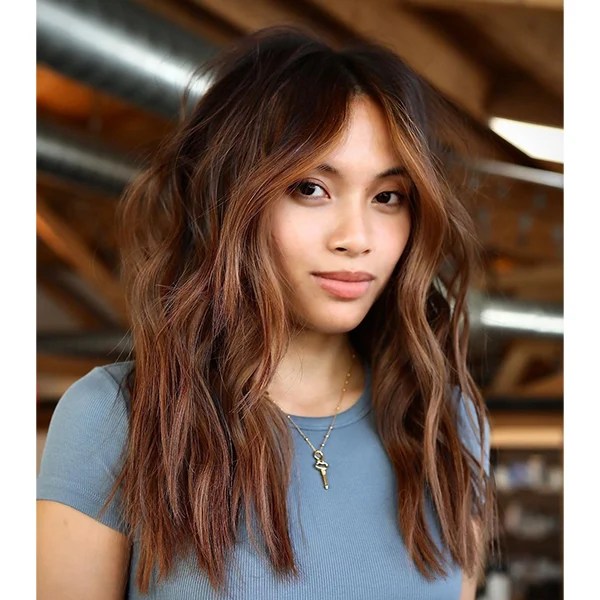
My first reaction was: finally, a cut that doesn’t need a curling iron every morning. Loose waves subtle layers are exactly what they sound like, long layers that add movement but keep the density. The dark brown highlights give it depth without a harsh line. This is a DIY-friendly cut if you have wavy, thick hair and a good texturizing spray. You can air-dry with product, or run a wand through for more defined waves. The subtle layers mean you can stretch trims to 10-12 weeks, which is rare for a layered look.
Final Thoughts
After writing all 19, I circled back to that first observation about curtain bangs and mid-back lengths. The common thread isn’t the fringe or the layers, it’s that these cuts work with your texture rather than fighting it. I walked away from this piece ready to book the collarbone shag with full bangs, the one that kept catching my eye between screenshots.