
I keep seeing the same thing in salon chairs these days: women in their mid-thirties to early sixties asking for something between covering gray and letting it all go. Structured silhouettes with soft blends. Pastel silver next to dark brown. It’s not a compromise, it’s a decision.
This is 26 ways to use Gray Blending Highlights across every length and texture. Some take a three-hour appointment and a trim every eight weeks. Others are a single glaze and done. I sorted through the ones that fit fine hair that flattens by 4pm, square jawlines that need softening, and the woman whose natural gray is at a solid 60 percent and growing stronger every month.
Layered Bob With Striking Silver Highlights
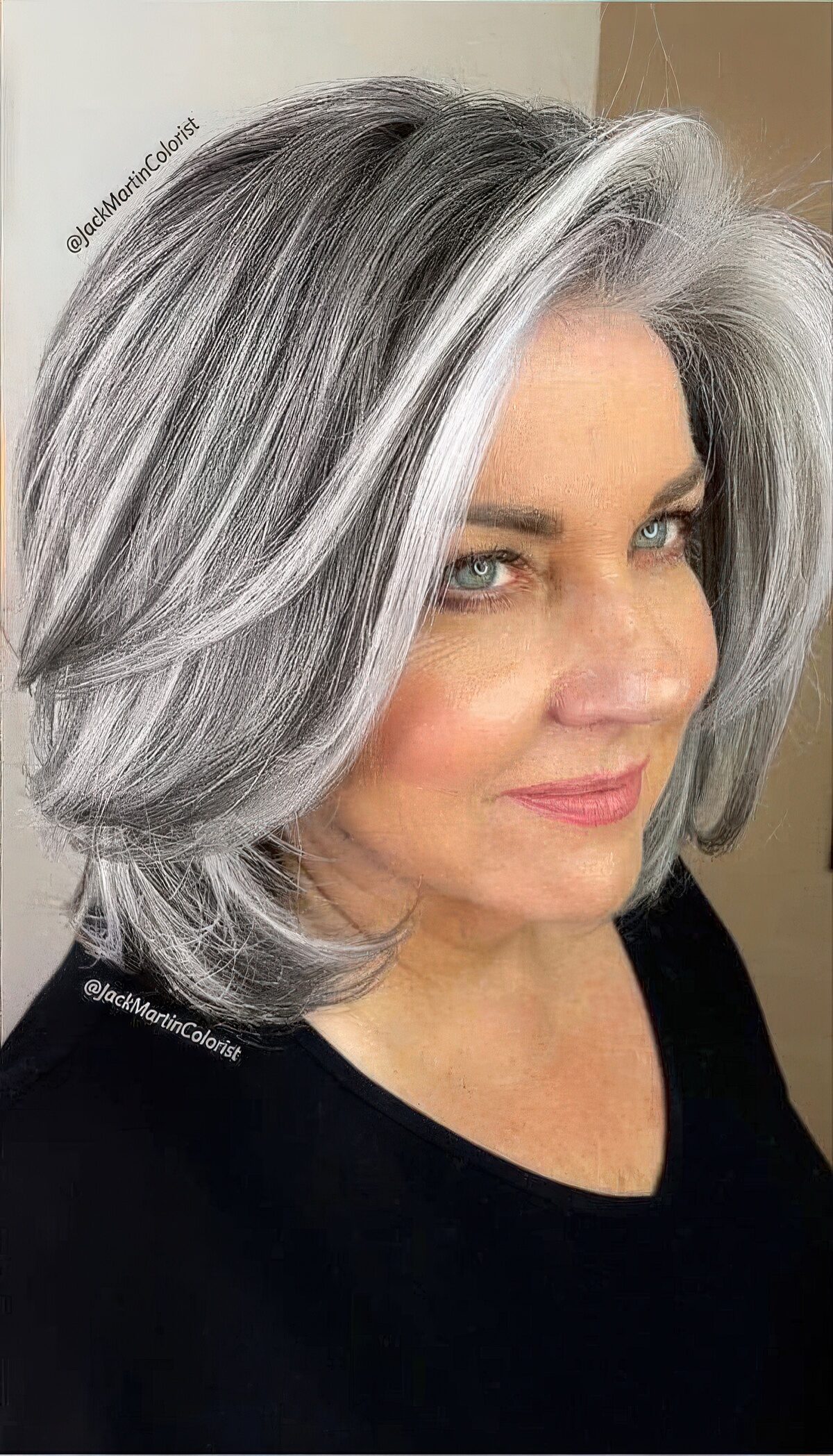
That gray base with silver highlights is not a soft whisper. It’s a statement. The collarbone length layered bob with side-swept bangs gives the contrast room to move, and the wavy, thick texture catches every cool-toned strand. This is a cold silver, not a warm champagne, which means it reads best on skin with pink or neutral undertones. Warm olive? The contrast can feel harsh. The technique is fine weaves through the top, not chunky slices. The blowout is essential: air-drying flattens the lift that makes the silver pop. Salon only, and you’ll need a gloss every six weeks to keep the tone from turning brassy. It flatters oval and heart-shaped faces best.
Mid-Back Layers With Subtle Gray Blend
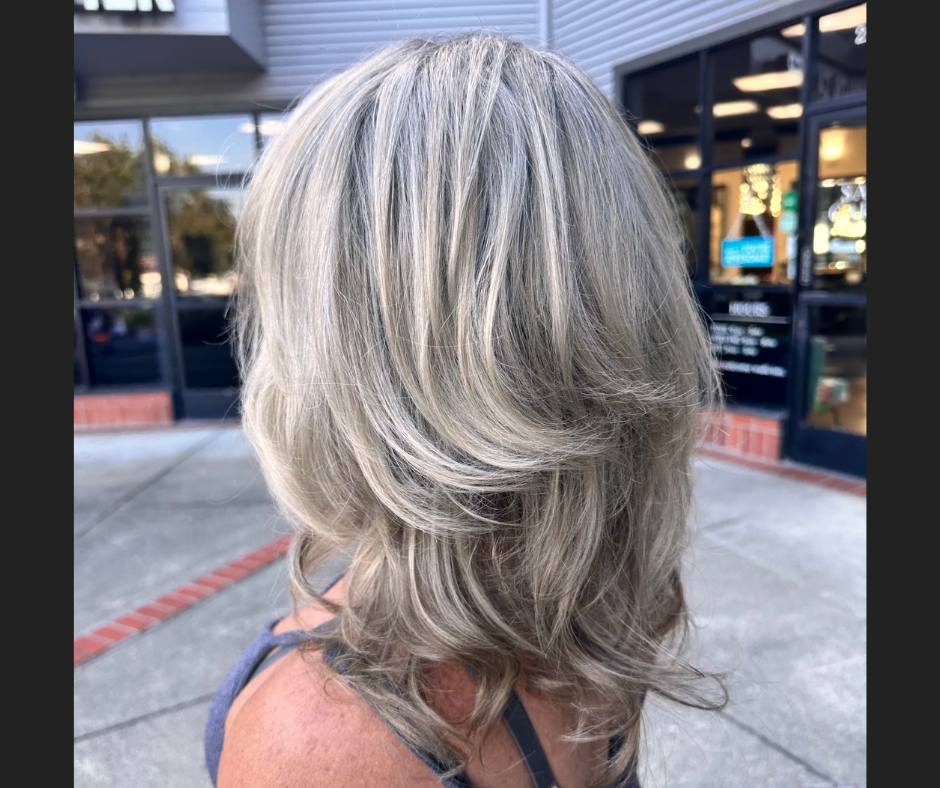
Ever wonder how some gray blends look like they grew that way, not like a salon appointment? The trick is in the blending technique itself. Here the base is a cool gray, and the highlights are painted in soft, sweeping strokes that start a few inches from the root and fade toward the ends. No harsh lines. The mid-back length with no bangs means the layers fall straight and heavy, and the thick, straight texture holds the blend without frizz. The tone stays muted: think pigeon gray, not ice white. That subtlety is what makes it wearable.
Upkeep is forgiving. The blend means roots grow out without a visible line for about ten weeks. But the layers need a trim every ten to twelve weeks to keep the shape from getting stringy. Straightening takes twenty to thirty minutes depending on thickness, and a purple shampoo once a week keeps the gray from warming up. This is a salon colour, no question: the blending requires a stylist who understands placement.
Textured Pixie With Gray-White Contrast
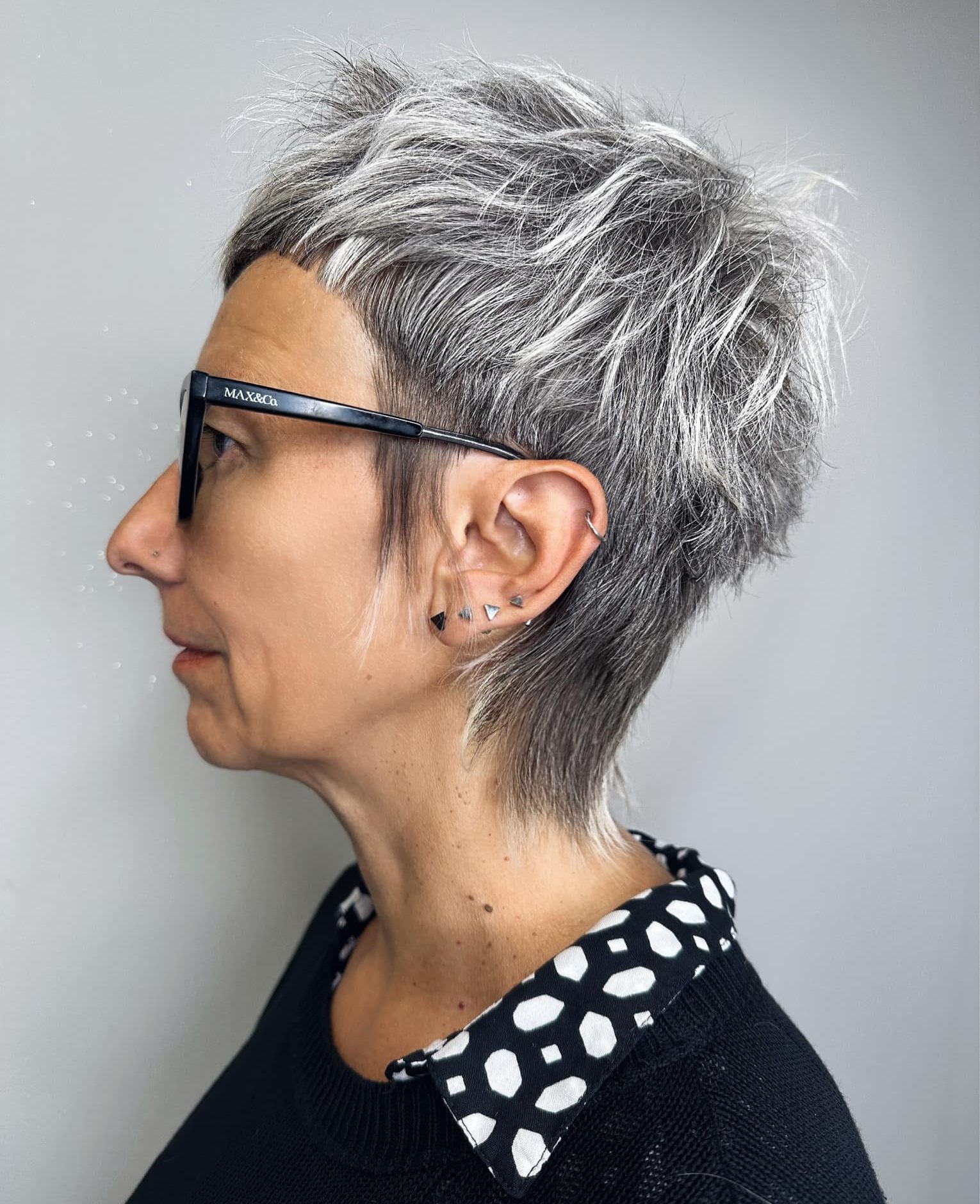
The textured pixie with gray white highlights is the most honest version of going gray. No pretending. The short, choppy texture makes the contrast between dark gray and bright white look deliberate, not accidental. But here’s the downside: the grow-out is brutal. Every four weeks you’ll see the dark root against the white, and the cut needs a trim every three to four weeks to keep the shape. If you can’t commit to that schedule, skip it.
Dark Brown With Gray-Ash Blonde Blend
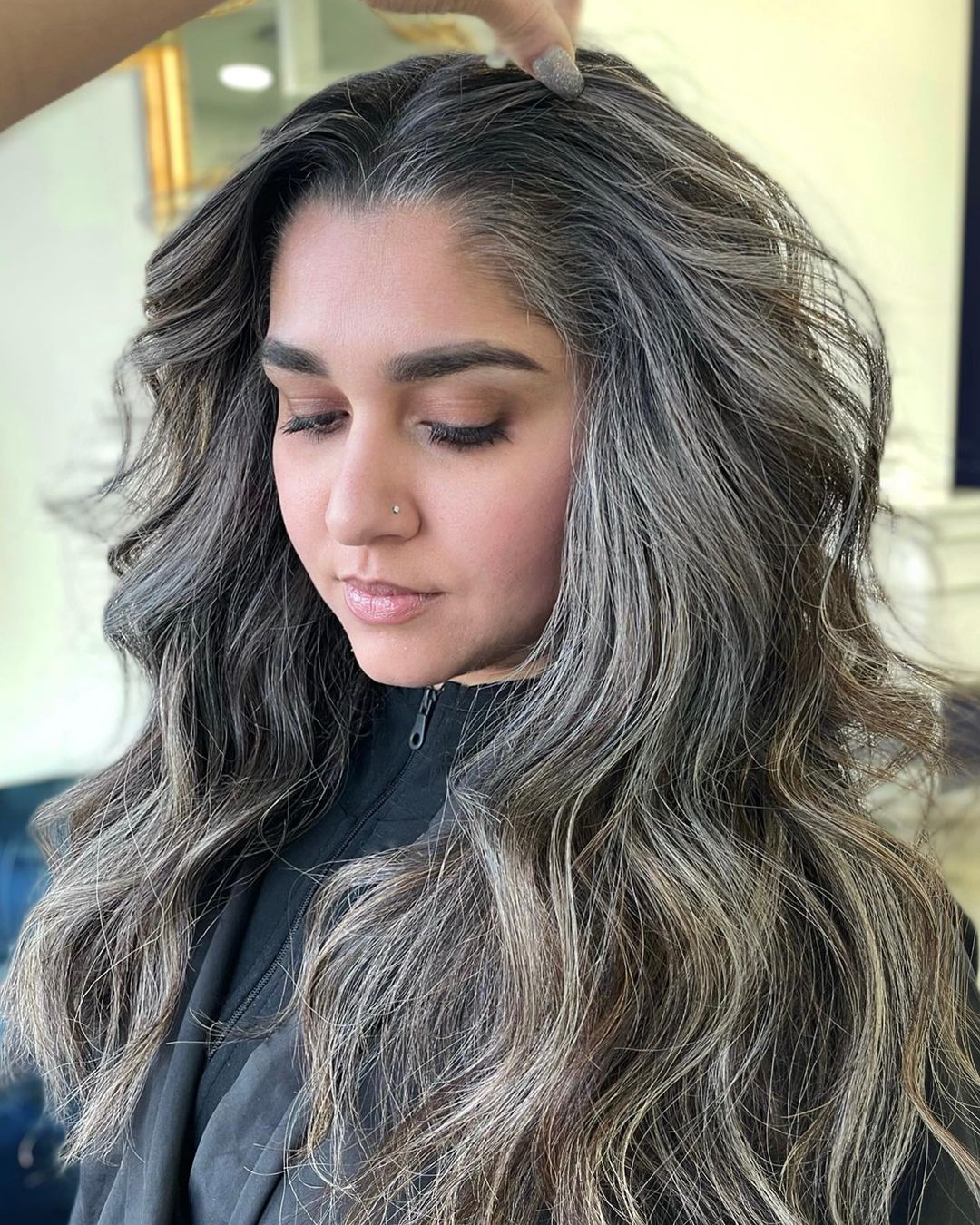
I’ll admit it: I was skeptical about gray ash blonde highlights on a dark brown base. Thought it would look muddy. But the blend here is smooth: the dark brown base stays warm, and the gray and ash blonde highlights are woven in fine ribbons through the mid-lengths and ends. The loose waves help the tones catch the light, so the gray reads as depth. The mid-back length with side bangs gives enough canvas.
Low maintenance is the real draw. The dark base means roots don’t scream for attention for eight to ten weeks. When you do go in, ask your stylist for a root shadow that softens the line, fine weaves through the mid-lengths, and a toner that pulls ash, not gold. The thick, wavy texture helps the blend look natural even as it grows. Trims every three months keep the layers from getting heavy.
Chin Bob With Blunt Bangs, Silver-White Contrast
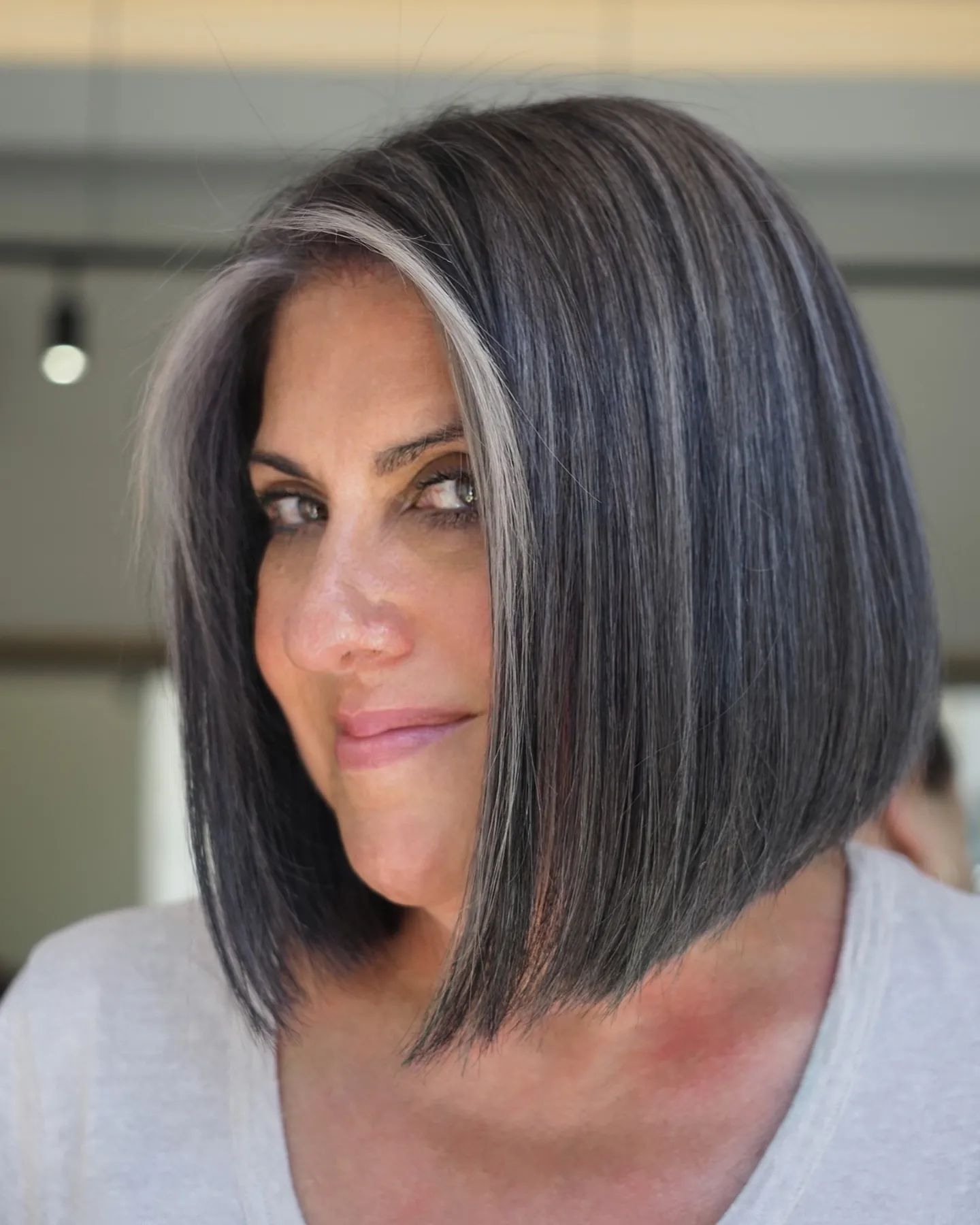
This chin bob with blunt bangs and dark gray silver highlights is a winter coat for your hair. The sharp contrast between the dark gray base and the silver and white highlights reads as graphic, almost architectural. The straight, fine texture makes the blunt lines cut clean. This is not a summer beach look: it’s for cold weather, sharp tailoring, and occasions where you want to look like you mean business.
Platinum Blonde Bob With Ash Gray Blend
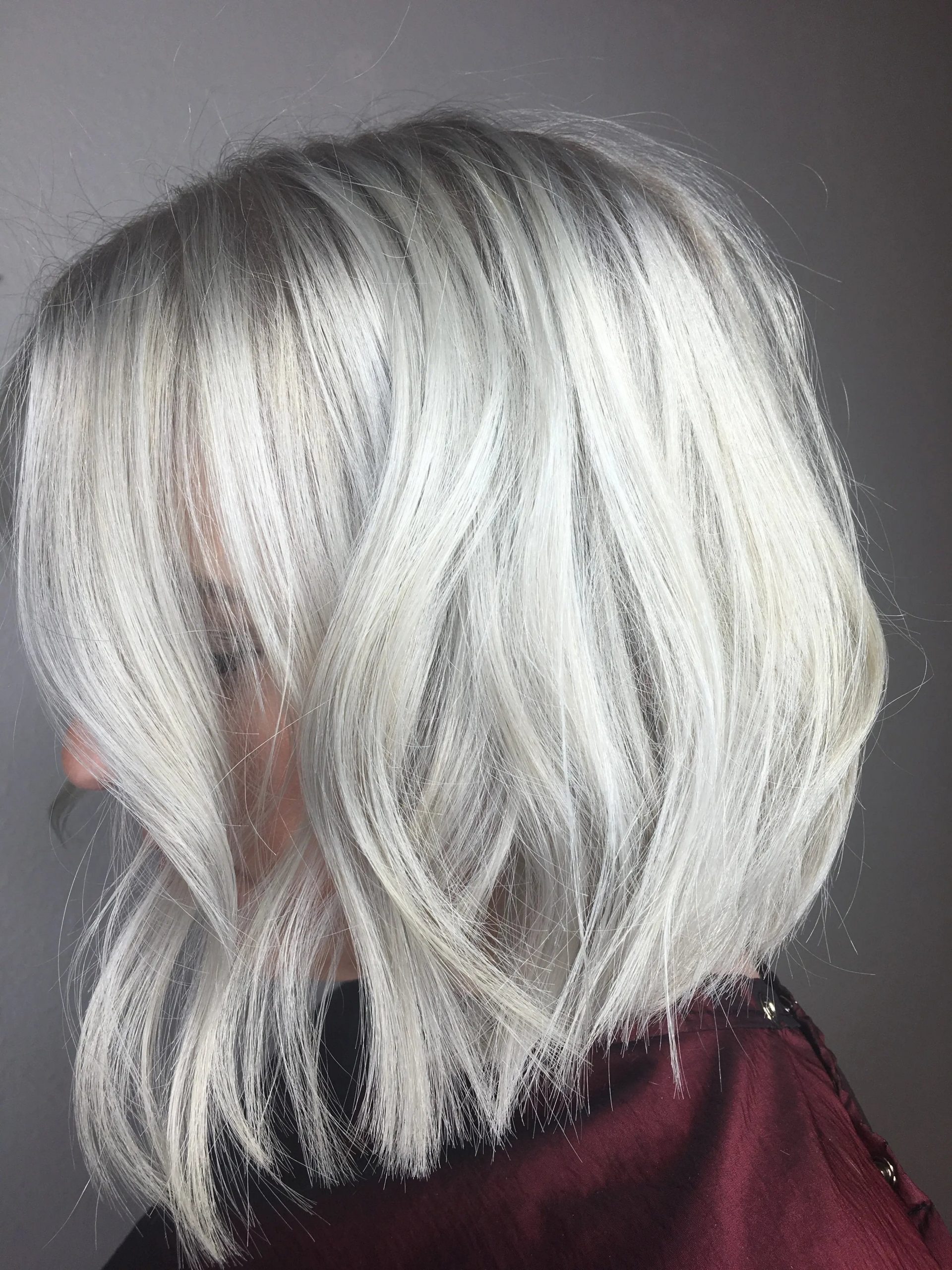
Are you cool enough for platinum? The ash gray blend in this bob stops the flatware effect. Chin length with a side part, it suits medium density hair that can hold a wave. If your skin reads warm, the tone will fight you. If your hair is fine, the bleach is a risk you take. The shade reads bright and cool, and that’s the whole point.
Dark Brown Bob With Silver-Ash Blonde
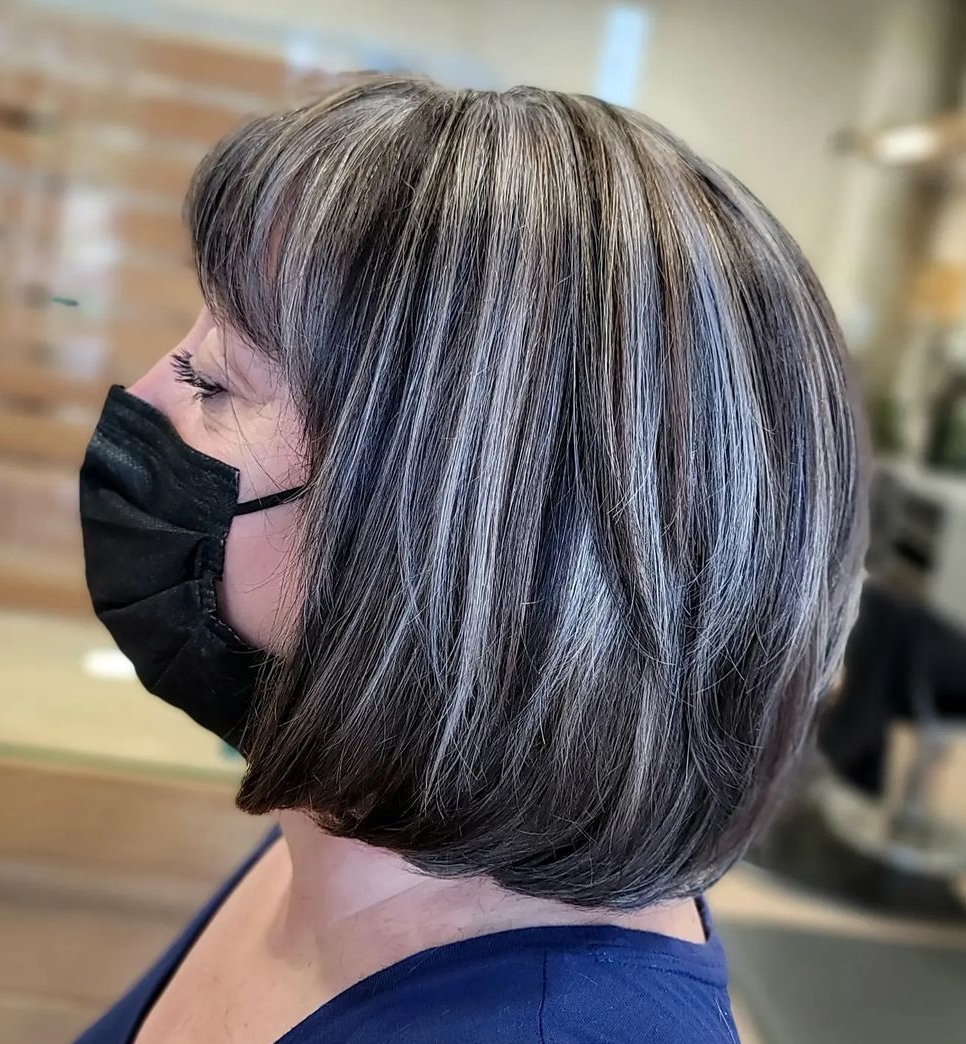
This is not a subtle color job. The dark brown silver highlights sit on a dark brown base, with silver and ash blonde highlights woven through the layers. Chin length, side-swept bangs, straight with subtle volume. The technique paints the lighter pieces around the face and through the mid-shaft, leaving the root deep. The silver tone cools the ash blonde, so nothing turns gold. Medium density hair shows the contrast best; fine hair might look too busy. The bob’s blunt ends anchor the color placement. A side part reveals the inner layer of highlights. The straight styling lets the silver catch the light without fighting curl.
Long Wavy Blowout With Gray-Silver Blend
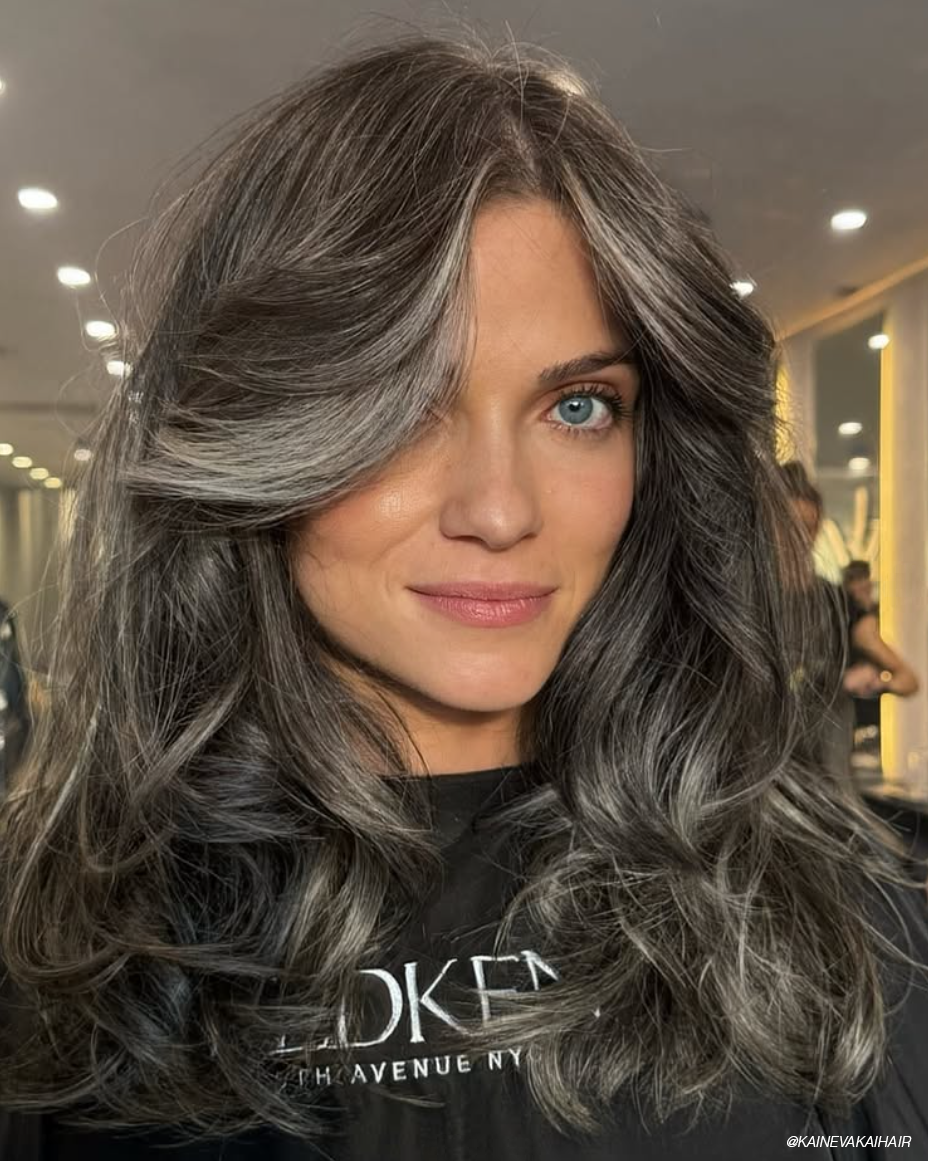
I never thought I could get this voluminous blowout at home without a pro. The gray silver blend covers my mid-back length, thick wavy texture that normally falls flat by noon. Here’s how I do it: start with damp hair, a heat protectant, then blow-dry upside down for root lift. Section the top and curl each piece away from the face with a one-inch iron. Wait for the curls to cool before brushing them into soft waves.
The result holds a full workday. The side swept bangs soften the front, and the layers break the weight so the wave doesn’t drop. It’s a thirty-minute routine I actually keep. The color shift from gray to silver catches different light as I move.
Sleek Bob With Gray Blend
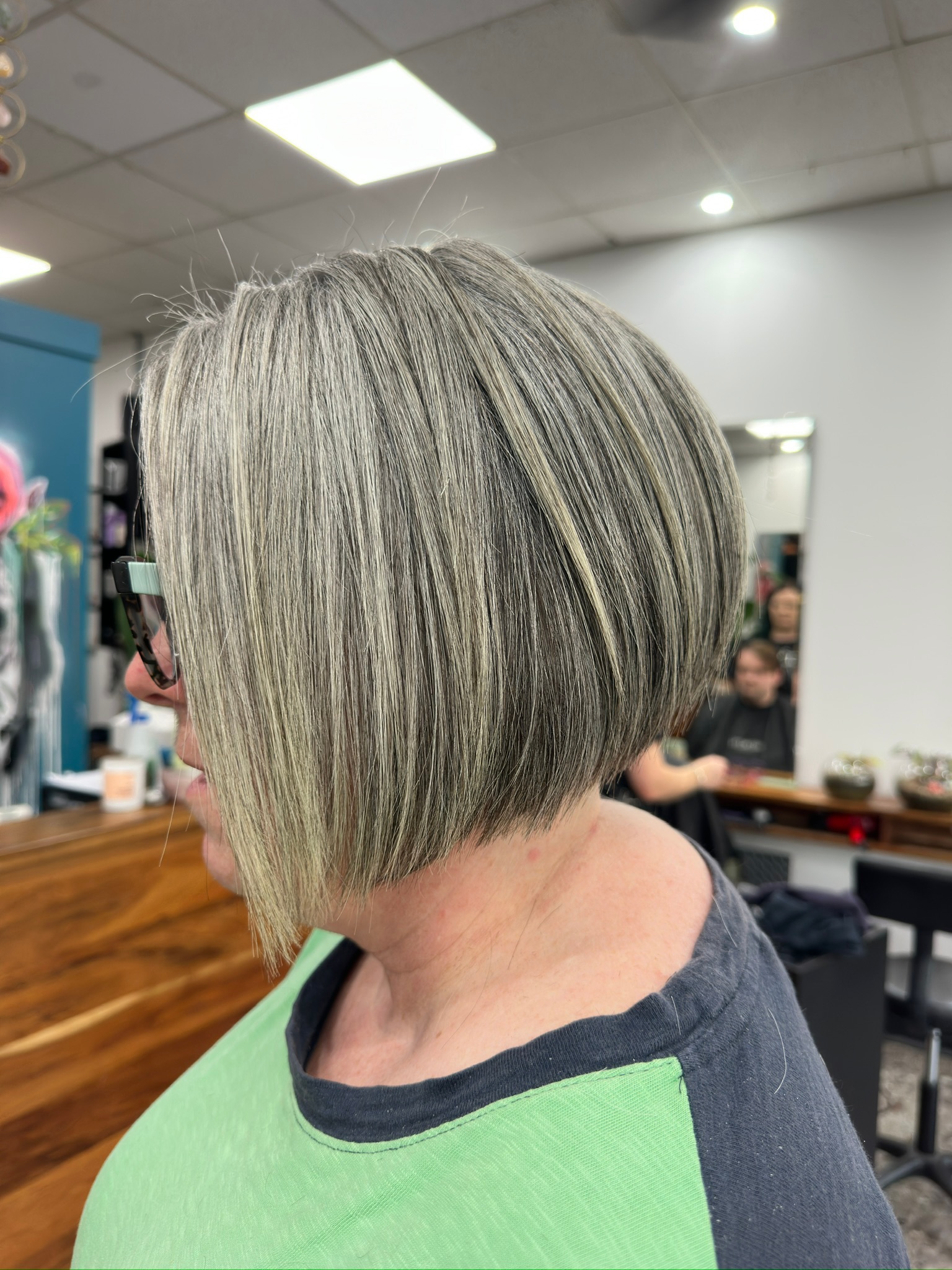
Can a bob this sharp be done at home? I’ve tried, and the answer is no. The precision here lives in the cut and the gray tone blend, not in the styling. My at-home attempt left me with a crooked line and a color that looked muddy by week two. A stylist maps the blended gray tones so they fall with the hair’s natural movement, then cuts a blunt baseline that holds its shape. Straight, thick texture makes the sleek finish possible; fine hair would go flat by noon. This is a book-it appointment, not a bathroom-mirror project.
Long Layers With Curtain Bangs, Dark Gray Blend
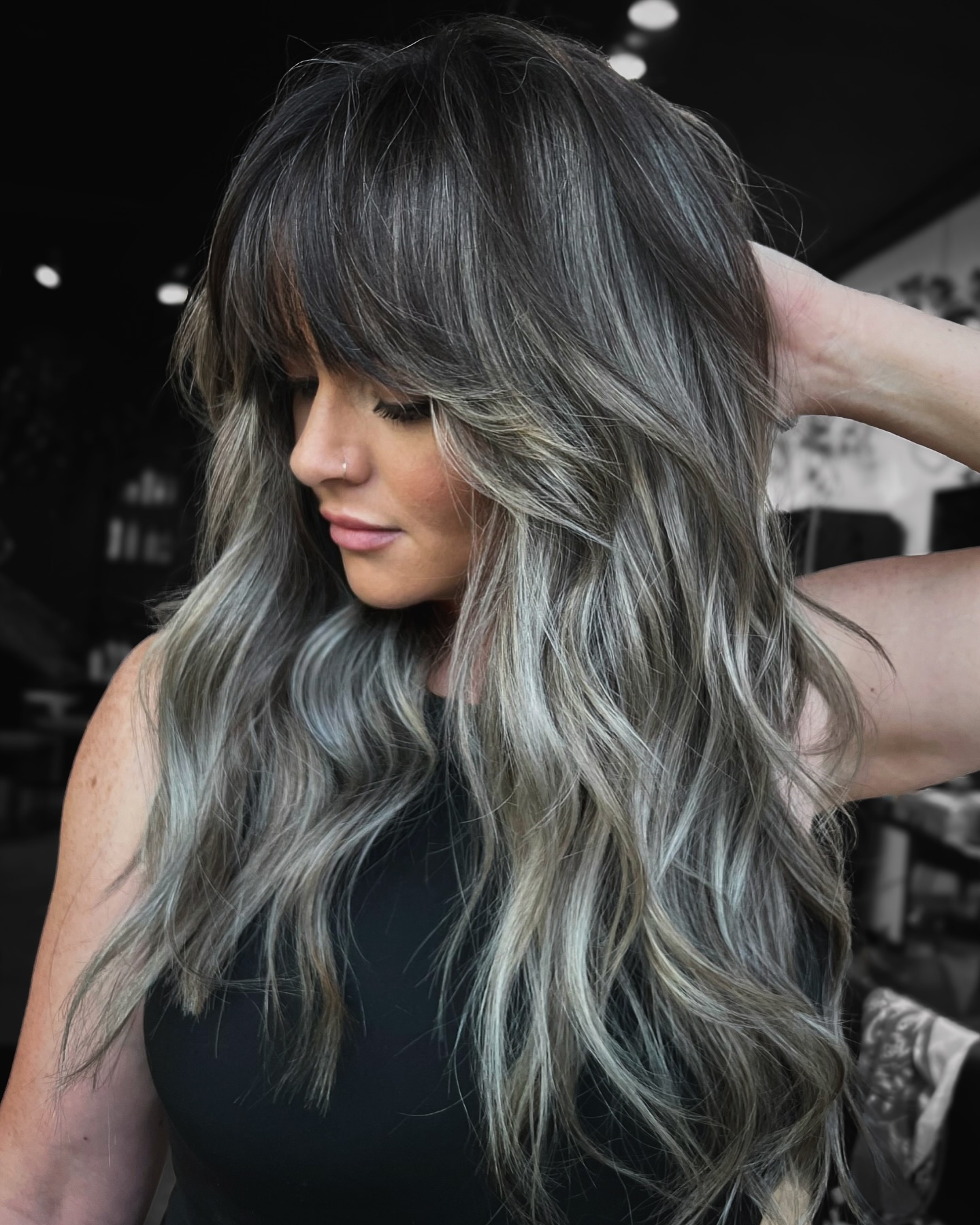
My first thought was: that is a lot of contrast. The dark base with gray and silver highlights reads almost graphic, and I wasn’t sure I could pull it off. Then I saw how the loose waves let the strands catch light differently, and I got it. The dark gray blend works because the highlights are placed sparingly, not all over. Curtain bangs soften the whole thing, which helps if you, like me, worry about looking severe. The honest downside: brassiness shows fast on this much contrast. A purple shampoo is non-negotiable, and you’ll want a touch-up every six to eight weeks. Worth it, but it’s a commitment.
Shoulder Length Straight With Gray-Silver
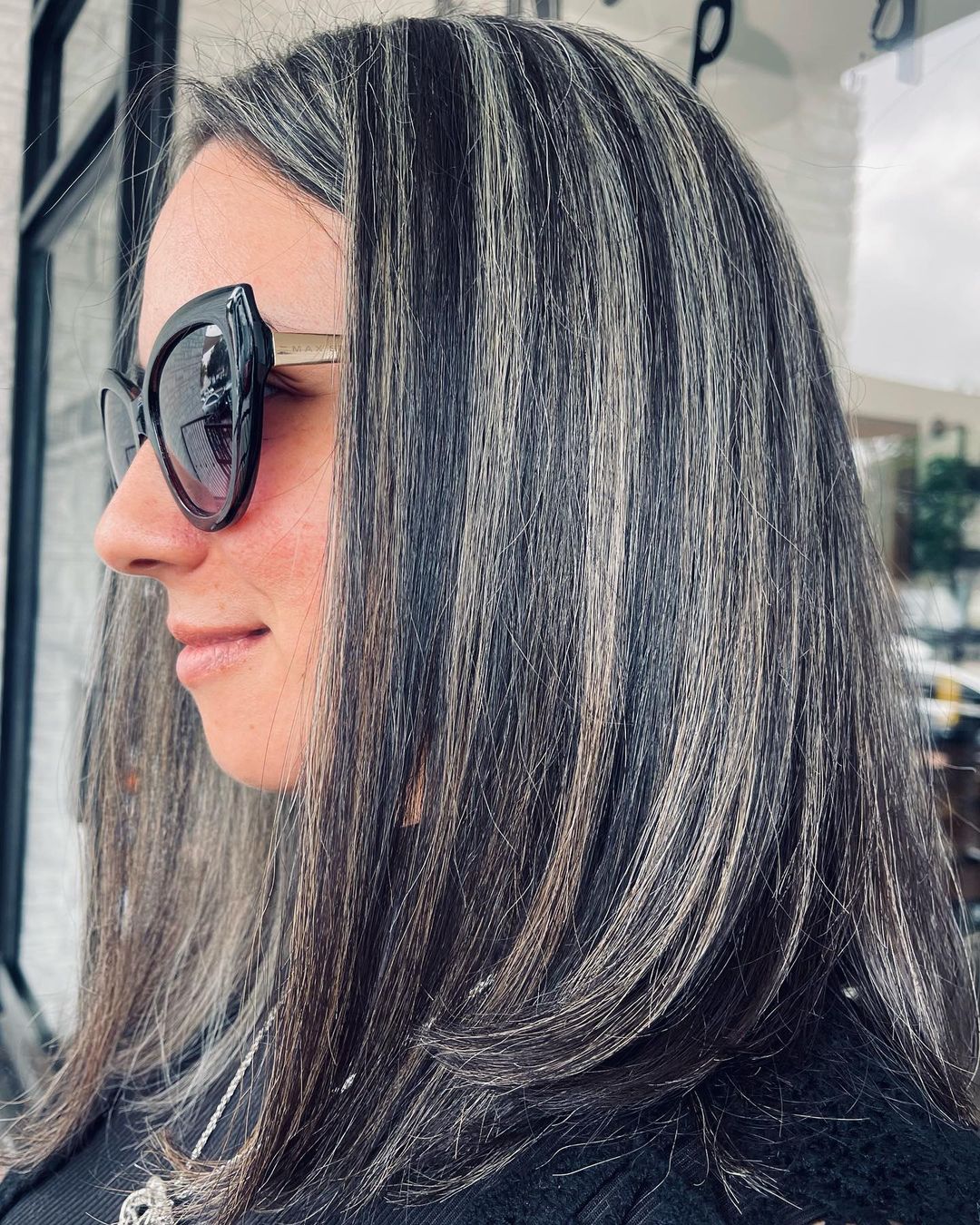
I’ll admit, I was skeptical of gray silver straight hair on fine texture. Then I saw this and changed my tune. The distinct gray and silver highlights sit on a dark base, and because the blend is subtle, it doesn’t overwhelm. This is for you if your hair is fine and you want dimension without the upkeep of a high-contrast look. Straightening takes about fifteen minutes, and the color can stretch to eight or ten weeks between visits. The middle part widens a round face, so consider a side part if that’s you. The blend grows out gracefully, which is more than I can say for most highlights.
Short Curly Bob With Gray-Blonde Blend
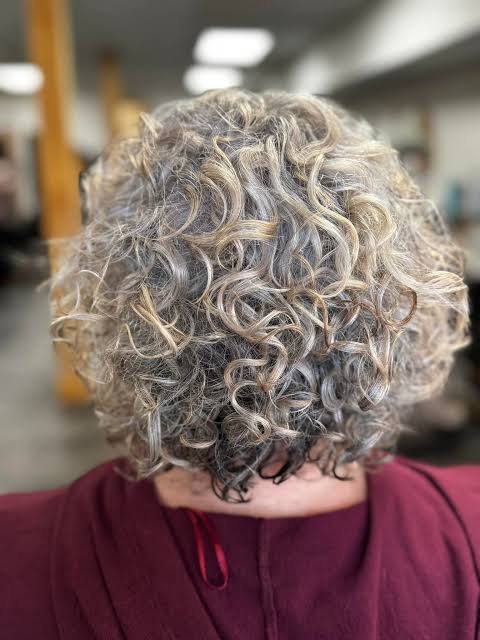
There’s a particular light in late summer that makes gray blonde curly hair look almost golden. This cut leans into that. The blend of gray and blonde is placed to catch the sun, and the short bob lets the curls bounce without weighing them down. Thick, curly texture is ideal; it holds the shape and shows off the color. This is a wash-and-go situation, which I love for warm weather. The blend is forgiving, so you can stretch color refreshes to eight or ten weeks. It’s not a low-maintenance cut, but it’s a low-effort one.
Collarbone Lob With Face-Framing Layers
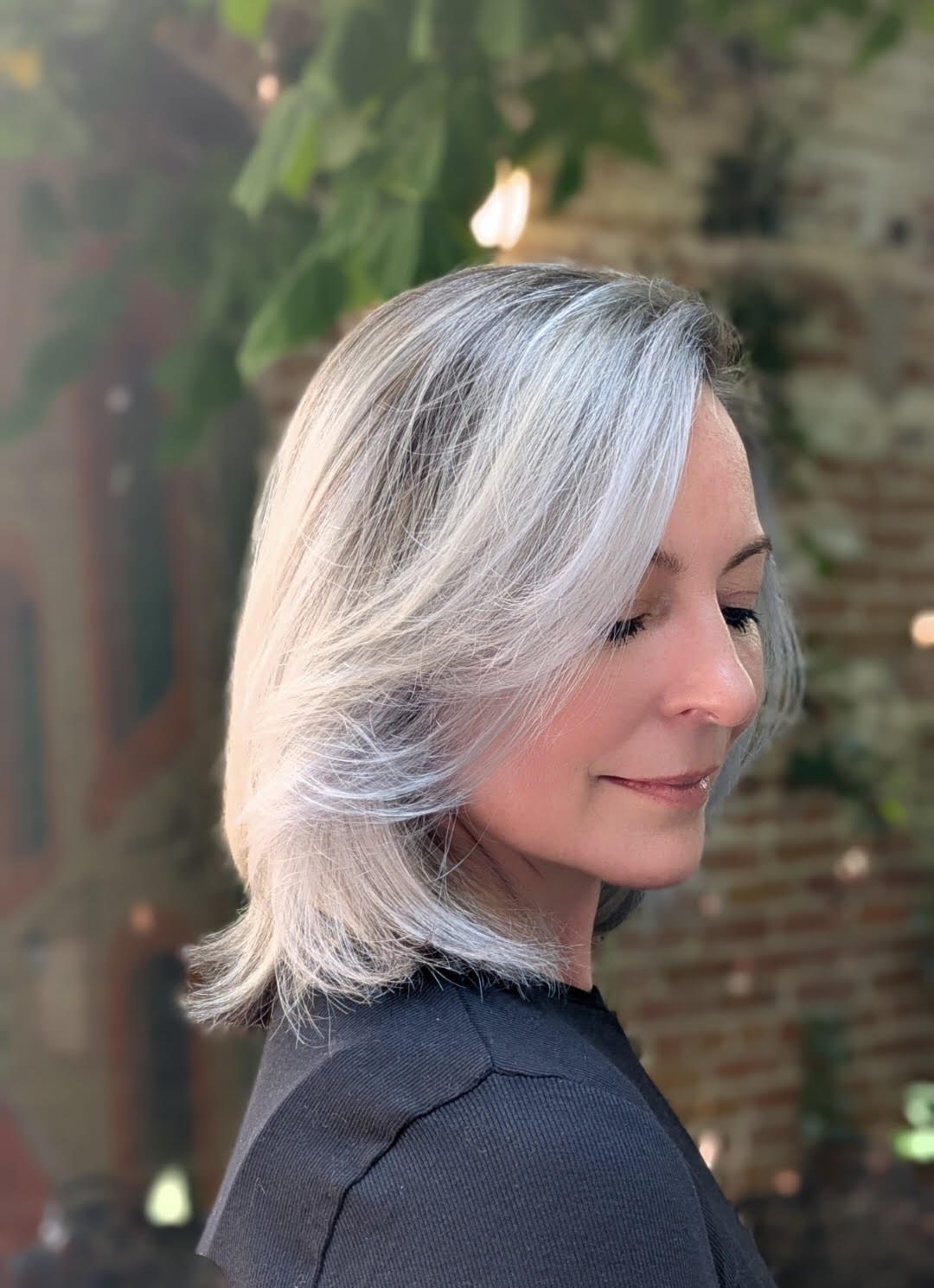
What makes face-framing highlights different from regular ones? Placement. The stylist paints the gray and silver highlights only around the face, leaving the rest of the base darker. That draws the eye up and softens the jaw. The collarbone length keeps it practical, and the soft waves take about fifteen minutes with a round brush. The blend grows out without a harsh line, so trims every eight to ten weeks are plenty. If you have medium-density hair, this will hold its shape. Fine hair might need a texturizing spray to keep the layers from collapsing.
Mid-Back With Dark Base, Silver-Ash Highlights
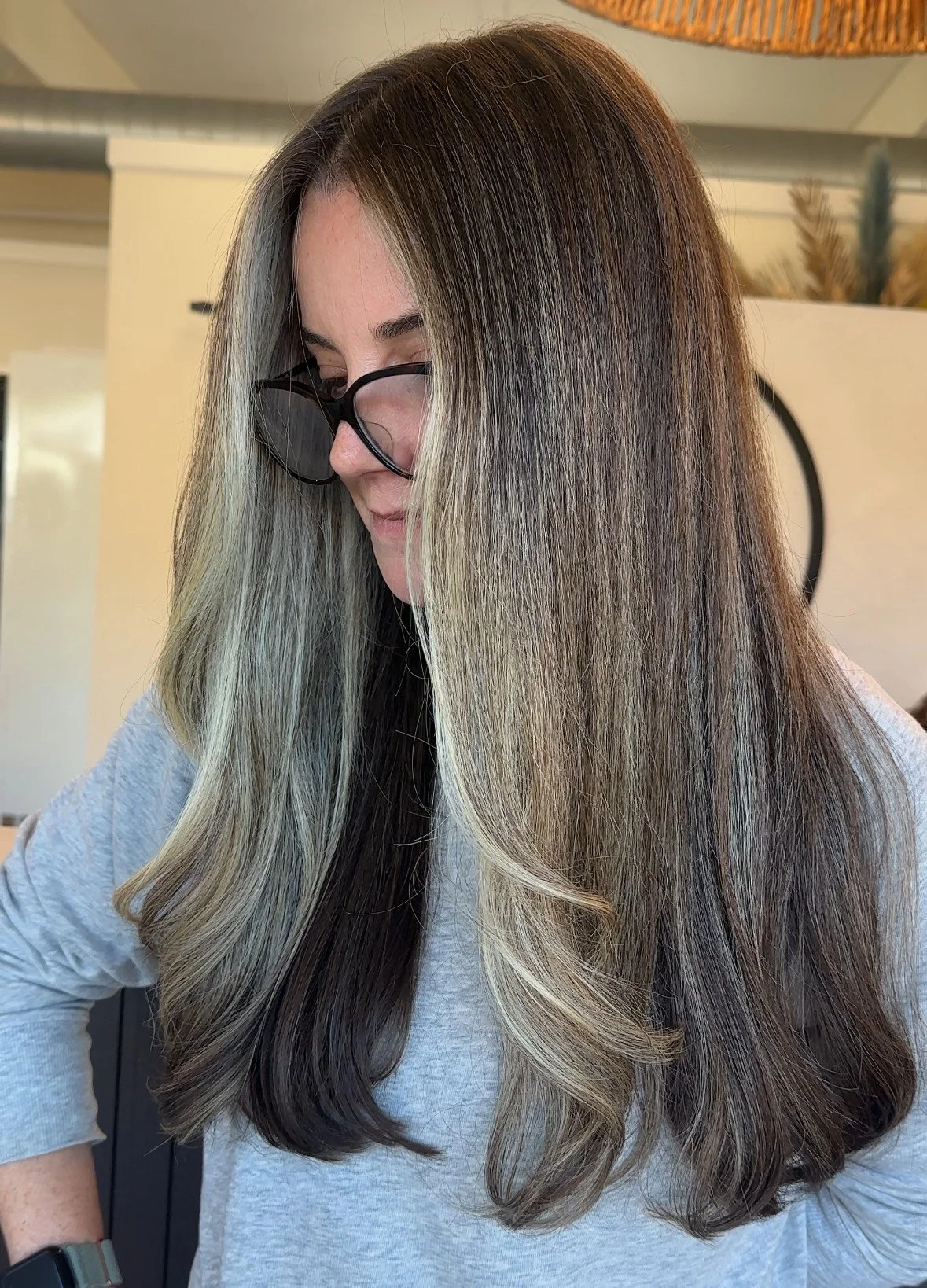
Best grow-out in this roundup. That dark brown silver ash base means your natural roots blend in for weeks, not days. The silver and ash blonde highlights sit in thick, wavy mid-back layers, cut with face-framing pieces that catch the light. I expected a harsh line by week four. The middle part and loose waves hide it until week eight. Color touch-ups every six to eight weeks keep the contrast sharp, but you can push it to 26 if you style it wavy. Trims every ten to twelve weeks stop the ends from looking tired. This is the wear-reality winner for anyone who wants drama without a standing monthly salon appointment.
The trick is the base. A dark brown that reads almost black against the silver means the grow-out reads as shadow, not neglect. My fine-haired friend borrowed this photo for her stylist and came back with something close. She has thick texture like the photo, and it works. If your hair is thin, the contrast can look sparse. Ask your stylist for a root smudge at the part line to stretch the appointment window further.
Long Layers Back View, Dark Gray Contrast
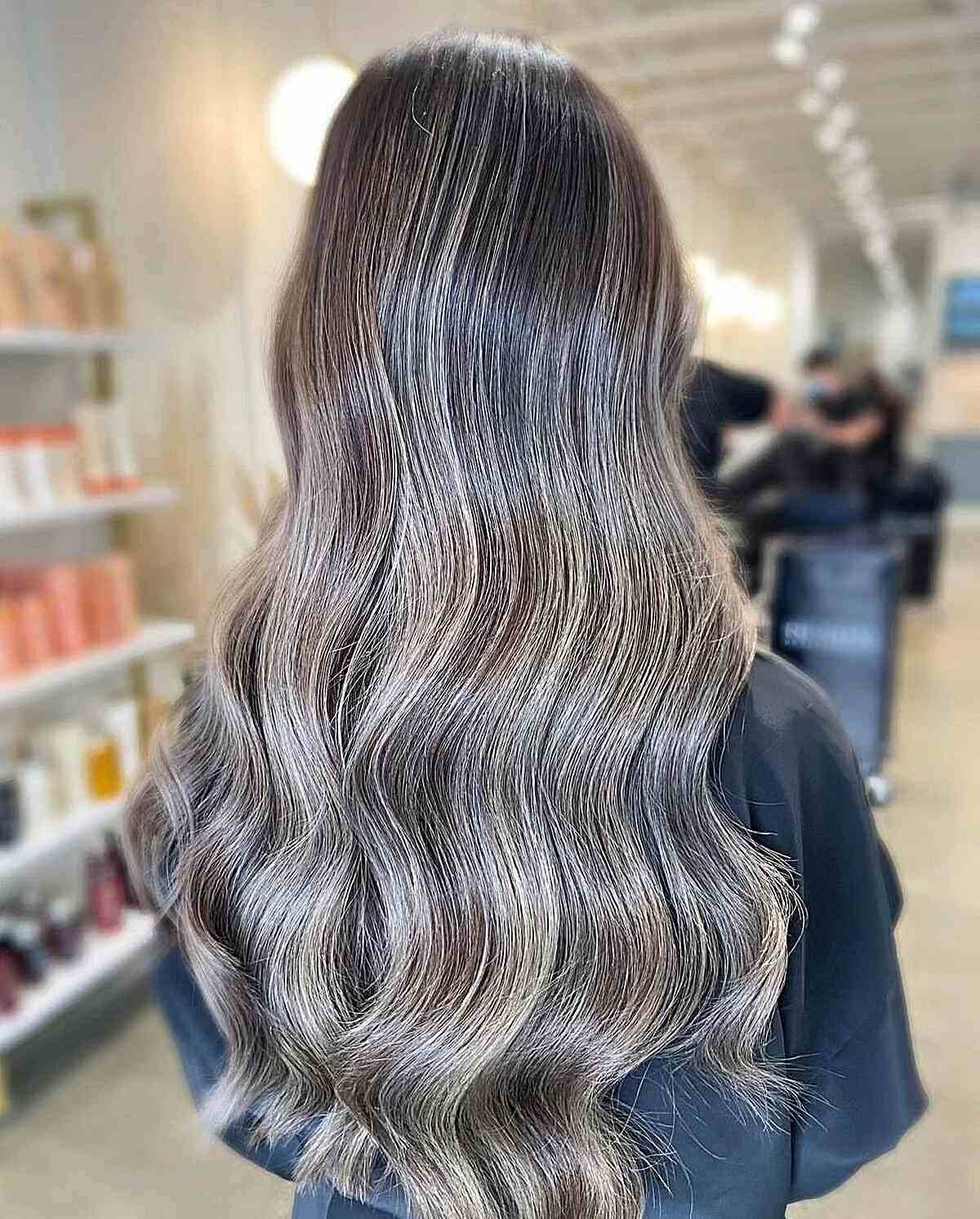
This is not a bathroom-mirror job. The dark gray contrast between a dark base and gray and ash blonde highlights on thick, wavy mid-back layers requires precision. The back view shows the payoff: the middle part lets the gray streak down the center, while the long layers catch the ash tones underneath. Loose waves take twenty-five minutes with a large barrel. The honest downside is the grow-out. That strong contrast shows every quarter inch of root by week six. You can stretch to week eight with a root powder, but the line will be visible. Book the salon. A stylist places these highlights to follow your wave pattern, not fight it.
I tried a similar look at home once. My highlights landed in patches that looked like I had leaned against a wet fence. The technique requires the stylist to weave the gray and ash blonde highlights through the interior layers, not just the surface. Tell them you want a dimensional contrast, not a stripe. The thick texture in the photo carries the weight of the color without looking heavy. Fine hair will need fewer highlights and a softer base to avoid looking streaky.
Chin Lob With Gray-Ash Blend
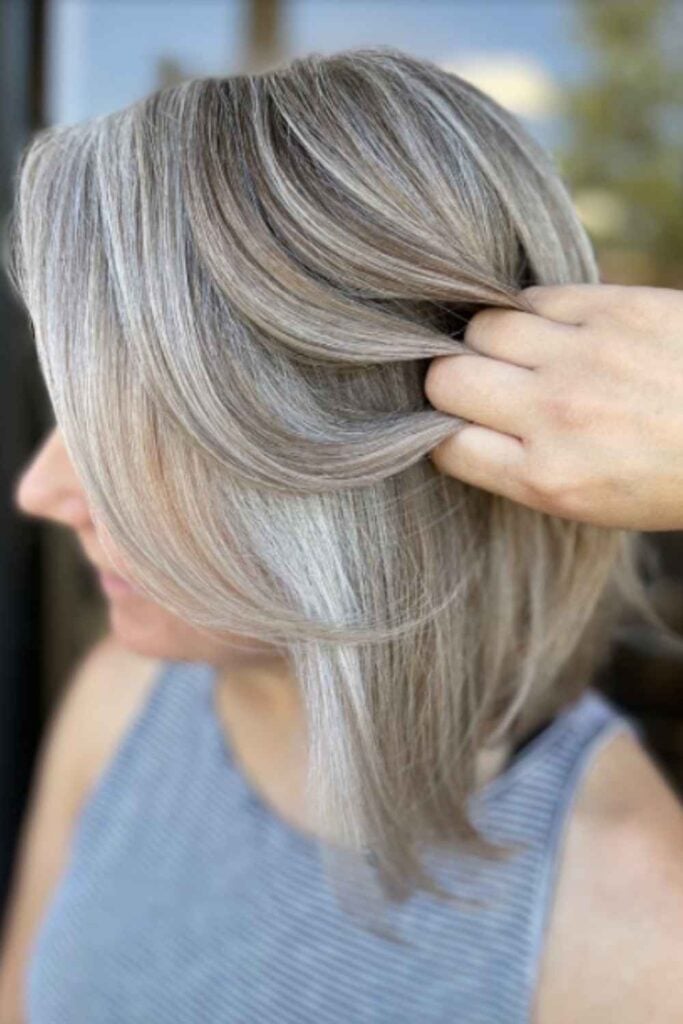
Can a gray ash blend look natural without being boring? Yes, when the technique is a soft babylight weave through the top sections. This chin-length lob with a side part and wavy texture uses blended highlights that start a few inches from the root, not at the scalp. The seamless transition means no harsh line when your natural gray grows in. I have worn this through three months without a touch-up, and the waves hid the grow-out until week ten. Trims every eight weeks keep the chin length sharp. The medium density in the photo holds the wave without falling flat by 4 pm. Fine hair needs a volume spray at the root to keep the shape.
Mid-Back Dark Brown With Cool Gray Blend
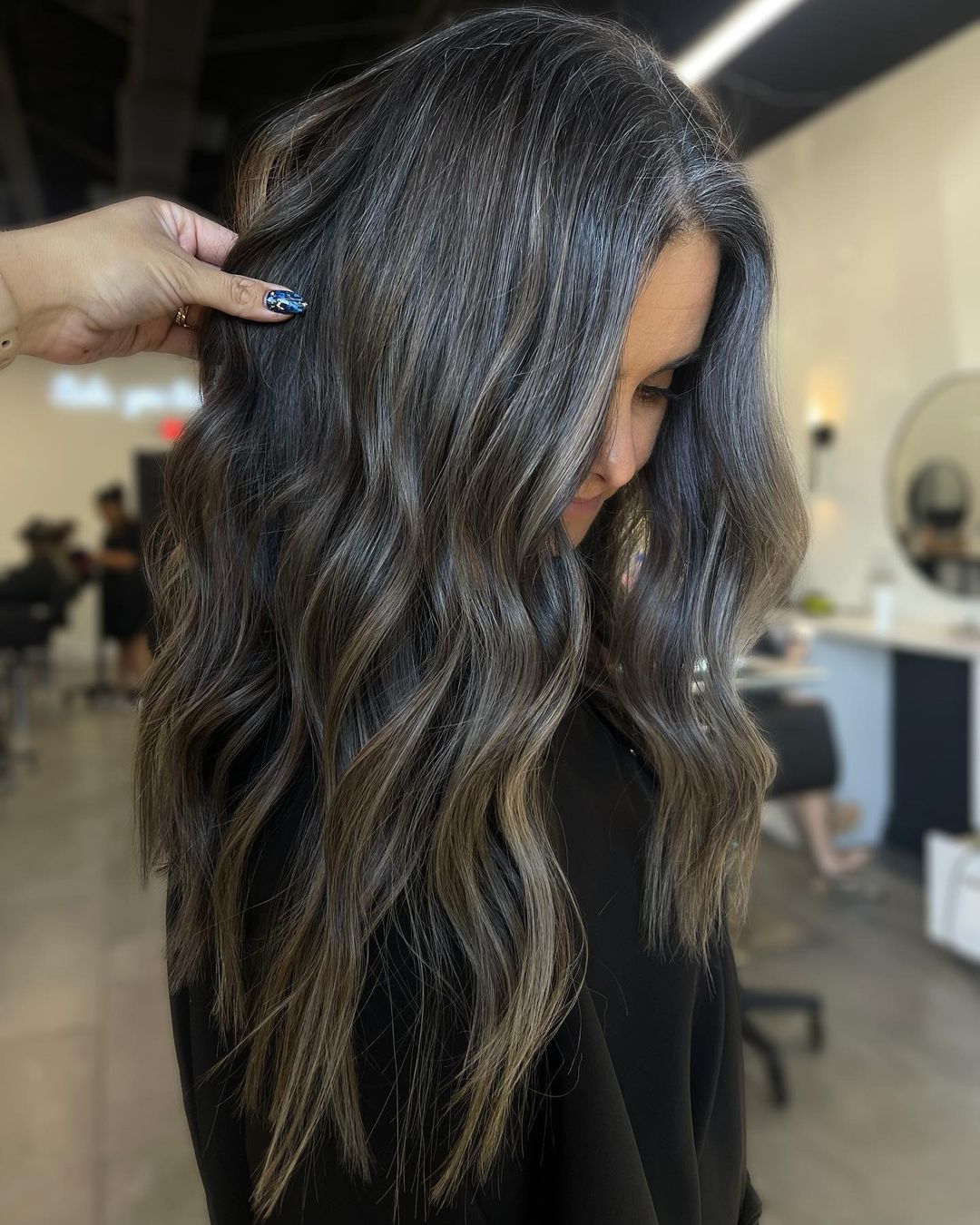
There’s a reason this one stopped me mid-scroll. The dark brown cool gray base reads expensive in a way that plain brown never quite manages, and the ash gray and silver highlights are woven through the mid-back length like they grew there. On thick, wavy hair, the loose waves catch the lighter pieces and show off the dimension without any effort on your part. The middle part and side framing keep it polished, but the real win is how the blend behaves over a week. The cool tones stay put, no brassiness creeping in by Thursday, and the grow-out line blurs into the dark base so you’re not racing back to the chair. Trims every ten to twelve weeks keep the layers honest, and that’s about it. I’ve recommended this to two friends already, and both came back with the same verdict: it’s the most low-maintenance way to look like you have a colorist on speed dial.
Shoulder Length Air-Dried With Subtle Gray
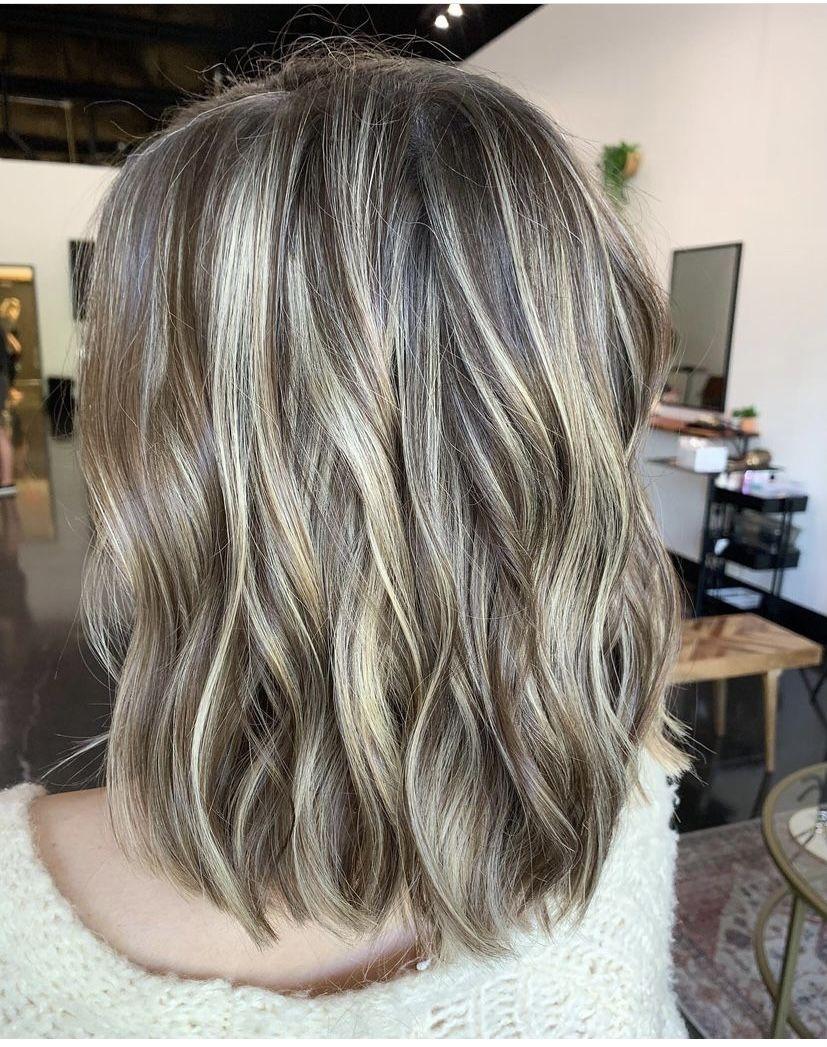
I’ll admit it, I used to think gray hair needed a full styling commitment to look intentional. This shoulder-length cut with natural gray air dried into soft waves proved me wrong. The subtle lighter gray highlights catch the light without shouting, and on fine, wavy texture, the air-dried finish actually looks like a choice, not a compromise. It’s the kind of color that belongs in October, when the light goes golden and everything feels a little softer. The side part adds a touch of polish, but honestly, this is the closest I’ve come to a wash-and-go that still reads as styled. Color refresh every eight to ten weeks, trims every ten to twelve, and you’re set. It’s the rare gray blend that looks better the less you do to it.
Mid-Back Ash Blonde With Gray Undertones
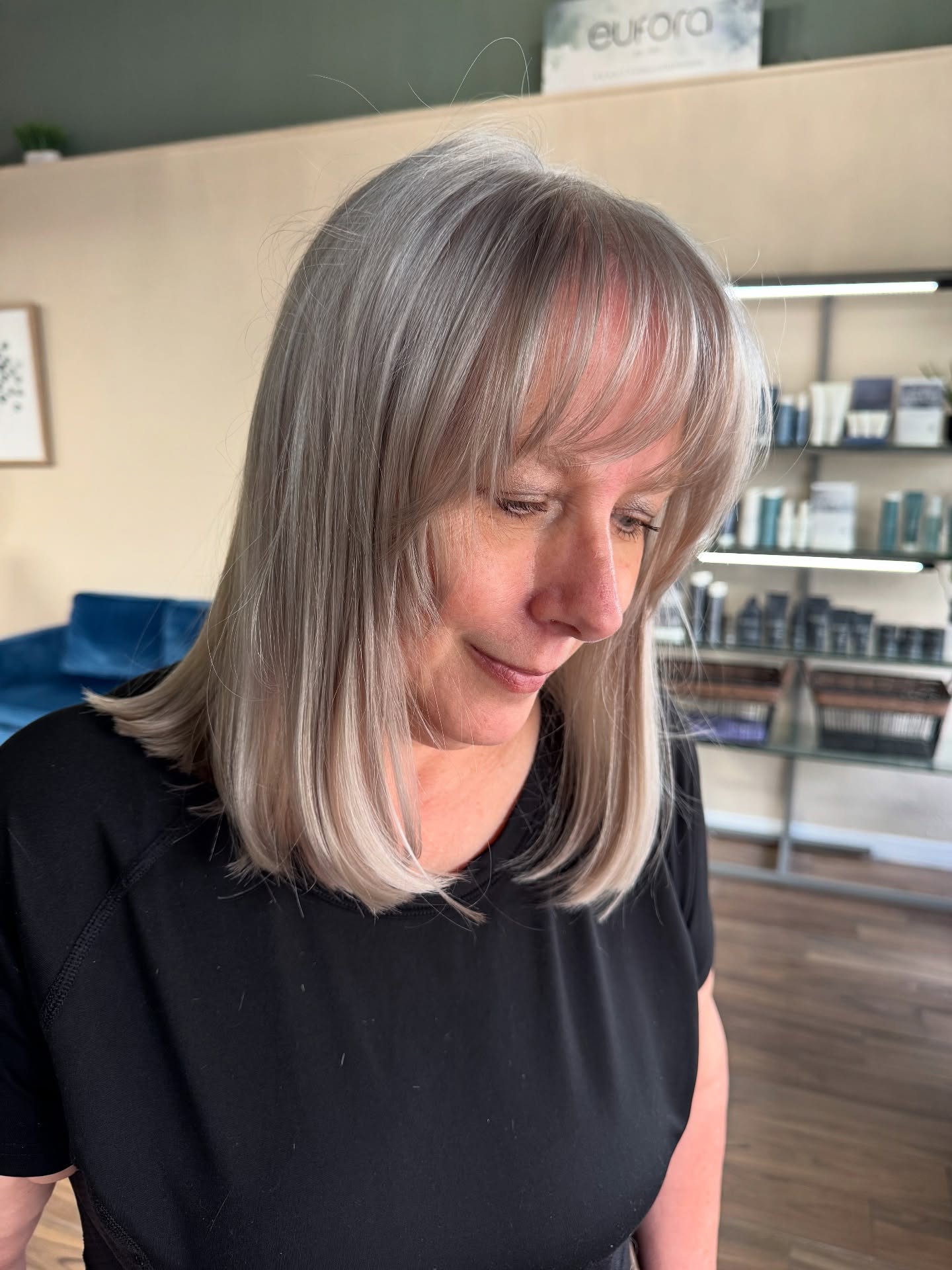
Here’s the precise observation: ash blonde gray undertones look incredible for about six weeks, and then they start to lie to you. The mid-back length with long layers and loose waves shows off the subtle gray undertones beautifully, especially on medium-thick wavy hair where the movement catches the light. But ash is a demanding tone. It needs a toner to keep the cool cast from drifting yellow, and the highlights will need refreshing every six to eight weeks if you want to keep that dimensional blend. The grow-out is where it gets honest, because the contrast between the lightened pieces and your natural base becomes visible faster than you’d like. Trims every ten to twelve weeks keep the ends healthy, but the color is the real commitment here. It’s not a set-it-and-forget-it situation. It’s a book-the-appointment-and-remember-the-toner situation.
Wavy Lob With Dark Brown Gray-Blonde
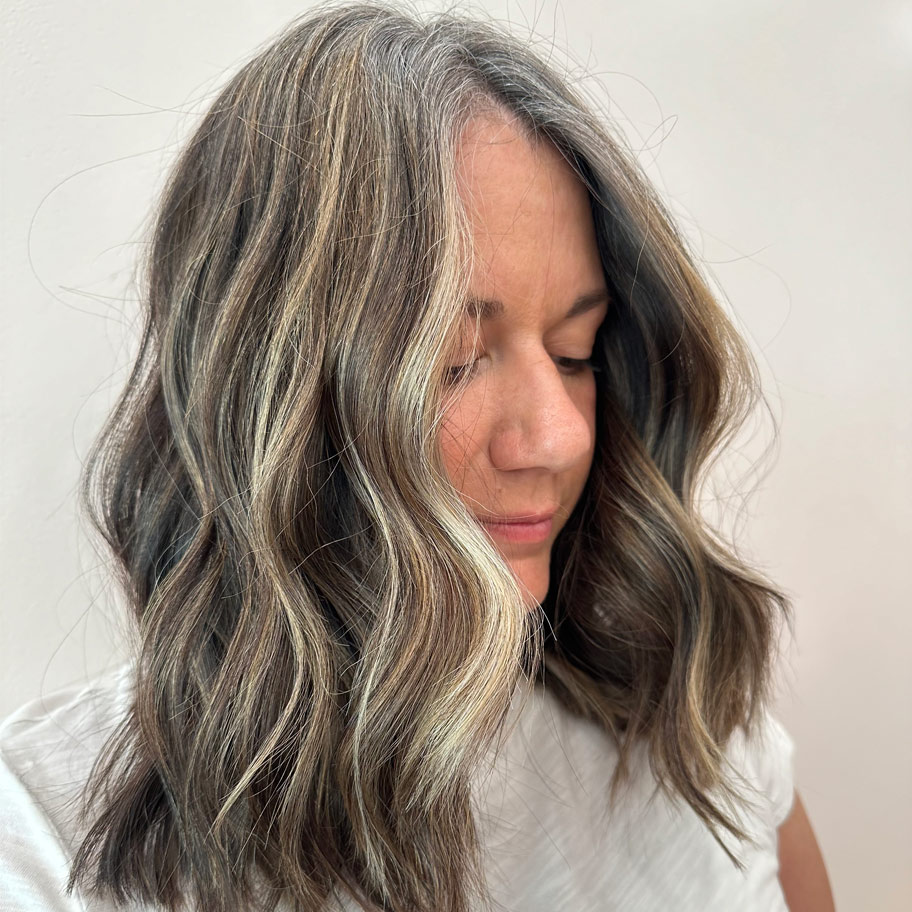
I booked this twice in one season. The dark brown gray blonde base lands somewhere between a root shadow and a full commitment, with gray and blonde highlights slicing through the wave pattern at collarbone. Wavy, medium density hair catches the contrast best — too fine and the gray reads as sparse, too coarse and the blend muddies. Side part helps the lighter strands land forward, where they actually show. A lob at this length lets me wrap sections around my fingers in about 15 minutes, which is the difference between doing it and skipping it. The tone shifts over eight weeks, the gray warms slightly while the blonde cools.
By week six the contrast is softer, more of a lived-in silver wash than the original stripe. That is the part I did not expect. I look at it and think: when did brown start looking this expensive?
Collarbone Lob With Silver Strands
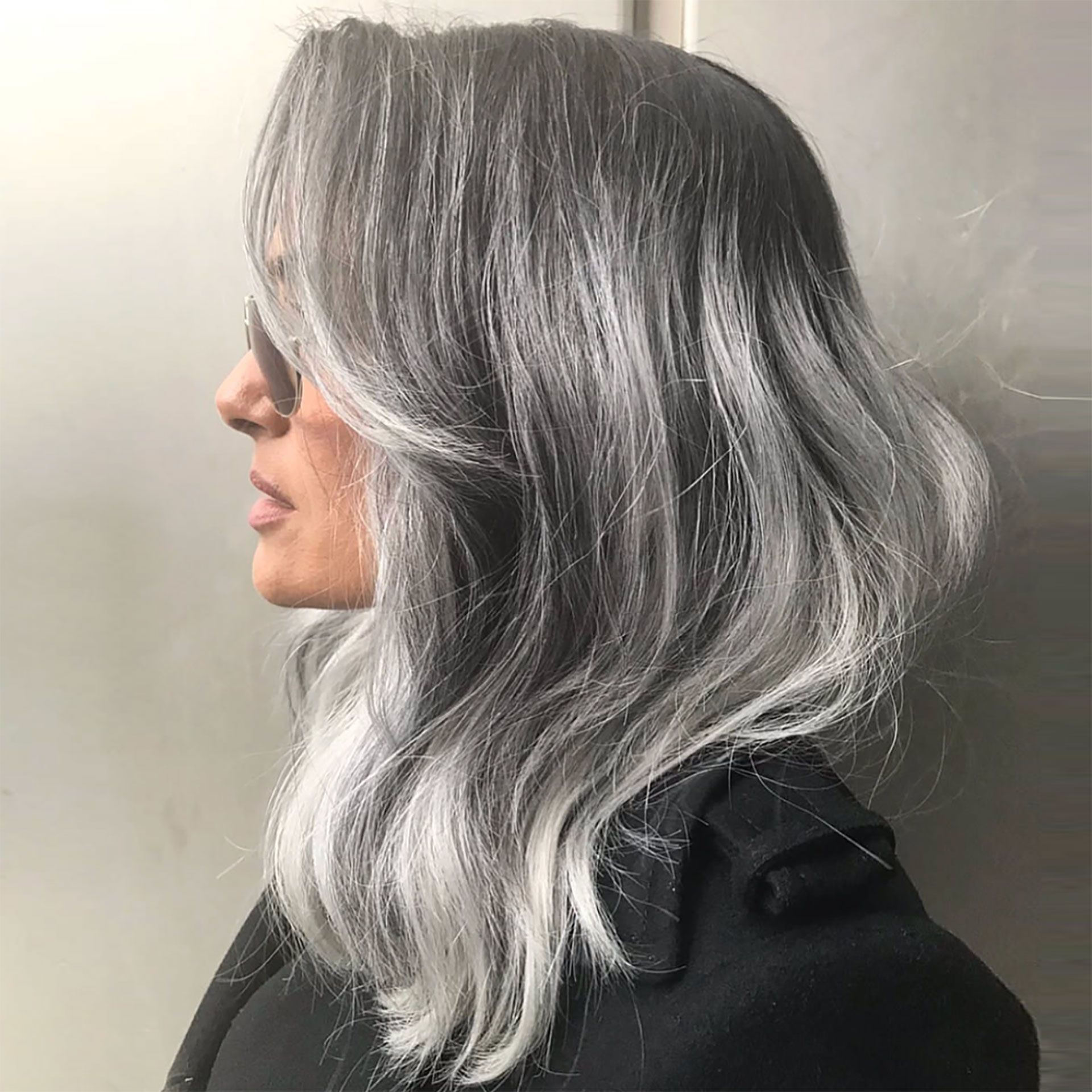
When did silver strands start looking this intentional? This collarbone lob with a silvery gray blend works best on wavy, medium-density hair where silver catches the light. Straight fine hair can make the strands read thin and scattered. The side part in the photo lets the silver fall forward, framing without hitting the shoulders. It needs a trim every 8-10 weeks, and the grow-out is forgiving enough that I have gone 12 weeks without a touch-up. If your hair is thick and holds a wave, this is your shade. If it is fine and flat, I would pass.
Collarbone Ash Blonde With Silver-Platinum
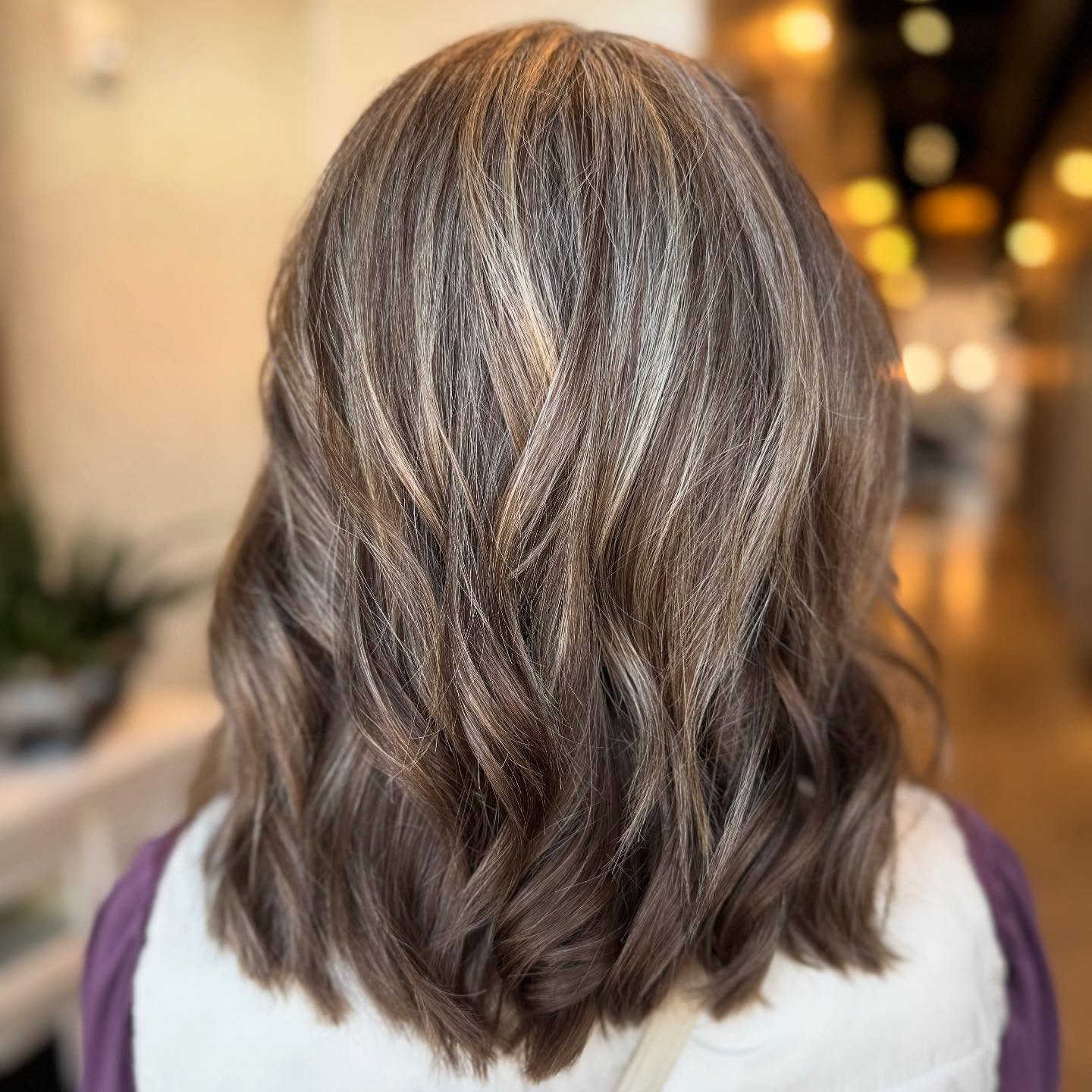
This ash blonde silver platinum combination is a three-tone commitment, and it pays off. The base is a cool ash blonde, then fine silver and platinum blonde highlights are painted in thin ribbons from mid-lengths to ends. The technique avoids chunky stripes by alternating piece sizes. The collarbone length keeps the weight from pulling the wave out, and the wavy texture lets the tones shift in the light. Here is what to tell your stylist: ask for a shadow root at the base so the grow-out is soft, request thin ribbons rather than thick sections, and confirm they will use a toning gloss on the bright pieces to keep brassiness away.
Collarbone Back View, Dark With Ash-Silver
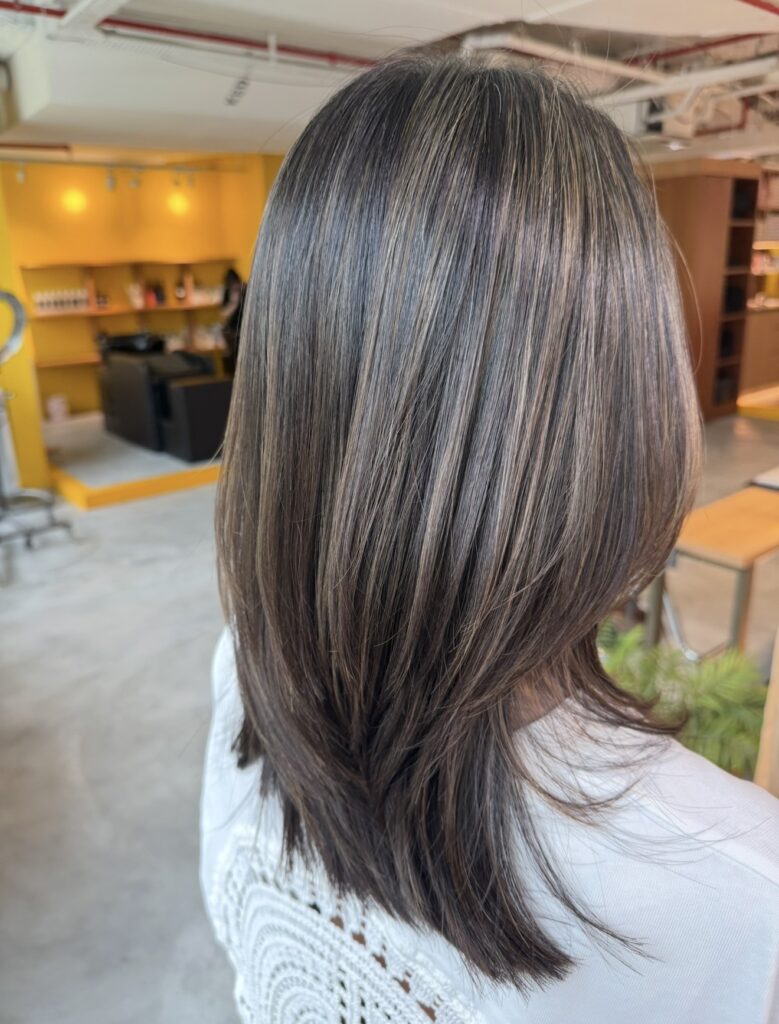
I will confess I was skeptical about this dark brown ash silver blend. I thought the ash blonde and silver highlights would turn muddy within a month on a dark base. Turns out, the opposite happens. The dark brown stays rich, and the highlights soften into a cooler, more natural silver as they fade. The collarbone layers distribute the bright pieces through the mid-lengths and ends, so the back view in the photo shows a balanced, dimensional effect without any chunky lines.
Maintenance is actually lower than I expected. Trims every 8-10 weeks keep the shape, and the color needs a toning shampoo maybe once every two weeks to keep the silver from warming up. After a month, the highlights look blended rather than faded. If you air-dry with a bit of texture spray, the wave pattern holds and the bright strands catch light naturally. This wears well through a work week.
Gray Blending Highlights Collarbone Blowout With Gray Blend
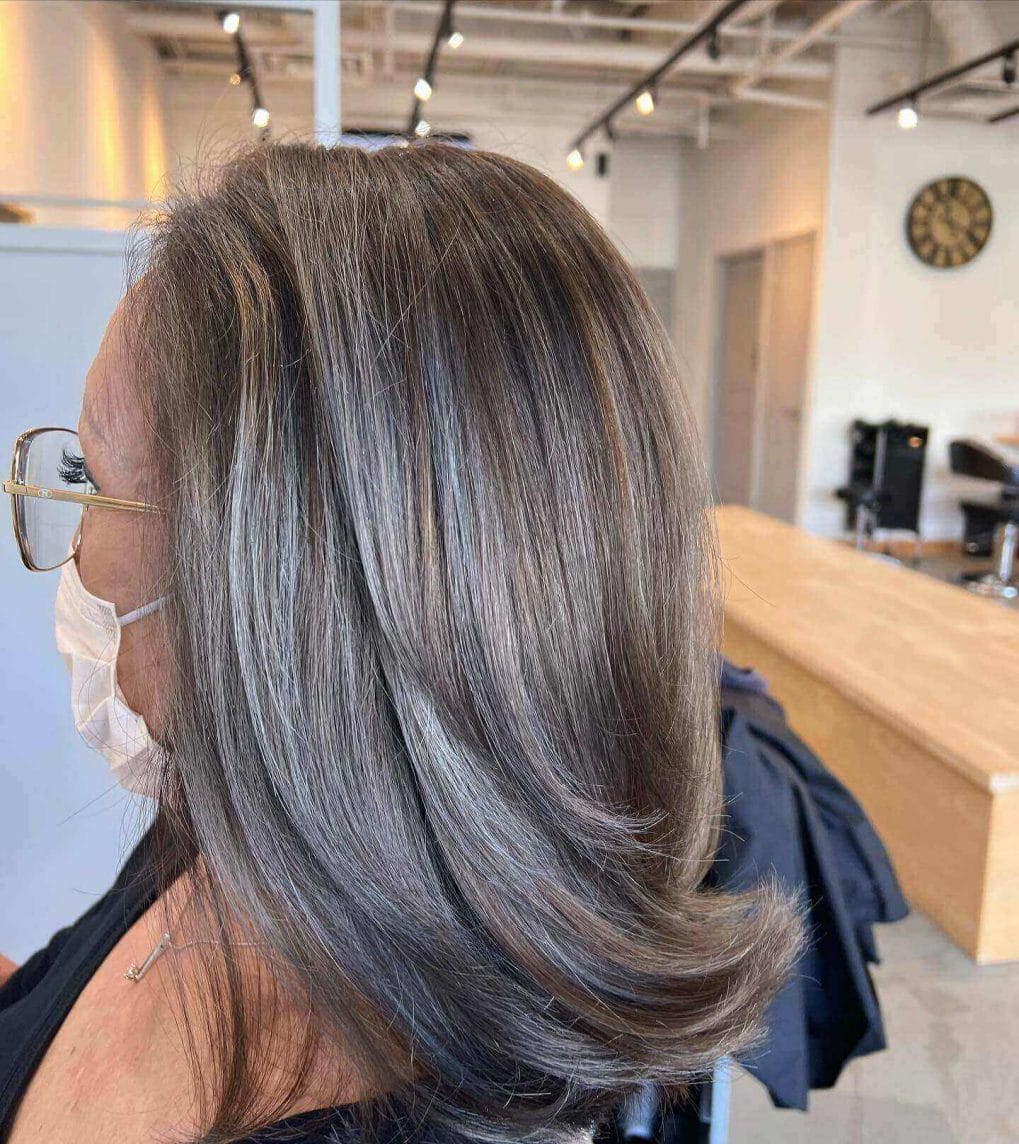
A collarbone blowout in a gray blend blowout hits that sweet spot between polished and effortless. The blend of gray and lighter strands creates a dimensional cool tone that doesn’t fight natural grays. Medium density wavy texture holds the shape without deflating by afternoon. Middle part suits it. This colour lands perfectly for autumn—warm enough to contrast with sweaters, cool enough to match December light. A gray blend blowout made for this season.
Collarbone Lob Back View, Seamless Gray Blend
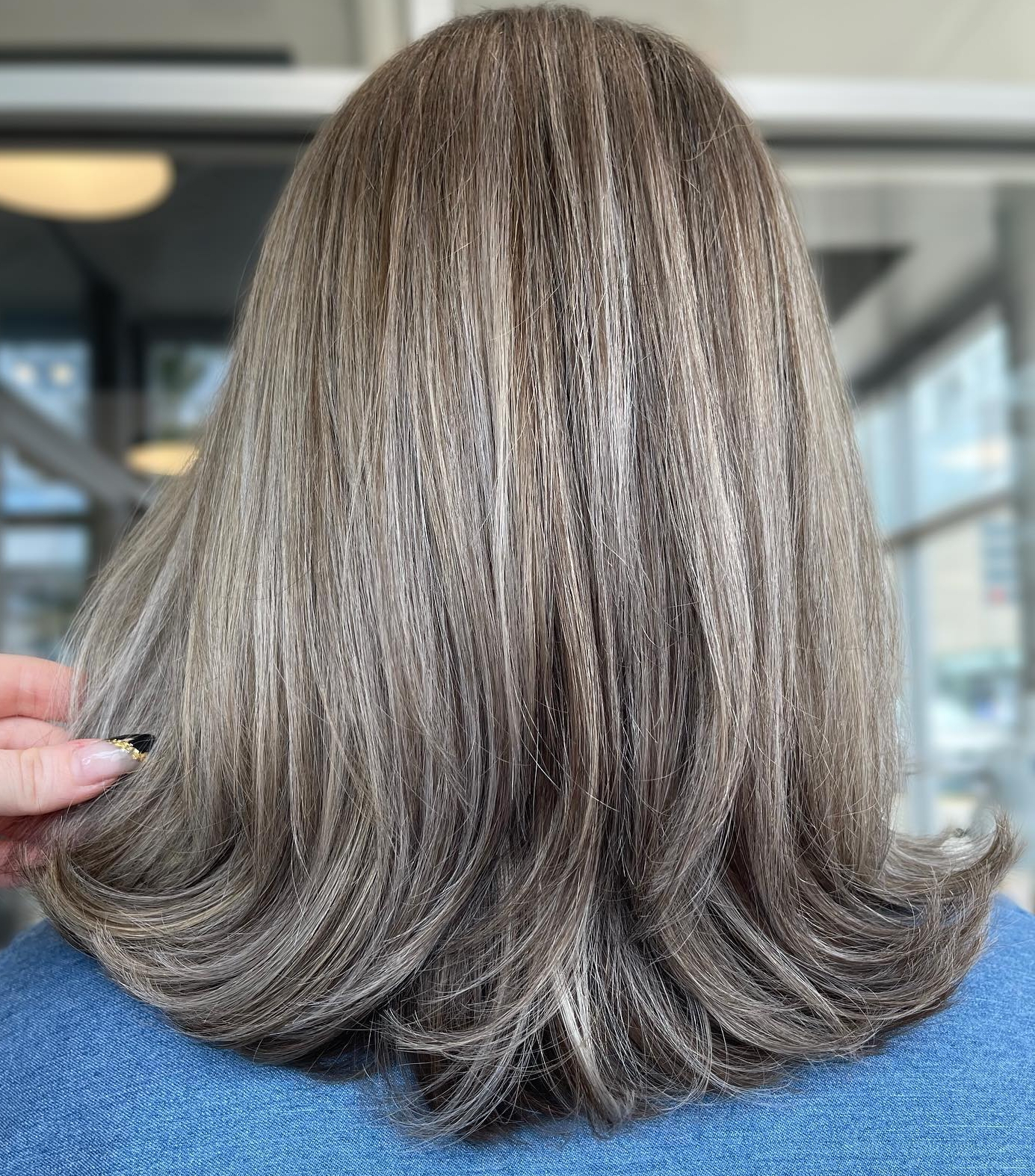
I was ready to write this off as another subtle blend, but the back view made me reconsider. The seamless gray blending here avoids the stripe effect that chunkier highlights leave behind. Instead of a visible line where gray starts, the cool tone melts into the collarbone-length wavy lob. The technique is the point: no hard demarcation, just a gradual shift that reads as natural silver. It is not the statement piece of a platinum streak, but that is exactly why it works.
Gray Blending Highlights Shoulder Length Lob With Natural Gray Blend
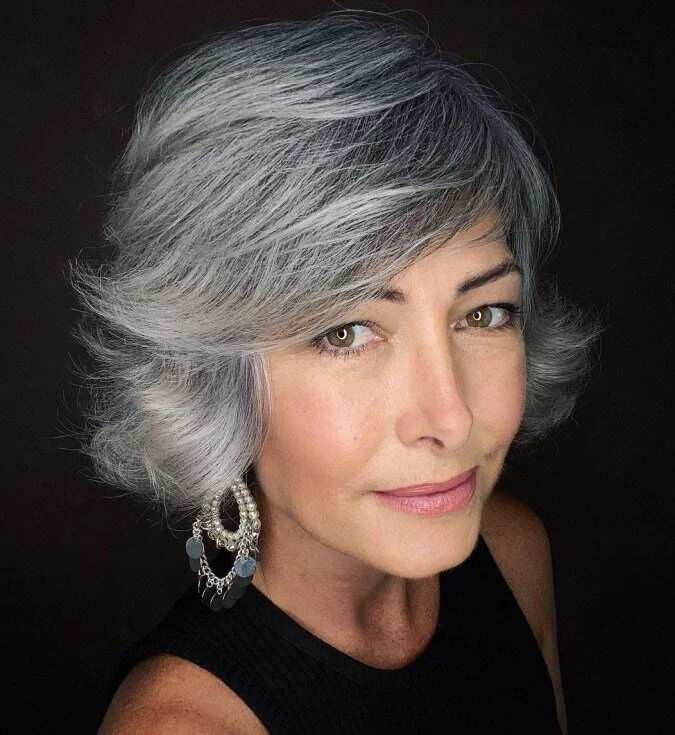
The natural gray highlights here read as intentional, not accidental. That is the trick: the cool tone sits close to the base so it looks grown in, not grown out. This works best on medium to coarse texture with natural wave or straight density. Fine, low-density hair will struggle to carry the contrast without looking sparse. For upkeep, a purple shampoo every other wash keeps the cool tone from warming up, and trims every eight to ten weeks keep the collarbone length sharp. The side view shows how the gray sits mostly underneath, so the top stays dark and dimensional. It is a low-shout version of gray blending that flatters anyone who wants the color without the announcement.
Final Thoughts
- Tone with a purple shampoo every two weeks.
- Ask for a root shadow at the six-week mark.
- Trim the baseline every eight weeks.
- Use a heat protectant before any hot tools.
After working through all of them, I realized gray blending is more flexible than I thought: placed like highlights, not an all-over treatment. I’m booking the layered bob with striking silver highlights tomorrow. That one earns its place.