

You do not need a haircut that explains, disguises, or compensates for your body. What matters is whether the choice feels like you and whether you can describe that choice clearly enough to a stylist to get closer to the result you want. Confidence often grows from being specific about your preferences instead of accepting someone else’s idea of what a plus-size woman should wear.
As you consider haircuts for plus-size women in 2027, treat the year as a moment to choose deliberately, not as a deadline to follow whatever is called current. A useful decision principle is to notice which options make you feel most like yourself, then bring that preference into the conversation in clear, personal terms. Your body size can be part of who you are without becoming the rule that decides your hair.
Long Layers With A Sweeping Front
The drama here comes from the distance between the shortest and longest visible pieces. The overall length extends well past the shoulders, yet shorter sections begin much higher and curve around the front before blending into broader bends below. That contrast lets a long layered haircut keep its length while still showing clear structure from top to bottom.
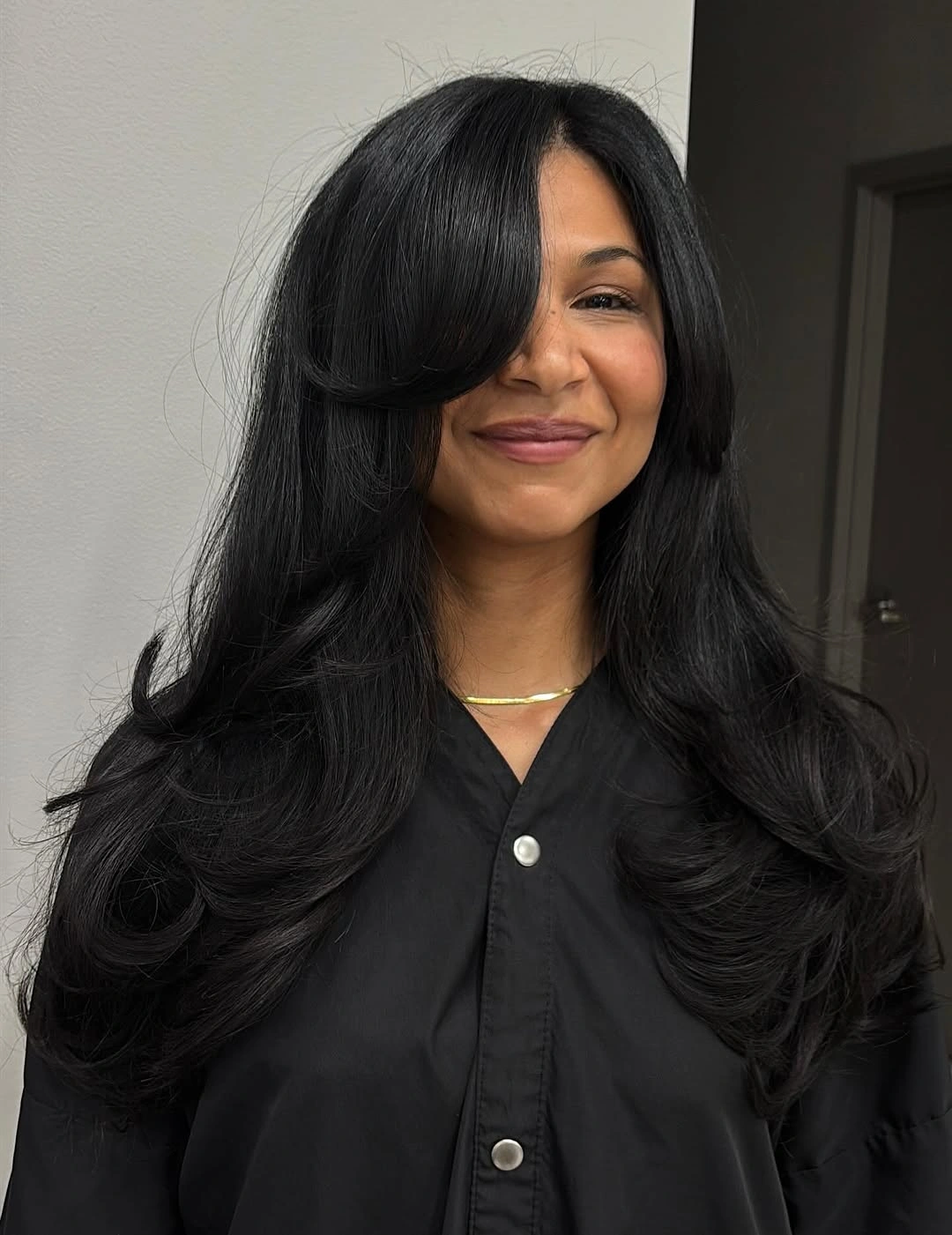
Photo via Instagram
At the front, the heavy sweep changes the outline without creating a short, separate bang line. It reads most safely as a long front layer with a fringe-like effect, because the section falls across the forehead and then merges back into the rest of the cut. The result is a softer break in the front silhouette than blunt or compact bangs would create.
This is a useful direction if the part you like is obvious movement rather than a shorter overall shape. You can focus on how high the first visible layers begin and how much long base length remains underneath them.
Long Curls Meet A Compact Fringe
Short curly bangs make the front of this very long haircut feel intentionally compact, while the rest of the hair extends far below the shoulders in visible curls. That difference in scale is the main design choice: the fringe establishes a clear upper boundary, then the length opens into a much larger, looser silhouette around the sides and below.
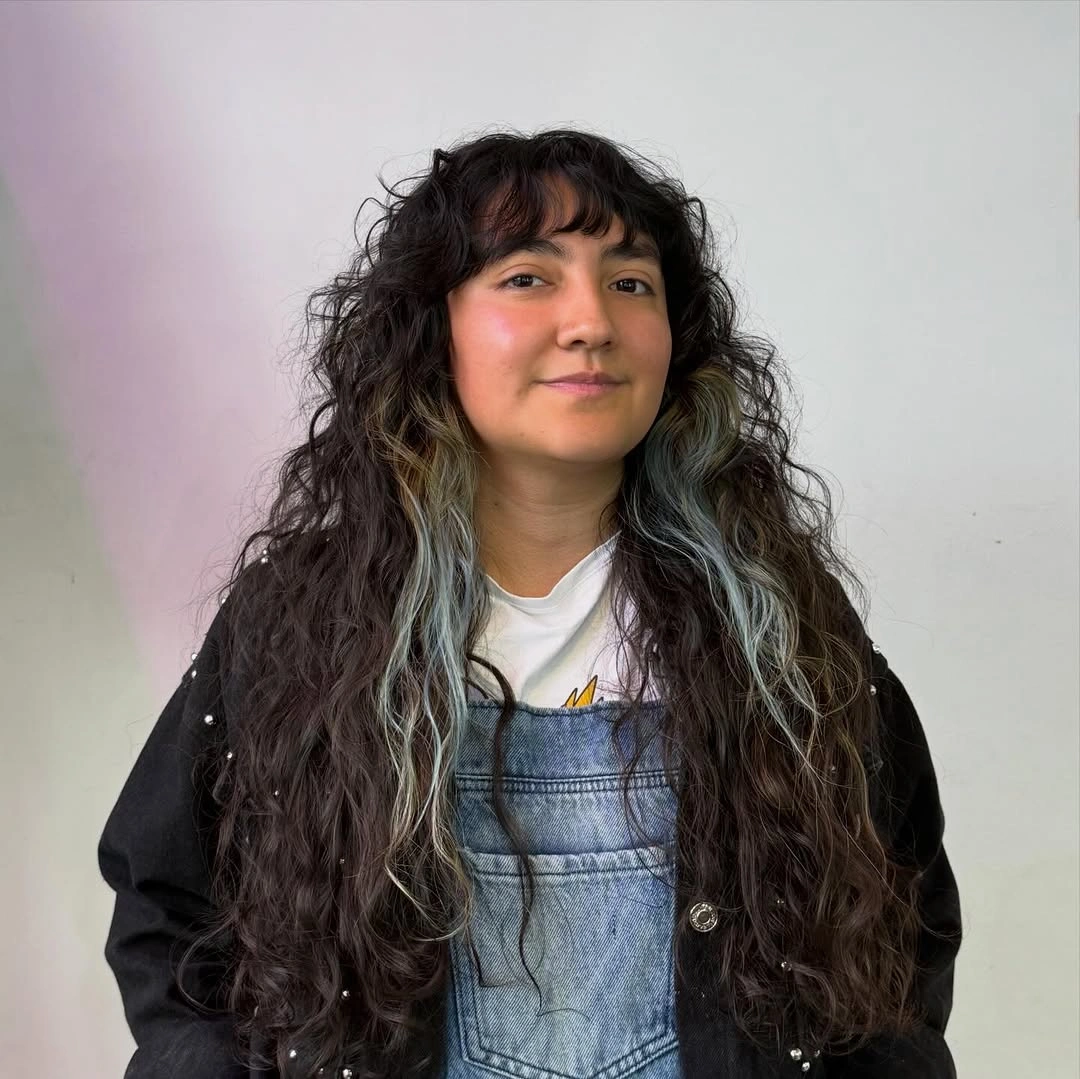
Photo via Instagram
The lighter strands near the front make individual curl sections easier to see, but they do not change what the cut is doing. Their contrast traces several bends and separates them visually from the darker mass of hair, which helps reveal the shape without proving anything about the coloring process or the hair's natural texture.
For someone considering long curly hair with bangs, the important choice is how much presence the fringe should have. A short curly fringe becomes a distinct feature, while longer front pieces would keep more of the attention on the overall length.
A Pixie Defined By Curled Texture
This pixie is defined first by its compact perimeter. The hair is kept close around the sides and ears, so there is very little length competing with the shape of the head, while the top stays visibly fuller. That clean difference between a tight outline and a more active upper section gives the cut its strong, unmistakably short profile.
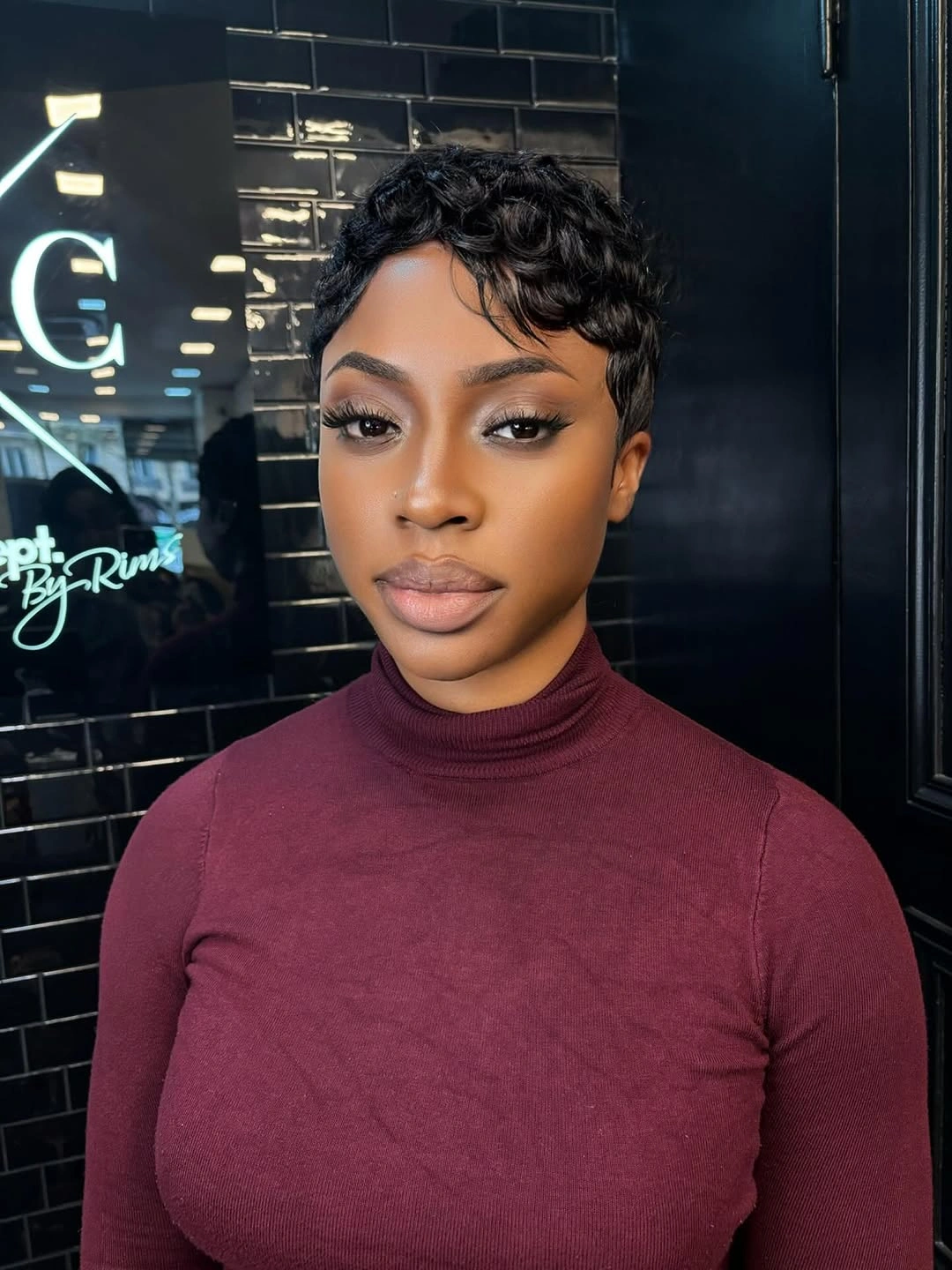
Photo via Instagram
Texture is concentrated across the top and front, where small curled or waved pieces break up what could otherwise read as a very smooth crop. Against the closely shaped sides, those bends create depth and direction without needing extra length. The effect comes from surface variation, not from a long fringe or a heavily layered perimeter.
A short pixie with visible curl is a useful reference if you like cropped length but do not want a sleek, uniform finish. The contrast between close sides and a textured top is the feature to notice most.
Layering That Builds From Mid-Length Down
The upper portion of this medium-long cut stays comparatively smooth, while the lower half carries most of the visible movement. Long layers begin to separate more clearly around the mid-lengths, then widen into broad curved sections near the ends. Because the strongest shaping sits lower, the silhouette keeps a calmer line near the crown and gains fullness farther down.
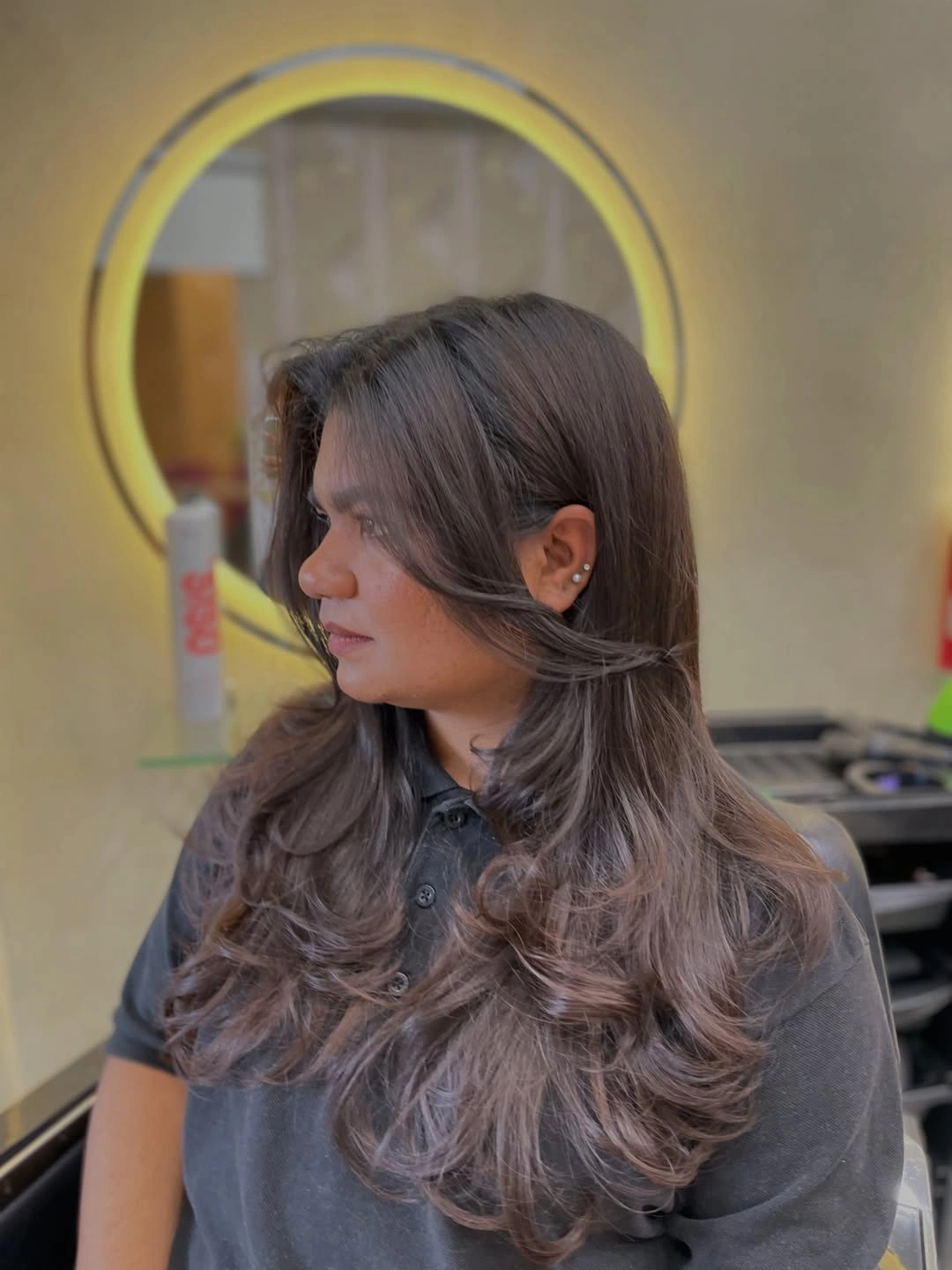
Photo via Instagram
Long front pieces help connect the face area to the lower layers instead of creating a detached fringe. They sweep back into the same broad bends that appear through the bottom half, so the front and sides feel related even though the movement is not concentrated high on the head. This is a useful example of layering defined by placement as much as by amount.
The distinction here is where the haircut begins to look active. If you prefer a smoother upper outline with more movement toward the ends, lower-starting layers create a different balance from cuts that break up near the crown.
Long Feathered Layers Seen From The Back
From the back, the layering is easy to read because several shorter sections sit visibly over longer lengths rather than disappearing into one continuous edge. The base still reaches well below the shoulders, so the haircut does not trade away length to create shape. Instead, the shorter tiers interrupt the middle and lower sections while a long foundation remains underneath.
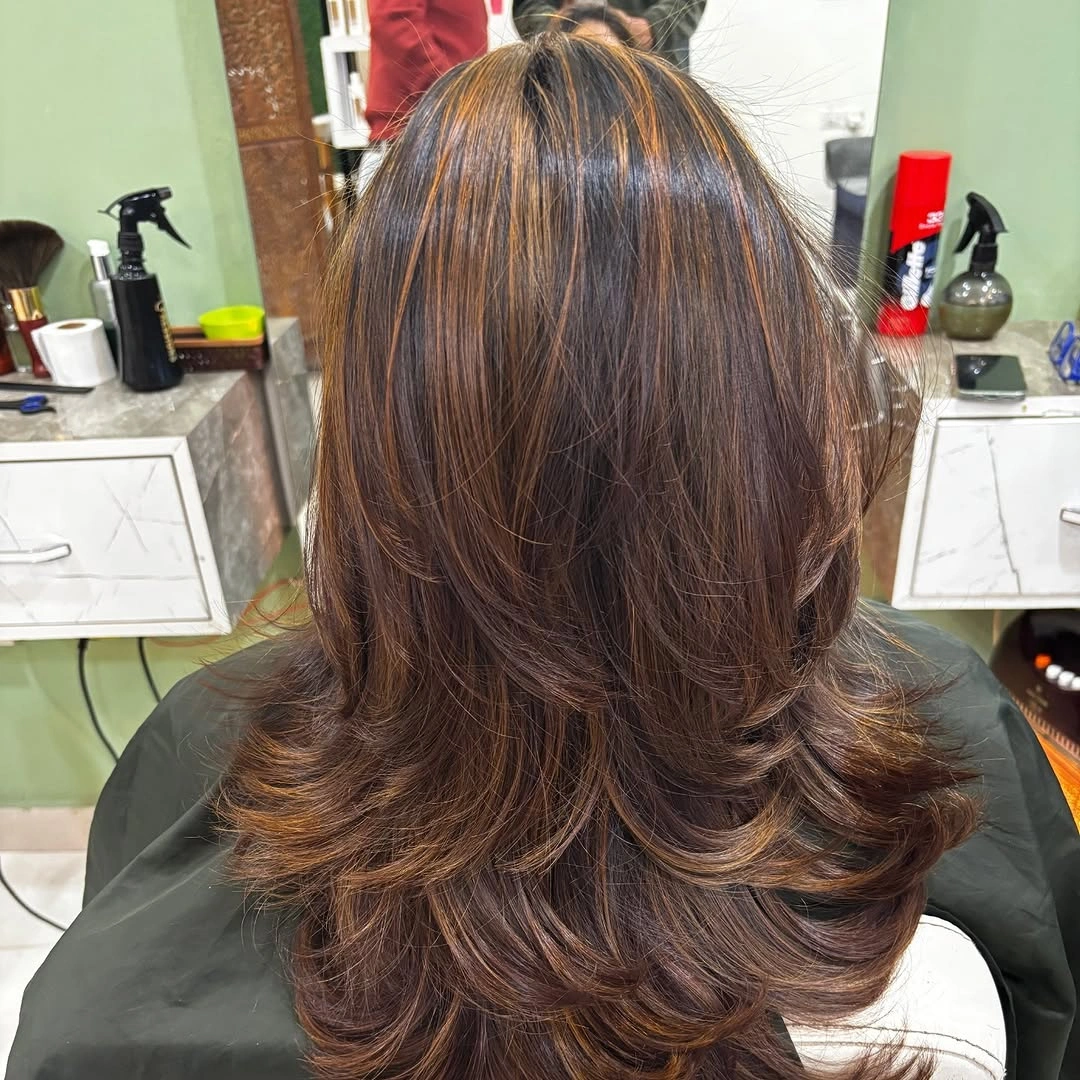
Photo via Instagram
The ends curve outward in repeated feathered tiers, creating a stacked rhythm that moves down the back. Each visible layer catches the eye as a separate arc before the next one continues the line below it, which makes the haircut feel more segmented than a long cut with only low, subtle layering. The effect is strongest through the middle and lower lengths.
The useful reference is the separation between tiers and the amount of long length left beneath them. Those visible details give you something more specific to compare than relying on a named haircut alone.
A Rounded Bob With A Tucked Perimeter
Seen from the back, this short bob forms one continuous rounded silhouette from the crown through the fuller middle and down to the nape. The shape feels contained because the outer line stays smooth rather than breaking into obvious separated pieces, so the haircut is defined as much by its curved perimeter as by its short length.
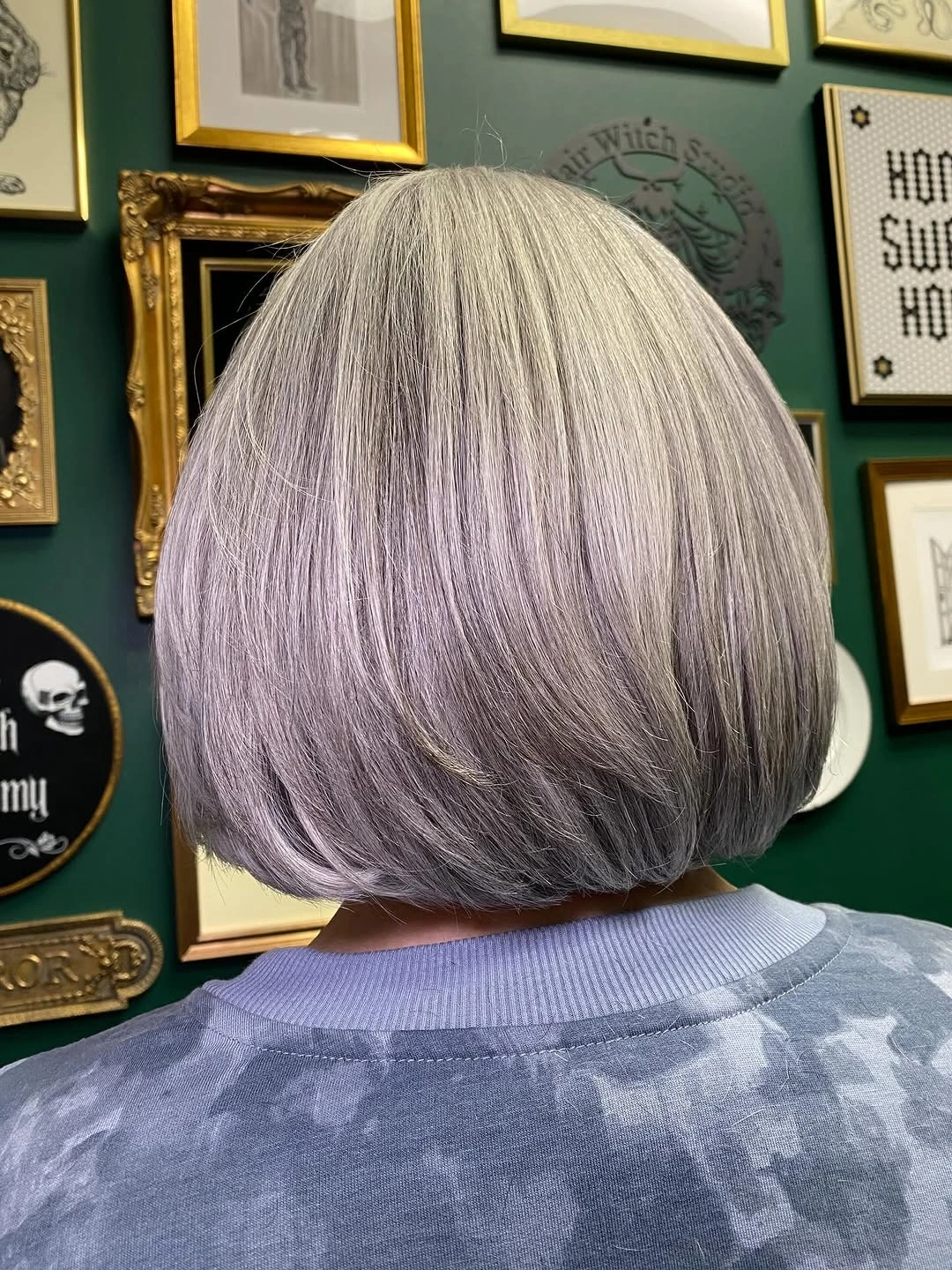
Photo via Instagram
The lower edge turns inward instead of flaring away from the neck, which gives the bob a compact finish and keeps the weight visually close to the head. That tucked curve also makes the bottom line feel deliberate without requiring a sharply blunt edge, leaving the overall shape soft but still clearly outlined.
Compared with a piecey pixie, this bob puts more emphasis on an unbroken outer shape than on surface texture. If that smooth, rounded outline is what catches your eye, the perimeter matters more than any precise construction label.
A Pixie With Airy Piecey Texture
Here, the top surface is visibly irregular: short sections point in slightly different directions, overlap, and leave small breaks instead of forming one smooth curve. The closely cropped sides keep the overall silhouette very short, while that broken-up texture gives the top enough movement to prevent the cut from reading as flat or uniformly sleek.
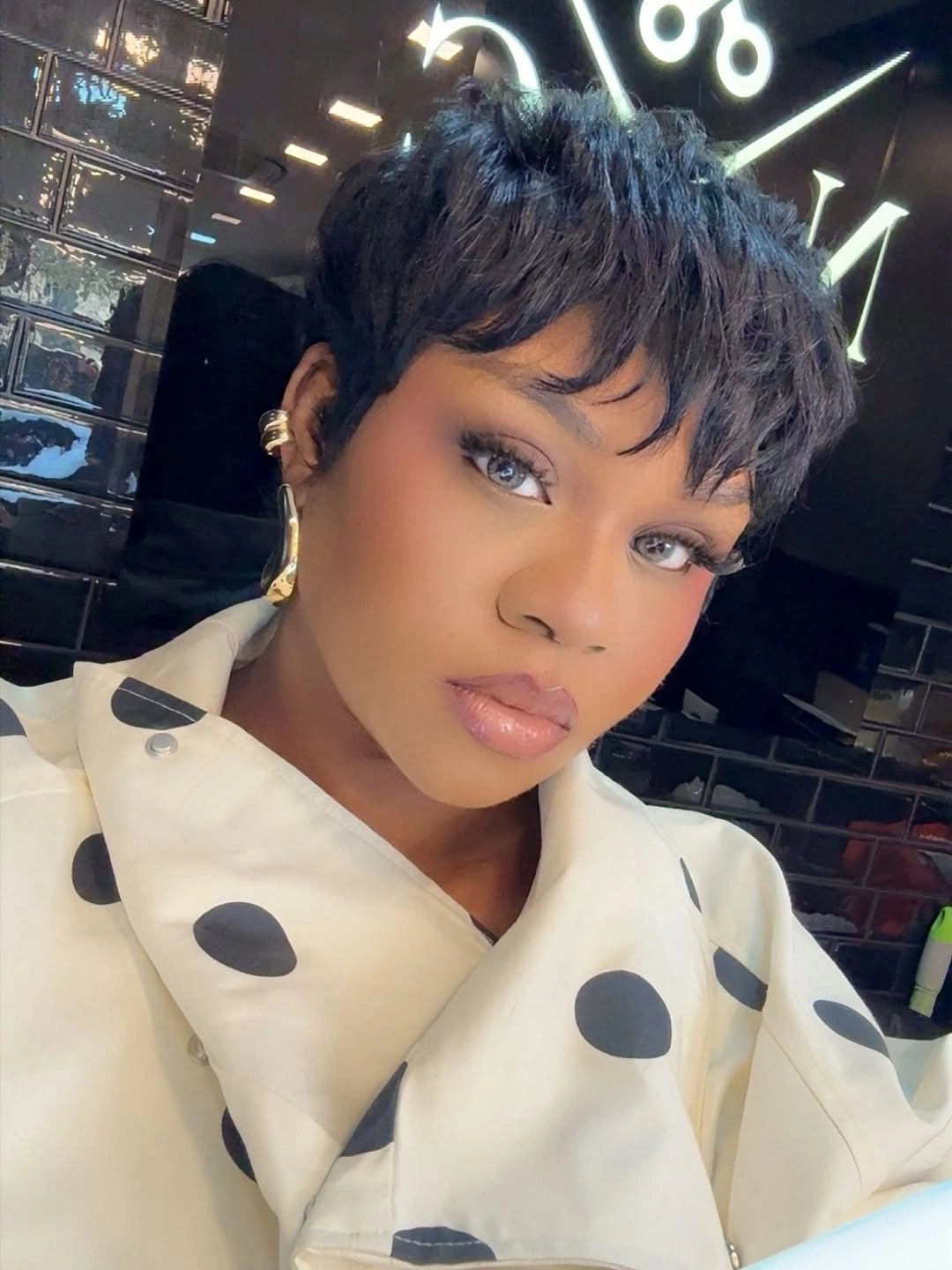
Photo via Instagram
Across the forehead, the short pieces stay light and wispy rather than joining into a solid bang line. That matters because the front edge feels open and flexible even though the haircut itself is compact, creating a different impression from a pixie with a fuller, more defined fringe or a rounded curl pattern.
Two pixie haircuts can share nearly the same length and still feel quite different. In this one, the appeal comes from piecey separation and a feather-light front edge rather than from polished curves or a dense fringe.
A Clean Shoulder-Length Cut With One Sweep
This shoulder-length cut relies on a relatively solid lower line, so the eye reads the overall length before it notices any internal shaping. The ends sit in a fuller, straighter band around the shoulders, and that cleaner perimeter gives the haircut a simpler structure than styles built from several obvious tiers or strongly separated layers.

Photo via Instagram
Most of the visible movement comes from the long front section sweeping away from the side part and toward the cheek. Because that one piece carries the strongest curve, the rest of the haircut can stay comparatively quiet, showing how a single front feature can add direction without making the whole shape look heavily layered.
This is a useful reference if you prefer medium-length straight hair with a clearer bottom line. The distinction is not a lack of shape, but where the shape is concentrated.
Centered Front Layers Keep The Shape Open
A center part gives these long front layers a balanced starting point, with both sides curving away from the face before dropping into the longer lengths. The result is an open front silhouette rather than a fringe-like sweep, and the symmetry makes the shape feel more evenly distributed across the two sides.
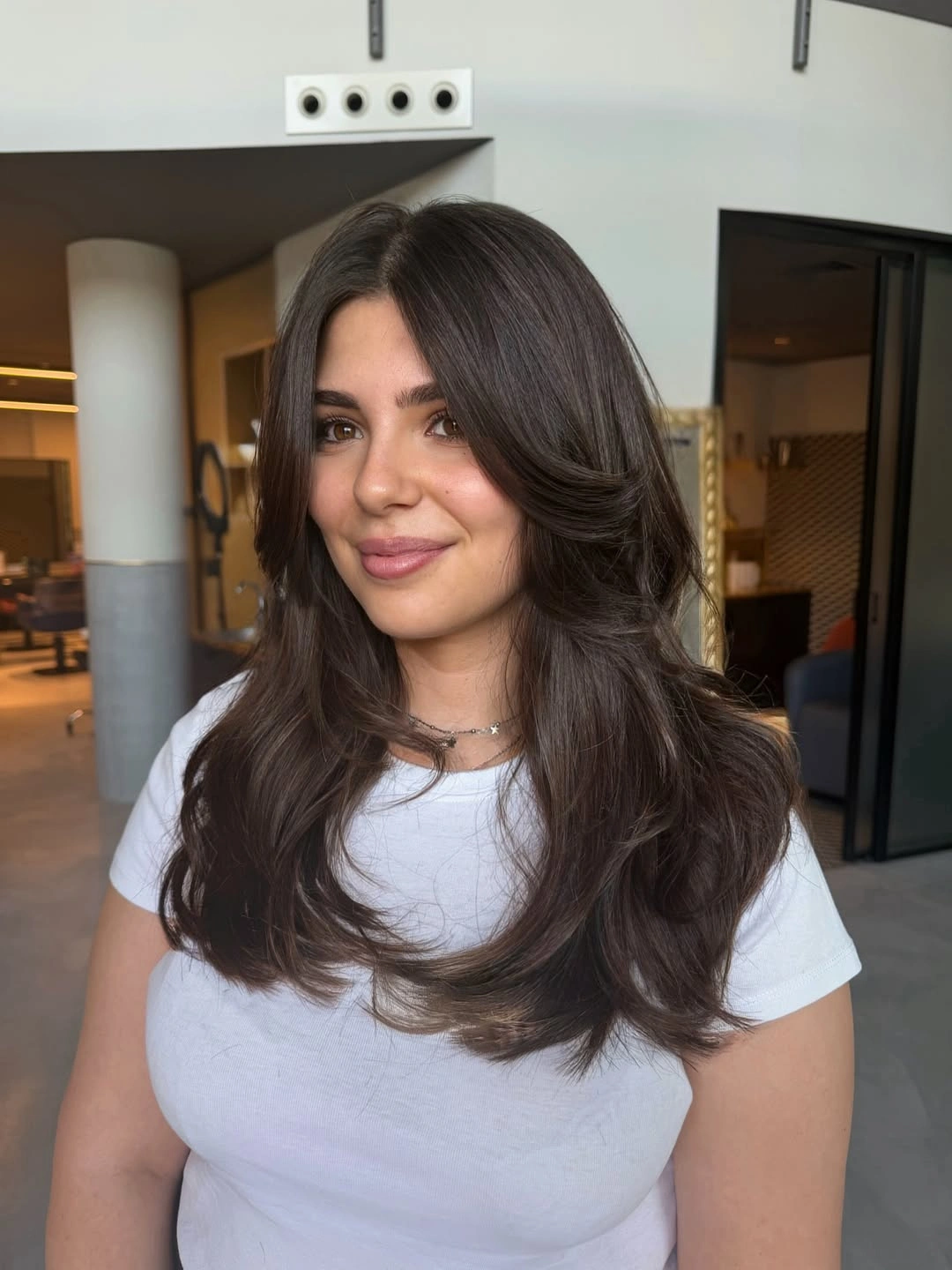
Photo via Instagram
The shorter front sections do not stop abruptly; they lengthen gradually and merge into the hair below the shoulders. That progression lets the front framing remain visible without looking detached from the rest of the cut, so the layers read as a continuous transition instead of a separate band around the face.
This long layered haircut shows how front shaping can be noticeable without closing over the forehead. It is a different visual choice from a heavy side sweep or compact bangs, even when the overall length stays long.
Shoulder-Level Layers Make The Ends The Focus
The strongest shape in this medium-length cut gathers around shoulder level, where several layered ends curve under or turn outward into visible arcs. Because there is less long base length beneath them, those bends become a major part of the silhouette instead of reading as small details added to an otherwise extended shape.
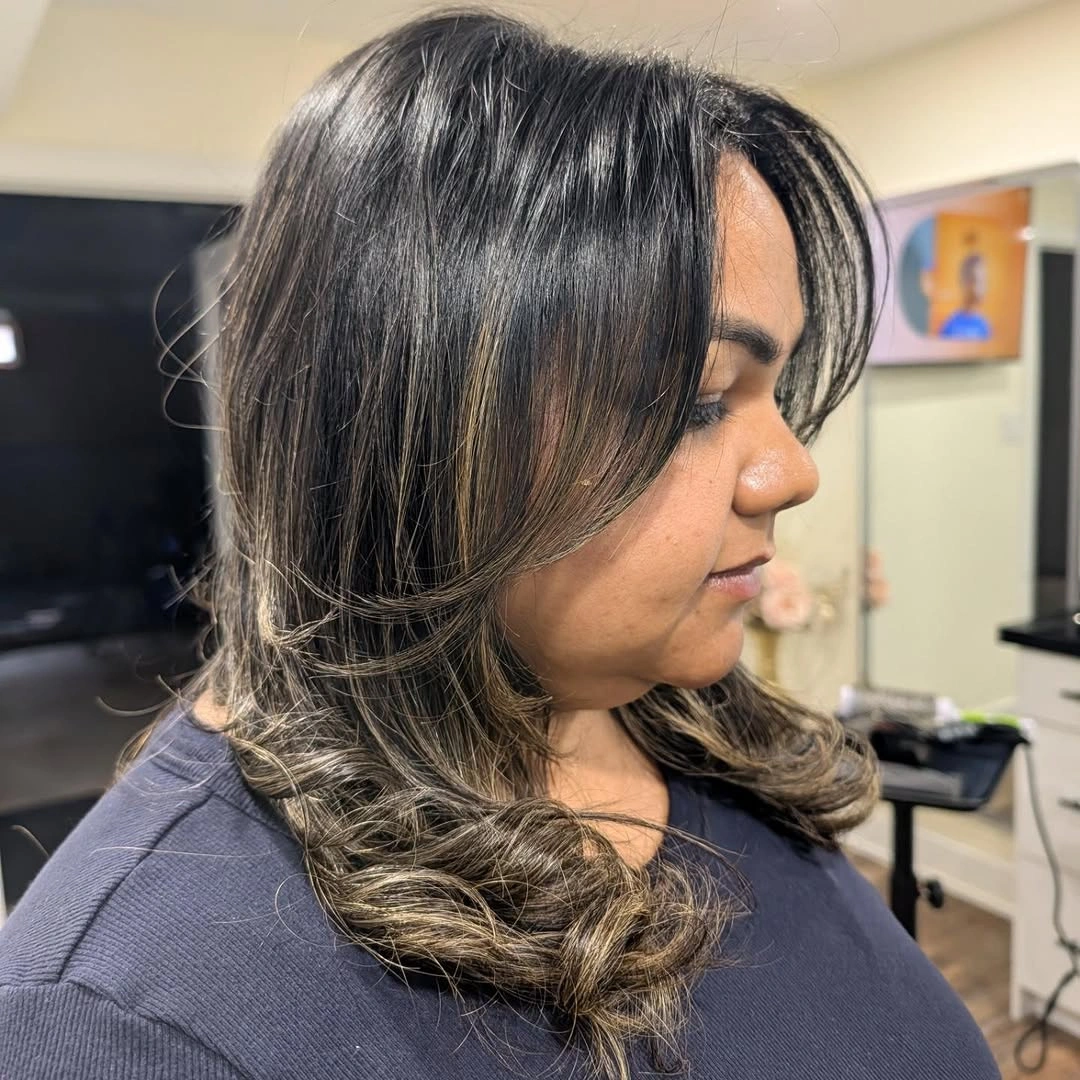
Photo via Instagram
Lighter strands run through the darker hair and make the boundaries between some layered sections easier to follow, especially where the ends change direction. The contrast highlights the curves and overlaps already present in the haircut, but the visible color difference does not establish how that color was created or what process produced it.
A medium-length layered haircut can make the ends themselves the main visual event. If you like that concentration of shape near the shoulders, the balance will feel different from a longer cut where the layers sit over a substantial base.
Long Layers With Curl Concentrated Below
Most of this long haircut stays visually quiet through the upper half, and the first obvious layer breaks appear much farther down. Shorter sections begin to separate around the middle before the lowest lengths curl into larger loops, so the cut keeps a continuous top while allowing the bottom to become progressively more detailed and dimensional.
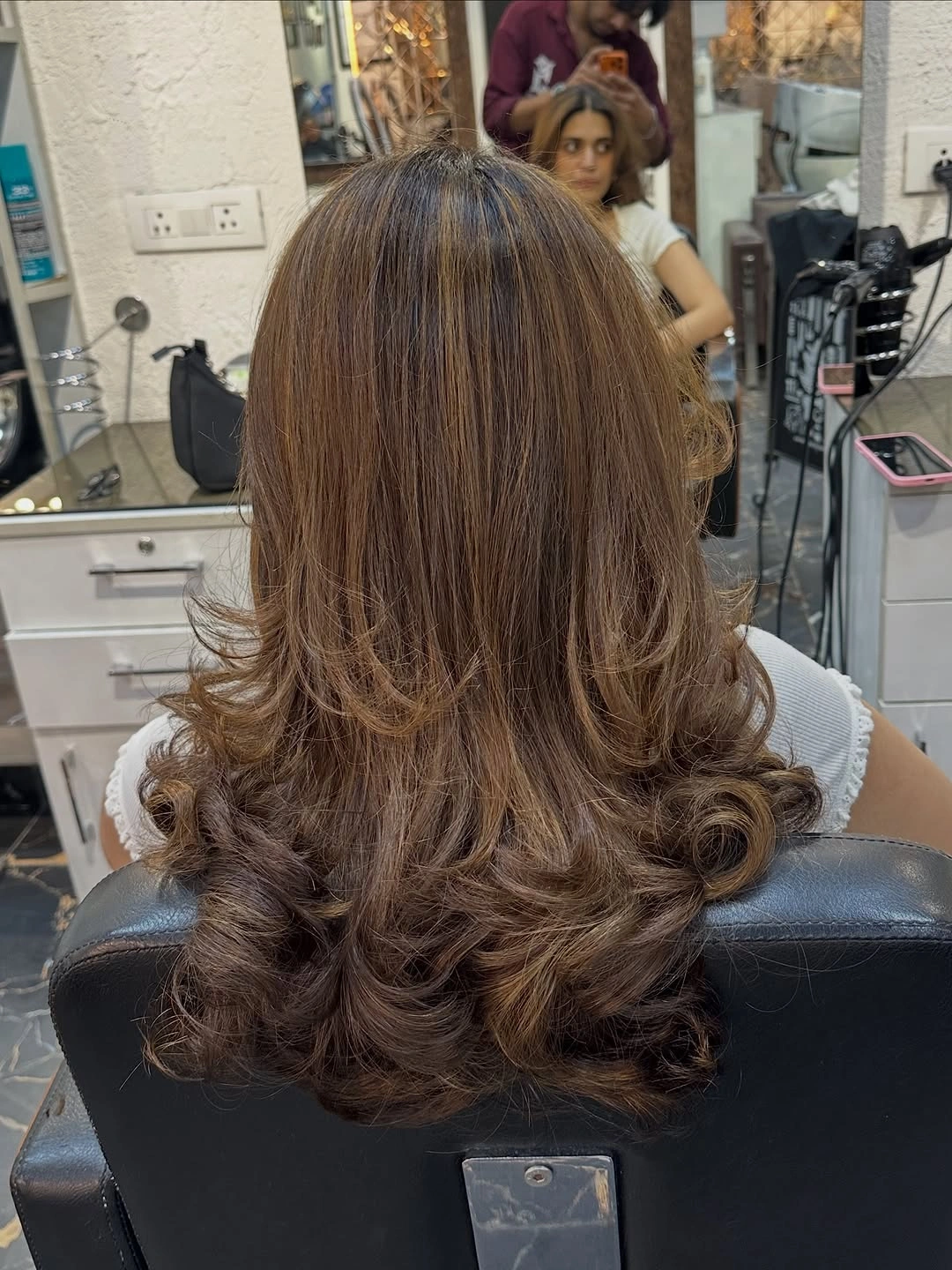
Photo via Instagram
The curled finish amplifies those lower layers by turning individual sections into distinct arcs and loops that overlap near the ends. Because the crown and upper lengths remain comparatively smooth, the contrast makes the bottom half look fuller and more active without suggesting that the entire haircut is heavily layered from the top downward.
A back view makes the starting point of the visible layers especially easy to judge. Here, the appeal lies in preserving a long uninterrupted upper shape while letting the lower sections carry most of the visual drama.
Broad Waves With A Fuller Lower Edge
The upper section falls in a long, fairly uninterrupted sheet before broad S-shaped bends begin to appear through the lower half. Even with that visible wave, the bottom still reads as substantial rather than highly feathered, which gives the silhouette a calmer, fuller quality than a cut divided into many short, separate tiers.
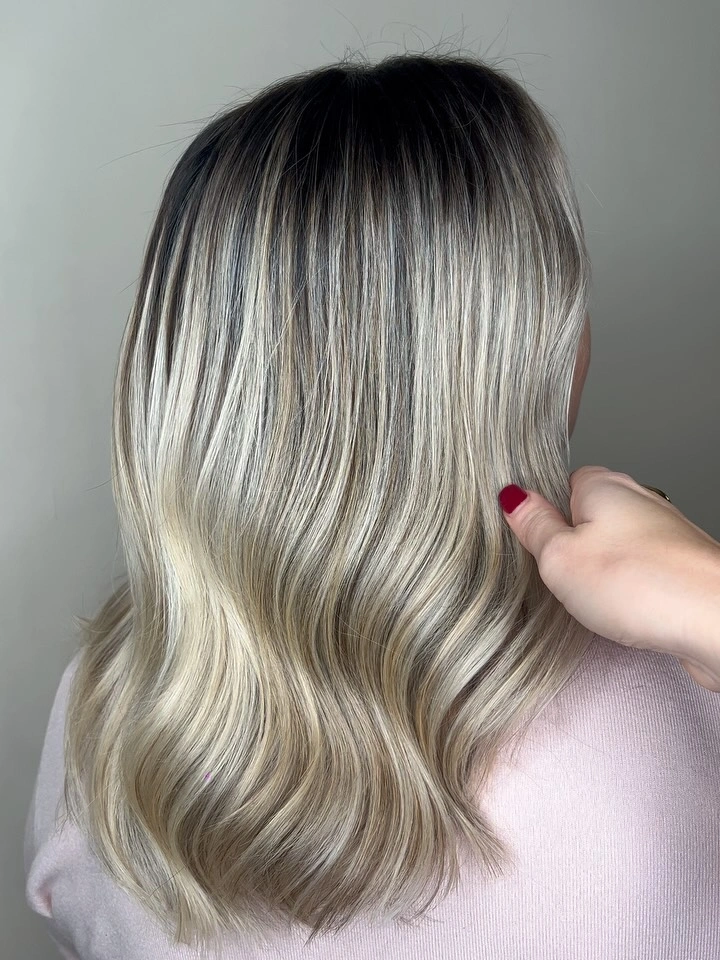
Photo via Instagram
Those wide waves introduce movement without making every bend look like a different layer. The lower edge remains relatively cohesive as the hair curves in and out, so the overall impression comes from the relationship between a smooth top, a broad wave pattern, and a full perimeter rather than from strongly broken-up cutting.
This is a good reminder that visible movement and visible layering are not the same thing. A long shape can look animated through waves while still keeping much of its outline continuous.
Low Layers Keep Long Hair Continuous
The strongest feature here is continuity: the dark hair falls smoothly for most of its length with very few interruptions through the upper two-thirds. Only near the bottom do subtle shorter sections become easier to see, so the haircut preserves a long, straight silhouette instead of dividing it into multiple obvious levels.
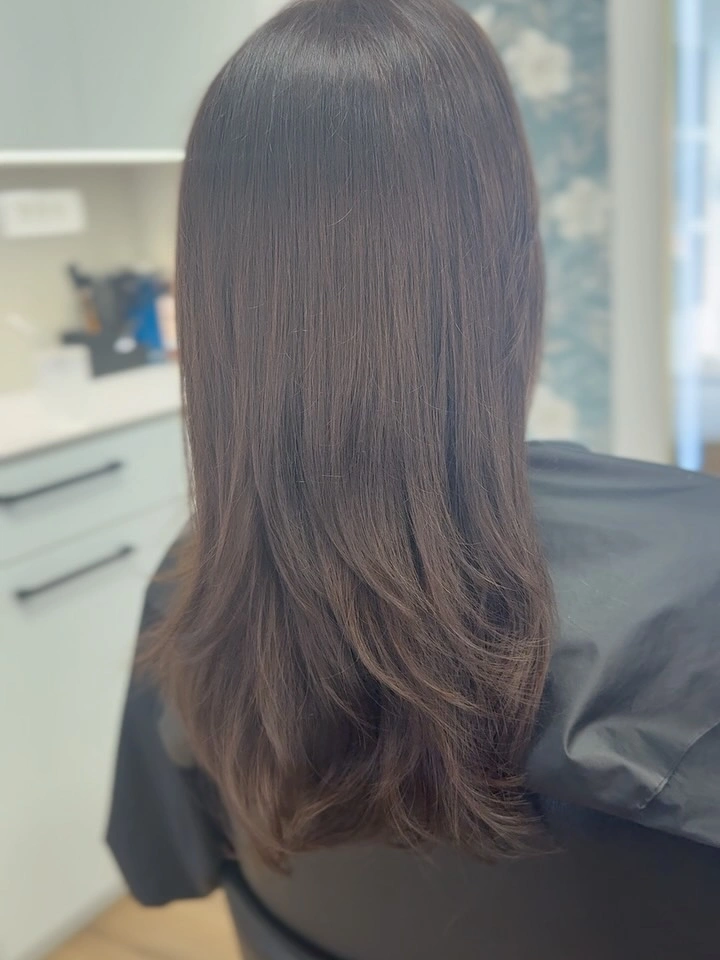
Photo via Instagram
Near the ends, those lower layers curve gently inward and soften what could otherwise be a completely uniform edge. The change is restrained enough that the eye still reads one long shape first, which makes this a useful contrast to heavily feathered cuts where shorter tiers announce themselves much higher through the length.
If you prefer a long haircut for straight hair, this shows how little layering may be needed to change the bottom line. The distinction is subtle rather than decorative, with most of the length left visually intact.
Long Waves Flow Into A Soft Taper
The top remains comparatively smooth before the hair begins forming broad, loose waves around the mid-lengths. From there, the bends continue down in a connected rhythm rather than breaking into sharply separated tiers, giving the long silhouette a gradual transition from straighter upper length to more visible movement below.
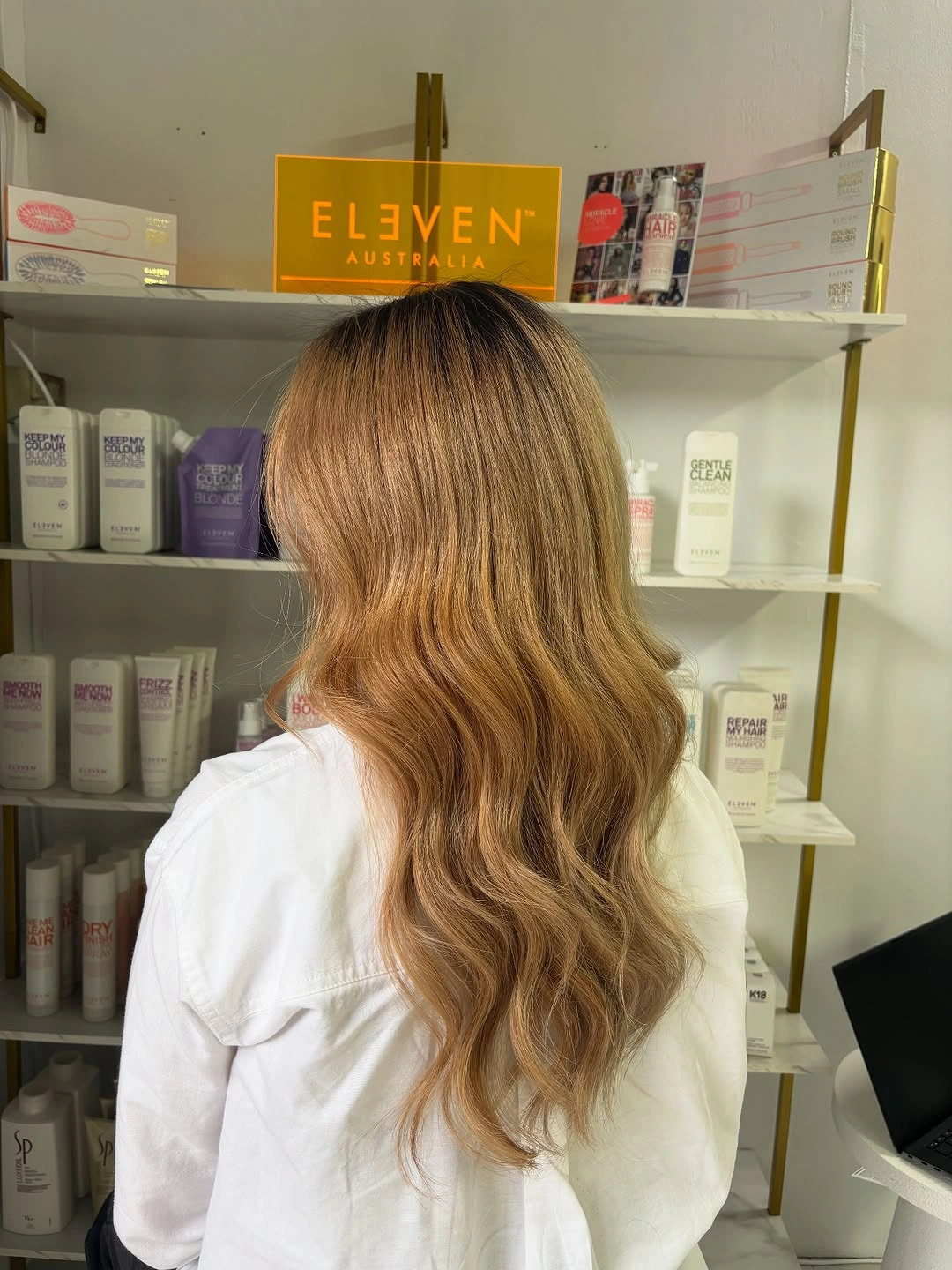
Photo via Instagram
At the bottom, the outline narrows softly instead of finishing in a dense blunt edge or a series of distinctly feathered steps. That tapered finish works with the wide wave pattern to keep the lower section fluid, so the haircut reads as one continuous shape even though the surface becomes increasingly wavy toward the ends.
The visible waves are enough to make this long haircut feel different from a straight layered cut, but they do not prove a particular natural curl pattern or named haircut. The useful detail is how the wave pattern and softly tapered edge work together.
A Broken Perimeter With A Heavy Sweep
This shoulder-length cut moves away from the clean, continuous bottom lines seen in several earlier examples. Around the shoulders, individual ends project at slightly different lengths and angles, creating a visibly broken perimeter, while shorter sections around the cheek and jaw add more separation before the hair reaches that irregular lower edge.
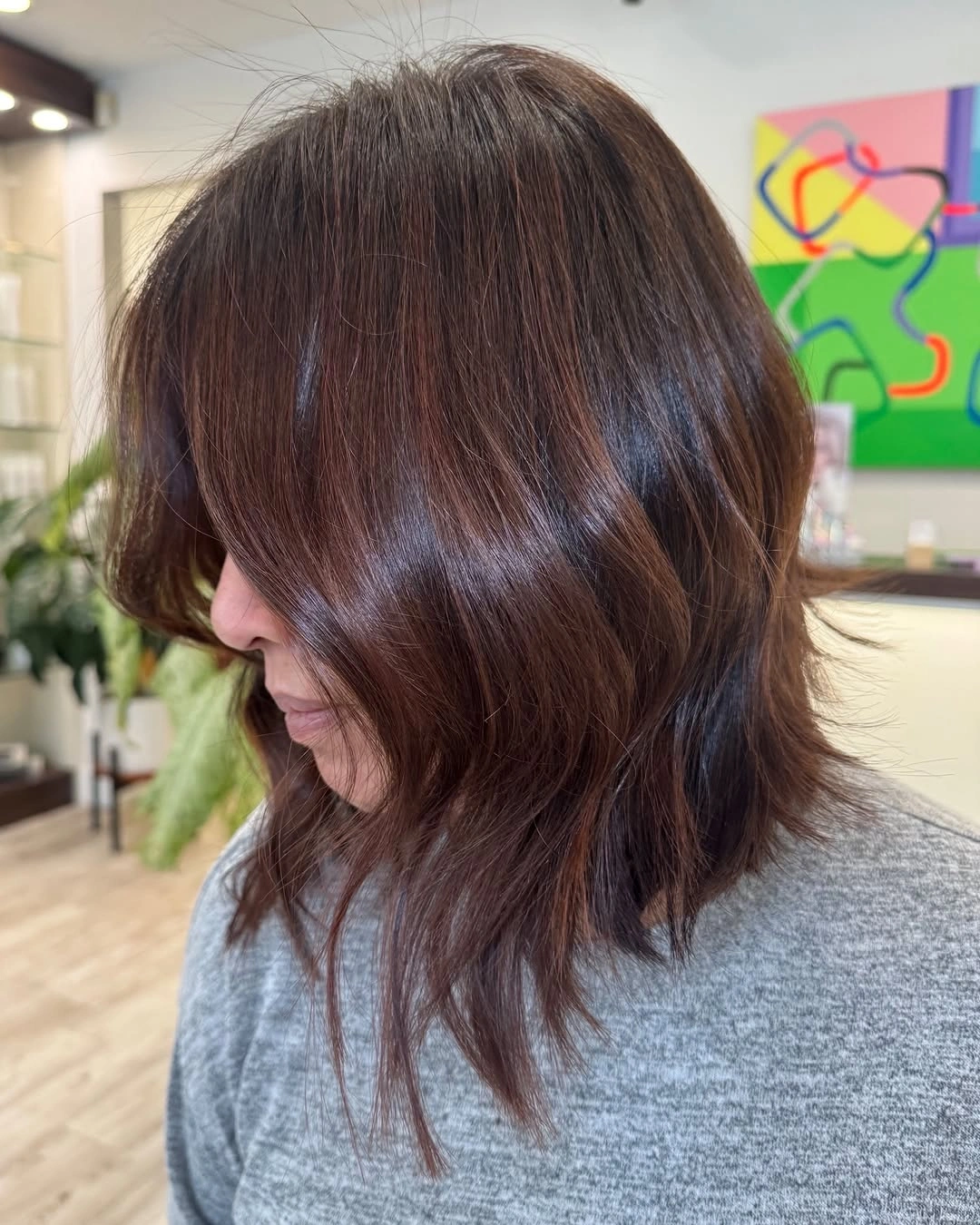
Photo via Instagram
The heavy side-swept front section reinforces that fragmented shape because it crosses the forehead in a broad curve before blending into shorter layers beside the face. Instead of contrasting a smooth front with a textured bottom, the haircut carries the same sense of separation from the upper sweep through the pointed ends around the shoulders.
This mid-length layered haircut will appeal most to readers who respond to visible separation rather than a compact bob outline. The broken edge is the defining feature, so there is no need to force a shag or wolf-cut label onto it.
Blunt Bangs Give This Bob A Graphic Edge
The short bangs make the strongest first statement in this bob because they form a compact, nearly straight line across the forehead. Their blunt edge carries more visual weight than a wispy fringe would, and the rest of the hair stays sleek enough for that line to remain obvious. The effect is crisp and graphic without depending on extra length for definition.
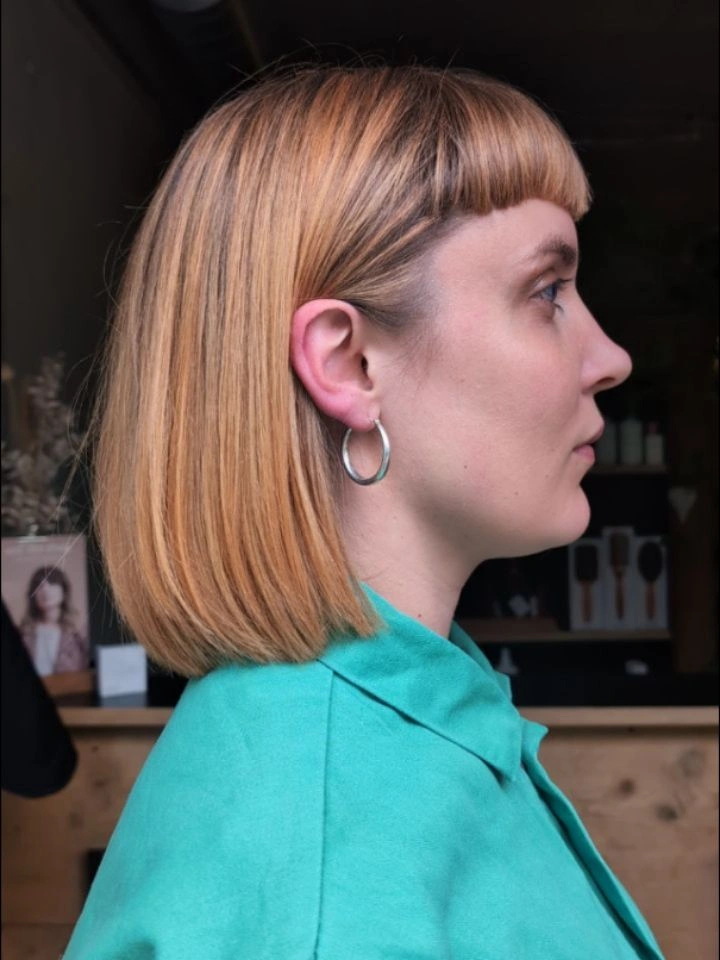
Photo via Instagram
That same sense of control continues through the lower edge, which falls around the jaw and neck in a clean, relatively even line. The bob does not break into pointed layers or a feathered perimeter, so the lower shape reinforces the solid fringe above. Together, the two edges make the haircut read as deliberately structured from top to bottom.
If you are drawn to clearly defined outlines, this straight bob with bangs shows how two simple edges can carry most of the personality. A softer curtain fringe would change the read immediately, even if the bob length stayed close to the same.
An Open Center Part Shapes A Short Bob
The front of this short bob reaches around the jaw, while the hair becomes shorter toward the back and turns slightly outward near the nape. That difference keeps the silhouette compact without making every section the same length. From the front, the longer side pieces remain visible enough to frame the outline while the shorter back keeps the shape light and concise.
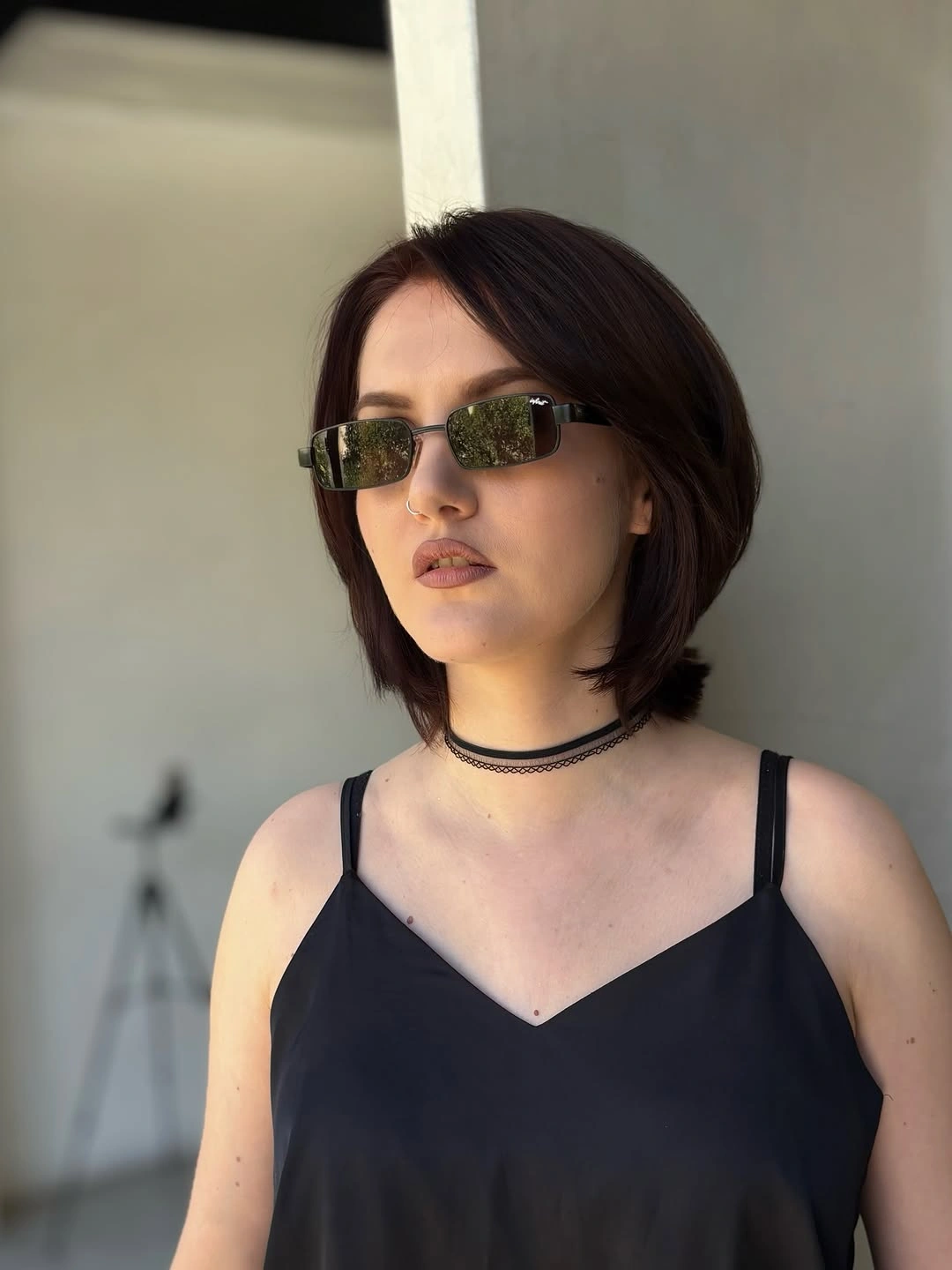
Photo via Instagram
A center part leaves the forehead completely open, so there is no separate bang line competing with the short perimeter. The eye moves instead to the balance between the jaw-length front pieces and the shorter back, which gives this bob a different rhythm from a blunt, one-level shape. That open front also lets the cut feel less enclosed than a short bob with full bangs.
This short bob sits near a boundary where haircut labels can become less useful than the visible proportions. The longer front and shorter nape give it a distinct front-to-back balance without making it a clear long pixie.
Curtain Bangs Flow Into Shoulder-Length Layers
The curtain-style fringe parts through the center and bends away on both sides, creating a soft opening rather than a straight line across the forehead. Those shorter pieces have enough length to curve into the rest of the haircut, so the fringe feels integrated instead of sitting as a separate feature. The result is defined, but the definition comes from shape and direction rather than a hard edge.
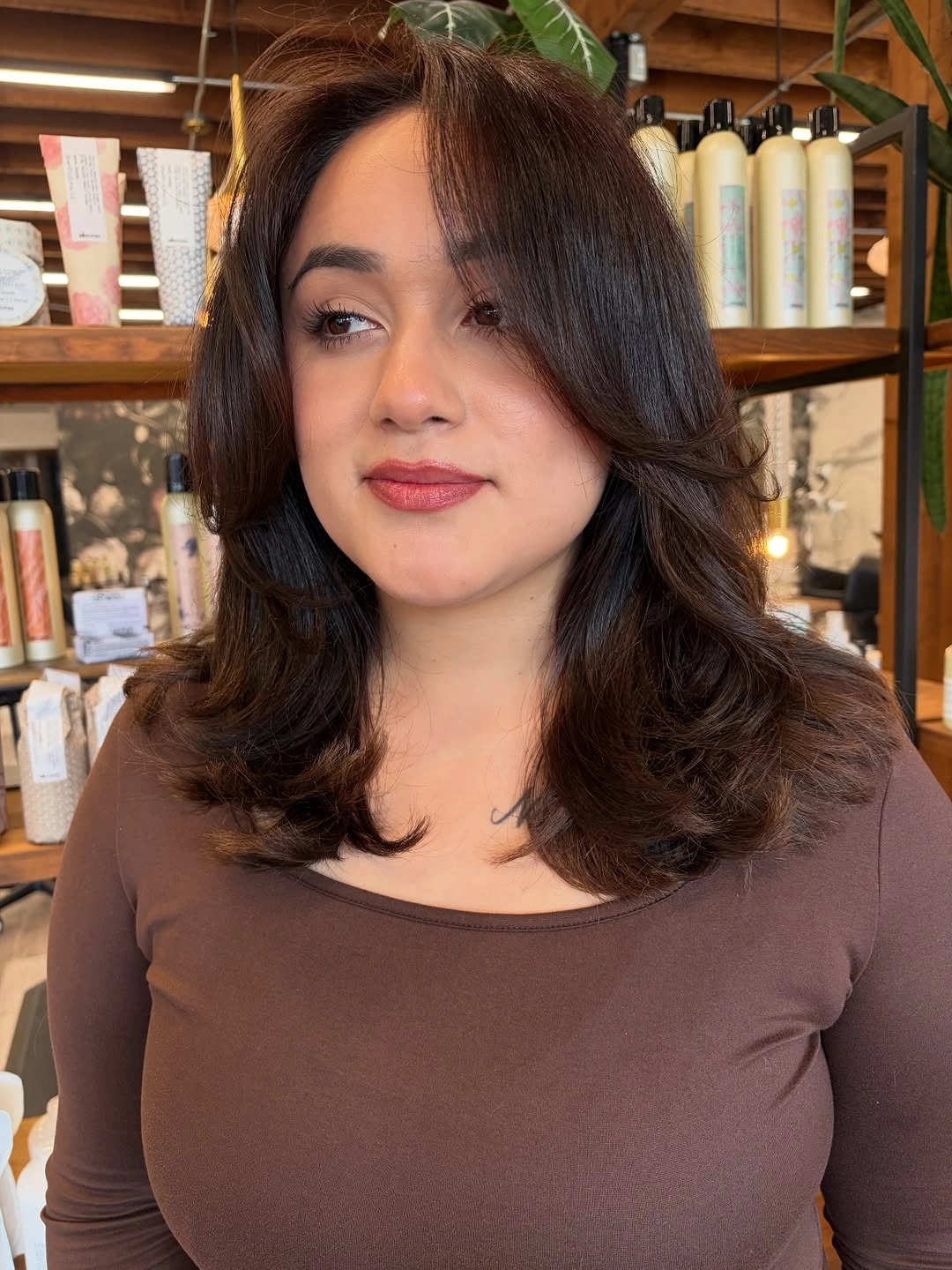
Photo via Instagram
Below the fringe, shorter front layers continue around the cheeks and then merge into fuller sections that turn near the shoulders. That progression gives the haircut a connected flow from the center opening down to the wider lower shape. The layers are noticeable, yet they do not fragment the perimeter into sharp points, which keeps the shoulder-length silhouette soft and substantial.
This medium-length haircut with bangs suits a preference for fringe that opens through the middle rather than closing off the front with one solid edge. The continuous curve from curtain bangs into longer layers is what gives the shape its coherence.
Long Front Layers Keep The Shape Open
Here the front stays open without a distinct bang, and the shortest visible pieces begin much lower than a curtain fringe would. Long sections curve away from the face and continue toward the jaw and shoulder area, so the framing reads as part of the overall length rather than as a separate front feature. That gives the cut a more continuous, elongated front line.
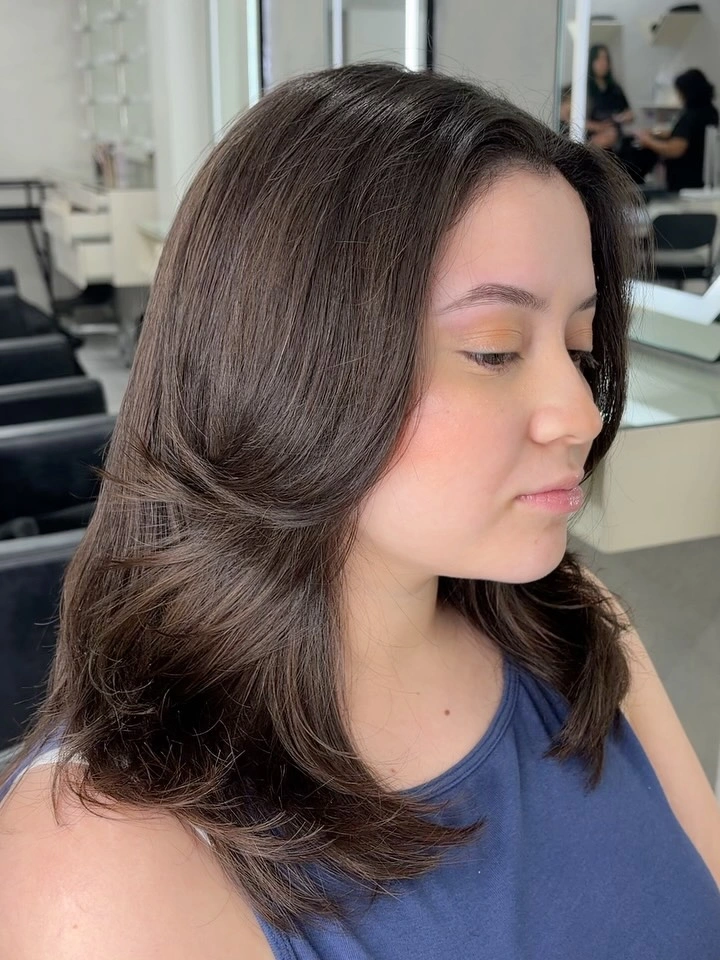
Photo via Instagram
Most of the visible shaping gathers lower down, where smooth layers bend outward around the shoulders and create a rounded sweep through the ends. The upper section remains comparatively calm, so the haircut does not look busy from root to tip. This balance makes the shoulder area the main point of movement while the top preserves a cleaner outline.
The distinction from curtain bangs is largely where the front shaping begins. Longer jaw-level pieces leave more uninterrupted space above while still giving this medium-length straight layered haircut a defined front curve.
Loose Waves Break Up A Full Outline
This medium-length shape keeps a fairly full outline, but broad loose waves interrupt that fullness with gentle bends through the sides and ends. A few longer front pieces extend below the main side wave, which prevents the perimeter from becoming one uniform curve. The movement feels soft and distributed rather than divided into many obvious short tiers.
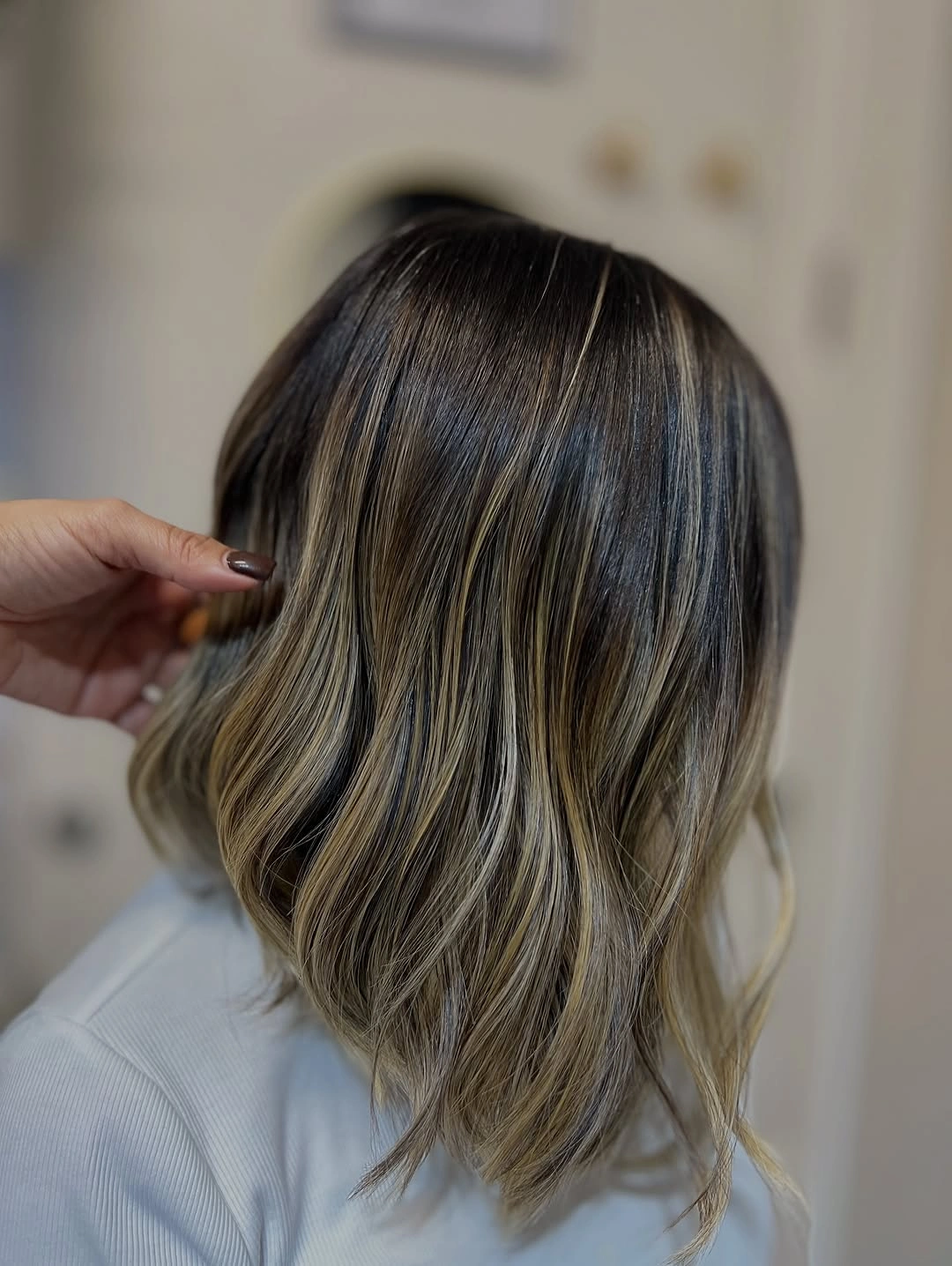
Photo via Instagram
Lighter vertical strands make the wave direction easier to follow because they trace the bends as they move through the darker hair. They draw attention to where the surface changes direction and where longer pieces fall past the fuller side section, but they do not establish how the color was created. The haircut's shape remains readable even without treating color as part of the cut itself.
Visible wave, layer placement, and overall length are separate choices here. The waves animate the surface, while the shoulder-level length and a few longer pieces establish the broader silhouette.