Pale lengths catch the overhead lights before the chair even turns, and the mirror glow makes every beige root, creamy bend, and icy edge feel more deliberate. This winter blonde hair color story starts in that quiet salon-chair second, where a soft wave can show one kind of brightness and a straight sheet of hair can show another. The appeal is in the small shifts: a shadow at the crown, a cooler silver cast, a warmer champagne ribbon, or a blue-tipped ending that changes the whole mood.
The collection works best when blonde is treated as architecture rather than a single shade. Some lengths use root depth to keep the front pieces bright, some use lowlights to break up pale waves, and some rely on a smooth blunt edge so cool blonde hair looks clean instead of washed out. Read across the full set for winter blonde hair color ideas by watching where the light sits first, then where the darker or warmer pieces keep the blonde from becoming one flat surface.
Creamy Waves With Rooted Front Brightness
The center part sets up the contrast immediately because the beige root area stays visible while the front lengths turn much lighter. That placement keeps the creamy blonde from feeling one-note, and it gives the face-framing pieces enough brightness to lead without erasing the softer tone through the rest of the hair. Among winter blonde hair color ideas, this one is useful because the light feels arranged rather than simply pushed everywhere.
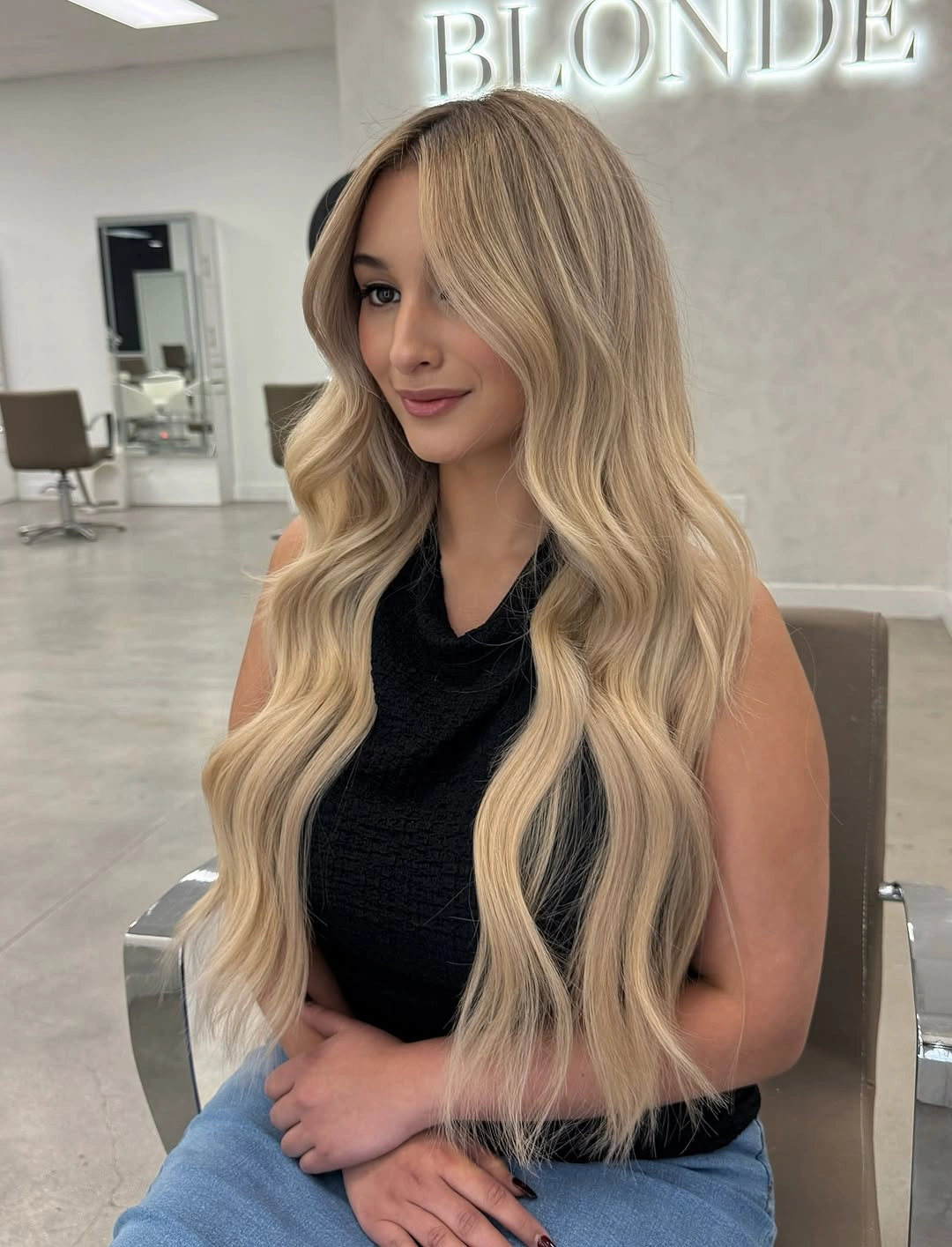
Photo via Instagram
The long waves make the blonde ribbons easier to read because each bend catches light at a slightly different point. Near the crown, the tone appears deeper and more beige; through the mid-lengths, creamier pieces separate into loose S-shaped paths. That movement gives the color a placement-style feeling, close to winter blonde balayage as a visual effect, without needing to claim how the hair was colored.
The length matters because the blonde has room to fade from rooted beige into creamier waves without a harsh stop. That softness keeps the shade luminous, while the visible root area gives the whole look enough structure to hold its shape.
Polished Layers With Pale Face Framing
Brightness is controlled here rather than scattered. The darker root shadow is narrow but visible, and the pale blonde travels most clearly through the front and lower layers, which makes the face-framing area feel intentional. Instead of relying on heavy curl, the style uses smooth length and a side-swept fall to make winter blonde hair color highlights look crisp.
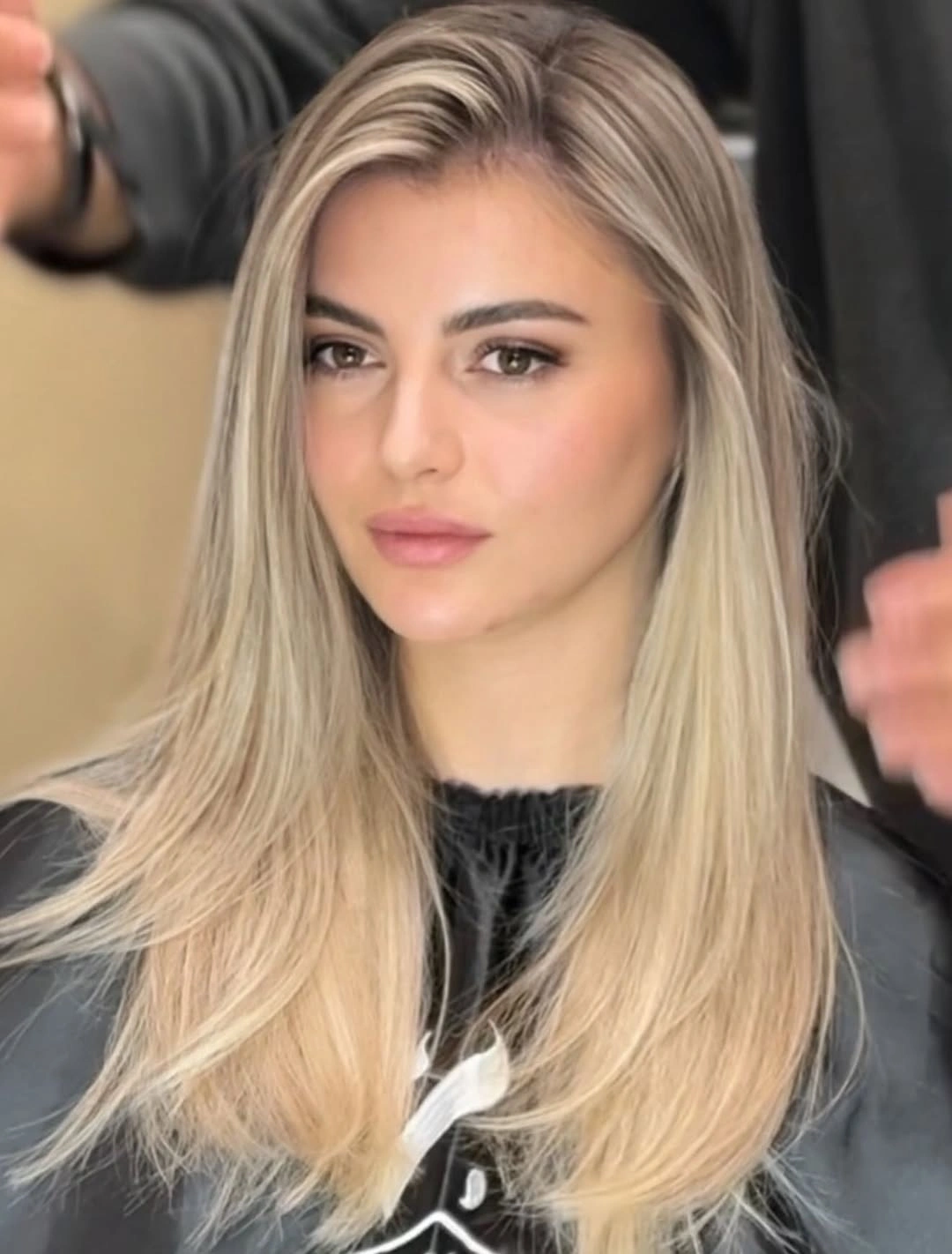
Photo via Instagram
Straight layering changes how the color behaves because the eye follows longer panels rather than individual curls. The upper section stays beige and shadowed enough to ground the blonde, then the ends become lighter and cleaner as they pass the shoulders. That order gives the highlights a polished rhythm, especially where pale strands skim the cheek area and continue into the lower length.
The result feels refined because the brightest pieces have a route to follow. Shadow, pale front sections, and layered ends each do a different job, so the blonde reads clear without becoming severe.
Beige Waves That Balance Cut and Color
The shorter upper-back length gives this blonde a different kind of presence from the longer, front-facing waves. From the side and back, the deeper crown sits close to the head while the lighter ends loosen into airy bends, so the haircut and the color share attention. That makes the section useful for anyone studying medium-length blonde hair, because the tone is not separate from the shape.
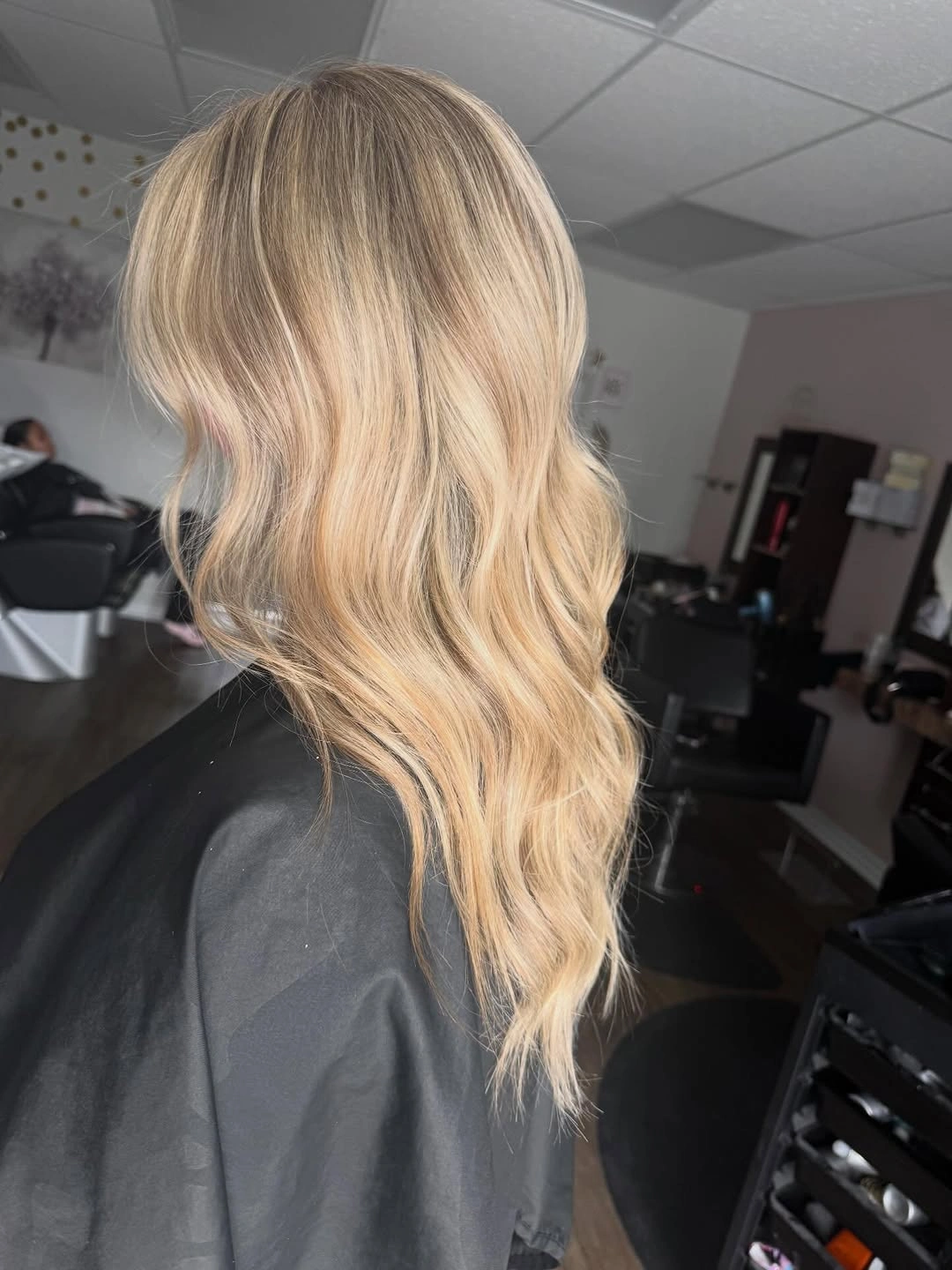
Photo via Instagram
The beige blonde shifts quietly from root to end, with the crown looking more muted and the curled lower pieces catching a softer, lighter reflection. Because the wave pattern is loose, the color does not break into high-contrast stripes; it moves in broader panels. The practical lesson is that medium length can still carry dimension when the bend is open and the ends are light enough to separate.
This look earns its softness through spacing, not through extreme brightness. The waves leave enough air between sections for the beige tone to move, while the lighter ends keep the outline lively.
Ash Beige Waves With Visible Lowlights
The dark crown is the first structural note, but the most interesting part is how it breaks into alternating ash-beige and pale blonde ribbons down the length. The deeper pieces are not hidden under the surface; they run beside the brighter strands and make the wave pattern look more dimensional. This is a strong home for winter blonde hair color with lowlights because the contrast is visible from root through mid-length.
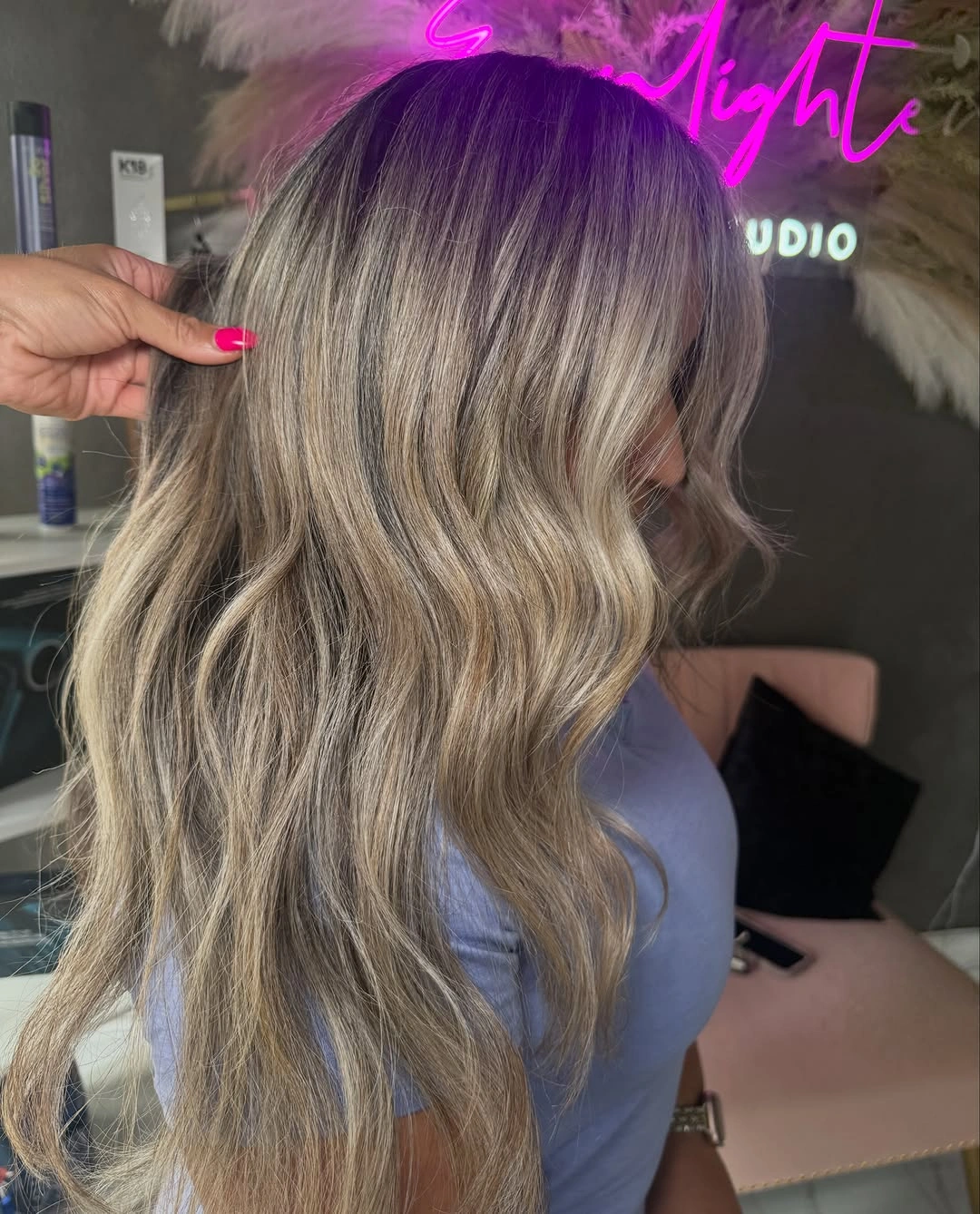
Photo via Instagram
Each wave acts like a turn in the color story: the raised curves catch the lighter blonde, while the shadowed hollows show the darker beige threads. That difference keeps the lowlights active, so they do more than sit underneath as a background tone. The bright vertical pieces near the outer layer add lift, but the darker crown and inner ribbons keep the overall blonde cooler and more grounded.
The appeal comes from contrast that still feels wearable because the ribbons stay narrow and blended. It gives long blonde hair a wintery shadow without turning the entire length dark.
Pearly Straight Blonde With Quiet Shadow
The side profile makes the cool tone feel especially clear because the surface falls in one uninterrupted sheet. A subtle shadow sits near the crown, but the main effect is pale pearly blonde with very little visible warmth. Instead of wave movement, the interest comes from how smooth lengths carry a clean ash cast from the upper section down to the blunt-looking ends.
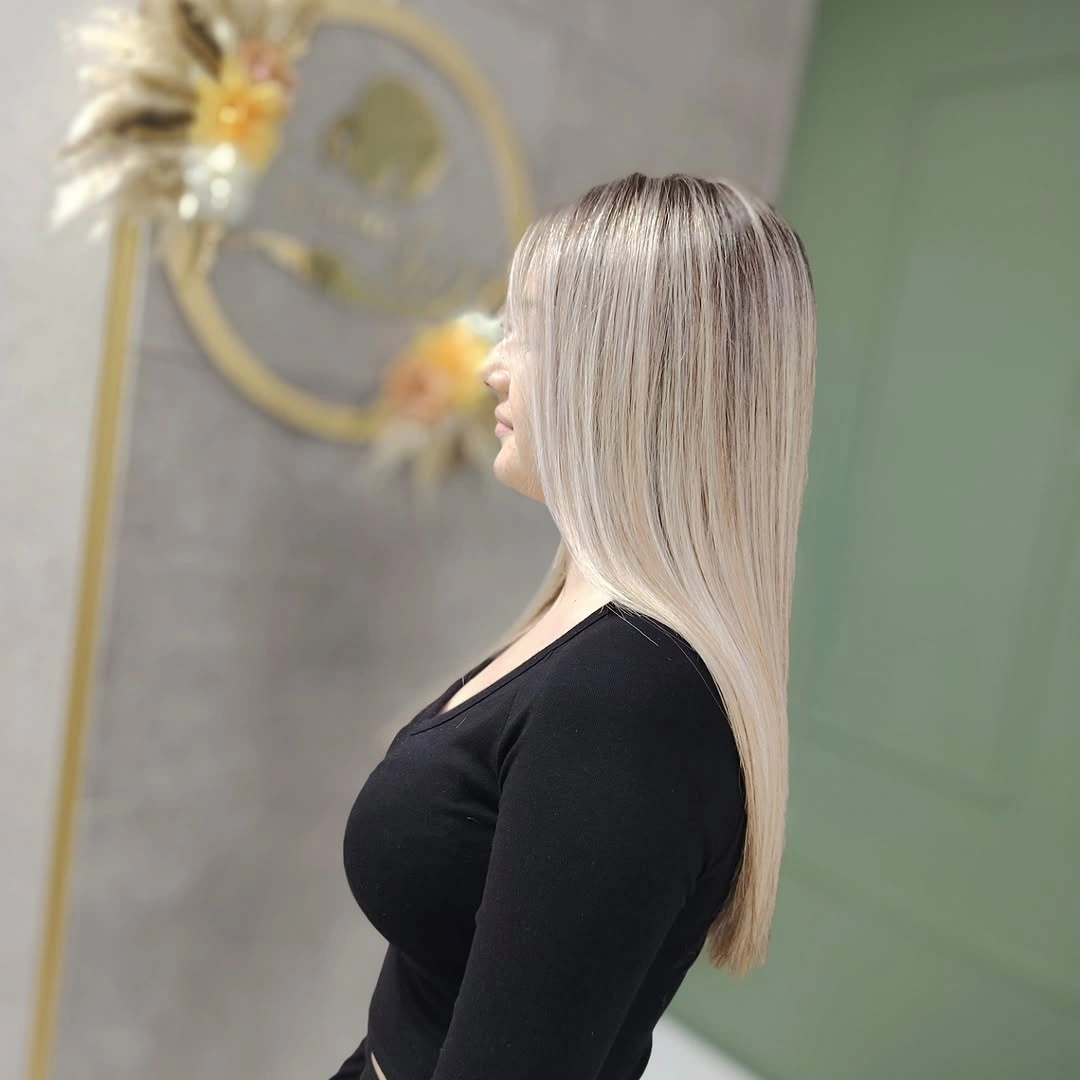
Photo via Instagram
Cool blonde hair can look flat when every strand reads the same, but this version avoids that by placing the faintest depth at the top and letting the pale lengths stay controlled. The straight finish makes small tonal shifts more demanding because there are no curls to disguise unevenness. That is why the smooth edge matters: it turns the pearly shade into a deliberate line rather than a loose cloud of blonde.
The look feels calmer than the wavy styles because its drama is restraint. The cool pearl tone, faint crown shadow, and even lower edge create a blonde that depends on clarity rather than motion.
Rounded Warm Blonde Bob With Side Sweep
The shorter length changes the blonde before the tone does. Because the ends sit around the shoulders and curve outward with fullness, the pale warm yellow-blonde body appears cushioned instead of thin. As a short winter blonde hair color, it uses roundness at the sides to make the blonde feel present without requiring extreme brightness.
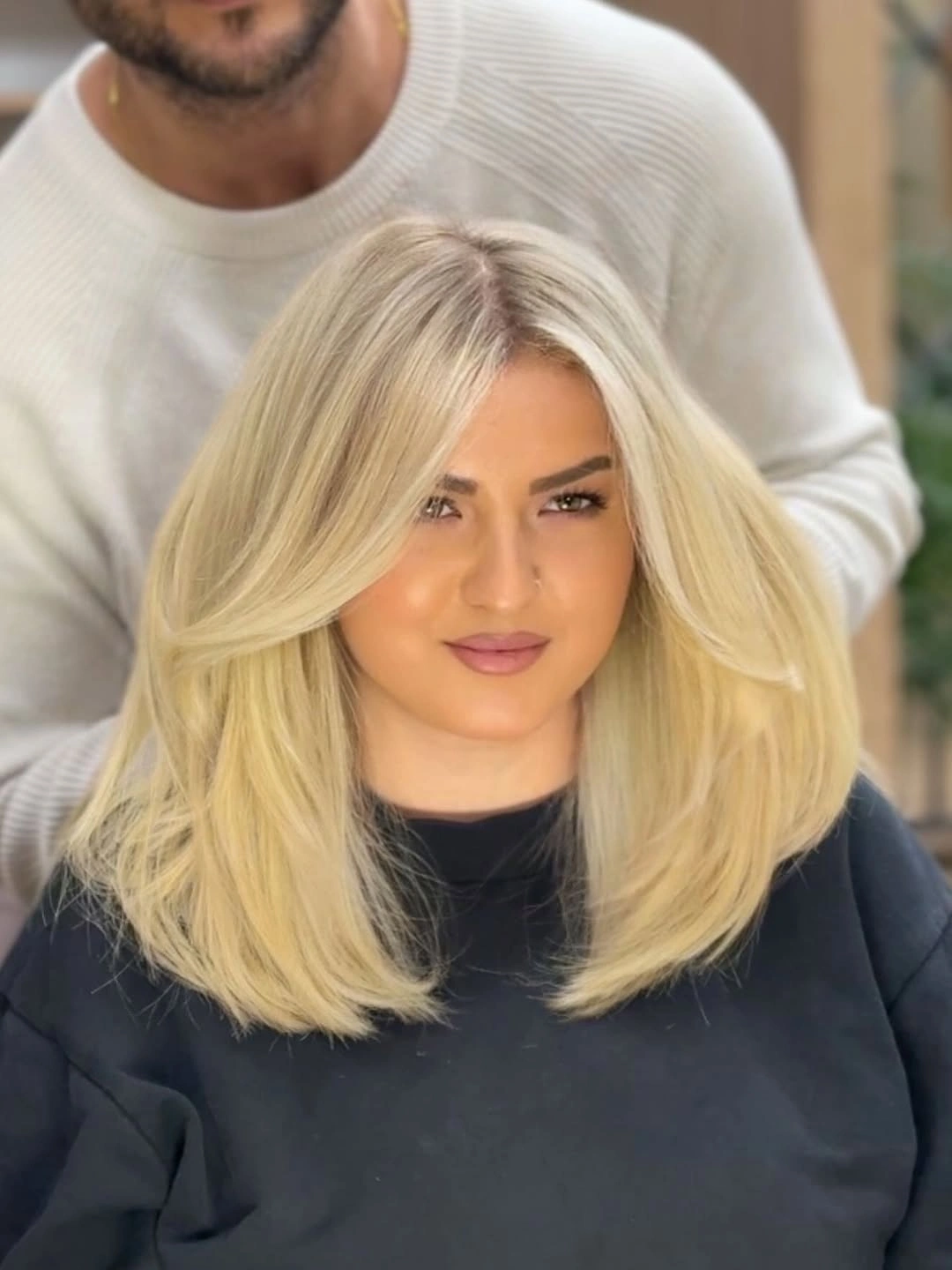
Photo via Instagram
Warm blonde hair has a practical advantage on this shape because the color gathers across the widest part of the bob. The soft yellow tone sits through the outer layers, so the rounded sides catch light as one plush surface rather than breaking into many separate strands. That proportion makes the winter blonde bob feel fuller through the lower half.
The side-swept front keeps the shape from looking too compact. It sends the eye across the cheek area before the ends open outward, so the volume feels soft instead of boxed in.
Long Straight Blonde With Fine Highlights
From the back, the long fall behaves like a set of fine vertical panels. A narrow darker strip at the crown gives the top a defined starting point, while thin pale highlights travel down the straight length in close lines. The result is a quieter version of winter blonde hair color highlights, where precision matters more than volume.
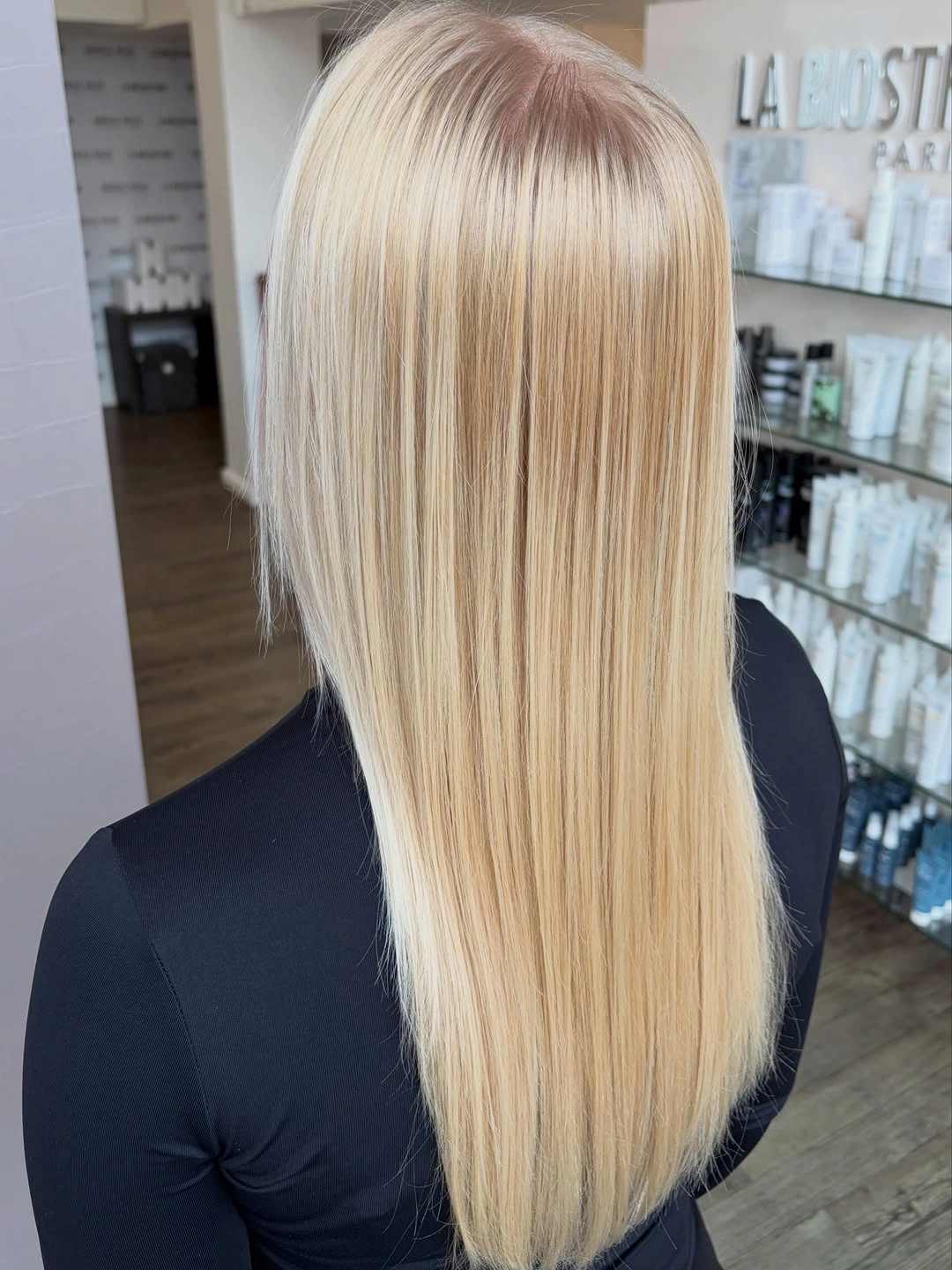
Photo via Instagram
Straight hair makes the smallest shift in blonde more visible because the strands do not bend away into shadows. Here, the pale sections and slightly deeper beige pieces stay close together, so the color reads glossy without needing broad contrast. The practical consequence is clean continuity: the highlights stretch the length visually while the root area keeps the finish from looking weightless.
This section earns attention through discipline. It shows how bright blonde can stay calm when the highlight lines are narrow, repeated, and allowed to run almost uninterrupted to the ends.
Muted Ash Waves With Crown Shadow
The crown is controlled rather than dramatic, which gives the back view a smooth start before the waves begin. Muted ash-beige blonde spreads through the upper length, then slightly shadowed lowlights appear more clearly as the hair drops into the lower bends. This makes winter blonde hair color with lowlights feel soft and polished rather than strongly striped.
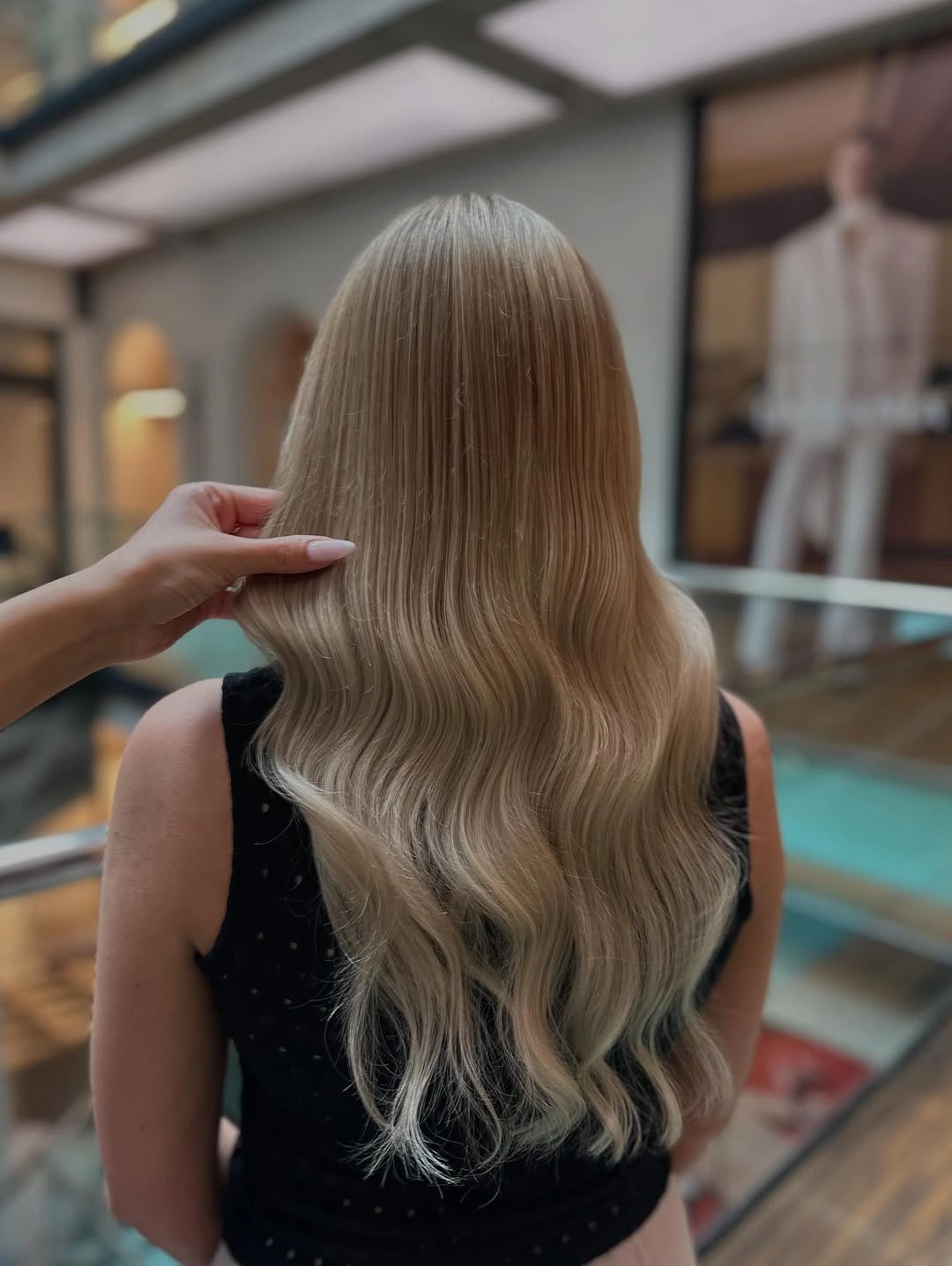
Photo via Instagram
The lower waves matter because they are broad and even, so the darker pieces show as depth inside the curve rather than as separate bars of color. Cool blonde hair can sometimes feel icy, but this version stays muted through beige and gray-leaning tones that sit close together. The finish looks quieter than the high-contrast lowlight example because the surface is smoother and the tonal jumps are smaller.
Its strength is restraint: the lowlights create shadow without taking over the blonde. That makes the long waves feel dimensional, but still composed from crown to curled ends.
Blunt Pale Blonde Bob With a Clean Edge
A sharp lower line gives this pale blonde its personality. The cut sits around the bob-to-lob range, with the side-falling front section narrowing the face side while the blunt edge holds a clear horizontal finish. As a short winter blonde hair color, it works because the shade and the cut are equally graphic: light tone above, precise line below.
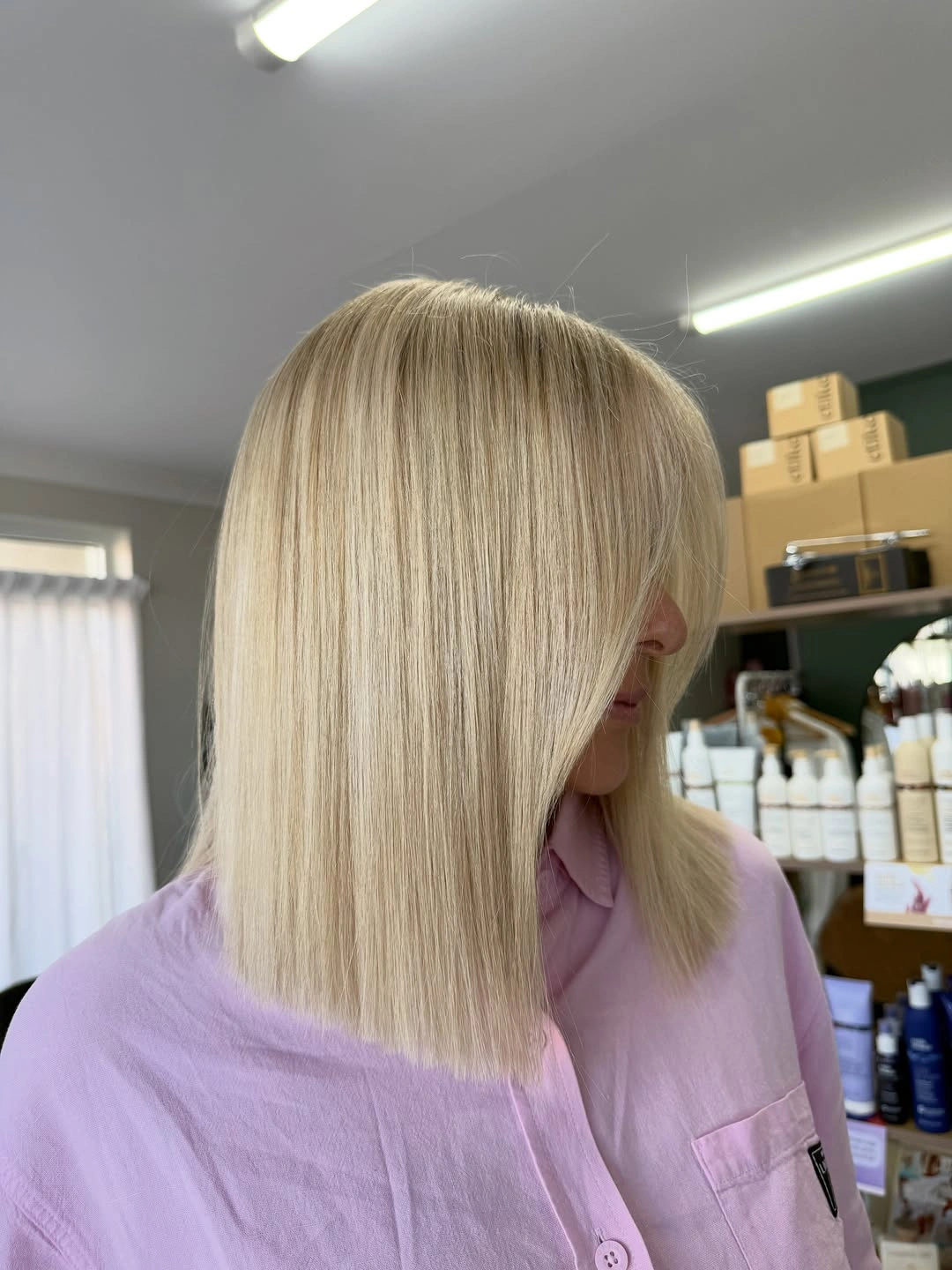
Photo via Instagram
The pale blonde reads cooler because the hair is straight and the surface is not broken by curls. Instead of relying on loose movement, the winter blonde bob uses the end line to make the color look deliberate, almost like a clean block of light. That practical edge is important on shorter hair, where uneven weight or scattered tone would be more obvious.
The style feels bright without becoming airy. Its confidence comes from the blunt perimeter, the side sweep, and the pale shade meeting in one controlled shape.
Champagne Peach Waves With Warm Shine
Warmth does the leading work here, especially where the waves catch light along the back. The blonde has a champagne-peach cast rather than a silvery one, and the curved surface lets beige and softly golden ribbons move together. That makes it one of the richer winter blonde hair color ideas because the glow comes from temperature as much as brightness.
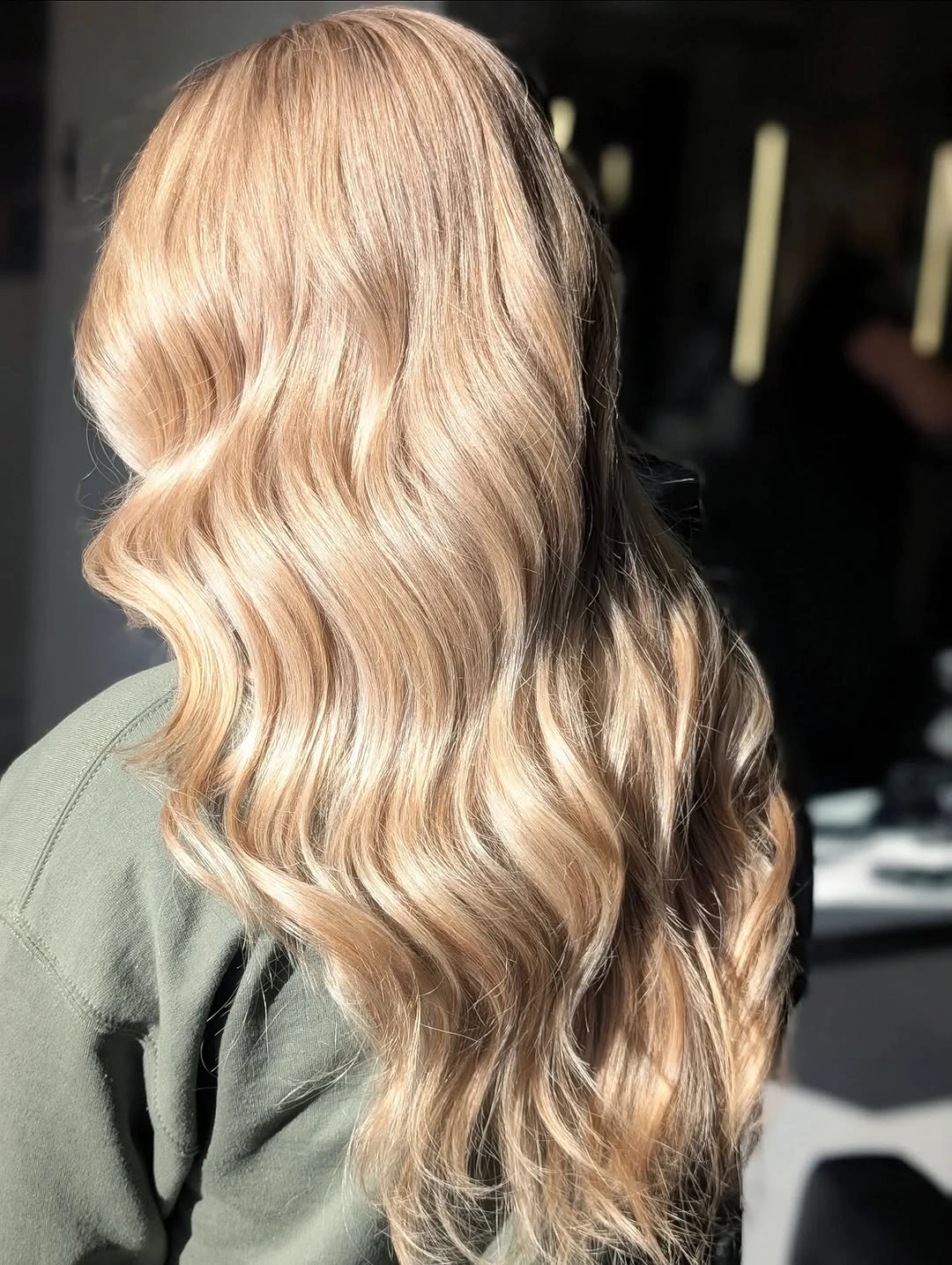
Photo via Instagram
Each curl face catches a warm reflection, while the inner turns appear a little deeper and more beige. That spacing keeps warm blonde hair dimensional, because the shade is not only light at the top or bright at the ends; it rolls across the wave pattern. The long length gives those peachy and champagne tones enough space to repeat without looking crowded.
The contrast with icier blondes is mainly temperature. Instead of sharp coolness, this version gives winter blonde a warmer reflective finish that feels luminous through movement.
Sandy Blonde Length With Subtle Highlights
Restraint is the main statement here, and it gives the sandy blonde a different kind of confidence. The side profile shows a soft beige root area melting into long, smooth length, with no hard break between the upper section and the ends. That low-contrast movement makes the color feel natural-looking while still giving the straight shape enough tonal variation to hold attention.
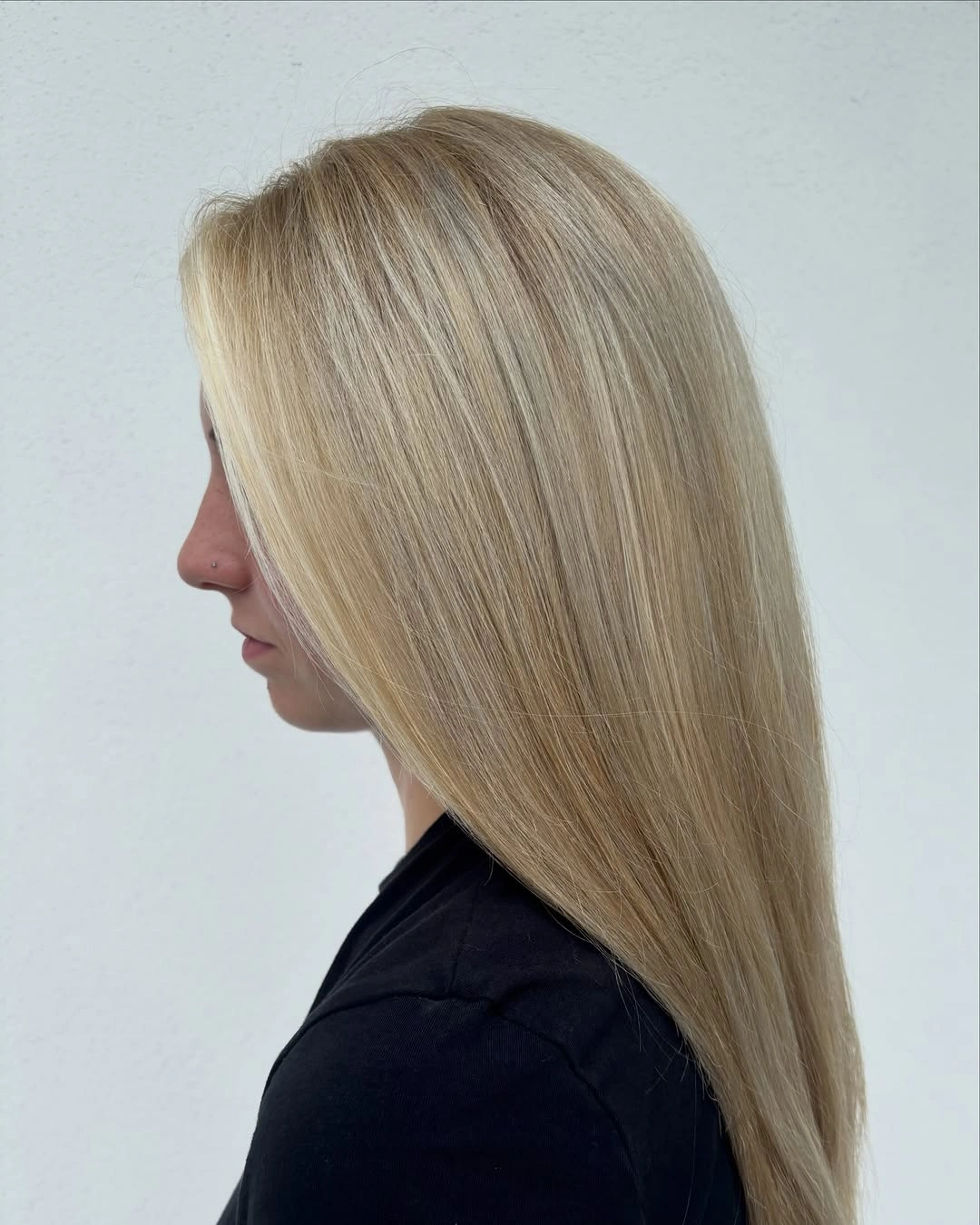
Photo via Instagram
The fine winter blonde hair color highlights are easiest to notice where the hair lies flat and tapers forward. Thin lighter threads run through the sandy base, but they do not interrupt the overall calmness of the length. The nuance is that the highlights soften the straight fall rather than decorating it, so the blonde reads polished without becoming icy or overly bright.
I like this as a quieter counterpoint to the more luminous pale blondes because it does not chase maximum lightness. Its appeal is in the controlled beige range, where small shifts do the work usually assigned to stronger contrast.
Long Blonde Curls With Lowlight Depth
The upper length stays smooth and vertical first, which makes the curled lower section feel more deliberate when it begins. From the back, the crown looks even and beige-blonde, while the ends separate into pale curls with deeper threads tucked between them. That structure creates a gradual reveal, with the most visible movement gathering below the shoulders instead of starting at the roots.
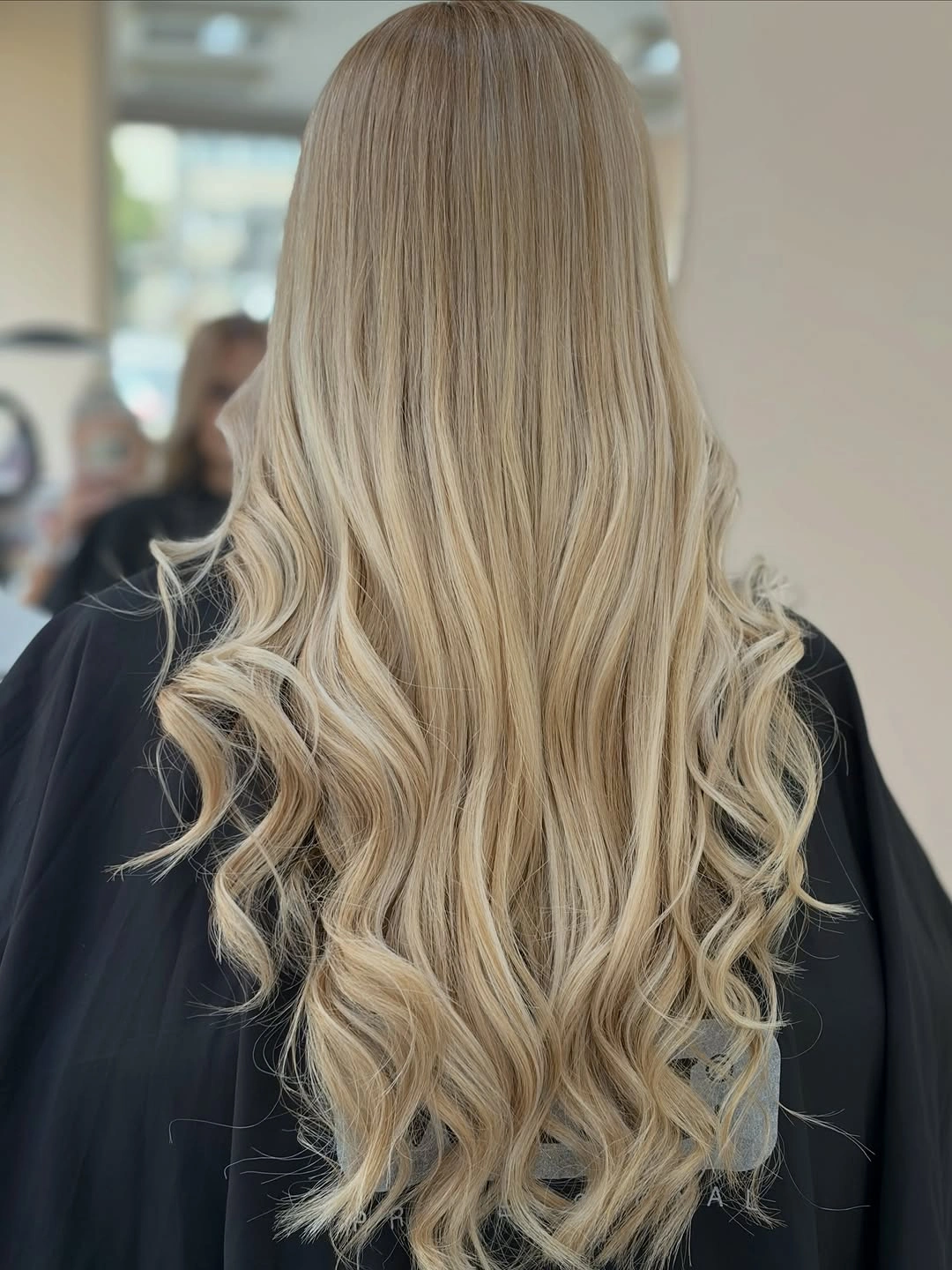
Photo via Instagram
This is a useful reading of winter blonde hair color with lowlights because the deeper pieces become most important inside the curled ends. The lowlights do not dominate the crown; they show up where the spiraled sections overlap, giving the lower length more shadow and definition. Brighter blonde strands sit along the outside of those curls, so the ends feel detailed without looking busy.
Compared with a looser long wave, this version feels more arranged because the lower curls have clearer separation. The tension is attractive: the crown is calm, but the ends carry most of the color drama.
Creamy Long Waves With Golden Warmth
Scale is the first thing to notice, because the length gives the blonde a wide field to move through. Darker roots sit at the top, then creamy and softly golden strands spread into long, open waves that reach well below the shoulders. Among winter blonde hair color ideas, this one feels expansive because the color has room to breathe rather than collecting only around the face or ends.
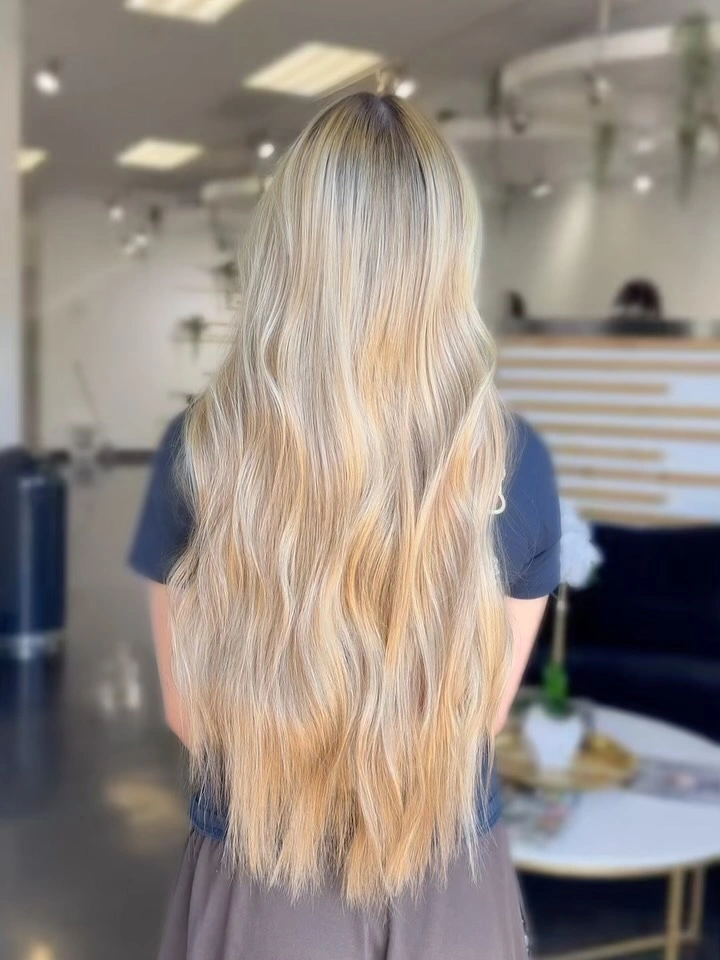
Photo via Instagram
The warmth is gentle, not orange or overly yellow, and that subtlety keeps the long hair from feeling heavy. Warm blonde hair appears through the creamy panels and the slightly brighter bends, while the root area gives the top enough grounding to support all that length. The open wave spacing matters because it lets the golden tones drift in broad sections instead of tight, high-contrast lines.
The unexpected strength is how relaxed the blonde feels despite the dramatic length. It has presence through scale, but the soft waves keep the finish easy rather than formal.
Ash Beige Blonde With Side-Part Polish
The side part changes the mood of the ash-beige blonde by sending the front section into a clean, angled sweep. The tone sits in a cool neutral range, with pale beige brightness visible along the smooth surface and a slightly deeper root area near the part. Instead of looking stark, the color feels measured because the shine is even and the contrast stays close.
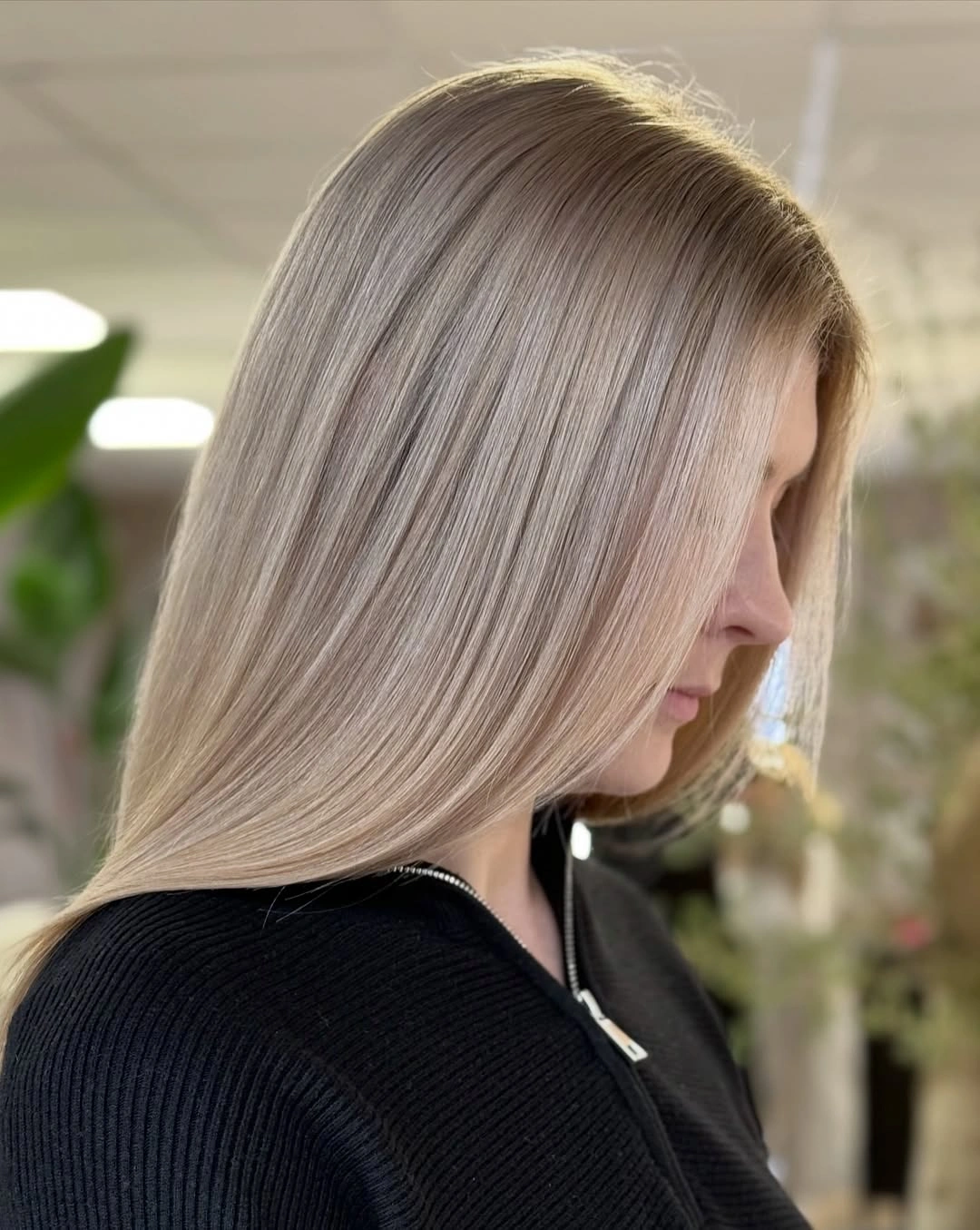
Photo via Instagram
Cool blonde hair often becomes most convincing when the finish lets the tone stay uninterrupted. Here, the smooth length gives the ash-beige shade a refined surface, while the side framing adds shape without relying on curls or blunt drama. The useful nuance is that the coolness is softened by beige depth, so the blonde reads polished rather than silvery in a severe way.
This is not the same statement as a flat pearly sheet of blonde. The side part, angled front, and beige undertone give the smoothness a more sculpted and wearable direction.
Pale Blonde Length With Minimal Contrast
The near-continuous pale blonde surface makes this section feel almost quiet at first, then the precision becomes the point. From the side-back angle, there is very little visible root contrast, so the eye moves down the straight length without many interruptions. The soft blunt ends keep the brightness contained, giving the hair a clean finish rather than a feathered or heavily layered effect.
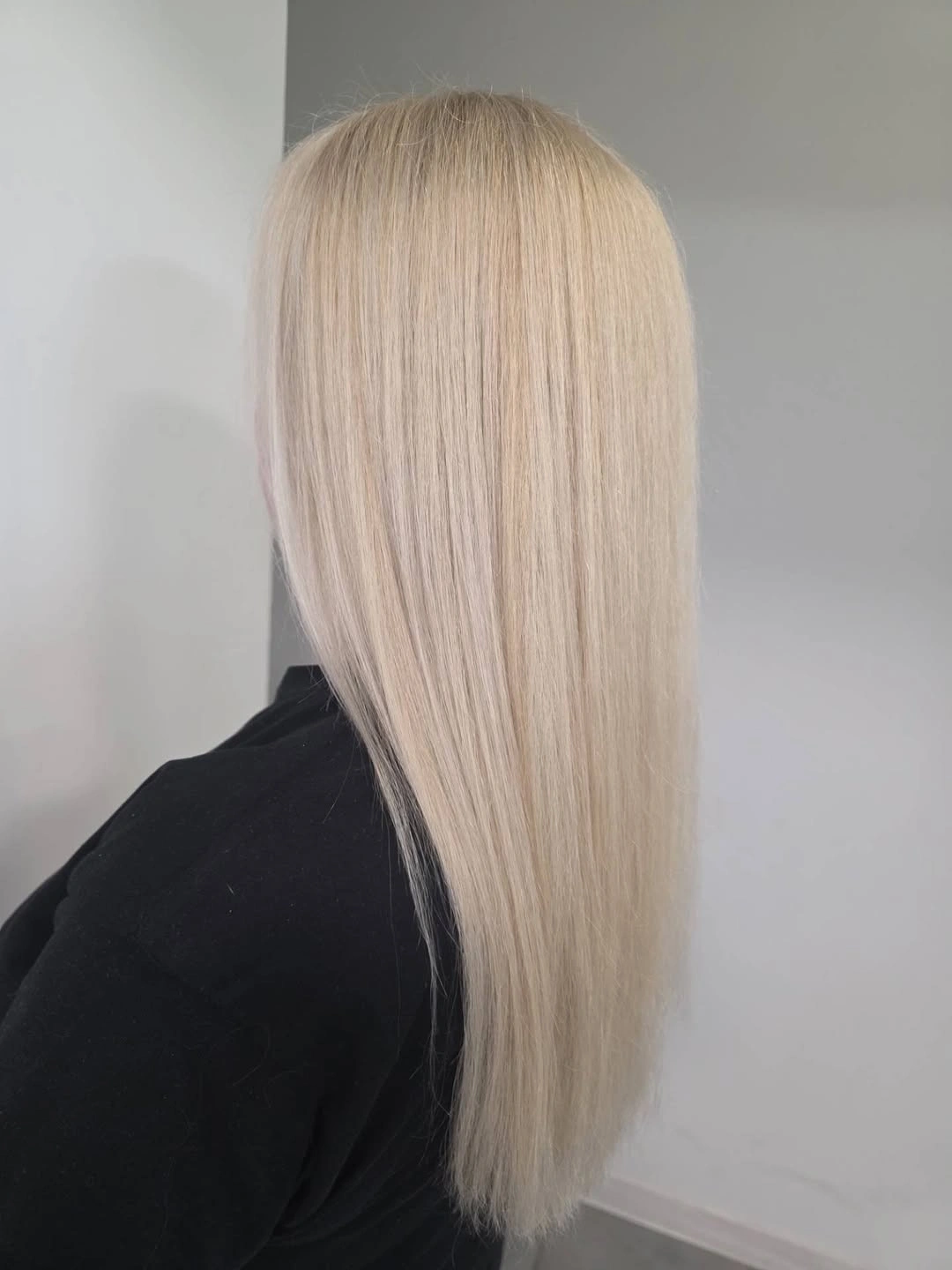
Photo via Instagram
Because the contrast is so restrained, every small tonal difference has to carry more weight. The pale blonde appears cool and creamy through most of the length, with only a faint shadow near the upper area to prevent the surface from looking completely weightless. As cool blonde hair, it depends on clarity, evenness, and a smooth vertical fall more than on ribbons or curled dimension.
I would read this as the cleanest bright-blonde pause in the middle of the article. Its confidence comes from withholding extra movement, letting the pale tone and softened lower line do nearly all the visual work.
Dark Base Waves With Blonde Framing
The darkest base in the set makes the blonde placement feel especially deliberate. Around the front, pale ash-beige pieces open the shape, while deeper roots and interior strands remain visible through the medium-length waves. That contrast gives the style a lived-with possibility for someone who likes blonde brightness but still wants the darker foundation to remain part of the overall look.
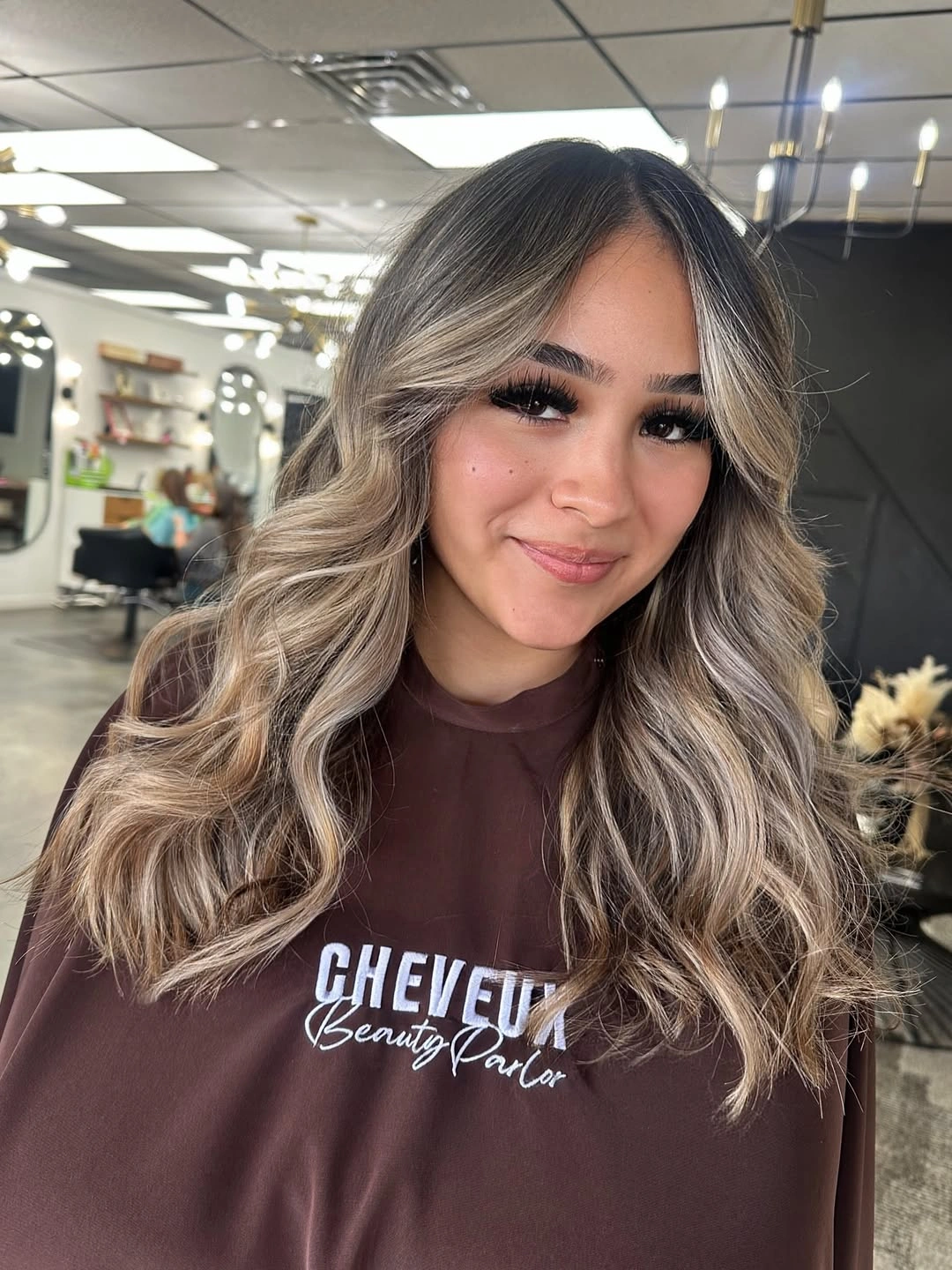
Photo via Instagram
This is where winter blonde hair color with lowlights and winter blonde hair color highlights meet most clearly. The lighter ribbons sit forward and across the wave ridges, while the deeper pieces stay in the root area and between curls, creating dimension without turning every strand blonde. On medium-length blonde hair, that division matters because the shorter visual field makes each light and dark placement easier to notice.
The appeal is not total transformation; it is selective brightness. The blonde has impact because it is allowed to contrast with the base rather than cover it.
Smoky Ash Blonde With Soft Ends
A smoky cast sits over the crown, giving the ash blonde a cooler, quieter mood before the waves widen at the lower half. The length is not as sweeping as the longest styles, so the color feels more compact and easier to read from top to end. This kind of cool blonde hair suits the visual preference for shadowed softness, where the blonde is brightened by muted silver-beige movement rather than by sharp pale streaks.
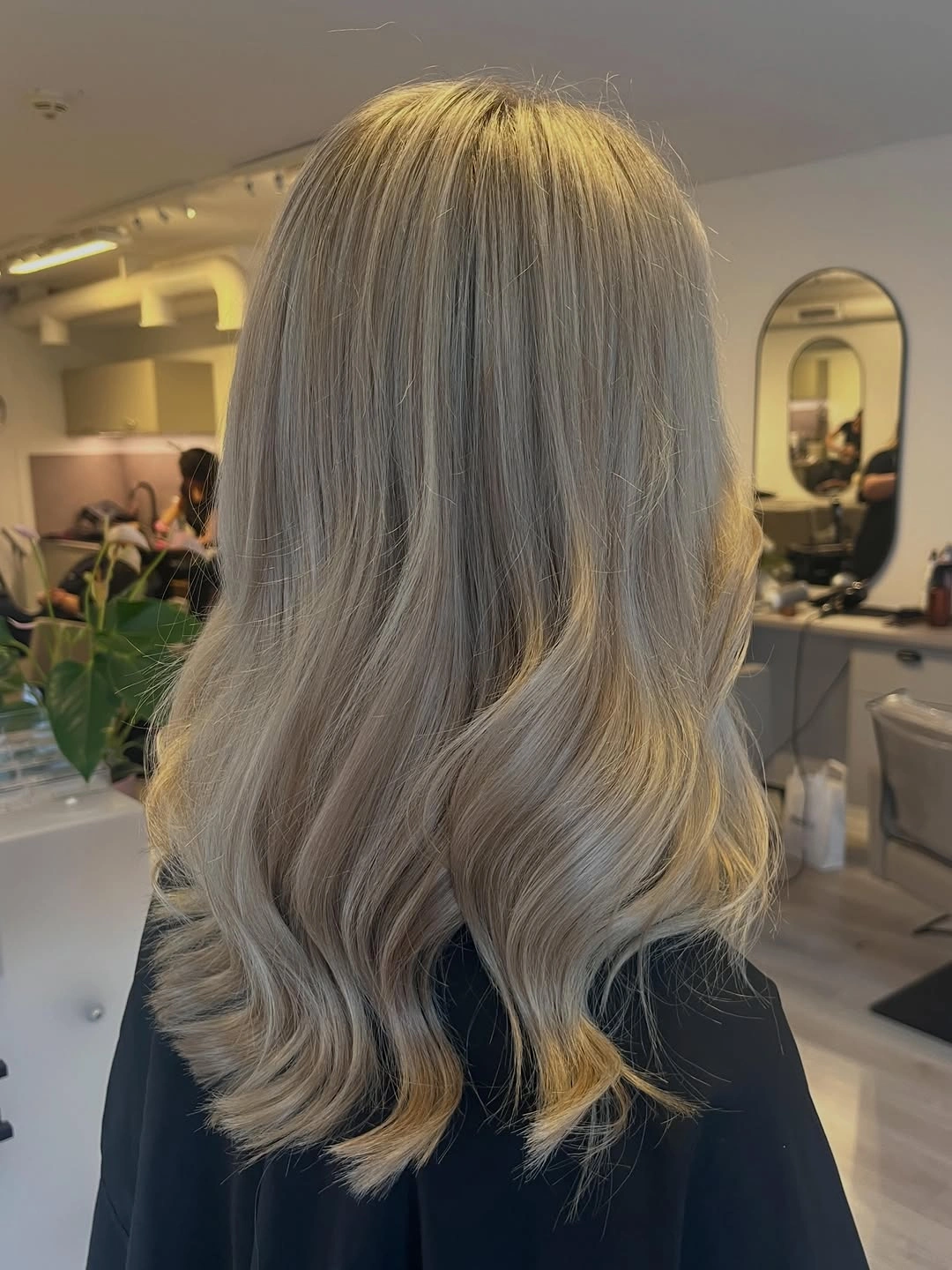
Photo via Instagram
The wave ends curve outward gently, and that shape gives the silvery beige tone a place to lift without becoming glossy or golden. Deeper gray-leaning shadows appear near the upper section, while the lower bends carry a lighter, mistier blonde through the surface. The practical effect is a controlled coolness that may feel easier to wear than a very icy blonde because the darker crown already softens the transition.
Its distinction is the smoky cast, not the amount of wave. The finish feels calm, slightly shadowed, and more atmospheric than the smoother lowlight looks earlier.
Rose Beige Blonde With Straight Polish
The long straight fall has a muted rose-beige warmth that separates it from yellow-gold blonde. A central root line stays visible at the top, then the color continues downward in a smooth, even sheet with a soft blush-like cast. Among winter blonde hair colors, this one feels especially interesting because the warmth is quiet and dusty instead of sunny.
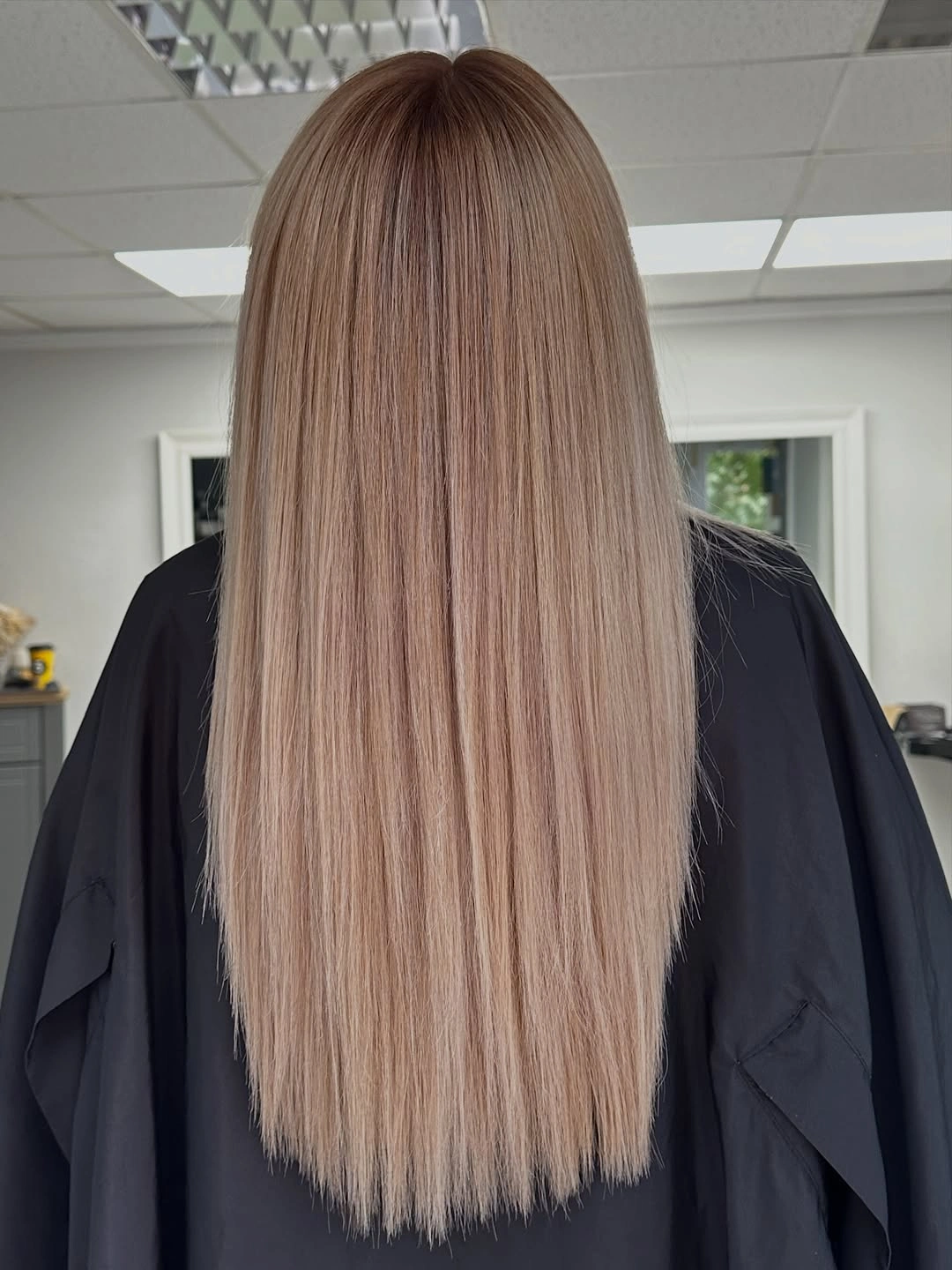
Photo via Instagram
Warm blonde hair does not always need strong gold to feel warm. Here, the pink-beige tone gives the straight length a softened surface, while the blunt lower edge keeps the color from becoming too airy or fragile. The practical consequence is polish: the hair reads neat and controlled, but the muted warmth gives it more personality than a plain pale blonde panel.
The ends help the tone feel finished. Their soft bluntness holds the rose-beige shade in one clean shape, so the color reads gentle without looking vague.
Creamy Curls With Rooted Brightness
The brightest lift sits around the front curls, where creamy blonde pieces gather close to the face and then continue into the longer waves. Darker roots remain visible at the part and upper sections, which stops the pale blonde from floating without structure. This is a strong example of winter blonde hair colors that use brightness generously while still letting the top of the style feel grounded.
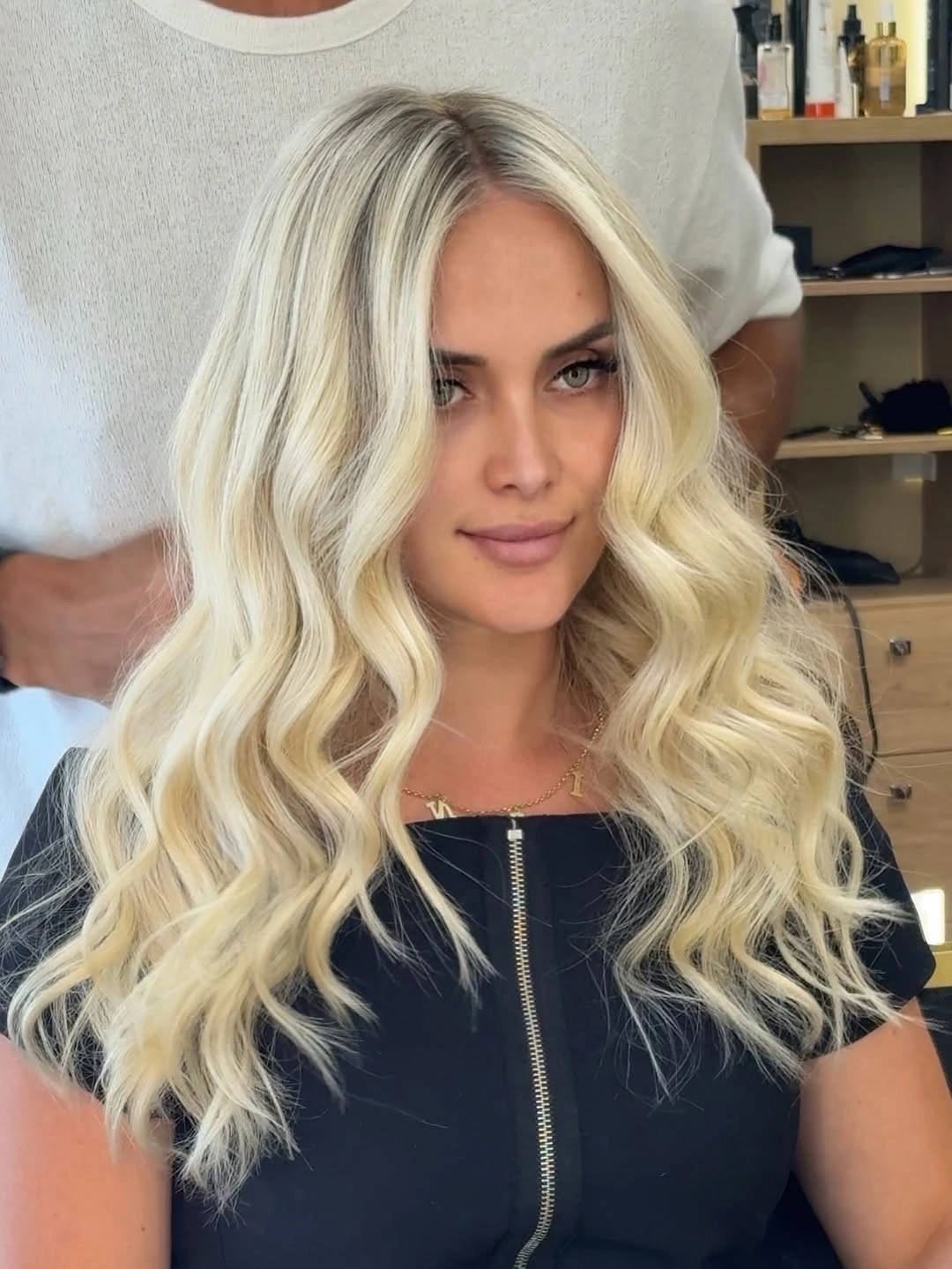
Photo via Instagram
The curled shape makes winter blonde hair color highlights look fuller because the pale pieces bend forward, outward, and back into shadow. Instead of reading as thin lines, the highlights become wider flashes across the curled surface, with deeper root color anchoring the upper area. That gives the style a possible everyday advantage for someone drawn to bold blonde but not to a completely uniform light shade.
The curls make the brightness feel plush rather than flat. Root depth, front lift, and curved ends all share the work, so the blonde has volume as well as light.
Icy Shoulder Waves With Sweeping Front
The shoulder-length shape brings the pale blonde closer to the face and concentrates the volume around the sides. A sweeping front section crosses over one side like a soft fringe, while the icy creamy waves expand outward through the lower half. As a short winter blonde hair color, it feels glamorous because the brightness is gathered into a rounded, touchable shape rather than stretched through very long hair.
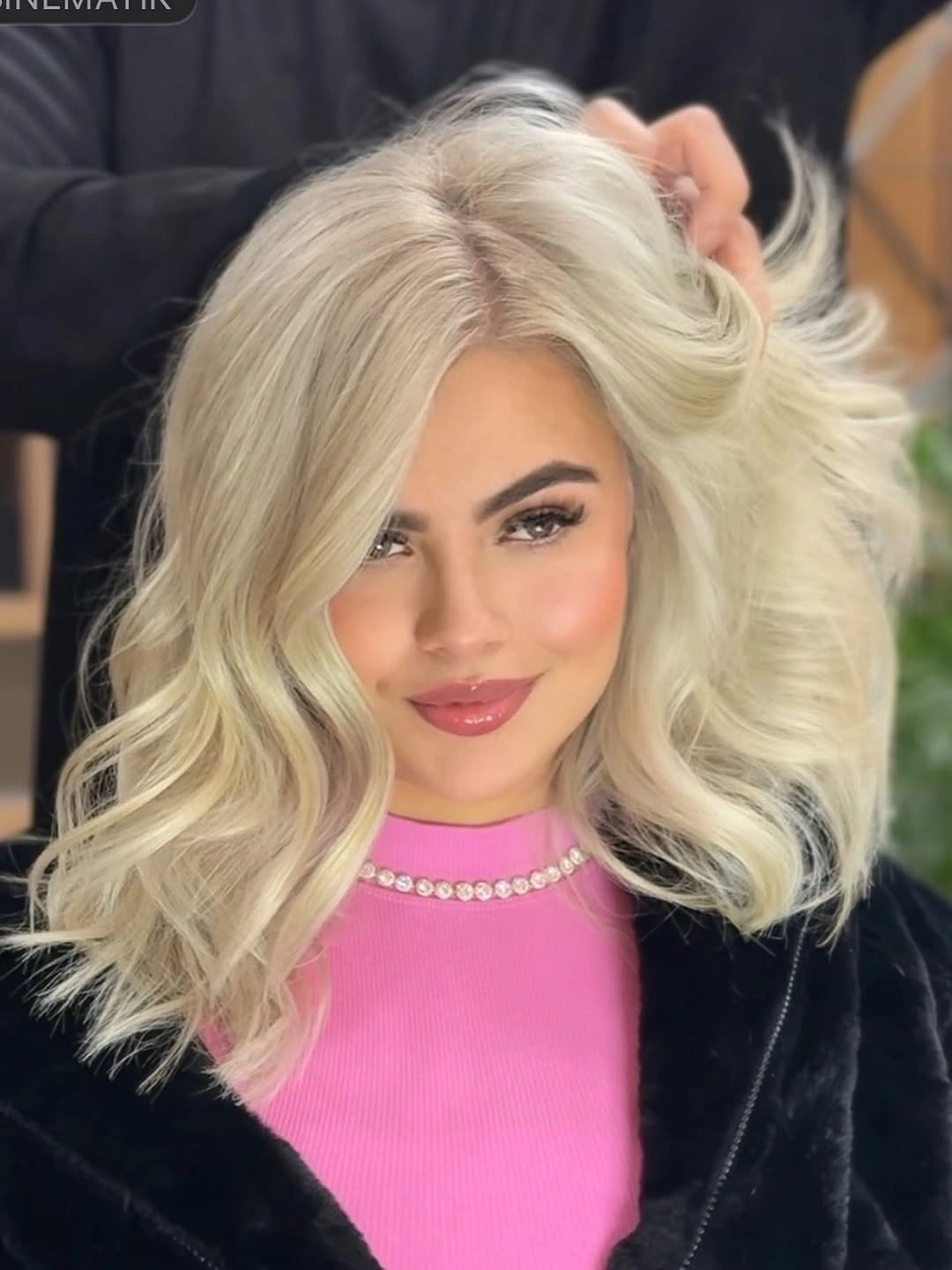
Photo via Instagram
The front sweep is the key relationship here, especially for readers thinking about blonde hair with bangs but not seeing a blunt bang line. It behaves more like a side-swept fringe, directing attention across the face before the curls open into the shoulder area. The pale color catches strongly on that front section, so the framing feels intentional without needing a sharp cut across the forehead.
The shorter length makes the blonde feel more concentrated and styled. Its drama comes from the icy brightness, the rounded wave volume, and the sweeping front working together in a compact silhouette.
Rooted Blonde Waves With Blue-Tipped Ends
The final shift comes from the lowest strands, where bright blue tips interrupt the rooted pale blonde without taking over the whole length. Darker roots remain visible at the top, then the hair moves through cool, light blonde waves before the color changes at the bottom edge. Among winter blonde hair color ideas, this one stands apart because the accent is placed where motion can reveal it gradually.
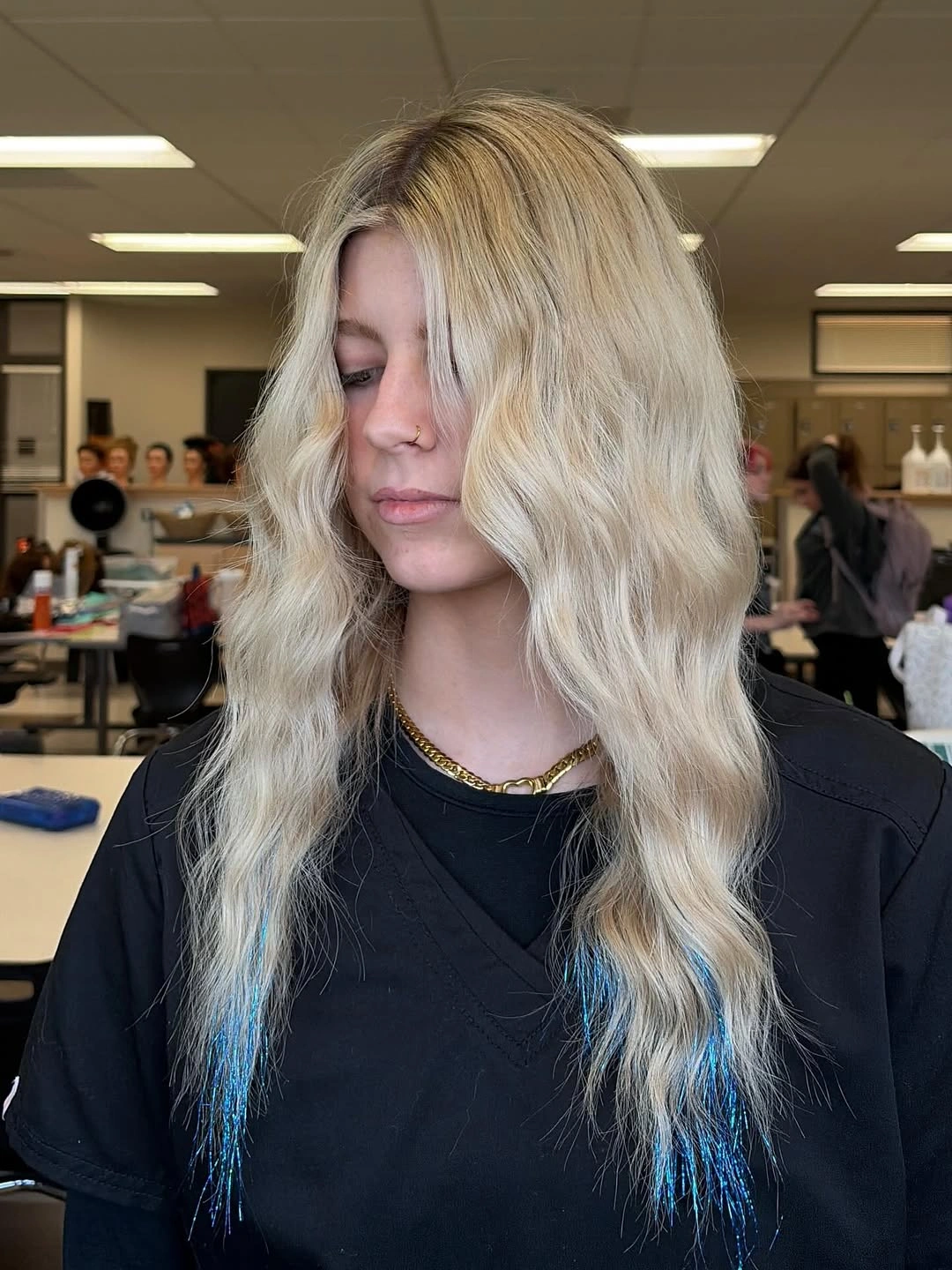
Photo via Instagram
The blue sits low enough to behave like a finish rather than a full color change. Most of the length still reads as cool blonde hair, with pale waves carrying the main softness and the blue appearing only where the ends separate and swing forward. That placement could suit someone who wants a clear visual accent while keeping the upper hair rooted, blonde, and easy to read from crown to mid-length.
What stays with the eye is the way the pale waves move into a sudden, saturated edge. The rooted top, cool blonde body, and blue-tipped ends create contrast in stages, so the last impression is not just brightness, but movement ending in color.