
In a fast, crowded city, the challenge is often not getting noticed but staying visually clear amid everything competing for attention. Winter NYC outfits can feel strongest when they hold onto a distinct point of view without becoming overworked, allowing the overall impression to register quickly and stay memorable. That kind of clarity comes from confidence in the whole rather than from trying to make every detail speak at once.
Urban winter dressing leaves room for personality, but restraint can make that personality easier to recognize. Choosing what to emphasize, what to soften, and what to leave quiet can create a stronger sense of intention than constant visual intensity. The result is a way of dressing that feels expressive without becoming crowded, and considered without losing the ease that makes personal style feel believable.
Quiet Cream Layers Meet Blue Denim
A pale cream blazer creates the main line here, extending below the light cream top and giving the upper half a longer, more defined shape. Because the two pale tones sit close together, the lapels and blazer edges do more of the structural work than the color difference does. The result is quiet tonal layering with enough outline to keep the cream-on-cream combination from reading as one flat block.
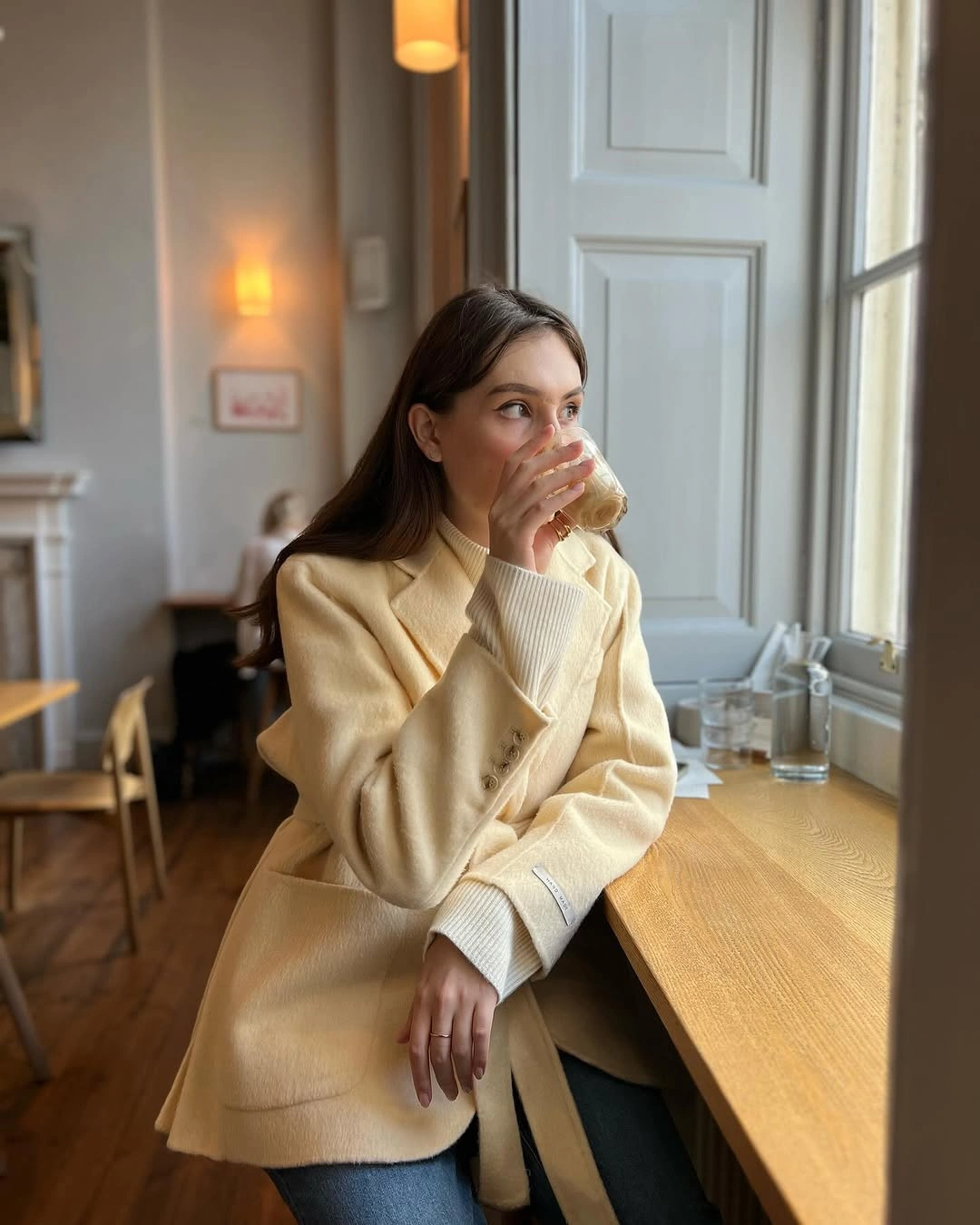
Photo via Instagram
Blue denim changes that controlled upper palette without competing with it. Its cooler, more familiar blue breaks the near-monochrome cream area at the lower edge, so the outfit gains separation while the blazer remains the dominant shape. The seated pose compresses some of the lower proportions, but the visible denim still provides a clear visual endpoint for the long pale layer above.
What makes the combination effective is the contrast between subtle color repetition and a decisive outer silhouette. The cream tones stay close and restrained, while the denim introduces just enough difference to keep the overall composition from becoming overly uniform.
Cropped White Layers Above Tall Black Boots
The short white jacket changes the proportion immediately because its hem stays close to the cropped white top beneath it, keeping the upper silhouette compact. Texture is visible across the jacket surface, but the strongest design cue is still its abbreviated length. That short white block leaves a clear boundary before the fitted black lower half begins.
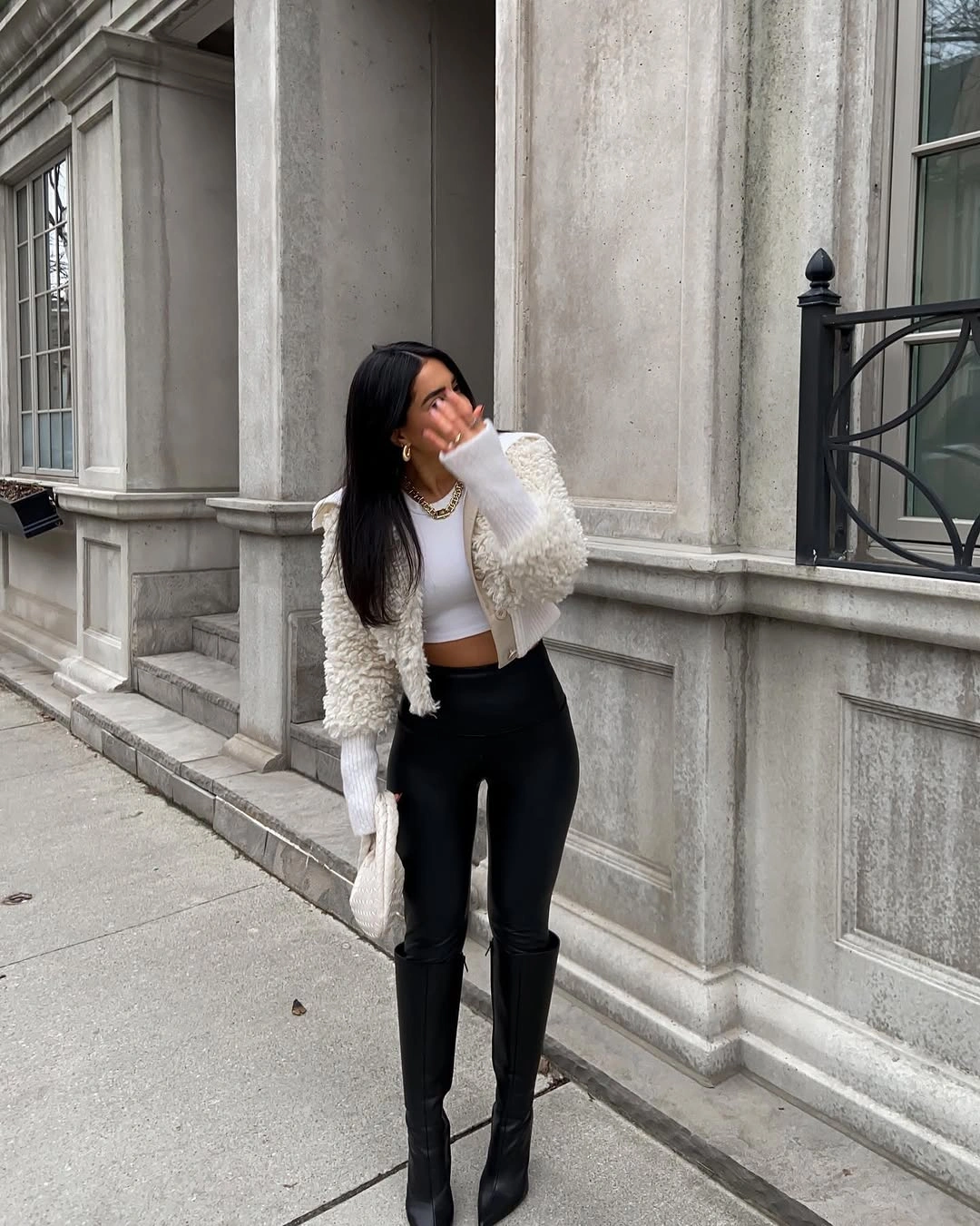
Photo via Instagram
Tall black boots extend the dark lower line instead of introducing another color break near the feet. Paired with the fitted black bottoms, they give the lower half a continuous visual weight that grounds the much lighter upper area. The white-to-black split therefore feels deliberate and graphic, with the cropped proportions above balanced by a longer, darker vertical line below.
The contrast works because both halves are simple in color but different in scale and length. A compact white upper section draws the eye first, while the tall dark footwear gives the silhouette a firm base rather than letting the pale jacket carry all of the emphasis.
Oversized Brown Outerwear With a Lighter Base
The oversized brown shearling-looking coat controls almost the entire silhouette, with its broad shape, generous collar, and pale trim creating a strong outer frame. Instead of being treated as a background layer, the coat becomes the main proportion around which the rest of the outfit is organized. Its length and volume give the upper and middle portions a substantial visual presence.
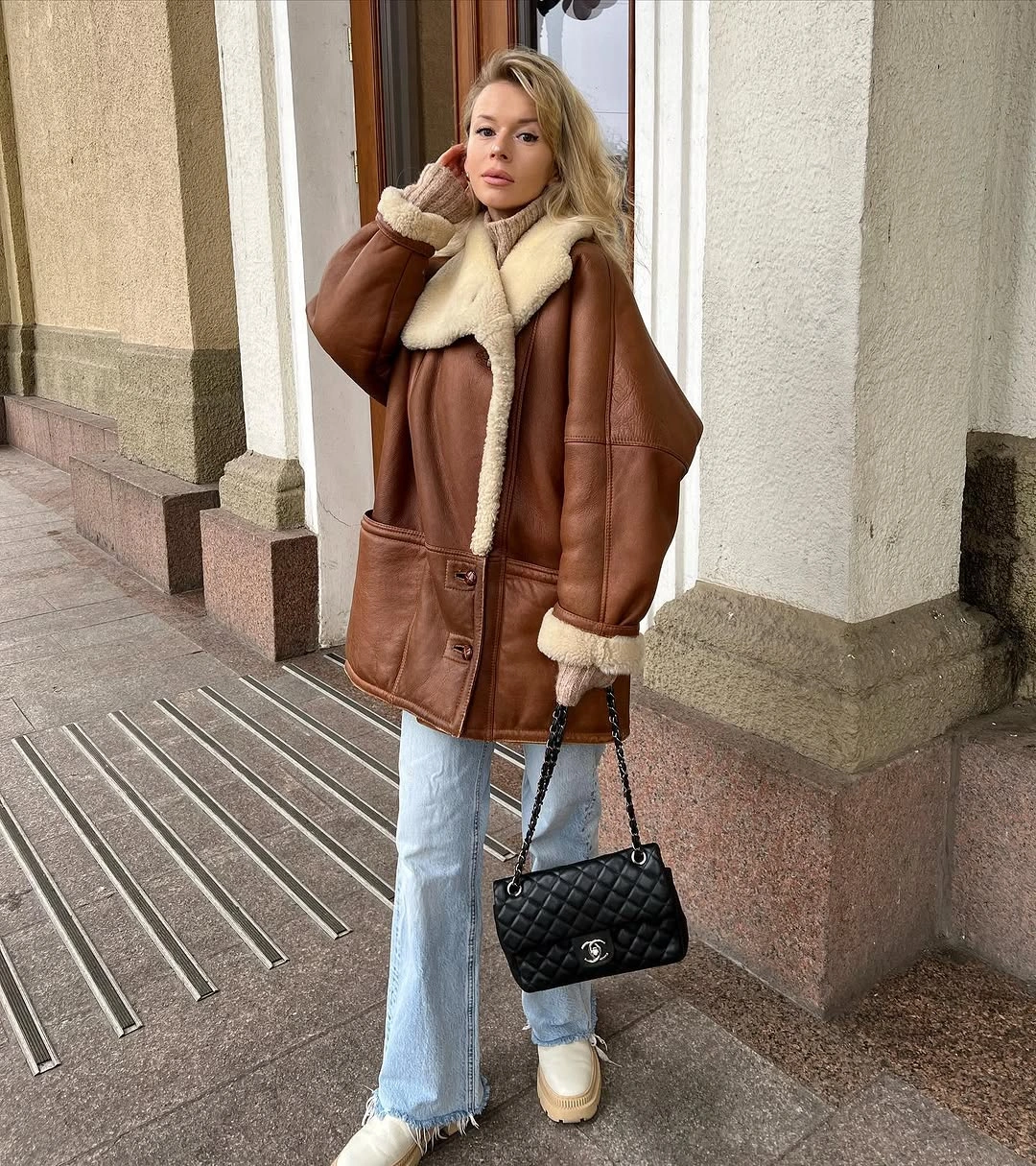
Photo via Instagram
Light blue jeans keep that large brown shape connected to a noticeably lighter lower half rather than extending the coat's depth all the way to the ground. Pale boots continue the lighter direction, so the transition from denim to footwear is gradual instead of abrupt. That continuity matters because it prevents the oversized outer layer from visually overwhelming everything beneath it.
The black quilted-looking bag adds a smaller, darker point of definition beside the broad coat. Its compact scale and sharper geometry create useful contrast with the coat's generous outline without disrupting the lighter denim-and-boot line below.
Muted Gray, Blue, and Brown Build Definition
Muted color blocking gives this outfit its structure before any single detail takes over. The oversized charcoal-gray coat forms the broadest and darkest area, while the blue button-down creates a cleaner, brighter vertical note through the center. Brown trousers then shift the lower half into a warmer muted tone, building separation without turning the palette into a high-contrast statement.
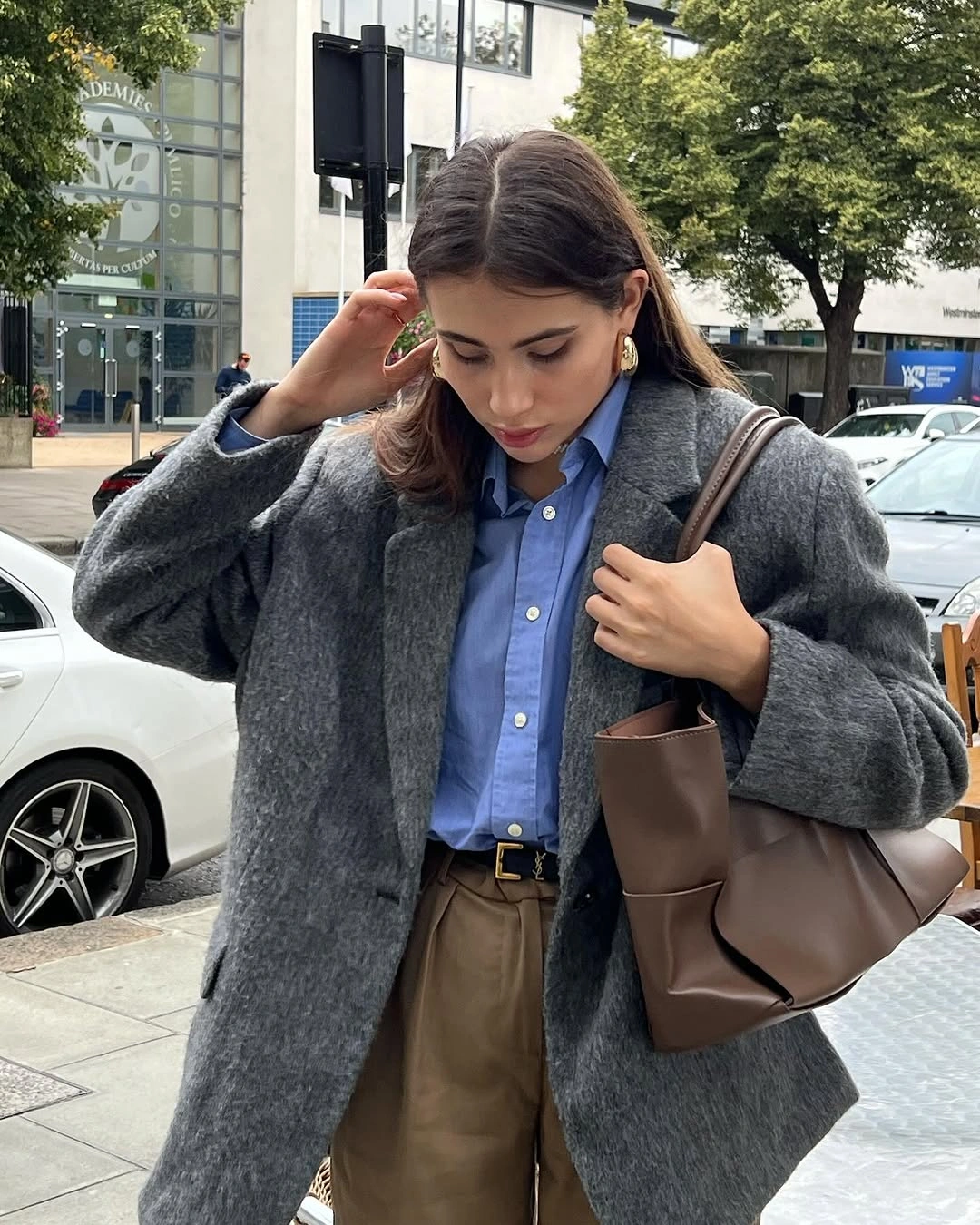
Photo via Instagram
The large brown tote reinforces the trousers rather than behaving like an isolated accessory. Its scale is important because a very small bag could look visually minor beside such a broad coat, while this larger shape holds its own against the outerwear volume. Repeating brown across the bag and lower line also gives the gray and blue upper layers a more grounded visual counterpart.
This is a good example of color doing structural work without relying on bright accents. Charcoal, blue, and brown remain distinct enough to divide the silhouette into readable zones, and the generous bag scale keeps the accessory relationship proportionate to the coat.
Long White Scarf Cuts Through Deep Burgundy
A fitted deep-burgundy base creates a narrow, uninterrupted dark line, which makes the pale accessories appear even more expansive by comparison. The white cable-looking scarf falls well below the shoulders, adding length as well as a strong light contrast against the burgundy. White earmuffs repeat that pale note higher up, concentrating attention around the head and neckline before the eye follows the scarf downward.
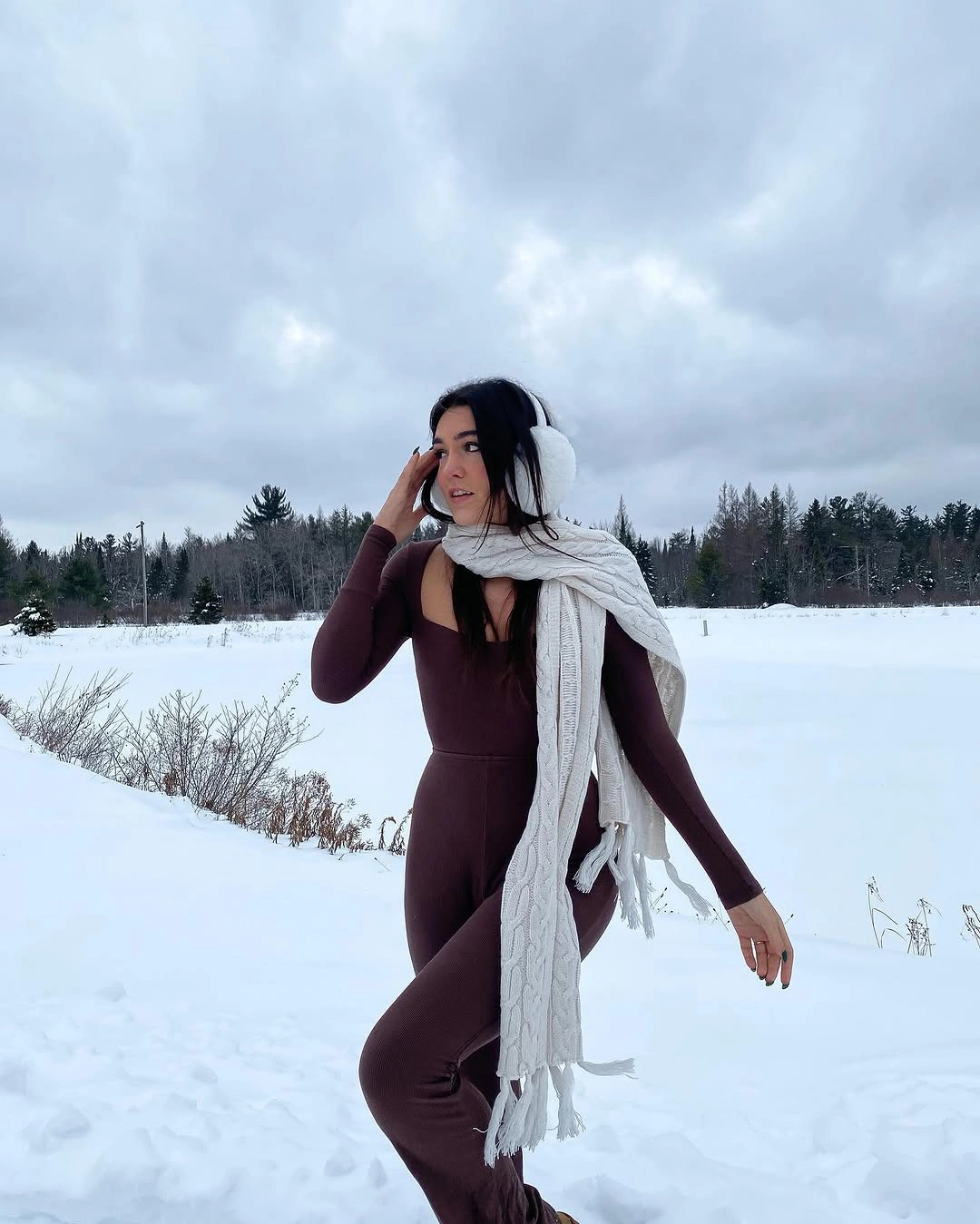
Photo via Instagram
Scarf length is the key proportion here because it introduces vertical movement into an otherwise close, streamlined silhouette. Its long ends and visible texture create a soft, irregular line over the smooth-looking burgundy base, while the pale color keeps that movement easy to trace. The snow-covered ground echoes the light accessories visually, but the outfit itself remains organized around the burgundy-versus-white relationship.
The contrast feels strongest because the dark base stays narrow while the scarf and earmuffs occupy more visual space around the upper body. Rather than adding several competing colors, the styling uses one pale accessory family to stretch the composition vertically and sharpen the burgundy line underneath.
Soft Gray Texture Meets Structured Brown Contrast
Soft texture is concentrated above the waist through the pale gray plush-looking jacket and the gray fuzzy-looking hat, so the upper half reads as one related tonal area rather than several separate pieces. The similar gray values keep the color story restrained, while the visibly different surfaces add enough variation to stop the top half from looking flat.
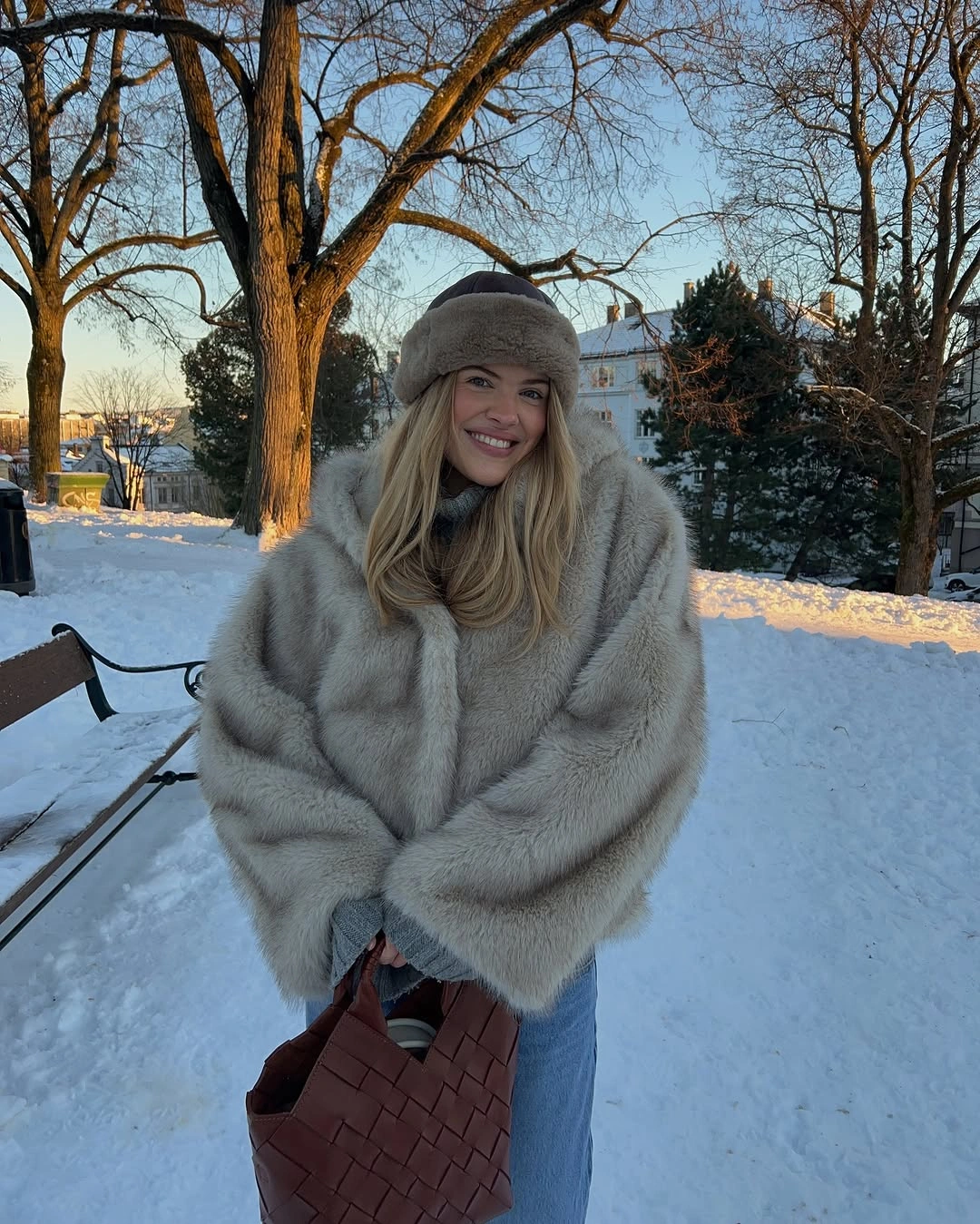
Photo via Instagram
Blue jeans introduce a cooler, cleaner field below that soft gray concentration and give the silhouette a clear change in color and surface. The structured brown woven-looking bag adds a darker geometric shape at the side, which helps sharpen the outline and keeps the combination from becoming visually diffuse despite the repeated soft textures above.
The bag is especially effective because its defined edges counter the softer shapes around it without requiring a brighter accent. Brown also creates a distinct third color note between the pale gray upper area and the blue denim below.
A Belt Defines the Long Black Column
The long black coat creates a continuous dark column, but the belt changes that uninterrupted line by drawing the silhouette inward at the waist. Because the rest of the visible palette stays almost entirely black, that single point of definition becomes more noticeable, giving the long outer shape structure without relying on added color or surface contrast.
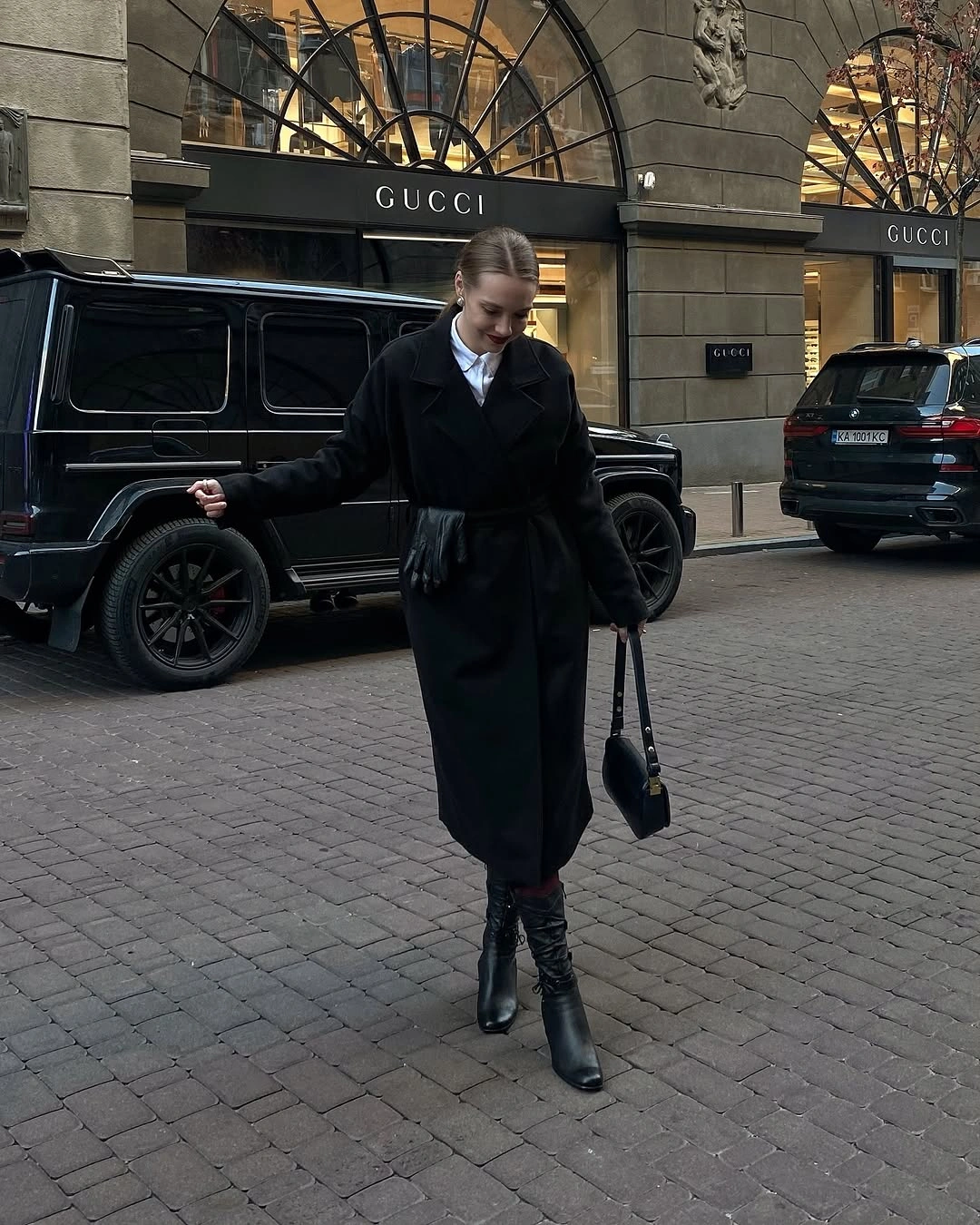
Photo via Instagram
A small white collar showing at the neckline provides the clearest light accent and interrupts the dark column at a precise, compact point. Black gloves, dark boots, and the small black bag keep the remaining accessories aligned with the coat, so attention returns to the belted center and the narrow white contrast above rather than scattering across several competing details.
The limited palette makes subtle changes in line more important, especially the difference between the coat's long vertical fall and the horizontal interruption of the belt. The small white neckline works almost like punctuation, adding definition without disturbing the dominant black column.
Monochrome Black Gains Shape Through Sharp Edges
Nearly every visible element stays within black, so separation comes from proportion and edge placement rather than from color changes. The long coat establishes the broadest vertical line, while the darker base beneath remains slimmer and more contained, allowing the overlapping lengths to create depth without breaking the monochrome effect.
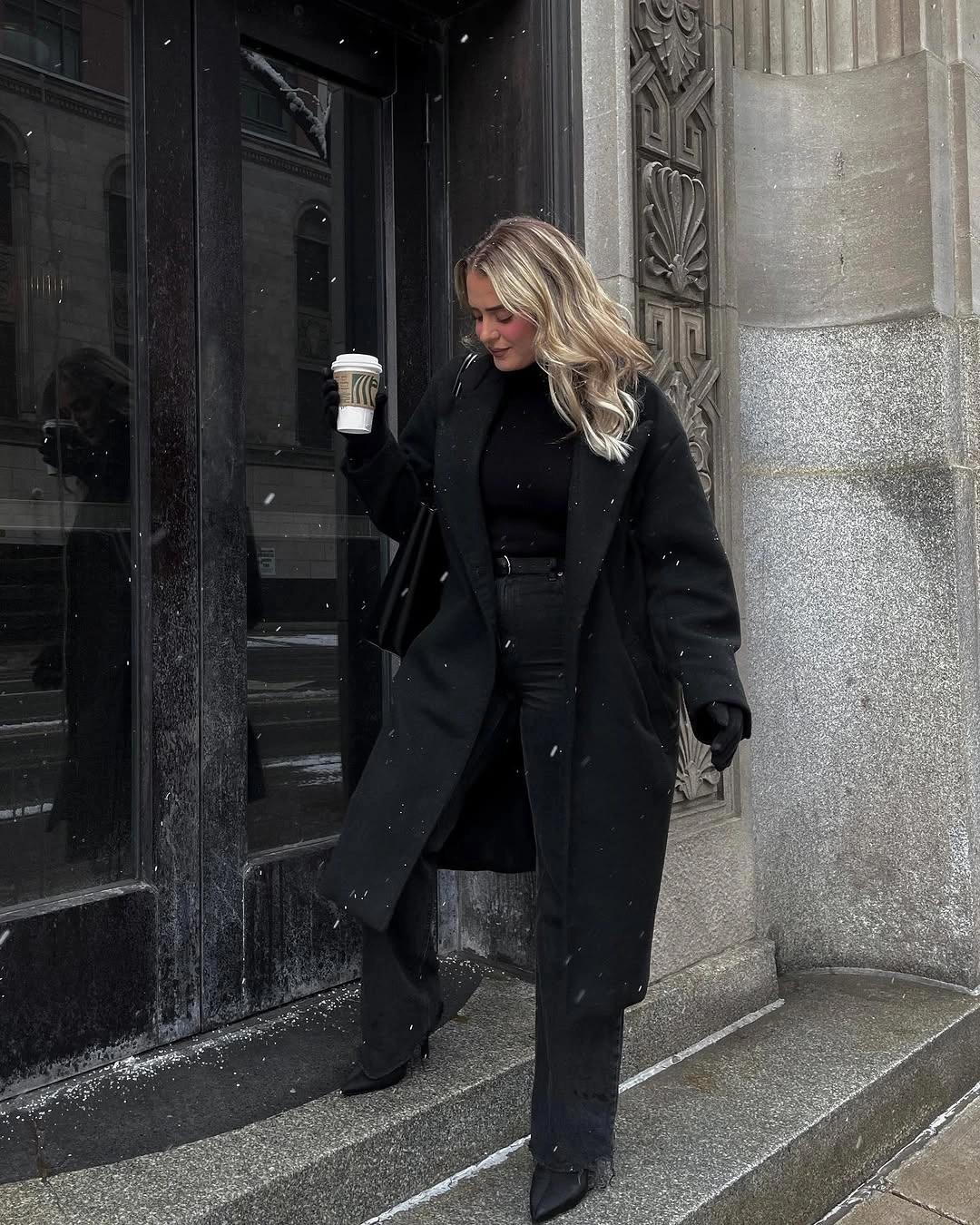
Photo via Instagram
Pointed dark footwear gives the lower edge a sharper finish and prevents the all-black silhouette from ending in a visually blunt shape. Gloves continue the same dark palette, reinforcing the uninterrupted color story while the different lengths of coat, base, and footwear supply the distinctions needed to keep the individual layers readable.
Monochrome dressing here depends on silhouette rather than tonal contrast. The extended coat length creates the main vertical direction, while the pointed footwear introduces a precise final angle that gives the lower line greater definition.
Graphic Trim Sharpens a Compact Cream Silhouette
The cream V-neck sweater draws attention through its open neckline and the dark trim that traces the edge with a clear graphic line. Because the trim is narrow rather than broad, it defines the shape without overtaking the lighter field of the sweater, creating a compact contrast that feels precise and visually controlled.
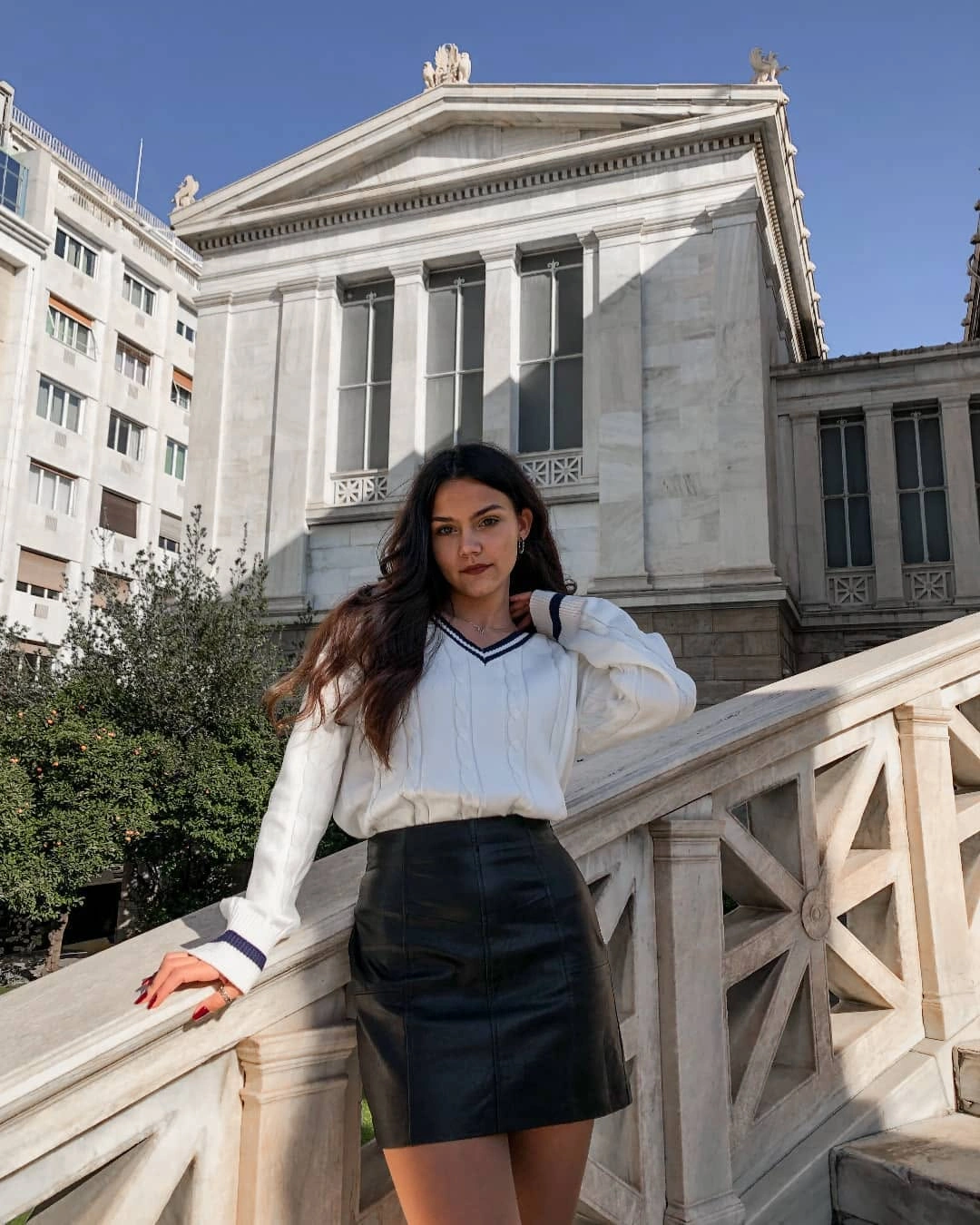
Photo via Instagram
The black mini skirt keeps the lower portion concise, so the proportions remain short and clearly divided rather than extending into a long vertical column. Its dark color also echoes the neckline trim, linking the top and bottom through repetition while the cream center stays dominant and the overall silhouette remains compact and easy to read.
Repeating black at the neckline and lower edge gives the cream area a defined frame without adding another color. The V shape also directs the eye inward, making a relatively simple two-tone combination feel more structured through line alone.
Ivory Texture Breaks Cleanly Into Blue Denim
Repeated ivory tones shape the upper half through the cream teddy-looking jacket and the white fuzzy-looking hat, creating a light tonal grouping with visible surface variation. Because the shades sit close together, texture becomes more important than color contrast, letting the soft-looking surfaces add distinction while the upper palette remains cohesive.
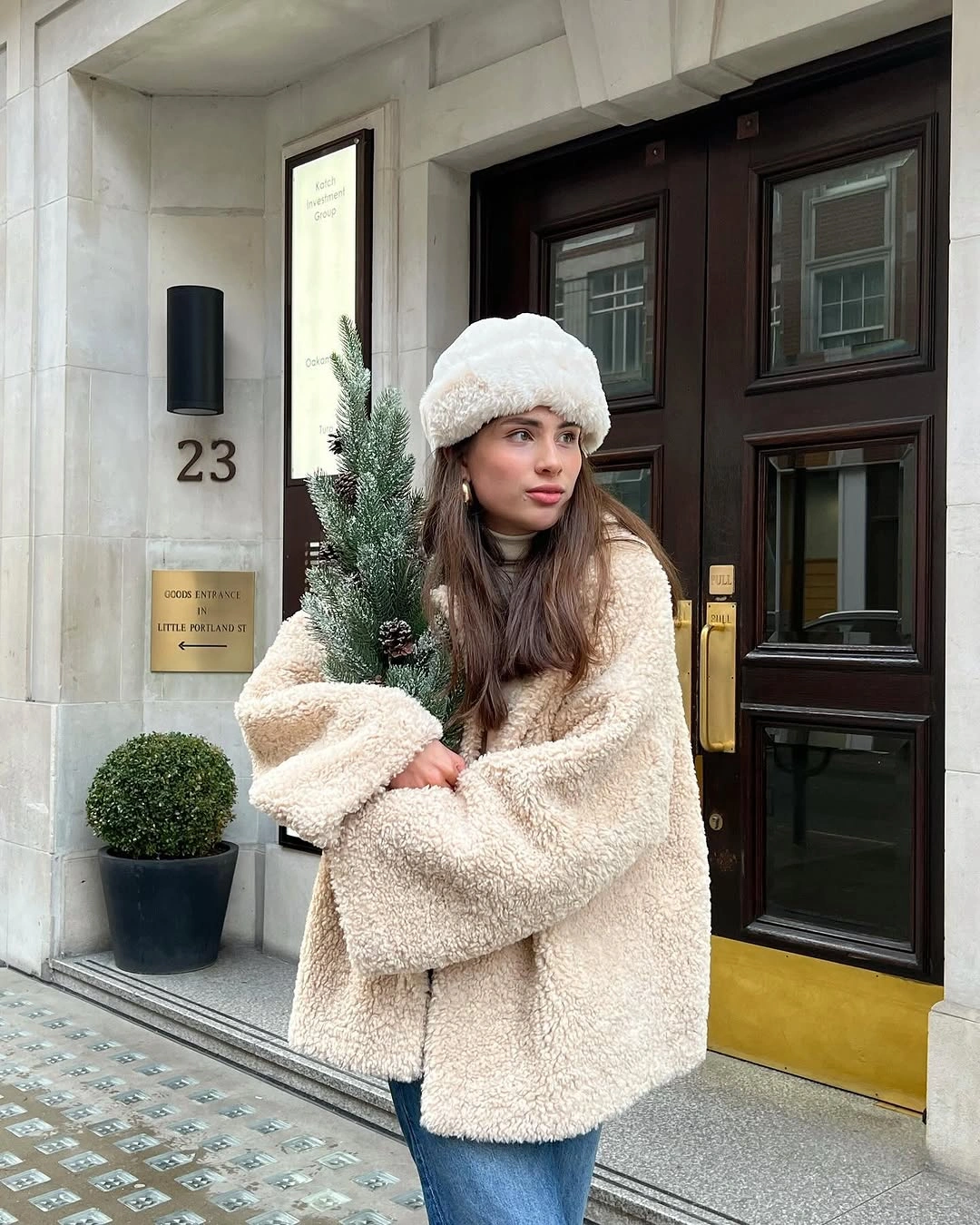
Photo via Instagram
Blue denim creates the clearest lower color break, separating the pale upper grouping from the rest of the silhouette with a cooler and more familiar tone. That shift gives the jacket and hat a defined visual endpoint rather than allowing the light colors to continue uninterrupted, while the denim keeps the composition straightforward instead of adding another competing accent.
The repeated pale tones make the upper portion feel visually connected even though the surfaces are not identical. Denim then provides a simple boundary below, giving the lighter textures space to remain the dominant feature without extending the same tonal treatment through the entire silhouette.
Long Scarf and Pale Sneakers Lighten Brown Volume
Compared with the earlier brown outerwear pairing, this version introduces more visible movement through the long scarf and a less anchored finish at the feet. The brown shearling-looking coat still carries substantial visual weight, but the scarf extends the upper line downward in a narrower strip, breaking up the broad outer shape and giving the front of the silhouette a stronger vertical direction.
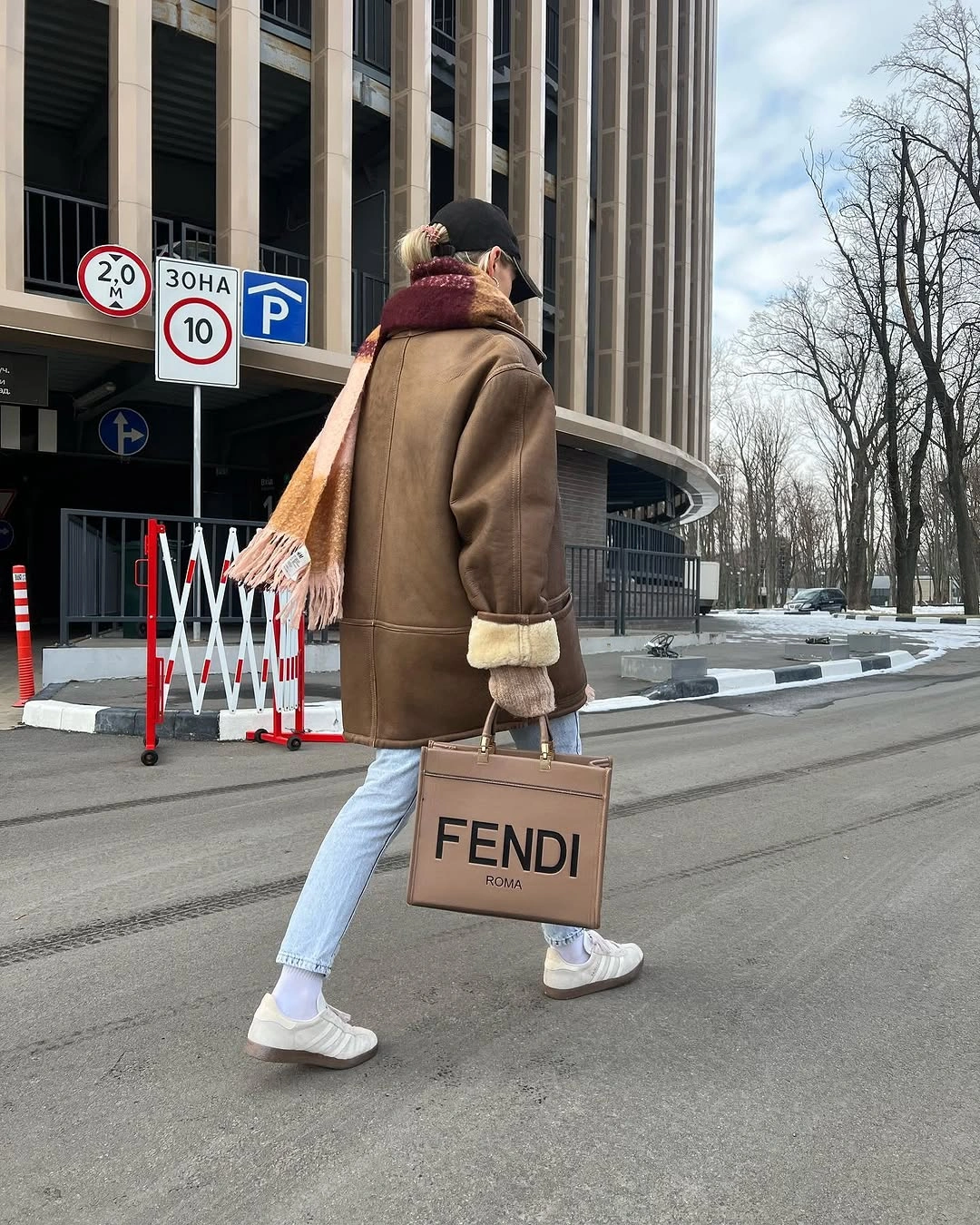
Photo via Instagram
Light jeans keep the lower half noticeably brighter than the coat, while white sneakers continue that pale direction instead of ending the outfit with a darker block. Their low profile also changes the proportion established by the larger brown layer above, making the lower line look lighter and more open. The connection between pale denim and white footwear keeps those elements visually related despite the coat's stronger color and scale.
The scarf adds length without adding another large area of volume, so the coat remains dominant while the front line gains movement. White sneakers reinforce the lighter lower palette and give this brown outerwear combination a distinctly different finish from one grounded by more substantial footwear.
Pale Blush Gains Definition Through Patterned Accessories
A pale blush puffer forms the main upper shape, while white trousers extend the very light palette through most of the visible silhouette. The puffer's relatively compact outline gives that softness a clear boundary, preventing the closely related pale tones from blending into one undefined column. Its visible seams and segmented surface also add structure without requiring a darker color break.
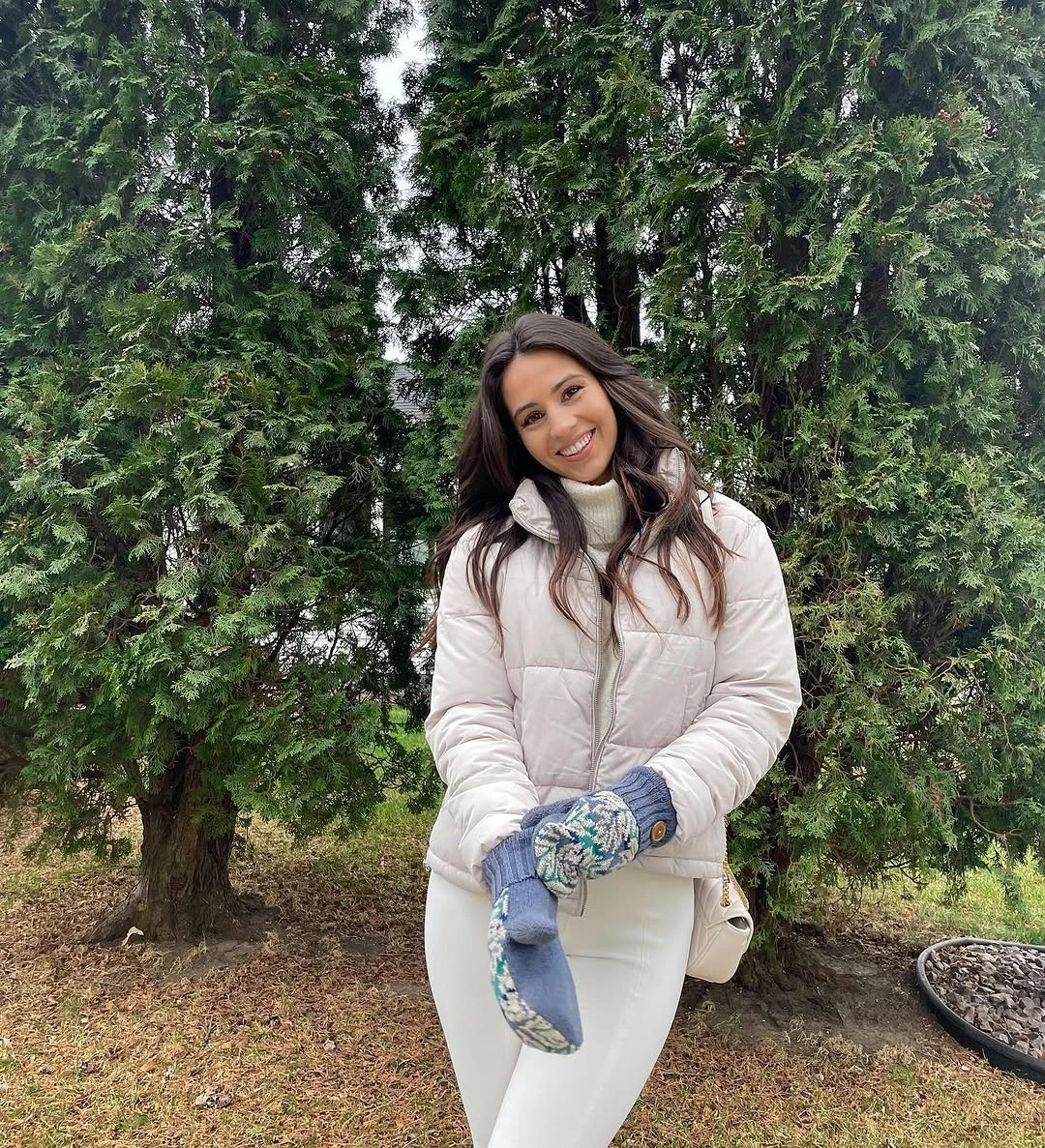
Photo via Instagram
Patterned blue-gray mittens provide the most concentrated visual variation, introducing smaller shifts in tone and motif against the otherwise restrained palette. The small light bag stays within the brighter color family, so it supports rather than interrupts the overall direction. Together, these accessories create definition at a smaller scale while the puffer and trousers retain the largest uninterrupted areas.
The outfit depends on subtle separation rather than dramatic contrast. Compact upper volume and patterned mittens keep the pale blush and white combination readable, while the light bag maintains the restrained color range.
Patterned Sleeves Interrupt an Oversized White Silhouette
The oversized white textured-looking layer creates a broad, loose silhouette with most of its visual area concentrated in one pale field. Its generous scale allows texture to register across a large surface instead of relying on fitted seams or sharp color divisions. The dress-like length extends that white area downward, making the overall outline feel continuous and deliberately expansive.
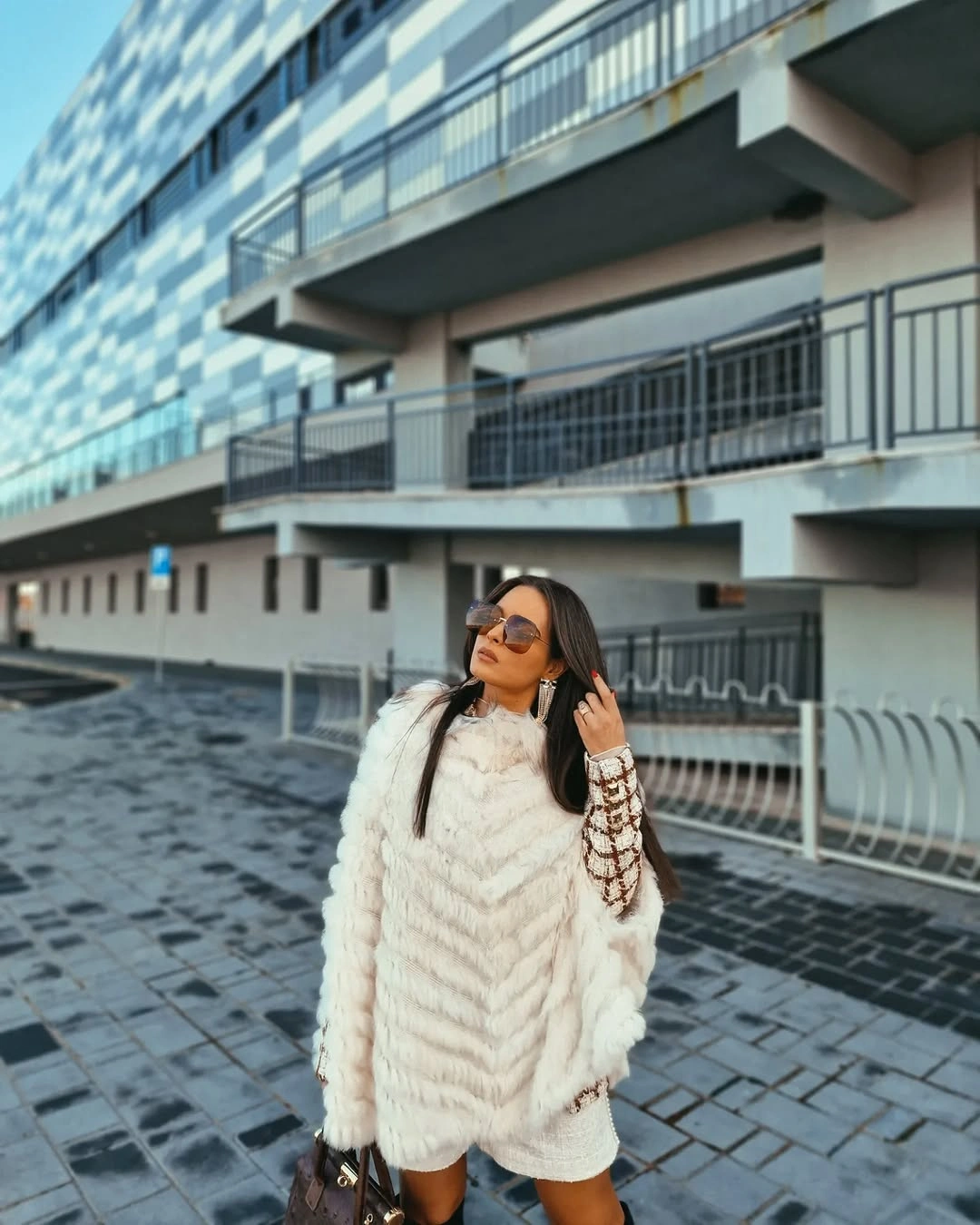
Photo via Instagram
Brown patterned sleeves interrupt that pale body at both sides, introducing darker color and repeated detail where the silhouette widens outward. Because the pattern is confined to the sleeves rather than spread across the entire piece, it acts as a controlled frame for the larger white center. This placement keeps the main body visually dominant while preventing its generous scale from reading as completely uniform.
Texture and scale carry most of the composition, with the darker sleeves providing the necessary visual interruption. Their patterned surfaces give the broad white center clearer edges without reducing the impact of its oversized proportion.
Glossy Cropped Volume Sharpens an All-Black Silhouette
The glossy black cropped puffer concentrates volume high in the silhouette, with its reflective surface making the shorter outer shape especially distinct against the black layers below. Because the jacket ends relatively high, the broader upper section does not continue into the lower half. That abrupt change in proportion creates a clear division between rounded cropped volume and the closer line beneath it.
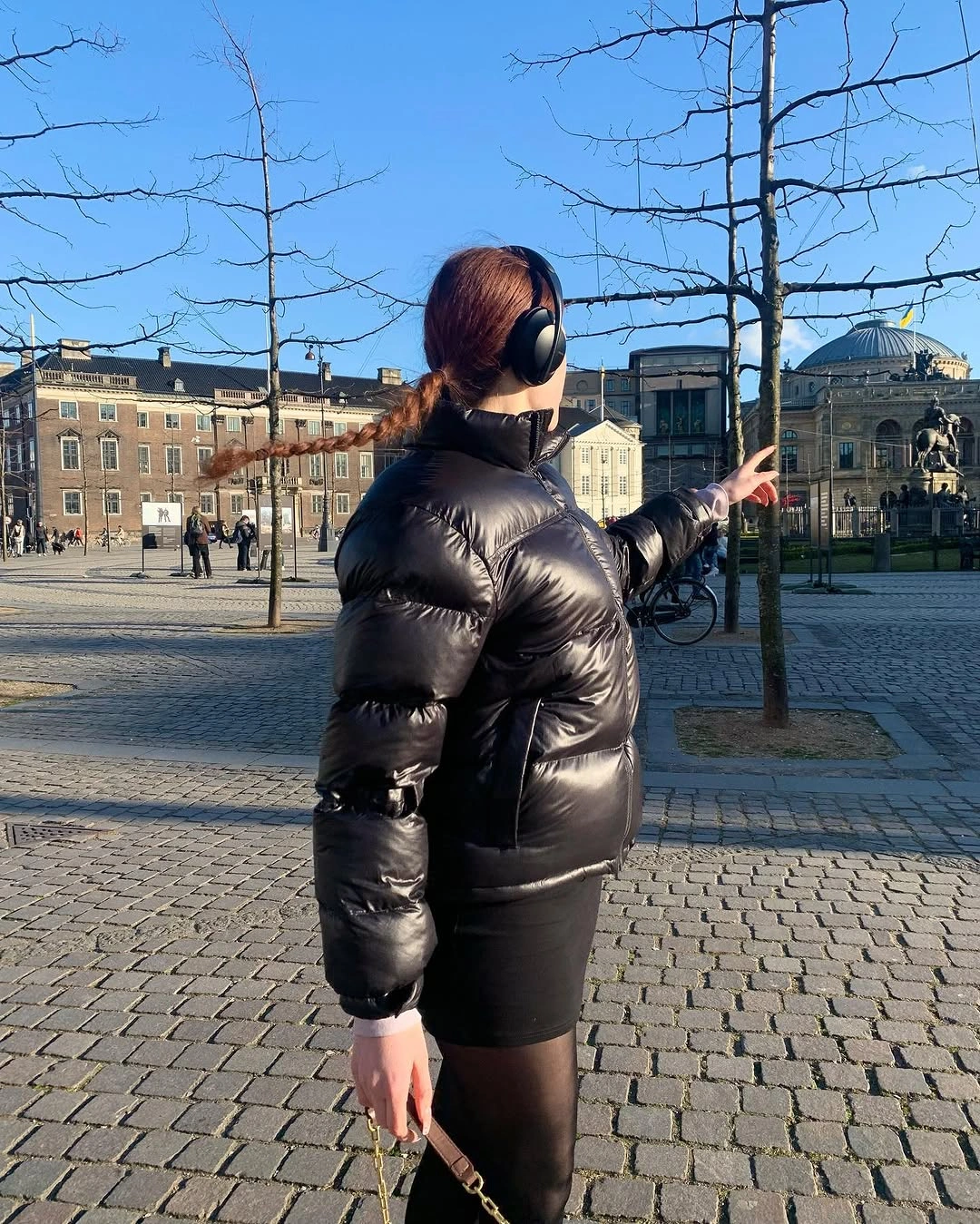
Photo via Instagram
Sheer black tights and the close black lower silhouette reduce visual bulk below the puffer, allowing the upper volume to remain the dominant feature. Oversized black earmuffs add another rounded shape near the head, echoing the jacket's scale without introducing a new color. Even within a nearly monochrome palette, differences in shine, transparency, and proportion keep the individual elements clearly separated.
The strongest contrast is between the puffer's compact bulk and the narrower line below it. Glossy finish and oversized earmuffs add surface and scale variation, giving the black palette dimension without relying on color changes.
Soft Gray Length Meets Heavy Black Boots
An oversized gray knit-looking layer and long gray scarf create a soft upper column with much of the visible volume concentrated above the legs. The similar gray tones keep the scarf connected to the larger top instead of turning it into a separate accent, while its length introduces a vertical line through the loose shape. That repeated gray treatment makes proportion and surface more important than color contrast in the upper half.
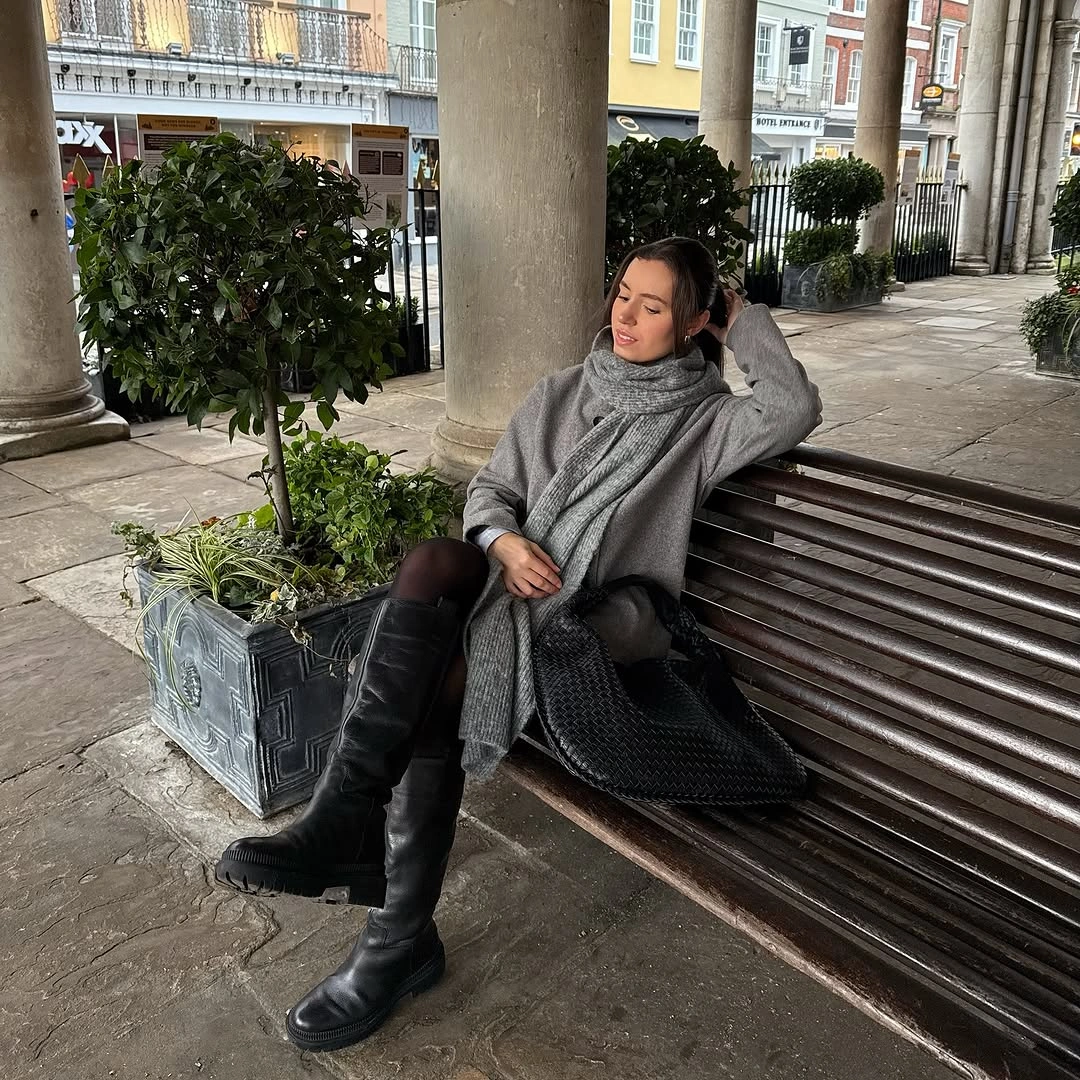
Photo via Instagram
Black tights create a narrower transition into tall chunky black boots, shifting the silhouette from soft gray volume to a darker and more substantial lower finish. The boots rise high enough to occupy a significant portion of the leg line, and their thick soles add visible weight at the base. This stronger footwear scale gives the loose upper section a defined endpoint rather than allowing its broad proportions to dominate from top to bottom.
The contrast between soft-looking gray volume and heavier black footwear gives the silhouette its structure. Tall boot height extends the dark base upward, while the substantial soles make that lower section strong enough to balance the oversized layer and long scarf above.
Fuchsia Concentrates Color Above a Dark Base
Bright fuchsia dominates the composition because nearly all of the saturated color is concentrated in the upper half. The fuzzy-looking surface adds visible depth within that single strong hue, while the chest cutout interrupts the color with a smaller open shape near the center. Instead of distributing attention across several accents, the styling lets one vivid area carry most of the visual emphasis.
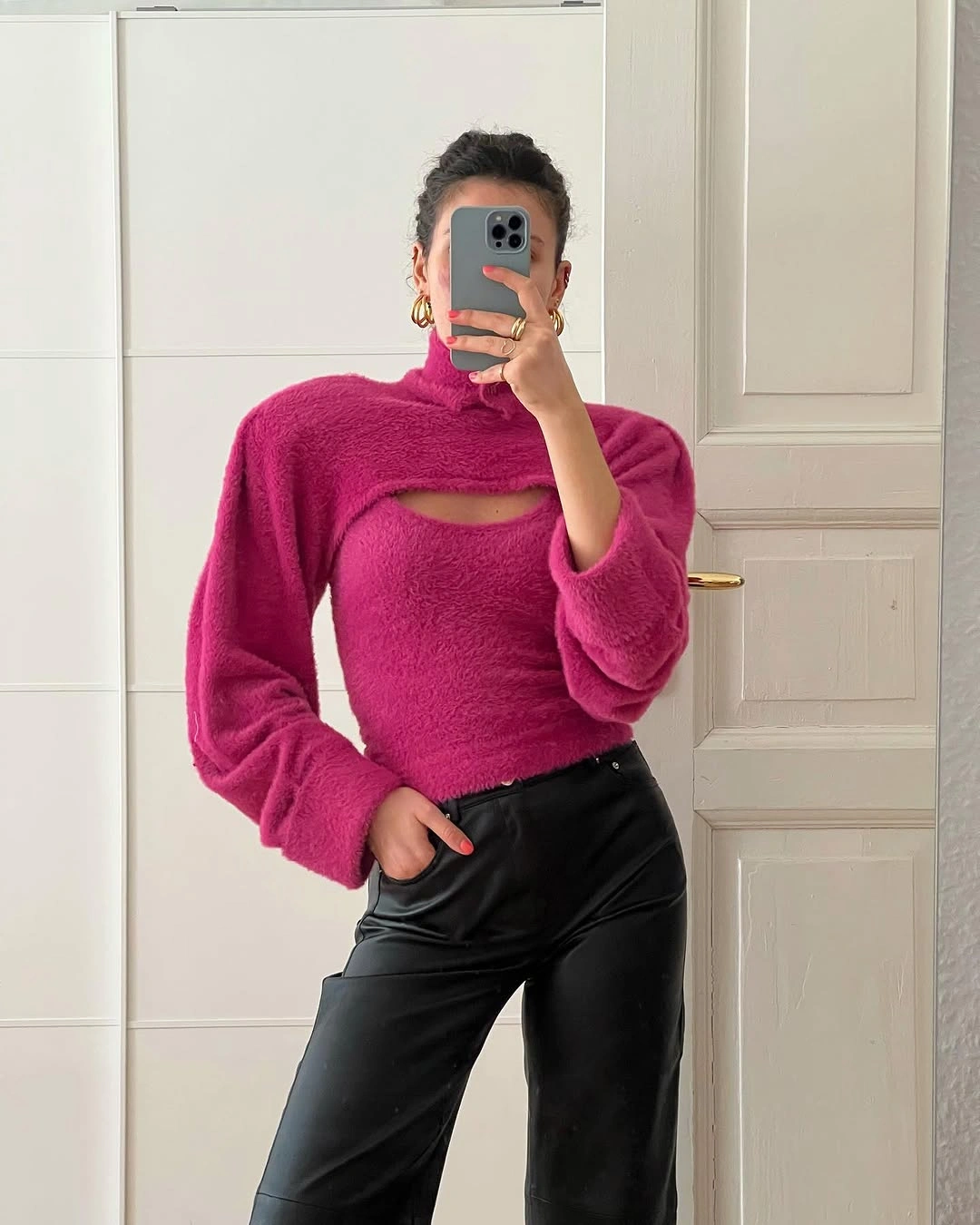
Photo via Instagram
Black trousers keep the lower half quiet and dark, giving the fuchsia top a clear background against which to register. Their straightforward line does not introduce another saturated color or prominent surface, so the transition at the waist becomes the main division in the silhouette. This contrast makes the upper section appear even more concentrated without requiring additional accessories or repeated bright details.
The strength comes from limiting the vivid color to one clearly defined zone. A dark lower line gives the fuchsia more impact, while the cutout and fuzzy-looking texture create variation within the saturated upper area itself.
Burgundy Bridges Black Outerwear and White Trousers
A black plush-looking coat and white wide-leg trousers create a dramatic light-dark split, with each occupying a substantial area of the silhouette. The coat forms the darker upper frame while the broad white trousers establish a bright lower block that is difficult to overlook. Their difference in both tone and scale makes the division especially clear before smaller details are considered.
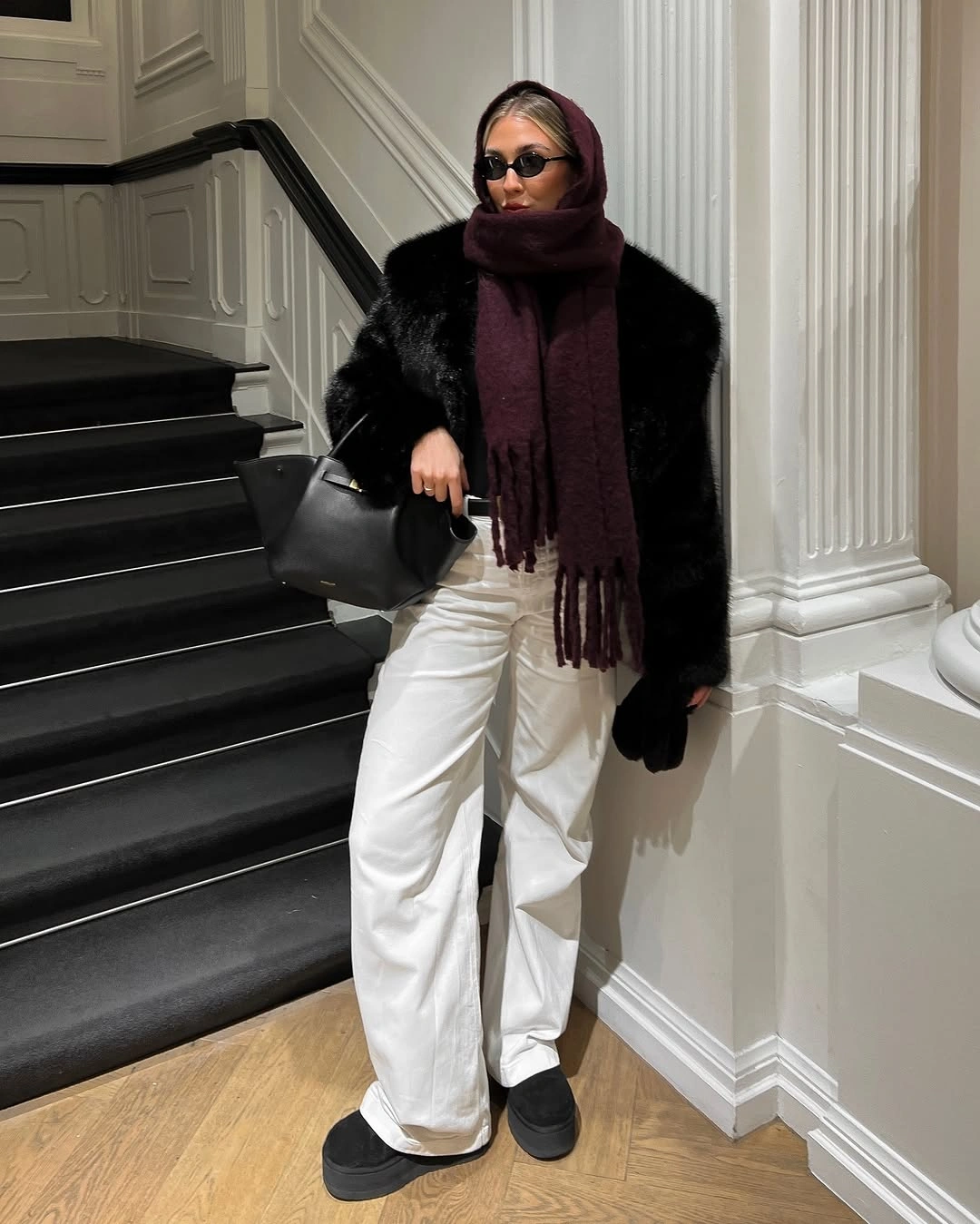
Photo via Instagram
The deep burgundy scarf introduces a third color zone between those opposing areas, wrapped high around the head and neck rather than extending far down the body. Its placement softens the jump from black to white without weakening the contrast, because burgundy remains deep enough to relate visually to the coat. Black platform shoes return to the darkest tone at the base and give the wide white trousers a defined endpoint.
Burgundy works as a bridge rather than a competing focal color, linking the darker upper area to the brighter lower one. The platform footwear repeats black at ground level, creating a second dark anchor beneath the broad white trouser line.
Black, Gray, and White Form a Measured Gradient
The palette moves in a controlled sequence from black outerwear to a gray turtleneck and then into white wide-leg trousers. Each step becomes lighter without introducing a sudden saturated accent, so the silhouette is divided through value rather than through unrelated colors. The gray center is especially useful because it prevents the transition from black to white from feeling completely abrupt.
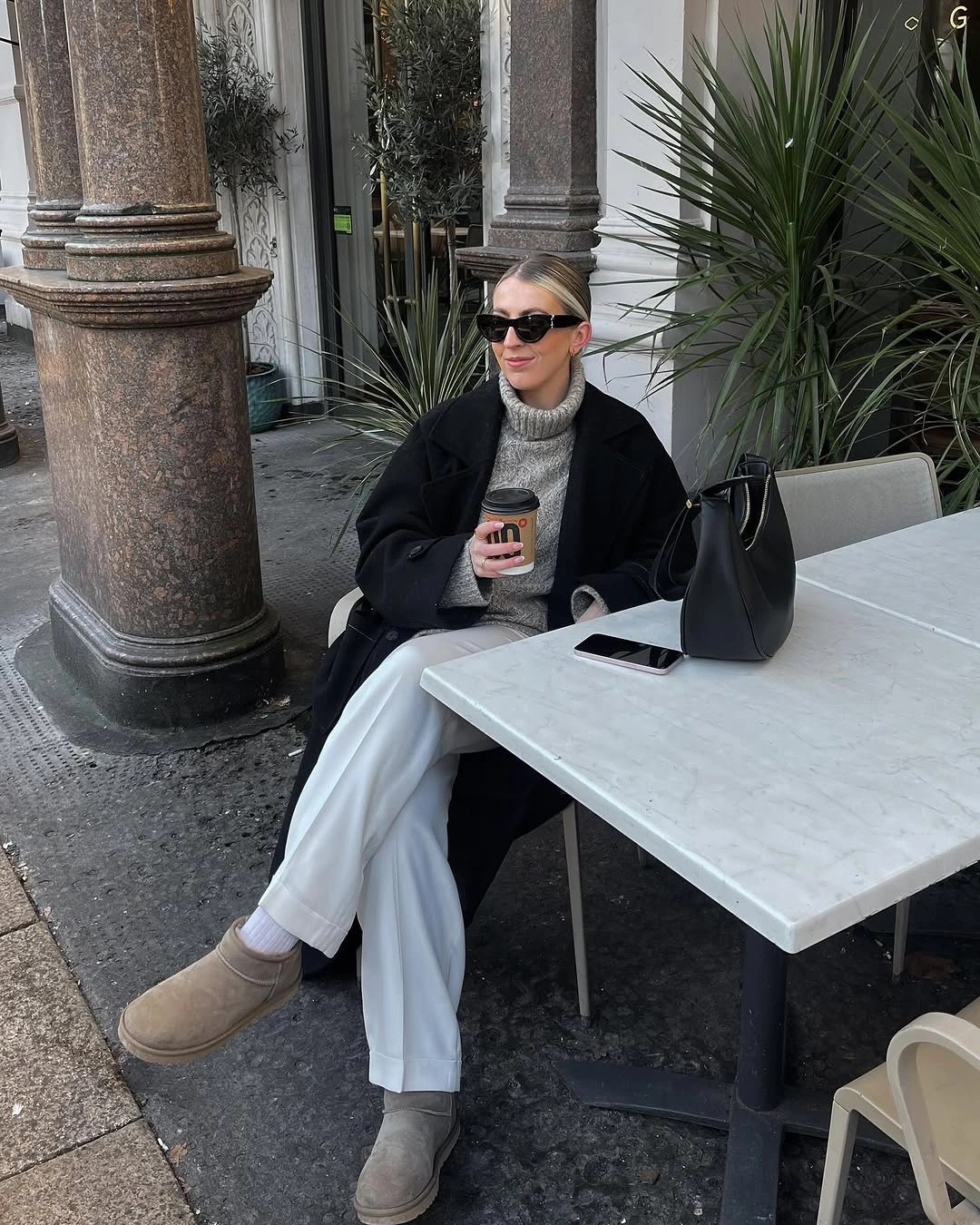
Photo via Instagram
Taupe ankle boots extend that measured approach at the bottom, replacing another hard black or bright white endpoint with a softer neutral shift. Their color remains distinct from the trousers while staying close enough in intensity to avoid breaking the lower line too sharply. The result is a layered progression in which outerwear, center, trousers, and footwear each occupy their own readable tonal zone.
The outfit gains definition through carefully spaced lightness rather than through one dominant accent. Taupe footwear keeps the white trousers from ending in another extreme contrast, while the gray layer gives the black-to-white sequence a visible middle step.
A Cropped Gray Layer Reshapes the Black Base
A cropped gray textured-looking knit vest changes the proportions of an otherwise simple black base by placing a shorter pale block across the upper torso. The fitted black long-sleeve top remains visible around it, which clearly separates the gray layer from the darker foundation beneath. Because the vest ends relatively high, its compact shape becomes as important as its lighter color.
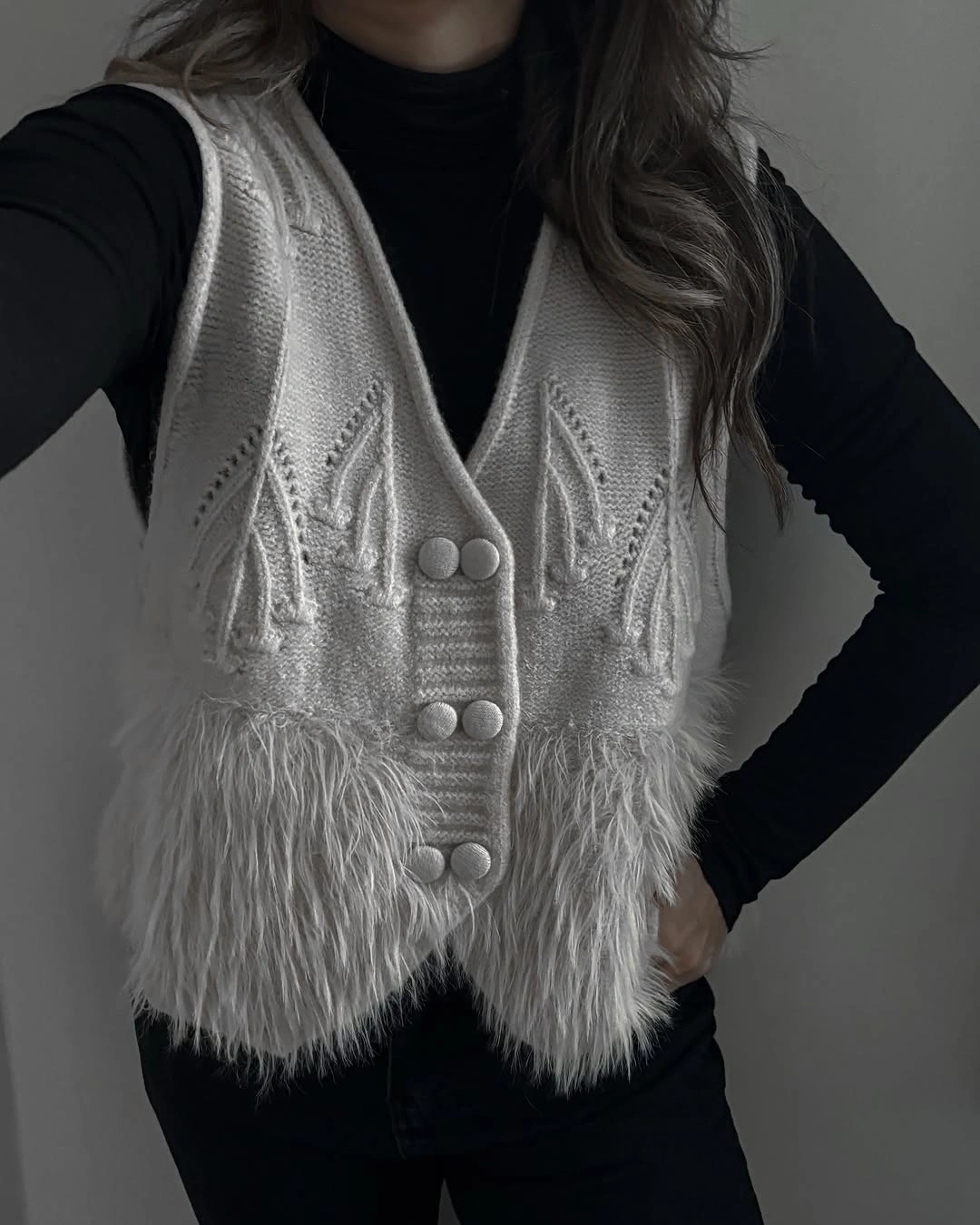
Photo via Instagram
Black bottoms continue the dark base downward, allowing the short gray layer to remain the only substantial interruption in the palette. Texture also distinguishes the vest from the smoother-looking black areas, giving the upper section additional depth without expanding the color range. This combination shows how a small change in length and surface can reorganize a largely monochrome silhouette.
The gray layer works because it is both lighter and shorter than the pieces surrounding it. Its compact proportion concentrates attention near the upper torso, while the continuous black base keeps the overall line clear and restrained.
Broad Pale Proportions Create a Sportier Silhouette
A light gray quarter-zip-looking pullover sets a broad, relaxed upper shape, with dark green trim adding a narrow point of contrast near the neckline. Wide white trousers continue the generous proportions below rather than narrowing sharply after the top. Together, those larger shapes create a sportier visual direction through scale and line rather than through bright color or decorative detail.
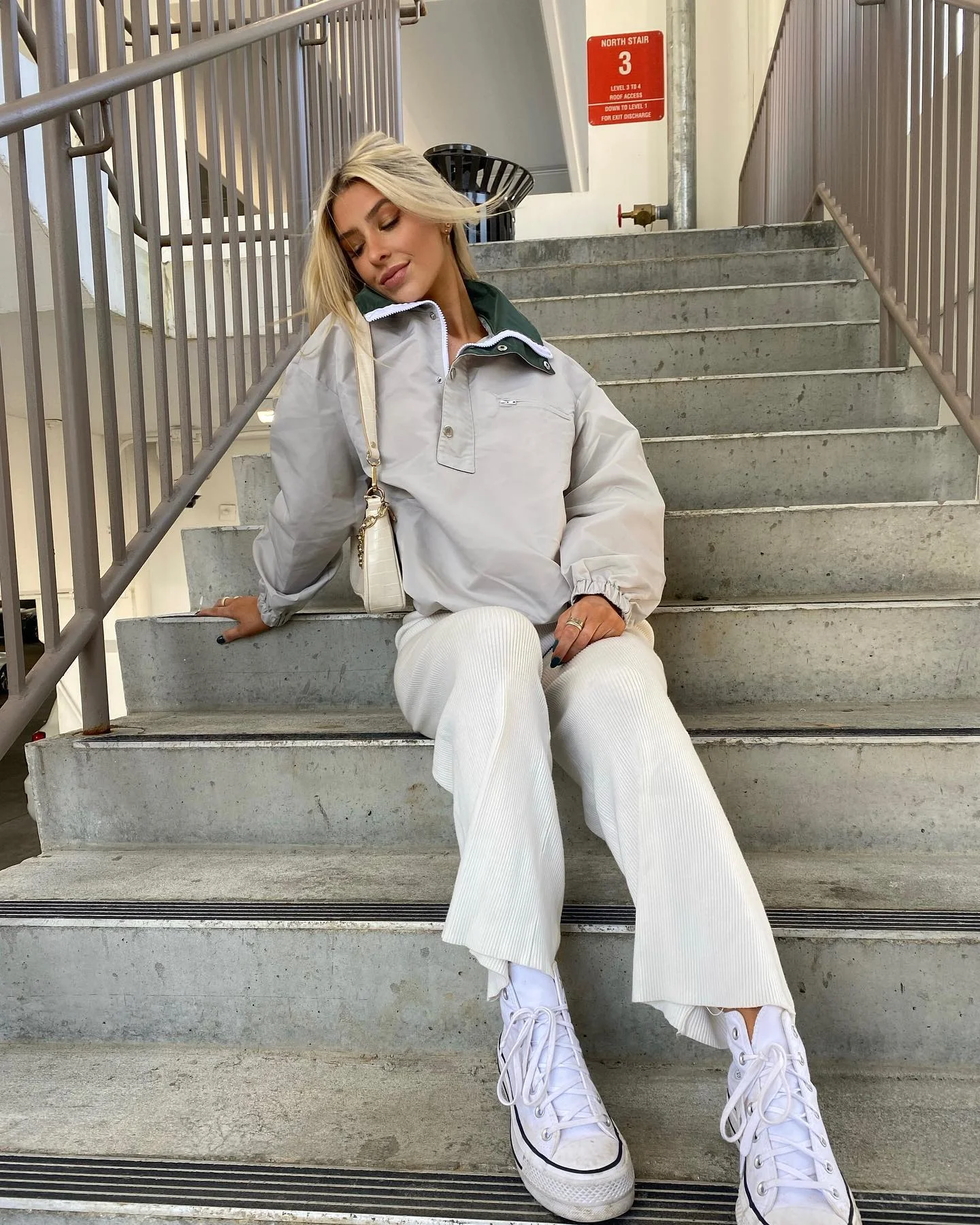
Photo via Instagram
White high-top sneakers repeat the trousers' pale tone at the feet, which helps the broad lower silhouette continue without a strong color break. A small shoulder bag introduces a more compact shape beside the oversized top and wide trousers, creating useful scale contrast without becoming the main focal point. The dark green trim remains the clearest small accent within an otherwise light and restrained palette.
Repeated white across the trousers and footwear gives the lower half visual continuity, while the roomy gray upper section preserves the loose overall proportion. The small bag and narrow green trim provide just enough definition to keep the pale, broad shapes from reading as one undifferentiated mass.
Camel Scarf Bridges Black and Cream
Three distinct color bands organize this silhouette: a cropped black fuzzy-looking jacket at the top, a long camel scarf through the center, and cream wide-leg trousers below. The dark upper layer is compact, while the trousers open into a broader pale shape, so the scarf becomes the visual link between two areas that differ strongly in both tone and proportion.
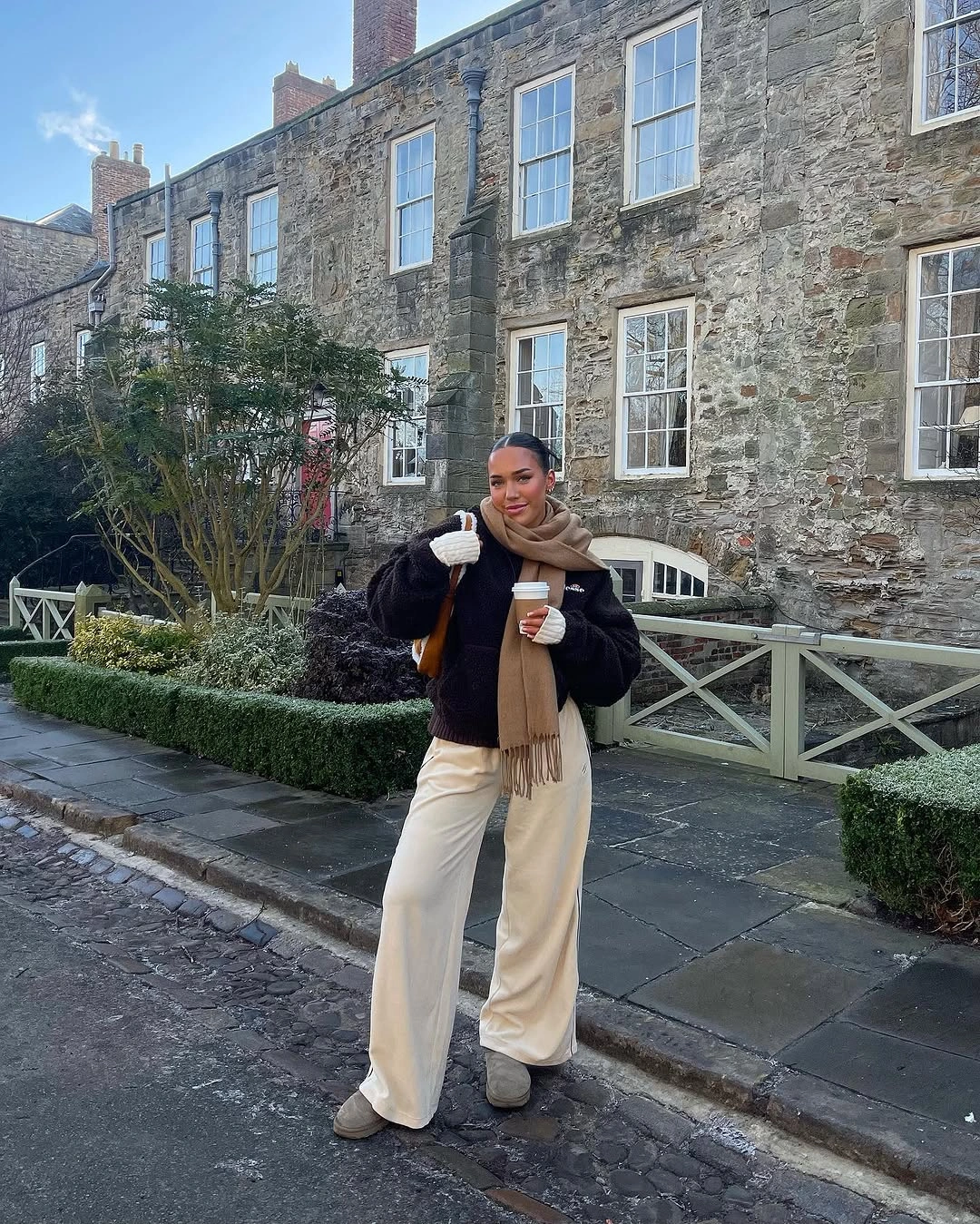
Photo via Instagram
Because the scarf falls well below the cropped jacket, its camel color crosses the transition instead of staying confined near the neckline. That vertical strip softens the shift from black to cream while still remaining visibly separate from both. Muted shoes keep the lower finish quiet, allowing the wide trousers and long scarf to remain the strongest lines in the composition.
The scarf gives the three-color arrangement continuity without erasing the separation between dark and light areas. Its length also counterbalances the cropped jacket, adding a vertical element beside the broader cream trousers.
Vivid Pink Focuses an Otherwise Pale Palette
A white textured-looking jacket and pale embellished-looking trousers establish an almost continuous light palette, leaving very little strong color across the main silhouette. Their similar values make surface detail and proportion more noticeable, especially where the jacket ends and the trousers continue downward. Against that restrained base, the vivid pink shoulder bag becomes immediately prominent.
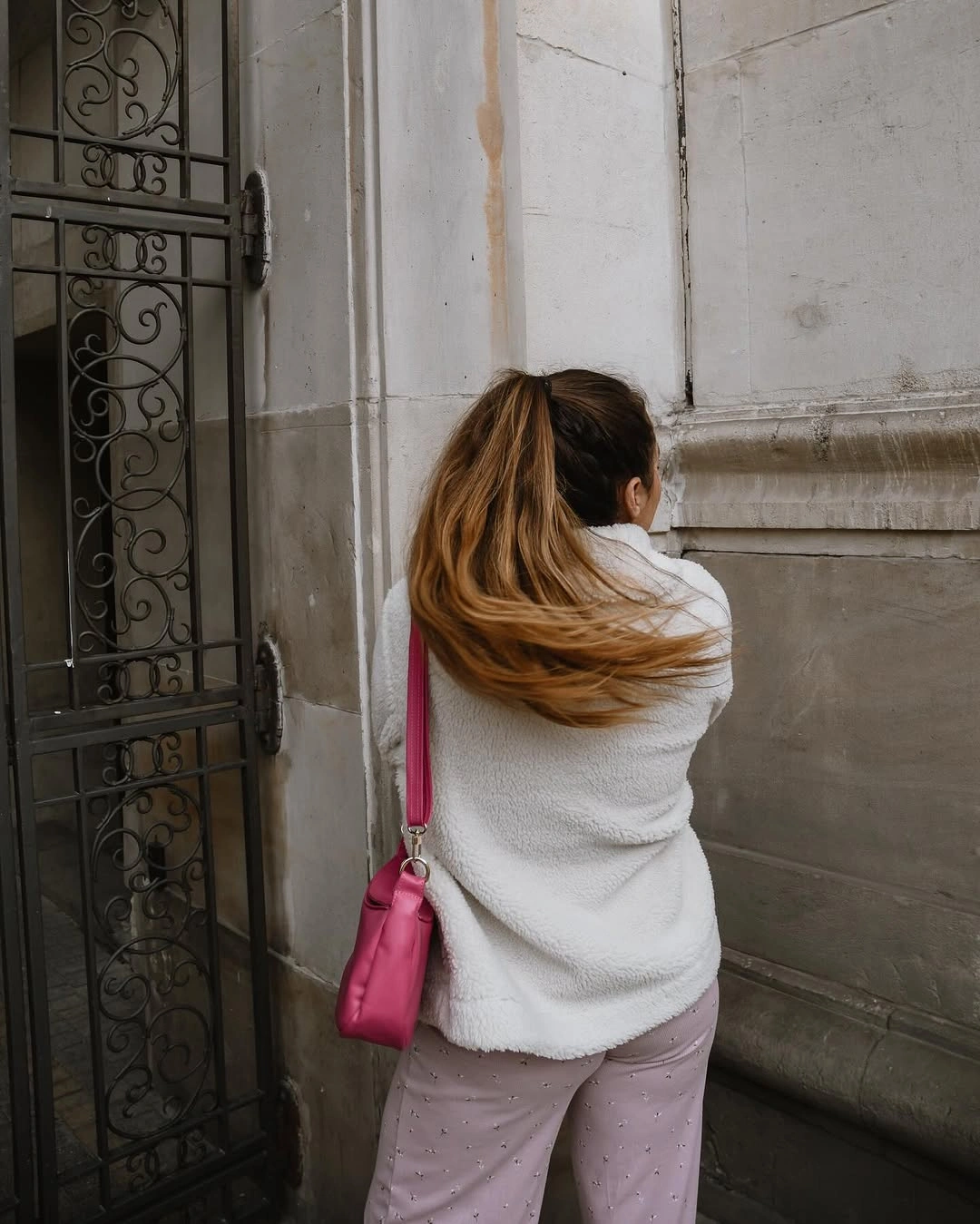
Photo via Instagram
The bag works as a concentrated focal point because its saturated pink is contained within one relatively small shape instead of repeated across the outfit. Its placement near the upper side draws attention without interrupting the pale vertical line from jacket to trousers. The surrounding light tones give that single accent enough visual space to register clearly without competing details.
One compact area of vivid color is enough to change the emphasis of the entire pale composition. The textured and embellished-looking surfaces remain visible, but the pink bag provides the clearest point for the eye to settle.
Long Camel Outerwear Defines the Vertical Line
A long camel teddy-looking coat establishes the dominant vertical line, extending well below the dark upper layer beneath it and creating a broad uninterrupted frame. The darker center adds depth inside that camel outline, while the light trousers shift the lower half back toward a brighter value. Length, rather than sharp color blocking, gives the outer layer its strongest presence.
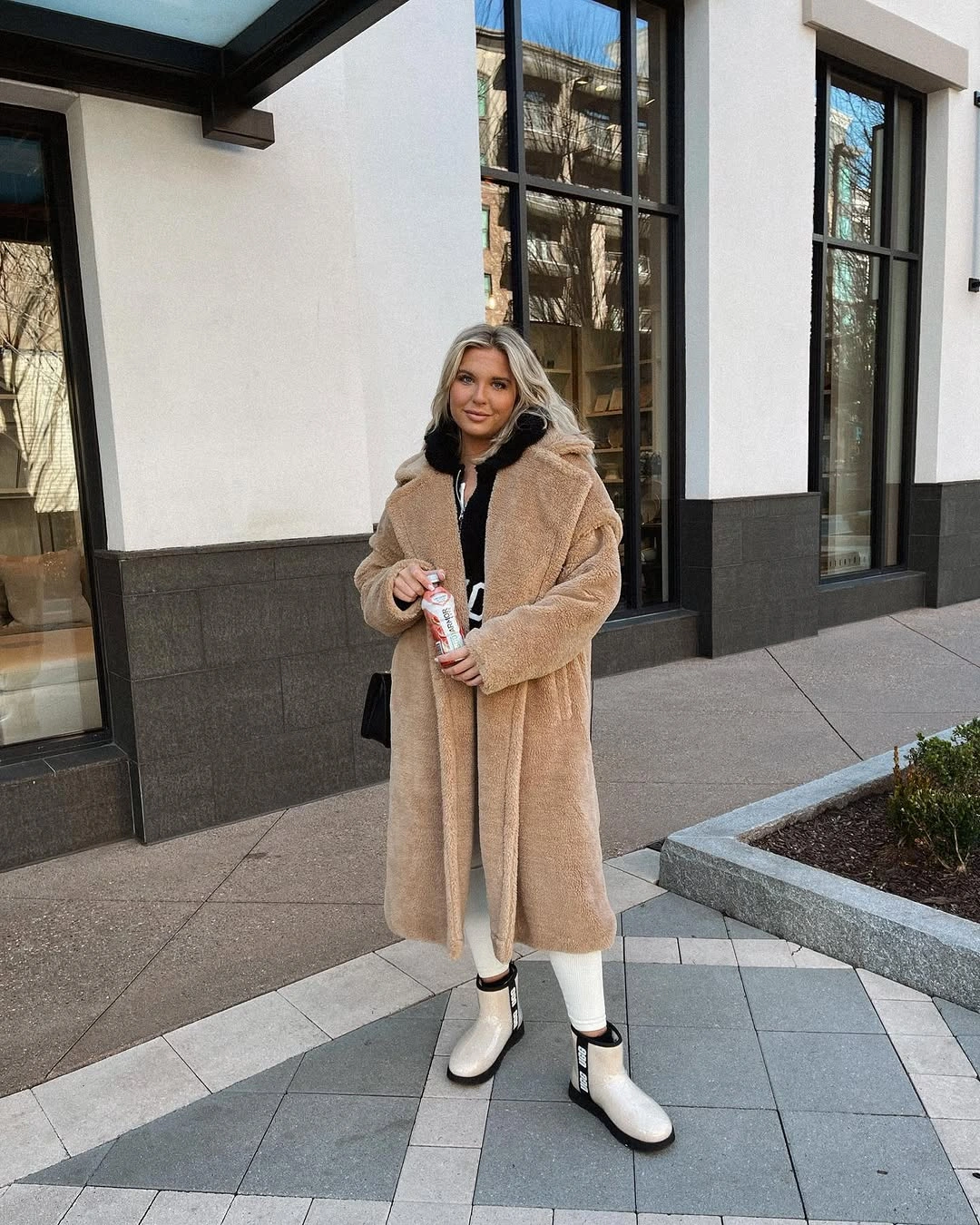
Photo via Instagram
White ankle boots with black detailing define the base of the silhouette by continuing the lighter direction of the trousers while adding a small darker interruption near the feet. Their pale finish keeps the lower line visually connected, so the long camel coat remains the main vertical statement rather than being cut off by heavy dark footwear. The black detailing also echoes the darker upper layer on a smaller scale.
The extended camel layer controls the proportion by framing most of the visible silhouette from above the shoulders toward the lower legs. Pale trousers and white footwear keep the base distinct, while the darker inner layer and black boot detailing add measured contrast within that longer vertical structure.