Business-casual dressing is always a negotiation between authority and ease, and the most convincing result rarely comes from pushing hard in either direction. Trendy winter business casual outfits feel current when they leave room for personality while still carrying a sense of purpose, so polish reads as intentional rather than stiff and ease feels considered rather than careless.
A polished appearance does not need to prove itself by following a rigid dress-code formula. It can feel deliberate when the overall impression is clear, composed, and confident enough to hold together without looking overworked. That leaves space for individual preference to shape the result, making refinement feel chosen rather than imposed.
Black Tailoring With a Crisp White Break
The black blazer and long black skirt create a controlled dark base, but the white shirt keeps the outfit from turning into one solid block. Your eye goes first to the collar and shirt front, then down to the narrow cuff breaks and the clean line of the skirt. That small amount of white gives the tailoring definition without changing the quiet, formal mood of the look.
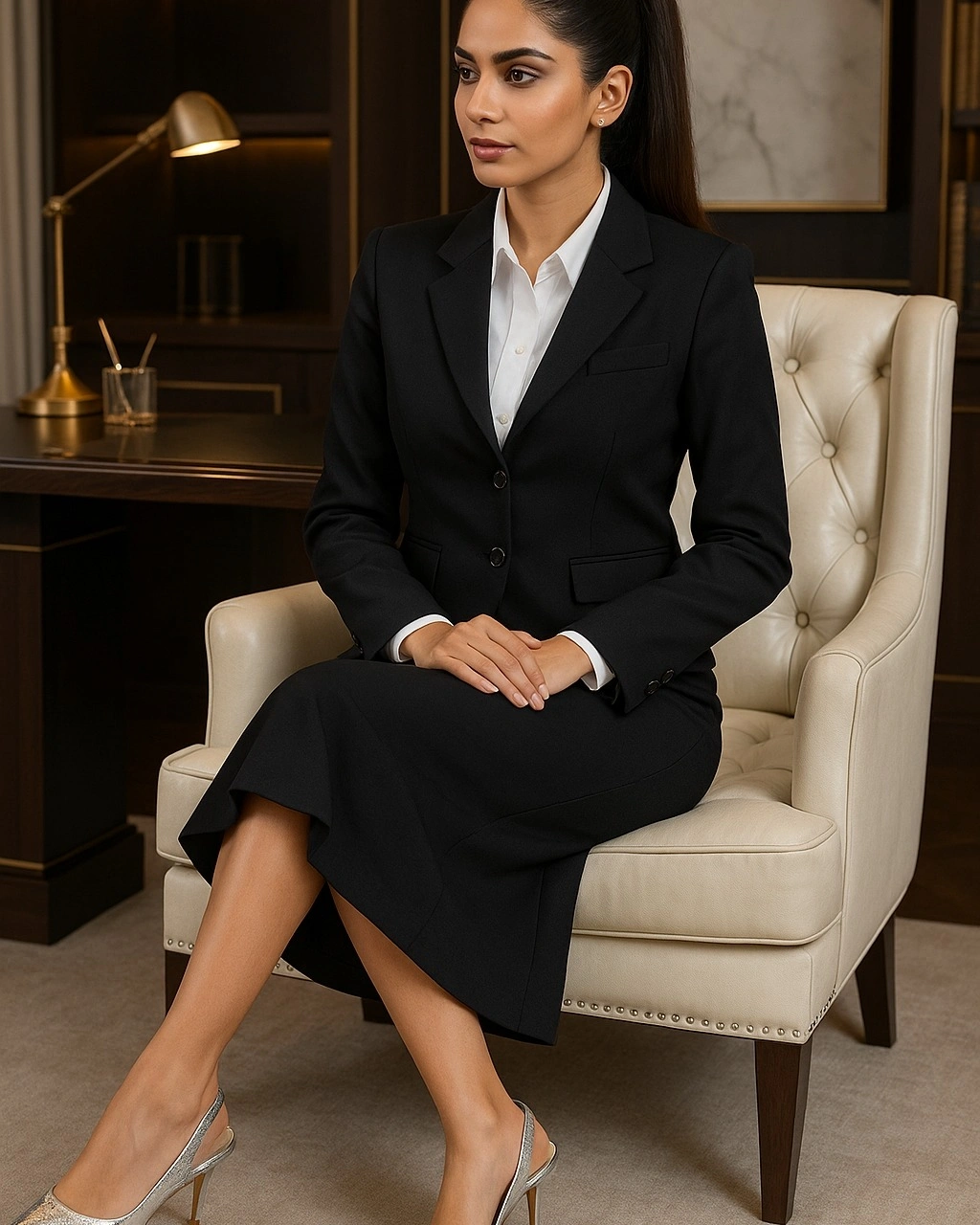
Photo via Instagram
The seated pose makes the proportions easy to read because the blazer frames the torso while the skirt continues the dark color through the lower half. Silver pointed heels add a light finish at the floor, but they do not compete with the collar and shirt as the main contrast. This is one of the clearest winter business casual outfits for women when the goal is a no-jeans shape built from dark tailoring and precise shirt placement.
The strength of the outfit is restraint. It shows how a crisp white layer can do most of the visual work inside black pieces that stay simple and uninterrupted.
Cream Coat Over a Navy Center
The cream long coat works like a pale frame around the darker navy top, so the outfit has contrast without feeling sharply divided. Light trousers continue the soft outer color story downward, while the black belt line gives the middle a clear stop. The result is a winter business casual outfit built around calm color placement rather than heavy decoration.
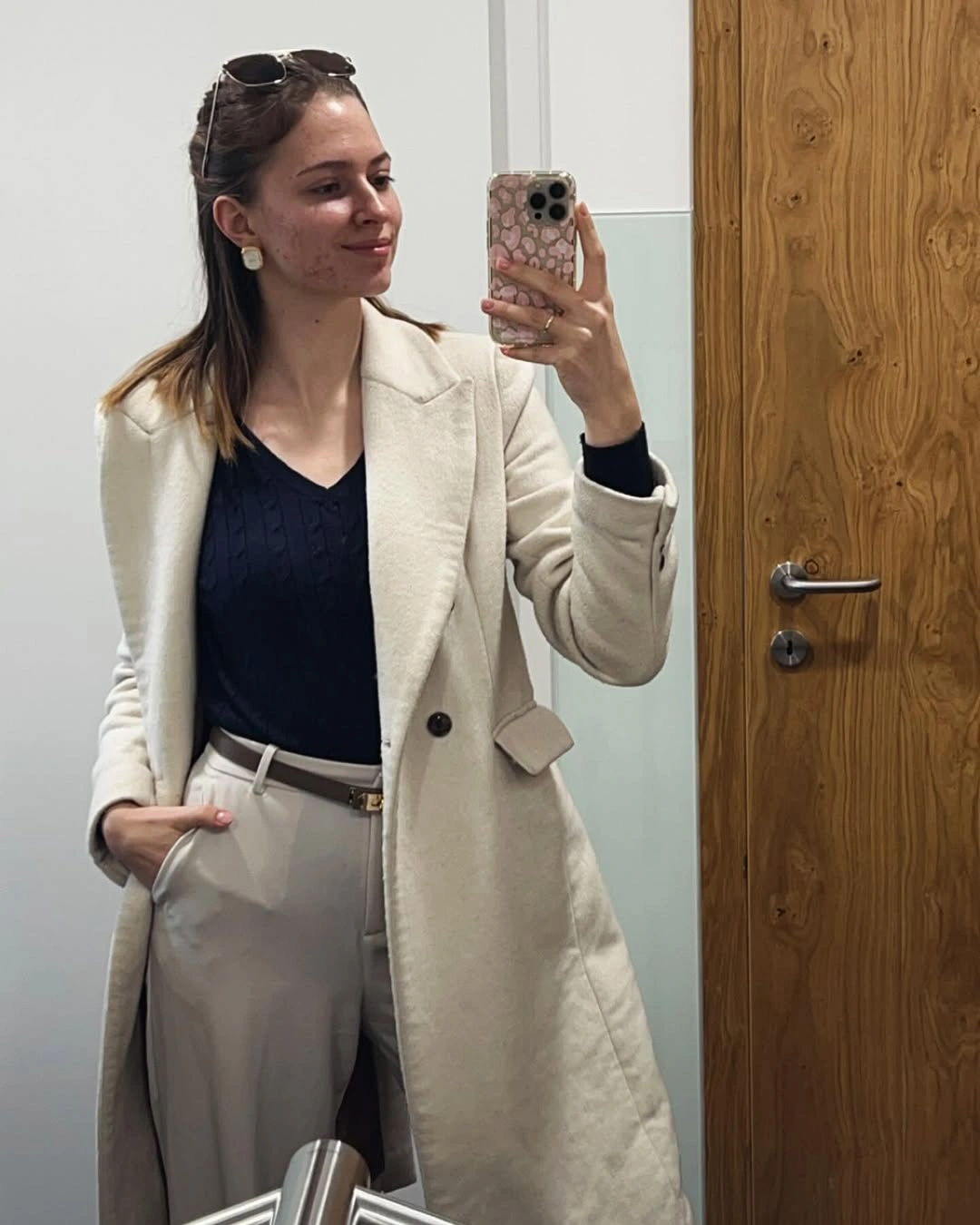
Photo via Instagram
Coat length matters here because the pale outer layer runs nearly the full height of the look, making the navy top feel like a deliberate center panel. The trousers are light enough to connect with the coat, but their belted waist keeps the outfit organized. For cold weather office wear as a visual idea, this look shows how a long layer can make simple separates feel more complete.
The outfit does not rely on exact fabric or extra accessories to make its point. Its structure comes from the relationship between pale outerwear, a darker middle tone, and a clean trouser break.
Lime Green Against Soft White Trousers
The lime green high-neck top gives this outfit its entire personality, while the white trousers keep the rest of the look quiet. Because the color is concentrated in one large upper block, it feels intentional instead of scattered. The ribbed edges at the neck, cuffs, and hem also help the saturated shade hold a clean shape.
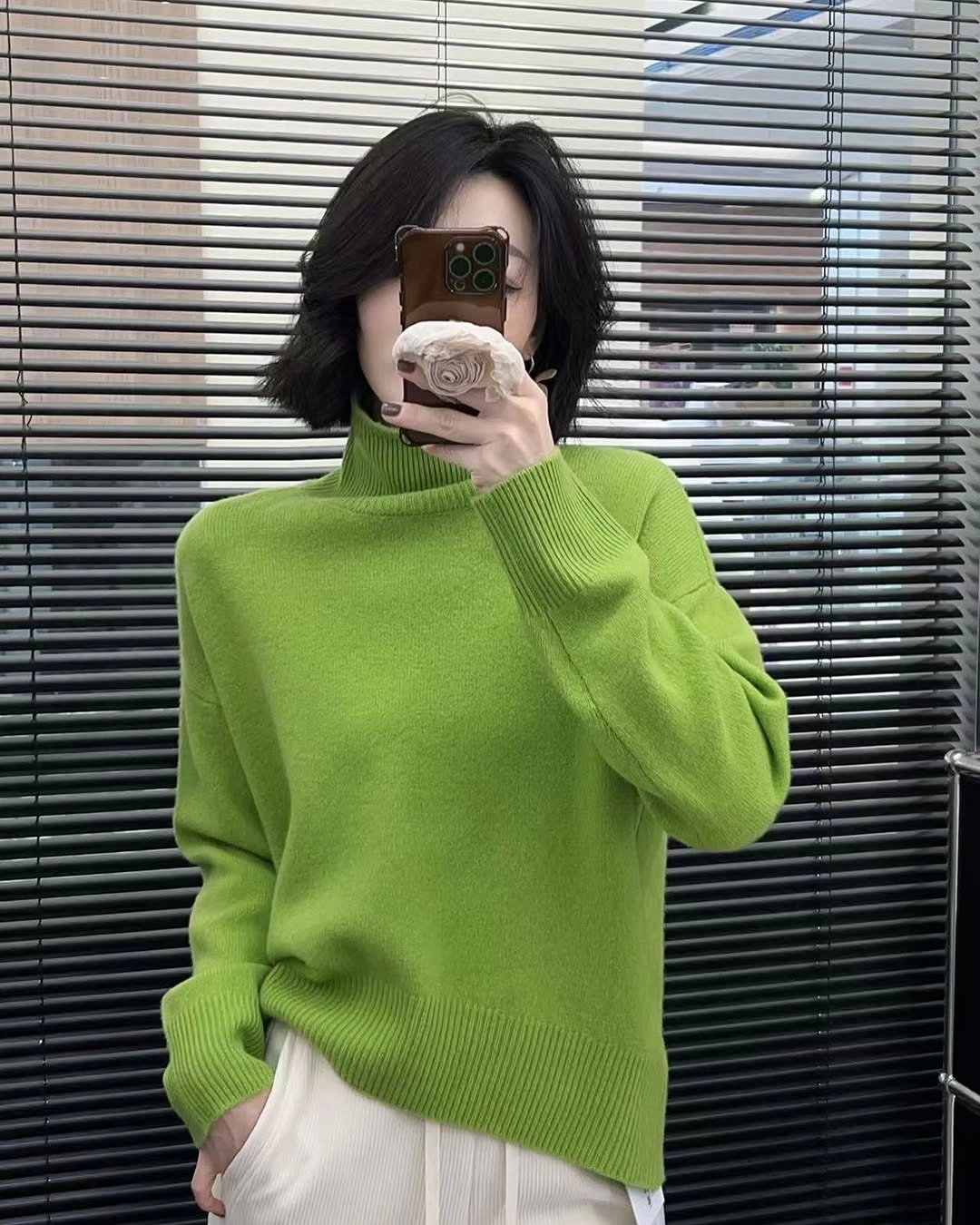
Photo via Instagram
This is where a colorful business casual outfit can still feel visually simple. The top is bright, but the silhouette stays easy to understand: a high neckline, long sleeves, a loose body, and pale trousers underneath. That clear division lets the color feel playful without forcing the outfit into a complicated styling story.
The useful lesson is placement. One saturated piece can carry the look when the surrounding pieces give it enough visual space.
Taupe Layers With Wide Pale Trousers
This look moves through close tones instead of sharp contrast, starting with the taupe-brown long coat and continuing into a beige top and pale wide-leg trousers. The palette feels soft, but the long coat gives it a strong vertical edge. A small dark handbag adds the clearest punctuation point against all those muted neutrals.
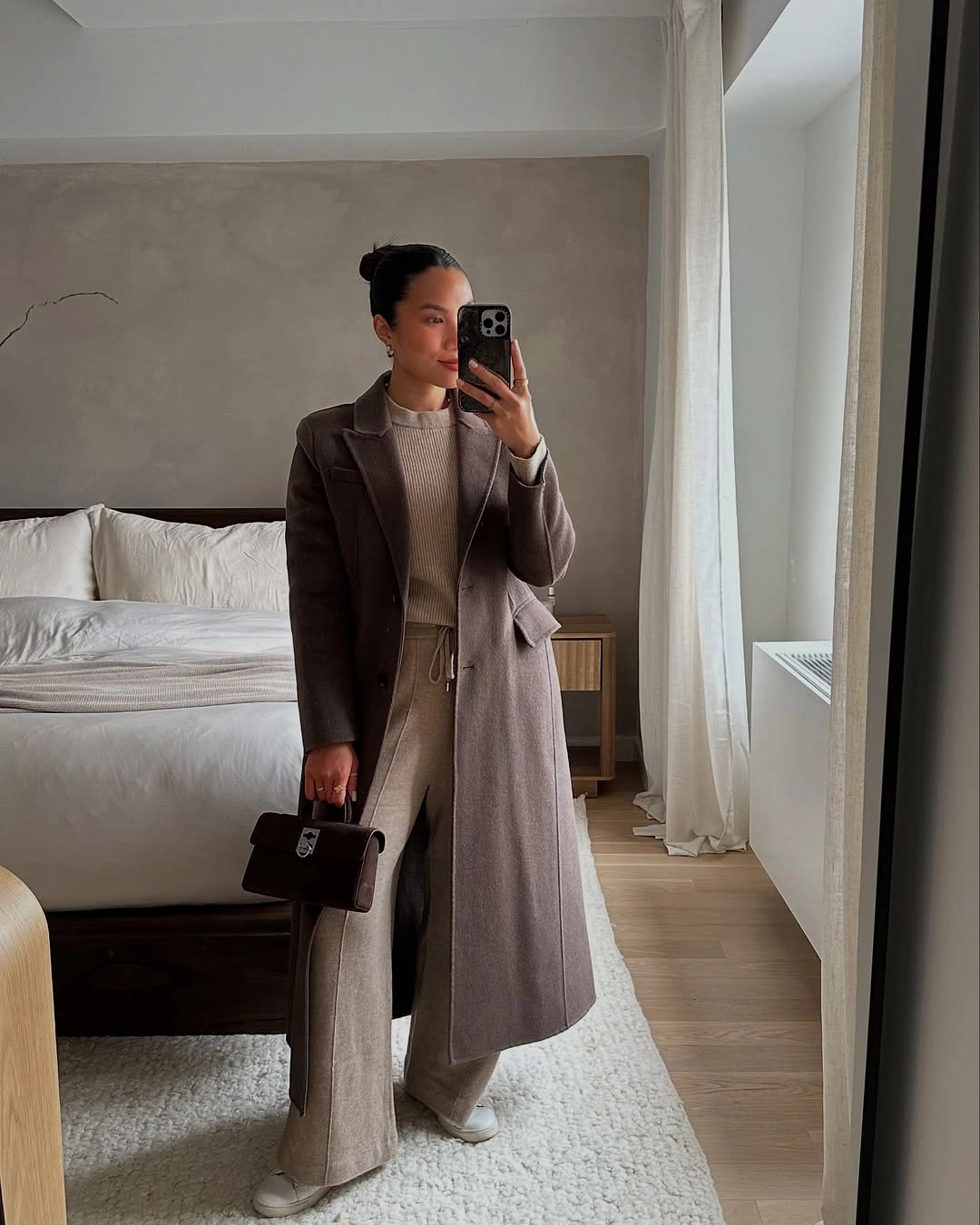
Photo via Instagram
The wide trouser shape changes the outfit from narrow tailoring into something more relaxed in proportion, while the coat keeps the outer line polished and contained. The beige top acts as a middle tone between the darker coat and lighter trousers, so nothing feels abruptly separated. This is a strong example of classy cold weather office wear as a color story, not as a claim about warmth or dress code.
The outfit works because every neutral has a job. Brown frames, beige bridges, pale trousers extend, and the dark bag gives the look a final anchor.
Plaid Dress With Bright Sleeve Volume
The plaid midi dress introduces the first major pattern moment, and the white puff sleeves make the layering feel visible from the start. The fitted patterned center keeps the shape narrow, while the sleeves add volume at the arms and shoulders. That contrast gives the outfit a clear dress-focused structure without needing many extra pieces.
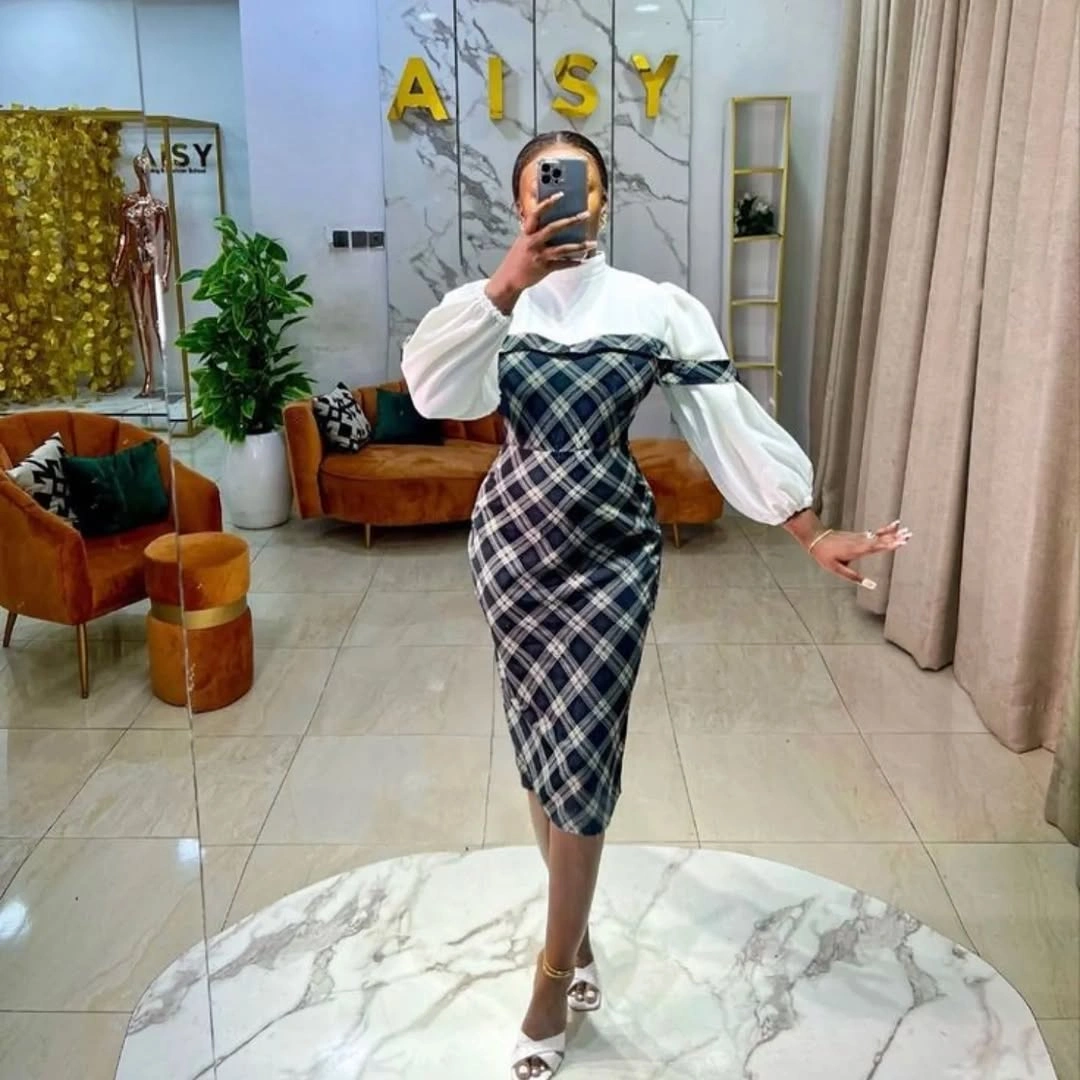
Photo via Instagram
This winter business casual dress idea works because the pattern and sleeve shape divide the look into two readable parts. The plaid controls the center line from neckline to hem, while the white blouse brightens the upper area and softens the edges. Light heels keep the lower finish simple, letting the dress and sleeves remain the main visual conversation.
The section adds a different kind of business casual proportion. Instead of blazer structure or trouser volume, the outfit depends on a patterned dress layered over a bright, shaped sleeve.
Gray Blazer With Denim Contrast
The gray blazer gives the outfit its tailored frame, while the blue jeans shift the lower half into a more relaxed visual register. A black camisole-style top and dark belt create a compact center, so the denim does not feel separate from the jacket. This is the first place where winter business casual outfits with jeans can be read through structure rather than through a dress-code claim.
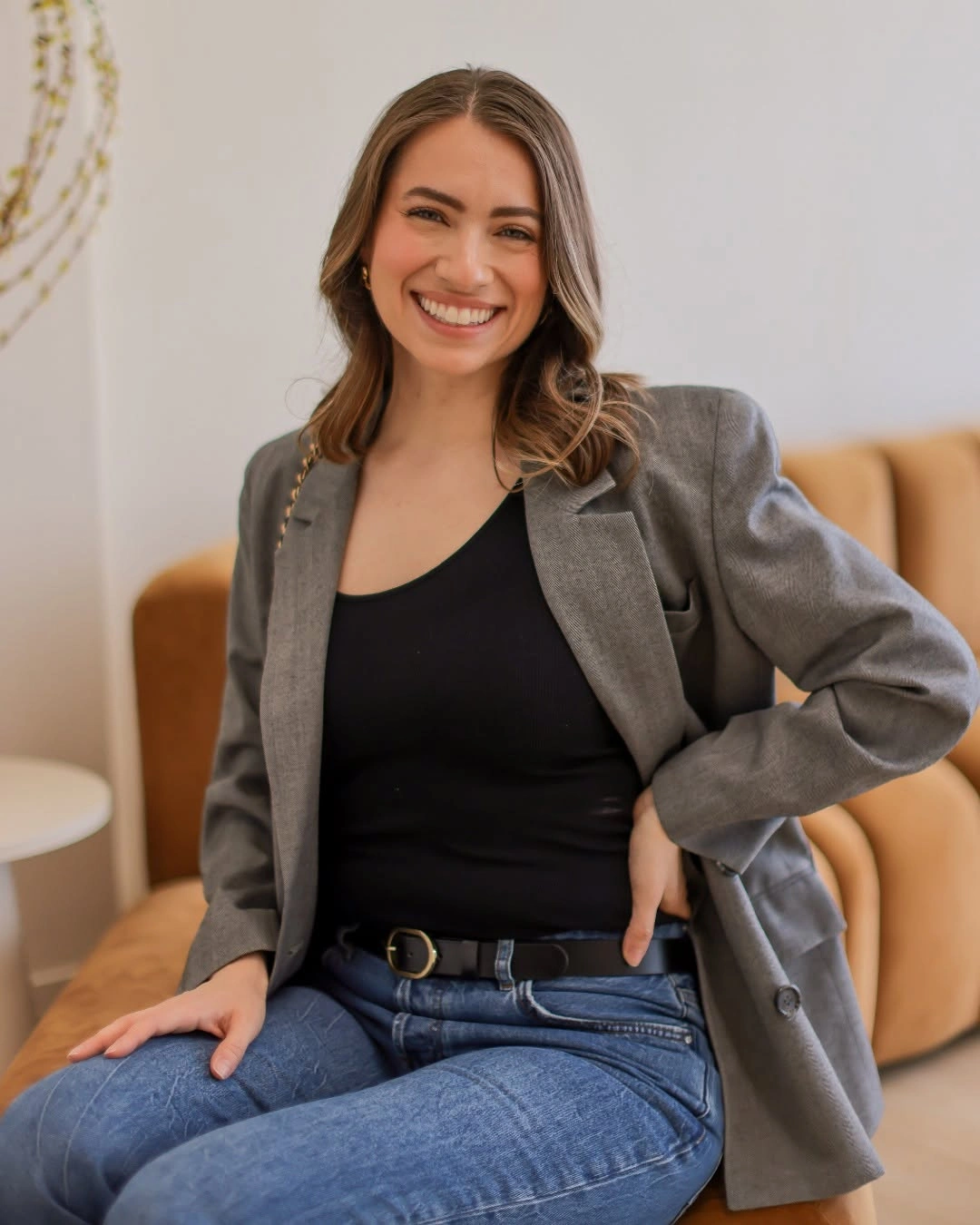
Photo via Instagram
The seated pose makes the blazer shape especially important because the shoulders, lapels, and sleeve line carry most of the upper volume. The jeans bring a visible blue texture into the look, but the black top keeps the middle clean and grounded. Instead of treating denim as casual by default, the outfit shows how a tailored gray layer can make jeans feel more intentional.
The strongest detail is the dark belt line between the blazer and denim. It gives the outfit a clear center and keeps the contrast from becoming too loose.
White Tailoring With a Tan Center
The white blazer and white wide trousers create a pale outer frame, and the tan blouse gives the outfit a warmer middle layer. Because the color shift is soft rather than sharp, the look feels connected from shoulder to floor. The wider trouser shape keeps the lower line open, so the tailored top does not make the whole outfit feel narrow or rigid.
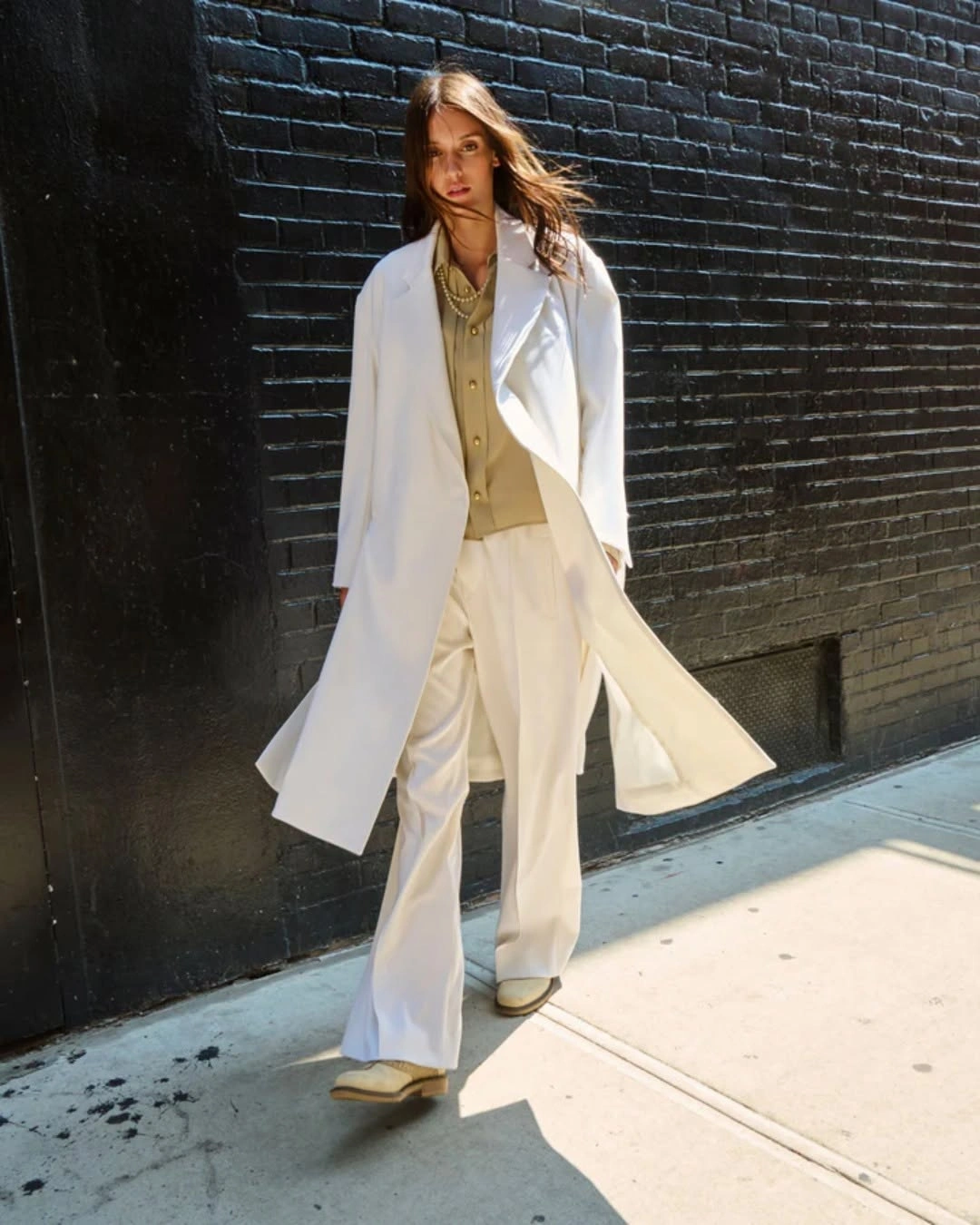
Photo via Instagram
What makes this outfit useful for business casual styling is the way it separates lightness from plainness. The white pieces repeat enough to feel deliberate, while the tan center stops the palette from becoming flat. The long trouser line also changes the mood, giving the outfit movement and ease without needing extra color or heavy accessories.
This is a light tonal outfit with a clear center. The tan blouse matters because it gives the eye somewhere to rest inside the white frame.
Black Suit With a Sheer-Looking Center
The black blazer and dark trousers make a strong tailored base, but the brown sheer-looking top changes the center of the outfit immediately. Instead of adding brightness, it softens the black with a warmer translucent-looking layer. The small brown shoulder bag repeats that middle tone, making the color break feel connected rather than accidental.
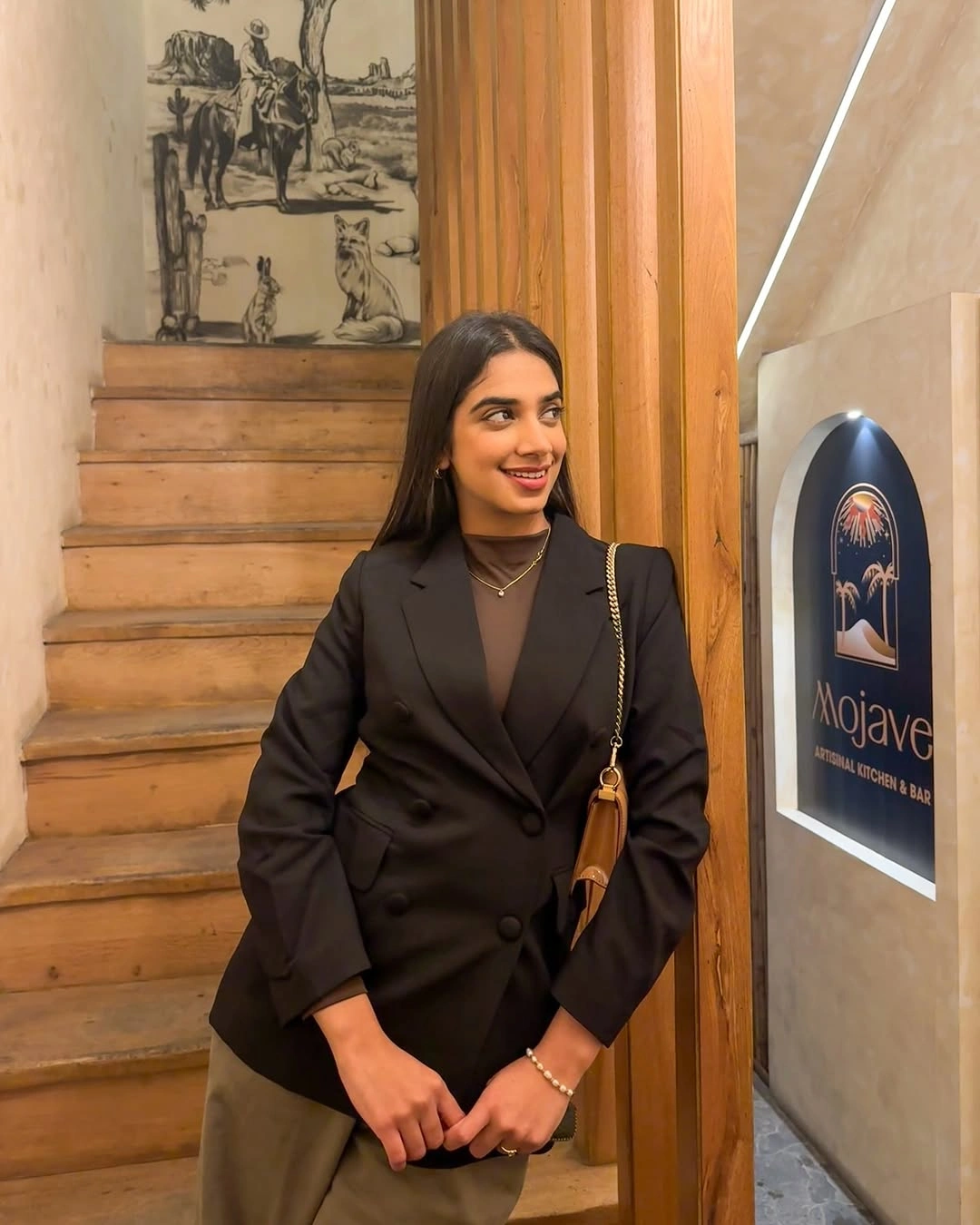
Photo via Instagram
The double-breasted blazer keeps the structure firm, so the softer center does not take over the whole outfit. This is where dark business casual styling becomes more about texture and depth than about adding another obvious color. The visible contrast sits close to the body, while the black outer pieces keep the overall shape controlled.
The outfit works because the interruption is narrow and focused. Brown breaks the black, but it does not compete with the jacket as the main frame.
Gray Plaid With Light Trousers
The gray plaid blazer gives the outfit a patterned top layer, while the light trousers keep the lower half clean and bright. A pale top sits between them, so the blazer does not feel visually heavy against the trousers. The brown belt and handbag are small, but they add enough depth to make the pale base feel anchored.
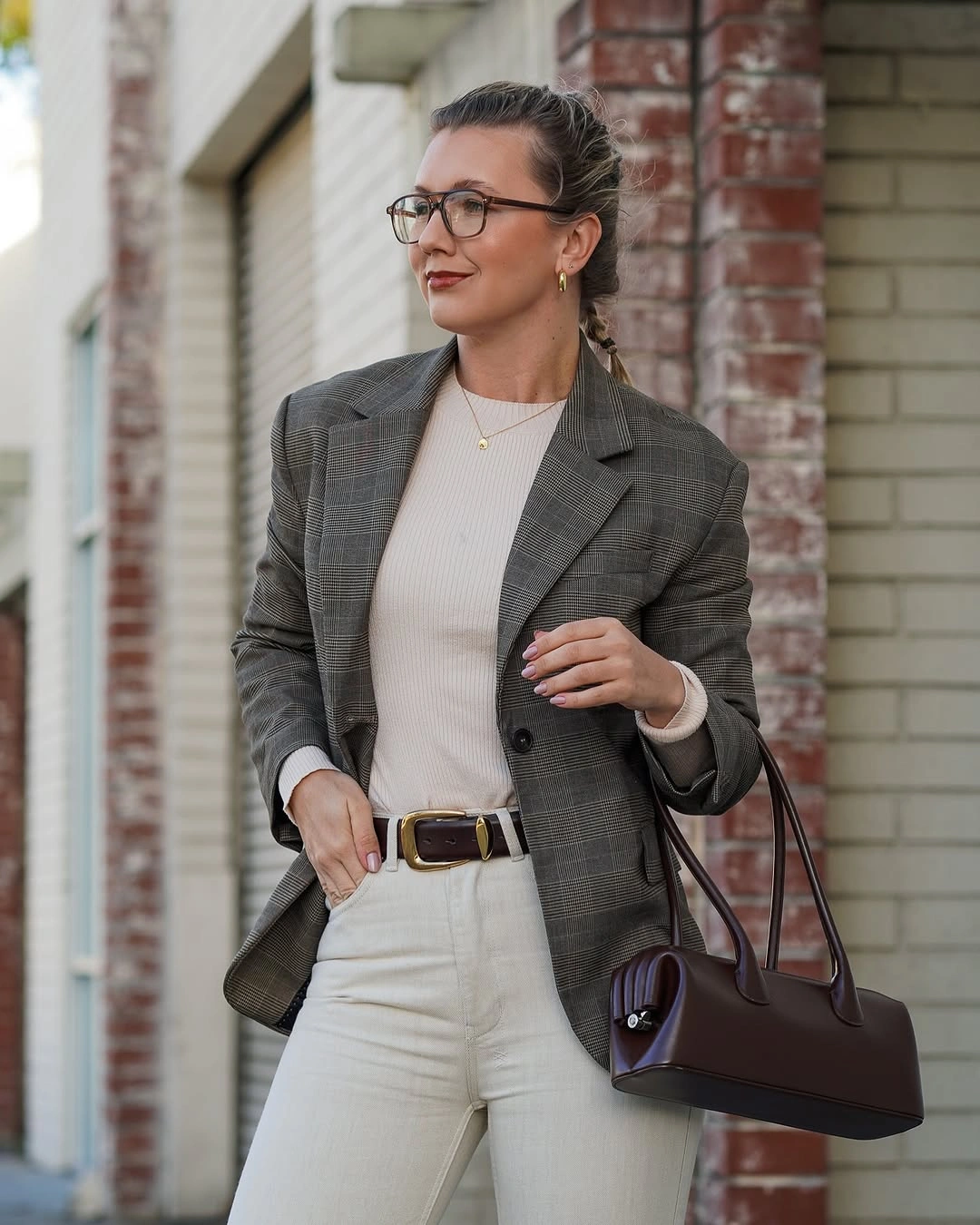
Photo via Instagram
This is a strong grey pants and light trouser idea because the contrast comes from accessories as much as tailoring. The belt marks the waist clearly, and the brown bag repeats that deeper accent on the side of the outfit. Rather than depending on a loud color, the look uses checked pattern, pale fabric tone, and dark brown details to create definition.
The checked blazer is the main visual texture here. The brown accessories matter because they give the light trousers a sharper finish.
Charcoal Pinstripes With an Open Center
The charcoal pinstripe suit creates a strong vertical rhythm across the jacket and trousers, giving the outfit immediate graphic direction. The open center breaks that structure and makes the tailoring feel less conventional. Because the palette stays dark, the exposed space becomes the main contrast rather than a competing color.
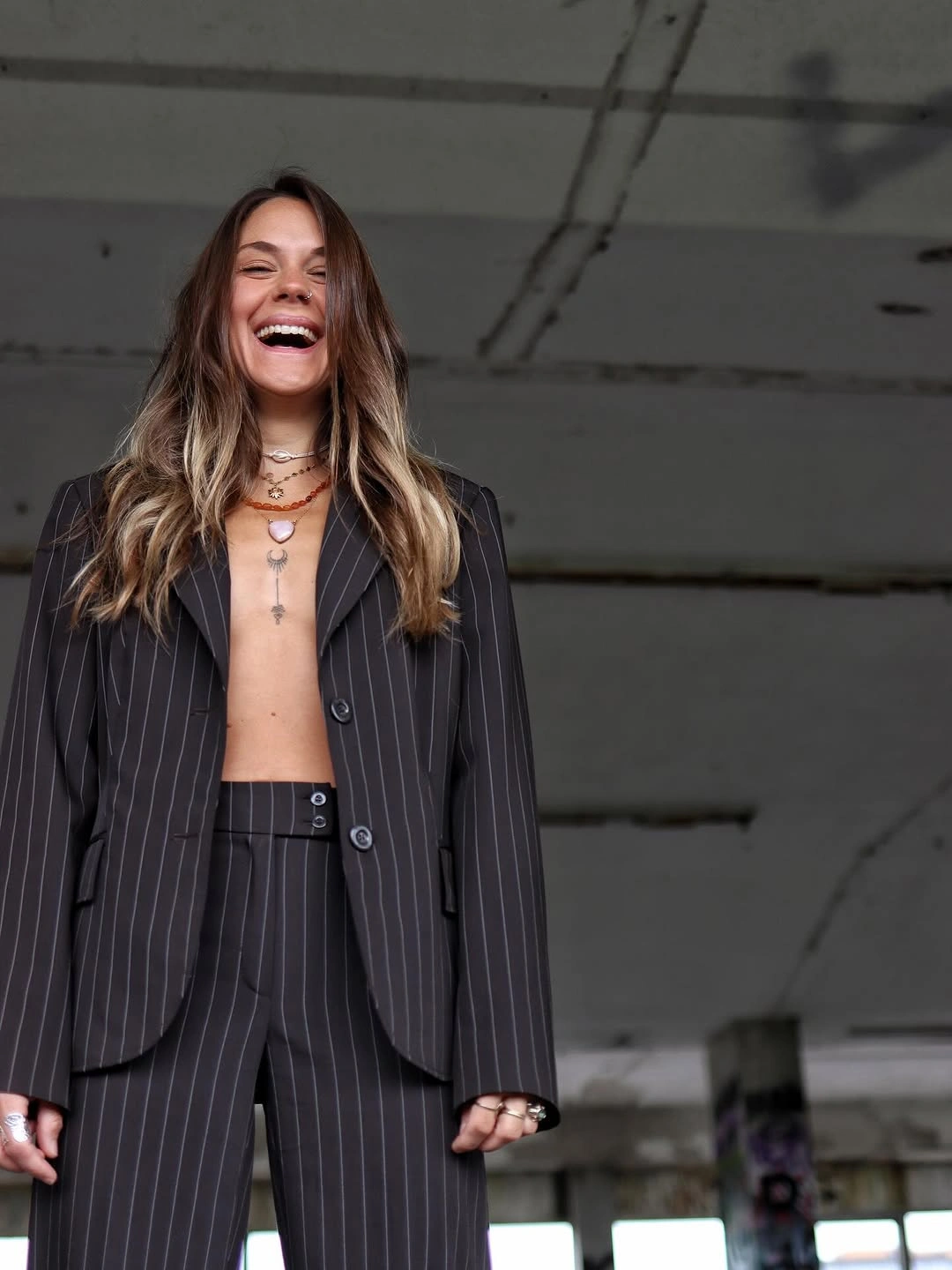
Photo via Instagram
The pinstripes are doing more than decoration here because they lengthen the jacket and trouser line at the same time. The cropped or open middle changes how the suit reads, shifting attention from the outer silhouette to the space between the lapels. Layered necklaces add small points of detail without interrupting the vertical movement of the stripes.
This section should stay precise because the outfit is built on a clear contrast: structured pinstripes against an open center. It adds a sharper tailoring mood without needing a claim about office approval.
Cropped Gray Layer Over Black Volume
The cropped gray jacket changes the outfit before any color contrast has to work hard. It stops high on the body, letting the white shirt show at the collar, cuffs, and lower edge while the black wide trousers create a broader base underneath. That short-over-wide proportion gives the look its main visual tension.
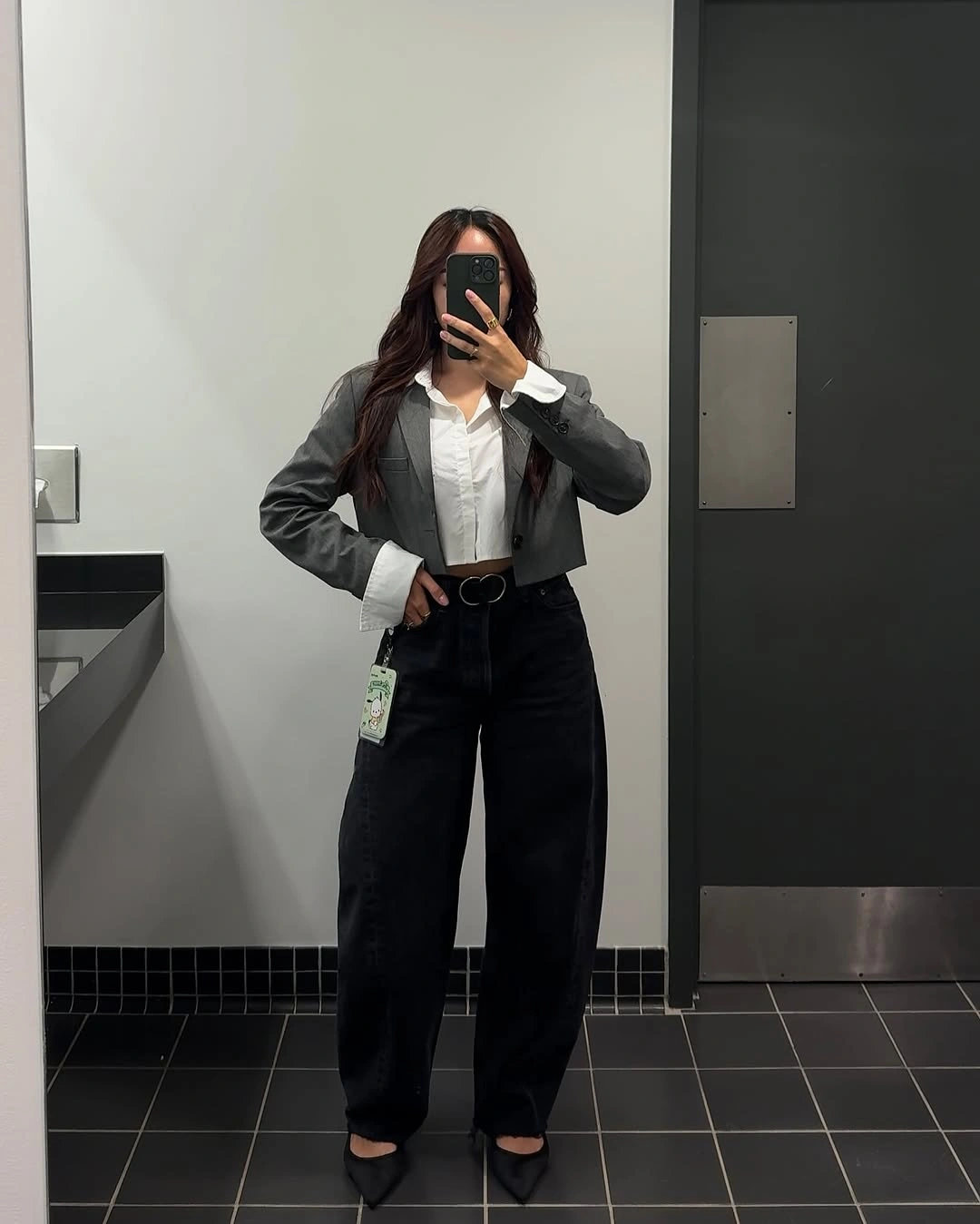
Photo via Instagram
The white shirt is important because it connects the gray jacket to the black trousers instead of letting the outfit split into separate blocks. Its visible hem softens the transition at the waist, while the pointed black shoes continue the dark lower line. This is a no-jeans business casual idea built around proportion, not extra pattern or bright color.
The outfit works because the top layer is compact and the lower half is expansive. That contrast makes the simple palette feel considered rather than plain.
White Cardigan With Black Trousers
The white cardigan creates a clean upper block, while the black trousers give the outfit a darker foundation from the waist down. The button front keeps the top visually organized, and the black belt adds a narrow break between the two large color areas. Because the pieces are simple, the contrast has to carry the whole business casual effect.
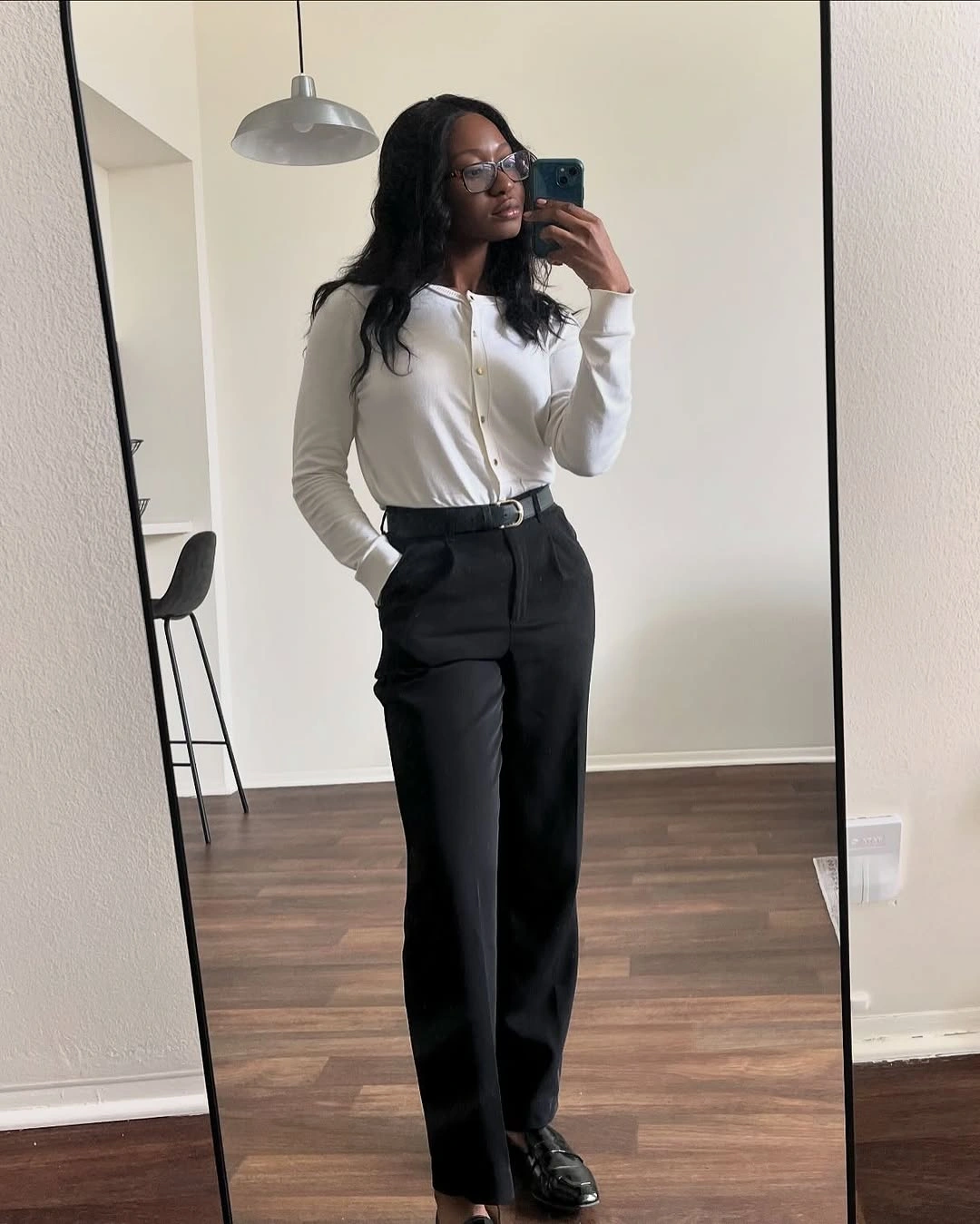
Photo via Instagram
This look is useful because it shows restraint without depending on a blazer. The cardigan brightens the top half, but the black trousers, belt, and shoes bring enough structure to keep the outfit from feeling too loose. The result is a light-over-dark pairing where the sharpest detail sits at the waist and the rest of the outfit stays easy to read.
The strongest move is the controlled division between white and black. It gives the outfit clarity while keeping the silhouette simple, direct, and visually grounded.
All Black With a Chain Belt
The black blazer, black top, and black trousers build a single dark column, so the chain belt becomes the most important interruption. It cuts across the waist with a narrow metallic line and gives the outfit a center without adding another garment color. The matching dark bag keeps the rest of the look close, contained, and focused on the belt placement.
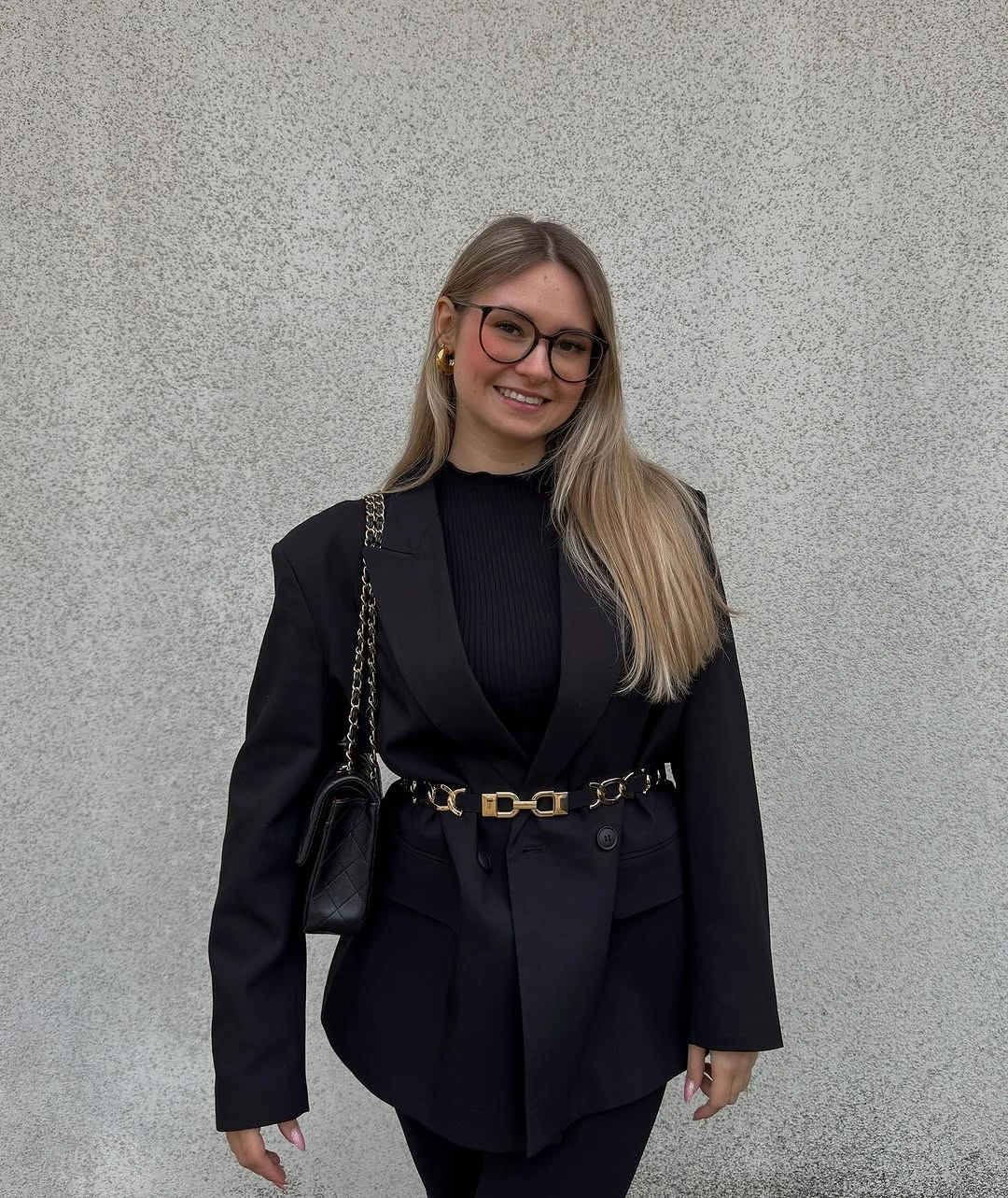
Photo via Instagram
Because the palette stays almost entirely black, the fit and placement of each detail matter more. The blazer sits open enough for the belt to remain visible, while the chain strap on the bag repeats the metallic accent in a smaller way. Instead of using a strong light contrast, the outfit relies on shine, waist definition, and layered black pieces to create depth.
This is a clear dark-on-dark business casual idea. The chain matters because it breaks the surface without changing the calm black structure of the outfit.
Tonal Gray With a Black Bag
The gray top and wide gray trousers stay close in color, which makes the outfit depend on shape rather than strong contrast. The tucked waist keeps the upper block neat, while the wider trouser leg gives the lower half a steady vertical fall. A black handbag adds the clearest dark accent without interrupting the gray story too much.
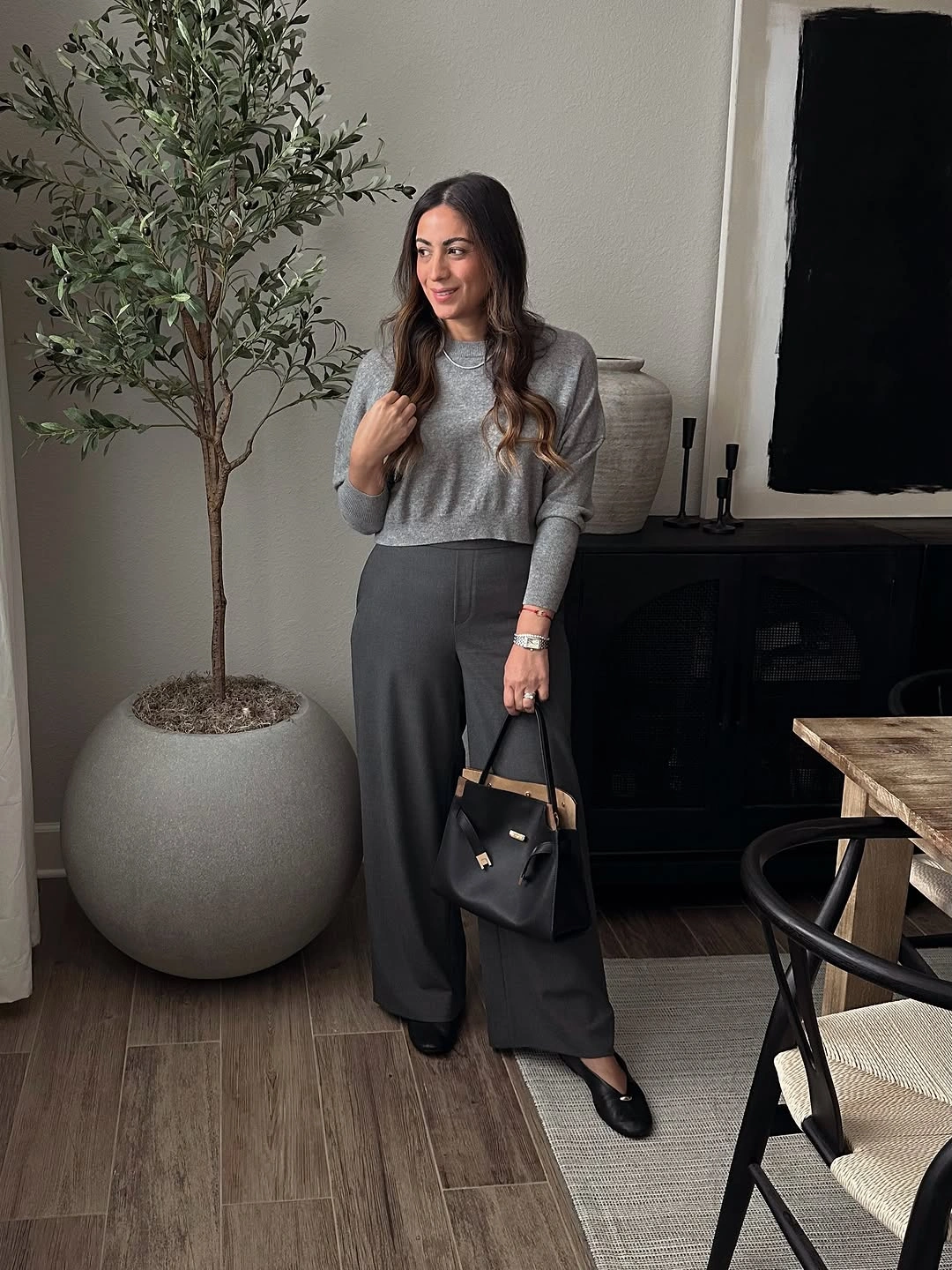
Photo via Instagram
The proportions are the reason this simple outfit reads clearly. The top sits closer to the body, the trousers add volume below, and the black flats echo the handbag at the bottom of the look. For grey pants styling, the useful point is how tonal pieces can still feel defined when the waist, bag, and shoes create enough structure.
The outfit is quiet, but it is not vague. Its shape comes from the contrast between a narrower top, a wide trouser line, and compact black accessories.
Gray Coat With a Striped Hem
The gray coat and gray trousers create a long, connected outer line, while the white top brightens the center of the outfit. A striped shirt hem peeks out below the top, adding a small break that keeps the layered area from looking flat. The gray handbag repeats the outer palette, so the accent stays controlled rather than pulling attention away.
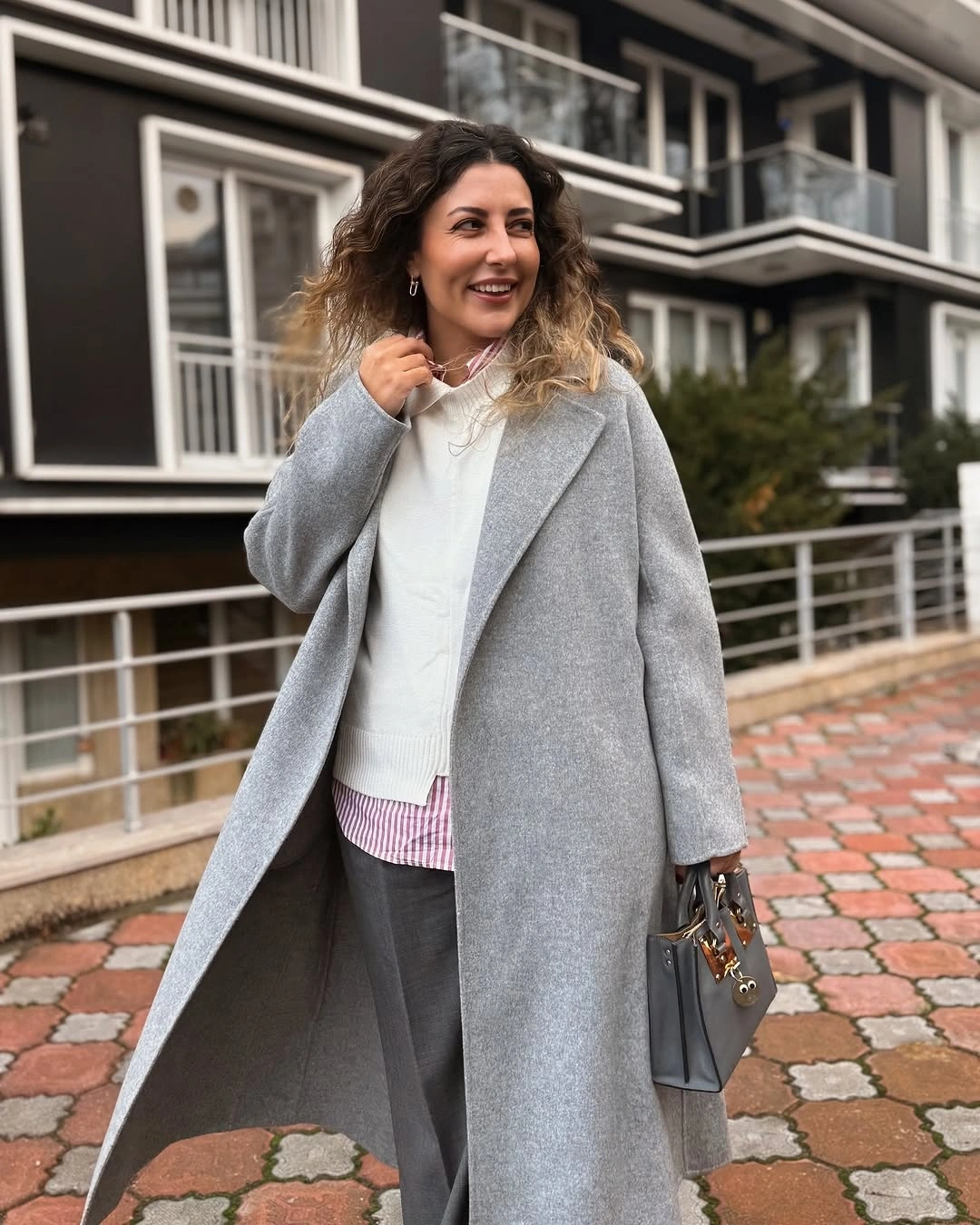
Photo via Instagram
The coat length gives this outfit most of its presence because it frames the trousers and makes the gray tones feel continuous. The lighter center softens that frame, but the visible stripe at the hem introduces a more casual, graphic detail. That small edge is what makes the layering feel specific instead of reading as a plain coat-over-trousers formula.
The outfit works through layered edges and close gray tones. The striped hem is a small detail, but it changes the rhythm of the whole center line.
Light Blue Tailoring With White Boots
The light blue blazer and trousers introduce a cooler color direction while still keeping the outfit clean and structured. A white shirt sits at the center, and the white pointed boots repeat that brightness at the floor. Because the palette is pale from top to bottom, the contrast comes from color temperature and accessory placement rather than from a dark anchor.
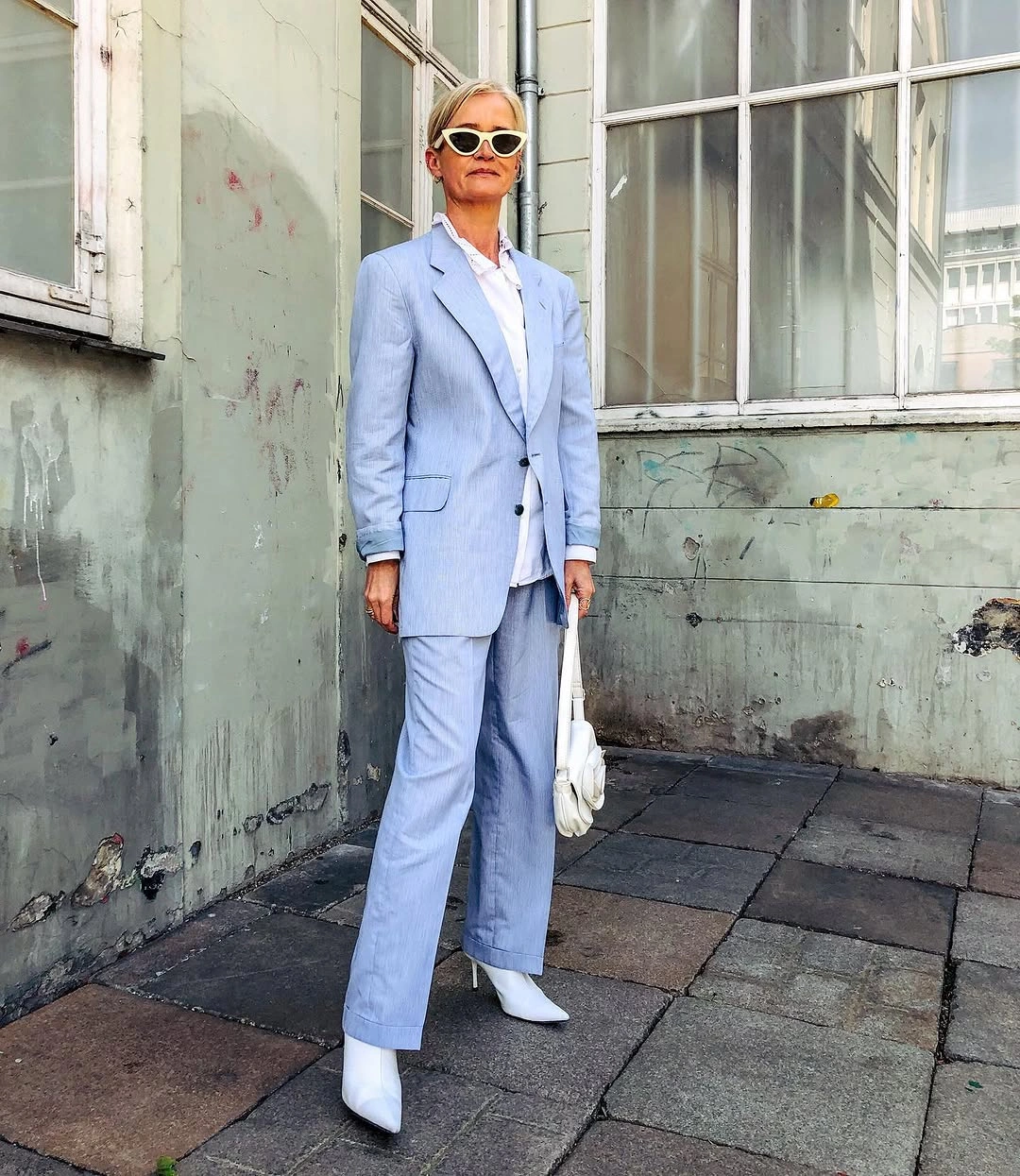
Photo via Instagram
The white boots are important because they do not disappear under the trousers. They sharpen the lower finish and connect back to the shirt, making the light blue pieces feel more intentional. Sunglasses and a pale bag continue the controlled styling, but the strongest relationship is still the cool tailoring against repeated white details.
This outfit adds a clear boots idea without making a comfort or dress code claim. It shows how pastel color can feel structured when the accessories repeat one crisp shade.
Black Layers Around a White Shirt
The dark jacket and black trousers create a compact frame, while the white button shirt gives the outfit its sharp central break. In the seated composition, the shirt front, cuffs, and collar carry more visual weight than they might in a full standing view. That makes the look feel focused on clean contrast instead of on added accessories.
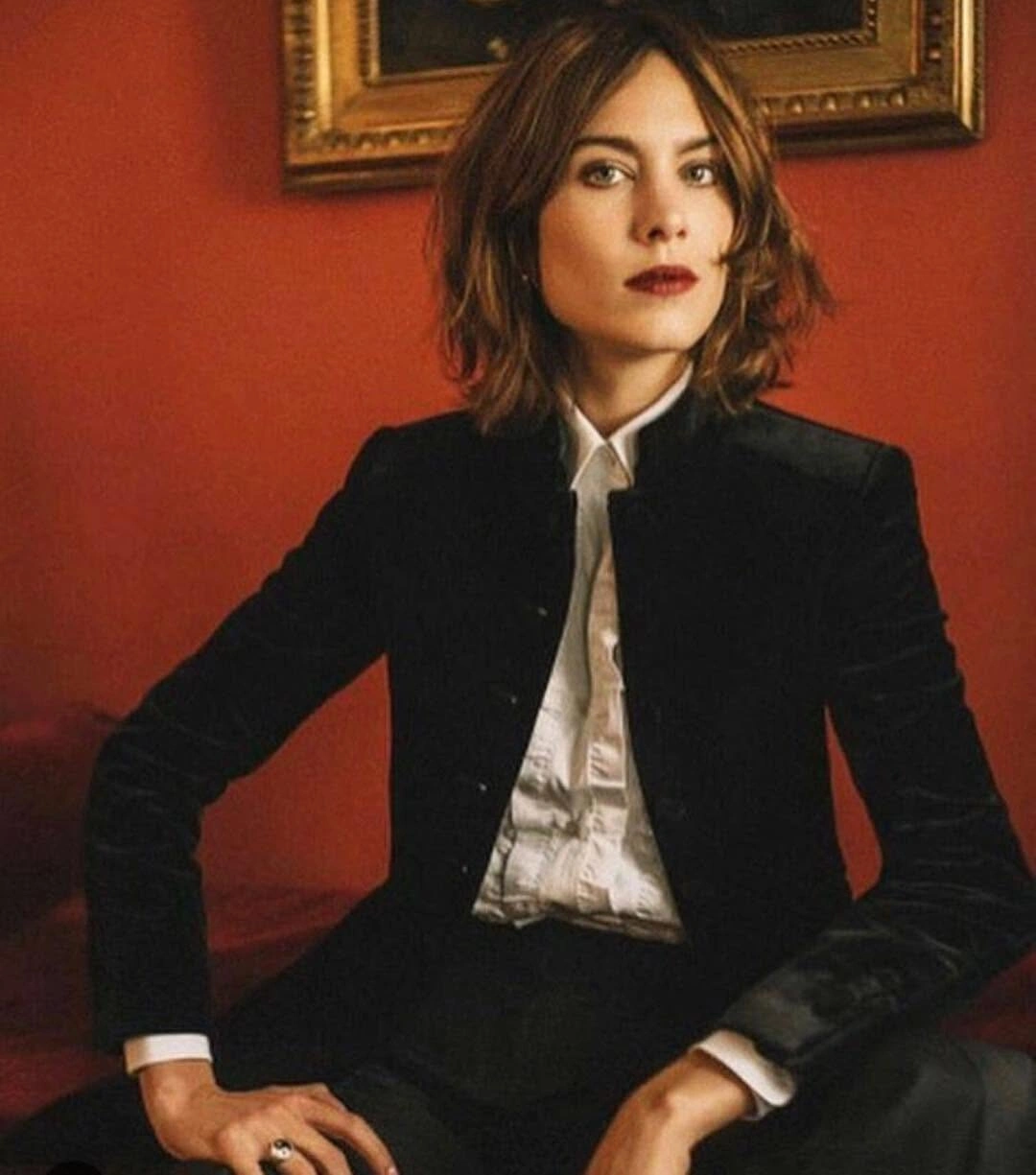
Photo via Instagram
The white shirt keeps the black pieces from blending into one heavy block, but it does not take over the whole outfit. Its brightness is contained inside the darker frame, so the eye reads the collar and front opening first. This is a strong black and white business casual idea because the contrast is simple, direct, and easy to understand.
The outfit works through placement rather than volume. A small white center can give dark separates enough structure to feel finished.
Pale Blue Shirt With Black Trousers
The pale blue button shirt softens the top half, while the black trousers give the lower half a clear graphic base. The open collar keeps the shirt from feeling severe, and the tucked waist makes the color break easy to read. Instead of relying on a blazer, the outfit gets its business casual structure from the shirt shape and dark trouser line.
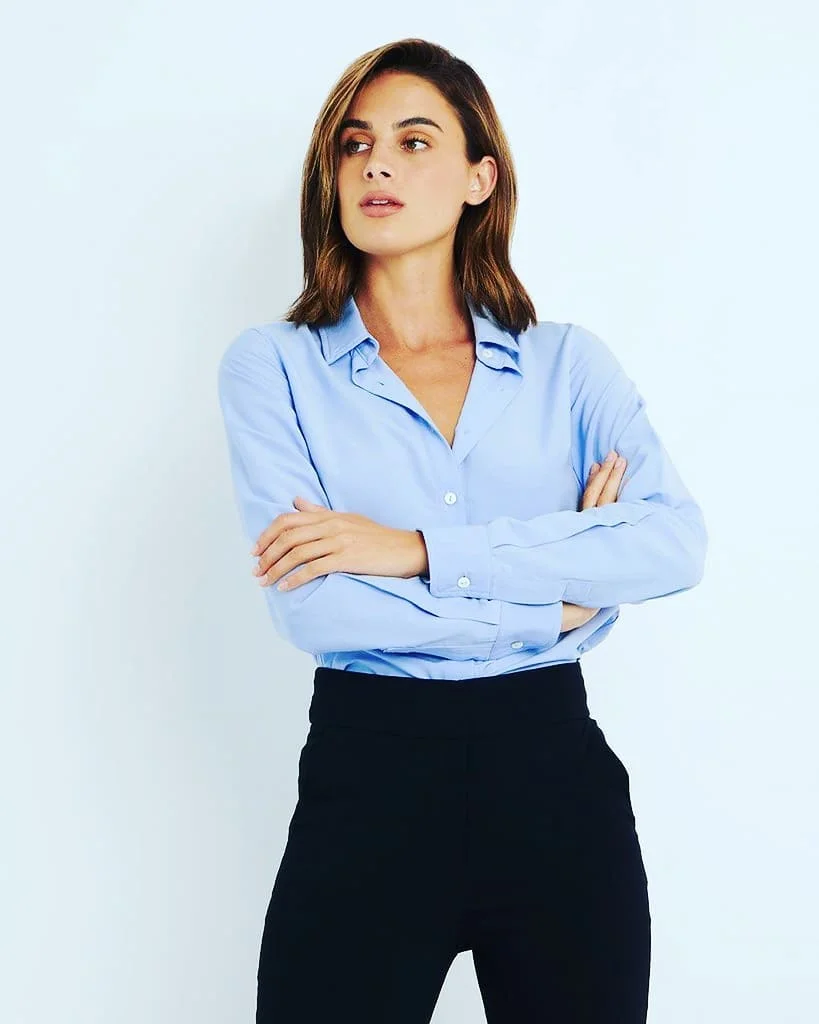
Photo via Instagram
This look is restrained, but the color contrast still matters. The blue is light enough to feel calm, while the black trousers add definition and keep the outfit from drifting into a fully pale palette. With the arms crossed, the shirt sleeves and front line become more noticeable, reinforcing the clean division between upper and lower halves.
The useful part is how little the outfit needs to feel complete. A pale shirt and black trousers can create enough contrast when the fit lines stay clear.
Beige Cardigan Over Cream Layers
The beige cardigan creates the main visual weight, especially because the large buttons and textured-looking surface stand out against the white turtleneck. Cream trousers continue the pale base downward, so the cardigan becomes the strongest warm neutral layer. The outfit feels connected because every tone stays close, even though each piece has a different role.
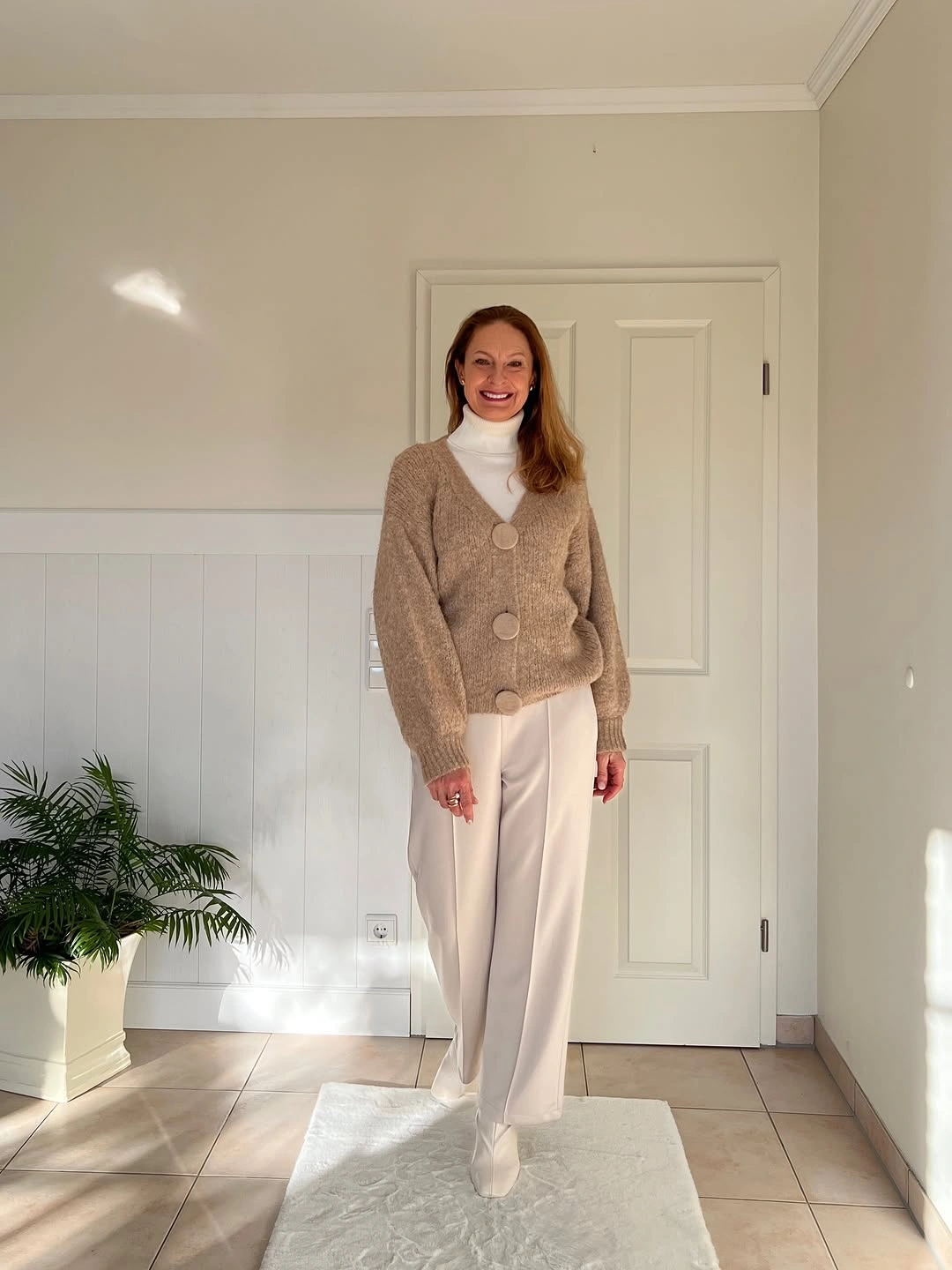
Photo via Instagram
The white turtleneck brightens the center and gives the cardigan a clean background, while the cream trousers keep the lower half uninterrupted. White shoes extend that pale line at the floor instead of adding a dark stop. This is a soft neutral business casual idea built from layering, visible surface contrast, and close color relationships.
The buttons make the cardigan more than a plain top layer. They give the outfit rhythm while the pale base keeps the whole look calm and readable.
White Monochrome With Dark Accents
The white blazer, white shirt, and white trousers create the cleanest monochrome tailoring moment in this range. Because the base is so light, the black belt becomes a major detail, marking the waist and giving the outfit a firm center. Dark sunglasses and bag handles add smaller accents that sharpen the look without breaking the white story.
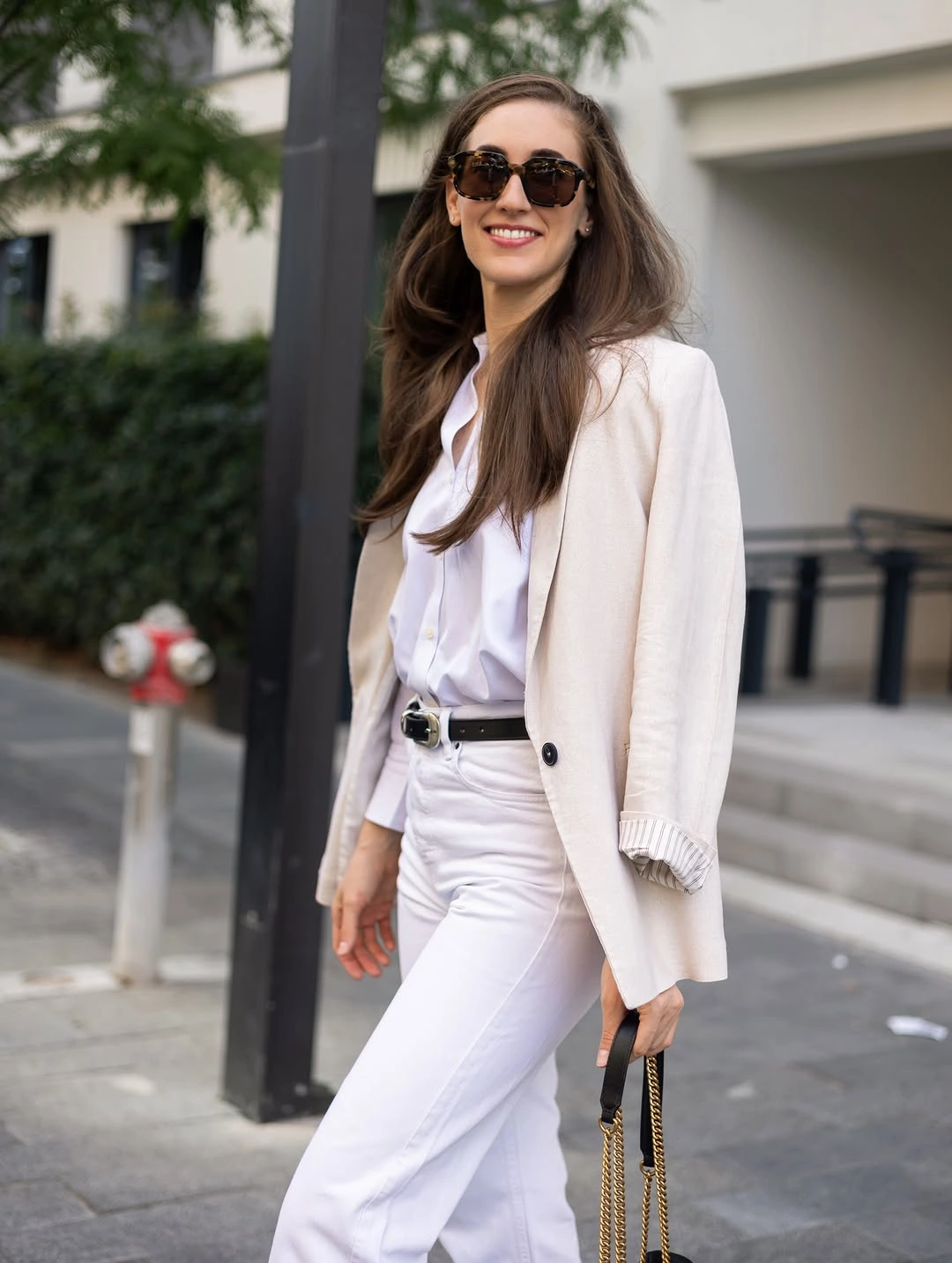
Photo via Instagram
The rolled cuffs make the trouser finish feel more deliberate, especially with the pale shoes continuing the light palette below. The open blazer lets the shirt and belt remain visible, so the outfit is not just one uninterrupted white column. Its clarity comes from repetition first, then from small dark interruptions placed where the eye needs structure.
This look closes the light tailoring family with controlled contrast. White carries the outfit, but the dark accents keep it from feeling blank.
Black Sweater With White Shirt Edges
The black sweater and black trousers create a dark, steady base, but the white shirt keeps the outfit from feeling closed in. Its collar, cuffs, and lower hem show in controlled places, so the brightness reads as structure rather than decoration. That layered edge gives this winter business casual outfit a clear shape without relying on a blazer.
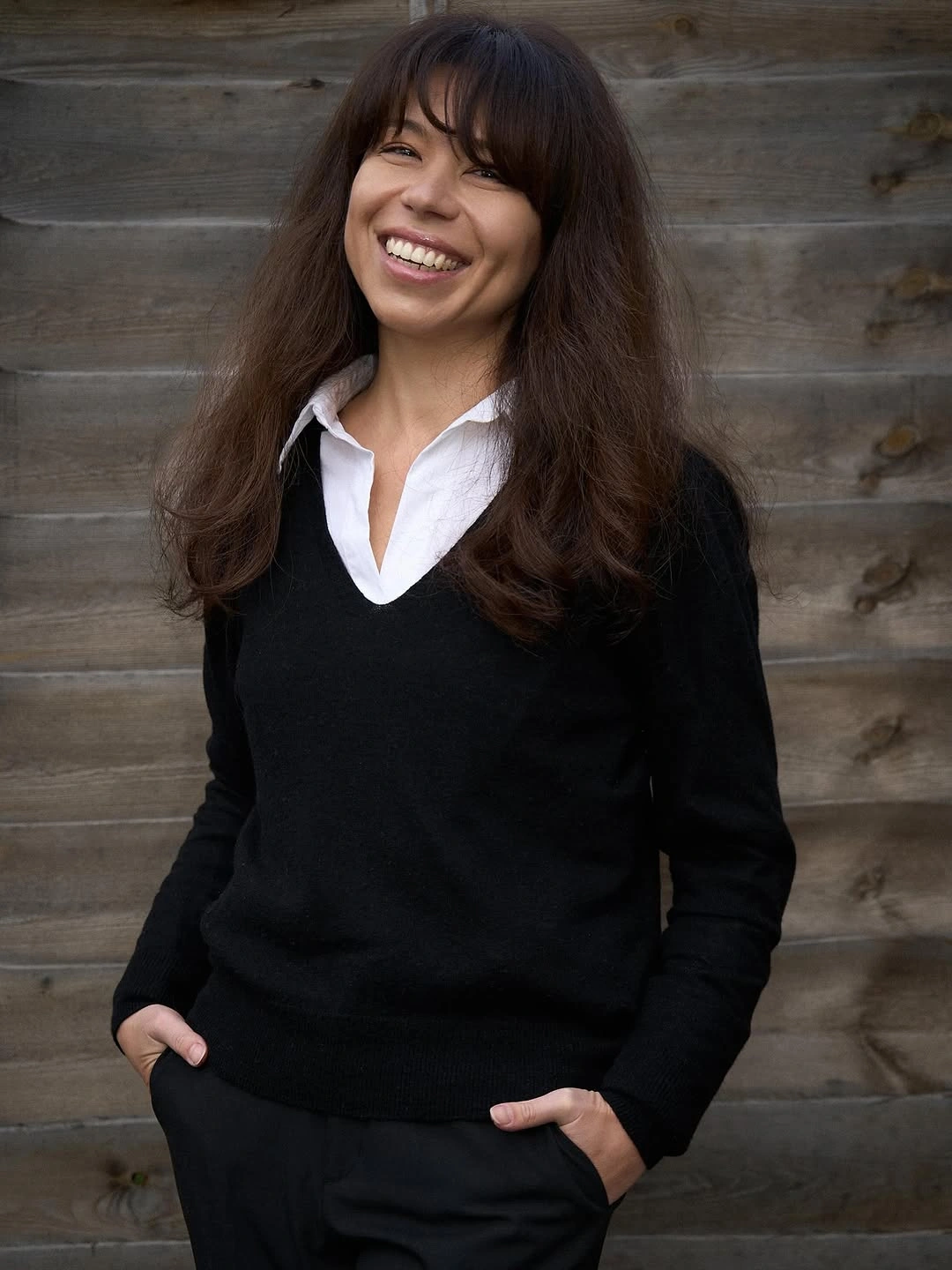
Photo via Instagram
The white shirt does the most important work because it separates the sweater from the trousers while still keeping the palette simple. The dark lower half continues the black line, and the visible shirt hem adds a small preppy break at the waist. For a no-jeans business casual idea, the look feels composed through layering, not through extra accessories or a strong color accent.
The outfit is quiet because the contrast stays narrow and deliberate. It shows how a shirt edge can sharpen dark separates without changing the calm mood of the whole look.
Green Blazer With Distressed Denim
The green blazer gives the final outfit its strongest color statement, while the white shirt keeps that saturated layer crisp and readable. Distressed blue jeans shift the lower half into visible denim texture, so the look does not depend only on tailoring. The green bag repeats the jacket color and makes the color choice feel connected from top to side.
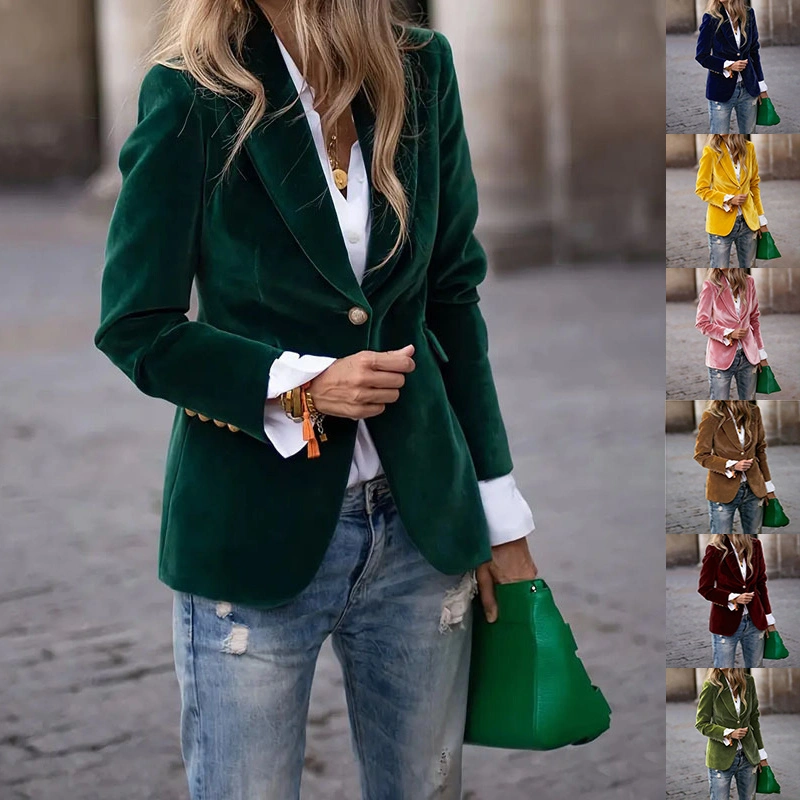
Photo via Instagram
What makes the outfit interesting is the way its contrasts sit next to each other without blending. The blazer has a soft, velvet-looking surface, the shirt brings a clean white break, and the denim adds a rougher blue finish below. Instead of treating business casual as one fixed formula, the look shows how a colored outer layer can organize denim when the surrounding pieces stay visually clear.
The ending note is confident because the green is repeated, not scattered. Denim gives the outfit texture, while the shirt and bag help the blazer remain the main visual anchor.