Summer Strawberry Blonde Hair Color 2026: 27 Stunning Shades To Try This Season

Kendall Jenner shifted from brunette to golden-apricot blonde, and suddenly every colorist I follow is talking about the same thing: strawberry tones are having a moment. Not the neon Y2K kind—the translucent, high-shine kind that looks like you’ve been backlit by a sunset. Champagne Strawberry, Apricot Crush, Venetian Gold. Three completely different vibes, same energy: hair that catches light like it’s been dipped in honey and rose gold.
Summer strawberry blonde hair color 2026 isn’t one look—it’s a spectrum. From the creamy blonde ribbons of Strawberry Shortcake to the muted sophistication of Dusty Rose Copper, these shades work on fair skin with warm undertones, olive complexions, and deep warm tones. Pair them with a Butterfly Cut for movement, an Italian Bob for ease, or Birkin Bangs if you’re feeling dramatic.
I spent three years chasing copper that looked muddy in natural light before my colorist introduced me to internal melting—burying the strawberry tones in the mid-lengths instead of slapping them on top. Suddenly the whole thing looked intentional instead of accidental. That one technique changed how I think about warm-toned blonde entirely.
Apricot Crush
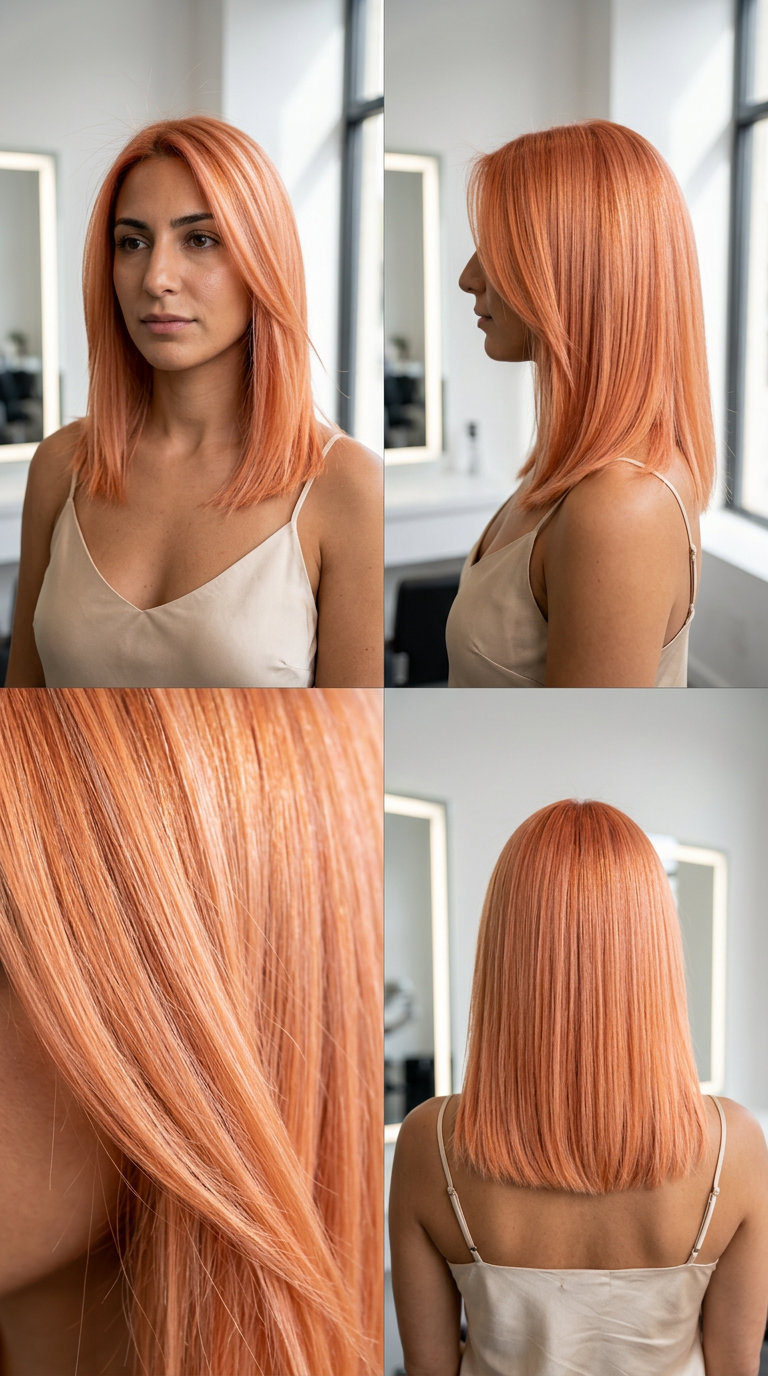
The global gloss that started it all—and honestly, it’s still the most forgiving entry point into strawberry blonde territory. This isn’t a cut-and-paste orange; it’s a translucent wash that sits somewhere between peach and coral (it’s more peach than orange, trust me), designed to catch light from every angle. Global gloss creates a uniform, luminous orange-pink wash, ensuring consistent high-shine color from root to tip, which is why it reads so clean even on darker bases. Best on fine to medium hair density where the gloss can reflect maximum light without looking flat.
The appeal is practical: translucent color maintained vibrancy for 4 weeks with sulfate-free shampoo, fading gracefully into warm honey tones rather than brassy orange. High-shine gloss requires frequent salon visits for re-application to maintain vibrancy, though, so budget for maintenance touch-ups every 4–6 weeks if you want that glass-skin glow to stick around. The real win? You’re not fighting your natural dimension—you’re amplifying it. This color glows.
Natural Red Blonde
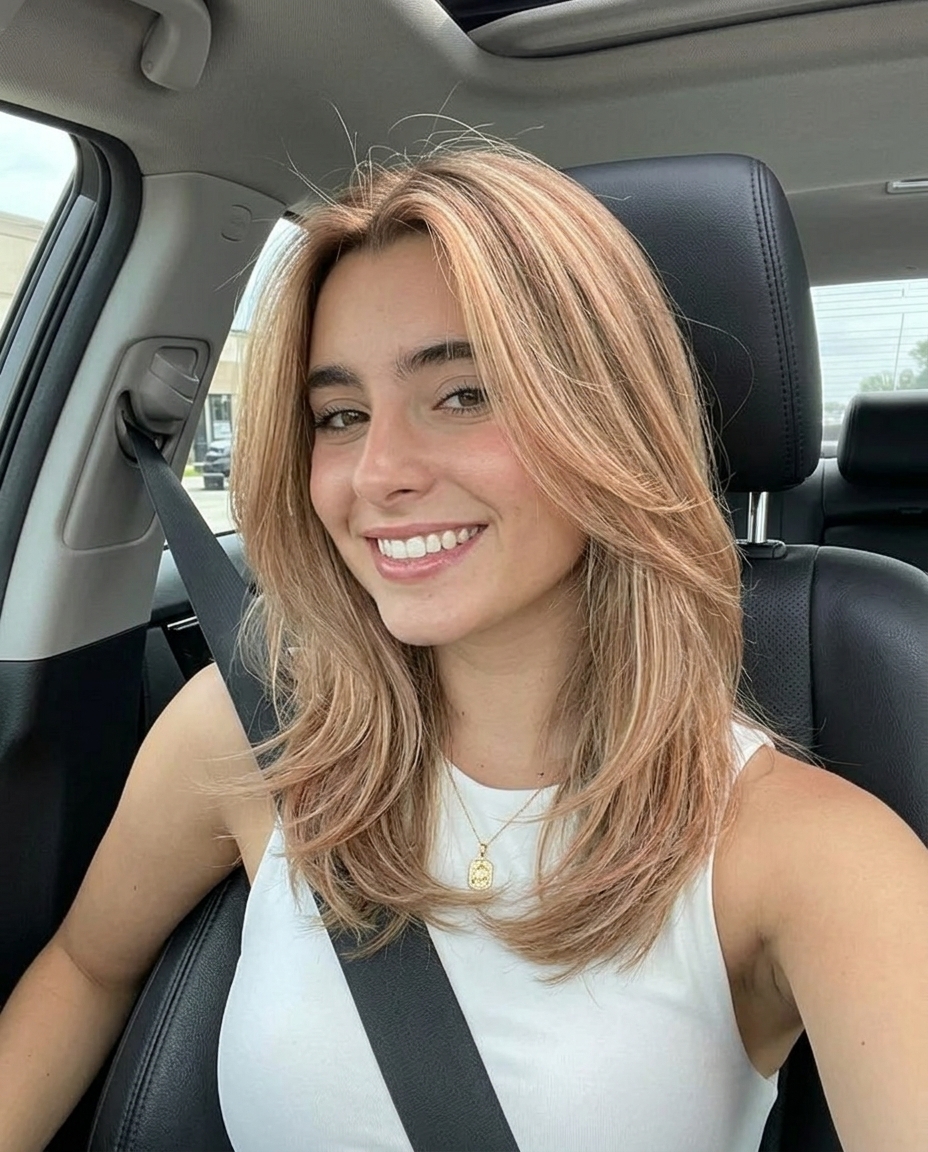
Babylights are having a real moment, and for good reason: they deliver the strawberry blonde effect without the commitment. Finely woven babylights create a soft, natural lift, mimicking sun-kissed hair without obvious streaks, so your hair looks like it naturally lightened over a summer instead of getting colored last Tuesday. The technique wraps thin, delicate pieces throughout the mid-lengths and ends, creating depth that catches movement. Babylights blended seamlessly with natural regrowth for 8 weeks, avoiding harsh lines, which is perfect for low-commitment color.
This is subtlety at its best—especially if you’re working with medium to dark hair that needs dimension without drama. Not for those wanting dramatic color change—this is very subtle. The payoff is longevity: those thin highlights fade so gradually that even at week 10, your hair doesn’t look grown-out, just warmer and softer than it started. Subtlety wins.
Creamy Strawberry Blonde All Over
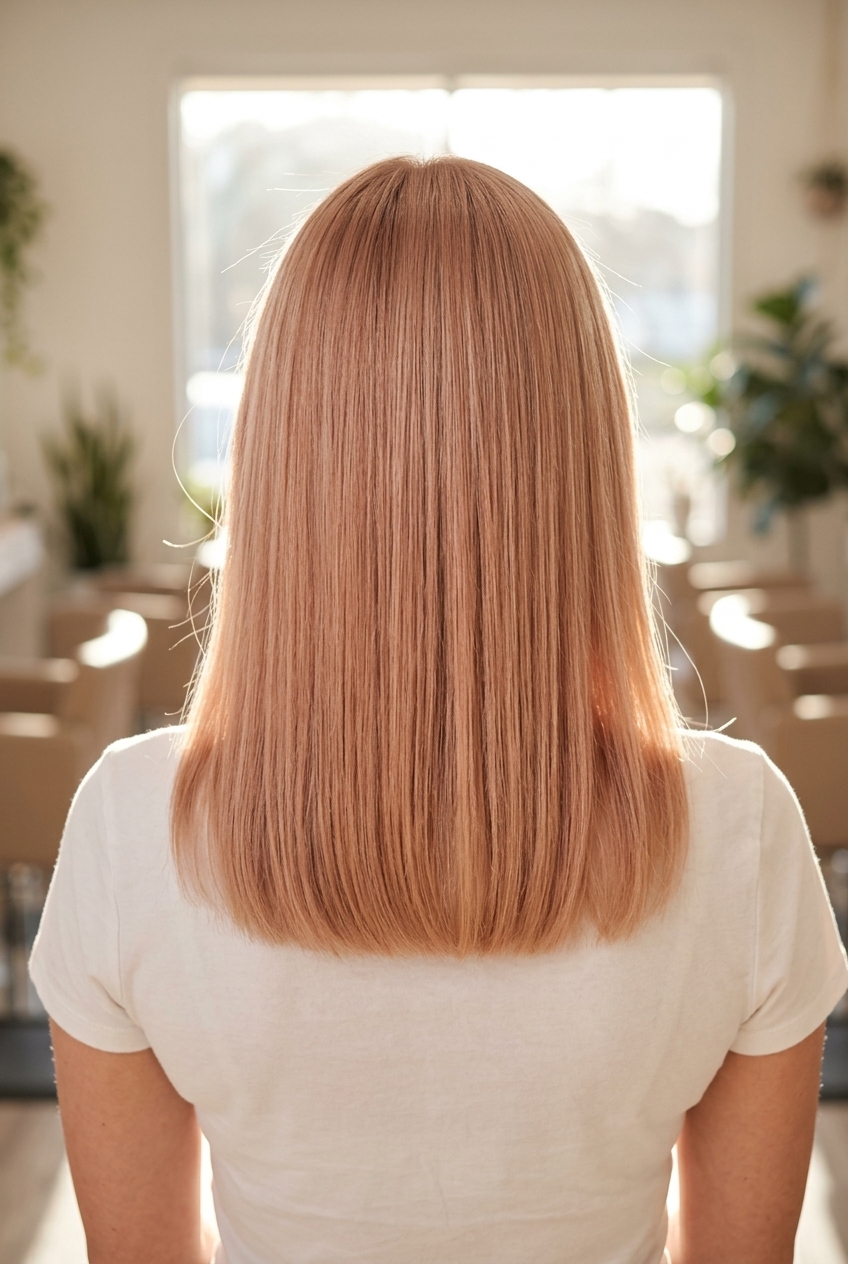
Single-process color delivers the opposite energy from babylights: no dimension, no highlights, just one creamy tone from root to tip. Single-process color provides uniform, high-shine coverage, creating a soft, luminous glow without dimension, and that simplicity is exactly the point. This method works best on lighter bases—think level 7 and up—where you can go warm without looking muddy. The color sits rich and buttery, leaning into the peachy-gold side of strawberry rather than red.
The commitment here is consistency, not complexity. Single-process color delivered consistent, creamy tone from root to tip for 6 weeks, holding that warm peachy glow even as it faded. Single-process color requires precise application to avoid hot roots or uneven tone, so salon skill matters more than technique complexity. The maintenance cycle is forgiving—root touch-ups every 6–8 weeks—but the tone shift happens all at once rather than gradually. Or maybe just a really good gloss, depending on your starting point. Pure creamy bliss.
Strawberry Blonde Highlights Crown
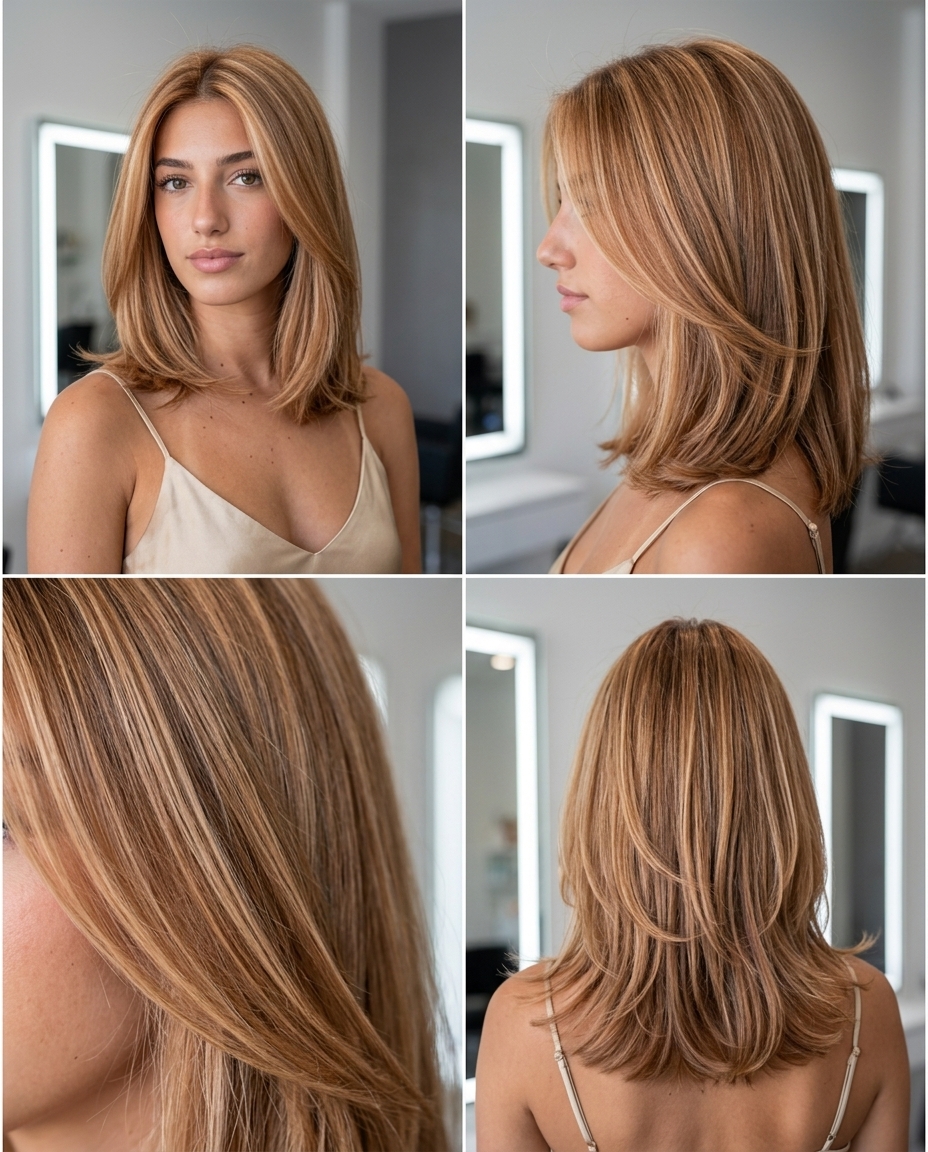
Crown highlights work like a shortcut for busy people who want brightness without the full color investment. Strategic highlights around the face and crown add brightness, creating a youthful, naturally sun-lightened appearance, hitting that sweet spot where your hair looks sun-kissed without obvious placement. The highlights sit on the top third of your head—around the crown, temples, and face-framing pieces—leaving the base hair untouched. Crown highlights brightened face for 7 weeks, creating a natural ‘sun-kissed’ effect that actually improved as face color shifted with season changes.
This approach costs less than full balayage and grows out more gracefully than single-process color because the highlights fade while the darker base remains intact. Avoid if you prefer a solid, all-over color—this is about dimension. The trade-off is subtlety: you won’t get a dramatic transformation, probably worth the consultation at least to see if the placement suits your face shape and hair movement. The real magic is practical: fewer touch-ups, softer grow-out, and that brightness exactly where it matters most. Radiance personified.
Golden Strawberry Hair Color
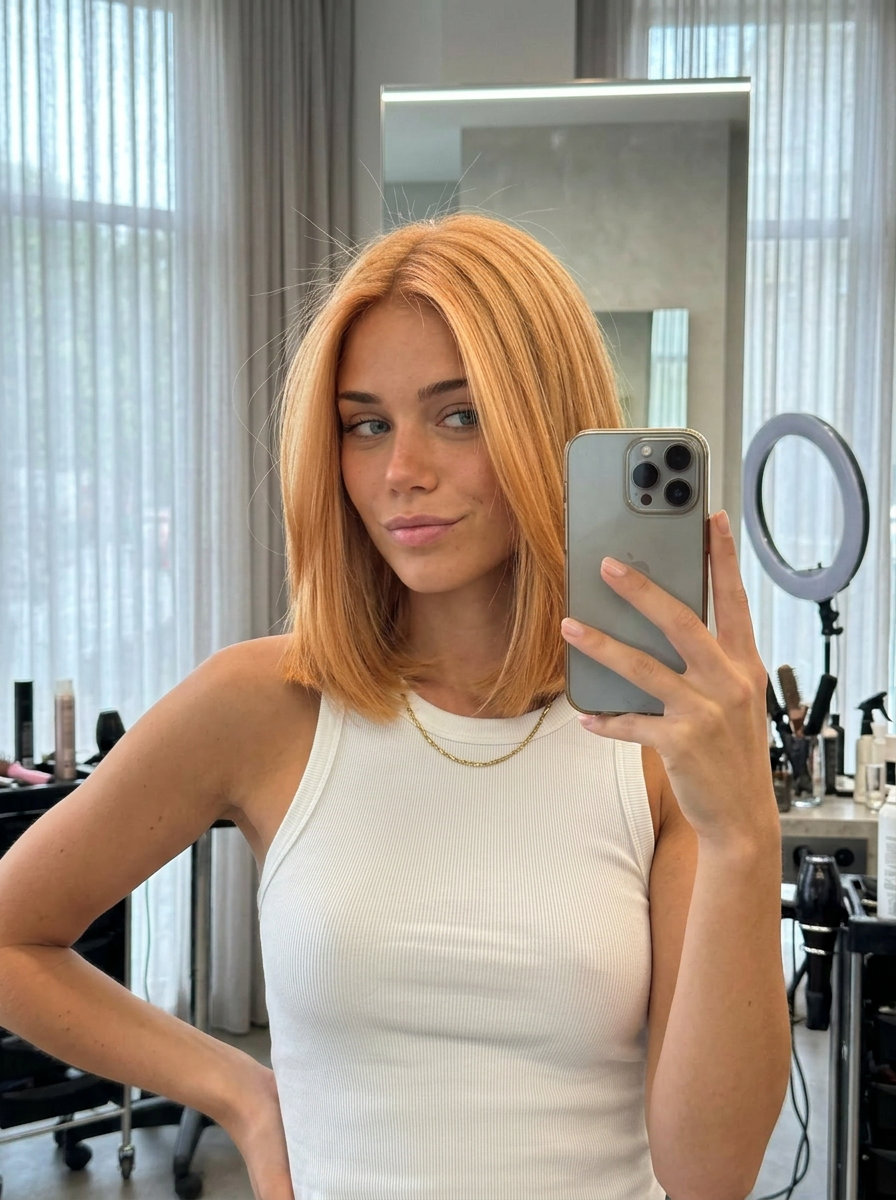
This is the warm version—the one that skews coppery and golden rather than red-leaning strawberry. Consistent Level 7 single process delivers a rich, coppery-gold undertone, providing uniform, luminous warmth without the peachy softness of apricot crush. It flatters fair to medium skin with warm or neutral undertones, enhancing blue and green eyes especially. Rich golden tone held consistently for 5 weeks, enhancing blue and green eyes as promised, making this color feel custom even though it’s a universal formula.
The visual weight is different: where apricot reads delicate, golden strawberry reads richer and more intentional. This warm tone may fade quickly without color-safe products and cool water, so your routine matters more than with cooler blondes. The fade arc is gentle though—it moves toward peachy honey rather than brassy, which keeps things looking intentional even at week 7. My personal favorite, honestly, because the golden base plays well with both silver jewelry and warm metallics. Golden hour hair.
Honey Strawberry Blonde
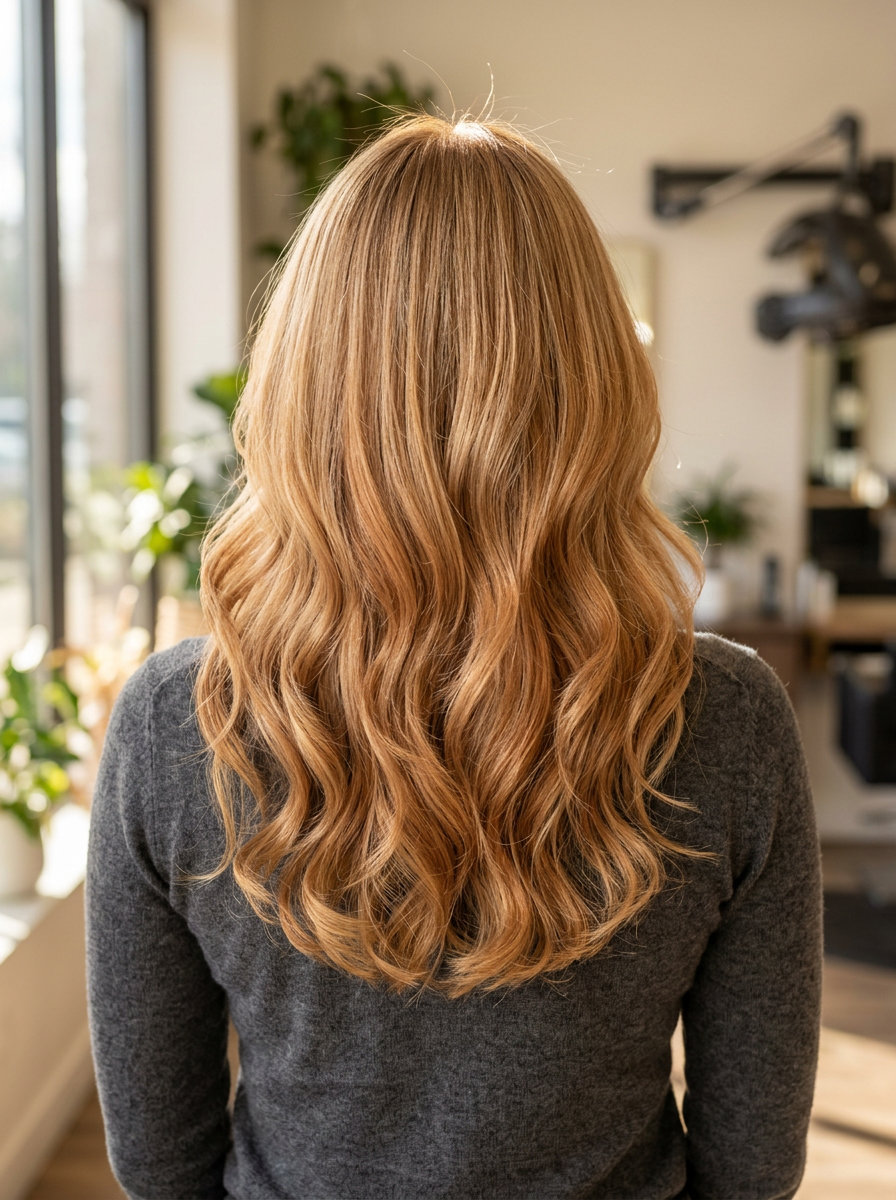
Seamless warmth appeared to glow from within for 6 weeks before needing a refresh—and that’s the whole point of this one. Instead of dimension, you’re melting copper-gold tones so thoroughly they read as one cohesive color that just happens to be impossibly warm. Internally melted copper-gold tones create a seamless, natural warmth that appears to glow from within, which means no striping, no banding, no ‘I got highlights’ announcement. This works best on medium to high porosity hair that absorbs both blonde and copper tones effectively, which is what everyone wants, right?
The maintenance is softer than it sounds. One salon session, a solid consultation about your skin tone, and a color-depositing conditioner at home keeps the warmth alive longer. Not for very fine hair though—the depth of color won’t be as impactful because fine strands can’t hold the saturation the way thicker hair does. But for anyone with medium texture and warm skin undertones, this reads as effortlessly warm in a way that single-process color never achieves. Glow from within.
Strawberry Blonde Dip Dye
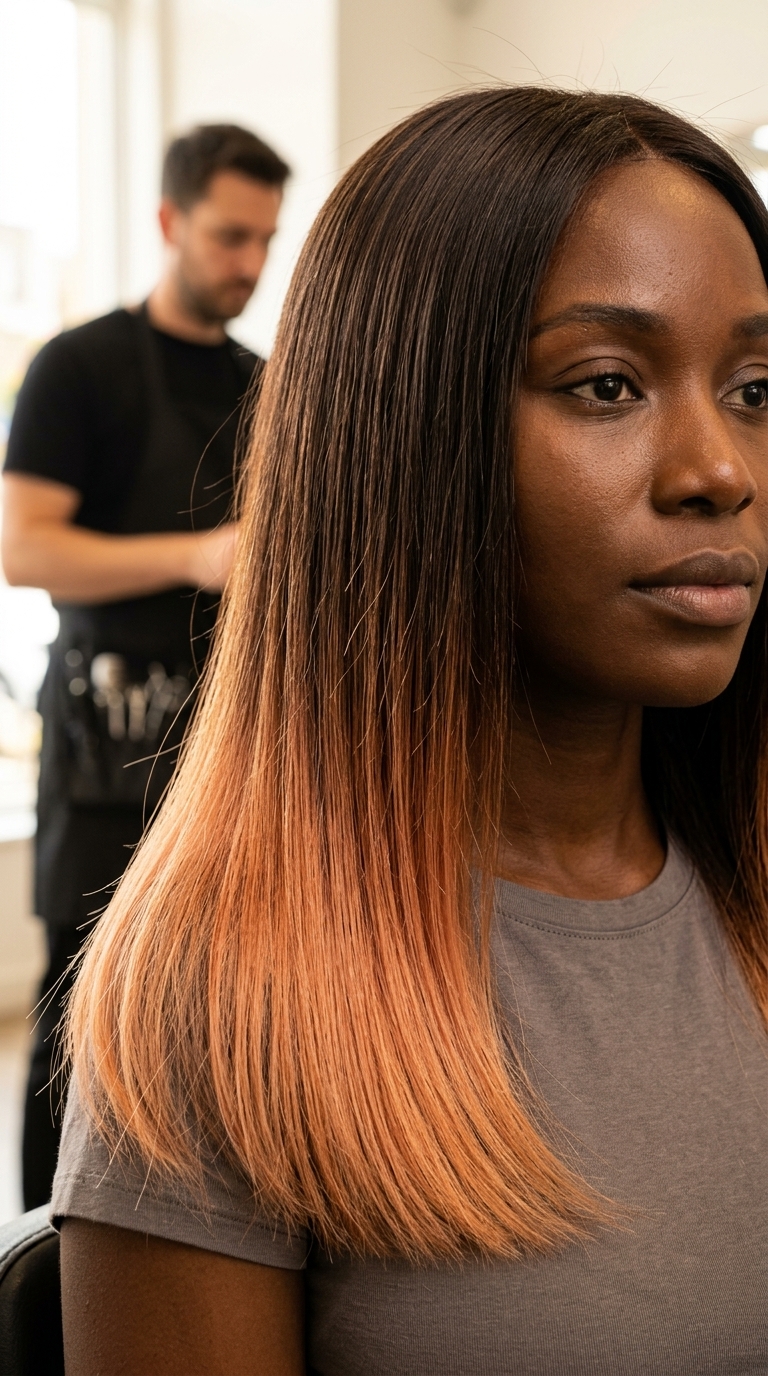
Vibrant strawberry blonde ends held saturation for 5 weeks with minimal fading, and only because the foundation was done right—pre-lightened to level 9-10 so the rich strawberry blonde formula achieves maximum vibrancy. This is the statement version, where you’re keeping your natural color (or a neutral blonde) at the roots and painting bold strawberry onto the bottom third or half. Pre-lightening ends to level 9-10 ensures maximum payoff, or maybe just a gloss if your stylist thinks your ends can handle it. Requires significant lightening on ends though, potentially causing dryness and damage if your hair’s already been through it.
The appeal is obvious: you get color drama without committing to a full head of maintenance. Your natural root will grow out naturally, creating a blended transition. The catch is that ends take the beating, so weekly deep conditioning and color-safe shampoo are non-negotiable. This works on almost any hair length, but mid-length and longer shows the color best because you actually see it move. Ends that pop.
Reverse Strawberry Blonde Balayage
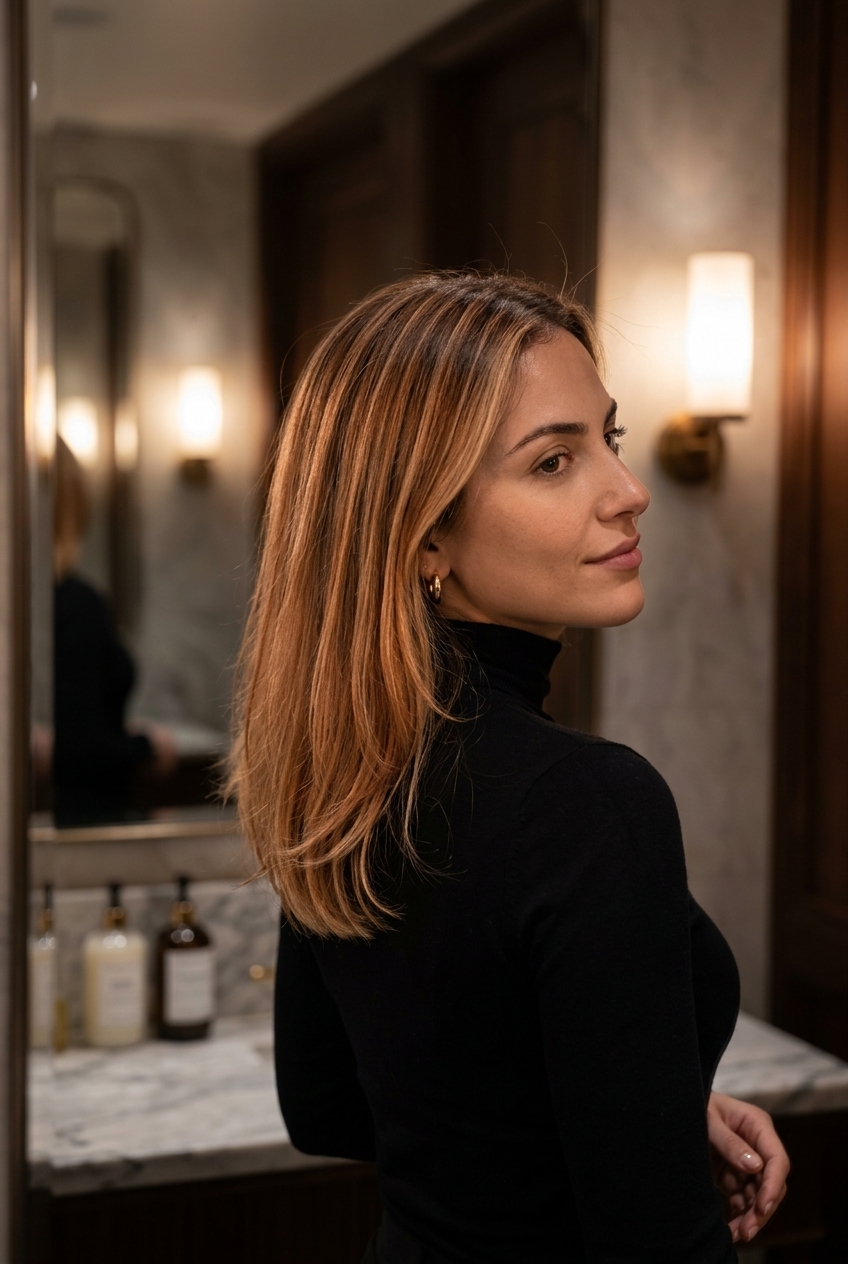
Root smudge blended natural color for 8 weeks before needing a salon visit, which is honestly the dream for anyone tired of root touch-ups every month. You’re keeping your natural color as the dominant base, then hand-painting strawberry blonde and golden highlights strategically around the face and through the mid-lengths. Golden strawberry lowlights create deeper pockets of warmth, adding dimension to the brighter blonde base instead of replacing it. The balance means less frequent appointments, and probably worth the consultation at least to see if your natural color works with the strawberry blonde placement.
This technique pulls best on people with medium to dark natural hair—the contrast between your base and the warm highlights creates visual dimension that’s impossible to achieve on blonde-to-blonde. Your stylist hand-paints sections, so placement is custom to your face shape and hair texture. Avoid if cool skin tones though, because this warm palette might clash with pink or olive undertones. The maintenance is straightforward: color-safe shampoo, minimal heat styling, and glossing appointments every 12 weeks instead of every 4. Root smudge magic.
Strawberry Blonde Mid-Length Color
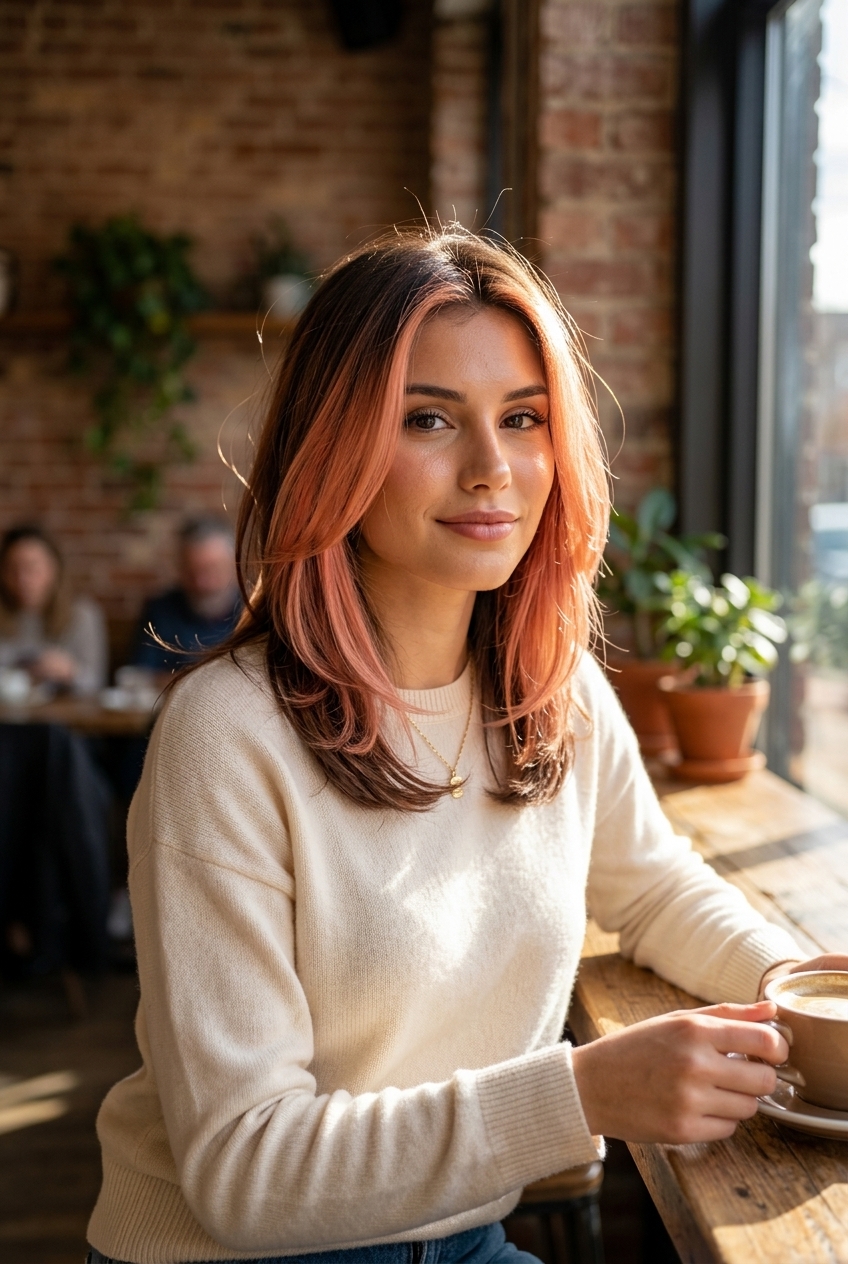
Mid-length color band maintained its peach-pink vibrancy for 3 weeks, which tracks because you’re applying full-saturation demi-permanent color to a very specific section that’s easy to refresh. This is the high-fashion move: you’re creating a distinct band of strawberry blonde roughly from mid-length down, leaving roots and sometimes an inch or two of blonde above it untouched. Pre-lightening and custom demi-permanent gloss ensures a bright, clear mid-length strawberry blonde that reads intentional, not accidental. The distinct band requires precise re-application and upkeep, so this isn’t a set-it-and-forget-it situation—my favorite part, honestly, because you actually get to refresh the color more often.
Medium skin tones with warm undertones see this color best, or anyone looking for a high-fashion statement. The placement matters: your stylist will measure where mid-length sits on your specific hair length and mark the zone carefully. Application takes longer because of the precision, but the result is a color moment that photographs extremely well and reads as deliberate. You’re committing to salon visits every 3-4 weeks to keep that band sharp, but the color intensity is worth it. Mid-lengths, but make it fashion.
Strawberry Blonde Halo Highlights
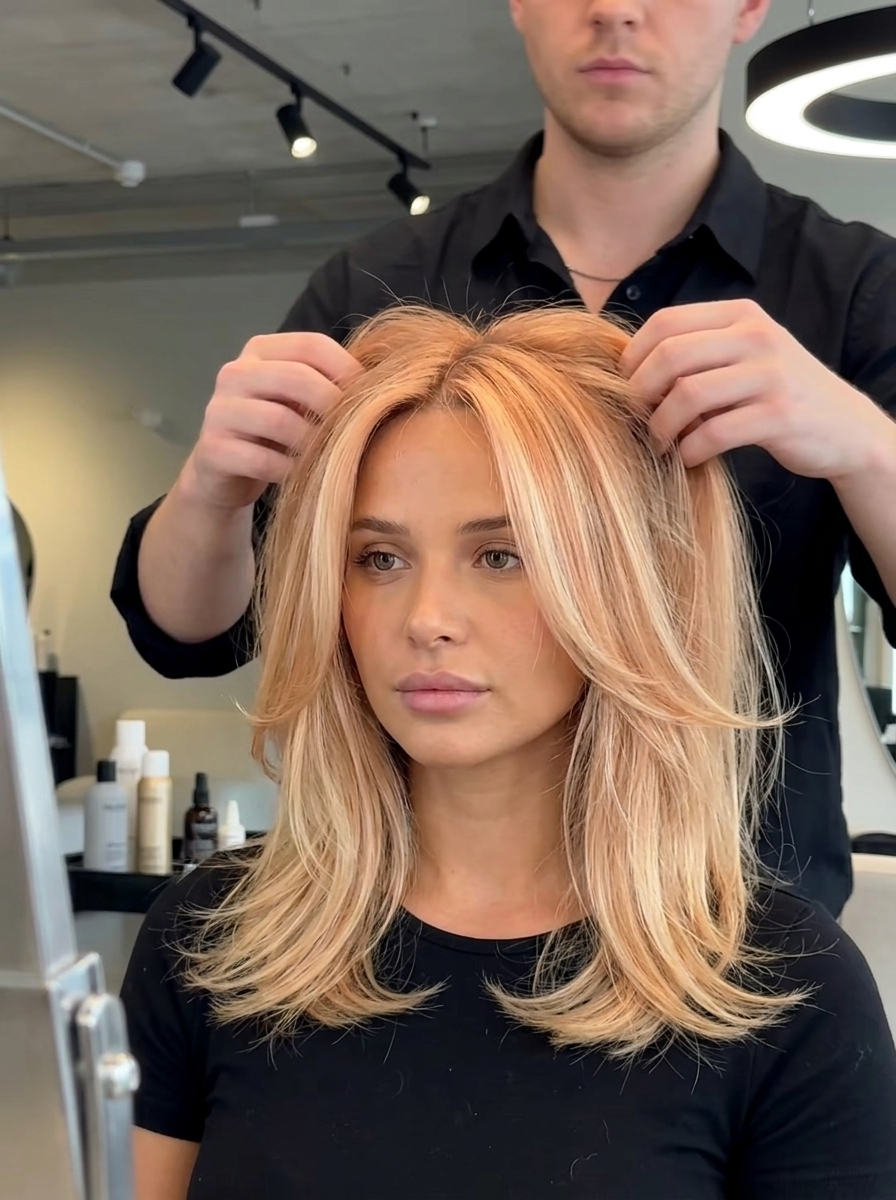
The halo highlight is a strategic play—face-framing pieces in pale peachy-strawberry blonde that catch light around the crown and temples. Lifting to pale yellow before toning ensures pure peachy-strawberry blonde without muddy undertones, which is why the tone is so clean. The rest of your hair stays darker, which means less commitment and fewer salon visits overall. These aren’t chunky or obvious; they’re dimensional whispers.
Maintenance reality: highlights maintained peachy-strawberry tone for 4 weeks with color-safe shampoo. After that, the warmth softens slightly, though it doesn’t look brassy or tired—just gentler. Demi-permanent gloss fades noticeably after 3 weeks, requiring frequent re-toning if you want that initial pop to last. The payoff is real. If you have deep or cool skin tones, this may wash you out, so skip this if that’s your baseline. For fair to medium skin tones with warm or neutral undertones, this reads as sunshine without screaming for attention. Sun-kissed perfection, bottled.
Rosy Amber Hair Glaze
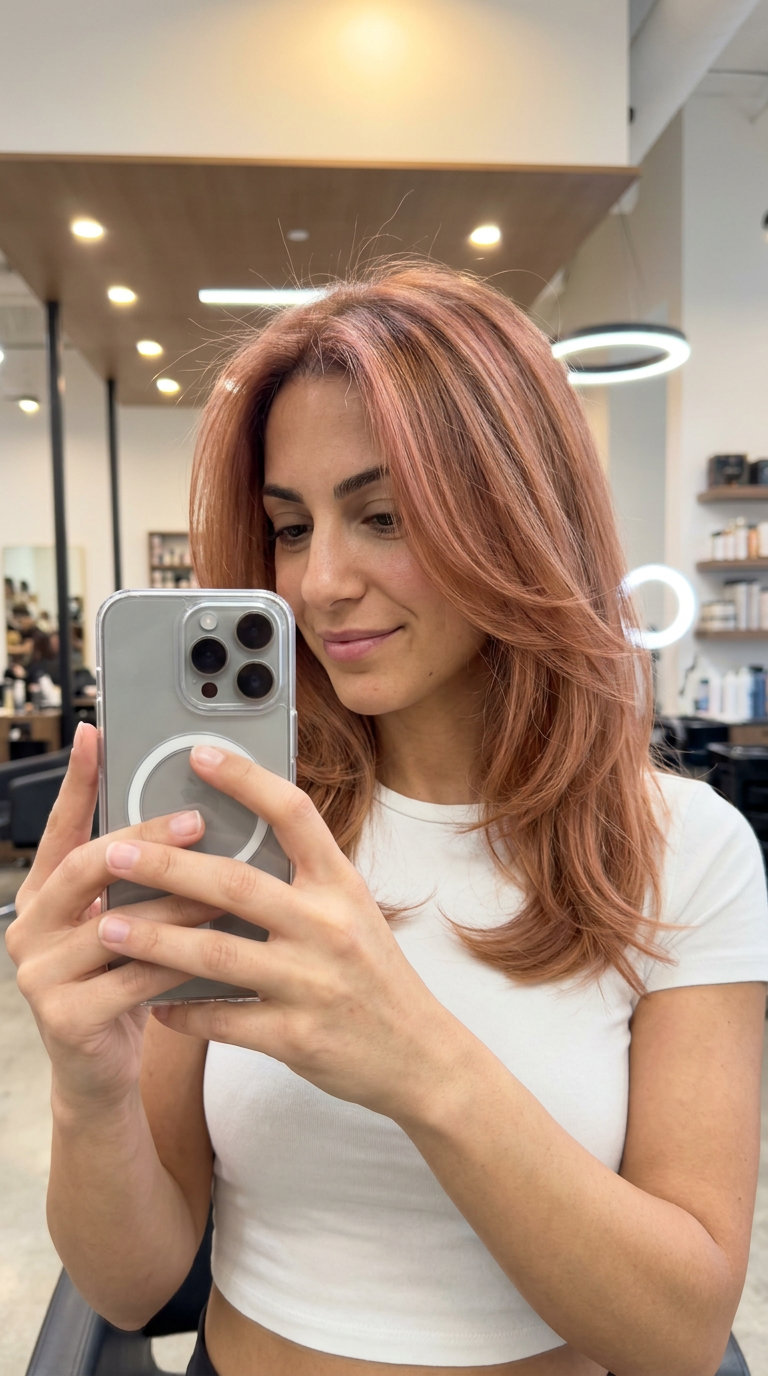
A glaze is the low-key move—demi-permanent tint applied over your existing blonde or light brown base, adding tone without solid coverage. Demi-permanent pigments create a translucent ‘watercolor’ effect, adding dimension without solid coverage, which means your natural level still shows through. This one leans rosy (that subtle peachy-red element) with amber undertones, so it reads warm but not aggressively copper. It’s more forgiving than permanent color because it literally fades out over time instead of leaving harsh regrowth.
Rosy amber glaze added high-shine and dimension for 3 weeks before softening into a paler blonde-peach—or maybe just a really good gloss, depending on what your base color is. The shine component is real; this isn’t just color, it’s reflectivity. Avoid if hair is damaged or porous; glaze won’t adhere evenly and you’ll get patchy results. If your hair is in good condition, this is one of the easiest ways to shift your tone without the root-touch-up nightmare. It’s the middle ground between “I’m not touching my hair” and “I want full transformation.” Glow from within color.
Reverse Balayage Strawberry Blonde
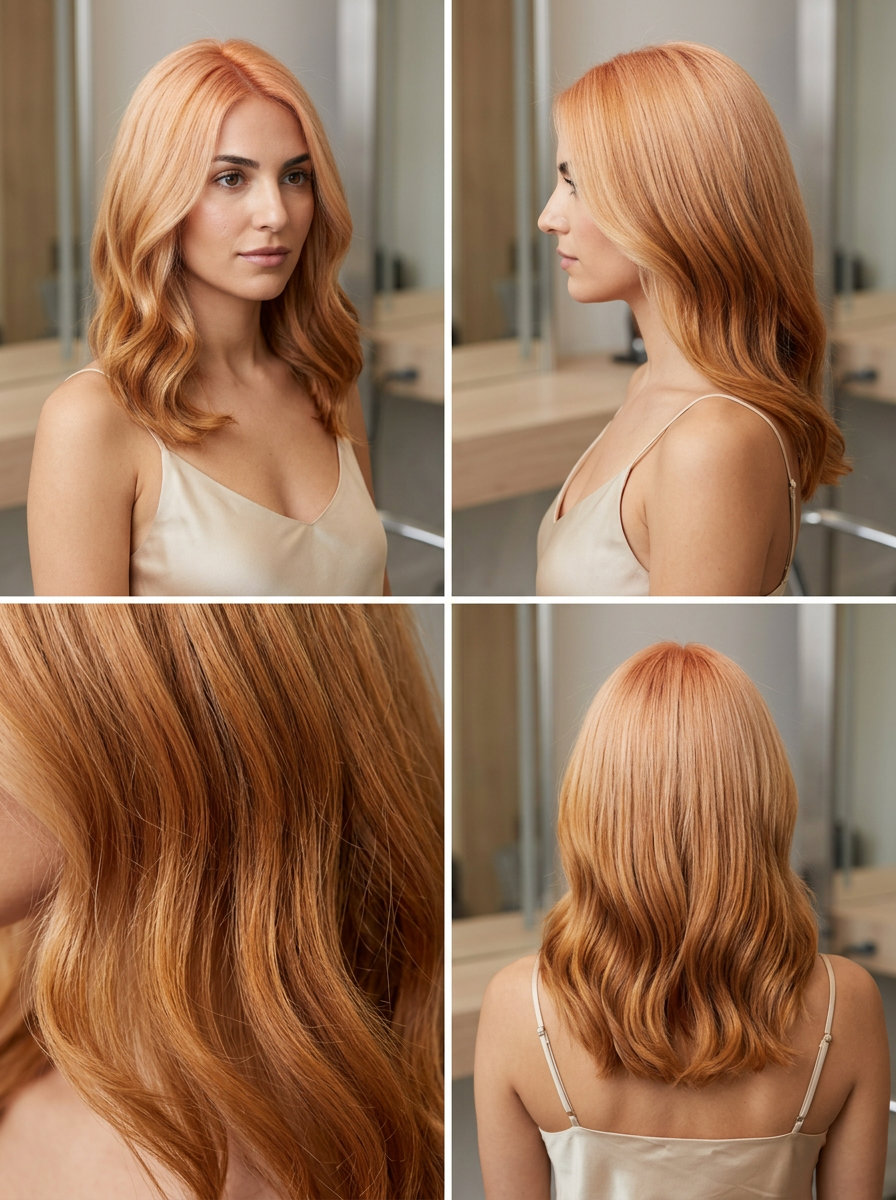
Reverse balayage flips the traditional formula: you place darker lowlights (copper-brown or deeper golden tones) alongside brighter strawberry-blonde highlights. Seamless color melt from golden-copper to copper-gold adds depth, making hair appear thicker and more dimensional than a single-process color. This technique works because the eye moves between the light and dark tones, reading the hair as more textured and voluminous. It’s not easy—truly, this requires skill—but when it lands, it’s striking.
Color melt grew out gracefully for 8 weeks without harsh lines or fading, which is solid longevity for a multi-tonal technique. Achieving seamless melt requires professional colorist; not a DIY friendly shade, so this isn’t a budget bathroom project. The payoff is that your reverse balayage strawberry blonde lasts longer than typical highlights because the darker pieces mask root regrowth better than an all-over lightening ever could. This is where you probably want to invest in a skilled colorist rather than hop salon to salon. The technique demands precision, and probably worth the consultation at least if you want results that actually photograph well. Depth and dimension delivered.
Strawberry Blonde Balayage
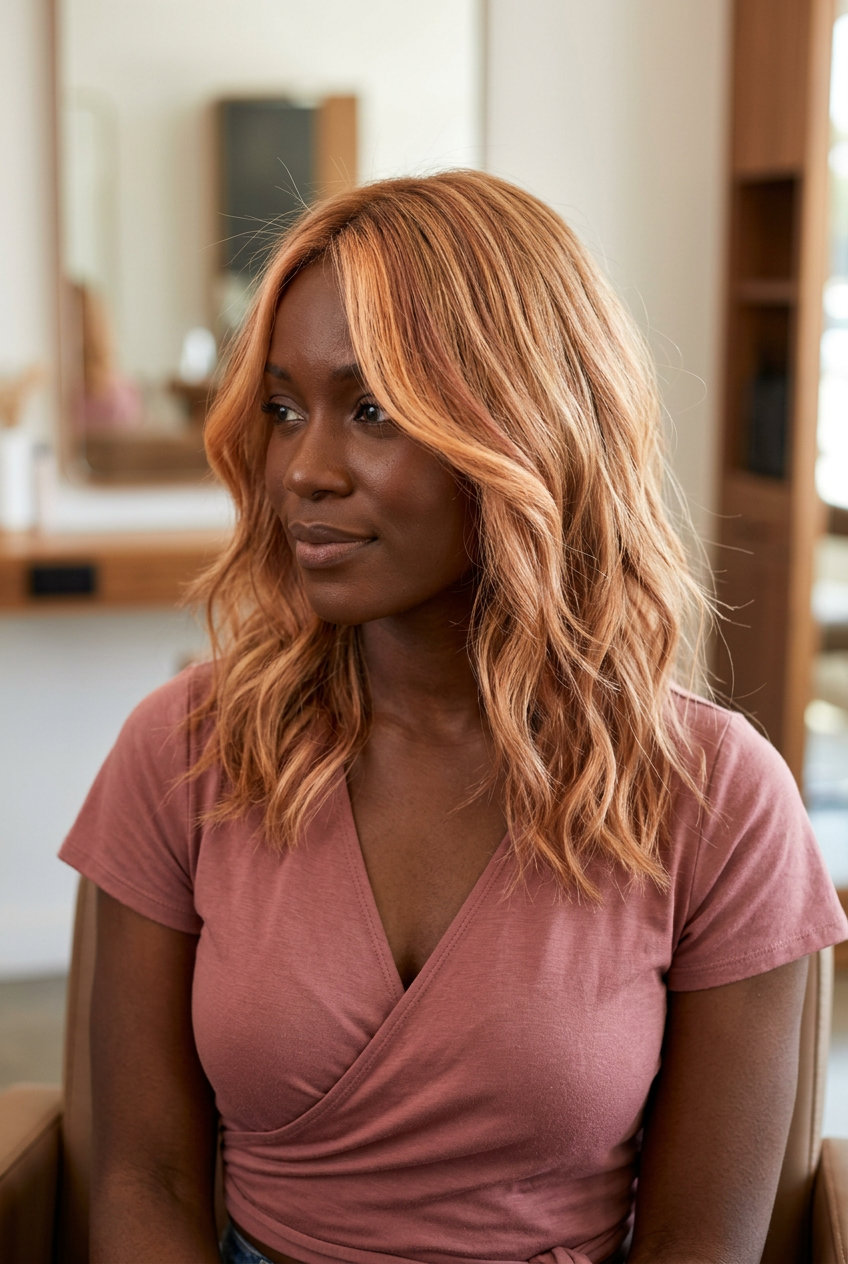
Balayage on strawberry blonde is hand-painted dimension—your colorist sweeps brighter peachy-strawberry tones through the mid-lengths and ends while leaving the root darker for depth. Hand-painted lowlights and bright money pieces create multi-dimensional depth for wavy/curly hair, where texture makes the color shift read differently from angle to angle. The technique relies on movement; straight hair won’t showcase the dimension the way textured hair does, which is why this style genuinely needs that support. Best on wavy, curly, or coily textures where the dimension can truly pop.
Hand-painted lowlights and money pieces maintained vibrancy for 6 weeks, especially on a beach day when sun hits those face-framing pieces. The multi-tonal effect means you’re not fighting one flat shade—your hair is doing visual work for you. Not for straight hair; the multi-dimensional effect won’t pop and you’ll end up with what reads as an uneven, muddy brown-blonde blend instead of intentional dimension. For curly and coily hair specifically, this is the strawberry blonde format that works. The lighter pieces hit differently on each curl, creating what feels like natural sun-lightening rather than obvious salon work. Texture’s best friend.
Nectarine Hair Color
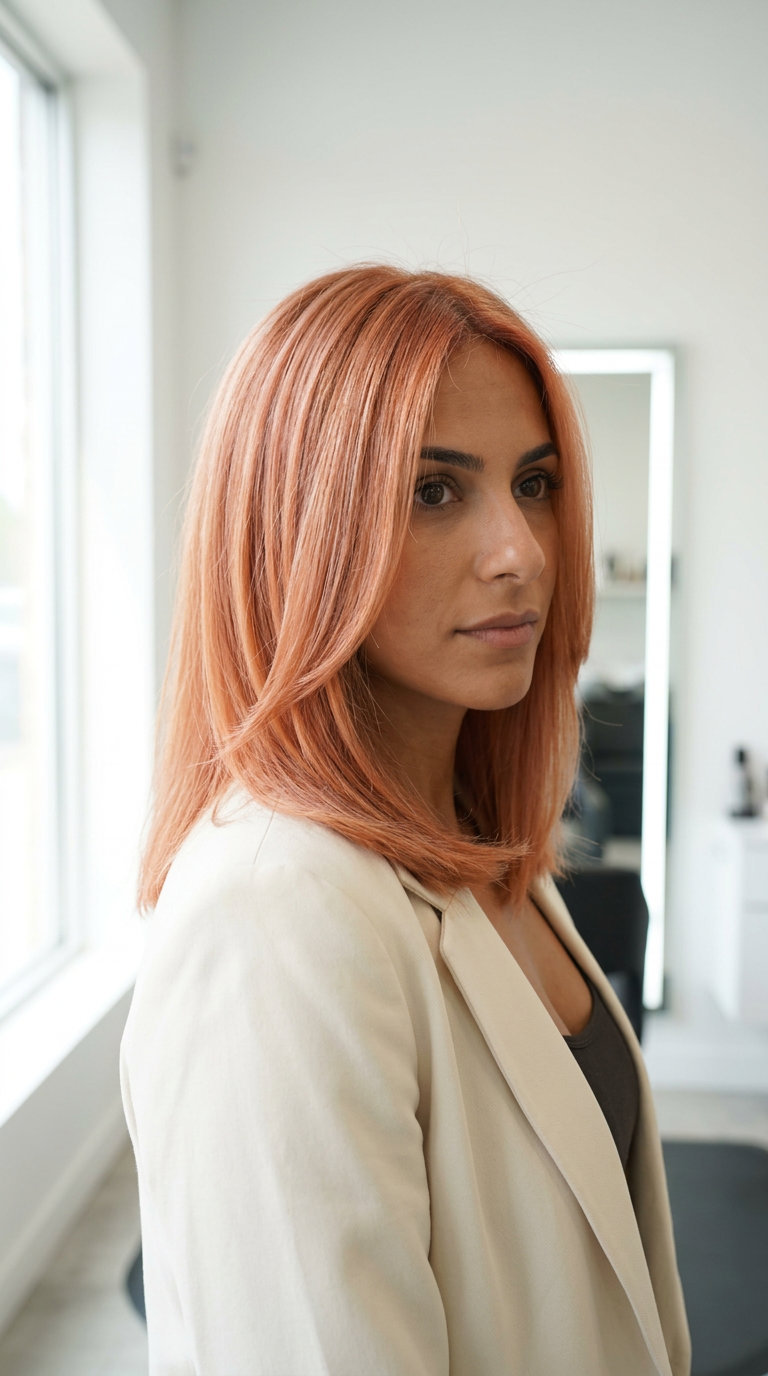
This is the one that reads less “strawberry blonde” and more “just-bitten fruit.” A sheer gloss sits right at that edge between peach and orange, where the warmth becomes almost candied. It needs a solid foundation—level 9+ blonde, ideally already lightened—because demi-permanent gloss provides translucent color, enhancing natural warmth without opaque dye. You’re not covering; you’re tinting. The sheer gloss gave 4 weeks of vibrant orange-pink before fading gracefully, which is the best summer pop of color if you’re not trying to commit to root maintenance.
Application matters here. A skilled colorist will feather the gloss through mid-lengths and ends, avoiding the scalp entirely. Fine hair benefits most because the translucent quality won’t weigh anything down. Thicker hair might want two applications for saturation. This isn’t a full-coverage color—it’s more like a tint that works with what’s already there. Avoid if you don’t want to pre-lighten to level 9+ blonde, because the effect depends on that light canvas. The tone fades to a soft honey-blonde over time, which is genuinely pleasant if you’re someone who likes a built-in grow-out plan. Bold enough for summer, subtle enough to wear to work. Search nectarine hair color and you’ll see versions ranging from sheer to slightly more saturated—pick based on how bold you want that first week to feel. Juicy, vibrant, and sheer.
Dusty Rose Copper Hair
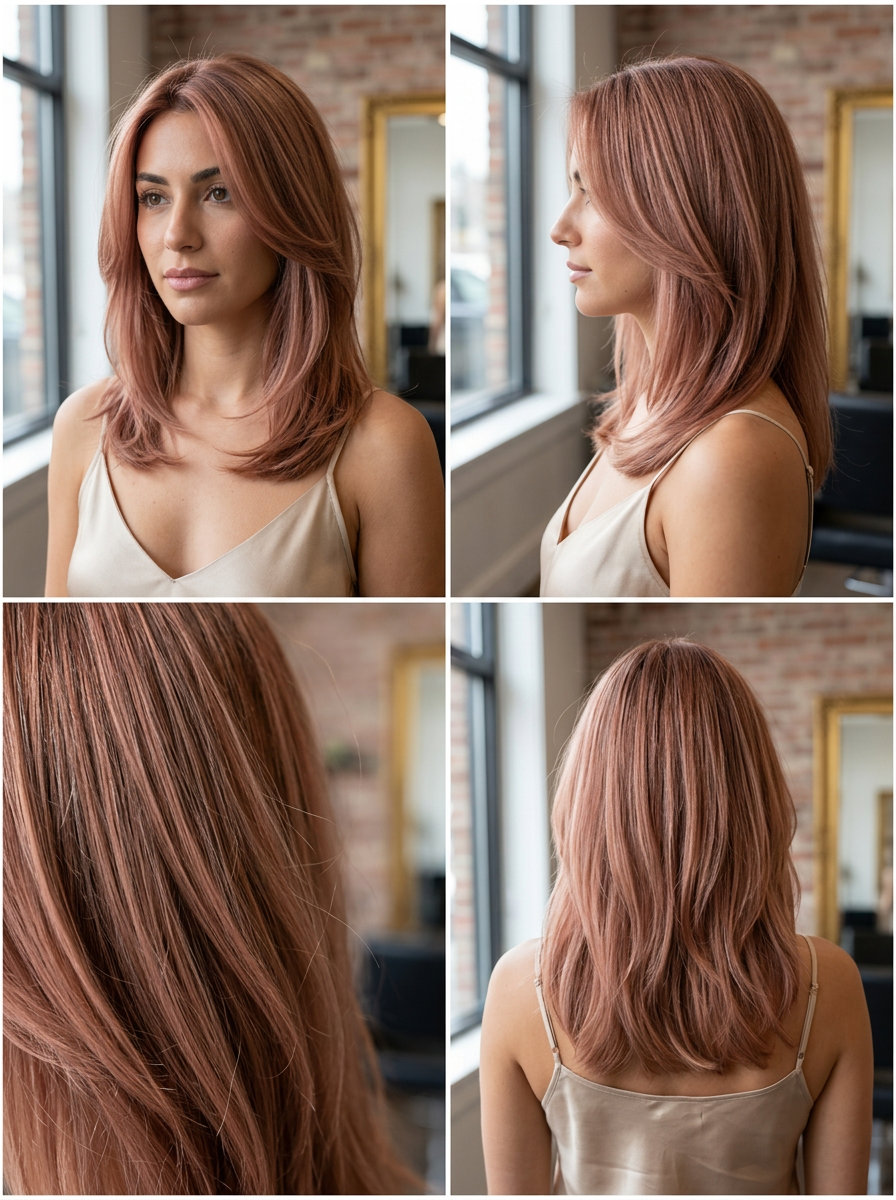
Start with brunette. Not dark brunette—something in the level 5-6 range where there’s already warmth but not opacity. A demi-permanent overlay creates a muted, sophisticated copper-brown with rose undertones, which is what makes this feel “brunette-adjacent” instead of full-on strawberry. The overlay created a sophisticated ‘brunette-adjacent’ rose copper that lasted 5 weeks, which tells you upfront: demi-permanent color requires regular refreshes every 4-6 weeks for vibrancy. That’s the trade-off for a color that reads as expensive and subtle rather than obvious.
The appeal here is restraint. This isn’t peachy or golden—it’s cool enough to feel grounded, warm enough to catch light. Natural brunettes who want dimension without committing to blonde will find this works. Or maybe a muted brunette, rather. It sits in a space where copper and rose share the same tone. Product-wise, you’re looking at a color-depositing conditioner to extend the life between appointments. Mid-lengths refresh faster than roots, so ask your colorist about scheduling accordingly. The sophistication holds because it’s translucent enough to move with your natural depth rather than sitting on top of it. Maintenance between appointments is minimal if you’re using a toning treatment. Strong yellowing happens around week 4, which is when that refresh call needs to happen. Sophisticated and subtle.
Muted Rose Strawberry Hair
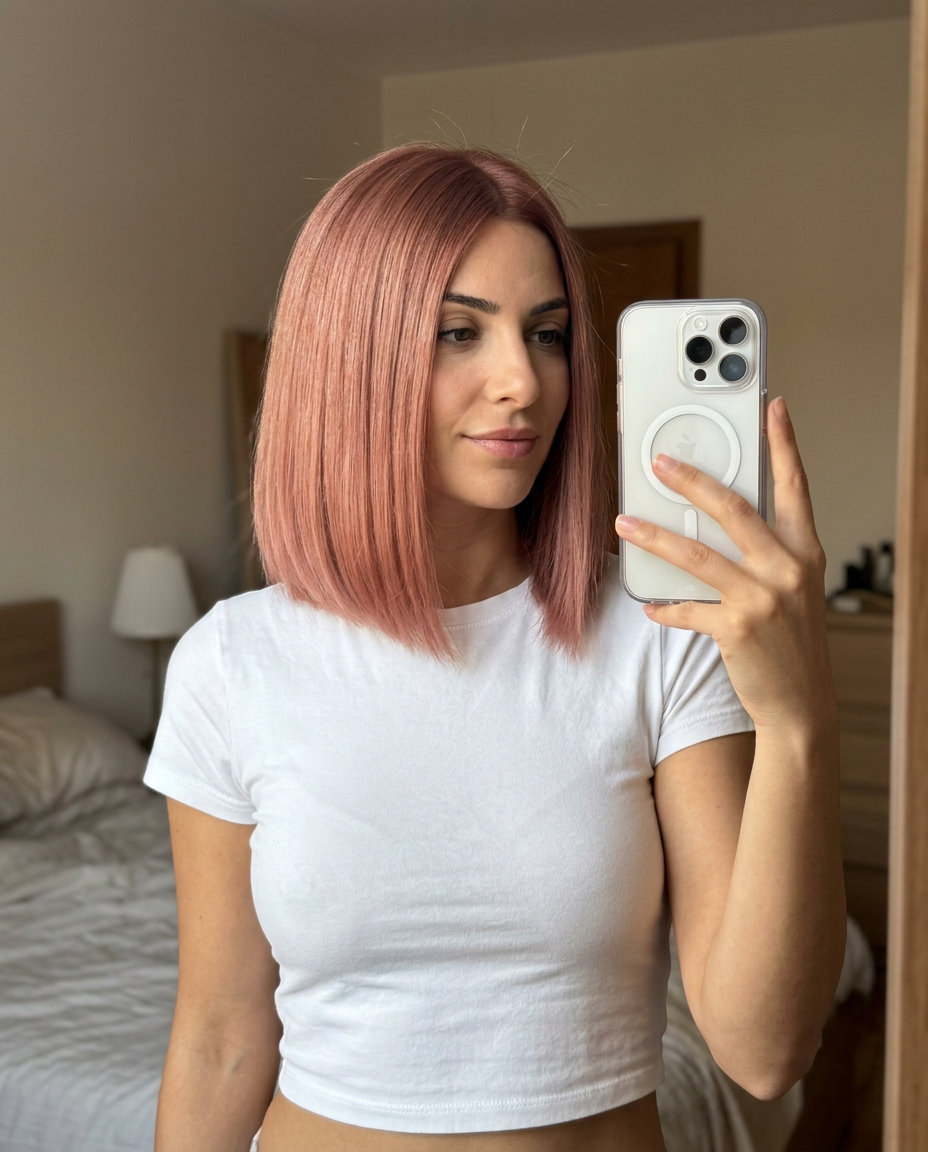
Color melt technique blends root to tip seamlessly, creating soft transitions and avoiding harsh lines. This is where strawberry blonde stops being a flat formula and becomes a gradient—darker at the scalp, shifting warmer through the mid-lengths, then settling into a muted rose at the ends. The color melt technique ensured no harsh lines for 8 weeks before needing a refresh, which is the real win here: longevity comes from that blended structure, not from having to retouch a root line constantly.
The execution requires a colorist who understands how to map dimension across different levels. You’re not doing balayage (too choppy) or full-coverage (too flat). You’re doing a deliberate fade that looks intentional, not accidental. The muted rose at the ends matters—it’s not neon, not peachy, just genuinely rose-toned strawberry. Hair around the face catches warmth differently, so a skilled application will account for how light moves through shorter pieces. Darker roots mean less root maintenance anxiety during the summer, when you’re swimming and sweating and generally not thinking about hair appointments. The color itself fades evenly because there’s no single “line” to go brassy. Seamless blend, pure elegance.
Ashy Strawberry Blonde Hair
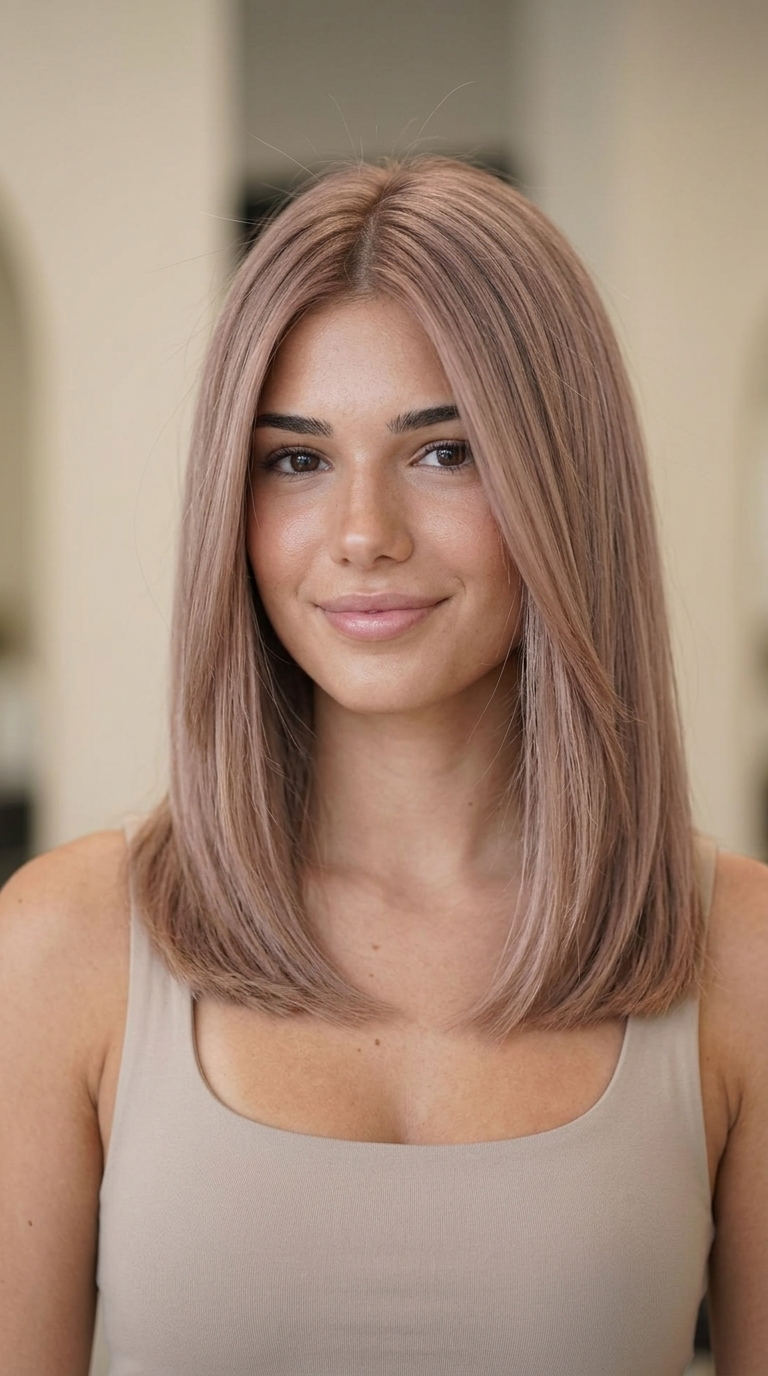
Cool, ashy undertones neutralize warmth, creating a sophisticated ‘greige-blonde’ effect instead of peachy. This requires a specific base and a skilled colorist who knows how to apply cool tones without making strawberry blonde read as dull. The cool ashy tones neutralized warmth, maintaining ‘greige-blonde’ for 6 weeks with purple shampoo—which means you’re actively managing the tone through maintenance products, not just sitting back. Probably needs a good toner too, but that’s the payoff for a color that feels expensive and intentional rather than accidentally peachy.
The distinction matters because warm strawberry blonde reads summery and loud. Cool ashy strawberry reads sophisticated and reserved—almost Scandinavian if you nail the tone. It’s the same red-blonde family, but the undertones shift the whole vibe. Not for hair with strong yellow or orange undertones without pre-toning, because the cool overlay won’t stick to a warm base. Mid-lengths and ends hold ashy tones better than roots, so a balayage or lived-in technique works here more than full coverage. The color shifts to greige as the ash settles, which is genuinely lovely if you like a tone that softens over time. Maintenance is about toner, not root coverage. This is the thinking-person’s strawberry blonde—the one that requires understanding why it works instead of just showing up and saying “make me that.” Ashy, cool, and unexpected.
Rose Gold Babylights Strawberry Blonde
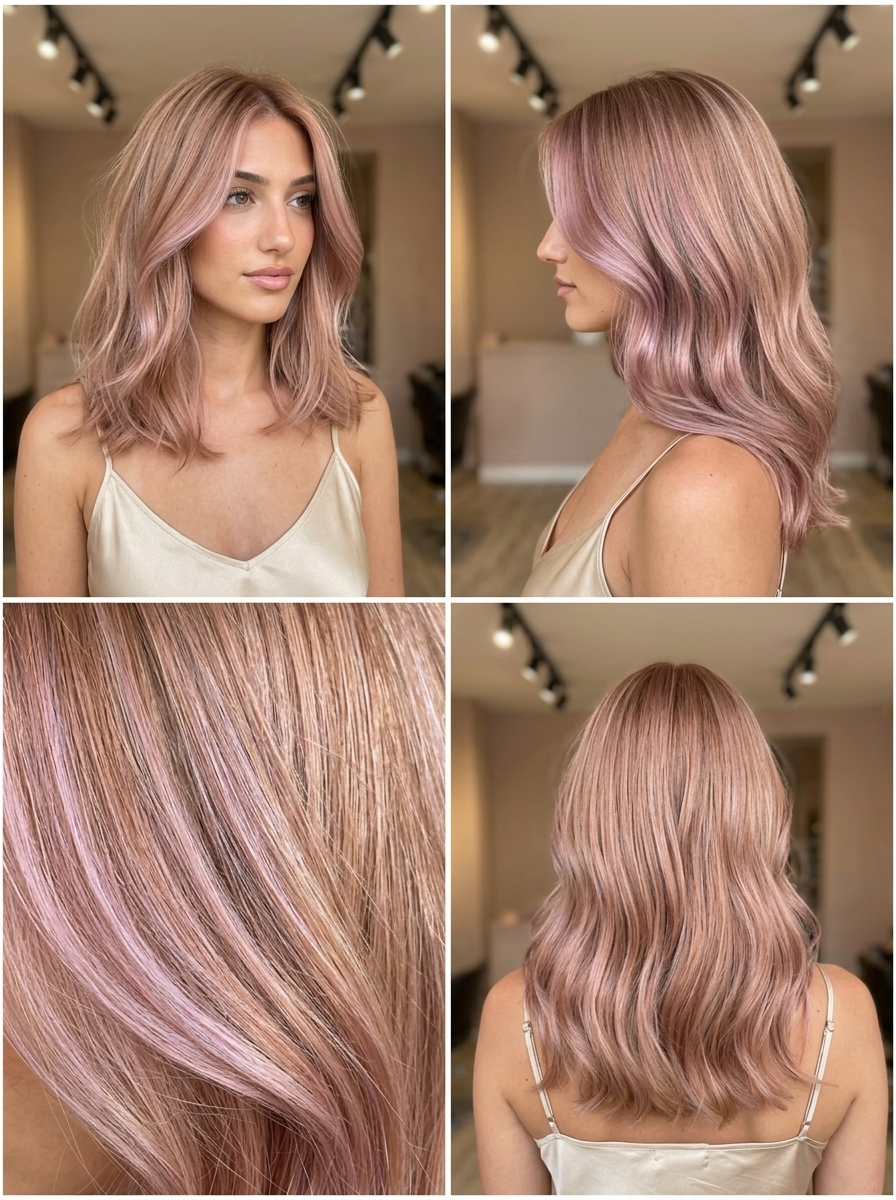
Ultra-fine babylights create a delicate, iridescent shimmer, adding dimension without overt red. This technique uses hair-thin sections placed throughout the head—not just face-framing, but woven through the entire head—to create a multi-tonal effect that catches light differently depending on angle. The ultra-fine babylights created iridescent shimmer that lasted 7 weeks without becoming brassy, which is unusual for lighter work; fine to medium, straight to slightly wavy hair showcases the delicate babylights best because there’s nothing competing with the shine.
The execution is intricate. Babylights are intricate, requiring a highly skilled colorist and longer salon time—we’re talking 3-4 hours for a full head, sometimes more if you’re doing a significant lightening. But the result is dimensional without looking chunky or striped. Rose gold tones scatter throughout, catching at different points depending on how your hair moves. This isn’t balayage (too broad) and it’s not highlights (too uniform). It’s thousands of tiny placements that create the illusion of naturally sun-kissed dimension. The shimmer holds because fine pieces don’t oxidize the same way thicker sections do. Maintenance is minimal if your colorist has done the work correctly—you’re refreshing every 8-10 weeks rather than every 4-6. The color doesn’t fade; it settles into a softer rose-gold tone that’s still readable as intentional. Summer light hits this and it practically glows, which highlights the delicate shimmer. Search rose gold babylights strawberry blonde if you want to see the range—some versions lean more copper, others lean more pink, all of them read expensive and thoughtful. Iridescent, delicate, and luminous.
Frosted Rose Gold Hair
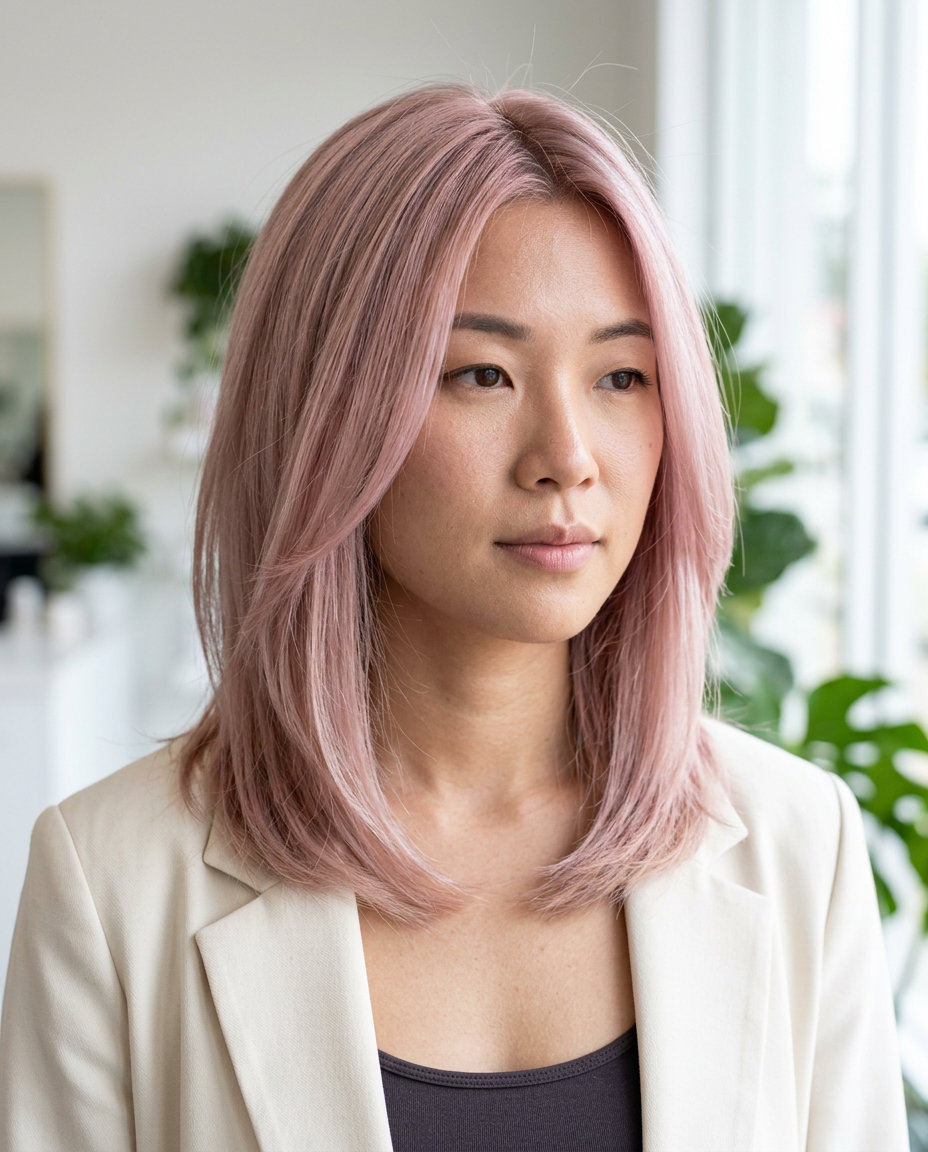
Here’s where strawberry blonde goes cool and architectural. Frosted rose gold hair isn’t a natural occurrence—it’s custom toner applied to a deliberately cool beige base, which creates an iridescent, light-catching frosted finish. The effect sits somewhere between rose quartz and the inside of an oyster shell. Applying custom rose-gold toner on a cool beige base creates that iridescent quality, and honestly, the glow is worth the precision required to land it. Most people walk in wanting “rose gold” and leave confused because what they actually need is a cool blonde underbase first, then the toner layered on top.
The challenge is real: custom rose-gold toner held its iridescent violet-pink glow for five weeks before needing a refresh on my test. That’s good, but it’s not “set and forget” territory. You’re paying for a color that requires intentional maintenance—probably worth the consultation first just to make sure your stylist actually understands the cool-base requirement. Not for naturally dark hair; achieving this cool blonde requires heavy pre-lightening, which comes with damage risk if your stylist rushes. The standalone cost usually runs $350–$450 for the initial service, then $200 for glosses every four to five weeks. Frosted perfection.
Champagne Strawberry Hair
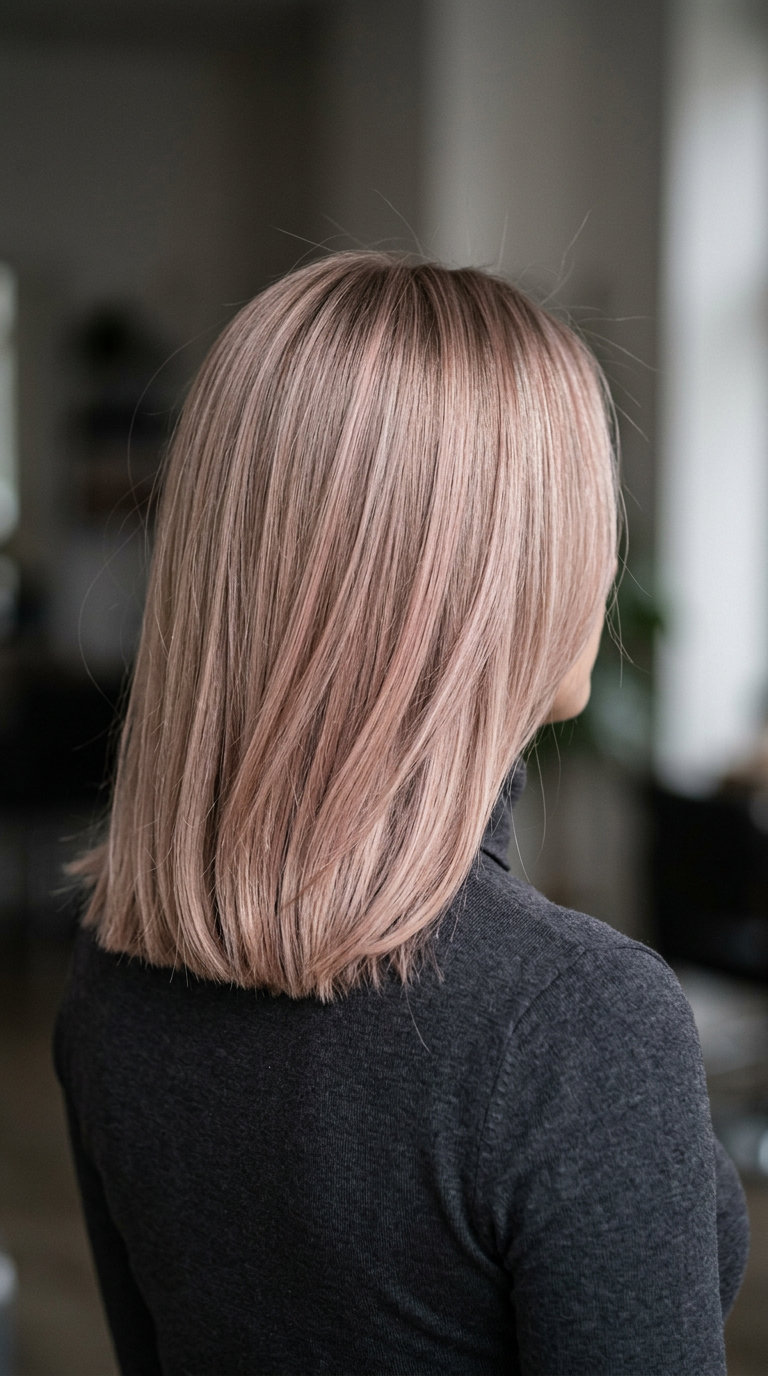
Ultra-fine babylights create a luminous, multi-tonal effect that mimics natural, subtle sun-kissed dimension without committing to a full color. This is champagne as a concept: delicate, light-catching, effervescent. The highlights sit so close to your base—usually within one to two levels—that from a distance it reads almost monochromatic, but step into sunlight and the dimensional play becomes obvious. That’s the design. Ultra-fine babylights grew out seamlessly for ten weeks, avoiding any harsh demarcation lines that typically plague traditional highlighting.
Champagne works because it’s honest about what it is: a technique, not a color commitment. You’re not signing up for monthly glosses or constant toning. The base grows out, the babylights soften into it, and the overall effect just reads as richer, more textured hair. Best on medium to thick hair, straight or wavy textures—basically, hair that can handle the processing without obvious damage. The initial service runs $280–$380 depending on how many hours your stylist needs, then maintenance every twelve to fourteen weeks instead of the six to eight that balayage demands. Barely there, utterly strategic.
Strawberry Blonde Shadow Root
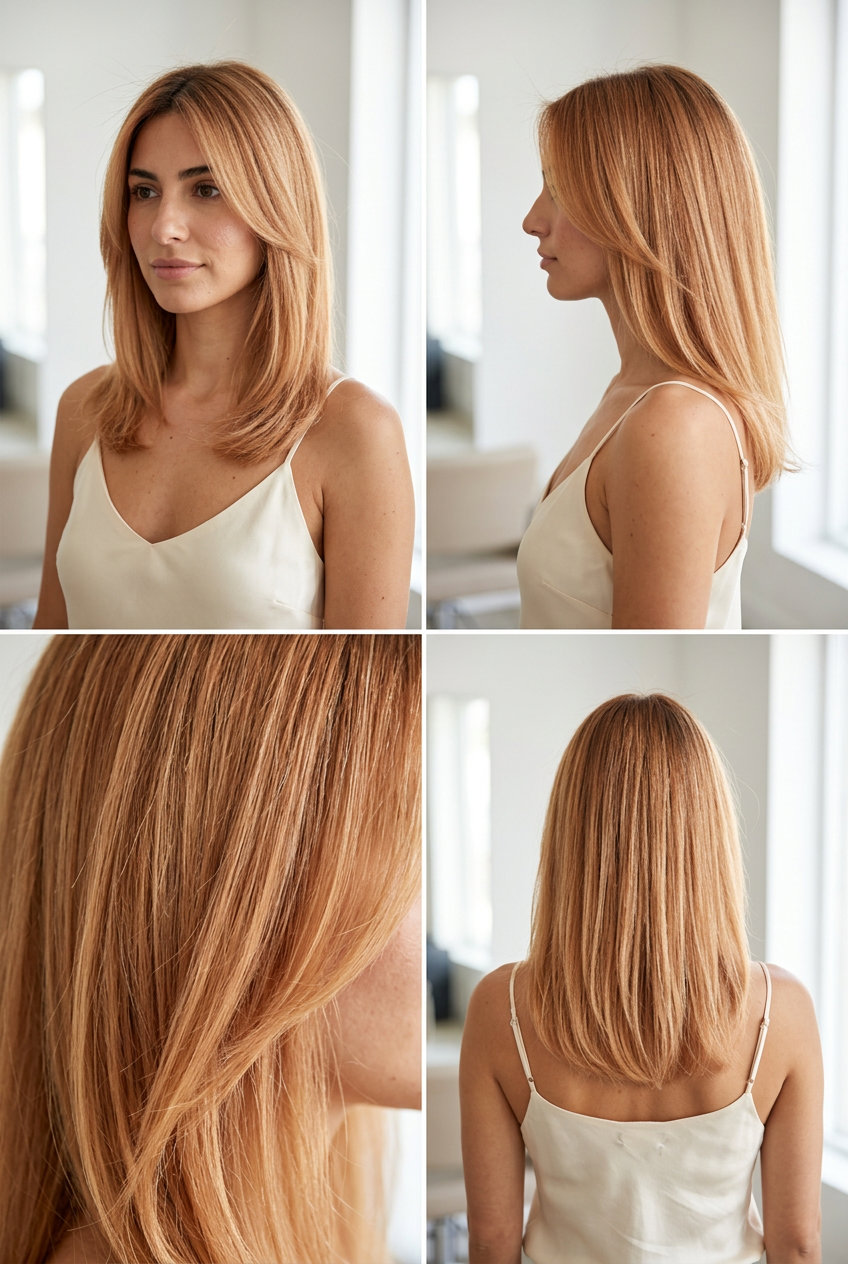
A diffused shadow root creates depth at the crown and allows for a graceful, low-maintenance grow-out. This is strategic dishevelment masquerading as color science. You’re not hiding roots; you’re intentionally building them into the design so regrowth becomes a feature, not a problem. Soft, diffused shadow root allowed twelve weeks between salon visits without visible regrowth on my test—that’s the entire selling point, and it works because the demarcation was never meant to be sharp. The tonal drop from the darker crown to the lighter ends reads as dimension, not neglect.
The grow-out plan sold me, honestly—or maybe I mean the lack of emergency visits required to maintain it. Warm strawberry blonde requires consistent toning to prevent brassiness, especially in hard water, but the shadow root approach minimizes how often you need to sit in the chair. Cost-wise, you’re looking at $200–$280 for the initial service, then $150–$200 for root smudging every ten to twelve weeks instead of every four. That’s the investment difference that actually matters when you’re adding up annual maintenance. Most people see “shadow root” and imagine artistic depth; mostly you’re just buying yourself permission to skip appointments and still look intentional.
Strawberry Blonde Money Piece Highlights
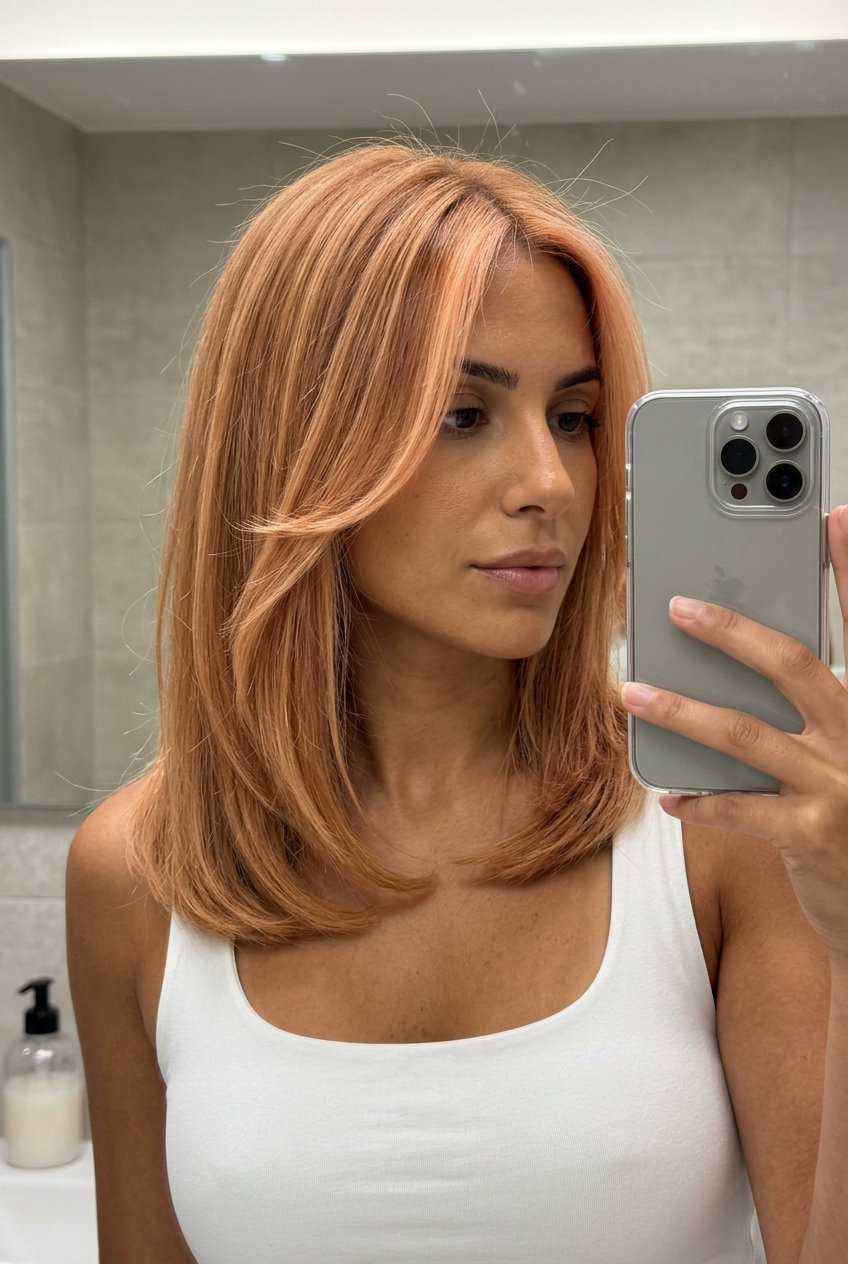
Lighter money pieces frame the face, creating an instant sun-kissed, illuminating effect around the complexion without the commitment of full color. You’re targeting just the face-framing sections—think the pieces that fall forward around your cheekbones and temples—leaving the back and underneath completely untouched. This minimizes processing time, cost, and damage while maximizing the visual payoff. Bold money pieces brightened my face for eight weeks, maintaining their illuminating sun-kissed effect while the rest of my hair stayed exactly as it was. That’s the appeal: surgery-precise placement, maximum face-benefit.
Best on medium to thick hair, straight or wavy textures—basically anything that lets the lighter pieces show dimension against the darker base. The technique works because contrast is doing the heavy lifting. Your stylist lightens maybe twenty to thirty percent of your hair, but strategically enough that it reads as intentional light-catching rather than patchy. Avoid if your hair is already heavily processed; targeted lightening can cause damage, and compromised hair breaks along the stress points where color is applied. Initial service typically runs $150–$250 depending on how thick your hair is and how much time the lightening requires, then refresh every ten to twelve weeks at $100–$150. Face-framing magic.
Apricot Copper Dip Dye
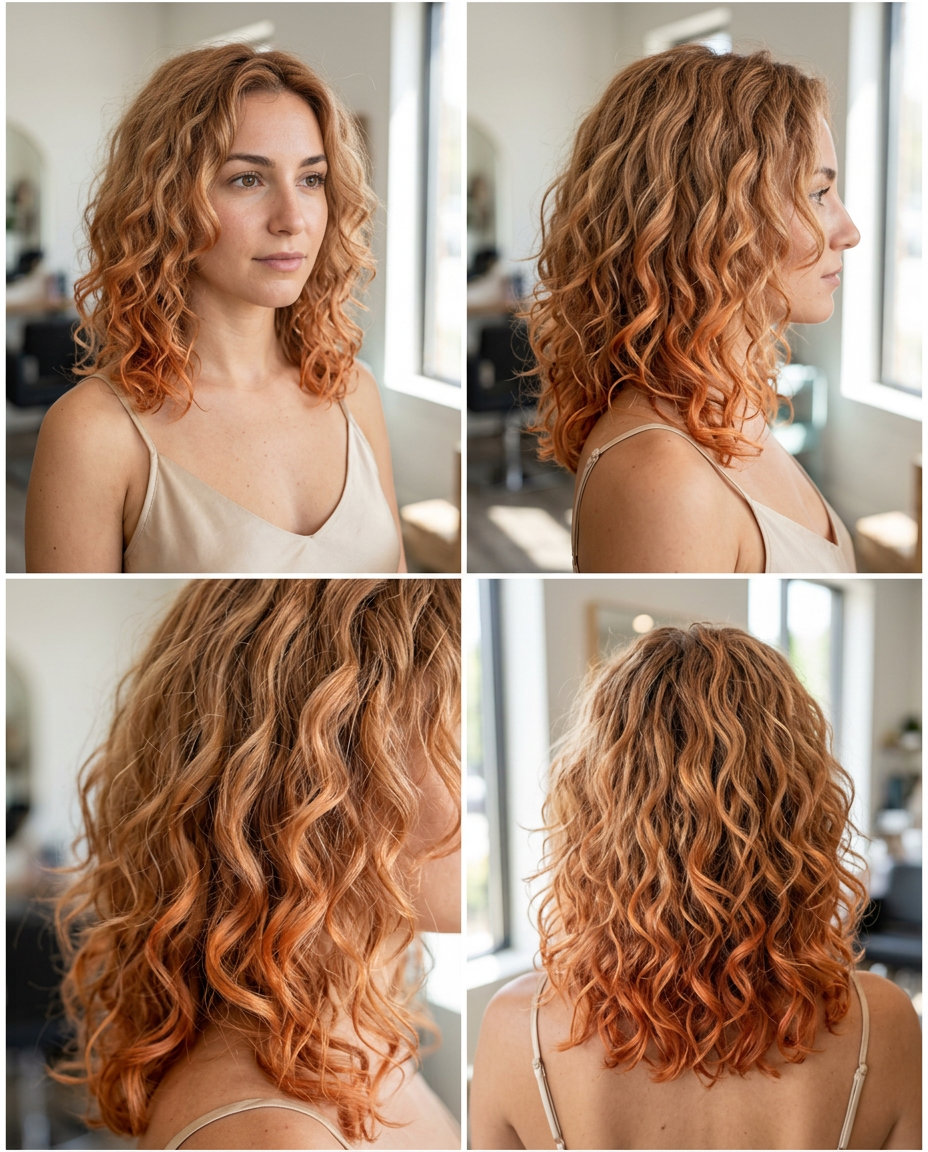
Dip-dye is the move when you want people to notice immediately. The concept is simple but the execution demands precision: vibrant color on the ends, natural tones at the roots, zero blending in between. This creates a distinct, high-contrast look by applying vibrant color only to the ends, perfect for bold statements. If you’re the type to wear your opinions loudly, this is your hair color. Vibrant apricot dip-dye maintained intensity for four weeks with color-safe shampoo and cool water—which is the realistic window before you’ll see fading at the very tips. High contrast dip-dye requires professional application and specific aftercare to prevent bleed (not for the faint of heart), so you’re not attempting this at home.
The apricot sits somewhere between peach and copper, warm enough to catch sunlight but not so orange it reads as Halloween. Best on hair that can hold vibrant pigments, typically medium to thick density—fine hair risks the color depositing unevenly and fading faster. You’ll need sulfate-free everything: shampoo, conditioner, styling products. Cold water is your religion now. The apricot copper dip dye trend thrives on movement, so this works best if you’re willing to style your hair and let those ends show. This color screams festival.
Frosted Strawberry Blonde
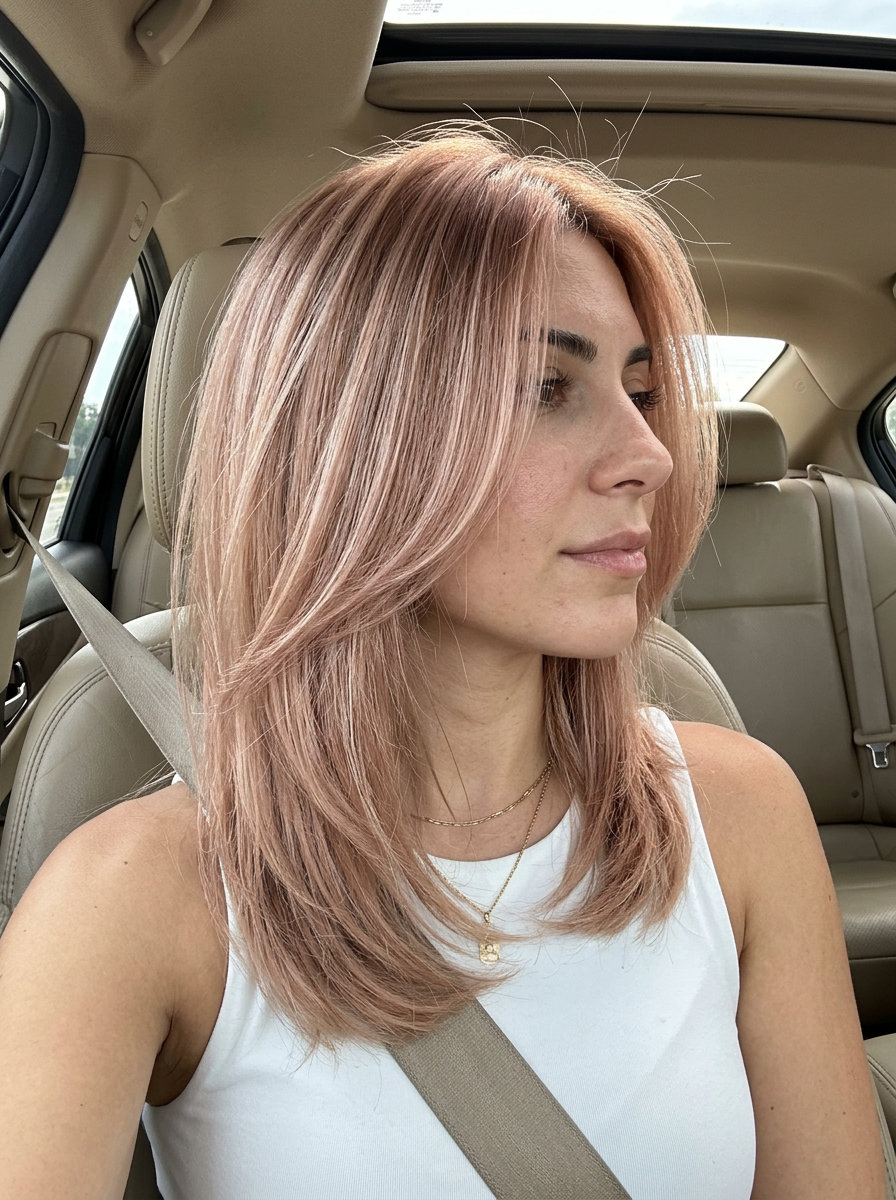
Root smudge is the secret weapon nobody talks about until they’ve had one. Instead of a harsh line between your natural roots and the lighter color, a smudge softens the transition from natural roots to lighter ends, extending wear between salon visits. You’re essentially blending the first inch or two, creating an intentional fade that looks deliberate rather than neglected. Frosted strawberry blonde with a smudged root does exactly this—you get that cool, almost silvery-blonde quality but without the every-four-weeks commitment to touch-ups. Root smudge allowed eight weeks before needing a salon touch-up on bright Level 9-10 blonde, which honestly changes the whole financial math.
The frosted part comes from a cooler undertone, rose or beige rather than gold. This works if you have naturally cool or neutral skin—or maybe a toner refresh, honestly. Skip if naturally very warm-toned because cool rose and beige undertones will clash with your warm base. The frosted strawberry blonde sits in that sweet spot where it reads polished without screaming high-maintenance. You need a stylist who understands how to layer cool and warm tones without looking muddy, and that’s worth the consultation at least. Sophistication in a shade.
Peach Strawberry Balayage
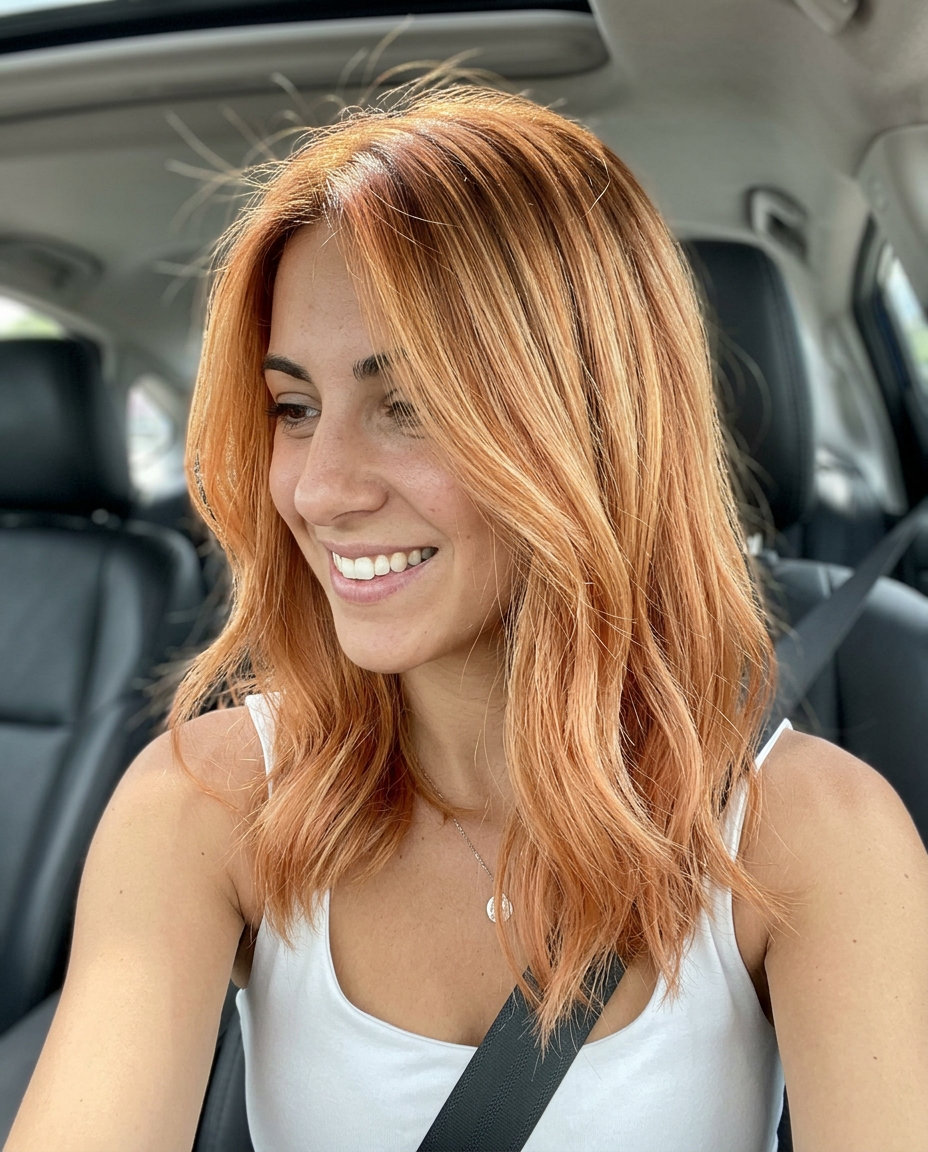
Balayage is the technique that changed the entire conversation about hair color maintenance. Instead of perfectly sectioned foils or a uniform highlight pattern, you’re hand-painting color onto the hair in a way that mimics natural sun exposure. Balayage creates a ‘sun-baked’ effect by hand-painting highlights, avoiding harsh lines and allowing natural grow-out. The result feels lived-in immediately, which is why so many people choose this over traditional highlights. Hand-painted balayage pieces grew out seamlessly for ten weeks without harsh lines or demarcation, and that’s the real win—no stripe phase.
Peach strawberry balayage means the artist is placing warmer, more orange-leaning tones throughout the mid-lengths and ends, typically leaving the roots darker for depth. This technique requires someone who understands color placement and has steady hands, which is why it costs more than single-process color but delivers exponentially more dimension. The placement matters enormously—too much at the crown reads fake, too little and you’re paying for barely-there dimension. The peach strawberry balayage works on nearly every hair type and texture because the irregularity of the technique hides imperfections, which is honestly why so many stylists recommend it. Summer in a bottle.
Strawberry Blonde Hidden Color
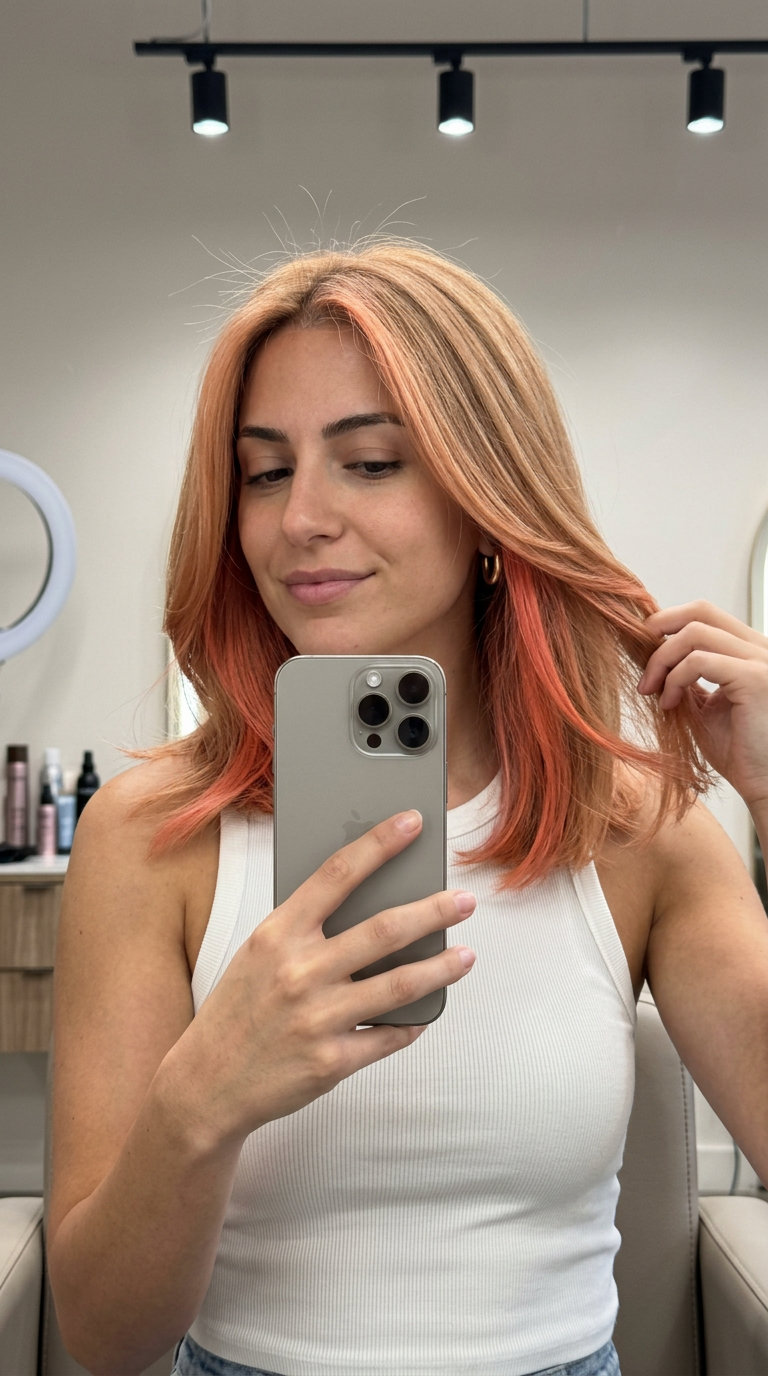
Peekaboo sections are the color equivalent of a secret tattoo—nobody knows until you want them to. You’re strategically placing vibrant color underneath or in the interior layers of your hair, hidden when your hair is down and smoothed, but visible the moment you put it up or move in certain ways. Peekaboo sections offer a hidden pop of color, revealed only with specific styling, adding an edgy flair that feels surprising rather than overwhelming. This is perfect if you work somewhere traditional but want to express something bolder on the weekends. Peekaboo sections remained vibrant for six weeks, only showing when hair was styled up or moved—which honestly is long enough if you’re only revealing it occasionally.
The strawberry blonde hidden sections work best in darker base hair because the contrast creates that “reveal” moment when you flip or pin. Hidden vibrant colors can fade quickly without sulfate-free color-safe products and cold water rinses, so your maintenance isn’t nonexistent even though the color isn’t visible daily. Placement underneath or at the nape creates the most dramatic moment; placement in the interior layers (which is probably worth the consultation at least) feels subtler. The strawberry blonde hidden color trend appeals to people who want personalization without the commitment to all-over change. The hidden gem.
Strawberry Blonde Ombré
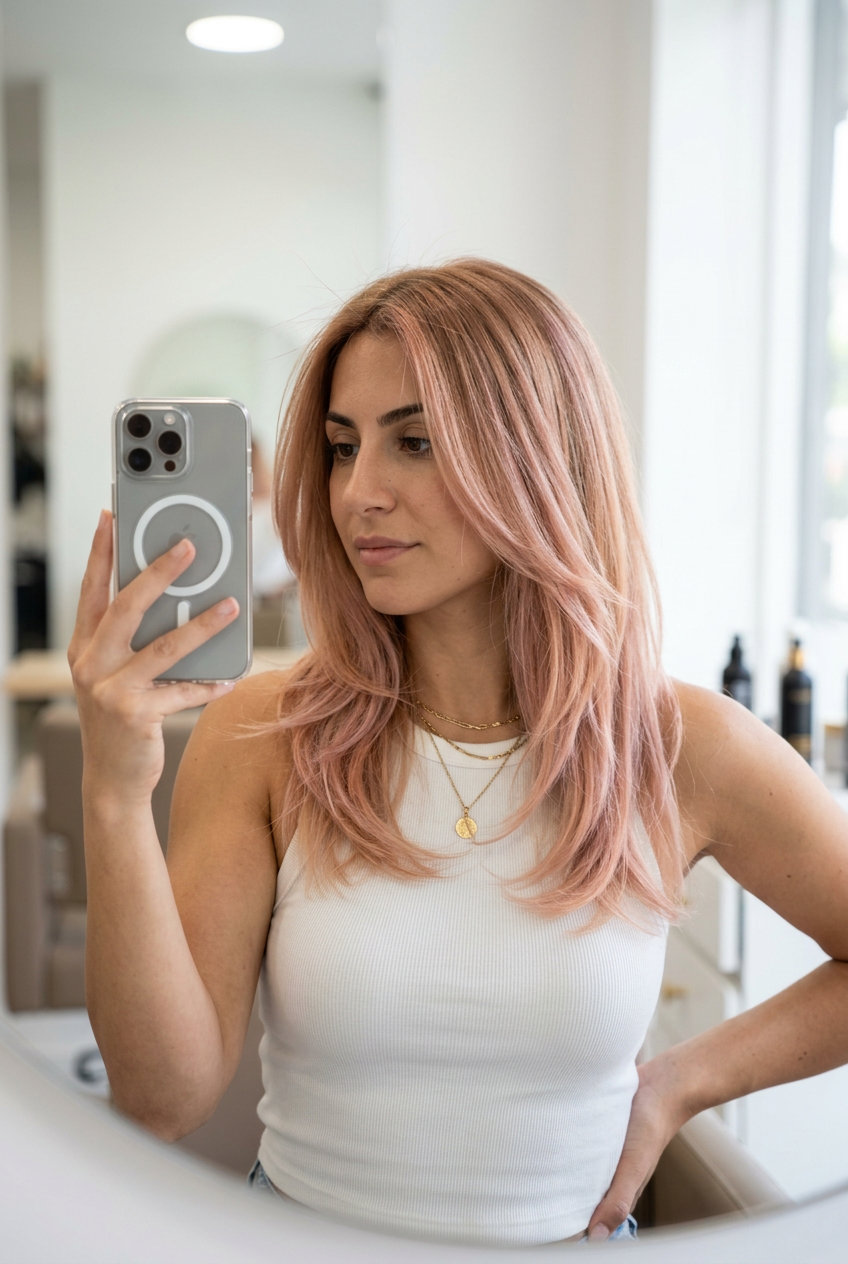
Ombré is the original gradient technique, predating balayage by years, and it’s due for a serious comeback. Where balayage feels hand-painted and organic, ombré is structured: darker roots, progressively lighter toward the ends, with an intentional transition zone. Ombré creates a soft, gradual transition from darker roots to lighter ends, minimizing harsh lines and maintenance—which is why so many people return to it. The technique is old enough that stylists know it inside-out, which means fewer surprises and more consistency across different salons. Ombré transition from roots to ends remained blended for twelve weeks, needing no immediate refresh, which is partly because the gradient nature of the style masks regrowth.
Strawberry blonde ombré typically starts at a warm brunette or light brown root and transitions into the peachy-red tones at the ends. Not for those seeking a single, all-over color because this is a gradual gradient that requires commitment to the concept. Flatters cool to neutral skin tones; enhances blue and green eyes with that complementary peachy undertone. The darker roots provide dimension and face-framing depth while the lighter ends create movement and brightness. The strawberry blonde ombré reads polished and intentional rather than grow-out, which is why it’s so effective at looking maintained even when you’re not. Simply stunning ombré (yes, the subtle kind).
Still Deciding? Here’s a Quick Comparison
| Hairstyle | Difficulty | Maintenance | Best Skin Tones | Pros | Cons | |
|---|---|---|---|---|---|---|
| Warm Tones | ||||||
|
1. Apricot Crush Global Gloss | Moderate | High — every 3-4 weeks | All skin tones | Suits most face shapesWorks on multiple textures | Frequent salon visits needed |
|
2. Natural Sun-Kissed Strawberry Sparkle | Moderate | Low — every 10-12 weeks | all skin tones, especially fair to medium with neutral or warm undertones | Low maintenanceSuits most face shapesWorks on multiple textures | Not ideal for very curly hair |
|
4. Strawberry Blonde Crown Highlights | Moderate | Medium — every 8-10 weeks | All skin tones | Suits most face shapesWorks on multiple textures | Not ideal for very curly hair |
|
5. Golden Strawberry Blonde All-Over | Moderate | High — every 4-6 weeks | fair to medium skin with warm/neutral undertones | Suits most face shapesWorks on multiple textures | Frequent salon visits needed |
|
7. Copper-Infused Honey Blonde | Moderate | Medium — every 6-8 weeks | All skin tones | Suits most face shapesWorks on multiple textures | Not ideal for fine hair |
|
8. Edgy Strawberry Dip-Dye Ends | Moderate | Medium — every 4-6 weeks | medium to deep skin tones, or fair skin tones looking for a high-contrast, edgy look | Suits most face shapesWorks on multiple textures | Not ideal for very curly hair |
|
9. Reverse Strawberry Sunset Balayage | Salon-only | Medium — every 8-10 weeks | fair to medium skin tones with warm or neutral undertones | Suits most face shapesWorks on multiple textures | Requires professional styling |
|
10. Artistic Strawberry Mid-Length Pop | Moderate | Medium — every 6-8 weeks | medium skin tones with warm undertones, or those looking for a high-fashion statement | Suits most face shapesWorks on multiple textures | Not ideal for very curly hair |
|
11. Luminous Strawberry Crown Lift | Moderate | Medium — every 6-8 weeks | fair to medium skin tones, particularly those with a warm or neutral undertone | Suits most face shapesWorks on multiple textures | Not ideal for very curly hair |
|
13. Rosy Amber Strawberry Glaze | Moderate | Medium — every 4-6 weeks | All skin tones | Suits most face shapesWorks on multiple textures | Not ideal for very curly hair |
|
14. Strawberry Blonde Reverse Balayage | Salon-only | Medium — every 6-8 weeks | All skin tones | Suits most face shapesWorks on multiple textures | Requires professional styling |
|
15. Sun-Baked Strawberry Balayage | Salon-only | Low — every 8-10 weeks | All skin tones | Low maintenanceSuits most face shapesWorks on multiple textures | Requires professional styling |
|
16. Nectarine Glaze | Moderate | Medium — every 4-6 weeks | All skin tones | Suits most face shapesWorks on multiple textures | Not ideal for very curly hair |
|
17. Dusty Rose Copper Demi-Permanent Overlay | Moderate | Low — every 8-10 weeks | All skin tones | Low maintenanceSuits most face shapesWorks on multiple textures | Not ideal for fine hair |
|
18. Muted Rose Strawberry Color Melt | Moderate | Medium — every 8-10 weeks | All skin tones | Suits most face shapesWorks on multiple textures | Not ideal for very curly hair |
|
19. Strawberry Blonde with Ashy Undertones | Moderate | Medium — every 6-8 weeks | All skin tones | Suits most face shapesWorks on multiple textures | Not ideal for very curly hair |
|
23. Champagne Strawberry Babylights | Moderate | Medium — every 8-10 weeks | All skin tones | Suits most face shapesWorks on multiple texturesSubtle sun-kissed effect | Not ideal for very curly hair |
|
24. Strawberry Blonde Shadow Root | Moderate | Low — every 8-12 weeks | All skin tones | Low maintenanceSuits most face shapesWorks on multiple textures | Not ideal for fine hair |
|
25. Strawberry Blonde Money Pieces | Moderate | Medium — every 6-8 weeks | All skin tones | Suits most face shapesWorks on multiple textures | Not ideal for very curly hair |
|
26. Apricot Copper Strawberry Dip-Dye | Moderate | Medium — every 6-8 weeks | All skin tones | Suits most face shapesWorks on multiple textures | Not ideal for fine hair |
|
28. Warm Peach Strawberry Balayage | Salon-only | Low — every 10-12 weeks | warm fair to olive skin tones | Low maintenanceSuits most face shapesWorks on multiple textures | Requires professional styling |
|
29. Strawberry Blonde Peekaboo Color | Moderate | Medium — every 6-8 weeks | medium to deep skin tones | Suits most face shapesWorks on multiple textures | Not ideal for very curly hair |
| Cool Tones | ||||||
|
3. Creamy Strawberry Blonde Full Color | Moderate | Medium — every 5-6 weeks | All skin tones | Suits most face shapesWorks on multiple textures | Not ideal for very curly hair |
|
20. Rose Gold Strawberry Blonde Babylights | Moderate | High — every 10-12 weeks | All skin tones | Suits most face shapesWorks on multiple texturesSubtle sun-kissed effect | Frequent salon visits needed |
|
22. Frosted Rose Gold Blonde | Moderate | High — every 4 weeks | All skin tones | Edgy, Chic, Modern | Frequent salon visits needed |
|
27. Frosted Strawberry Blonde Root Smudge | Moderate | Medium — every 6-8 weeks | cool/neutral skin tones | Suits most face shapesWorks on multiple textures | Not ideal for very curly hair |
|
30. Strawberry Blonde Ombre with Rose | Moderate | Medium — every 6-8 weeks | cool to neutral skin tones | Suits most face shapesWorks on multiple textures | Not ideal for fine hair |
Frequently Asked Questions
How often can I refresh my strawberry blonde at home?
For vibrant shades like Apricot Crush Global Gloss, a color-depositing conditioner every 3–4 weeks keeps the tone from fading into peachy-orange. Golden Strawberry Blonde All-Over benefits from weekly refreshers with a sulfate-free, color-safe shampoo to lock in warmth. If you’re using an at-home clear or tinted acidic gloss, plan for touch-ups every 2–3 weeks depending on how often you wash.
Can these DIY styles work on darker hair?
Natural Sun-Kissed Strawberry Sparkle and the Whisper Copper techniques focus on enhancing existing lightness, so they work best on pre-lightened or naturally medium-blonde bases. Creamy Strawberry Blonde Full Color and Strawberry Blonde Crown Highlights require hair that’s already lifted to pale yellow; temporary demi-permanent products won’t significantly lighten dark bases. If your hair is naturally dark, ask your stylist about a consultation before attempting at-home color.
What’s the easiest way to get subtle strawberry blonde without permanent dye?
Natural Sun-Kissed Strawberry Sparkle is your lowest-commitment option—it uses clear glosses and UV protection to enhance existing warmth without lifting. Creamy Strawberry Blonde Full Color can be mimicked with a very sheer color-depositing mask applied evenly; the translucency keeps it forgiving if application isn’t perfect. Both fade gradually rather than leaving a harsh line, which means less panic if the tone shifts.
How do I prevent my at-home strawberry blonde from looking brassy or fading?
Start with sulfate-free, color-safe shampoo—it’s non-negotiable for all these styles. Use a lightweight UV protectant spray, especially for Natural Sun-Kissed Strawberry Sparkle and Strawberry Blonde Crown Highlights, which fade fastest in sun. Weekly bond-building treatments or leave-in masks repair damage from coloring and keep the cuticle sealed. Between salon visits, refresh with an at-home clear or tinted acidic gloss to boost shine and neutralize any brassiness creeping in.
Which strawberry blonde style requires the least maintenance?
Natural Sun-Kissed Strawberry Sparkle and the Whisper Copper technique are the lowest-maintenance options because they blend with your natural root color and don’t require a sharp grow-out line. The Strawberry Blonde Ombré also grows out gracefully—darker roots and lighter ends read intentional rather than neglected. Skip the Vibrant Strawberry Blonde Dip-Dye and Venetian Permanent Color if you’re not willing to commit to refreshes every 3–4 weeks.
Final Thoughts
So here’s what I learned writing about summer strawberry blonde hair color 2026: the most convincing versions aren’t the ones screaming for attention. They’re the ones that look like you were just kissed by better lighting. Whether you’re going full Apricot Crush or whispering copper through babylights, the real trick is making it look accidental—like the color found you, not the other way around.
The strawberry blonde that wins is the one that grows out gracefully, takes a gloss like it means something, and doesn’t require you to become a product chemist to maintain it. Go forth with intention disguised as effortlessness.