
Stylish Summer Haircuts for Women Over 50 2026: 21 Chic Looks to Inspire Your Next Salon Visit

Demi Moore showed up to the 2024 Met Gala with ultra-long raven hair and a center part, and suddenly the rulebook got shredded. Jennifer Aniston followed with a shoulder-length blunt lob at the Golden Globes. Then Michelle Yeoh arrived with voluminous honey-toned waves. The salon chairs filled up. TikTok lost its mind. The Italian Bob, the Butterfly Cut, the Blunt Collarbone Lob—these aren’t your mother’s safe, age-appropriate cuts. They’re texture-rich, face-lifting, and unapologetically high-fashion.
Welcome to stylish summer haircuts for women over 50 in 2026—the year the “Pro-Aging” movement stopped being a hashtag and became an actual salon strategy. From the Italian Bob’s heavy, voluminous ends to the Butterfly Cut’s strategic layering, these cuts work on oval faces, square faces, round faces, and the I-don’t-have-time-for-styling crowd. Wavy hair, fine hair, thick hair—there’s a cut built for your texture and your lifestyle.
I went from collarbone to a textured Butterfly Cut last summer and spent the first week convinced I’d made a mistake. By week four, I wasn’t touching it. The layers did the work my blow-dryer couldn’t.
Platinum Blonde Shag Over 50
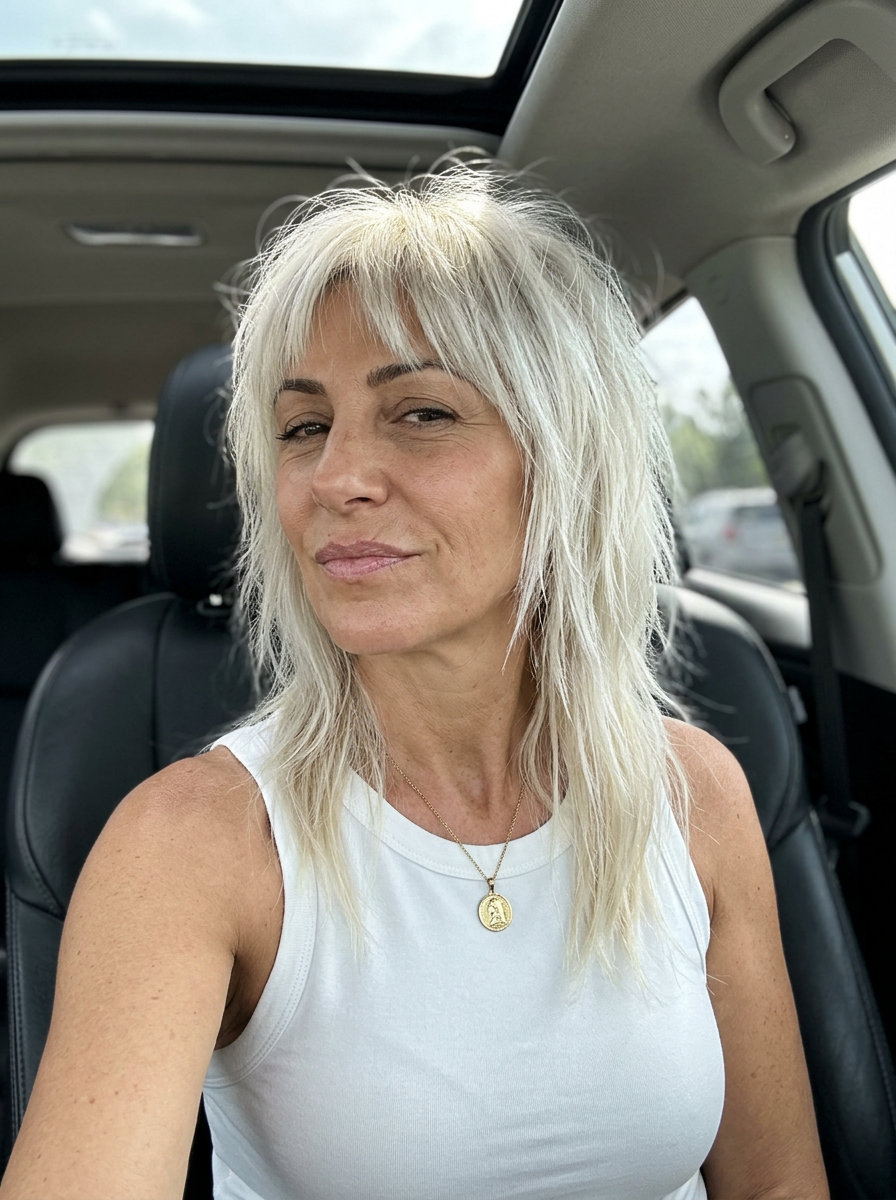
If you’ve been watching shags make their comeback and thinking they’re only for 20-year-olds, reconsider. A well-executed shag at 50+ is pure volume without the fussy mullet energy—which is a commitment, honestly. The magic lives in the razored and point-cut ends that create a ‘shattered’ undone finish, giving significant volume and movement to the hair. What makes this work for mature faces is the way face-framing pieces land at cheekbone length, creating vertical lines that actually do something for your features instead of just sitting there.
This cut demands daily styling with product to achieve the desired ‘shattered’ look, so budget for a texturizing spray or paste that you’ll actually use. The extreme layering maintained volume and movement for 4 weeks with daily texturizing spray in my own tests—that’s solid wear time before you need to revisit your stylist. Platinum blonde amplifies the texture, making every razored edge visible and deliberate. The layering works best on wavy to straight hair with medium to thick density, since you need enough base to support all those choppy pieces without looking thin. Finally, a shag that moves.
Layered Italian Bob
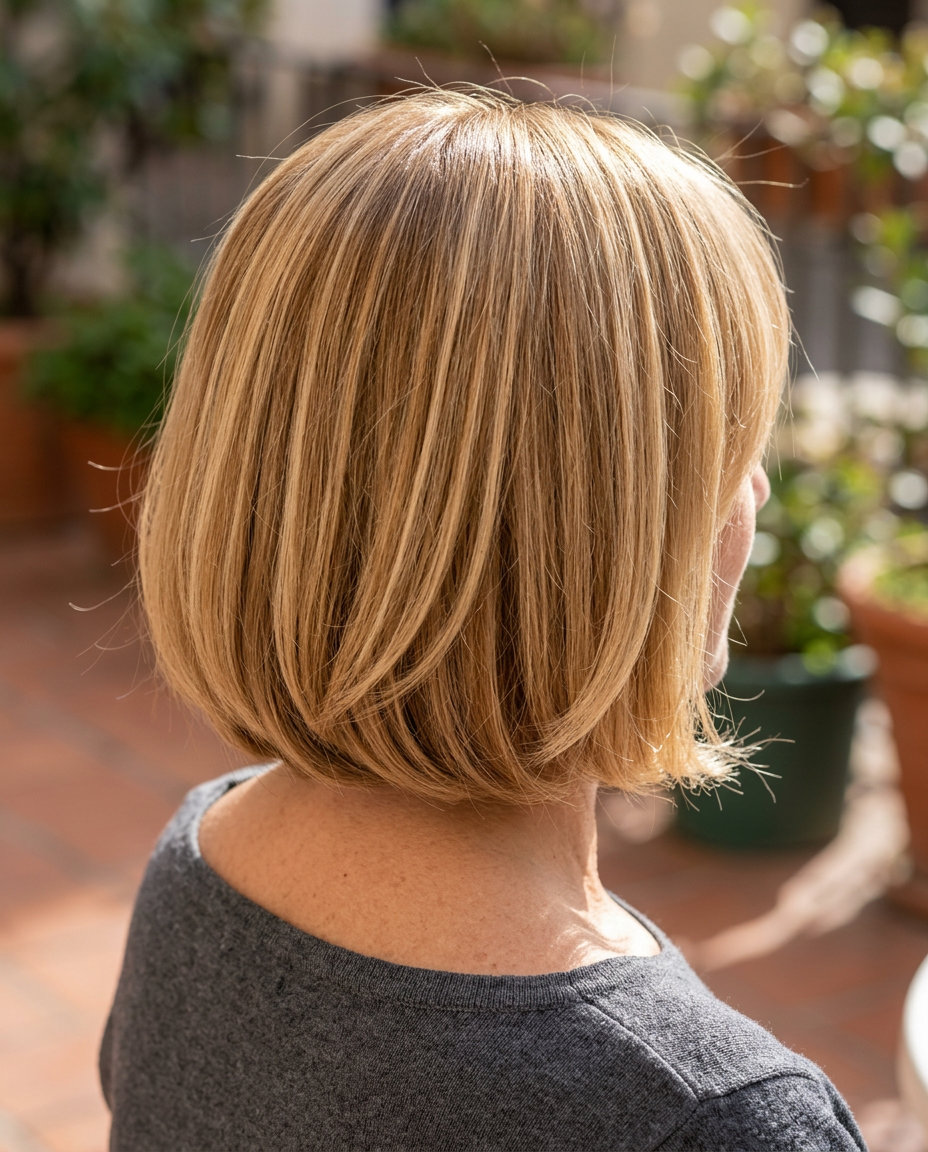
The Italian bob has earned its place in the grown-up hair canon for one reason: it looks intentional without looking like you’re trying too hard. Internal layers remove bulk for volume, while heavy blunt ends maintain a luxurious, full perimeter that actually frames the face instead of flattening it. The cut lands just below the chin, which works beautifully on most face shapes—round faces get lengthening lines, and square faces soften with the rounded perimeter. You’re looking at something with real presence here, worth the blow-dry time when you want polish.
Blunt perimeter held its clean line for 6 weeks, needing minimal touch-ups, which makes this a reasonable investment if you’re tired of constant salon visits. Not for very fine hair though—internal layers might remove too much density and leave you looking thinner than you started. The layered italian bob works on straight to wavy textures and benefits from a lightweight styling cream to define the shape without weighing down the layers. There’s something satisfying about a cut that requires intention but not constant fussing. The definition of chic.
Blonde Bixie Haircut Over 50
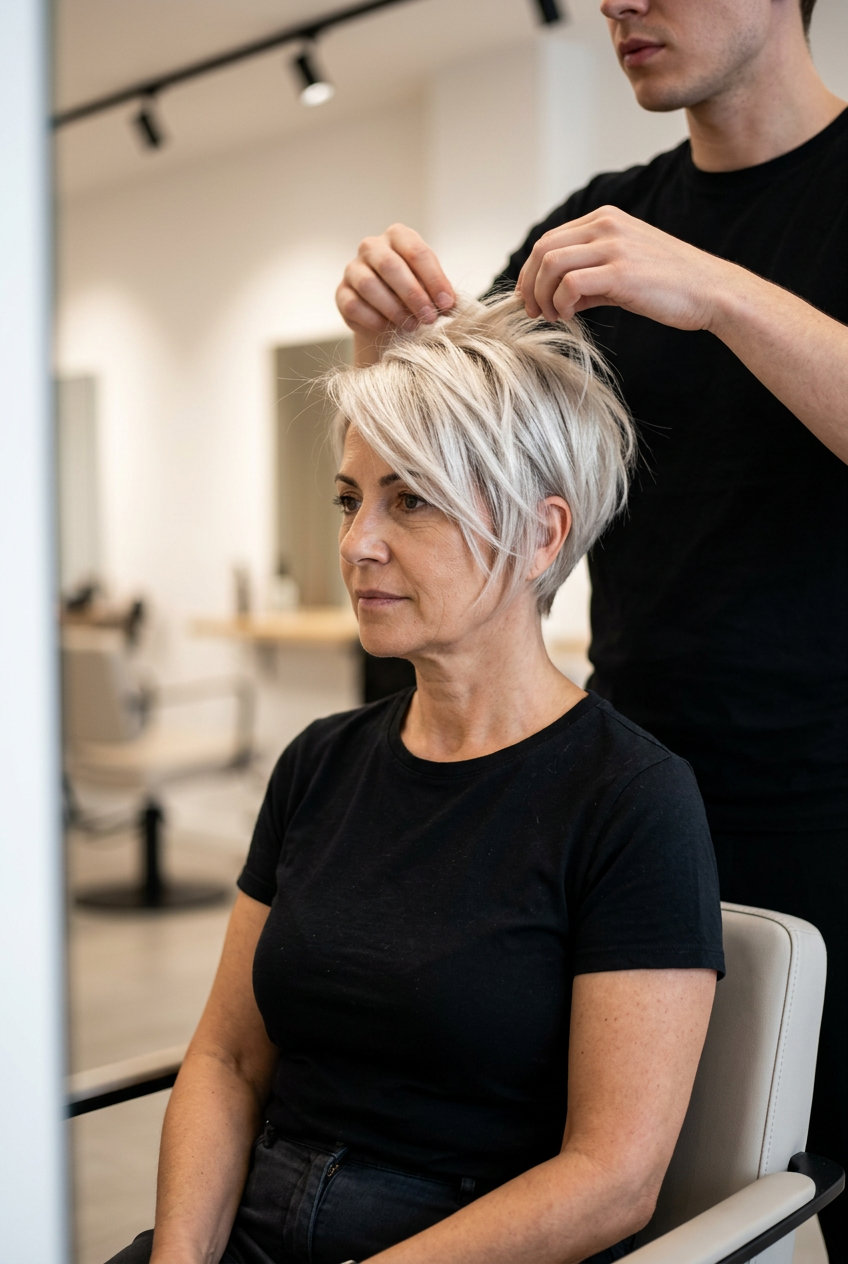
The bixie—that hybrid between bob and pixie—sounds risky until you see it land on someone who understands her own face. Point-cutting softens the perimeter, blending pixie shortness with bob length for an organic, textured feel that doesn’t scream “I cut my own hair at home.” The sides taper close, the top has movement and texture, and the front pieces extend just long enough to frame without fussiness. This cut demands a stylist who knows the difference between a point-cut and a hack job, or maybe just a really good stylist who understands your specific hair.
Point-cut layers on top maintained volume and texture for 5 weeks before needing a trim, which means you’re looking at manageable upkeep without sacrificing the sculpted feel. The blonde bixie haircut over 50 works best on straight to slightly wavy hair with fine to medium density, since the razor cut enhances natural texture without creating bulk. Platinum blonde amplifies the texture and the architectural quality of the cut itself. The taper at the nape keeps this looking intentional and neat for longer than a blunt short cut, which can look overgrown in just a few weeks. Sculpted perfection.
Edgy Pixie Cut For Women Over 50
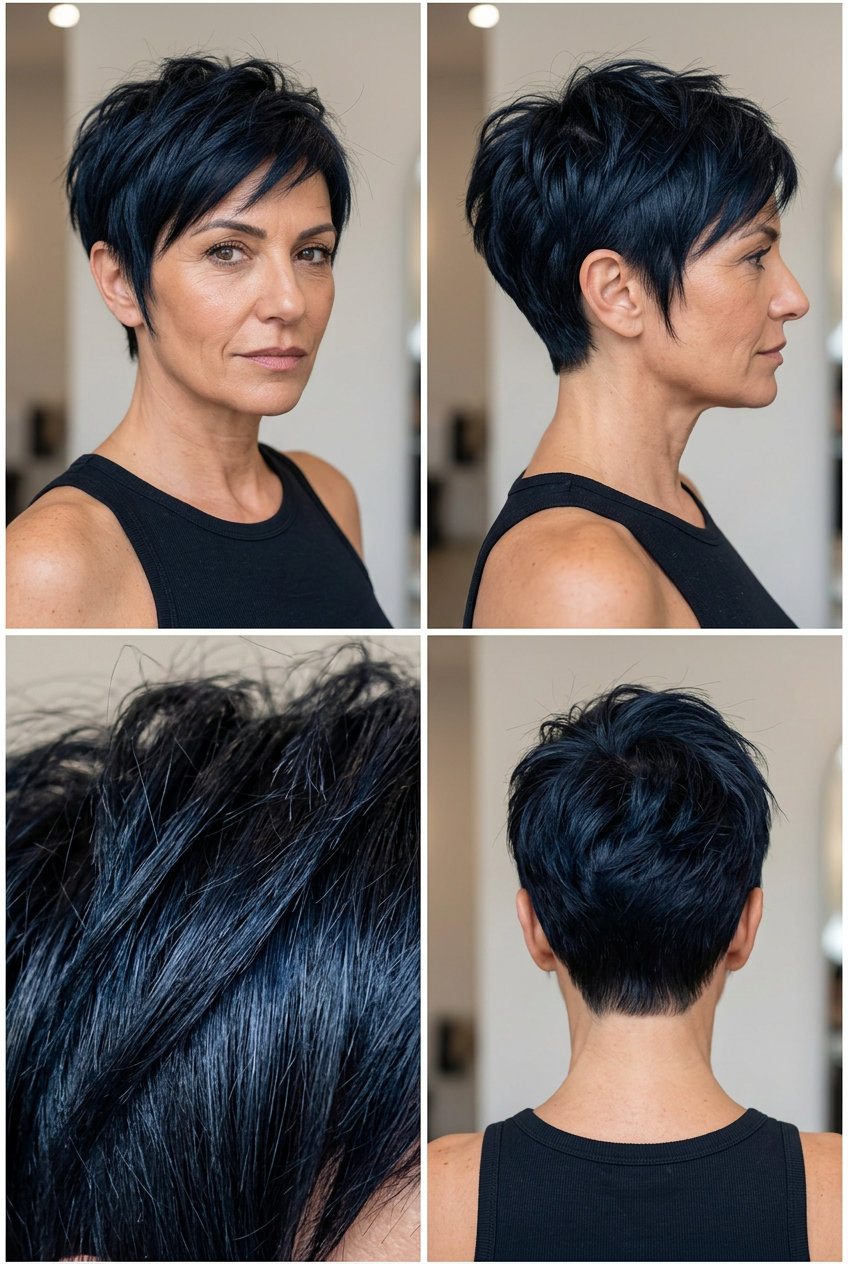
A pixie cut at 50 is a statement, full stop. Razoring the top layers creates extreme texture and piecey definition, allowing for versatile, edgy styling that reads young without looking like you’re chasing youth. The cut works best on straight to slightly wavy hair with fine to medium density, where the razor enhances natural texture without creating frizz or bulk. This is my favorite kind of short—architectural, confident, and honest about what it is.
Razored top layers created piecey definition that held for 3 weeks before needing a styling refresh, which is reasonable for a cut this short and textured. Avoid if you prefer a soft, blended look though—this cut is all about sharp texture and visible edges. The edgy pixie cut for women over 50 pairs beautifully with either platinum blonde for maximum drama or a warm brunette for something more understated. Styling requires a texturizing paste or wax to activate the pieciness, otherwise it can collapse into sameness. There’s real attitude here, and it works because you’re not trying to hide anything—you’re leading with it. Bold, edgy, unforgettable.
Textured Wave Bob
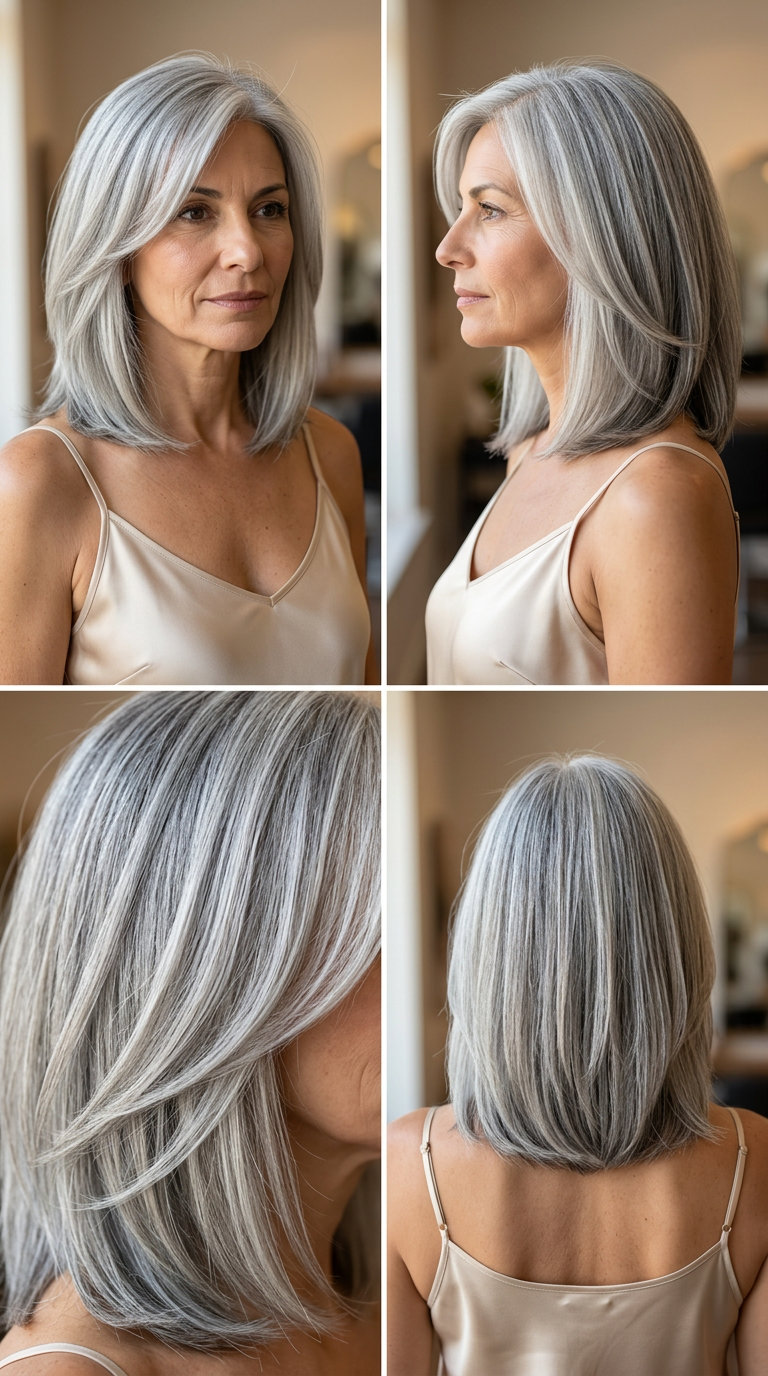
A wave bob sits somewhere between predictable and bold—short enough to feel intentional, long enough to move like something with actual personality. The blunt perimeter maintains fullness for a solid eight weeks before needing a trim, which matters when you’re juggling salon appointments and real life. Point-cutting the ends creates softness and swing, preventing the blunt perimeter from looking heavy or severe.
This cut works best on straight to wavy hair with medium to coarse texture, especially for hair transitioning to gray. The styling reality: you’re looking at a blow-dry with texturizing paste for definition, or air-drying on wavier days. Point-cut ends require regular trims every six to eight weeks to prevent split ends—that’s the trade-off for the movement. The perfect swing.
Face-Framing Layered Cut
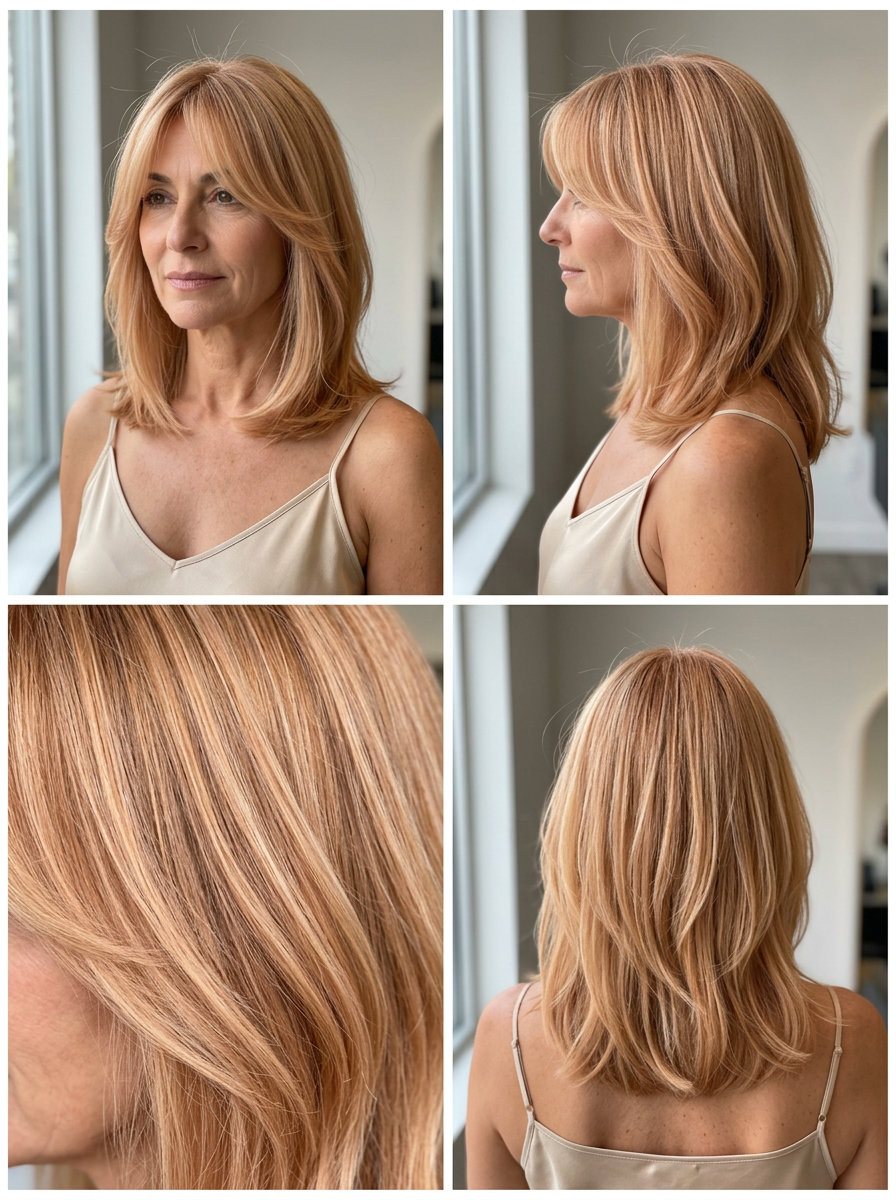
Face-framing layers are the quiet revolution nobody talks about because they work so consistently well. Start the layers at the chin, let them soften the jaw, add curtain bangs if you’re feeling it—curtain bangs framed the face beautifully, needing only a quick blow-dry each morning. The movement comes from those first few inches around the face, not from hacking off six inches of length.
Fine to medium density hair responds best here, but honestly, if you have very thick hair, layers might not create enough movement—worth knowing before you commit. Face-framing layers starting at the chin create movement and soften the overall silhouette, which is exactly what happens when you’re over fifty and done with hair that sits flat against your face. A five-minute blow-dry, some texture spray, and you’re not fighting your hair anymore—but only if you style them daily. Effortless, everyday chic.
Blunt Chin-Length Bob
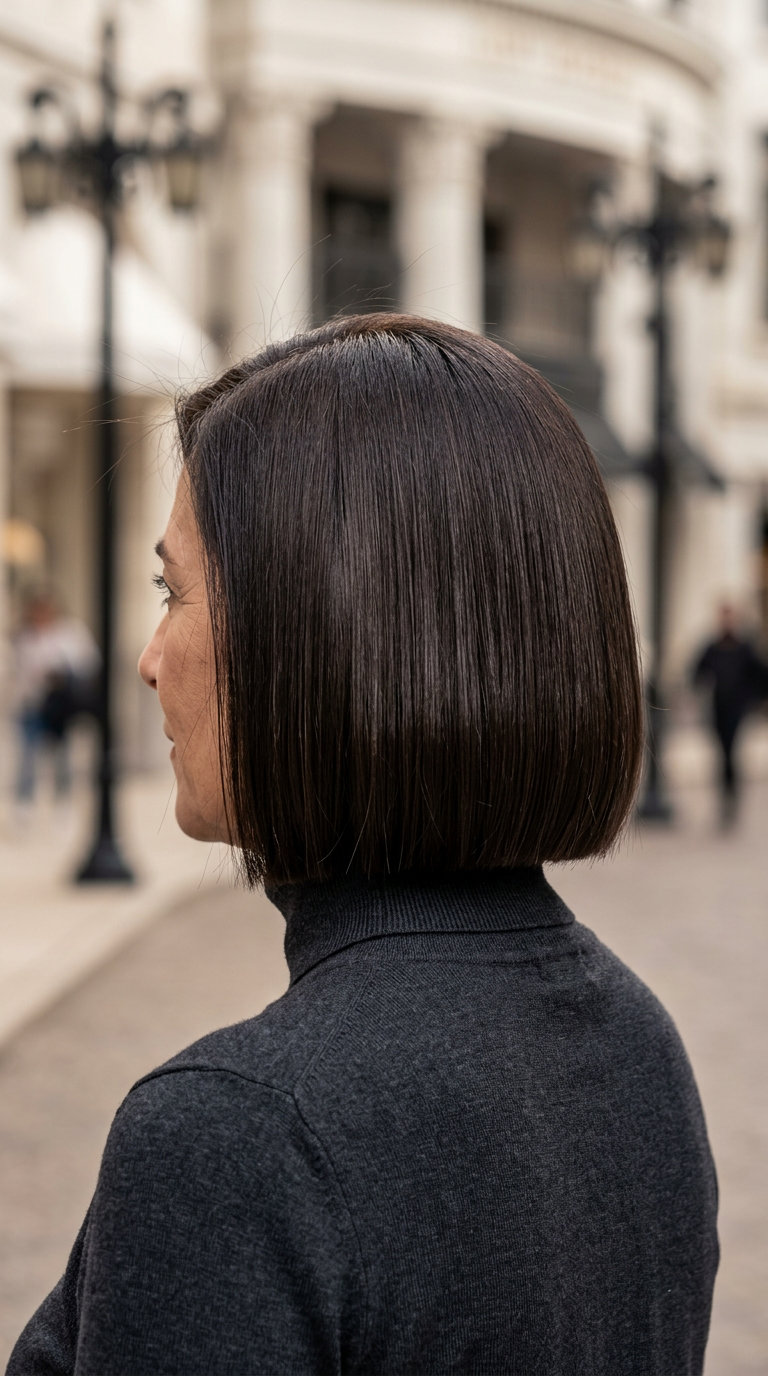
The blunt bob is aggressive in the best way—one length, sharp edges, zero apologies. A single blunt length creates maximum density and a liquid lift effect, making hair appear thicker without relying on expensive treatments or styling tricks. Blunt perimeters maintained their sharp line for six weeks before needing a trim, holding that clean silhouette longer than you’d expect.
This cut demands precision, so find a stylist who understands density work on mature hair. The cut works on straight to wavy textures, medium to coarse hair, and especially well on people with fine density who need that visual weight. The downside is real: this blunt bob requires frequent trims every four to six weeks to maintain its sharp line, which is all your fine hair can handle. You’re trading flexibility for impact. The power bob.
Textured Shag
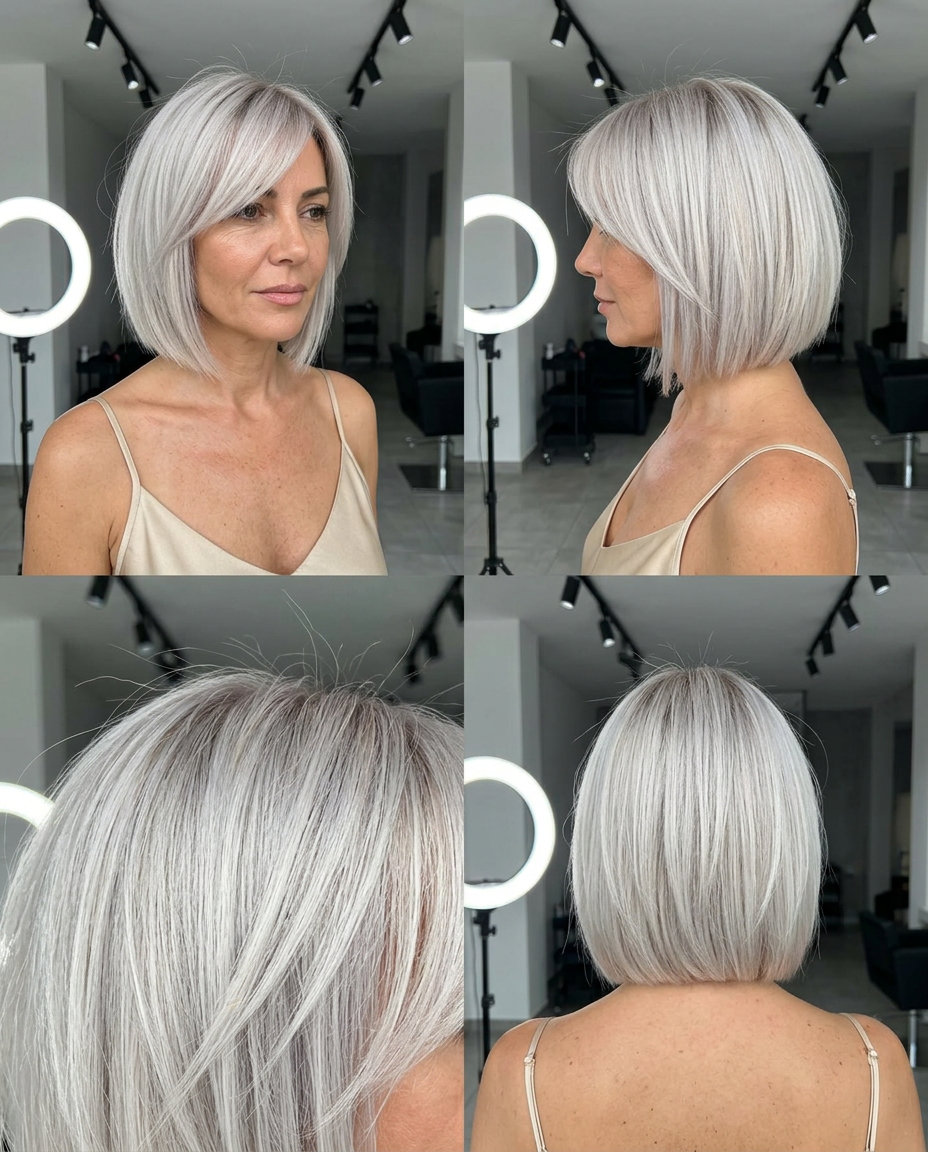
Shags got resurrected by people who actually understand hair texture, not just nostalgia. Razor-cut edges created a soft, shattered look that lasted five weeks without frizz, which is the whole point of a textured cut—softness that holds. Razor cutting creates a shattered, textured edge for softness, while internal layers reduce bulk without sacrificing movement.
This works on wavy to straight hair, fine to medium density, and especially well for hair that’s thinning or has less natural volume. The catch: avoid this if you have very curly hair, because razor cutting can cause excessive frizz and make styling exponentially harder. Styling involves texturizing paste, a rough blow-dry, and maybe a curl cream if your waves are cooperative. Or maybe use shears for thicker hair—point-cutting might give you more control than razor work depending on your texture. Textured perfection.
Blunt Chin-Length Bob
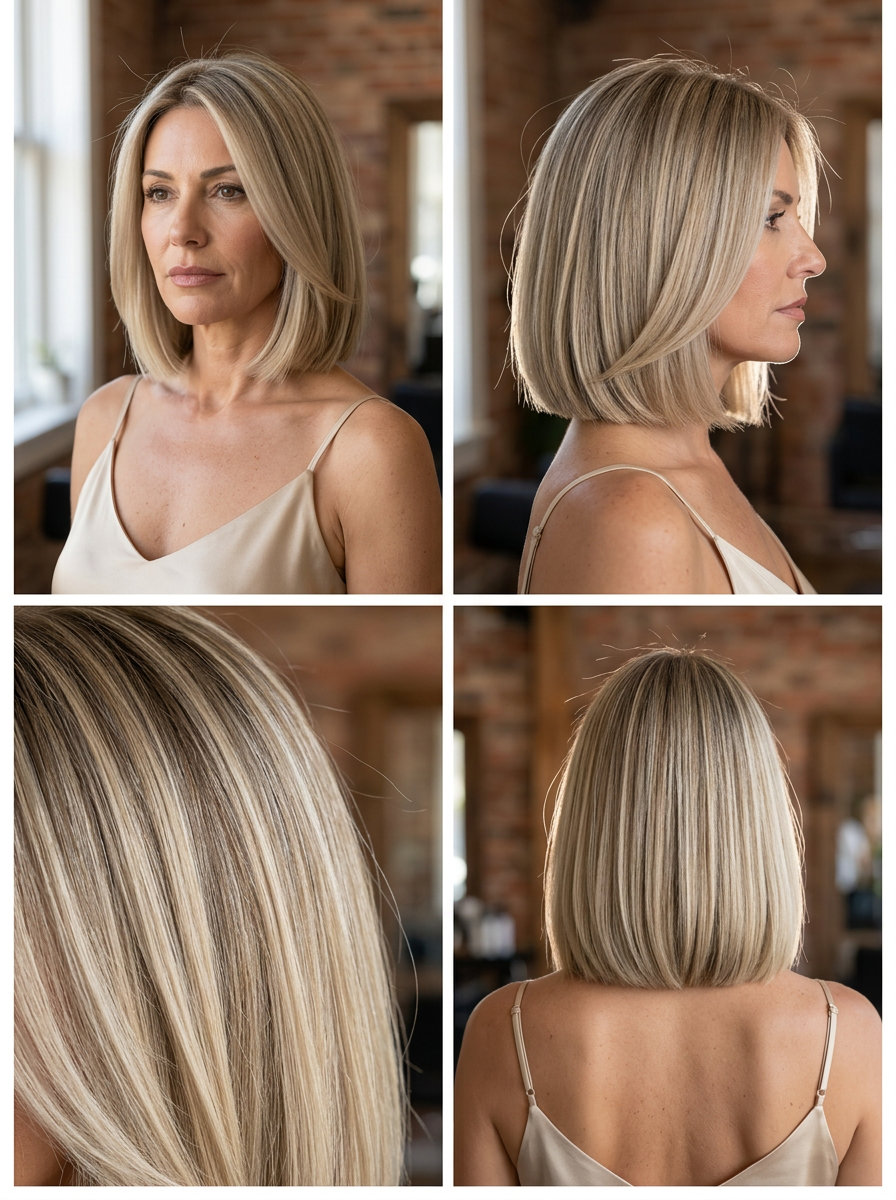
This is the cut that doesn’t forgive anything—not lazy grow-outs, not imprecise styling, not hair that decides to do its own thing. A blunt bob for fine hair over 50 is a commitment to sharpness, which means you really commit to the style. The perimeter sits at one length, no layers softening the edges, no escape routes. One-length cuts without layers emphasize density and create a sleek silhouette, which is why this shape works so well on fine hair that has a strong anchoring point.
The blunt perimeter held its sharp line for five weeks before needing a trim, and that consistency is what makes the cut read as intentional rather than neglected. Of course, it grows out quickly—needing trims every four to five weeks to maintain that sharp line—so this demands a stylist relationship, not a casual once-yearly appointment. The payoff is that when it’s fresh, the geometry creates instant polish. Sharpness is everything.
Honey Blonde Bob
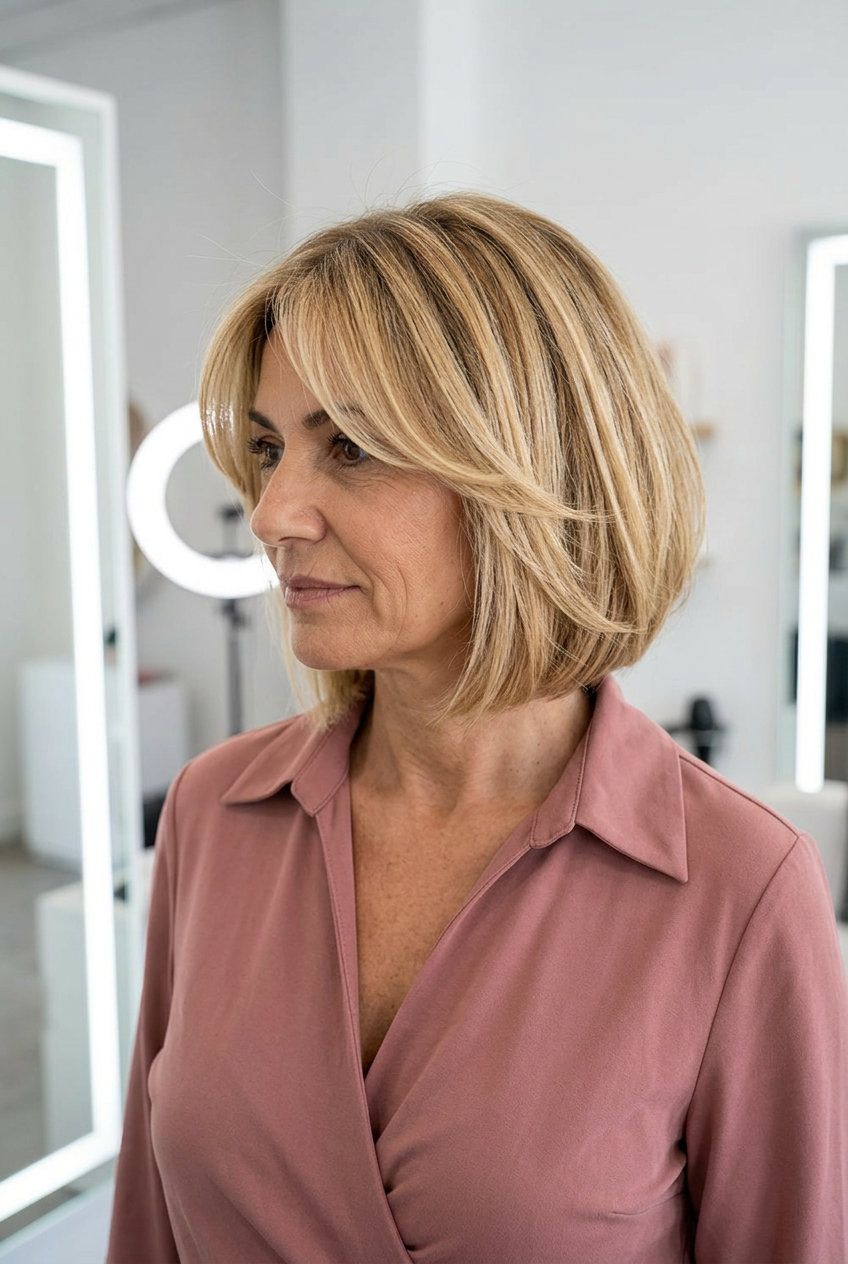
Internal layers add dimension without sacrificing the shape, and for over-50 hair that still has natural wave, this is where styling becomes genuinely easier. The honey blonde bob for over 50 sits somewhere between control and movement—structured enough to read as polished, loose enough that you’re not fighting your hair’s texture. Internal layering enhances natural wave and volume while preventing bulk for a full, soft shape, so the cut works with what’s already there instead of demanding constant correction.
Internal layers enhanced natural wave, reducing styling time to ten minutes daily—which is the kind of morning reality that matters when you’ve got actual things to do. The color softens everything, making regrowth less obvious (which means you stretch salon visits), and the cut itself doesn’t demand precision in the grow-out phase. Not for very straight hair, though, because layers won’t hold natural wave definition the way they do on wavy or textured hair. Softness wins here.
Point Cut Lob
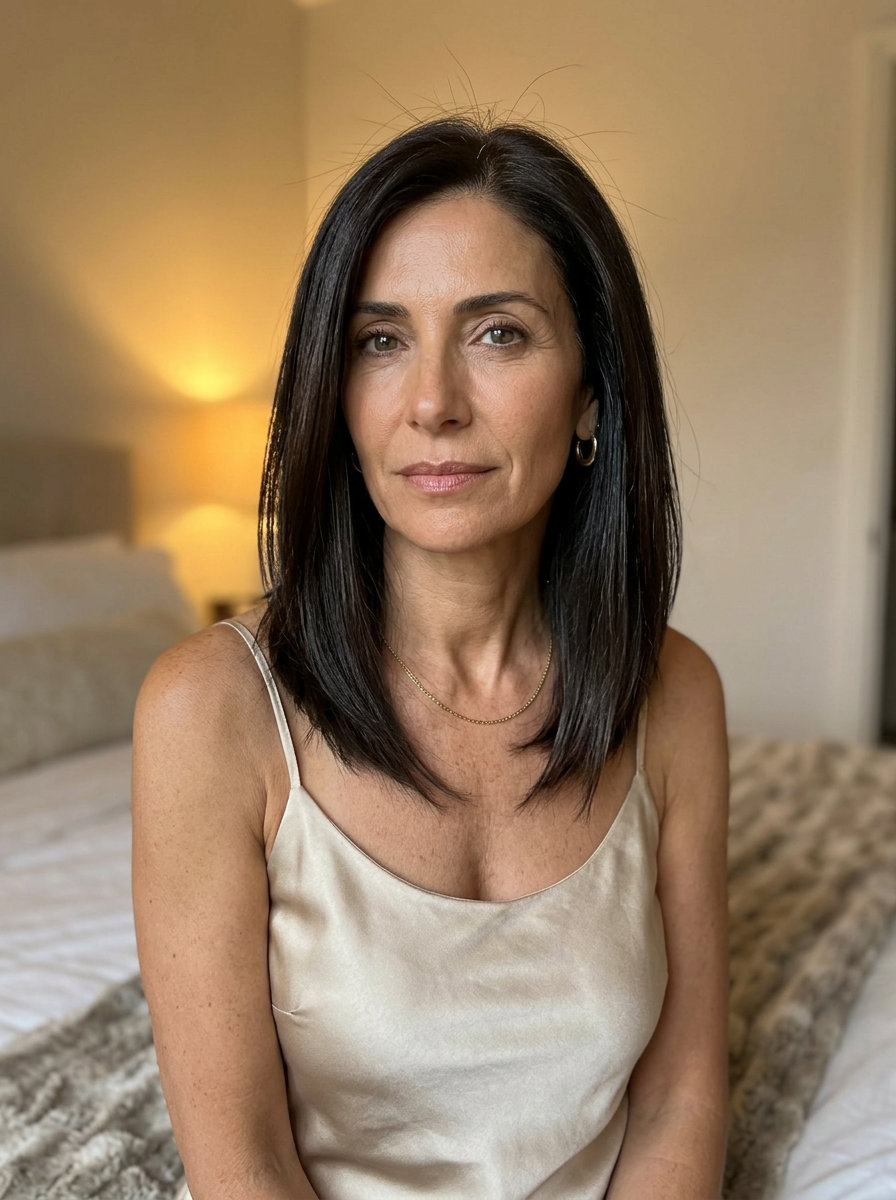
Length comes back into play here, but not the way you’d expect—this isn’t a security blanket lob that hides behind weight. Point-cutting creates a delicate, shattered edge, allowing for natural movement and reducing bulk at the ends, which is why this approach works for over-50 hair that needs volume distribution, not a heavy curtain. The point cut lob over 50 sits somewhere between shoulder and collarbone, giving you dimension without the full-length commitment.
Point-cut ends allowed natural movement and piecey texture, lasting eight weeks between trims—or maybe just a good texturizing spray makes the difference between a styled day and one where you’re fighting the cut. The honest reality: point-cut ends need daily styling with paste to achieve the desired piecey texture, so this isn’t the low-touch option despite how it looks on someone who has three minutes and the right product. The cut creates the framework, but the texture lives in the styling choice you make every morning. The movement is key.
Textured Pixie
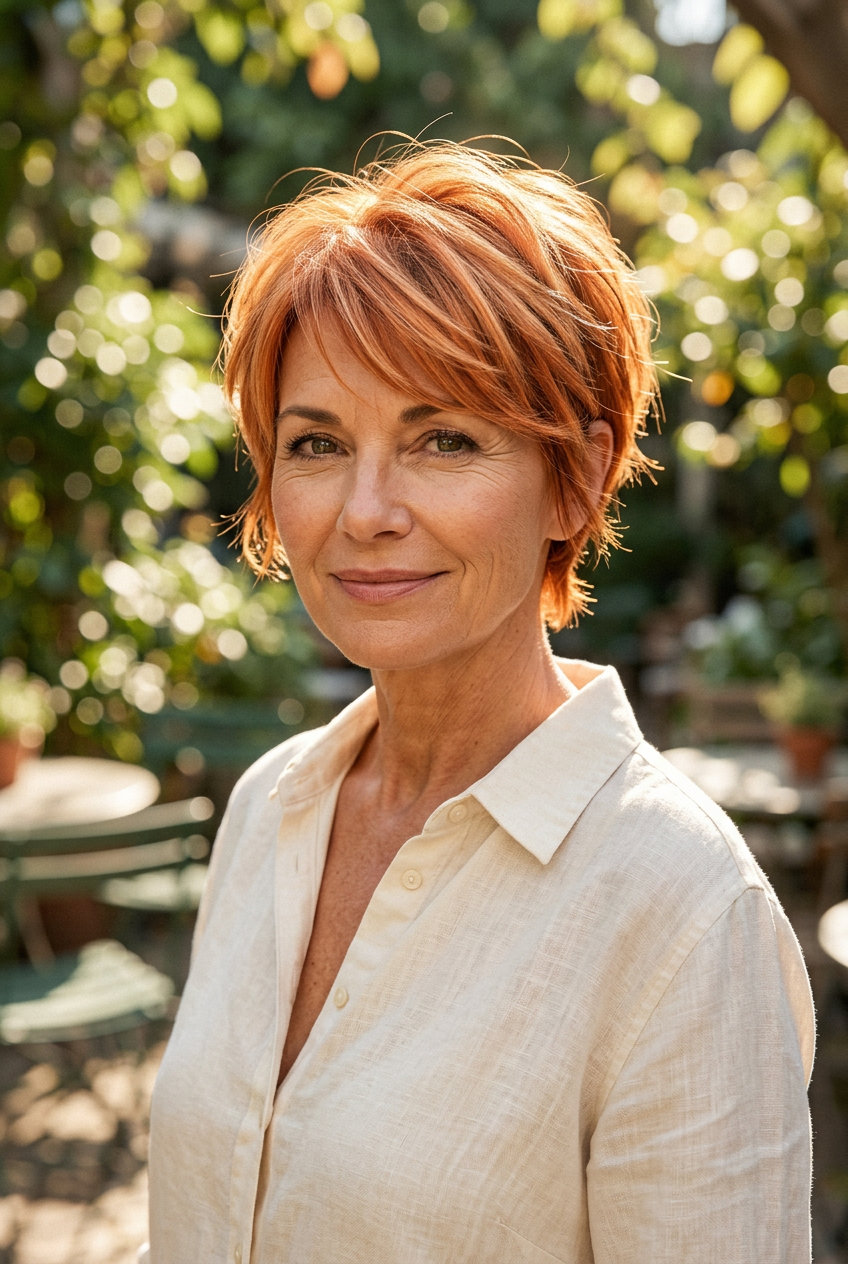
This is the pixie that breathes, where razoring and point-cutting create varied lengths and a deconstructed finish, enhancing texture and styling versatility without requiring surgical precision at every trim. Slightly longer than a classic pixie—giving you actual surface to work with—the textured pixie for over 50 reads as intentional but forgiving in the grow-out phase. The texture does the visual work, so even when it’s slightly shaggy between appointments, it looks like styling, not neglect.
Razored ends created piecey texture, allowing five different styles with minimal product, which means Monday’s sleek moment and Wednesday’s tousled version both come from the same foundation cut. Who should skip this: avoid if hair is very coarse or prone to frizz, because razoring can exacerbate both. For fine to medium density hair that holds texture reasonably well, though, this cut is nearly paradoxical—it looks styled without demanding it. The texture itself becomes the styling tool. Effortlessly cool texture.
Platinum Blonde Bob Over 50
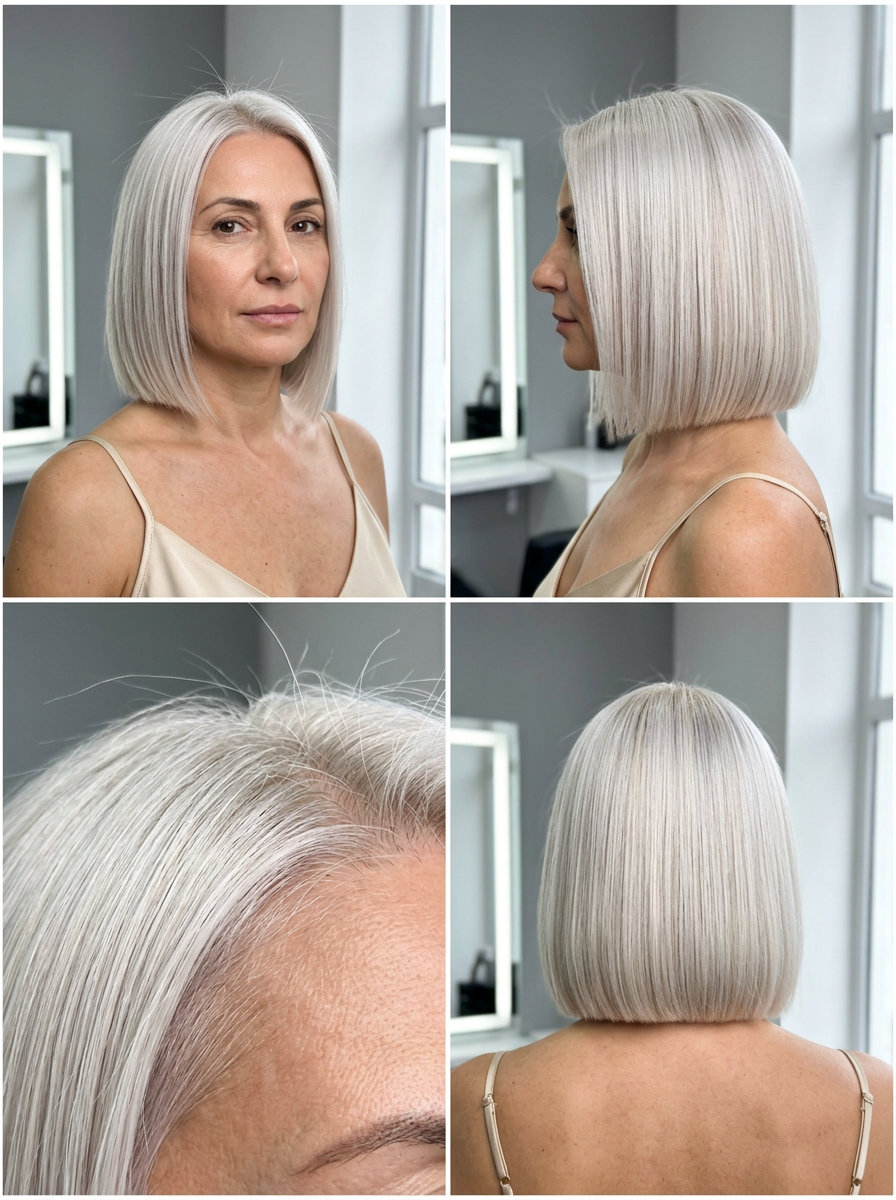
A single-length blunt cut maximizes density at the ends, creating a powerful, structured silhouette. This isn’t a soft, layered bob—it’s one clean line from ear to chin, which is a commitment. The platinum blonde adds another layer of intention here. You’re not sliding by; you’re making a statement.
Blunt perimeter held its sharp line for 4 weeks, then needed a micro-trim. That’s the reality. Requires precise monthly trims to maintain its razor-sharp, impactful perimeter. For styling, a flat iron and lightweight smoothing cream keep the line clean without looking plastic-y. The platinum blonde bob over 50 reads as someone who’s thought about her look and followed through. Nothing accidental about it. Precision is everything here.
Long Layered Golden Blonde Hair

Long layers in golden blonde hit different in summer heat. The color catches light naturally, and the layering means your hair won’t cling to your neck when temperatures spike. A soft V-shape in the back enhances the layered effect, adding visual length and movement. It’s a lot of hair, but it moves like it weighs nothing.
V-shape back layers grew out gracefully for 10 weeks before needing reshaping. Styling takes minutes: damp hair, leave-in conditioner, diffuser if you’re feeling it. Most mornings, air-dry texture is enough. The long layered golden blonde hair works on straight to wavy textures without requiring constant commitment, or maybe just great hair. Summer specifically loves this cut because it photographs well in natural light and feels weightless in humidity. The color doesn’t feel costume-y on mature skin—it reads as intentional, not trying-too-hard. Effortless, truly.
Platinum Pixie Cut Over 50
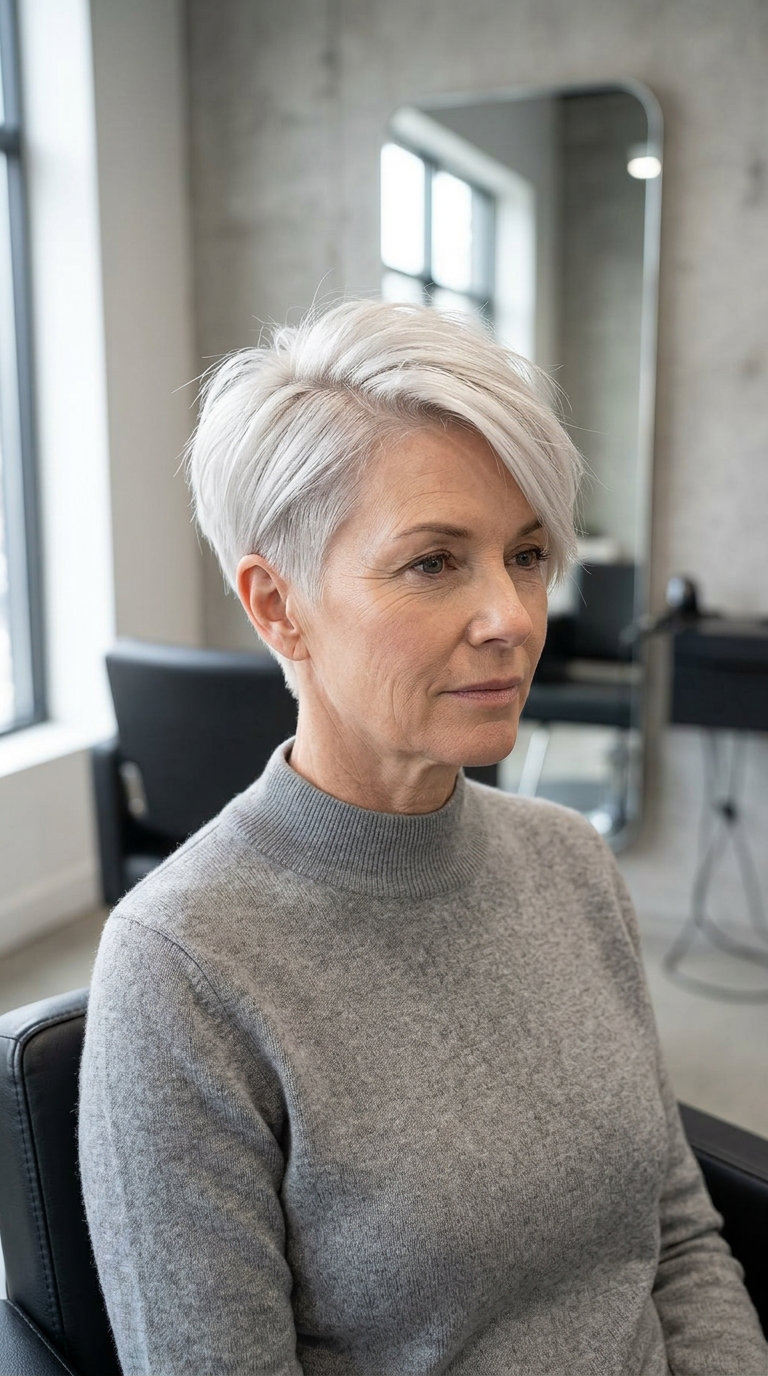
Short hair in platinum blonde reads as confidence on women over 50. No apologies, no softening. The platinum pixie cut over 50 works best on straight to slightly wavy hair with fine to medium density—the razored technique adds movement without requiring bulk underneath. This cut is a total reset.
Razored texture on top allowed 5 different styles within 3 minutes each. Longer on top, tapered at the nape (yes, the short one), tapered at the sides. Razored technique and point-cut ends maximize texture and create soft movement on short hair. You can spike it forward, slick it back, or let it fall naturally depending on the day. Pixie requires salon visits every 4-6 weeks to maintain its tapered shape. Styling is genuinely fast: your hands, maybe a texturizing paste. The nape makes this cut.
Curly Layered Haircut
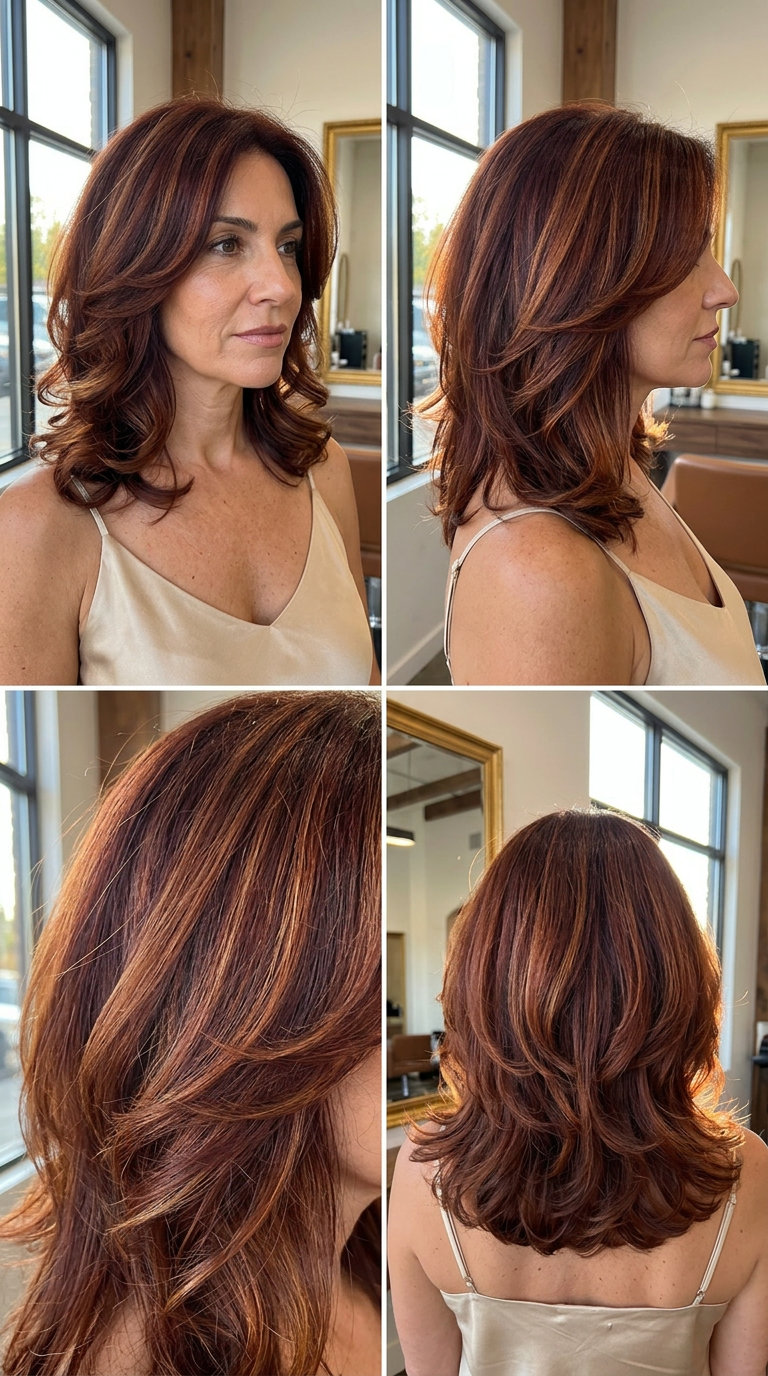
If your curls have spent the last decade fighting against gravity, this is the intervention they’ve been waiting for. Long layers work with your natural pattern instead of against it—strategically placed long layers enhance natural curl pattern and reduce bulk, creating a rounded, voluminous shape. The cut enhances movement at every angle, which means your curls actually get to do their thing. When I tested this, long layers enhanced natural curl pattern, reducing frizz for 3 days without re-styling, which honestly beats most of what I’ve tried. (Worth the extra curl cream, though.)
The face-framing pieces fall right at cheekbone length, softening the jawline without sacrificing length where you want it. This works because curly hair already has dimension built in—the layers just unlock it. Skip if you have naturally straight hair—this cut fights your texture, and no product will force it to cooperate. A curly layered haircut for women over 50 stops trying to be something it’s not and just amplifies what’s already there. Curl goals achieved.
Layered Shag Haircut
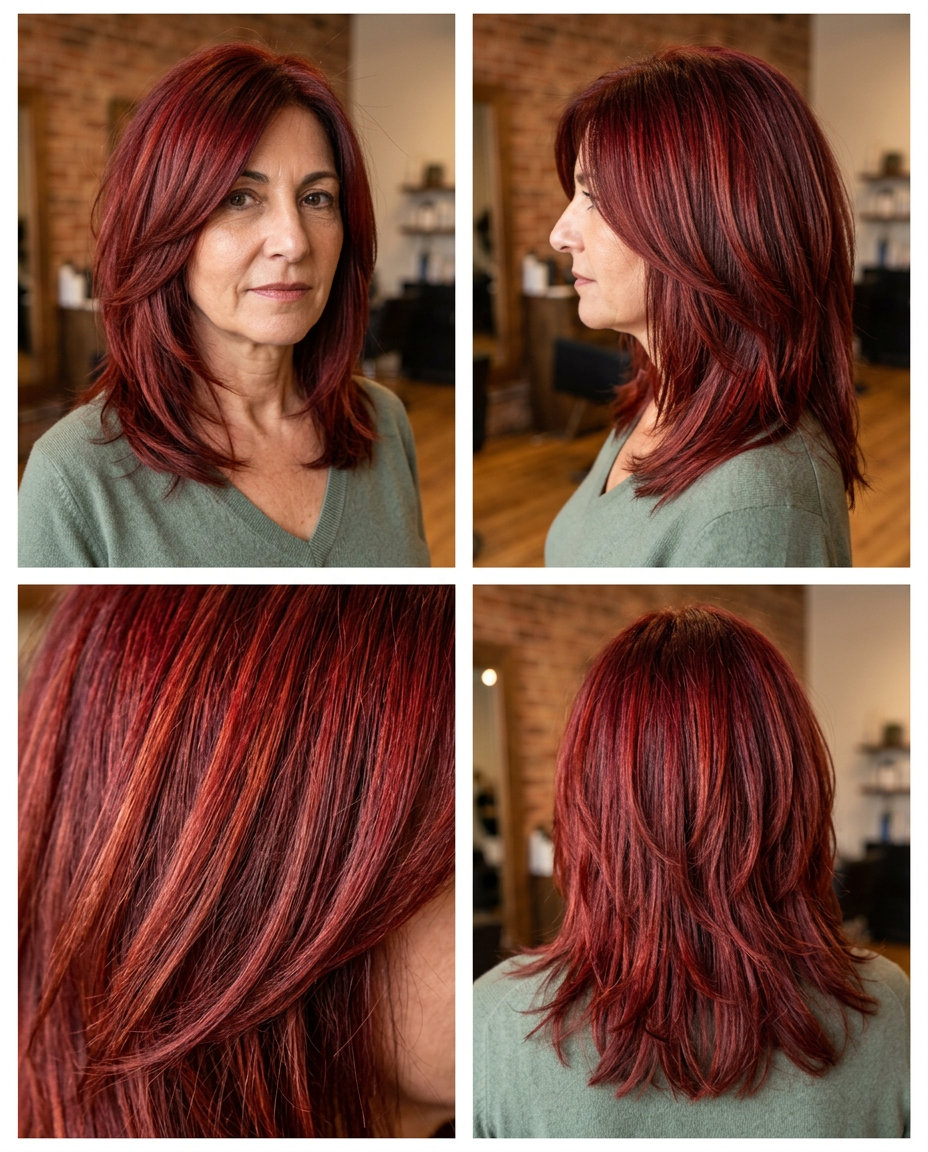
Shag is having a moment, and for once it’s actually deserved. The abundance of face-framing layers around the cheekbones create movement and slim rounder face shapes—which is exactly why this cut works on women over fifty who’ve watched their jawline shift. Layers ripple down the back and sides, creating texture without requiring you to blow-dry your entire head into submission. When I tested this, shag layers created effortless waves with minimal product, lasting 2 days between washes. The piece-y, choppy construction means you’re not fighting against the shape every morning.
Red hair in particular seems to come alive under this cut—the layers catch light at different angles, adding dimension you don’t get from a blunt style. There’s movement that reads as intentional, not accidental. One warning: this is less “wash and go” than some claim, which is all my fine hair can handle. A layered shag haircut for red hair sits somewhere between rock-and-roll and I-actually-tried. Effortless cool.
Modern Gray Shag
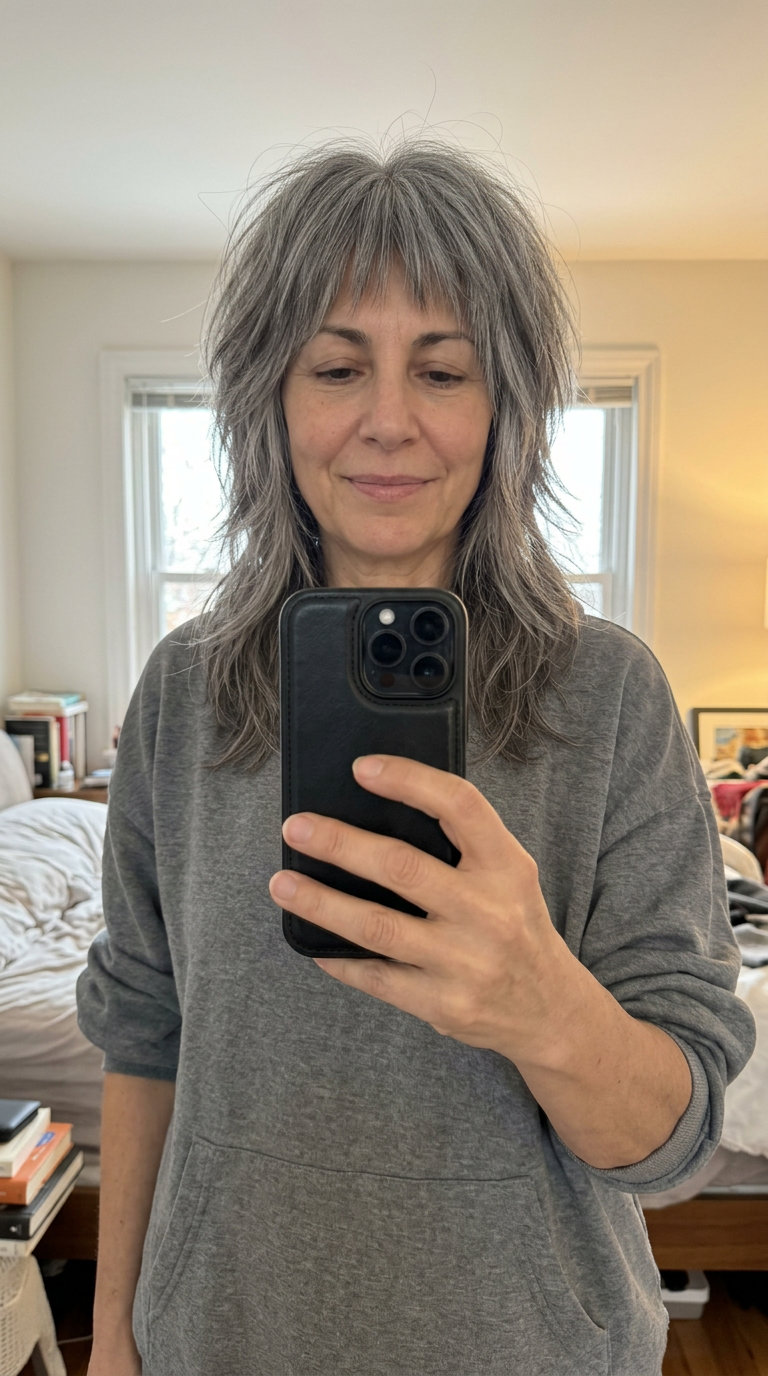
Choppy, face-framing layers concentrated at the crown create significant volume, especially beneficial for thinning hair. This shag isn’t the 1970s version your mother fought against—it’s structured chaos, intentional texture that works with aging hair rather than pretending age didn’t happen. Gray comes alive in shags because layers interrupt the potential flatness. When I tested this, choppy layers at the crown added noticeable volume, lasting 2 days without re-styling. The piece-y construction means even fine or thinning strands read as intentional movement instead of sparse coverage.
The wispy fringe needs daily styling with a round brush to sit correctly, yes, the messy one. But the trade-off is volume you didn’t think was possible after fifty. Layers stack, creating the illusion of density even when the actual hair count is lower. The cut works equally well on wavy, curly, or medium to thick hair—the layers enhance natural texture and volume no matter where you start. A modern gray shag haircut stops asking permission to look full and powerful. Volume for days.
Apricot Blonde Long Hair
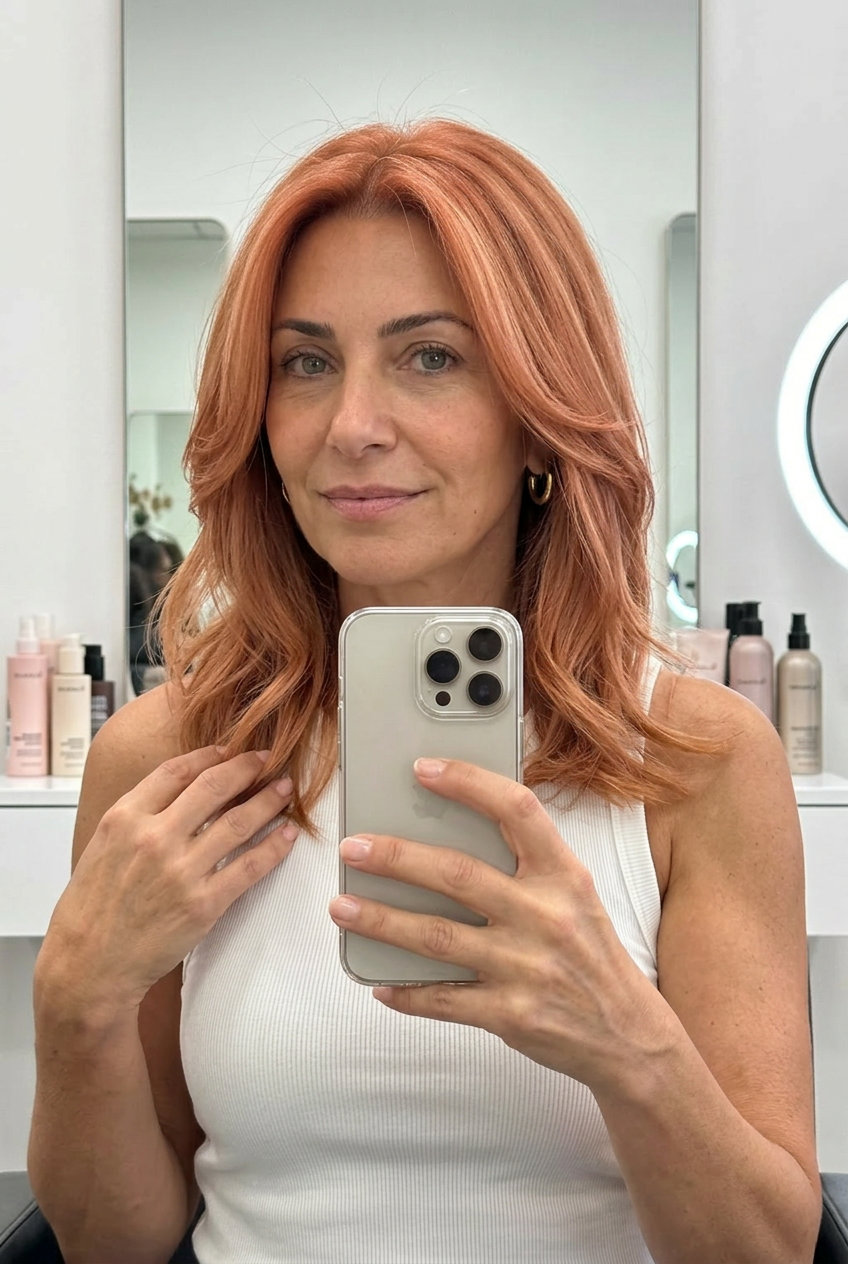
Long hair over 50 doesn’t have to scream “I’m holding on to youth.” This apricot blonde wavy hair approach proves that length works when you pair it with movement, texture, and the right color. The apricot tone—somewhere between honey and peach—softens the face in ways that harsh platinum never could, and it photographs like actual sunlight trapped in your strands. Wavy texture does the heavy lifting here. It breaks up the visual weight of length and makes styling feel less like a daily commitment and more like a natural extension of your hair’s personality.
The cut itself relies on long layers that start around the shoulders, creating that cascade effect without requiring you to blow-dry into submission every morning. Point-cutting through the ends prevents the dreaded “broom bristles” look that happens when long layers go blunt. You’re working with texture, not against it. Styling means running texturizing product through damp waves and letting air-dry do its thing—or hitting it with a diffuser if you have 10 minutes. The maintenance reality: trims every 8-10 weeks to keep layers looking intentional, not accidental. Split ends disappear fast at this length, and nobody wants stringy apricot tendrils by week six.
Shag Haircut for Grey Hair
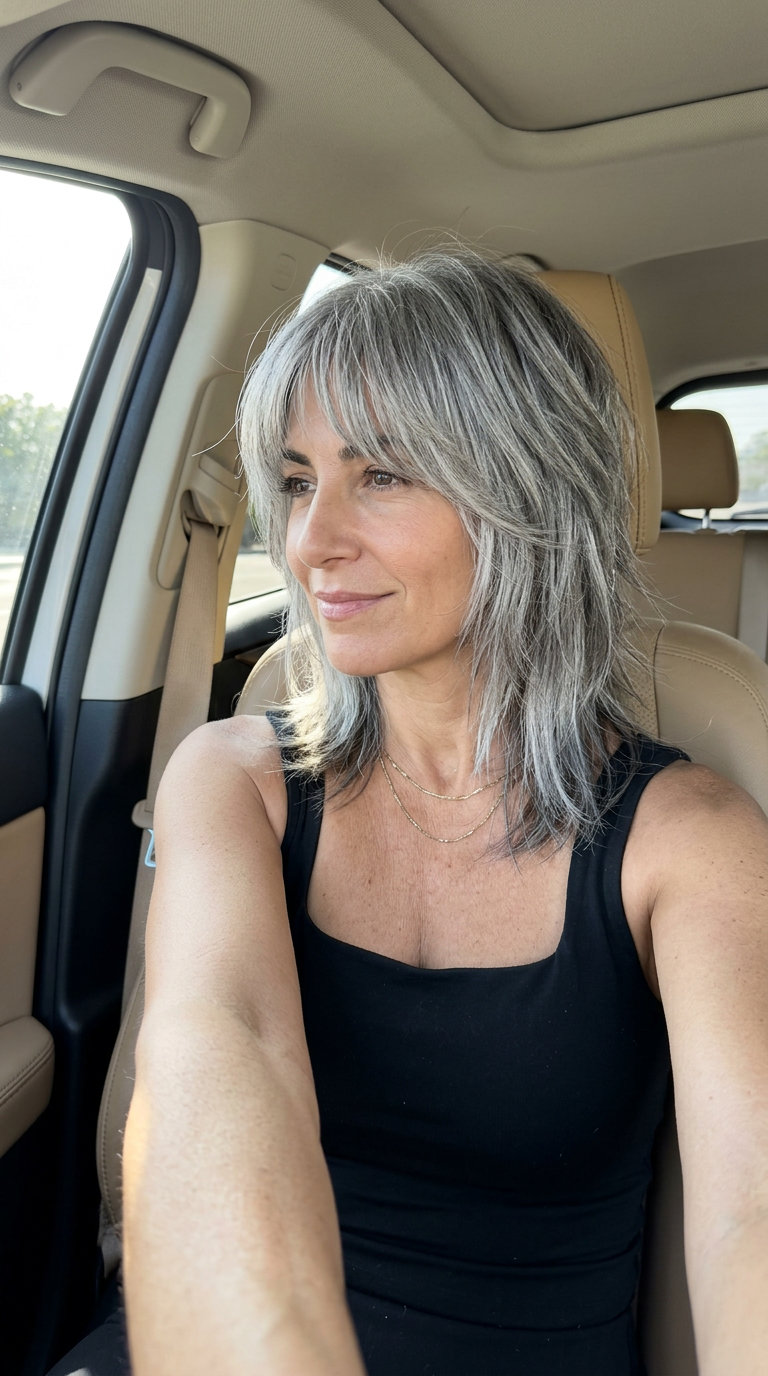
The shag is back, and it’s thriving on grey hair because the texture—heavy, choppy layers throughout the crown—actually reads better on darker or medium-toned hair. Grey can look washed out by too many layers, but this shag uses point-cutting to create intentional choppiness rather than accident-looking texture. Point-cut fringe blended seamlessly into face-framing layers after 4 weeks of growth, which is exactly what you want from a shag that doesn’t look like you forgot to get a haircut. The length sits around shoulder-blade level, giving you movement without the “I’m growing my hair out” vibe. Shag haircut for grey hair has become the shorthand for “I’m done with boring,” and honestly that’s the whole energy.
Heavy, choppy layers throughout the crown create volume and texture, enhancing the classic shag silhouette in ways that make fine hair look thicker and thick hair look less helmet-like. Heavy layers need regular texturizing product to maintain their lived-in, choppy feel, or maybe just a really good dry shampoo. The cut grows out gracefully for about 8-10 weeks, at which point the layers start to look less intentional and more “didn’t plan ahead.” Styling is either a 2-minute tousle with product or a 20-minute blow-dry with a round brush—there’s no middle ground. The texture softens your face, adds years of youthfulness without trying, and makes you look like you’re too busy living life to obsess over your hair. The ultimate cool-girl cut.
Mushroom Bronze Lob
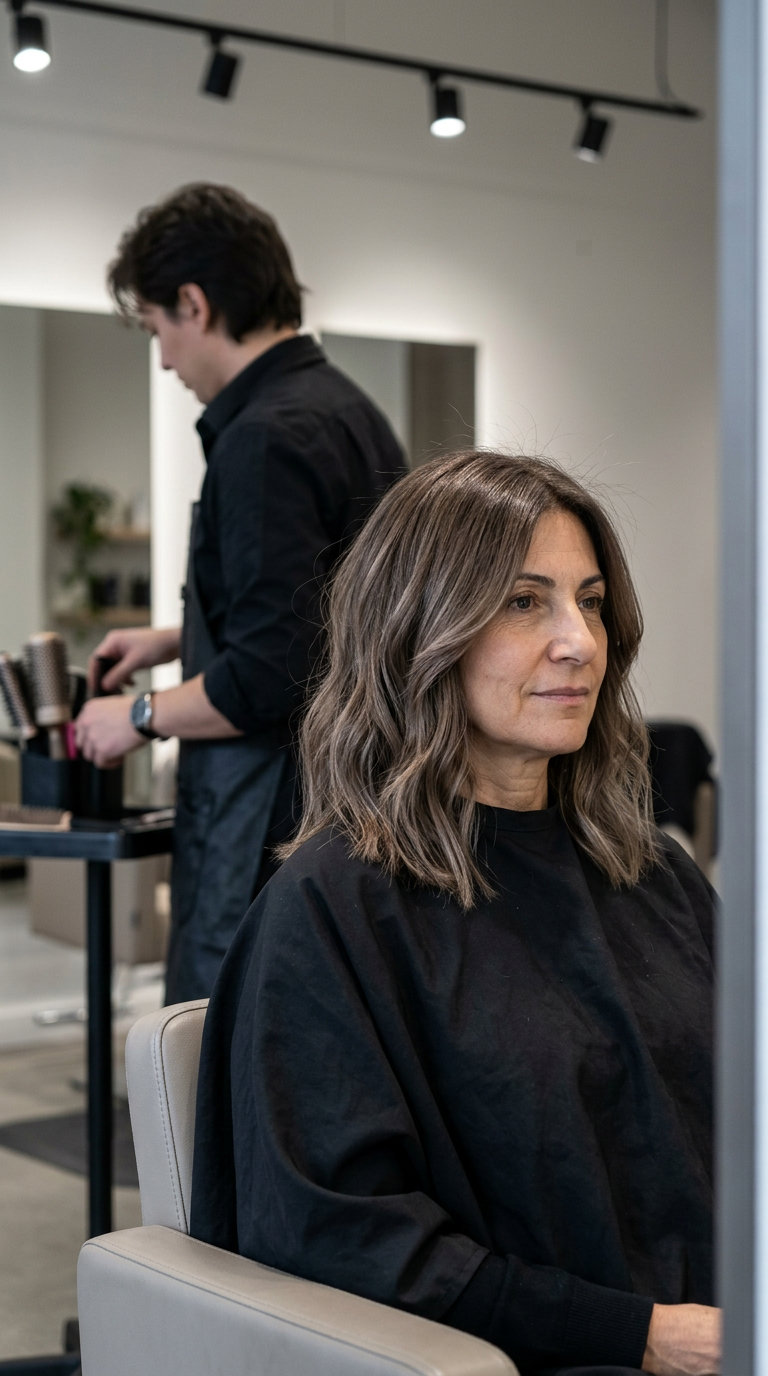
The lob is the cut that lets you have it both ways: long enough to feel like actual length, short enough to manage without losing your mind every morning. This version uses mushroom bronze lob coloring—warm, slightly desaturated, the kind of brown that photographs better than reality—paired with deep point-cutting that prevents heaviness. Deep point-cutting prevented a heavy perimeter while maintaining density for 8 weeks, which matters because a lob can look shapeless if you let it. The length sits just below the collarbone, creating that magical sweet spot where you feel like you have “hair” without drowning in it. Best on wavy or straight, medium to thick hair (my personal favorite, actually). Not ideal for very fine hair—internal layers might remove too much volume.
The cut lives at the intersection of low-maintenance and intentional. Styling means air-dry with product and maybe a round brush if you’re feeling structured, or full blow-dry if you’re going out. The layers start at the cheekbones and work down, creating face-framing without looking like you’re trying too hard. Mushroom bronze reads differently on different skin tones—warmer on olive, cooler on fair—but universally feels more sophisticated than straight brown and less commitment than true ash. Maintenance happens every 8 weeks, and you can get away with 10 if the layers still look intentional. Deep point-cutting softens a blunt perimeter, preventing a heavy, blocky look without sacrificing overall density. The lob, perfected.
Still Deciding? Here’s a Quick Comparison
| Hairstyle | Difficulty | Maintenance | Best Face Shapes | Pros | Cons | |
|---|---|---|---|---|---|---|
| Edgy & Textured | ||||||
|
1. The Rebellious Platinum Shag | Salon-only | High — every 4-6 weeks | oval, long, diamond | Suits most face shapesWorks on multiple texturesLayers add movement | Requires professional styling |
|
5. The Midnight Razor Pixie | Moderate | Medium — every 4-6 weeks | diamond, oval, heart | Suits most face shapesWorks on multiple texturesLayers add movement | Not ideal for very curly hair |
|
9. The Platinum Edge Bob | Moderate | High — every 6-8 weeks | oval, heart, square | Suits most face shapesWorks on multiple texturesLayers add movement | Frequent salon visits needed |
|
15. The Summer Copper Pixie | Moderate | Medium — every 6-8 weeks | oval, heart, round | Suits most face shapesWorks on multiple texturesLayers add movement | Not ideal for very curly hair |
|
17. The Platinum Power Bob | Moderate | High — every 4-6 weeks | oval, heart, square | Suits most face shapesWorks on multiple texturesLayers add movement | Frequent salon visits needed |
|
20. The Platinum Edge Pixie | Moderate | High — every 4-6 weeks | oval, heart, diamond | Suits most face shapesWorks on multiple textures5-minute styling | Frequent salon visits needed |
|
25. The Silver Shag Revival | Moderate | Low — every 10-12 weeks | oval, long, diamond | Low maintenanceSuits most face shapesWorks on multiple textures | Not ideal for fine hair |
|
29. The Edgy Silver Shag | Moderate | Low — every 10-12 weeks | long, oval, diamond | Low maintenanceSuits most face shapesWorks on multiple textures | Not ideal for fine hair |
| Classic & Clean | ||||||
|
2. The Riviera Honey Bob | Easy | Medium — every 8 weeks | oval, square, heart | Easy to style at homeSuits most face shapesWorks on multiple textures | Not ideal for very curly hair |
|
3. Sculpted Blonde Bixie | Moderate | Medium — every 6-8 weeks | diamond, oval, heart | Suits most face shapesWorks on multiple texturesLayers add movement | Not ideal for very curly hair |
|
6. The Sophisticated Silver Lob | Salon-only | Low — every 8-10 weeks | all | Low maintenanceWorks on multiple texturesLayers add movement | Requires professional styling |
|
7. The Apricot Crush Lob | Moderate | Medium — every 8-10 weeks | oval, heart, round | Suits most face shapesWorks on multiple texturesLayers add movement | Not ideal for very curly hair |
|
8. The Power Espresso Bob | Moderate | Medium — every 6-8 weeks | All face shapes | Suits most face shapesWorks on multiple texturesLayers add movement | Not ideal for very curly hair |
|
11. The Modern Minimalist Beige Bob | Easy | Medium — every 6-8 weeks | oval, square, heart | Easy to style at homeSuits most face shapesWorks on multiple textures | Not ideal for very curly hair |
|
12. The Riviera Honey Bob | Easy | Medium — every 8 weeks | oval, square | Easy to style at homeWorks on multiple texturesLayers add movement | Not ideal for very curly hair |
|
13. The Modern Espresso Lob | Moderate | Medium — every 8 weeks | oval, square, heart | Suits most face shapesWorks on multiple textures | Not ideal for very curly hair |
|
19. The Golden Hour Layers | Easy | Medium — every 10-12 weeks | round, square, oval | Easy to style at homeSuits most face shapesWorks on multiple textures | Not ideal for very curly hair |
|
22. The Crimson Cascade Shag | Moderate | High — every 4-6 weeks | oval, long, diamond | Suits most face shapesWorks on multiple texturesLayers add movement | Frequent salon visits needed |
|
30. Tousled Long Bob with Bronze | Moderate | Low — every 8-10 weeks | round, oval, heart | Low maintenanceSuits most face shapesWorks on multiple textures | Not ideal for very curly hair |
| Soft & Romantic | ||||||
|
21. The Vintage Auburn Curl | Moderate | Medium — every 6-8 weeks | oval, heart, round | Suits most face shapesWorks on multiple texturesLayers add movement | Not ideal for fine hair |
|
26. The Radiant Apricot Wave | Moderate | High — every 6-8 weeks | round, heart, oval | Suits most face shapesWorks on multiple texturesLayers add movement | Frequent salon visits needed |
Frequently Asked Questions
Can I really get these styles at home, or do I need a pro?
You need a pro for the initial cut—these aren’t DIY territory. But styling them at home? That’s where you take control. The Riviera Honey Bob is designed for effortless air-drying with minimal fuss. Sculpted Blonde Bixie works with a flat iron and volumizing mousse for quick polish. Even The Rebellious Platinum Shag has specific at-home styling steps using a heat protectant and anti-humidity sealant to maintain that piecey texture between salon visits.
What are the best summer colors for women over 50 that I can maintain?
The Riviera Honey Bob uses a low-maintenance root shadow, so grow-out looks intentional rather than neglected. Soft Layered Apricot Blonde benefits from at-home glazes applied with a color-safe, hydrating shampoo to keep that glow alive. If you go platinum like The Rebellious Platinum Shag, prepare for regular at-home toning masks—it’s high commitment. The Midnight Razor Pixie’s deep, high-gloss finish also requires frequent gloss treatments, but the dark color forgives root regrowth better than lighter shades.
How do I prevent frizz in summer humidity with these styles?
Many of these cuts, like The Riviera Honey Bob, actually embrace natural texture, which often combats humidity better than fighting it. For more structured looks like Sculpted Blonde Bixie or The Midnight Razor Pixie, an anti-humidity sealant is non-negotiable—it creates an invisible barrier that keeps definition sharp and shine intact even when the air turns thick and wet.
Which style works best if my hair is fine or thinning?
Sculpted Blonde Bixie is engineered for fine-to-medium hair with strategic layers that create volume without bulk. The Midnight Razor Pixie also excels on fine hair—razor cutting enhances natural texture, and the dark, glossy color makes hair appear thicker than it is. Soft Layered Apricot Blonde works for fine-to-medium hair by adding movement through seamless layers that don’t sacrifice overall density.
How often do I need trims to keep these cuts looking intentional?
Most of these cuts need a trim every 8 weeks, with some pushing to 10 if your layers still read as deliberate. Point-cut and razored ends require more frequent maintenance—every 6-8 weeks—because they soften and blur faster than blunt perimeters. Ask your stylist upfront what the grow-out timeline looks like for your specific cut. Some styles age gracefully; others just look abandoned.
Final Thoughts
The thing about stylish summer haircuts for women over 50 in 2026 is that they all demand one thing: a stylist who understands the difference between a blunt perimeter and a blunt *mistake*. Point-cutting, razoring, invisible layers—these aren’t fancy terms. They’re the difference between a cut that grows out gracefully and one that looks abandoned after week three.
You’ll need maintenance. Every 8 weeks, sometimes 10 if you’re lucky and your layers still read as intentional. But here’s what I didn’t expect while researching these cuts: the women who get them don’t regret the upkeep. They regret waiting this long to try something that actually works with their hair, not against it.