

Face-framing layers are a haircut technique that uses varying lengths around the face to shape and soften the perimeter, drawing attention to the eyes and jawline. The current iteration trades chunky, disconnected pieces for a softer, lived-in blend, often paired with curtain bangs and glossy natural texture.
This collection of 18 looks covers the range from collarbone lobs to mid-back lengths, with options for fine hair that needs volume and thick hair that wants movement. Whether your struggle is a fringe that won’t sit or a blunt cut that feels too heavy, Classy Face Framing Layers offers shape without the commitment of a drastic change.
Honey Blonde Collarbone Lob With Full Curtain Bangs
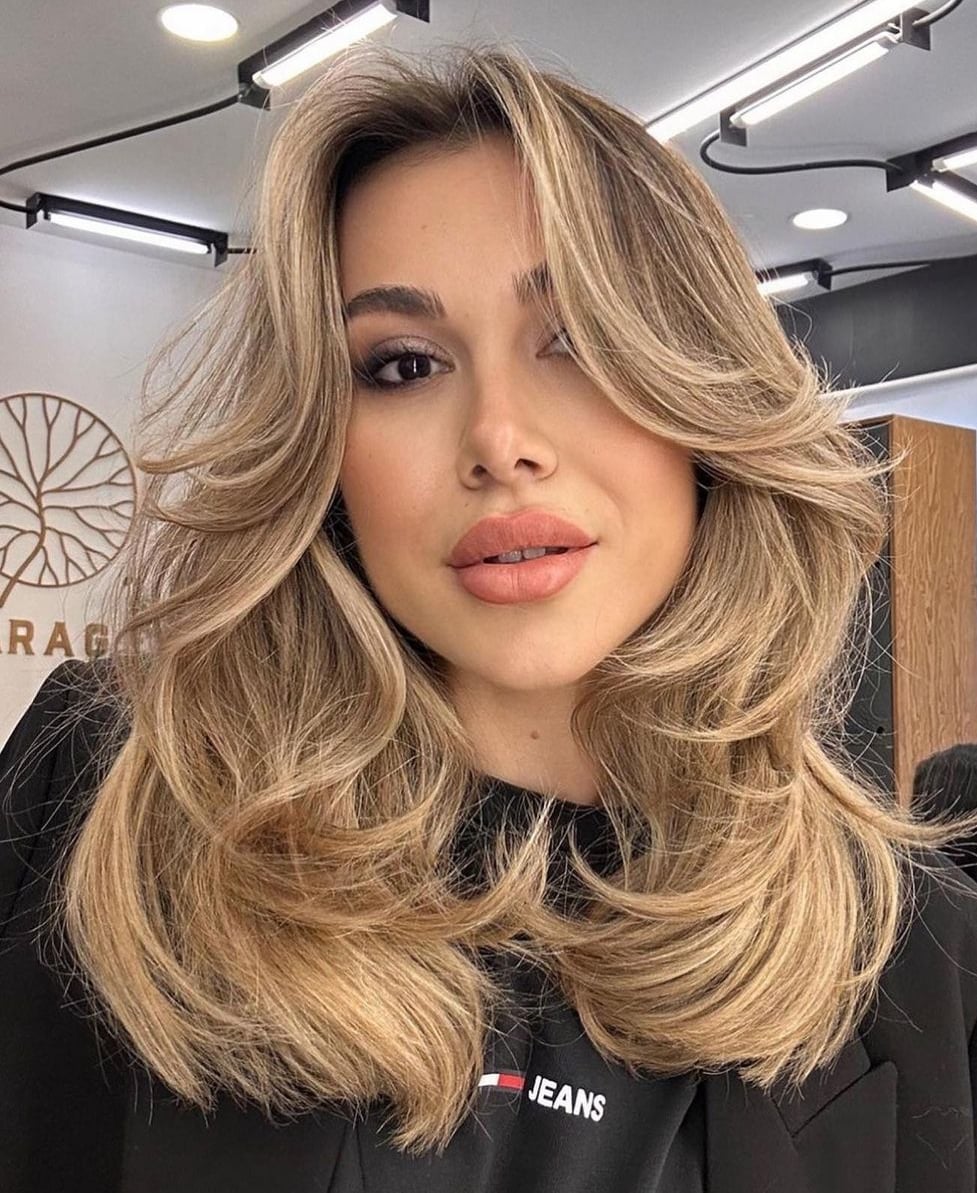
The genius of this cut is how the full curtain bangs land as one unit with the medium layers, not a separate piece you have to negotiate with every morning. Thick, wavy hair starting at collarbone length gets shape without losing weight, and a middle part with curtain bangs balances oval and long faces. Ask your stylist for: collarbone lob, full curtain bangs, balayage in honey blonde. A large round brush and a blow-dryer deliver volume that lasts, with a baseline trim due every six to eight weeks.
Long Dark Blonde Layers With Jawline Framing
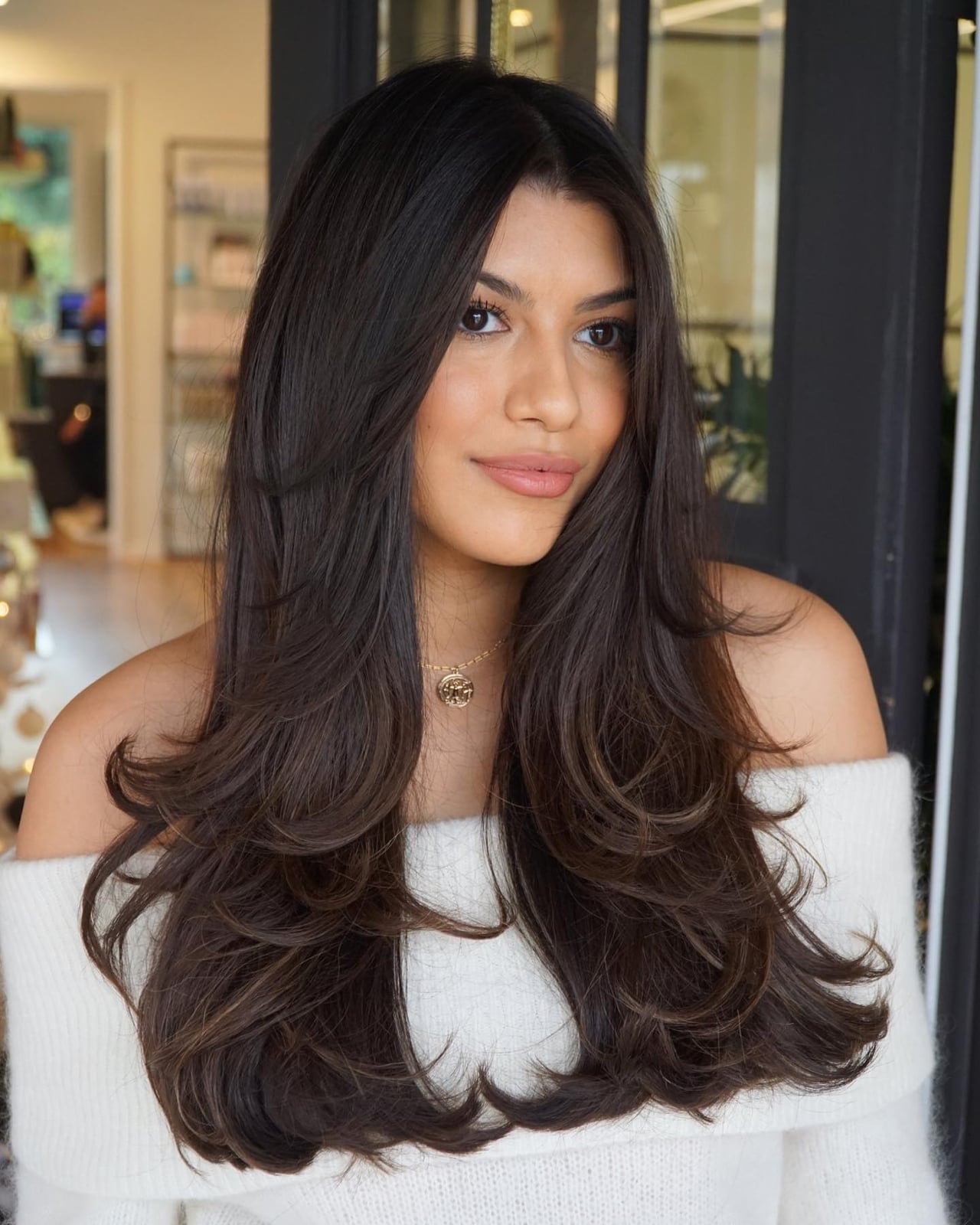
Face-framing layers that begin around the jawline do two things at once: they shorten the visual weight of long hair and create a soft curve that moves when you walk. This mid-back length works on medium density, wavy hair, with a middle part that complements oval and heart shapes. Ask your stylist for: mid-back layers framing the jawline, dark blonde balayage. A blow-dryer and round brush build the voluminous blowout, and the shape holds for about eight to ten weeks before the layers need a refresh.
The balayage placement keeps the root line low-maintenance, so you can stretch toning appointments to every twelve weeks or so. No bangs here means less daily styling time, but the jawline pieces still soften the face.
Sleek Vanilla Blonde Mid-Back With Cheekbone Layers
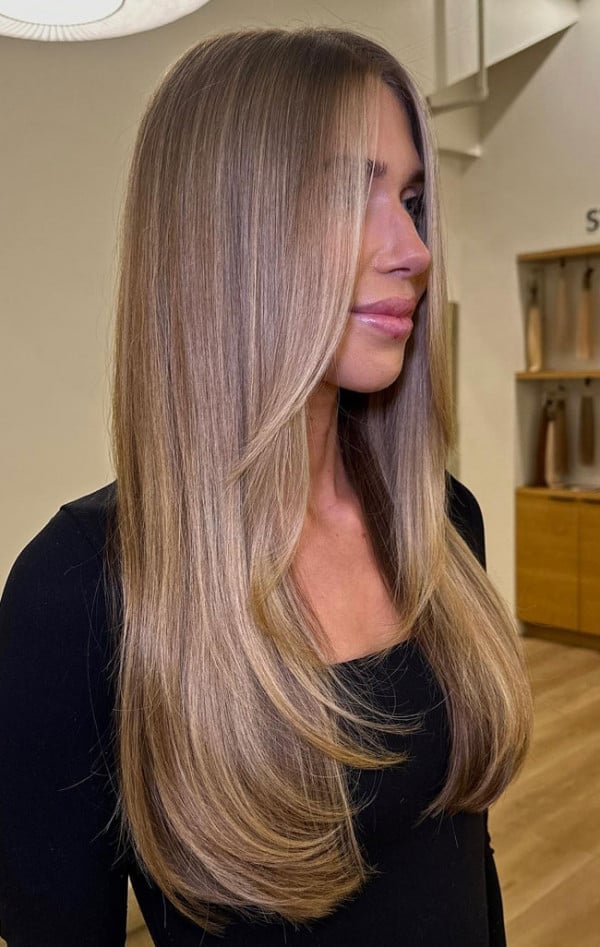
Where a wavy blowout adds width, this straight, smooth version uses cheekbone-length layers to create vertical lines that lengthen the silhouette. A middle part on thick, straight hair elongates round faces, while the vanilla blonde with subtle highlights keeps the finish glossy rather than flat. Ask your stylist for: mid-back straight cut, layers starting at cheekbones, vanilla blonde. A flat iron session is required for the smooth result, but the simplicity works for formal occasions or a structured work week.
This is not a cut that hides texture; straight hair shows every layer line, so the stylist needs clean, precise sectioning. A trim every eight to ten weeks maintains the sharp ends.
Silver Blonde Collarbone Lob With Wispy Bangs

Does fine hair ever hold a shape past noon? This collarbone lob with wispy bangs answers that by keeping the layers concentrated around the face, where they add volume where you see it most. A side part and wispy bangs soften square faces, and the silver blonde shade reads as cool rather than brassy as it fades. Ask your stylist for: collarbone lob, wispy bangs, silver blonde. Blow-dry the bangs with a small round brush to keep them feathery, and schedule a trim every six to eight weeks so the layers do not disappear.
Thick Honey Blonde Mid-Back With Curtain Bangs
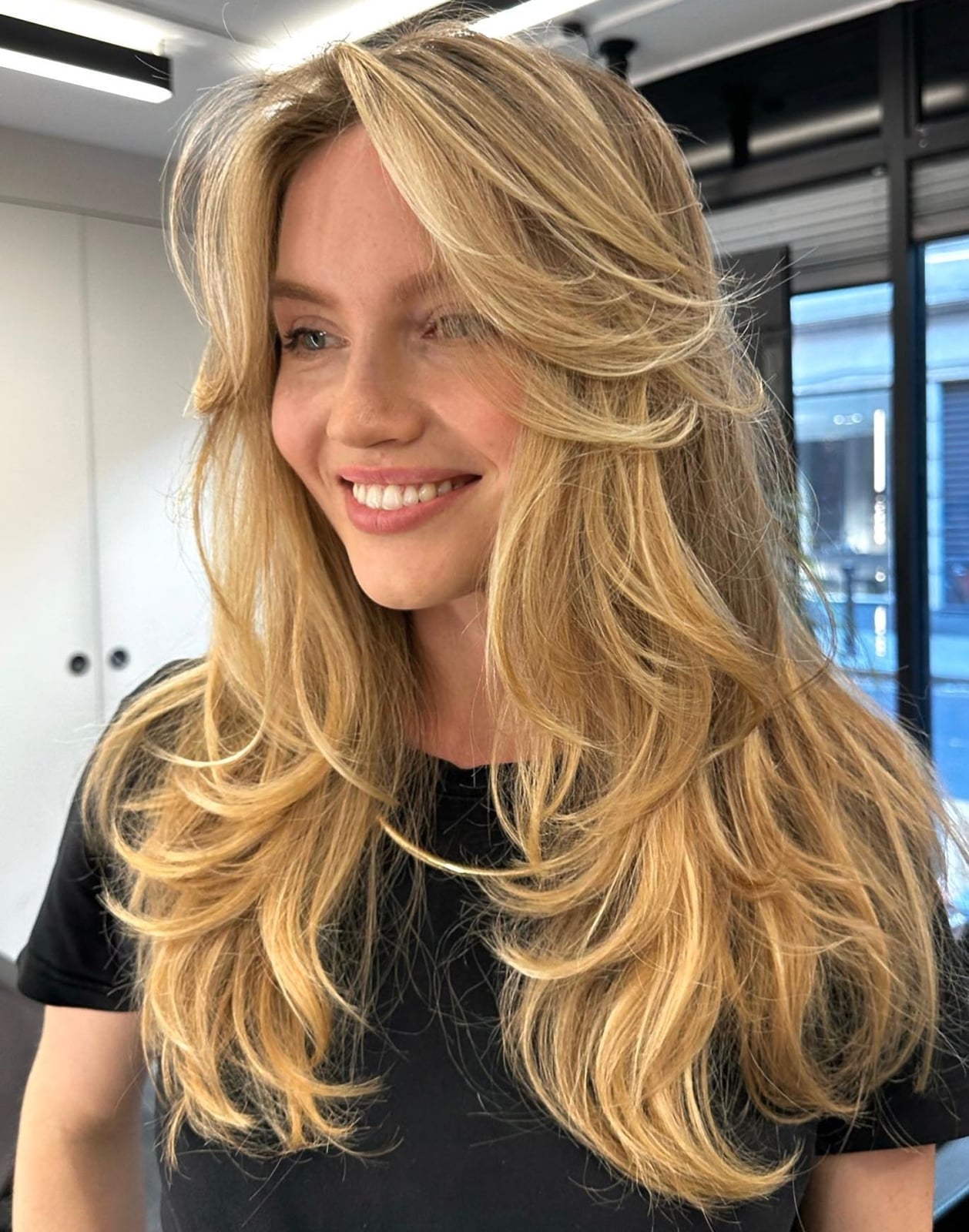
Thick, wavy hair can turn into a triangle if the stylist does not know where to stop the layers. This mid-back cut uses curtain bangs that connect into long layers, keeping the fullness at the ends and the movement near the face. A side part and curtain bangs balance round faces, and the honey blonde with highlights adds dimension without needing full highlights every visit. Ask your stylist for: mid-back length, curtain bangs, honey blonde with highlights. The key details to communicate: the bangs should graze the cheekbone when dry, and the layers should stay soft, not stacked.
A volumizing spray at the roots before blow-drying gives the crown lift, and a trim every eight to ten weeks keeps the curtain effect from growing into all-one-length.
Ash Blonde Chin-Length Layered Bob With Curtain Bangs

A chin-length bob layered with soft waves and curtain bangs uses the shortest length in the face-framing family to make a strong structural statement. A middle part and those swooping curtain bangs tend to balance rounder face shapes by adding vertical lines, while the layers around the jaw soften the perimeter without cutting it off bluntly. Ask your stylist for: chin-length layered bob, curtain bangs, ash blonde. Medium-density wavy hair holds the blowout shape best here, and a texturizing spray keeps the waves from falling flat.
Dark Brown Mid-Back With Ash Blonde Highlights
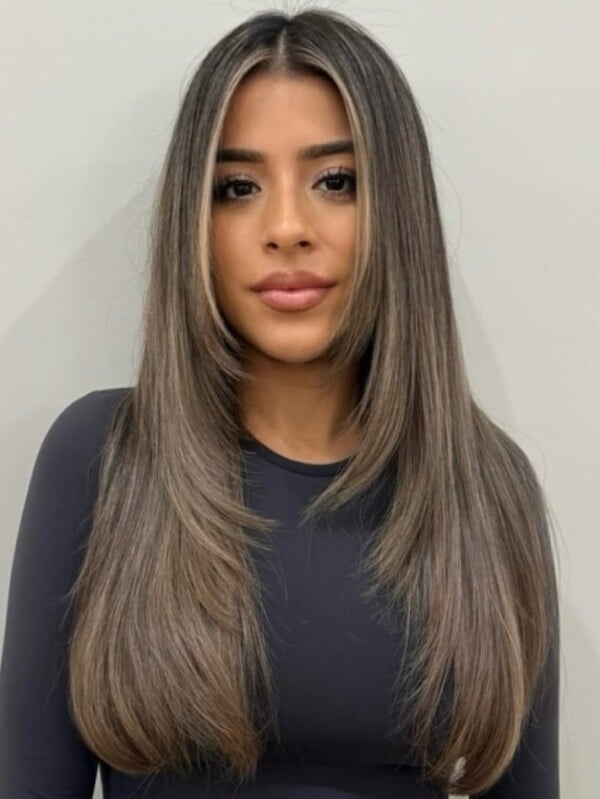
Long, straight hair with a middle part can look severe, which is why the face-framing pieces and ash blonde highlights here add contrast. The highlights are concentrated around the front layers, so the contrast draws the eye outward instead of letting the length drag the silhouette down. Ask your stylist for: mid-back straight cut, face-framing pieces, dark brown with ash blonde highlights.
Medium-density straight hair starting at mid-back works with the middle part to elongate rounder face shapes. A smoothing serum before blow-drying keeps the highlights reflective, and a trim every eight to ten weeks prevents the ends from thinning out.
Dark Brown Mid-Back With Curtain Bangs And Waves
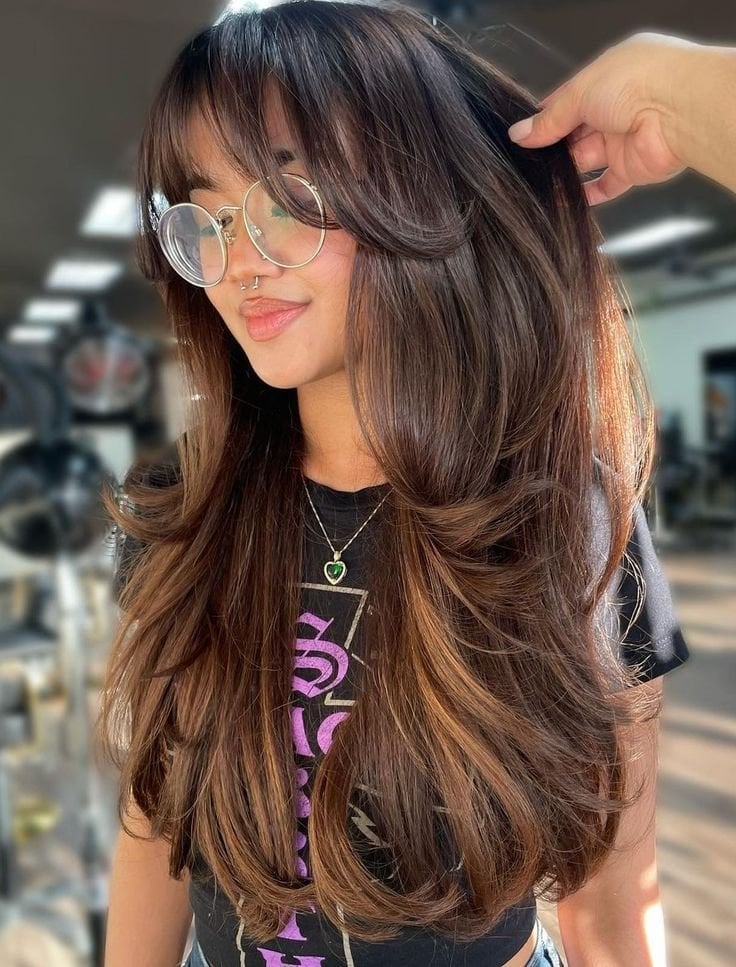
How do you make a mid-back length feel fresh for fall without losing the length? Curtain bangs and soft waves break up the monotony of long hair. The curtain bangs sweep away from the middle part, so the face gets framed without a heavy fringe commitment, and the loose blowout wave adds polish without looking overdone.
Medium-density wavy hair at mid-back works well for this style. A sea salt spray after blow-drying gives the wave texture without stiffness. The middle part and curtain bangs suit oval faces particularly well, and the long layers throughout keep the movement alive as the cut grows out.
Thick Wavy Dark Brown Mid-Back With Curtain Bangs and Long Layers
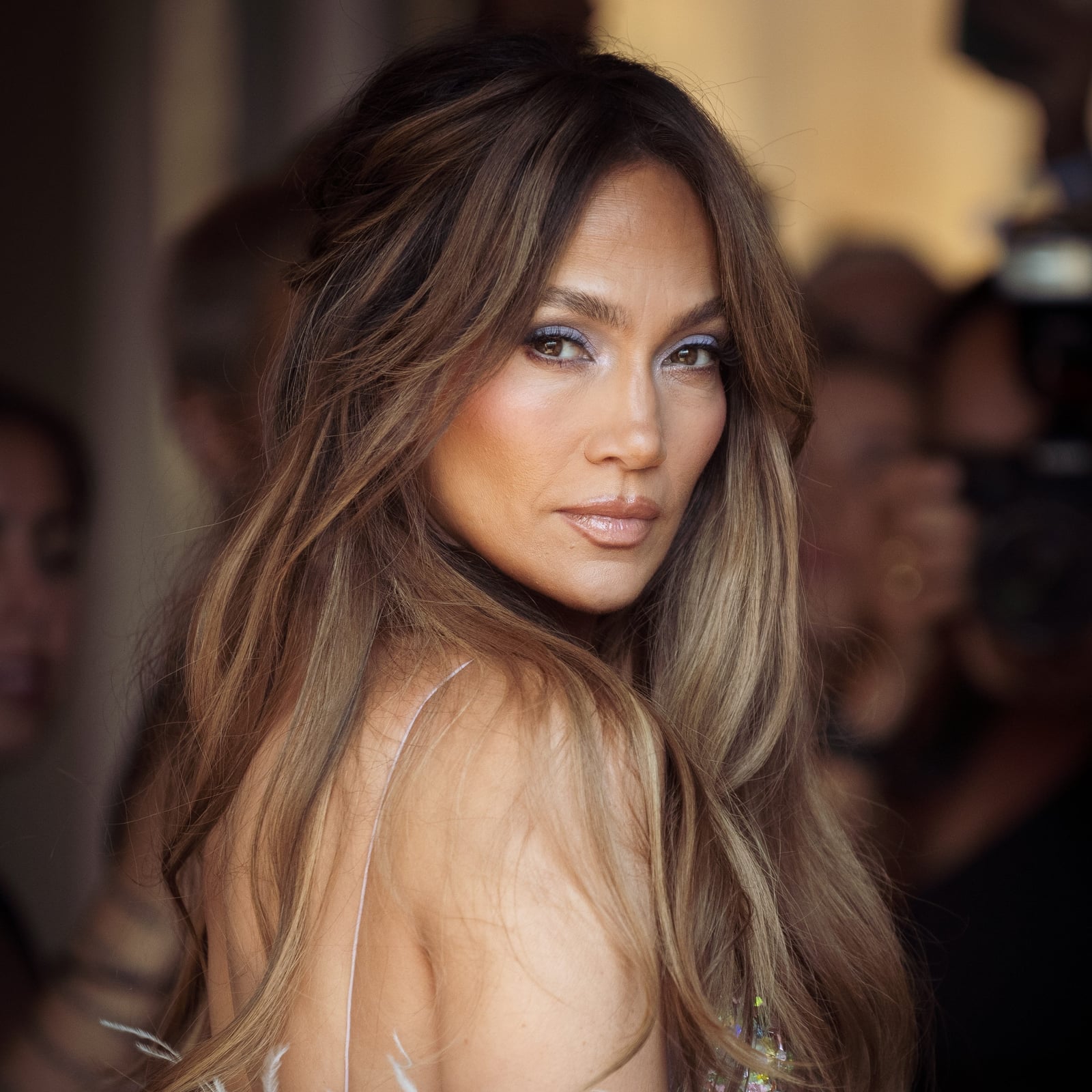
A mid-back cut with curtain bangs and long layers sounds straightforward until you factor in thick, wavy texture. Achieving the air-dried wave without frizz takes a curl-defining cream and a careful scrunching technique; thick hair holds the shape well once you get it right, but the learning curve is real. Ask your stylist for: mid-back length, curtain bangs, dark brown with blonde highlights. A middle part and those curtain bangs flatter oval faces, and the blonde highlights add dimension that keeps the thick mass from looking flat.
Golden Blonde Collarbone With Sculpted Face-Framing Layers
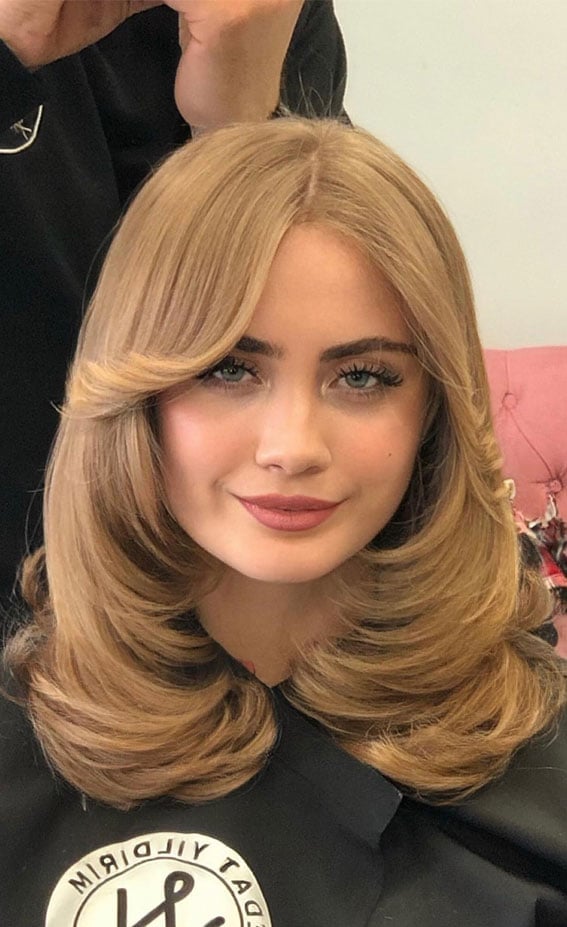
The word you need is “sculpted.” These face-framing layers are cut with precision around the collarbone, not feathered or blended invisibly; the golden blonde sections curve forward in a defined arc that creates a rounded shape around the face. Ask your stylist for: collarbone length, sculpted face-framing layers, golden blonde. Thick wavy hair starting at collarbone length supports the volume requirement, and a middle part works well for oval and long faces. A volumizing mousse at the roots during the blowout keeps the shape lifted.
Dark Brown Collarbone Lob With Textured Waves
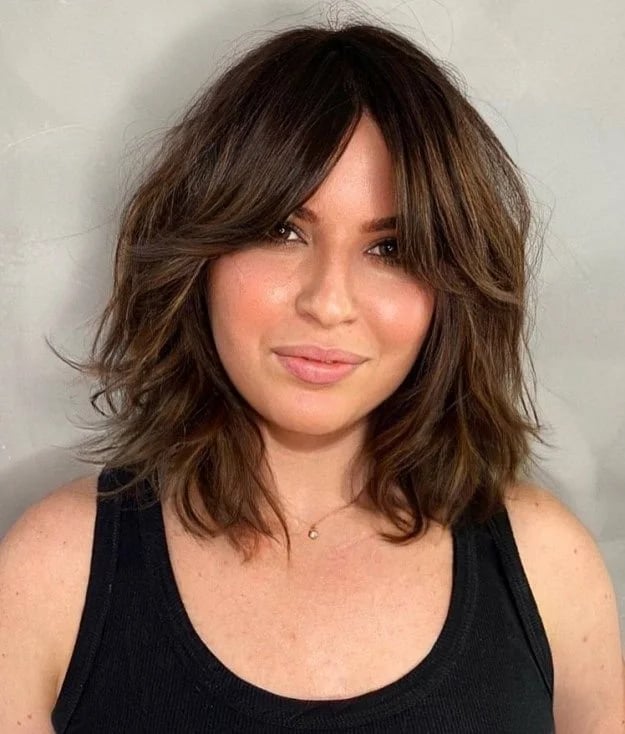
It leans on textured waves and side-swept bangs, both of which give thick hair shape without turning it into a triangle. A side part adds volume where you need it, and the dark brown base keeps the whole thing low-maintenance on the color front. Ask your stylist for: collarbone lob, side-swept bangs. The trade-off is the bangs: they need a trim every six to eight weeks to keep sweeping instead of drooping. A texturizing spray at the roots and a quick tousle with your fingers does the rest.
Fine Icy Butter Blonde Collarbone Lob With Curtain Bangs

Compared to a heavier blunt cut, this collarbone lob feels lighter because the long layers and curtain bangs do the structuring instead of bulk. The icy butter blonde shade is bold on fine, straight hair, which tends to read as delicate, so the bangs add a focal point that keeps the style from disappearing. A middle part suits round and square faces by softening the edges. Ask your stylist for: collarbone lob, curtain bangs, icy butter blonde, for fine hair. Volumizing products at the roots help the blowout hold its shape.
Thick Dark Brown Mid-Back With Subtle Highlights, Wavy
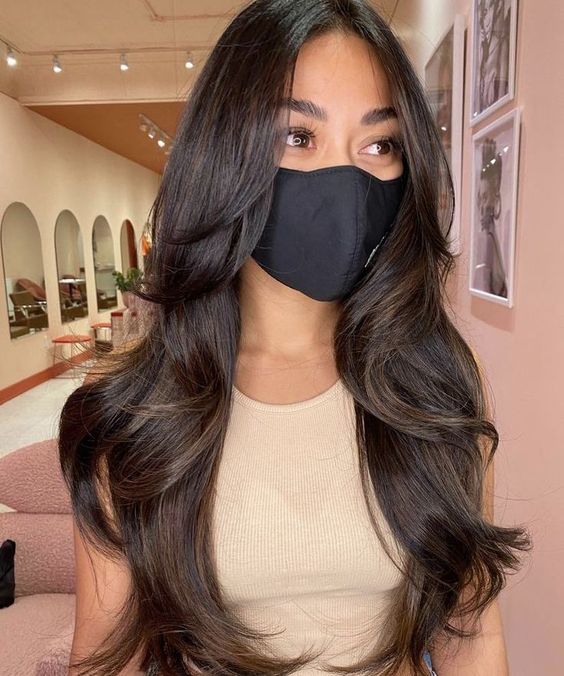
The long layers here are cut to start around the cheekbones, so they frame the face without sacrificing length, and the subtle lighter brown highlights add dimension to what could otherwise be a heavy block of dark color. This design suits thick, wavy hair that starts at mid-back; the middle part and long layers work well on oval faces.
Ask your stylist for: mid-back length, long face-framing layers, dark brown with subtle highlights. A smoothing serum keeps the waves defined and controls frizz, and a trim every eight to ten weeks maintains the shape. This cut moves with you instead of sitting still.
Auburn Mid-Back With Curtain Bangs And Waves, Layered Hair With Soft
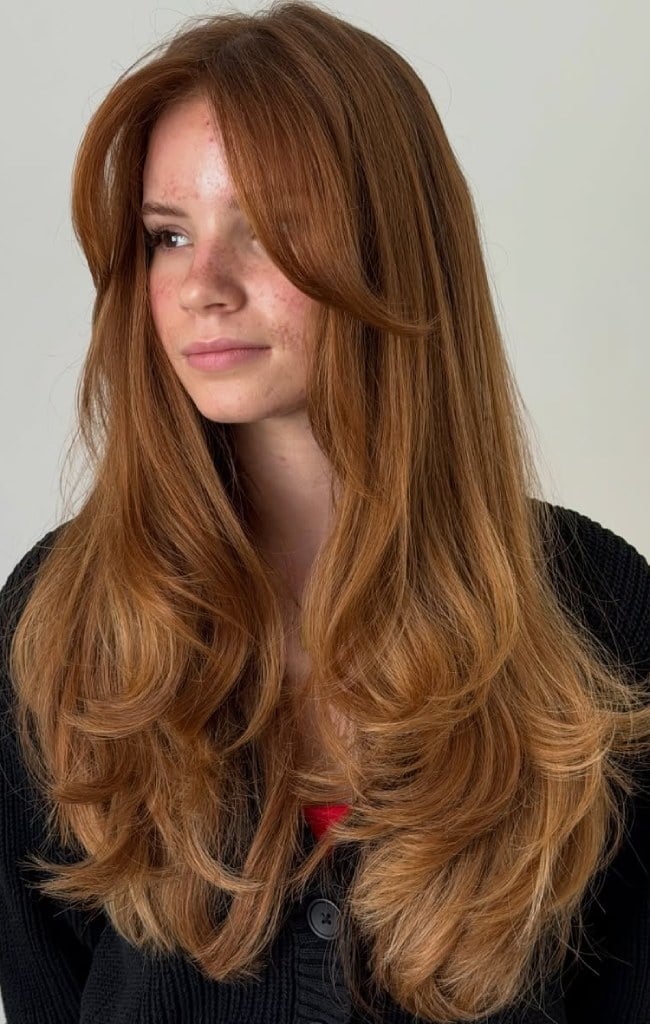
The technique here is about blending: a rich auburn base shot through with subtle highlights that catch the movement of long layers and curtain bangs. The side part lets those layers sweep across the face, and the voluminous blowout with gentle waves gives thick hair a soft, rounded silhouette rather than a flat one.
Ask your stylist for: mid-back length, curtain bangs, auburn with subtle highlights. A color-depositing conditioner keeps the auburn from fading toward copper, and a trim every eight to ten weeks keeps the bangs from turning into a curtain that never parts.
Ash Blonde Mid-Back With Subtle Face-Framing Layers

Ask your stylist for: mid-back length, subtle face-framing layers, ash blonde with fine highlights. This one is a salon job: getting the layers to frame without looking chopped takes a professional eye, so skip the kitchen scissors. A lightweight smoothing serum keeps the straight style sleek.
Medium Brown Shoulder Shag With Curtain Bangs

Does a shag cut actually stay put after you leave the salon, or does it turn into a floppy mess by noon? The answer depends on daily styling commitment. This shoulder-length shag with curtain bangs uses textured waves to keep the layers looking defined. It works best on medium-density hair that already has some wave to it. Ask your stylist for: shoulder-length shag, curtain bangs, medium brown with blonde highlights. Work a texturizing paste through the ends, and book a trim every six to eight weeks to keep the shape from collapsing into a sad triangle.
Light Brown Shoulder Layers With Wispy Bangs

The wispy bang is a delicate piece of engineering: too little weight and it floats away, too much and it is no longer wispy. On fine, wavy shoulder-length hair with a side part, this light brown cut relies on those wispy bangs and visible layers to create movement without bulk. Fine texture plus humidity can make the bangs fall flat or frizz up faster than you can say root spray. A texturizing spray helps, but you will be heat-styling those front pieces most mornings. Skip this one if you want a wash-and-wear situation or if your hair is very thick, where wispy bangs just look like an afterthought.
Ask your stylist for: shoulder-length layers, wispy bangs, light brown, natural waves. A trim every six to eight weeks keeps the bangs from drifting into your eyes, and the side part is essential for the soft framing to work.
Thick Dark Brown Mid-Back With Soft Wave Layers
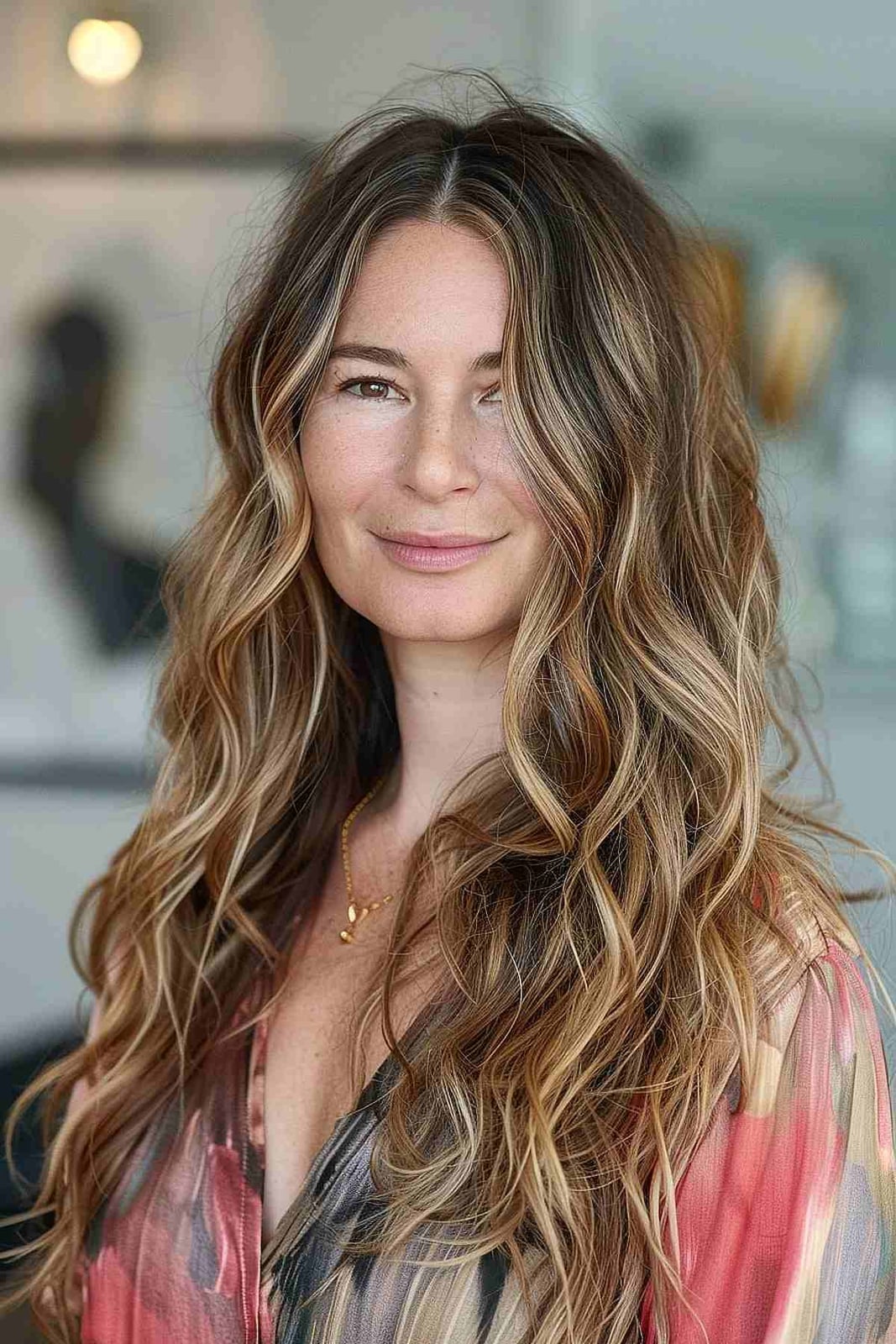
This is what happens when a thick, wavy blowout meets soft face-framing layers and no bangs at all. The mid-back length keeps the weight, but the long layers cut into the dark brown base with subtle lighter tones prevent it from looking like a solid curtain. The side part and soft waves create volume around the face without requiring curtain bangs or fringe, which is useful if you want movement without commitment. It genuinely flatters oval faces and works for anyone who finds blunt cuts too heavy.
Ask your stylist for: mid-back length, face-framing layers, dark brown, soft waves. Apply a heat protectant before blow-drying, and expect a trim every eight to ten weeks to keep the layers readable. This is a salon-only cut, but the daily styling is just a round brush and a few minutes of patience.
Final Thoughts
For fine hair, keep the baseline blunt and concentrate layers around the face to create the illusion of density. For thick hair, long, sweeping layers remove bulk while still holding the shape. A trim every six to ten weeks keeps the silhouette sharp.
- Trim the baseline every six to ten weeks to maintain the shape.
- Refresh face-framing layers with a quick blow-dry and round brush styling.
- Use a heat protectant spray before styling with hot tools.
- Consider a glossing treatment every 6-8 weeks to keep color vibrant.
Face-framing layers are a versatile way to refresh your look.
