A winter outfit often succeeds or fails at the edges: the scarf that interrupts a coat, the boot that finishes a wide trouser, or the small bag that stops a soft layer from becoming shapeless. Paying attention to those quiet decisions makes getting dressed in cold weather feel less like adding bulk and more like composing a clear silhouette.
Rather than chasing a fixed formula, start with one visible relationship and protect it. A short jacket needs a trouser line that can keep moving, a long coat needs a detail near the face or hem, and a textured layer benefits from something smooth beside it. That simple lens leaves room for warmth while making each choice look intentional.
Camel Texture With a Red Bag Accent
The camel fuzzy zip jacket is cut short enough to expose the long fall of the dark wide-leg trousers, so the outfit keeps a real sense of length despite the substantial outer layer. A red knit hat and oversized red bag repeat one concentrated color at opposite points, which gives the otherwise quiet navy-and-camel palette a lively rhythm. The decision is less about matching every accessory than about allowing one clear accent to organize the look.
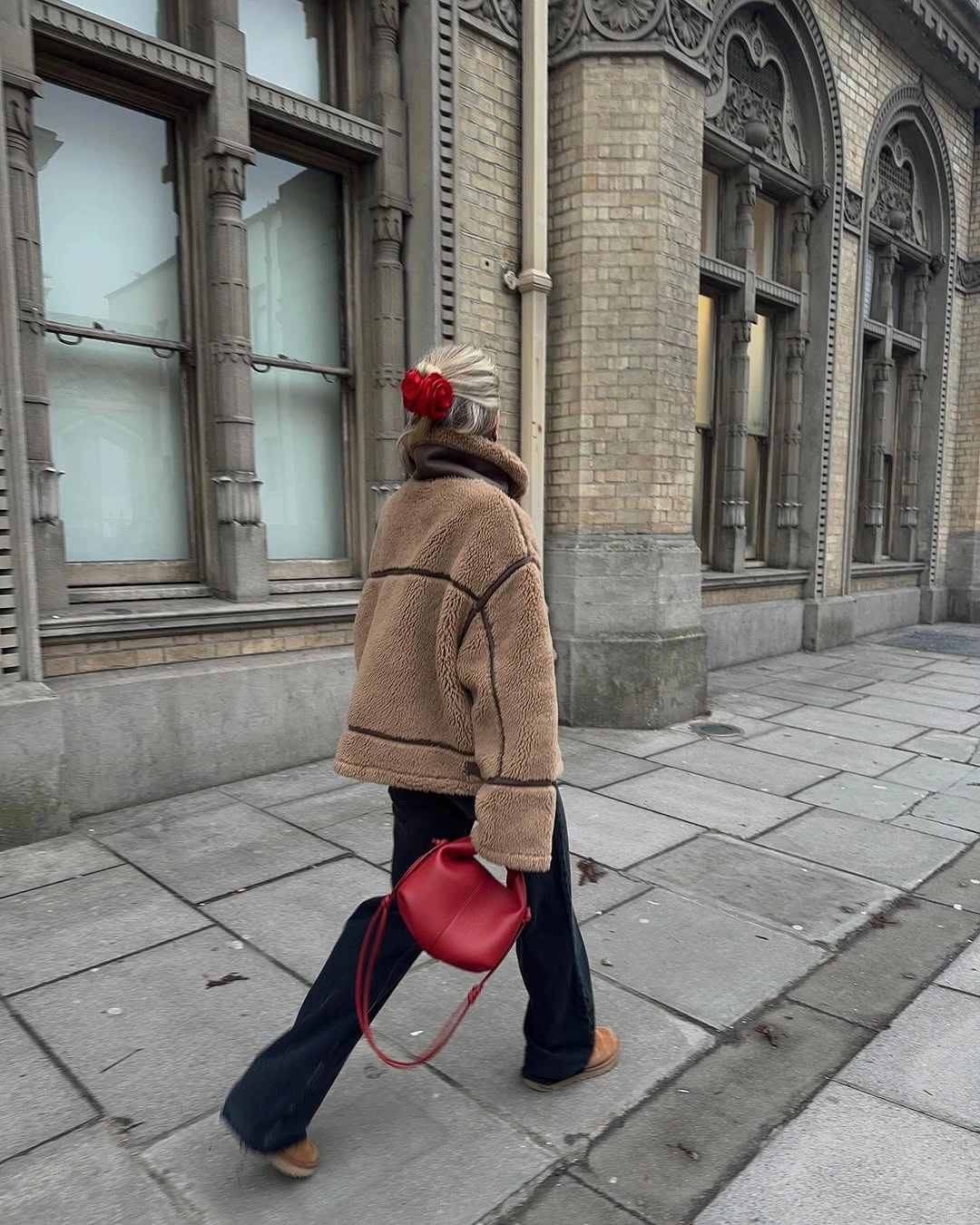
That boxy jacket would become visually heavy if the trousers ended tightly at the ankle, but their relaxed width creates a useful counterweight beneath it. Keeping the shoes dark is smart here because it lets the red bag remain the stronger punctuation mark. For an everyday version, retain one red accessory and switch the other to a deep brown or black piece so the contrast feels deliberate rather than costume-like.
The practical tradeoff is that a short fuzzy layer does not provide the same coverage as a full coat, especially when the wind reaches the hip area. A longer knit underneath, or a high-waisted trouser that closes the gap, keeps the proportions intact while adding warmth. The outfit works because the color is concentrated, not scattered, so avoid introducing a third bright accent that would loosen that focus.
Cream Knits Softening a Camel Coat
A camel outer layer becomes gentler when a cream beanie and broad scarf create soft texture close to the face. The small edge of black-and-white check beneath the scarf prevents the beige and cream from blending into one unbroken field, while the dark tote gives the lower half useful visual weight. The result feels warm because the contrast is made with pattern and scale instead of another strong color.
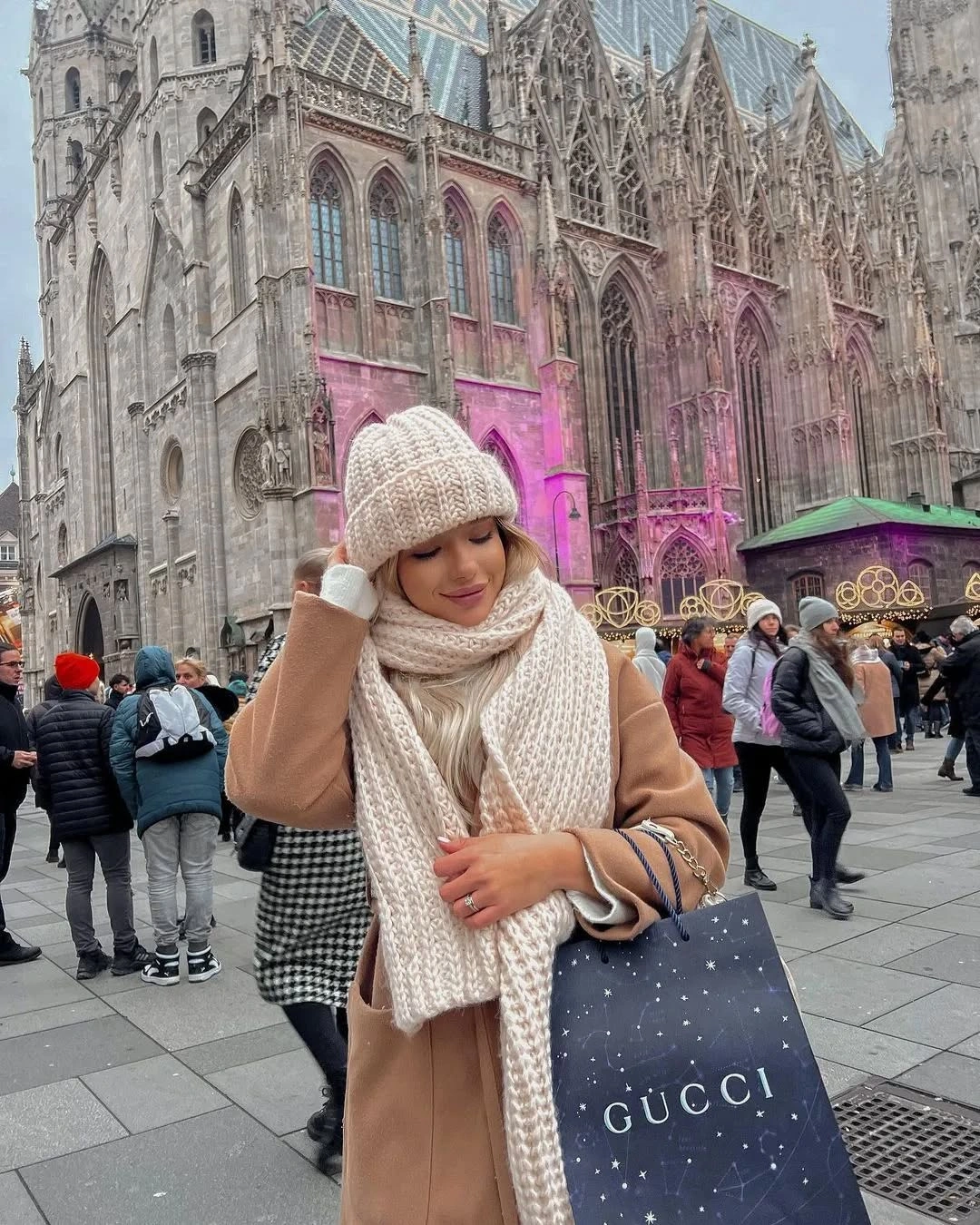
The oversized scarf is doing more than keeping the neckline covered: it shortens the apparent length of the coat at the chest and makes the outfit feel less formal. If the scarf were slimmer, the coat would read cleaner and more tailored; if it were larger still, the checked layer could disappear entirely. A similar balance works with a knit skirt outfit when the outer layer needs texture without extra color.
Because several elements sit in pale neutrals, maintenance matters here. A scarf with visible pilling or a coat with flattened texture would weaken the softness that makes the combination convincing. Choose a scarf that can be brushed or washed easily, and leave at least one dark accessory in the mix so the outfit still has definition on gray winter days.
Charcoal Coat Over a Continuous Dark Base
The charcoal coat, black wide trousers, and dark footwear form a nearly continuous vertical base, while the light gray layer at the neckline keeps the center from looking flat. The coat appears long and straight rather than oversized because the trouser volume begins below its hem instead of competing at the waist. A compact black bag and narrow sunglasses keep the accessories scaled to that controlled, tailored line.
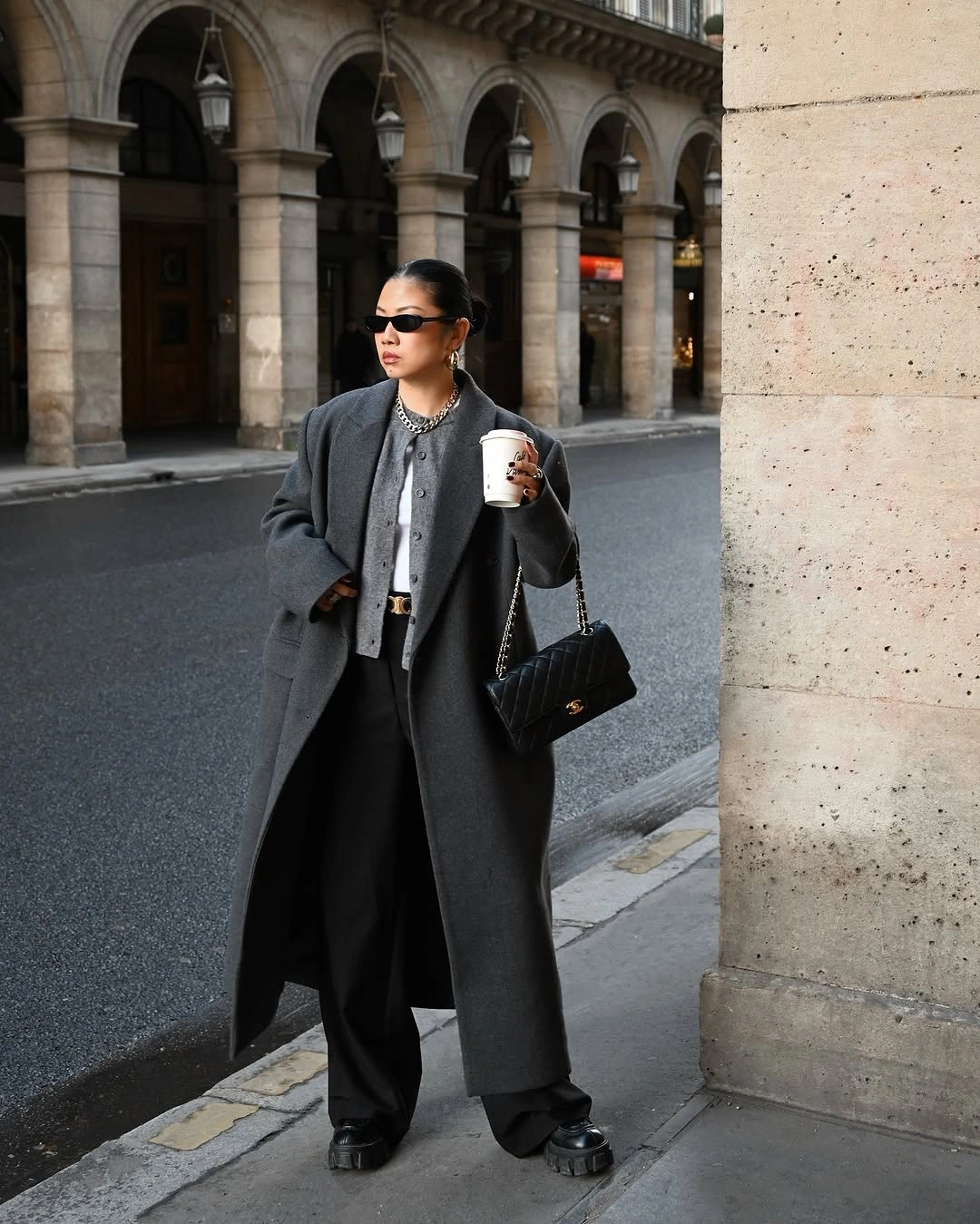
One useful detail is the small amount of lighter gray at the torso. It separates the coat from the trousers just enough to show layering, but it does not break the long column into unrelated pieces. If you prefer less drama in the trouser width, a straighter pair would preserve the same effect, although the overall shape would feel more formal and less relaxed.
The main limitation is movement: very long hems and wide legs can collect moisture or drag near uneven pavement. A slight hem break above the shoe is safer than letting fabric pool, particularly with a coat that already carries considerable length. Keep the bag compact rather than oversized, since a large tote would interrupt the clean line that makes this grayscale combination so effective.
Burgundy Jacket Above Wide Black Trousers
The wine-colored jacket stops at the waist while the black trousers open into a much wider shape below, creating a clear upper-and-lower contrast instead of one long dark block. Its structured surface stands out against the softer volume of the pants, and the black bag repeats the base color without making the outfit monochrome. That short burgundy layer gives the look a focal point before the silhouette expands.
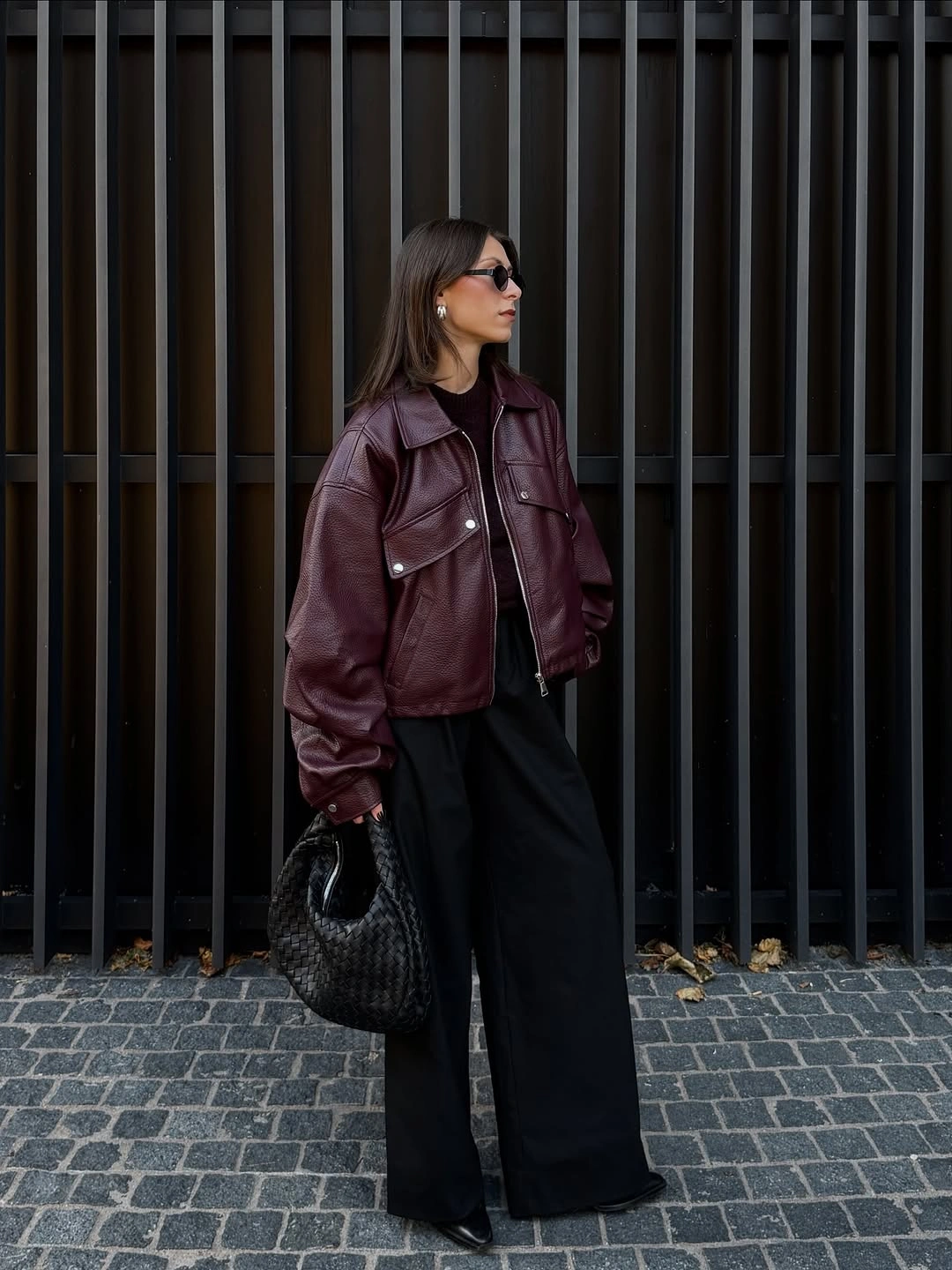
The success of this pairing comes from keeping the jacket concise. A longer burgundy coat would overlap the trousers and erase the sharp proportion change that makes the outfit memorable. If the waist feels too exposed in practice, a close-fitting black knit beneath the jacket can bridge the transition without adding a competing color or a bulky extra layer.
Wide trousers need enough hem clearance to move easily, especially with a cropped jacket that draws attention downward. A pointed boot or low-profile loafer would maintain the vertical pull better than a thick sneaker, while still keeping the look usable for a day with walking. Let the burgundy remain the only colored garment so its rich tone continues to do the visual work.
Texture and a Pale Scarf at Night
The full tan textured coat has a rounded, expansive outline, so the long cream scarf becomes an important vertical line through its center. Dark clothing underneath gives the coat a boundary and keeps the honey-colored texture from blending into the surroundings. The palette feels luxurious through contrast in surface and value, not through a complicated collection of accessories.
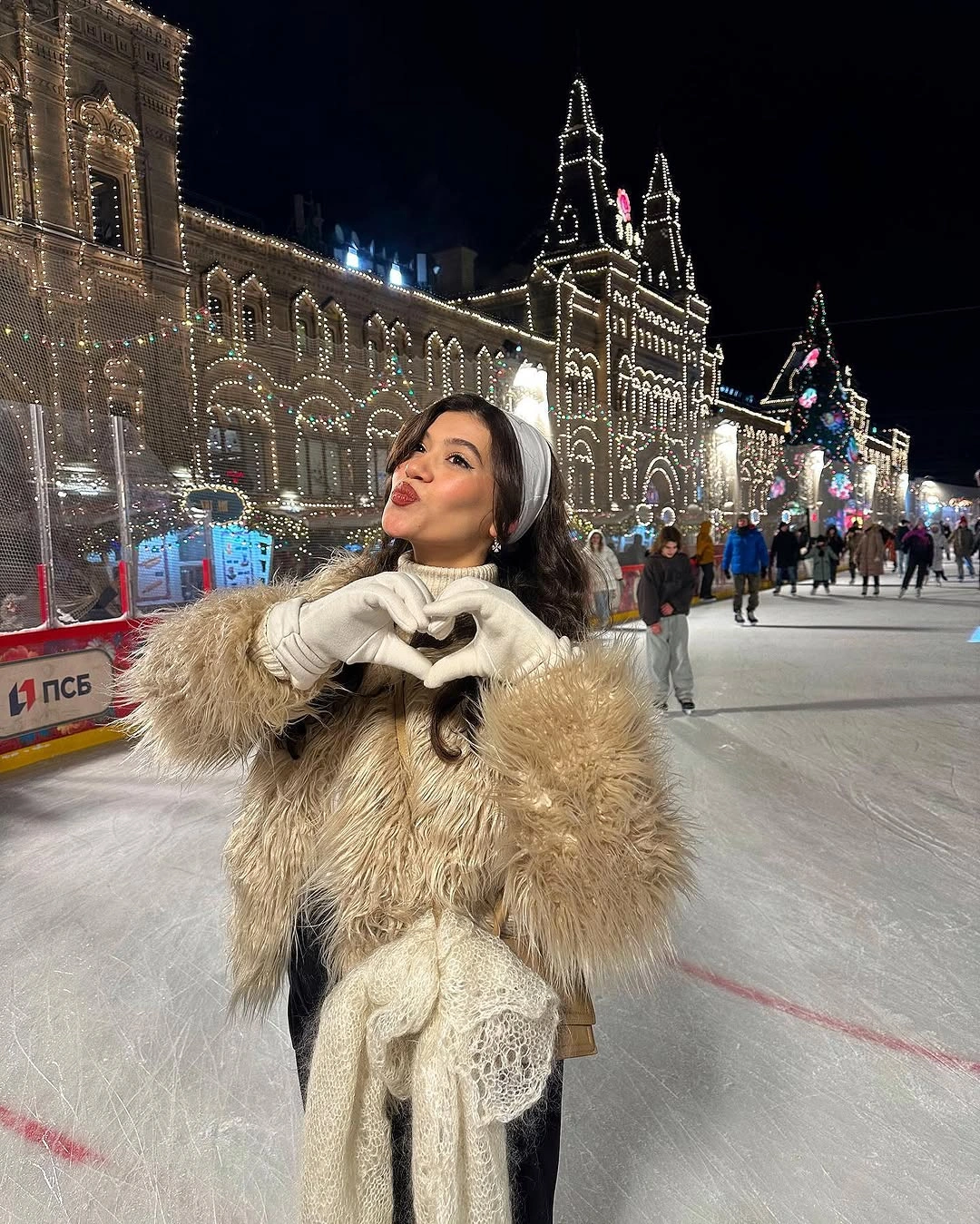
With a coat this voluminous, the scarf works best when it remains fairly plain. A busy print would compete with the dense surface of the outer layer and make the center look crowded. For a less dramatic version, choose a shorter textured jacket and let the scarf reach only to the hip, preserving the pale highlight without overwhelming the proportions.
The tradeoff is practical as well as visual: long loose scarf ends can catch in a bag strap or shift constantly in wind. Tucking one end beneath the coat’s lapel creates a steadier line and leaves the other end visible for softness. Keep the base layer slim enough that the outer texture reads as a choice, not simply the result of too many bulky pieces.
Leather-Look Jacket With a Plaid Midi
The short black leather-look jacket gives the dark plaid midi skirt a firm starting point at the waist, while the skirt’s pattern adds quiet movement below. Black ankle boots keep the lower half continuous, and the brown shoulder bag introduces a warmer note without fighting the charcoal-and-black base. It is a useful reminder that dark outfits need surface variation more than extra color.
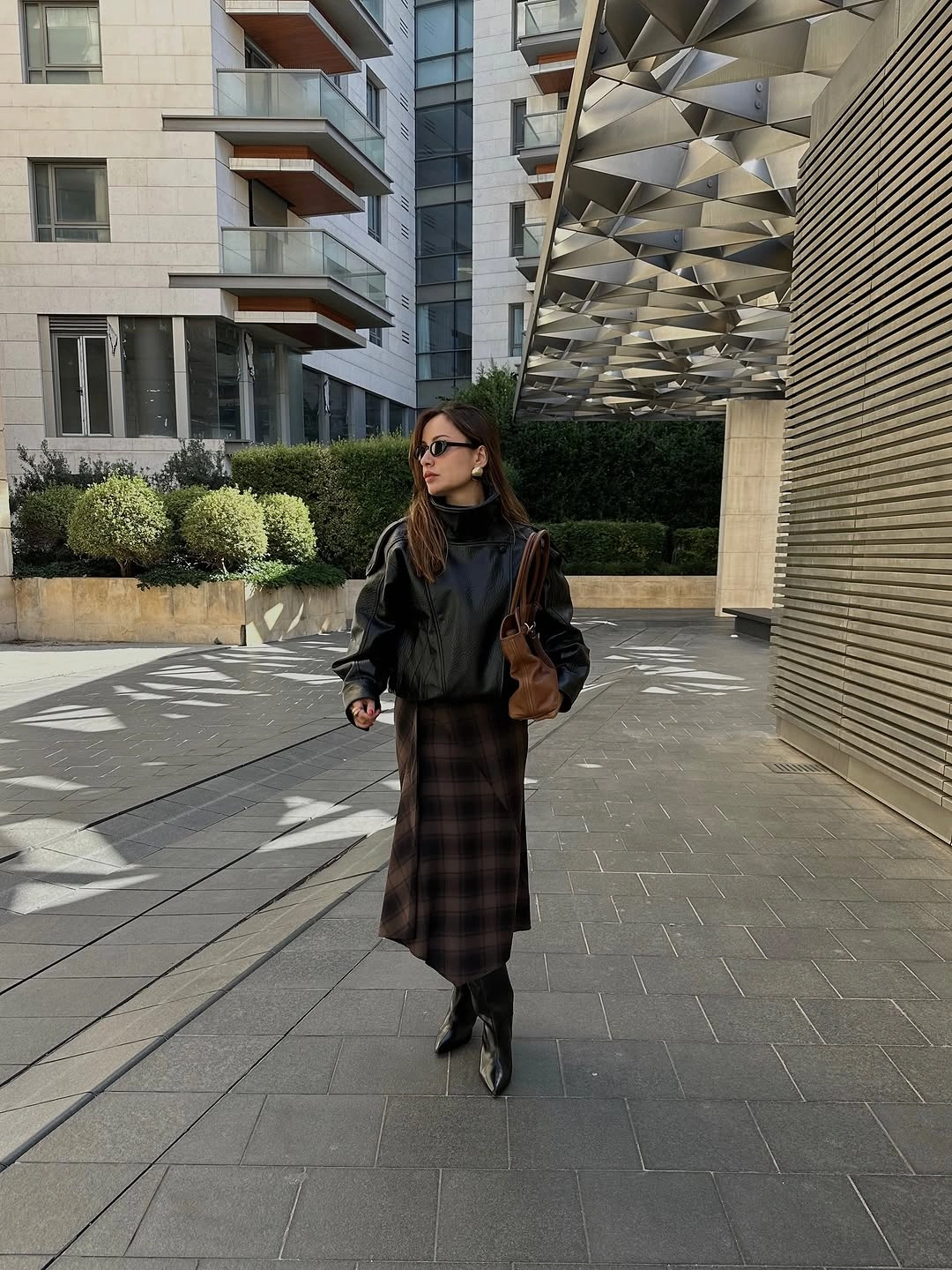
The plaid is subtle enough to support the jacket rather than becoming a separate statement. A larger or brighter check could work, but then the bag and boots should be simpler so the skirt remains the only patterned element. Those looking for a similar outer-layer texture can borrow ideas from a faux fur jacket outfit and keep the skirt’s scale equally restrained.
For comfort, notice where the skirt meets the boot. A small gap can make the outfit feel lighter, but a hem that catches on the boot shaft will disrupt both movement and the clean vertical line. Choose a skirt length that clears the ankle or a boot shape slim enough to sit smoothly beneath it, then let the jacket remain fitted rather than layered over a heavy sweater.
Espresso Plush Coat With a Black Base
The deep brown plush coat uses texture rather than brightness to establish its presence, and the black clothing beneath allows that texture to stay legible. A dark headband and narrow sunglasses repeat the compact scale near the face, so the coat’s broad shoulders do not feel unsupported. Brown reads warmer than black here, but the tonal distance is small enough to keep the outfit calm.
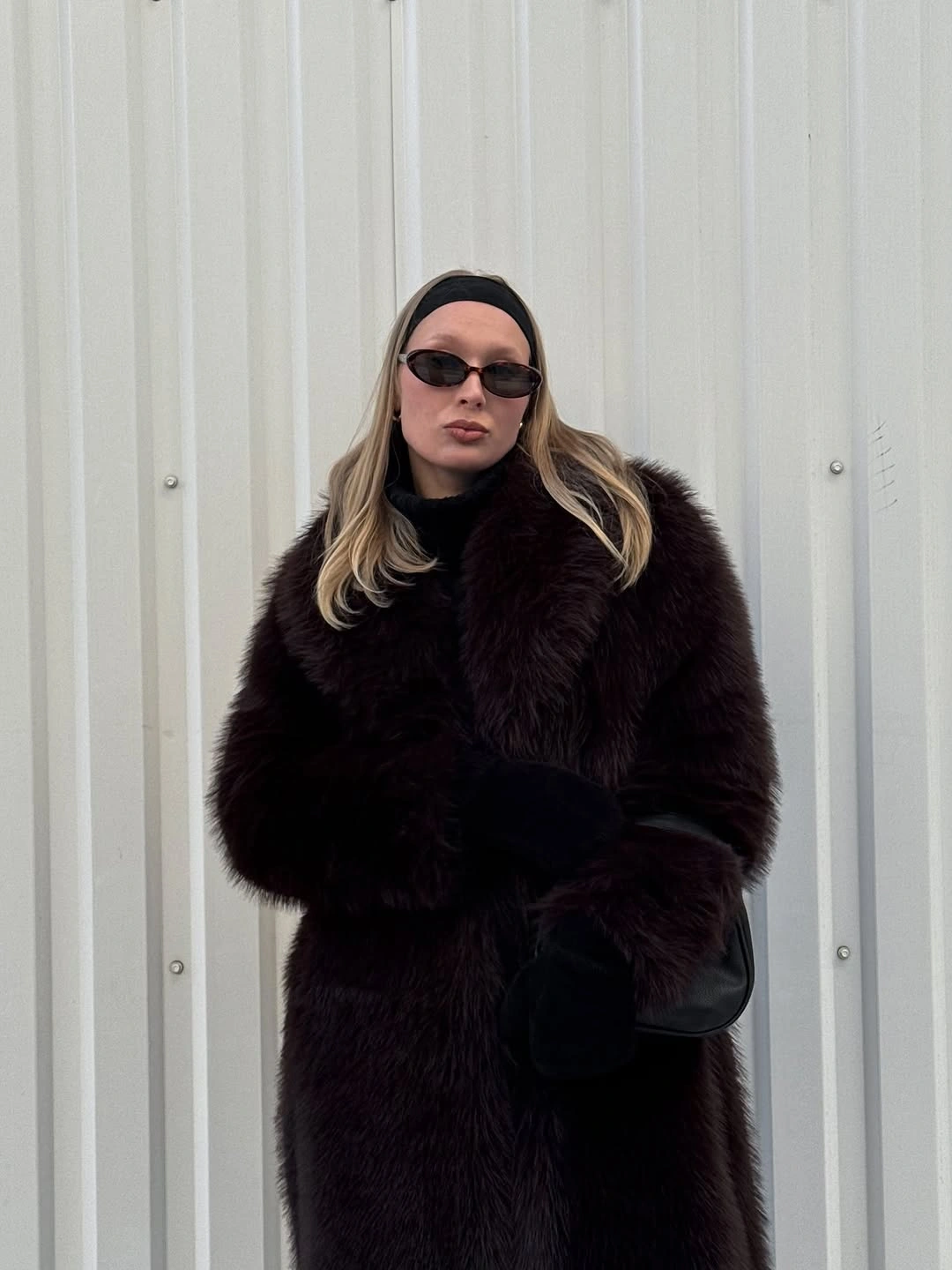
Because the coat is already full-length and visually dense, the rest of the outfit benefits from nearly disappearing. A pale scarf or colorful bag could make the look more expressive, but it would also divide the strong vertical shape into competing sections. If you add contrast, put it in one small place such as the lip color, earring, or bag hardware rather than in a second large garment.
This kind of surface can show wear quickly around cuffs and bag-contact points, so a lighter bag carried under the arm may flatten the pile over time. Rotating the shoulder that carries a strap, or using a smooth small handbag, helps the coat retain its texture. The quieter black base is not an afterthought – it is what gives the brown layer room to feel rich rather than busy.
Red Tartan Scarf With Straight Denim
A navy knit and blue jeans form an uncomplicated base, then the broad red tartan scarf changes the temperature of the whole outfit. Red socks echo the scarf at the ankle, while the burgundy shoulder bag holds the same family of color at the side. That repetition makes the denim feel planned rather than merely casual, even though every piece remains easy to wear.
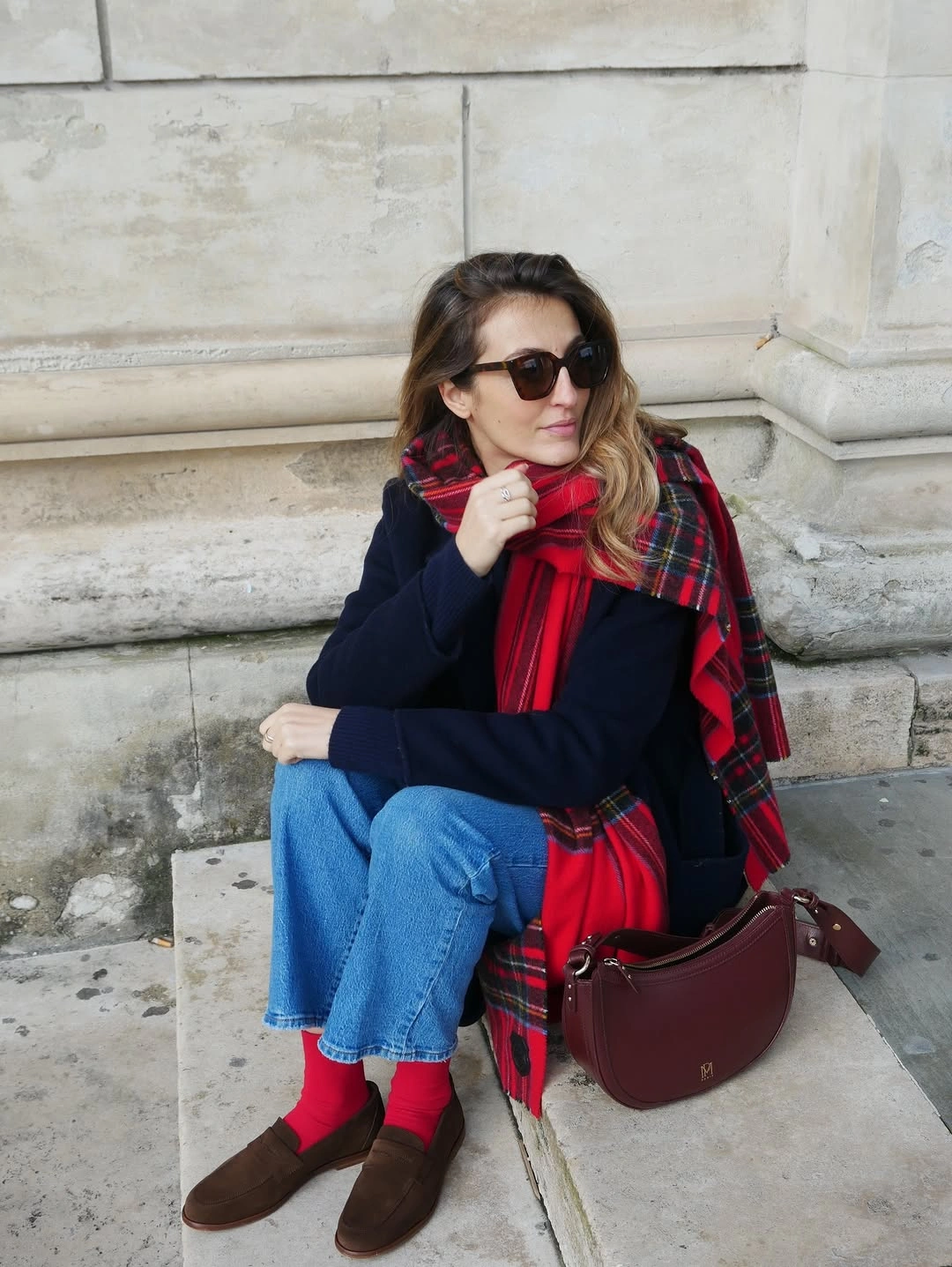
The scarf is large enough to give the upper body visible volume, which is why the jeans stay relatively straight and unadorned. If you wanted to soften the contrast, swap the red socks for navy or brown and let the scarf handle the color alone. Keeping the bag in a deeper wine shade is especially helpful because it connects to red without creating an exact, overly coordinated match.
There is a real comfort benefit to this approach: a scarf can provide warmth at the neckline without needing a much heavier coat indoors or in transit. The caution is that several red notes can quickly start to dominate if the plaid is too bright. Use one repeated accent at the feet or bag, not both, when the scarf already has a large, high-contrast pattern.
Pale Layers With a Slimmer Lower Half
The cream zip layer, white scarf, and fluffy mittens create a deliberately soft upper half, while the narrow pale trousers keep that volume from spreading downward. The lack of a sharp color contrast makes the outfit feel calm, but the different finishes – knit, padded-looking trim, and smooth pants – keep it from becoming featureless. Sunglasses add a small dark interruption near the face.
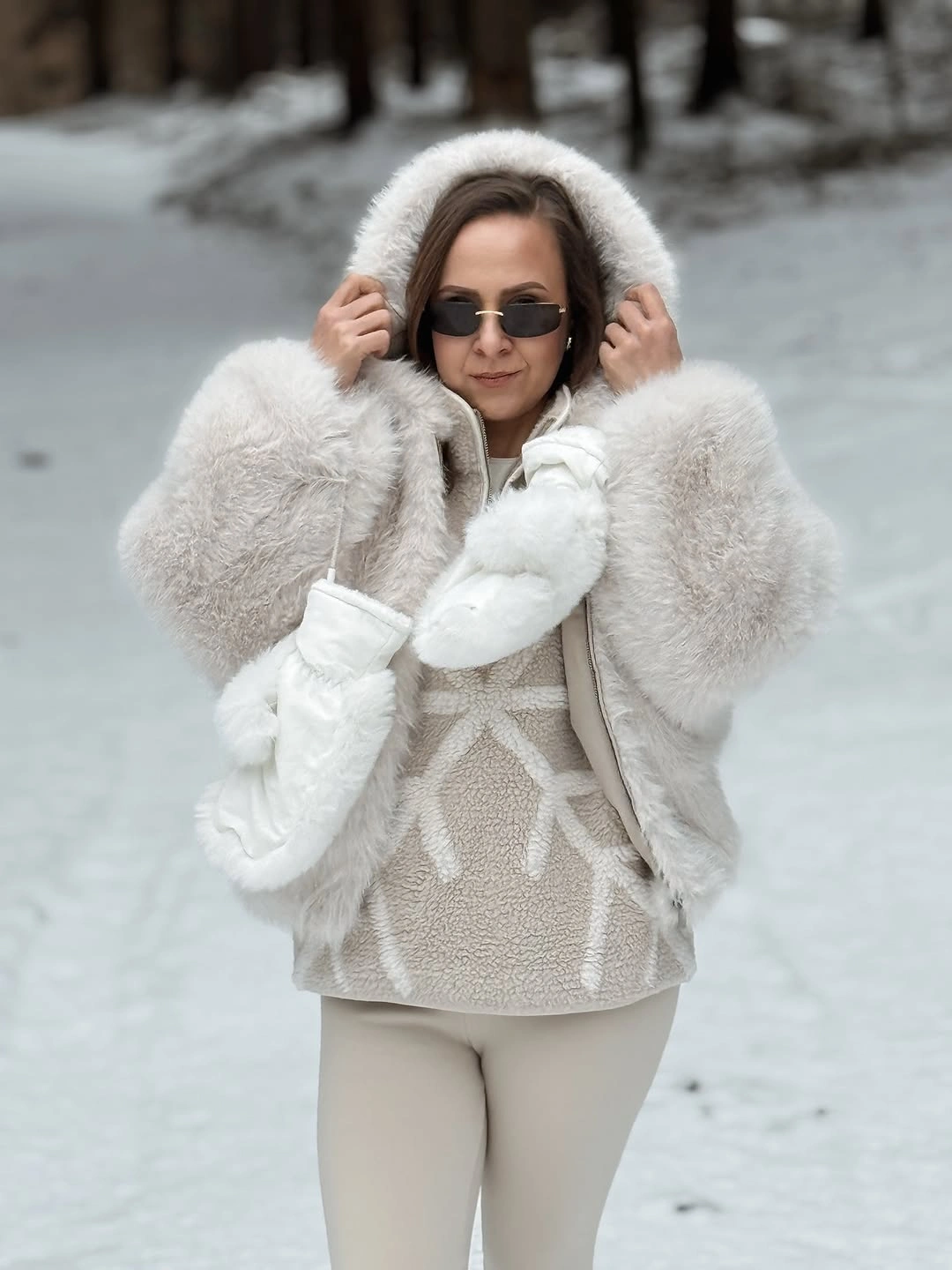
When several pale pieces sit together, proportion matters more than color. A wider pant would make the outfit more cocoon-like, but it could also hide the distinction between the outer layer and the lower half. If you prefer a looser trouser, keep the jacket shorter or the scarf less bulky so there is still one area of visual restraint.
Light accessories are susceptible to marks at the cuffs, scarf edge, and bag-contact points, especially in wet winter conditions. Choosing washable mittens and a scarf that can handle frequent cleaning keeps the pale palette workable beyond a single outing. The outfit remains strongest when the dark accent stays minimal; one pair of sunglasses is enough to give the softness a boundary.
Chocolate Coat With Burgundy Sneakers
The long chocolate coat and gray wide trousers have a soft, relaxed relationship, but the burgundy sneakers give the bottom edge a sudden shot of energy. A similarly colored shoulder bag repeats that note at the hip, creating a diagonal connection across the outfit. The result is casual without becoming loose or unfinished, because the color has a clear beginning and ending.
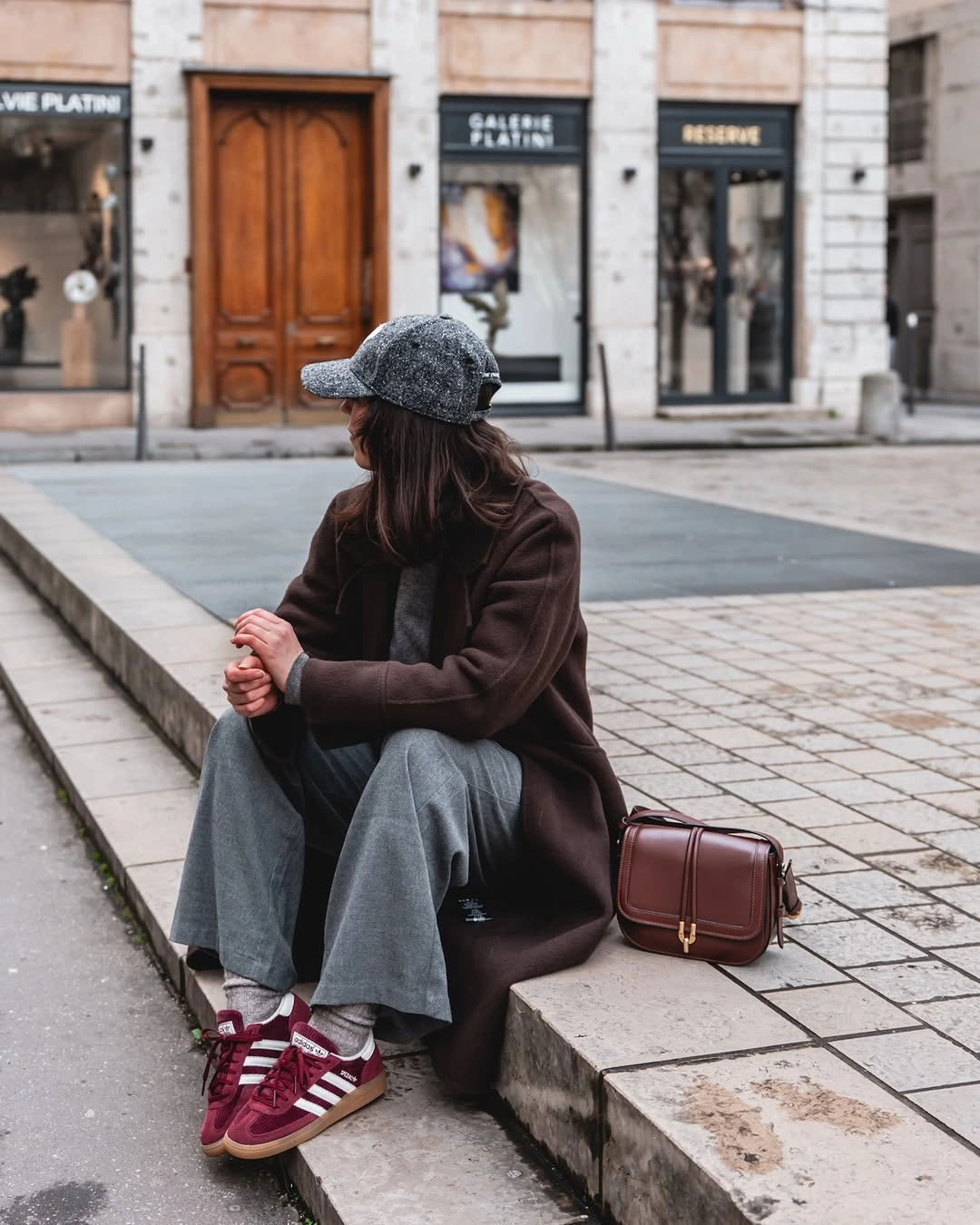
Gray trousers are a useful bridge between rich brown outerwear and red shoes because they soften the contrast rather than forcing the colors together. Black trousers would make the sneakers feel sharper and more graphic, while blue denim would move the outfit toward a more familiar casual formula. Keep the cap or headwear subtle when the shoes and bag already provide the repeated accent.
Wide trouser hems deserve a quick movement test with sneakers. If the fabric lands too low, it can cover the most useful color detail and pick up moisture near the sole. A slightly cropped hem, or a sneaker with a visible toe shape, preserves the red punctuation and makes the relaxed coat feel intentionally paired rather than accidentally layered.
Black Pleats for a Relaxed Indoor Moment
The black pleated set relies on texture and soft volume instead of layered outerwear, which makes it appropriate for a quiet indoor winter setting without looking careless. The fabric catches light in narrow vertical folds, giving the loose top and pants a little definition. Because the color stays completely dark, the silhouette can remain relaxed while still feeling cohesive.
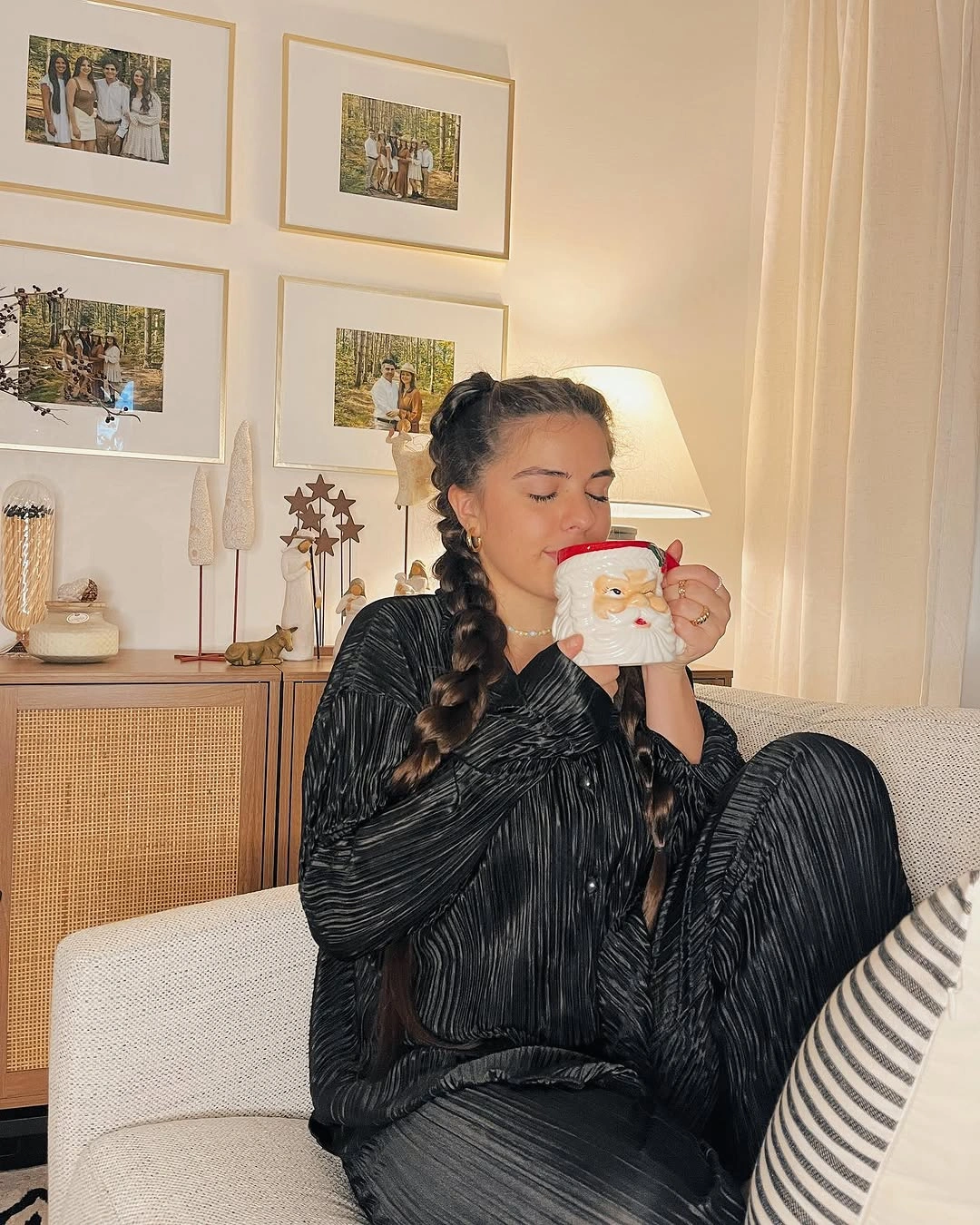
A matching set like this works best when the texture is visible and the proportions are allowed to stay simple. Adding a patterned robe, bright slipper, or oversized necklace would compete with the fine pleats that already carry the interest. If warmth is needed, a thin long-sleeve layer underneath will preserve the drape better than a thick sweater layered on top.
The limitation is that pleated fabric can cling or crease in high-contact areas, particularly after long periods of sitting. A gentle shake before wearing and careful laundering can help the folds fall more evenly. The understated styling is its advantage: it offers a composed alternative to pajamas while avoiding the stiffness of a fully structured outfit at home.
White Wrap Texture Against Black
The fuzzy white wrap-style top has enough volume and surface movement to become the clear focus, so the fitted black lower half is essential. The darker base outlines the waist and prevents the pale top from looking too cloudlike or undefined. Narrow sunglasses and a red lip detail keep the styling sharp, but neither competes with the wrap’s soft edge.
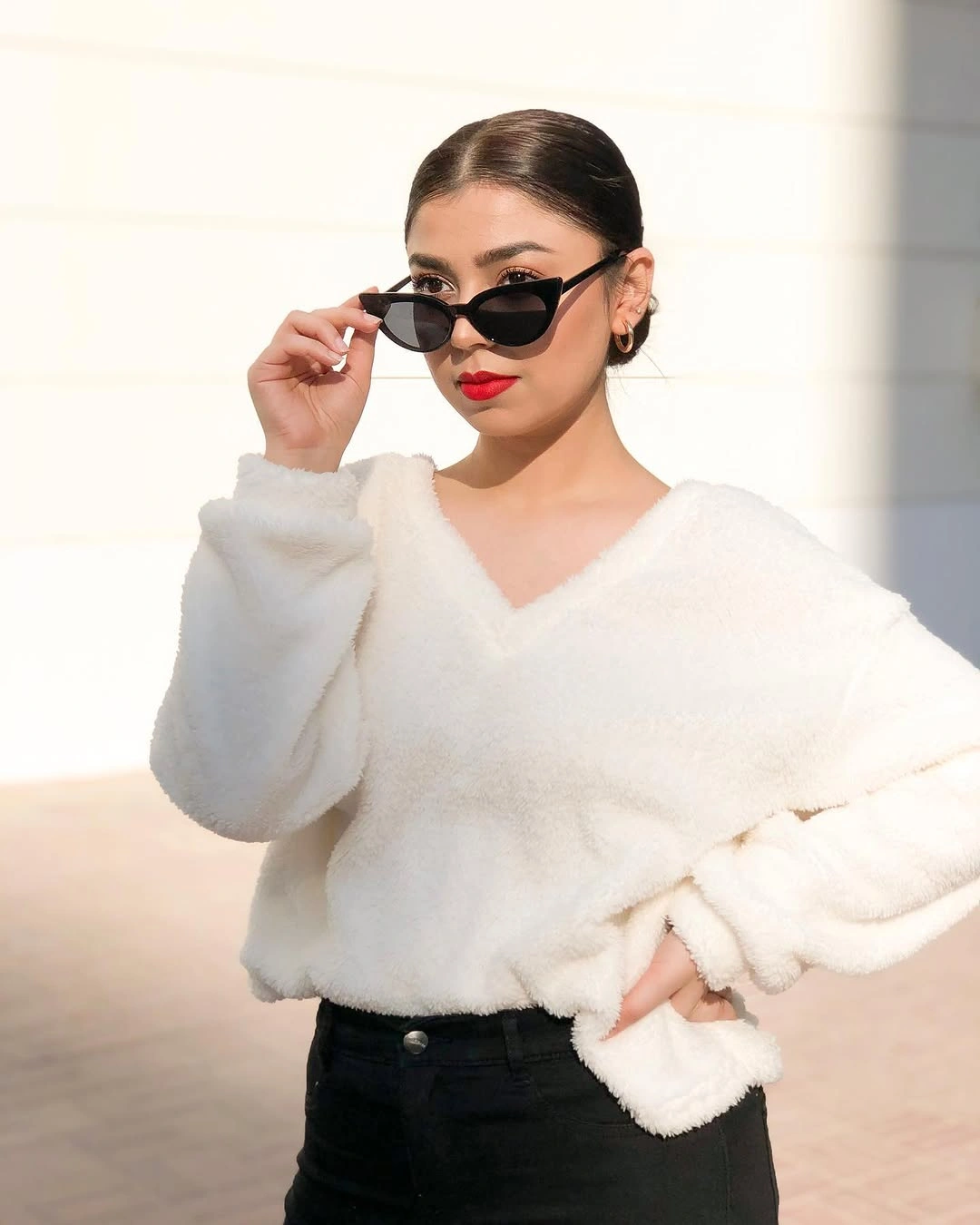
A wrap closure naturally directs attention toward the waist, which is useful when the sleeve and fabric both carry volume. If you want more coverage, a black camisole or close knit layer beneath will keep that same contrast at the neckline. A lighter bottom would make the outfit more tonal, but then the belt line or a defined hem would need to take over the job of creating shape.
White textured fabric needs some care around bags and outerwear, since darker straps can transfer color or flatten the surface. Carrying a smooth bag and brushing the fibers lightly after wear keeps the top looking fresh. Let the black base remain simple and unprinted; the strongest effect comes from the crisp separation between softness above and restraint below.
Gray Texture With Red Cap and Sneakers
The gray textured jacket and pale jeans are intentionally quiet, which allows the red cap and red sneakers to read as a purposeful pair rather than unrelated sporty details. The brown tote sits between them as a warmer neutral, making the palette feel layered instead of simply gray-and-red. The coat’s rounded texture keeps the denim from looking too plain in the middle.
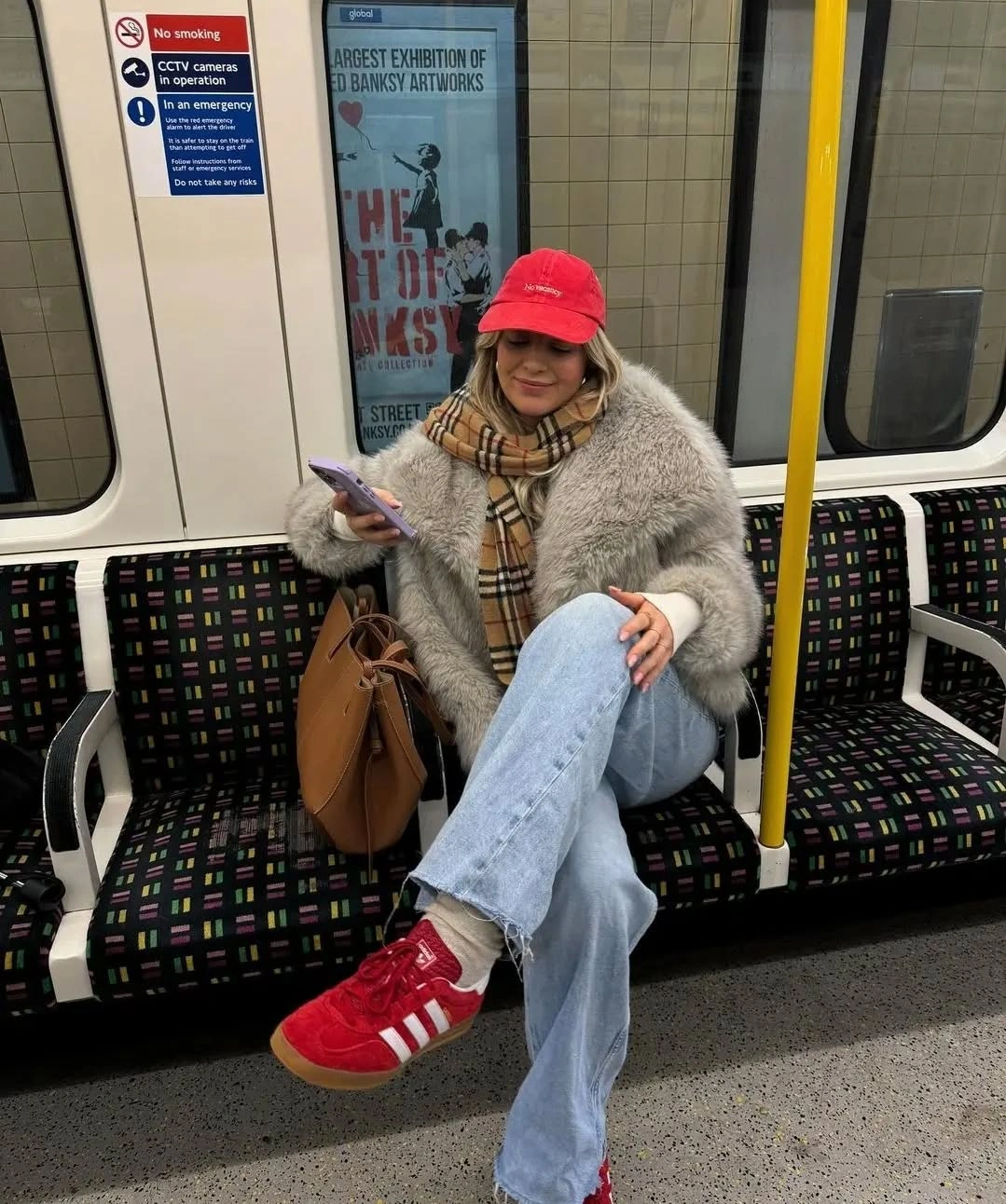
Repeating red at the head and feet creates a long visual line, but it only works because the jacket and jeans have almost no competing decoration. A red bag in addition to the cap and sneakers would likely make the look too literal. For a quieter approach, keep the sneakers red and choose a neutral cap, leaving the shoes as the single bright detail.
This combination is practical for a day with movement because the jacket remains short and the denim has room through the leg. The tradeoff is that a rounded textured layer can appear wider than it is, so a small crossbody or tote carried close to the body helps maintain proportion. Avoid a very long scarf here, as it would cover the cap-to-shoe rhythm that gives the outfit its character.
Olive Coat Framed by a Pink Hood
The pink hood creates a vivid frame inside the long olive coat, immediately making the outer layer feel more casual and playful. Brown boots and a structured dark bag keep the lower half grounded, so the color contrast never turns sugary. Allowing the hood to remain visible is the central styling decision; hiding it would remove the outfit’s most useful point of tension.
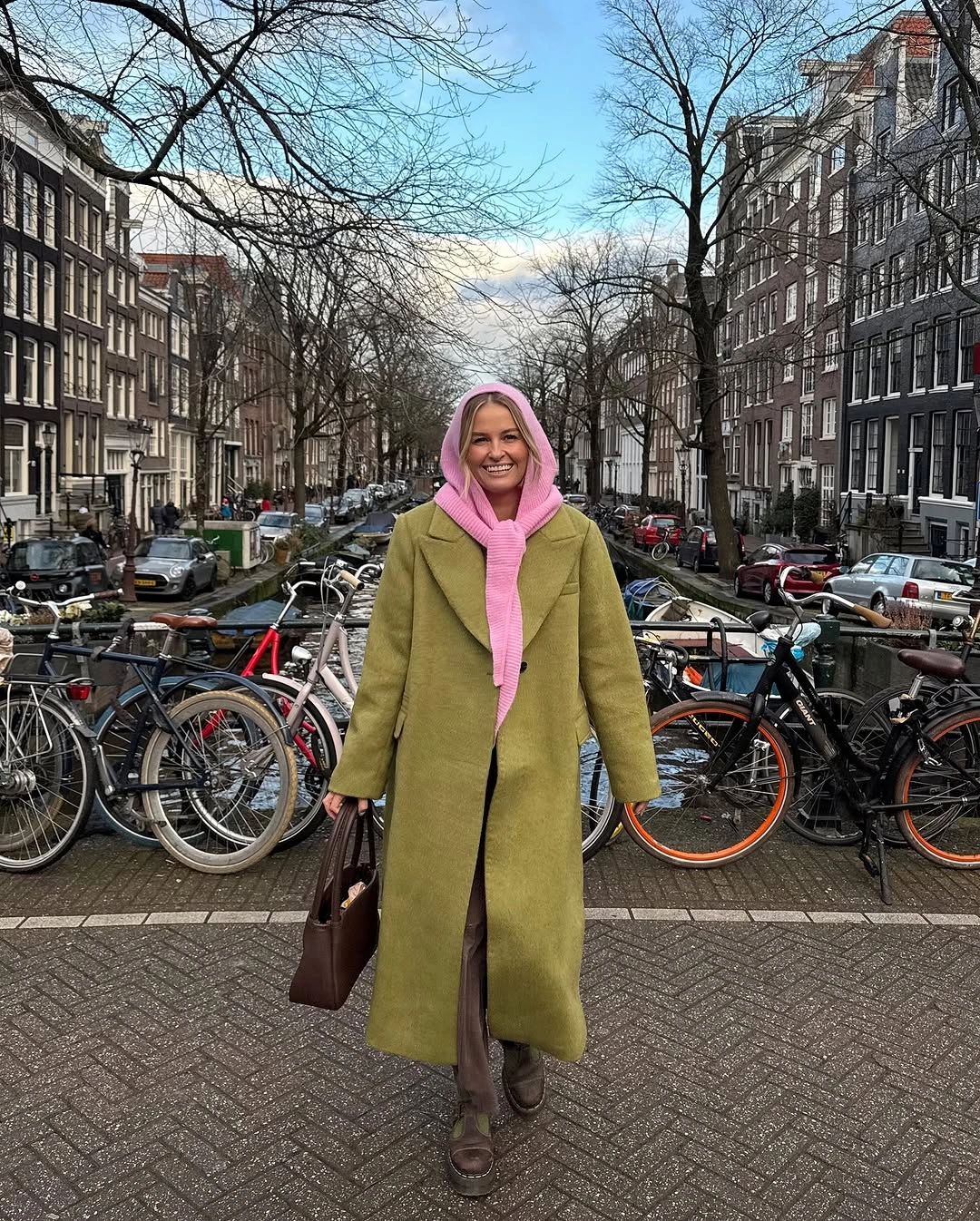
Olive and pink work because one is muted and earthy while the other is light and clearly artificial in tone. If the hoodie were much thicker, it could crowd the coat collar and make the neckline feel stiff, so a medium-weight layer is easier to manage. You can use the same approach with a burgundy or rust outer coat, provided the shoe remains in a quiet brown family.
The practical consideration is the hood itself: it may bunch beneath a fitted coat or shift when a bag strap crosses the shoulder. Smooth it flat before leaving and avoid a second bulky scarf, since the hood already provides volume near the face. The look feels current because the bright color appears as a small interior reveal rather than as a full matching set.
Varsity Padding and a Gray Hoodie
The beige padded varsity-style jacket has a graphic surface and cropped sporty shape, while the gray hooded layer beneath softens that energy at the neckline. Dark pants and a black shoulder bag make the rest of the outfit recede, allowing the jacket’s lettering and warm beige tone to stay legible. It is a useful formula when a statement outer layer needs a calmer partner.
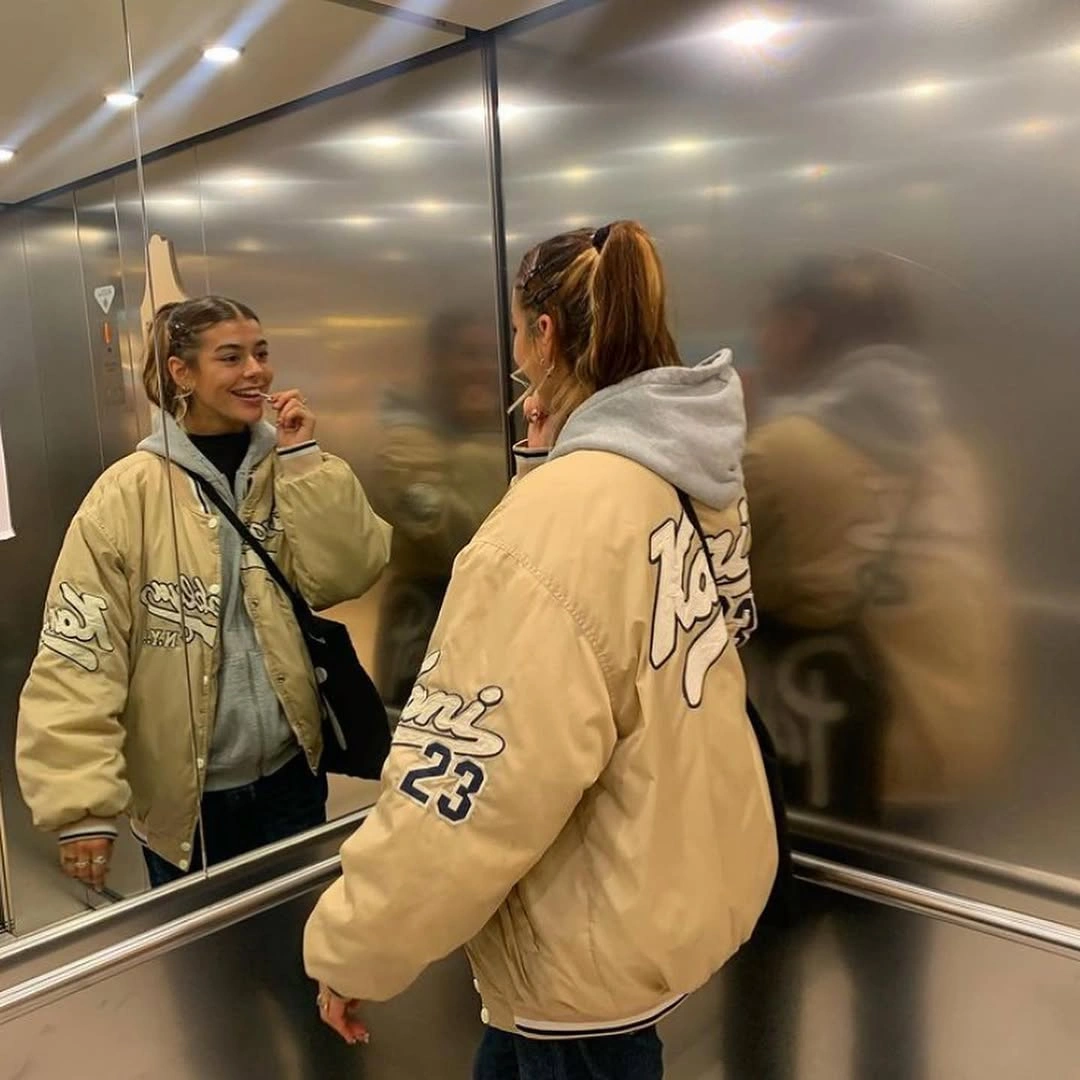
Gray is particularly effective beneath beige because it keeps the contrast low while still separating the hood from the jacket. A white hoodie would create a brighter, cleaner look, but it could pull attention away from the jacket’s graphic detail. Keep the lower half straight and dark if possible, since cargo pockets or heavy prints would introduce another competing sporty reference.
Padded jackets can add width around the shoulders and sleeves, so balance them with a bag that stays compact under the arm. A very large backpack would widen the silhouette further and hide the best part of the jacket’s back or side shape. The relaxed formula is easy to wear, but it looks most considered when the hood, jacket hem, and trouser rise each have a little breathing room.
Long Brown Coat With Cream Accessories
A long brown coat can look severe against a snowy backdrop, but the cream scarf and oversized mittens lighten the center and sleeves without breaking the outfit into sharp color blocks. The scarf trails down the front, adding movement to an otherwise straight outer line. Dark trousers remain visible beneath the coat, which gives the pale accessories a clear frame.
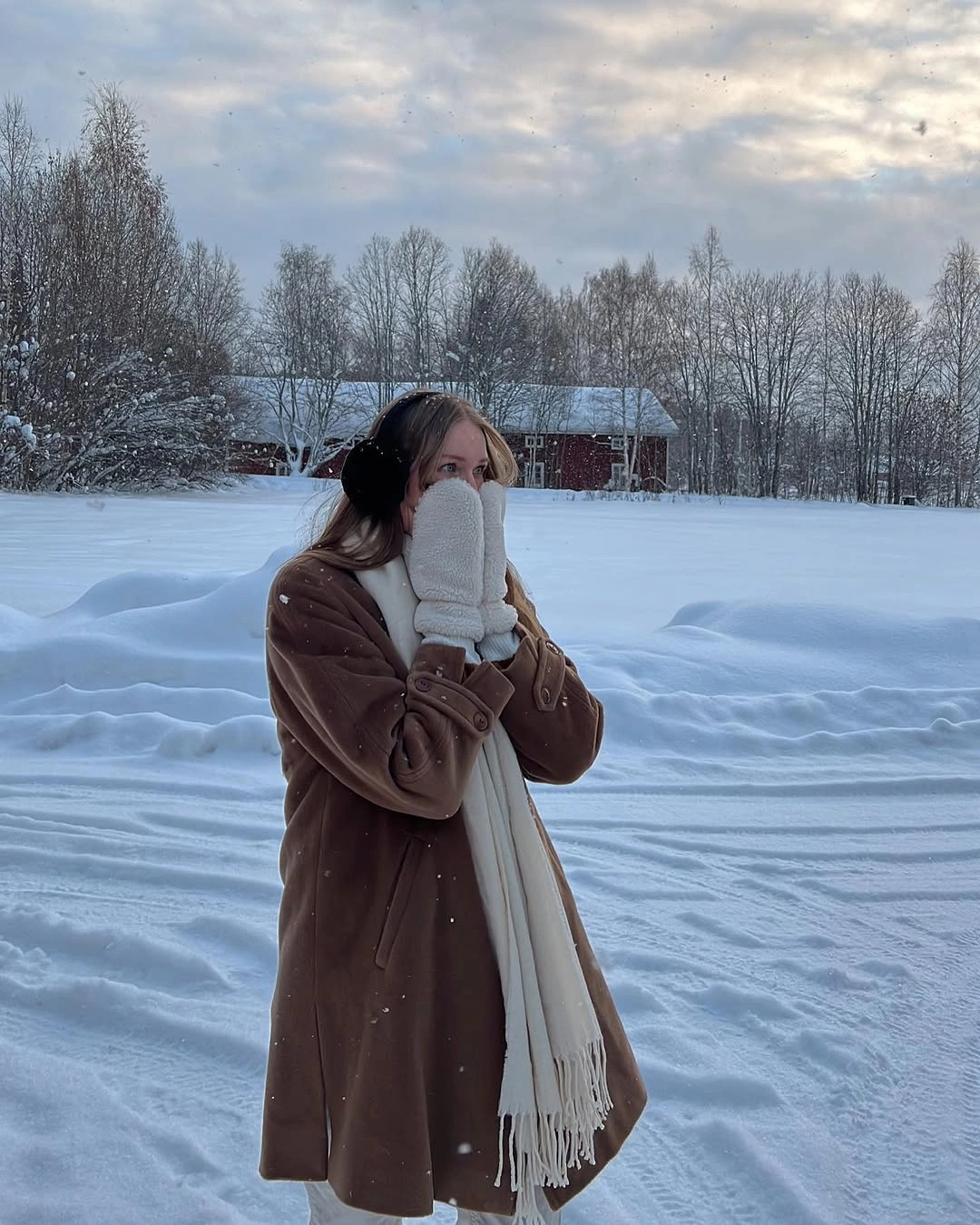
The best detail is the difference in softness: the coat looks smooth and dark, while the scarf and mittens look lighter and more tactile. If you wanted a more polished version, choose a narrower scarf in the same cream tone and let the coat’s lapels stay visible. For a softer weekend variation, keep the broad scarf and use a knit hat in a nearby neutral rather than another contrast color.
Long scarf ends are attractive in still conditions but can become impractical in slush or gusty weather. One end tucked through the belt area or under the coat front will keep the line without creating a damp hem. The outfit’s quiet palette also makes upkeep visible, so treat the mittens and scarf as washable pieces rather than precious accessories that cannot handle frequent winter use.
Cropped Gray Jacket Above Simple Jeans
The short gray textured jacket stops directly above straightforward blue jeans, which defines the waist without relying on a belt or a bright color. A small white layer at the neckline gives the plush gray surface a clean edge, while the black belt keeps the denim from looking too casual. This is a restrained outfit, but the cropped proportion provides enough structure to make it feel finished.
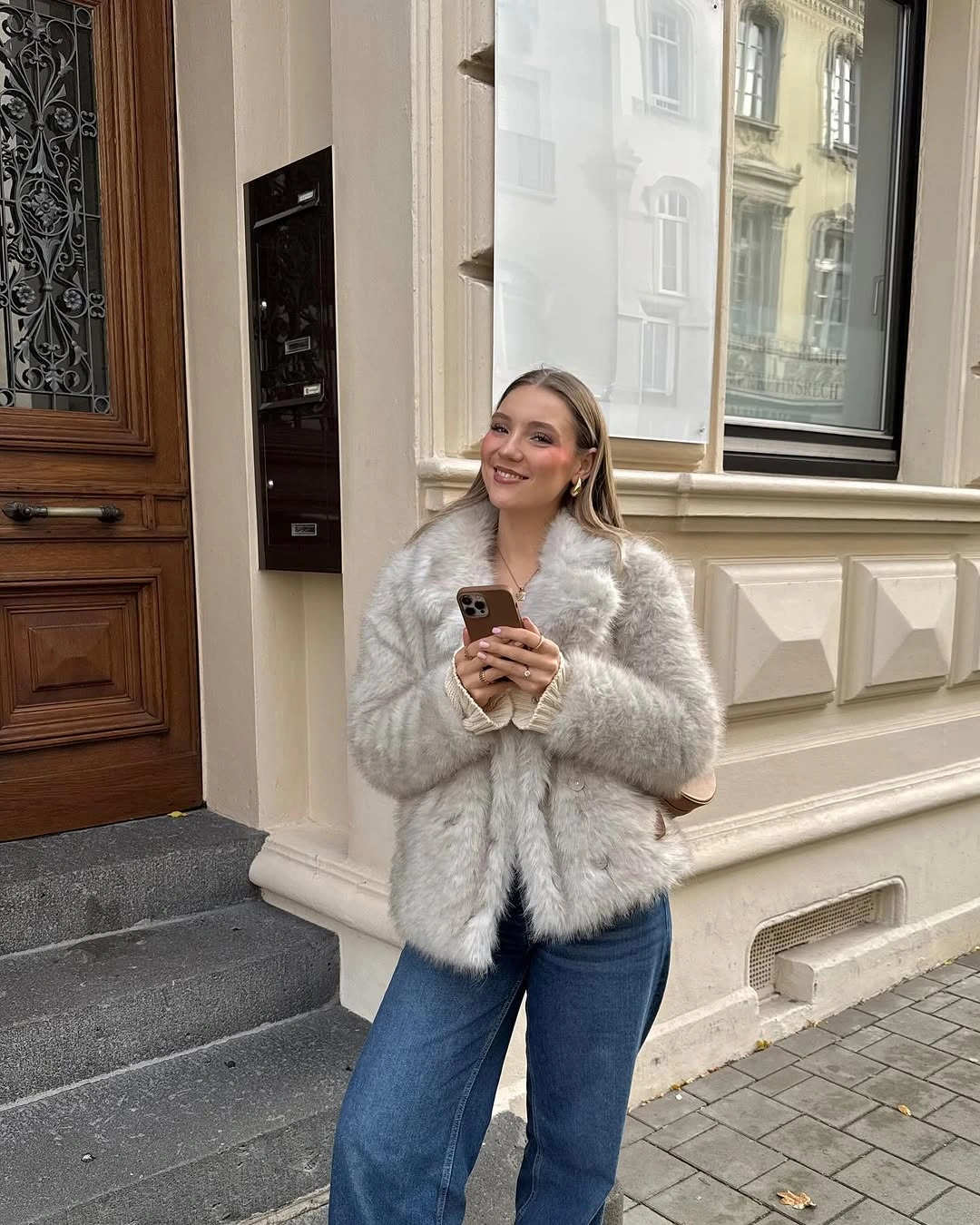
The value of a cropped outer layer is that it allows ordinary jeans to become part of the silhouette rather than just a default bottom. A longer jacket would make the same denim look more relaxed, but it would also hide the waist definition that gives this version its energy. Keep accessories small and smooth, because they should support the texture rather than compete with it.
Texture close to the waist can snag against rough bag hardware or a heavily decorated belt, so simple finishes are the practical choice. If you need more warmth, add a thin thermal layer beneath the white top instead of a thick knit that would crowd the jacket. The outfit proves that a single change in hem length can make basic jeans feel far more considered.
Colorful Scarf Over a White Puffer
The white puffer and gray trousers create a neutral background for the long striped scarf, which carries red, teal, mustard, and other small color notes through the center. A compact dark handbag gives the pale outfit a useful anchor at the side. Because the jacket stays plain, the scarf can be expressive without making the whole look look overworked.
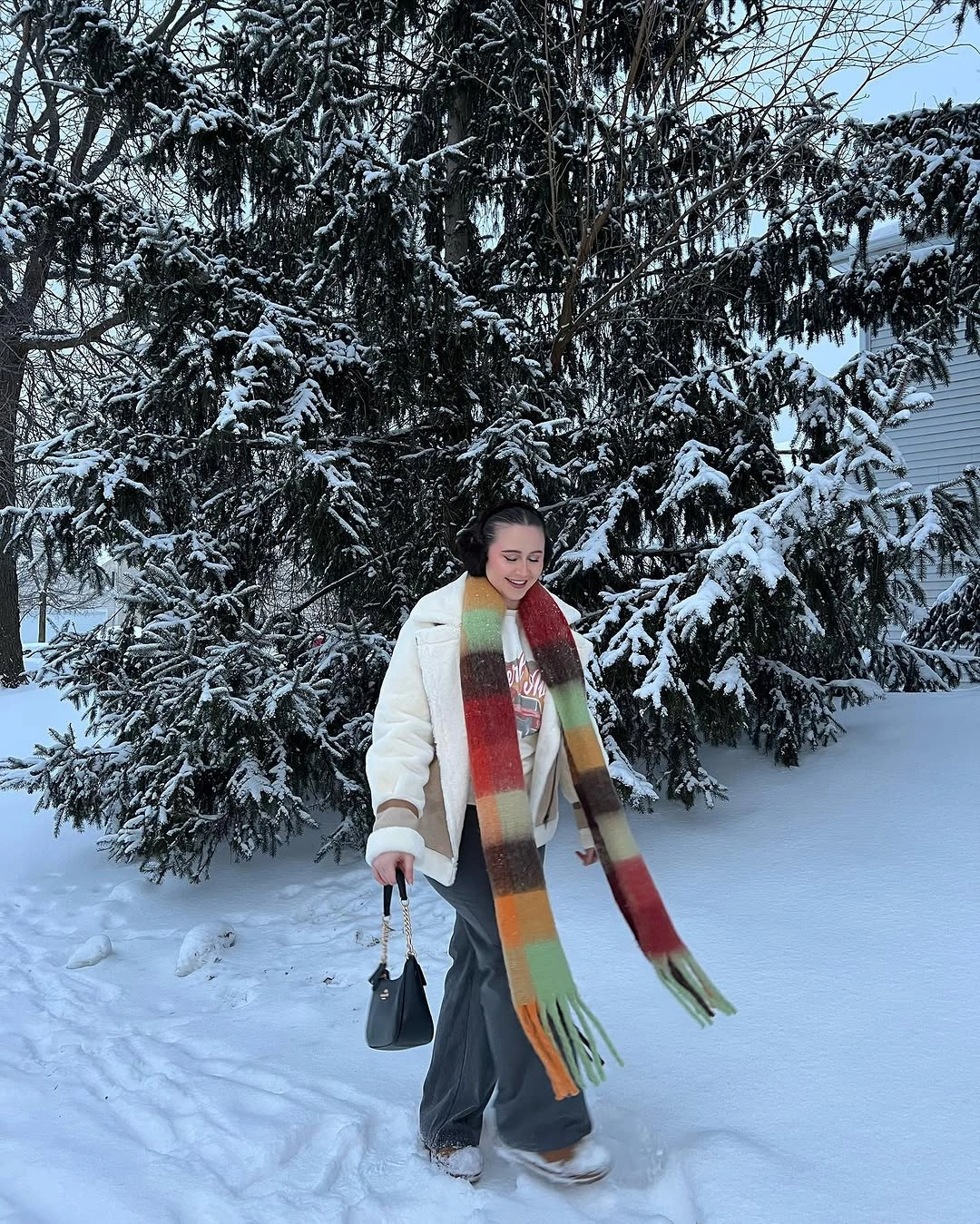
A multicolor scarf is easiest to style when the rest of the outfit repeats none of its individual shades exactly. Matching one stripe to the shoes or bag could be fun, but it risks making the scarf feel like a color chart instead of a single lively element. Let the trousers stay gray or dark navy, and choose outerwear with a flat surface so the stripes remain visible.
The length of the scarf offers warmth but also requires some management near wet ground or a long coat hem. Looping it once before letting the ends hang keeps the colors present while reducing the chance of dragging. The outfit remains flexible because the scarf can be removed indoors, leaving a clean puffer-and-trouser base that still looks complete.
Ivory Buttoned Coat With Blue Denim
The ivory coat is buttoned high at the neck, turning its clean front into the main architectural feature, while blue jeans below keep the outfit from becoming too formal. Brown pointed footwear adds a darker, narrower finish at the hem, and the small dark bag repeats that definition higher up. The contrast is quiet but clear: smooth light outerwear, everyday denim, precise accessories.
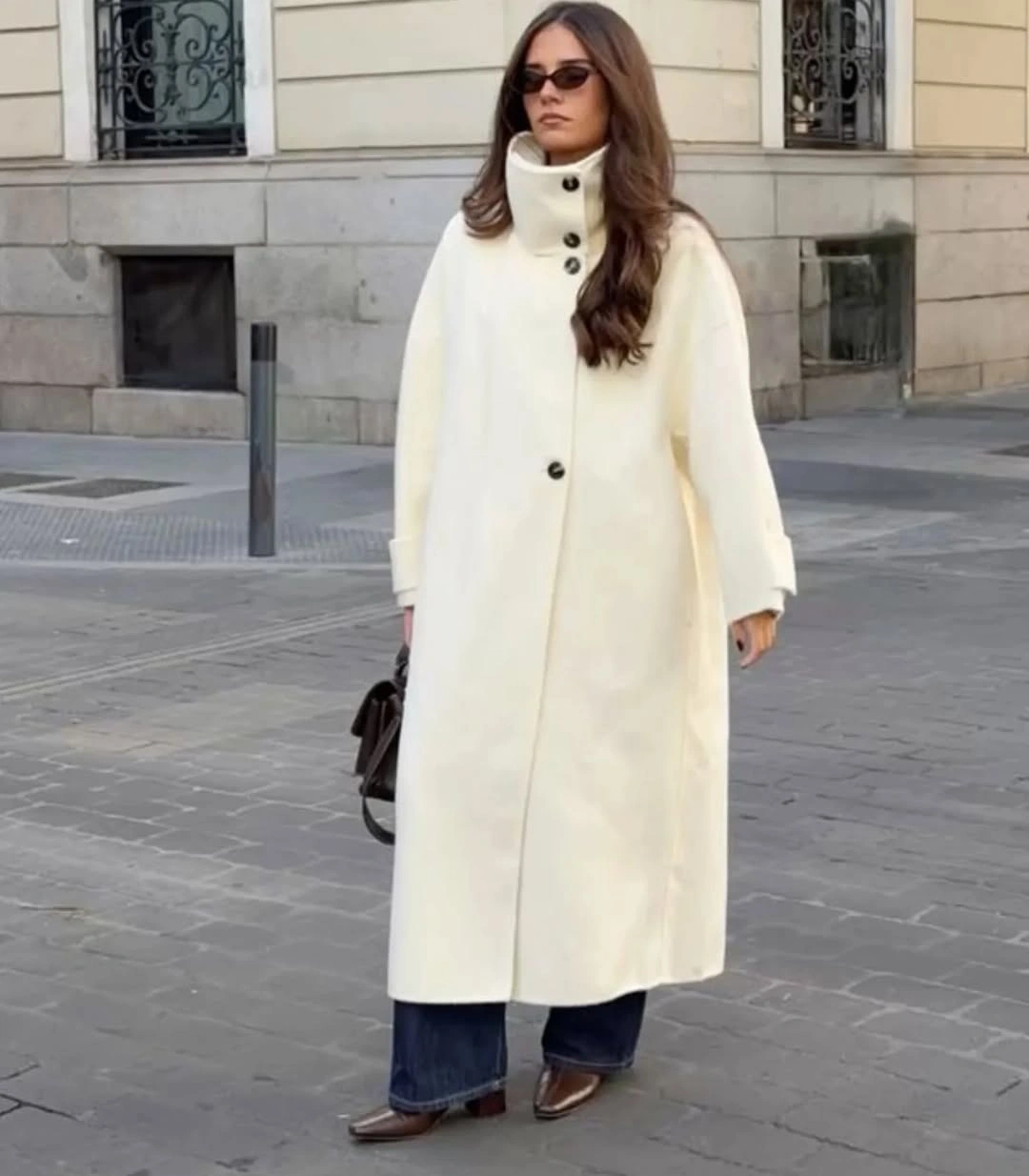
Buttoning the coat close to the neck changes the mood more than adding another accessory would. It creates a high, uninterrupted line that is especially useful when the jeans are relaxed and simple. If a fully closed coat feels restrictive, leave the top button open and add a thin dark knit at the throat, keeping the vertical structure while giving the face a little contrast.
Ivory outerwear shows contact marks easily along the hem and cuffs, so shoes with a pointed shape but sturdy sole are a smarter everyday choice than delicate light footwear. The jeans provide some visual forgiveness at the bottom, but they should be clean and close enough at the ankle to let the brown shoe retain its sharp finish. The coat is the statement; keep the rest measured.
Padded Beige Coat With Chunky Boots
The padded beige coat has a long, cushioned outline, so the chunky light boots are important for giving the lower edge enough visual weight. A white scarf creates a brighter central column, while the pale tote continues the quiet neutral story without breaking it. Everything is soft in color, but the boots keep the silhouette from floating away at the ground.
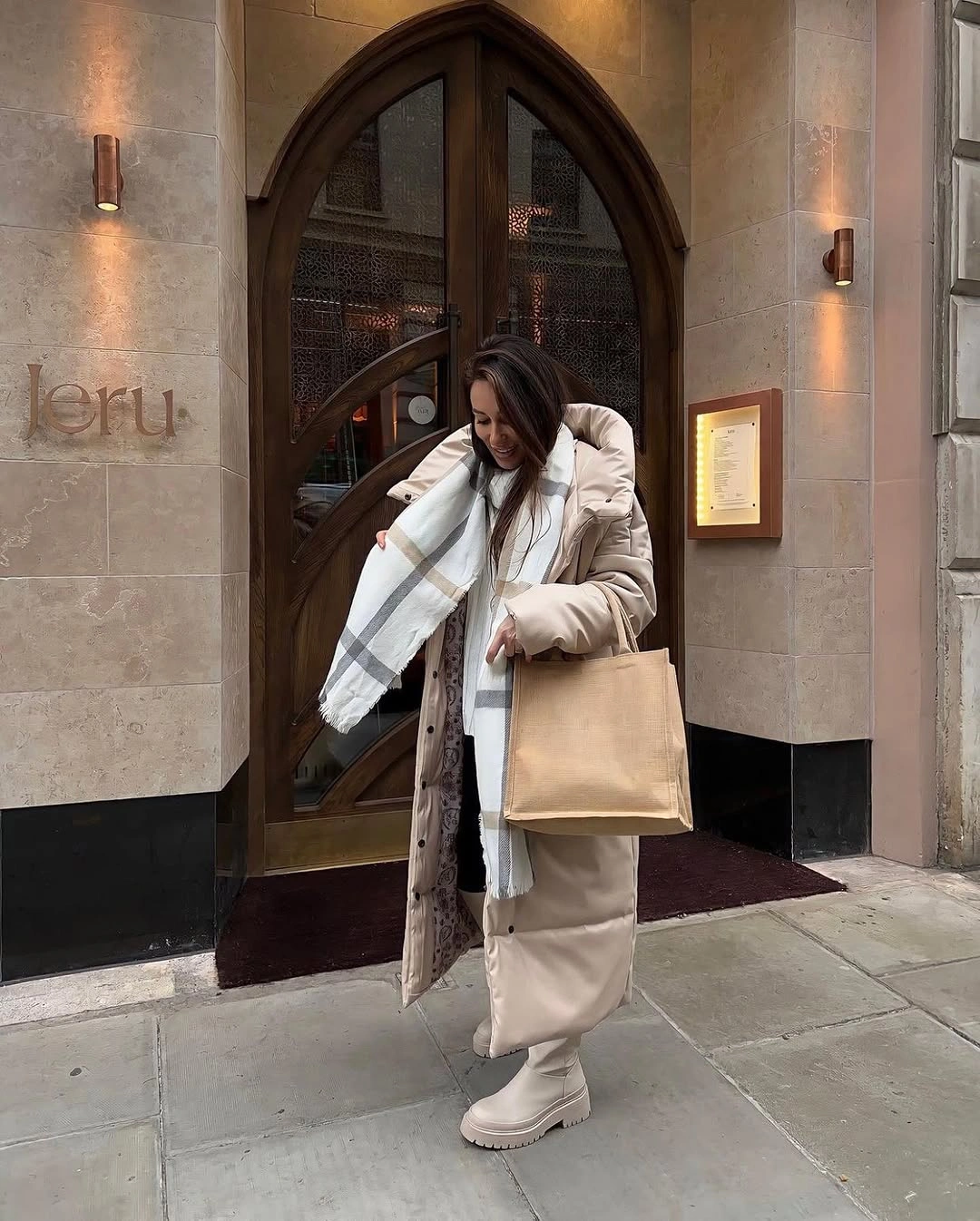
When a coat is padded and nearly full length, footwear should either look substantial or disappear completely. These boots choose the first route, making the outfit feel grounded and practical for walking. A slim ankle boot would create a cleaner line, but then the coat would need a sharper belt or darker bag to regain the definition that the thick sole provides here.
The most useful limitation to remember is bulk at the ankle. Very wide trousers tucked into a chunky boot could make the lower half feel crowded, so a straighter pant or legging-style base is easier under this coat. Keep the scarf smooth rather than heavily fringed, since the padding already provides enough soft texture around the body.
Burgundy Coat Finished by Tall Boots
The deep burgundy coat falls in a long tailored line, then the knee-high brown boots complete that line with a second rich tone rather than a harsh black contrast. A structured black top-handle bag gives the center of the outfit a precise, compact point, which balances the coat’s softer movement. The result feels dressier because each accessory has a defined shape and purpose.
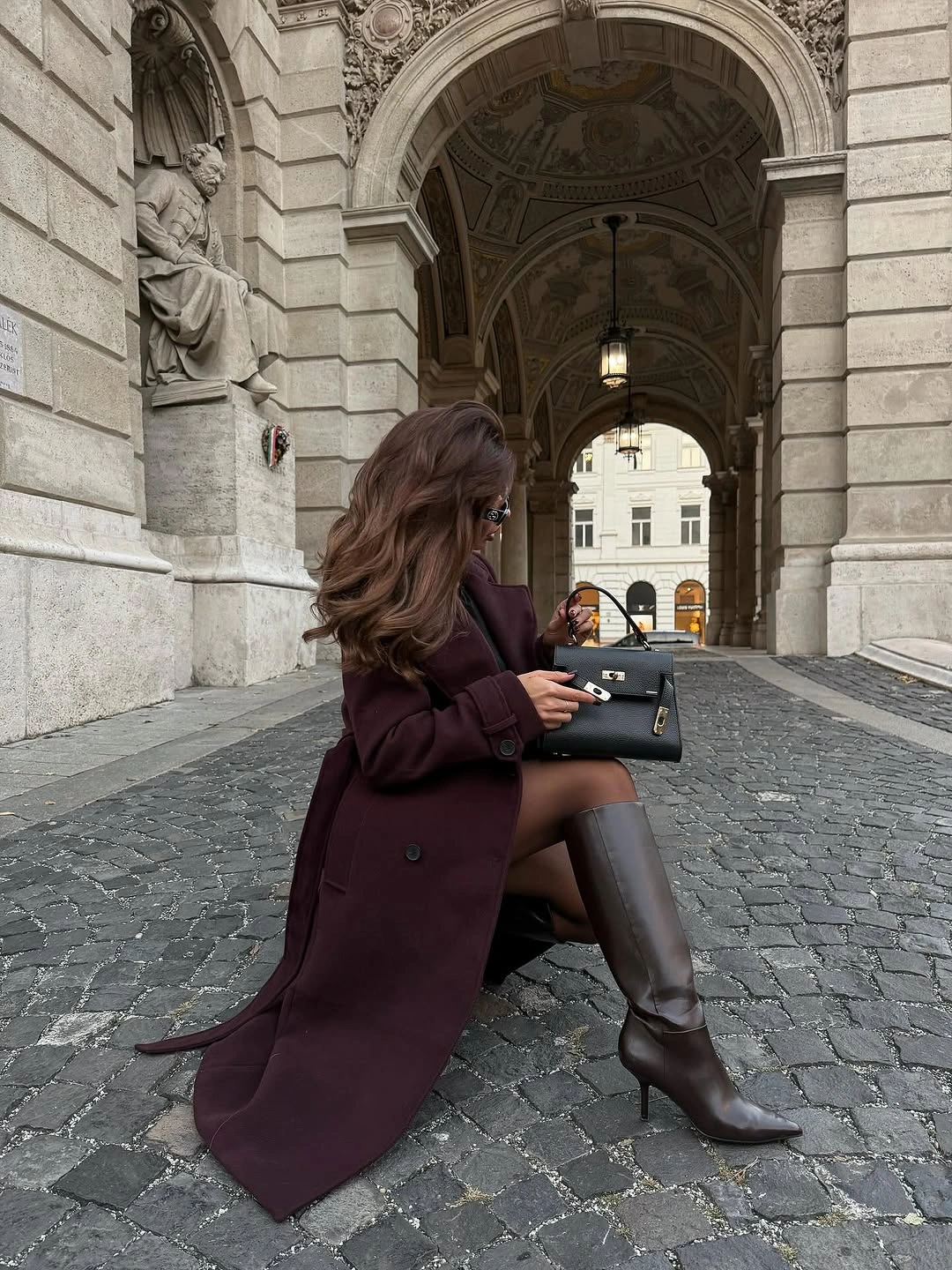
Tall boots are especially useful beneath a long coat because they close the visual gap between hem and ground. If the boots were ankle height, the tights and lower leg would become a larger break in the outfit, making the coat appear shorter. Keep the bag structured and small enough to maintain that vertical focus; a slouchy oversized tote would soften the finish too much.
There is a comfort tradeoff with fitted tall boots, particularly if the coat is worn for a long walking day or over thicker layers. A shaft with a little room at the calf will preserve the sleek line without turning movement into a compromise. Let burgundy and brown remain the central pairing, and avoid adding another bright accessory so the final effect stays quietly concentrated.