When familiar basics still look unsettled, the issue is usually not a missing item but a missing hierarchy. Outfits for men become easier to trust when the eye has a clear place to begin, instead of making a jacket, trouser, and shoe compete with equal force. Let one decision lead, then allow proportion, contrast, and a deliberate pause to make the remaining pieces feel like support rather than noise.
Before reaching for a louder accent, choose one fixed point in the silhouette and protect it. The length of the top layer, the volume of the trouser, or the visual weight at the ankle can guide every other choice without turning getting dressed into a strict formula. That quieter discipline leaves room for taste while giving everyday clothing a believable reason to hold together.
Black Overshirt With Faded Denim Ease
A dark open overshirt sits over a white crew-neck layer, then gives way to faded blue jeans and low white sneakers. That light center keeps the upper half from becoming a single black block, while the loose denim makes the combination feel relaxed instead of overly neat. For outfits for men casual enough for an ordinary day out, the visible white layer matters more than another accessory, a useful point when comparing casual outfit ideas.
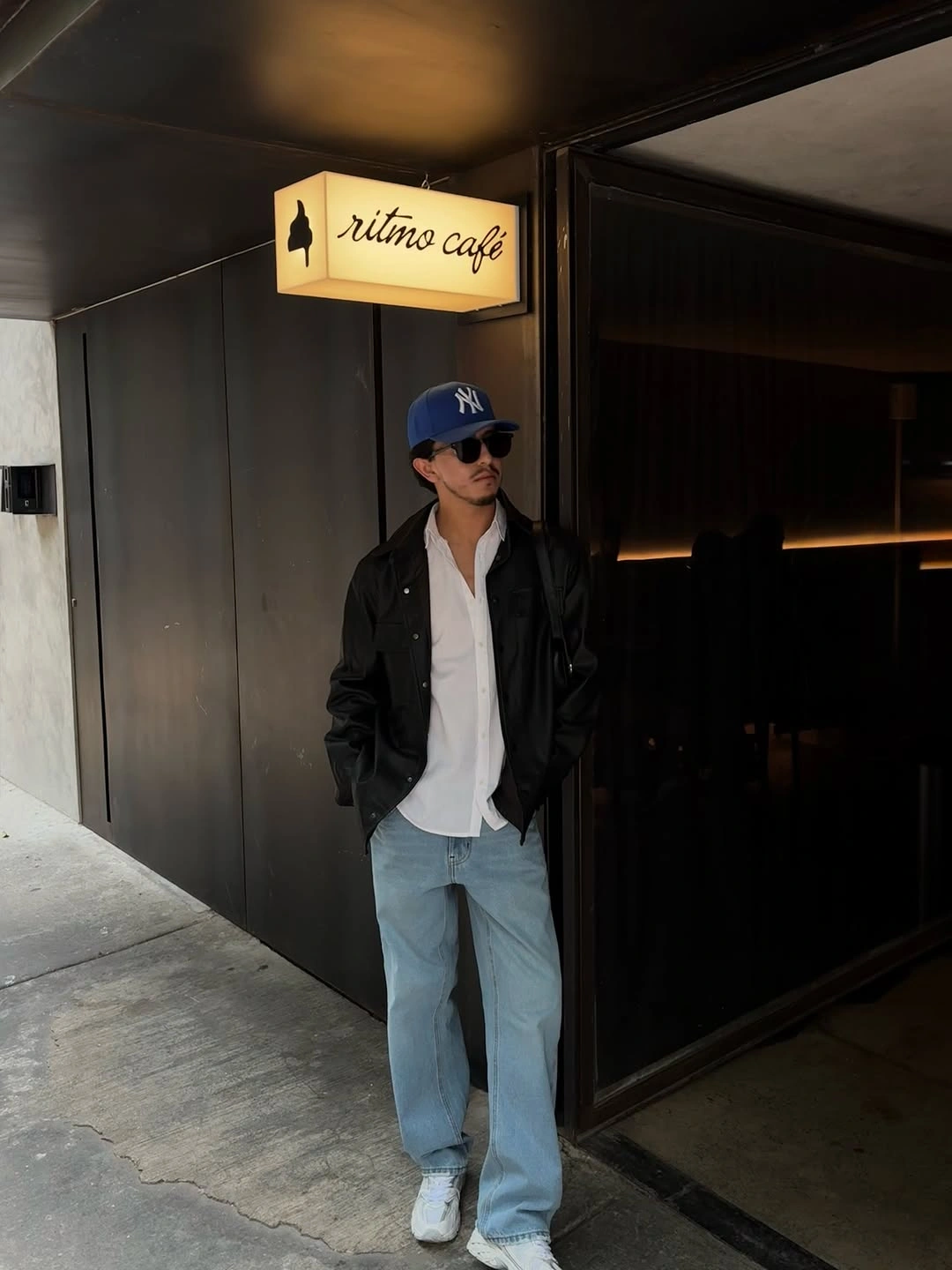
The jacket looks most convincing because it ends before the jeans become visually heavy. Its dark color frames the torso, but the pale shirt and washed denim keep the transition gentle rather than severe. If an overshirt starts to feel too formal, leave it open over a plain light top and choose jeans with a softer wash instead of a sharply pressed pair.
White sneakers are a sensible finish here because they repeat the brightness near the neckline without competing with the black layer. A chunkier dark shoe would make the hem feel weightier, which could work for a different mood but would remove some of this outfit’s air. Keep the jean length relaxed, yet make sure it does not fold so much that the clean shoe disappears.
Royal Blue Sweatshirt Over Wide Charcoal Trousers
The royal-blue sweatshirt is the clear focal point against broad charcoal trousers and dark shoes. Its saturated color feels deliberate because the lower half stays almost neutral, allowing the volume of the pants to be noticed without asking them to carry another visual message. This is a useful color approach for someone who wants one lively piece but still prefers a restrained overall silhouette.
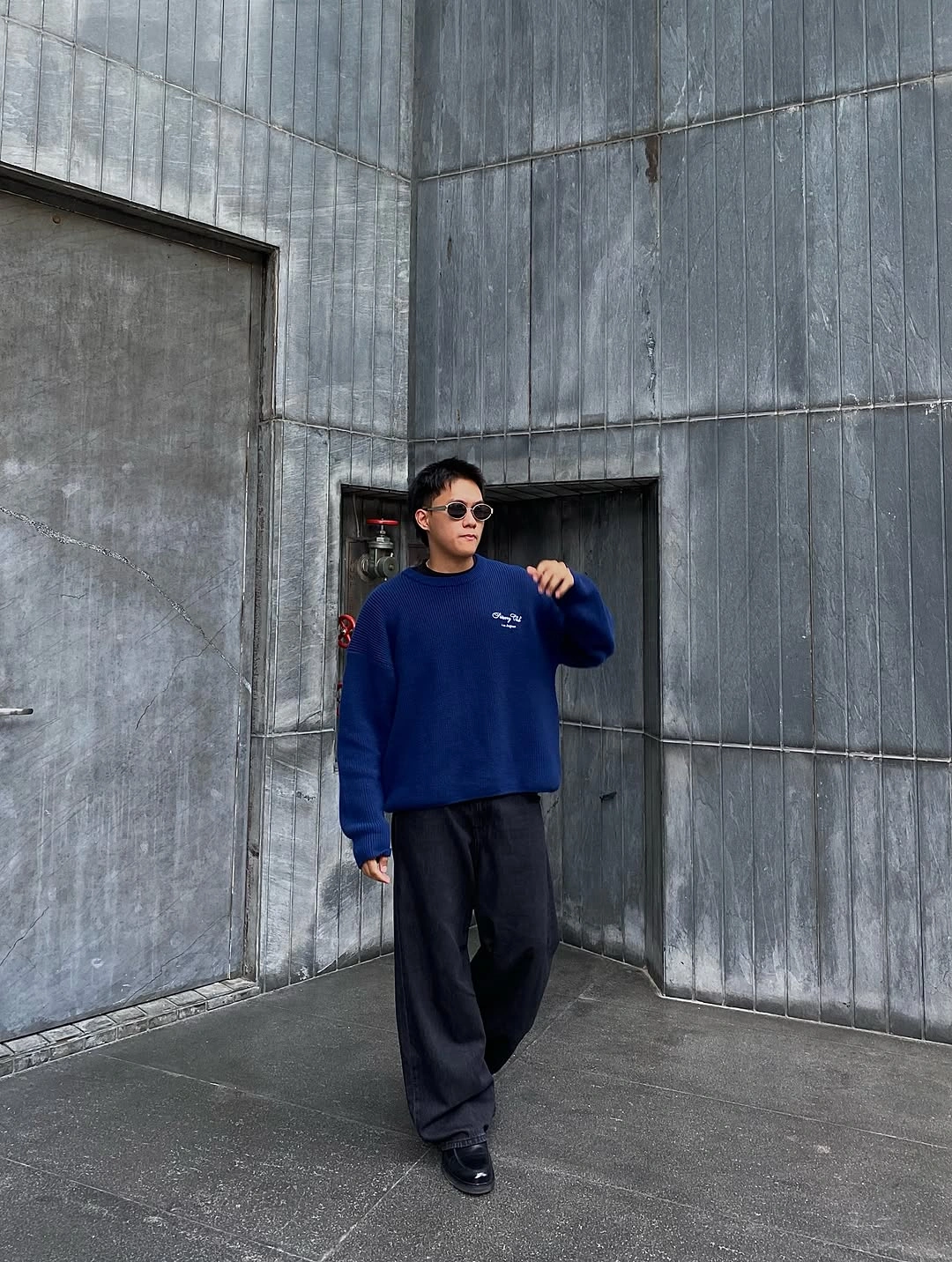
What makes the pairing work is the different weight of the pieces: the sweatshirt reads compact at the shoulders, while the trousers fall much wider through the leg. That contrast gives the blue top a place to sit rather than letting it float above baggy pants. Try a similarly solid sweater with dark pleated trousers, but avoid a second bright color at the shoe if the top is already this strong.
The dark footwear quietly anchors the extra room in the trouser hem and makes the sunglasses feel connected rather than separate. If comfort calls for sneakers, select a low-profile pair in black, gray, or off-white so the blue remains the color memory. A narrow pant would change the whole balance, so preserve some leg width if you are borrowing the idea rather than copying every item.
Burgundy Jacket Cutting Through Black Volume
A cropped burgundy jacket gives the black wide-leg trousers a firm starting point, and the low white sneakers keep that dark base from feeling closed in. The jacket’s shorter length is the key detail because it lets the trousers look intentionally long rather than simply oversized. It is a calm way to bring a red-brown color into an otherwise black outfit without relying on a logo or loud print.
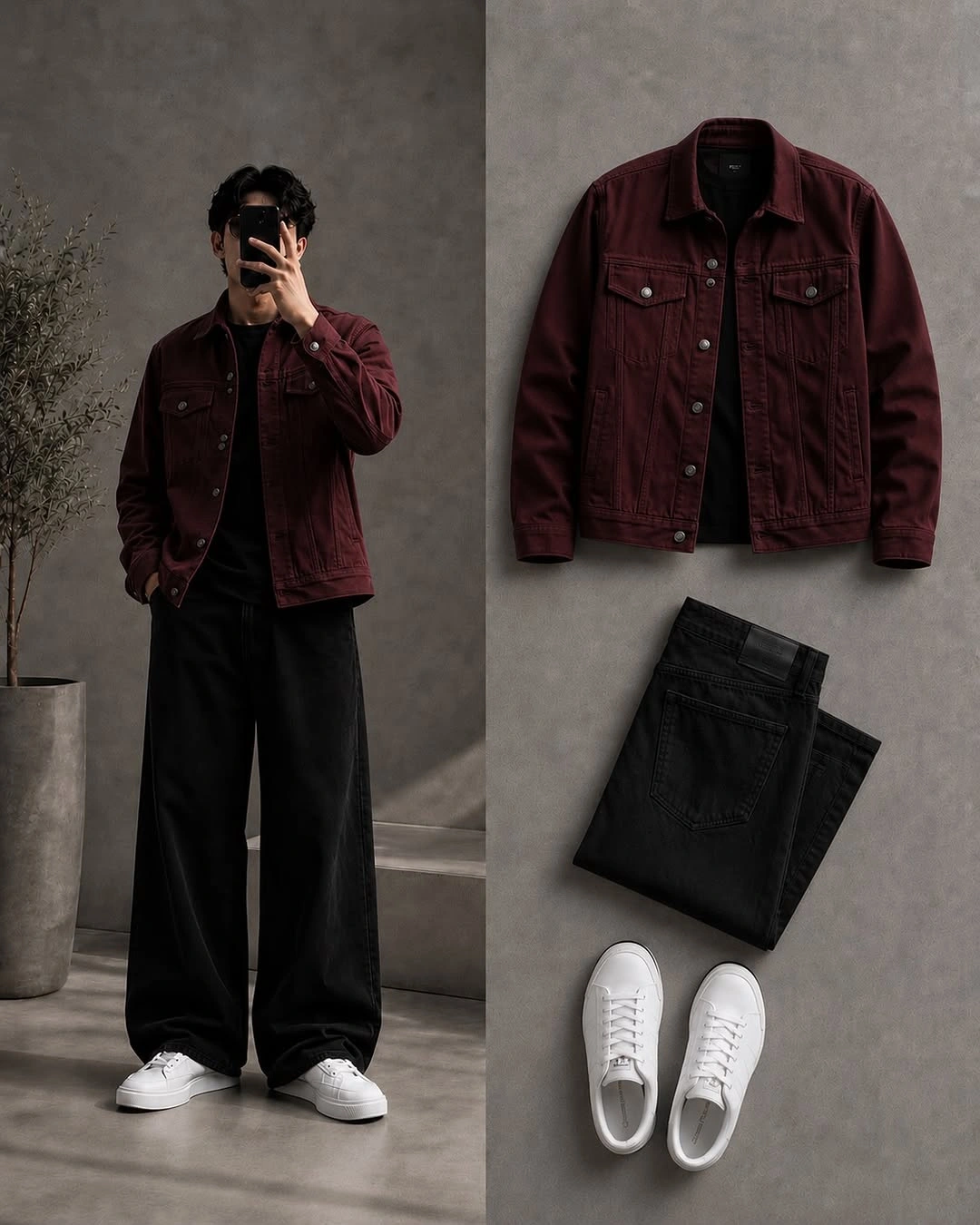
The contrast comes from shape as much as color. The jacket ends near the waist, the trousers fall with more movement, and the sneakers create a pale break at the bottom. If your own jacket is longer, tuck or shorten the visual line with a fitted inner layer; otherwise, the wide pants can lose the crisp proportion that gives this look its appeal.
Burgundy is especially useful here because it has enough depth to sit beside black without looking sugary or overly bright. A brown or dark olive jacket could produce a similar result, though it would soften the mood considerably. The white shoe is a practical limitation: it keeps the outfit light, but it will need regular cleaning if you want that intentional contrast to remain visible.
Textured Brown Jacket With a Black Foundation
The flat-lay combination centers a warm brown textured jacket over a black top and black trousers, with white sneakers set apart below. This is a helpful reminder that texture can carry the personality of a look even when the palette is limited. The brown outer layer appears substantial, so the plain black pieces underneath give it room instead of competing with its surface.
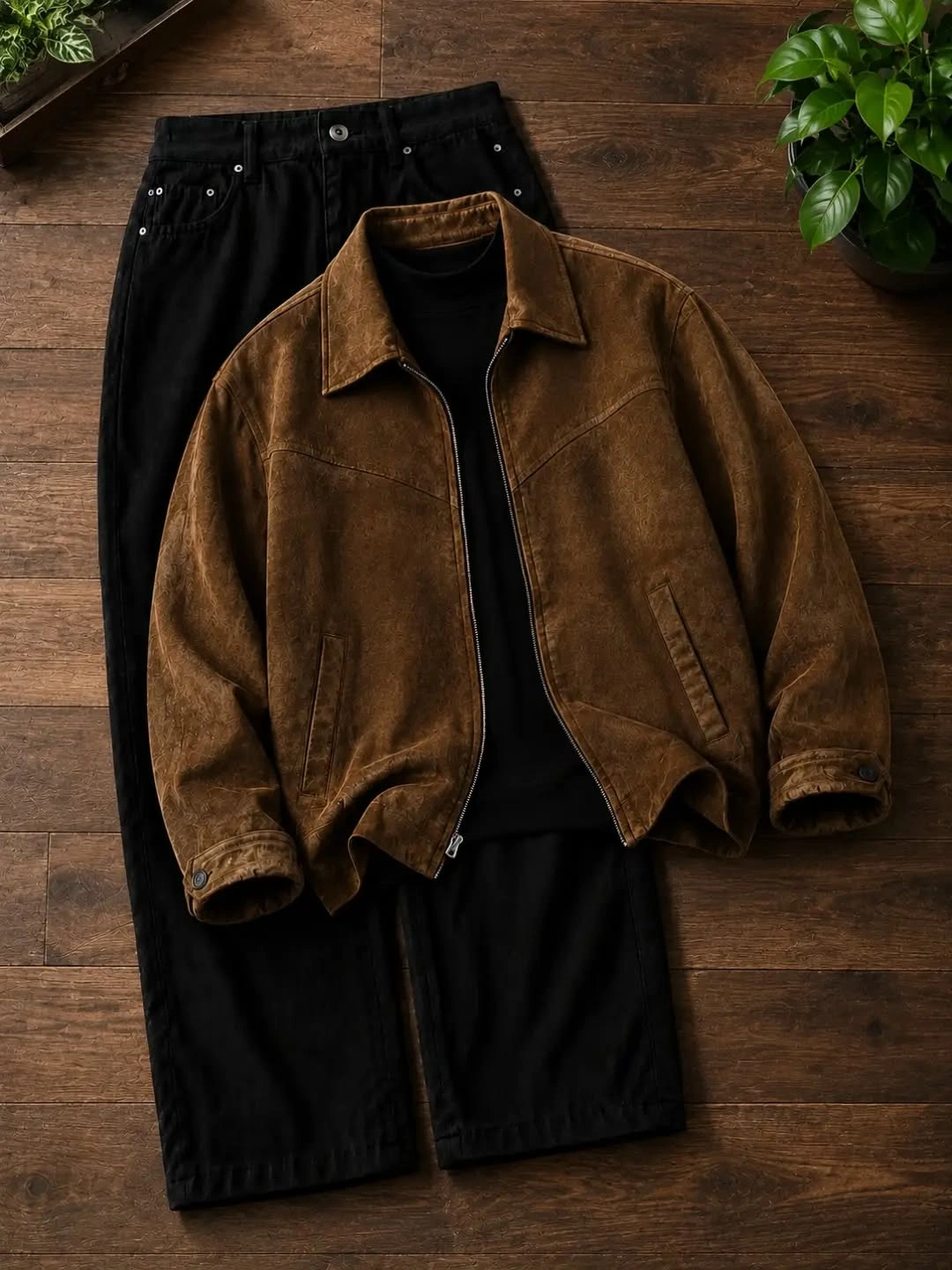
Because the jacket has visual depth, the rest of the outfit does not need patterned trousers, unusual hardware, or another visible fabric effect. A smooth black knit or tee would keep the same quiet foundation, while straight or softly tapered pants would maintain the useful column of dark color. For outfits for men aesthetic in a low-key way, that restraint is often more convincing than adding several trends at once.
White sneakers lift the scheme, but dark leather shoes would make it more compact and slightly dressier. The better choice depends on how much contrast you want at the hem, not on a supposed rule about jacket color. If the brown layer looks suede-like or brushed, give it space in the closet and avoid crushing it under a crowded bag strap that can flatten the texture.
Blue Button-Up and Wine Trousers
A blue button-up shirt tucked into wine-colored trousers creates a tidy silhouette without looking stiff. The cool shirt and deep red-brown pants have enough separation to feel intentional, yet neither color overwhelms the dark shoes and sunglasses. The tucked shape is useful because it shows where the torso ends, especially when the trousers have a relaxed, slightly fuller cut through the leg.
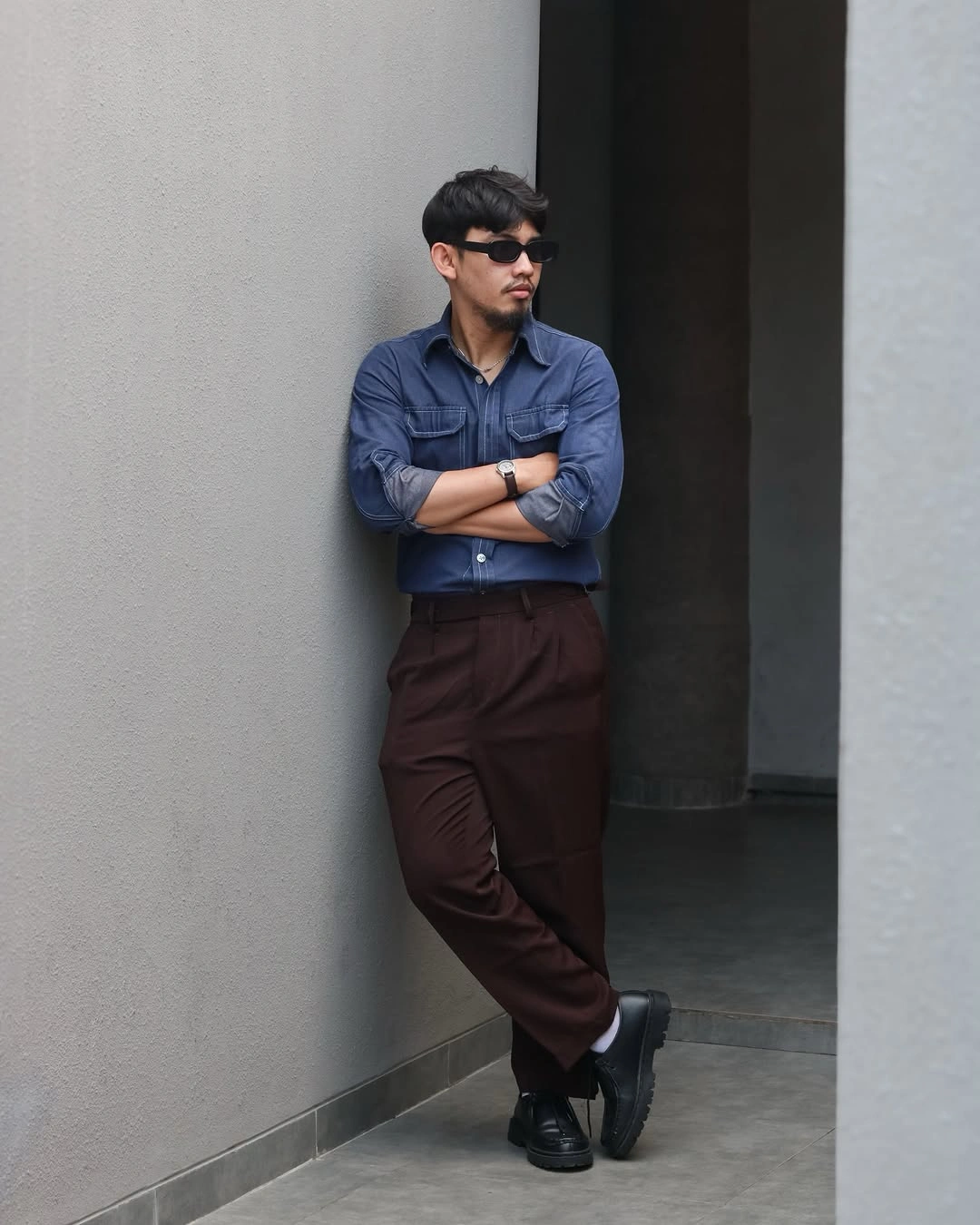
This combination depends on keeping the shirt relatively simple. A busy print would compete with the trouser color, while a crisp collar and sleeves worn down provide a clean visual line. If you prefer less formality, choose a soft cotton or linen-look button-up and leave the top button open, but keep the front reasonably controlled so the waist definition does not vanish.
The dark shoes help the burgundy trousers settle visually, especially because their color is already richer than standard navy or gray. A white sneaker would make the outfit more casual but could split the line too sharply at the ankle. Consider a black loafer or low boot when you want the same color idea to feel more composed, then make sure the hem neither pools nor catches on the shoe.
Cream Layers With a Burgundy Shoulder Accent
A pale long-sleeve top is softened by a burgundy knit tied over the shoulders, while brown trousers and shoes carry the warmer notes below. The tied layer is not just decoration: it creates a diagonal line and repeats the trouser warmth near the face. That makes the light base feel connected to the lower half rather than divided into separate top and bottom zones.
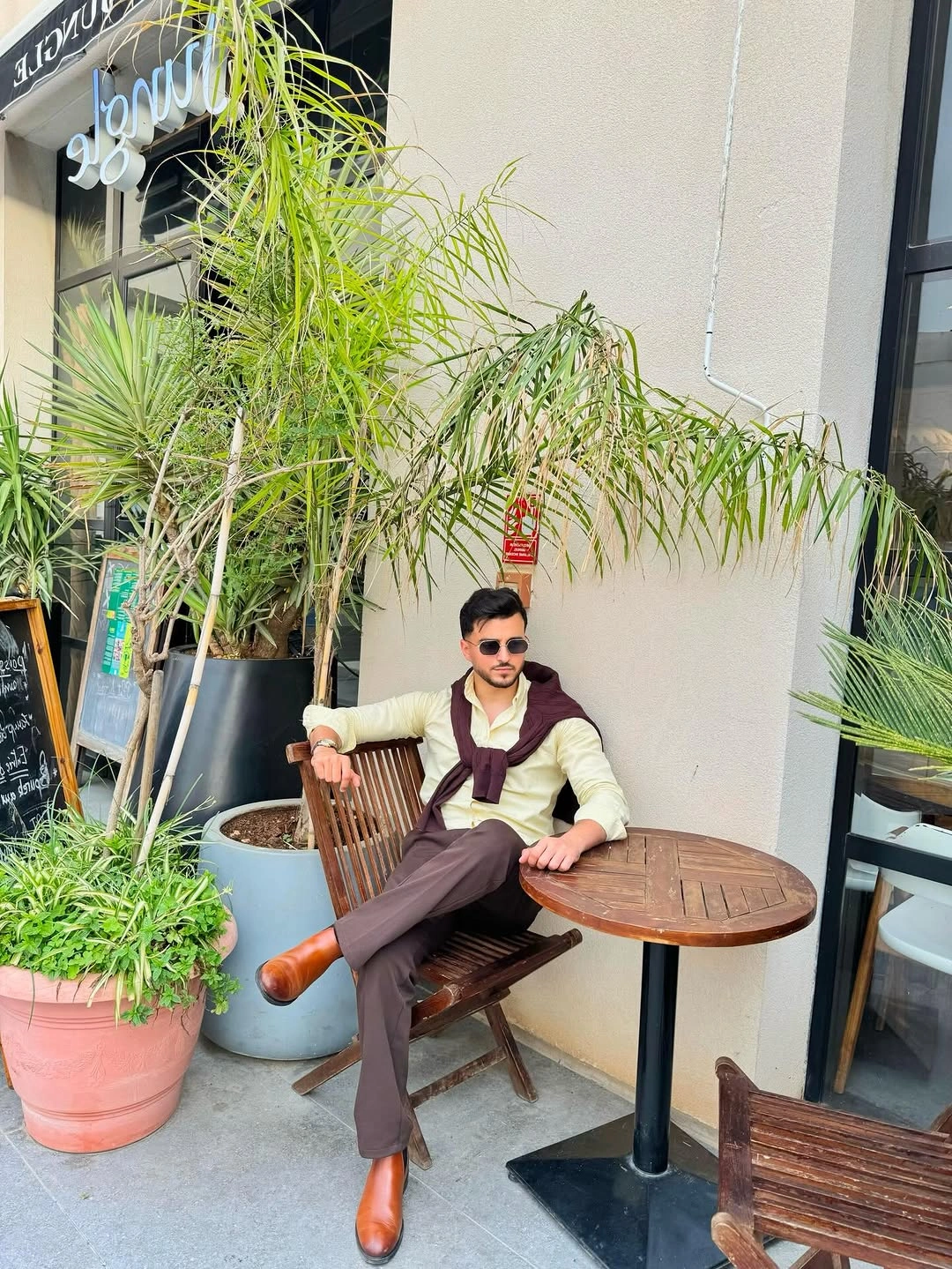
The look is easy to adapt with a cardigan, light sweater, or scarf in one deep tone, provided the extra layer remains thin enough to tie without making the shoulder area bulky. A cream polo or ribbed knit would also keep the same gentle contrast. Avoid adding a colorful cap at the same time, because the shoulder layer already establishes where the color emphasis belongs.
Brown trousers give the pale top practical weight, especially with leather-looking footwear that meets the wider leg cleanly. If the pants are very loose, a slightly shorter sweater or a visible belt can help restore the waistline. The tradeoff is that a tied layer can slip or wrinkle during a long day, so use it when you value the styling detail more than a perfectly smooth shoulder line.
Long Light Overshirt and Earth-Tone Trousers
The light overshirt falls long over a pale tee and straight brown trousers, with tan lace-up boots grounding the lower edge. Its length creates a vertical column that makes the trousers appear more deliberate, even though the pieces remain relaxed. The tan footwear is important because it echoes the brown pants while looking sturdy enough to hold the extra fabric near the ankle.
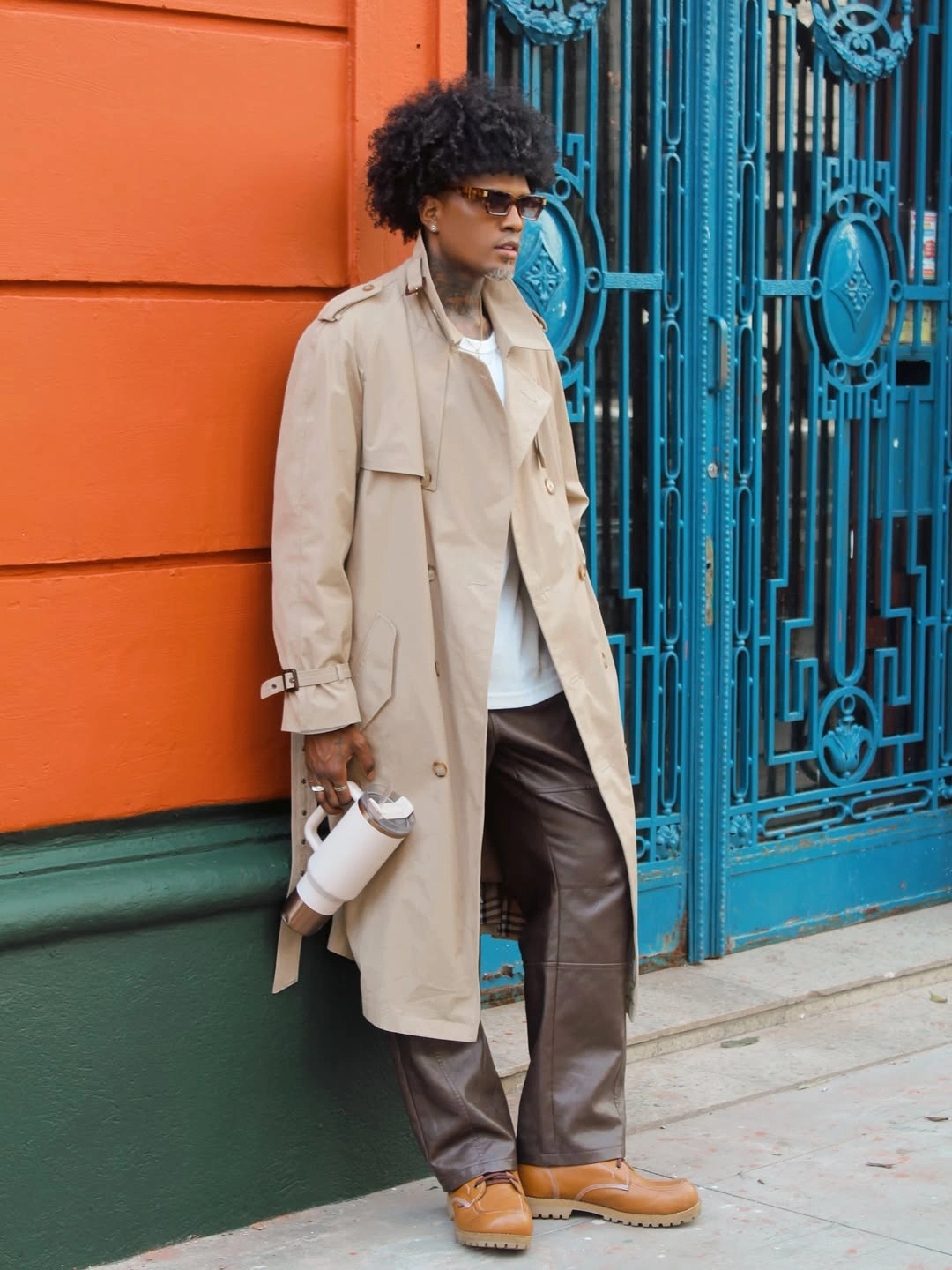
A long outer layer needs a little discipline underneath. Keep the inner top close enough to the body that it does not bunch, and let the trousers be straight or gently loose rather than equally enormous. That contrast keeps the overshirt from reading like a costume piece. If the weather is warmer, replace the boot with a low brown shoe but preserve the related color family.
The pale top half also gives this earthy palette a useful amount of air. Dark brown from shoulder to hem could feel much heavier, particularly with a long layer. One limitation is that a very long overshirt can shorten the visible leg line on a shorter frame, so test the hem with your usual shoes and choose a version that ends well above the widest part of the calf.
Washed Denim Beneath a Deep Blue Sweatshirt
A deep blue sweatshirt and very loose pale jeans create a tonal idea without looking like a matching set. The washed denim is noticeably lighter and more worn-in than the top, so the eye can still read two separate pieces. Dark shoes give the trouser hem a stopping point and keep the generous leg shape from turning into a cloud of light blue at the bottom.
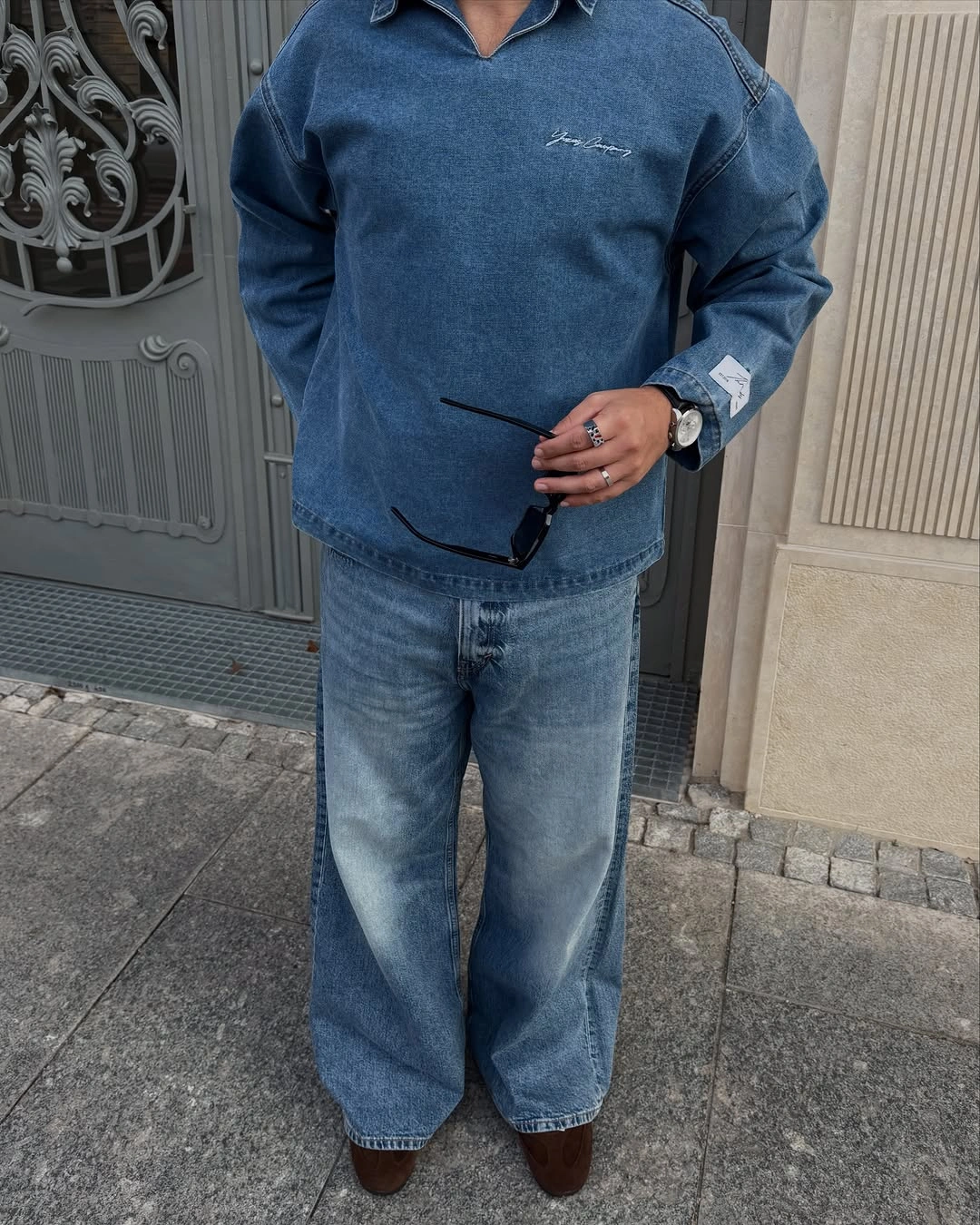
For outfits for men ideas built around denim, this is a strong example of using one color family with different finishes. The sweatshirt has a denser surface, while the jeans look faded and roomy, which creates contrast without an extra shade. Try navy, indigo, or slate on top, but skip bright blue sneakers because they would make the tonal effect too literal.
The wide jean is doing much of the styling work, so a shorter or lightly tucked sweatshirt would make the proportions even clearer. A long oversized top might cover the waist and create too much fabric in one place. If you prefer a slimmer shoe, make sure it still has enough dark visual weight to balance the large hem; a tiny white sneaker would change the emphasis completely.
Dark Tee, Navy Trousers, and Cobalt Bag
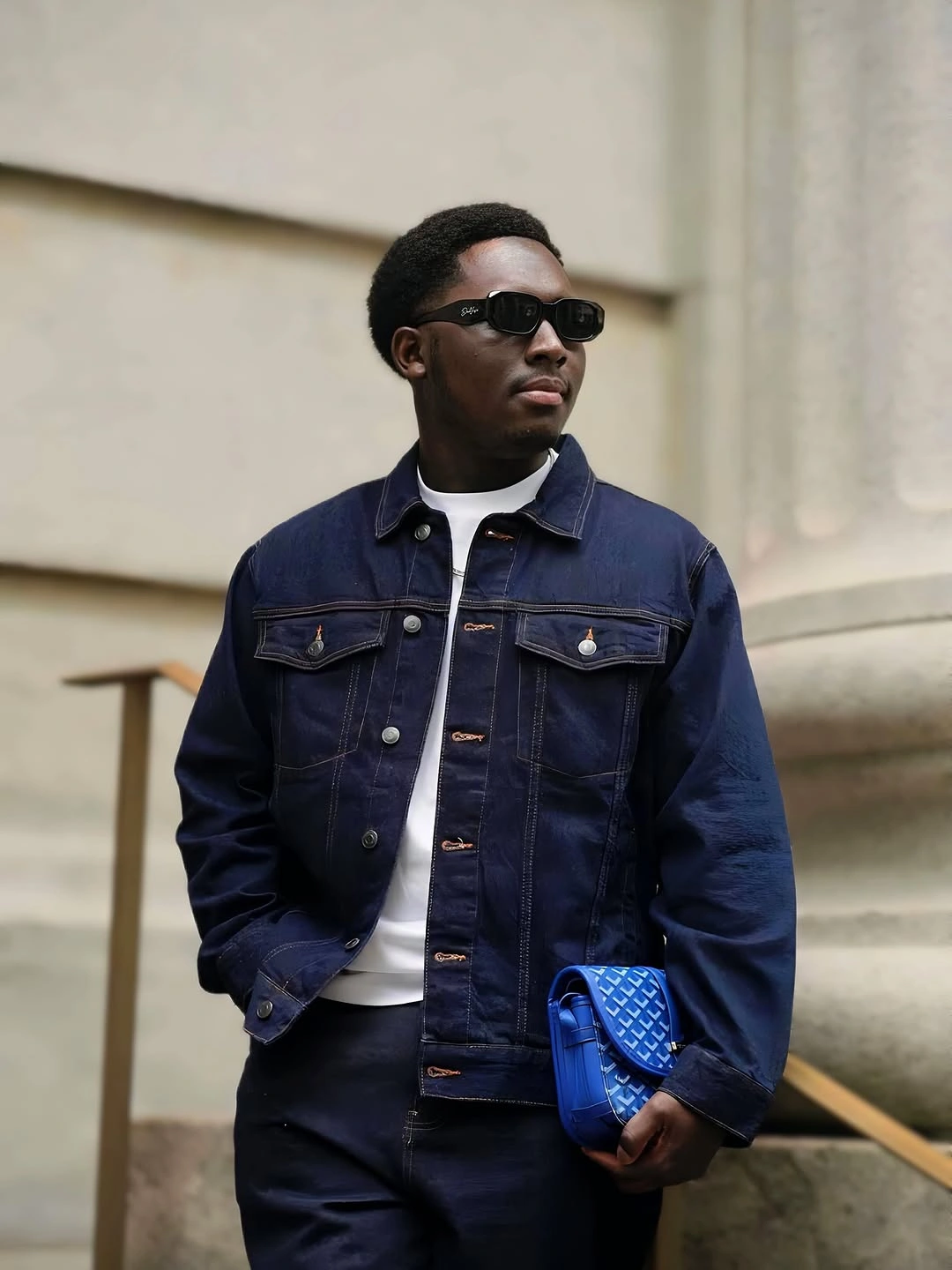
A black T-shirt sits quietly above roomy navy trousers, while a cobalt shoulder bag adds a small but unmistakable color note. The bag is effective because it belongs to the same cool family as the pants without matching them exactly. That relationship gives the otherwise dark outfit a reason to feel assembled, rather than relying only on the glasses and shoe to create interest.
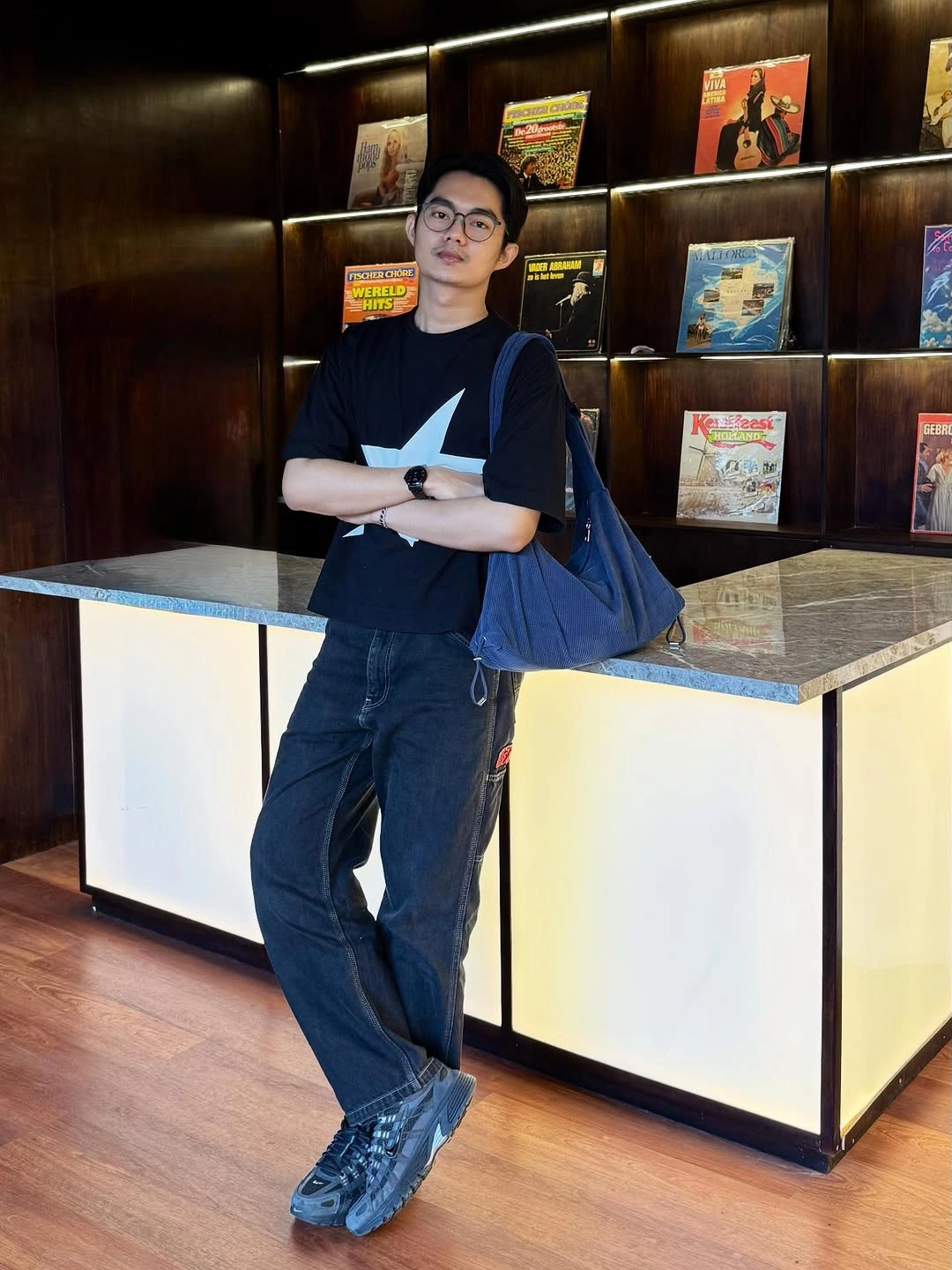
When using a colored bag this way, keep the rest of the accessories low-contrast. A black belt, dark watch, or simple frames will let the bag remain a secondary focal point instead of turning the outfit into a collection of accents. The roomy trouser shape also benefits from a fitted or regular-width T-shirt, which prevents the upper half from competing with the fabric below.
There is a practical advantage to this palette: navy can look less severe than all black while still hiding the everyday marks that pale trousers reveal. The risk is that black and navy can blur together in low light, so choose a blue with enough visible difference or add a pale sock edge, white tee hem, or bag like this one. Small separation is more useful than a dramatic contrast.
Cream Knit, Dark Shorts, and Loafers
A cream long-sleeve knit paired with dark shorts, white socks, and black loafers makes the hemline feel intentional rather than accidentally in-between seasons. The socks form a visible bridge from the pale top to the dark shoe, while the shorts keep the silhouette light. It is a more polished version of a casual outfit because the contrast is controlled at three points: shirt, socks, and loafers.
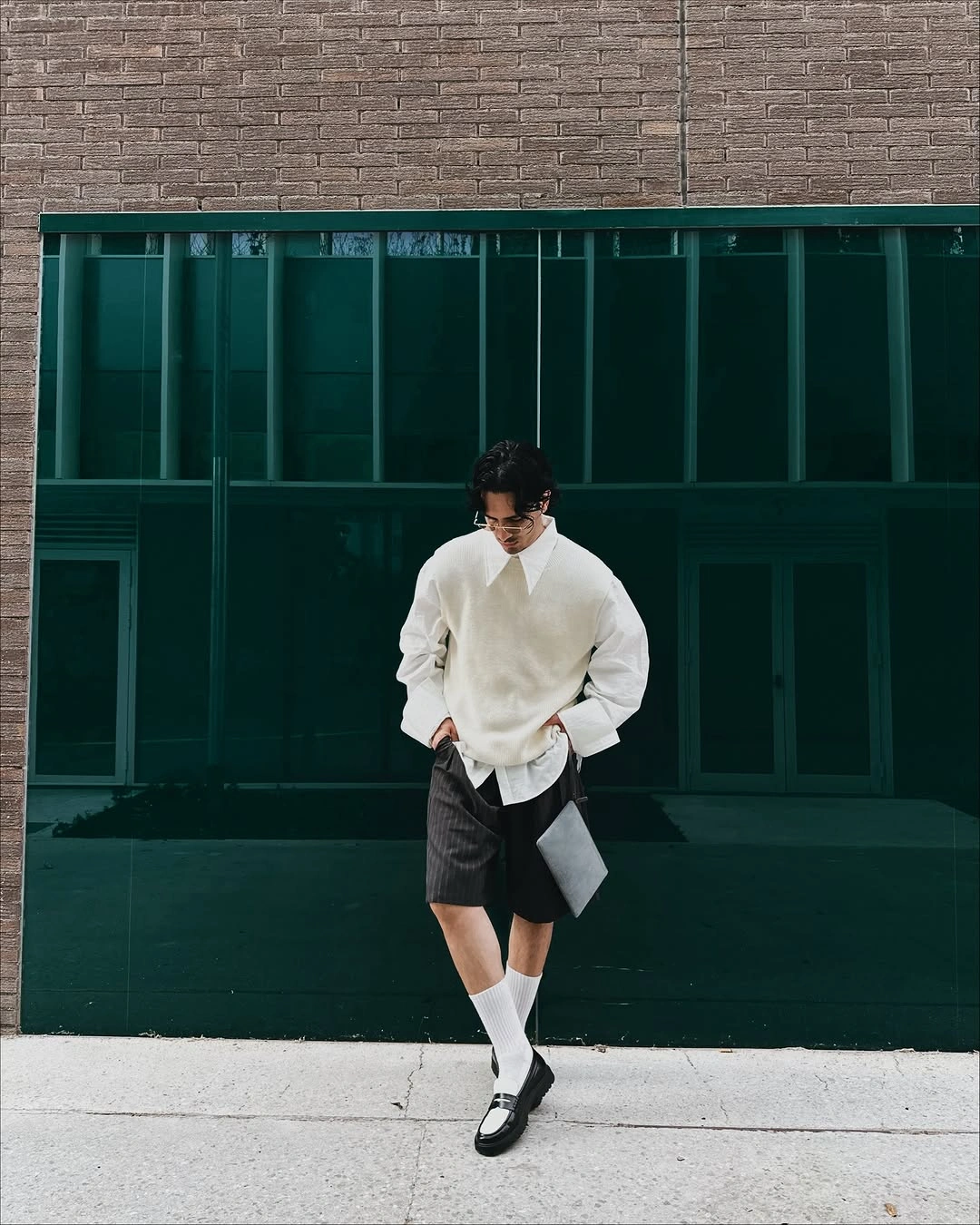
The simplest way to adapt it is to start with the shoe choice. A smooth loafer or structured leather-style shoe gives the shorts enough weight, while a running sneaker would push the combination toward sportier territory; the contrast is useful beside the site’s street-style sneaker guide. Keep the knit relaxed but not too long, otherwise it can cover the waist and make the short length look arbitrary instead of part of a clear proportion plan.
This outfit will not suit every temperature or setting, and that is worth acknowledging rather than pretending the combination is universal. A longer sock can make the transition warmer and more graphic, but it also draws attention to the calf. If that is not the effect you want, switch to a darker sock and keep the cream knit as the single light element.
Layered Gray With a White Shirt Break
Several shades of gray appear at once through the cap, outer layer, trousers, and dark tote, but a white T-shirt interrupts them at the center. That small bright line keeps the outfit from looking like one indistinct surface. The relaxed pants make the overall mood casual, while the visible inner layer provides enough separation to keep the gray palette readable from a distance.
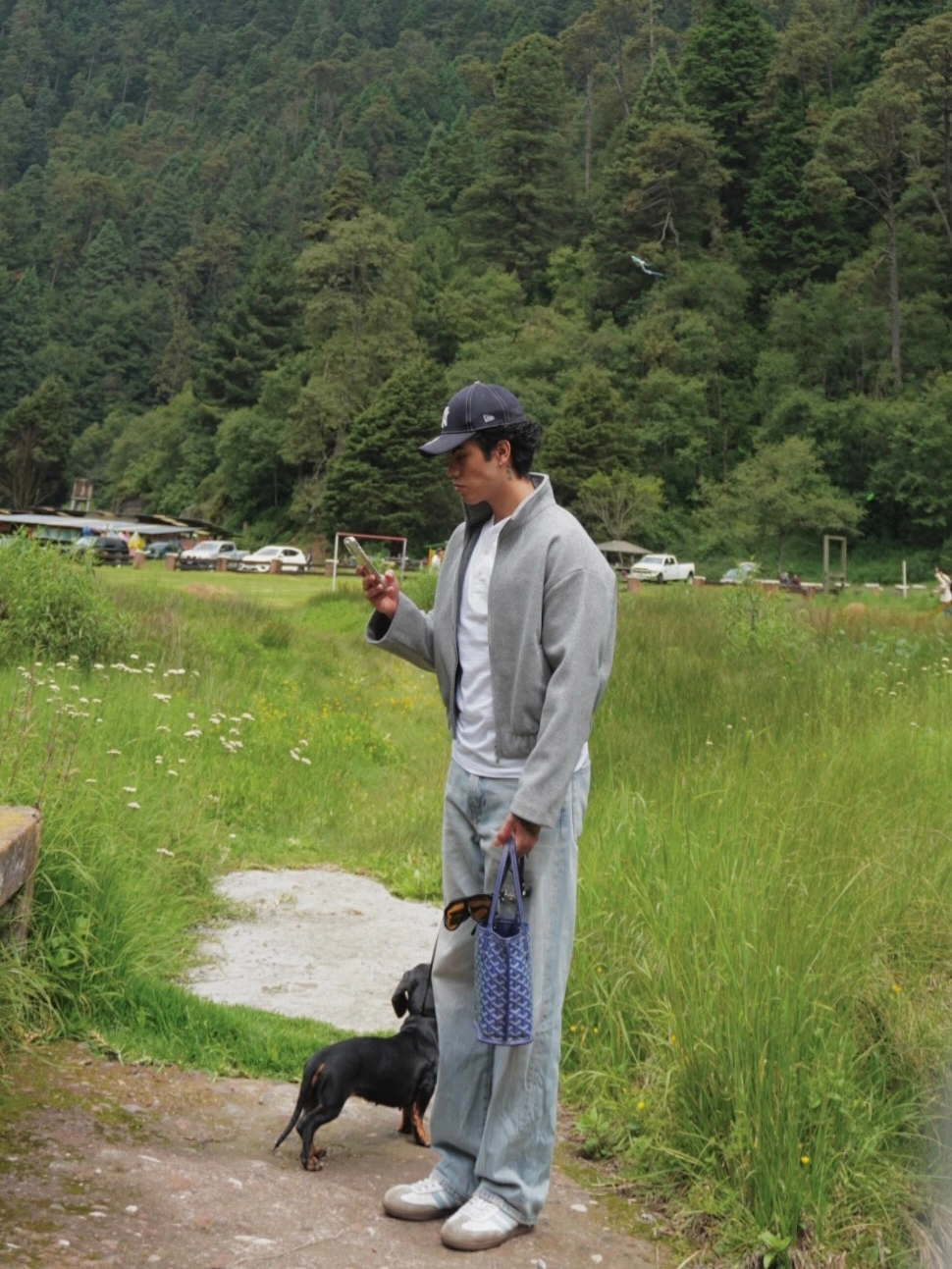
This kind of monochrome layering works best when the shades are not all identical. A pale gray jacket over graphite trousers, for example, creates more depth than three near-matching pieces. The tote can remain dark because it anchors the low half, but avoid adding another large white accessory; the shirt hem already supplies the light contrast that organizes the look.
Gray trousers with a loose cut are practical because they feel softer than black while still working with many tops. Their limitation is that they can look washed out if the fabric wrinkles heavily or the shoe is too pale. A black loafer, boot, or sneaker helps define the hem, and a cap can be useful when it echoes the top layer rather than introducing a random new tone.
White Jacket With a Striped Knit Detail
The white jacket is given direction by navy and red stripe details, blue jeans, and dark shoes. Without those small color marks, the outer layer could feel too blank against the denim; with them, the light jacket becomes a clear focal point. The combination is useful for anyone who likes a clean palette but wants the top half to have more personality than a plain white shell offers.
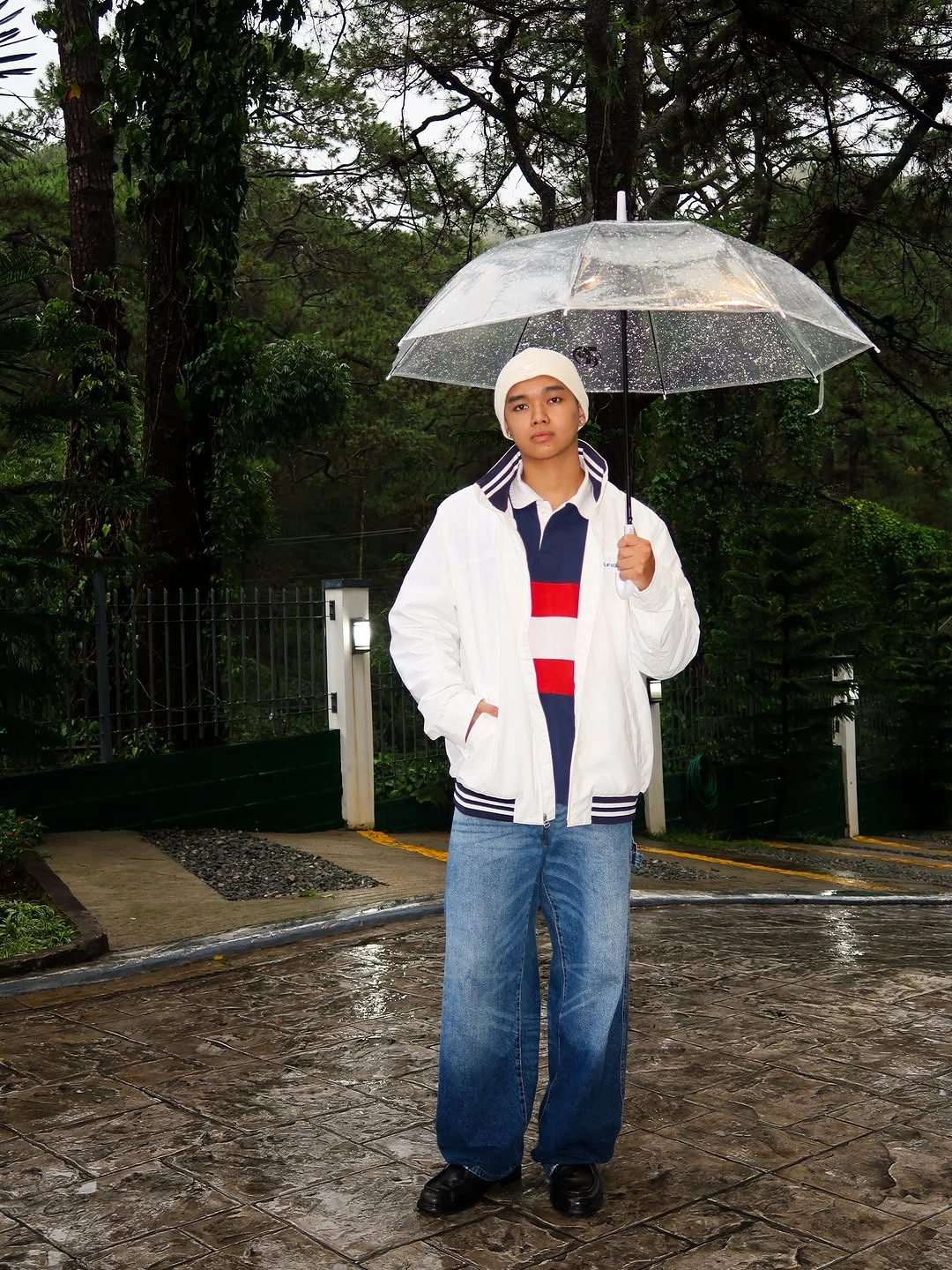
Let the striped detail remain the only decorative note. A simple dark shoe, unprinted jeans, and neutral bag will keep the outfit balanced, while another strong stripe or graphic could make the upper half overly busy. If your jacket has no trim, a narrow navy scarf or burgundy cap could offer a similar color bridge, but use only one of those ideas at a time.
The blue jeans make the white jacket feel more approachable than tailored dark trousers would, particularly when their wash is medium rather than very light. There is still a maintenance consideration: white outerwear shows marks quickly at the cuffs and front edge. Choose a washable fabric or reserve the light jacket for days when you can keep the clean contrast that makes it worthwhile.
Gray Sweatshirt With Soft Olive Volume
A pale gray graphic sweatshirt meets broad olive trousers and white high-top sneakers, creating a relaxed color mix that feels quieter than standard denim. The muted green pants have enough presence to shape the look, yet the gray top keeps the palette from becoming overly earthy. This is an easy way to make a sweatshirt feel more considered without reaching for a blazer or dress shirt.
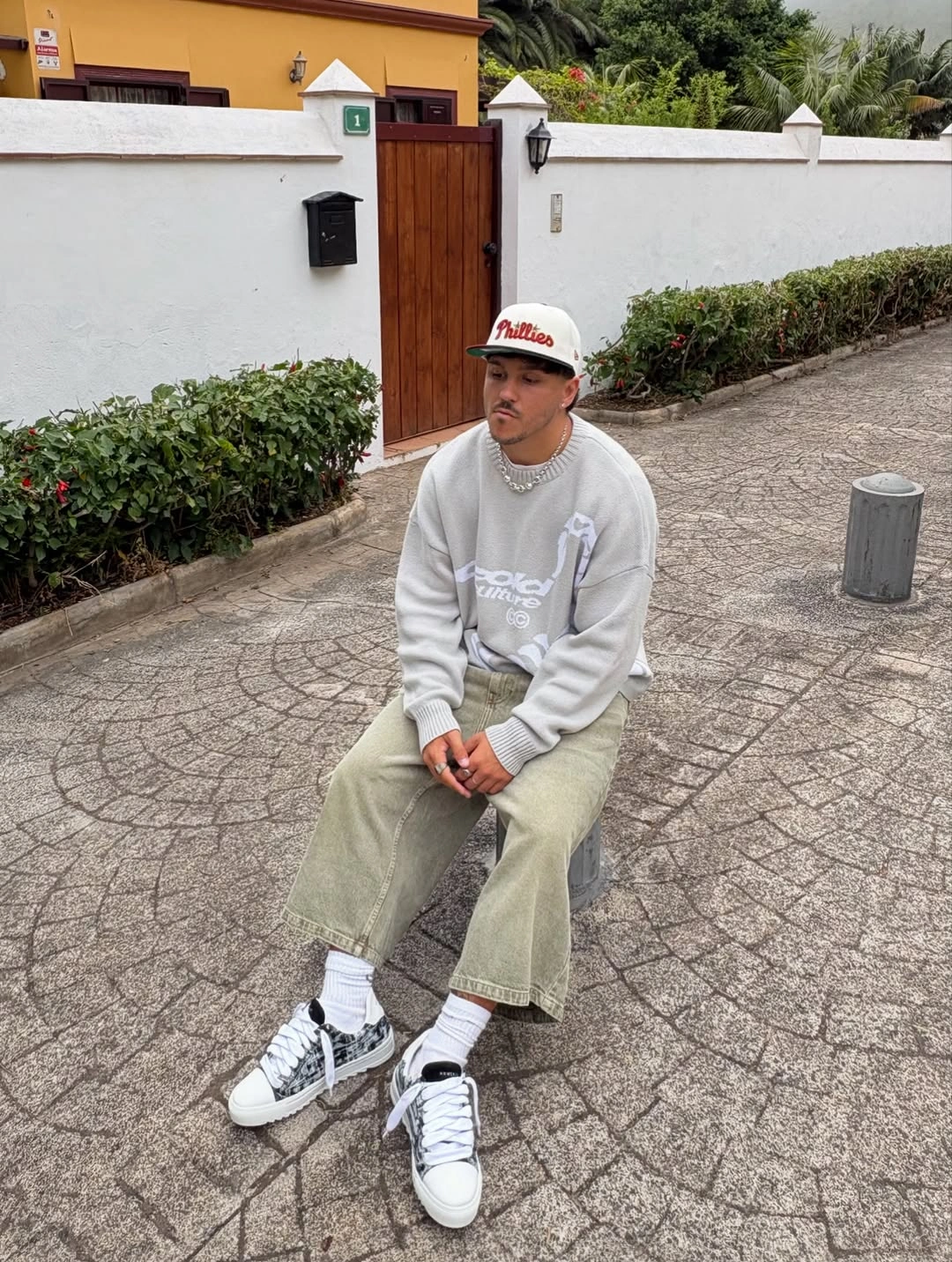
The main proportion lesson is to let one piece stay relatively compact. Here, the sweatshirt appears closer through the body while the trousers provide the volume, so the eye still finds a center. If both layers are oversized, add a shorter jacket or a partial tuck rather than simply accepting the extra fabric. White high-tops work because they brighten the muted combination without introducing a second strong color.
Olive trousers can also replace khaki or black when you want an outfit that looks casual without becoming generic. Their success depends on the shade: a dusty, subdued green is easier to pair with gray than a very yellow green. Keep the bag dark and the accessories minimal, since the gentle color relationship is already the most interesting part of the outfit.
Red Graphic Jacket Against an All-Black Base
The red-and-white graphic jacket carries nearly all the visual energy, while the black top, trousers, and cap stay deliberately plain. That decision keeps the bolder outerwear from becoming costume-like, because there is no competing print, colored sneaker, or statement bag below it. The dark base also gives the jacket a clear outline, making its color blocking easier to notice at a glance.
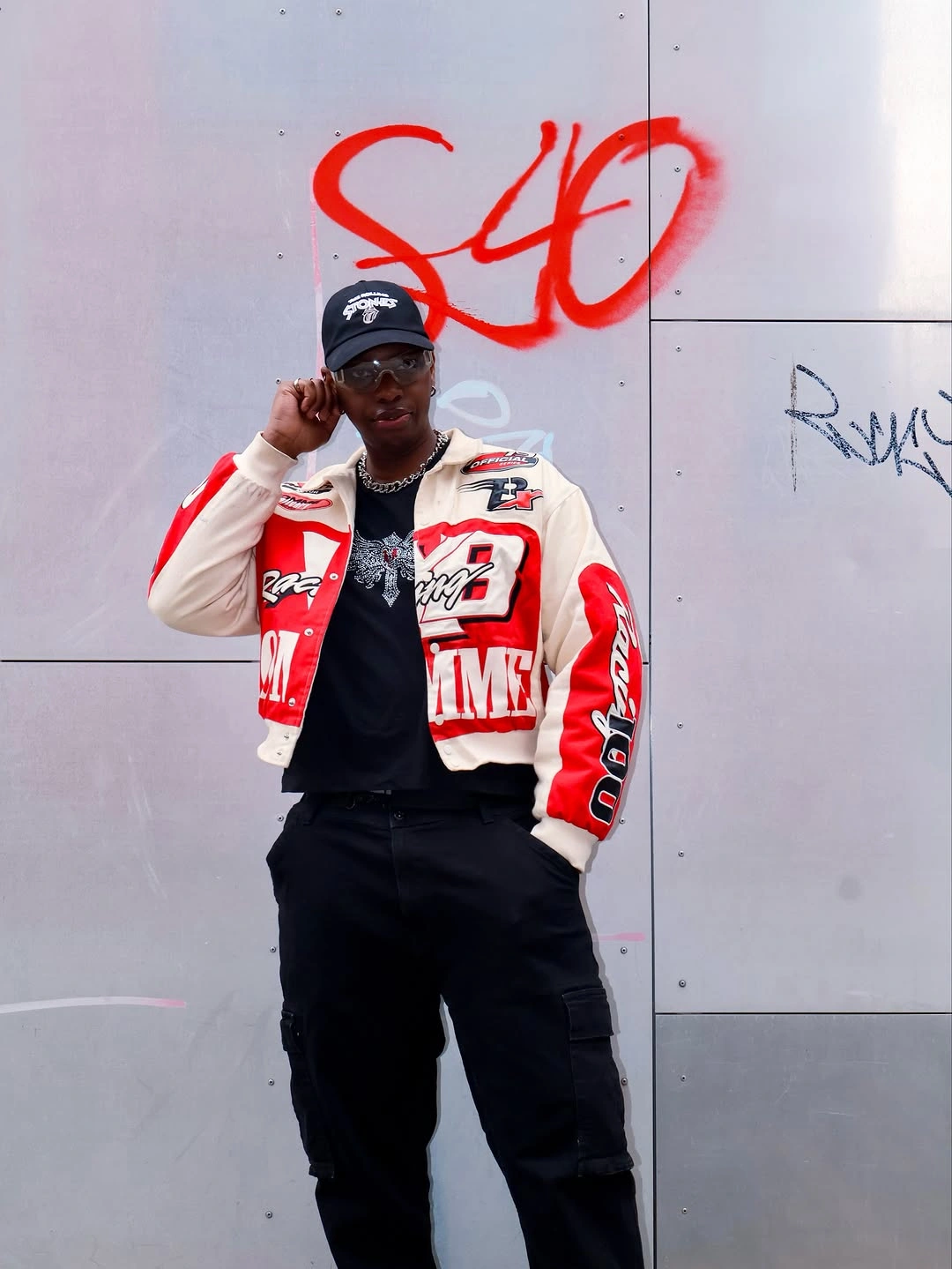
For a similar approach, choose one expressive jacket and make the rest of the outfit repeat a single neutral. Black is the most direct option, but charcoal or deep navy could work if the jacket’s red remains clearly visible. The trousers should be simple through the leg; elaborate pockets, large logos, or contrast stitching would introduce too many small details beneath an already busy layer.
A jacket this graphic does not need to be worn every day to be useful. It can become a reliable focal point for otherwise basic black jeans or loose trousers, provided the shoes remain quiet. If you wear it with white sneakers, choose a pair with minimal markings so the footwear echoes the jacket’s light areas rather than competing for attention.
All-Black Volume With a Quiet Bag
This all-black outfit relies on loose tailoring, a dark cap, and a compact bag rather than color contrast. The wide trousers and softer upper layer make the silhouette interesting before any accessory is considered, which is exactly why the absence of bright color does not leave it empty. It feels deliberate because the fabrics and widths change as the eye moves from shoulder to hem.
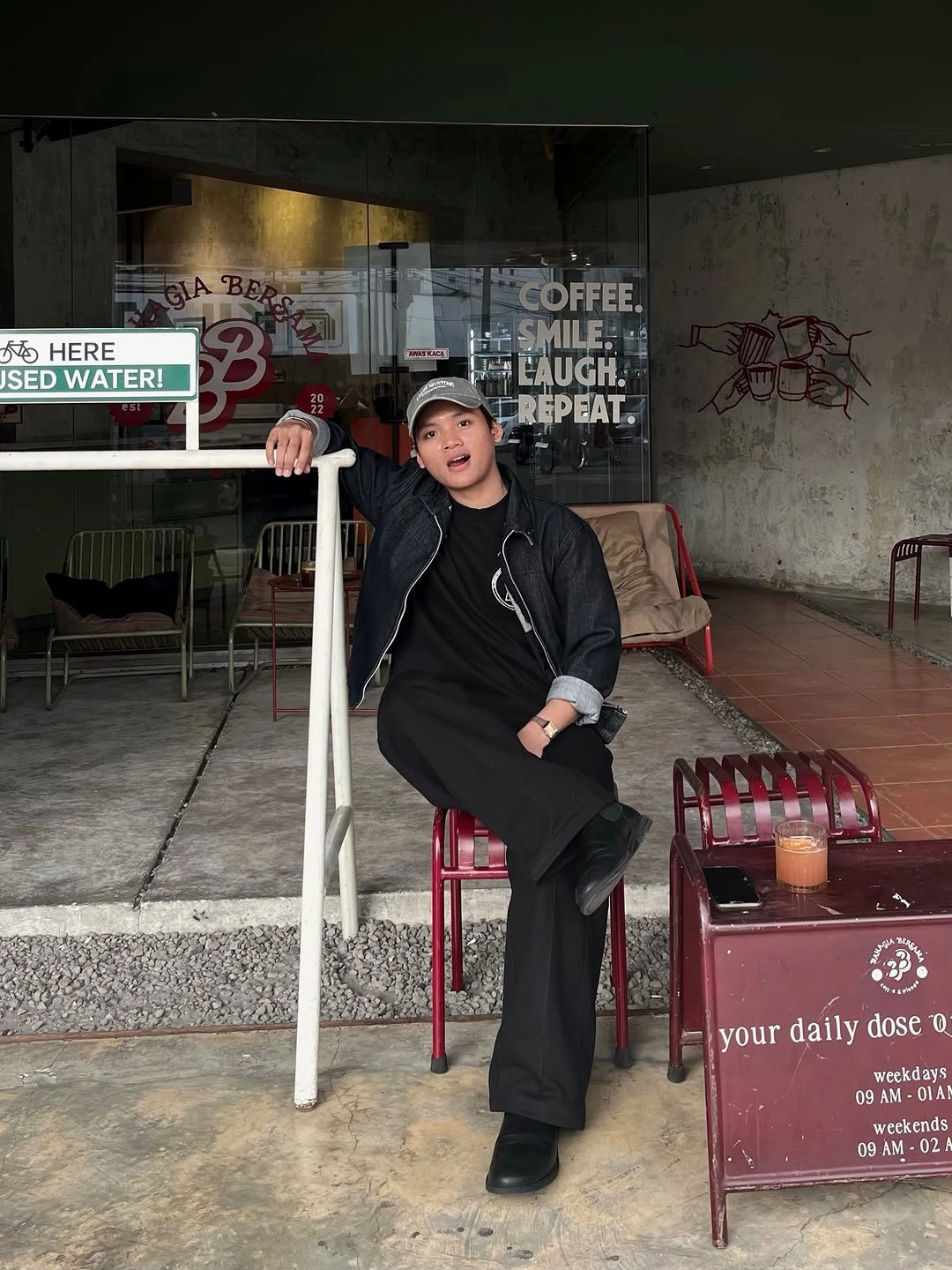
When building an all-black look, vary at least one of three things: texture, volume, or sheen. A matte sweatshirt with fluid trousers, for instance, will read differently from a shiny jacket and slim denim even though both are black. Here the extra room does the work, so a belt, chain, or strong shoe color is unnecessary. A modest bag adds utility without breaking the mood.
The potential drawback is that black layers can merge into one another in dim light. A slightly lighter tee at the neckline, exposed cuff, or subtle fabric change can solve that more elegantly than a loud accessory. Check the fit from the side as well as the front; wide pants need enough structure at the waist and shoe to look intentional instead of merely oversized.
White Hemline Beneath Black Sweats
A black oversized sweatshirt and broad black trousers are sharpened by a white shirt hem and white sneakers. Those two bright interruptions mark both the waist and the ground, which helps the dark pieces feel layered rather than like a single tracksuit. The idea is simple but effective: a thin light layer can make comfortable separates look more planned with almost no extra effort.
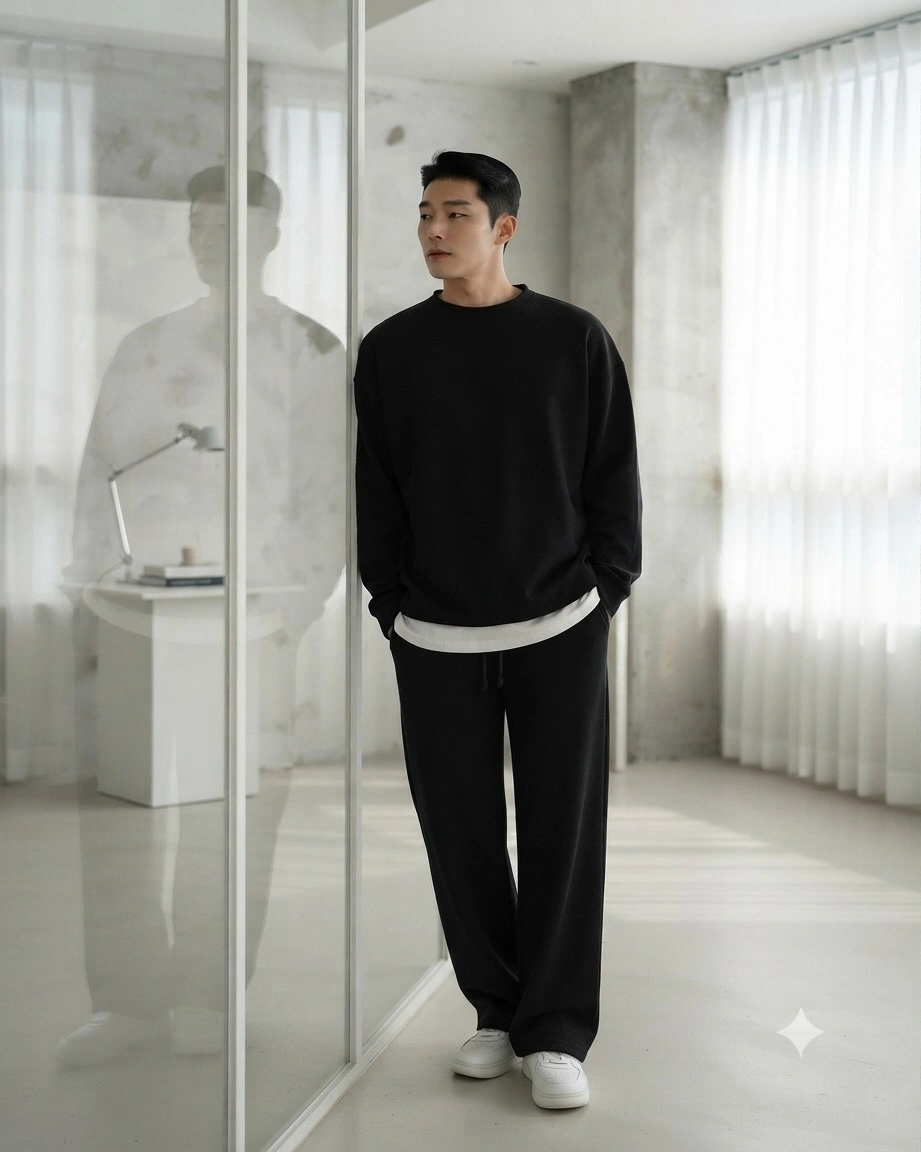
The white underlayer should be long enough to show, yet not so long that it swallows the line of the trousers. A regular cotton tee is usually enough, and a crisp hem will look better than one that curls or bunches. This is also a useful answer when black clothing feels too severe: the light strip creates separation without asking you to change the whole color plan.
White sneakers repeat the undershirt and keep the outfit visually open, but they also make scuffs noticeable. If easy upkeep matters more, an off-white or gray shoe can offer the same contrast with less harshness. Avoid a bright graphic sneaker, though, because the appeal of this combination lies in the clean, almost architectural placement of white rather than in extra decoration.
Faded Gray Jeans Under a Dark Zip Layer
A dark cap and zip layer meet loose faded gray jeans, with black footwear and a crossbody bag completing the understated combination. The washed denim keeps the upper half from feeling too dense, while the diagonal bag strap adds a line across otherwise relaxed shapes. It is a useful formula for days when a plain sweatshirt feels too simple but a tailored jacket would be unnecessary.
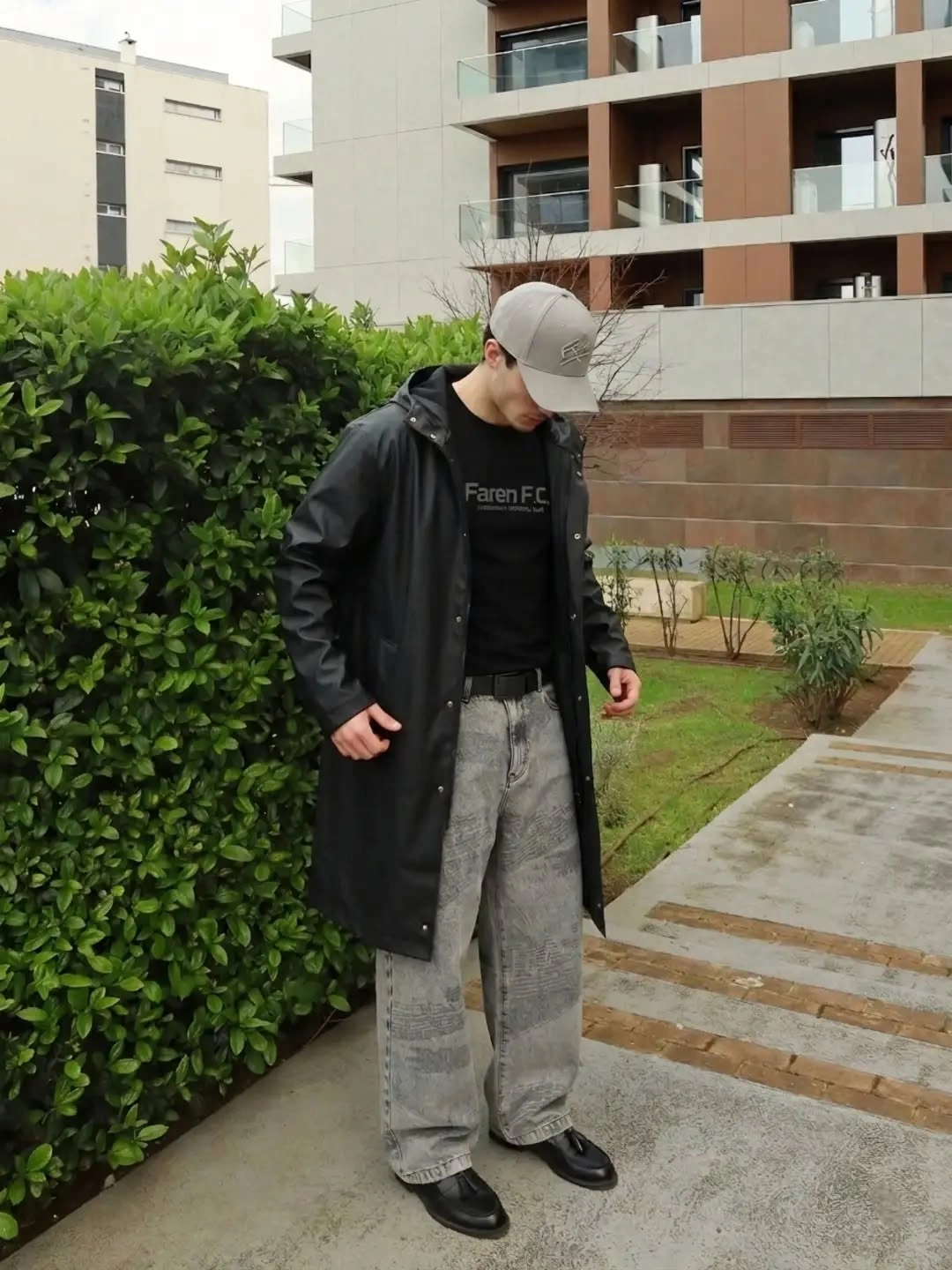
The gray jeans work because they have visible variation rather than a perfectly even charcoal tone. That faded surface gives the outfit depth and makes black shoes look anchored rather than disconnected. Try a similar dark hoodie, bomber, or overshirt on top, but keep it short enough to reveal some of the jean’s upper volume. Otherwise, the whole silhouette can become bottom-heavy.
The crossbody bag is practical and visually useful, though it can create creases in soft knitwear if worn for hours. Choose a narrow strap when the top is thin, or take the bag off indoors if you want to preserve the layer’s shape. A simple black shoe remains the best partner here because it keeps attention on the washed denim instead of adding a separate color story.
Cream Hoodie and Matching Sweatpants
A pale hoodie and matching relaxed sweatpants create a clear set, while light sneakers keep the lower edge just as quiet. Because the color is close from shoulder to ankle, fit becomes the real point of interest: the hood, cuffs, and softly pooled fabric are what keep the outfit from looking blank. It is a useful direction when comfort is essential but an unrelated sweatshirt and jogger pairing feels too improvised.
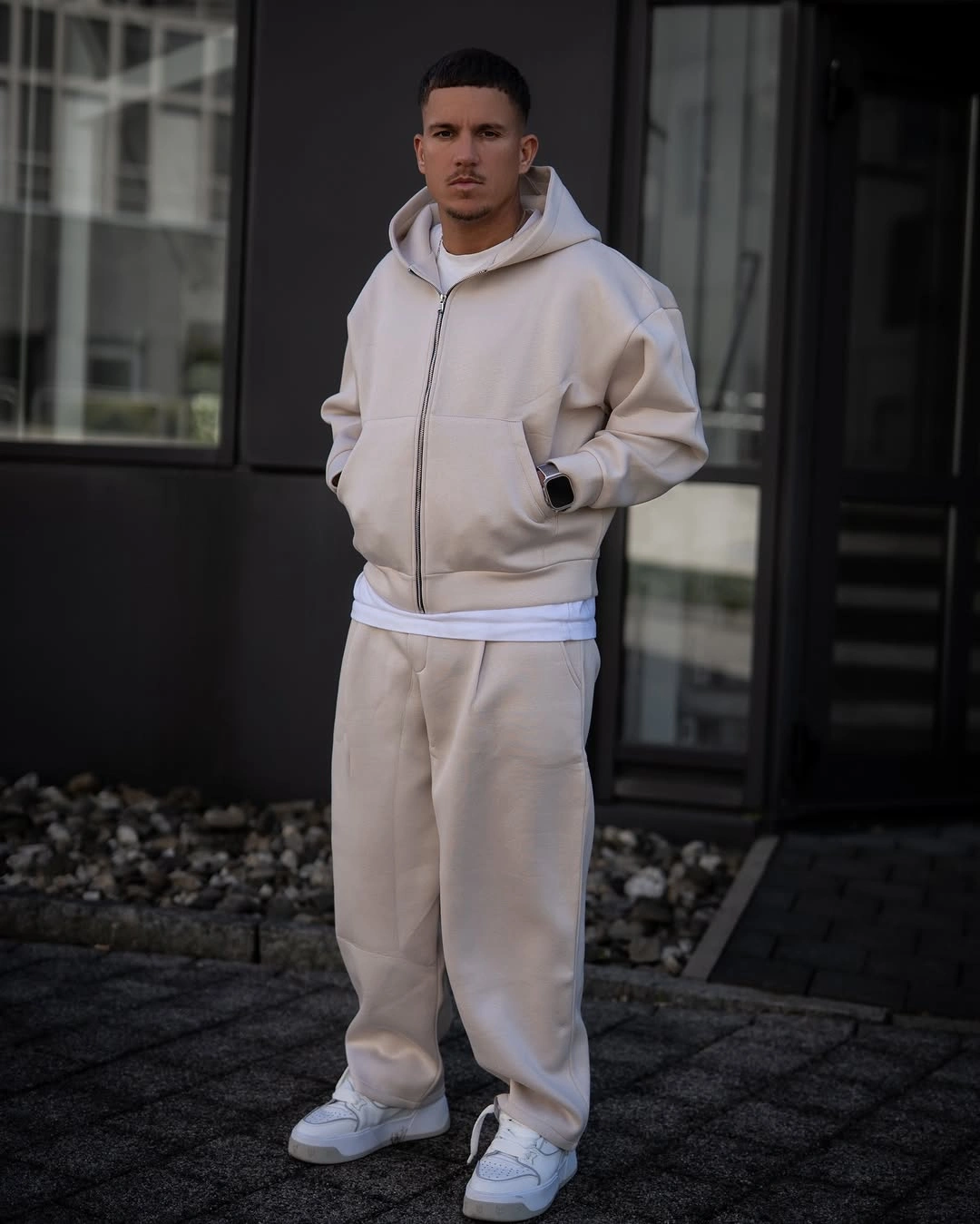
The best way to make a matching sweat set look intentional is to keep both pieces within the same level of ease. A very fitted hoodie with enormous pants, or the reverse, can make the color block look accidental. Choose a regular or gently loose hoodie, then let the pants have some movement without covering the whole shoe. A white T-shirt collar can add definition if the neckline needs it.
Light sneakers preserve the calm monochrome idea, but a dark shoe would give the set a firmer, more streetwear-focused finish. Neither is automatically better; the choice depends on whether you want the outfit to remain airy or feel more grounded. Matching fabrics can also show spills and creases quickly, so consider a slightly textured cotton blend if the set will be worn through a busy day.
Dark Sweatshirt With Washed Gray Denim
A dark sweatshirt, pale cap, washed gray loose jeans, black shoes, and a crossbody bag create a practical middle ground between athletic and everyday dressing. The gray denim carries enough fading to keep the outfit from becoming too dark, while the diagonal strap adds structure across the soft sweatshirt. It is a persuasive option for someone who wants relaxed pants without the stronger color of classic blue denim.
The useful contrast is between the dense dark top and the lighter, more irregular jeans. That difference gives the bag strap a purpose: it traces across a plain upper half rather than competing with a print. Try the same idea with charcoal, deep green, or navy on top, but avoid a heavily distressed jean if you want the look to remain clean enough for low-key social plans.
Black footwear is a sensible anchor because it repeats the bag and keeps the hem from looking too pale. A white sneaker would make the outfit brighter but could pull attention away from the gray wash, which is the more interesting texture here. If the jeans are very long, cuff them only when it creates a clean line; bulky rolling can make already-relaxed proportions feel careless.
Muted Matching Set With Dark Accessories
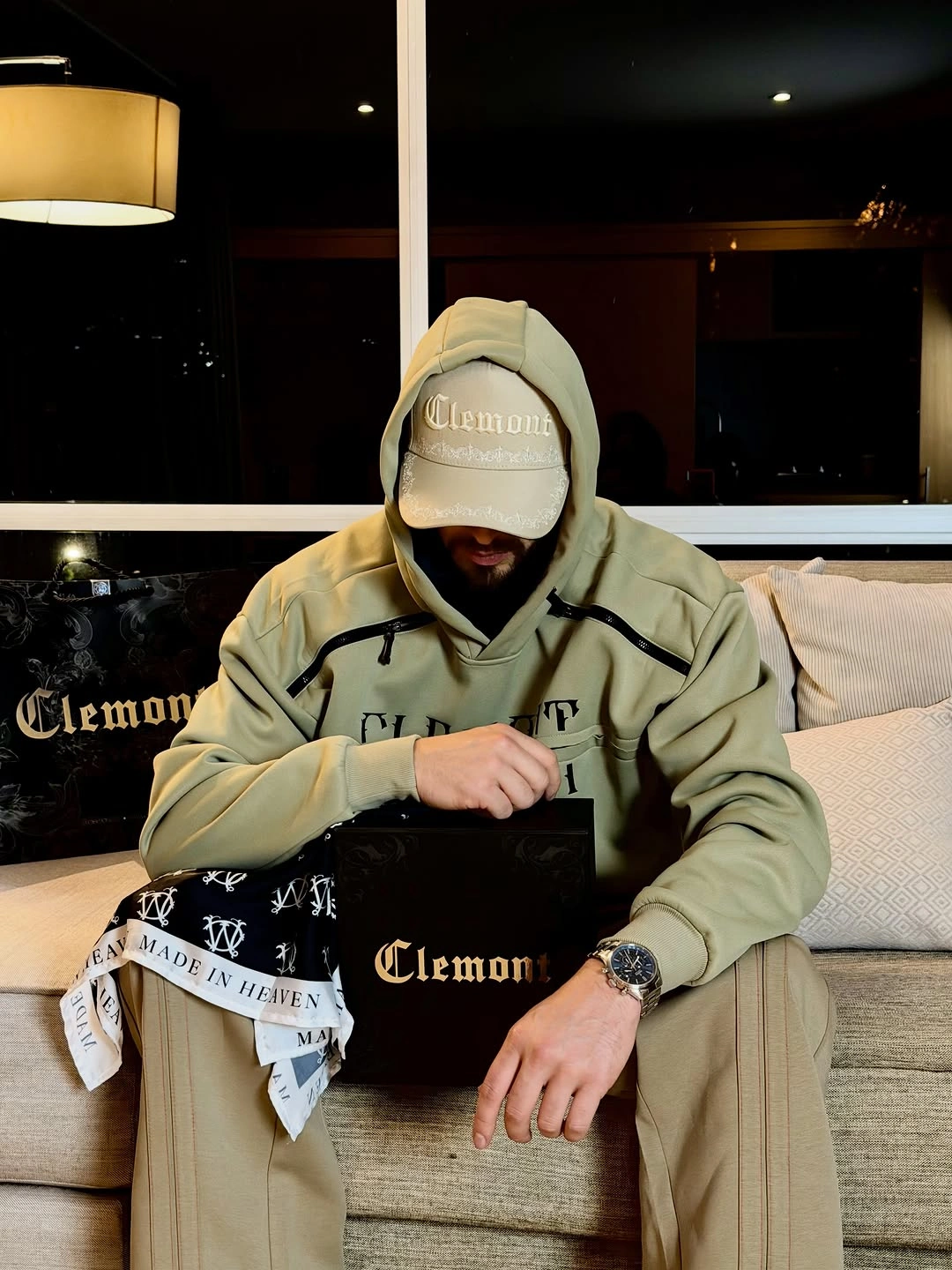
A pale green or khaki jacket and matching trousers form a quiet set, then dark accessories create definition at the cap, bag, and wrist. The matching color makes the outfit feel coordinated immediately, but the small black notes stop it from becoming too soft or uniform. This is a practical way to use a set when you prefer color that reads calm rather than bright.
The useful styling choice is to keep the accessory family consistent. A black or deep brown bag, shoe, and cap will create a clear edge, while adding several unrelated colors would weaken the clean set effect. If matching trousers feel too committed, use the jacket with faded denim first; the same muted tone can still provide the outer-layer focus without requiring a full head-to-toe color block.
Matching separates can reveal fit differences quickly, so check that the jacket and pants share a similar level of ease. A sharply cropped jacket with extremely loose trousers could work, but it would be a different statement than the relaxed balance visible here. The dark bag is a smart practical addition, yet choose one that does not cover the jacket’s front so much that it hides the set’s main advantage.
Black Tee and Wide Denim as the Focus
The black T-shirt and open dark layer stay compact, allowing the roomy blue jeans to become the color and volume center of the outfit. Sunglasses and dark shoes keep the upper and lower edges connected, while the jeans provide enough wash and movement to avoid a flat black-and-blue pairing. This is a strong option when you want denim to feel like the main styling decision rather than a background basic.
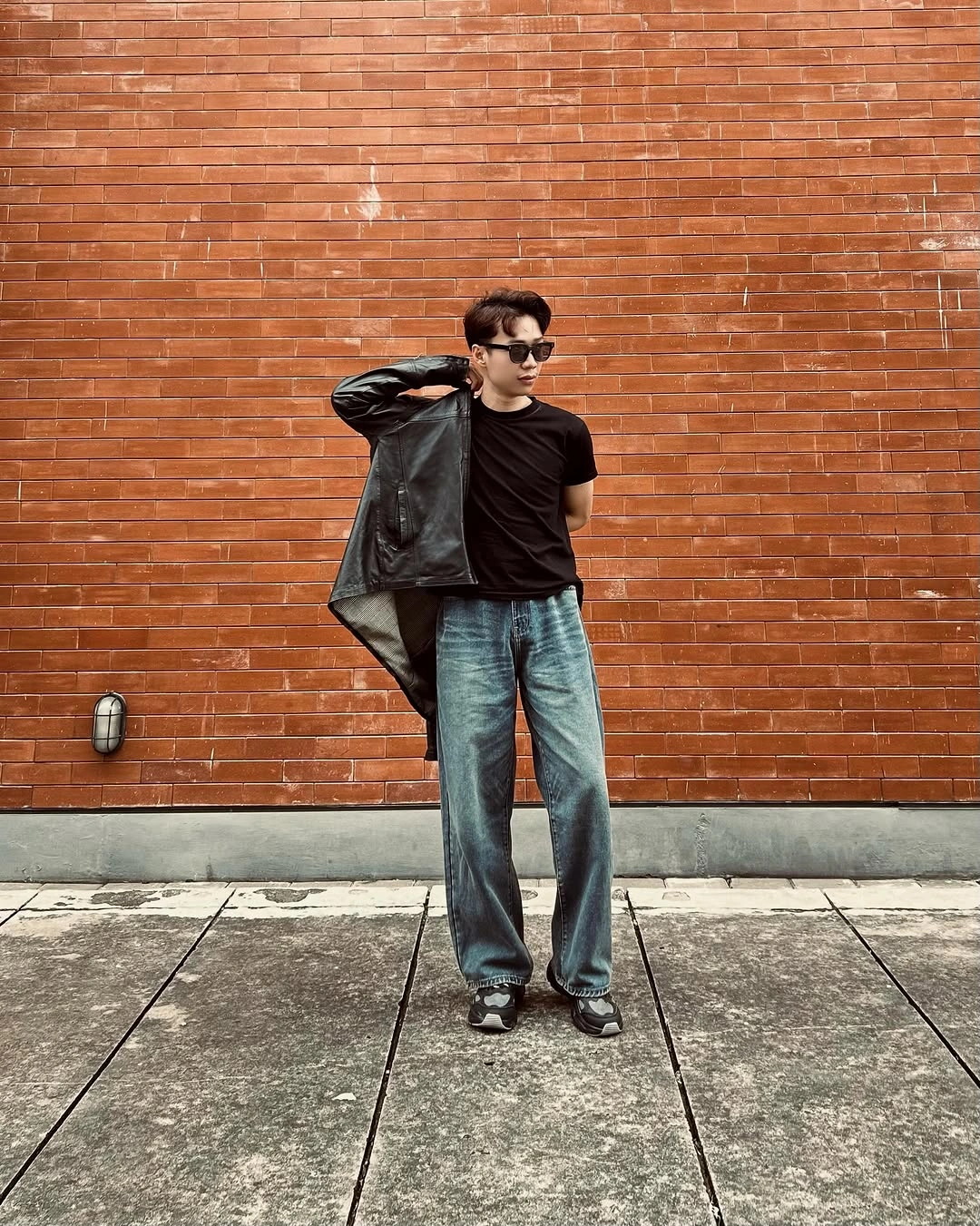
Wide jeans benefit from a top that does not add equal volume. A regular T-shirt, fitted knit, or short jacket can preserve the contrast seen here, whereas a long oversized sweatshirt may make the whole look feel shapeless. For a more polished version, swap the open layer for a cropped chore-style jacket and let the jeans keep their relaxed break over the shoe.
Because the jeans are visibly blue, the shoe does not need to match them. Dark leather or black canvas gives a firmer base, while white sneakers would make the look brighter and more casual. Pay attention to the rise as well: a mid or higher waist helps broad denim look purposeful, whereas a low, slipping waistband can undermine the clean top-to-bottom balance.
Red Sneakers and Cap in an All-Black Look
A black button-front jacket and very loose black trousers are interrupted by red sneakers and a matching red cap. The two accents appear far apart, which makes the color feel repeated rather than random, and everything between them remains quiet. It is a persuasive example of how a small matching detail can give a monochrome outfit a clear route for the eye to follow.
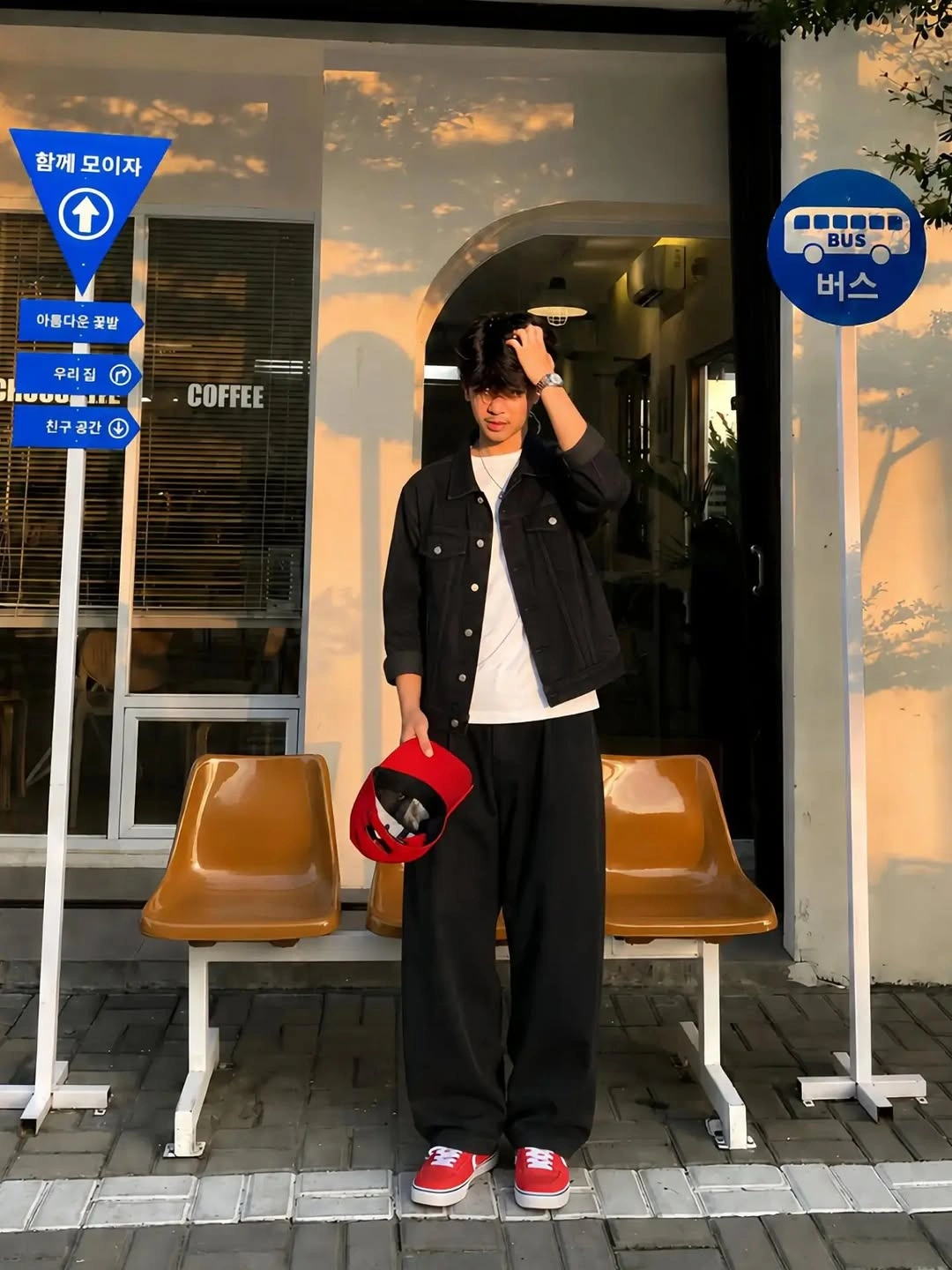
The key is to stop at two red elements. Adding a red shirt, belt, or bag would dilute the crispness of the cap-and-shoe connection and turn the outfit into a theme. Choose a red that is similarly saturated in both places, or accept that a slight difference will look more relaxed. The black jacket helps because its front remains free of competing graphics.
Bright sneakers naturally draw attention to the hem, so they work best with trousers that have a controlled break rather than excessive pooling. If the pants cover most of the shoe, the accent loses its purpose. This is also one of the easier looks to adjust for personal comfort: keep the red shoe and cap idea, then change the black base from tailored trousers to straight jeans or utility pants.
Olive Bomber Over White Tee and Denim
An olive zip jacket opens over a white T-shirt and blue jeans, creating a simple three-part palette that feels grounded without becoming dull. The white tee forms a bright center, the olive layer frames it, and the denim keeps the lower half familiar. Dark sunglasses and a watch add small finishing points without demanding attention away from the jacket’s relaxed shape.
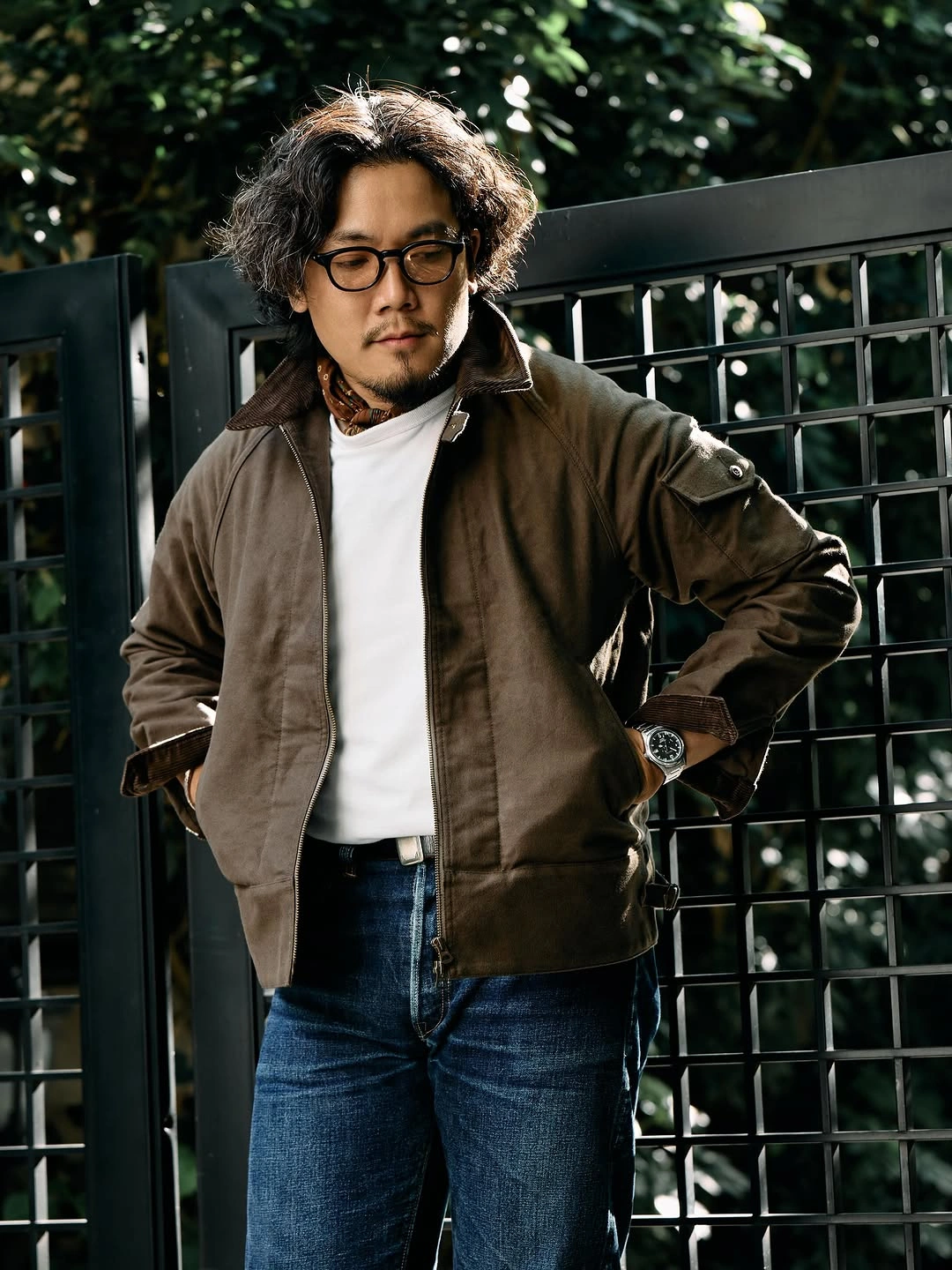
The white T-shirt matters because it gives the olive jacket room to breathe. A dark inner layer would make the upper half feel more closed, while a patterned tee could distract from the jacket’s clean structure. For a cooler version, use a thin gray knit in place of white, but keep the jeans medium blue so the outfit does not become an undifferentiated block of muted tones.
Blue jeans and an olive bomber are forgiving partners, although the shoe choice will decide whether the result leans casual or more utilitarian. White sneakers keep the center bright, dark boots increase weight, and simple black loafers make the outfit feel neater, much like the balance in these trendy outfit ideas. Check the jacket length against your jeans: a hem that ends near the waistband will preserve the easy proportion visible here.