
A seasonal hair change goes wrong most often when the conversation begins and ends with a color name. Before choosing a direction, decide what you want to notice in the mirror on an ordinary day: more brightness near your face, more depth through the ends, a softer overall impression, or simply a shade that still feels familiar. Starting with that personal reaction makes it easier to describe the result you want without asking for an exact copy of someone else’s finish.
The better question for a winter appointment is not which shade is trending, but what level of upkeep and contrast will fit the way you actually wear your hair. Consider how often you style it, whether a visible grow-out bothers you, and how much change feels exciting rather than unsettling. A clear answer gives your colorist a useful brief and makes the choice more likely to remain satisfying after the first salon-day shine has faded.
Muted Beige Ribbons on Long Waves
Long loose waves move from a cool taupe-brown crown into muted beige ribbons, and the change stays diffused rather than forming a hard horizontal band. The light pieces appear most clearly through the lower wave bends, which gives the length depth without making the root look disconnected. This is a calm starting point for a winter color direction that still looks dimensional in motion.
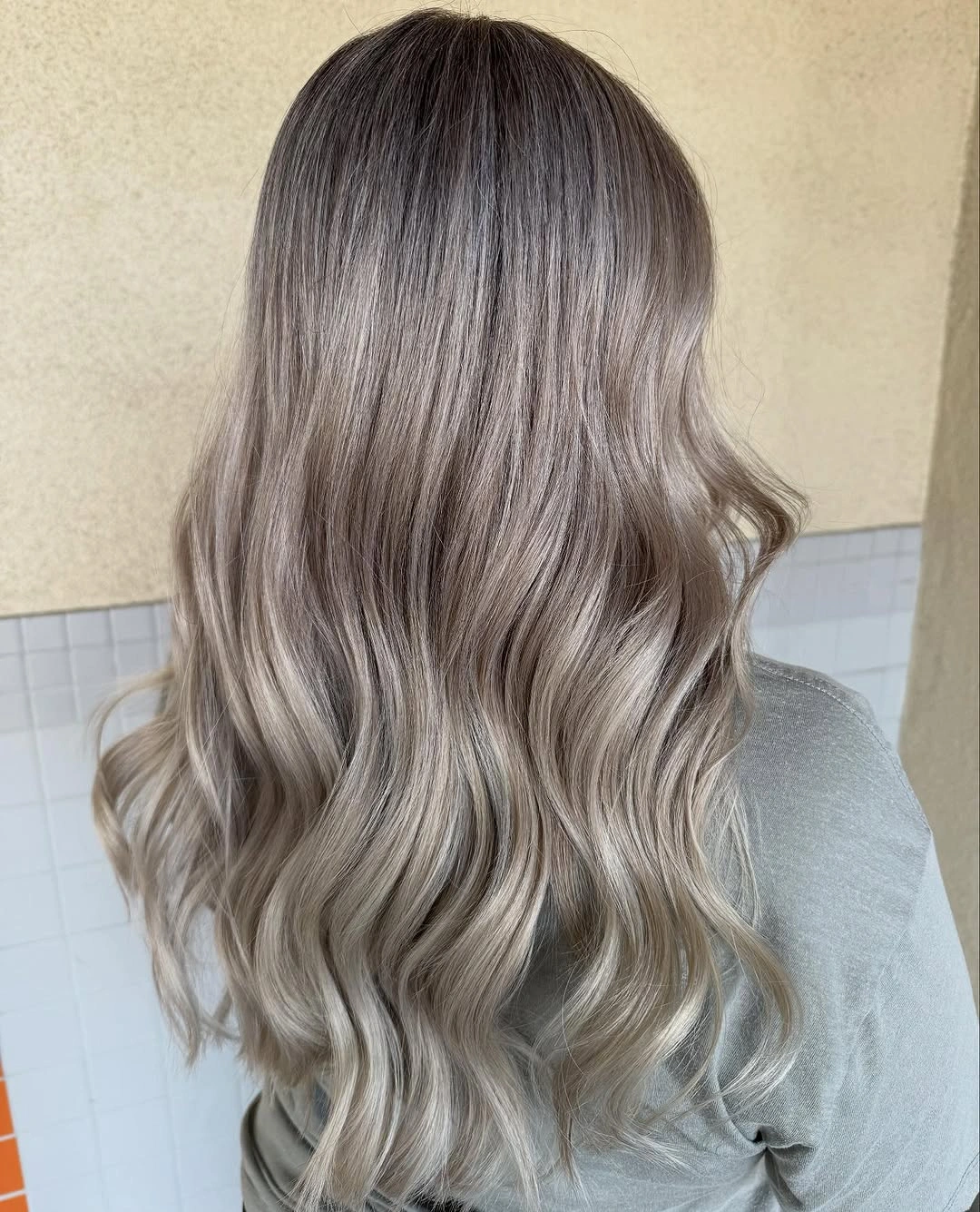
The quiet contrast is the useful part here, since the darker upper area keeps the lighter lengths from reading as a flat block of color. If you like the idea, ask for visible variation through the middle and ends rather than a bright front frame alone. Broad waves help reveal that placement, although straighter styling would make the individual ribbons look more defined and less blended. If you are weighing this against a warmer brunette approach, compare it with trendy brown winter hair colors to see how placement changes the overall mood.
Because the tones remain close together, this look depends on shape and movement to show its detail. A simple center or soft off-center part would keep the crown calm, while tight curls might break the color into smaller pieces than intended. Choose this kind of placement if you want a change that remains subtle when hair is worn down but becomes more noticeable as the lengths move.
Chestnut Movement Through a Deep Brunette
A deep brunette base carries warm chestnut reflection through broad waves, with the lighter warmth appearing mainly where each wave turns toward the light. The crown stays distinctly dark, so the overall result remains brunette rather than shifting into a full copper or caramel look. That contrast between depth and soft warmth gives the length a richer, more layered outline.
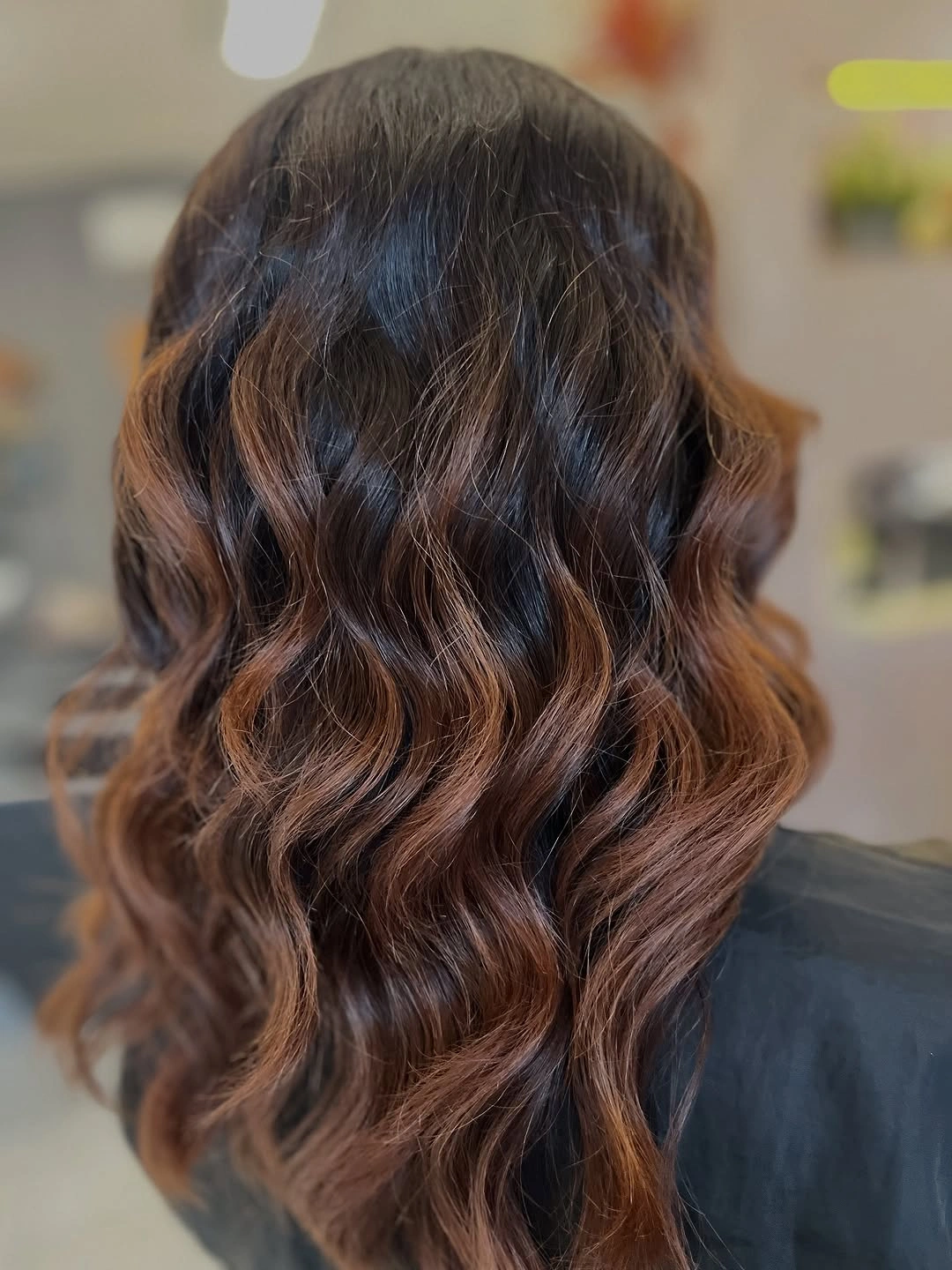
This is a useful reference if you want warmth without a high-contrast change around the face. Keep the chestnut pieces irregular and concentrated through the mid-lengths, because evenly spaced bright stripes would alter the restrained effect. A relaxed wave finish makes the tonal variation readable, while an overly smooth blowout could hide much of the warmth until the hair moves.
The practical advantage of a dark base is that it gives the warmer sections a clear backdrop, especially on longer hair. If your usual style is straighter, ask for a little more visible variation near the outer surface so the color does not disappear. The tradeoff is that very subtle warmth may look different under cool indoor light, so focus on the balance of dark and warm rather than expecting one fixed shade.
Wine Red Dimension Over Dark Lengths
Dark hair is threaded with wine-red and burgundy-toned ribbons that become more noticeable through the lower waves, while the crown retains a nearly black-brown depth. The color direction feels intentional because the red does not cover every strand equally. Instead, it appears in selected sections that follow the movement of the long, loose wave pattern.
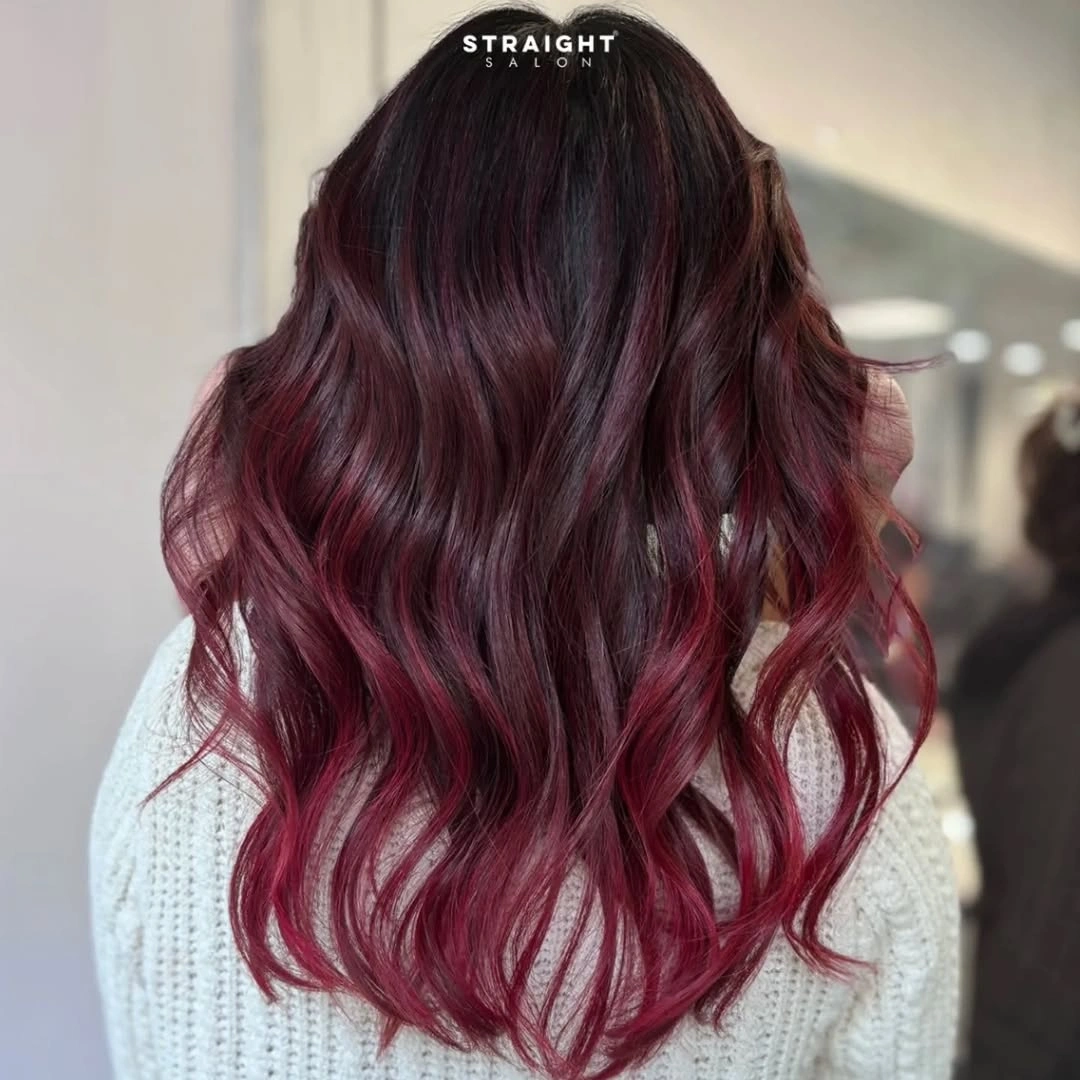
A color-forward result like this benefits from a dark root area, which gives the red dimension somewhere to emerge from rather than making the whole head look uniformly bright. If you prefer a quieter version, keep the burgundy visible mostly through the ends and mid-lengths. A larger wave pattern will make those red sections look more fluid, while smaller curls would create a more scattered, high-energy effect.
Deep red-brown shades can be a strong winter option when you want contrast without moving into a pale blonde direction. The limitation is that the look relies on visible shine and separation to reveal its color variation, so a messy, tightly bundled style may conceal much of it. Wear the hair down or use a loose half-up shape if you want the darker and redder sections to stay legible.
Smoky Brown With Soft Face Framing
Smoky brown waves are given a gentle lift by ash-beige pieces near the face, while the center part and deeper crown keep the overall color grounded. The lightest sections are not wide enough to dominate the look, yet they create a clear change around the cheeks and front lengths. That placement makes this trendy winter hair color direction feel bright without abandoning a brunette base.
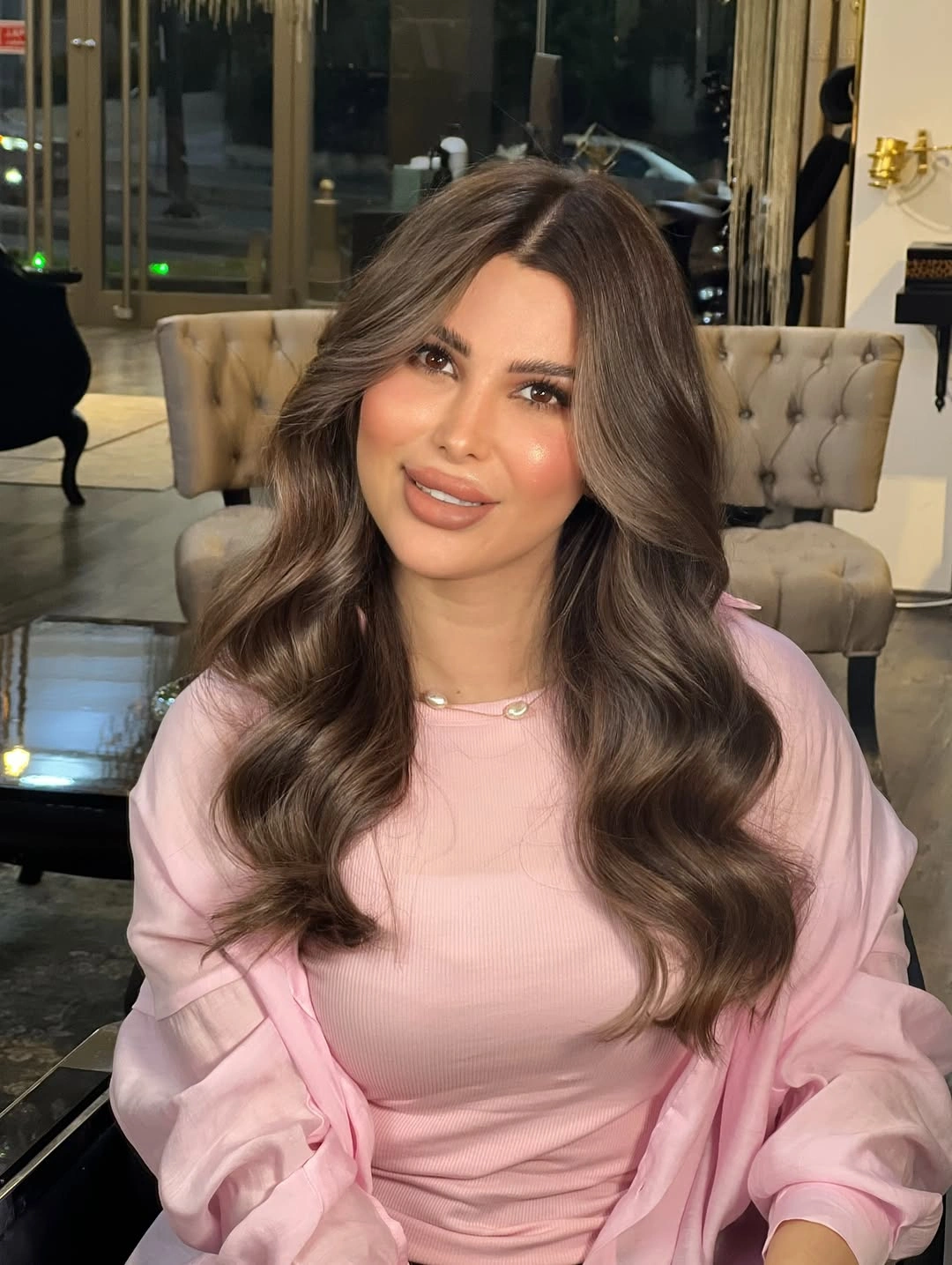
Face-framing color works best when it connects to quieter ribbons behind it, and that connection keeps the front from looking isolated. If you want this balance, let the brightest area stay near the outer front layers and soften it as it moves back. The large smooth waves help the color flow across the face, but a less styled finish would still show the placement if the contrast remains moderate.
The easy-to-wear part of this idea is its clear focal point: you see the lighter detail first, then the deeper brown around it. Avoid adding equally pale streaks all over the crown, or the soft frame will lose its purpose. A side part could make one front section more prominent, whereas a centered part keeps the brightness divided evenly and makes the result read more symmetrical. Readers looking for a darker alternative with similar depth can also explore dimensional brunette hair color ideas before deciding how light the front pieces should be.
Silver Gray Waves With Pale Ends
A cool gray root transitions through silvery mid-lengths into pale, nearly cream ends, and loose waves separate each tone without making the shift look striped. The overall silhouette remains shoulder length and softly full, so the lightest color has room to move rather than sitting in a sharp line at the bottom. It is a high-contrast idea, but the cool palette keeps it visually quiet.
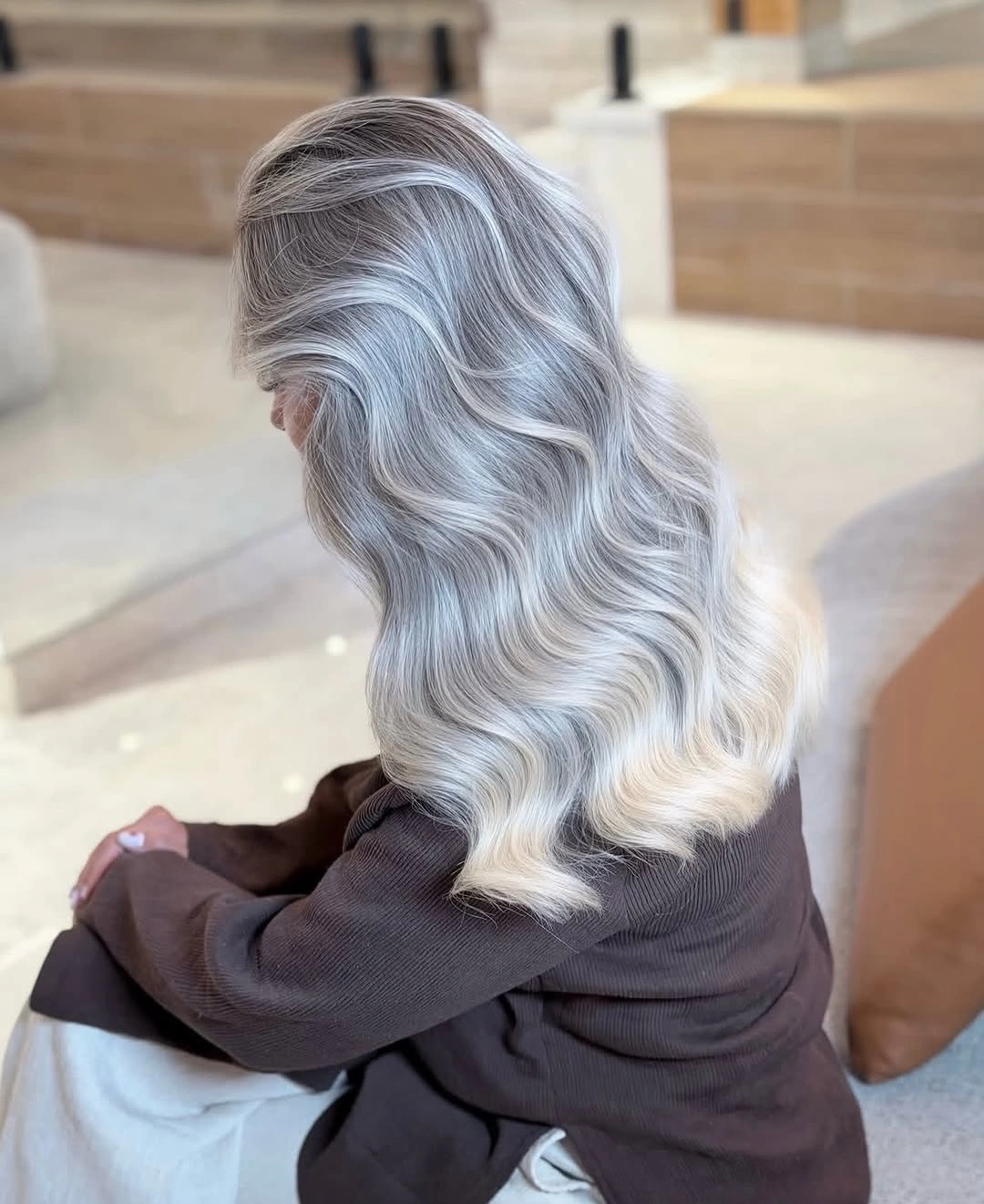
Cool gray and silver variation becomes easier to read when the styling is soft enough to show multiple surfaces at once. Try a loose wave or curved blowout if you want the darker root, silver body, and pale ends to stay distinct. A very flat finish would reveal the root-to-end placement more directly, but it may make the color change feel stronger and less forgiving.
This reference is useful for anyone drawn to a pale result with visible depth at the crown. The more extreme the difference between root and ends, the more the hairstyle relies on a clear part and tidy shape to look deliberate. Keep accessories simple near the hairline, because a large headband or dark scarf could obscure the subtle gray pattern that gives the style its character.
Warm Bronde Waves Around the Face
Medium brown hair is softened with beige-gold ribbons that gather through broad rounded waves and become brightest around the face. The warm color family matches the relaxed movement, so the look reads like a gradual lift rather than a sharp contrast. A soft side part helps the front layers fall forward and gives the lighter sections an easy, open frame.
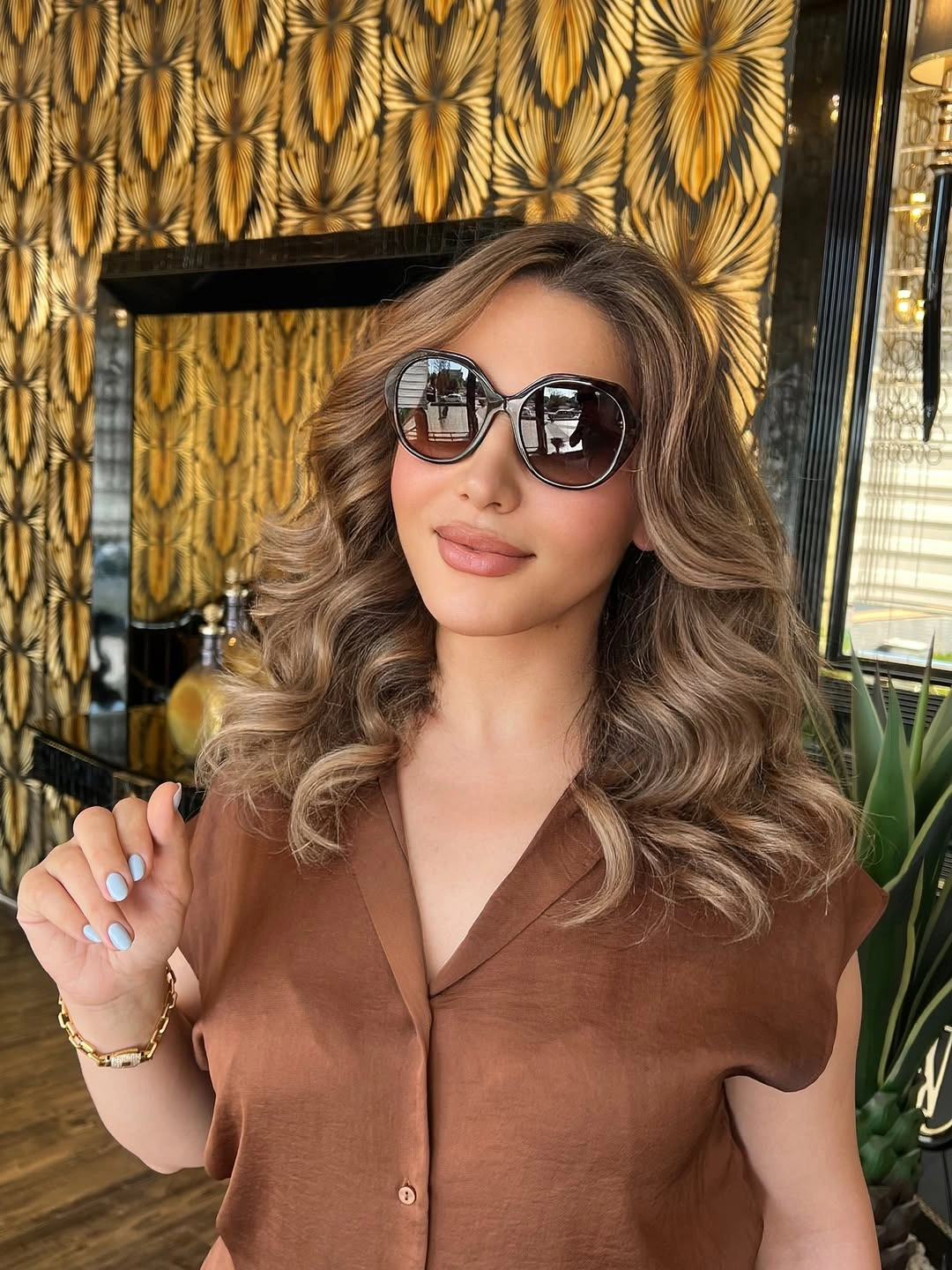
Wide waves are helpful here because they keep the warm ribbons blended into the brown base instead of separating them into obvious stripes. If you wear your hair with less texture, place a few lighter pieces near the outer surface so the color still registers. The goal is not to make every section equally light, but to keep enough deeper brown visible that the warm variation has depth.
Bronde can feel especially approachable when the contrast stays moderate and the front receives the most light. The styling tradeoff is that very tight curls can make warm placement look busier than it does in a soft blowout. For a more subdued version, reduce the brightness near the face and keep the beige influence concentrated closer to the lower lengths.
Low-Contrast Ash Brown Texture
Muted ash-brown hair has gentle beige threads woven through the medium-length waves, but the contrast stays intentionally low from root to ends. That restraint lets the irregular wave pattern become the main point, with color acting as a soft background detail instead of a first impression. The shoulder-length shape keeps the result compact and easy to read from every angle.
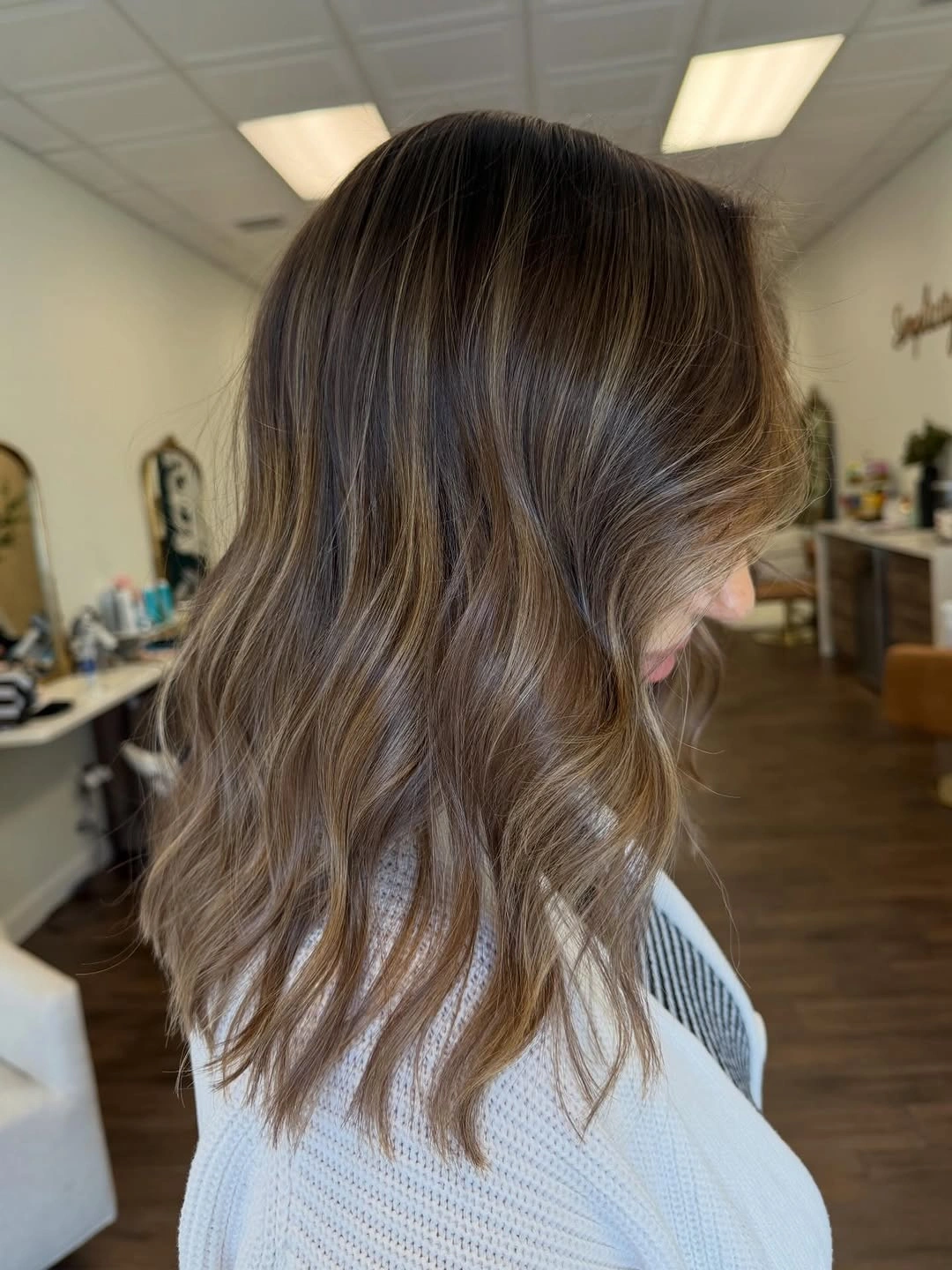
Low-contrast placement is a useful option when you want the hair to look softer without committing to obvious blonde sections. Keep the lighter pieces fine and slightly varied, because wider blocks would change the entire mood of this muted palette. A casual air-dried texture or a loose wave can support the effect, while highly polished curls might make the small tonal differences look more patterned.
The limitation of a quiet ash palette is that it will look different in warm versus cool light, which is part of its subtle appeal rather than a flaw. Choose it if you value movement and softness more than immediate color impact. A simple part and minimal accessories will leave room for the mild tonal shifts to show, especially along the outer lengths and ends.
Long Ash Ribbons on Dark Waves
Very long hair holds a deep root area above broad ash-beige ribbons that sweep through the lower lengths and around the face. The large barrel-like waves keep the light pieces separated enough to be visible, while the darker crown gives the whole result a stable base. This is one of the bolder cool-toned ideas because the contrast continues through a substantial amount of length.
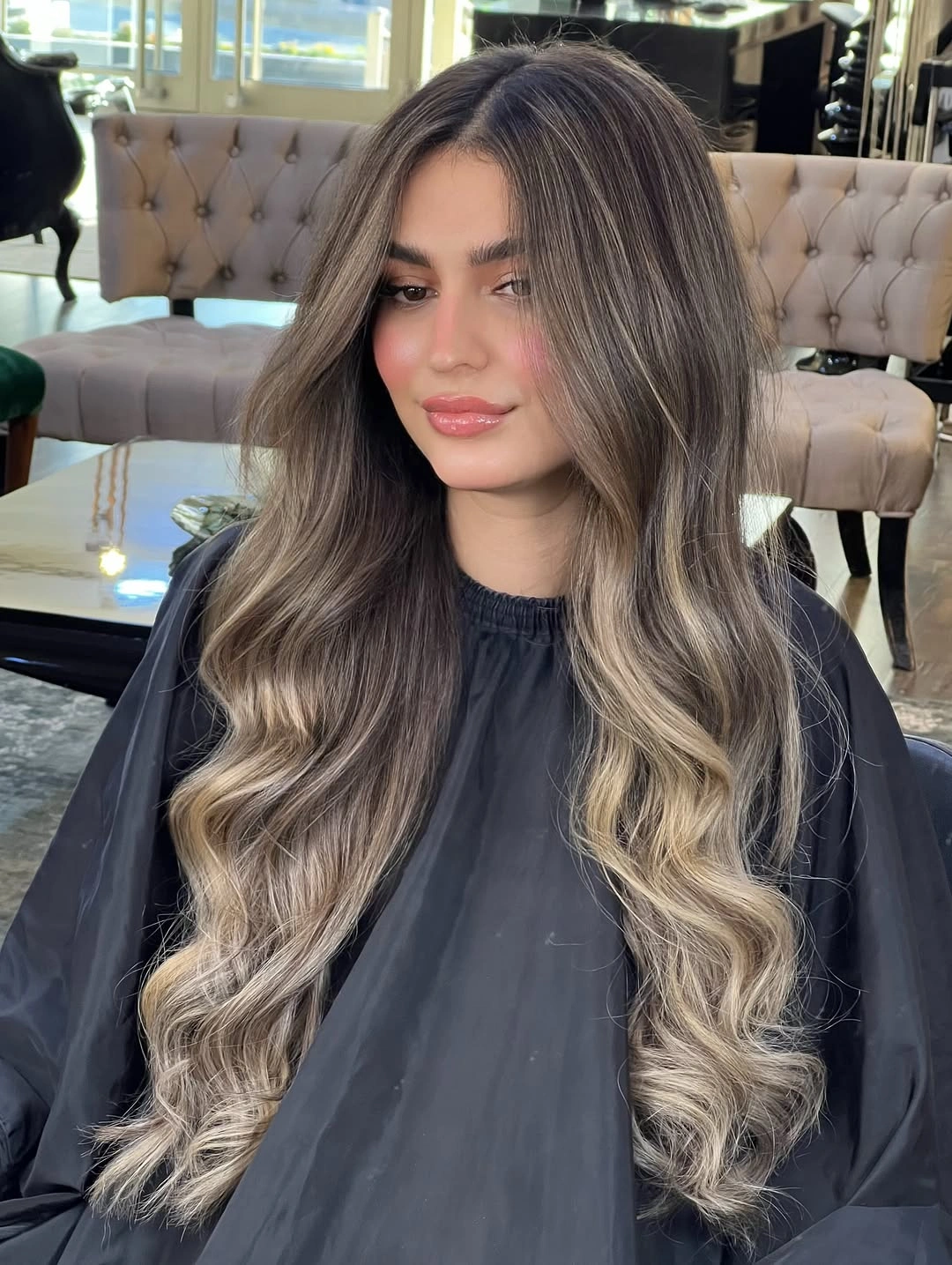
The color placement is effective because the palest pieces do not begin directly at the part, leaving the top area calm and dimensional. If you want a similar direction, use the longest visible sections to carry the brightness and let the crown stay noticeably deeper. That choice makes the light ribbons feel intentional even when the hair is worn in a simple center part or over one shoulder.
Long high-contrast color needs room to show its pattern, so loosely styled lengths work better than a compressed ponytail for everyday visibility. A half-up style could still preserve the ribbons, provided the front sections are left free. The main consideration is whether you enjoy seeing obvious light movement through the ends, because this result is less subtle than a low-contrast ash brunette.
Deep Cherry Brown With Side Fringe
Deep cherry-brown hair is shaped into large glossy waves, with a sweeping side fringe creating a dramatic line across the front. The red influence is visible within the dark base but never removes the overall depth of the color. That relationship between a rich tone and a heavy fringe makes the look feel more sculpted than a simple all-over brunette wave.
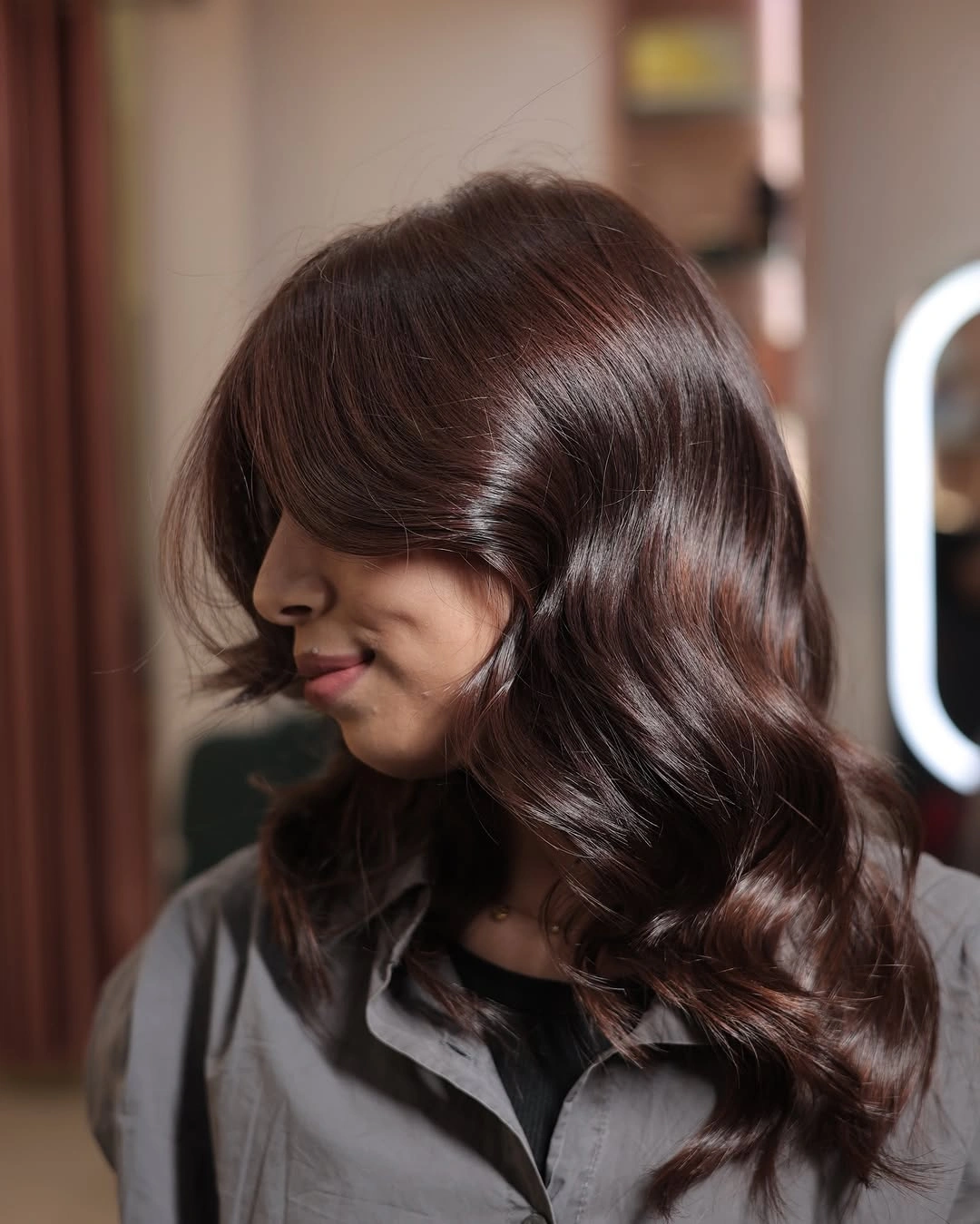
The side fringe changes how the color reads because it carries the dark, wine-toned section across the face before the larger waves open at the side. If you prefer a less dramatic result, keep the same red-brown direction but use a lighter side part with more forehead visible. The glossy wave shape is useful for showing the reddish reflection, although the color can still look rich with a softer brushed-out finish.
This option favors a defined front silhouette, so it may need more intentional styling than a center-parted wave. A fringe that falls too heavily can hide the dimensional color around the face, while a lighter sweep reveals more of it. Keep the rest of the hair in broad curves rather than tight ringlets, allowing the deep red-brown tones to read as fluid ribbons instead of isolated stripes.
Balanced Chestnut With Beige Front Pieces
A center part divides long chestnut waves evenly, while beige highlights appear through the front lengths and curl outward near the shoulders. The brown base remains dominant, so the lighter pieces brighten the outline instead of transforming the look into a full blonde. This balance makes the color direction feel polished and clear without asking every strand to carry contrast.
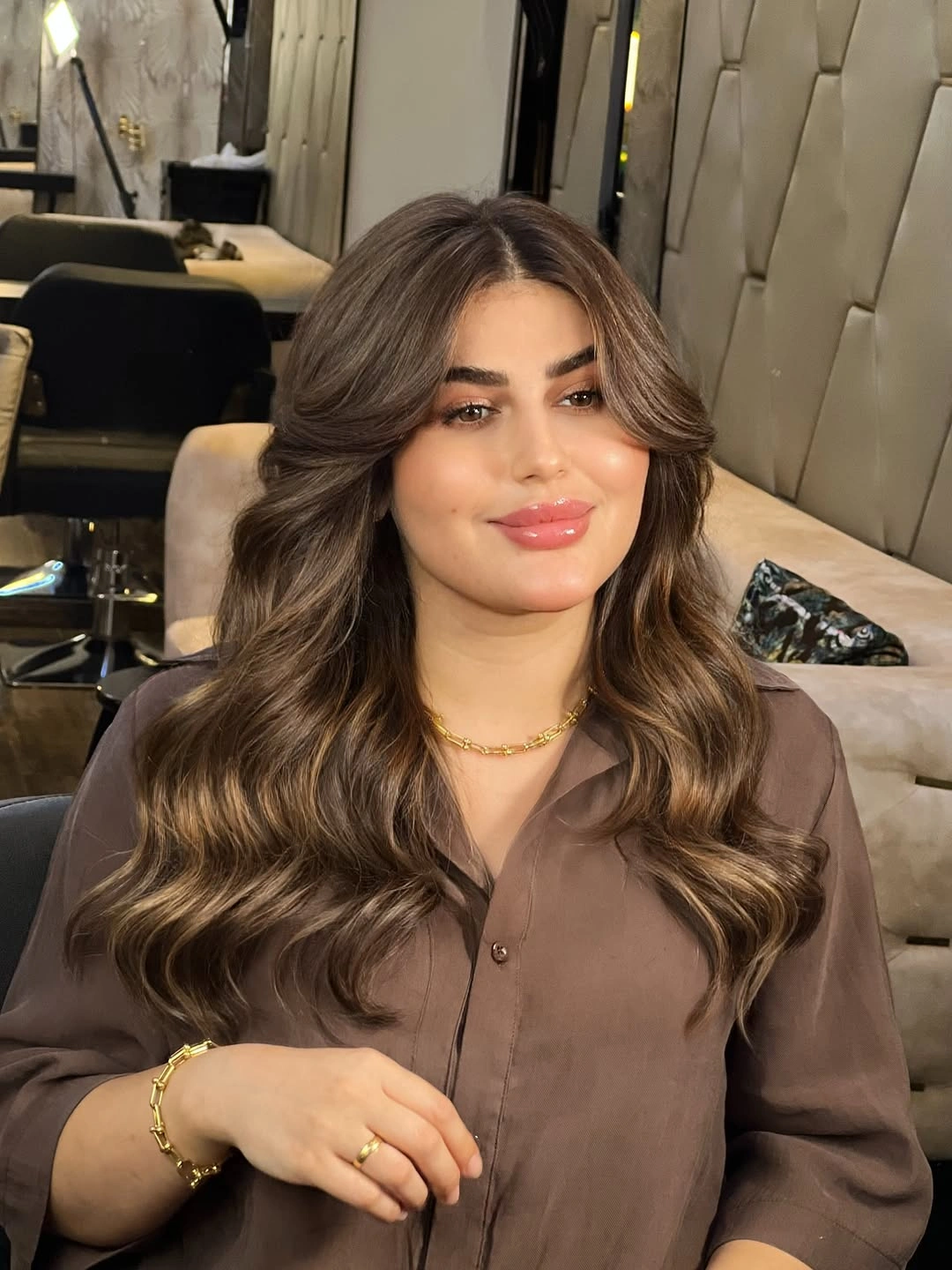
Even front placement works well with a center part because it gives both sides of the face the same amount of light. Keep the beige sections connected to softer pieces through the mid-lengths so the front does not look like two separate panels. A loose curl or blowout adds movement, but the color arrangement would remain understandable even in a straighter finish because the contrast is controlled.
For a more muted version, narrow the front sections and let more chestnut show between them. For a stronger version, add a few pale strands around the outer layers rather than brightening the entire crown. The practical benefit of this approach is flexibility: you can switch between a centered, side-swept, or tucked-behind-the-ear style without losing the basic light-around-the-face effect.
Sandy Ribbons Through Full Long Waves
Long dark-rooted hair is filled with sandy blonde ribbons that become more noticeable through the lower, fuller curls. The lighter color is distributed across the outer surface but leaves enough brown between sections to keep the result dimensional. A center part and generous volume make the tonal variation feel soft and expansive rather than like narrow, repeated stripes.
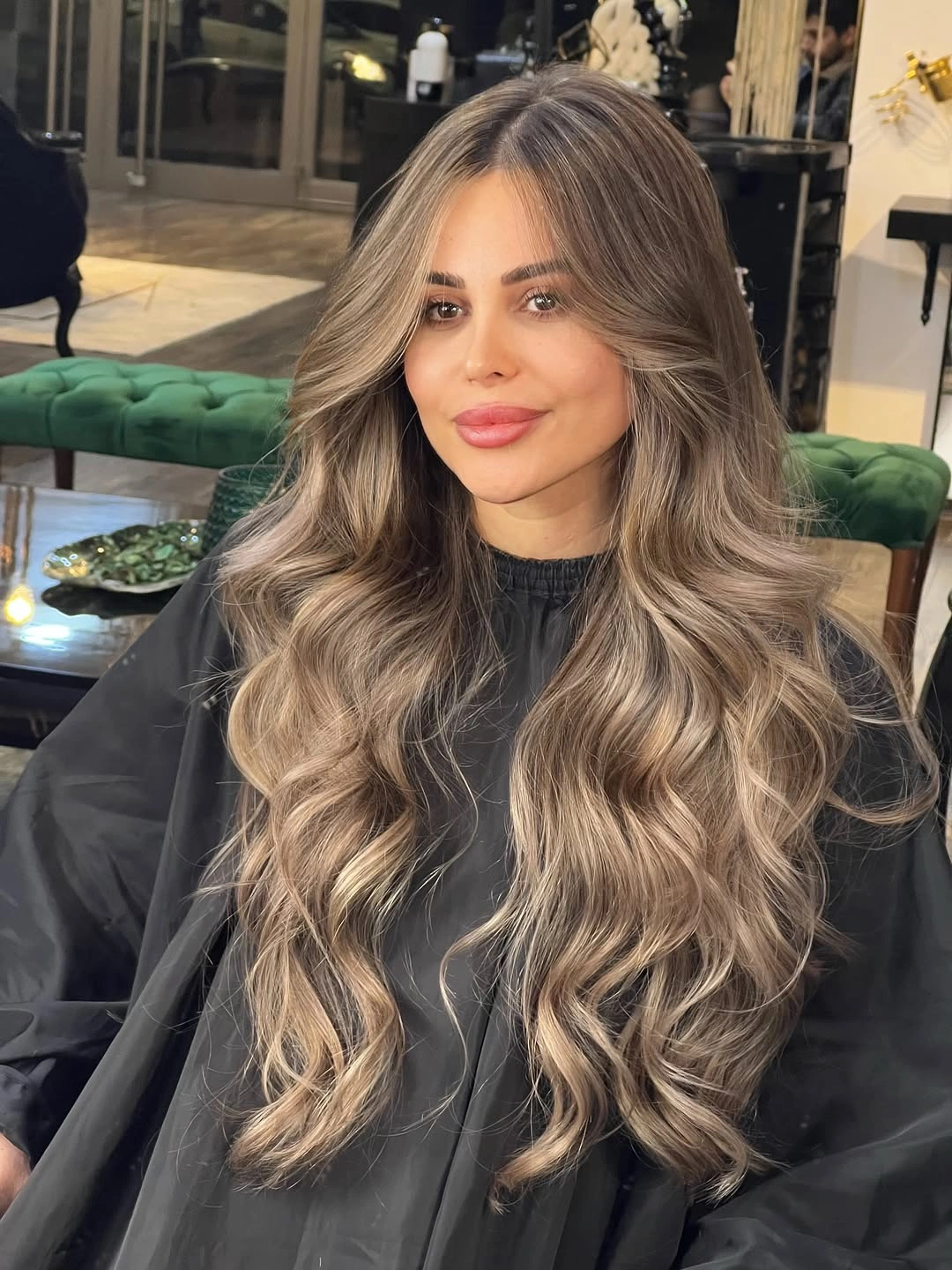
When long hair has this much movement, the color needs a darker background so the lighter ribbons do not blur into one pale mass. The deeper root area provides that contrast and lets the sandy pieces show their individual direction. If you wear your hair with less volume, leave a little more light on the surface so the result remains visible when the waves relax.
This is a good option for someone who likes a brighter overall impression but still wants depth near the part. Very tight curl patterns could make the sandy color look more fragmented, so a soft, brushed wave is closer to the visual intention here. Keep the front pieces integrated with the rest of the length, because an overly bright face frame would make the balanced distribution feel less natural.
Straight Silver Ash With Fine Strands
Long straight hair shows a dark gray root dissolving into silver-ash lengths, with fine vertical streaks visible from crown to ends. The smooth finish makes the placement easy to study because there is no wave pattern to interrupt the line of each tone. Slightly blunt-looking ends keep the cool color story clean and give the long silhouette a more graphic edge.
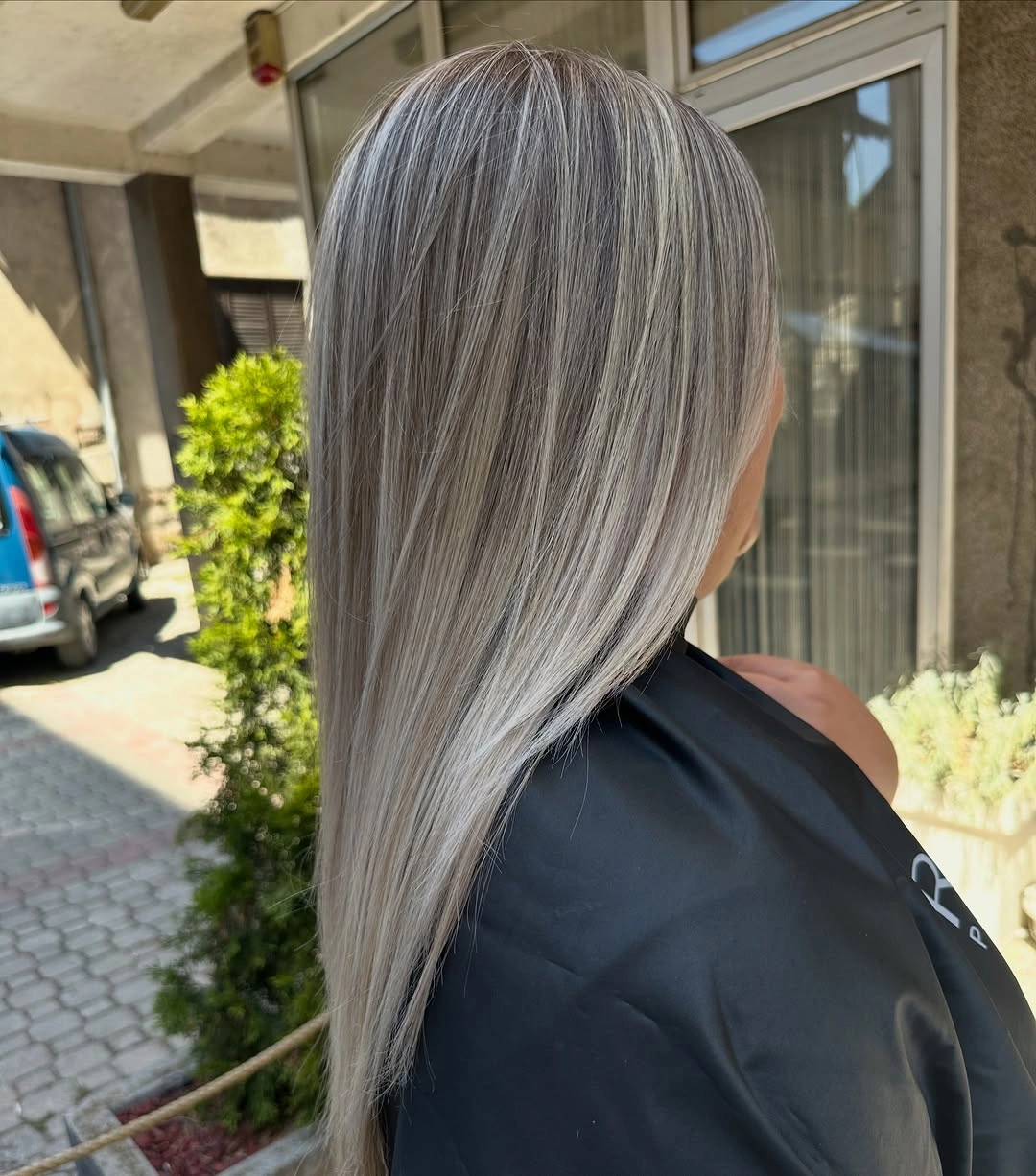
Straight styling is especially useful when the goal is to show delicate gray and silver variation rather than create a big textured shape. If you prefer this direction, ask for fine differences across the length instead of wide light panels, which would look much stronger when worn smooth. A clean middle or soft side part will make the root depth more obvious and keep the overall effect sleek.
The tradeoff is that a polished straight finish reveals every tonal shift, including any contrast near the root. That can be a benefit if you like precise color placement, but a soft wave would make the transition look more diffuse. Keep the ends trimmed to a clear line if you want the silver tones to look intentional and avoid adding a heavy dark accessory directly over the crown.
Layered Ash Waves With a Side Sweep
Large ash-beige waves are built around a deep root and a broad side-swept front section, creating volume that moves from the forehead through the shoulder-length ends. The light pieces are concentrated around the outer layers, where they catch attention without taking over the entire crown. The style is defined as much by the dramatic side direction as by the cool color placement.
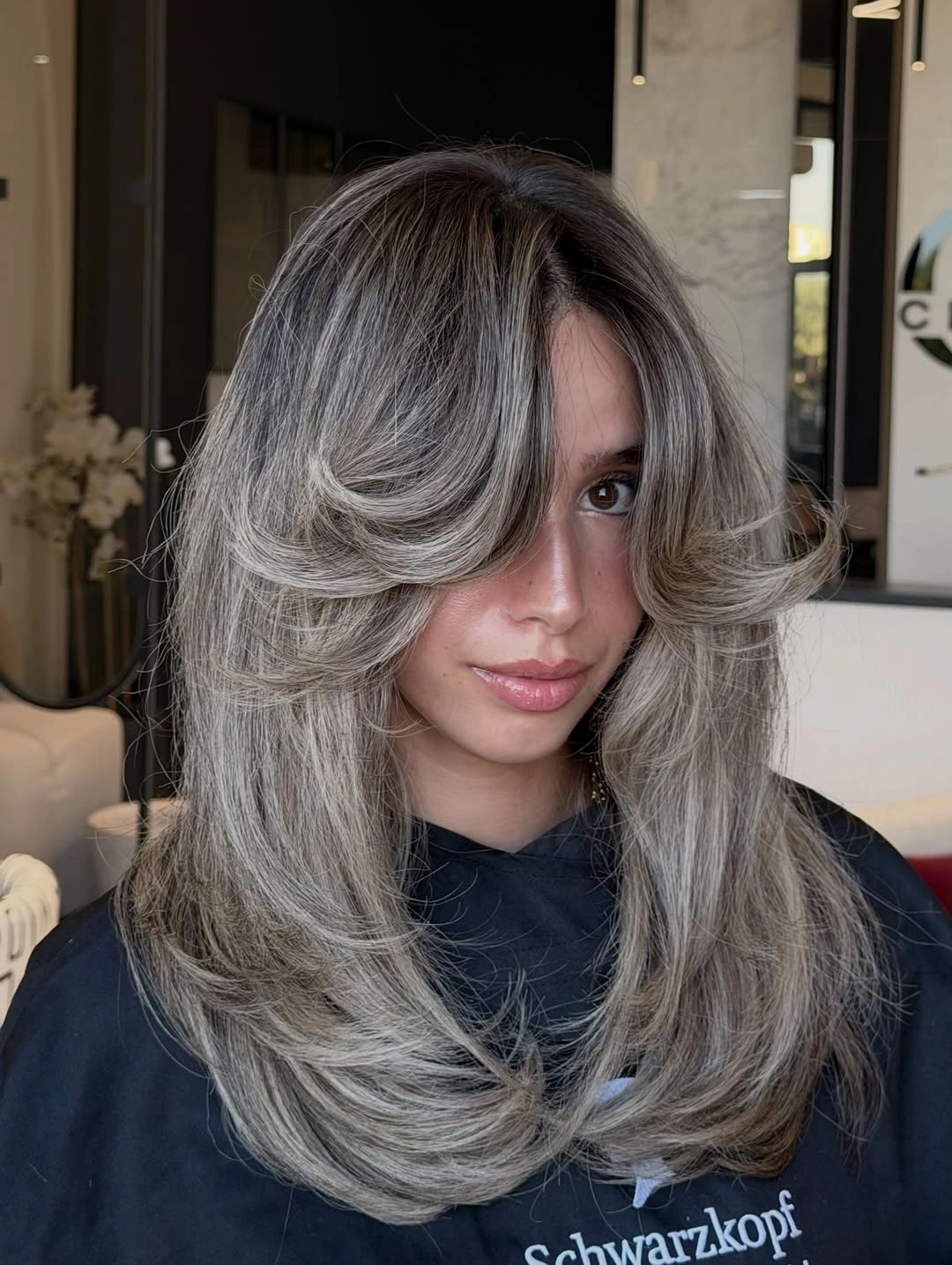
A wide sweep can make soft face-framing color look more noticeable because it carries the lighter sections across the front in one continuous curve. If you want to imitate the effect, keep the brightest ribbons near the section that falls forward and let the opposite side remain a little deeper. That contrast creates dimension without needing equally light pieces on every part of the head.
The practical question is whether you enjoy restyling your part, since the shape depends on that swept direction to show its full volume. With a center part, the same ash placement would look calmer and more symmetrical. Choose this approach when you want the cut and color to work together, rather than treating highlight placement as something separate from the way the hair falls.
Cocoa Waves With a Long Fringe
Dark cocoa-brown hair moves through broad waves with only a few subdued beige strands near the lower lengths, while a long side fringe forms the strongest line around the face. The restrained color lets the cut and finish lead, giving the hair a dense, glossy appearance rather than a highly highlighted one. That makes the subtle light variation feel like a detail discovered as the waves shift.
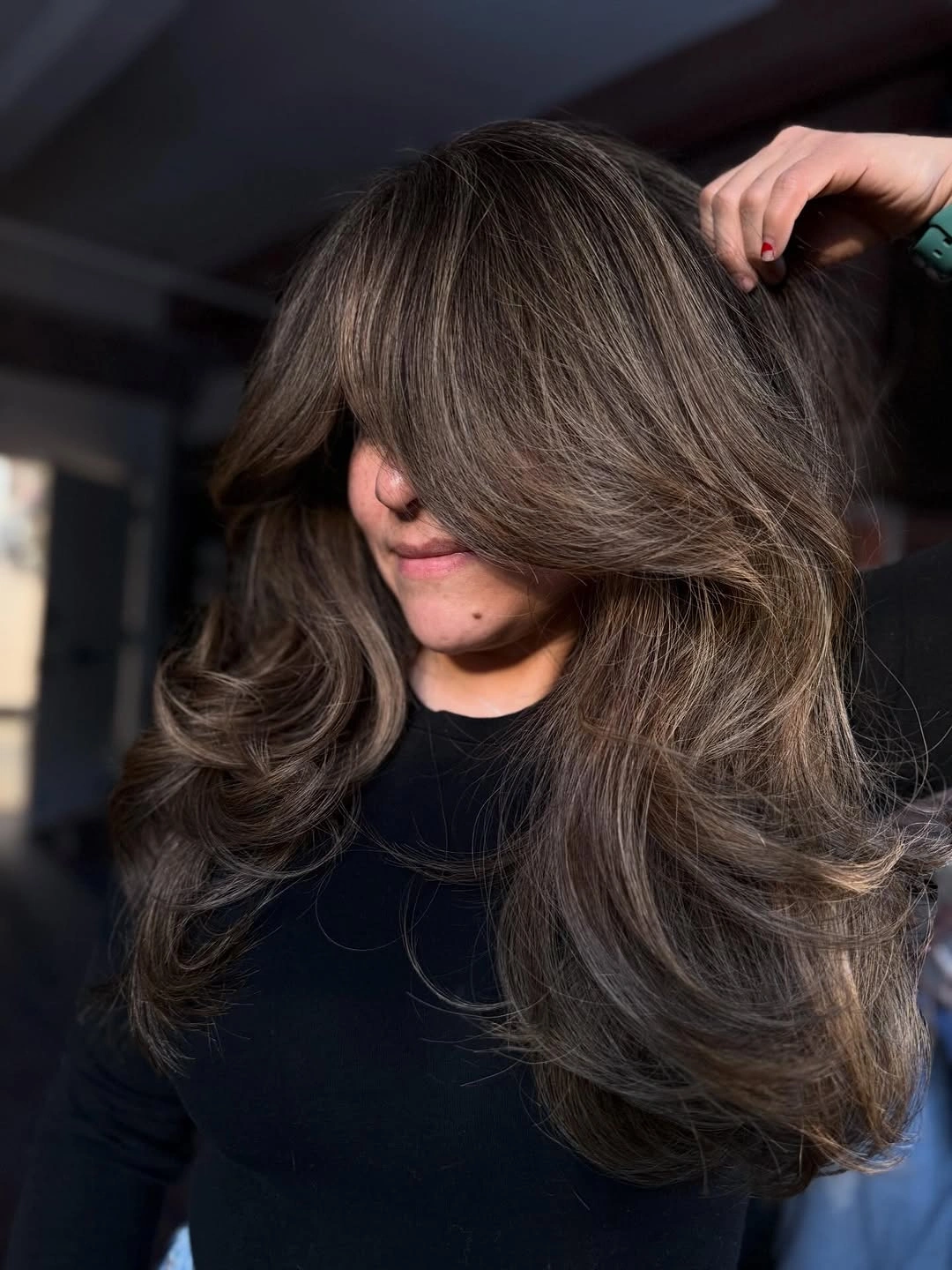
Keeping the beige placement low contrast is what allows the sweeping fringe to remain the main point of the style. If you want a similar brunette result, choose a small amount of lighter dimension through the outer lengths instead of placing pale streaks at the part. The wave pattern can stay large and relaxed, because tighter curls would make the limited light pieces look more repetitive.
A long fringe offers a strong styling statement, but it also means the front needs enough movement to avoid covering the color placement completely. You can tuck one side back or blow the fringe away from the face for a more open version of the same idea. The dark cocoa base remains the anchor, so keep accessories near the face minimal and avoid competing with the hair’s deep, smooth finish.
Warm Bronde With Center-Parted Waves
Medium brown hair is softened by warm beige ribbons that begin near the face and continue through long, polished waves, with a center part keeping the placement even on both sides. The light pieces are noticeable but not stark, so the overall effect remains a warm bronde rather than a high-contrast blonde. The rounded waves make the tones look connected from the cheeks through the ends.
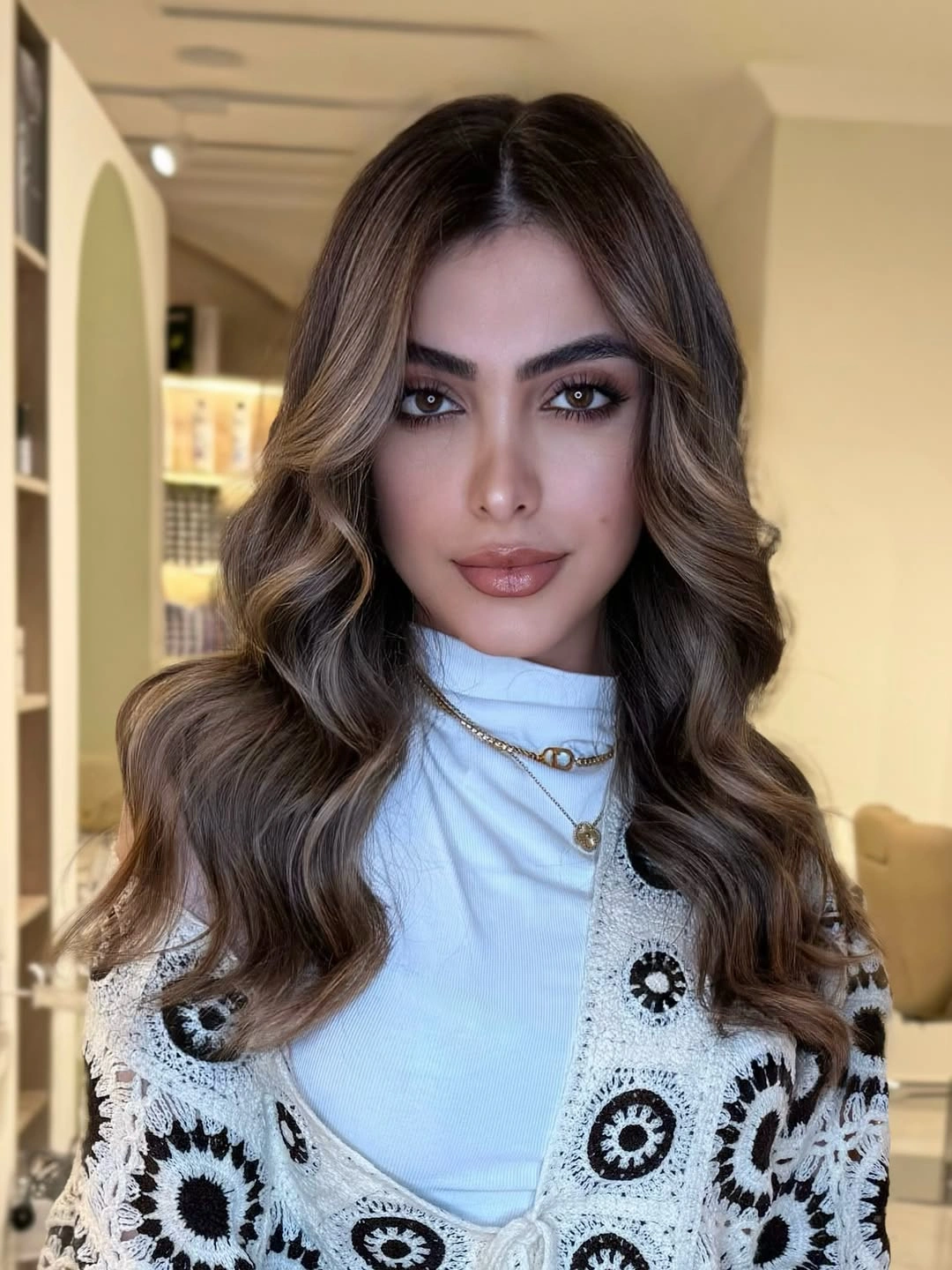
A center part is a good choice when you want matching amounts of brightness on either side of the face. Keep the transition from brown to beige gradual, because abrupt front strips would overpower the more relaxed wave pattern. If the hair is worn straight, a few additional subtle ribbons through the surface would help the color remain visible without changing the warm, blended intent.
The approachable quality of this color comes from its moderate contrast and soft movement, which can suit many everyday styling preferences. You can reduce the lightness at the ends for a deeper winter version or let the front pieces appear a little brighter for more lift. What matters is that the brown base stays present enough to give the beige sections context and shape.
Quiet Cool Brown With Soft Movement
Long cool medium-brown hair has a soft center part and low-contrast waves, with only faintly lighter variation through the lower sections. The result reads as a gentle shift in tone rather than a distinct highlight pattern, so movement and length remain more noticeable than color placement. That makes it a useful reference for someone who wants a refined change without an obvious before-and-after effect.
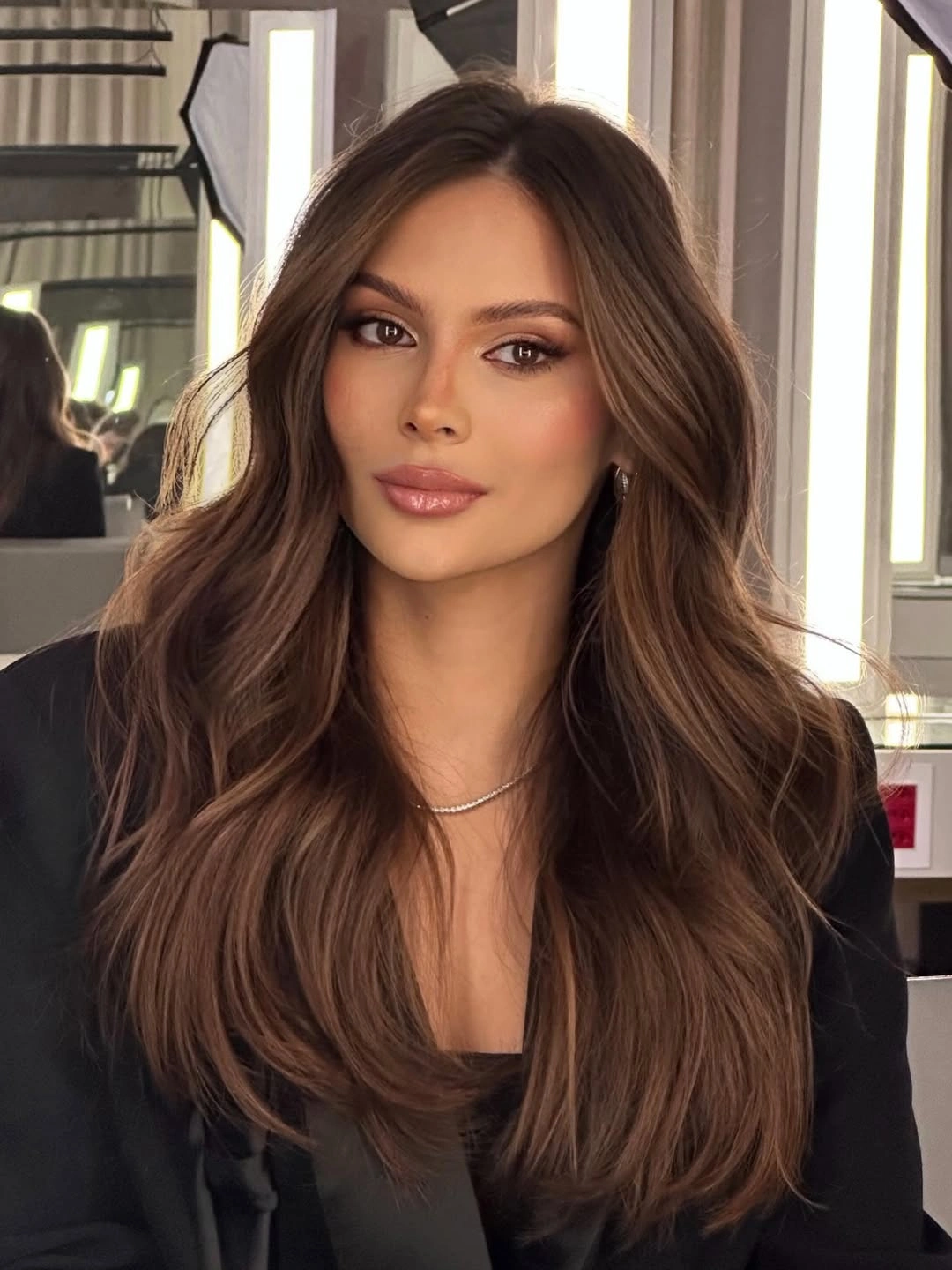
Minimal tonal difference works best when the hair has enough soft movement to reveal a few changes in surface, even if the color remains close overall. Keep the lighter pieces narrow and irregular rather than placing them in identical rows. A simple blowout, loose wave, or natural-looking bend can support the effect, while an extremely glossy flat style may make the color variation almost disappear.
The strength of this idea is its restraint, but that also means it will not deliver a strong color impact in every light. Choose it if you care more about a softened brunette outline than a noticeable contrast around the face. A clean part, healthy-looking shine, and layers that move slightly at the ends will help the quiet palette feel intentional rather than unfinished.
Creamy Blonde in a Smooth Lob
A shoulder-grazing lob uses a muted beige root that shifts into creamy blonde lengths, with a smooth, straight finish that emphasizes the clean line of the cut. The lighter front section stays close to the face, while the darker root adds depth at the crown and part. This is a precise, graphic take on a pale winter color because the shape is as important as the tone.
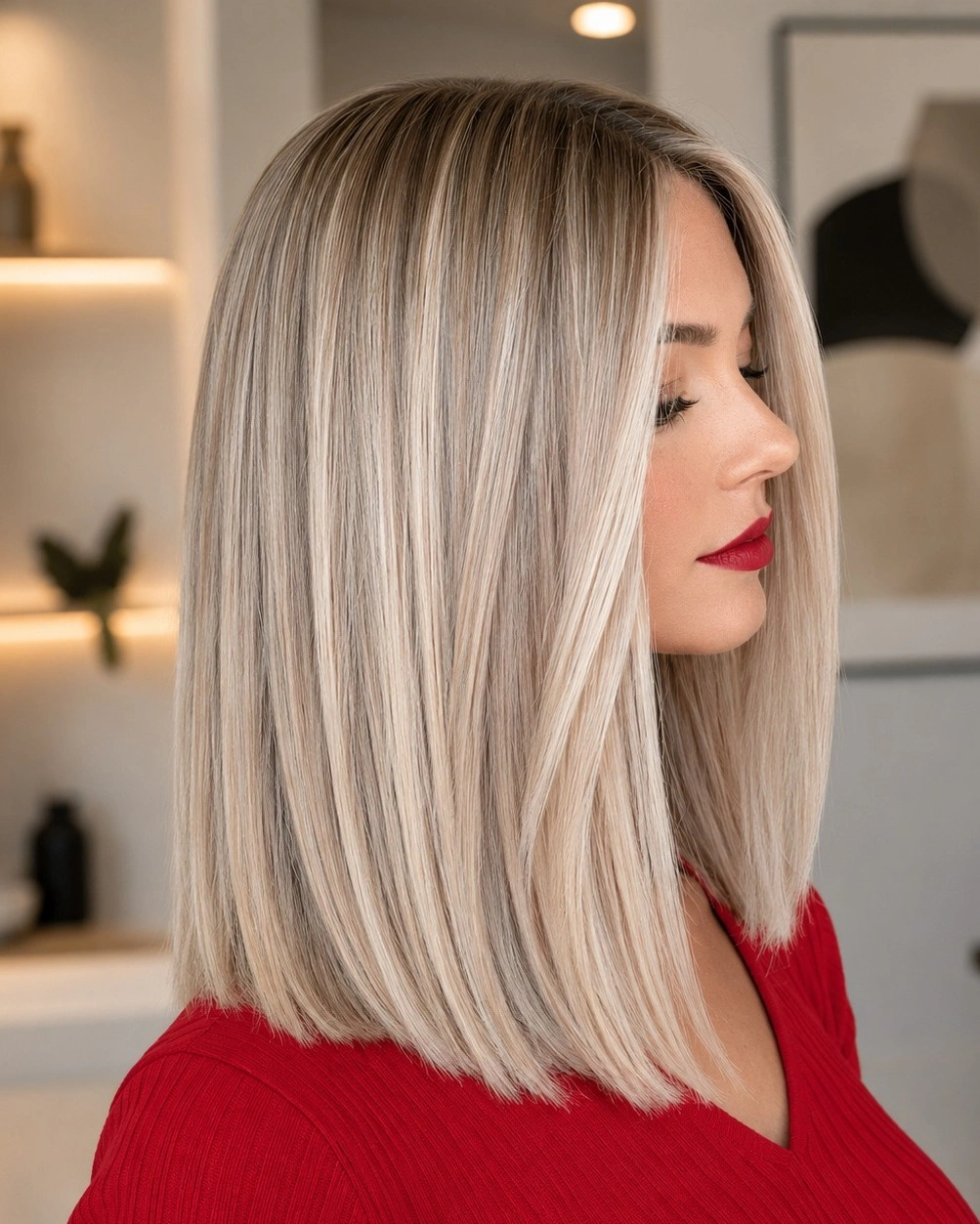
Straight styling makes the root-to-length transition easy to see, so a softer beige root helps the contrast feel less abrupt. If you choose a similar lob, keep the ends relatively blunt or lightly textured to preserve the sharp silhouette. Waves would make the blonde placement look more diffuse, which can be lovely, but they would remove some of the cut’s clean, linear appeal.
The shorter length means every tonal change is concentrated, so avoid adding many different shades near the crown. A few fine lights around the face are enough to keep the look open. This direction suits someone who prefers a polished outline, but it may require more frequent shaping attention than very long, softly layered hair because the hemline is visible all around the shoulders.
Caramel Framing on Warm Brown Waves
Warm medium-brown hair is brightened by caramel-beige pieces near the center part and front lengths, then carried into loose waves below the shoulders. The front placement is clear but not stark, allowing the brown base to retain its depth around the crown. That balance creates an inviting warm contrast that reads especially well when the hair is worn down and away from the shoulders.
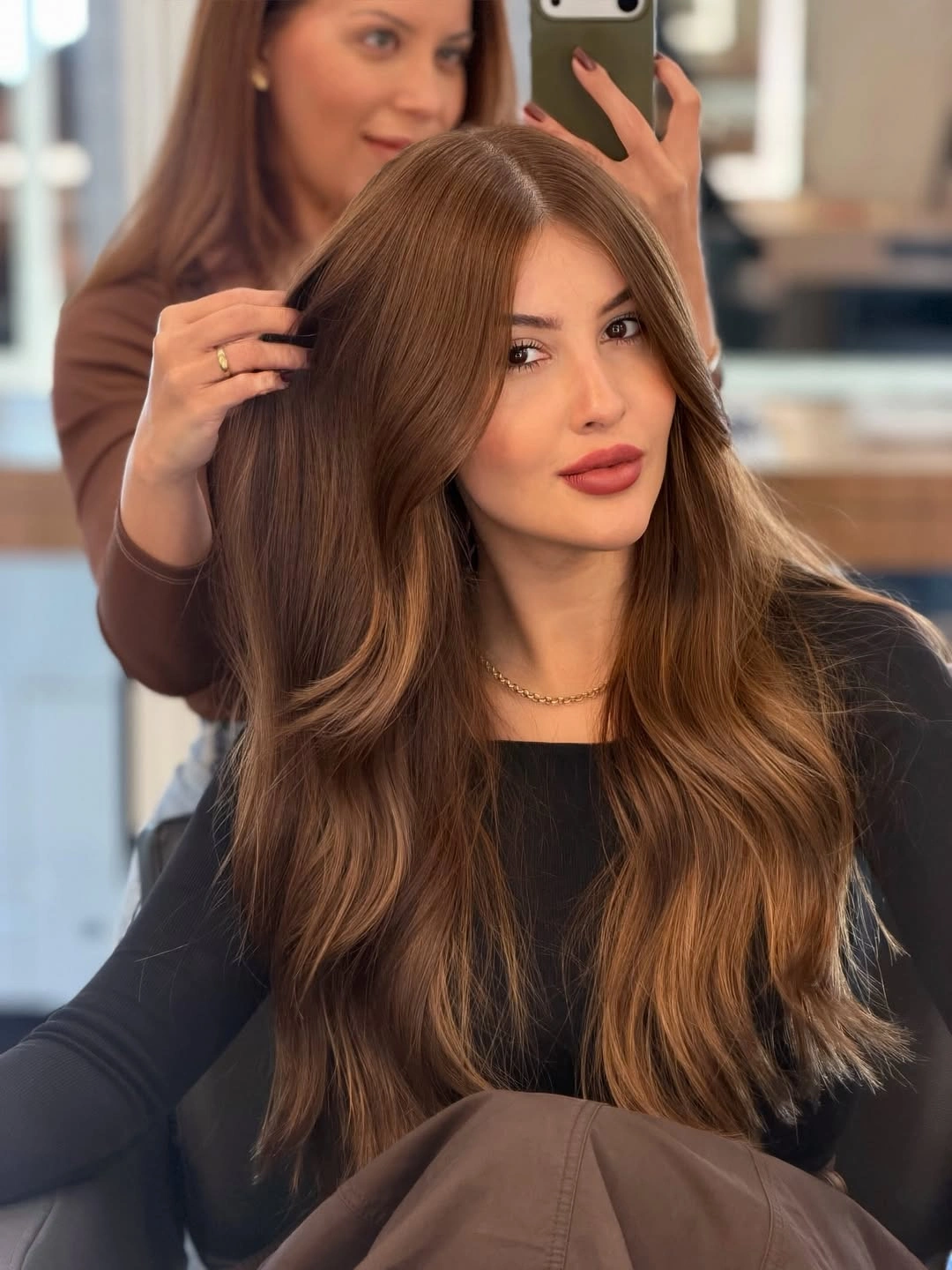
The lighter pieces work because they are concentrated near the face, where they create a focused change instead of scattering across every section. To keep the result cohesive, let a few softer caramel strands continue through the mid-lengths. A centered part makes the brightness even, while a deep side part would bring more attention to one front panel and make the color look bolder.
This is a strong reference if you want your winter hair color to lean warm but still feel connected to a brunette base. The visible contrast will look different when hair is pulled back, since the face-framing sections become more dominant. Leave a little softness around the front if you often tuck hair behind the ears, so the warm variation remains present from multiple angles.
Smoky Ash Waves With Airy Volume
Long smoky ash-beige hair keeps a deeper root area while pale ribbons sweep through expansive, airy waves around the face and shoulders. The color has a cool, diffuse quality because the wave pattern softens the edges between darker and lighter sections. Rather than relying on a single bright stripe, the look distributes light through the outer layers for a soft, enveloping effect.
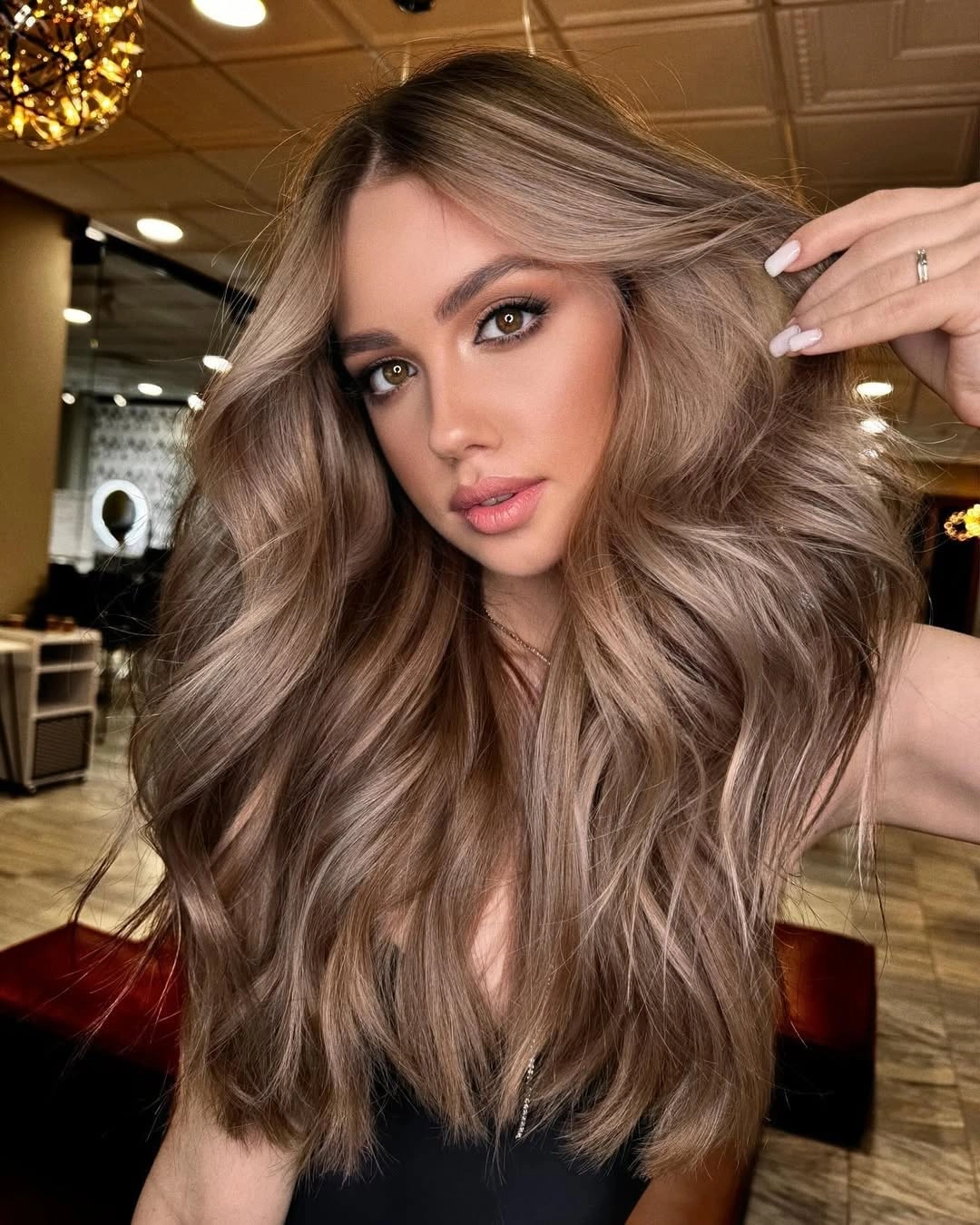
Broad movement is the best partner for a cool smoky palette because it lets the tones merge and separate naturally as the hair shifts. If you want this level of softness, avoid overly defined small curls, which would create more contrast between each ribbon. Keeping the crown noticeably deeper also helps the lighter pieces look dimensional and prevents the whole result from becoming too uniformly pale.
The volume around the cheeks and shoulders makes this idea feel full, so it may not translate exactly to a very sleek daily routine. You can still use the same color placement with a simpler blowout, but expect the light sections to look less diffused. Choose the style if you enjoy visible movement and want the color to appear like an atmospheric wash rather than a series of distinct bands.
Pale Blonde Waves With Root Depth
Loose pale blonde waves fall from a darker beige root, creating an obvious but soft transition that gives the light lengths more depth. The side-leaning part lets the lighter front pieces open gently around the face, while the separated waves keep the ends from reading as a single solid block. This is a bright result, yet the root depth makes it feel grounded and layered.
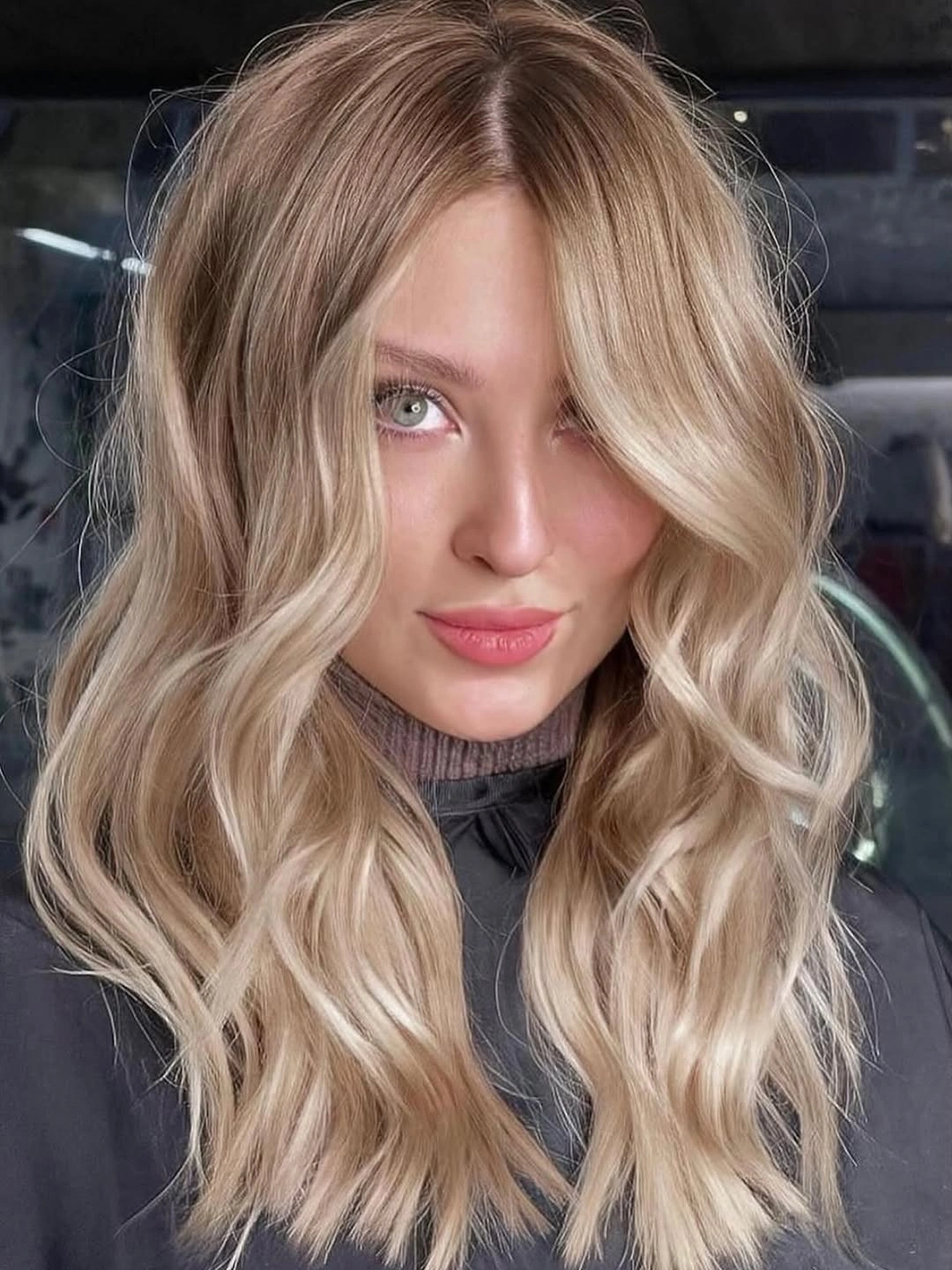
The darker root is doing important visual work here, especially because the blonde lengths are so pale. It gives the waves a starting point and allows the lighter pieces to look more varied as they move down the hair. If you want a softer contrast, choose a root color closer to the mid-lengths; if you want more definition, keep a clearer difference but leave the transition blended.
Light blonde waves show their best dimension when they are separated enough for each curve to catch a little shadow. A very flat finish could make the ends look brighter but less textured, while tight curls could make the root contrast appear more fragmented. This direction works for someone who wants a luminous overall impression but still values a visible foundation at the crown.
Short Silver Bob With Tousled Ends
A short silver-ash bob uses darker roots and pale gray waves to create texture within a compact chin-to-neck length. The ends are slightly tousled rather than perfectly smooth, which helps the cool tones separate and gives the silhouette a lively finish. Because the cut is short, the contrast between gray root and silvery length is concentrated and immediately readable.
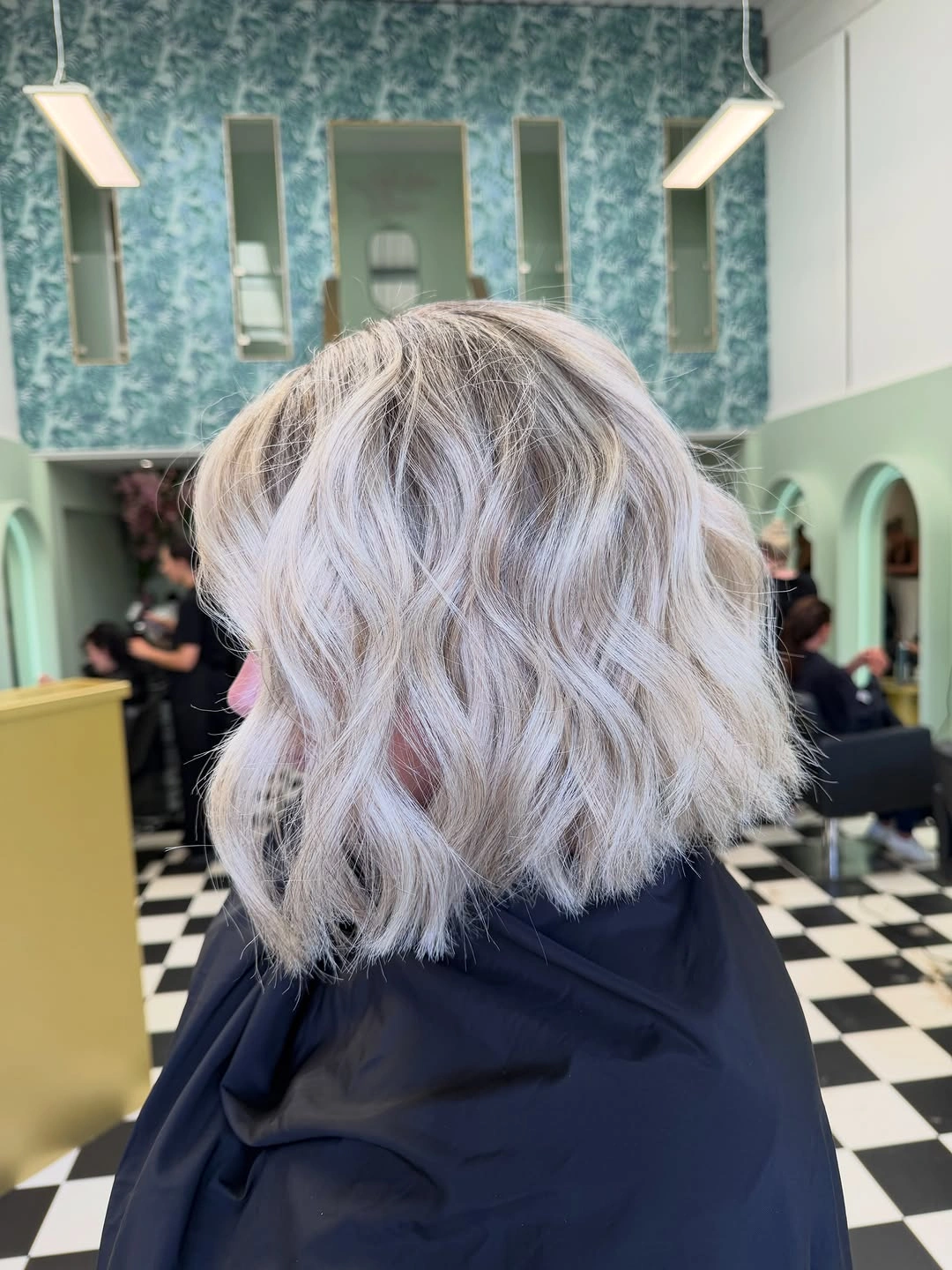
Shorter hair does not need a large amount of color variation to feel dimensional, and this bob proves that the texture can do much of the work. Keep the root deeper and let the paler gray appear through the moving ends if you want a soft, layered effect. A straighter version would show the tone placement more cleanly, but the tousled wave gives the color a more relaxed, less rigid character.
The practical benefit of this length is that the color pattern remains visible even when the hair is not heavily styled. The tradeoff is that a short silhouette exposes the crown and ends clearly, so both shape and tone need to work together. Choose a light, separated finish if you enjoy a casual texture, and avoid weighing the ends down with an overly elaborate accessory or tightly pulled style.
Curtain Fringe With Beige-Tipped Layers
Medium chocolate-brown hair is shaped into rounded layers with an airy curtain fringe, while soft beige ribbons become visible near the face and lower ends. The center part lets the fringe open naturally, connecting the lighter pieces to the layered outline instead of leaving them as separate highlights. This is a useful balance of a rich brunette base, subtle brightness, and a cut with clear movement.
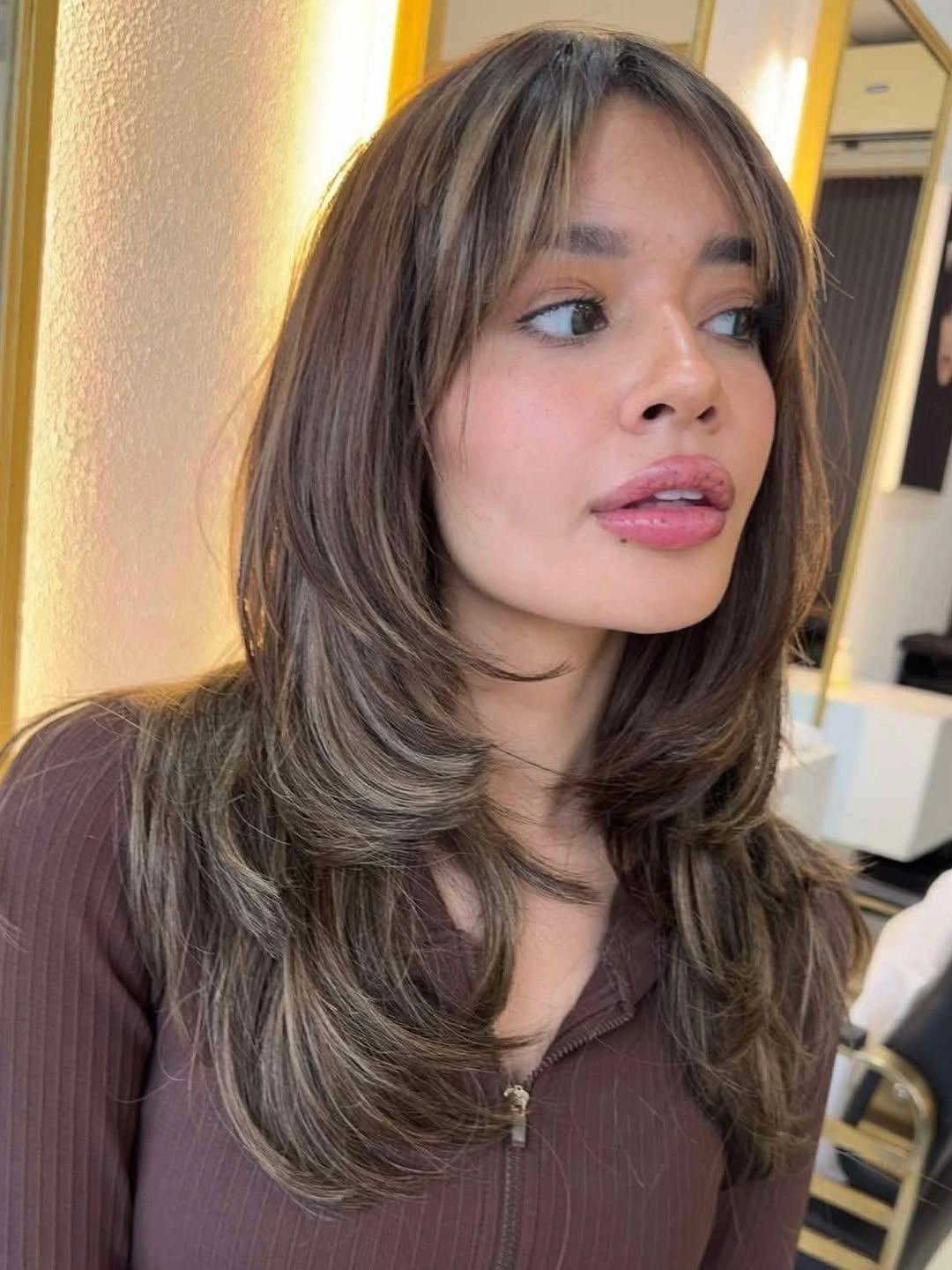
Curved layers give low-contrast color more places to appear, especially when the lightest detail sits near the face and ends. If you like the fringe, keep the beige placement refined rather than overly pale so it supports the softness of the cut. A rounded blowout will emphasize the layered shape, while a straighter finish would make the curtain fringe and subtle ribbons look more graphic and less fluid.
This final direction is especially adaptable because the color remains clearly brunette even with visible light detail. The fringe can be styled more open, more side-swept, or blended into the front layers depending on your preference. Keep the root and mid-lengths rich enough to frame those lighter ends, and the result will retain the dimensional, understated feeling that makes the color placement work.